The Adjusting Process 
Chapter 3
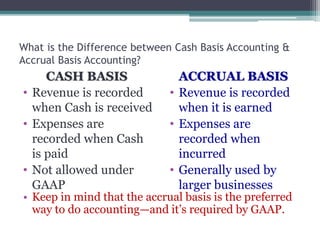
What is the Difference between Cash Basis Accounting & 
Accrual Basis Accounting? 
CASH BASIS 
• Revenue is recorded 
when Cash is received 
• Expenses are 
recorded when Cash 
is paid 
• Not allowed under 
GAAP 
ACCRUAL BASIS 
• Revenue is recorded 
when it is earned 
• Expenses are 
recorded when 
incurred 
• Generally used by 
larger businesses 
• Keep in mind that the accrual basis is the preferred 
way to do accounting—and it’s required by GAAP.
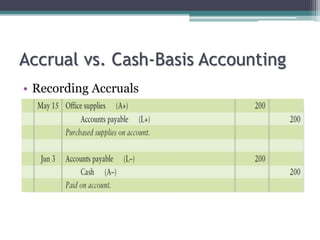
Accrual vs. Cash-Basis Accounting 
• Recording Accruals
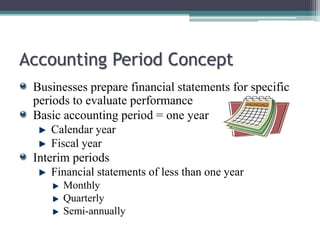
Accounting Period Concept 
Businesses prepare financial statements for specific 
periods to evaluate performance 
Basic accounting period = one year 
Calendar year 
Fiscal year 
Interim periods 
Financial statements of less than one year 
Monthly 
Quarterly 
Semi-annually
When to record revenue? 
When it is earned 
When service is provided 
When the product delivered 
When the earnings process is complete 
Not when cash is received, accrual method 
The amount of revenue to recorded? 
Value of item or service transferred to customer
Measure all expenses incurred during the period 
Match the expenses against the revenues earned 
during the same period
Requires that accounting information be reported at 
regular intervals 
Accounts are updated at the end of each accounting 
period
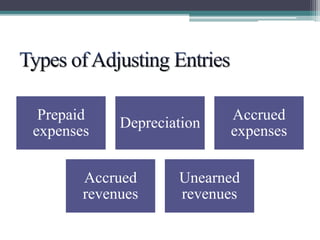
Prepaid 
expenses 
Depreciation 
Accrued 
expenses 
Accrued 
revenues 
Unearned 
revenues
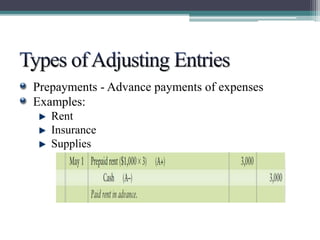
Prepayments - Advance payments of expenses 
Examples: 
Rent 
Insurance 
Supplies
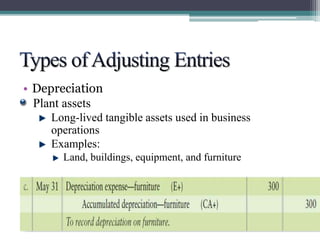
• Depreciation 
Plant assets 
Long-lived tangible assets used in business 
operations 
Examples: 
Land, buildings, equipment, and furniture
• 
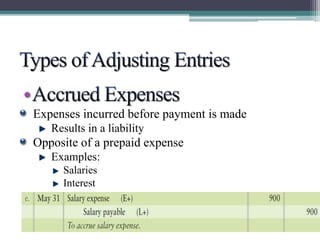
Expenses incurred before payment is made 
Results in a liability 
Opposite of a prepaid expense 
Examples: 
Salaries 
Interest
• 
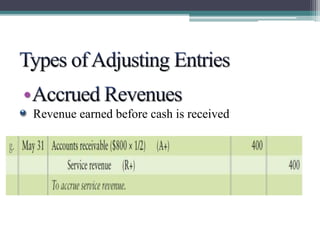
Revenue earned before cash is received
• 
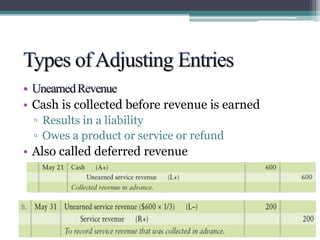
• Cash is collected before revenue is earned 
▫ Results in a liability 
▫ Owes a product or service or refund 
• Also called deferred revenue
Prepared after adjusting entries are posted 
Useful step in preparing financial statements 
Often appears on a work sheet 
Tool accountants use at end of period
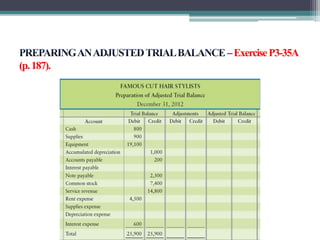
Exercise P3-35A 
(p. 187).
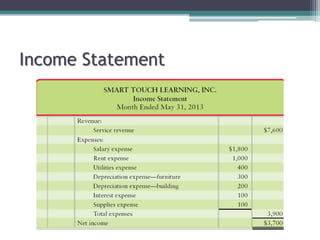
Income Statement

The adjusting process

  • 1.
  • 2.
    What is theDifference between Cash Basis Accounting & Accrual Basis Accounting? CASH BASIS • Revenue is recorded when Cash is received • Expenses are recorded when Cash is paid • Not allowed under GAAP ACCRUAL BASIS • Revenue is recorded when it is earned • Expenses are recorded when incurred • Generally used by larger businesses • Keep in mind that the accrual basis is the preferred way to do accounting—and it’s required by GAAP.
  • 3.
    Accrual vs. Cash-BasisAccounting • Recording Accruals
  • 4.
    Accounting Period Concept Businesses prepare financial statements for specific periods to evaluate performance Basic accounting period = one year Calendar year Fiscal year Interim periods Financial statements of less than one year Monthly Quarterly Semi-annually
  • 5.
    When to recordrevenue? When it is earned When service is provided When the product delivered When the earnings process is complete Not when cash is received, accrual method The amount of revenue to recorded? Value of item or service transferred to customer
  • 6.
    Measure all expensesincurred during the period Match the expenses against the revenues earned during the same period
  • 7.
    Requires that accountinginformation be reported at regular intervals Accounts are updated at the end of each accounting period
  • 8.
    Prepaid expenses Depreciation Accrued expenses Accrued revenues Unearned revenues
  • 9.
    Prepayments - Advancepayments of expenses Examples: Rent Insurance Supplies
  • 10.
    • Depreciation Plantassets Long-lived tangible assets used in business operations Examples: Land, buildings, equipment, and furniture
  • 11.
    • Expenses incurredbefore payment is made Results in a liability Opposite of a prepaid expense Examples: Salaries Interest
  • 12.
    • Revenue earnedbefore cash is received
  • 13.
    • • Cashis collected before revenue is earned ▫ Results in a liability ▫ Owes a product or service or refund • Also called deferred revenue
  • 14.
    Prepared after adjustingentries are posted Useful step in preparing financial statements Often appears on a work sheet Tool accountants use at end of period
  • 15.
  • 16.