Twelfth Five Year Plan
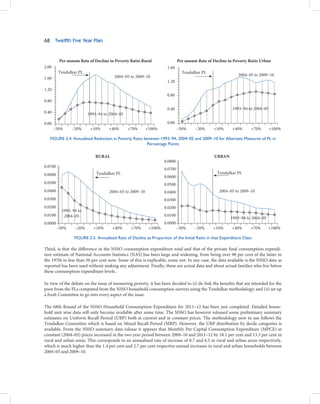
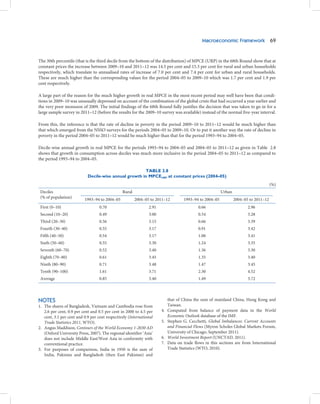
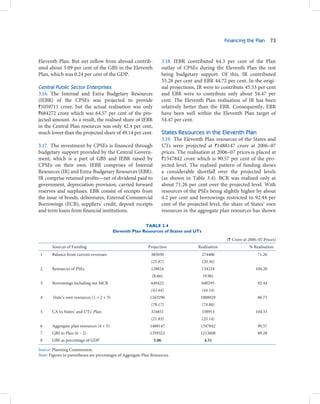
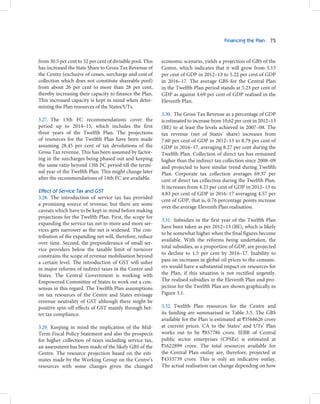
   (2012–2017)
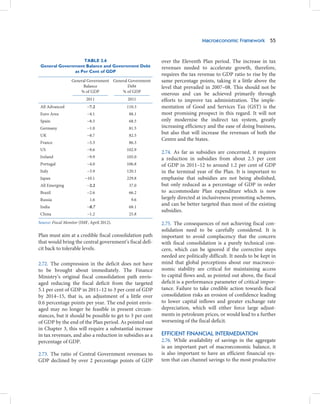
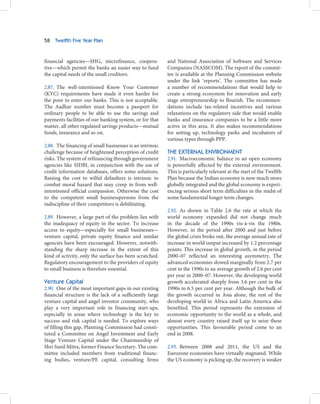
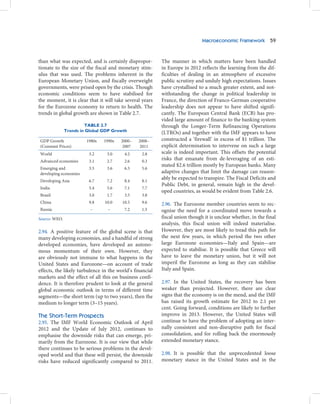
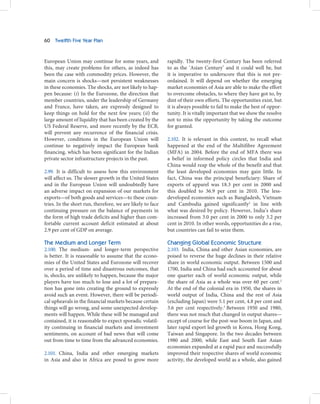
Faster, More Inclusive and
   Sustainable Growth


         Volume I
Twelfth Five Year Plan
   (2012–2017)
Faster, More Inclusive and
   Sustainable Growth


         Volume I


      Planning Commission
      Government of India
copyright
Contents


  1.   Twelfth Plan: An Overview              1

  2.   Macroeconomic Framework               37

  3.   Financing the Plan                    70

  4.   Sustainable Development              112

  5.   Water                                144

  6.   Land Issues                          191

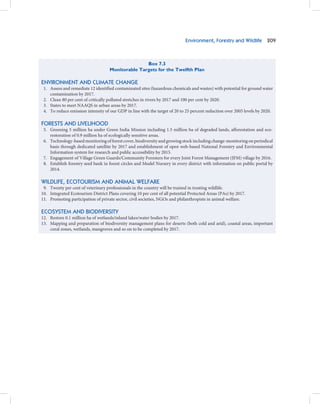
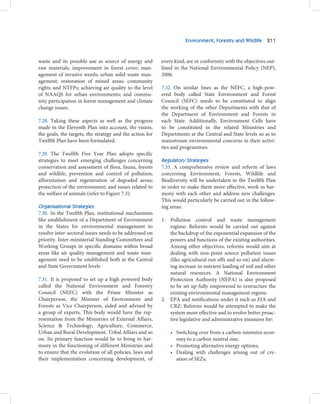
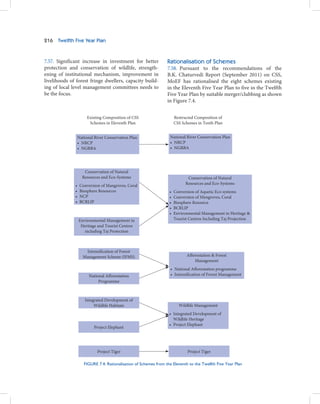
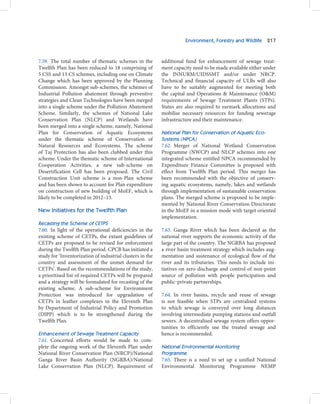
  7.   Environment, Forestry and Wildlife   202

  8.   Science and Technology               235

  9.   Innovation                           278

 10.   Governance                           286

 11.   Regional Equality                    302
1
Twelfth Plan: An Overview

INTRODUCTION                                              1.3. These developments have produced a reduction
1.1. India’s 1.25 billion citizens have higher expecta-   in the rate of investment, and a slowing down of eco-
tions about their future today, than they have ever       nomic growth to 6.5 per cent in 2011–12, which was
had before. They have seen the economy grow much          the last year of the Eleventh Plan. The growth rate in
faster in the past 10 years than it did earlier, and      the first half of 2012–13, which is the first year of the
deliver visible benefits to a large number of people.     Twelfth Plan, is even lower. The downturn clearly
This has understandably raised the expectations of        requires urgent corrective action but it should not
all sections, especially those who have benefited less.   lead to unwarranted pessimism about the medium
Our people are now much more aware of what is             term. India’s economic fundamentals have been
possible, and they will settle for no less. The Twelfth   improving in many dimensions, and this is reflected
Five Year Plan must rise to the challenge of meeting      in the fact that despite the slowdown in 2011–12, the
these high expectations.                                  growth rate of the economy averaged 7.9 per cent
                                                          in the Eleventh Plan period. This was lower than
The Initial Conditions                                    the Plan target of 9 per cent, but it was marginally
1.2. Though expectations have mounted, the cir-           higher than the achievement of 7.6 per cent in the
cumstances in which the Twelfth Plan has com-             Tenth Plan. The fact that this growth occurred in a
menced are less favourable than at the start of the       period which saw two global crises, one in 2008 and
Eleventh Plan in 2007–08. At that time, the economy       another in 2011, is indicative of the resilience which
was growing robustly, the macroeconomic balance           the economy has developed.
was improving and global economic developments
were supportive. The situation today is much more         The Policy Challenge
difficult. The global economy is going through            1.4. The policy challenge in the Twelfth Plan is,
what looks like a prolonged slowdown. The domes-          therefore, two-fold. The immediate challenge is to
tic economy has also run up against several inter-        reverse the observed deceleration in growth by reviv-
nal constraints. Macro-economic imbalances have           ing investment as quickly as possible. This calls for
surfaced following the fiscal expansion undertaken        urgent action to tackle implementation constraints
after 2008 to give a fiscal stimulus to the economy.      in infrastructure which are holding up large proj-
Inflationary pressures have built up. Major invest-       ects, combined with action to deal with tax related
ment projects in energy and transport have slowed         issues which have created uncertainty in the invest-
down because of a variety of implementation prob-         ment climate. From a longer term perspective, the
lems. Some changes in tax treatment in the 2012–13        Plan must put in place policies that can leverage the
have caused uncertainty among investors.                  many strengths of the economy to bring it back to its
2   Twelfth Five Year Plan


real growth potential. This will take time but the aim      making specific allocations to improve the ability
should be to get back to 9 per cent growth by the end       of government to work better.
of the Twelfth Plan period.                               • Finally, the planning process must serve as a way
                                                            of getting different stakeholders to work together
1.5. The preparation of a Five Year Plan for the            to achieve broad consensus on key issues. These
country is an opportunity to step back, take stock          stakeholders include (i) different levels of the gov-
of the ‘big picture’, identify the strengths that can       ernment sector: Centre, States and Panchayati Raj
be leveraged to enable the country to move forward,         Institutions (PRIs)/Urban Local Bodies (ULBs);
and the constraints that could hold it back, and on         (ii) the private sector, both big companies and
this basis develop a strategic agenda. In developing        small businesses, whose investments will drive our
such an agenda, the Planning Commission has relied          growth and (iii) citizens’ groups and the voluntary
on four key elements.                                       sector, who bring the key element of people’s par-
                                                            ticipation and can greatly help improve the qual-
• First, the strategy must be firmly grounded in an         ity of government action.
  understanding of the complexities of the develop-
  ment challenges that India faces, recognising the       1.6. The Planning Commission has consulted widely
  transformation that is taking place in the econ-        over the past two years with other Ministries, with
  omy and in the world. This understanding of the         State Governments, with experts and also with
  ground reality must be used to identify the critical    Civil Society Organisations (CSOs). As many as
  leverage points where government action could           900 CSOs have been consulted through workshops
  have the maximum impact. The focus must be on           and other fora. Several expert groups were set up to
  identifying the strategic leverage points where suc-
                                                          advice on various aspects of the economy and their
  cessful action could trigger many supportive reac-
                                                          reports are important inputs. These include the High
  tions rather than fixing everything everywhere.
                                                          Level Expert Group (HLEG) on Health, the HLEG
• Second, progress will be achieved through a com-
                                                          on Transport, the Expert Group on Infrastructure
  bination of government action in both policies
                                                          Financing, the Expert Group on the Low Carbon
  and public programmes, and the efforts of many
                                                          Economy, the Expert Group on Venture Capital
  private actors that are important in the economy.
                                                          and Angel Investors, and the Expert Group on
  Much of the inclusive growth we hope to achieve
                                                          Management of Public Enterprises.
  depends on investment in the private sector which
  accounts for over 70 per cent of total invest-
                                                          1.7. This Chapter is not an executive summary.
  ment. This includes not only the organised cor-
                                                          Rather it provides an overview of the basic rationale
  porate sector, but also Micro, Small and Medium
                                                          of the Plan and the key areas of intervention. The
  Enterprises (MSMEs), individual farmers and
                                                          Chapter is organised as follows:
  myriads of small businessmen who add to Gross
  Domestic Product (GDP) and create jobs. The
                                                          • Section 1.2 presents the basic vision and aspira-
  dynamism of this segment, and its ability to seize
  economic opportunities, is critical for inclusive         tions which drive the Plan and which are cap-
  growth and the Plan must address the constraints          tured in the sub-title ‘Faster, sustainable and More
  faced by all these private actors in achieving better     Inclusive Growth’.
  results.                                                • Section 1.3 focuses on the development of capabil-
• Third, the outlay on government programmes                ities—both human and institutional—to achieve
  has to increase in many areas but this must be            the vision.
  accompanied by improved implementation. For             • Section 1.4 focuses on the challenge of managing
  this, it is necessary to focus on capacity building       our national resources rationally; a critical area
  and governance reforms, including system change           for planning if we want growth to be sustainable.
  that will increase accountability in the public sec-    • Section 1.5 deals with India’s engagement with the
  tor. The Twelfth Plan must back this focus by             world in the Twelfth Plan and beyond.
Twelfth Plan: An Overview 3


• Section 1.6 presents a summary of some of the               of inclusiveness. There are many such programmes
  major policy initiatives that taken together would          which either deliver benefits directly to the poor
  contribute a strategy for achieving faster, more            and the excluded groups, or increase their ability to
  inclusive and sustainable growth.                           access employment and income opportunities gener-
                                                              ated by the growth process. Examples of such pro-
VISION AND ASPIRATIONS                                        grammes are the Mahatma Gandhi National Rural
1.8. The broad vision and aspirations which the               Employment Guarantee Act (MGNREGA), Sarva
Twelfth Plan seeks to fulfil are reflected in the subti-      Siksha Abhiyan (SSA), Mid Day Meals (MDMs),
tle: ‘Faster, Sustainable, and More Inclusive Growth’.        Pradhan Mantri Gram Sadak Yojana (PMGSY),
The simultaneous achievement of each of these ele-            Integrated Child Development Services (ICDS),
ments is critical for the success of the Plan.                National Rural Health Mission (NRHM), and so on.
                                                              This is also relevant for the sustainability objective
The Need for Faster Growth                                    since programmes aimed at making development
1.9. Planners are sometimes criticised for focusing           more sustainable also involve additional costs.
too much on GDP growth, when the real objective
should be to achieve an improved quality of life of           Growth Prospects
the people across both economic and non-economic              1.12. The Approach Paper to the Twelfth Plan,
dimensions. The Twelfth Plan fully recognises                 approved by the National Development Council
that the objective of development is broad-based              (NDC) in 2011, had set a target of 9 per cent aver-
improvement in the economic and social conditions             age growth of GDP over the Plan period. That was
of our people. However, rapid growth of GDP is an             before the Eurozone crisis in that year triggered a
essential requirement for achieving this objective.           sharp downturn in global economic prospects, and
                                                              also before the extent of the slowdown in the domes-
1.10. There are two reasons why GDP growth is                 tic economy was known. A realistic assessment of
important for the inclusiveness objective. First, rapid       the growth prospects of the economy in the Twelfth
growth of GDP produces a larger expansion in total            Plan period is given in Chapter 2. It concludes
income and production which, if the growth process            that the current slowdown in GDP growth can be
is sufficiently inclusive, will directly raise living stan-   reversed through strong corrective action, includ-
dards of a large section of our people by providing           ing especially an expansion in investment with a
them with employment and other income enhanc-                 corresponding increase in savings to keep inflation-
ing activities. Our focus should not be just on GDP           ary pressures under control. However, while our full
growth itself, but on achieving a growth process              growth potential remains around 9 per cent, accel-
that is as inclusive as possible. For example, rapid          eration to this level can only occur in a phased man-
growth which involves faster growth in agriculture,           ner, especially since the global economy is expected
and especially in rain-fed areas where most of the            to remain weak for the first half of the Plan period.
poor live, will be much more inclusive than a GDP             Taking account of all these factors, the Twelfth Plan
growth that is driven entirely by mining or extrac-           should work towards bringing GDP growth back to
tion of minerals for exports. Similarly, rapid growth         an inclusive 9 per cent in the last two years of the
which is based on faster growth for the manufactur-           Plan, which will yield an average growth rate of
ing sector as a whole, including MSME, will generate          about 8.2 per cent in the Plan period. The outcome
a much broader spread of employment and income                is conditional on many policy actions as is described
earning opportunities and is therefore more inclu-            in scenario one.
sive than a growth which is largely driven by extrac-
tive industries.                                              1.13. Within the aggregate GDP growth target, two
                                                              sub-targets are especially important for inclusive-
1.11. The second reason why rapid growth is impor-            ness. These are a growth rate of 4 per cent for the
tant for inclusiveness is that it generates higher rev-       agricultural sector over the Twelfth Plan period and
enues, which help to finance critical programmes              around 10 per cent in the last two years of the Plan
4   Twelfth Five Year Plan


for the manufacturing sector. The policies needed             well-designed strategy is implemented, intervening at
to achieve these sectoral targets are summarised in           the key leverage points in the system. This in effect is the
Section 1.6.                                                  scenario underpinning the Twelfth Plan growth pro-
                                                              jections of 8.2 per cent, starting from 6.7 per cent
1.14. The Twelfth Plan’s strategy for growth depends          in the first year to reach 9 per cent in the last year and
crucially on productivity gains as one of the key             the second scenario ‘Insufficient Action’ describes
drivers of growth. Productivity is the additional             the consequences of half hearted action in which the
contribution to growth after taking account of the            direction of policy is endorsed, but sufficient action
effect of capital accumulation and growth in labour.          is not taken. The growth in this scenario declines to
These traditional sources of growth are not likely            around 6 per cent to 6.5 per cent. The third scenario
to be enough for India in the coming years and we             ‘Policy Logjam’, projects the consequences of Policy
must therefore focus much more on productiv-                  Inaction persisting too long. The growth rate in this
ity improvements among all constituents: big busi-            scenario can drift down to 5 per cent to 5.5 per cent.
nesses, MSMEs, farmers and even government. This
can be done by improving the business regulatory              1.18. The scenarios are discussed in greater detail
environment, strengthening the governance capac-              in Chapter 2 and presented in another document
ity of States, investing more in infrastructure rather        complementing the Plan. Public discussion of these
than subsidies, and by using Science and Technology           scenarios could help to generate a discourse going
(S&T) to drive innovation.                                    beyond the parameters of the Twelfth Five Year Plan
                                                              and assist in building a national consensus about
Alternative Scenarios                                         the policies that are necessary if India’s future is to
1.15. The projection of 8.2 per cent growth in the            unfold as we want. It is important to emphasise that
                                                              the scenarios are not presented an alternative option
Twelfth Plan period should not be viewed as a ‘busi-
                                                              form which we can choose. In fact, the only scenario
ness as usual’ outcome that can be realised with rela-
                                                              that will meet the aspiration of the people is scenario
tively little effort. It is in fact a projection of what is
                                                              one. The other scenarios are only presented to illus-
possible if we take early steps to reverse the current
                                                              trate the consequences of inaction.
slowdown and also take other policy actions needed
to address other key constraints that will otherwise
                                                              1.19. Ours is a diverse society and also an argumen-
prevent the economy from returning to a higher
                                                              tative one. We are suspicious when decisions that
growth path. Failure to act firmly on these policies
                                                              affect us are not taken transparently and we resent
will lead to lower growth and also poorer outcomes
                                                              too much centralisation of decision-making. But we
on inclusiveness.
                                                              all believe in democracy, we respect the views of oth-
                                                              ers and, although we may disagree, we admire and
1.16. To illustrate the consequences of inaction              learn from those who work together to offer any
on key growth promoting policies, the Planning                vision of a better India. We need to do more to build
Commission has undertaken a systematic process                a greater consensus around a common national goal.
of ‘scenario planning’ based on diverse views and
disciplines to understand the interplay of the prin-          1.20. The Twelfth Plan should aim at a growth pro-
cipal forces, internal and external, shaping India’s          cess that preserves emphasis on inclusion and sus-
progress. This analysis suggests three alternative sce-       tainability while minimising downside effects on
narios of how India’s economy might develop titled,           growth. Plans are traditionally viewed as being about
‘Strong Inclusive Growth’, ‘Insufficient Action’ and          what governments should do, but that is a narrow
‘Policy Logjam’.                                              view since most investment today is private, and
                                                              much of that is corporate. The Twelfth Plan must
1.17. The first scenario ‘Strong Inclusive Growth’,           provide a competitive environment in which the pri-
describes the conditions that will emerge if a                vate sector, including the corporate sector but also
Twelfth Plan: An Overview 5


all Indians, both as individuals and in the collective,   worth noting that the record in this dimension of
are enable to reach their full potential. The objective   inclusiveness is encouraging. The percentage of the
must be to stimulate new entrepreneurship while           population below the official poverty line has been
enabling existing MSMEs, including in agriculture,        falling but even as that happens, the numbers below
to invest more and grow faster. For this, we need to      the poverty line remain large. According to the latest
meet their needs for infrastructure and for easier,       official estimates of poverty based on the Tendulkar
cheaper and faster access to capital.                     Committee poverty line, as many as 29.8 per cent of
                                                          the population, that is, 350 million people were below
1.21. India is fortunate that it is richly endowed in     the poverty line in 2009–10. Questions have been
entrepreneurial talent. At a rough estimate, the num-     raised about the appropriateness of the Tendulkar
ber of non-agricultural establishments in the country     poverty line which corresponds to a family con-
increases by about 8 million every 10 years. While        sumption level of `3900 per month in rural areas and
many of these enterprises are very small, and reflect     `4800 per month in urban areas (in both cases for a
basic survival strategies, many are not. The past         family of five). There is no doubt that the Tendulkar
decade has shown the dynamism that is possible in         Committee poverty line represents a very low level
this sector under the right circumstances. Many of        of consumption and the scale of poverty even on
the leading corporates today belonged to the MSME         this basis is substantial. An Expert committee under
category at the turn of the century. In this context,     Dr. C. Rangarajan has been set up to review all issues
the Twelfth Plan’s overarching priority on develop-       related to the poverty line keeping in view interna-
ing human capital can, with the proper prioritisation     tional practices.
of infrastructure and with innovative use of technol-
ogy and finance, unleash a truly inclusive growth         1.25. Chapter 2 reports on the progress made in
story.                                                    reducing poverty over time. It is well established
                                                          that the percentage of the population in poverty has
1.22. This inclusive strategy involves a much greater     been falling consistently but the rate of decline was
role of the States, and closer coordination between       too slow. The rate of decline in poverty in the period
the Centre and the States, than would be needed for a     2004–05 to 2009–10 was 1.5 percentage points per
purely corporate-led growth strategy. This is because     year, which is twice the rate of decline of 0.74 per-
most of the policy measures and institutional sup-        centage points per year observed between 1993–94
port required for small and medium entrepreneur-          and 2004–05. Normally, large sample surveys used
led growth lie in the domain of State Governments         for official estimates of poverty are conducted every
and local bodies. The Centre’s contributions would        five years, but because 2009–10 was a drought year,
lie mainly in creating the appropriate macroeco-          the National Sample Survey Office (NSSO) felt that
nomic framework, financial sector policies and            it would tend to overstate poverty and it was there-
national level infrastructure.                            fore decided to advance the next large sample survey
                                                          to 2011–12. The results of this survey will yield an
The Meaning of Inclusiveness                              official estimate of the extent of poverty in 2011–12,
1.23. Inclusiveness means many different things and       that is, the position at the end of the Eleventh Plan
each aspect of inclusiveness poses its own challenges     period, but this will be available only in mid-2013.
for policy.                                               However, preliminary results from the survey have
                                                          been published and they suggest that the percentage
Inclusiveness as Poverty Reduction                        of the population in poverty will decline significantly
1.24. Distributional concerns have traditionally been     compared to 2009–10. According to some non-offi-
viewed as ensuring an adequate flow of benefits to the    cial estimates, the rate of decline in poverty between
poor and the most marginalised. This must remain          2004–05 and 2011–12 will be close to 2 per cent per
an important policy focus in the Twelfth Plan. It is      year, which was the Eleventh Plan target. If this turns
6   Twelfth Five Year Plan


out to be the case, it can be claimed that the Eleventh   has narrowed. However, both the better performing
Plan has indeed delivered on inclusiveness.               and other States are increasingly concerned about
                                                          their backward regions, or districts, which may not
Inclusiveness as Group Equality                           share the general improvement in living standards
1.26. Inclusiveness is not just about bringing those      experienced elsewhere. Many of these districts have
below an official fixed poverty line to a level above     unique characteristics including high concentration
it. It is also about a growth process which is seen       of tribal population in forested areas, or Minorities
to be ‘fair’ by different socio-economic groups that      in urban areas. Some districts are also affected by left
constitute our society. The poor are certainly one        wing extremism, making the task of development
target group, but inclusiveness must also embrace         much more difficult.
the concern of other groups such as the Scheduled
Castes (SCs), Scheduled Tribes (STs), Other Back-         1.29. In the Twelfth Plan, we must pay special atten-
ward Classes (OBCs), Minorities, the differently          tion to the scope for accelerating growth in the States
abled and other marginalised groups. Women can            that are lagging behind. This will require strengthen-
also be viewed as a disadvantaged group for this pur-     ing of States’ own capacities to plan, to implement
pose. These distinct ‘identity groups’ are sometimes      and to bring greater synergies within their own
correlated with income slabs—the SCs and STs, for         administration and with the Central Government.
example, are in the lower income category—and             As a first step, the Planning Commission is working
all poverty alleviation strategies help them directly.    with it’s counterpart Planning Boards and Planning
Women on the other hand span the entire income            Departments in all State Governments to improve
spectrum, but there are gender-based issues of inclu-     their capabilities. An important constraint on the
                                                          growth of backward regions in the country is the
siveness that are relevant all along the spectrum.
                                                          poor state of infrastructure, especially road connec-
                                                          tivity, schools and health facilities and the availabil-
1.27. Inclusiveness from a group perspective obvi-
                                                          ity of electricity, all of which combine to hold back
ously goes beyond a poverty reduction perspective
                                                          development. Improvement in infrastructure must
and includes consideration of the status of the group
                                                          therefore be an important component of any region-
as a whole relative to the general population. For
                                                          ally inclusive development strategy.
example, narrowing the gap between the SCs or STs
and the general population must be part of any rea-
                                                          Inclusiveness and Inequality
sonable definition of inclusiveness, and this is quite
                                                          1.30. Inclusiveness also means greater attention to
distinct from the concern with poverty, or inequality.    income inequality. The extent of inequality is mea-
For example, it is perfectly possible for anti-poverty    sured by indices such as the Gini coefficient, which
strategies to be reducing income poverty among SCs        provide a measure of the inequality in the distribu-
and STs without reducing the income gap between           tion on a whole, or by measures that focus on par-
these groups and the general population.                  ticular segments such as the ratio of consumption of
                                                          the top 10 per cent or 20 per cent of the population
Inclusiveness as Regional Balance                         to that of the bottom 10 per cent or 20 per cent of
1.28. Another aspect of inclusiveness relates to          the population, or in terms of rural–urban, such as
whether all States, and indeed all regions, are seen      the ratio of mean consumption in urban versus rural
to benefit from the growth process. The regional          areas. An aspect of inequality that has come sharply
dimension has grown in importance in recent years.        into focus in industrialised countries, in the wake of
On the positive side, as documented in Chapter 11,        the financial crisis, is the problem of extreme con-
many of the erstwhile backward States have begun          centration of income at the very top, that is, the top
to show significant improvement in growth perfor-         1 per cent and this concern is also reflected in the
mance and the variation in growth rates across States     public debate in India.
Twelfth Plan: An Overview 7


1.31. Perfect equality is not found anywhere and           Inclusiveness through Employment Programmes
there are many reasons why it may not even be a fea-       1.33. One of the most important interventions for
sible objective. However, there can be no two opin-        fostering inclusion during Eleventh Plan was the
ions on the fact that inequality must be kept within       MGNREGA. While its achievements in ameliorating
tolerable limits. Some increase in inequality in a         poverty and preventing acute distress during times
developing country during a period of rapid growth         of drought have been recorded and appreciated,
and transformation may be unavoidable and it may           there are also some complaints against MGNREGA,
even be tolerated if it is accompanied by sufficiently     primarily on the grounds that it is a dole, involving
rapid improvement in the living standards of the           huge expenditures that could have been spent more
poor. However, an increase in inequality with little       productively. There are also complaints that it is
or no improvement in the living standards of the           leading to increase in wages of agricultural labour
poor is a recipe for social tensions. Static measures of   and construction workers.
inequality do not capture the phenomenon of equal-
ity of opportunity which needs special attention.          1.34. The view that rising wages by themselves rep-
Any given level of inequality of outcomes is much          resent a problem is not credible since this is the only
more socially acceptable if it results from a system       mechanism through which landless agricultural
which provides greater equality of opportunity. As         labour can benefit from economic growth. If rising
a society, we therefore need to move as rapidly as         wages squeeze farm profitability, the solution lies in
possible to the ideal of giving every child in India a     raising farm productivity to accommodate higher
fair opportunity in life, which means assuring every       wages. Several initiatives in this regard are discussed
                                                           in Chapter 8. In any case, rural labour relations in
child access to good health and quality education.
                                                           large parts of the country continue to be feudal,
While this may not be possible to achieve in one Plan
                                                           and use of migrant labour for both agriculture and
period, the Twelfth Plan should aim at making sub-
                                                           construction continues to be exploitative. These
stantial progress in this dimension.
                                                           inequities would not get corrected by themselves.
                                                           We should not be looking to perpetuate a situation
Inclusiveness as Empowerment
                                                           where low-cost labour provides the necessary profit
1.32. Finally, inclusiveness is not just about ensuring
                                                           margins for farmers, removing incentives to invest in
a broad-based flow of benefits or economic opportu-
                                                           efficiency improvement.
nities, it is also about empowerment and participa-
tion. It is a measure of the success we have achieved      1.35. The main point to note is that employment
in building a participatory democracy that people are      schemes are not new in India, and they have a well-
no longer prepared to be passive recipients of ben-        established poverty reducing impact. With National
efits doled out by the Government. They are slowly         Sample Survey showing an eightfold increase in
beginning to demand these benefits and opportuni-          employment in public works after MGNREGA, there
ties as rights and they also want a say in how they        is no doubt that its impact on rural wage earnings
are administered. This brings to the fore issues of        and poverty has been much larger than all previous
governance, accountability and peoples participation       rural employment schemes. What is less appreciated
to much greater extent than before. This also covers       is that this has been achieved with a rather modest
areas like access to information about government          increase in the share spent on rural employment
schemes, knowledge of the relevant laws and how to         schemes out of total Central Plan expenditures. It has
access justice. The growing concern with governance        increased from an average of 11.8 per cent in the three
has also focused attention on corruption. How to           years before MGNREGA (2002–03 to 2004–05) to
tackle corruption is now at the centre stage of policy     13.3 per cent in the last three (2009–10 to 2011–12).
debates.                                                   This means that although MGNREGA is not free of
8     Twelfth Five Year Plan


leakages, these have declined considerably. Thus, far                 1.37. Each of the dimensions of inclusiveness dis-
from opening a bottomless pit as some critics still                   cussed above is relevant, and public attention often
claim, the provision of employment as a legal right,                  focuses on one or the other at different times. We
has greatly improved the share of intended beneficia-                 should aim at achieving steady progress in each of
ries in what government spends for development of                     these dimensions. Accelerated growth in recent years
rural areas.                                                          has yielded distinct benefits to many and the pros-
                                                                      perity which this has generated is visible to all, rais-
1.36. There is also evidence that wherever land                       ing the expectations of all sections of the population,
productivity has improved and greater water secu-                     and creating a demand for a fair share of the benefits
rity been delivered, small and marginal farmers                       of growth. Policymaking has to be watchful of devel-
working in MGNREGA sites have reverted back                           opments in each dimension of fairness and be quick
to farming and allied livelihoods. There is also evi-                 to take corrective steps as soon as the need arises.
dence that MGNREGA is enabling crop diversifica-                      Box 1.1 provides an assessment of trends in some key
tion, particularly into horticulture, wherever it has                 variables which point to the greater inclusiveness of
adequately converged with schemes of Agricultural                     growth in recent years.
Departments. An important lesson from this experi-
ence is that it is the quality of assets created, which               Environmental Sustainability
will determine whether MGNREGA can go beyond                          1.38. While striving for faster and more inclusive
the safety net to become a springboard for entrepre-                  growth, the Twelfth Plan must also pay attention
neurship, even at the lowest income levels.                           to the problem of sustainability. No development
                                                                      process can afford to neglect the environmental


                                                        Box 1.1
                                    Eleventh Plan Achievements on Inclusive Growth
    The following are some important indicators showing the extent to which the Eleventh Plan succeeded in fulfilling the
    objective of inclusive growth. (In some cases, where the data relate to the NSSO surveys, the time period for comparison is
    before and after 2004–05.)
    • GDP growth in the Eleventh Plan 2007–08 to 2011–12 was 7.9 per cent compared with 7.6 per cent in the Tenth Plan
      (2002–03 to 2006–07) and only 5.7 per cent in the Ninth Plan (1997–98 to 2001–02). The growth rate of 7.9 per cent in the
      Eleventh Plan period is one of the highest of any country in that period which saw two global crises.
    • Agricultural GDP growth accelerated in the Eleventh Plan, to an average rate of 3.3 per cent, compared with 2.4 per cent
      in the Tenth Plan, and 2.5 per cent in the Ninth Plan.
    • The percentage of the population below the poverty line declined at the rate of 1.5 percentage points (ppt) per year in the
      period 2004–05 to 2009–10, twice the rate at which it declined in the previous period 1993–94 to 2004–05. (When the data
      for the latest NSSO survey for 2011–12 become available, it is likely that the rate of decline may be close to 2 ppt per year.)
    • The rate of growth of real consumption per capita in rural areas in the period 2004–05 to 2011–12 was 3.4 per cent per year
      which was four times the rate in the previous period 1993–94 to 2004–05.
    • The rate of unemployment declined from 8.2 per cent in 2004–05 to 6.6 per cent in 2009–10 reversing the trend observed
      in the earlier period when it had actually increased from 6.1 per cent in 1993–94 to 8.2 per cent in 2004–05.
    • Rural real wages increased 6.8 per cent per year in the Eleventh Plan (2007–08 to 2011–12) compared to an average 1.1 per
      cent per year in the previous decade, led largely by the government’s rural policies and initiatives.
    • Complete immunization rate increased by 2.1 ppt per year between 2002–04 and 2007–08, compared to a 1.7 ppt fall per
      year between 1998–99 and 2002–04. Similarly, institutional deliveries increased by 1.6 ppt per year between 2002–04 and
      2007–08 higher than the 1.3 ppt increase per year between 1998–99 and 2002–04.
    • Net enrolment rate at the primary level rose to a near universal 98.3 per cent in 2009–10. Dropout rate (classes I–VIII) also
      showed improvements, falling 1.7 ppt per year between 2003–04 and 2009–10, which was twice the 0.8 ppt fall between
      1998–99 and 2003–04.
Twelfth Plan: An Overview 9


consequences of economic activity, or allow unsus-        1.41. The issue of sustainability also has a global
tainable depletion and deterioration of natural           dimension because of the threat of climate change
resources. Unfortunately, the experience of develop-      caused by the accumulation of carbon dioxide and
ment in many countries, and our own past experi-          other Greenhouse Gases (GHG) in the atmosphere
ence in some respects, suggests that this can easily      due to human activity. Since GHG emission in any
happen unless appropriate corrective steps are taken      country accelerates the process of global warming,
at early stages. The Twelfth Plan must devise a strat-    this is obviously an area where a global cooperative
egy of development which effectively reconciles the       solution is needed. No country will have sufficient
objective of development with the objective of pro-       incentive to contain its own emissions unless it is
tecting the environment.                                  part of a global compact. Such a compact in turn is
                                                          possible only if there is a fair distribution of the bur-
1.39. Development cannot take place without addi-         den. Developing countries have consistently argued
tional energy and the energy requirement of devel-        that since it is the industrialised countries that have
opment will have to be reconciled with the objective      historically contributed the bulk of the accumulated
of protection of environment. The economy depends         stock of GHG, and are also the most able to pay, they
heavily on coal and hydro power to meet its energy        must bear burden of global mitigation and adjust-
needs and the development of each of these energy         ment. India is participating in the ongoing inter-
sources involves potential trade-offs with conserva-      national negotiations under the UN Framework
tion of forests and the objective of avoiding displace-   Convention on Climate Change, but progress thus
ment of people. We need to manage these conflicting       far has been minimal.
objectives more efficiently, with adequate compensa-
tion for those dispossessed and appropriate remedial      1.42. We cannot, however, abstain from taking
steps to correct for loss of forest cover where this is   action to deal with climate change until an interna-
unavoidable. Nuclear energy is another important          tional solution is found. It is known that India will be
energy source for the country, and has the greatest       one of the countries most severely affected if global
potential over the next 20 years, of providing a sub-     warming proceeds unchecked and as such appropri-
stitute for coal-based electricity. However, here too     ate domestic action is necessary. A National Action
environmental and safety issues have arisen, espe-        Plan for climate change has been evolved with eight
cially after the Fukushima accident. These concerns       component Missions. Implementation of these mis-
are being addressed.                                      sions must be an integral part of the Twelfth Plan.
                                                          Policies should be closely monitored to ensure that
1.40. The achievement of environmental sustain-           we achieve the stated objective of reducing the emis-
ability will impact the life of communities in several    sions intensity of our GDP by 20 per cent to 25 per
dimensions. It will require the need development of       cent between 2005 and 2020.
new energy efficient practices in urban housing and
transport to contain the growth in the demand for         1.43. Resolving the conflict between energy and the
energy. It would mean use of far more energy effi-        environment is not without cost. It involves addi-
cient technologies in coal-based electricity genera-      tional upfront costs both of mitigating the adverse
tion such as the introduction of super critical and       impact on the environment and of switching to
ultra super critical boilers. It would require active     more expensive renewable energy sources. These
promotion of energy efficiency in industries, farms       costs must be built into the cost and the pricing of
and offices, and the promotion of more energy effi-       the energy produced. The reluctance to bear these
cient appliances through policies of branding and         costs arises largely because the cost of environmen-
mandatory standards. Transport policies and related       tal damage is not properly measured. It is only when
technologies for more energy efficient vehicles will      this is done that the cost of avoiding such damage
need to be developed and adopted.                         can be compared with the environmental benefits
10   Twelfth Five Year Plan


to reach a rational decision on whether the costs are     satisfy the material needs of our population. Third,
worth it. Part of the problem is that the conventional    proper development of human capabilities will also
ways of measuring GDP in terms of production do           ensure that our growth is more inclusive in the sense
not take account of environmental damage caused           that the marginalised and disadvantaged sections of
by production of certain goods which should prop-         our society will be more able to access the opportuni-
erly be reflected as a subtraction from GDP. Only if      ties thrown up by the growth process.
GDP is adjusted in this way for environmental costs
that growth of adjusted GDP can be called a measure       Life and Longevity
of the increase in total production in the economy.       1.47. The most fundamental of all human capabili-
Recognising this problem, the Planning Commission         ties is life itself and the steady rise in life expectation
has commissioned an Expert Group under Professor          in the country suggests that significant progress has
Partha Dasgupta to prepare a template for estimat-        been made in this dimension. Life expectancy which
ing green national accounts which would measure           was only 32 years at the time of Independence is now
national production while allowing for negative           67 years. In other words, every Indian can expect to
effects on national resources.                            live twice as long as was the case at Independence!
                                                          Nevertheless, the level of life expectancy in India
1.44. To summarise, the Twelfth Plan must be              remains lower than in many emerging market econ-
guided by a vision of India moving forward in a way       omies and it is appropriate to plan for significant
that would ensure a broad-based improvement in            further improvements in this important dimension.
living standards of all sections of the people through
a growth process which is faster than in the past,        1.48. The infant mortality rate (IMR) is another
more inclusive and also more environmentally sus-         dimension of human capability where we are mak-
tainable. What is needed to achieve this objective is     ing progress. IMR fell from 80 in 1991 to 66 in 2001
outlined in subsequent sections of this chapter.          and at a faster rate thereafter to 47 in 2010. The rate
                                                          of decline was 14 in the first period and 19 in the sec-
DEVELOPING CAPABILITIES                                   ond period. Nevertheless, the level of IMR remains
1.45. In this section, we focus on the capabilities we    high and we need to do much better for our chil-
need to develop to achieve the objective of faster,       dren. We must strive to bring the IMR down to 28
more inclusive and sustainable growth. We first con-      by the end of the Twelfth Plan. Maternal mortality
sider the development of human capabilities, which        rates (MMRs) are another indication of weakness in
are in many ways the most important. Then we              our performance. MMR has been falling over time,
focus on institutional capabilities and the develop-      thanks to the initiatives for promoting institutional
ment of infrastructure which is a general capability      deliveries under the NRHM. The percentage of
enhancer for all agents. Both the Central and State       women giving birth in institutions with the benefit
Governments have a large role to play in developing       of skilled birth attendants has increased from 53 per
these capabilities and the Twelfth Plan at the Central    cent in 2005 to 73 per cent in 2009. We need to do
and State level should accord high importance to this     even better, and the Twelfth Plan must bring MMR
effort.                                                   down to 1 per 1000 by the end of the Plan period.

Development of Human Capabilities                         1.49. While there has been progress in the dimen-
1.46. The development of human capabilities must          sions discussed above, the decline in the child sex
be the first priority, for three reasons. First, these    ratio rings an urgent alarm. This is an area of grave
capabilities are actually ends in themselves. Second,     concern since it implies that society is denying life
they are also important instrumentalities which           to female children, and increasingly resorting to
interact positively with others to raise the productive   female foeticide. The spread of diagnostic and medi-
capacity of our economy and therefore its ability to      cal facilities has paradoxically actually worsened the
Twelfth Plan: An Overview 11


situation, as the falling child sex rate is being seen in   schools continue to be high, and between the second-
the more developed areas and cities.                        ary and post-secondary stage they are even higher.
                                                            This is a particularly serious problem for girls, who
Education                                                   have to travel longer distances to attend second-
1.50. India has a young population, and conse-              ary schools. Curricular and examination reforms in
quently, the labour force, which is expected to             secondary schooling would receive special attention
decline in most developed countries and even in             aimed at fostering critical thinking and analytical
China, is expected to increase over the next 20 years.      skills, and preparing students for further education.
This ‘demographic dividend’ can add to our growth           All this requires innovative approaches, some of
potential through its impact on the supply of labour        which are already in evidence in certain States.
and also, via the falling dependency ratio, on the
rate of domestic savings. Besides, a young popula-          1.52. The last decade has also seen a huge increase in
tion brings with it the aspirations and the impatience      the demand for higher education and this is expected
of youth, which in turn can become strong drivers           to increase further as more children complete school
for bringing about change and innovation. To reap           and more and more jobs are seen to require higher-
this demographic dividend we must ensure that our           level qualifications. However, our higher education
younger citizens come into the labour force with            institutions also suffer from problems of quality.
higher levels of education and the skills needed to         Too many of our universities are producing gradu-
support rapid growth. The SSA has brought us close          ates in subjects that are not required by the chang-
to the target of universalisation of primary educa-         ing job market, and the quality is also not what it
tion and the Right to Education Act (RTE) 2009              should be. Higher education policy has to be driven
makes eight years of elementary education a funda-          by three ‘E’s: expansion, equity and excellence.
mental right for all the children. The MDM Scheme           Of these, the third E, ‘excellence’, is the most difficult
has ensured that retention in schools has improved          to achieve. India cannot hope to be competitive in an
greatly. However, the learning outcomes for a               increasingly knowledge driven world if our higher
majority of children continue to be disappointing.          education institutions do not come up to the high
Addressing the quality issue in our schools is critical     standards of excellence needed to be able to be glob-
for the effective development of human capabilities         ally competitive. Not even one Indian university fig-
and for achieving the objective of equality of oppor-       ures in the latest list of the top 200 universities in the
tunities. The quality of teachers and, even more            world. We should work towards ensuring that there
important, their motivation and accountability will         are at least five by the end of the Twelfth Plan. For
need to be improved. Many of the children who are           this, universities at the top of the quality hierarchy
presently in school are first-generation learners, and      should be identified and generously supported so
these children need supplementary instruction. This         that they can reach the top league. Centres of excel-
is not easy due to shortage of qualified teachers in        lence within existing universities should be created.
many schools across the country. New and innova-            A special initiative should be launched to attract high
tive approaches such as multigrade learning, which          calibre faculty from around the world on non-per-
has been successfully tried in Tamil Nadu, could be         manent teaching assignments. All these initiatives
adopted in such cases.                                      should be pooled into an India Excellence Initiative
                                                            in the Twelfth Plan.
1.51. The success of the SSA has put pressure on
expanding the capacity of secondary schools and             Skill Development
the Rashtriya Madhyamik Shiksha Abhiyan (RMSA)              1.53. The Skill Development Mission has been
addresses this issue. Although there is considerable        launched to skill at least 50 million individuals by
focus on providing secondary school access, the             the end of the Twelfth Plan. Skill development pro-
dropout rates between elementary and secondary              grammes in the past have been run mainly by the
12   Twelfth Five Year Plan


government, with insufficient connection with mar-       body mass among women is very high in the coun-
ket demand. To ensure that skills match demand,          try. The causes of this persistent malnutrition are not
special efforts are needed to ensure that employers      well understood. The availability of food, especially
and enterprises play an integral role in the concep-     better quality food products such as fruits, vegetables
tion and implementation of vocational training pro-      and dairy products, is significantly better today than
grammes, including managing Industrial Training          it was in the past. Nevertheless, the incidence of mal-
Institutes (ITIs) and in the development of faculty.     nutrition remains high. There is a need to bring this
An enabling framework is needed that would attract       dimension of human capability to the fore front of
private investment in Vocational Training through        policy attention. The Food Security Bill under con-
Public–Private Partnership (PPP). We should try to       sideration will address some of these issues, but the
optimise on the respective strengths of the public and   problem of nutrition is actually much more complex
private sector entities engaged in skill development.    and a multidimensional approach is necessary.
Mobilising the required investments, setting up
first rate ITIs, ensuring efficiency in operations and   Health
management and enabling post-training employ-            1.56. Health is another critical dimension of human
ment will be the primary responsibilities of private     capability, which needs much greater attention
sector entities while the government will provide the    in the Twelfth Plan. At present, less than 30 per
enabling framework and the requisite financial sup-      cent of outpatient and less than half of inpatient
port especially in respect of SC, ST, Minorities and     health care capacity of the country is in the public
differently abled persons and other deprived sections    sector, and the majority of the population relies on
of society.                                              private health care provision which often imposes
                                                         a heavy financial burden. It is, therefore, essen-
Nutrition                                                tial to expand public sector capacity in health care
1.54. Poor learning outcomes in our schools are          especially in the rural areas. The NRHM, launched
partly because of poor quality of teaching but they      during the Tenth Plan, made an important start in
are also partly due to high incidence of child malnu-    expanding health care facilities in rural areas. While
trition, which reduces learning ability. India has had   additional infrastructure has been created, there are
the largest and the longest running child develop-       large shortages of personnel, especially specialists in
ment programme in the world in the form of ICDS,         rural health facilities, reflecting the fact that trained
but the problem of malnutrition remains large.           human resources in health are in short supply and
Unfortunately, the latest data on child malnutrition     it takes many years to set up new medical colleges to
are from the National Family Health Survey (NFHS-        train the required number of doctors.
3) conducted in the period 2005–07 which pre-dates
the Eleventh Plan. The full impact of the Eleventh       1.57. Ideally, the public health care system must be
Plan programmes on this aspect of human capabil-         expanded to address the health needs of the vast
ity is therefore not yet known. Surveys undertaken       majority of citizens, recognising that upper-income
by the State Governments seem to suggest that mal-       groups may opt for private health care. The Twelfth
nutrition has fallen in many States. The next Annual     Plan will therefore see the transformation of the
Health Survey for 2012–13 will include data on mal-      NRHM into a National Health Mission, covering
nutrition and these data will provide a reliable basis   both rural and urban areas. Unlike rural residents,
for assessing what has happened since NFHS-3.            those in urban areas have access to private health
Meanwhile, the ICDS programme will be expanded           care providers, but private health care is costly and
and comprehensively restructured in the Twelfth          large numbers of urban residents especially slum
Plan to make it more effective.                          dwellers cannot afford it. An important component
                                                         of the National Health Mission will be the Urban
1.55. Malnutrition is also a problem among adults,       Health Initiative for the Poor, providing public sec-
especially women. The incidence of anaemia and low       tor primary care facilities in selected low-income
Twelfth Plan: An Overview 13


urban areas. This will require additional resources in    rural drinking water problem has to be found as part
the public sector from the budgets of both the Centre     of a holistic approach for aquifer management.
and the States, and cities.
                                                          1.62. Sanitation and clean drinking water are criti-
1.58. There is a massive shortage of healthcare pro-      cal determinants of health and are complementary to
fessionals in the country and their supply must           each other. Without proper sanitation, the incidence
therefore be expanded rapidly if we want to fulfil        of diarrhoeal diseases due to contaminated drink-
our commitments in this sector. We must therefore         ing water will not come down, and without adequate
plan for an expansion of teaching and training pro-       water supply, improved sanitation is generally not
grammes for healthcare professionals, particularly in     possible. It is, therefore, necessary to adopt a habi-
the public sector institutions.                           tation approach to sanitation and to institutionalise
                                                          the integration of water supply with sanitation in
1.59. Finally, attainment of good health outcomes is      each habitation. The problem of sanitation in urban
not just a matter of providing curative care. We need     areas is also very serious since almost all our cities,
to give much greater attention to public health which     including even the State capitals and major metros,
has traditionally suffered from neglect. We also need     have a large percentage of the population (45 per
to focus much more on a provision of clean drinking       cent in Delhi) not connected to the sewer system.
water and sanitation, which can make a major con-         Urban development must give top priority to plan-
tribution to improved health. This was the experi-        ning for water, toilets and sewerage as an integrated
ence in industrialised countries over a hundred years     whole taking into account the likely expansion of the
ago, and this is also true for us today.                  urban population.

1.60. The longer-term objective of Health Policy          Enhancing Human Capabilities through Information
must be the provision of Universal Health Care            Technology
(UHC), whereby any one who wants it is assured            1.63. The ability to access information is an impor-
of access to a well defined set of health care entitle-   tant institutional capability we need to develop. Lack
ments. Putting a UHC system in place will take            of ready access information is often a major impedi-
time, but we need to start building an appropriate        ment in efforts to improve the well-being of the peo-
architecture.                                             ple. With improvement in literacy and education,
                                                          and developments in information technology, we
Drinking Water and Sanitation                             are in a position to provide our people with access to
1.61. The problem of providing safe drinking water        information, including obtaining birth records, land
is particularly acute in the rural areas. Successive      records, payment records for utilities and so on.
plans have emphasised programmes for expanding
the coverage of rural drinking water but they have        1.64. The rapid spread of mobile telephony, includ-
not had as much success, as desired. The incidence of     ing in rural areas has facilitated innumerable inno-
‘slipped back’ habitations appears to be accelerating     vations which directly benefit the ordinary citizen.
and serious problems of water quality have emerged        Farmers in some parts of the country are able to
in many areas. Part of the problem is that rural          subscribe to commercial services which deliver rel-
drinking water schemes are not fully integrated with      evant information for a particular crop to the farmer
national system of aquifer management. Excessive          through Short Message Service (SMS). The parents
drawal of groundwater for irrigation is leading to        of babies born in municipal hospitals in Bengaluru
lowering of water tables causing drinking water hand      get an SMS alert, when the next vaccination is
pumps to run dry and lowering of the water table is       due. Such innovations need to be encouraged. Yet
also causing salinity and chemical pollution, making      another human capability that is important is the
the water non-potable. A sustainable solution to the      ease and effectiveness of establishing identity. The
14   Twelfth Five Year Plan


Aadhar project, which provides a unique identifica-       Twelfth Plan have revealed a near universal per-
tion (UID) number, backed by biometric data cap-          ception that the capacity to implement is low at all
ture, to establish identity unambiguously, is a major     levels of government. The government simply does
step forward. Identity can be difficult to establish,     not function with the efficiency that is required in
especially for the poor, when they move from their        the twenty-first century. This is partly because of the
place of origin, whether by choice or by compulsion.      lack of motivation at various levels, but it is primar-
The UID project has already enrolled 200 million          ily because governmental systems and procedures
persons. Experiments with using Aadhar to make            are largely process-driven. They are not outcome-
payments under MGNREGS electronically into no             oriented. Accountability is often viewed as adher-
frill bank accounts which can be accessed through         ing to procedures with no incentive to depart from
mobile phones have begun in 51 districts. It will soon    procedures to secure better results. Unless this weak-
be possible for large-scale use of the Aadhar platform    ness is overcome, mere provision of more funds for
to make various types of government payments due          programmes implemented in the same old way will
to individuals in a seamless manner electronically,       not help.
avoiding problems of misuse and leakage.
                                                          1.68. Where implementation rests within one
1.65. The Aadhar platform will also facilitate a shift    Ministry, there are problems of (i) insufficient atten-
from the physical delivery of subsidised commodi-         tion to evidence-based analysis in the design of poli-
ties through the Public Distribution System (PDS)         cies and programmes, (ii) insufficient concurrent
to a system of cash payment, if desired. Some States      evaluation that would give feedback on outcomes
have indicated that they would be interested in such      achieved and (iii) lack of willingness or ability to
a shift. Adoption of a target to move the major subsi-    bring about systemic changes needed to improve
dies and beneficiary payments to a cash basis linked      outcomes. Even when it is known that a change in
to Aadhar by the end of the Twelfth Plan period           procedures will help, it takes very long to bring about
would be a major step towards improving efficiency.       that change. The problem is greatly multiplied when
                                                          the effectiveness of a programme depends, as it often
Development of Institutional Capabilities                 does, on actions that have to be taken by several dif-
1.66. The Twelfth Plan also needs to focus on             ferent Ministries. Inter-ministerial consultations
developing the capabilities of our institutions to        take far too long, and more importantly, are typically
perform the increasingly complex and demand-              not oriented to resolving problems. This is because
ing tasks expected of them. We have three pillars of      each Ministry works in a silo, applying its own rules
governance (Legislature, Executive and Judiciary)         and procedures. The effort is to seek a consensus
and three tiers of government (Centre, State and          if possible, with little ability to over rule positions
Panchayats/ULBs). The capabilities of these institu-      taken by individual Ministries in the interest of a
tions to deliver on their mandate need to be greatly      holistic problem solving approach. Resolving con-
improved. The gaps are most evident at the lowest         flicting stands by consensus is of course desirable if
level of PRIs and ULBs, where trained personnel are       possible, but beyond a point, it may not be possible,
lacking and the training systems are also inadequate.     and some systems for conflict resolution are needed.
It is also true at higher levels, where trained person-
nel may be available, but the capability of the systems   1.69. To deal effectively with these problems it may
is poor because they are not performance oriented         be necessary to redesign governmental decision-
and motivation is low.                                    making systems. There has been a great deal of sys-
                                                          tem redesign in the private sector in response to the
Implementation Capability                                 new environment created by economic reforms.
1.67. The consultations undertaken by the Plan-           A similar redesign of government is needed. For
ning Commission in the course of preparing the            example, one way of accelerating the processing of
Twelfth Plan: An Overview 15


large infrastructure projects is to set up a National     consultation operating through Resident Welfare
Investment Approval Board chaired by the Prime            Associations.
Minister and including all key Ministers and to
amend the Transaction of Business Rules so that           Regulatory Institutions
statutory clearances under various Acts for all infra-    1.73. An area where the lack of institutional capabil-
structure projects above a given size are given by the    ity is beginning to manifest itself is in our expand-
Board, taking into account the views of all Ministries.   ing system of regulatory bodies. As areas that were
The allocation of business rules could provide that       earlier dominated by the public sector have been
such clearances would be issued by the Cabinet            opened up for private operators, often competing
Secretariat based on the decision of the Board. This      among themselves or with existing public sector
would be a systemic change which would ensure a           operators, independent regulatory institutions have
holistic consideration of complex issues and greatly      been established to oversee the functioning of the
accelerate decision-making. Several other changes         players in the system. The effectiveness of regula-
are discussed in Chapter 6 including in particular the    tory organisations depends critically upon the qual-
need for greater reliance on industry specialists with    ity of the personnel running the institutions and the
domain knowledge.                                         degree of independence established. Too many of the
                                                          regulatory agencies are staffed by former bureaucrats
Delivery of Public Services                               and there is not enough induction of specialists with
1.70. Delivery of public services in many States is       domain knowledge. A thorough review of the regula-
hampered by weak institutional capacity. Thus,            tory system established in different sectors is needed
although public hospitals may have trained doctors        to determine the weaknesses of the system currently
and nurses, and public schools may have trained           in place and recommend ways of correcting them.
teachers, neither of these institutions will have         This is especially true as the next two five year Plans
administrators who are trained in the operation of        are likely to see faster change in the global economy
health care or educational institutions. Too much         and in the structure of the Indian economy too.
of the knowledge needed to manage public service
delivery is learnt on the job, which detracts from the    Development of Infrastructure
institution’s effective functioning.                      1.74. Infrastructure provides the basic support sys-
                                                          tem for other sectors of the economy expanding
1.71. The first step in reforming public service          capabilities everywhere. A distinguishing charac-
delivery is to devise mechanisms for measuring the        teristic of infrastructure is that where imports can
extent of public satisfaction with public services and    meet the gap between demand and supply, deficien-
publicising the results. The Public Affairs Centre at     cies in infrastructure cannot be made good through
Bengaluru has done excellent work in conducting           imports. Infrastructure requirements can only be
systematic surveys of public perception or satisfac-      met through development of the relevant infrastruc-
tion with various types of public services ranging        ture capacity in the domestic economy. Furthermore,
from water and sanitation, health and education,          Good quality infrastructure is important not only for
public transport, police and so on. Such surveys peri-    faster growth but also to ensure that growth is inclu-
odically conducted produce valuable information for       sive. Small businesses spread throughout the country
the political leadership on where performance is felt     need access to good quality and reliable infrastruc-
to be poor and where it is improving.                     ture services to compete effectively. Large enter-
                                                          prises can often develop their own infrastructure as
1.72. Greater involvement of citizens’ organisations      they often do with captive power, and being large
can help focus government attention on these prob-        can even locate themselves ab initio where other
lem areas. The Delhi Government’s experiment with         infrastructure is better, that is, nearer ports and near
Bhagidhari is example of citizen involvement and          transport hubs. Small enterprises on the other hand
16   Twelfth Five Year Plan


are dispersed across the country, and have to rely on     to do so. Some of the critical policy correctives to
the general infrastructure available. Their ability to    deal with these problems are outlined in Section 1.6.
compete successfully, which is critical for growth to
be employment generating and inclusive, depends           1.77. Renewable energy, especially wind energy and
upon the quality of this infrastructure.                  solar energy are potentially promising alternatives
                                                          to conventional fossil fuel-based electric power.
Power                                                     They are more expensive at present, but given likely
1.75. Electric power is a critical input into all eco-    trends in fossil fuel prices globally, and technologi-
nomic activity and rapid and inclusive growth is          cal developments in these sectors there is a need
only possible if reliable electricity is made available   to expand the contribution from these sectors.
everywhere. It is essential not only for agriculture,     The scope for doing so is discussed in detail in
industry and commercial business but also for basic       Chapter 10.
household lighting. The percentage of households
with electricity has increased from 56 in 2001 to 67 in   Telecommunications
2011, but even so almost 45 per cent of rural house-      1.78. Telecommunications has seen impressive
holds have no electricity connection. Furthermore,        expansion and large investments in the past several
those that do typically do not have assured power,        years with a tele-density increasing from 26.2 per
even in urban areas.                                      cent in 2008 to 78.7 per cent in 2012. The expan-
                                                          sion has been led by private sector service provid-
1.76. The Eleventh Plan added 55000 MW of gen-            ers whose market share (in terms of number of
eration capacity which, though short of the target,       connections) increased in this period from 73.5 per
was more than twice the capacity added in the Tenth       cent to 86.3 per cent. Unfortunately, issues related
Plan. The Twelfth Plan aims to add another 88000          to alleged improprieties in the allocation of spec-
MW. This level of additional capacity is not infea-       trum in 2008 have dominated public discussions.
sible but delivery of power depends critically on solv-   Several 2G licenses and associated spectrum allot-
ing serious fuel availability problems that have arisen   ted in 2008 were cancelled by the Supreme Court in
relating to coal and natural gas. Uncertainties about     2011 and the court ordered the government to auc-
fuel availability would seriously dampen investment       tion the spectrum. This process of auctioning is cur-
activity, especially since about half the generation      rently underway and is expected to be completed by
capacity is expected to come from the private sector,     January 2013.
and they will not be able to achieve financing if fuel
supply issues are not resolved. The problem is not        1.79. There is tremendous scope for further expan-
that fuel cannot be made available since domestic         sion in telecommunications, especially with the intro-
shortfalls can be met by imports but since imports are    duction of 3G services. Telecommunications, and the
at much higher prices, power producers are reluctant      associated increase in Internet connectivity is clearly
to accept. The problem can be resolved by resorting       a productivity enhancing development, and India is
to price pooling and thus must be explored. Equally       well placed to benefit from this. Already, a large num-
important is the need to address the financial weak-      ber of services benefiting ordinary people have come
ness of the distribution segment of the power sector.     into being. For a small fee, farmers can sign up for a
Almost all the distribution companies (discoms) are       service which provides customer specific information
running large financial losses, reflecting high trans-    through SMS on market prices in nearby markets,
mission and distribution losses and also an unwill-       conditions and possible disease outbreaks in specific
ingness to raise tariffs in line with rising cost. Some   crops in which the farmer is currently interested.
discoms have recently raised tariffs after many years,    Mobile banking, through business correspondents
which is a welcome development but most have yet          acting as agents, is giving ordinary people in villages,
Twelfth Plan: An Overview 17


far from a brick and mortar bank branch, virtually       Corridor, the Mumbai Elevated Rail Corridor and
direct access to simple banking service.                 the High Speed Corridor. Given the scarcity of
                                                         resources, there is need and also considerable scope,
1.80. There is scope for using the Universal Ser-        for pursing PPP initiatives in this sector along the
vices Obligation Fund (USOF) creatively to enhance       lines outlined in Chapter 9.
access to mobile telephone including especially as
a platform for delivery of a range of services to the    Airports
underserved in rural areas.                              1.84. Airport development is a basic infrastructure
                                                         requirement for connectivity, especially since the
Road Transport                                           demand for air travel is projected to grow rapidly.
1.81. In the area of transport, there has been some      This area has seen a sea change in the Eleventh Plan
progress in the roads sector, both in the develop-       with the development of four new airports through
ment of national highways and in rural roads, but        private participation in the PPP mode (Bengaluru,
much more needs to be done. The National Highway         Hyderabad, Delhi and Mumbai), the upgradation
Development Programme needs to be stepped up             of two metro airports by Airport Authority of India
with an aggressive pursuit of PPP to construct toll      (AAI) (Chennai and Kolkata) and the development
roads on a Build-Operate-Transfer (BOT) basis. The       of 35 non-metro airports by AAI. There is need for
States too need to expand their road programmes to       further expansion in the Twelfth Plan with the cre-
provide good quality connectivity in all areas. Many     ative use of PPP wherever possible. Several projects
States have resorted successfully to PPP as a mode of    are likely to be taken up in the Twelfth Plan. These
road development.                                        include the Navi Mumbai Airport, the Goa Airport
                                                         and the Kannur Airport. A policy to make some of
1.82. A special effort is needed to speed up road con-   our airports into international hubs is also being
nectivity in Jammu & Kashmir, the North East and         considered.
other Special Category States. A good start has been
made in the SARDP-NE in the Eleventh Plan and            Ports
this needs to be pursued with greater vigour in the      1.85. Ports are another critical capability for inter-
Twelfth Plan. Enhanced connectivity of the North         national trade connectivity. Progress in this area
East should be a high priority. This is also true for    in the Eleventh Plan was disappointing as for as
districts affected by Left-Wing Extremism.               major ports were concerned because several insti-
                                                         tutional issues had to be resolved for the proposed
Railways                                                 PPP expansion plans to materialise. These have now
1.83. Development of capability in the Railways          been resolved and it is expected that the Twelfth Plan
is another urgent priority for the Twelfth Plan.         will see a much greater expansion. In contrast minor
Capacity in the Railways has lagged far behind what      ports (which come under State Governments) have
is needed and feasible, especially given the need to     done very well in the Eleventh Plan. An aggressive
shift from road transport to rail in the interest of     expansion of port capacity in the major ports based
improving energy efficiency, and reducing the car-       on PPP is essential in the Twelfth Plan. In addition,
bon footprint of our development. Expansion of           two entirely new PPP ports are proposed by the
the system must be accompanied by technological          Central Government; one in West Bengal and the
modernisation, greater attention to safety and steps     other in Andhra Pradesh.
to ensure financial viability. Several important new
initiatives are underway which will materialise in the   Financing Infrastructure
course of the Twelfth Plan. These include flagship       1.86. Traditionally, infrastructure development
projects such as the Western and Eastern Freight         used to occur through the public sector. However,
18   Twelfth Five Year Plan


given the scarcity of public resources, and the need     1.89. Resort to PPPs in the social sector often raises
to shift scarce public resources into health and edu-    concerns about the commercialisation of services
cation, efforts have been made to induct private         that are normally expected to be provided free or
participation in the development of infrastructure.      highly subsidised. These are important concerns but
These efforts have met with a fair degree of success.    they can be addressed by well-drafted concession
As of 31 March 2012, 390 PPP projects have been          agreements and strict monitoring to ensure that PPP
approved involving an investment of `305010 crore.       concessionaires abide by their commitments. This
According to a report published by the World Bank,       must be reinforced with penalties for non compli-
India has been the top recipient of PPP investment       ance. While extending the concept of PPP to social
since 2006 and has accounted for almost half of the      and urban sector projects, the need for ‘people’s’
investment in new PPP projects implemented in the        participation in the design and monitoring of PPP
first half of 2011 in developing countries. An Asian     schemes becomes crucial. Local citizens are direct
Development Bank report states that India stands in      stakeholders in such projects and therefore their
the same league as developed economies like South        support becomes crucial. Therefore, some cities and
Korea and Japan on implementation of PPP projects        States have begun to shape PPPs in the social and
and the Model Concession Agreements prepared in          urban sectors as People–Public–Private Partnerships
India and used in our PPP projects have also been        (PPPPs). This is a valuable innovation which should
commended.                                               be applauded.

1.87. The total investment in infrastructure sectors     The Reach of Banking and Insurance
in the Twelfth Plan is estimated to be `56.3 lakh        1.90. Like infrastructure, development of an efficient
crore, which is roughly one trillion dollars at pre-     financial services system is a key enabler of capa-
vailing exchange rates. The share of private invest-     bilities which affects how well individuals can man-
ment in the total investment in infrastructure rose      age life cycle needs and also affect the functioning
from 22 per cent in the Tenth Plan to 38 per cent in     of enterprises and their prospects of growth. More
the Eleventh Plan. It will have to increase to about     broadly, it affects the extent of entrepreneurship and
48 per cent during the Twelfth Plan if the infrastruc-   of competition. India is underserved by financial
ture investment target is to be met. These projections   services on every parameter. More than 40 per cent
have also been validated by the high level commit-       of households avail no banking service at all. The
tee on infrastructure set up under the chairmanship      ratio of total bank credit outstanding to GDP is only
of Shri Deepak Parekh. The committee has however         about 57 per cent as against over 140 per cent in East
qualified its projections as dependent on several        Asia and Pacific. Insurance premia account for less
policy initiatives that the government would need to     than 1 per cent of GDP, which is only about a third
take for ensuring this level of investment.              of the international average. The organised financial
                                                         sector does not reach out to large segments of the
1.88. The Twelfth Plan lays special emphasis on          population which are serviced if at all by all manner
the development of social sectors in view of their       of informal financial entities at terms and costs that
impact on human development and quality of life.         retard their growth prospects.
Unlike the case with other infrastructure, experi-
ments with PPP in the social sector have been more       1.91. Lack of insurance products is an example of
limited. Many States have experimented with PPPs         under-supply of financial services. It can be nobody’s
in health and education. The Central Government          case that the Indian economy has lower inherent
has approved setting up of 2500 Model Schools in         risks than others, or that life cover is any less impor-
PPP mode and a proposal for setting up 3000 ITIs         tant. It is rather that costs of providing cover and
through PPP is under consideration. These initia-        assessing claims are currently so high relative to
tives will be strengthened during the Twelfth Plan.      the cover itself that either premium-to-cover ratios
Twelfth Plan: An Overview 19


become exorbitant or appropriate insurance prod-            operate in an environment in which they can gradu-
ucts are simply not created. High transactions costs        ate to the middle category. One of the constraints
relative to size of accounts are also the main reason       is finance. Banks and other financial institutions
for low banking coverage and this is compounded by          have to be more creative to respond to the needs of
high risk perception of banks, in part because of lack      potentially dynamic entrepreneurs capable of rapid
of insurance. Agriculture and other forms of MSMEs          growth. Indian banks typically do not exercise judge-
are particularly ill-served and the situation has in fact   ment in expanding credit limits in a manner which
deteriorated in some ways over the last two decades         favours companies that are more likely to grow.
because of problems afflicting the cooperative bank-
ing sector.                                                 1.94. The capital market has been an important
                                                            source of funding for larger companies and the
1.92. In recent years, financial inclusion has come         opening of the economy to portfolio flows from
back into focus, partly because technology (such            Foreign Institutional Investors (FIIs) in recent years
as the IT-infrastructure, set-up of a core bank-            has produced a buoyant capital market where com-
ing network, mobile phones, satellite imagery and           panies have raised significant funds through new
automatic weather stations) now permits solutions           issues. However, this mechanism has been used
such as banking correspondents and weather insur-           mainly by the larger companies to raise funds. We
ance which cut down on overhead costs; and partly           do not have effective institutions that can channel
because the power of cooperation, whether through           equity funding to smaller companies and start-ups.
SHG–bank linkage, Joint Liability Groups or simply          In a knowledge economy, we need to do much more
the old fashioned Primary Agricultural Co-operative         to encourage the growth of venture capital funds
Society is again being revitalised. Cooperatives still      and angel investors. The Planning Commission had
have the widest credit reach and their local knowl-         appointed a Committee on Angel Investment and
edge and risk sharing potential is an asset for the         Early Stage Venture Capital which has since submit-
financial sector as a whole which has not been fully        ted its report. The Committee has made a number
exploited. They should be given increased promi-            of recommendations which are discussed in Chapter
nence during Twelfth Plan because potential benefits        2 and which need to be given serious consideration.
and cost of inaction are both very high. An area that
government should take a lead is in creation of suit-       Science and Technology
able databases of registry information both for easier      1.95. S&T is a vital aspect of national capability.
collateral and finer actuarial calculations. The UID        Science Departments/Agencies have played a signifi-
project can help with this, but there are also more         cant role in solving the socio-economic issues. The
basic requirements such as proper land records and          Department of Space through satellite-based system
property titling which should not meet the same             has provided nationwide land use/land cover map-
fate as the so far disappointing record on registering      ping for natural resources management, thematic
births and deaths.                                          mapping for national urban information system, the
                                                            process of measuring forest and wasteland, locating
1.93. In the industrial sector smaller firms are credit     potential drinking water zones and potential fishing
constrained. The size distribution of firms in India        zone and crop production forecasting. The Twelfth
shows that there are a number of large firms, as in         Five Year Plan must build on the scientific base cre-
other countries, but there are not enough firms in          ated by earlier Plans and give a renewed thrust to
the middle range with employees ranging from 100            emphasise creative and relevant research and inno-
to 500. Instead an overwhelming number of firms             vation. The central focus must be to ensure that S&T
are concentrated at the small end with less than 50         becomes a major driver in the process of the national
employees. This suggests that our small firms do not        development.
20   Twelfth Five Year Plan


1.96. The Twelfth Plan programmes of the Indian           1.98. S&T endeavours over the last decade have
Science should aim at three outcomes:                     placed increasing emphasis on contributing to the
                                                          societal development and improving the quality
1. Realisation of the Indian vision to emerge as          of life of citizens. Such new initiatives in turn have
   global leader in advanced science;                     also created in some cases societal reactions stem-
2. Encourage and facilitate Indian Science to             ming from issues like health and environmental
   address the major developmental needs of the           safety. In the recent past, introduction of genetically
   country like food security, energy and environ-        modified (GM) foods and Nuclear Energy are two
   mental needs, addressing the water challenges          such examples. The Twelfth Plan envisages a more
   and providing technological solutions to afford-       effective institutional framework in linking S&T
   able health care requirements and                      with society through a variety of outreach strategies.
3. Gain global competitiveness through a well-            This is proposed to be carried out both through the
   designed innovation ecosystem, encouraging             scientific establishments as well as through educa-
   global research centres of multinational corpora-      tional programmes including initiatives from non-
   tions (MNCs) to be set up in India.                    governmental organisations (NGOs).

1.97. To realise these objectives, it will be necessary   MANAGING NATURAL RESOURCES AND THE
to build technology partnerships with States and          ENVIRONMENT
socio-economic ministries through new models of           1.99. Achievement of rapid and sustainable growth
technological solutions, design, development and
                                                          is critically dependent on our ability to manage
delivery. India’s aspiration to emerge as a stronger
                                                          our natural resources effectively. India is not liber-
scientific power at the end of the Twelfth Plan period
                                                          ally endowed with natural resources. In fact, we are
will require additional funding and also an effort to
                                                          among the lowest in the world on almost all mea-
interconnect available resources and competitiveness.
                                                          sures of resource availability on a per capita basis.
Indian researchers must also be able to gain access to
                                                          In recent years, the deficiencies in the way in which
the large global Research and Development (R&D)
                                                          we manage natural resources have come under
infrastructure and work in collaboration with others
                                                          increasingly critical scrutiny. Agitations around land
to develop necessary indigenous capabilities. There
                                                          acquisition, deforestation, water use, air and water
is need for much greater flexibility in the way scien-
                                                          pollution, and also our response to natural disas-
tific establishments work. We need to encourage col-
                                                          ters, have become more common. These are no lon-
laboration with universities, with private and public
                                                          ger peripheral issues: They are issues which demand
sector corporations and also with global research
centres. The Twelfth Plan must also experiment with       mainstream attention and pose challenges which this
new models of funding scientific research. Instead        Plan must address squarely.
of all government research funds being allocated to
the budget of different scientific departments, there     Soil Health and Productivity
is a case for creating a new National Research Fund       1.100. Soil is one of the basic natural resources that
which can receive competing research proposals from       support life on earth and this resource is under
different research institutions, or combinations of       threat in India from soil erosion due to natural fac-
institutions, and select from these proposals to fund     tors compounded by deforestation which increases
the most promising on a project basis. Research fund-     run off and also from excessive use of chemical fer-
ing for particular projects should be continued only      tilisers. The soil ecosystem is a living self-balancing
on the basis of periodic peer reviews which indicate      system and excessive use of synthetic chemical fer-
whether progress is satisfactory and also point to cor-   tilisers disturbs this balance often causing long-term
rective steps which might help.                           damage to the soil.
Twelfth Plan: An Overview 21


1.101. Chemical fertilisers, especially urea, are highly   1.104. There are three main areas of conflict that
subsidised and the fertiliser subsidy has grown expo-      need to be addressed. The first relates to the alloca-
nentially during the last three decades. These heavy       tion of available land between agriculture, industry
subsidies on some fertilisers prompt overuse of the        and urban use. The second potential conflict arises
subsidised chemical fertilisers which has resulted         from the fact that allocation across different uses
in severe depletion of micronutrients and degrada-         cannot occur simply through market processes and
tion of soil in many parts of the country. Chemical        some land acquisition is therefore necessary, but the
fertilisers should be used with great care and in con-     terms on which this had been done in the past are no
junction with other means of using organic sources         longer acceptable. The third potential conflict arises
to replenish the soil. The way forward is to rejuve-       because most of our mineral resources are in areas,
nate the soil and restore soil health through addition     which are forested and the effective exploitation of
of organic matter in large quantities. Use of organic      these resources calls for acquisition, which may dis-
manures will gradually bring down the dependence           rupt some tribal communities.
on chemical fertilisers. However, the use of organic
manures is discouraged because they receive no sub-        1.105. As far as the allocation to alternative sectors is
sidy while urea is heavily subsidised. This price dis-     concerned, it is important to recognise that diversion
tortion is an important factor discouraging the shift.     of land from agricultural to non-agricultural uses is
                                                           inevitable in any development process since indus-
1.102. More generally, support for ecological/organic      try must expand and cities must also expand and in
fertilisation is scattered under various schemes and       both cases land needed for this expansion can only
hence it is not getting its due. The best practices of     come from agriculture. Concern is often raised in
soil fertility management need to be adopted, which        this context about the impact on food security. This
include generation of biomass for bulk addition of         problem is greatly exaggerated because the produc-
organic matter in the soil to maintain proper soil         tivity of land in agriculture at present is very low
health, in situ degeneration of biomass through sole       and the shift of some land from agriculture to non-
cropping/inter-cropping/bund cropping of green             agricultural use can easily be offset by productivity
manure crops, recycling of farm and household              increases, which are feasible and have been seen in
waste through use of intensive nutrient recycling          many other developing countries. We need a clearer
methods such as composting, production of bio-             articulation of a strategy for dealing with such shifts
fertilisers at regional and local levels, adoption of      while ensuring the continuing increase in the sup-
bio-dynamic farming methods and crop rotations to          ply of agricultural products of the appropriate mix
enrich the soil.                                           of grains, horticulture products and cash crops. The
                                                           scope for achieving productivity increases in agricul-
Rational Use of Land                                       ture is discussed in detail in Chapter 8.
1.103. Land is a fixed resource and its availability in
India on a per capita basis is relatively low compared     1.106. If the shift of land from agriculture to non-
with most countries. Furthermore, the country’s            agricultural use could take place without any com-
population is likely to continue to grow till at least     pulsory acquisition it would not pose a major
2040 whereas the land mass may actually shrink with        problem since all such shifts would be voluntary.
increased coastal erosion and flooding due to climate      Unfortunately, this is not always possible. Land
change. In these circumstances, the rational and           required for constructing a road or a railway line or
planned use of land must be an issue that needs the        even a dam has to be location specific and this effec-
highest priority, and should be made a central focus       tively gives the landowner a veto right over the proj-
of our resource planning. Land is a state subject, but     ect. Given the large number of landowners involved,
the issues are so critical that there is need for better   problems can arise even if the vast majority of the
coordination at the national level.                        landowners are adequately compensated which is
22   Twelfth Five Year Plan


why compulsory acquisition provisions are unavoid-         The alternative is to either accept a much lower rate
able and exist in every country. Compulsory acquisi-       of growth, or rely even more than we already do on
tion is unavoidable where there is a genuine public        imported energy, which has implications for both
purpose such as acquiring land for infrastructure          the balance of payments and energy security.
development. There may be a case for using acqui-
sition for certain lands of privately owned facilities     1.109. Alternative energy sources, including a vari-
which serve a public purpose but this needs to be          ety of renewable energy sources, provide another
carefully defined. To remedy the deficiencies in the       route for energy security especially in the longer run.
existing legislation for land acquisition which dates      However, its quantitative potential over the next
back to colonial times, the government has intro-          10 years is small at present though it is expected to
duced the Land Acquisition Relief and Rehabilitation       expand to 50000 MW by the end of the Twelfth Plan.
Bill in Parliament which is expected to create a much      The costs of these sources are also are much higher
more balanced framework protecting the rights of           though they are falling. This is a potentially profit-
those whose land is being acquired, as well as those       able area for further research, which is of special
whose livelihood will be disrupted.                        interest for us.

1.107. The third potential conflict between access-        1.110. Expansion of nuclear energy as an important
ing our mineral resources and minimising distur-           potential alternative to coal-based electricity poses a
bance to forests also poses difficult problems. The        new set of concerns following the Fukushima accident
services that are rendered by forests are unique and       in Japan which has heightened fears of possible acci-
cannot be easily replaced. They include sustaining         dents with leakages in radiation. This has promoted
the life styles of the adivasis, but go well beyond that   agitations against nuclear power in some parts of the
to include critical ecological services such as acting     country but it is an option that cannot be closed if we
as a carbon sink and as a natural harvester of water       are to meet the essential energy needs of the country.
through enhanced groundwater recharging. Mining            However, much greater attention will have to be paid
encroaches on forest land and involves displacement        towards improving the confidence of the people and
of tribals, but the conflict can be reconciled if mining   especially in providing world-class systems to coun-
is combined with scientific replanting or regenera-        ter the risks associated with this form of energy.
tion, plus compensatory forestation on a larger scale,
which may enable effective exploitation of our min-        Water as a Scarce Natural Resource
eral resources with an actual increase in total forest     1.111. Water is another key natural resource in fixed
cover. There may be some areas of forests that we          supply and its availability is now at a level which is
view as sacrosanct, such as special reserves and bio-      just about equal to demand on average. Availability
diversity hotspots, where no intrusion is allowed, but     in some areas is greater than demand but there are
other than these it should be possible to reconcile the    other areas which are seriously water-stressed. While
two conflicting objectives, extracting valuable min-       intensive use of groundwater made a great contribu-
erals and protecting the forests, through scientific       tion to the Green Revolution, today in large parts of
methods of exploitation combined with steps which          west, central and south India there is a man-made
can protect and even enhance forest cover.                 crisis of falling water tables. Economic growth at
                                                           between 8 per cent and 9 per cent a year will only be
1.108. Resolution of this conflict is particularly nec-    possible if the water requirements of the expanding
essary in view of the energy challenge facing the          population, with a growing degree of urbanisation
country. Most of our coal resources and hydro poten-       and the water requirement of expanding GDP can
tial are in ecologically sensitive areas and a success-    be met. Detailed studies suggest that on a business
ful resolution of these problems is critical if we are     as usual basis, the total demand for water by 2031 is
to be able to exploit our potential energy resources.      likely to be 50 per cent higher than today. This gap
Twelfth Plan: An Overview 23


has to be bridged if the projected GDP growth is not          Centre, the States and the local governance institu-
to be choked. It is estimated that about 20 per cent          tions needs to be developed. Such a framework law
of the gap at most can be bridged by taking steps to          is not intended to either centralise water manage-
augment available supply through additional storage           ment or change Centre–State relations or alter the
and groundwater retention. The rest of the deficit has        Constitutional position on water in any way. It is
to be bridged through greater water use efficiency.           intended to be justiciable, in the sense that the laws
                                                              are passed, and the executive actions are taken by the
1.112. Fortunately, there is large scope for improv-          Central and State Governments, and the devolved
ing water use efficiency in our economy. Agriculture          functions exercised by PRIs conform to the general
consumes around 80 per cent of our available water            principles and priorities laid down in the framework
resources at present and its water use efficiency is          law, and that deviations can be challenged in a court
among the lowest in the world. Absence of rational            of law. These are, indeed, sensitive issues, and action
pricing for canal water, combined with free or very           on them must be receded by the largest possible con-
cheap power for agriculture, has encouraged agricul-          sensus across States. However, the urgency of mov-
tural practices which are extremely wasteful. Cheap           ing forward on these critical matters can no longer
power has encouraged excess drawal of groundwa-               be disputed.
ter leading to falling water tables in large parts of the
country. However, the man-made crisis of falling              1.115. New model legislation is needed for protec-
water tables is forcing some change as farmers are            tion, conservation, management and regulation of
beginning to recognise the need to adopt technolo-            groundwater. The present model bill amounts to
gies that economise on water.                                 little more than grandfathering existing uses. What
                                                              is remarkable is that some of the most important
1.113. The Twelfth Plan must break new ground in              legal principles governing groundwater even today
bringing sustainable management of our aquifers to            were laid down in British common law as early as the
the forefront of policymaking. Although efforts are           middle of the nineteenth century and have not been
being made for recharging of groundwater sources,             updated since then. The new model bill would need
these are yet to show sustained results across most           to recognise that over the last two decades, not only
parts of the country. An aquifer mapping pro-                 has the groundwater situation in India acquired cri-
gramme that would enable more informed participa-             sis proportions, new developments in jurisprudence
tory management and better alignment of cropping              have created the basis as well as the necessity to rede-
patterns to water availability across the country will        fine the legal framework for use of groundwater.
need to be the starting point of our efforts. This must       These include the Public Trust Doctrine enunciated
be combined with a massive groundwater recharge               by the Supreme Court, principles of environmen-
programme based on integrating a reformulated                 tal law and the 73rd and 74th amendments to the
MGNREGS with programmes on watershed devel-                   Constitution. These issues are discussed in detail in
opment and restoration of water bodies.                       Chapter 4.

1.114. It is also necessary to consider whether a new         1.116. Parallel efforts are needed to contain pollution
legislative framework is necessary to help manage             of surface water and contamination of groundwater,
our water resources better. Water, except for inter-          which is reaching serious proportions. Industry must
state rivers, is a state subject and as such, it is largely   be pushed to adopt the best international practices
up to the States to consider what initiatives are fea-        to improve water use efficiency. Consumption of
sible to avoid a steady intensification of the problem.       fresh water can be substantively reduced through use
A framework law, that is, an umbrella statement of            of water-efficient technologies or changed processes
general principles governing the exercise of legisla-         in various manufacturing activities and also by reus-
tive and/or executive (or devolved) powers by the             ing and recycling the waste water from water using
24   Twelfth Five Year Plan


industrial processes and making the reclaimed water      For all these reasons, India’s growth prospects in the
available for use in the secondary activities within     years ahead cannot be viewed in isolation from what
or outside the industry. Enforcing pollution control     is happening in the world economy.
measures in a context where the vast majority of pro-
ducers are small and widely dispersed is not easy.       Global Economic Prospects
However, this is a challenge in policy design, which     1.119. The global economy is currently going
cannot be ignored. States have to ensure that it is      through a very difficult phase. The financial cri-
fully integrated into local planning.                    sis of 2008–09 interrupted what had been a long
                                                         period of global growth. Initially, the global econ-
1.117. Increased urbanisation will also pose addi-       omy appeared to respond well to the stimulus poli-
tional problems for water management since urban         cies introduced by many countries in 2009, but the
populations need to be serviced with piped water         horizon was again clouded by the Eurozone crisis
systems available on a 24 × 7 basis and these systems    which is currently seen as a major fault line in the
should be accompanied by sewerage systems, which         world economy. Many European countries are fac-
ensure that only cleaned water is returned to rivers     ing severe social and economic pain in their effort to
or other disposal sites. At present, no Indian city is   introduce fiscal discipline aimed at regaining mar-
in a position to boast of a complete sewerage system.    ket confidence. The International Monetary Fund
We have installed capacity to treat only about 30 per    (IMF) projects zero growth in the Eurozone in 2012
cent of the human waste we generate. Just two cit-       with only a gradual improvement thereafter, on the
ies, Delhi and Mumbai, which generate around 17          assumption that a disruptive outcome is avoided.
per cent of the country’s urban sewage, have nearly
40 per cent of the country’s installed capacity. The     1.120. The major industrialised and developing
Twelfth Plan must ensure that no water scheme in         countries, meeting at Summit level in the G20, have
urban India will be sanctioned without an integrated     repeatedly emphasised the importance of avoiding
sewage treatment component, which ensures that           disruptive outcomes and the need for all countries
city waste does not pollute our fresh water sources.     to act in concert and cooperation to bring the global
                                                         economy back on a path of sustainable growth. It is to
ENGAGEMENT WITH THE WORLD                                be hoped that global economic cooperation will prove
1.118. Economic reforms over the past two decades        strong enough to avoid a hard landing. Although
have made India a much more open economy. The            uncertainty remains high, and downside risks are sig-
share of exports of goods and services in total GDP      nificant, the most reasonable assumption on which to
has increased from 6.9 per cent in 1991 to 24.6 per      plan is that the global economy will recover gradu-
cent in 2012. Imports of goods and services as a per-    ally. However, the structural change that has been
centage of GDP have also increased from 8.3 per cent     underway for some time, with industrialised coun-
to 29.8 per cent in the same period. These changes       tries growing more slowly while the emerging market
are the result of conscious efforts to open up the       countries, especially in Asia, grow more rapidly, will
economy. Import duties have been reduced over time       continue in the foreseeable future. We must, there-
and a number of preferential trading arrangements        fore, plan for a world in which the share of global
have been introduced as part of Comprehensive            GDP will therefore shift steadily away from the cur-
Economic Partnership Arrangements with indi-             rent industrialised countries and towards the faster
vidual countries and groups of countries, especially     growing emerging economies, especially in Asia.
Association of Southeast Asian Nations (ASEAN),
Japan, Korea, Singapore and Sri Lanka. More such         Implications for the Balance on Current
agreements are being negotiated with the European        Account
Union and with Australia. Investment into India,         1.121. Slower growth in industrialised countries
and also from India to other countries has increased.    will mean that our exports to these countries will
Twelfth Plan: An Overview 25


be adversely affected. Fortunately, India’s export         high in the years ahead. Fortunately, our domestic
basket is relatively diversified and since emerging        food grain production has been expanding but food
market countries are expected to grow more rapidly         security considerations may require import in cer-
in the years ahead, we may be able to benefit from         tain conditions. Domestic import and export policies
this. There is also scope for increasing our share in      and our buffer stock policy have to be calibrated to
industrialised country markets by competing more           meet domestic demand while responding to devel-
aggressively with countries like China, which will         opments in global markets.
experience loss of competitiveness because of rising
labour costs at home. This is especially true of ser-      1.124. India’s current account deficit was a surplus
vices, where India’s increasing sophistication will        2.3 per cent of GDP in 2003–04. Since then it has
allow it to win more business from cost-conscious          gone into deficit, reaching 2.7 per cent of GDP in
developed countries However, there is no room for          2010–11 and 4.2 per cent in 2011–12. As pointed out
complacency, because other developing countries,           in Chapter 2, a large part of the increase in 2011–12
such as the Philippines, are improving their capabili-     was due to imports of gold, which are not expected
ties and there are moves within developed countries        to be repeated. Even so, the current account deficit
to ‘on shore’ services hitherto outsourced. It is dif-     in the first year of the Twelfth Plan will be around
ficult to quantify the net effect of all these factors,    3.6 per cent, which exceeds what has traditionally
but it is reasonable to plan for merchandise exports       been regarded as a sustainable level. The macroeco-
growing at an average annual rate of 17 per cent in        nomic analysis in Chapter 2 prescribes that policies
the Twelfth Plan than compared with 20.7 per cent          must be calibrated to ensure that the current account
in the Eleventh Plan. Growth of earnings from tour-        deficit in the Twelfth Plan period averages around
ism and also remittances are likely to be subdued.         2.9 per cent. On current prospects, it is likely to be
                                                           somewhat higher. The ability to finance this deficit
1.122. On the import side, a target growth of GDP          through stable capital flows is therefore critical.
over 8 per cent per annum will require a rapid growth
of imports, especially since most of our incremental       Capital Flows
energy needs will have to be imported. The impact          1.125. India has followed a calibrated policy of open-
on the balance of payments will of course depend           ing up the capital account, differentiating accord-
on what happens to oil and gas prices, but these are       ing to the nature of capital flows. Foreign Direct
not expected to moderate significantly in the short        Investment (FDI) is regarded as the most stable capi-
to medium term, and indeed may even go up as the           tal flow which also provides technology and market-
world economy recovers gradually from the global           ing links, and has therefore been most freely allowed.
crisis, or due to any sudden shocks in the Middle          Portfolio flows are not as stable as FDI, but they are
East. High import payments combined with modest            also not as volatile as short-term debt and have been
export growth means that the current account deficit       allowed freely from qualified FIIs. Short-term debt
will be an important source of stress in the coming        from abroad is the least stable form of capital flow
years.                                                     and is, therefore, highly controlled except for trade
                                                           credit. Longer-term external borrowing is allowed
1.123. Another contingency that we have to keep in         more liberally, but subject to caps. This policy pro-
mind is the likely trend in global food prices. For a      duced good results in the Eleventh Plan, yielding an
variety of reasons, most notably rising demand from        annual average net capital inflow of 4.1 per cent of
emerging markets as their incomes expand, com-             GDP during the Eleventh Plan. Since the average
bined with lagging agricultural productivity in many       current account deficit was 2.7 per cent of GDP, the
emerging market countries and possible diversion           net capital inflows exceeded what was required to
of land to production of renewable energy in indus-        finance the current account deficit and contributed
trialised countries, global food prices are likely to be   to a build up of forex reserves.
26   Twelfth Five Year Plan


1.126. Looking ahead, if we assume that worst case         1.128. Second, non-financial aspects of India’s
outcomes will be avoided, then even though Europe          engagement with the world need to be strength-
may grow very slowly in the coming years, world            ened. S&T is an important area to project India’s
financial markets can be expected to stabilise. On         engagement with the world. India has the potential
this assumption, it is reasonable to assume that India     to emerge as a major scientific power, provided the
can finance a current account deficit of around 2.5        right policies and frameworks are implemented.
per cent of GDP relying mainly on FDI and FII              The need for more global collaboration and part-
flows, with some recourse to long-term borrowing.          nerships in research on the part of our universities,
Since the projected current account deficit for 8.2 per    research institutes and the corporate sector has been
cent growth is somewhat higher, financing the deficit      mentioned earlier. Such activity needs to be strongly
will be a stress point in the years ahead. Capital flows   encouraged.
from Europe may well be subdued, but there is scope
for diversifying to tap other markets, notably Japan       1.129. Finally, India needs to engage more pro-
and also the sovereign wealth funds in the Middle          actively with the global community at bilateral,
East. The key element that will make this possible is      regional and multilateral levels. In the last 10 years
that India must be seen to be set on a high growth         India has worked on several bilateral agreements—
path, with macroeconomic balances coming under             these take time to show impact, and positive effects
control over the medium term, and policies towards         of these will start showing up soon. Special attention
foreign investment being viewed as supportive. The         needs to be paid to our immediate neighbours. The
specific policy requirements for achieving this out-       South Asian Association for Regional Cooperation
come are discussed in Section 1.6.                         (SAARC) mechanism is yet to achieve the necessary
                                                           degree of salience. The bilateral efforts have certainly
Other Aspects of External Engagement
                                                           been more fruitful but much greater emphasis needs
1.127. There are several other aspects of engagement
                                                           to be placed on the regional cooperation agenda
with the world economy, which are relevant for
                                                           as the benefits can go well beyond what is possible
achieving our overall growth objectives. First and the
                                                           through the bilateral route. While this is largely a
most important relates to energy supply and energy
                                                           political issue, it may be desirable to begin the pro-
security. India’s dependence on imported energy
                                                           cess of instituting dialogue between the apex plan-
is high and is generally expected to increase. Apart
                                                           ning agencies of neighbouring countries.
from our traditional dependence upon oil imports,
the import of natural gas and coal will also need to
increase significantly. The price of imported energy       1.130. Looking beyond our immediate neighbour-
will obviously have an impact on our growth capac-         hood, India needs to be proactive in traditional mul-
ity in the sense that high energy prices impose a cost     tilateral forums such as the United Nations (UN),
on the economy and make it more difficult to gener-        and also participate proactively in new emerging
ate domestic surpluses for investment. Dependence          forums of importance such as the G20, IBSA, BASIC
on energy imports also raises concern about energy         and so on. This will sometimes require us to go
security. We need to have sufficient flexibility to        beyond our comfort zone and be prepared for out-
be able to alter our fuel composition to respond           of-the-box modes of engagement. India will also
to movements in energy prices. We also need to             need to play an active role in breaking deadlocks and
develop stable long-term steady sources of supply          ensuring progress on two economically important
for different fuels relying on long-term supply agree-     multilateral forums, the World Trade Organization
ments with countries in different geographies, and         (WTO) and United Nations Framework Convention
through asset acquisition abroad.                          on Climate Change (UNFCCC).
Twelfth Plan: An Overview 27


KEY POLICY INITIATIVES NEEDED                              as much as possible, including by exploring pos-
1.131. In this section, we discuss some of the major       sible PPP arrangements with mine development
policy initiatives needed to achieve rapid, more           operators working on a contract basis. In the short
inclusive and sustainable growth. Policies and pro-        run, however, the shortage can only be made up by
grammes to improve human capabilities, institu-            imports. Additional imports are possible but the fact
tional capabilities and to develop infrastructure, have    that imported coal is available only at much higher
been discussed in Section 1.3. They are all necessary      prices discourages potential consumers. One way of
for achieving the Twelfth Plan objectives and should       resolving this problem is through a system of pric-
have high priority.                                        ing pooling. This should be explored and it should be
                                                           implemented urgently.
Immediate Priorities: Reviving Investor
Sentiments                                                 Financial Problems of Discoms
1.132. An immediate policy objective in the very           1.135. Many discoms have accumulated high vol-
first year of the Plan must be to revive animal spirits,   umes of debt to finance their large current losses.
which have suffered for a variety of reasons. Some         Commercial banks are increasingly unwilling to
of the reasons for a downturn in investor sentiment        finance the losses any further. This in turn has cre-
can be easily corrected. For example, the percep-          ated unwillingness on the part of banks to finance
tion among investors, that some of the tax changes         power generation projects that are being set up
introduced in the Budget are anti-investor need to be      because of doubts that they will be paid by the dis-
allayed as quickly as possible. The Finance Ministry       coms. A debt restructuring plan, in which State
has appointed two expert committees to look into           Governments take over a large part of the burden
these issues and it is hoped that the recommenda-          of paying back the debt has been approved by the
tions of these committees will provide a reasonable        Cabinet and must be implemented by all the affected
basis for reviving investor confidence on these issues.    Sates. The commercial banks will have to bear part
A firm decision on the recommendations of the              of the burden by restructuring the loans, and the
Committee should be announced as early as possible.        Reserve Bank of India (RBI) may have to allow some
                                                           regulatory forbearance relieving the banks of treat-
1.133. The next important short-term action must           ing the restructured loans as non-performing assets
be to remove the impediments to implementation             (NPA) and making suitable provisions for them. As
of projects in infrastructure, especially in the area of   envisaged in the package, these steps must be com-
energy. The following steps are especially urgent.         bined with credible steps on the part of the State
                                                           Governments and the discoms to ensure restoration
Fuel Supply to Power Stations                              of the operational viability of the discoms in future.
1.134. The fuel supply problem affecting electric          An early implementation of open access would help
power generation stations that have been commis-           create an environment that would promote effi-
sioned but do not have adequate assurance of sup-          ciency and competitiveness.
ply of coal or gas, and the problems of power stations
currently under implementation which have yet to           Clarity in Terms of NELP Contracts
tie up fuel supply agreements, need to be addressed        1.136. Several problems have arisen in interpreting
urgently. Coal India is the dominant domestic pro-         existing New Exploration Licensing Policy (NELP)
ducer of coal because of nationalisation. It must          contracts especially related to the process for approv-
take on the responsibility of making coal available        ing expenditure on the development plan and the
to all power plants which are governed by regulated        approval for gas prices. This uncertainty is not con-
tariffs or have entered into PPAs based on com-            ducive to attracting private investment in this very
petitive bidding for tariffs. Coal India must take         important part of the energy sector. A committee
steps to enhance its domestic production capability        under Dr. C. Rangarajan has been set up to make
28   Twelfth Five Year Plan


recommendations on future NELP contracts, which             much more flexible. The recommendations have
would avoid uncertainty and establish clear rules           been discussed with the Ministries and the States
regarding the pricing of oil and gas from future            and have generally been welcomed. It is proposed to
NELP fields. An early decision on this issue should         implement these recommendations with effect from
be taken within calendar year 2012.                         2013–14.

The Size of the Public Sector Plan                          Longer-Term Increase in Investment and
1.137. Although planning should cover both the              Saving Rates
activities of the government and those of the private       1.140. Bringing the economy back to 9 per cent
sector, a great deal of the public debate on planning       growth by the end of the Twelfth Plan requires fixed
in India takes place around the size of the public          investment rate to rise to 35 per cent of GDP by the
sector plan. The Twelfth Plan lays out an ambitious         end of the Plan period. This will require action to
set of government programmes, which will help to            revive private investment, including private corpo-
achieve the objective of rapid and inclusive growth.        rate investment, and also action to stimulate public
These programmes add up to a total plan size for            investment, especially in key areas of infrastructure
the Centre of `4769841 crores including both bud-           especially, energy, transport, water supply and water
get resources and the resources of the public sec-          resource management.
tor enterprises which comes to about 6.98 per cent
of GDP. This compares with `2025130 crores in the           1.141. The strategy of expanding investment will
Eleventh Plan which was 5.96 per cent of GDP. The           help to counter the weakening of external demand
total plan size of the States is `3716385 crore or 5.44     on account of the global downturn. It is important
per cent of GDP compared with `1725848 crore in             that the expansion in domestic demand should not
the Eleventh Plan, which was 5 per cent of GDP.             be in the form of consumption, but in the form of
                                                            higher levels of investment. This not only provides
1.138. Although the proposed Plan size is large,            demand in the short run to support higher levels
the demand from various sectors is also very high.          production but also strengthens the longer-term
However, resource constraints are a reality and even        growth potential of the economy. We should also
the plan size projected is conditional on high growth       ensure that a large part of the increase in investment
rate of revenue and a significant degree of control         goes into infrastructure as this would have a positive
over subsidies. If for any reason these assumptions         effect on reviving private investment in other sec-
prove too optimistic, the size of the Plan may have to      tors and would ease supply constraints, which limit
be trimmed at the time of the Mid Term Review.              future growth. The Eleventh Plan succeeded in rais-
                                                            ing investment in infrastructure from 6.2 per cent in
1.139. In view of the scarcity of resources, it is essen-   2007–08 to about 7 per cent in 2011–12. The Twelfth
tial to take bold steps to improve the efficiency of        Plan should aim to raise it further to 9 per cent by
public expenditure through plan programmes. To              2016–17.
this end the Planning Commission had established
a Committee under Member, B. K. Chaturvedi to               1.142. Higher levels of investment have to be sup-
make recommendations for rationalisation and to             ported by a sufficient expansion in domestic savings
increase efficiency of Centrally Sponsored Schemes          to keep the investment savings gap, which is also
(CSSs) and for improving their efficiency. There has        the current account deficit, at a level which can be
been a proliferation of CSS over the years, many of         financed through external capital. India’s domestic
which are quite small. The Chaturvedi Committee             savings capacity has been an important strength of
had recommended that the number of CSSs should              the economy, although recent years saw a distinct
be drastically reduced and the guidelines under             weakening in this area because of deterioration in
which the schemes are implemented should be made            both government and corporate savings. Household
Twelfth Plan: An Overview 29


savings, however, have remained strong and are               role for targeted subsidies that advance the cause
likely to increase in the future, both because of our        of inclusiveness, but such subsidies can be con-
age composition and as result of increased financial         tained within a predetermined level of afford-
inclusion. Nonetheless, reversal of the combined             ability. It should be possible to do this without
deterioration in government and corporate savings            hurting the poor. Some subsidies such as under
has to be a key element in our strategy.                     the proposed Food Security Act will be prede-
                                                             termined. Others such as on fertiliser can be
The Need for Fiscal Correction                               redesigned to serve their purpose at less cost.
1.143. The decline in public savings in the past few         Subsidies, on petroleum products are untargeted
years is largely a reflection of the stimulus policies       and do not benefit the poor and the most needy.
that were followed, which are reflected in the expan-        They will have to be reduced.
sion in the fiscal deficit. The Central Government
fiscal deficit was 5.9 per cent of GDP in 2011–12.       1.144. The State Governments also need to take steps
Allowing for a fiscal deficit of just under 3 per cent   to reduce the growing burden of subsidies, most
for the States, the combined deficit of the Centre       especially the large and growing losses in the power
and the State Governments, which had fallen to 4.7       sector.
per cent in 2007–08, expanded to just under 9 per
cent in 2011–12. This has to be reversed through         Managing the Current Account Deficit
a credible correction over the medium term. The          1.145. The initiatives described above to increase
Finance Ministry has set up an Independent Expert        government savings and corporate savings will cre-
Committee to advise on a credible medium-term            ate conditions conducive to keeping the current
road map for fiscal correction. The Committee has        account deficit at 2.5 per cent of GDP. This level of
recommended a new road map for fiscal deficit            deficit can be financed through long-term capital
reduction to bring the Central government deficit        flows as long as India’s macroeconomic parameters
down to 3 per cent by the end of the Twelfth Plan. It    are seen to be improving and GDP growth recovers
will be necessary to take action on two fronts:          above 7 per cent. India is still under weight in most
                                                         global portfolios given its economic size and growth
1. The Centre must persevere with reforms of the         potential and positive signals about the revival of
   tax structure, notably the introduction of Good       growth, combined with a credible commitment to
   and Services Tax (GST), which will represent          improve macroeconomic balances and a welcoming
   a major modernisation of the indirect tax sys-        stance towards foreign investment will ensure the
   tem. GST will greatly simplify the system and         financing needed to maintain a current account defi-
   improve revenue mobilisation, primarily by            cit of 2.5 per cent.
   plugging loopholes. Since introduction of GST
   requires a Constitutional amendment, it needs         1.146. The steps taken to liberalise FDI, especially in
   a broad political support which has taken time        areas where there is evident investor interest such as
   to build. However, if it can be introduced soon,      for example, FDI in retail, would help by sending the
   it will give a boost to efficiency and to revenue     right signals. We must build on the success of pre-
   mobilisation without raising rates.                   vious liberalisation in FDI in other sectors, such as
2. It will require a reversal of the trend witnessed     insurance, and before that telecom.
   in recent years for Central Government subsi-
   dies to grow as a percentage of GDP. It must be       Economic Reforms and Efficiency of
   emphasised that the objective is not to eliminate     Resource Use
   subsidies. Subsidies can even increase in abso-       1.147. While higher investment is necessary for
   lute terms as the GDP grows, but they must be         faster growth, it is equally important to ensure effi-
   reduced as a percentage of the GDP. There is a        ciency in resource use, both in the public and private
30   Twelfth Five Year Plan


sectors. The implementation of the reform relating         1.150. The principal lesson we should learn is that
to CSSs mentioned above will help achieve greater          we should continue with our strategy of gradual
efficiency to implement in the public sector.              liberalisation in the financial sector. There is no
                                                           case for reversing this process of gradual liberalisa-
1.148. In the private sector—which accounts for over       tion, or even stopping it. Countries that had gone
70 per cent of total investment—the main instrument        too far towards adopting ‘light touch regulation’ are
available for improved efficiency of resource use is       quite correctly tightening their regulatory standards
to continue economic reforms, which increase com-          though it should be noted that concern is beginning
petitive pressure in the system and give producers the     to be expressed in these countries that this process
flexibility and freedom they need to upgrade technol-      may be going too far. India was never at that end of
ogy and expand capacity. In this context, it is worth      the spectrum. In fact, we were if anything at the other
noting that the global experience with the financial       end where control over banks and financial institu-
crisis, and the policy rethinking it has triggered, a      tions is much stronger than in most other jurisdic-
backlash against market based reform in the financial      tions and is sometimes excessive.
sector. We need to consider what implications this
has for our own policies of economic reforms.              1.151. However, there is one aspect that does require
                                                           attention. The global financial crisis highlights the
1.149. There is no doubt that the financial excesses in    moral hazard problems of following universal bank-
the United States, the United Kingdom and Europe           ing principles and has brought back into promi-
have revealed deep institutional weaknesses in the         nence the issue of segregating the commercial and
financial system in these countries and this has pro-      investment banking functions. Our efforts to lib-
duced a backlash against ‘Wall Street’, ‘greedy capi-      eralise the financial sector in the past have meant
talism’ and also against ‘markets’ generally. What this    that Indian banks are today required to undertake
implies for the pursuit of efficiency promoting eco-       investments lending less by design than by default.
nomic reforms in emerging market countries needs           With the demise of development finance institutions
careful consideration. The principal lesson from the       (DFIs), the function of term lending has devolved
global financial crisis is that financial systems are      on the commercial banking sector, which may not
prone to vulnerability if internal controls are weak;      be entirely prepared to carry out this function. First,
the structure of incentives does not incentivise risk-     it is not clear whether the Indian banking sector
averse behaviour and if the structure of regulation        has acquired the requisite risk assessment and proj-
and the quality of supervision is poor. Since finan-       ect appraisal skills for term loans, without which
cial integration has made financial systems highly         financing long-duration projects can be hazardous.
interconnected, vulnerability in one part of the sys-      Second, the entire sector is now more vulnerable to
tem can extend rapidly to others. These weaknesses         asset–liability imbalance, requiring more frequent
explain the severity of the crisis in the industrialised   recapitalisation particularly as global regulatory
countries. However, our financial system was not           norms tighten following the crisis. Third, since there
exposed to these problems, partly because the degree       has been no change in the sources from which banks
of integration with global financial markets was low       can raise their resources, all increases in term lend-
(that is, capital controls were in place which lim-        ing are at the cost of funds available for working
ited cross border banking activity) and partly also        capital purposes. This leads to smaller and weaker
because the banking system was much more tightly           clients being crowded out from the credit space
regulated. On both issues, the cautious approach of        whenever norms stiffen or investment increases.
the Government of India (GOI) and the RBI towards          This makes our banking system less inclusive than it
capital account liberalisation and the maintenance         would otherwise have been. It is an opportune time,
of fairly tight regulatory control on the banks stand      therefore, to blend further gradual liberalisation with
vindicated.                                                a broader consideration of the design of our banking
Twelfth Plan: An Overview 31


sector and ensure that the laws are consistent with         1.155. Action is needed on several fronts including
the intentions.                                             provision of basic support services such as technol-
                                                            ogy and irrigation infrastructure, access to credit,
1.152. Looking beyond the financial sector, to the          good and reliable seeds and improved post-harvest
real sector, there is no reason to backtrack on the use     technology. The latter is particularly important
of market mechanisms to achieve efficiency or from          since the bulk of the acceleration in growth will
an open economy, including a freer flow of foreign          come from diversification towards horticulture, ani-
direct investment. No such reversal is taking place         mal husbandry and fisheries. The greatest potential
anywhere in the world and we should act no differ-          for improving productivity is in the rain-fed areas,
ently. Protectionist noises have certainly increased        which account for 58 per cent of net sown area and
in industrialised countries, which is disturbing, but       where most of the poor live. Land productivity is low
actions have been relatively contained thus far. The        in these areas, but a combination of effective water
G20, of which India is a part, have regularly called        management combined with better seeds, promotion
in their summits for an avoidance of new protec-            of soil health and critical on farm investments com-
tionist measures. It is to be hoped that this high          bined with public sector efforts to improve infra-
level consensus will be translated into action. None        structure can make a big difference. Rain-fed farming
of this justifies a retreat from international open-        requires a natural resource management perspective
ness on our part. Those arguing for protectionism in        with a farming systems approach focusing on pro-
industrialised countries are fighting to protect their      ducing diverse products that mutually reinforce each
economies from the loss of competitiveness vis-à-           other and stabilise the system. These areas are eco-
vis emerging markets. It is not in India’s interest to      logically fragile and highly vulnerable to the vagaries
support such voices by willingly redirecting our own        of climate, so the resilience of the system has to be
policies in that direction. On the contrary, it is in our   increased. They require knowledge and institutional
interest, as we gain in competitiveness, to ensure that     investments to improve soil moisture management,
global markets remain open.                                 enhance soil productivity, revitalise common pool
                                                            resources, provide appropriate seed and low exter-
                                                            nal input systems as also farm mechanisation, along
Transparency in Allocating Scarce Natural                   with diverse livelihood options such as livestock and
Resources                                                   fisheries. Some of the government’s key inclusive-
1.153. The economic reforms successfully elimi-
                                                            ness promoting programmes, such as MGNREGA,
nated discretionary decision-making in areas such as        can make a major contribution to improving land
industrial licenses and import licenses. The process        productivity, if the projects under it are structured
of extending transparent policies and mechanisms to         to increase on farm productivity. Properly designed
allocation of scarce natural resoruces to private com-      and converged, MGNREGA can contribute to creat-
panies for commercial purposes has also been initi-         ing positive synergy with agricultural growth.
ated. This is an extremely important gain. It will be
further carried forward during the Twelfth Plan.            1.156. In addition, the Twelfth Plan must address
                                                            some basic imbalances. First, to increase rice pro-
Agricultural Growth                                         ductivity in Eastern India and at same time relieve
1.154. It is well recognised that faster growth of          North-West India from the stress on groundwater
agriculture makes the overall growth process more           caused by this water-intensive crop. Second, to focus
inclusive. A positive feature of the experience is that     on growing imbalances in nutrient use that can affect
agricultural growth increased from 2.4 per cent in          productivity seriously. Third, to ensure that there
the Tenth Plan to 3.3 per cent in the Eleventh Plan.        is enough parity between procurement operations
Further acceleration to 4 per cent is essential to          for crops such as oilseeds and pulses as for rice and
ensure inclusiveness.                                       wheat, so that we can avoid situations like at present
32   Twelfth Five Year Plan


when huge stocks of the latter coexist with huge         • Fourth is a rethinking of the role of human
imports of the former. Fourth, to put at the centre of     resources in manufacturing. Successful manu-
our agricultural policies. These matters are discussed     facturing requires learning and absorption of
in Chapter 8.                                              technologies and the ability to improve them and
                                                           this takes place principally through the human
Manufacturing                                              side of the enterprise. Sustainable competitive-
1.157. The manufacturing sector provides the best          ness will also require a new way of dealing with
opportunity for creating quality jobs, which require       labour Refurbishing of India’s outdated labour
skills which are relatively easily imparted to someone     laws is necessary, but improvement of industrial
who has finished secondary school. However, this is        relations and the collaboration that is necessary
also an area where business as usual will not produce      between employees and management will not
rapid growth and a paradigm shift is needed. The           be obtained merely by changing the laws. It will
reasons why manufacturing in India has not grown           require a new social contract founded on a devel-
sufficiently rapidly and also not created as much          opmental orientation and on partnerships in
employment in the formal sector as might have been         India’s Manufacturing and Industrial sectors and
expected, have been analysed in Chapter 9. The fol-        in the enterprises within them.
lowing are some of the initiatives needed to correct     • Fifth, the growth of the MSME sector must be a
this performance:                                          central focus of India’s manufacturing strategy.
                                                           This sector is the foundation for a strong manu-
                                                           facturing sector providing more employment with
• First, India ranks towards the bottom of interna-
                                                           less capital. It has a complementary relationship
  tional comparisons of ease of doing business. The
                                                           with large industries because it supplies compo-
  business regulatory environment in the country is
                                                           nents and inputs to them. It is the entry point for
  intimidating for manufacturers, especially small-
                                                           workers and entrepreneurs who move through it
  scale enterprises. It saps their productivity and
                                                           to larger-scale enterprises. Whereas much gov-
  deters further investments. The Plan proposes            ernment attention is given to consult with and
  some initiatives to tune up India’s business regu-       address the issues of larger enterprises, the devel-
  latory environment. Much of the action needed            opment of the MSME sector must become more
  lies with State Governments.                             central to the deliberations about the challenges of
• Second is the state of the physical infrastructure—      Indian industry and the Indian economy. The sec-
  power and transport, in particular—on which              tor must be viewed not as a static and weak sector,
  manufacturing enterprises depend much more               requiring constant support and protection, but
  than IT-based service enterprises, strategies for        as an integral part of the industrial system with
  improving infrastructure are a core of the Plan          upward mobility for individual units within it.
  and they will make a difference to performance of      • Lastly, many of the changes in policy and imple-
  manufacturing as a whole.                                mentation that are required to improve the envi-
• Third, India needs to increase the technological         ronment for manufacturing—in the business
  depth of its manufacturing sector to improve its         regulatory environment, in implementing infra-
  competitiveness and also the country’s trade bal-        structure projects, in industrial relations, and the
  ance. India is increasingly importing high-tech          requirements of SMEs—are within the domains
  and capital goods and exporting raw materials            of the States. This includes the quality of power
  in return. Strategies are required to induce more        supply, much of road connectivity, implementa-
  depth and value-addition in India’s manufactur-          tion of sales tax administration, implementation
  ing sector that are not ‘protectionist’ and that         of laws relating to safety, pollution control and
  leverage FDI and are compatible with an open             labour, industrial parks and so on. The Centre
  global trade regime.                                     also has a critical role to play in areas such as rail
Twelfth Plan: An Overview 33


  transportation, income tax, Cenvat, export regula-       these projects in a time bound manner. Unless this
  tion and the functioning of the financial system.        is done, India’s energy needs will be in jeopardy and
                                                           investor sentiment will weaken irreversibly, at least
1.158. These issues are also relevant for India’s entire   for the duration of the Twelfth Plan. Taking a longer-
business sector, which apart from manufacturing,           term view, the policy of nationalisation of coal
covers services and off-farm rural enterprises. All of     itself needs to be reviewed as was pointed out in the
them will benefit from better business regulation and      Eleventh Plan. If private sector producers are allowed
better infrastructure.                                     in petroleum, which is a more valuable resource,
                                                           there is no reason why they should not be allowed in
Energy Policies for Long-Term Growth                       coal. They are allowed to a small extent in the State
1.159. A rate of growth of about 8.2 per cent in           of Meghalaya, which has private ownership of coal,
GDP requires a growth rate of about 6 per cent in          because the tribal land there is not government land.
total energy use from all sources. Unfortunately,
our capacity to expand domestic energy supplies to         Petroleum Price Distortions
meet this demand is severely limited. We are not           1.161. The petroleum sector suffers from a seri-
well-endowed with energy resources except for coal         ous distortion in product prices which lead to huge
and the existence of policy distortions make manage-       under-recoveries and discourage private investment.
ment of demand and supply more difficult. Some of          Domestic prices for diesel charged by Oil Marketing
these problems have already been discussed earlier         Companies (OMCs) was 35.3 per cent lower than
in this Chapter in connection with the immediate           trade parity prices before the recent price adjust-
need to revive investor sentiment. There are also          ment. Prices for kerosene and LPG are 72.6 per cent
longer-term constraints that need to be addressed.         and 53.6 per cent lower than they should be.

Coal Production                                            1.162. Continuation of these systems indefinitely,
1.160. Coal is the most abundant primary energy            without provision of a budgetary subsidy, would
source available in the country, but most of the coun-     seriously damage the petroleum industry, limiting
try’s coal resources are in forest areas, traditionally    its ability to invest in the discovery and development
inhabited by our tribal population. Coal production        of new oil sources and discouraging all new private
for supply to third parties is nationalised but proj-      investment. If on the other hand, the gap is covered
ects in some sectors are allowed to have captive coal      by a budgetary subsidy, it will impose an impossible
mines. Coal India was not able to meet its coal pro-       burden on the budget, necessitating either a sharp
duction targets in the Eleventh Plan and, as pointed       cut in other government expenditures or a highly
out earlier, domestic coal supplies are not assured        destabilising increase in the fiscal deficit. It is in
for coal-based power projects coming on stream in          this context that the diesel prices had to be raised to
the Twelfth Plan. It is absolutely essential to ensure     reduce the gap or a cap was placed on the number of
that domestic production of coal increases from 540        subsidised cylinders. The Twelfth Plan must ensure a
million tonnes in 2011–12 to the target of 795 mil-        move to more rational petroleum product pricing, It
lion tonnes at the end of the Plan. This increase of       may not be possible to remove all distortions imme-
255 million tonnes assumes an increase of 64 mil-          diately, but a phased price adjustment is needed
lion tonnes of captive capacity with the rest being        that would reduce subsidy to manageable levels. As
met by Coal India Limited. However, even with this         a general rule small increases in prices effected over
increase, we will need to import 185 million tonnes        time can help reduce the gap by manageable levels.
of coal in 2016–17. Environmental and forest clear-
ances of coal projects have presented problems. A          Natural Gas Pricing
special mechanism for inter-Ministerial coordina-          1.163. Natural gas also faces problems of price
tion needs to be set up to accelerate processing of        misalignment. At present, the price of gas paid to
34   Twelfth Five Year Plan


domestic producers is $4.25 per MMBtu, whereas           the capabilities of cities, States and even the Centre
the spot imported liquefied natural gas (LNG) price      to manage the process of urbanisation. Urban gover-
is around $11–14 per MMBtu. Producers argue that         nance is very weak, with poor coordination amongst
unless they are assured of prices linked to world        the many agencies that must work together to create
prices, no investment will take place in this sector.    and maintain good functioning habitats. Personnel
The government has appointed an expert commit-           and institutional capabilities for urban management
tee under Dr. C. Rangarajan to advise on the form        have to be developed on a massive scale across the
of NELP contracts. The Committee is expected to          country. Capabilities for planning locally are woe-
submit its report very shortly and it is hoped that it   fully inadequate, which is leading to projects not
will recommend steps to introduce clarity about the      aligned with local priorities and poor coordination
policy regarding pricing of gas without which new        amongst separate initiatives.
investment may be inhibited.
                                                         1.166. Since overall government resources are lim-
Urbanisation                                             ited and must be applied to other priority sectors
1.164. More effective management of the process of       such as health and education, it is necessary that cit-
urbanisation in the country will be critical for more    ies, especially the larger ones, and progressively even
inclusive, more sustainable and faster economic          the smaller ones, are encouraged and enabled to draw
growth. Urbanisation is a natural part of the devel-     resources from the market and the private sector.
opment process because cities provide substantial        For this, they must improve their governance and
economics of scale and of agglomeration. In India        ability to implement projects. They will also have to
the cities are also effective drivers of inclusiveness   manage their land resources more strategically, both
because barriers of caste, creed, and language are       to ensure better land use and to secure what will be
bridged in interconnected efforts by residents to        a principal resource for their future financial needs.
earn better livelihoods. At present, about 31 per cent   They must become able to recover adequate service
of the population, that is, about 380 million, live in   charges, and equitably, from their inhabitants, which
urban areas and this will increase to about 600 mil-     will require them to demonstrate an ability to deliver
lion by 2030. Providing reasonable quality services      better and more reliable services. The concept of
to the growing urban population presents a major         PPPPs, which systematically put local citizens into
challenge. Urban services are very poor, particularly    the partnership framework must be applied.
sanitation, solid waste removal, water, roads and
public transportation. Affordable, decent housing is     1.167. The strategies for improving the manage-
woefully inadequate in all Indian cities, leading to     ment of urbanisation are explained in Chapter 14.
the formation of slums, health and living conditions     A new JNNURM-II incorporating the learning from
in which are aggravated by poor water and sanitation     JNNURM-I will be a major feature of the Twelfth
services.                                                Plan. It must give priority to the strengthening of
                                                         human and institutional capabilities, local plan-
1.165. The Jawaharlal Nehru National Urban               ning and improvements in governance, which are
Renewal Mission-II (JNNURM-II) was a landmark            the foundations for a more financially and environ-
initiative because it put India’s urban agenda centre    mentally sustainable and a more inclusive process of
stage. It set about providing resources to the States    governance.
linked to incentives for reforms which would trig-
ger to focus on improvements to cities and towns.        MONITORABLE TARGETS FOR THE PLAN
The seven years’ experience with JNNURM has been         1.168. The aspirations and challenges that guide the
a substantial learning experience which has also         Twelfth Plan have been discussed in the body of this
revealed weaknesses in the governance systems and        chapter and strategies for meeting these aspirations
Twelfth Plan: An Overview 35


are spelt out in detail in the individual Chapters of        SCs, STs, Muslims and the rest of the population)
the Plan. To focus the energies of the government            by the end of Twelfth Five Year Plan.
and other stakeholders in development, it is desir-
able to identify monitorable indicators, which can       Health
be used to track the progress of our efforts. Given      10. Reduce IMR to 25 and MMR to 1 per 1000 live
the complexity of the country and the development            births, and improve Child Sex Ratio (0–6 years)
process, there are a very large number of targets            to 950 by the end of the Twelfth Five Year Plan.
that can and should be used. Most of these are dis-      11. Reduce Total Fertility Rate to 2.1 by the end of
cussed in the sectoral chapters. However, there is a         Twelfth Five Year Plan.
core set of indicators which could form the objec-       12. Reduce under-nutrition among children aged
tives towards which all development partners can             0–3 years to half of the NFHS-3 levels by the end
work, which includes not only the Central and State          of Twelfth Five Year Plan.
Governments, but also local governments, CSOs and
international agencies.                                  Infrastructure, Including Rural Infrastructure
                                                         13. Increase investment in infrastructure as a per-
1.169. Twenty-five core indicators that are listed           centage of GDP to 9 per cent by the end of
below reflect the vision of rapid, sustainable and           Twelfth Five Year Plan.
more inclusive growth:                                   14. Increase the Gross Irrigated Area from 90 mil-
                                                             lion hectare to 103 million hectare by the end of
Economic Growth                                              Twelfth Five Year Plan.
 1. Real GDP Growth Rate of 8.2 per cent.                15. Provide electricity to all villages and reduce
 2. Agriculture Growth Rate of 4.0 per cent.                 AT&C losses to 20 per cent by the end of Twelfth
 3. Manufacturing Growth Rate of 10.0 per cent.              Five Year Plan.
 4. Every State must have a higher average growth        16. Connect all villages with all-weather roads by the
    rate in the Twelfth Plan than that achieved in the       end of Twelfth Five Year Plan.
    Eleventh Plan.                                       17. Upgrade national and state highways to the min-
                                                             imum two-lane standard by the end of Twelfth
Poverty and Employment                                       Five Year Plan.
 5. Head-count ratio of consumption poverty to be        18. Complete Eastern and Western Dedicated
    reduced by 10 percentage points over the pre-            Freight Corridors by the end of Twelfth Five
    ceding estimates by the end of Twelfth Five Year         Year Plan.
    Plan.                                                19. Increase rural tele-density to 70 per cent by the
 6. Generate 50 million new work opportunities in            end of Twelfth Five Year Plan.
    the non-farm sector and provide skill certifica-     20. Ensure 50 per cent of rural population has access
    tion to equivalent numbers during the Twelfth            to 55 LPCD piped drinking water supply and 50
    Five Year Plan.                                          per cent of gram panchayats achieve the Nirmal
                                                             Gram Status by the end of Twelfth Five Year
Education                                                    Plan.
 7. Mean Years of Schooling to increase to seven
    years by the end of Twelfth Five Year Plan.          Environment and Sustainability
 8. Enhance access to higher education by creating       21. Increase green cover (as measured by satellite
    two million additional seats for each age cohort         imagery) by 1 million hectare every year during
    aligned to the skill needs of the economy.               the Twelfth Five Year Plan.
 9. Eliminate gender and social gap in school enrol-     22. Add 30000 MW of renewable energy capacity in
    ment (that is, between girls and boys, and between       the Twelfth Plan.
36   Twelfth Five Year Plan


23. Reduce emission intensity of GDP in line with            by the end of the Twelfth Plan, using the Aadhar
    the target of 20 per cent to 25 per cent reduction       platform with linked bank accounts.
    by 2020 over 2005 levels.
                                                         1.170. States are encouraged to set state-specific tar-
Service Delivery                                         gets corresponding to the above, taking account of
24. Provide access to banking services to 90 per cent    what is the reasonable degree of progress given the
    Indian households by the end of Twelfth Five         initial position. Sector-wise growth targets for each
    Year Plan.                                           State are given in Chapter 11.
25. Major subsidies and welfare related beneficiary
    payments to be shifted to a direct cash transfer
2
Macroeconomic Framework

INTRODUCTION                                             strong, and the economy can return to 8–9 per cent
2.1. The Eleventh Plan (2007–12) had targeted an         growth depending on the state of the global econ-
average annual growth of 9 per cent, significantly       omy and the domestic policy response to overcome
higher than the realised rate of 7.6 per cent in the     growth constraints.
Tenth Plan (2002–07), but broadly in line with the
acceleration of economic activity and growth expe-       THE DETERMINANTS OF GROWTH
rienced after 2004–05. The Plan began well, with         2.3. The growth potential of the economy over a five
9.3 per cent growth in 2007–08, but the global finan-    year period depends upon a number of factors. These
cial crisis of 2008 reduced growth to 6.7 per cent in    include the capacity of the economy to maintain high
2008–09. The economy rebounded well initially, to        rates of investment, while also ensuring productive
record 8.4 per cent growth in 2009–10, and again         use of capital. This in turn depends upon investor
in 2010–11. However, the downturn in the global          expectations and the ability to mobilise financing for
economy in 2011 due to the sovereign debt crisis in      investment. The existence of a dynamic entrepre-
Europe combined with the emergence of domestic           neurial and managerial class capable of taking risks
constraints on investment in infrastructure reduced      and dealing with competitive pressure is an impor-
gross domestic product (GDP) growth to 6.5 per cent      tant positive feature of our economy. It also depends
in 2011–12. As a result, the average growth over the     upon the quality of public sector managers respon-
five years of the Eleventh Plan was only 7.9 per cent.   sible for investment and productivity in the public
                                                         sector, which remains important in many areas of
2.2. Achieving 7.9 per cent growth in a period which     the economy. We have good reason to be optimistic
saw two global crises, one in 2008 and another in        on all these counts as evidenced by the fact that we
2011 is commendable. However, the deceleration is        grew rapidly between 2003–04 and 2008–09, and the
also a matter of concern, especially since growth in     Indian enterprise has also begun to expand its global
2011–12 showed a continuous deceleration quarter         presence.
by quarter during the year, with the last quarter of
2011–12 registering a year on year growth rate of        2.4. Growth also depends on the availability of
only 5.3 per cent. The preliminary estimates for the     labour in adequate quantities, and with the right
first quarter of 2012–13 show a growth of 5.5 per        kind of skills to support rapid growth. We have the
cent, which is only marginally higher, suggesting that   benefit of a demographic dividend because the age
the first year of the Twelfth Plan will see relatively   structure of the population ensures that the labour
low growth momentum. However, weak short-term            force will be growing in India even as it is falling in
performance should not lead to pessimism about the       most industrialised countries, and even in China.
medium term. There is good reason to believe that        However, the level of skills of the labour force needs
the fundamentals of the Indian economy remain            to be enhanced. Skill shortages did emerge during
38   Twelfth Five Year Plan


our period of high growth and this is an area to         Growth Prospects in the Twelfth Plan
which the government is according high priority.         2.8. Ideally, we should be able to explore the interac-
                                                         tion of different determinants of growth through the
2.5. The external environment also affects the           use of quantitative economic models, which could
growth potential since it determines the scope for       illustrate the effect of different policy alternatives.
exports to grow and thus contribute to the expansion     However, it is well recognised that no single model
of domestic economic activity. It also determines the    will capture all possible interactions. The Planning
extent to which the economy can finance a current        Commission, therefore, relies upon a number of
account deficit through non-debt flows, especially       different models constructed by different research
Foreign Direct Investment (FDI), which often serves      institutions which emphasise different aspects of the
as an instrument for technological up-gradation and      interaction between growth variables. The synthe-
modernisation.                                           sis view that emerges from this exercise, and, from
                                                         internal discussions within the Commission, is that
2.6. The acceleration of economic growth has been        it is possible for the economy to work its way out
examined in detail in many studies. The accumu-          of the current slowdown and restore high growth,
lation of capital and labour stocks, as well as the      but this will take time and a number of hard policy
manner in which these stocks are used, that is pro-      decisions. The macroeconomic conclusions which
ductivity, has been the subject of intensive study.      emerge from this exercise are summarised in this
Global experience suggests that different countries      Chapter.
have drawn their growth acceleration in somewhat
different proportions from factor accumulation and       2.9. Since the growth in the first year of the Plan is
from Total Factor Productivity (TFP). The latter         likely to range around 6.5 per cent, and the inter-
is the residual that is not explained by factor accu-    national economy is also expected to remain weak
mulation and represents an array of elements from        for the next two years, we need to plan for a grad-
technology (both that embodied in capital and that       ual build up to high growth in the succeeding two
which is disembodied), to education and skills, to       years, accelerating thereafter to take the economy
institutions and public policy.                          back 9 per cent growth in the last year of the Plan.
                                                         This backloaded trajectory of acceleration implies
2.7. It is well known that emerging market countries     that growth in the Twelfth Plan period as a whole
have the potential to accelerate growth substantially    will at best average around 8.2 per cent. Any tar-
by accelerating growth in TFP because they are gen-      get that may be set now is bound to be subject to
erally not at the productivity frontier, though their    some uncertainty and downside risks, but it can be
ability to do so is not independent of the rate of       said that given the past record of growth, a target of
investment. The higher the TFP, the better is the use    8.2 per cent is certainly feasible provided the worse
of labour and capital stock. Economic reforms have       case assumptions about the global economy do not
also increased efficiency of resource use in many sec-   materialise, and positive assumptions about our own
tors and studies show that there has been an increase    ability to take hard decisions necessary to achieve a
in TFP in the Indian economy over time, and that         rapid and inclusive growth does.
this improvement was greater in the past two
decades, especially in the past decade as compared       2.10. The need to take hard decisions to return to
to the previous periods. There is also considerable      high growth follows from the fact that we cannot
scope for further efficiency gains especially from use   assume the earlier rapid growth will re-emerge in
of IT-based technology, such as geographic infor-        the future. This is because several critical constraints,
mation system (GIS) based systems, to increase the       which emerged as the economy accelerated, and
efficiency with which we create and operating public     which visibly constrain our growth potential, have
investments. These are important reasons for being       to be effectively tackled. Among these constraints
optimistic about future growth in India.                 are macroeconomic constraints that limit our ability
Macroeconomic Framework 39


to increase investment and savings, and to finance          in institutions can cause increasing impatience in
the current account deficit, which is the difference        the country, especially amongst younger people,
between the two. These are discussed in greater detail      and leads to protests, sometimes turning violent.
in this Chapter. There are also sectoral constraints        (The increasing impatience and protest is fuelled by
relating to the availability of energy, transport, water,   the ubiquity of media and the explosion of infor-
land and employable skills, and constraints relating        mation.) The lack of trust can create a political log-
to the business environment. These are discussed in         jam, which makes reforms that the system needs
other chapters of the Plan document.                        that much more difficult. This reduces performance
                                                            which in turn increases impatience and further
2.11. Before discussing the macroeconomic con-              reduces the credibility of the country’s institutions,
straints or achieving 8.2 per cent growth, it is useful     and trust in them.
to point out that growth is also affected by social and
political forces, which are not easy to quantify. These     2.14. This type of systems’ analysis helps locate the
forces determine the acceptability of economic poli-        ‘leverage points’ at which decision-makers can act
cies and consequently the pace at which they can be         to break the system out of its negatively reinforc-
implemented, all of which affect the determinants of        ing loops. For example, merely asking citizens to be
growth such as investment rates and the pace of pro-        more patient and trust their leaders will not increase
ductivity improvement. Indeed, the decline in invest-       trust and patience. However, credible improvement
ment and growth in recent years is attributed to the        in the conduct of government (and business) insti-
country’s internal social and political environment,        tutions can increase citizens’ trust, dampen protest,
which is preventing India from realising what pure          ease the political logjam and enable policy reforms
economics would suggest is its full growth potential.       that are required to improve the condition of gov-
These influences are not easy to build into quanti-         ernment’s finances and induce economic growth.
tative models. However, the Planning Commission             Thus, analysis locates the leverage points as also the
has attempted, for the first time, to reflect the impact    forces on which action can be taken to influence the
of these forces by using the technique of ‘scenario         condition of others. These are seen in the middle of
planning’.                                                  Figure 2.1.

Defining Alternative Scenarios                              2.15. Figure 2.1 shows that in the present situation
2.12. Scenario planning is designed to make a quali-        one of the key leverage points lie in the design and
tative assessment of the forces that affect the econ-       conduct of institutions of governance and business,
omy, but cannot be easily quantified, such as social        including the policy framework with which business
and political forces and conditions of institutions.        works and the signals to which it responds. Change
Scenario planning cannot predict exact numerical            at these leverage points can affect other conditions
outcomes of different scenarios, but it can project         of the system positively, generating positive feedback
the trends of the economy, depending on how the             loops. Economists, such as Nobel Laureates Douglass
principal sociopolitical forces take shape.                 North and Elinor Ostrom have explained that ‘insti-
                                                            tutions’ are both the guiding ideas and norms of soci-
2.13. Figure 2.1 is a graphic presentation of some of       eties as also the ‘organisations’ with significant roles
the interconnections that were analysed to explain          in governance. In our analysis, we have described
the principal forces shaping India’s economy in dif-        these combinations as ‘Governance Models’ and
ferent scenarios. The arrows indicate the primary           ‘Business Models’. The analysis of scenarios for India
direction of influence, though in many cases, the           has revealed three critical features of governance
influence is circular over time generating ‘feedback        and business models that are impacting the pace of
loops’ within a system. Consider the interactions           inclusion, equitable use of our natural resources,
between ‘Lack of Trust in Institutions’, ‘Impatience        environmental sustainability and economic growth.
and Protest’ and ‘Political LogJam’. Lack of trust          These are:
40   Twelfth Five Year Plan


            Impatience &                                 Governance                                   Availability of
              Protest                                     Models                                     Earth’s Resources


                                                       Lack of Trust in
                                                         Institutions


                                                                                                       Science and
           Political Logjam                            Business Models
                                                                                                       Innovation


                           Outcome: Pace and                                     Outcome: State of
                           Pattern of Inclusion                                  Nation’s Finances


                                                        Outcome: GDP
           External Forces
                                                           Growth

                                    FIGURE 2.1: Systems Analysis for Twelfth Plan Scenarios


1. The approach we take to ‘Inclusion’: More subsi-              strategy addressing the key constraints holding back
   dies or more widespread generation of opportu-                the economy. With appropriate steps taken to deal
   nities for better livelihoods?                                with implementation and governance problems, the
2. The approach we take to ‘Governance’: Will we                 wheels of government at all levels begin to move
   strengthen local, community-based and collab-                 more smoothly. Local governance institutions and
   orative governance rapidly?                                   small enterprises are nurtured and have an opportu-
3. The strategies we adopt towards energy and                    nity to grow effectively, along with larger enterprises.
   environment (as well as structure of programmes               Livelihood opportunities, along with community-
   and enterprises): Big projects and centralised                based solutions and enterprises for addressing envi-
   programmes, or more community-based solu-                     ronmental issues, are seen to be sprouting. Many
   tions and enterprises?                                        virtuous circles begin to operate in this scenario,
                                                                 raising confidence and trust. In this scenario, growth
2.16. Scenarios are not predictions. They are projec-            could average 8.2 per cent and inclusiveness would
tions of plausible outcomes of alternative courses of            be assured.
action. They point to strategies that have more like-
lihood of producing the desired results. Therefore,              Scenario 2
depending on the strategies we choose and imple-                 2.18. Insufficient Action: This scenario reflects the
ment, we can envisage different outcomes for the                 outcome of insufficient policy action. While broad
country’s progress. Three alternative scenarios are              direction of policy may be endorsed at different
described in the following paragraphs.                           levels, action is incomplete or implementation is
                                                                 poor, with the result that outcomes are weaker than
Scenario 1                                                       anticipated. Centralised government systems do not
2.17. Strong Inclusive Growth: This is the future                provide sufficient flexibility to cope with demands
of India if we can implement a well-designed                     for decentralisation. Small enterprises and new
Macroeconomic Framework 41


entrepreneurs need to be encouraged, but unless the        and 2009–10 was twice as fast as that between 1993–
business environment necessary for them to flourish        94 and 2004–05. For details see the analytic note
is effectively transformed, the outcome will fall short    on ‘Poverty—Measures and Changes Therein’ in
of expectations. The policy conflict between subsi-        Annexure 2.1.
dies and financial stability of the economy remains
unresolved. In this scenario, growth of 8.2 per cent is    Sectoral Pattern of Growth
not feasible. Growth could decline to between 6 per        2.22. The sectoral pattern of growth associated with
cent and 6.5 per cent, and inclusiveness would suffer.     the 8.2 per cent growth scenario is summarised in
                                                           Table 2.1. The Agriculture Forestry and Fishing
Scenario 3                                                 Sector is projected to grow at 4 per cent, an improve-
2.19. Policy Logjam: This scenario reflects a situation    ment over the 3.3 per cent rate achieved in the
where very little can be done for whatever reason on       Eleventh Plan. A detailed analysis of the constraints
many of the policy fronts identified in the Twelfth        on growth and policy imperatives in the sector is
Plan. It will be difficult to build growth momentum        given in Chapter 12 which concludes that 4 per cent
if critical supply constraints relating to energy and      growth is feasible.
transport are not overcome. Investor confidence is
likely to be severely eroded, and the lack of inclu-       2.23. The Mining and Quarrying Sector grew by
siveness that results will lead to increased impa-         only 3.2 per cent in the Eleventh Plan, the growth
tience and political logjam, putting the economy           rate being pushed down by negative growth of
under severe stress. Vicious cycles begin to operate       0.9 per cent in 2011–12 reflecting problems in the
and the growth rate can drift down to 5–5.5 per cent       iron ore sector, gas production and also coal. The
with serious loss on the inclusiveness front. In some      Twelfth Plan assumes a substantial improvement
ways, there is a danger of insufficient action scenario    with the growth rate averaging 7.2 per cent. This will
degenerating into a policy logjam scenario, if it per-     require serious attention to the many constraints
sists too long.                                            that have bedevilled growth in this sector.

2.20. Clearly, Scenario 1: Strong inclusive growth         2.24. The manufacturing sector decelerated in the
is the only way for the country to go and the policy       course of the Eleventh Plan with a growth rate of
agenda laid out in the Plan is designed to achieve         only 2.5 per cent in 2011–12. A robust reversal of
this objective. The outcomes of the three scenarios,       this trend is essential for a return to rapid growth
in terms of the pace of inclusion, the confidence of       and especially the growth with inclusiveness since
people in country’s institutions, as also the govern-      the growth of manufacturing opportunities depends
ment’s finances and the GDP, are not easily quan-          critically on this revival. The Plan projects a steady
tified, but their broad direction can be clearly seen.     acceleration with the growth rate reaching 10 per
More information is available in the document,             cent in the last two years. The average growth rate
‘Scenarios: Shaping India’s Future’, that accompanies      in the Twelfth Plan period is projected at 8 per cent
this Plan document, and is posted on the Planning          which is a significant improvement over the achieve-
Commission’s website.                                      ment of 6.9 per cent in the Eleventh Plan. An average
                                                           growth rate of 8 per cent in manufacturing is rela-
2.21. It is difficult to predict what the precise impact   tively low, but it reflects the fact that the Twelfth Plan
of different scenarios on poverty will be. However,        begins with a base year growth of only 2.5 per cent in
past trends indicate what ‘strong inclusive growth’        2011–12. Over the longer run, the aim should be to
can achieve on this front. Consumption Poverty             achieve a sustained double digit growth in manufac-
in India is measured on the basis of Household             turing sector.
Consumption Survey, conducted quinquennially
(after a gap of every five years). Evidence suggests       2.25. Electricity, gas and water supply are projected
decline in poverty headcount ratio between 2004–05         to grow at 7.8 per cent on an average compared
TABLE 2.1
                                        Annual Growth Rate of GDP by Industry of Origin at Constant (2004–05) Prices
                                                                                                                                              (Unit: Per Cent)
                                                     Eleventh Plan period                                           Twelfth Plan period
                                2007–08    2008–09   2009–10    2010–11     2011–12   Average   2012–13   2013–14   2014–15    2015–16    2016–17   Average
 1     Agriculture, forestry      5.8        0.1        1.0        7.0        2.8       3.3       0.5       6.0       4.5         4.5       4.5       4.0
       and fishing
 2     Mining and quarrying       3.7        2.1        6.3        5.0       –0.9       3.2       4.4       7.5       7.5         8.0       8.5       7.2
 3     Manufacturing             10.3        4.3        9.7        7.6        2.5       6.9       4.5       7.5       8.0        10.0      10.0       8.0
 4     electricity, gas and       8.3        4.6        6.3        3.0        7.9       6.0       8.0       7.0       8.0         8.0       8.0       7.8
       water supply
 5     Construction              10.8        5.3        7.0        8.0        5.3       7.3       6.5       7.5       8.0        10.0      11.0       8.6
 6     Trade, hotels and         10.1        5.7        7.8        9.0        9.0a      8.3       8.0       8.2       8.5         8.7       8.7       8.4
       restaurant
 7     Transport, storage and    11.9       10.8       14.8       14.7       11.5a     12.7      11.3      11.9      12.2        11.8      11.8      11.8
       communication
 6+7
 8     Financing, insurance,     11.9       12.0        9.4       10.4        9.6      10.7       9.5       9.5       9.5         9.7      10.0       9.6
       real estate and
       business services
 9     Community, social          6.9       12.5       12.0        4.5        5.8       8.4       7.0       6.0       6.5         7.0       7.0       6.7
       and personal services
       Total GDP                  9.3        6.7        8.4        8.4        6.5       7.9       6.7       8.1       8.2         8.8       9.0       8.2
       Industry (2–5)             9.7        4.4        8.4        7.2        3.4       6.6       5.3       7.5       8.0         9.7      10.0       8.1
       Services (6–9)            10.2       10.0       10.2        9.3        8.9       9.8       8.9       8.8       9.1         9.3       9.4       9.1

Note: aEstimated.
Macroeconomic Framework 43


with 6 per cent achieved in the Eleventh Plan.                           2.27. The fixed investment rate fell after 2007–08,
Construction, which grew at 9 per cent in the                            initially on account of global factors, and later also
Eleventh Plan, is projected to grow at an average                        owing to difficulties in the domestic arena which
rate of 8.4 per cent, again presumably because of                        affected the pace of implementation of projects. The
the depressed level at the start of the Plan period.                     initial estimate for the GFCF rate in 2011–12 at con-
The other service sectors are projected to grow                          stant prices is 32 per cent. The rate of gross domes-
fairly robustly with Trade Hotels and Restaurants at                     tic capital formation (GDCF), which includes stocks
8.4 per cent; Transport, Storage and Communication                       and valuables, but not other errors and omissions,
at 11.8 per cent; Insurance and Business Service at                      is 37.9 per cent, of which valuables is 2.8 per cent
9.6 per cent, and, finally, Community and Personal                       of GDP.
Services at 6.7 per cent.
                                                                         2.28. For annual output growth to average 8.2 per
INVESTMENT                                                               cent in the Twelfth Plan period, and to approach
2.26. The ability to raise the rate of investment (ratio                 9 per cent in the terminal year, it is estimated that
of gross fixed capital formation [GFCF)] to GDP)                         the fixed investment rate will have to increase by
is widely regarded as critical for the achievement                       about 3.0 percentage points of GDP over the level
of high growth. As shown in Figure 2.2, the period                       in 2011–12. The resulting trajectory of fixed invest-
when the economy grew rapidly after 2003–04 and                          ment over the Plan period is shown in Table 2.2. The
up to 2007–08 was a period when the investment rate                      fixed investment rate should increase to 35 per cent
increased. The fixed investment rate rose steadily                       of GDP (at constant prices) by the end of the Twelfth
after 2003–04 and peaked at close to 35 per cent in                      Plan, yielding an average fixed investment rate of
2007–08. Total capital formation—which includes                          34 per cent of GDP for the Twelfth Plan period as
inventories and investment in valuables—was higher                       a whole. These levels are marginally higher than
at 39 per cent in that year, but for growth what mat-                    what was achieved in the Eleventh Plan but they are
ters is the fixed investment.                                            broadly consistent with achieving an average real


      35%


      30%


      25%


      20%


      15%


      10%
             1980

                    1982

                           1984

                                    1986

                                           1988

                                                  1990

                                                         1992

                                                                1994

                                                                       1996

                                                                              1998

                                                                                     2000

                                                                                            2002

                                                                                                    2004

                                                                                                           2006

                                                                                                                  2008

                                                                                                                         2010

                                                                                                                                2012


                                  FIGURE 2.2: Fixed Investment Rate—Ratio to GDP—Over the Years
TABLE 2.2
                             Investment and Consumption Expenditure as Proportion of GDP at Constant 2004–05 Prices

                                                Eleventh Plan period                                               Twelfth Plan period
                            2007–08   2008–09   2009–10    2010–11      2011–12      Average   2012–13   2013–14   2014–15    2015–16    2016–17   Average
                                                                    Ratio to GDP in Per Cent
 Fixed investment rate       33.7      33.5       33.1       32.5         32.0        32.9      32.4      33.6      34.4        34.6      35.0      34.0
                                                                                 a
 Public                       8.2       8.8        8.6        8.3          8.2         8.4       8.4       8.5       8.4         8.4       8.4       8.4
                                                                                 a
 Private corporate           15.0      11.3       12.0       11.5         11.1        12.2      11.5      12.6      14.0        14.4      14.8      13.5
 Household                   10.5      13.5       12.5       12.7         12.6a       12.4      12.5      12.5      12.0        11.8      11.8      12.1
 Stocks                       4.1       1.9        2.9        3.7          3.5         3.2       3.5       3.5       3.5         3.5       3.5       3.5
 Valuables                    1.1       1.4        2.0        2.4          2.5         1.9       2.1       1.9       1.7         1.6       1.5       1.8
 GDCF                        38.9      36.8       38.0       38.5         37.9        38.0      38.0      37.0      39.6        39.7      40.0      39.3
 Errors and omissions         0.1      –1.3        0.5       –0.8         –0.7a       –0.4
 Investment rate             39.0      35.5       38.5       37.7         37.9a       37.6      38.0      39.0      39.6        39.7      40.0      39.3
                                                             Annual Real Growth Rate Per Cent
 Private consumption exp.     9.2       7.1        7.0        8.1          5.5         7.4       6.5       7.0       7.5         8.0       8.0       7.4
 Govt consumption exp.        9.6      10.4       14.3        7.8          5.1         9.4       5.1       5.5       6.0         6.6       6.6       6.0
 Total consumption exp.       9.3       7.6        8.1        8.1          5.4         7.7       6.3       6.8       7.3         7.8       7.8       7.2
                                                                    Ratio to GDP in Per Cent
 Private consumption exp.    58.3      60.2       59.4       58.7         57.9        58.9      57.8      57.2      56.8        56.4      55.9      56.8
 Govt consumption exp.       10.3      11.0       11.6       11.4         11.2        11.1      11.0      10.8      10.6        10.3      10.1      10.6
 Total consumption exp.      68.7      71.1       71.0       70.1         69.1        70.0      68.8      68.0      67.4        66.8      66.0      67.4

Note: aEstimated.
Macroeconomic Framework 45


growth rate of above 8 per cent, allowing for accel-      fixed investment rate has to pick up in the Twelfth
eration in growth in the course of the Plan period,       Plan, there has to be a recovery in private corporate
and implying a significant relaxation in the physical     fixed investment. Table 2.2 shows a gradual build-up
constraints that limit the economy in infrastructure      in private corporate investment to 11.5 per cent in
and other key sectors.                                    2012–13 and then rising steadily to touch 14.8 per
                                                          cent—a little below the peak value achieved in
2.29. Over the past decade and a half, price inflation    2007–08—in the last year of the Twelfth Plan. This
in capital goods has lagged that in the overall econ-     would produce an average of 13.5 per cent for the
omy. As a consequence, the rates of capital forma-        Twelfth Plan as a whole; higher than the average of
tion at constant prices have tended to exceed that        12.2 per cent in the Eleventh Plan.
when measured at current prices. In the base year
of the Twelfth Plan, the investment rate at constant      2.32. It must be noted that a large part of private cor-
prices is about 2 percentage points lower than in cur-    porate investment is now in the field of infrastruc-
rent prices. The savings investment balancing must        ture—power generation, roads, ports, airports and
of course be achieved at current prices.                  telecommunications—and a lot of it is in the Public–
                                                          Private Partnership (PPP) mode. The robust growth
Composition of Investment                                 in private corporate investment is in part a reflection
2.30. The composition of fixed investment by source       of the strategy of increasing the share of investment
is also shown in Table 2.2. The public fixed invest-      devoted to infrastructure and the recognition that
ment rate (mostly investment by public enterprises)       private investment has to play a large part in this.
averaged 8.4 per cent in the Eleventh Plan, with a        Higher investment in infrastructure is critical for the
range of 8.2–8.8 per cent. It is projected to remain      revival of the investment climate as it would lead to
roughly in this range in the Twelfth Plan period          enhanced investment in manufacturing.
averaging 8.4 per cent. Household fixed investment
(which includes unincorporated business) averaged         Gross Capital Formation
12.4 per cent in the Eleventh Plan, with a range of       2.33. To move from GFCF to gross capital forma-
10.5–13.5 per cent. For the Twelfth Plan, household       tion we need to add increase in inventory and invest-
fixed investment is projected to average 12.1 per cent    ment in valuables. Increase in inventory averaged
for the Plan period as a whole, it begins higher at       3.2 per cent of GDP in the Eleventh Plan, at con-
12.5 per cent in the first two years, slowly reducing     stant (2004–05) prices. However, if the crisis year of
to 11.8 per cent in the final year of the Plan as the     2008–09 is excluded (there is very large drawing
corporate sector expands its share.                       down of inventories in crisis periods, as indeed had
                                                          occurred in 2008–09), the average for the Eleventh
2.31. Private corporate investment has been the           Plan period is 3.5 per cent of GDP. For the Twelfth
major driver of investment in recent years. In 2003–04    Plan period the increase in inventories is projected to
private corporate fixed investment (at constant           account for 3.5 per cent.
1999–2000 prices) was only 6.2 per cent of GDP,
while the overall fixed investment rate was 27.1 per      2.34. Investment by households in valuables refers
cent. It rose to 9.1 per cent (at constant 2004–05        mainly to gold and silver. Import of gold and silver
prices) in 2004–05 and 11.9 per cent in 2005–06.          aggregated nearly $62 billion in 2011–12, most of
The overall fixed investment rate increased to            which was ‘investment’ made by households. Until
28.7 per cent in 2004–05 and to 30.5 per cent in          2007–08, this represented around 1.0–1.3 per cent
2005–06. Private corporate investment averaged            of GDP and even in the crisis year of 2008–09 the
12.2 per cent in the Eleventh Plan but it was at a peak   ratio was 1.4 per cent. Thereafter, it has increased
of 15.0 per cent in 2007–08, that is, the first year of   very sharply perhaps reflecting the assessment that
the Eleventh Plan and declined in subsequent years        inflation had increased and the rupee was likely to
to an estimated 11 per cent in 2011–12. If the overall    come under pressure, combined with a fall in the
46   Twelfth Five Year Plan


penetration of other financial savings products,           satisfactorily. Almost half the capacity in the Twelfth
thereby making gold an attractive asset. It is esti-       Plan is projected to come from the private sector and
mated at constant prices to be 2.4 per cent of GDP         the position is likely to be the same in the Thirteenth
in 2011–12. With the exchange rate depreciation that       Plan. Private sector investors in power generation
has occurred, and the initiatives to improve the avail-    have faced many problems in recent times. They
ability of financial savings products and expected         include (i) inadequate supply of domestic coal and
moderation in inflation, the proportion of invest-         unanticipated increase in prices of imported coal;
ments in valuables is expected to steadily decline to      (ii) difficulties with clearances for captive mines, as
1.5 per cent of GDP in 2016–17. The average for the        well as for generating stations; (iii) land availability;
Twelfth Plan period is projected to be around 1.8 per      (iv) poor financial health of some state electricity dis-
cent, slightly lower than the 1.9 per cent of GDP reg-     tribution companies which are the main customers,
istered over the Eleventh Plan period.                     and which suffer from insufficient tariff adjustment
                                                           plus inefficiencies in collection; (v) inadequate avail-
2.35. As shown in Table 2.2, the aggregate GDCF            ability of domestic natural gas; (vi) inadequate fuel
in the Eleventh Plan at constant 2004–05 prices            supply agreements for coal and (vii) more recently,
amounted to 37.6 per cent of GDP (including errors         difficulties in obtaining finance from both external
and omissions item of (–)0.4 per cent). The projec-        and domestic sources. Several steps have been taken
tions as outlined above for the Twelfth Plan would         to resolve the problems that are negatively impacting
result in a higher average of 39.3 per cent of GDP.        fresh private investment in the power sector. A strict
However, in the first year of the Plan, the ratio is       timeline needs to be maintained to achieve all of
likely to be lower than the Eleventh Plan average, but     these measures. These issues are discussed in detail
it is then expected to move up to touch 40 per cent        in Chapter 14.
by the end of the Twelfth Plan. At current prices, the
increase in GDCF would be somewhat less, moving            2.38. Investment in road development has seen suc-
up from 36.2 per cent of GDP in the Eleventh Plan to       cesses in both the Central and State Sectors. There
around 37.0 per cent in the Twelfth Plan period. It is     was a return to buoyancy in 2011–12, with contracts
this ratio that is relevant for financing.                 awarded for nearly 8000 km as against the target of
                                                           7300 km. We need to be able to accelerate the pace
The Role of Infrastructure Investment in                   of progress in the coming years. The Railways also
Accelerating Growth                                        require considerable investment to achieve the
2.36. A key component of the overall strategy for          expansion in capacity needed and also to moder-
raising the rate of fixed investment is an increase in     nise and improve safety. The Delhi Mumbai Freight
public and private investment in infrastructure. This      Corridor has external funding, but other investments
is because enhanced investment in infrastructure           are constrained by inadequacies of internal resources
will ease some of key supply constraints on growth         of the Railways, largely the consequence of frozen
and it is also the area where progress is most likely to   and uneconomic tariffs on passenger routes. On the
increase investor confidence. Several things need to       freight side, Railways make a surplus, but transport
be accomplished in order to facilitate this.               services need to adapt more to customer require-
                                                           ments. There is a lot of potential and need for con-
2.37. The most important sector in infrastructure is       structive change.
the power sector. There is about 90 GW of capacity
under various stages of construction and attending         2.39. Many ocean port projects are pending due to
to the outstanding issues facing these projects must       clearances and other decisions that are in the domain
be given a high priority. However, given the time lag      of government. It is vital that we smoothen out the
involved in implementing power projects, it is time        path ahead for the port sector. The New Mumbai
to ensure that projects which will be commissioned         International Airport is yet to be bid out. There are
only in the Thirteenth Plan can also move ahead            several problems involved, but we need to get the
Macroeconomic Framework 47


process off the ground. There are many other air-          additional cost of compliance is perhaps a necessary
ports, small and big, that need to be developed in the     cost that will have to be borne and can be partly off-
Twelfth Plan. The Airport Authority has completed          set by greater efficiency elsewhere.
several terminal buildings and modernised these air-
ports. The rest need to be taken up, if possible with      SAVINGS
private partners. In addition, there are many small        2.43. The high levels of investment projected for the
airports and landing strips which hold potential for       Twelfth Plan have to be financed through a combi-
the purpose of extending connectivity and spreading        nation of domestic savings and net foreign inflow.
of business opportunities. However, we have to work        The prospects of each of these components playing
out a framework for executing of these projects and        their expected role in the Twelfth Plan period and
also develop a sub-model for air transport linkages        facilitating the level of investment projected are dis-
to these dispersed and smaller airports.                   cussed in the following sections.

2.40. Inland water transport has been neglected            Trends in Domestic Savings
and needs to be accelerated. There are large gains to      2.44. A strong domestic savings performance has
be had in terms of efficiency, if we can get some of       been one of the strengths of the Indian economy for
the river-ways to become meaningfully functional.          several years. As evident from Figure 2.2, the sav-
Coastal shipping also has considerable potential.          ings rate has undergone deep transformation rising
                                                           from less than 20 per cent of GDP in 1980 to around
2.41. Connectivity is especially crucial to our north-     25 per cent in the 1990s and to over 30 per cent in the
eastern region, both between themselves and to             second half of the last decade. It reached a peak value
Myanmar and Bangladesh. We are working on                  of 36.8 per cent in 2007–08, after which it dropped
a multi-modal connection through Ashuganj in               to 33.8 per cent in 2009–10 and 32.7 per cent in
Bangladesh to Tripura and the Sithwe–Kaladan               2010–11. It is expected to have come down further
River Project to Lunglei in Mizoram. We need to            to about 30.5 per cent in 2011–12. Thus the aggre-
energise the reconditioning and reconnections of           gate savings rate declined by 6.3 percentage points
the other road networks through Moreh (Manipur)            between 2007–08 and 2011–12.
and Ledo (Assam) to Myanmar. This can then link
up further to Thailand and to the road network sys-        2.45. Two factors were principally responsible for
tem in South East Asia. Our development partners           raising the domestic savings rate in the period up to
including Association of Southeast Asian Nations           2007–08. One was the big improvement in govern-
(ASEAN) and Asian Development Bank (ADB) are               ment finances and the other was the improvement
likely to be supportive of this.                           in the level of retained earnings of the private cor-
                                                           porate sector. Between 2001–02 and 2007–08, the
2.42. Infrastructure capacity creation has suffered        savings of government administration improved
from implementation problems. It is vitally impor-         from minus 6.0 per cent of GDP to plus 0.5 per cent
tant that government makes strenuous efforts to            of GDP—an improvement of 6.5 percentage points.
ensure that buoyancy of private investment in              This was equal to almost half of the 13.4 percent-
infrastructure is returned. If that is achieved, it will   age point improvement in the overall savings rate.
catalyse balancing investments in a host of manu-          The retained earnings of the private corporate sec-
facturing activities and enable the economy’s fixed        tor improved from 3.4–9.4 per cent of GDP—an
investment rate to slowly return to its pre-2008 tra-      increase of about 6.0 percentage points. There were
jectory (as also the overall growth rate of the Indian     also small increases in the savings by households
economy). Investment in infrastructure is some-            and that by public sector enterprises. Household
times seen as running into environmental problems.         savings comprise financial savings as well as physi-
The reconciliation of these objectives may require         cal savings that are directly made by households and
higher levels of investment than otherwise but this        unincorporated enterprises such as house building,
48   Twelfth Five Year Plan


      40%


      35%


      30%


      25%


      20%


      15%


      10%
             1980

                    1982

                           1984

                                    1986

                                           1988

                                                  1990

                                                         1992

                                                                1994

                                                                       1996

                                                                              1998

                                                                                     2000

                                                                                            2002

                                                                                                   2004

                                                                                                          2006

                                                                                                                 2008

                                                                                                                        2010

                                                                                                                               2012
                                  FIGURE 2.3.: Domestic Savings Rate—Ratio to GDP—Over the Years


farm improvement and asset creation by unincorpo-                        by 1.5 percentage points while households savings
rated businesses. Gross financial savings by house-                      declined by 0.5 percentage points.
holds improved by 2.3 percentage points, but then
so did the sector’s liabilities (mortgage, automobile                    A Savings Strategy for the Twelfth Plan
and other kinds of borrowing), so that net financial                     2.47. The savings strategy in the Twelfth Plan must
savings of the household sector increased by just                        be to reverse the decline in savings that occurred
0.7 percentage points. However, the savings made                         after 2007–08 in order to finance the increase in the
by the household sector directly in physical assets                      rate of investment projected for the Twelfth Plan
declined by about 0.5 percentage points. The total                       period. The Working Group on Savings for the
savings of this sector therefore, remained more or                       Twelfth Plan had made several projections based on
less unchanged during this period as a percentage                        alternative values for economic growth and infla-
of GDP.                                                                  tion. It had projected the gross domestic savings
                                                                         rate to range between 36–37 per cent of GDP for the
2.46. The decline in domestic savings rates after the                    Twelfth Plan period, depending on whether GDP
crisis of 2008 reflects deterioration in precisely the                   growth is 8 per cent or 9 per cent. On reviewing
two elements, which had accounted for the increase                       these estimates, it was felt that it would suffice if the
earlier. Between 2007–08 and 2011–12 the deterio-                        savings rate reaches 36.3 per cent in the last year of
ration in the savings of government—flowing from                         the Plan as shown in Table 2.3. The projected aver-
the fiscal stimulus given in the wake of the crisis—                     age level of the domestic savings rate for the Twelfth
amounted to about 3 percentage points. Combined                          Plan is 34.2 per cent, slightly higher than the 33.1 per
with lower retained earnings by departmental and                         cent recorded in the Eleventh Plan.
non-departmental enterprises, this reduced the sav-
ings of the public sector by as much as 4.3 percent-                     2.48. Factoring in capital inflows from abroad
age points of GDP accounting for nearly two-thirds                       to cover the projected current account deficit of
of the fall of 6.5 percentage points in the domestic                     2.9 per cent of GDP, the average investment rate for
savings rate. Savings by the private sector declined                     the Twelfth Plan period that can be sustained comes
TABLE 2.3
                                      Domestic Savings and Components Thereof in Per Cent of GDP at Current Prices

                                                   Eleventh Plan period                                           Twelfth Plan period
                              2007–08    2008–09   2009–10    2010–11     2011–12   Average   2012–13   2013–14   2014–15    2015–16    2016–17   Average
 Gross Savings in Financial    15.4        13.0      16.1       13.6       12.4a     14.1      13.5      14.6      15.5        15.8      16.0      15.1
 Assets
 Increase in Financial          3.8         2.9       3.2        3.6        3.1a      3.3       3.4       4.0        4.3        4.4       4.5       4.1
 Liabilities
 Net Household Financial       11.6        10.1      12.9       10.0        9.3a     10.8      10.1      10.6      11.2        11.4      11.5      11.0
 Savings
 Household saving in           10.8        13.5      12.4       12.8       12.6a     12.4      12.7      12.7      12.2        12.0      12.0      12.3
 physical assets
 Household savings total       22.4        23.6      25.4       22.8       21.9a     23.2      22.8      23.3      23.4        23.4      23.5      23.3
                                                                               a
 Savings by the private         9.4         7.4       8.2        7.9        7.9       8.2       7.8       8.1        8.3        8.5       8.5       8.2
 corporate sector
 Savings by the public          5.0         1.0       0.2        1.7        0.7a      1.7       1.1       1.9        2.7        3.6       4.3       2.7
 sector
 Savings of government          0.5        –2.8      –3.2       –1.6       –2.6a     –1.9      –2.2      –1.8      –1.2        –0.7       0.0      –1.2
 administration
 Savings of departmental        0.6         0.4       0.3        0.3        0.3a      0.4       0.3       0.4        0.4        0.5       0.5       0.4
 enterprises
 Savings of non-                3.9         3.3       2.9        3.0        3.0a      3.2       3.0       3.3        3.5        3.8       3.8       3.5
 departmental enterprises
 Gross Domestic Savings        36.8        32.0      33.8       32.7       30.5a     33.1      31.7      33.3      34.4        35.5      36.3      34.2
 Net Savings from Abroad        1.3         2.3       2.8        2.7        4.2       2.7       3.6       3.2        2.9        2.6       2.2       2.9
 Finance for Investment        38.1        34.3      36.6       35.1       34.7      35.8      35.3      36.5      37.3        38.1      38.5      37.1

Note: aEstimated.
50   Twelfth Five Year Plan


to about 37.1 per cent of GDP. This is roughly equal      line with rising costs. More specifically, this has been
to the rate of GDCF in current prices, as indicated       the case with government-owned petroleum compa-
above.                                                    nies and state owned electricity distribution compa-
                                                          nies. The Working Group on Savings had projected
Household Savings                                         that savings of the public sector would be around
2.49. The gross financial savings of the household        2 per cent in 2012–13, and would average 3.5 per
sector is expected to average 15.1 per cent in the        cent over the Twelfth Plan period. However, it now
Twelfth Plan going up from 13.6 per cent in 2010–11       appears that savings in the public sector would be
(and an estimated 12.4 per cent in 2011–12), to 16.0      significantly lower at about 1.1 per cent in 2012–13,
per cent at the end of the Twelfth Plan (2016–17).        which would improve gradually to over 4 per cent in
The borrowings of the household sector from the           2016–17, yielding a Plan average of 2.7 per cent. A
financial system are expected to increase from 3.6 per    better performance would yield large positive poten-
cent in 2010–11, and estimated 3.1 per cent in 2011–      tial results since the government borrowing needs
12 to 4.5 per cent in 2016–17. Thus, the net finan-       could be curtailed freeing resources for productive
cial savings of the household sector is expected to go    uses in the economy. This is only possible if we can
up from 10.0 per cent in 2010–11, and an estimated        curb the subsidy bill particularly that associated with
9.3 per cent in 2011–12 to 11.5 per cent in 2016–17,      refined petroleum products, which has become so
while the average for the Plan period is likely to be     large that it is undermining the financial capacity of
11 per cent. Investment by households in physical         the government to spend on more socially worth-
assets is expected to average 12.3 per cent of GDP        while activities.
in the Twelfth Plan. Thus, the total household sav-
ings including both net financial and physical assets     2.52. The overall domestic savings rate is projected
are projected to average 23.3 per cent for the Twelfth    to increase from an estimated 30.5 per cent in 2011–
Plan period, nearly the same as in the Eleventh Plan      12 to 36.3 per cent in 2016–17, and average 34.2
period.                                                   per cent for the Twelfth Plan period. This would be
                                                          slightly higher than the 33.1 per cent recorded in
Private Corporate Savings                                 the Eleventh Plan period. Since the projected aver-
2.50. Savings of the private corporate sector reached     age investment rate (GDCF, including errors and
a peak of 9.4 per cent of GDP in 2007–08, from            omissions) in the Twelfth Plan (at current prices) is
which it came down as profits came under pressure         37.0 per cent and the projected gross domestic sav-
from the crisis, growth slowed down and input costs       ings is 34.1 per cent, the net external financing
rose. The average for the Eleventh Plan period was        needed for macroeconomic balance should average
8.2 per cent. It is expected that a gradual recovery in   2.9 per cent. This would be a significant reduction
the savings of the private corporate sector from 7.9      over the course of the Plan period from the high of
per cent in 2010–11 to 8.3–8.5 per cent in the final      4.2 per cent reported in 2011–12, the last year of the
three years of the Plan would give an average of 8.2      Eleventh Plan.
per cent for the full Plan period. This is the same as
that in the Eleventh Plan.                                Projected Current Account Deficit
                                                          2.53. In this section, we review trends in the exter-
Public Sector Savings                                     nal sector to see whether the financing gap viewed
2.51. The savings of the public sector comprise of        from the balance of payments side is broadly con-
the savings of government administration, surpluses       sistent with the investment savings gap described
of departmental undertakings and retained earnings        above. The opening up of the Indian economy
of public sector enterprises. The first two are a func-   has greatly increased the role of trade in the econ-
tion of the extent of operating deficit in government     omy. The ratio of merchandise exports to GDP in
finance, and the third has been adversely impacted        1999–2000 was 8.3 per cent and that of import
by losses arising from selling prices not increasing in   was 12.3 per cent, while the net service export was
Macroeconomic Framework 51


0.9 per cent. The sum of these three items in that         in 2007–08, before going to over 2.5 per cent in each
year (which has sometimes been used as a measure           of the years after 2008–09. In 2011–12 the current
of openness) was 21.5 per cent. The extent of trade        account deficit was at a record high of 4.2 per cent
integration with the rest of the world has expanded        of GDP though this reflects abnormally high gold
very significantly since 1999–2000. For the Tenth          imports. For the Eleventh Plan as a whole the average
Plan (2002–07) period as a whole, merchandise              current account deficit was 2.7 per cent of GDP.
exports and imports rose to 11.7 and 15.7 per cent of
GDP respectively, and net service exports to 2.1 per       2.56. Projections of trade and other balances for
cent, taking the aggregate of external trade activi-       the Twelfth Plan period are presented in Table 2.4.
ties to 29.5 per cent of GDP. In the Eleventh Plan the     Merchandise exports as a proportion of GDP are
share of merchandise exports and imports rose fur-         expected to increase further during the course of the
ther to 14.7 and 23.5 per cent respectively. Adding in     Twelfth Plan to exceed 18.5 per cent in 2016–17—
net service export, the proportion of external trade to    which would be over $600 billion. The average of
GDP rose to 41.4 per cent of GDP for the Eleventh          the Twelfth Plan would be 18 per cent. Merchandise
Plan period as a whole. In the final year of the           imports are also expected to increase as a proportion
Eleventh Plan, that is 2011–12, this figure touched        of GDP to average about 27 per cent of GDP dur-
47 per cent of GDP.                                        ing the Plan period. The merchandise trade deficit
                                                           would therefore average 9 per cent of GDP.
2.54. As trade integration has increased, the mer-
chandise trade deficit has widened from 4.7 per cent       2.57. The net positive balance on trade in services is
of GDP in 2004–05 to 6.5 per cent in 2006–07, and          expected to increase only slightly to 3.4 per cent of
further to 7.4 per cent and 9.7 per cent in the two suc-   GDP from 3.2 per cent in the Eleventh Plan. Private
ceeding years. It declined a little in subsequent years,
                                                           remittances averaged 3.1 per cent of GDP in the
but hit 10.2 per cent in 2011–12. This high trade
                                                           Tenth Plan, which increased to 3.5 per cent in the
deficit was offset by a growing net balance on service
                                                           Eleventh Plan. Net investment income was (–)0.4
trade, and a high level of remittances. In the Eleventh
                                                           per cent in the Tenth Plan and (–)0.7 per cent in
Plan period, the average merchandise trade defi-
                                                           the Eleventh Plan, but as pointed out previously,
cit was 8.7 per cent of GDP, the net services export
                                                           has gone up to nearly (–)1.0 per cent in 2010–11
was 3.2 per cent, and private remittances 3.4 per
                                                           and 2011–12. In the Twelfth Plan, private remit-
cent of GDP. The sum of the net services export and
                                                           tances are expected to average an unchanged level of
private remittances thus averaged 6.6 per cent of
GDP, which funded 76 per cent of the merchandise           3.5 per cent of GDP, while net investment income is
trade deficit. However, it must be kept in mind that       expected to grow to a slightly larger negative number
as the stock of foreign investment builds up in India,     of (–)1.1 per cent.
the net investment income is increasingly becoming
a larger negative number, going from (–)0.6 per cent       2.58. The resultant current account deficit emerging
of GDP in 2004–05 to (–)0.9 per cent in 2011–12.           from these projections average 2.9 per cent of GDP
It should, however, be noted that this negative item       for the Twelfth Plan period as a whole. It is projected
does not necessarily result in an actual outflow.          to be higher in the first two years and moderate
In Balance of Payments accounting, if the income           slightly thereafter towards the end of the period. The
accrues but is not remitted abroad and is retained in      projected current account deficit is higher than the
the enterprise, it will show up as positive FDI inflow.    normal comfort level according to which it should
                                                           be restricted to less than 2.5 per cent of GDP. This
2.55. The net effect of all these developments has         would reduce the risk of non-availability of external
been an expansion of the current account deficit           financing conditions for both domestic and overseas
from 1.2 per cent of GDP in 2005–06 and 1.3 per cent       investors.
TABLE 2.4
                                                  External Payments—Current and Capital Account
                                                                                                               (All Figures as Per Cent of GDP at Current Prices)
                                                Eleventh Plan period                                              Twelfth Plan period
                            2007–08   2008–09   2009–10    2010–11     2011–12   Average   2012–13   2013–14     2014–15      2015–16     2016–17     Average
Merchandise Exports          13.4      15.3       13.4       14.8       16.7      14.7      17.8      17.3          17.8        18.3        18.8        18.0
Merchandise Imports          20.8      25.0       22.0       22.6       27.0      23.5      27.5      26.4          26.6        26.8        27.1        26.9
Merchandise Trade Deficit    –7.4      –9.7       –8.7       –7.7      –10.2      –8.7      –9.7      –9.0         –8.8         –8.6        –8.3        –8.9
Net Service export            3.0       3.8        3.0        2.9        3.2       3.2       3.4       3.3           3.4         3.4         3.5          3.4
Merchandise. Exports (X)     34.2      40.3       35.4       37.4       43.7      38.2      45.2      43.7          44.4        45.1        45.8        44.8
+ Imports (M)
Total of X, M and Net        37.2      44.1       38.4       40.3       46.9      41.4      48.7      47.0          47.8        48.5        49.3        48.3
Services Export
Private remittances           3.4       3.6        3.9        3.1        3.4       3.5       3.5       3.4           3.5         3.6         3.6          3.5
Net Investment Income        –0.4      –0.5       –0.4       –1.0       –0.9      –0.6      –1.1      –1.0         –1.0         –1.0        –1.1        –1.1
Current Account Balance      –1.3      –2.3       –2.8       –2.7       –4.2      –2.7      –3.6      –3.2         –2.9         –2.6        –2.2        –2.9
FDI Net                       1.2       1.4        1.4        0.5        1.2       1.1       1.3       1.1           1.0         0.9         0.8          1.0
FDI Inward                    2.8       2.8        2.4        1.4        1.8       2.2       2.0       1.8           1.8         1.7         1.6          1.8
FDI Outward                   1.5       1.4        1.0        1.0        0.6       1.1       0.7       0.7           0.7         0.8         0.8          0.7
Portfolio equity              2.4      –1.1        2.3        1.8        0.9       1.3       0.8       0.5           0.5         0.4         0.4          0.5
Loans                         3.4       0.3        1.0        1.7        1.0       1.5       1.1       1.3           1.4         1.3         1.4          1.3
Banking                       0.9      –0.3        0.1        0.3        0.9       0.4       1.1       0.4           0.3         0.2         0.2          0.4
Other                         0.7       0.4       –0.9       –0.6       –0.4      –0.2      –0.3       0.0           0.0         0.0         0.0        –0.1
Capital Account Balance       8.7       0.7        3.9        3.6        3.7       4.1       3.9       3.3           3.2         2.8         2.8          3.2
Macroeconomic Framework 53


Prospects for Mobilising External Finance                the banking channels was just 0.4 per cent of GDP
2.59. The capital inflow required to finance a pro-      during the course of the Eleventh Plan.
jected average current account deficit of 2.9 per
cent of GDP can take several forms including FDI,        2.63. Total capital inflows from all sources thus
Foreign Institutional Investor (FII) flows, and vari-    averaged 4.1 per cent of GDP in the Eleventh Plan
ous types of debt including short-term trade credit      period. This volume of capital inflows was signifi-
and official external assistance. Our objective should   cantly higher than the financing required for the
be to finance the deficit as much as possible through    2.7 per cent current account deficit, and the excess
stable foreign inflows. This means emphasising FDI       was accumulated in the foreign currency assets
and minimising short-term debt in particular. The        (including special drawing rights [SDRs] and gold)
pattern of capital flows in the Eleventh Plan period     of the Reserve Bank of India (RBI).
and projection for the Twelfth Plan are summarised
in Table 2.3.                                            2.64. The baseline projections made for the Twelfth
                                                         Plan, as presented in Table 2.4, are based on con-
2.60. In the Eleventh Plan, inflows by way of FDI        servative assumptions, keeping in mind the cur-
ranged between 1.4 and 2.8 per cent of GDP, averag-      rent uncertain conditions in the global economic
ing 2.2 per cent of GDP. In the same period, there       environment. This uncertainty is bound to lead to
                                                         risk aversion, and also conservative assessment of
were also outflows as Indian companies acquired
                                                         the relative attractiveness of India as a destination
overseas assets and this ranged between 1.0 and
                                                         for global capital in present circumstances. On this
1.5 per cent in various years, being much higher in
                                                         basis, the inbound FDI flows are projected to be
2007–08 and 2008–09, averaging 1.1 per cent for the
                                                         slightly less than that in the Eleventh Plan, to average
Eleventh Plan period as a whole. In 2011–12, out-
                                                         1.8 per cent of GDP. It is likely that outbound FDI
bound FDI flows were much lower at 0.6 per cent
                                                         will also be lower than in the Eleventh Plan level, and
of GDP. The net FDI inflow was thus 1.1 per cent of
                                                         is projected to be 0.7 per cent of GDP, and as a result
GDP for the Eleventh Plan as a whole.
                                                         the net inflow of FDI will remain almost unchanged
                                                         at 1.0 per cent of GDP.
2.61. Portfolio equity inflows fluctuated to a greater
extent, from 1.1–2.4 per cent of GDP in the Eleventh     2.65. Portfolio equity inflows are volatile and given
Plan period, and averaged 1.3 per cent of GDP for        the global conditions that have been prevalent for
the Plan period as a whole. It is worth noting that      some time, our projections assume that the total of
they were highest at 1.1 per cent in 2008–09, the year   such inflows would be only around 0.5 per cent of
immediately after the financial crisis but otherwise     GDP, much lower than the 1.3 per cent recorded in
they were positive in every year. This suggests that     the Eleventh Plan. This assumption is almost cer-
while FII flows are more volatile, than FDI, they are    tainly unduly cautious. Early resolution of some
not the same as ‘hot money’.                             of the uncertainties that have arisen in the mind of
                                                         foreign investors in India, combined with a visible
2.62. Loan capital inflows occur mostly through          resumption of growth momentum in 2013–14, could
external commercial borrowings (ECBs) of Indian          easily lead to stronger inflows in the remaining years.
private and public sector companies and non-             An average of 1 per cent of GDP over the Plan period
resident bank deposits. Short-term trade loans as        is not at all infeasible.
well as FII investment in Indian government and
corporate debt securities are also significant. Net      2.66. Loan and banking capital inflows, net of repay-
inbound official assistance now forms a relatively       ments, taken together are expected to be 1.7 per cent
small component of capital inflows. These sources        of GDP, lower than that the 1.9 per cent recorded in
taken together accounted for 1.5 per cent of GDP in      the Eleventh Plan. Taking all the flows together, the
the course of the Eleventh Plan. Net inflow through      total of capital inflows in the Twelfth Plan is expected
54    Twelfth Five Year Plan


to be 3.2 per cent of GDP, significantly lower than the            presents the fiscal position of both the Centre and
4.1 per cent experienced in the Eleventh Plan, but just            the States.
about adequate to finance the current account deficit
of 2.9 per cent. This only reinforces the lack of slack            2.69. The deficit of the Centre has risen from 2.5 per
on the external payments side.                                     cent of GDP in the first year of the Eleventh Plan to
                                                                   5.9 per cent in the last year, with the Plan average at
2.67. To summarise, the capital inflow, projection on              5.2 per cent. Taking the fiscal deficit of the Centre
which the Twelfth Plan is based is deliberately con-               and the States together, it has increased from just
servative. It is not at all unreasonable to conclude               under 4 per cent of GDP in 2007–08 to a little over
that if growth proceeds as planned in Scenario 1, and              8 per cent, a deterioration of 4 percentage points.
policies towards foreign investment are seen to be
positive, is encouraged, we could expect additional                2.70. The initial increase in the fiscal deficit in 2007–
flows of at least 0.5 per cent of GDP. This would                  08 seemed justified on the grounds that all countries
allow us some build up foreign exchange reserves in                were embarking on a fiscal expansion as a countercy-
line with rising levels of trade and external liabilities.         clical move. However, India’s fiscal deficit expansion
However, to achieve this outcome, it is imperative                 continued even after the crisis, and although a rever-
to improve investment conditions at home and to                    sal was attempted in 2011–12, the projected fiscal
encourage more capital inflows, while at the same                  deficit target of 5.1 per cent of GDP in 2011–12 was
time work on ways to contain the current account                   considerably overshot. The increase in the Centre’s
deficit.                                                           fiscal deficit after 2008–09 has been shaped by a com-
                                                                   bination of two factors. The first is the slowing down
The Importance of Fiscal Consolidation                             of growth that has adversely impacted tax collections
2.68. Since the Twelfth Plan strategy involves mobil-              along with fiscal concessions in the form of lower
ising external finance to meet a current account defi-             excise duty and service tax rates given by the govern-
cit, which is likely to exceed the comfort level of 2.5 per        ment at the time of the global crisis. The second fac-
cent of GDP, it is important to emphasise that inter-              tor has been the build-up in subsidies. The subsidy
national analysts focus on the fiscal situation as a key           burden is a matter of particular concern because a
indicator of macroeconomic balance. India’s domes-                 substantial part of the subsidy on petroleum prod-
tic macroeconomic balances must be seen to inspire                 ucts is not reflected in the budget of the Centre as
confidence in the international market. The key                    indeed the real losses of the power sector are not
indicator in this context is the fiscal deficit. Table 2.5         reflected in the budgets of the State Governments.

                                                                   2.71. Table 2.6 presents a comparison between
                         TABLE 2.5                                 India’s fiscal deficit and debt to GDP ratio with that
     Fiscal Position of Centre and States and Subsidy
                          Quanta
                                                                   of other major industrialised and developing coun-
                                                                   tries. India’s fiscal deficit, though not as high as some
                              Gross Fiscal Deficit % GDP           industrialised countries, is much higher than the
                          Centre        States        Total        other emerging markets. India’s debt to GDP ratio is
 2007–08                    2.54         1.49          3.97        also lower than that of many industrialised countries
 2008–09                    5.99         2.26          8.17        but is higher than that of emerging market countries.
 2009–10                    6.48         3.02          9.46
                                                                   To some extent, the extent of fiscal stress in India is
                                                                   less than it seems because India’s likely growth rate is
 2010–11                    4.87         2.15          6.99
              a
                                                                   much higher than expected by other countries except
 2011–12 (LE)               5.89         2.21          8.10
                                                                   China. However, considering that the fiscal position
 Total Eleventh Plan        5.29         2.25          7.54        had improved in the years before 2008, and there
Note: aLE: The figures for 2011–12 are RE for Centre and BE for    is need to release resources for investment in infra-
States. State subsidies shown here are only on account of power.   structure, there can be no doubt that the Twelfth
Macroeconomic Framework 55


                   TABLE 2.6                              over the Eleventh Plan period. The increase in tax
 General Government Balance and Government Debt           revenues needed to accelerate growth, therefore,
               as Per Cent of GDP
                                                          requires the tax revenue to GDP ratio to rise by the
                  General Government General Government   same percentage points, taking it a little above the
                       Balance              Debt          level that prevailed in 2007–08. This should not be
                      % of GDP           % of GDP
                                                          onerous and can be achieved primarily through
                          2011              2011          efforts to improve tax administration. The imple-
 All Advanced              −7.2             110.3         mentation of Good and Services Tax (GST) is the
 Euro Area                 −4.1              88.1         most promising prospect in this regard. It will not
 Spain                     −8.5              68.5         only modernise the indirect tax system, greatly
 Germany                   −1.0              81.5         increasing efficiency and the ease of doing business,
 UK                        −8.7              82.5
                                                          but also that will increase the revenues of both the
                                                          Centre and the States.
 France                    −5.3              86.3
 US                        −9.6             102.9
                                                          2.74. As far as subsidies are concerned, it requires
 Ireland                   −9.9             105.0         a reduction in subsidies from about 2.5 per cent
 Portugal                  −4.0             106.8         of GDP in 2011–12 to around 1.2 per cent of GDP
 Italy                     −3.9             120.1         in the terminal year of the Plan. It is important to
 Japan                    −10.1             229.8         emphasise that subsidies are not being abolished,
 All Emerging              −2.2              37.0         but only reduced as a percentage of GDP in order
 Brazil                    −2.6              66.2         to accommodate Plan expenditure which is now
 Russia                     1.6               9.6         largely directed at inclusiveness promoting schemes,
 India                     −8.7              68.1
                                                          and can be better targeted than most of the existing
                                                          subsidies.
 China                     −1.2              25.8
Source: Fiscal Monitor (IMF, April 2012).                 2.75. The consequences of not achieving fiscal con-
                                                          solidation need to be carefully considered. It is
Plan must aim at a credible fiscal consolidation path     important to avoid complacency that the concern
that would bring the central government’s fiscal defi-    with fiscal consolidation is a purely technical con-
cit back to tolerable levels.                             cern, which can be ignored if the corrective steps
                                                          needed are politically difficult. It needs to be kept in
2.72. The compression in the deficit does not have        mind that global perceptions about our macroeco-
to be brought about immediately. The Finance              nomic stability are critical for maintaining access
Ministry’s original fiscal consolidation path envis-      to capital flows and, as pointed out above, the fiscal
aged reducing the fiscal deficit from the targeted        deficit is a performance parameter of critical impor-
5.1 per cent of GDP in 2011–12 to 3 per cent of GDP       tance. Failure to take credible action towards fiscal
by 2014–15, that is, an adjustment of a little over       consolidation risks an erosion of confidence leading
0.6 percentage points per year. The end point envis-      to lower capital inflows and greater exchange rate
aged may no longer be feasible in present circum-         depreciation, which will either force large adjust-
stances, but it should be possible to get to 3 per cent   ments in petroleum prices, or would lead to a further
of GDP by the end of the Plan period. As pointed out      worsening of the fiscal deficit.
in Chapter 3, this will require a substantial increase
in tax revenues, and also a reduction in subsidies as a   EFFICIENT FINANCIAL INTERMEDIATION
percentage of GDP.                                        2.76. While availability of savings in the aggregate
                                                          is an important part of macroeconomic balance, it
2.73. The ratio of Central Government revenues to         is also important to have an efficient financial sys-
GDP declined by over 2 percentage points of GDP           tem that can channel savings to the most productive
56   Twelfth Five Year Plan


uses, and also ensure inclusiveness. The past two        from the former USSR, and later on account of the
decades have seen far-reaching change in the char-       Asian Currency Crisis. For the first time, starting
acter and structure of the country’s banking sys-        1997 there were large-scale corporate defaults in
tem and the capital markets. These changes have          India. This led to a round of restructuring, with assets
addressed the management of credit risk, provision-      being sold and corporate ownership changing hands.
ing against delinquent loans and a greater focus on      Once the process was complete, the corporate manu-
fee-based income. The interest rate regime that used     facturing sector came out well-equipped to deal with
to be highly regulated was systematically replaced by    business and financial risk, challenges to corporate
a commercially determined framework that helped          control, and became more competitive globally. The
price-in credit quality, duration and diversification    Information Technology Sector evolved post-liber-
of risk. The kind of loan products available and the     alisation and has focused on export business, with
servicing of these for the commercial sector have        funding secured mostly from equity. It has, there-
also become more efficient. Retail banking, that is,     fore, developed in an entirely different environment
personal loans for buying homes and other durable        than did the manufacturing sector, and was therefore
assets, and payment and settlement facilities, have      always globally competitive, receptive to new ideas,
become an important and rapidly growing compo-           with very little leverage on its balance sheet.
nent of banking. Lending to small borrowers typified
by the self-help group (SHG) and microfinance has        2.79. A large number of today’s manufacturing units
come some distance towards making financial inclu-       (and some service sector ones too) originally began
sion meaningful.                                         as small scale industries (SSI), and have grown into
                                                         much larger establishments, including many in engi-
2.77. These changes have also changed the behav-         neering, chemicals, pharmaceuticals and textiles. In
iour of corporate borrowers. In many ways, financial     many ways, the emergence of a modern corporate
risk was not meaningful in the years before 1991. It     establishment in India gained from the horizon-
changed subsequently, and with it the incentives         tal expansion of SSI units in years past. Small and
to maintain a clean credit record and a lower lever-     medium scale enterprises (SMEs)—which do exceed
age. Dismantling of the production licensing sys-        even the current definitions of SSI by a wide mar-
tem, lower import tariffs and the end of quantitative    gin—will nevertheless be a continuing source of
restrictions on imports made competition a reality in    entrepreneurial talent and a source of great strength
India, that is, both domestic competition and com-       for the Indian economy in the years to come.
petition vis-à-vis the global producers. Finally, the
decline in the ownership functions of government         Banking and Finance
and quasi-governmental agencies, and the enhanced        2.80. Although the financial sector in India has
role of capital markets in raising finance has given     grown fairly rapidly in recent years, in terms of the
new importance to the interests of shareholders,         conventional metrics of financial deepening—such
especially minority shareholders. Associated with this   as a ratio of total financial claims or bank loans to
is the challenge of corporate control, which now has     GDP—India appears to be considerably behind other
to face up to proactive mergers, acquisition and sale.   emerging markets. It is not entirely certain whether
                                                         the data can be interpreted thus, and whether we
2.78. The combination of all of these developments       should necessarily follow the contours of bigger the
was in full play between 1997 and 2003. The large-       better. Capital, unlike labour, is perpetually recycled,
scale expansion by Indian corporates in the imme-        and the shorter the cycle, the more efficient is the use
diate follow-up of the economic liberalisation was       of such capital. The loans to GDP ratio, which is used
subject to some weaknesses. As these assets came         as a measure of the role of banking, reflects end bal-
into production, commodity prices worldwide came         ance sheet totals, and does not tell us anything about
under pressure, first on account of low-priced supply    the extent of turnover during the year.
Macroeconomic Framework 57


2.81. However, this is not to say that there are no        infrastructure debt funds, which is now almost fully
challenges facing the development of the Indian            in place.
financial sector. Possibly, the most troubling in
the present context is the manner in which gold            2.84. The secondary market for corporate bonds has
has resurfaced as a vehicle of choice for house-           yet to take off in a significant manner, especially in
holds to invest their savings in. Gold and land were       the medium to long term. This has been a matter
the only vehicles of investment in the past. Since         long identified as a priority and several regulatory
Independence, we have striven to encourage not             issues have since been resolved. Possibly the non-
just thrift, but the confidence of the Indian citizen in   development of ancillary markets or the continued
financial products so that their savings become avail-     excess of supply of gilts is preventing this market
able for productive use by the rest of the economy.        from taking off. The market for infrastructure debt
That over six decades later, gold would resurface          generically belongs to the corporate bond market
to such an important extent as a preferred mode of         and without movement on the latter, movement in
holding savings, speaks of the serious deficiencies        the former is not likely. In the financial sector, deep
in the distribution and perhaps return structure of        markets reduce the market (duration, illiquidity and
our financial framework that channels household            so on) risk, and thus in the final analysis total risks,
savings.                                                   which eventually lower the cost of capital to the bor-
                                                           rower. For several independent and interrelated
2.82. This is closely related to the larger issue of       reasons, in the Twelfth Plan, special efforts must
instruments of long-term savings—life insur-               be made to ensure that the corporate bond market
ance, pensions, provident funds and so on. As both         takes off.
personal disposable incomes and life expectancy
increases, the need for perceived safe instruments         2.85. There is also an issue of access. Small businesses
that offer a reasonable real return has, and will          find it hard to raise finance, and poorer households
continue to play an increasingly important role in         find it hard to access the organised savings industry.
the financial life of the nation and its citizens. The     These are not problems of India alone or for that
development of this industry has to be seen in an          matter of developing countries only. Even in devel-
appropriately longer time frame, inherent finan-           oped economies these challenges are in evidence. In
cial sustainability and the quality of assurance that      some contrast to most of the world, Indian banks
it gives investors with regard to their concerns. The      actually have much greater exposure to small credits
government has been considering steps to increase          and experience in dealing with such exposure. This
the scale of FDI permitted in the insurance sector but     has arisen from the mandates with regard to lending
a lack of political consensus has held back change.        to the farm sector and to SSI.

2.83. The need for long-term savings products is           2.86. The banking system, with its larger over-
the mirror image of the other important need—that          heads, is perhaps not best suited to deal with small
of long-term finance for long gestation products,          credits. This is where SHGs and similar collective
namely physical infrastructure. Without the first, the     guarantee credit schemes have a big role to play.
latter becomes hard. Commercial banks mostly hold          Microfinance institutions are another vehicle. There
short-term liabilities and their assets ought to reflect   have been some unfortunate developments in the
this duration too. However, in the absence of ade-         case of microfinance, but we must be alive to the
quate sources of long-term finance, much of infra-         danger of throwing the baby out with the bathwater.
structure lending has been coming from banks. A            The Microfinance Regulation Act which has been
secondary market for bank loans through conversion         introduced in Parliament will establish a regulatory
to securities offers an exit to banks without exces-       framework which would allay suspicions and allow
sively stretching their asset–liability mismatch. That     the industry to develop unhindered with due regula-
is an important objective of the policy to promote         tory oversight. We do need other kinds of mezzanine
58   Twelfth Five Year Plan


financial agencies—SHG, microfinance, coopera-            and National Association of Software and Services
tive—which permit the banks an easier way to fund         Companies (NASSCOM). The report of the commit-
the capital needs of the small creditors.                 tee is available at the Planning Commission website
                                                          under the link ‘reports’. The committee has made
2.87. The well-intentioned Know Your Customer             a number of recommendations that would help to
(KYC) requirements have made it even harder for           create a strong ecosystem for innovation and early
the poor to enter our banks. This is not acceptable.      stage entrepreneurship to flourish. The recommen-
The Aadhar number must become a passport for              dations include tax-related incentives and various
ordinary people to be able to use the savings and         relaxations on the regulatory side that would enable
payments facilities of our banking system, or for that    banks and insurance companies to be a little more
matter, all other regulated savings products—mutual       active in this area. It also makes recommendations
funds, insurance and so on.                               for setting up, technology parks and incubators of
                                                          various types through PPP.
2.88. The financing of small businesses is an intrinsic
challenge because of heightened perception of credit      THE EXTERNAL ENVIRONMENT
risks. The system of refinancing through government       2.91. Macroeconomic balance in an open economy
agencies like SIDBI, in conjunction with the use of       is powerfully affected by the external environment.
credit information databases, offers some solutions.      This is particularly relevant at the start of the Twelfth
Raising the cost to wilful defaulters is intrinsic to     Plan because the Indian economy is now much more
combat moral hazard that may creep in from well-          globally integrated and the global economy is experi-
intentioned official compassion. Otherwise the cost       encing serious short term difficulties in the midst of
to the competent small businesspersons from the           some fundamental longer term changes.
indiscipline of their competitors is debilitating.
                                                          2.92. As shown in Table 2.6 the rate at which the
2.89. However, a large part of the problem lies with      world economy expanded did not change much
the inadequacy of equity in the sector. To increase       in the decade of the 1990s vis-à-vis the 1980s.
access to equity—especially for small businesses—         However, in the period after 2000 and just before
venture capital, private equity finance and similar       the global crisis broke out, the average annual rate of
agencies have been encouraged. However, notwith-          increase in world output increased by 1.2 percentage
standing the sharp increase in the extent of this         points: This increase in global growth, in the period
kind of activity, only the surface has been scratched.    2000–07 reflected an interesting asymmetry. The
Regulatory encouragement to the providers of equity       advanced economies slowed marginally from 2.7 per
to small business is therefore essential.                 cent in the 1990s to an average growth of 2.6 per cent
                                                          per year in 2000–07. However, the developing world
Venture Capital                                           growth accelerated sharply from 3.6 per cent in the
2.90. One of the most important gaps in our existing      1990s to 6.5 per cent per year. Although the bulk of
financial structure is the lack of a sufficiently large   the growth occurred in Asia alone, the rest of the
venture capital and angel investor community, who         developing world in Africa and Latin America also
play a very important role in financing start-ups,        benefited. This period represents the extension of
especially in areas where technology is the key to        economic opportunity to the world as a whole, and
success and risk capital is needed. To explore ways       almost every country raised itself up to seize these
of filling this gap, Planning Commission had consti-      opportunities. This favourable period come to an
tuted a Committee on Angel Investment and Early           end in 2008.
Stage Venture Capital under the Chairmanship of
Shri Sunil Mitra, former Finance Secretary. The com-      2.93. Between 2008 and 2011, the US and the
mittee included members from traditional financ-          Eurozone economies have virtually stagnated. While
ing bodies, venture/PE capital, consulting firms          the US economy is picking up, the recovery is weaker
Macroeconomic Framework 59


than what was expected, and is certainly dispropor-       The manner in which matters have been handled
tionate to the size of the fiscal and monetary stim-      in Europe in 2012 reflects the learning from the dif-
ulus that was used. The problems inherent in the          ficulties of dealing in an atmosphere of excessive
European Monetary Union, and fiscally overweight          public scrutiny and unduly high expectations. Issues
governments, were prised open by the crisis. Though       have crystallised to a much greater extent, and not-
economic conditions seem to have stabilised for           withstanding the change in political leadership in
the moment, it is clear that it will take several years   France, the direction of Franco-German cooperative
for the Eurozone economy to return to health. The         leadership does not appear to have shifted signifi-
trends in global growth are shown in Table 2.7.           cantly. The European Central Bank (ECB) has pro-
                                                          vided large amount of finance to the banking system
                        TABLE 2.7                         through the Longer-Term Refinancing Operations
               Trends in Global GDP Growth                (LTROs) and together with the IMF appears to have
GDP Growth              1980s   1990s   2000–   2008–     constructed a ‘firewall’ in excess of $1 trillion. The
(Constant Prices)                        2007    2011     explicit determination to intervene on such a large
World                    3.2     3.0     4.2     2.8      scale is indeed important. This offsets the potential
Advanced economies       3.1     2.7     2.6     0.3
                                                          risks that emanate from de-leveraging of an esti-
                                                          mated $2.6 trillion mostly by European banks. Many
Emerging and             3.5     3.6     6.5     5.6
developing economies                                      adaptive changes that limit the damage can reason-
Developing Asia          6.7     7.2     8.4     8.1
                                                          ably be expected to transpire. The Fiscal Deficits and
                                                          Public Debt, in general, remain high in the devel-
India                    5.4     5.6     7.1     7.7
                                                          oped countries, as would be evident from Table 2.6.
Brazil                   3.0     1.7     3.5     3.8
China                    9.8    10.0    10.5     9.6      2.96. The Eurozone member countries seem to rec-
Russia                    –      –       7.2     1.5      ognise the need for a coordinated move towards a
Source: WEO.                                              fiscal union though it is unclear whether, in the final
                                                          analysis, this fiscal union will indeed materialise.
2.94. A positive feature of the global scene is that      However, they are most likely to tread this path for
many developing economies, and a handful of strong        the next few years, in which period the two other
developed economies, have developed an autono-            large Eurozone economies—Italy and Spain—are
mous momentum of their own. However, they                 expected to stabilise. It is possible that Greece will
are obviously not immune to what happens in the           have to leave the monetary union, but it will not
United States and Eurozone—on account of trade            imperil the Eurozone as long as they can stabilise
effects, the likely turbulence in the world’s financial   Italy and Spain.
markets and the effect of all this on business confi-
dence. It is therefore prudent to look at the general     2.97. In the United States, the recovery has been
global economic outlook in terms of different time        weaker than projected. However, there are clear
segments—the short term (up to two years), then the       signs that the economy is on the mend, and the IMF
medium to longer term (3–15 years).                       has raised its growth estimate for 2012 to 2.1 per
                                                          cent. Going forward, conditions are likely to further
The Short-Term Prospects                                  improve in 2013. However, the United States will
2.95. The IMF World Economic Outlook of April             continue to have the problem of adopting an inter-
2012 and the Update of July 2012, continues to            nally consistent and non-disruptive path for fiscal
emphasise the downside risks that can emerge, pri-        consolidation, and for rolling back the enormously
marily from the Eurozone. It is our view that while       extended monetary stance.
there continues to be serious problems in the devel-
oped world and that these will persist, the downside      2.98. It is possible that the unprecedented loose
risks have reduced significantly compared to 2011.        monetary stance in the United States and in the
60   Twelfth Five Year Plan


European Union may continue for some years, and             rapidly. The twenty-first Century has been referred
this, may create problems for others, as indeed has         to as the ‘Asian Century’ and it could well be, but
been the case with commodity prices. However, the           it is imperative to underscore that this is not pre-
main concern is shocks—not persistent weaknesses            ordained. It will depend on whether the emerging
in these economies. The shocks, are not likely to hap-      market economies of Asia are able to make the effort
pen because: (i) In the Eurozone, the direction that        to overcome obstacles, to where they have got to, by
member countries, under the leadership of Germany           dint of their own efforts. The opportunities exist, but
and France, have taken, are expressly designed to           it is always possible to fail to make the best of oppor-
keep things on hold for the next few years; (ii) the        tunity. It is vitally important that we show the resolve
large amount of liquidity that has been created by the      not to miss the opportunity by taking the outcome
US Federal Reserve, and more recently by the ECB,           for granted.
will prevent any recurrence of the financial crisis.
However, conditions in the European Union will              2.102. It is relevant in this context, to recall what
continue to negatively impact the European bank             happened at the end of the Multifibre Agreement
financing, which has been significant for the Indian        (MFA) in 2004. Before the end of MFA there was
private sector infrastructure projects in the past.         a belief in informed policy circles that India and
                                                            China would reap the whole of the benefit and that
2.99. It is difficult to assess how this environment        the least developed economies may gain little. In
will affect us. The slower growth in the United States      fact, China was the principal beneficiary: Share of
and in the European Union will undoubtedly have             exports of apparel was 18.3 per cent in 2000 and
an adverse impact on expansion of our markets for           this doubled to 36.9 per cent in 2010. The less-
exports—of both goods and services—to these coun-           developed economies such as Bangladesh, Vietnam
tries. In the short run, therefore, we are likely to face   and Cambodia gained significantly1 in line with
continuing pressure on the balance of payments in           what was desired by policy. However, India’s share
the form of high trade deficits and higher than com-        increased from 3.0 per cent in 2000 to only 3.2 per
fortable current account deficit estimated at about         cent in 2010. In other words, opportunities do a rise,
2.9 per cent of GDP on average.                             but countries can fail to seize them.

The Medium and Longer Term                                  Changing Global Economic Structure
2.100. The medium- and longer-term perspective              2.103. India, China and other Asian economies, are
is better. It is reasonable to assume that the econo-       poised to reverse the huge declines in their relative
mies of the United States and Eurozone will recover         share in world economic output. Between 1500 and
over a period of time and disastrous outcomes, that         1700, India and China had each accounted for about
is, shocks, are unlikely to happen, because the major       one quarter each of world economic output, while
players have too much to lose and a lot of prepara-         the share of Asia as a whole was over 60 per cent.2
tion has gone into creating the ground to expressly         At the end of the colonial era in 1950, the shares in
avoid such an event. However, there will be periodi-        world output of India, China and the rest of Asia
cal upheavals in the financial markets because certain      (excluding Japan) were 5.1 per cent, 4.8 per cent and
things will go wrong, and some unexpected develop-          3.6 per cent respectively.3 Between 1950 and 1980,
ments will happen. While these will be managed and          there was not much that changed in output shares—
contained, it is reasonable to expect sporadic volatil-     except of course for the post-war boom in Japan, and
ity continuing in financial markets and investment          later rapid export led growth in Korea, Hong Kong,
sentiments, on account of bad news that will come           Taiwan and Singapore. In the two decades between
out from time to time from the advanced economies.          1980 and 2000, while East and South East Asian
                                                            economies expanded at a rapid pace and successfully
2.101. China, India and other emerging markets              improved their respective shares of world economic
in Asia and also in Africa are posed to grow more           activity, the developed world as a whole, also gained
Macroeconomic Framework 61


ground, with the share of world output originating        potential, they will still not become rich economies
in the advanced economies increased from 73 per           in the next 10 or even 20 years. China, for instance,
cent to 80 per cent. This was largely at the expense of   has made the greatest advance in terms of income
the former Soviet bloc. There was, however, a sharp       and output experiencing 34 years of rapid economic
pick up in the rate of growth in the advanced econo-      growth (average annual rate of 10 per cent) that has
mies of the West flowing for the most part from the       propelled her from being the sixth-largest in 2000
deep changes in economic policies adopted by these        to being the second largest economy in the world.
economies in the 1980s which reinvigorated them.          Nevertheless, China in 2011 had a per capita income
There were also small declines in the relative shares     of $5400, much ahead of India at $1400 but still far
of Latin America, Middle East and sub-Saharan             behind middle-income economies in Eastern Europe
Africa in addition to the substantial decline in the      and Latin America. Even if she is able to sustain a
former Soviet bloc.                                       rapid pace of expansion, by 2025 China will still at
                                                          best be able to secure a position in the highest 60–65
2.104. Post-2000, it has been an altogether differ-       economies, but yet be lower in per capita income
ent story. The share of the advanced economies fell       compared to many economies in East Europe, Latin
from 80 per cent in 2000 to 64 per cent in 2011, while    America and Asia. India will at best be a middle-
that of the developing world increased from 20–36         income country, but with the important difference
per cent. Not only is this a development of enormous      that problems of poverty as currently defined will be
moment in the economic polarity of the world, but         well behind us.
there is every reason to believe that it will progress
further. Some projections envisage an equally bal-        Change in the Character of Capital Flows
anced split between the advanced and developing
                                                          2.108. The structure of the international capital mar-
economies around 2025–30.
                                                          ket has changed considerably and this has implica-
                                                          tions for India’s strategy in the years ahead. The
2.105. The underlying trend of shifting economic
                                                          developed world, particularly the USA, has run per-
polarity will continue. As mentioned previously,
                                                          sistent current account deficits, which have been
the share of developed economies in world GDP is
                                                          matched by persistent current account surpluses in
likely to fall further towards 50 per cent by 2025–30.
                                                          the oil exporting nations, Japan, China and several
China which has been the biggest gainer in terms of
                                                          other East and South East Asian economies.
altered share of world GDP is likely to see her share
of world output rise to about 15 per cent by 2020 and
to around 18 per cent by around 2025. This would          2.109. The aggregate of current account deficits
bring her close to the projected GDP of the USA.          and surpluses amounted to 2.2 per cent of world
                                                          GDP in 1990, which then went on to a peak value of
2.106. India’s share of world GDP was 1.5 per cent in     5.7 per cent in 2006; from where it declined to 4 per
2000, which increased to 2.4 per cent in 2011. By 2017,   cent in 2010. In absolute terms the sum of the global
we may be at 3.5 per cent ($3.3 trillion), 4.2–4.5 per    aggregate of current account deficits and surpluses
cent ($4.5–5.0 trillion) by 2020 and 5.5–6.0 per cent     has increased from $1 trillion in 2000 to $3 trillion
($8 trillion) by 2025. This is based on somewhat          in 2006 and 2007 and now stands at $2.5 trillion
modest assumptions. It is self-evident that projec-       in 2010.4 This represents the sum of the net flows
tions made over this kind of time horizon are likely to   between surplus and deficit national economies.
come up short. However, in the absence of any cata-       However, the volume of gross flows is much greater
clysmic event, the broad contour of future economic       than represented by these net flows. Further, cross-
geography is at most likely to approximate this.          border capital flows over the years have accumulated
                                                          and the stock of cross-border capital has been esti-
2.107. It is important to emphasise that even if devel-   mated to be as large as $100 trillion today.5
oping countries are able to harvest their economic
62   Twelfth Five Year Plan


2.110. One of the interesting developments in inter-      2.113. The shift in the polarity and geography of
national capital markets is the emergence of a much       both capital flows and of their intermediation will be
wider array of instruments, both debt and non-debt.       as powerful and notable as the shift in the geography
Bond issuance and risk capital in the form of equity,     of production and international trade. The domi-
as also some kinds of hybrid instruments have come        nance of conventional centres in New York, London
to form a very significant component of capital flows.    and Frankfurt will yield to a growing role for centres
Further, the nature and direction of these capital        in the developing world—most particularly in Asia.
flows no longer follow the traditional North–South        Hong Kong and Singapore have already acquired
contours and are also not unidirectional. Capital         increasingly important roles as centres of financial
flows from the advanced to the developing econo-          mobilisation. Asia is simultaneously a major source
mies and also from developing to advanced econ-           of savings as also of demand for investment financ-
omy and indeed amongst the developing economies           ing. Skills have gradually become internalised, and
themselves.                                               regulation and market structures seem to be sup-
                                                          portive of these two island centres to expand very
2.111. In 1990, as much as 95 per cent of the FDI out-    much more. It is not certain to what extent mainland
flows originated in advanced economies. In 2010           centres like Shanghai, or for that matter Mumbai,
this share had fallen to 71 per cent, even as the total   will be able to keep pace. In any event a financial net-
value of flows rose from $242 billion to $1.3 trillion.   work within Asia is already there and will take on a
The volume of FDI outflows peaked at $2.2 trillion        much greater role. Increasingly larger increments of
or almost 4 per cent of world GDP in 2007, the year       the stock of savings of the developed economies are
before the global crisis. On the destination side, the    entering into this network, and this process too will
share of developing economies saw a rapid increase        continue and deepen.
from 17 per cent in 1990 to 46 per cent in 2010, of
which the inflow into Asia increased over the two         2.114. The changing structure of global capital mar-
decades from 11–29 per cent. The large increase in        kets and India’s need for financing capital flows
the proportion of total FDI originating in the devel-     raises the issue of what should be India’s policy
oping world from 4.5 per cent in 1990 to 18.5 per         towards capital flows. India has followed a policy
cent in 2010, translates in absolute terms to an          of calibrated opening to capital inflows, which has
increase from $11 billion to $245 billion.6 It must be    served the country well. FDI is regarded as the most
noted that while there was understandably a sizeable      stable form of capital inflow and one that brings with
decline in the FDI flow from advanced economies,          it technology, productivity enhancement and inter-
after 2008 that from developing Asia continued to         national market linkage. Portfolio flows are more
rise without interruption.                                volatile than FDI but past experience shows that they
                                                          are much less so than commonly feared. The real
2.112. The regional difference in current account bal-    area of vulnerability is debt denominated in foreign
ances is a manifestation of major differences in the      exchange, especially short-term debt. India’s policy
national savings rates in the respective countries. It    has reflected this hierarchical preference with the
is quite possible that there will be some mitigation      greatest openness to FDI and the strongest control
in the magnitude of these differentials. However, it is   over short-term debt. This basic policy of calibrated
rather likely that in the foreseeable future, the mag-    opening up of the capital account should continue.
nitude of incremental savings arising in Asia and
other developing economies will be proportionately        2.115. Looking ahead, it needs to be kept in mind
larger than that which may reasonably be expected         that as Indian industry globalises, and acquires assets
to arise in the advanced economies. To a great extent     abroad; Indian firms will need much more flexibil-
Asia has come to be a major locus of capital flows        ity in capital transactions including especially access
with several centres acquiring considerable signifi-      to risk management instruments. Unwillingness to
cance as the focus of financial intermediation.           allow such instruments to be developed in domestic
Macroeconomic Framework 63


market only pushes this actively abroad, and in the      regional trade was located in Asia (excluding Middle
longer run this weakens India’s ability to serve as a    East) amounting in value to $2.5 trillion or 62 per
potential centre for financial transaction. There is a   cent of the regional trade concentration of Europe,
case for comprehensively reviewing the present pol-      which amounted to $4.0 trillion. Expectedly, the
icy and laying out a clearer road map of calibrated      proportion of Asian origin exports to other Asian
liberalisation over the Twelfth Plan period and          markets has increased from 47 per cent in 1999 to
beyond.                                                  53 per cent in 2010. Not only is the developing world
                                                         as a whole and Asia in particular, is becoming pro-
Changes in Trade Patterns                                portionately more important in international trade,
2.116. The large ongoing changes in the pattern of       but the trade within the region, and potentially with
economic activity described above have expectedly        Africa and Latin America holds the promise of fur-
been mirrored in the changes in the pattern of trade     ther expansion in future.
in merchandise and services, as also in the cross-
border flow of capital. In the decades following the     2.119. This has implications for our longer-term
end of colonial rule, the share of developing econo-     trade strategy. Although our markets in the indus-
mies in world merchandise exports fell from 34 per       trialised world may not grow rapidly, other markets
cent in 1948 to 24 per cent in 1973, as exports of       will expand to a greater extent and we need to be
manufactures from the developed world increases          present in these markets to take the advantage.
rapidly. Thereafter, as many developing countries
turned into increasingly important exporters of          2.120. Several lessons emerge from this brief review
manufactured goods, their shares in aggregate mer-       which are relevant for developing economies as a
chandise exports recovered to 33 per cent in 2003        whole:
and further to 44 per cent by 2010.7
                                                         • First, a window of opportunity exists and domes-
2.117. Most dramatic has been the increase in the          tic conditions have supportive so far, and, there-
share of global merchandise imports accounted              fore, may reasonably be expected to continue to
for by Asia (excluding Japan) which has risen from         support a rapid pace of expansion.
17–25 per cent between 1993 and 2010. If we take         • Second, the initial conditions are so disparate that
Asia (excluding Japan), Latin America, Africa and          many decades of sustained high economic growth
the Middle East together, we will find that their          can bridge, but only a part of the gap.
share of global merchandise imports increased from       • Third, with almost all developing economies
28–38 per cent between 1993 and 2010. The share            expanding at a fast pace, even with a rapid and
of the developed western economies and Japan               sustained pace, an individual country may fail to
dropped from 71–59 per cent in the same period.            do as well as many of her comparators.
This process will only deepen further in the coming      • Fourth, some kind of end state may emerge within
decades. The market for services—which includes            a few decades and there is a strong probability that
transportation, travel, financial and telecommuni-         this will in some sense become the new economic
cation, besides IT-related businesses—is actually          hierarchy. Thereafter, flexibility and opportunity
more evenly spread out than that for merchandise,          may become diminished. We need to hasten to
with developing economies accounting for almost            make as much use of these opportunities, while
half of the import market. However, even here there        they are still open.
will be proportionately more rapid expansion in the
IT-related business in the developing economies.         Strategy for Trade and Commerce
                                                         2.121. The long-term vision of the government is to
2.118. The other notable development in the interna-     make India a major player in world trade by 2020,
tional trade is the increasing regional concentration    and assume a role of leadership in the international
of merchandise trade. In 2010, the second-largest        trade organisations commensurate with India’s
64   Twelfth Five Year Plan


growing economic and demographic profile. In con-        long-term perspective. The products strategies are
sonance with its vision of ensuring sustained accel-     discussed in Chapter 9.
erated growth of exports and making India a major
player of world trade, the government announces a        Territorial Strategy for Exports
Foreign Trade Policy (FTP) every five years. FTP is      2.124. Trade flows within the South has increased
annually reviewed to incorporate changes necessary       substantially. However, the share of India, though
to take care of emerging economic scenarios both         increasing rapidly, is still much lower as compared
domestically and globally.                               to countries like China and those in South or South
                                                         East Asia in particular. Thus, there is substantial
2.122. The underlying philosophy of India’s FTP is       potential for increasing India’s trade with the South
based on seven broad principles:                         and with Latin America, Africa and CIS.

1. Give a focused thrust to exports of employment-       2.125. During the Eleventh Plan, America and
   intensive industries.                                 Europe continued to be important destinations
2. Encourage domestic manufacturing for inputs to        of Indian exports although their combined share
   export industry and reduce the dependence on          declined from 39.82–35.38 per cent. India is nego-
   imports.                                              tiating a Broad-based Trade and Investment Agree-
3. Promote technological up-gradation of exports         ment (BTIA) with European Union and on its
   to retain a competitive edge in global markets.       completion it would result in increase bilateral trade
4. Persist with a strong market diversification strat-   and flows of investment between the two trading
   egy to hedge the risks against global uncertainty.    partners. The share of Asia and ASEAN after show-
5. Encourage exports from the North-Eastern              ing steady increase have shown some decline during
   Region given its special place in India’s economy.
                                                         the last two years of Eleventh Plan and the region
6. Provide incentives for manufacturing of green
                                                         still accounted for more than half of India’s exports
   goods recognising the imperative of building
                                                         during the Plan period. Exports to Africa also regis-
   capacities for environmental sustainability.
                                                         tered a steady increase after showing some decline in
7. Endeavour to reduce transaction cost through
                                                         initial years of the plan.
   procedural simplification and reduction of
   human interface.
                                                         2.126. India has been pursuing a policy of mar-
                                                         ket diversification directing her export promo-
2.123. To boost exports, supportive measures are
                                                         tion efforts at Asia and ASEAN, Latin America and
necessary as is adequate infrastructure. Simultane-
ously, concerted efforts need to be directed at creat-   Africa through Focus Market initiatives and bilateral
ing domestic capacity in production of goods where       trade agreements.
India’s import dependency is high and increasing.
Given this background, the objectives on exports for     Commercial Relations and Trade Agreements
the Twelfth Plan are:                                    2.127. While the multilateral trade negotiations
                                                         progressed slowly, India pursued regional and
• Substantial increase in exports to balance the         bilateral trade negotiations with vigour. In pursu-
  Trade Deficit                                          ance of its ‘Look East Policy’, a continuous dialogue
• Enhancing the proportion of Manufacturing in           is maintained with the ASEAN and the countries
  the export basket (61.5 per cent at present) to        of South East Asia at summit-level engagements.
  realise higher value addition                          Having signed the India–ASEAN Trade in Goods
                                                         Agreement, negotiations on Agreements on Trade in
These objectives entail drawing up of country and        Services and Investment continued with a view to be
commodity specific strategies, with a medium- and        concluded by end 2012.
Macroeconomic Framework 65


2.128. Some of the Major bilateral agreements which        Avoidance Agreement (DTAA) with Nepal was
have been concluded in the recent past include:            signed, which will help exporters and investors of
Comprehensive Economic Partnership Agreement               both the countries in further improving mutual busi-
(CEPA) with Republic of Korea, Comprehensive               ness engagements.
Economic Cooperation Agreement (CECA) with
Malaysia, India–Thailand Free Trade Agreement,             Focus Latin American Countries Programme
conclusion of CEPA with Japan, continuing rela-            2.132. An integrated programme ‘Focus: LAC’ which
tions with the United States, USA remains one of           was launched in November 1997 has been extended
India’s major trade partner and India–EU BTIA              up to March 2014 in order to consolidate the gains of
Negotiations and so on; so far as, the focus areas are     the previous years and significantly enhance India’s
concerned, these are:                                      trade with the Latin America and the Caribbean
                                                           (LAC) region. Latin America has been given special
South Asian Association of Regional Cooperation            ‘focus’ status to diversify our trade basket and offset
(SAARC)                                                    the inherent disadvantages for our exporters such as
2.129. In a major initiative the Government of             credit risk, higher freight cost and so on. The new
India (GOI) completely eliminated negative list for        FTP (2009–2014), pays special attention to LAC and
less developed countries (LDCs) in South Asia Free         16 new markets of LAC region have been incorpo-
Trade Area (SAFTA) leaving only tobacco and alco-          rated under Focus Market Scheme (FMS) bring-
hol on the list. This is expected to give a big boost to   ing the total 231. Under the Market-Linked Focus
exports from SAARC LDC countries to India. India           Product Scheme (MLFPS), 13 markets have been
further reduced 30 per cent (264 tariff lines) of the      identified, includes Brazil. The Preferential Trade
SAFTA Sensitive list maintained by it for non-least        Agreements (PTAs) with Mercosur and Chile are
developed countries (NLDCs) allowing the peak tar-         being expanded.
iff rates to reduce to 5 per cent within three years, as
per SAFTA process of tariff liberalisation. This shall     ‘Focus Africa’ Programme
reduce India’s Sensitive list for Pakistan from 878        2.133. The ‘Focus Africa’ Programme was initially
to 614 tariff lines. Agreement on SAFTA, inter alia,       launched with focus on seven countries of Sub-
prescribes a phased Tariff Liberalization Programme        Saharan African (SSA) Region, namely South Africa,
(TLP) according to which peak tariff rate maintained       Nigeria, Mauritius, Tanzania, Kenya, Ghana and
by India for all items other than those included in the    Ethiopia. With a view to further widen and deepen
sensitive list is 8 per cent which will reduce to 5 per    India’s trade with Africa, the scope of this Programme
cent with effect from 1 January 2013.                      was further extended to include Angola, Botswana,
                                                           Ivory Coast, Madagascar, Mozambique, Senegal,
2.130. India–Bangladesh Trade Relations: India–            Seychelles, Uganda, Zambia, Namibia and Zimbabwe,
Bangladesh relations intensified during the year. A        along with the six countries of North Africa, namely
Memorandum of Understanding (MoU) on estab-                Egypt, Libya, Tunisia, Sudan, Morocco and Algeria.
lishment of border haats at Baliamari-Kalaichar            India and Southern African Customs Union (SACU)
(Pillar No. 1072) and Lauwaghar-Balat (Pillar No.          are also negotiating a PTA. SACU consists of a
1213) at Meghalaya, India–Bangladesh border was            group of five countries, namely Botswana, Lesotho,
signed on 2010. The first border haat at Kalaichar         Namibia, Swaziland and South Africa.
was inaugurated on 2011 and both the border haats
are now operational.                                       2.134. Till now, three ‘India Show’ events have been
                                                           held in Africa. The first India Show was in South
2.131. India–Nepal Trade Relations: India and Nepal        Africa in 2010, Next one was held in Addis Ababa,
have special relations and regular consultations take      Ethiopia in 2011 and in the current year, ‘India
place between the governments. Double Taxation             Show’ was organised at Accra, Ghana.
66   Twelfth Five Year Plan


2.135. India hosted the first ever India–Africa Forum     impasse. During the Ministerial Conference of the
Summit in 2008 at New Delhi. The second Africa–           WTO held in December 2011, members once again
India Forum Summit was held at Addis Ababa from           reaffirmed their belief in rules based multilateral
24–25 May 2011. These Summits have been built             trade and their commitment to resolve the issues in a
upon the foundations of the historical relationship       transparent way through consensus.
that exists between India and Africa, and designed a
new architecture for a structured engagement, inter-      2.139. In keeping with its commitment towards the
action and co-operation between India and Africa in       legitimate interests of developing economies, LDCs
the twenty-first century.                                 and vulnerable economies, India has been working
                                                          closely with various coalition groups in the WTO
2.136. The first India–Africa Trade Ministers Meet        towards an early development-oriented conclusion
was convened at Addis Ababa in May 2011, just ahead       of the Doha Round.
of the second India–Africa Forum Summit. The sec-
ond meeting of the Trade Ministers from India and         2.140. However, developed countries no longer
Africa was held on March 2012 at New Delhi, which         appear interested in concluding the Round as a single
was attended by 12 ministers from African countries.      undertaking. They are using the prolonged financial
During this meeting, the Ministers launched the           and economic crisis and the relatively better perfor-
India–Africa Business Council (IABC). The Council         mance of a few developing countries to justify their
will suggest the way forward on enhancing economic        demands for a change in mandate of the Doha talks
and commercial relations between India and Africa         and for new issues such as food security and climate
and also identify and address issues which hinder         change to be brought into the negotiations. Over the
growth of economic partnership between India and          last several months, they have been making efforts to
Africa.
                                                          selectively conclude areas of the Doha negotiations
                                                          in which they have a particular interest, for example
WTO Negotiations
                                                          trade facilitation and services.
2.137. The Doha Round of negotiations at the
World Trade Organization (WTO), which began
                                                          2.141. The prolonged hiatus in the Doha Round
in 2001, is still under way. The scope of the nego-
                                                          talks in a matter of concern. It is not for want of
tiations includes agriculture, market access for non-
                                                          willingness on the part of developing countries to
agricultural products, services trade, trade-related
                                                          engage, but is the result of an apparent perception
aspects of intellectual property rights (TRIPS),
                                                          among some developed countries that they will not
rules (covering anti-dumping and subsidies), trade
facilitation and so on. The conduct, conclusion and       gain much from the Round. The neglect of the Doha
entry into force of the outcome of the negotiations       Round is unfortunate and jeopardises an opportu-
are parts of a single undertaking, that is, ‘nothing is   nity to strengthen multilateral trade rules. Trade lib-
agreed until everything is agreed’.                       eralisation will take place in any case driven by global
                                                          market dynamics. Many countries, including India,
2.138. Progress has been very slow due to wide gaps       have autonomously lowered tariffs and simplified
in the expectations of the members. There have been       border procedures. However, the multilateral trading
several attempts to bring the talks back on track and     regime treats trade as a tool of economic growth and
to build on the results already achieved in the nego-     development and not merely as a tool to serve com-
tiations. There have been constant attempts in the        mercial interests. The Doha Round offers a chance to
WTO and in other forums like the G20 to resolve the       strengthen this regime.
Macroeconomic Framework 67


                                                        ANNEXURE 2.1

                                     Poverty—Measures and Changes Therein

Household consumption expenditure surveys of the National Sample Survey Office (NSSO) have formed the basis of our analy-
sis and conclusions about family consumption baskets and from that of consumption poverty. Till recently, the official estimates
of poverty was based on the recommendations of the expert committee chaired by the late Professor D.T. Lakdawala which had
submitted its recommendations in 1993. Over the years the findings on poverty made in line with the methodology of the
Lakdawala Committee began to be criticised as being ‘too low’ and not in line with the general advancement of the economy.

In 2005, the Planning Commission appointed a new expert committee chaired by the late Professor Suresh Tendulkar which
submitted its recommendations in late 2009. The Tendulkar Committee made several deep-rooted changes in the methodol-
ogy for adjusting poverty lines to price changes and substantially revised upward the rural poverty line vis-à-vis the Lakdawala
Committee, both for 1993–94 as well as for 2004–05, which was the latest large survey of the NSSO on household consumption
expenditures then available.

What constitutes a ‘fair’ poverty line has always been a contentious issue. This primarily flows from the fact that poverty and in a
broader sense deprivation is a cultural construct specific to a point in time. It is inconceivable that the sense of what constitutes
poverty would remain unchanged as society becomes wealthier, incomes rise and modern amenities become widely available.
Progress by its very nature inherently does and should recalibrate the very notion of what constitutes poverty and deprivation.

The recommendations of the Expert Committee chaired by the late Professor Suresh Tendulkar were adopted by the Planning
Commission. Applying this methodology to the NSSO large survey of 2009–10 showed that the poverty ratio had declined by
7 percentage points for the country as a whole between 2004–05 and 2009–10. The annual rate of decline in this period was
double that for previous periods.

This finding was criticised by some for using a poverty line that was variously described as being too ‘low’. Some points need
to be made in this regard. First, what we have is the NSSO data which is collected on the basis of household surveys that seek
to assess family expenditure budgets. Since households are of different sizes, the NSSO normalises the data by expressing their
finding in per capita terms. These neither relate to single member households nor to family income.

Second, the finding that poverty has declined much faster in the period 2004–05 to 2009–10 is valid irrespective of where we
choose to draw the poverty line. If we use the Tendulkar poverty line (PL), the decline in the period is found to be 7.3 percentage
points. If we use a poverty line 30 per cent higher, the decline would be 7.8 percentage points. Likewise at 50 per cent higher the
decline is 6.5 percentage points.

In fact, the decline in the poverty ratio for different levels higher and lower than the Tendulkar PL shows that the decline not
only occurs at every level higher or lower than the Tendulkar PL, but that the decline is noticeably faster at lower levels of PL,
particularly in rural areas, namely within the range of ±30 per cent of the Tendulkar PL, that is amongst the lower end of the
consumption distribution (Figure 2.4).

At the left hand tail of the distribution it appears that the pace of reduction is lower both for rural and urban areas. However,
this is because the reduction is being measured as the annualised rate of decline in percentage points of poverty. If the initial
poverty ratio is low, then the decline in terms of percentage points cannot be other than small. To see what the pace of decline at
the lowest income groups, the rate of decline has been normalised by expressing it in terms of a ratio of the initial percentage of
persons falling under that PL or expenditure class. This is depicted at Figure 2.5.

From the charts in Figure 2.5, it is clear that the rate of decline has if anything been faster amongst the lowest income groups in
rural areas and this phenomenon is even more marked in the urban areas. The positive distributive implications of the reduc-
tion of poverty at the overall level, and even more so the greater impact on the relatively poor at the lower end of the income
distribution, is a matter of satisfaction.
68     Twelfth Five Year Plan


          Per annum Rate of Decline in Poverty Ratio Rural                  Per annum Rate of Decline in Poverty Ratio Urban
2.00                                                                1.60
         Tendulkar PL                                                         Tendulkar PL
                                       2004–05 to 2009–10                                                   2004–05 to 2009–10
1.60
                                                                    1.20
1.20
                                                                    0.80
0.80
                                                                    0.40                                 1993–94 to 2004–05
0.40                     1993–94 to 2004–05

0.00                                                                0.00
       –50%     –20%      +10%      +40%      +70%       +100%              –50%     –20%     +10%       +40%      +70%       +100%

     FIGURE 2.4: Annualised Reduction in Poverty Ratio between 1993–94, 2004–05 and 2009–10 for Alternate Measures of PL in
                                                        Percentage Points

                            RURAL                                                              URBAN
                                                                   0.0800
0.0700
                                                                   0.0700
0.0600                       Tendulkar PL                                                       Tendulkar PL
                                                                   0.0600
0.0500                                                             0.0500
0.0400                              2004–05 to 2009–10             0.0400                        2004–05 to 2009–10
0.0300                                                             0.0300
0.0200                                                             0.0200
           1993–94 to
0.0100      2004–05                                                0.0100
                                                                                                        1993–94 to 2004–05
0.0000                                                             0.0000
         –50%     –20%      +10%      +40%      +70%      +100%             –50%     –20%     +10%      +40%       +70%      +100%

                 FIGURE 2.5: Annualised Rate of Decline as Proportion of the Initial Ratio in that Expenditure Class

Third, is that the difference in the NSSO consumption expenditure total and that of the private final consumption expendi-
ture estimate of National Accounts Statistics (NAS) has been large and widening, from being over 90 per cent of the latter in
the 1970s to less than 50 per cent now. Some of this is explicable, some not. In any case, the data available is the NSSO data as
reported has been used without making any adjustment. Finally, these are actual data and about actual families who live below
these consumption expenditure levels.

In view of the debate on the issue of measuring poverty, it has been decided to (i) de-link the benefits that are intended for the
poor from the PLs computed from the NSSO household consumption surveys using the Tendulkar methodology; and (ii) set up
a fresh Committee to go into every aspect of the issue.

The 68th Round of the NSSO Household Consumption Expenditure for 2011–12 has been just completed. Detailed house-
hold unit wise data will only become available after some time. The NSSO has however released some preliminary summary
estimates on Uniform Recall Period (URP) both at current and at constant prices. The methodology now in use follows the
Tendulkar Committee which is based on Mixed Recall Period (MRP). However, the URP distribution by decile categories is
available. From the NSSO summary data release it appears that Monthly Per Capital Consumption Expenditure (MPCE) at
constant (2004–05) prices increased in the two year period between 2009–10 and 2011–12 by 18.1 per cent and 13.3 per cent in
rural and urban areas. This corresponds to an annualised rate of increase of 8.7 and 6.5 in rural and urban areas respectively,
which is much higher than the 1.4 per cent and 2.7 per cent respective annual increases in rural and urban households between
2004–05 and 2009–10.
Macroeconomic Framework 69


The 30th percentile (that is the third decile from the bottom of the distribution) of MPCE (URP) in the 68th Round show that at
constant prices the increase between 2009–10 and 2011–12 was 14.5 per cent and 15.3 per cent for rural and urban households
respectively, which translate to annualised rates of increase of 7.0 per cent and 7.4 per cent for urban and rural households.
These are much higher than the corresponding values for the period 2004–05 to 2009–10 which was 1.7 per cent and 1.9 per
cent respectively.

A large part of the reason for the much higher growth in real MPCE in the most recent period may well have been that condi-
tions in 2009–10 was unusually depressed on account of the combination of the global crisis that had occurred a year earlier and
the very poor monsoon of 2009. The initial findings of the 68th Round fully justifies the decision that was taken to go in for a
large sample survey in 2011–12 (before the results for the 2009–10 survey was available) instead of the normal five-year interval.

From this, the inference is that the rate of decline in poverty in the period 2009–10 to 2011–12 would be much higher than
that which emerged from the NSSO surveys for the periods 2004–05 to 2009–10. Or to put it another way the rate of decline in
poverty in the period 2004–05 to 2011–12 would be much higher than that for the period 1993–94 to 2004–05.

Decile-wise annual growth in real MPCE for the periods 1993–94 to 2004–05 and 2004–05 to 2011–12 as given in Table 2.8
shows that growth in consumption across deciles was much more inclusive in the period 2004–05 to 2011–12 as compared to
the period 1993–94 to 2004–05.

                                                       TABLE 2.8
                            Decile-wise annual growth in MPCEURP at constant prices (2004–05)
                                                                                                                                     (%)
 Deciles                                        Rural                                                   Urban
 (% of population)
                          1993–94 to 2004–05            2004–05 to 2011–12         1993–94 to 2004–05           2004–05 to 2011–12
 First (0–10)                      0.70                        2.91                        0.66                        2.96
 Second (10–20)                    0.49                        3.00                        0.54                        3.28
 Third (20–30)                     0.56                        3.15                        0.66                        3.39
 Fourth (30–40)                    0.55                        3.17                        0.91                        3.42
 Fifth (40–50)                     0.54                        3.17                        1.00                        3.41
 Sixth (50–60)                     0.55                        3.30                        1.24                        3.35
 Seventh (60–70)                   0.52                        3.40                        1.36                        3.30
 Eighth (70–80)                    0.61                        3.45                        1.35                        3.40
 Ninth (80–90)                     0.71                        3.48                        1.47                        3.45
 Tenth (90–100)                    1.61                        3.71                        2.30                        4.52
 Average                           0.85                        3.40                        1.49                        3.72


NOTES                                                                      that of China the sum of mainland China, Hong Kong and
1. The shares of Bangladesh, Vietnam and Cambodia rose from                Taiwan.
   2.6 per cent, 0.9 per cent and 0.5 per cent in 2000 to 4.5 per     4.   Computed from balance of payment data in the World
   cent, 3.1 per cent and 0.9 per cent respectively (International         Economic Outlook database of the IMF.
   Trade Statistics 2011, WTO).                                       5.   Stephen G. Cecchetti, Global Imbalances: Current Accounts
2. Angus Maddison, Contours of the World Economy 1-2030 AD                 and Financial Flows (Myron Scholes Global Markets Forum,
   (Oxford University Press, 2007). The regional identifier ‘Asia’         University of Chicago, September 2011).
   does not include Middle East/West Asia in conformity with          6.   World Investment Report (UNCTAD, 2011).
   conventional practice.                                             7.   Data on trade flows in this sections are from International
3. For purposes of comparison, India in 1950 is the sum of                 Trade Statistics (WTO, 2010).
   India, Pakistan and Bangladesh (then East Pakistan) and
3
Financing the Plan

INTRODUCTION                                             3.5. As shown in Table 3.1, the realised GBS for the
3.1. This Chapter presents projections of the public     Plan was 89.23 per cent of the projected amount.
sector resources for the Twelfth Plan period given the   Realised CA to States and UTs at `338913 crore was
target Gross Domestic Product (GDP) growth rate of       104.33 per cent of the projected level. As a percent-
8.2 per cent. The estimates show resource availabil-     age of GBS, this increased from 22.85 per cent to
ity for the Twelfth Plan of `8050123 crore at current    26.72 per cent. This increase in the share of CA to
prices for the Centre and States taken together.         States and UTs is a reflection of the stimulus pack-
                                                         ages offered by the Government as countercyclical
3.2. These projections imply that public sector          measures, resulting in increased resource transfers
resources for the Plan will be at 11.80 per cent of      to States through CSS in health, education and
GDP in the Twelfth Plan as against 10.96 per cent        rural development, which expanded well beyond
realised in the Eleventh Plan. However, the outcome      what was originally projected. Central Public Sector
will depend critically on achievement of buoyancy in     Enterprises (CPSEs) achieved 64.57 per cent of
tax revenue, effective control over subsidies and an     resources projected in the Plan. A large part of the
improvement in the resource mobilising capacity of       shortfall is accounted for by under-recoveries of the
Public Sector Enterprises (PSEs) both at the Central     public sector enterprises (PSEs) due to market price
and State levels.                                        controls imposed by the government.

PUBLIC SECTOR RESOURCES IN THE ELEVENTH                  3.6. The total resources available for the Central
PLAN                                                     Plan, consisting of GBS for the Central Plan plus
3.3. This section presents an overview of the            PSEs’ resources, worked out to be 74.84 per cent of
resources of the Centre and States in the Eleventh       the projected level, that is, `1613882 crore at 2006–07
Plan period.                                             prices.

Centre’s Plan Resources                                  3.7. The composition of the GBS in the Eleventh
3.4. The Gross Budgetary Support (GBS) in Eleventh       Plan as actually realised reflects a significant dete-
Plan was projected at `1421711 crore at 2006–07          rioration of non-debt contribution compared to the
prices. This included `324851 crore of Central           Plan projections. The share of Balance from Current
Assistance (CA) to the States and union territo-         Revenues (BCRs) in GBS was projected to be 46 per
ries (UTs). With the Eleventh Plan resources of          cent, but deteriorated sharply to (–)14.01 per cent.
Central Public Sector Enterprises (CPSEs) projected      Therefore, to bridge the gap, the realised share of
at `1059711 crore, total resources available for the     borrowings had to increase to 108.92 per cent as
Central Plan was fixed at `2156571 crore.                against the projected share of 54.00 per cent.
Financing the Plan 71


                                                        TABLE 3.1
                     Projected vis-à-vis Realised Financing Pattern of the Plan Outlay of the Centre
                                                                                                            (` Crore at 2006–07 Prices)
 Sources of Funding Projection                                                         Eleventh Plan (2007–12)
                                                                        Projection            Realisation            % Realisation
 1    BCR                                                                 653989               –177679                  –27.17
                                                                          (46.00)              (–14.01)
 2    Borrowings including net MCR*                                       767722               1381639                  179.97
                                                                          (54.00)              (108.92)
 3    Net Flow from abroad                                                      0                 64563
 4    Gross Budgetary Support for the Plan (1 + 2 + 3)                   1421711               1268523                   89.23
 5    CA to States and UTs’ Plan                                          324851                338913                  104.33
                                                                          (22.85)               (26.72)
 6    GBS for Central Plan (4 – 5)                                       1096860                929610                   84.75
                                                                          (77.15)               (73.28)
 7    Resources of PSEs                                                  1059711                684272                   64.57
 8    Resources for Central Plan (6 + 7)                                 2156571               1613882                   74.84

Note: Figures in parentheses are percentages of GBS to Plan (S. No. 4). * MCR: Miscellaneous Capital Receipts.

3.8. The overall negative BCR during the Eleventh                    Plan was the fact that revenue receipts of the Centre
Plan as against the projection of substantial positive               decreased by 2.20 percentage points of GDP from
BCR was partly due to global financial crisis slowing                10.87 per cent in 2007–08 to 8.66 per cent in 2011–12.
down economic growth and partly due to counter                       Between 2007–08 and 2011–12, gross tax revenue as
cyclical fiscal measures and Sixth Pay Commission                    a proportion of GDP decreased by about 1.71 per-
awards. The BCR, which turned out to be positive in                  centage points, of which 0.16 percentage points was
the last year of the Tenth Plan, had improved further                the decrease in the share of the States. The gross tax
in the first year of the Eleventh Plan. However, BCR                 GDP ratio continuously declined from 11.89 per
turned negative in next two years, as well as the last               cent in 2007–08 to 10.33 per cent in 2010–11 and
year of the Eleventh Plan.                                           further to 10.18 per cent in 2011–12. Tax revenues
                                                                     (net of States’ shares) decreased by about 1.56 per-
Revenue Receipts                                                     centage points from 8.81 per cent in 2007–08 to 7.25
3.9. Gross Tax Revenue of the Centre which grew at                   per cent in 2011–12. Non-tax revenue fell by about
an Average Annual Growth Rate (AAGR) of 20.5 per                     0.64 percentage points from 2.05 per cent of GDP
cent in the Tenth Plan, declined to 14.23 per cent in                in 2007–08 to 1.41 per cent of GDP in 2011–12. The
the Eleventh Plan. Net of the share of the States, the               decline in non-tax revenue has been largely due to
tax revenues of the Centre grew at 13.31 per cent.                   a steep decline in interest receipts by about two
Non-tax revenue has grown at an AAGR of 16.55 per                    percentage point owing to debt consolidation and
cent in the Eleventh Plan as against 4.31 per cent in the            resetting of interest rates, and disintermediation
Tenth Plan. However, much of the increase was due                    in borrowings arising from the award of the 12th
to one off nature of proceeds of 3G/BWA Telecom                      Finance Commission (FC).
Spectrum auction in 2010–11. The average annual
growth of revenue receipts of the Central Government                 Non-Plan Revenue Expenditure
during the Eleventh Plan was 13.08 per cent.                         3.11. The Non-Plan Revenue Expenditure (NPRE)
                                                                     increased by 0.77 percentage points from 8.44 per
3.10. An important factor underlying the poor                        cent of GDP in 2007–08 to 9.21 per cent of GDP in
resource mobilisation performance in the Eleventh                    2011–12 (refer to Table 3.2). This was mainly because
72    Twelfth Five Year Plan


                       TABLE 3.2                               by the Centre due to economic slowdown caused by
                 NPRE and Its Components                       global financial crisis. The percentage of interest pay-
 Items                           2007–08          2011–12      ments to revenue receipts increased from 31.56 per
                                                               cent in 2007–08 to 37.2 per cent in 2009–10 and only
                                  Actual               RE
                                                               marginally declined to 35.94 per cent in 2011–12.
 1   Interest                    171030            275618
                                                               However, the debt burden of the Centre has declined
                                  (3.43)           (3.11)      by almost 2 percentage points from 46.2 per cent in
 2   Pension                       24261               56190   2007–08 to 44.2 per cent of GDP as per 2011–12 (BE).
                                  (0.49)           (0.63)
 3   Salary                        44361               99716   Fiscal Deficit
                                  (0.89)           (1.13)      3.14. The gross fiscal deficit of the Centre, as a per
 4   Subsidies                     70926           216297      cent of GDP, increased from 2.54 per cent in 2007–
                                  (1.42)           (2.44)
                                                               08 to 5.89 per cent in 2011–12 (RE). The Fiscal posi-
                                                               tion at the State level, on the other hand, was stable
 5   Other NPRE                  110283            167919
                                                               primarily because borrowing of the States are con-
                                  (2.21)           (1.90)
                                                               trolled by the Centre. The gross fiscal deficit of the
 6   (Total) NPRE                420861            815740
                                                               States, as a per cent of GDP, has been within the
                                  (8.44)           (9.21)      projected level, except in 2009–10. Nevertheless,
Source: Planning Commission.                                   the combined fiscal deficit of the Centre and States
Note: Figures in parentheses are percentages of GDP.           increased from 3.97 per cent in 2007–08 to 8.09 per
                                                               cent in 2011–12 (RE). The average combined fiscal
of an increase in salary payments due to Sixth Pay             deficit for the Eleventh Plan, as a percentage of GDP,
Commission award and sharp increase in subsidies               was 7.34 per cent with 5.15 per cent for the Centre,
by 1.02 per cent of GDP. Subsidies increased sharply           and 2.23 per cent for the States. The year-wise figures
from 1.42 per cent of GDP in 2007–08 to 2.44 per               of fiscal deficit are provided in Table 3.3.
cent of GDP in 2011–12.
                                                               3.15. The net flow from abroad for externally aided
3.12. During the Eleventh Plan, expenditure on sub-            projects is another source of plan financing. The
sidies increased by 205 per cent from `70926 crore             share of the net inflow from abroad, through this
in 2007–08 to `216297 crore in 2011–12. The food               route was 2.2 per cent of GBS in the Tenth Plan.
subsidy and petroleum subsidy increased by about               This was expected to decline due to early repayment
139 per cent and 1445 per cent respectively over               of costlier debt. No specific target was fixed for the
this period. The sharp increase in petroleum subsi-
dies was due to rise in international crude oil prices,                              TABLE 3.3
rupee depreciation and inadequate passing of the                                  Gross Fiscal Deficit
increase in retail prices. The abolition of the prac-
                                                                Year                          Centre     States   Combined
tice of providing subsidies in securities and bringing
subsidies transparently into budget accounting by               2007–08                        2.54       1.49      3.97
cash subsidies, particularly for petroleum and fertil-          2008–09                        5.99       2.26      8.17
isers is another important factor for increase in sub-          2009–10                        6.48       3.02      9.46
sidy expenditure. Subsidy rationalisation, including            2010–11                        4.87       2.15      6.99
direct transfer of cash subsidy to the poor, is a prior-        2011–12 (RE)                   5.89       2.21      8.09
ity policy objective of the government and some ini-            Eleventh Plan Average          5.15       2.23      7.34
tiatives are under consideration.                               (2007–12)

                                                               Source: Indian Public Finance Statistics 2010–11 (Ministry of
3.13. The borrowings of the Central Government                 Finance) and Annual Financial Statement 2012–13.
have been much higher than the projected borrowing             Note: RE stands for Revised Estimates.
Financing the Plan 73


Eleventh Plan. But net inflow from abroad contrib-                      3.18. IEBR contributed 64.3 per cent of the Plan
uted about 5.09 per cent of the GBS in the Eleventh                     outlay of CPSEs during the Eleventh Plan the rest
Plan, which was 0.24 per cent of the GDP.                               being budgetary support. Of this, IR contributed
                                                                        55.28 per cent and EBR 44.72 per cent. In the origi-
Central Public Sector Enterprises                                       nal projections, IR were to contribute 45.53 per cent
3.16. The Internal and Extra Budgetary Resources                        and EBR were to contribute only about 54.47 per
(IEBR) of the CPSEs was projected to provide                            cent. The Eleventh Plan realisation of IR has been
`1059711 crore, but the actual realisation was only                     relatively better than the EBR. Consequently, EBR
`684272 crore which was 64.57 per cent of the pro-                      have been well within the Eleventh Plan target of
jected amount. As a result, the realised share of IEBR                  54.47 per cent.
in the Central Plan resources was only 42.4 per cent,
much lower than the projected share of 49.14 per cent.                  States Resources in the Eleventh Plan
                                                                        3.19. The Eleventh Plan resources of the States and
3.17. The investment by CPSEs is financed through                       UTs were projected at `1488147 crore at 2006–07
budgetary support provided by the Central Govern-                       prices. The realisation at 2006–07 prices is placed at
ment, which is a part of GBS and IEBR raised by                         `1347842 crore which is 90.57 per cent of the pro-
CPSEs on their own. IEBR comprises of Internal                          jected level. The realised pattern of funding shows
Resources (IR) and Extra-Budgetary Resources (EBR).                     a considerable shortfall over the projected levels
IR comprise retained profits—net of dividend paid to                    (as shown in Table 3.4). BCR was realised only at
government, depreciation provision, carried forward                     about 71.26 per cent over the projected level. With
reserves and surpluses. EBR consist of receipts from                    resources of the PSEs being slightly higher by about
the issue of bonds, debentures, External Commercial                     4.2 per cent and borrowings restricted to 92.44 per
Borrowings (ECB), suppliers’ credit, deposit receipts                   cent of the projected level, the share of States’ own
and term loans from financial institutions.                             resources in the aggregate plan resources has shown

                                                              TABLE 3.4
                                               Eleventh Plan Resources of States and UTs
                                                                                                        (` Crore at 2006–07 Prices)
       Sources of Funding                                      Projection                Realisation                % Realisation
 1     Balance from current revenues                            385050                     274400                       71.26
                                                                (25.87)                    (20.36)                          
 2     Resources of PSEs                                        128824                     134234                      104.20
                                                                 (8.66)                    (9.96)                           
 3     Borrowings including net MCR                             649422                     600295                       92.44
                                                                (43.64)                    (44.54)                          
 4         State’s own resources (1 + 2 + 3)                    1163296                   1008929                       86.73
                                                                (78.17)                    (74.86)                          
 5     CA to States’ and UTs’ Plan                              324851                     338913                      104.33
                                                                (21.83)                    (25.14)                          
 6     Aggregate plan resources (4 + 5)                         1488147                   1347842                       90.57
 7     GBS to Plan (6 – 2)                                      1359323                   1213608                       89.28
 8     GBS as percentage of GDP                                  5.06                       4.51                            

Source: Planning Commission.
Note: Figures in parentheses are percentages of Aggregate Plan Resources.
74   Twelfth Five Year Plan


marginal decline to 74.86 per cent against the projec-   framework targets. Service tax has emerged as a very
tion of 78.17 per cent.                                  promising source of revenue. Efforts are being made
                                                         to introduce unified Goods and Service Tax (GST) in
3.20. Performance of the States can be analysed,         consultation with States. This will be a major reform
broadly, in terms of three components, namely the        of the indirect tax system.
BCR reflecting non-debt resources, States’ borrow-
ings reflecting debt-based funding, and CA, which is     Effect of Fiscal Responsibility and Budget
now all grant.                                           Management Act (FRBMA)
                                                         3.24. FRBMA, 2003 and the associated rules which
3.21. The BCR of the States was expected to be           came into force with effect from 5 July 2004,
`385050 crore and the actual realisation was only        enjoined the Central Government to lay down before
71.26 per cent of the amount. The States’ own tax        the Parliament the Medium Term Fiscal Policy
revenues have increased due to improvements made         Statement. During 2011–12, the fiscal deficit tar-
possible through the introduction of value-added tax     get of the Centre could not be met due to decline
(VAT). The share of Central taxes devolved to the        in economic growth impacting tax collection and
States has also improved owing to increased share        high international crude prices leading to increase
recommended by 13th FC. However, compression             in subsidy-related expenditure. With proposal for
of non-Plan expenditure has not been as expected.        additional mobilisation of indirect tax resource, fis-
This was largely due to salary increase of State/UT      cal deficit is estimated to decline during the Twelfth
Government employees following the Sixth Pay             Plan. The gradual scaling down of the fiscal deficit
Commission award.                                        will inevitably restrict the government from making
                                                         larger public investments through borrowing, but it
3.22. As a consequence, reliance on borrowing            will certainly pay in the long run. Borrowings which
increased marginally. Against a projected contribu-      increase resource availability also increase the out-
tion of 43.64 per cent of the Plan resources, borrow-    standing debt, and thereby increase the interest bur-
ing in the Eleventh Plan was marginally higher at        den. High fiscal deficits also lead to other undesirable
44.54 per cent. CA to States and UTs in the Eleventh
                                                         consequences such as uncertainty about macro-fun-
Plan was 104.33 per cent of the projected level, and
                                                         damentals which can affect investor confidence and
its contribution to Plan resources has been 25.14
                                                         make the climate unsuitable for private investment
per cent as against the projection of about 21.83 per
                                                         with adverse effects upon economic growth.
cent. This has been the consequence of the increased
expenditure on social sector through stimulus pack-
                                                         3.25. The projection of fiscal deficits based on
age offered by the Central Government.
                                                         Medium Term Fiscal Policy Statement 2012–13 indi-
                                                         cates that debt resources for funding of GBS for the
PUBLIC SECTOR RESOURCES IN THE
                                                         Twelfth Plan will be higher initially but is projected to
TWELFTH PLAN
                                                         decline gradually. The Centre’s net borrowing which
Centre’s Resources                                       was 5.9 per cent of GDP in 2011–12 (RE) is esti-
3.23. There have been several important develop-         mated to decline to 5.1 per cent of GDP in 2012–13
ments during the Eleventh Plan that have implica-        (BE). The fiscal deficit as percent of GDP is further
tions for financing of the Twelfth Plan. The Indian      projected to decline to 4.5 per cent in 2013–14, 3.9
Economy resiliently faced the global financial crisis    per cent in 2014–15, 3.2 per cent in 2015–16 and 3.0
of 2008. However, slower growth adversely impacts        per cent of GDP in the last year of the Twelfth Plan.
growth in Centre’s resources, particularly taxes.
The Sixth Central Pay Commission award has been          Effect of the 14th FC
implemented. The 13th FC award for 2011–15               3.26. The recommendations of the 13th FC had
is under implementation with some changes in             important implications for Plan financing. The
the fiscal responsibility and budget management          13th FC Award increased the devolution to the States
Financing the Plan 75


from 30.5 per cent to 32 per cent of divisible pool. This   economic scenario, yields a projection of GBS of the
has increased the State Share to Gross Tax Revenue of       Centre, which indicates that it will grow from 5.13
the Centre (exclusive of cesses, surcharge and cost of      per cent of GDP in 2012–13 to 5.22 per cent of GDP
collection which does not constitute shareable pool)        in 2016–17. The average GBS for the Central Plan
from about 26 per cent to more than 28 per cent,            in the Twelfth Plan period stands at 5.23 per cent of
thereby increasing their capacity to finance the Plan.      GDP as against 4.69 per cent of GDP realised in the
This increased capacity is kept in mind when deter-         Eleventh Plan.
mining the Plan resources of the States/UTs.
                                                            3.30. The Gross Tax Revenue as a percentage of GDP
3.27. The 13th FC recommendations cover the                 is estimated to increase from 10.62 per cent in 2012–13
period up to 2014–15, which includes the first              (BE) to at least the levels achieved in 2007–08. The
three years of the Twelfth Plan. The projections            tax revenue (net of States’ share) increases from
of resources for the Twelfth Plan have been made            7.60 per cent of GDP in 2012–13 to 8.79 per cent of
assuming 28.45 per cent of tax devolutions of the           GDP in 2016–17, averaging 8.27 per cent during the
Gross Tax revenue. This has been assumed by factor-         Twelfth Plan. Collection of direct tax has remained
ing in the surcharges being phased out and keeping          higher than the indirect tax collection since 2008–09
the same ratio beyond 13th FC period till the termi-        and projected to have similar trend during Twelfth
nal year of the Twelfth Plan. This might change later       Plan. Corporate tax collection averages 69.37 per
after the recommendations of 14th FC are available.         cent of direct tax collection during the Twelfth Plan.
                                                            It increases from 4.25 per cent of GDP in 2012–13 to
Effect of Service Tax and GST                               4.83 per cent of GDP in 2016–17 averaging 4.57 per
3.28. The introduction of service tax has provided
                                                            cent of GDP, that is, 0.76 percentage points increase
a promising source of revenue, but there are some
                                                            over the average Eleventh Plan realisation.
caveats which have to be kept in mind before making
projections for the Twelfth Plan. First, the scope for
                                                            3.31. Subsidies in the first year of the Twelfth Plan
expanding the service tax net to more and more ser-
                                                            have been taken as per 2012–13 (BE), which is likely
vices gets narrower as the net is widened. The con-
                                                            to be somewhat higher when the final figures become
tribution of the expanding net will, therefore, reduce
                                                            available. With the reforms being undertaken, the
over time. Second, the preponderance of small ser-
                                                            total subsidies, as a proportion of GDP, are projected
vice providers below the taxable limit of turnover
                                                            to decline to 1.5 per cent by 2016–17. Inability to
constrains the scope of revenue mobilisation beyond
a certain level. The introduction of GST will usher         pass on increases in global oil prices to the consum-
in major reforms of indirect taxes in the Centre and        ers would have a substantial impact on resources for
States. The Central Government is working with              the Plan, if this situation is not rectified urgently.
Empowered Committee of States to work out a con-            The realised subsidies in the Eleventh Plan and pro-
sensus in this regard. The Twelfth Plan assumptions         jection for the Twelfth Plan are shown graphically in
on tax resources of the Centre and States envisage          Figure 3.1.
revenue neutrality of GST although there might be
positive spin-off effects of GST mainly through bet-        3.32. Twelfth Plan resources for the Centre and
ter tax compliance.                                         its funding are summarised in Table 3.5. The GBS
                                                            available for the Plan is estimated at `3568626 crore
3.29. Keeping in mind the implication of the Mid-           at current prices. CA to the States’ and UTs’ Plan
Term Fiscal Policy Statement and also the prospects         works out to be `857786 crore. IEBR of Central
for higher collection of taxes including service tax,       public sector enterprises (CPSEs) is estimated at
an assessment has been made of the likely GBS of the        `1622899 crore. The total resources available for
Centre. The resource projection based on the esti-          the Central Plan outlay are, therefore, projected at
mates made by the Working Group on the Centre’s             `4333739 crore. This is only an indicative outlay.
resources with some changes given the changed               The actual realisation can change depending on how
76    Twelfth Five Year Plan


                                                          3.00


                   Central Subsidies as per cent to GDP
                                                          2.50

                                                          2.00

                                                          1.50

                                                          1.00
                                                                                   Eleventh Plan Realisation                    Twelfth Plan Projection
                                                          0.50

                                                          0.00                 9


                                                                                          0


                                                                                                     1


                                                                                                                2


                                                                                                                           3


                                                                                                                                      4


                                                                                                                                                 5


                                                                                                                                                            6


                                                                                                                                                                       7
                                                                             –0


                                                                                        –1


                                                                                                   –1


                                                                                                              –1


                                                                                                                         –1


                                                                                                                                    –1


                                                                                                                                               –1


                                                                                                                                                          –1


                                                                                                                                                                     –1
                                                                    8
                                                                 –0

                                                                         08


                                                                                    09


                                                                                                10


                                                                                                           11


                                                                                                                     12


                                                                                                                                13


                                                                                                                                           14


                                                                                                                                                      15


                                                                                                                                                                 16
                                                             07

                                                                        20


                                                                                   20


                                                                                              20


                                                                                                         20


                                                                                                                    20


                                                                                                                               20


                                                                                                                                          20


                                                                                                                                                     20


                                                                                                                                                                20
                                                           20


                                                                                                                    Year

                                                                             FIGURE 3.1: Central Subsidies as Per Cent to GDP


                     TABLE 3.5                                                                                      was projected at 2.31 per cent for the Eleventh Plan
Projection of the Twelfth Plan Resources of the Centre
                                                                                                                    which turned negative by (–)0.61 per cent. However,
                                                                        (` Crore at Current Prices)                 with buoyancy in tax revenue and a decline in non-
  Sources of Funding                                                                          Projection            plan expenditure, BCR is estimated to be 1.88 per
 1    Balance from current revenues                                                           1387371               cent of the GDP for the Twelfth Plan. The imposi-
                                                                                               (38.88)              tion of the fiscal deficit ceiling ensures that borrow-
 2    Borrowings including net MCR                                                            2181255
                                                                                                                    ings, including net miscellaneous capital receipts,
                                                                                                                    decline from 5.06 per cent of GDP in Eleventh Plan
                                                                                               (61.12)
                                                                                                                    to 3.35 per cent in the Twelfth Plan.
 3    Gross Budgetary Support to Plan (1 + 2)                                                 3568626
                                                                                               (100)
                                                                                                                    States’ Resources
 4    CA to States and UTs’ Plan                                                               857786
                                                                                                                    3.34. The fiscal deficit of the States as a whole
                                                                                               (24.04)              remained below 3 per cent of GDP during the
 5    Total GBS for Central Plan (3 – 4)                                                      2710840               Eleventh Plan period. While prescribing different
                                                                                               (75.96)              fiscal paths for individual States, the 13th FC has also
 6    Resources of PSEs including Borrowed                                                    1622899               set the fiscal deficits target of 3 per cent of GDP to be
      Resource                                                                                 (45.48)              achieved by 2014–15 by all the States. Accordingly,
 7    Total Resources for Central Plan (5 + 6)                                                4333739               the fiscal deficit limit of all States which has been a
                                                                                                                    little over 3 per cent of the GDP in 2012–13 is pro-
Source: Planning Commission.
Note: Figures in parentheses are percentages of GBS to Plan
                                                                                                                    jected to remain around 2.22 per cent during the
(S. No. 3).                                                                                                         Twelfth Plan period. This inevitably limits the scope
                                                                                                                    for mobilising debt resources of the States, therefore,
                                                                                                                    have to look at improving revenue realisation and
the resource position evolves from year to year. The                                                                controlling non-Plan expenditure.
financial position will be reviewed at the time of
Mid-term Appraisal.                                                                                                 3.35. The Aggregate Plan resources of the States and
                                                                                                                    UTs including PSE resources have been projected to
3.33. Table 3.6 compares the funding pattern in the                                                                 be `3716385 crore at current prices (see Table 3.7).
Twelfth Plan with the Eleventh Plan realisation as                                                                  This comprises of `2858599 crore of own resources
percentages of GDP. The BCR as percent of GDP                                                                       (including borrowings) and `857786 crore of CA.
Financing the Plan 77


                                                         TABLE 3.6
                                     Resources of the Centre in Eleventh and Twelfth Plan
                                                                                                                 (as % of GDP)
 Sources of Funding                                          Eleventh Plan         Twelfth Plan               % Increases (+)/
                                                              Realisation          Projections                 Decreases (–)
 1    Balance from Current Revenues                              –0.61                   1.88                       2.49
 2    Borrowings including net MCR                                5.06                   3.35                      –1.71
 3    Net Flow from Abroad                                        0.24                   0.00                      –0.24
 4    Gross Budgetary Support to Plan (1 to 3)                    4.69                   5.23                       0.54
 5    CA to States and UTs’ Plan                                  1.26                   1.26                       0.00
 6    GBS for Central Plan (4 – 5)                                3.43                   3.97                       0.54
 7    Resources of PSEs                                           2.53                   2.38                      –0.15
 8    Resources for Central Plan (6 + 7)                          5.96                   6.35                       0.39

Source: Planning Commission.

                                                           TABLE 3.7
                                            Twelfth Plan Resources of States and UTs
                                                                                                     (` Crore at Current Prices)
 Sources of Funding                                                                    Projection
                                                               State                      UTs                          Total
 1   Balance from Current Revenues                            885939                     74040                        959979
                                                              (24.80)                   (51.39)                       (25.83)
 2   Resources of PSEs                                        376043                       4276                       380319
                                                              (10.53)                    (2.97)                       (10.23)
 3   Borrowings                                              1494258                     24043                       1518301
                                                              (41.83)                   (16.69)                       (40.85)
 4   State’s Own Resources (1 to 3)                          2756240                    102359                      2858599
                                                              (77.16)                   (71.05)                       (76.92)
 5   CA to States’ and UTs’ Plan                              816083                     41703                        857786
                                                              (22.84)                   (28.95)                       (23.08)
 6   Aggregate Plan Resources (4 + 5)                        3572323                    144062                      3716385
                                                             (100.00)                   (100.00)                     (100.00)

Source: Planning Commission.
Note: Percentage of Total is in the parenthesis.


UTs account for 3.88 per cent of the combined                     `274400  crore at 2006–07 prices in the Eleventh
aggregate Plan resources of the States and UTs.                   Plan, is projected to increase to `959979 crore at
                                                                  current prices. This represents an increase of 0.39
3.36. As a proportion of GDP, aggregate Plan                      percentage points of GDP over the Eleventh Plan.
resources of the States and UTs are projected at                  However, projections of resources of PSEs show a
5.45 per cent of GDP, registering an increase of                  growth of 0.06 percentage points as compared with
0.44 percentage points over the Eleventh Plan reali-              the Eleventh Plan. CA to the States remains almost at
sation (refer to Table 3.8). The BCR, which was                   the same level as percentage of GDP.
78   Twelfth Five Year Plan


                                                    TABLE 3.8
               Eleventh Plan Realisation and Twelfth Plan Projection of Resources of States and UTs
                                                                                                       (% of GDP)
 Sources of Funding                                  Eleventh Plan          Twelfth Plan          % Increases (+)/
                                                      Realisation           Projections            Decreases (–)
 1   Balance from Current Revenues                       1.02                   1.41                   0.39
 2   Resources of PSEs                                   0.50                   0.56                   0.06
 3   Borrowings                                          2.23                   2.22                   0.01
 4   States’ Own Resources (1 to 3)                      3.75                   4.19                   0.44
 5   CA to States’ and UTs’ Plan                         1.26                   1.26                   0.00
 6   Aggregate Plan Resources (4 + 5)                    5.01                   5.45                   0.44

Source: Planning Commission.


3.37. Mobilisation of resources of such a magnitude        was the outcome of expansionary fiscal measures of
for the Twelfth Plan is contingent upon significant        the Centre to counter economic slowdown affected
improvement in the States’ own resources, mainly           by global financial crisis and inevitable increase in
through improved BCR. The States will have to step         expenditure. With sharp fall in revenue collection,
up efforts to increase their own tax and non-tax           the Centre had to mobilise more resources through
revenue collections through better tax administra-         borrowings. As against this, tighter fiscal discipline
tion, plugging the scope for leakages and recovery         is envisaged both for Centre and States during the
of cost-based user charges. It is assumed that there       Twelfth Plan period. Assuming that the economy
would not be any additional burden on account of           will return to a higher growth trajectory and with
Pay-Commission related salary increase for major-          good revenue buoyancies, the revenue collection is
ity of the States during the Plan period. Further, the     projected to grow annually by about 17 per cent on
devolution of taxes have been assumed at the 13th          average. This is reflected in the large improvement
FC level for the last two years of the Plan.               in BCR which is projected to increase from 3.71 per
                                                           cent of the total public sector plan resources in the
3.38. As shown in Table 3.8, the CA being transferred      Eleventh Plan to 29.16 per cent of the total public
to the States in the Twelfth Plan amounts to 1.26 per      sector plan resources for Centre and States taken
cent of GDP which is same as the Eleventh Plan.            together in the Twelfth Plan.
However, CA is not the only means of Plan trans-
fer. Substantial plan transfers take place through the     3.40. The financing plan outlined above will pose
Centrally Sponsored Schemes (CSS) which have been          major challenges. As shown in Table 3.10, the total
greatly expanded in the Twelfth Plan. Accordingly,         resources for the Central and State Plans taken
the States will receive larger transfer of total plan      together have to increase from an average of 10.96
resources from the Centre.                                 per cent of GDP in the Eleventh Plan to an average
                                                           of 11.80 per cent of GDP in the Twelfth Plan. The
3.39. Table 3.9 compares the structure of financ-          increase of 0.84 per cent of GDP in total resources
ing projected in the Twelfth Plan for the Centre           for the Plan has to be achieved keeping borrowing
and States, combined with that actually realised in        within the stipulated limit and reducing the fiscal
the Eleventh Plan. The most notable feature is that        deficit of the Centre and States to 3 per cent on each
the Twelfth Plan projections show relatively modest        account in the last year of the Twelfth Plan. Taking
dependence on borrowings amounting to 45.96 per            account of the resources mobilised by the public sec-
cent of the total Plan resources compared with 66.77       tor, the combined BCR of the Centre and the States
per cent in the Eleventh Plan realisation. The higher      has to increase by more than the projected increase
dependence on borrowings during the Eleventh Plan          in Plan resources.
Financing the Plan 79


                                                        TABLE 3.9
                                   Overall Financing Pattern: Eleventh and Twelfth Plans
                                                                                                            (` Crore at Current Prices)
 Sources of Funding                                       Eleventh Plan Realisation                  Twelfth Plan Projection
                                                   Centre        States and         Total      Centre        States and        Total
                                                                    UTs                                         UTs
 1    Balance from Current Revenues               –242390         381536          139146      1387371          959979        2347350
                                                  (–11.97)         (22.11)          (3.71)     (32.01)         (25.83)        (29.16)
 2    Borrowings including net MCR                1751691         752815          2504506     2181255         1518301        3699556
                                                   (86.50)         (43.62)        (66.77)      (50.33)         (40.85)        (45.96)
 3    Net Inflow from Abroad                       80043            0.00            80043        –                –             –
                                                   (3.95)                           (2.13)
 4    Centre’s GBS (1 + 2 + 3)                    1589344            –            1589344     3568626             –          3568626
                                                   (78.48)           –            (42.37)      (82.35)            –           (44.33)
 5    Resources of PSEs/Local Bodies               857244         170039          1027283     1622899          380319        2003218
                                                   (42.33)         (9.85)         (27.39)      (37.45)         (10.23)        (24.88)
 6    State’s Own Resources (1 + 2 + 5)               –           1304390         1304390        –            2858599        2858599
                                                      –            (75.58)        (34.77)        –             (76.92)        (35.51)
 7    CA to States and UTs’ Plan                  –421458         421458               –      –857786          857786           –
                                                  (–20.81)         (24.42)             –      (–19.79)         (23.08)          –
 8    Resources of the Public Sector              2025130         1725848         3750978     4333739         3716385        8050123
      Plan (1 + 2 + 3 + 5 + 7)

Source: Planning Commission.
Note: Figures in parentheses are percentages of Resources of the Public Sector Plan.


                                                         TABLE 3.10
                                              Plan Resources as Per Cent of GDP

 S. No.       Item                                                  Eleventh Plan            Twelfth Plan                Increase over
                                                                                                                         Eleventh Plan
 I            Aggregate Plan Resources
              Centre                                                       5.96                  6.35                        0.39
              States                                                       5.00                  5.45                        0.45
              Centre and States                                          10.96                  11.80                        0.84
 II           Balance from Current Revenues
              Centre                                                     –0.61                   1.88                        2.49
              States                                                       1.02                  1.41                        0.39
              Centre and States                                            0.41                  3.29                        2.88

Source: Planning Commission.


3.41. The Centre’s BCR, realised in the Eleventh                      expected to improve from 1.02 per cent of GDP as
Plan, averaged (–)0.61 per cent of GDP. It is pro-                    realised in the Eleventh Plan to 1.41 per cent of GDP
jected to average 1.88 per cent of GDP in the Twelfth                 in the Twelfth Plan. As can be seen from Table 3.10,
Plan, that is, an improvement of 2.49 percentage                      the projected improvement required in the com-
points of GDP. Similarly, the BCR of the States is also               bined BCR of the Centre and States taken together is,
80   Twelfth Five Year Plan


therefore, 2.88 percentage points of GDP. It must be     section. This section focuses on the allocation of
emphasised that achievement of these BCR targets is      Public Sector Resources for the Twelfth Plan between
a key element in the financing of the Plan.              the Centre and the States/UTs and the proposed sec-
                                                         toral distribution of the resources in keeping with
3.42. Underlying the projected BCR is a projection       the objective of achieving faster and more inclusive
that tax revenues (net to Centre) would grow from        growth.
7.60 per cent of GDP in 2012–13 to 8.79 per cent of
GDP in 2016–17. NPRE is expected to decline from         3.46. The projected assessment of resources of the
8.53 per cent of GDP in 2012–13 to 7.09 per cent in      public sector for the Twelfth Plan at `8050123 crore
2016–17. Thus the projected improvement of 2.49          at current prices comprises of the Centre’s share at
per cent of GDP in BCR of the Centre is expected to      `4333739 crore and the States/UTs share at `3716385
come slightly more from contraction in NPRE than         crore. The resources for the Central Plan includes
growth in taxes.                                         the GBS component of `2710840 crore and the IEBR
                                                         component of `1622899 crore at current prices.
3.43. The assumption of growth in tax revenues           Resource allocation in the Central sector accord-
of the Centre and the States built into the projec-      ing to different Heads of Development is indicated
tions is not unreasonable. Tax revenues recorded         in Annexure 3.1 and the Ministry/Department-wise
in the recent past has shown a lot of swings due to      details of budgetary support and IEBR are indicated
economic slowdown affected by the global financial       in Annexure 3.2. Table 3.11 indicates the sources of
crisis. The annual growth of gross tax revenue col-      funding public sector outlays for Centre and States
lection which dipped to 2–3 per cent in 2008–09 and      for the Twelfth Plan.
2009–10, returned to a healthy growth of 27 per cent
in 2010–11 followed by 13.69 per cent in 2011–12         3.47. The Twelfth Plan resources of the States and
(RE). With the recovery of the economy and pro-          UTs are projected at `3716385 crore at current prices,
posal to mobilise additional tax revenues, gross tax     out of which States’ own resources are `2858599
revenue is estimated to grow by about 19.5 per cent      crore and the CA to States and UTs is `857786 crore
in 2012–13 (BE) over the previous year. Efforts will     at current prices. Head of Development-wise alloca-
continue in the Twelfth Plan period towards achiev-      tion for the States/UTs with States/UTs-wise core
ing the targeted tax-to-GDP ratios. However, the         plan details are furnished in Annexure 3.3. These
BCR projections are equally dependent upon the           allocations would be finalised in consultation with
ability to moderate the growth in NPRE and this          the States.
aspect of the projections deserves focused attention.
                                                         3.48. A comparison of the distribution of the total
3.44. There are several factors which could make         GBS in the Eleventh and the Twelfth Plan has been
it difficult to contain expenditures to the projected    shown in Table 3.12. In comparison to the Eleventh
level. There is inevitable upward pressure of increas-   Plan realisation, there is an increase of 132.12 per
ing expenditure on subsidies, particularly on fertil-    cent in the projected GBS for the Centre for the
iser and petroleum due to increasing international       Twelfth Plan. CA to State/UT Plans for State sector
crude oil prices, and also on food owing to proposed     programmes is about 103.53 per cent higher than the
food security legislation. The subsidy regime needs      grant component realised during the Eleventh Plan.
to be urgently reformed to keep the total subsidy        The share of the projected grant component of the CA
within the ceiling of 1.5 per cent of GDP in 2016–17     to States/UTs plan in the total GBS for Twelfth Plan
that the resources projections have built in.            has slightly decreased from the level realised in the
                                                         Eleventh Plan (from 26.52 per cent to 24.04 per cent).
Allocation of Public Sector Resources
3.45. The projection of the overall resources for the    3.49. The projection of GBS allocation to different
Twelfth Plan has been presented in the preceding         sectors, Ministries/Departments and the support to
Financing the Plan 81


                                                        TABLE 3.11
                                          Public Sector Allocation for Twelfth Plan
                                                                                                         (` Crore at Current Prices)
                                                                Centre
         Sources of Funding                                                                                            Allocation
 1       Budgetary Support                                                                                               2710840
 2       IEBR                                                                                                            1622899
 3       Total Centre (1 + 2)                                                                                            4333739
                                                            States and UTs
         Sources of Funding                                                                                            Allocation
 4       States’ Own Resources                                                                                           2858599
 5       CA to State/UT Plan                                                                                              857786
 6       Total States and UTs (4 + 5)                                                                                    3716385
                                                       Total Public Sector Outlay
 7       Grand Total (3 + 6)                                                                                             8050123

Source: Planning Commission.


                                                        TABLE 3.12
                                        GBS Allocation in Eleventh and Twelfth Plans
                                                                                                         (` Crore at Current Prices)
 Items                                        Eleventh Plan Realisation             Twelfth Plan Projections
                                             Amount           % Share in            Amount         % Share in     % Increase over
                                                              Total GBS                            Total GBS       Eleventh Plan
 Central Plan (Central Sector and            1167886             73.48              2710840            75.96           132.12
 Centrally Sponsored Schemes)
 CA to State Plan                             421458             26.52               857786            24.04           103.53
 Total                                       1589344           100.00               3568626          100.00            124.53

Source: Planning Commission.


the State/UT Plan has been made in tune with the                   resources to the priority areas identified for ensur-
approach adopted for the Twelfth Plan for ‘faster,                 ing inclusiveness. A broad picture of the structural
sustainable and inclusive growth’. The Twelfth Plan                change in terms of sectoral allocation of Centre’s
aims at putting the economy on a sustainable growth                budgetary resources (GBS including CA to State
trajectory with a growth rate of 9.1 per cent by the               Plans for major sectoral programmes) in Twelfth
end of the Plan period by targeting robust growth in               Plan as compared to Eleventh Plan has been shown
agriculture at 4 per cent per year and by creating pro-            in the Table 3.13.
ductive employment at a faster pace than before. The
Twelfth Plan focuses on poverty reduction, ensuring                3.50. It may be noted that the biggest increase in
access to basic physical infrastructure, health and                allocation of Centre’s GBS is for Health and Child
education facilities to all while giving importance                Development, Urban Development and Education.
to bridging the regional/social/gender disparities                 The share of Health and Child Development in
and attending to the marginalised and the weaker                   Centre’s GBS goes up to 11.45 per cent as com-
social groups. Accordingly, a major structural shift               pared to 7.09 per cent in the Eleventh Plan. The
across sectors has been proposed by allocating more                share of Urban Development increases from
82   Twelfth Five Year Plan


                                                  TABLE 3.13
       Allocation of Centre’s GBS by Major Sectors—Eleventh Plan Realisation and Twelfth Plan Projection
                                                                                                 (` Crore in Current Prices)
 S. No. Major Sectors                                Eleventh Plan                Twelfth Plan             % Increase over
                                                                                                            Eleventh Plan
                                               Realisation     % Share      Projection     % Share
 1      Agriculture and Water Resources          116554              7.33     284030             7.96          143.69
 2      Rural Development and Panchayati Raj     397524          25.01        673034         18.86              69.31
 3      Scientific Departments                    58690              3.69     142167             3.98          142.23
 4      Transport and Energy                     204076          12.84        448736         12.57             119.89
 5      Education                                177538          11.17        453728         12.71             155.57
 6      Health and Child Development             112646              7.09     408521         11.45             262.66
 7      Urban Development                         63465              3.99     164078             4.60          158.53
 8      Others                                   458849          28.87        994333         27.86             116.70
        Total Plan Allocation                  1589342         100.00       3568626         100.00             124.53

Source: Planning Commission.


3.99 per cent in the Eleventh Plan to 4.60 per cent          Programme (HADP)/North East Council (NEC)
in the Twelfth Plan. The share of Education goes             accounts for 14.31 of the total CA. The remain-
up to 12.71 per cent in Twelfth Plan. The percent-           ing 64.85 per cent of CA to the States is assigned to
age increase in GBS for Scientific Departments,              Additional Central Assistance (ACA) for various
Agriculture and Water Resources is also substantial.         flagship programmes and other schemes in accor-
The increase in budgetary support for Infrastructure         dance with the priority set for the Twelfth Plan, such
in Transport and Energy Sectors is impressive con-           as the AIBP, National Social Assistance Programme
sidering that a large proportion of investments in           (NSAP), BRGF, RKVY and JNNURM including
these sectors would be made from the resources of            MP’s Local Area Development Programme.
CPSEs (IEBR) and through Public–Private Partner-
ships (PPPs). The resources for Rural Development            3.52. The overall plan outlay of all the States and
Programmes in the areas of Housing, Employment               UTs is projected to increase from `1725848 crore in
and livelihood had been substantially increased dur-
                                                             the Eleventh Plan to `3716385 crore in the Twelfth
ing the Eleventh Plan as compared to the initial allo-
                                                             Plan (both at current prices), an increase of 115.34
cations. Even a moderate increase in resources for
                                                             per cent on a comparable basis. The aggregate pic-
these programmes proposed in the Twelfth Plan over
                                                             ture indicates that the States would be allocating
this high base means a substantial budgetary support
for these programmes.                                        more than proportionate increase to social services
                                                             (41.68 per cent), transport (11.53 per cent) and
3.51. The Twelfth Plan proposes to provide `857786           agriculture and allied activities (6.85 per cent). The
crore at current prices as CA to State/UT Plans.             aggregate picture, it must be noted, conceals wide
Table 3.14 indicates the details of sector-wise CA           inter-State variations in terms of Plan sizes relative
component of the resources of the States/UTs. Out            to GSDP, per capita plan expenditure and percentage
of the total CA to States/UTs of `857786 crore at cur-       sectoral outlays.
rent prices, 20.84 per cent (that is, `178739 crore)
has been earmarked for the Gadgil-Mukherjee                  ISSUES IN PLAN FINANCING
Formula driven NCA. Special Plan Assistance (SPA)            3.53. Several conceptual issues that have a bear-
for Special Category States and Special Central              ing on the structure of the Plan financing and pub-
Assistance (SCA) for the Border Areas Develop-               lic expenditure management were discussed in the
ment Programme (BADP)/Hill Area Development                  Eleventh Plan document. These issues included
Financing the Plan 83


                                                  TABLE 3.14
                                Projected CA to States/UTs’ Plan for Twelfth Plan
                                                                                              (` Crore at Current Prices)
Sectors                                Programme                                                             Allocation
State Development Plan                 Normal CA                                                              178739
Special Category States                Special Plan Assistance                                                 36436
                                       Special CA (Untied to any project)                                      63858
                                       Central Pool for North East and Sikkim                                    6218
Agriculture                            Rashtriya Krishi Vikas Yojana                                           63246
SCA                                    Border Area Development Programme/Hill Area Development                 10122
                                       Programme/North Eastern Council                                           6108
Irrigation                             Accelerated Irrigation Benefit Programme                                91435
Urban/Local Area Development           Jawaharlal Nehru Urban Renewal Mission                                 101917
                                       MPs’ Local Area Development Programme                                   19775
Balanced Regional Development          Backward Region Grant Fund                                              76677
                                       Bodoland Territory Council                                                 340
Elderly and Weaker Section             National Social Assistance Programme                                    48642
Infrastructure                         Roads and Bridges                                                       12410
Externally Aided Projects              Various EAPs                                                            81912
E-Governance                           National e-Governance Action Plan                                         3537
Tribal Development                     Tribal Sub-Plan                                                           7787
                                       Grants-in-aid under Article 275 (1)                                       6924
UT Plans                                                                                                       41073
Total                                                                                                         857786


the classification of expenditure into Plan and                  3.55. The HLEC has recommended abolition of
Non-Plan, Revenue and Capital, fund transfers                    Plan and Non-Plan distinction in the Budget and a
of Centrally Sponsored Schemes (CSS) as Central                  shift in the approach of public expenditure manage-
Plan rather than as CA to State Plans, mode of fund              ment to a more holistic view, from one year hori-
transfer to States (consolidated fund versus societ-             zon to a multi-year horizon, and from input-based
ies route), monitoring of plan expenditure, scope of             budgeting to the budgeting linked to outputs and
the Public Sector Plan and the problems posed by                 outcomes. The HLEC has also outlined broad redefi-
the FRBM framework to constrain grants for capital               nition of roles of Ministry of Finance, Planning
assets.                                                          Commission, Administrative Ministries of the
                                                                 Central Government and State Governments. It has
3.54. A High Level Expert Committee (HLEC) on                    proposed a change in the annual budgeting process.
Efficient Management of Public Expenditure was
constituted by the Planning Commission under the                 3.56. The HLEC has supported the proposal to intro-
Chairmanship of Dr. C. Rangarajan to look into vari-             duce a new multidimensional budget and account-
ous issues mentioned above and suggest measures                  ing classification for Union and State Governments
for efficient management of public expenditure. The              in respect of functions, programmes and schemes. It
HLEC has made 25 recommendations across the 5                    has recommended extension of Central Plan Scheme
terms of reference.                                              Monitoring System (CPSMS) through interfaces with
84   Twelfth Five Year Plan


State treasuries and Core Banking Solution (CBS) to         FRBM Act of the Centre to give statutory recogni-
enable real-time tracking of all Schemes for which          tion to the concept of ‘Effective Revenue Deficit’
resources are transferred to States and their agencies.     and to introduce medium-term expenditure frame-
These measures will enable a comprehensive view of          work statement along with the other three state-
the resources transferred to States and their agencies      ments envisaged under the FRBMA. This would
as well as utilisation across different Schemes.            help Ministries/Departments to reallocate resources
                                                            on priority schemes and weed out those which have
3.57. The HLEC has recommended phase out of                 outlived their utility. The Committee constituted to
direct mode of transfer to autonomous societies/            review the list of the Heads of Accounts of Union
agencies so as to fully ensure treasury mode of trans-      and States has submitted its Report. The recommen-
fer of Central Plan funds for better accountability. In     dation on transfer of Plan resources to States only
the transition period, till the complete switch over        through the Consolidated Fund (Treasury) route will
to treasury mode, several measures have been rec-           be implemented along with other recommendations
ommended in respect of accounting, auditing and             to improve accountability of resources. The recom-
submission of utilisation reports by the societies/         mendation of the HLEC relating to abolition of Plan
agencies.                                                   and Non-Plan classification is under consideration
                                                            to determine its feasibility, especially in so far as it
3.58. The HLEC is in favour of continuing the               relates to interaction with the States.
Revenue-Capital categorisation. It recommends that
all transfers should be treated as revenue expendi-         FINANCING INFRASTRUCTURE:
ture in accounts, but there was a merit in exclud-          THE SHIFT TO PPP
ing the grants for capital assets for the purpose of        3.61. It is widely recognised that adequate invest-
FRBM compliance. The Committee recommends                   ment in the development of infrastructure is a pre-
that aggregate control for FRBM compliance may              requisite for higher growth. In this context, steps
shift from the conventional Revenue Deficit to              have been taken by the government to create an
‘Adjusted Revenue Deficit’ (revenue deficit adjusted        enabling environment to promote investment in
to the extent of grants for capital assets). This should,   infrastructure.
however, be subject to rigid compliance to the defi-
nitional requirements of capital assets as well as          ACHIEVEMENTS OF THE ELEVENTH PLAN
maintenance of asset records/registers available in         3.62. To meet the infrastructure deficit at the begin-
public domain.                                              ning of the Eleventh Plan, an increase in investment
                                                            in physical infrastructure was envisaged from about
3.59. As regards the scope of the Public Sector Plan,       5 per cent of GDP witnessed during the Tenth Plan
the HLEC has recommended inclusion of invest-               to about 9 per cent of GDP by 2011–12 (terminal year
ment outlays funded by IEBR of Centre. The scope            of the Eleventh Plan). This was estimated to require
of Public Sector Plan, according to the Committee,          an investment of `2056150 crore during the Eleventh
should also include the resources of local bodies.          Plan as compared to an estimated investment of
As regards the PPP projects, the Committee rec-             `916176 crore during the Tenth Plan. Further, the
ommends that only the annuity commitments or                contribution of the private sector in infrastructure
Viability Gap Funding (VGF) should be a part of the         investment was expected to rise from about 22 per
Plan, but there should be a separate supplement to          cent in the Tenth Plan to about 30 per cent in the
the Central/State budgets providing comprehensive           Eleventh Plan.
information on PPPs.
                                                            Sector-Wise Investments
3.60. Some recommendations of the HLEC have                 3.63. On the basis of the figures of actual investment
been accepted. The ongoing CPSMS would be                   for the first four years of the Eleventh Plan and provi-
expanded to facilitate better tracking and utilisation      sional figures for the fifth year, it is expected that the
of funds. The amendments have been made in the              total investment in infrastructure during the Eleventh
Financing the Plan 85


Plan would be `1907579 crore (as against projected          the public sector under-performing at 84 per cent of
investment of `2056150 crore) at 2006–07 prices. The        the target and the private sector over-performing to
contribution of the private sector would be about           reach 113 per cent. The achievement was not uniform
37 per cent compared to 30 per cent originally pro-         across all sectors. While Telecommunication, Oil and
jected for the Eleventh Plan which is much higher than      Gas Pipelines, Roads and Bridges sectors exceeded
22.04 per cent realised in the Tenth Plan. The details      their investment targets, investment in Ports,
of investment over the Tenth Plan and Eleventh Plan         Railways, Water Supply and Sanitation and Storage
periods are shown in Table 3.15. The investment             was much below expectations. The share of private
realised during the Eleventh Plan period has been           investment in different sectors over the Eleventh Plan
about 93 per cent of the original projections, with         period is given in Figure 3.2.

                                                TABLE 3.15
                            Sector-Wise Investments: Tenth Plan and Eleventh Plan
                                                                                                 (` Crore at 2006–07 Prices)
Sectors                            Tenth Plan                              Total Eleventh Plan
                                     Actual       Original      Anticipated          % Increase of           Anticipated
                                                 Projections                   Eleventh Plan Anticipated     % of Original
                                                                                over Tenth Plan Actuals       Projections
Electricity (incl. RE)               274661        666525         618356                 125.20                   92.77
Centre                               103431        255316         166141                  60.63                   65.07
States                               102054        225697         148819                  45.94                   65.94
Private                               69176        185512         303396                 338.59                 163.55
Roads and Bridges                    152616        314152         361822                 137.08                 115.17
Centre                                71536        107359         155367                 117.19                 144.72
States                                68143        100000         134246                  97.01                 134.25
Private                               12937        106792          72209                 458.14                   67.62
Telecommunications                   144669        258439         309271                 113.78                 119.97
Centre                                50626         80753          68628                  35.56                   84.99
Private                               94042        177686         240643                 155.89                 135.43
Railways (incl. MRTS)                103493        261808         195340                  88.75                   74.61
Centre                               100077        201453         172113                  71.98                   85.44
States                                 2743         10000          11727                 327.44                 117.27
Private                                 672         50354          11501               1610.14                    22.84
Irrigation (incl. WS)                121475        253301         195688                  61.09                   77.26
Centre                                 9661         24759          11629                  20.37                   46.97
States                               111814        228543         184059                  64.61                   80.54
Water Supply and SN                   60577        143730          97351                  60.71                   67.73
Centre                                21508         42003          37243                  73.16                   88.67
States                                37958         96306          59989                  58.04                   62.29
Private                                1111          5421            119                 –89.33                    2.20
Ports (incl. ILW)                     22351         87995          35536                  58.99                   40.38
Centre                                 2630         29889           4398                  67.24                   14.71
States                                  916          3627           2216                 141.95                   61.10
Private                               18805         54479          28922                  53.80                   53.09
                                                                                                                    (Contd)
86    Twelfth Five Year Plan


(Table 3.15 Contd)

 Sectors                                               Tenth Plan                                    Total Eleventh Plan
                                                         Actual         Original        Anticipated            % Increase of         Anticipated
                                                                       Projections                       Eleventh Plan Anticipated   % of Original
                                                                                                          over Tenth Plan Actuals     Projections
 Airports                                                   7354          30968             29282                   298.20               94.56
 Centre                                                     3855            9288             9708                   151.85              104.52
 States                                                      717              50              929                    29.64             1858.00
 Private                                                    2782          21630             18644                   570.20               86.20
 Storage                                                    5591          22378             14203                   154.03               63.47
 Centre                                                     3065            4476             4709                    53.64              105.21
 States                                                      124            6713             1669                  1250.17               24.86
 Private                                                    2402          11189              7825                   225.72               69.93
 Oil and Gas pipelines                                     23389          16855             50730                   116.90              300.98
 Centre                                                    21088          10327             27818                    31.91              269.37
 States                                                     2279                   –         3335                    46.35                 –
 Private                                                      23            6528            19578                 85737.54              299.91
 Grand Total                                             916176         2056150          1907579                    108.21               92.77
 Centre                                                  387477          765622           657755                     69.75               85.91
 States                                                  326748          670937           546989                     67.40               81.53
 Private                                                 201951          619591           702836                    248.02              113.43
 Grand Total                                             916176         2056150          1907579                    108.21               92.77
 Public                                                  714225         1436559          1204743                     68.68               83.86
 Private                                                 201951          619591           702836                    248.02              113.43
 GDPmp                                                 18246267        27044506         26934373                       –                   –
 Investment as % of GDP con. mp                           5.02            7.60              7.18                       –                   –


                                      90
                                      80
                                      70
                     Per Cent Share


                                      60
                                      50
                                      40
                                      30
                                      20
                                      10
                                       0
                                              Ports       Telecom       Airports       Electricity      Roads &       Railways
                                                                                                        Bridges

                                           FIGURE 3.2: Private Sector Investment in Infrastructure (Per Cent Share)
Financing the Plan 87


Infrastructure Investment and GDP                                                     dipped to 6.51 per cent of GDP in the terminal year of
3.64. Table 3.16 depicts the share of infrastructure as                               the Eleventh Plan period primarily due to slowdown
a percentage of GDP. This has increased from 5.04                                     in the Telecommunication sector. The Eleventh
per cent in the Tenth Plan to about 7.10 per cent of                                  Plan as a whole is likely to see an increase of about
GDP in the Eleventh Plan. It can also be seen that                                    2.06 per cent of GDP in infrastructure investment as
the share of private sector as percentage of GDP has                                  compared to the Tenth Plan. Three-fourths of this
gone up from 1.12 per cent to 2.64 per cent during                                    increase is because of higher private participation.
the same period.                                                                      The relative share of public and private investment as
                                                                                      percentage of GDP is given in Figure 3.3.
3.65. Starting from a base of 5.61 per cent of GDP in
2006–07, infrastructure investment reached an all-                                    STRATEGY FOR THE TWELFTH PLAN
time high of 8.41 per cent of GDP in 2010–11, part of                                 3.66. The strategy for the Twelfth Plan encour-
which was contributed by telecom operators invest-                                    ages private sector participation directly as well as
ing in the auction of 3G spectrum. The percentage                                     through various forms of PPPs, wherever desirable


                                                          TABLE 3.16
                                    Investment during the Eleventh Plan as Percentage of GDP
                                                                                                                                    (` Crore at Current Prices)
Years                      Tenth Plan Base Year                    2007–08            2008–09         2009–10           2010–11         2011–12      Total
                            (Actual) of Eleventh                   (Actual)           (Actual)        (Actual)          (Actual)          (RE)     Eleventh
                                         Plan                                                                                                        Plan
                                      (2006–07)
                                       (Actual)
GDPmp                          16598847           4294706          4987090            5630063         6457352           7674148         8855797    33604450
Public Investment                668983            185760             227009           286651          313151            381794          375732     1584338
Private Investment               186023             61621               96177          140568          144665            285990          220104      887504
Total Investment                 855006            247381             323186           427219          457816            667784          545836     2385980

                                                              Investment as Per Cent of GDP
Public Investment                3.92               4.18              4.33              4.82            4.57              4.68           4.02         4.46
Private Investment               1.12               1.43              1.93              2.50            2.24              3.73           2.49         2.64
Total Investment                 5.04               5.61              6.26              7.32            6.81              8.41           6.51         7.10


                   9.00
                   8.00         Private          Public       Total
                   7.00
                   6.00
                   5.00
                   4.00
                   3.00
                   2.00
                   1.00
                   0.00
                                3


                                             4


                                                          5


                                                                    6


                                                                                  7


                                                                                             8


                                                                                                       9


                                                                                                                    0


                                                                                                                               1


                                                                                                                                         2
                               –0


                                         –0


                                                       –0


                                                                   –0


                                                                              –0


                                                                                           –0


                                                                                                      –0


                                                                                                                 –1


                                                                                                                             –1


                                                                                                                                        –1
                           02


                                        03


                                                    04


                                                               05


                                                                             06


                                                                                        07


                                                                                                  08


                                                                                                               09


                                                                                                                          10


                                                                                                                                    11
                          20


                                    20


                                                  20


                                                              20


                                                                         20


                                                                                      20


                                                                                                 20


                                                                                                           20


                                                                                                                        20


                                                                                                                                   20


                                        FIGURE 3.3: Investment in Infrastructure as a Per Cent of GDP
88   Twelfth Five Year Plan


and feasible. The share of private sector in infra-         3.70. The projected investment in infrastructure
structure investment will have to rise substantially        over the Twelfth Plan would be possible only if there
from about 37 per cent anticipated in the Eleventh          is a substantial expansion in internal generation and
Plan to about 48 per cent in the Twelfth Plan. It is        extra-budgetary resources of the public sector, in
expected that competition and private investment            addition to a significant rise in private investment.
will not only expand capacity, but also improve the         The scale of private investment would require a sig-
quality of service, besides minimising cost and time        nificant reinforcement of the enabling policy and
overruns in implementation of infrastructure proj-          regulatory environment.
ects. The year and Sector-wise projections for the
Twelfth Plan are given in Table 3.17.                       Institutional Framework for PPP

3.67. The Central share in the overall infrastructure       Cabinet Committee on Infrastructure
investment is likely to decline from 34.30 per cent         3.71. The approach to PPPs must remain firmly
in the Eleventh Plan to 28.91 per cent in the Twelfth       grounded in principles which ensure that PPPs are
Plan, and the States’ share is likely to decline to 22.90   formulated and executed in public interest with a
per cent compared to 28.50 per cent in the Eleventh         view to achieving additional capacity and delivery
Plan. The share of the private sector is expected to        of quality public services at reasonable costs. These
increase from 37.20 per cent in the Eleventh Plan to        partnerships must ensure investment for supple-
48.19 per cent in the Twelfth Plan.                         menting scarce public resources while improving
                                                            efficiencies. The government’s current initiatives
Financing Infrastructure Investment in the                  in the area of PPPs are designed to achieve these
Twelfth Plan                                                objectives.
3.68. The total public sector investment in infra-
structure envisaged in the Twelfth Plan is `1628129         3.72. The following steps have been taken to pro-
crore by the Centre and `1289709 crore by the States.       mote private investment in infrastructure sector:
Investment by the private sector, which includes PPP
projects, makes up the balance of `2713853 crore,           1. Setting up robust institutional structure for
which is 48.19 per cent of the required investment             appraising and approving PPP projects
during the Twelfth Plan, a much higher share than           2. Developing standardised documents such as
the anticipated 37.20 per cent during the Eleventh             model concession agreements across infrastruc-
Plan. Of the projected investment of `1628129 crore            ture sectors
by the Central Government, `974151 crore is likely to       3. Increasing availability of finance by creating
be funded out of IEBR. In the case of States, `730569          dedicated institutions and providing viability
crore is expected from budgetary resources, while              gap funding
about `559140 crore is expected from their IEBR, as
per details in Table 3.18. This would require a much        3.73. The Committee on Infrastructure (CoI) was
higher scale of effort by the public sector undertak-       constituted in August 2004 under the Chairmanship
ings, especially for raising debt on commercial terms.      of the Prime Minister, with the objectives of initiat-
                                                            ing policies that would ensure time-bound creation
3.69. The total requirement of debt by the public           of world class infrastructure, delivering services
and private sectors is likely to be `2811571 crore.         matching international standards, developing struc-
However, the availability of debt financing for             tures that maximise the role of PPPs and monitoring
infrastructure during the Twelfth Plan is estimated         the progress of key infrastructure projects to ensure
at `2301101 crore. There is a likely funding gap of         that targets are achieved. In July 2009, the CoI was
about `500000 crore for the debt component, the             replaced by a Cabinet Committee on Infrastructure
details of which are given in Table 3.19. Measures          (CCI) under the Chairmanship of the Prime Minister.
would have to be taken for addressing this gap.             CCI reviews and approves policies and projects across
Financing the Plan 89


                                                  TABLE 3.17
                               Projected Investment in Infrastructure—Twelfth Plan
                                                                                               (` Crore at Current Prices)
Sectors                              Total                          Twelfth Plan Projections
                                   Eleventh
                                              2012–13    2013–14     2014–15      2015–16        2016–17       Total
                                     Plan
                                                                                                             Twelfth Plan
Electricity                         690193     228405     260094      296050       335873         381244       1501666
Centre                              195200      69059       77650      87228         97616        109242        440796
States                              184696      56338       62337      68909         75888         83572        347043
Private                             310297     103008      120107     139913       162369         188429        713827
Renewable Energy                     89224      31199      42586       58116        79059         107613        318573
Centre                                9634       3631        4739       6179          8027         10427          33003
States                                1018        744        883        1047          1237           1462          5372
Private                              78572      26825       36965      50890         69795         95724        280198
Roads and Bridges                   453121     150466     168828      190368       215134         244610        969406
Centre                              194678      61920       66805      72224         78025         84554        363529
States                              165903      47844       51222      54786         58377         62204        274433
Private                              92540      40702       50801      63358         78732         97852        331445
Telecommunications                  384962     105949     138432      182651       242053         274814        943899
Centre                               86375      15203       14827      14446         14023         13611          72110
Private                             298586      90746      123606     168204       228030         261203        871789
Railways                            201237      64713      78641       97137       122370         158938        521799
Centre                              192147      59988       70202      82078         95601        111351        419221
Private                               9090       4725        8439      15059         26769         47587        102578
MRTS                                 41669      13555      17148       22298        29836          41322        124158
Centre                               21469       5889        6784       7808          8953         10266          39700
States                               14786       4732        5451       6274          7194           8249         31901
Private                               5414       2934        4912       8215         13688         22806          52557
Irrigation (incl. Watershed)        243497      77113      87386       99178       112506         128186        504371
Centre                               14426       4679        5952       7713         10161         13666          42171
States                              229071      72434       81434      91466       102346         114520        462200
Water Supply and Sanitation         120774      36569      42578       49666        57975          68163        254952
Centre                               46003      13999       16396      19185         22364         26070          98015
States                               74607      22335       25732      29617         33959         38939        150582
Private                                164        235         451         864         1651           3154          6355
Ports (+ILW)                         44536      18661      25537       35260        49066          69256        197781
Centre                                5480       2888        3415       4034          4747           5586         20670
States                                2759        794         930       1089          1269           1480          5563
Private                              36298      14979       21192      30138         43050         62189        171548
Airports                             36311       7691      10716       15233        21959          32116         87714
Centre                               11873       2456        2710       2988          3282           3605         15041
States                                1030        268         351         458          596            776          2449
Private                              23408       4967        7655      11787         18081         27735          70224
                                                                                                                  (Contd)
90      Twelfth Five Year Plan


(Table 3.17 Contd)
 Sectors                                Total                                 Twelfth Plan Projections
                                      Eleventh
                                                     2012–13       2013–14     2014–15      2015–16          2016–17      Total
                                        Plan
                                                                                                                        Twelfth Plan
 Oil and Gas pipelines                     62534       12211         16604       23833        36440           59845        148933
 Centre                                    35179         9335         11367      13827        16757            20308        71594
 States                                     4070             832       985        1164          1372            1616         5969
 Private                                   23284         2044         4253        8842        18311            37921        71370
 Storage                                   17921        4480          6444        9599        14716           23202         58441
 Centre                                     5956         1711         2026        2396          2823            3326        12280
 States                                     2116             623       717          826          947            1085         4198
 Private                                    9850         2146         3701        6377        10947            18791        41963
 Grand Total                          2385980         751012        894996     1079389      1316986        1589308        5631692
 Centre                                818420          250758        282874     320107       362379           412012      1628129
 States                                680056          206944        230041     255636       283185           313903      1289709
 Private                               887504          293310        382082     503646       671423           863393      2713853
 Grand Total                          2424015         751012        894996     1079389      1316986        1589308        5631692
 Public                               1498476          457702        512915     575743       645564           725916      2917838
 Private                               925539          293310        382082     503646       671423           863393      2713853
 GDPmp                               33604450        10150618      11645987   13358028     15347089       17661485       68163208
 Investment as % of GDPmp                  7.10        7.40          7.69        8.08         8.58            9.00         8.26


                                                       TABLE 3.18
                                             Source-Wise Projected Investment
                                                                                                         (` Crore at Current Prices)
                                 2012–13           2013–14         2014–15       2015–16         2016–17         Total Twelfth Plan
 Centre                          250758            282874           320107        362379          412012               1628129
 Central budget                  107664            117805           129245        142220          157044                653978
 Internal generation              68200             76544            86126         96695          109011                436576
 Borrowings                       74894             88524           104736        123464          145957                537575
 States                          206944            230041           255636        283185          313903               1289709
 State budget                    127290            136027           145413        155499          166340                730569
 Internal generation              23429             27651            32419         37555             43401              164456
 Borrowings                       56225             66363            77804         90131          104162                394684
 Private                         293310            382082           503646        671423          863393               2713853
 Internal accruals/Equity         87992            114625           156131        208142          267652                834542
 Borrowings                      205318            267457           347515        463281          595740               1879311
 Total projected investment      751012            894996          1079389       1316986         1589308               5631692
 Non-debt                        414575            472652           549334        640110          743449               2820121
 Debt                            336437            422344           530054        676876          845859               2811571
Financing the Plan 91


                                                  TABLE 3.19
                                             Likely Sources of Debt
                                                                                         (` Crore at Current Prices)
                                 2012–13      2013–14     2014–15     2015 –16     2016–17     Total Twelfth Plan
Domestic Bank Credit              119066       165122      222037      296242       380653          1183119
NBFC’s                             56973        82252      115136      159915       213911            628188
Pension/Insurance funds            21681        26083       30427       35216        39255            152661
ECB’s                              46799        56867       66999       78321        88179            337164
Likely Total Debt Resources       244519       330149      434369      569637       722426          2301101
Estimated Requirement of Debt     336437       422344      530054      676876       845859          2811571
Gap between Estimates and          91918        92195       95685      107239       123433            510470
Likely Requirement


infrastructure sectors. It considers and decides on       authority such as for toll collection, besides
financial, institutional and legal measures required to   enabling private control over monopolistic services.
enhance investment in infrastructure sectors.             Implementation of PPP projects, therefore, requires
                                                          appropriate advisory services in terms of preparation
PPP Appraisal Committee and Empowered                     of project agreements, structuring of projects and
Institution                                               so on. Planning Commission has operationalised a
3.74. A Public–Private Partnership Appraisal              scheme for technical assistance to project authorities
Committee (PPPAC) consisting of the Secretary,            by providing consultants for projects. The Ministry
Department of Economic Affairs, as Chairman, and          of Finance has also created an India Infrastructure
Secretaries of the Planning Commission, Department        Project Development Fund (IIPDF) to provide loans
of Expenditure, Department of Legal Affairs and the       for meeting development expenses, including the
Administrative Department concerned, as Members           cost of engaging consultants for PPP projects.
was constituted for speedy approval of PPP projects.
The project proposals are appraised by the Planning       Viability Gap Funding
Commission and approved by the PPPAC. The                 3.77. The VGF Scheme was notified in 2006 to
Empowered Institution (EI) approves projects for          enhance the financial viability of competitively bid
providing Viability Gap Funding to the infrastruc-        infrastructure projects, which are justified by eco-
ture projects at the State level.                         nomic returns, but do not pass the standard thresh-
                                                          olds of financial returns. Under the scheme, grant
Regulatory Framework                                      assistance of up to 20 per cent of capital costs is
3.75. In recent years, independent regulatory author-     provided by the Central Government to PPP proj-
ities have been established in the power, telecom,        ects undertaken by any Central Ministry, State
and civil aviation sectors. Tariffs in the port sector    Government, statutory entity or local body, thus
are also fixed by an independent authority. These         leveraging budgetary resources to access a larger
authorities discharge numerous responsibilities,          pool of private capital. An additional grant of up to
which were earlier in the domain of the government.       20 per cent of project costs can be provided by the
For initiating further improvements in the regula-        sponsoring Ministry, State Government or project
tory structures and practices, Regulatory Reforms         authority.
Bill is under consideration of the Government.
                                                          India Infrastructure Finance Company Limited
Advisory Services                                         (IIFCL)
3.76. PPP projects are based on long-term con-            3.78. IIFCL was incorporated by the Ministry
tracts and may involve delegation of governmental         of Finance in consultation with the Planning
92   Twelfth Five Year Plan


                                                         Box 3.1
                                                Infrastrcuture Debt Fund
 Infrastructure projects are capital intensive and have long payback periods, and, therefore, require long-term funds at
 comparatively low costs. Infrastructure projects in India are financed mainly by commercial banks, as insurance and pension
 funds do not normally lend for new projects. The present bond market lacks depth to address the needs for a long-term debt.
 With a view to overcoming these shortcomings, Infrastructure Development Funds (IDFs) are being set up for channelising
 long-term debt from domestic and foreign pension and insurance funds, as well as from other sources. These IDFs will also
 carry adequate credit enhancement in terms of implicit government guarantees for repayment of debt. The Reserve Bank of
 India, and the Securities and Exchange Board of India have already laid down regulatory framework for the IDFs.
 Besides augmenting debt resources for financing infrastructure, the IDFs would refinance PPP projects after their construction
 is completed and operations have stabilised. By refinancing bank loans of existing projects, the IDFs are expected to take over
 a significant volume of the existing bank debt, and this will release an equivalent volume of fresh lending for infrastructure
 projects.


Commission in 2006 for providing long-term loans                  The Committee is expected to give its report by
for financing infrastructure projects that typically              31 March 2013.
involve long gestation periods. IIFCL provides finan-
cial assistance up to 20 per cent of the project cost             Standardised Documents and Processes
both through direct lending to project companies,                 3.81. The government has decided to formulate
and by refinancing banks and financial institutions.              standard documents for bidding and award of PPP
IIFCL raises funds from both domestic and over-                   concessions. Adoption of a standardised framework
seas markets on the strength of government guaran-                ensures transparency in the allocation of risks, costs
tees. IIFCL has sanctioned loans aggregating `40373               and obligations while minimising the potential for
crore for 229 projects involving a total investment               disputes and malfeasance.
of `352047 crore and disbursed `20377 crore till 31
March 2012. Please refer to Box 3.1.                              3.82. The Model Concession Agreements (MCAs)
                                                                  published by the Secretariat for PPP and
3.79. IIFCL is expected to graduate in the Twelfth                Infrastructure at the Planning Commission for vari-
Plan from the existing role of a normal lender to                 ous sectors are listed in Box 3.2. MCAs for PPPs in
that of a catalyst mobilising additional resources for            electricity distribution, power generation, modern
financing of infrastructure. This could be achieved               storage facilities, hospitals, school education, drip
by IIFCL providing guarantees for bonds issued
by private infrastructure companies rather than
                                                                                       Box 3.2
expanding its direct lending operations. This would
                                                                         Model Concession Agreements for PPP
enable mobilisation of insurance and pension funds,
external debt and household savings. IIFCL would                    •   National Highways
also make subordinated debt available as an addi-                   •   State Highways
                                                                    •   Operation and Maintenance of Highways
tional source of finance. Further, IIFCL may also
                                                                    •   National Highways (six laning)
substitute its take-out financing scheme with an                    •   Operation of Container Trains
Infrastructure Debt Fund. Please refer to Box 3.1.                  •   Re-development of Railway Stations
                                                                    •   Procurement-cum-Maintenance Agreement for Loco-
High Level Committee on Financing Infrastructure                        motives
3.80. In order to review the existing framework                     •   Non-metro Airports
for financing of infrastructure and to make recom-                  •   Greenfield Airports
                                                                    •   Port Terminals
mendations in this regard, a High Level Committee                   •   Transmission of Electricity
on Financing Infrastructure has been constituted.                   •   Urban Metro Rail
Financing the Plan 93


irrigation and Industrial Training Institutes are          for monitoring of PPP projects that would ensure
under preparation.                                         compliance of the contractual framework contained
                                                           in the concession agreements with a view to safe-
3.83. Standardised guidelines and model documents          guarding the interests of the public exchequer and
that incorporate key principles relating to the bid        the users. The Central Ministries are expected to
process for PPP projects have also been developed.         submit quarterly reports relating to defaults on the
These are indicated in Box 3.3.                            part of the concessionaires and the project authori-
                                                           ties which would be placed before the Cabinet
                                                           Committee on Infrastructure for review.
                   Box 3.3
   Model Bidding Documents for PPP Projects
                                                           Engineering, Procurement, Construction (EPC)
 • Model Request for Qualification (RFQ) Document for      Contract
   PPP projects                                            3.86. The conventional item-rate contracts are gen-
 • Model Request for Proposal (RFP) Document for PPP
                                                           erally prone to time and cost overruns, particularly
   projects
 • Model RFP Document for Selection of Technical
                                                           in the national highway sector, resulting in enhanced
   Consultants                                             cost to the exchequer, as also considerable delays
 • Model RFP Document for Selection of Legal Advisers      in the completion of projects. Developed coun-
 • Model RFP Document for Selection of Financial           tries have moved to Engineering, Procurement and
   Consultants and Transaction Advisers                    Construction (EPC) contracts where the contrac-
 • Model RFP Document for Selection of Transmission        tor is responsible for design and construction on a
   Consultants
                                                           turnkey basis and for a fixed price. The Planning
                                                           Commission has published a model EPC contract for
3.84. The government has identified several areas          Highways. It is expected that about 20000 km of two-
for reform of policies and processes. A number of          lane National Highways would be developed under
Guidelines and Manuals have been issued in pur-            this model. A similar document is also being pre-
suance of the initiatives described above. These are       pared for Dedicated Freight Corridor of the Indian
listed in Box 3.4.                                         Railways.

3.85. The government has recently issued Guidelines        PPPs in Infrastructure
for Monitoring of PPP Projects. These Guidelines           3.87. Private investment in infrastructure is being
seek to establish a two-tier institutional mechanism       encouraged in an environment which ensures com-
                                                           petition and transparency. Protection of public
                                                           interest is being ensured by institutionalising the
                      Box 3.4                              necessary frameworks and processes for due dili-
              Guidelines and Manuals                       gence, checks and balances. However, it is recognised
 • Guidelines for Financial Support to PPPs in             that unless governance issues, such as those related
   Infrastructure (VGF Scheme)                             to competition in service provision, collection of user
 • Guidelines on Formulation, Appraisal and Approval of    charges, institutional capacity, regulation, and dis-
   PPP Projects (PPPAC)                                    pute resolution continue to be adequately addressed,
 • Guidelines for Establishing Joint Ventures in
                                                           mobilisation of sufficient resources for the requisite
   Infrastructure
 • Guidelines for Monitoring of PPP Projects               infrastructure investment may not be possible.
 • Scheme for Financing Infrastructure Projects through
   the IIFCL                                               3.88. Till 31 March 2012, the PPPAC had approved
 • Manual of Specifications and Standards for Two-laning   285 PPP projects involving an investment of `247300
   of Highways                                             crore. The Empowered Institution has approved
 • Manual of Specifications and Standards for Four-        105 projects involving an investment of `57710 crore
   laning of Highways
                                                           (for global ranking in PPP, refer to Box 3.5).
94   Twelfth Five Year Plan


                        Box 3.5                                   was `23187 crore. Further, it was observed that
                 Global Ranking in PPP                            introduction of PPP has led to a significant rise in
                                                                  the collection of revenues, especially non-aviation
 According to a World Bank Report on Private Participation
                                                                  revenues.
 in Infrastructure, private participation in the first semester
 of 2011 was highly concentrated in just one country, India.
 The Report further states that India has been the top            3.91. Airports Authority of India has identified 15
 recipient of PPI activity since 2006 and has implemented         operational Airports for taking up operation and
 43 new projects which attracted total investment of              maintenance of both terminal and air side through
 US$20.7 billion in 2011. India alone accounted for almost        PPP. This would be taken up in two phases. In the
 half of the investment in new PPI projects in developing         first phase, nine airports, namely Guwahati, Jaipur,
 countries implemented in the first semester of 2011. The
                                                                  Ahmedabad, Bhubhaneshwar, Lucknow, Gaya,
 Report maintained that India remained the largest market
 for PPI in the developing world. In the South Asian region,      Udaipur, Khajuraho and Amritsar would be taken
 India attracted 98 per cent of regional investment and           up; and in the second phase, six airports would be
 implemented 43 of the 44 new projects in the region.             taken up for operation and maintenance through
                                                                  PPP. Kolkata and Chennai airports have been con-
PPP in Highways                                                   structed by AAI with an investment of about `4200
3.89. The National Highway network of the coun-                   crore. PPP in management and operation of airports
try spans about 70548 km. The National Highway                    is not only preferable for reasons of efficiency and
Development Project (NHDP), covering a length of                  superior services but also important for keeping pas-
about 54000 km of highways, is India’s largest road               senger charges low, because of the ability of private
development programme in its history. The govern-                 entities to raise non-aviation revenues that cross-
ment has encouraged increased private sector par-                 subsidise airport charges. This proposition is borne
ticipation in upgrading the arterial road network of              out by the international experience and the experi-
the country to world class standards. More than 60                ence of PPP metro airports in India. It is, therefore,
per cent of the estimated investment requirement is               recommended that these large airports should be
expected to be financed through PPP. With several                 awarded under the PPP mode for their management
key projects on the anvil spanning a length of about              and operation.
45000 km (including six-laning of four-laned roads,
expressways and port connectivity projects) and a                 3.92. Five green field airports including Navi
large number of projects in States, there are increas-            Mumbai, Goa, Kannur, Chandigarh and Kota have
ing opportunities for the domestic and foreign                    been identified for development through PPP. For
players in the sector. The government has decided                 building and operating a Greenfield airport on PPP
to widen 20000 km of less than two-lane National                  basis, a precise policy and regulatory framework
Highways to two-lane standard in the EPC mode.                    has now been spelt out in the Model Concession
                                                                  Agreement for Greenfield Airports.
PPP in Civil Aviation
3.90. During the Eleventh Plan, the private sec-                  PPP in Urban Infrastructure
tor played a major role in the development of                     3.93. Private sector participation needs to be encour-
metro airports through PPP. The development                       aged in urban infrastructure sectors like water sup-
of greenfield international airports at Hyderabad                 ply and sewerage and solid waste management. In
and Bengaluru along with the redevelopment of                     urban transport, private sector can provide more
the Delhi International airport was successfully                  efficient transport services, construct and maintain
completed during this period. The redevelopment                   modern bus terminals with commercial complexes,
of Mumbai International airport, which was also                   over bridges, city roads and so on. PPP initiatives
taken up through PPP, is at an advanced stage of                  are also being undertaken to develop metro rail sys-
completion. Investment by the private sector on the               tems in Indian cities (refer to Box 3.6 for details on
four metro airports during the Eleventh Plan period               Hyderabad Metro Rail Project).
Financing the Plan 95


                    Box 3.6                                    awarded. To create Transmission Super Highways,
           Hyderabad Metro Rail Project                        the government has allowed private sector partici-
                                                               pation in the transmission sector. A PPP project at
 Hyderabad Metro Rail Project is presently under
                                                               Jhajjar in Haryana for transmission of electricity was
 construction on PPP mode with a total project cost of
 `12132 crore. The project is spread over three high density   awarded under the PPP mode. Further, to enable pri-
 traffic corridors of Hyderabad with total length of 71 km     vate participation in distribution of electricity, espe-
 and is being developed on Design, Build, Finance, Operate     cially by way of PPP, a model framework is being
 and Transfer (DBFOT) mode. The project was awarded            developed by the Planning Commission.
 to the successful bidder for a VGF of `1458 crore which
 will be provided by the Central Government while the          PPP in Railways
 remaining investment will be made by the concessionaire.
                                                               3.96. Dedicated Freight Corridor Corporation of
 This will be the single largest private investment in a PPP
 project in India. It is also one of the largest metro rail    India Limited (DFCCIL) has been set up for imple-
 projects built and operated by a private entity anywhere      menting the Dedicated Freight project and the
 in the world. The project demonstrates how large volumes      Ministry of Railways would explore the possibilities
 of private capital can be deployed in public projects in      of attracting private investment in some segments of
 a transparent, efficient and competitive manner.The           this project. Indian Railways has decided to redevelop
 concession has been awarded on the basis of the Model         50 railway stations in the metropolitan cities and
 Concession Agreement for Urban Transit developed by
                                                               major tourist centers like Delhi, Jaipur, Chandigarh,
 the Planning Commission.
                                                               Patna, Bypanahalli, Bhubneshwar, Mumbai CST,
                                                               Howrah and so on as world-class stations through
                                                               PPP. The proposal to set up of production units for
PPP in Ports                                                   manufacturing of electric and diesel locomotives at
3.94. The government has encouraged private sec-               Madhepura and Marhowra respectively and passen-
tor participation in port development and opera-               ger coaches at Kanchrapara through PPP has already
tions. Foreign direct investment up to 100 per cent            been approved. Further, movement of container
is permitted under the automatic route for port                trains has already been opened to the private sector,
development projects. Private investment has been              and this has acquired more than 25 per cent share
envisaged on PPP basis in ports of Kolkata, Haldia,            of the market. Construction of an elevated metro rail
Paradip, Vizag, Ennore, Chennai, Tuticorin, Cochin,            project in Mumbai is being undertaken through PPP.
New Mangalore, Mormugao, Mumbai, JNPT and
Kandla.                                                        PPP in Sports Infrastructure
                                                               3.97. The Planning Commission, in consultation
PPP in Power                                                   with the Ministry of Sports and Youth Affairs, is
3.95. To attract private sector participation, govern-         developing a model for operation and management
ment has permitted the private sector to set up coal,          of sports infrastructure through PPP. Large public
gas or liquid-based thermal, hydel, wind or solar              funds were invested to create world class facilities in
projects with foreign equity participation up to 100           the stadia for CWG Delhi in 2010. It is proposed to
per cent under the automatic route. The govern-                take up management and operation of existing stadia
ment has also launched Ultra Mega Power Projects               as well as development of new stadia through PPP.
(UMPPs) with an initial capacity of 4000 MW to                 The objective is to utilise these facilities optimally
attract `160–200 billion of private investment. Out            throughout the year and also generate revenues for
of the total nine UMPPs, four UMPPs at Mundra                  their operation and maintenance.
(Gujarat), Sasan (Madhya Pradesh), Krishnapatnam
(Andhra Pradesh) and Tilaiya Dam (Jharkhand)                   PPP in Micro Irrigation
have already been awarded. The remaining five                  3.98. A scheme for setting up Micro Irrigation
UMPPs, namely in Sundergarh District (Orissa),                 Systems (MIS) through PPP will be launched in pur-
Cheyyur (Tamil Nadu), Girye (Maharashtra), Tadri               suance of the government’s objective to enhance
(Karnataka) and Akaltara (Chattisgarh) are yet to be           irrigation efficiency, productivity and farm incomes
96   Twelfth Five Year Plan


by employing more efficient means of irrigation in        although they may not be completely ruled out.
integrated clusters.The absence of organised opera-       However, concessions which would provide reim-
tions in the farm sector would be overcome by             bursement of service costs could attract considerable
farmers coming together for the purpose of imple-         private investment. The main advantages of adopt-
menting this scheme through a single entity in every      ing the PPP approach in the social sectors would be
village. The existing subsidies which are provided        enhanced investment, reduction in time and cost
by the Central and State Governments for on-farm          over-runs, improvement in efficiencies and better
MIS equipment and solar systems would be availed          quality of performance.
of under this scheme. Similarly, budgetary support
would continue to be provided for the development         PPP in Education
of infrastructure. PPP in MIS would help in dou-          3.103. A scheme for setting up 2500 schools under
bling the irrigation efficiency as compared to flow       PPP mode is being rolled out in the Twelfth Plan.
irrigation.                                               The purpose of the scheme is to meet the govern-
                                                          ment’s objective of establishing world-class schools
PPP in Storage of Foodgrains                              for providing quality education to underprivileged
3.99. A scheme for setting up modern storage facili-      children who cannot afford to pay the tuition fee that
ties through PPP under the VGF has been formulated        good private schools charge. It is expected that the
in pursuance of the Government decision to create         scheme will help in creating capacity for providing
2MMT of modern storage facilities in the form of          quality education to 40 lakh children, out of which
silos. This would enhance food security, reduce wast-     25 lakh will be from the underprivileged category.
age and improve the quality of stored foodgrains.
                                                          3.104. The respective rights and obligations of the
3.100. Silos will be constructed and operated under       private entity and the government will be codified
the PPP mode across several states. Land for con-         in an agreement with the former undertaking to
struction and operation of silos would be provided        deliver the agreed service on the payment of a uni-
on licence to the private entity and up to 20 per cent    tary charge by the government. Recurring tuition
of the total project cost will be provided as VGF. For    support would be provided for up to 1000 students
storage of foodgrains at the Silos, the Concessionaire    from under privileged categories at par with the
will be entitled to receive a recurring storage charge    amount that the Central Government spends on a
which shall be payable on adherence to performance        student in Kendriya Vidyalaya. There would be no
and maintenance standards. It is expected that in         capital support and land would have to be procured
the first phase, a capacity of 2 million MT of silo       by the private entity. Infrastructure support shall be
capacity would be created under the PPP mode.             made available by the government for the under-
                                                          privileged students at the rate of 25 per cent of the
PPPs in Social Sectors                                    recurring tuition support. The concession would be
3.101. The Twelfth Plan lays special emphasis on the      for a period of 10 years. There will be no financial
development of social sectors in view of their impact     bidding. Predetermined criteria relating to capacity
on human development and quality of life, especially      and track record of the respective applicants will be
of the underpreviliged sections. The physical targets     taken into account in selection of the private entities.
set in the Plan cannot be met out of public resources
alone. It is, therefore, imperative that resources have   3.105. The scheme for 2500 PPP schools should be
to be attracted from the private sector to ensure that    viewed as an opportunity to evolve innovative ways
targets, in physical and financial terms, are met by      to empower and enable non-government players to
the end of the Twelfth Plan period.                       engage in providing world-class education, especially
                                                          to children from low-income families. The objective
3.102. In the social sectors, it may not be pos-          should be to combine the respective strengths of the
sible to adopt the user-charge-based concessions,         public and private sectors to complement each other
Financing the Plan 97


in pursuit of the shared goal of good education for        the ITIs. It is expected that 30 lakh youth, including
all. In particular, adoption of the PPP mode would         15 lakh youth from socially and economically disad-
lead to rapid expansion of access to world-class edu-      vantaged groups would be initiated into vocational
cation by low-income families.                             training and will acquire skills through the ITIs set
                                                           up under this scheme.
PPP in Health Care Services
3.106. Several State Governments are experiment-           Financial Support to PPPs in Social Sectors
ing with delivery of health services through different     3.110. A scheme for financial support to PPPs in
models. Planning Commission is also in the pro-            the social sectors is being formulated as part of the
cess of preparing a scheme for setting up secondary        Twelfth Plan initiative to enhance investments and
and tertiary care hospitals through PPPs at various        coverage in social sectors, and also to expand the role
District Headquarters. The principle objective of          of private participation.
the scheme is to create a health care delivery mecha-
nism comprising multi-specialty hospital to meet the       3.111. The scheme envisages that capital invest-
growing health care needs of the poor, and for sup-        ment and recurring costs to be incurred by a non-
plementing human resources in the sector by setting        government entity on the delivery of services to EWS
up nursing schools and medical colleges.                   families, based on a concession agreement between
                                                           government (or a statutory authority) and a non-
3.107. It is expected that in the Twelfth Plan, the pro-   government entity, will be provided by the respective
posed scheme will be rolled out by the Government,         State Governments, who in turn will be eligible for
and a 200-bed district-level hospital would serve a        Viability Support Funding (VSF) from the Central
catchment area of about 8–10 lakh of population (20        Government.
lakh for a 300-bed tertiary care hospital). This will
help families from the economically disadvantaged          Capacity Building in the States
groups get access to quality health care through           3.112. The State Governments generally do not have
hospitals set up under this scheme, especially those       dedicated staff resources for handling PPP projects
who are covered under the Rashtriya Swasthya Bima          or for building the requisite capacity. Such capac-
Yojna (RSBY).                                              ity is critical for conceptualising project proposals,
                                                           engaging consultants, interacting with and super-
PPP in Skill Development                                   vising consultants, analysing and processing their
3.108. As part of the government’s initiative to aug-      advice for government approvals, interacting with
ment the programmes for skill development, the             prospective investors, executing the project docu-
Prime Minister had announced setting up of 1500            ments and monitoring implementation. Therefore,
ITIs through PPP in unserved blocks. The objective         the Planning Commission may need to provide
is to create centres of excellence in vocational educa-    financial assistance (ACA) to the State Governments
tion especially for the youth from low-income fami-        for the setting up a nodal Secretariat for PPP in each
lies in order to improve their prospects of gainful        State.
employment. The programme will be expanded to
cover a total of 3000 blocks during the Twelfth Plan.      3.113. The aforesaid PPP Secretariat in each State
                                                           would be responsible for identifying areas in the
3.109. A major proportion of the costs incurred            respective States amenable to PPP, conceptualise
by an ITI are of a recurring nature, and it is there-      the projects, initiate and approve feasibility stud-
fore, proposed to provide support for the recurring        ies, appraise and approve bid documentation, guide
expenditure incurred by an ITI towards training stu-       the process and so on. This would enable capacity
dents from underprivileged families. Further, it is        building in the States. The total expenditure on this
proposed to provide capital grant to meet a part of        scheme over the next five years would be limited to
the cost of creating the infrastructure for setting up     about `100 crore.
98   Twelfth Five Year Plan


                                                      Box 3.7
                                      India Front-Runner in the PPP Race: ADB
 According to a study by the Economic Intelligence Unit of the Economist commissioned by Asian Development Bank (ADB),
 while UK and Australia have been categorised as mature economies, India is positioned in the league of developed economies
 like Republic of Korea and Japan on implementation of PPP projects for infrastructure development. India has outscored
 China and Japan to rank second on PPP projects performance among the Asian nations and fourth in the Asia-Pacific
 nations. As per the Report, PPP development in India has been driven by strong political will and advances in public capacity
 and processes.
 The Report states that PPP projects have a huge level of overall acceptance and use in India. It states that government agencies
 have a relatively high level of proficiency in PPP projects and that as a result of introduction of Model Concession Agreements,
 the risk allocation has been improving. In terms of finance, matters have improved, with a variety of initiatives (such as the
 creation of the Viability Gap Funding and the India Infrastructure Finance Company Limited) enabling greater participation
 of private finance in infrastructure.


3.114. To conclude, the gains of private participation             targets, while also ensuring inclusiveness. It is envis-
in meeting the policy objectives of the Government                 aged that by the end of the Twelfth Plan, not only
have been significant during the Eleventh Plan.                    will there be `5631692 crore worth of investment
These initiatives will be expanded and reinforced                  in infrastructure sectors, but also that PPPs would
during the Twelfth Plan, especially in social sec-                 have successfully forayed into the social sectors to
tors such as health, education, skill development                  promote universal access, while ensuring quality in
and so on with a view to meeting the investment                    the delivery of services.
ANNEXURE 3.1

                                                                          TABLE 3A.1
                   Sectoral Allocation for Public Sector’s Resources—Eleventh Plan (2007–12) Realisation and Twelfth Plan (2012–17) Projections
                                                                                                                                                                       (in ` Crore)
S.       Heads of                                                  Centre                                                     States and UTs             Centre, States and UTs
No.     Development
                               Budgetary Support                   IEBR                          Total Outlay              Budgetary Resources               Total Outlay
                          Eleventh   Twelfth      %     Eleventh   Twelfth       %     Eleventh    Twelfth    %     Eleventh Twelfth    %     Eleventh          Twelfth    %
                            Plan      Plan     Increase   Plan      Plan      Increase   Plan       Plan   Increase   Plan    Plan   Increase   Plan             Plan   Increase
1     Agriculture and       60339     133965   122.02       344       671      95.04     60683      134636      121.87   102422   228637    123.23     163105    363273     122.72
      Allied Activities
2     Rural                179925     267047    48.42         0           0     0       179925      267047       48.42   108284   190417       75.85   288209    457464      58.73
      Development
3     Special Area              0          0       0          0           0     0            0            0       0       42817    80370       87.71    42817     80370      87.71
      Programmes
4     Irrigation and         2325      17212   640.30         1           0     0         2326       17212      639.98   227008   404800       78.32   229334    422012      84.02
      Flood Control
5     Energy                43374      98541   127.19    460709    987456     114.33    504083 1085997          115.44   180188   352468       95.61   684271 1438466       110.22
6     Industry and          50452     120372   138.59     97058    171718      76.92    147510      292090       98.01    38143    85212    123.40     185653    377302     103.23
      Minerals
7     Transport            227637     491713   116.01    182232    327769      79.86    409869      819482       99.94   203316   384690       89.21   613185 1204172        96.38
8     Communications         5308      29699   459.51     53208     51285      –3.61     58516       80984       38.40        0         0       0       58516     80984      38.40
9     Science,              50615     130054   156.95         0           0     0        50615      130054      156.95    18682    37296       99.64    69297    167350     141.50
      Technology and
      Environment
10    Economic              45706    181321    296.71        18       155     761.11     45724      181476      296.89    43652   124136    184.38      89376    305612     241.94
      Services
11    Social Services      492408    1190416   141.75     63672     83845      31.68    556080 1274261          129.15   641496 1390582     116.77     1197576 2664843      122.52
12    General Services       9795      50500   415.57         2           0     0         9797       50500      415.46    45800    57459       25.46    55597    107959      94.18
      Total               1167884 2710840 132.12         857244 1622899        89.32   2025128 4333739 114.00            1651808 3336068 101.96        3676936 7669807 108.59
ANNEXURE 3.2

                                                              TABLE 3A.2
Budget Support, IEBR and Outlay for Central Ministry/Department—Eleventh Plan (2007–12) Realisation and Twelfth Plan (2012–17) Projections
                                                                                                                                     (` Crore in Current Prices)
S.    Ministry/Department                                Budgetary Support                        IEBR                               Total Outlay
No.
                                                  Eleventh    Twelfth    % Increase   Eleventh   Twelfth     % Increase   Eleventh     Twelfth      % Increase
                                                    Plan       Plan                     Plan      Plan                      Plan        Plan
1     Department of Agriculture and Cooperation     38003       71500         88.14          0           0                   38003        71500        88.14
2     Department of Agriculture Research and          9989      25553        155.81          0           0                    9989        25553       155.81
      Education
3     Department of Animal Husbandry, Dairying        4970      14179        185.29          0           0                    4970        14179       185.29
      and Fisheries
4     Department of Health and Family Welfare       84339      268551        218.42          0           0                   84339       268551       218.42
5     Department of Ayurveda, Yoga and                3032      10044        231.27          0           0                    3032        10044       231.27
      Naturopathy, Unani, Siddha and
      Homoeopathy (AYUSH)
6     Department of Health Research                   1894      10029        429.51          0           0                    1894        10029       429.51
7     Department of Aids Control                      1500      11394        659.60          0           0                    1500        11394       659.60
8     Department of School Education and           137734      343028        149.05          0           0                 137734        343028       149.05
      Literacy
9     Department of Higher Education                39804      110700        178.12          0           0                   39804       110700       178.12
10    Ministry of Power                             31102       54279         74.52    175090     386517       120.75      206192        440796       113.78
11    Department of Road Transport and              77498      144769         86.80     17891      64834       262.38        95389       209603       119.73
      Highways
12    Department of Rural Developmenta             281438      412965         46.73     17707            0                 299146        412965        38.04
13    Department of Land Resources                  10244       30296        195.75          0           0                   10244        30296       195.75
14    Ministry of Drinking Water and Sanitation     45711       98015        114.42          0           0                   45711        98015       114.42
15    Department of Science and Technology            8636      21596        150.07          0           0                    8636        21596       150.07
16    Department of Scientific and Industrial         6941      17896        157.85          0           0                    6941        17896       157.85
      Research
17    Department of Biotechnology                     4840      11804        143.89          0           0                    4840        11804       143.89
18    Department of Space                           15836       39750        151.01          0           0                   15836        39750       151.01
19    Ministry of Women and Child Development       47396      117707        148.35          0           0                   47396       117707       148.35
20   Railways                                     75976   194221    155.64   113863   225000    97.61    189838   419221    120.83
21   Ministry of Urban Development                25133    54311    116.09    11002    11489     4.43    36135    65800      82.10
22   Department of Posts                           1714     5527    222.55        0        0      –        1714    5527     222.55
23   Department of Telecommunications              3416    20825    509.54    53208    51285    –3.61     56625    72110     27.35
24   Department of Information Technology          9634    36078    274.49     1810     3944   117.90    11444    40022     249.72
25   Ministry of Home Affairs                     10323    52839    411.83        0        0              10323    52839    411.83
26   Ministry of Housing and Urban Poverty         3537    7850     121.92    41465    71355    72.09    45002    79205      76.00
     Alleviation
27   Ministry of Micro, Small and Medium           9175   24124     162.93     1072    1890     76.34    10247    26014     153.87
     Enterprises
28   Ministry of Tribal Affairs                    4558     7746     69.93        0        0               4558    7746      69.93
29   Ministry of Social Justice and Empowerment   16271    32684    100.87        0        0              16271    32684    100.87
30   Ministry of Minority Affairs                  7283    17323    137.85        0        0               7283    17323    137.85
31   Ministry of Labour & Employment               4321    13223    205.98        0        0               4321    13223    205.98
32   Ministry of Information & Broadcasting        2873     7583    163.95        0     1000               2873     8583    198.75
33   Department of Atomic Energy                  19211    41615    116.62    12601    65572   420.36     31812   107187    236.94
34   Department of Chemicals and                   2629    2890       9.93       12       3    –74.61     2641     2893       9.53
     Petrochemicals
35   Department of Pharmaceuticals                  249     2968   1090.72        0      127                249    3095    1141.48
36   Department of Fertilisers                      728     1484    103.78     6027    15437   156.14      6755    16921    150.50
37   Ministry of Civil Aviation                    4353    16983    290.15    28525    16215   –43.15     32877    33198      0.97
38   Ministry of Coal                              1454     4617    217.59    25169   108244   330.07     26623   112861    323.92
39   Department of Commerce                        7743    15133     95.43        0        0               7743    15133     95.43
40   Department of Industrial Policy and           4457   12601     182.74        0       0               4457    12601     182.74
     Promotion
41   Department of Consumer Affairs                 761     1260     65.63        0        0                761    1260      65.63
42   Department of Food and Public Distribution     323     1523    370.88      345      671    94.53       668     2194    228.27
43   Ministry of Corporate Affairs                  211      233     10.57        0        0                211     233      10.57
44   Ministry of Culture                           3098     7275    134.85        0        0               3098    7275     134.85
45   Ministry of Development of North Eastern       459     955     108.02        0       0                459      955     108.02
     Region

                                                                                                                             (Contd)
(Annexure 3.2 Contd)


 S.    Ministry/Department                                 Budgetary Support                             IEBR                               Total Outlay
 No.
                                                   Eleventh     Twelfth     % Increase   Eleventh       Twelfth     % Increase   Eleventh     Twelfth      % Increase
                                                     Plan        Plan                      Plan          Plan                      Plan        Plan
 46    Ministry of Earth Sciences                      3226         9506        194.67          0               0                    3226        9506        194.67
 47    Ministry of Environment and Forests             8545        17874        109.17          0               0                    8545        17874       109.17
 48    Ministry of External Affairs                    3347        18467        451.80          0               0                    3347        18467       451.80
 49    Department of Economic Affairs                  7675        21379        178.54          0               0                    7675        21379       178.54
 50    Department of Financial Services               23530       103261        338.85          0               0                   23530      103261        338.85
 51    Department of Expenditure                          24          23         –4.33          0               0                      24           23        –4.33
 52    Ministry of Food Processing Industries          1615         5990        270.79          0               0                    1615         5990       270.79
 53    Department of Heavy Industry                    1153         4680        305.78       7636         17543       129.74         8790        22223       152.84
 54    Department of Public Enterprises                   45          50         11.41          0               0                      45           50        11.41
 55    Ministry of Law, Justice and Company            1555         5802        273.22          0               0                    1555         5802       273.22
       Affairs
 56    Ministry of Mines                               1070         2332        117.95       5535         18221       229.22         6605        20553       211.19
 57    Ministry of New and Renewable Energy            3605        19113        430.17       6025         13890       130.55         9630        33003       242.72
 58    Ministry of Panchayati Raj                       636         6437        912.41          0               0                     636         6437       912.41
 59    Ministry of Personnel, Public Grievances         788         1385         75.65          0               0                     788         1385        75.65
       and Pensions
 60    Ministry of Petroleum and Natural Gas            126         5147       3984.92    258953         436541        68.58      259079       441688         70.48
 61    Ministry of Planning                            1808        14717        714.21          0               0                    1808        14717       714.21
 62    Ministry of Shipping                            2146         6960        224.33      15718         21990        39.90        17864        28950        62.05
 63    Ministry of Statistics and Programme             792         3709        368.20          0               0                     792         3709       368.20
       Implementation
 64    Ministry of Steel                                134          200         49.04      57572         90975        58.02        57706        91175        58.00
 65    Ministry of Textiles                           19922        25931         30.16          0               0                   19922        25931        30.16
 66    Ministry of Tourism                             4913        15190        209.14         18           155       761.11         4932        15345       211.13
 67    Ministry of Water Resources                     2603        18118        595.98          0               0                    2603        18118       595.98
 68    Ministry of Youth Affairs and Sports            7830         6648       –15.10           0               0                    7830         6648       –15.10
       Grand Total                                  1167885     2710840        132.12     857244        1622899        89.32     2025129      4333739        114.00

Note: a Includes `28000 crore as central share of Rural Development Flexi Fund (DoRD + DoLR + DoDWS).
ANNEXURE 3.3

                                                                        TABLE 3A.3a

S. No.   Head of Development                                   Proposed Sectoral Allocations for States and Union Territories in the Twelfth Plan
                                                                                         (Current Prices) (` in Crore)
                                                Andhra         %age of      Arunachal       %age of         Assam         %age of         Bihar         %age of
                                                Pradesh         Total        Pradesh         Total                         Total                         Total
                                                              Budgetary                    Budgetary                     Budgetary                     Budgetary
                                                                Plan                         Plan                          Plan                          Plan
1                            2                     3                            4                             5                             6               
I        Agriculture and Allied Activities      17137.88         5.00         1113.93          5.27         3272.60          5.90        15612.62         6.83
II       Rural Development                      33706.50         9.83          203.57          0.96         3674.63          6.62        12774.42         5.59
III      Special Area Programmes                   91.98         0.03          855.25          4.05       10755.61          19.39         7515.45         3.29
IV       Irrigation and Flood Control           75000.00        21.88          544.40          2.58         8050.63         14.51        21784.52         9.54
V        Energy                                 40000.00        11.67         1332.00          6.31         4408.27          7.95        17381.47         7.61
VI       Industry and Minerals                  10000.00         2.92          104.50          0.49         1169.89          2.11         4077.45         1.78
VII      Transport                              22351.89         6.52         1511.70          7.16         5285.66          9.53        41437.54        18.14
VIII     Communication                                 0.00                      0.00                          0.00                             0.00            
IX       Science, Technology and Environment       64.39         0.02          106.80          0.51         1126.07          2.03         2418.15         1.06
X        General Economic Services               8736.86         2.55       12996.92          61.52         2259.49          4.07        19729.70         8.64
XI       Social Services                       133247.35        38.87         2165.43         10.25       13369.39          24.10        79595.51        34.84
1        Education                              24084.32         7.02          539.10          2.55         4125.29          7.44        29957.34        13.11
2        Medical and Public Health              11795.20         3.44          275.00          1.30         1332.45          2.40         5125.57         2.24
3        Water Supply and Sanitation             6505.30         1.90          500.00          2.37          865.45          1.56         4334.34         1.90
4        Housing                                11755.24         3.43          268.43          1.27           91.50          0.17        10116.31         4.43
5        Urban Development                      40000.00        11.67          401.85          1.90         3951.50          7.12         7749.48         3.39
6        Others Social Services                 39107.29        11.41          181.05          0.86         3003.20          5.41        22312.47         9.77
XII      General Services                        2505.15         0.73          191.50          0.91         2108.11          3.80         6125.16         2.68
XIII     Total Bugedtary Plan (I to XII)       342842.00       100.00       21126.00        100.00        55480.35        100.00       228452.00        100.00
XIV      Local Bodies Resources                        0.00       –              0.00           –              0.00           –                 0.00       –
XV       PSEs Resources                                0.00       –              0.00           –              0.00           –                 0.00       –
XVI      Total Plan Outlay (XIII + XIV + XV)   342842.00                    21126.00                      55480.35                     228452.00
TABLE 3A.3b

S. No.   Head of Development                                               Proposed Sectoral Allocations for States and UTs in the Twelfth Plan
                                                                                              (Current Prices) (` in Crore)
                                               Chhattisgarh     %age of              Goa         %age of        Gujarat         %age of      Haryana         %age of
                                                                 Total                            Total                          Total                        Total
                                                               Budgetary                        Budgetary                      Budgetary                    Budgetary
                                                                 Plan                             Plan                           Plan                         Plan
1                            2                      7                                 8                             9                              10            
I        Agriculture and Allied Activities        8283.74         6.97             1045.52          3.87        19711.80          7.79            6287.97      5.36
II       Rural Development                        3668.52         3.09              881.04          3.26        10919.49          4.32            8086.95      6.90
III      Special Area Programmes                  3313.50         2.79                83.50         0.31         1276.30          0.50             263.14      0.22
IV       Irrigation and Flood Control            11952.26        10.06             1586.05          5.88        51502.27         20.35        10030.53         8.56
V        Energy                                   7337.03         6.17             2235.14          8.28         7890.21          3.12            9661.88      8.24
VI       Industry and Minerals                    1972.32         1.66              403.96          1.50         8926.81          3.53             842.83      0.72
VII      Transport                               13017.31        10.95             2341.05          8.67        29064.04         11.49        12844.29        10.96
VIII     Communication                                  0.00           —               0.00              —              0.00           —             0.00           —
IX       Science, Technology and Environment      2840.14         2.39              727.98          2.70         2268.98          0.90            1528.03      1.30
X        General Economic Services                5206.92         4.38             1685.53          6.24         9075.94          3.59            2286.18      1.95
XI       Social Services                         61260.26        51.54            13377.88         49.56       112103.55         44.31        64448.52        54.97
1        Education                               30013.19        25.25             3842.29         14.23        15201.10          6.01        19581.16        16.70
2        Medical and Public Health                5948.67         5.01             1042.33          3.86        16706.00          6.60            4868.07      4.15
3        Water Supply and Sanitation              2376.07         2.00             1264.96          4.69        14435.90          5.71            6773.87      5.78
4        Housing                                   786.88         0.66              224.60          0.83         9448.61          3.73            1094.24      0.93
5        Urban Development                       10442.26         8.79             2320.38          8.60        31906.01         12.61        10291.07         8.78
6        Others Social Services                  11693.19         9.84             4683.32         17.35        24405.99          9.65        21840.12        18.63
XII      General Services                               0.00      0.00             2624.35          9.72           283.62         0.11             959.67      0.82
XIII     Total Budgetary Plan (I to XII)       118852.00        100.00            26992.00        100.00       253023.00        100.00       117240.00       100.00
XIV      Local Bodies Resources                   4421.00              —            540.00               —              0.00           —      13190.00              —
XV       PSEs Resources                           8455.00              —           1067.00               —      30600.00               —      73570.00              —
XVI      Total Plan Outlay (XIII + XIV + XV)   131728.00               —          28599.00               —     283623.00               —     204000.00              —
TABLE 3A.3c

S. No.   Head of Development                               Proposed Sectoral Allocations for States and Union Territories in the Twelfth Plan
                                                                                     (Current Prices) (` in Crore)
                                               Himachal    %age of      Jammu and       %age of       Jharkhand       %age of       Karnataka    %age of
                                               Pradesh      Total         Kashmir        Total                         Total                      Total
                                                          Budgetary                    Budgetary                     Budgetary                  Budgetary
                                                            Plan                         Plan                          Plan                       Plan
1                            2                    11                        12                            13                            14           
I        Agriculture and Allied Activities      2173.83      9.68         2843.09          6.45         4157.42          3.77        19824.01      8.94
II       Rural Development                      1084.93      4.83         1541.78          3.50        10657.89          9.67         7170.73      3.23
III      Special Area Programmes                 153.36      0.68         1959.49          4.45         5507.82          5.00         2966.35      1.34
IV       Irrigation and Flood Control           1661.50      7.40         1914.33          4.35        13620.18         12.36        39430.95     17.78
V        Energy                                 3549.83     15.81        11195.82         25.41         8372.10          7.59        23165.55     10.45
VI       Industry and Minerals                   227.34      1.01         1066.82          2.42         1346.77          1.22         3649.23      1.65
VII      Transport                              4734.45     21.09         4428.87         10.05        17281.89         15.68        28426.51     12.82
VIII     Communication                             0.00       —              0.00              —           0.00              —           0.00           —
IX       Science, Technology and Environment     841.38      3.75          268.39          0.61         1285.66          1.17         2296.95      1.04
X        General Economic Services               585.20      2.61         3216.63          7.30         9610.32          8.72         5971.63      2.69
XI       Social Services                        7088.23     31.57        13196.14         29.95        36293.06         32.92        85428.94     38.52
1        Education                              2905.73     12.94         6434.76         14.61        10709.36          9.71        17331.06      7.82
2        Medical and Public Health               131.79      0.59         2991.54          6.79         3816.28          3.46         7899.31      3.56
3        Water Supply and Sanitation            1777.52      7.92         1473.40          3.34         2093.32          1.90        12606.59      5.68
4        Housing                                 339.78      1.51           71.81          0.16          147.38          0.13         7031.07      3.17
5        Urban Development                       395.30      1.76          600.09          1.36         6586.83          5.97        16620.80      7.49
6        Others Social Services                 1538.11      6.85         1624.55          3.69        12939.89         11.74        23940.11     10.80
XII      General Services                        349.96      1.56         2423.63          5.50         2106.89          1.91         3433.15      1.55
XIII     Total Budgetary Plan (I to XII)       22450.00    100.00       44055.00         100.00      110240.00        100.00       221764.00     100.00
XIV      Local Bodies Resources                    0.00       —              0.00              —           0.00              —           0.00           —
XV       PSEs Resources                          350.00       —              0.00              —           0.00              —       33486.00           —
XVI      Total Plan Outlay (XIII + XIV + XV)   22800.00       —         44055.00               —     110240.00               —     255250.00            —
TABLE 3A.3d

S. No.   Head of Development                                Proposed Sectoral Allocations for States and Union Territories in the Twelfth Plan
                                                                                      (Current Prices) (` in Crore)
                                                Kerala      %age of       Madhya         %age of      Maharashtra      %age of        Manipur      %age of
                                                             Total        Pradesh         Total                         Total                       Total
                                                           Budgetary                    Budgetary                     Budgetary                   Budgetary
                                                             Plan                         Plan                          Plan                        Plan
1                            2                    15                         16                            17                            18
I        Agriculture and Allied Activities       8831.00     11.47        17076.50          8.46        19324.87          7.03          642.98       3.08
II       Rural Development                       3339.00      4.34        12946.70          6.41         9089.07          3.31          946.89       4.54
III      Special Area Programmes                 2031.00      2.64         8356.90          4.14         1140.70          0.41          338.58       1.62
IV       Irrigation and Flood Control            3327.00      4.32        27313.50         13.53        47990.34         17.45         3219.66      15.44
V        Energy                                  8323.00     10.81        20941.90         10.37        20694.87          7.53         1563.00       7.50
VI       Industry and Minerals                   3912.00      5.08         5839.70          2.89         2174.94          0.79          435.31       2.09
VII      Transport                               8540.00     11.09        24641.00         12.21        33854.78         12.31         1126.12       5.40
VIII     Communication                              0.00       —               0.00          —               0.00          —               0.00       —
IX       Science, Technology and Environment     3189.00      4.14          569.00          0.28         2761.04          1.00         1148.29       5.51
X        General Economic Services               1975.00      2.56         3501.49          1.73         3351.45          1.22          401.97       1.93
XI       Social Services                        33207.00     43.13        79820.22         39.54       119699.61         43.53        10755.50      51.59
1        Education                               4731.00      6.14        20217.00         10.02        14612.18          5.31          754.73       3.62
2        Medical and Public Health               3534.00      4.59         6314.20          3.13        10200.86          3.71         1301.04       6.24
3        Water Supply and Sanitation             4656.00      6.05         3116.40          1.54         6073.25          2.21         3664.02      17.57
4        Housing                                  412.00      0.54         2002.30          0.99         9376.97          3.41          248.45       1.19
5        Urban Development                       6920.00      8.99         8767.30          4.34        23960.91          8.71          620.98       2.98
6        Others Social Services                 12954.00     16.82        39403.02         19.52        55475.44         20.17         4166.29      19.98
XII      General Services                         326.00      0.42          855.09          0.42        14918.34          5.42          269.72       1.29
XIII     Total Budgetary Plan (I to XII)        77000.00    100.00      201862.00         100.00      275000.00        100.00         20848.00     100.00
XIV      Local Bodies Resources                 25000.00       —               0.00          —               0.00          —               0.00       —
XV       PSEs Resources                             0.00       —           8291.00           —               0.00          —               0.00       —
XVI      Total Plan Outlay (XIII + XIV + XV)   102000.00       —        210153.00            —        275000.00            —          20848.00        —
TABLE 3A.3e

S.No.   Head of Development                                Proposed Sectoral Allocations for States and Union Territories in the Twelfth Plan
                                                                                     (Current Prices) (` in Crore)
                                              Meghalaya    %age of        Mizoram       %age of       Nagaland        %age of        Odisha          %age of
                                                            Total                        Total                         Total                          Total
                                                          Budgetary                    Budgetary                     Budgetary                      Budgetary
                                                            Plan                         Plan                          Plan                           Plan
1                           2                    19                          20                           21                            22       
I       Agriculture and Allied Activities      2114.47      10.74           346.35         2.85         1795.13         13.81         8387.40          7.40
II      Rural Development                      1116.94       5.68           178.69         1.47          492.07          3.79         2214.07          1.95
III     Special Area Programmes                 101.94       0.52           238.06         1.96          834.18          6.42         9964.07          8.79
IV      Irrigation and Flood Control            755.79       3.84           460.20         3.78         1142.08          8.79       17597.77          15.53
V       Energy                                 2679.50      13.62           656.20         5.40          748.89          5.76       14086.59          12.43
VI      Industry and Minerals                   213.34       1.08          1817.44        14.95          341.70          2.63          478.96          0.42
VII     Transport                              1489.01       7.57          3658.71        30.09         1271.74          9.78       14139.76          12.48
VIII    Communication                             0.00            —           0.00             —           0.00              —           0.00           —
IX      Science, Technology and Environment     335.67       1.71           162.70         1.34           83.39          0.64         2283.38          2.01
X       General Economic Services              4231.86      21.50          1154.40         9.49         1585.58         12.20         2374.24          2.10
XI      Social Services                        6124.98      31.12          3270.95        26.90         3932.85         30.25       40335.83          35.59
1       Education                              2512.03      12.77          1379.61        11.35          831.32          6.39       15107.90          13.33
2       Medical and Public Health              1427.12       7.25           269.77         2.22          208.43          1.60         2723.77          2.40
3       Water Supply and Sanitation             873.75       4.44           363.42         2.99          231.69          1.78         3410.99          3.01
4       Housing                                  67.72       0.34           643.53         5.29          361.73          2.78         1365.53          1.21
5       Urban Development                       997.53       5.07           399.65         3.29          980.07          7.54         2634.32          2.32
6       Others Social Services                  246.83       1.25           214.96         1.77         1319.61         10.15       15093.32          13.32
XII     General Services                        515.51       2.62           216.29         1.78          772.39          5.94         1459.92          1.29
XIII    Total Budgetary Plan (I to XII)       19679.00     100.00         12160.00       100.00       13000.00        100.00       113322.00         100.00
XIV     Local Bodies Resources                    0.00            —           0.00             —           0.00              —           0.00           —
XV      PSEs Resources                         2321.00            —           0.00             —           0.00              —      11051.00            —
XVI     Total Plan Outlay (XIII + XIV + XV)   22000.00            —       12160.00             —      13000.00               —     124373.00            —
TABLE 3A.3f

S. No.   Head of Development                               Proposed Sectoral Allocations for States and Union Territories in the Twelfth Plan
                                                                                     (Current Prices) (` in Crore)
                                               Punjab      %age of        Rajasthan     %age of        Sikkim         %age of      Tamil Nadu        %age of
                                                            Total                        Total                         Total                          Total
                                                          Budgetary                    Budgetary                     Budgetary                      Budgetary
                                                            Plan                         Plan                          Plan                           Plan
1                            2                   23                          24                           25                            26       
I        Agriculture and Allied Activities      1524.19      2.92           7254.82        5.58          469.30          4.14        20680.00         10.04
II       Rural Development                      4733.82      9.08          10436.99        8.02         1302.98         11.51        23870.00         11.59
III      Special Area Programmes                   0.00      0.00           2891.62        2.22          161.02          1.42            0.00          0.00
IV       Irrigation and Flood Control           2985.06      5.73           4097.46        3.15          912.50          8.06         8700.00          4.22
V        Energy                                13850.09     26.57          48692.80       37.43          681.27          6.02        24258.00         11.78
VI       Industry and Minerals                  1437.62      2.76            665.22        0.51          412.63          3.64         5470.00          2.66
VII      Transport                              5215.42     10.00           7042.65        5.41           65.29          0.58        20850.00         10.12
VIII     Communication                             0.00           —            0.00            —           0.00              —           0.00           —
IX       Science, Technology and Environment     259.95      0.50           1245.18        0.96          455.02          4.02          410.00          0.20
X        General Economic Services               829.16      1.59           2467.21        1.90          681.53          6.02         3880.00          1.88
XI       Social Services                       20529.21     39.38          44126.56       33.92         5241.30         46.28        97400.00         47.28
1        Education                              6647.36     12.75           9886.80        7.60         2014.56         17.79        18090.00          8.78
2        Medical and Public Health              1598.75      3.07           4999.62        3.84          812.43          7.17        10830.00          5.26
3        Water Supply and Sanitation            3671.84      7.04           9786.27        7.52         1319.69         11.65        11310.00          5.49
4        Housing                                  34.47      0.07           1588.22        1.22           93.25          0.82         3380.00          1.64
5        Urban Development                      1192.42      2.29          10469.87        8.05          978.45          8.64        10690.00          5.19
6        Others Social Services                 7384.36     14.16           7395.77        5.69           22.93          0.20        43100.00         20.92
XII      General Services                        769.47      1.48           1164.48        0.90          942.16          8.32          470.00          0.23
XIII     Total Budgetary Plan (I to XII)       52134.00    100.00         130085.00      100.00       11325.00        100.00       205988.00         100.00
XIV      Local Bodies Resources                 5863.00           —         5978.00            —           0.00              —        2000.00           —
XV       PSEs Resources                        27362.00           —        60929.00            —           0.00              —        3262.00           —
XVI      Total Plan Outlay (XIII + XIV + XV)   85359.00           —       196992.00            —      11325.00               —     211250.00            —
TABLE 3A.3g

S. No.   Head of Development                               Proposed Sectoral Allocations for States and Union Territories in the Twelfth Plan
                                                                                     (Current Prices) (` in Crore)
                                               Tripura     %age of          Uttar       %age of      Uttarakhand      %age of      West Bengal    %age of
                                                            Total          Pradesh       Total                         Total                       Total
                                                          Budgetary                    Budgetary                     Budgetary                   Budgetary
                                                            Plan                         Plan                          Plan                        Plan
1                            2                    27                          28                          29                            30            
I        Agriculture and Allied Activities       980.78      6.84          24354.83        8.51         2672.88          5.93         8582.90       5.52
II       Rural Development                       425.67      2.97           8322.73        2.91         3082.42          6.84        11142.45       7.16
III      Special Area Programmes                 899.49      6.27           7753.24        2.71           68.11          0.15        10849.50       6.97
IV       Irrigation and Flood Control            583.54      4.07          30080.39       10.51         3604.40          8.00        13385.80       8.60
V        Energy                                  398.28      2.78          39532.33       13.81         6036.17         13.39         4513.00       2.90
VI       Industry and Minerals                   197.25      1.38          20520.35        7.17          177.99          0.39         5934.70       3.81
VII      Transport                               732.03      5.10          30197.92       10.55         6923.99         15.36        10484.10       6.74
VIII     Communication                             0.00           —            0.00            —           0.00               —          0.00            —
IX       Science, Technology and Environment     317.49      2.21           2603.71        0.91         1615.59          3.58         1859.80       1.20
X        General Economic Services              4921.19     34.32           6644.83        2.32         1207.22          2.68         1079.60       0.69
XI       Social Services                        4658.13     32.48         114863.17       40.11       18522.50          41.09        84511.75      54.31
1        Education                               848.83      5.92          36876.85       12.88         4973.78         11.03        22353.60      14.37
2        Medical and Public Health              1048.22      7.31          16647.76        5.81         3132.16          6.95         6925.45       4.45
3        Water Supply and Sanitation             278.45      1.94           7390.37        2.58         3093.75          6.86         5183.00       3.33
4        Housing                                 176.55      1.23           4529.59        1.58            0.00          0.00         5534.25       3.56
5        Urban Development                       680.69      4.75          15326.69        5.35         3278.18          7.27        20425.25      13.13
6        Others Social Services                 1625.39     11.33          34091.92       11.91         4044.62          8.97        24090.20      15.48
XII      General Services                        226.15      1.58           1466.50        0.51         1168.74          2.59         3257.40       2.09
XIII     Total Budgetary Plan (I to XII)       14340.00    100.00        286340.00       100.00       45080.00         100.00      155601.00      100.00
XIV      Local Bodies Resources                    0.00           —            0.00            —         100.00               —          0.00            —
XV       PSEs Resources                            0.00           —        40613.00            —        1400.00               —      16194.00            —
XVI      Total Plan Outlay (XIII + XIV + XV)   14340.00           —      326953.00             —      46580.00                —    171795.00             —
TABLE 3A.3h

S. No.   Head of Development                                  Proposed Sectoral Allocations for States and Union Territories in the Twelfth Plan
                                                                                        (Current Prices) (` in Crore)
                                                Andaman       %age of     Chandigarh       %age of         Dadra         %age of      Daman and     %age of
                                               and Nicobar     Total                        Total        and Nagar        Total          Diu         Total
                                                 Islands     Budgetary                    Budgetary        Haveli       Budgetary                  Budgetary
                                                               Plan                         Plan                          Plan                       Plan
1                            2                     31                          32                            33                            34
I        Agriculture and Allied Activities        331.80        2.68            7.01          0.13           45.88          1.04          205.49      4.97
II       Rural Development                        497.42        4.02           27.26          0.51          160.95          3.64          298.27      7.21
III      Special Area Programmes                    0.00        0.00            0.00          0.00            0.00          0.00            0.00      0.00
IV       Irrigation and Flood Control             145.26        1.17            1.60          0.03          356.51          8.05           93.82      2.27
V        Energy                                   296.67        2.40          420.26          7.81          893.11         20.18          325.25      7.87
VI       Industry and Minerals                     40.05        0.32            4.77          0.09            8.86          0.20          100.75      2.44
VII      Transport                               5093.78       41.16          454.42          8.44          660.32         14.92          937.77     22.68
VIII     Communication                              0.00         —              0.00           —              0.00           —              0.00       —
IX       Science, Technology and Environment      900.96        7.28           95.98          1.78           94.34          2.13          182.69      4.42
X        General Economic Services                277.55        2.24           35.22          0.65          168.49          3.81          103.92      2.51
XI       Social Services                         3967.65       32.06         4287.80         79.64         1921.02         43.40         1741.28     42.11
1        Education                               1357.25       10.97         1026.11         19.06          481.79         10.89          413.88     10.01
2        Medical and Public Health                672.92        5.44          660.33         12.26          653.35         14.76          850.41     20.57
3        Water Supply and Sanitation              508.04        4.11          199.96          3.71          224.48          5.07          211.55      5.12
4        Housing                                  251.59        2.03          276.50          5.14          240.89          5.44           14.46      0.35
5        Urban Development                        796.17        6.43         2007.89         37.29          263.67          5.96          170.19      4.12
6        Others Social Services                   381.69        3.08          117.01          2.17           56.83          1.28           80.80      1.95
XII      General Services                         823.86        6.66           49.69          0.92          116.53          2.63          145.75      3.52
XIII     Total Budgetary Plan (I to XII)        12375.00      100.00        5384.00         100.00        4426.00        100.00         4135.00     100.00
XIV      Local Bodies Resources                     0.00         —              0.00           —              0.00           —              0.00       —
XV       PSEs Resources                             0.00         —              0.00           —              0.00           —              0.00       —
XVI      Total Plan Outlay (XIII + XIV + XV)    12375.00         —          5384.00            —          4426.00            —          4135.00        —
TABLE 3A.3i

S. No.   Head of Development                           Proposed Sectoral Allocations for States and Union Territories in the Twelfth Plan                Total All
                                                                                 (Current Prices) (` in Crore)                                          States and
                                                                                                                                                           UTs
                                                 Delhi         %age of Total    Lakshadweep      %age of Total     Puducherry       %age of Total
                                                                Budgetary                         Budgetary                          Budgetary
                                                                  Plan                              Plan                               Plan
1                            2                    35                                 36                                 37                           
I        Agriculture and Allied Activities         0.00             0.00            227.91            7.84           1316.07            6.40             228636.99
II       Rural Development                       882.00             0.98             48.84            1.68             491.22           2.39             190416.89
III      Special Area Programmes                   0.00             0.00              0.00            0.00               0.00           0.00              80370.15
IV       Irrigation and Flood Control            400.00             0.44             37.21            1.28             532.29           2.59             404799.79
V        Energy                                 4820.20             5.36            130.23            4.48           1397.47            6.80             352468.37
VI       Industry and Minerals                   199.00             0.22             26.74            0.92           1015.14            4.94              85212.39
VII      Transport                             21954.62           24.39             777.91           26.76           1853.20            9.01             384689.75
VIII     Communication                             0.00               —               0.00             —                 0.00               —                 0.00
IX       Science, Technology and Environment     546.50             0.61            238.37            8.20             164.99           0.80              37295.98
X        General Economic Services               992.50             1.10            118.61            4.08             791.94           3.85             124136.27
XI       Social Services                       57185.50           63.54            1223.27           42.08          11680.82           56.82            1390581.23
1        Education                             12240.50           13.60             422.10           14.52           2674.40           13.01             345178.28
2        Medical and Public Health             13500.00           15.00             186.05            6.40           2052.44            9.98             152481.29
3        Water Supply and Sanitation           11000.00           12.22              86.05            2.96           1100.55            5.35             132760.24
4        Housing                                2700.00             3.00            284.89            9.80           1169.13            5.69              76127.87
5        Urban Development                      8700.00             9.67            143.02            4.92           2308.37           11.23             253977.19
6        Others Social Services                 9045.00           10.05             101.16            3.48           2375.93           11.56             430056.38
XII      General Services                       3019.68             3.36             77.91            2.68           1315.86            6.40              57458.63
XIII     Total Budgetary Plan (I to XII)       90000.00          100.00            2907.00          100.00          20559.00          100.00            3336066.44
XIV      Local Bodies Resources                    0.00              —                0.00             —                 0.00               —             57092.00
XV       PSEs Resources                         4275.52              —                0.00             —                 0.00               —            323226.52
XVI      Total Plan Outlay (XIII + XIV + XV)   94275.52              —             2907.00             —            20559.00                —           3716384.96
4
Sustainable Development

INTRODUCTION                                             UNFCCC principle of Common but Differentiated
4.1. Sustainable Development as defined by the           Responsibility (CBDR). The Government has also
Brundtland Commission in 1987 ‘is development            formulated the National Action Plan on Climate
that meets the needs of the present without compro-      Change that provides for eight missions to help the
mising the ability of future generations to meet their   country adapt to the effects of climate variability and
own needs’. This implies that economic growth and        change.
development have to be guided by the compulsion of
sustainability, because none of us has the luxury, any   SUSTAINABLE ECONOMIC GROWTH
longer, of ignoring the economic as well as the envi-    4.3. It is often said that Gross Domestic Product is
ronmental threat, that a fast-deteriorating ecosystem    not the best way of measuring the true well-being
poses to our fragile planet. None of us is immune to     of nations, because the pursuit of growth can be at
the reality of climate change, ecological degradation,   the cost of the environment. There is obviously a
depletion of the ozone layer and contamination of        two-way relationship between environment and
our freshwater.                                          economic growth. Natural resources and raw mate-
                                                         rials such as water, timber and minerals directly
4.2. India has been actively involved in interna-        provide inputs for the production of goods and
tional fora relating to environmental protection,        services. However, Industrial growth, which plays
and has been part of 94 Multilaterals Environmental      a major role in boosting the GDP, can cause some
Agreements such as the Ramsar Convention on              environmental damage. Manufacturing sector can
Wetlands, Convention on International Trade in           lead to environmental degradation during all stages
Endangered Species of Fauna and Flora (CITES),           of production cycle, namely, (i) procurement and
Convention on Biological Diversity (CBD), among          use of natural resources, (ii) industrial processes and
many others. India has also signed the United            activities and (iii) product use and disposal. Another
Nations Framework Convention on Climate Change,          important sector of the economy—agriculture—also
and has acceded to the Kyoto Protocol in 2002.           has certain practices which harm the environment.
Despite not having binding mitigation commitments        For instance, activities like the use of chemical fer-
as per the United Nations Framework Convention           tilisers result in both water pollution and soil dete-
on Climate Change (UNFCCC), India has commu-             rioration. Unregulated withdrawal of ground water
nicated its voluntary mitigation goal of reducing the    plays havoc with water balance in the ecosystem.
emissions intensity of its Gross Domestic Product
(GDP) by 20–25 per cent, over 2005 levels, by            4.4. Conventional ways of measuring GDP in
2020. The Indian Government is committed to the          terms of production do not take into account the
Sustainable Development 113


environmental damage caused by production of                A Business Model for Sustainable
goods and services. Only after GDP is adjusted for          Development
environmental costs that growth of adjusted GDP             4.6. While in the mid 1990s, local authorities were
can be called a measure of the increase in total pro-       probably the most active players trying to achieve sus-
duction in the economy. Recognising this problem,           tainable development, the focus has recently shifted
the Planning Commission has commissioned an                 to business as a major actor. Many responsible busi-
Expert Group under Professor Partha Dasgupta to             ness managers and their firms have opted for eco-
prepare a template for estimating green national            efficiency as their guiding principle. Eco-efficiency is
accounts, which would measure national production           the economic value added by a firm in relation to its
while allowing for the negative effects on national         aggregated ecological impact. The World Business
resources.                                                  Council for Sustainable Development (WBCSD) has
                                                            defined eco-efficiency as follows:
4.5. Environment is a public good that is rival and
non-excludable. It is not owned by any one individ-         ‘Eco-efficiency is achieved by the delivery of competi-
ual, and one person’s consumption affects its qual-         tively priced goods and services that satisfy human
ity available for others. Several economic activities       needs and bring quality of life, while progressively
generate negative externalities through the environ-        reducing ecological impacts and resource intensity
ment. Pricing natural resources properly, making
                                                            throughout the life-cycle, to a level at least in line with
pollution more costly and removing fossil fuel sub-
                                                            the earth’s carrying capacity.’
sidies should be good for preservation of environ-
ment, and for sustaining growth in the long run.
                                                            4.7. Similar to the concept of eco-efficiency, but so
Better regulation can help protect human health and
                                                            far less explored in corporate sustainability is the con-
environment, support green technologies, and boost
                                                            cept of socio-efficiency, that is, the relation between a
green private investment and jobs. This section first
                                                            firm’s value added and its social impact. While it can
makes a business case for sustainable development,
                                                            be assumed that corporate impact on environment is
and then deals with financial and non-monetary
                                                            usually negative, this may not be true for the social
incentives.
                                                            impact. Depending on the type of socio-efficiency,
                                                            one can either try to minimize the negative social
                                                            impact, or maximize the positive social impact while
                                                            pursuing the value-added activity. Both eco-efficiency
                                                            and socio-efficiency promote economic sustainability
                                                            of the businesses in the long run.
     BUSINESS CASE
     FOR SUSTAINABLE                   FINANCIAL
                                       INCENTIVES           Financial Incentives
     DEVELOPMENT
                                                            4.8. The role of economic instruments in financing
                       ECONOMIC                             and promoting sustainable development is well rec-
                        GROWTH                              ognised. The following economic instruments can
                                                            help achieve sustainable development through their
                                                            influence on behavioural patterns leading to sustain-
                                                            able consumption and production in the economy:
                   NON-MONETARY
                     INCENTIVES                             Environmental Taxes
                                                            4.9. An ‘environment’ or ‘green’ tax is imposed on a
                                                            product (or a complementary product) that damages
                                                            the environment, in an attempt to reduce its produc-
   FIGURE 4.1: Policy Alternatives for Sustainable Growth   tion or consumption. Well-designed environmental
114   Twelfth Five Year Plan


taxes and other economic instruments can play an         Similarly, excessive use of nitrogenous fertilizers and
important role in ensuring that prices reflect envi-     over-drawing of water, backed by subsidies at both
ronmental costs, in line with the ‘polluter pays         Centre and State levels, is playing havoc with the sus-
principle’. Environmental taxes can be simple and        tainability of soil and water ecosystem.
efficient financial instruments for improving the
productivity of natural resources. Environmental         Funds and Technology Transfers
taxes on water and fossil fuels need not be part of      4.11. A major stumbling block in making green busi-
the general revenues of the Government; rather they      ness widespread is the lack of financial resources.
should be directly ploughed back into environmen-        The primary objective of developing green technol-
tally sustainable action on these fronts. Coal Cess      ogy is to replace the obsolete and inefficient systems
is a good example of environment tax imposed by          with more energy-efficient and clean technologies.
Government of India in recent times, whose pro-          Research & Development (R&D) funding assistance
ceeds are channelled to the National Clean Energy        paves the way for leveraging the knowledge of edu-
Fund. Some benefits of environment taxation are          cational and research institutions to create technolo-
enumerated below:                                        gies that can be viewed as cutting-edge and advanced.
                                                         Micro, Small and Medium Enterprises (MSMEs)
• They provide incentives for measures that protect      have limited financial resources, and therefore tend
  the environment, and deter actions that lead to        to employ cheap, yet inefficient, technologies that
  environmental damage.                                  invariably lead to non-compliance with regulations.
• Economic instruments such as taxes can enable          Funds need to be made available to assist the indus-
  environmental goals to be achieved at the lowest       try adopt green technologies within their own prem-
  cost, and in the most efficient way.                   ises, and also for building common environmental
• By internalizing environmental costs into prices,      protection infrastructure within the industrial clus-
  they help signal the structural economic changes       ters. Funds need to be allocated in a manner that
  needed to move to a more sustainable economy.
                                                         both existing and infant institutions can be continu-
• They can encourage innovation and development
                                                         ously upgraded.
  of new technology.
• The revenue raised by environmental taxes can
                                                         4.12. The Government of India (GoI) has already set
  be used to reduce the level of other taxes. This
                                                         up a National Clean Energy Fund (NCEF) in 2010 by
  could help reduce distortions, while raising the
                                                         imposing a cess on coal at an effective rate of `50 per
  efficiency with which resources are used in the
                                                         tonne. The Government expects to collect `10000
  economy.
                                                         crore under the Clean Energy Fund by 2015. The
                                                         NCEF will support projects, programmes and poli-
Subsidies
4.10. There has been a growing recognition of fiscal     cies that promote clean energy technologies. This
and environmental implications of the subsidy poli-      fund can be used to establish a focused investment
cies in energy, water and agriculture sectors. Most      vehicle for companies investing in green technology,
of these subsidies pose a threat to the environment.     and environmentally supportive businesses such as
In the energy sector, for example, with the disman-      renewable energy, green transport, and water and
tling of the Administered Pricing Mechanism (APM)        waste management among others.
in April 2002, subsidies on all oil products were
removed, barring liquid petroleum gas and kerosene,      4.13. Compensatory Afforestation Fund is an inno-
which are used by households. However, the policy        vative mechanism for attracting additional resources
has subsequently been reversed leading to a large and    to the forestry sector. Money is collected for com-
regressive subsidy on diesel that has distorted the      pensatory afforestation from user agencies in lieu of
use of energy in transport and industrial sectors, and   the land granted for non-forestry purpose, presently
worsened the problem of hazardous air pollution.         at the rate of `0.8 million per hectare.
Sustainable Development 115


4.14. Another fund, the National Gene Fund, has           have already been put into place. The National
been established, which will be used to build capacity    Environmental Policy (NEP), 2006 articulates that
at Panchayat level for in situ conservation of genetic    only such development is sustainable which respects
diversity of indigenous crop varieties. The Twelfth       ecological constraints and the imperatives of social
Plan should facilitate such initiatives.                  justice. The National Agricultural Policy (NAP)
                                                          focuses on sustainable development of agriculture,
Certificates and Obligations                              by promoting technically sound, economically via-
4.15. The mounting pressure on conventional               ble, environmentally non-degrading and socially
energy sources has made energy conservation a focus       acceptable use of the country’s natural resources.
area for the Government. The Perform, Achieve and         The NAP also states that improving the quality of
Trade (PAT) scheme is an example of a certificate         land and soil, its rational utilisation, conservation
based trading scheme promoting energy efficiency.         of water and sensitising the farming community to
Similarly, Renewable Energy Certificate (REC)             environmental concerns should receive high prior-
mechanism is a market-based instrument introduced         ity. The National Electricity Policy (NEP) under-
to promote renewable energy, and facilitate renew-        scores the use of renewable sources of energy, as
able purchase obligations, which legally mandate a        does the Integrated Energy Policy (IEP) of 2010. The
percentage of electricity to be procured by distribu-     National Urban Sanitation Policy, 2008 seeks to gen-
tion companies from renewable energy sources. REC         erate awareness, eliminate open defecation, promote
mechanism aims to address the mismatch between            integrated citywide sanitation, safe disposal and effi-
availability of renewable energy resources in a State     cient operation of all sanitary installations. However,
and the requirement of the obligated entities to meet     we need to tackle upfront the looming water crisis,
their renewable purchase obligations.                     made worse by the supply of free water and electric-
                                                          ity; and the health and environmental hazards posed
Non-monetary Incentives                                   by excessive use of very cheap nitrogenous fertiliser.
4.16. Non-monetary incentives are policy instru-          Some important perspectives for achieving sustain-
ments that typically do not have a monetary value,        able development in our country are listed below:
but definitely have a financial impact that promotes
sustainability. These incentives can be used as a bar-    Greenhouse Gas Emissions
gaining tool by the Government to encourage con-          4.18. India’s sustained efforts towards reducing the
servation of resources in an economy. Activities such     emission intensity of its GDP will ensure that coun-
as those encouraging judicious use of water, planting     try’s per capita emissions will continue to be lower
trees, car pooling and avoiding use of plastic bags can   than developed countries. It is estimated that India’s
be rewarded so that it encourages the practice, and       per capita emission in 2031 will still be lower than the
acts as an example for others. Through the initiation     global per capita emission in 2005 (in 2031, India’s
of innovative policies and awards, the Government         per capita GHG emissions will be under 4 tonnes of
can provide recognition, which will encourage             Carbon Dioxide equivalent (CO2eq.) which is lower
sustainable development amongst the citizens and          than the global per capita emission of 4.22 tonnes
the firms.                                                of CO2eq. in 2005). Even then India has taken upon
                                                          itself the voluntary target of reducing the emission
Setting an Agenda for Sustainable                         intensity of its GDP by 20–25 per cent, over the 2005
Development                                               levels, by 2020.
4.17. There is a general impression that India is con-
suming more than what its ecosystem can sustain,          Sustainable Agriculture Development
and hence there is a need for programmatic inter-         4.19. The major thrust of the agricultural develop-
disciplinary planning and inter-agency efforts at         ment programmes is on improving the efficiency of
all levels. A number of national strategies and poli-     use of scarce natural resources, namely, land, water
cies, which inculcate the principle of sustainability,    and energy. This can be achieved through improved
116   Twelfth Five Year Plan


productivity, which in turn will improve the welfare      production; prevention of pollution; energy effi-
of farmers and agricultural labour, and help eradi-       ciency and inter-company partnering. An EIP also
cate rural poverty. Conservation of land resources        seeks benefits for neighbouring communities to
can promote a sound land use, matching the land           assure the net impact of its development is positive.
capabilities with development alternatives. Pricing       In particular, we should consider converting our
water and electricity appropriately will help recharge    Special Economic Zones (SEZ) and townships along
the depleting aquifers. Shifting urea to a nutrient-      the Mumbai–Delhi Industrial Corridor into Eco-
based subsidy regime is also the need of the hour,        industrial hubs as outlined above.
which cannot be neglected any longer.
                                                          Sustainable Management of Himalayan Ecosystem
Industrial Development and Urbanisation                   and Western Ghats
4.20. Industry plays a critical role in technology        4.24. The Hill Area Development Programme
innovations, which are crucial for economic and           (HADP) and the Western Ghats Development
social development of the country. It is also impor-      Programme (WGDP) need to be continued in the
tant to facilitate diffusion and transfer of environ-     Twelfth Plan with renewed vigour so that natu-
mentally sound technologies and management                ral resources of these fragile areas can be preserved
techniques, which are a key element of any sustain-       and used in a more sustainable manner. These pro-
able development strategy.                                grammes also need to be continued because most of
                                                          the hill areas lack infrastructure, particularly roads,
4.21. A major environmental concern in urbanising         power, educational institutions and health care cen-
India relates to high levels of water pollution due to    tres. These areas deserve high priority under the
poor waste disposal, inadequate sewerage and drain-       flagship programmes, particularly Sarva Shiksha
age, and improper disposal of industrial effluents.       Abhiyan (SSA) and the National Health Mission
The dumping of solid waste in low-lying areas con-        (NHM). It has also been observed that many nation-
tributes to both land and groundwater pollution. The      wide programmes are not suitable for hilly areas, for
Jawaharlal Nehru National Urban Renewal Mission           example, wages should be higher than the wages pre-
(JNNURM) needs a more focused approach over the           scribed under wage employment programmes. This
Twelfth Plan period so that we resolve these issues at    also holds true for the norms set out for some other
the earliest.                                             programmes, as settlements are often small hamlets,
                                                          which do not qualify for coverage or are too expen-
Eco-Industrial Hubs                                       sive to cover. Local solutions and people’s participa-
4.22. An eco-industrial park (EIP) or estate is a com-    tion in decision-making need to be encouraged. The
munity of manufacturing and service businesses            ecological and biodiversity issues should be dealt
located together on a common property. Member             with on high priority. The programme should there-
businesses seek enhanced environmental, economic          fore have a twofold objective of preserving ecological
and social performance through collaboration in           balance and creating sustainable livelihood oppor-
managing environmental and resource issues. By            tunities for the local communities. Further, most of
working together, the community of businesses             these areas lack political power and consequently
seeks a collective benefit that is greater than the sum   adequate funding. The highly fragile and backward
of individual benefits each company would realise by      pockets of the Western Ghats should be allocated
only optimizing its individual performance.1              more funds by the respective State Governments.

4.23. The goal of an EIP is to improve the economic       4.25. The Bill to include the Darjeeling Gorkha
performance of the participating companies while          Hill Council Area in the Sixth Schedule needs to be
minimizing their environmental impacts. Com-              expeditiously considered. Moreover, the G.B. Pant
ponents of this approach include green design of          Institute for Himalayan Environment and Develop-
the park infrastructure (new or retrofitted); cleaner     ment (GBPIHED) should reorient its activities to
Sustainable Development 117


evolve as a centre of excellence and as a resource        led to innovations in the areas of poverty eradication,
base for advice on sustainable development of the         green city development initiatives, entrepreneurship
Himalayan States. The focus of research should            development, empowerment of women and manage-
include socio-economic development of the moun-           ment of forest and water resources. Common-pool
tain habitations. An Indian Alpine Initiative should      natural resources must be managed rationally to
also be started for tracking the dynamics of alpine       improve availability and to ensure equity in access
biomes in the context of climate change.                  and benefit-sharing. At the local level, strengthening
                                                          democratic institutions will lead to better and more
Coastal Zone Management                                   sustained management of natural resources.
4.26. The Coastal Regulation Zone notification
regulates activities based on vulnerability of coastal    4.29. Biodiversity and ecosystem services are freely
areas to human activity. Coastal areas are currently      available public goods and all of humankind, par-
classified into four categories (CZ 1 to 4) with dif-     ticularly the poor, depend on them for their live-
ferent levels of permissivity for development activi-     lihood. Environmental education and awareness
ties. Category 1 includes ecologically sensitive areas,   programmes can be used to influence economic
category 4 includes islands, while categories 2 and 3     behaviour and encourage the formation of volun-
permit construction activities based on vulnerability.    tary agreements between firms and local authorities/
                                                          communities. Public disclosure of information on
4.27. The Swaminathan Committee has recom-                polluting activities of industries can promote envi-
mended that local circumstances and vulnerabilities       ronmental/green labelling of products, which can
should be the basis of coastal zone management and        create pressure in the market to manufacture envi-
regulations. For this purpose, scientific and local       ronment-friendly products. The GoI launched the
information should be used in preparation of envi-        eco-labelling scheme known as Ecomark in 1991 for
ronmental plans for coastal areas. Conservation of        easy identification of environment-friendly prod-
life forms (and their habitats such as nesting/ spawn-    ucts. The Ecomark label is awarded to consumer
ing sites), and integration of their environment with     goods which meet the specified environmental crite-
human well-being is important. Participation of civil     ria and the quality requirements of Indian Standards.
society and local fishing/coastal communities in the
coastal zone management committees should be              LOW CARBON STRATEGIES FOR INCLUSIVE
ensured for building a better consensus for coastal       GROWTH
zone environment regulation issues.                       4.30. India needs to adopt a lower carbon strategy
                                                          for inclusive growth in order to improve the sustain-
Public Participation for Sustainable                      ability of its growth process, while carbon mitigation
Development                                               will be an important co-benefit. Any such strategy
4.28. Effective management of resources requires          must ensure that the focus is not just on low carbon
participation by all stakeholders. As part of the         development, but on increasing productivity that
national sustainable development agenda, the Indian       effectively lowers the use of fossil fuels.
Government has taken measures to develop policy
instruments that encourage the active participation       4.31. An Expert Group on Low Carbon Strategies
of stakeholders and environmental NGOs in national        for Inclusive Growth was appointed by the Planning
development programmes at the grass-roots level.          Commission. It has submitted its interim report,
The engagement of multi-stakeholder platforms such        which outlines the low carbon strategy for major
as Green Rating for Integrated Habitat Assessment         carbon emitting sectors, namely, Power, Transport,
(GRIHA), Joint Forest Management (JFM), women             Industry, Buildings and Forestry. It has also com-
empowerment under Integrated Infrastructure               puted the emission reduction numbers bottoms-up
Development (IID), National Knowledge Network             using the inventory building approach in a way simi-
(NKN) and Waste Minimization Circles (WMC) have           lar to the official greenhouse gas (GHG) inventory
118     Twelfth Five Year Plan


building system. The ‘determined effort’ scenario           examines the direct effects. In the final report, a
assumes effective implementation of mitigation poli-        more detailed analysis will assess the direct as well
cies that require continuous upgradation of technol-        as the indirect effects, the pathways through which
ogy as well as finance from both public and private         policy actions operate and the interactions among
sources. The ‘aggressive effort’ scenario requires, in      them, which will lead to a more informed analysis of
addition to the ‘determined effort scenario’, design        synergies and trade-offs.
and implementation of new policies that need to
be supported through technology and finance from            The focus areas identified by the Expert Group are
international sources.                                      discussed sector-wise below:

4.32. The final report of the Expert Group will             Power
include an economy-wide modelling and analysis of           4.34. In the business-as-usual scenario India would
co-benefits in a cross-cutting framework. It will spell     rely heavily on coal to meet its surging power
out the policy actions required to implement low            demand. However, this poses an enormous environ-
carbon strategies up to 2030, and also suggest some         mental and natural resource challenge, as Power sec-
finance strategies for the same. To evaluate the alter-     tor is the highest contributor (38 per cent) to India’s
native policy instruments, a four-pronged strategy          GHG emissions. There are several initiatives which
of ‘growth, inclusion, carbon mitigation and local          would improve efficiency and reduce pollution and
environment benefits’ has been formulated. Taken            carbon footprints from this sector. These are dis-
together, the economy-wide modelling and co-ben-            cussed in greater detail in the chapter on energy, and
efits analysis will provide the analytical tools for for-   therefore, only the main points are summarised here:
mulating the low carbon strategies for sustainable
and inclusive growth.                                       Advanced Coal Technologies
                                                            4.35. It has already been announced that 50 per
The Expert Group has identified twelve focus areas          cent of the Twelfth Plan target and the coal-based
for the Twelfth Plan:                                       capacity addition in the Thirteenth Plan would be
                                                            through super-critical units, which reduce the use of
                      Box 4.1                               coal per unit of electricity produced. Super-critical
       Twelve Focus Areas for the Twelfth Plan              (SC) power plants, which operate at steam condi-
  1. Advanced Coal Technologies                             tions 560o C/250 bars, can achieve a heat rate of
  2. National Wind Energy Mission                           2235 kCal/kWh as against a heat rate of 2450 kCal/
  3. National Solar Mission                                 kWh for sub-critical power plants. The specific CO2
  4. Technology Improvement in Iron and Steel Industry      emission for super-critical plants is 0.83 kg/kWh as
  5. Technology Improvement in Cement Industry              against 0.93 kg/kWh for sub-critical plants. Super-
  6. Energy Efficiency Programmes in the Industry           critical technology is now mature and is only mar-
  7. Vehicle Fuel Efficiency Programme
                                                            ginally more expensive than sub-critical power
  8. Improving the Efficiency of Freight Transport
  9. Better Urban Public and Non-motorized Transport        plants. Determined efforts are needed to achieve
 10. Lighting, Labelling and Super-efficient Equipment      these results, and prioritisation of coal linkages will
     Programme                                              be necessary to incentivise adoption of super-critical
 11. Faster Adoption of Green Building Codes                technology.
 12. Improving the Stock of Forest and Tree Cover
                                                            4.36. It is also necessary to invest in research and
Co-benefits Framework                                       development of ultra-supercritical (USC) units
4.33. Annex 4.2 provides an indicative and qualita-         (Box 4.2). These operate at USC steam conditions
tive analysis of the co-benefits that may be associated     (620° C/300 bars) and can achieve a much lower
with each of the twelve policy thrust areas identi-         heat rate of 1986 kCal/kWh, while the specific CO2
fied by the Expert Group. This initial analysis only        emissions are only 0.74 kg/kWh. This technology
Sustainable Development 119


                                                Box 4.2
                  Importance of Clean Coal Technology: Ultra-super Critical Power Plants
 An Ultra Super Critical (USC) coal-based power plant has an efficiency of 46 per cent compared with 34 per cent for a sub
 critical plant and 40 per cent for a Super Critical (SC) plant. Thus, with an USC or SC plant, the savings in coal consumption
 and reduction in CO2 emission can be substantial. A 10,000 MW power plant will generate 60 billion units of electricity per
 year at around 70 per cent load factor. It has a specific heat of 1870 kcal/kwh compared to 2530 kcal/kwh for a sub-critical
 plant. Thus, every unit generated with USC will save 0.165 kg [(2530-1870)/4000] coal of 4000 kcal/kg; and 60 billion units
 will save 9.9 million tonnes of coal per year.
 When we substitute a sub-critical coal plant with solar plants, for every kwh generated we save 0.63 kg of coal (2530/4000).
 Thus, 15.6 billion units (1000*9.9/0.63) will have to be generated by solar plants to save the equivalent 9.9 million tonnes
 of coal. Since a solar plant generates 1500 units per KW of installed capacity, the matching installed capacity needed will be
 nearly 100,000 MW (15.6*1000/15000). To put it simply, faster adoption of USC and SC technology can save as much coal as
 would be saved by installation of ten times the solar power capacity. While from a long term perspective we need the solar
 option, from a medium term perspective, development of USC and SC technology should be pursued vigorously.


also requires the development of special materi-                  increases the power generation potential. At the
als that can withstand high temperatures and pres-                same time, the size of wind turbines has increased—
sures. The government should support research and                 while the earlier turbines were typically less than
development to promote indigenous manufacturing                   1 MW, the recent designs go up to over 5 MW. Taking
of USC units. The first USC plant, which is a joint               these into consideration, the wind potential in India
effort of BHEL, NTPC and IGCAR, is expected to                    is now estimated at about 103000 MW for 80 m hub
be operational in 2017. Deployment of USC plants                  height. This is based on meso-scale weather models
may be suitably incentivised and targeted during the              and a land utilization rate at 2 per cent thought to be
Thirteenth Plan period.                                           reasonable for Indian conditions. Some recent stud-
                                                                  ies have estimated India’s wind potential to be over
4.37. Coal gasification provides opportunities for                500000 MW based on still higher hub heights and
higher efficiency. However, Indian coal has very high             more land availability. However, this assessment is
ash content and initial results suggest that efficiency           yet to be validated by experts working under Indian
gain over sub-critical units is only marginal. Under-             conditions.
ground coal gasification is an important technol-
ogy since it enables utilisation of deep coal deposits,           4.39. Recent technological innovations, including
which cannot be mined using conventional means                    raising the height of the tower, could make wind a
or because they are located in environmentally frag-              major renewable source of power generation for
ile regions. It also allows the possibility of in situ            India and we could safely target a wind capacity
carbon capture. Given India’s coal shortage, there                addition of 30000 MW by 2020. However, as noted
should be greater research in this technology, includ-            in Chapter 12, wind potential is unevenly distributed
ing execution of a few pilot projects. Another poten-             across the country; only Karnataka, Tamil Nadu,
tially promising technology is coal bed methane and               Andhra Pradesh, Maharashtra and Gujarat have
it may be desirable to undertake some pilot action in             significant potential. Therefore, realisation of wind
this regard.                                                      potential requires careful regional level planning and
                                                                  coordination.
Wind Power
4.38. India has a potentially large capacity for adding           4.40. Wind power has significant seasonal and even
generation capacity based on wind power. Since, the               intra-day variations. Therefore, setting targets for
power generated by a wind turbine is highly sensitive             wind power capacity addition, without making a
to wind speeds, the global practice is now to build               careful assessment of the capacity of the regional grid
towers in the range of 80–120 m, which significantly              to balance its intermittency with alternative sources,
120   Twelfth Five Year Plan


may lead to a situation, where either the wind gen-       • Mechanisms for using the National Clean Energy
eration cannot be utilised, or when the wind suddenly       Fund (NCEF) to finance development of local
dies down, the loss of generation could impact grid         grids by state distribution companies that will
stability and operation. Wind capacity addition needs       help evacuate wind power and solve the load
to be complemented by other energy sources, which           curve problems on the supply side.
have a quick ramp-up time. There are several pos-         • Prioritise the development of pumped hydro stor-
sible options to handle this intermittency—pumped           age, which may be suitable for complementing
storage hydro, open-cycle gas turbines, compressed          wind power.
air and high power density batteries. Till recently,      • Invest in R&D in energy storage options that
these were not considered necessary since total wind        can provide backup for longer durations, like
capacity was only about 13000 MW. However, if               compressed air and high power density batteries
wind power has to reach 100000 MW and more, the             among others.
balancing issues will be critical. These variations are
a result of technical factors associated with the wind    4.42. India also has considerable off-shore wind
resource, as well as non-technical factors including      potential, particularly in Tamil Nadu and Andhra
land policy among others. It will become increasingly     Pradesh. It is also important to undertake studies to
necessary to address these factors, if the resource       examine the economic viability and risks associated
potential of wind energy is to be realised.               with off-shore wind in the Indian conditions.

4.41. To summarise, achieving ambitious wind gen-         Solar Power
eration targets requires careful coordination between     4.43. The Jawaharlal Nehru National Solar Mission
multiple Central and State agencies, particularly         (JNNSM) envisages grid parity for solar power by
transmission and distribution utilities, financial        2022 and sets an ambitious target of setting up 20000
institutions and so on. We need to set up a National      MW for solar power with phased scale-up of capac-
Wind Energy Mission, similar to the National Solar        ity, coupled with technological innovation. Solar
Mission for effective formulation and implementa-         photovoltaic and solar thermal are each expected to
tion of policies both at the National and State levels.   contribute 50 per cent of the above target, in addition
The objectives of the Mission should also include,        to a 2000 MW target for off-grid solar power. The
but not be limited to the following:                      Government has facilitated generous financial incen-
                                                          tives for grid-connected solar plants in the form of
• Incentivising the industry to invest in indigenous      feed-in tariffs valid for 25 years. The Government
  design and manufacture of turbines suited for           has also incentivized state-level utilities to acceler-
  India’s low wind speed regimes. Presently, Indian       ate solar capacity addition by mandating a three per
  wind farms use turbines that are designed for           cent solar power target by 2022 (under the National
  global markets.                                         Tariff Policy) and by providing opportunity for addi-
• Land tenure policies that will encourage mixed          tional revenue streams through instruments such as
  land use for wind generation and agriculture            Renewable Energy Certificates (RECs).
  (without having to pay commercial rents that
  will increase the cost of wind power). These pow-       4.44. The feed-in tariff is determined through a
  ers must be delegated to the local sub-divisional       competitive (bidding) process. In the two rounds
  officer.                                                of bidding so far, developers have bid at prices sub-
• The bidding models currently being pursued need         stantially lower than the nominal tariffs specified by
  to be revisited, so that farmers, wherever willing,     Central Electricity Regulatory Commission (CERC).
  are able to benefit from mixed land use and a cost-     There are indications that the cost of solar cells could
  plus approach can be used to determine feed-in          reduce further. Solar photovoltaic technologies have
  tariffs provided it is done through an independent      several advantages: they can provide distributed
  regulator.                                              power, enable quick capacity addition and work with
Sustainable Development 121


diffused solar radiation. Solar thermal technolo-         erratic in the rural areas, most of them rely on diesel
gies are conducive for utility-scale power genera-        for back-up power. Rural micro-grids can not only
tion, and have the advantage of energy storage and        be used to meet the requirements of the telecom tow-
hybridization with biomass/gas to achieve greater         ers, but also to provide power to the rural communi-
capacity-utilisation. This can be used to provide base    ties for lighting and irrigation water pumping.
load power. However, solar thermal technologies
only work on direct beam radiation and utility-scale      4.48. Currently, several national and state level agen-
plants require large amount of land and water, which      cies are involved with implementation of solar power
could be potential impediments in scaling it up.          projects, and it is difficult to coordinate and align
                                                          their efforts. The solar industry is likely to attract
4.45. Amongst all the power generation sources, solar     large investments in the coming decade, and it is
presents a unique opportunity for inclusive growth by     important that a single nodal agency is made respon-
providing clean off-grid electricity to the rural com-    sible for the overall monitoring and implementation
munities. The NSM has targeted 2000 MW of off-grid        of the JNNSM.
solar power by 2022. Current guidelines limit a solar
micro-grid to 100 kW per site and provide a capital       4.49. The off-grid and even grid-connected solar
subsidy of 30 per cent. The concept of micro-grid,        power projects under National Solar Mission have
even though attractive, has so far not been effective     taken a long time for financial closure. This is
in augmenting rural power generation. This is mainly      because of the reluctance of local banks to provide
because the developers have found it difficult to get     financing, due to lack of stability of policies and pos-
reasonable returns on their investments and they are      sibility of default by the utilities. The government
                                                          should immediately classify solar power projects as
unable to collect adequate revenues to cover operat-
                                                          ‘priority lending’ so that banks start giving it due
ing expenses despite the initial capital subsidy.
                                                          importance in their credit plans.
4.46. Since the capital subsidy mechanism is not
                                                          4.50. Further discussion is needed in designing the
sufficient to incentivise developers to take the risk
                                                          institutional structures for ownership and opera-
of setting up micro-grids, there is a need to exam-
                                                          tion of decentralised off-grid solar power systems.
ine other options given that rural electricity supply
                                                          For example, enabling local panchayats with a stake
causes loss to the power utilities and it could take
                                                          in ownership could ensure local maintenance and
several years before reliable grid power reaches all
                                                          operation, as also community-ownership leading to
the villages. First, there is a need for relaxing the     improved payment collection. An alternative model
cap on total and site-based project capacity. This        would be to have entrepreneurs bid for setting up
could help rural industrial consumers who have high       of a cluster of such plants in a contiguous area, and
load requirements, but are constrained by guideline       then maintain and operate them on cluster basis.
restrictions. Second, there is merit in providing a
generation-based incentive, similar to that provided      4.51. In order to encourage indigenous manufac-
for grid-connected systems. This would make the           turing of components used in solar power genera-
off-grid solar projects bankable and assure the devel-    tion, GoI has mandated for all the projects allotted
opers of steady revenue stream.                           in 2010–11 that 100 per cent PV modules should be
                                                          manufactured in India. It has been further mandated
4.47. The rapidly growing telecom sector provides         that from 2011–12 onwards, 100 per cent of cells
an excellent synergy for augmenting solar power in        used in indigenous modules should be manufactured
rural areas. At present there are close to 0.2 million    in India.
telecom towers and about 40 per cent of these are
in the rural areas. This number is expected to dou-       4.52. There is a need to review these policies.
ble in the next few years. The electricity supply being   Crystalline silicon and thin films are the two proven
122   Twelfth Five Year Plan


technologies for solar photovoltaic systems. Of these,     consensus-building at the national and local levels. It
crystalline silicon dominates the global market; how-      is unlikely that large nuclear capacity could be added
ever, there is considerable interest in thin-film sys-     over the Twelfth Plan period.
tems, given the potential for lower costs. The global
manufacturing capacity is several times that of India,     4.55. Accelerated development of hydro-power
and several institutions around the world are pursu-       potential is critical for our economy. Apart from the
ing cutting-edge research leading to a rapid decrease      need to harness the country’s water resources for irri-
in solar cell costs. India needs easy access to the best   gation and flood control, the motivation for acceler-
available global technology to ensure rapid adop-          ated development of hydro power is two-fold: first, it
tion of solar power. At the same time, developing          is required for meeting India’s peak power demand;
domestic industry for manufacturing solar cells is         and second, it is vital for large-scale integration of
important. The manufacturing policy should strike a        solar and wind capacity into the grid. Storage hydro
balance between these two objectives, and mandate          power has a multiplier effect in facilitating renew-
a more gradual indigenisation of cell and module           able energy as it provides the flexibility necessary
manufacture. The following steps need to be taken:         to respond to fluctuations caused by intermittent
                                                           sources of renewable power, particularly wind and
1. Our customs duty structure should not be                solar. Prioritised development of this resource, along
   inverted along solar industry’s value chain (basic      with close monitoring of a few carefully selected
   and intermediate inputs should not attract              hydro-projects is important during the Twelfth and
   higher tariffs than finished products).                 the Thirteenth Five Year Plans.
2. The electricity tariff policy of the Government
   should be neutral to the type of solar technology       Industry
   being deployed in the approved projects.                4.56. Indian industry is among the largest in the
3. Export subsidies (explicit and implicit) avail-         world and has some of the most advanced plants and
   able to foreign manufacturers must be matched           technologies available globally. This sector is also
   by tariff/domestic policy to the extent it pro-         one of the largest consumers of energy, and improv-
   vides a level playing field to the domestic solar       ing the efficiency of energy use is critical for energy
   manufacturers.                                          security, improving industry profitability and com-
3. R&D efforts for indigenous manufacturers                petitiveness, and reducing the sector’s overall impact
   should be incentivised by permitting them               on climate change. Since this sector is growing rap-
   to compete with government laboratories for             idly, the opportunities to introduce more efficient
   research funding through the budgetary sources.         technologies are quite large as the capital stock will
                                                           more than double in the next 10 years.
4.53. Nuclear and hydro power are also important
for emissions reduction, but they face some critical       Industrial Energy Consumption Overview
challenges, which are briefly summarised below:            4.57. In 2007, the industrial use of energy in India
                                                           stood at 150 million tonnes of oil equivalent (Mtoe),
4.54. Nuclear power is considered an important             accounting for 38 per cent of the country’s total
source for low carbon and base-load power gen-             energy use. Though India is the fourth largest con-
eration. India has ambitious plans in nuclear power        sumer of global industrial energy, surpassed only by
through a combination of Light Water Reactors,             China, the United States and Russia, its share is only
Heavy Water Reactors and Fast Breeder Reactors.            5 per cent of the total. In 2007, total final energy use
However, global concerns regarding safety of nuclear       in industry across the globe amounted to 3,019 Mtoe
power following the Fukushima nuclear accident             leading to direct emissions2 of 7.6 gigatonnes of CO2
in 2011 have slowed down nuclear power capac-              (Gt CO2) and indirect emissions3 of 3.9 GtCO2.
ity addition. Future growth will require addressing        Analysis by International Energy Agency (IEA) sug-
public concerns about safety of nuclear power, and         gests that the industry worldwide needs to reduce
Sustainable Development 123


its direct emissions by about 24 per cent of the 2007        Historical energy consumption (in PJ) and specific energy
levels to halve global emissions, from the 2005 levels,                       consumption (in GJ/tcs)
                                                                1,800                                           40
by 2050.                                                                    35.2       32.0
                                                                1,600
                                                                1,400                                           30
                                                                1,200                           29.2


                                                                                                                   SEC, GJ/tcs
4.58. Industrial Energy and Emissions Intensity:                1,000


                                                            PJ
                                                                                                                20
Iron and Steel, Cement, Chemicals and Petro-                      800
chemicals, Pulp and Paper and Aluminium are the                   600
                                                                  400                                           10
five most energy-intensive industrial sectors in India.           200
These accounted for 56 per cent of India’s indus-                   0                                           0
                                                                           1995        2000          2007
trial energy consumption in 2007. The Compound
Annual Growth Rate (CAGR) of the energy con-                          Total Energy Consumption           SEC
sumption of manufacturing industries in India from         Source: Ray and Reddy, 2008; Singhal, 2009.
1990 to 2008 was 9.8 per cent. The energy intensity
                                                                        FIGURE 4.2: Iron and Steel Industry
of Indian industries has shown a decreasing trend;
however, this trend needs to be accelerated and pol-
                                                           Steel Production Processes
icy interventions may be required to overcome chal-
                                                           4.61. Energy intensity reduction comes from change
lenges the industry faces as a result of global energy
                                                           in technology as well as from increase in efficiency
and emission linked constraints. iron and steel, and
                                                           of a particular process. In India there are four main
cement sectors accounted for nearly 60 per cent of
                                                           process routes for manufacturing of steel.
the total industrial GHG emissions in India in 2007.
We deal with these in greater detail below.
                                                           1. BF–BOF: The blast furnace and basic oxygen
                                                              furnace route.
Iron and Steel Sector
                                                           2. DRI–EAF: Coal or gas based direct reduced iron
4.59. India’s iron and steel sector is the largest user
                                                              (sponge iron) and electric arc furnace route.
of industrial energy in India, consuming 38 million
                                                           3. COREX–BOF : The Corex process followed by
tonnes of oil equivalent (Mtoe) in 2007. India pro-
                                                              basic oxygen furnace for conversion of iron into
duced 53 million tonnes (Mt) of steel in 2007, an
                                                              steel,
increase of over 10 per cent per year since 2000India
                                                           4. Induction Furnace : The induction furnace route
is now the fifth largest producer of steel in the world.
                                                              for melting and production of steel.
Considering a steel consumption of 200 kg per capita
per year (up from 48 kg per capita in 2008) to achieve
                                                           Future Projections
a level of economic development comparable to
                                                           4.62. In 2007, 47 per cent of the steel was manufac-
global standards, India will need approximately 280
                                                           tured using BF–BOF process; 27 per cent using IF;
Mt of steel per year.4 Most of this will be produced
                                                           20 per cent from COREX/FINEX–BOF and the
domestically, as India has comparative advantage in
                                                           remaining 6 per cent from DRI–EAF. DRI–EAF
steel production.
                                                           is the most energy efficient process, but it depends
                                                           on the availability of scrap (India is the largest pro-
Energy and Emissions
                                                           ducer of DRI steel in the world). It is expected that
4.60. The Iron and Steel industry was estimated to
                                                           BF–BOF will continue to dominate Indian steel pro-
have a Specific Energy Consumption5 (SEC) of about
                                                           duction till 2020, while the share of COREX–BOF is
29.2 GJ/tonne of crude steel (tcs) and emission inten-
                                                           expected to increase.
sity of 2.78 tCO2/tcs in 2007.6 We find that although
steel production in India has expanded rapidly, the
                                                           4.63. By 2020, the total steel production could reach
energy intensity and specific emission ratios have
                                                           200 mT assuming an average economic growth rate
declined considerably. Figure 4.2 depicts this trend
                                                           of 8 per cent. The Expert Group has estimated that
over the last two decades.
                                                           emission intensity of the iron and steel industry
124   Twelfth Five Year Plan


could further reduce by 14 to 17 per cent, over 2007       Consumption (SEC) has reduced from 3.89 GJ/t
levels, by 2020.                                           in 1995 to 3.3 GJ/t in 2007, which implies energy
                                                           intensity reduction by about 1.5 per cent every year.8
Policy Measures                                            Figure 4.3 depicts this historical trend for the cement
4.64. From a policy planning perspective, there are a      sector.
number of measures that could provide the pathway
for reduction of emissions intensity in the iron and              600                                               4
                                                                           3.9
steel sector:                                                     500


                                                                                                                        SEC, GJ/t cement
                                                                                        3.6      3.3                3
                                                                  400
1. A shift in the process mix of the iron and steel


                                                             PJ
                                                                  300                                               2
   sector towards more efficient processes                        200
2. Diffusion of energy efficient technologies into                                                                  1
                                                                  100
   the sub-processes of various process routes men-
                                                                    0                                               0
   tioned above                                                           1995         2000            2007
3. Waste heat recovery systems for moisture reduc-
   tion and power generation                                            Total Energy Consumption              SEC
4. Utilization of renewable energy in specific pro-        Source: PCRA, 2009; CMA, 2006.
   cess/plant/colony applications
                                                              FIGURE 4.3: Cement Industry: Historical Trends of Total
5. Increased use of waste as alternate fuels                 Energy (in PJ) and Specific Energy Consumption (GJ/tonne)
6. Increased scrap utilisation
7. Improving quality of coke and coal before its use       Cement Production Processes
   in the industry                                         4.67. The cement industry comprises mostly of dry
8. Low carbon captive power generation                     suspension preheater and dry precalciner plants, and
                                                           a few old wet process and semi-dry process plants.
Ministry of Steel and Department of Industrial Policy      The average installed capacity per plant in India is
and Promotion need to work together and evolve a           about 1.2 million tonnes per annum (MTPA) as
suitable policy framework so that progress along the       against more than 2.1 MTPA in advanced countries
above dimensions is incentivised to improve the effi-      like Japan. Production from large plants (with capac-
ciency of iron and steel industry in our country.          ity above 1 MTPA) accounts for 88 per cent of the
                                                           total production.
Cement Sector
4.65. India is the second largest cement producer in       4.68. Three types of cements are produced in India:
the world, second only to China.7 Its per capita con-      the Portland Pozzolana Cement (PPC), which has
sumption in 2008 was approximately 150 kg, which           the maximum share of the total production (67 per
is almost a third of the world average. As of March        cent), followed by Ordinary Portland Cement (25 per
2009, Indian cement industry comprised of 148 large        cent) and Portland Slag Cement (8 per cent).
cement plants and 365 mini-cement plants, with             Blended cement9 is another form of cement which is
installed capacities of 219 Mt and 11 Mt respectively.     very popular in India.
India’s cement industry is the largest consumer of
power among all industries, but it has managed to          4.69. The production mix in the Indian cement
attain efficiencies comparable to the best in the world.   industry is characterized by a large proportion of
                                                           blended cement (which consumes less energy and
Energy and Emissions                                       is less emissions-intensive than ordinary Portland
4.66. The production of cement has increased by            cement). Although the market share of blended
146 per cent from 67 Mt in 1995 to 165 Mt in               cement in India (75 per cent) is much higher than
2007, while over the same period, Specific Energy          the US (4 per cent), China (40 per cent) and Japan
Sustainable Development 125


(25 per cent) (2005 data), the percentage of blending     Energy Efficiency Interventions in the Industry
material could improve further. Most PPC cement
plants use fly ash to the extent of 20–30 per cent        PAT Mechanism Overview
even though the Bureau of Indian Standards permits        4.72. Perform-Achieve-Trade (PAT) is a market-
usage of up to 35 per cent.10                             based mechanism under the National Mission for
                                                          Enhanced Energy Efficiency (NMEEE), under the
Future Projections                                        Prime Minister’s National Action Plan for Climate
4.70. By 2020, the total cement production could          Change (NAPCC). The aim of PAT, as mandated
reach 500 mT assuming an average economic growth          by NMEEE, is to improve cost-effectiveness and
rate of 8 per cent. In this sector, reduction in energy   enhance energy efficiency in energy-intensive large
consumption is primarily attributed to reduction in       industries through certification of energy sav-
the energy intensity of production processes. The         ings, which could be traded. The Ministry of Power
Expert Group has estimated that emission intensity        (MoP) has in March 2007 notified industrial units
of cement industry could further reduce by 13 to 16       and other establishments consuming energy more
per cent, over 2007 levels, by 2020.                      than the prescribed threshold in nine industrial sec-
                                                          tors, namely Thermal Power Plants, Iron & Steel,
Policy Measures                                           Cement, Pulp and Paper, Textiles, Fertiliser, Chlor-
4.71. From a policy planning perspective, there are       alkali, Aluminium and Railways. The industries noti-
a number of measures that could provide the path-         fied are referred to as Designated Consumers (DCs).
ways for further reduction in emissions intensity in      Table 4.1 gives the details.
the cement sector:
                                                          PAT Framework
1. Diffusion of energy-efficient technologies in var-     4.73. The PAT framework has been developed as per
   ious sub processes of cement manufacture.              the legal requirement under the Energy Conservation
                                                          Act 2001 and situation analysis of the designated
2. Waste heat recovery systems for moisture reduc-
   tion in coal and raw materials and for power
   generation.                                                                  TABLE 4.1
3. Utilisation of renewable energy in specific pro-              Sector-wise Annual Energy Consumption of
                                                                           Designated Consumers
   cess/plant/colony applications.
4. Increased use of waste as alternate fuels, ratio-       Sector              Minimum Annual Energy         Number of
   nalizing the various policies that regulate this                             Consumption for the DC      Probable DCs
   activity.                                                                   (Tonnes of Oil Equivalent)
5. Increased blending using fly ash from thermal           Aluminium                      7500                   11
   power plants and granulated blast furnace slag          Cement                        30000                   83
   from steel plants, and the increased use of com-        Chlor-alkali                  12000                   20
   posite cements.                                         Fertiliser                    30000                   23
6. Improving quality of coke and coal before its use       Iron and Steel                30000                  101
   in the industry.                                        Pulp and                      30000                   51
7. Low carbon captive power generation.                    Paper
8. Increase of blended cements in the public pro-          Railways11                      –                      8
   curement process.                                       (diesel loco
                                                           workshops)
Department of Industrial Policy and Promotion              Textiles                       3000                  128
needs to evolve a suitable policy framework to incen-      Thermal                       30000                  146
tivise full realisation of the potential offered by the    power plants
above measures in the cement industry.                    Source: BEE, 2011.
126       Twelfth Five Year Plan


consumers. The PAT framework includes the fol-                   more plants and sectors could be added. Petroleum
lowing elements:                                                 refineries, petrochemicals, gas crackers/naphtha
                                                                 crackers, sugar, chemicals, port trusts, transport
1. Methodology for setting specific energy consump-              (industries and services), electricity transmission
   tion (SEC12) for each DC in the baseline year.                and distribution companies, and commercial build-
2. Methodology for setting the target to reduce the              ings and establishments are some of the probable
   Specific Energy Consumption (SEC) by the tar-                 DCs that could be added in the second PAT cycle.
   get year from the baseline year.
3. The process to verify the SEC of each DC in the               Rationale and Target Setting
   baseline year and in the target year by an accred-            4.76. The DCs of the 8 sectors account for about 231
   ited verification agency.                                     mMtoe (million metric tonnes of oil equivalent) of
4. The process to issue energy savings certificates              energy consumption annually (as per the 2007–08
   (ESCerts) to those DCs who achieve SEC lower                  data), which is about 54 per cent of the total com-
   than the specified value.                                     mercial energy consumed in the country. The target
5. Trading of ESCerts.                                           under the scheme will be defined in terms of the per-
6. Compliance and reconciliation of ESCerts.                     centage reduction of Specific Energy Consumption
7. Cross-sectoral use of ESCerts and their possible              (SEC) from the baseline value.
   synergy with renewable energy certificates.
                                                                 4.77. The methodology of establishing SEC reduc-
4.74. The first PAT cycle will be covered in 3 years             tion for each Designated Consumer is on a gate-to-
(2012–15). In the first phase, the energy-intensive              gate basis. The targeted energy saving in the first
DCs (as depicted in Table 4.1) are assigned individ-             commitment period of 3 years (2012–2015) is esti-
ual SEC targets and are allotted a 3-year time period            mated at 10 million metric tonnes of oil equivalent
to accomplish it. The Monitoring and Verification                (mMtoe), which will amount to 4.2 per cent energy
(M&V) is carried out from the second year onwards.               intensity reduction over three years. Further, the
After the completion of M&V, energy saving certifi-              overall target reduction of 10 mMtoe would be
cates will be issued and trading will be permitted. 13           apportioned amongst identified sectors in propor-
                                                                 tion to their relative energy use. The break-up of
4.75. In the next cycle(s) of PAT scheme (post                   energy consumption and the apportioned energy
2015–16), the number of DCs may get revised as                   reduction of each sector are depicted in Table 4.2.
                                                      TABLE 4.2
                        Initial Estimate of Energy Consumption and Energy Reduction Targets

 Sector                  Energy Consumption in   Share of Consumption       Apportioned energy        Number of
                             2007 (mMtoe)             in 2007 (%)            reduction by 2015       probable DCs
                                                                          (mMtoe)over 2007 levels
 Aluminium                           2.42                 1.05                      0.11                 11
 Cement                             14.47                 6.25                      0.6                  83
 Chlor-alkali                        0.43                 0.19                      0.02                 20
 Fertiliser                         11.95                 5.16                      0.51                 23
 Iron and Steel                     36.08                15.58                      1.56                101
 Pulp and Paper                      1.38                 0.60                      0.06                 51
 Textiles                            4.5                  1.94                      0.2                 128
 Thermal power plants              160.3                 69.24                      6.92                146
 Total                             231.53               100                        10.00                563

Source: BEE, 2011.
Sustainable Development 127


4.78. The PAT scheme is an energy intensity type of        reduction issues of a relatively small number of large
cap-and-trade scheme as it does not place an abso-         industries, which contribute significantly to emis-
lute cap on the total energy consumption in the            sions. Many of the provisions of NMEEE such as
industry. Some people argue that a simpler alterna-        strong baseline, monitoring & verification, penalty
tive for achieving energy efficiency and for mobi-         and trading mechanisms are not easily extendable
lizing finances with greater certainty, would be to        to a large number of small and medium units. Some
implement a carbon tax scheme. Both approaches             recent studies15 have emphasised the need for devel-
have their own advantages and disadvantages. These         oping a strong framework for increasing awareness
are compared in the section below.                         and facilitating upgradation of technology in small
                                                           and medium enterprises.
Cap-and-Trade vs Carbon Tax
4.79. Cap-and-trade programmes are often designed          4.82. India is experimenting with both cap-and-
to achieve greater reductions over time, so the cap        trade in the form of the PAT scheme and a carbon
may be lowered in subsequent years to enable market        tax in the form of a cess on coal (`50 per tonne). Both
participants achieve emission reductions gradually.        are in early stages of implementation. While the cap-
To achieve compliance with the capped emission             and-trade mechanisms have a greater certainty in
level, market participants are allocated allowances        emissions reduction, as a tool for financing they face
to emit (1 tonne per allowance) with the total num-        greater uncertainty. Carbon tax mechanisms, on the
ber of allowances summing to the level of the cap.         other hand, can provide greater certainty as a source
Market participants can purchase allowances from           of financing, while uncertainty on emissions reduc-
other participants to cover excess emissions, or sell      tion can be brought down by using energy or emis-
allowances, if they reduce emissions below their allo-     sion intensity benchmarks.
cation. Such trading increases economic efficiency.
                                                           4.83. Studies on the demand side of energy consump-
4.80. A carbon tax is an alternative to a cap-and-         tion have shown that pay-back periods for energy
trade (see Table 4.3). It can be given other names         efficiency measures are in the range of two to eight
like cess, surcharge and levy among others. Although       years. Yet firms do not take up such measures on
both policies generate a carbon price signal, there is a   their own. The major barriers are perceived risk,
fundamental difference in the way in which the level       uncertainty about technology, costs of disruption
of carbon price signal is determined under the two         and initial financing. What is needed is a mecha-
regimes. A carbon tax fixes the price of carbon and        nism to insure risk and assure finance on reasonable
allows the quantity of emissions to adjust in response     terms. The need of the hour is to set up a special fund
to the level of tax. In contrast, a cap-and-trade sys-     with seed capital that will be managed at an arm’s
tem fixes the quantity of aggregate emissions, and         length from the Government, with the participation
allows the price of CO2 emissions to adjust to ensure      of the private industry.
the emissions cap is met.14 UK’s Climate Change
Levy (CCL) and Australia’s Clean Energy Package            4.84. While the PAT should continue to evolve,
are examples of carbon tax.                                it would be useful to envisage a combined Energy
                                                           Efficiency Package—consisting of the PAT scheme
Foundations of a New Policy Initiative for the             and an Energy Conservation Fund, to be imple-
Indian Industry                                            mented by a unified Central Government agency,
4.81. Global trends in energy and environment are          namely the Bureau of Energy Efficiency (BEE). The
likely to have a major impact on the profitability of      legal provision for this already exists in the Energy
Indian industry, as also on the larger goal of energy      Conservation Act 2001, wherein under Section 13,
and strategic security. The existing National Mission      the BEE is empowered to levy fees for services pro-
on Enhanced Energy Efficiency NMEEE has been               vided for promoting efficient use of energy and it
designed to deal with energy efficiency and emission       conservation. These services, like capacity building,
128    Twelfth Five Year Plan


                                                           TABLE 4.3
                                                   Cap-and-Trade vs Carbon Tax

Cap-and-Trade                                                        Carbon Tax
It sets a steadily declining ceiling on carbon emissions, and by     Uncertainty about how much will it reduce carbon emissions.
creating a market that rewards companies for slashing CO2            However, tax linked to benchmarks of energy or emissions
(corporations that reduce emissions below their allotment can        intensity can help improve certainty with respect to
sell them on the open market), it uses the free enterprise system    mitigation.
to achieve emissions reduction.
It does not provide cost certainty as price of permits fluctuates    Carbon tax provides cost certainty by setting a clear price on
and could be highly volatile in the spot market.                     carbon emissions for many years ahead.
It needs a market monitoring agency to examine issues such as        It is simple to understand and implement.
rent seeking, cornering the market and so on.
The design leaves out many small and medium organizations            Carbon tax covers the entire economy, including automobiles,
(who together may release significant portion of the emissions).     households and other units impossible to reach in a cap-and-
                                                                     trade.
The revenues are likely to be bargained away well before the first   Carbon tax raises a clear amount of revenue, which can be
trade ever takes place.                                              used for targeted purposes or rebated to the public.
It can be more easily manipulated to allow additional emissions;     The chances of manipulation are remote. The structure of the
if the permits become too pricey, regulators would likely sell or    tax does not allow periodic regulator intervention.
distribute more permits to keep the price ‘reasonable’.
The long-term signals from cap-and-trade are less powerful,          Clear signals and impetus for behavioural changes.
and the behavioural changes (for example, choice of the type of
power plant) could turn out to be far fewer.
Political pressures could lead to different allocations of           Political pressures could lead to exemptions of sectors and
allowances, which affect distribution, but not environmental         firms, which reduces environmental effectiveness and drives
effectiveness and cost-effectiveness                                 up costs.
It will be a difficult process to adopt different international      Carbon-taxing nations can easily offset import price
allowances and make it at par with the domestic allowance.           differences with a ‘border tax adjustment’.
The setting of the price (in an open market) could be very           The process is more transparent and trustworthy.
opaque.
One of the immediate consequences is the design of financial         This directly rewards innovation in engineering.
and legal instruments


preparation of detailed project reports and finance                  4.86. Energy Conservation Fund could be used to
for adoption of energy-efficient technologies, are                   leverage and/or finance energy-efficient technology
particularly important for non-PAT industrial units,                 upgradation of the domestic industry, particularly
which are smaller in size and cannot arrange such                    non-PAT industry, on terms softer than commercial
help on their own.                                                   borrowing. While participation under the scheme
                                                                     would be compulsory for non-PAT industry, indus-
4.85. Unlike the coal cess which is deposited in the                 trial units participating in the PAT scheme could
Government account, the energy efficiency fee will                   be permitted after one or two PAT cycles are over,
be deposited in the Central Energy Conservation                      but in a manner that does not crowd out the smaller
Fund managed by the BEE (Section 20 of the Energy                    non-PAT industry.
Conservation Act). The collections from the fee
could be supplemented by international funding, as                   4.87. The UK Carbon Trust Fund could be a work-
well as block grants from the Central Government                     able model for such an effort. An integrated Energy
through the NCEF.                                                    Efficiency Package of the kind suggested above,
Sustainable Development 129


which covers both PAT and non-PAT industry,               • Its star rating, on a 1 to 5 scale, as compared to
needs to be carefully evolved over the Twelfth Plan         other vehicles of the same type and in the same
period. The Expert Group on Low Carbon Strategies           (weight) category.
should also delve into greater detail on this.            • A pointer on a band indicating the fuel efficiency
                                                            position of this vehicle among all vehicles of the
Transport                                                   same category.

Vehicle Fuel Efficiency Programme                         Fuel Efficiency Standards
4.88. The number of motor vehicles in India has           4.91. Given the relatively smaller size of the average
been growing at about 10 per cent per annum, while-       Indian vehicle, the Indian vehicle fleet is among the
passenger and freight activity by road increased 15       most fuel-efficient in the world. The fuel efficiency
and 6 per cent per annum respectively between             standards should ensure that this characteristic of
2001–02 and 2005–06, the last year for which data         Indian vehicles is encouraged and preserved. Some
is available.16 In turn, the fuel consumption has         measures are suggested below:
also increased, with petrol and diesel consumption
increasing 10 and 8 percent respectively over the         • The standards should be applicable to all vehicles
Eleventh Plan period. GHG emissions from the                sold in India—whether manufactured domesti-
transport sector have also grown at 4.5 per cent            cally or imported.
per anum between 1994 and 2007.17 Therefore, in           • Ambitious efficiency improvement programmes,
addition to ensuring that automobiles pay for their         such as Japan’s ’top runner’ programme define
full externalities such as congestion, pollution and        efficiency standards based on the best perform-
reduced safety, India needs to urgently introduce           ers in the industry18. However, given the efficiency
fuel efficiency norms for the automobile industry           levels of the Indian fleet; Indian standards may be
                                                            derived considering the average efficiency of the
to address both energy and environmentchallenges.
                                                            global vehicle fleet of a given type, the best per-
Countries such as the US, Canada, Japan and the EU
                                                            former and the average efficiency of Indian fleet.
have already enacted such fuel economy legislations.
                                                          • The standards must ensure that Indian vehicles
                                                            retain their global fuel efficiency advantage and
Framework of Fuel Efficiency Norms
                                                            remain among the most fuel-efficient in their
4.89. Fuel efficiency norms can be defined within a
                                                            class. It should be noted that the average efficiency
‘standards and labelling’ framework. Vehicle label-
                                                            of passenger cars in India improved by 3 per cent
ling is a demand side measure to enable consum-
                                                            per annum between 2006–07 and 2009–10, in spite
ers to take an informed decision while purchasing a
                                                            of an increase of 2 per cent per annum in aver-
vehicle, whereas fuel efficiency standards are supply
                                                            age kerb weight of cars sold in that period.19 This
side measures for manufacturers to adhere to.
                                                            is comparable to the rate of efficiency improve-
                                                            ment proposed in the European Union and South
Vehicle Labelling
                                                            Korea.20
4.90. Vehicles should carry prominent labels simi-        • There has been a tendency for vehicles to get
lar to those made popular by the appliance label-           heavier without a corresponding increase in capa-
ling scheme introduced by the BEE. These labels             city, as seen in the 2 per cent per annum increase
should give the consumer sufficient information             in average kerb weight of cars sold in India. This
about the relative efficiency of the vehicle to enable      is not a desirable trend as it leads to increased fuel
him to make an informed choice. It must contain the         consumption without additional benefits. There-
following:                                                  fore, standards must contain an explicit disincen-
                                                            tive against up-weighting of vehicles. This can be
• The fuel efficiency of the vehicle (in litres/100 km)     achieved by making the standards not linear, but
  as determined by an approved test mechanism.              a sub-linear function of the vehicle weight. In the
130   Twelfth Five Year Plan


  sub-linear case, the permitted fuel efficiency loss     significantly more energy-efficient than road freight,
  for a given increase in vehicle weight is lower at a    with the energy intensity of rail freight being 0.18 MJ/
  higher weight as compared to the permitted loss         tonne-km, while the intensity for road freight being
  at lower weight levels.                                 1.6 MJ / tonne-km , that is a nine-fold difference.
• The BEE has already proposed a fuel efficiency
  scheme for passenger cars, and sought feedback          4.93. However, the share of rail in total freight car-
  on the scheme at a public consultation held on 1        ried has steadily deteriorated from about 88 per cent
  November 2011. Given the rapid rate of growth           at Independence to about 40 per cent at present, and
  of vehicles in the country, this process needs to be    the share of road freight has increased correspond-
  expedited. Some suggestions on further course of        ingly. Figure 4.4 shows the historical trends in modal
  action are as follows:                                  shares of freight transport. Such a change in freight
  – BEE is in the process of publishing an alterna-       modal share has not only increased the emissions,
     tive proposal based on the inputs received. This     but has had other adverse effects listed below:
     should be followed by another round of public
     consultations to ensure that significant con-        1. It has hurt the country’s energy security as road
     cerns are addressed. It should then notify the          freight is powered by diesel, and India imports
     norms, say, by September 2012.                          over 80 per cent of its petroleum requirements.
  – Consumption of diesel by heavy commer-                2. It has worsened the balance of payments situa-
     cial vehicles (buses and trucks) is consider-           tion due to increased oil imports.
     ably more than the fuel consumption of cars          3. It has worsened the fiscal deficit given that diesel
     and two wheelers. Therefore, norms must be              is a subsidized fuel in India.
     defined for these vehicles also at the earliest—     4. It has worsened local air pollution in the form of
     say, by the end of 2012.                                tail-pipe emissions from diesel-powered com-
  – Two wheelers account for about 70 per cent               mercial vehicles, which have been shown to have
     of the vehicle sales as well as vehicle fleet in        serious health effects in the form of respiratory
     the country. Therefore, norms must soon be              problems, cancers and so on.
     defined for them also.
  – The definition of fuel efficiency norms must          Increasing the Share of Rail Freight in India
     not only be expedited, but also be based on          4.94. As a principle, railways (which are more cap-
     public consultations with all stakeholders           ital-intensive) should be the major freight mode
     including the citizens groups and the automo-        along the major corridors, while road (with its
     bile industry.                                       greater reach and flexibility) should be the preferred
  – A clear-cut policy should be put into place for       mode from the ‘spine’ to the interior parts of the
     encouraging electric vehicles, including facili-     country. India’s Integrated Energy Policy of 2006
     ties for recharging.                                 also recognizes that there should be an increased
                                                          role for railways in carrying freight in the country.
Improving the Efficiency of Freight Transport             GoI initiated the DFC project by setting up a special
4.92. India’s growing economy has resulted in             purpose vehicle called Dedicated Freight Corridor
increased demand for movement of freight in the           Corporation of India (DFCCIL) in 2006. The DFC
country, with freight movement increasing roughly         project is expected to result in over 10000 km of ded-
in proportion to the GDP. This has resulted in a          icated rail routes over six key corridors connecting
corresponding increase in energy consumption and          India’s four largest cities. The first phase of two cor-
GHG emissions from freight transport. In order to         ridors is expected to be complete by 2016–17. These
improve the efficiency of freight movement, it is         corridors would be built with modern technology
necessary to devise policy instruments to incen-          supporting higher axle loads, greater train lengths
tivize modal shift to the more efficient modes of         and speeds, thus further improving efficiency and
freight transport, namely the railways. Rail freight is   reducing GHG emissions. However, work on these
Sustainable Development 131


                       100%                                                                                                       1200
                       90%
                                                                                                                                  1000
                       80%
                       70%
                                                                                                                                  800


                                                                                                                                          billion tonne km
         model share


                       60%
                       50%                                                                                                        600
                       40%
                                                                                                                                  400
                       30%
                       20%                                                                                                        200
                       10%
                        0%                                                                                                        0
                                  1950–51


                                              1960–61


                                                          1970–71


                                                                           1980–81


                                                                                            1990–91


                                                                                                       2000–01


                                                                                                                        2004–05
                        Total freight travel demand                 Road                  Railways                Airlines            Water

                                            FIGURE 4.4: Modal share of freight transport in India27


corridors is behind schedule. The Government needs                                   0.3 per cent. In contrast, water transport occupies
to use all its energies to ensure this is completed as                               about 6 per cent of the freight modal share in Europe.
soon as possible. For details of the dedicated freight                               There is considerable room for improvement in this
corridor project see Chapter 13.                                                     regard, and the GoI must initiate a serious study of
                                                                                     how this potential can be maximized without affect-
Improving the Efficiency of Road Freight                                             ing other uses of the water or waterways.
4.95. Road is expected to play an important part in
freight movement even after a modal shift to railways.                               Improving Urban Public and Non-Motorized
Therefore, there is a need to ensure that road freight                               Transport
performs as efficiently as possible. There is a percep-                              4.97. Our need for mobility has been growing rap-
tion that current road freight is inefficient because                                idly. Official data indicates that passenger-km trav-
of reasons such as sub-optimal utilization of trucks,                                elled by Indians is increasing at a rate of about 15 per
inefficient border crossing, toll regimes, insufficient                              cent per annum.22 Consistent with this, automobile
use of multi-axle and tractor-trailer trucks, and lack                               sales in the country are increasing around 10 per
of hub-and-spoke like arrangements for efficient dis-                                cent per annum. From an emissions perspective, this
persal of heavy loads onto smaller trucks for last mile                              indicates rapid growth of emissions from the pas-
connectivity. The Transport Policy Committee needs                                   senger transport sector, since most of the transport
to further investigate these bottlenecks and suggest                                 is powered by petroleum products. Further, such
solutions to overcome them.                                                          an increase of transport activity has also results in
                                                                                     increased imports, since India’s net import depen-
Water-Borne Freight                                                                  dence for petroleum products is about 80 per cent.
4.96. Freight carriage by waterways—both inland                                      Given India’s energy insecurity and balance of pay-
and coastal—is the most efficient form of freight                                    ment problems, there is a need to move transport
transport. Though India has a long coastline and                                     in a more efficient direction so that mobility needs
about 15000 km of inland waterways, the share                                        of our citizens are met with a lower consumption of
of water in freight transport is negligible at about                                 fossil fuels.
132    Twelfth Five Year Plan


4.98. Figure 4.5 depicts passenger transport activity                 4.99. The way forward therefore is to promote pub-
and emissions in 2007. The important points to note                   lic and non-motorized transport in cities, and rail for
are:                                                                  intercity passenger travel, while discouraging the use
                                                                      of private vehicles in cities, as well as intercity trans-
1. Only 4 per cent of the total passenger transport                   port by air. This will have important co-benefits,
   activity is by private automobiles in cities, but                  such as:
   they contribute about 20 per cent of passenger
   transport emissions.                                               1. Making mobility more inclusive as the promoted
2. Air transport supports only 0.4 per cent of total                     modes are typically more affordable.
   passenger transport, but contributes 15 per cent                   2. Improving the country’s energy security.
   to emissions from it.                                              3. Reduce air pollution in the country’s cities,
3. Rail supports 11 per cent of passenger activity,                      towns and villages.
   and contributes just 5 per cent of the passenger                   4. Reducing congestion on our city roads.
   transport emissions.                                               5. Improving road safety since studies show that
4. Non-motorized transport supports 4 per cent of                        public transport modes have lower per passenger-
   passenger transport activity in the country with-                     km fatality rates than private transport modes.
   out causing any emissions at all.


             100%                                            24
                                                                                                                         10

              80%


                                                           5184                                                     35
              60%


              40%

                                                                                                               4
              20%
                                                       770                                                13
                                                     256
                                                  224                                                 4
               0%                               280                                                             0
                                          Activity                                          Emissions

                        Air - IC       Road - IC        Rail - IC      Private - U       Public - U            NM - U

Sources: Ministry of Road Transport and Highways, Year book 2006-07, Directorate General of Civil Aviation, Indian Railways,
Ministry of Petroleum and Natural Gas and Study on traffic and transportation policies and strategies in urban areas in India, Ministry
of Urban Development, May 2008.
Note: NM-U: Non-motorised transport (Urban), Public-U: Public transport (urban), Private-U: Private transport (Urban), Road-IC:
Road transport (inter-city), Rail-IC: Rail transport (inter-city), Air-IC: Air transport.
                                   FIGURE 4.5: Passenger Transport Activity and Emissions in 2007
Sustainable Development 133


We should focus on policy instruments to encour-           Lighting, Labelling and Super-efficient
age greater use of public and non-motorized trans-         Equipment Programme
port in India’s cities and towns, while discouraging       4.102. Lighting and appliances (such as refrigera-
the use of private motor vehicles. Official projections    tors, air conditioners, water heaters, fans and so on)
show that the current trend is exactly the opposite,       account for about 10 per cent of the total electric-
as public and non-motorized transport is losing its        ity consumption in India, which was estimated to
share to private motorized vehicles. However, since        be 68 billion kWh in 2010–11. With rising incomes
urban transport is a State subject, the levers available   and increasing penetration of appliances in house-
with the Union Government are limited; and it is the       holds, the demand for electricity for lighting and
State Governments and Urban Local Bodies which             appliances is expected to rise to 155 billion units by
have an important role to play in realizing the trans-     2016–17. Over the Eleventh Plan period, the stan-
formation objective described above. The GoI can,          dards and labelling programme of the Bureau of
however, leverage the funding under the Jawaharlal         Energy Efficiency BEE has enabled consumers to
Nehru National Urban Renewal Mission (JnNURM)              identify and purchase more energy-efficient appli-
to further these objectives.                               ances. Labels have already been introduced for 13
                                                           appliances25. They have been made mandatory for
Supporting Public Transport                                four appliances, namely, frost-free refrigerators,
4.100. Most urban bus utilities in the country are         room air conditioners, tube lights and distribution
financially unviable, and a significant part of their      transformers. As a result of this programme, the
financial burden is due to capital expenditure (to         average energy efficiency ratio (EER) of air condi-
buy buses) and taxes. Some studies23 suggest that          tioners sold in India increased from 2.2 in 2006–07
these expenses—including various taxes on fuel form        to 2.8 in 2011–12; and the average consumption of
about 20 per cent of the total expenditure of a bus        a 300 litre frost free refrigerator declined from 547
utility, and that these are comparable to or higher        kWh per day in 2006–07 to 368 kWh per day in
than taxes on private vehicles. Such taxation policy       2011–12. Overall, savings due to the standards and
                                                           labelling programme avoided an installed capacity of
is clearly contrary to the objective of promoting
                                                           over 7500 MW during the Eleventh Plan period.
public transport and discouraging private transport.
Government needs to revisit its taxation policy of
                                                           4.103. The BEE has tightened the labelling norms
vehicles and ensure that tax burden on bus utilities is
                                                           for refrigerators and air conditioners w.e.f. 1 January
considerably lowered. It could also consider refund-
                                                           2012, and has notified a second tightening of norms
ing fuel taxes collected from the bus utilities.
                                                           to come into effect from 1 January 2014. As a result
                                                           of these interventions, a further 30 per cent reduc-
Urban Planning and Governance
                                                           tion in the average energy consumption of refrigera-
4.101. Urban Local Bodies (ULBs) in India currently        tors and air conditioners is expected by 2016–17, as
do not have the capacity to deal with the challenges       compared to those sold in 2011–12.
posed by rapid urbanization. As a result, presently,
the urban planning in the country does not go              4.104. Annexure 4.1 provides an estimation of the
beyond provision of basic services to a chaotic urban      electricity savings from various appliances in the
sprawl, and simply does not take an integrated view        market. While the actual savings may be different
of the modern urban requirements, including trans-         due to changes in assumptions underlying sales pro-
port. This needs to be addressed urgently and capaci-      jections, the list of the top five appliances that con-
ties of ULBs need to be strengthened to enable mixed       tribute about 85 per cent of the total savings will not
land use planning and preparation of an integrated         change. Of the five appliances, while refrigerators
transport plan for each city in the country.24             and air conditioners have already effectively adopted
134   Twelfth Five Year Plan


the BEE’s standards and labelling programme; a            at 70W. The penetration of five-star fans (which are
greater emphasis is needed for enhancing the effi-        rated at 50W) has been only 2 per cent, reflecting
ciency of lighting appliances, motors and fans.           the price-sensitive nature of this market. During the
                                                          Twelfth Plan period, development, introduction and
4.105. In the area of lighting, a major shift has taken   market penetration of super-efficient fans, which are
place during the last 10 years due to large scale         rated at 35 or less, will be promoted in a manner that
replacement of incandescent bulbs by Compact              boosts their sales volume, while also making them
Fluorescent Lamps (CFLs), which consume only 20           affordable.
per cent as much electricity as incandescent bulbs to
produce the same amount of light. During 2011–12,         4.108. Motors are the fifth application where mar-
the sales of CFLs in India exceeded 300 million; a        ket transformation towards more energy-efficient
15 times increase as compared to the sales in 2002.       motors could lead to large scale savings. Most of
However, incandescent bulbs continue to be used           the motors are, however, sold to businesses (rather
primarily in households where the higher first-           to end-consumers), who incorporate them into
cost of CFLs continues to be a barrier. The Bachat        other products, such as pumps, fans, air condition-
Lamp Yojana (BLY) provided an innovative business         ers and so on. Consequently, direct sales incentives
model to sell CFLs to households at the same price        for efficient motors may not be the most appropri-
as incandescent bulbs, the balance being recovered as     ate or efficient way of promoting their uptake. A
carbon credits. However, a sharp decline in the price     more aggressive labelling programme that will help
of carbon credits has effectively made this business      in selection of energy-efficient motors may be more
model non-viable.                                         effective. Branding of products containing efficient
                                                          motors (for example, ‘energy efficient motor inside’)
4.106. At the same time, the emergence of solid state     could help inform the end-consumers about the
lighting, based on Light Emitting Diode (LED), pre-       energy efficiency of products they are buying.
sents an opportunity for another quantum jump in
lighting energy efficiency. LED-based lighting appli-     4.109. During the Twelfth Plan period, the Super-
ances (bulbs and tube-lights) are ‘super-efficient        Efficient Equipment Programme (SEEP) for super-
lights’ in as much as they use only half as much elec-    efficient fans, LED bulbs and tube lights, seeks to
tricity as fluorescent devices (CFLs and tube lights)     incentivize the sale of these products to increase their
to produce the same amount of light. However, their       volumes and bring down their prices for large-scale
price is still much higher than those of CFLs; even       adoption. This ‘virtuous cycle’ could be jump-started
though the price of a 5 W LED bulb (equivalent to a       though provision of a financial incentive for each
10W CFL or a 50W incandescent bulb) declined from         super-efficient fan or light that is sold, that would
about `.1200 in June 2010 to `.550 in December 2011.      help lower the price for end-consumers and enhance
Further price decreases are possible with increased       sales volume. This will provide confidence to manu-
sales volume. During the Twelfth Plan period,             facturers to invest in the development, manufacture
enhanced procurement of LED bulbs and LED tube            and marketing of these products, which would oth-
lights could create the sales volume necessary to bring   erwise find limited markets because of their higher
down prices to levels where large scale penetration of    price. The incentive should decrease with increas-
LED lights in India would become a reality.               ing volumes and reducing prices, till it is no longer
                                                          needed. In terms of the transaction costs, it would
4.107. In a similar manner, ‘super-efficient fans’,       be cost-effective to provide the incentive directly to
which use half as much electricity as conventional        the manufacturers, once third-party verification of
fans, could be of great help in reducing electric-        sales volume has been carried out. However, per-
ity demand from this widely used appliance in the         formance standards for each of the super-efficient
country. The current sales of ceiling fans in India is    devices need to be put into place before the start of
about 30 million per year and most of them are rated      the programme, and periodic check-testing of the
Sustainable Development 135


super-efficient products that are being sold needs                               Commercial, 8%
to be carried out to the check conformance to these                                                       Industrial, 46%
                                                            Residential, 21%
standards. The SEEP for lights and fans could result
in savings of 6.06 billion units per year by 2016–17,
and help avoid an installed capacity of 1500 MW
during the Twelfth Plan period.

Green Building Codes
                                                            Other, 4%
Introduction                                                Traction, 2%
4.110. We define the building sector to include resi-
dential and non-industrial buildings. The latter are                           Agricultural, 19%
called commercial buildings, which include offices,
hospitals, hotels, retail outlets, educational buildings,   Source: IEA, 2008.
government offices and so on. Here we only deal                FIGURE 4.6: Sector-wise Electricity Consumption in India
with energy consumed in using these buildings. The
energy embodied in construction of these buildings
and structures is not considered.                           2005 (CWF, 2010). The growth rates in hospitality
                                                            and retail sectors may be even higher, though their
4.111. Energy consumption in buildings offers a             shares are relatively small. While the residential area
large scope for improving efficiency. The potential         is projected to increase from 16300 m sq.ft. in 2005
to reduce energy consumption through improve-               to 70000 m sq.ft. by 2030, the commercial build up
ment in efficiency of appliances and equipment is           area is projected to increase from 2900 m sq.ft. in
already accounted for above. However, apart from            2005 to 20000 m sq.ft. by 2030.
this, buildings can be made more energy efficient by
designs that reduce the need for lighting, heating,         Residential Sector
ventilation and air conditioning. We concentrate on         4.114. Indian residential sector has witnessed phe-
savings in energy intensity that can be realized over       nomenal growth over the last fifteen years, pri-
and above what is possible through improvement in           marily due to population increase, rise in income
appliances and equipment.                                   levels, growing urbanization, change in lifestyles and
                                                            favourable public policies.
4.112. The sector-wise electricity consumption in
India is shown in Figure 4.6. The residential and           4.115. In 1961, the urban population of India was
commercial buildings account for 29 per cent of             78.9 million, that is, 18 per cent of the total popu-
the total electricity consumption and this is ris-          lation. By 2011 it has reached 377.1 million, which
ing at a rate of 8 per cent per annum (CWF, 2010).          is 31.2 per cent of the total population. The urban
Significant part of this goes into heating, cooling and     populations are predicted to rise to over 600 million
lighting. In order to work out the likely opportunities     by 2031 (High Powered Expert Committee on Urban
to reduce emission intensity, we need to first project      Infrastructure, 2011). This urban growth, combined
the likely growth in buildings of different categories.     with rapid growth in the economy, has put enor-
The energy demand by buildings will continue to             mous pressure on housing requirements, urban
grow with the growth of IT enabled services (ITES )         infrastructure and other services. The residential sec-
and the hospitality sectors.                                tor accounts for 21 per cent of the total energy con-
                                                            sumption26 in India.
4.113. The major growth in constructed area up to
2030 will be seen by residential and commercial sec-        4.116. Ceiling fans and lighting constitute major
tors, as much as 4 to 5 times the constructed area in       energy use (62 per cent) in residential buildings.
136   Twelfth Five Year Plan


Refrigeration and air-conditioning constitute             Energy Conservation Building Code
another 20 per cent. The efficiency gains from the        4.119. Energy Conservation Building Codes, for-
launch of the BEE energy labelling programme for          mally launched in May 2007, specifies the energy
domestic appliances to enhance energy efficiency          performance requirements of commercial buildings
of these appliances has already been accounted for        in India. ECBC has been developed by the BEE under
above. The gains from redesigning buildings, to           the provisions of the Energy Conservation Act, 2001.
reduce the load for heating and air conditioning,         The code is applicable to all commercial buildings
have not been accounted for. However, these would         having a connected electrical load of 100 kW or more
be small for residential buildings, and we do not esti-   (or a contract demand of 120kVA or more).
mate them here at this stage.
                                                          4.120. The purpose of this code is to provide mini-
Commercial Sector                                         mum requirements for the energy-efficient design
4.117. The major energy-consuming equipments              and construction of buildings. The code is presently
in the commercial sector are lighting (59 per cent);      in the voluntary phase of implementation and is
heating, ventilation and air conditioning (HVAC)          expected to become mandatory during the Twelfth
(32 per cent), and other office related equipment (9      Plan. However, some States have already moved
per cent). Commercial buildings also use window air       ahead and notified it within their jurisdiction. The
conditioners and the gains in efficiency of these have    BEE is the primary body responsible for implement-
been accounted for in the appliance efficiency pro-       ing the ECBC; and it works towards policy formula-
gramme. However, many of the commercial build-            tion as well as technical support for the development
ings have central air conditioning and chillers, whose    of these codes and standards, as well as in supporting
efficiencies can be greatly improved. Architectural
                                                          compliance tools and procedures.
designs that increase daylight and reduce need for
daytime lighting have not been accounted for above;
                                                          Green Building Rating Systems
nor have been the gains from better insulation, plug-     4.121. One of the major green building rating sys-
ging of leaks and use of natural ventilation for geo-     tems currently operating in India is the Indian Green
thermal energy. The gains from Energy Conservation        Building Council (IGBC) programme. The ratings
Building Codes (ECBC) are mainly of these types           depend on a number of factors including energy
and we estimate the potential for efficiency gains on     consumption. The number of green buildings indi-
this basis.                                               cating their aggregate area by rating categories is
                                                          given in Table 4.4:
Present Codes and Standards
4.118. Codes and standards as determined by policy        4.122. Building sector provides tremendous opportu-
can significantly enable the reduction of CO2 emis-       nities for maximizing energy efficiency, and thereby
sions in the building sector. The country has done        reducing the GHG emissions. The large percentage
well in developing various standards like National        of buildings (95 percent) that do not comply with
Building Code (NBC), Energy Conservation Building         ECBC/ASHRAE codes, and the large savings that
Codes ECBC and BEE rating programmes for appli-           some of the rated buildings have achieved, indicate a
ances, and the more recent energy rating programme        large potential for energy savings in the building sec-
for the existing buildings. The market-driven volun-      tor. These opportunities are available in both exist-
tary Green Building Rating Programmes have signif-        ing (for example, retrofitting of Bombay House) and
icantly transformed the way buildings are designed.       new stock, covering both commercial and residential
Green buildings have the potential to save 40 to 50       buildings. The projected area of commercial build-
per cent energy vis-à-vis the conventional practices.     ings is likely to increase from 4,580 million sq. ft. in
Some of the widely used building codes in India are       2005 to 15,200 Million sq. ft. by 2020.The existing
discussed below.                                          consumption pattern in conventional buildings (data
Sustainable Development 137


from BEE) and the consumption trends in some of the           Forest and Tree Cover
recently constructed energy efficient buildings, which        4.124. Enhancing forest and tree cover mitigates cli-
would be ECBC compliant, have been analyzed. The              mate change by absorbing CO2 from the atmosphere
ECBC compliant buildings are estimated to be 20 to            and turning it into biomass. This section attempts
30 per cent more efficient than conventional build-           to bring out the present and the future potential
ings. These buildings have many energy conservation           that forestry sector of India can offer in mitigating
measures such as the use of flash blocks, wall and roof       the climate change, by directly increasing the for-
insulation, high performance glass, high SRI paints,          est and tree carbon sink on one hand, and by pro-
vegetated roofs, LPD’s (<1w/sq.ft.), high performance         moting efficiency of fuel-wood use, replacement of
chillers, economizers, variable frequency drives, cool-       energy intensive building and household products
ing towers and so on. The current baseline for CO2            with wood substitutes on the other. Needless to
emissions for conventional buildings is estimated at          say, actions aimed at sustainable supply of domes-
40,000 tonnes of CO2 per million sq. ft. or 430,570           tic wood products would also aid mitigation and
tonnes of CO2 per million sq. m of building area. The         adaptation efforts, as sustained supplies would not
estimated abatement potential will be worked out by           be possible unless forests and tree vegetation them-
the Expert Group in its final report.                         selves are first secured at reasonable levels.

Policy Measures                                               4.125. With regard to the contribution to mitiga-
4.123. Since approval plans for buildings lie within          tion and adaptation actions, the forestry sector helps
the domain of ULBsand/or Urban Development                    in mitigation by sequestering carbon, and helps in
Authorities created by the State Government, the              adaptation by increasing resilience of the system
scope for Central intervention is limited, the only           through ecological services of water retention, reduc-
real legal backing being the Energy Conservation Act,         tion in soil erosion, enhanced provision of renew-
2001. However, JnNURM and Finance Commissions                 able resources and so on. The forestry sector can
are now a major source of finance for the ULBs. To            make a positive contribution both in the numerator
hasten the adoption of Green Building Codes across            and the denominator—one, by increasing the forest
the country, implementation of these codes should             carbon sink, and two, by increasing the GDP. Local
be made one of the important conditionalties under            livelihoods depending on forests are most likely to
the revamped JnNURM in the 12th Five Year Plan.               be impacted adversely not only because of climate
The next Finance Commission should also be given              change, but also due to continued pressure of land
the task of linking financial devolution to urban local       use change for development and other purposes. The
bodies to the implementation of Green Building Codes          national strategy aims at enhancing and improving
within their jurisdiction.                                    the quality of forest and tree cover, which in turn will


                                                  TABLE 4.4
                                Coverage of Green Building Rating System (2012)

Green Building Rating Level         Energy Saving vis-à-vis          Number of Buildings            Built-up area
                                     ECBC/ASHRAE (%)                      rated                      (in sq.m)
Platinum                                    40–50                             61                      1198005
Gold                                        30–40                            121                      4342259
Silver                                      20–30                             39                       730944
Certified                                   15–20                              6                        66781
138   Twelfth Five Year Plan


enhance the quantum of forest ecosystem services          4.128. National Mission for a Green India: The
that flow to the local communities.                       business-as-usual scenario will however, not suf-
                                                          fice. In the Twelfth Plan, the national afforestation
4.126. Strategy proposed to realize enhanced poten-       programme needs to be re-organized into a more
tial of forestry sector in mitigation and adaptation      comprehensive ‘National Mission for a Green India’
should therefore be two pronged—first, focus on           (for details see Chapter 7). The Mission is still being
actions that promote carbon sequestration; and            finalized, but the realistic aim would to double the
second, focus on actions that improve and enhance         present reforestation and afforestation efforts to
ecosystem goods and services. Some options in the         about 2 mha of forest and tree cover annually. Over
forestry sector for saving, maintaining and increas-      a ten-year period, this could increase or improve
ing forest carbon stocks are enumerated below:            the quality of forest and tree cover over 20 mha of
                                                          land area; which includes regeneration of 4.0 mha
• Conservation and Sustainable Management of              of degraded forests, improving canopy cover over
  Forests:                                                2.0 mha of moderately dense forests, restoration of
  – Conservation and sustainable management of            2.0 mha of degraded scrub/grasslands, and agro-
    protected areas.                                      forestry over another 2.0 mha of degraded/fallow
  – Sustainable management of native forests.             agriculture lands, in addition to eco-restoration of
  – Natural forests and                                   mangroves and wetlands. The Green India Mission
  – Dissemination of improved and efficient wood-         also proposes to improve the fuel-wood use efficiency
    burning cook-stoves.                                  (through the improved cook-stoves initiative) in 10
                                                          million rural households. It must also lay emphasis
• Afforestation:
                                                          on liberalization of felling and transit rules for iden-
  – National Mission for a Green India.
                                                          tified commercial species so that, on one hand, farm-
  – Agro-forestry practices including pulpwood
                                                          ers get the right incentives to undertake agro-forestry
    plantations.
                                                          in a big way, on the other, harvested wood products
  – Energy plantations, that is use of forestry prod-
                                                          can replace building materials in house construc-
    ucts as bioenergy to replace fossil fuel.
                                                          tion, while metal and plastic based furniture can be
• Wood Products Use Management:                           replaced with wood based substitutes.
  – Initiate part replacement of energy intensive
    building materials like cement, iron and steel        4.129. According to preliminary estimates, the
    with lumber.                                          cost of this mitigation service would be double the
  – Initiate part replacement of office and domes-        amount currently being spent on afforestation activi-
    tic furniture made with metals by commercial          ties—about `10,000 crore annually in the Twelfth
    wood based furniture.                                 Plan. It was estimated by the Expert Group that if
                                                          implemented properly, the Green India Mission
4.127. Our present initiatives like National              would help neutralize an additional 1.5 per cent
Afforestation Programme (NAP), together with pro-         of India’s GHG emissions annually, bringing the
grammes in sectors like agriculture and rural devel-      total GHG removal by India’s forests to 6 per cent
opment, are adding or improving about 1 mha of            by 2020.It will, however, not be possible to mobi-
forest and tree cover annually in our country. This       lize resources of this magnitude from gross budg-
combined with the accretion of biomass in our man-        etary support alone. CAMPA (Compensatory
aged forests, protected areas and in tree cover out-      Afforestation Fund Management and Planning
side the government forests, the total carbon service     Authority) funds, already accumulated, could be
at present has been estimated at 138 mt CO2eq every       used to supplement this resource. The REDD-plus
year.27 The cost of this business-as-usual reforesta-     funds (United Nations Collaborative Programme on
tion and afforestation activities is estimated at about   Reducing Emissions from Deforestation and Forest
`5,000 crore annually.                                    Degradation in Developing Countries), as and when
Sustainable Development 139


received, could also be channelized to supplement           and monitored at the highest level. We need to sus-
the available financial resources.                          tain over 7 per cent growth for the next twenty years,
                                                            if we are to meet the rising aspirations of our people
4.130. Further resources could be mobilized using           and become a genuine middle income country that
the ‘Emitter Pays Principle’. Possible mechanism for        provides a decent living standard to all its citizens.
implementing this could be a system of compulsory           To achieve this dream, pursuit of low carbon strat-
carbon credits purchased by emitting entities equal         egies is essential, as otherwise sustainability and
to their emissions over and above the permissible           energy insecurity would itself become a constraint
limit, or a carbon tax regime with proceeds going           on our growth process.
to the carbon service providers, including the State
Forest Departments, in proportion to the quantum            4.133. Globally, India’s policy to achieve sustain-
of carbon service provided.                                 able development is guided by the principle of ‘com-
                                                            mon but differentiated responsibility’ (CBDR). India
AN OVERVIEW                                                 is one of the countries that prefer an ‘aspirational’
4.131. Human activities result in significant environ-      rather than a mandatory or ‘prescriptive’ approach.
mental changes that cause damage to species, eco-           India feels the issue of sustainable development
systems and ecological processes. Preservation of the       should be approached with a sense of equity, and
integrity of these ecological components is critical        the development aspirations of developing countries
considering they provide the bio-physical base nec-         should be built into the green economy principles
essary for human life, such as water, land, air, forests,   being evolved at the international level.
biodiversity and so on. Issues related to these will be
discussed in detail in the succeeding chapters.             4.134. If development has to be sustainable, we need
                                                            to innovate, invest and improve our planning pro-
4.132. India needs to adopt lower carbon strategies         cesses at the national, state and local levels. India’s
in order to improve the sustainability of its growth        opportunity has come in 2012, as we formulate
process, while carbon mitigation will be an impor-          the Twelfth Five Year Plan. To remind what Peter
tant co-benefit. The focus areas outlined in this           Drucker said, ‘Management is doing things right;
chapter deserve special attention. Physical achieve-        leadership is doing the right things’. Let us be good
ment targets need to be fixed for the Twelfth Plan          leaders first and then managers!
ANNEXURE 4.1
                                     Estimated Energy Savings due to Electrical Appliances Programme in the Twelfth Plan

                                        Current           Expected         Units Sold       Post 2014         Average        Total Annual         Energy Saving   Total Energy
                                       Market Size         Annual         Cumulatively        Stock            power          Electricity            Potential      Savings
                                        (2007)          Growth Rate         (between       Surviving in     consumption      Consumption           (in % terms)    Potential
                                                        (2007–2020,        2014–2020,         2020              (W)           (in MWh)                             (in GWh)
                                                        in % terms)      both included)
 Refrigerators                            5150000            10.0           95212234          92444456            300          124208520               30            37263
 Motors                                   2000000            10.0           36975625          35900760           7500          673139244                5            33657
 Air Conditioners                         2253000            15.0           66323602          64579520           1641          152603989               15            22891
 Colour Televisions (CTVs)               13500000            15.0          397411730         328431475            120           86311792               25            21578
 Lighting * (LEDs)                      130400000            12.0         2908388221         713996050              29          36235300               40            14494
 Lighting* (CFLs+TFLs)                  195600000            12.0         4362582331       1070994074               29          54352949               15             8153
 Chillers                                     7182           15.0              211423           205863          98000           40349215               30            12105
 Ceiling Fans# (super-efficient)          4000000            11.0           81246576          80387618              65          15675586               50             7838
 Ceiling Fans# (higher-efficiency)        6000000            11.0          121869863         120581427              65          23513378               20             4703
 Central AC and Heat Pump                    86953           10.0             1607571          1560839           8400           26222102               20             5244
 UPS                                      1937817            13.0           47433986          43865644            140           42988331               10             4299
 Computer Servers                          293233            20.0           13570829          11450034            350           33663100               10             3366

* It is assumed that of supper-efficient lighting appliance sales, 40 per cent would be LED’s and 60 per cent higher efficiency CFLs plus TFLs.
# It is assumed that of the total ceiling fan sales, 40 per cent would be super-efficient fans and 60 per cent would be higher efficiency fans.
Sustainable Development 141


                                                   ANNEXURE 4.2
                                  Co-Benefits Framework for Low Carbon Strategies

S. No.   Thrust Area         Co-Benefit Sought   Brief Qualitative Assessment of Co-Benefit Potential
                                                          Power
1.       Advanced Coal       Growth              Positive—although costs are marginally higher, coal is used more efficiently.
         Technologies                            Energy security and reduced import dependence.
                             Inclusion           Neutral or mildly negative if power costs increase and are passed on to low
                                                 income consumers.
                             Local Environment   Positive—reduced emission of SOx, NOx and particulate matter.
                             Carbon Mitigation   Positive—10 GW of Ultra Supercritical coal plants can reduce emissions by
                                                 ~ 15 per cent compared to current plants.
2.       National Wind       Growth              Positive—can substitute for fossil fuel imports and provide energy security.
         Energy Mission                          Indigenous manufacturing for large capacities can lead to job creation and
                                                 growth.
                             Inclusion           Neutral—Can be mildly negative if average electricity costs increase. Could
                                                 also be mildly positive through creation of a decentralized energy industry.
                             Local Environment   Positive—although land is required for wind installations, policy can enable
                                                 mixed land use. Noise pollution could be a concern.
                             Carbon Mitigation   Positive—zero emissions power.
3.       National Solar      Growth              Mildly positive—can substitute for fossil fuel imports, decrease import bill and
         Mission                                 providing energy security.
                             Inclusion           Neutral—Can be negative at present costs, which are higher than other
                                                 sources. Could also be mildly positive through creation of a decentralized
                                                 energy industry.
                             Local Environment   Positive—decentralized rural applications substitute diesel, kerosene and
                                                 firewood. For large projects, dedicated land and water requirement may be a
                                                 concern due to competing uses. However, solar power does not emit local air
                                                 pollutants.
                             Carbon Mitigation   Positive—zero emissions power.
                                                         Industry
4.       Technology          Growth              Positive—Less fossil fuel consumption, reduction in import of fossil fuels;
         improvement in                          Improved domestic and global competitiveness.
         Iron and Steel      Inclusion           Neutral—Mildly positive, if MSME also benefits esp. the sponge iron industry;
         Industry                                mildly negative, if cost of output increases.
                             Local Environment   Positive—Usually, improved technologies provide increased environmental
                                                 performance such as reduction in noise, particulate matter, SOx, NOx;
                                                 reduction in slag and other waste.
                             Carbon Mitigation   Positive—Reduced emissions per unit of iron and steel produced.
5.       Technology          Growth              Positive—Less fossil fuel consumption; Reduction in consumption of raw
         improvement in                          material per unit of cement produced;
         Cement Industry     Inclusion           Neutral—Mildly positive if price of cement reduces with higher clinker
                                                 substitution; mildly negative, if cost of output increases due to technology
                                                 costs.
                             Local Environment   Positive—Usually, improved technologies provide increased environmental
                                                 performance such as reduction in noise, particulate matter, SOx, NOx, and so
                                                 on; reduction in fly ash, slag and other waste and reduction in landfill;
                             Carbon Mitigation   Positive—Reduced emissions per unit of cement produced.
6.       Energy Efficiency   Growth              Positive—Less fossil fuel consumption, reduction in import of fossil fuels;
         Programmes in                           Improved domestic and global competitiveness.
         the Industry        Inclusion           Positive—Potential price reduction over a longer term due to increased
                                                 efficiency; Lower consumption could reduce peak power or energy deficit.
142      Twelfth Five Year Plan


S. No.    Thrust Area         Co-Benefit Sought   Brief Qualitative Assessment of Co-Benefit Potential
                              Local Environment   Positive—improved technologies provide increased environmental
                                                  performance such as reduction in noise, particulate matter, SOx, NOx, and so
                                                  on; reduced waste as by-products of energy feedstock are utilized.
                              Carbon Mitigation   Positive—reduced production intensity of fossil fuels.
                                                         Transport
7.        Vehicle Fuel        Growth              Mildly positive— reduced fuel imports, enhanced energy security. Savings on
          Efficiency                              fuel expenditure could be invested domestically.
          Programme           Inclusion           Neutral, unless it results in significant improvement in bus efficiencies which
                                                  could lower fares.
                              Local Environment   Reduced Air Pollution—as tail-pipe emissions decrease.
                              Carbon mitigation   Moderately positive—fuel consumption would reduce, unless undermined by
                                                  increased driving patterns.
8.        Improving the       Growth              Positive—savings on fuel expenditure, reduced fuel imports. May facilitate
          Efficiency of                           enhanced trade.
          Freight Transport   Inclusion           Mildly positive—transport cost of goods would reduce, thus impacting overall
                                                  prices.
                              Local Environment   Positive—decreased emissions either through modal shift or improvements in
                                                  efficiency of road transport.
                              Carbon Mitigation   Improving freight transport efficiency will have a positive impact on carbon
                                                  mitigation.
9.        Better Urban        Growth              Mildly positive—reduced fuel imports and savings on fuel expenditure could
          Public and                              get invested domestically.
          non-motorized       Inclusion           Positive—mobility for the poor would improve significantly.
          Transport
                              Local Environment   Positive—reduced local emissions
                              Carbon Mitigation   Positive—reduced consumption of fossil fuels.
                                                           Others
10.       Lighting,           Growth              Mildly positive—energy efficiency is typically cheaper than new power
          Labelling and                           generation, bringing down average cost of electricity.
          Super-Efficient     Inclusion           Neutral—positive, if appliances supported are used by relatively poor
          Equipment                               populations; negative, if predominantly used by the rich.
          Programme
                              Local Environment   Positive—energy efficiency substitutes for thermal power generation and
                                                  brings down local air pollution.
                              Carbon Mitigation   Positive—carbon mitigation as energy efficient appliances substitute for
                                                  thermal power generation.
11.       Faster Adoption     Growth              Neutral or mildly positive—decreased energy costs lead to lower investments
          of Green Building                       in higher cost power infrastructure.
          Codes               Inclusion           Neutral—negative if green building codes raise costs.
                              Local Environment   Positive—energy efficiency substitutes for thermal power generation and
                                                  brings down local air pollution.
                              Carbon Mitigation   Positive—carbon mitigation occurs as energy efficient appliances substitute
                                                  for thermal power generation.
12.       Improving the       Growth              Neutral or mildly positive—forest enhancement can increase ecosystem services.
          Stock of Forest     Inclusion           Neutral or negative—depends on the existing use of land; and whether
          and Tree Cover                          afforestation causes displacement and loss of livelihood.
                              Local Environment   Positive or negative—depending on the type of forest cover.
                              Carbon Mitigation   Positive—forests sequester carbon.
Sustainable Development 143


NOTES                                                            19. Consultation paper on proposed fuel efficiency norms pub-
 1. Lowe, 2001: ADB Publication.                                     lished by Bureau of Energy Efficiency, Ministry of Power.
 2. Direct emissions include fuel combustion and process‐        20. The International Council for Clean Transportation.
    related CO2 emissions from within the industry.              21. S. Sundar and C. Dhingra, Transport and Energy: The
 3. Indirect emissions are emissions from the power generation       Challenge of Climate Change, International Transport
    sector due to electricity use in industry.                       Forum workshop on transport CO2 in emerging econo-
 4. CCI, 2011; CSE, 2010.                                            mies, Leipzig, May 2008.
 5. Specific Energy Consumption is defined as the ratio of       22. Ministry of Road Transport and Highways, Year Book
    energy consumed to the total quantity of output produced.        2006–07.
 6. Centre Study of Science Technology and Policy (CSTEP)        23. P. S. Kharola and Geetam Tiwari ‘Urban public trans-
    estimates.                                                       port systems: Are the taxation policies congenial for their
 7. Assocham and Ernst & Young, 2011.                                survival and growth’, Economic and Political Weekly (11
 8. IEA, 2011; CSTEP estimates.                                      October 2008).
 9. Clinker mixed with fly ash or slag is termed as blended      24. For example, High Powered Expert Committee set up by
    cement.                                                          the Government of India, Report on Urban Infrastructure
10. Assocham and E&Y, 2011.                                          and Services.
11. Railways have 8 DCs as per the notification of MoP. As the   25. Labels have been introduced for TFLs, Room Air
    sectoral energy scenario and energy usage pattern is under       Conditioner, Frost Free Refrigerators, Distribution
    study by BEE, these DCs have been excluded from the first        Transformers, Direct Cool Refrigerators, CTV, Storage
    cycle of the PAT scheme.                                         Water Heaters, Agriculture Pumps, Induction Motors,
12. Specific Energy Consumption is defined as the ratio of           Washing Machines, LPG Stoves, Laptops and Ceiling Fans.
    energy consumed to the total quantity of output produced.    26. Cooking is not included. This includes only electricity con-
13. Bureau of Energy Efficiency (BEE), 2011.                         sumption in households.
14. Stavins, 2008.                                               27. Jagdish Kishwan, Rajiv Pandey and VK Dadhwal.
15. Krishnan, 2012.                                                  (2011) Emission Removal Capability of India’s Forest
16. Road Transport Year Book 2006–07 and 2007–09, Ministry           and Tree Cover. Small Scale Forestry. DOI: 10.1007/
    of Road Transport and Highways.                                  s11842-011-9168-9.
17. India Greenhouse Gas Emissions 2007, Ministry of
    Environment and Forests.
18. Top runner program: Developing the world’s best energy
    efficient appliances, Ministry of Economy, Trade and
    Industry, Government of Japan.
5
Water

5.1. The Indian economy and society face daunting         a comfortable scenario at the aggregate level even
challenges in the water sector. The demands of a rap-     in 2025.
idly industrialising economy and urbanising society
come at a time when the potential for augmenting          5.3. However, more recent calculations, based on
supply is limited, water tables are falling and water     more realistic estimates of the amount of water lost
quality issues have increasingly come to the fore. As     to the atmosphere by evapo-transpiration, are less
we drill deeper for water, our groundwater gets con-      reassuring. Since the amount of water available is
taminated with fluoride and arsenic. Both our riv-        more or less constant, rising demands due to increas-
ers and our groundwater are polluted by untreated         ing population and economic growth will strain the
effluents and sewage continuing to be dumped into         demand–supply balance. The 2030 Water Resources
them. Climate change poses fresh challenges with its      Group (2009)2 estimates that if the current pattern
impacts on the hydrologic cycle. More extreme rates       of demand continues, about half of the demand for
of precipitation and evapo-transpiration will exacer-     water will be unmet by 2030.
bate impacts of floods and droughts. It is no wonder
then that conflicts across competing uses and users       5.4. We must also recognise that water balances for
of water are growing by the day. Meanwhile, water         the country as a whole are of limited value since they
use efficiency in agriculture, which consumes around      hide the existence of areas of acute water shortage, to
80 per cent of our water resources is only around         say nothing of problems of quality. What is required
38 per cent, which compares poorly with 45 per cent       is a much more disaggregated picture, accurately
in Malaysia and Morocco and 50–60 per cent in             reflecting the challenge faced by each region. The
Israel, Japan, China and Taiwan.                          exact level at which regions need to be defined would
                                                          depend on the purposes of the exercise, as also unify-
DEMAND AND SUPPLY OF WATER IN INDIA                       ing features of the region, such as basin and aquifer
5.2. Estimates of the annual flow of water available      boundaries.
for human use after allowing for evapo-transpiration
and minimum required ecological flow vary consid-         NEED FOR A PARADIGM SHIFT
erably. The water budget based on Ministry of Water       5.5. These challenges can only be met through a par-
Resources estimates shows utilisable water of 1123        adigm shift in the management of water resources in
billion cubic metres (BCM) against current water          India. This shift comprises the following elements:
demand of 710 BCM, suggesting more than ade-
quate availability at the aggregate level given current   • A move away from a narrowly engineering-
requirements.1 The Standing Subcommittee of the             construction-centric approach to a more multi-
Ministry of Water Resources estimates total water           disciplinary, participatory management approach
demand rising to 1093 BCM in 2025, which reaffirms          to our major and medium irrigation projects,
Water    145


    with central emphasis on command area develop-         economically viable additional large water storage.5 A
    ment and a sustained effort at improving water use     World Bank study has pointed out that ‘there is little
    efficiency.                                            value to additional storage in most of the peninsular
•   Since groundwater accounts for nearly two-thirds       river basins (the Kaveri, Krishna and Godavari) and
    of India’s irrigation and 80 per cent of domestic      in the Narmada and Tapti’.6 Similarly, a study by the
    water needs, we need a participatory approach to       International Water Management Institute (IWMI).7
    sustainable management of groundwater based on         shows that Krishna and Kaveri have reached full or
    a new programme of aquifer mapping.                    partial closure. Another IWMI study shows that in
•   A massive programme for watershed restoration          the Krishna river basin, the storage capacity of major
    and groundwater recharge must be launched by           and medium reservoirs has reached total water
    transforming Mahatma Gandhi National Rural             yield,8 with virtually no water reaching the sea in low
    Employment Guarantee Act (MGNREGA) into                rainfall years. Concern has also been expressed that
    our largest watershed programme,3 giving renewed
    energy to the reformed Integrated Watershed            the capture of so much water within the basin and
    Management Programme launched in the Eleventh          the evaporation of an additional 36 BCM of water
    Five Year Plan and launching a completely              has changed the regional climate, increasing humid-
    revamped programme on Repair, Renovation and           ity and changing temperature regimes, aggravating
    Restoration (RRR) of Water Bodies.                     saline ground water intrusion, and putting at risk
•   A new approach to rural drinking water and             the delicate wetland and estuarine ecology which is
    sanitation.4                                           important not only for aquatic habitats and fisher-
•   All urban water supply projects to necessarily inte-   ies, but also for preventing shore erosion. The lack of
    grate sewage systems within them.
                                                           adequate environmental flows in the Krishna River
•   Definite targets for recycling and reuse of water by
                                                           has significantly aggravated water pollution prob-
    Indian industry to move in conformity with inter-
                                                           lems from cities, since domestic and industrial efflu-
    national standards.
                                                           ents can no longer be sufficiently diluted by flowing
•   Renewed focus on non-structural mechanisms for
                                                           water.9
    flood management.
•   Vastly improved systems of water-related data col-
                                                           5.8. Given these constraints, the trend increasingly is
    lection and management as also transparency in
                                                           to locate new projects in relatively flat topography that
    availability of data.
                                                           multiplies disproportionately the areas to be flooded
•   Adaptation strategies to mitigate the likely
    impact of climate change to be pursued under the       and the people to be evicted. It also tends to aggra-
    National Water Mission (NWM).                          vate already contentious relations between States, as
•   A new legal and institutional framework for water      witnessed in the Polavaram dam in Andhra Pradesh,
    based on broader consensus among the States.           strongly opposed by both Orissa and Chhattisgarh.

5.6. This chapter provides full details of each of these   5.9. Water flow in the Himalayan Rivers, particularly
initiatives in the backdrop of a review of the experi-     the Ganga, is of course, far greater than in Peninsular
ence so far and lays out the approach to be followed       Rivers but here there are other constraints. In the
in the Twelfth Plan period, spelling out the pro-          Ganga Plains, the topography is completely flat and
grammes and allocations within which this is to be         storages cannot be located here. In a study for the
embodied.                                                  Asian Development Bank, Blackmore10 has argued
                                                           that surface irrigation through dams in the Ganga
Limits to Large Irrigation Projects                        river basin is of low value since water tables are
5.7. Traditionally, large dam projects have been           already high. Similarly for the Indus, Blackmore
the mainstay of the irrigation effort in the coun-         shows that ‘the next major dam (at a cost of US$ 12
try. However, it is now recognised that there are          billion) will yield less than 1.5 per cent increase in
definite limits to the role they can play in providing     regulated flow’.11
146   Twelfth Five Year Plan


5.10. There is also the problem that further up in the     in 2008 raises doubts about the wisdom of extensive
Himalayas we confront one of the most fragile ecosys-      dam-building in a seismically active region.
tems in the world. The Himalayas are comparatively
young mountains with high rates of erosion. Their          5.13. The ambitious scheme for interlinking of rivers
upper catchments have little vegetation to bind soil.      also presents major problems. While detailed project
Deforestation has aggravated the problem. Rivers           reports (DPRs) have been prepared for a few of the
descending from the Himalayas tend, therefore, to          links, many concerns have already been expressed
have high sediment loads. A 1986 study found that          about how far the initiative can be taken. The com-
40 per cent of hydro-dams built in Tibet in the 1940s      prehensive proposal to link Himalayan with the
had become unusable due to siltation of reservoirs.12      Peninsular rivers for inter-basin transfer of water is
Studies by engineering geologists with the Geological      estimated to cost around `560000 crores. Land sub-
Survey of India record many cases of power turbines        mergence and R&R packages would be additional
becoming dysfunctional following massive siltation         to this cost. There are no firm estimates available
in run-of-the-river schemes. Climate change is mak-        for running costs of the scheme, such as the cost of
ing predictability of river flows extremely uncertain.     power required to lift water. There is also the prob-
This will rise exponentially as more and more dams         lem that because of our dependence on the mon-
are built in the region. Diverting rivers will also cre-   soons, the periods when rivers have ‘surplus’ water
ate large dry regions with adverse impact on local         are generally synchronous across the subcontinent.
livelihoods (fisheries and agriculture). Rapid rise of
the Himalayas (from 500 to 8000 metres) gives rise         5.14. A major problem in planning inter-basin
to an unmatched range of ecosystems, a biodiversity        transfers is how to take into account the reasonable
                                                           needs of the basin states, which will grow over time.
that is both enormous and fragile.
                                                           Further, given the topography of India and the way
                                                           links are envisaged, it might totally bypass the core
5.11. The north-east of India is one of just 25 biodi-
                                                           dryland areas of Central and Western India, which
versity hotspots in the world.13 According to Valdiya14
                                                           are located on elevations of more than 300 metres
as also Goswami and Das,15 the neo-tectonism
                                                           above mean sea level. It is also feared that linking
of the Brahmaputra valley and its surrounding high-
                                                           rivers could affect the natural supply of nutrients
lands in the eastern Himalayas means that modify-          through curtailing flooding of the downstream areas.
ing topography by excavation or creating water and         Along the east coast of India, all major peninsular
sediment loads in river impoundments can be dan-           rivers have extensive deltas. Damming the rivers
gerous. Quake-induced changes in the river system          for linking will cut down the sediment supply and
can adversely impact the viability of dams as several      cause coastal and delta erosion, destroying the fragile
basic parameters of the regime of rivers and the mor-      coastal ecosystems.
phology and behaviour of channels may change.
                                                           5.15. It has also been pointed out that the scheme
The last two major earthquakes in the region (1897         could affect the monsoon system significantly.18
and 1950) caused landslides on the hill slopes and         The presence of a low salinity layer of water with
led to the blockage of river courses, flash floods due     low density is a reason for maintenance of high sea-
to sudden bursting of landslide induced temporary          surface temperatures (greater than 28 degrees C) in
dams, raising of riverbeds due to heavy siltation, fis-    the Bay of Bengal, creating low-pressure areas and
suring and sand venting, subsidence or elevation of        intensification of monsoon activity. Rainfall over
existing river and lake bottoms and margins and the        much of the subcontinent is controlled by this layer
creation of new water bodies and waterfalls due to         of low saline water. A disruption in this layer could
faulting.16                                                have serious long-term consequences for climate and
                                                           rainfall in the subcontinent, endangering the liveli-
5.12. Even more recent research published in               hoods of a vast population. It is, therefore, impera-
Science17 on Zipingpu reservoir-induced seismic-           tive that great caution is exercised in moving forward
ity as a trigger for the massive Sichuan earthquake        on this proposal.
Water   147


5.16. The problems listed above provide a clear indi-                        700
cation that further large-scale irrigation develop-                          600


                                                            No of projects
ment in India will not be an easy option. This does                          500
not mean that the Twelfth Plan should reduce allo-                           400
cations to this vitally important sector of the Indian                       300
economy on which livelihoods of millions of our                              200
people depend. The only implication is that we need                          100
to seriously reconsider our priorities here. Over the                        0


                                                                                   Pre Plan


                                                                                              II


                                                                                                   Ap90–92


                                                                                                             V


                                                                                                                 VI


                                                                                                                      Ap66–69


                                                                                                                                   IX


                                                                                                                                           XI
last six decades since independence we have built
up huge irrigation capacities. Improved utilisation                                                                              Plan Periods
of these capacities can dramatically add to irrigated
area and also lead to a major improvement in water-         Source: Report of the Twelfth Plan Working Group on Major and
use efficiency in our large irrigation sector. We also      Medium Irrigation and Command Area Development.
have many large projects underway that need to be
                                                                             FIGURE 5.1: Incomplete MMI Projects across Plan Periods
expeditiously completed.
                                                            5.20. It can be seen that the number of projects await-
5.17. In order to fully understand the scale of the
                                                            ing completion peaked in 1980 to 600; then there was
potential that exists in this direction, it would be use-
                                                            decline till 1992 (460), after which it has again risen
ful to undertake an overview of the performance of
                                                            to 571, almost touching the 1980 figure again. Major
this sector thus far.
                                                            irrigation projects are expected to have a gestation
                                                            period of 15–20 years while medium projects should
Review of Major and Medium Irrigation
                                                            take 5–10 years for completion. Against these norms,
(MMI) Projects in India
                                                            a large number of major as well as medium projects
5.18. There has been a massive increase in plan
                                                            are continuing for 30–40 years or even more. This
expenditure on irrigation and flood control over
                                                            reflects poor project preparation and implementa-
the last 60 years. As can be seen from Annexure 5.1,
                                                            tion as well as thin spreading of available resources.
MMI outlays rose from `376 crore in the First Plan
                                                            As can be seen from Annexure 5.3, there is a spill-
to a projected outlay of more than `165000 crore in
                                                            over of 337 projects—154 major, 148 medium and
the Eleventh Plan, amounting to a total expenditure
                                                            35 Extension, Renovation, Modernisation (ERM)
of around `351000 crore over this period.
                                                            projects into the Twelfth Plan from previous Plan
                                                            periods.19
5.19. At the same time, it is clear that these projects
have suffered from massive time and cost overruns. A
                                                            5.21. The Twelfth Plan, therefore, proposes that
study carried out by the Twelfth Plan MMI Working
                                                            completion of ongoing projects be given the high-
Group on cost overruns reveals that the worst
                                                            est priority and new projects be taken up only where
offenders are the major irrigation projects where
                                                            there is a demonstrated need of an outstanding char-
the average cost overrun is as high as 1382 per cent.
                                                            acter. The reversal since 1992 is also indicative of the
28 out of the 151 major projects analysed witnessed
                                                            declining capacities of individual State Governments
cost overruns of over 1000 per cent. Of these, nine
                                                            in this regard. While financial capacities are being
had cost overruns of over 5000 per cent. The cost
                                                            taken care of through programmes such as the
overruns were relatively lower for medium projects
                                                            Accelerated Irrigation Benefits Programme (AIBP),
but still unacceptably high, the average being 325 per
                                                            lack of capacities in terms of human resources and
cent. 23 out of 132 medium projects had cost over-
                                                            other ‘soft’ aspects have emerged as major new chal-
runs of over 500 per cent and 10 had cost overruns
                                                            lenges, which are proposed to be addressed during
of over 1000 per cent. The data on time overruns
                                                            the Twelfth Plan. The capability of a State to take up
compiled by the Working Group is in Annexure 5.2.
                                                            new projects in the light of the backlog of ongoing
A graphic overview is presented in Figure 5.1.
148    Twelfth Five Year Plan


projects will be assessed before sanctioning a new                 The real difficulty is that while we have done well in
project for the State.                                             creating additional irrigation capacities, their utilisa-
                                                                   tion has been less than satisfactory (Annexure 5.4).
5.22. To check these huge time-overruns, the                       Please refer to Box 5.1.
Twelfth Plan proposes to put in place a systematic
mechanism to monitor progress achieved and sug-                    5.24. The huge investments over the last 60 years
gest measures needed to restore time schedules and                 have meant that the irrigation potential created
link it to the annual allocation of plan resources to              through MMI projects has increased nearly fivefold
the States.                                                        from 9.72 mha in the pre-Plan period to around 46
                                                                   mha by the Eleventh Plan. However, during the same
The AIBP Experience                                                period, the utilisation of this potential has failed to
5.23. The AIBP was launched in 1996 to fast-track                  keep pace. From being almost equal to the potential
the implementation of ongoing major and medium                     created in the pre-Plan period (9.70 mha), it is now
irrigation projects which were in an advanced stage                well short of it, reaching only about 35 mha during
of completion. Central assistance worth `54251                     the Eleventh Plan. The plan-wise data for irrigation
crores has been provided to the States between 1996                potential created (IPC) and irrigation potential uti-
and 2012 under AIBP. The AIBP has been successful                  lised (IPU) is provided in Annexure 5.5. A graphic
in accelerating the rate of creation of additional irri-           presentation of the increasing gap between the two is
gation potential in the MMI sector, which increased                presented in Figure 5.2.
from 2.2 mha per Plan till the Eighth Plan to 4.10
mha during the Ninth Plan following the introduc-                  5.25. Studies by four Indian Institutes of Man-
tion of AIBP and further rose to 5.30 mha during the               agement (Ahmedabad, Bangalore, Kolkata and
Tenth Plan and 4.28 mha during the Eleventh Plan.                  Lucknow) of 34 states and Union Territories (UTs)


                                                    Box 5.1
                              IIM Lucknow Evaluates AIBP for Planning Commission
 To assess the impact of the Accelerated Irrigation Benefits Programme (AIBP), the Programme Evaluation Organisation of the
 Planning Commission initiated an evaluation of the AIBP. This exercise, conducted by the Indian Institute of Management,
 Lucknow, carried out sample surveys in 10 different states covering 10 irrigation projects (4 Major, 4 Medium and 2 ERM).
 The study completed in late 2011 reveals that the gap between the irrigation potential created and utilised in these projects is
 substantial and growing. Major reasons are low water discharge, insufficient water distribution mechanism, unequal water
 distribution across farmers located at different points, loss of water during distribution, incorrect recording of irrigated area
 and diversion of cultivable land to other purposes within the command area.
  State Governments are finding it difficult to finance recurring costs of irrigation and to collect economic water charges from
 the farmers. Majority of the farmers do not pay irrigation charges on time in major irrigation projects of UP, Karnataka,
 and Assam. These financial constraints not only affect the maintenance of assets under AIBP, that is, water outlets and
 distribution channels, which was found to be inadequate, but also the sustainability of these irrigation systems with adverse
 impact on water use efficiency and equity. Importantly, more than 50 per cent of the farmers in major irrigation projects are
 willing to pay extra charge for assured water supply indicating that access to water is more important than its cost.
  If irrigation performance is to improve a wide range of mutually supporting interventions will be needed. Adequate funds
 should be allocated for timely repair and maintenance of the canals. High priority should be given to the task of lining of
 the whole canal system and lift irrigation system should be installed on the banks of canals. Farmers should be persuaded to
 adopt appropriate cropping pattern for optimum use of water. AIBP assistance should be extended even for construction of
 Field Irrigation Canal networks. Land acquisition needs to be completed before the project proposals are approved under
 AIBP. Institutional reforms such as restructuring of irrigation agencies including WUAs, irrigation management transfer to
 the farmers and promotion of self-financing of irrigation schemes is also required.
 Source: Planning Commission, PEO, Report No. 214, November, 2010.
Water   149


                        50
                        45                      Created
                        40                      Utitlised
                        35
        Irr.Pot (mha)


                        30
                        25
                        20
                        15
                        10
                         5
                         0
                             Pre-Plan

                                        I

                                               II

                                                      III

                                                             AP66–69

                                                                       IV

                                                                            V

                                                                                  Ap78–80

                                                                                            IV

                                                                                                 VII

                                                                                                       AP90–92

                                                                                                                 VIII

                                                                                                                          IX

                                                                                                                                 X

                                                                                                                                        XI
                                                                                                                        Plan Periods

        Source: Report of the Twelfth Plan Working Group on Major and Medium Irrigation and Command Area Development.
                                            FIGURE 5.2: Increasing Gap between Irrigation Potential Created and Utilised


completed in 2009 show that the IPC–IPU gap                                      5.27. The difficulty is that the CADP has been
reflects implementation issues such as faulty project                            both divorced from the AIBP and not received the
designs, poor lining and desilting and shoddy main-                              emphasis it deserves. The mode of implementa-
tenance of distribution channels. Another reason is                              tion of the CADP has also left much to be desired
that irrigation potential is defined on the basis of a                           in terms of the complement of human resources
certain volume of water expected in the reservoir                                provided for the programme as also an inadequate
which is divided by a presumed depth of irrigation                               understanding of participatory and devolutionary
required for a presumed cropping pattern. However,                               approaches. At times the supporting legal framework
the actual values of these variables differ from their                           in the form of Participatory Irrigation Management
presumed values because of a switch to water-                                    (PIM) Acts has been lacking. Only 15 States have
intensive crops at the upper end of the command.                                 enacted PIM Acts and/or amended the existing
Institutional weaknesses are also important. There is                            Irrigation Acts. As many as 13 States are yet to do so.
lack of coordination between concerned department                                Although a large number of WUAs are reported to
officials (resulting in delays in implementation and                             have been formed in various States, only a few have
implementation without proper technical assess-                                  actually been handed over the system. Successful
ment) as also inadequate technical and managerial                                functioning of WUAs is reported only in a few proj-
capacity of irrigation department staff. The absence                             ects in Maharashtra, Gujarat, Andhra Pradesh and
or ineffectiveness of Water Users Associations                                   Orissa. The Twelfth Plan proposes major changes to
(WUAs), is also mentioned as a significant contribu-                             strengthen these initiatives.
tor to the IPC–IPU gap.
                                                                                 5.28. Perhaps the most important of the five goals
5.26. The most important initiative for bridging the                             of the NWM is to increase water use efficiency by
gap between IPC and IPU is the Command Area                                      20 per cent. Given that nearly 80 per cent of our
Development Programme (CADP) that has been                                       water resources are consumed by irrigation, an
running since 1974–75. Annexure 5.6 summarises                                   increase in water use efficiency of irrigation projects
the performance of the programme over the last four                              by 20 per cent will have a major impact on the overall
decades.                                                                         availability of water not only for agriculture but also
150   Twelfth Five Year Plan


for other sectors of the economy. The Central Water          a narrow construction-orientation to manage-
Commission (CWC) has studied the water use effi-             ment roles (as being done by their counterparts
ciency in 30 completed major and medium irrigation           throughout the world), capacitating Water and
projects. The results of these studies are summarised        Land Managment Institutes (WALMIs) and
in Annexure 5.7. Nine projects have a water use effi-        other irrigation training and research institu-
ciency of less than 30 per cent. The average across 30       tions and strengthening incentives in irrigation
projects is 38 per cent                                      service provision and Irrigation Service Fee (ISF)
                                                             collection;
5.29. Among the factors explaining the low water          4. Redesign the information architecture of the
use efficiency levels identified by the CWC are poor         MMI sector to promote and support strong
maintenance of canal and distribution network                Management Information System at the MMI
resulting in growth of weeds and vegetation within           level and for improved water resources manage-
them, siltation of canals, damage of lining in lined         ment at various levels.
canals, distortion of canal sections due to siltation
or collapse of slopes, leakages in gates and shutters.    5.31. Reflecting the above objectives, the proposed
Non-provision of lining in canals, field channels and     outlays for the MMI sector in the Twelfth Five Year
water courses passing through permeable soil strata       Plan will be subdivided as follows:
has resulted in high seepage losses. No regulation
gates on head regulators of minors has led to uneven      • Sixty-five per cent of total outlays will be ear-
distribution of water. Cases of over-irrigation due to      marked for completing the backlog of ongoing
non-availability of control structures in the distribu-     projects.
tion system have also been reported. Poor manage-         • Fifteen per cent will be earmarked for CAD&M
ment practices and lack of awareness among farmers          and ERM projects that are likely to quickly add to
have contributed to an adverse performance overall.         the irrigation potential. To encourage and support
                                                            States in taking up CAD&WM works on a prior-
MMI Reform: The Twelfth Plan Agenda                         ity basis, central assistance to such works will be
5.30. Learning from past experience, the Twelfth            enhanced from present 50 per cent to 75 per cent
Plan proposes a major break from the past by focus-         of the project costs.
ing on four main thrust areas in the MMI sector:          • The remaining 20 per cent will be for new proj-
                                                            ects, especially in States where irrigation infra-
1. Complete, as far as possible, the huge backlog of        structure is underdeveloped and where great
   ongoing MMI projects by prioritising the allo-           potential remains to be created.
   cation of investible funds to ongoing projects
   while taking up new only as a matter of excep-         5.32. The Twelfth Five Year Plan proposes the set-
   tion; completing ongoing projects will help cre-       ting up of a National Irrigation Management Fund
   ate new MMI irrigation potential of 7.9 million        (NIMF) to catalyse and support demand for irriga-
   ha during the plan period;                             tion management and institutional reform. This is a
2. Close the gap between IPC and IPU by at least          departure from the past practice. All along, institu-
   10 million ha by prioritising investments in           tional and management reforms have been pushed
   Command Area Development and Management                through supply-side mechanisms. Thus, many state
   (CAD&M) projects and restore an additional             governments have passed PIM Acts assuming that
   2.2 million ha of lost irrigated potential through     these per se will make PIM work. Earlier Plans have
   ERM works in old MMI projects;                         provided funds for training and research in irriga-
3. Catalyse, support and incentivise deep reform          tion management but without notable success.
   in irrigation departments by strengthening and
   broad-basing their human resources, by build-          5.33. The MMI sector has been stuck in a low-
   ing capacities of civil engineers to move from         level equilibrium during recent decades. It must
Water    151


be recognised that in addition to plan outlays              accountability and responsiveness to farmers. There
for expanding the system, it is necessary to put            is greater contact between the two; there is greater
maintenance on a viable trajectory. Even as MMI             oversight of water distribution; and in general, farm-
investments are growing, capacities of irrigation           ers expect at least a minimal level of service if an ISF
departments in many States to deliver quality ser-          is demanded of them. When governments abolish
vices are getting depleted. States compete for capi-        ISF or fix it at a token rate or fail to undertake regu-
tal investments in new MMI projects but do little           lar collection, farmers forfeit their right to demand
to manage them efficiently. Even farmers in MMI             service and irrigation staff can afford to neglect ser-
command areas have given up on demanding bet-               vice provision.
ter services from MMI managers and have increas-
ingly fallen back on private wells. With electricity        5.36. Rationalising ISF and its full collection is,
offered free or at subsidised rates, tubewell irrigation    therefore, the key to management reform in the
has boomed even in command areas causing wide-              MMI sector. The Thirteenth Finance Commission
spread groundwater depletion. In many States, ISF           took note of this aspect and recommended a grant
to be collected from irrigators has been abolished;         of `5000 crore over four years for providing central
where it is not, actual collection of ISF is 2–8 per cent   assistance to each State, linked to outcomes in terms
of dues. Because ISF collected has no relation with         of ISF collection, MMI performance and impacts.
area irrigated or irrigation service provided, there is     However, this incentive grant appears too small
total lack of information needed for effective man-         to nudge States to take up an aggressive irrigation
agement of the MMI systems. This implies that the           reform agenda. Moreover, the formula of allocat-
accountability loop between farmers and Irrigation          ing incentive grants in proportion to Gross Receipts
Departments is broken. PIM has failed to take off in
                                                            recovered and IPU of different States at the end of
many States because in the current scenario, WUAs
                                                            the Tenth Five Year Plan is not designed to reward
have all obligations but no rights nor secure access to
                                                            improved irrigation outcomes in future. This is par-
irrigation.
                                                            ticularly so because many industrially developed
                                                            States such as Maharashtra, Gujarat and Tamil Nadu
5.34. The starting point in breaking out of this low-
                                                            can collect significant amounts of revenue by selling
level equilibrium has to be increasing resources
                                                            small portion of MMI water to industries. But this
available with MMI systems managers for proper
                                                            should not be the reason to ignore ISF collection
operation and maintenance (O&M) of systems. In
2005, the World Bank estimated that to minimise             which needs to be incentivised.
deferred maintenance on Indian MMI systems, we
need to spend `19000 crore on annual maintenance,           NATIONAL IRRIGATION MANAGEMENT
which is nearly 20 times more than what States actu-        FUND
ally spend. State Irrigation Departments are content        5.37. Government of India should establish a non-
to generate enough revenue to meet their establish-         lapsable NIMF, which will reimburse to each State
ment costs, which many do from the water charges            Irrigation Department a matching contribution to
they recover by selling a small proportion of MMI           its own ISF collection from irrigators on a 1:1 ratio.
water to industries. But this just covers salaries and      This will require that:
leaves little or nothing for regular maintenance and
upkeep of systems—especially canals and distribu-           1. States desiring to avail of this matching grant
tion systems—which affect irrigation more than                 maintain their own non-plan allocations to Irri-
industrial or municipal customers.                             gation Departments at the normal rate of growth
                                                               of the aggregate non-plan budget of the State;
5.35. A related issue has to do with the account-              that is, ensure that the Government of India
ability mechanism built into the ISF. Wherever ISF             (GoI)’s matching support is additional to the
gets regularly collected, irrigation staff shows greater       State’s non-plan budget for MMI systems which
152     Twelfth Five Year Plan


      will now have more resources for regular main-         5.38. It is expected that such an Irrigation Manage-
      tenance and upkeep;                                    ment Fund which incentivises ISF collection, with
2.    States allocate central grant to various MMI sys-      proper implementation, will produce myriad ben-
      tems in proportion to the ISF collection of each       eficial impacts. In particular, it will: (i) enhance
      MMI system; this would incentivise ISF collec-         resources available with the MMI system manag-
      tion among MMI staff and generate competition          ers to augment and broad-base their staff and their
      in augmenting GoI incentive;                           competencies; (ii) improve the ISF collection ratio;
3.    At the end of the financial year, States desiring to   (iii) generate more accurate data on irrigation poten-
      avail of this matching grant will—through their        tial utilised; (iv) give strong fillip to PIM; (v) speed
      regulator—present a certified, audited state-          up CAD & WM; (vi) encourage rationalisation of ISF
      ment furnishing detailed data on the actual ISF        levels; (vii) encourage volumetric water supply and
      collected from irrigators from different MMI           pricing; (viii) foster partnership between irrigation
      systems preferably through Independent Water           agencies and WUAs; and (ix) in general help reduce
      Regulator (or comparable independent agency).          the gap between IPC and IPU.
      The Central Government will have an indepen-
      dent verification undertaken of the claims on          5.39. The Union Ministry of Water Resources is
      ISF collection (including a scrutiny of a sample       instituting a study to evolve benchmarks for water
      of vouchers), based on which central matching          sector reforms and gradation of States on their
      grant will be released each year.                      reform-friendliness. Based on this study, it should be
4.    To give strong encouragement to PIM, the               possible to evolve a ‘reform framework’ laying down
      NIMF will provide a bonus on that portion of           an objective system of benchmarks for assessing the
      each State’s ISF collection which has been col-        reform-friendliness of the States based on which the
      lected through WUAs, as certified by the State’s       incentive system can be operationalised.
      Water Regulator and verified by an independent
      agency designated by the Central Government.           5.40. To support institutional and management
      This bonus will be allowable only if WUAs are          reform in the MMI sector, resources have also to be
      allowed to keep 50 per cent of the ISF collected       earmarked for redesigning the information architec-
      by them and their federations at the distributary      ture for the sector. The Ministry of Water Resources
      level are allowed to keep 20 per cent of the ISF       has initiated the process of development of a Water
      paid by irrigators. This will expand resources         Resources Information System (WRIS). This will be
      with WUAs and their federations to undertake           completed at the earliest and made fully operational
      proper repair and maintenance of distribu-             in public domain. Implementation of the NIMF will
      tion systems; and increase their stakes in water       necessitate compilation of accurate statistics on area
      management.                                            irrigated by MMI systems as well as ISF collected
5.    Similarly, to encourage volumetric water deliv-        from farmers. This will create a reliable database on
      eries and ISF collection, NIMF will provide an         IPC and IPU, with third party verification. Such a
      additional bonus on that portion of a State’s ISF      data base will be the foundation of an information,
      collection which accrues through volumetric            planning and control system for improved manage-
      water supply to WUAs at the outlet level under         ment of MMI systems.
      an irrigation service contract with each WUA.
6.    Overall, NIMF will act as a catalyst to under-         5.41. Institutional and management reform will also
      take reforms in the water sector such as               require major initiatives in training and research.
      improving water use efficiency, participatory          The availability of real-time data on irrigated area,
      community based managment of aquifers, reg-            ISF collection and so on will facilitate benchmark-
      ulation of groundwater, revamping irrigation/          ing of MMI system performance and level of irri-
      water resource departments and so on.                  gation service received by users. To stimulate
Water   153


practical problem-solving research on MMI man-                and flood prone areas, as well as in areas included
agement improvements, the GoI will provide a                  under Desert Development Programme.
core grant of up to `20 crore to interested national     2.   For general category States, the rate of cen-
institutes of eminence such as Indian Institutes              tral assistance under AIBP will be increased to
of Technology, Indian Institutes of Management,               50 per cent in place of 25 per cent for all ongoing
National Institutes of Technology, Indian School of           projects, provided the States initiate necessary
Business, and so on to establish centres of excellence        actions and fully implement the reform agenda
in irrigation management to undertake research,               set out under the NIMFwithin the first two years
education and training for senior MMI manag-                  of the Twelfth Plan, that is, during 2012–13 and
ers. Leading management institutes will be invited            2013–14.
to develop and offer practical management train-         3.   New MMI projects of general category States
ing to senior MMI managers, with focus on perfor-             will be included for support under AIBP only in
mance management through planning, budgeting                  exceptional cases and such projects would be eli-
and monitoring systems. To support such activities,           gible for central assistance at the rate of 25 per
provision is being made to involve leading players of         cent only.
the Information Technology enabled services of the       4.   Lift irrigation schemes will be taken up for AIBP
country to work with State Governments to develop             support only on the condition of implementing
management information systems for MMI schemes                micro-irrigation (drip and sprinkler) in the com-
with the specific purpose of generating real-time             mand area of the project. Innovations may be
information on the working and performance of                 tried in setting up micro irrigation systems (MIS)
these systems to enable their benchmarking.                   in clusters through Public–Private Partnership
                                                              (PPP). Irrigation efficiencies are expected to
5.42. To improve the quality as well as amount of             increase to 90 per cent in case of Drip MIS and
training to ground-level functionaries of Irrigation          80 per cent in case of Sprinkler MIS.
Departments as well as farmers, the GoI will pro-        5.   Monitoring of all schemes under central assis-
vide each of the 14 WALMIs a grant-in-aid of                  tance should include a specific mention of the
`5 crore over the five-year period to strengthen their        progress made in respect of implementation of
training, research and extension work provided:               the reform agenda of the NIMF.
(i) they induct trainers in social science, extension,
agriculture, environment and other disciplines,          5.44. To emphasise the centrality of Command Area
(ii) undertake regular evaluation of their training      Development (CAD) to all irrigations projects, the
programmes, (iii) offer a certain minimum number         following steps will be initiated:
of training programmes for farmers and irrigation
staff every year, and (iv) submit an independent,        • All irrigation project proposals (major, medium
third party evaluation report of their work at the end     or small) will include CAD works from the very
of every year.                                             beginning. Thus, each proposal will plan for irri-
                                                           gation water from the reservoir to the farm gate
MODIFIED AIBP                                              and not just the outlet as at present.
5.43. To support the objectives and priorities out-      • All DPRs will include CAD works and the esti-
lined above, central assistance to States under the        mated project cost and Benefit-Cost (BC) ratio
AIBP will be modified as follows:                          will be worked out accordingly.
                                                         • No investment clearance will be provided to any
1. Central assistance at the rate of 90 per cent will      irrigation project devoid of CAD integration.
   continue for the projects in special category         • There will be parallel action in each irrigation
   States, projects in KBK (undivided Kalahandi,           command wherein works in the distributary
   Bolangir and Koraput) districts of Orissa and           network and software activities of CAD will be
   projects benefiting tribal areas, drought prone         undertaken simultaneously with head works and
154    Twelfth Five Year Plan


    main canal work, leading to a seamless integration    source of both drinking water and irrigation, based
    of work in the head-reaches and tail-end of the       almost entirely on private investments by millions
    command.                                              of atomistic decision-makers. The relative ease and
•   Recognition of potential creation at the outlet       convenience of its decentralised access has meant
    of distributary will be discontinued. Potential       that groundwater is the backbone of India’s agri-
    creation will be recognised only after complete       culture and drinking water security. Groundwater
    hydraulic connectivity is achieved from reservoir     is a common-pool resource (CPR), used by millions
    to farm-gate.                                         of farmers across the country. It remains the only
•   CAD will concentrate on field channels and            drinking water source in most of India’s rural house-
    drainage. The system correction and waterlogging      holds and many industries depend upon groundwa-
    components will be removed as they dilute the         ter. Over the last four decades, around 84 per cent
    programme objective.                                  of the total addition to the net irrigated area has
•   Pipeline-based field channels will be allowed, if     come from groundwater. India is by far the largest
    necessary, especially in desert and drought-prone     and fastest growing consumer of groundwater in the
    areas.                                                world. But groundwater is being exploited beyond
•   In order that progress on CAD can be clearly          sustainable levels and with an estimated 30 million
    monitored, each investment clearance will dis-        groundwater structures in play, India may be hur-
    tinctly list these works along with head works,       tling towards a serious crisis of groundwater over-
    canals and distributaries.                            extraction and quality deterioration. Please refer to
•   Whenever projects come up for revised invest-         Table 5.1 and Figure 5.3.
    ment clearance, they will need to incorporate a
    CAD component. This will apply even to com-           5.46. The report of the Expert Group on Ground-
    pleted projects that come up with proposals for       water Management and Ownership of the Planning
    rehabilitation/modernisation.                         Commission (2007), had reported that in 2004,
•   No projects with part components (for example,        28 per cent of India’s blocks were showing alarmingly
    left bank canal or right bank canal) will be enter-   high levels of groundwater use. A recent assessment
    tained. This has led to a proliferation of projects   by NASA showed that during 2002 to 2008, India
    without corresponding outcomes because the            lost about 109 cu.km. of water leading to a decline in
    holistic overview of the project has been missing.    water table to the extent of 0.33 metres per annum.20
•   Currently, the CAD wing of the Ministry of            According to the Central Ground Water Board’s
    Water Resources operates separately from the          latest assessment,21 at the all India level, the stage
    Water Planning and Projects Wing of the CWC.          of groundwater development is now 61 per cent.
    Beginning with the Twelfth Plan, a Chief Engineer     In Punjab, Haryana, Rajasthan and Delhi, this level
    CAD) will work under the Member (Water                has crossed 100 per cent, closely followed by Tamil
    Planning and Projects) of the CWC so that a more      Nadu (80 per cent) and UP (71 per cent). In addition
    integrated view can be taken of AIBP and CAD.         to depletion, many parts of India report severe water
•   The CWC itself will be strengthened to also           quality problems, causing drinking water vulnerabil-
    include agronomists, hydrogeologists and social       ity. Nearly 60 per cent of all districts in India have
    scientists such sociologists/anthropologists and      problems related to either the quantitative availabil-
    social workers who understand the dynamics of         ity or quality of groundwater or both. This is a seri-
    engagement with civil society organisations for       ous situation warranting immediate attention.
    mobilising farmers in the command areas.
                                                          5.47. There is no dedicated national programme
GROUNDWATER: AN EMERGING CRISIS                           on groundwater management. While groundwa-
5.45. While public investments since Independence         ter resources are perceived as a part of a specific
have focused largely on surface water, over the last      cadastre—watersheds, landscapes, river basins, vil-
three decades, groundwater has emerged as the main        lages, blocks, districts, states—aquifers are seldom
Water   155


                   TABLE 5.1                                         such aquifers. The current approach also tends to
Top 10 Groundwater-Abstracting Countries as of 2010                  ignore the common-pool nature of groundwater. As
 Rank           Country                     Abstraction (km3/year)   the work of Nobel Prize winning economist Elinor
                                                                     Ostrom shows, the first design principle in manage-
 1              India                       251
                                                                     ment of CPRs is the clear delineation and demarca-
 2              China                       112
                                                                     tion of its boundaries. And an understanding of its
 3              United States of America    112
                                                                     essential features, which in the case of groundwater
 4              Pakistan                    64                       includes its storage and transmission characteristics.
 5              Iran                        60
 6              Bangladesh                  35                       Mapping India’s Aquifers
 7              Mexico                      29                       5.48. The Twelfth Plan proposes to initiate a com-
 8              Saudi Arabia                23                       prehensive programme for the mapping of India’s
 9              Indonesia                   14                       aquifers as a prerequisite and a precursor to the
 10             Italy                       14
                                                                     National Groundwater Management Programme,
                                                                     which will also be started during the Twelfth Plan
Source: ‘Managing Water Under Risk and Uncertainty’, The             period. It is imperative that the design of the aquifer
United Nations World Water Development Report 4, Volume 1
                                                                     mapping programme has a clear-cut groundwater
(2012).
Note: About 72 per cent of the global groundwater abstraction        management purpose. This will ensure that aqui-
takes place in these 10 countries.                                   fer mapping does not remain an academic exercise
                                                                     and that it will seamlessly flow into a participatory
                                                                     groundwater management programme.
300

                                                                     5.49. Implementation of an integrated aquifer map-
250
                                                                     ping and groundwater management programme is
                                                                     possible only through strong partnerships between
200
                                                                     Government Departments, research institutes, gram
                                                                     panchayats/urban local bodies, industrial units, civil
150                                                                  society organisations and the local community. Such
                                                                     partnerships will break down the institutional silos
100                                                                  that often constrain focused work on groundwa-
                                                                     ter management. The Central Ground Water Board
 50                                                                  (CGWB) will lead this effort and State Agencies for
                                                                     groundwater will be constituted or reformed, to
     0                                                               bring about organisational parity across the country.
         1950      1960      1970    1980    1990      2000   2010
                                                                     Most importantly, the interface of civil society and
           India          USA       China   Pakistan      Iran       research institutes with government will be encour-
           Mexico         Saudi Arabia      Russia        France
                                                                     aged across all aspects of the programme, ranging
Source: ‘Managing Water Under Risk and Uncertainty’, The             from mapping India’s aquifers, large-scale capacity
United Nations World Water Development Report 4, Volume 1            building of professionals at different levels, action-
(2012).                                                              research interface with implementation programme
     FIGURE 5.3: Groundwater Abstraction Trends in Selected          and development of social-regulation norms around
                    Countries (in km3/year)                          groundwater, norms that can hold forward linkages
                                                                     to the overarching legislative and governance frame-
considered. Aquifers are rock formations capable                     works (elaborated later in this chapter).
of storing and transmitting groundwater. A com-
plete understanding of groundwater resources is                      5.50. Groundwater management responses would
possible only through a proper understanding of                      be most effective when a tractable aquifer typology
156     Twelfth Five Year Plan


is developed for the country. Each ‘type’ within the             • Relationship between surface hydrologic units
aquifer typology is a function of the hydrogeological              (watersheds and river basins) and hydrogeologic
setting, which defines the socio-ecology of ground-                units, that is, aquifers;
water and the level of groundwater development                   • The broad lithological setup constituting the
of the specific area. This typology will become the                aquifer with some idea about the geometry of the
starting point for planning aquifer mapping and                    aquifer—extent and thickness;
designing interventions with regard to groundwater               • Identification of groundwater recharge areas,
management, including work on recharging aquifers.                 resulting in protection and augmentation strategies;
                                                                 • Groundwater balance and crop-water budgeting
National Groundwater Management                                    at the scale of a village or watershed.
Programme                                                        • Groundwater assessment at the level of each indi-
5.51. The challenge of groundwater management                      vidual aquifer in terms of groundwater storage
arises from the fact that a fugitive, common-pool                  and transmission characteristics, including the
resource is currently being extracted by individu-                 aquifer storage capacity.
als, millions of farmers in particular, with no effec-           • Regulatory options at community level, includ-
tive mechanism to ensure that the rate of extraction               ing the appropriate regulatory mechanisms at
is sustainable. The good news is that over the last                the panchayat level. These may include drilling
few years innovative approaches have been tried out                depth (or whether to drill tube wells or bore wells
across countries, which have blazed a trail in how this            at all), distances between wells (especially with
paradox might be resolved. Please refer to Box 5.2.                regard to drinking water sources), cropping pat-
                                                                   tern that ensures sustainability of the resource
5.52. The Twelfth Plan will launch a National                      (aquifer) and not just the source (well/tubewell),
Groundwater Management Programme building                          comprehensive plan for participatory groundwa-
upon these diverse experiences and carrying them to                ter management based on aquifer understand-
scale. The exercise of aquifer mapping will provide a              ing—domestic water security, food and livelihood
foundation to this effort by enabling local planners               security and eco-system security, bearing in mind
to gain an understanding of the following aspects                  principles of equitable distribution of groundwa-
and make plans accordingly:                                        ter across all stakeholders and inputs to the use of


                                                           Box 5.2
                                  Participatory Groundwater Management in India
 •    The FAO-supported APFAMGS programme in Andhra Pradesh aimed at involving farmers in hydrologic data generation,
      analysis and decision-making, particularly around crop-water budgeting.
 •    Social regulation in groundwater sharing under the AP Drought Adaptation Initiative (APDAI) involving Watershed
      Support Services and Activities Network (WASSAN), in parts of AP.
 •    Experiences from Barefoot College, Tilonia, with a water budgeting tool known as Jal Chitra.
 •    Foundation for Ecological Security (FES) taking a micro-watershed unit for water balance and planning groundwater use
      along with communities in Rajasthan, MP and AP.
 •    Experiences of Advanced Centre for Water Resources Development and Management (ACWADAM) with Samaj Pragati
      Sahayog in MP and with the Pani Panchayats in Maharashtra on knowledge-based, typology-driven aquifer-management
      strategies.
 •    Training programmes and drinking water initiatives by ACT in Kutch training local youth as para-professionals in their
      quest for improved groundwater management.
 •    Research on documenting local groundwater knowledge in Saurashtra and Bihar by INREM Foundation.
 •    The Hivre Bazar model of watershed development and social regulation to manage water resources in Maharashtra.
Water    157


  indirect instruments of regulation, mainly power        have found solutions that are producing very posi-
  rationing and/or metering based on aquifer char-        tive results.
  acteristics and degree of exploitation.
                                                          5.56. The single most effective solution has been the
Central Ground Water Board (CGWB)                         physical segregation of power feeders to provide 24 × 7
Reforms                                                   electricity to rural habitations and non-farm users
5.53. Effective management of groundwater requires        and separate feeders to give 3-phase predictable sup-
changes in the nature of coordination among the           ply to agriculture, which is rationed in terms of total
government ministries related to groundwater              time, at a flat tariff. This provides requisite power to
(water resources/irrigation, drinking water, rural        schools, hospitals and the non-farm economy, while
development, agriculture, environment and forests,        allowing rationed supply of power to agriculture,
urban development, pollution control and indus-           which can be at off-peak hours. For example, the
trial effluent). These agencies must be required to       Government of Gujarat invested US$1250 million
assess the impact of their decisions on groundwater       during 2003–06 to separate 800000 tubewells from
and report to CGWB, on issues concerning ground-          other rural connections and imposed an 8 hour/day
water. For this to be effective, the institutional man-   power ration but of high quality and full voltage.
date of CGWB should be strengthened to enable it          This was combined with a massive watershed devel-
to perform its role as the manager of groundwater         opment programme for groundwater recharge. The
resource, including hiring from the fields of com-        net result has been: (i) halving of the power subsidy;
munity institutions, participatory management of          (ii) stabilised groundwater draft and (iii) improved
resource, political economy and economics, water          power supply in the rural economy.
markets, regulatory systems, alternative uses, oppor-
tunity cost of groundwater extraction, energy man-        5.57. Combined with other measures such as High
agement and so on.                                        Voltage Distribution System (HVDS), specially
                                                          designed transformers and energy-efficient pump-
5.54. The Environmental Impact Appraisal con-             sets, this could be a better way of delivering power
ducted by the Ministry of Environment and Forests         subsidies that cuts energy losses and stabilises the
needs to include impact on groundwater based on           water table at the same time. Major investments will
inputs from CGWB. MoEF must be required to seek           be required in this direction in the Twelfth Plan.
the opinion of CGWB in all groundwater stressed
regions as well as in cases where a negative impact       Promoting Groundwater Development in
on water quality is anticipated. CGWB may develop         Eastern India
protocols for conducting assessment of impact of
                                                          5.58. It is ironic that while much of India suffers
major (industrial/urban/hydrological) interventions
                                                          from falling water tables due to overexploitation of
on groundwater and strengthen its own internal
                                                          groundwater, eastern India is broadly character-
capacities to widen its scope of work.
                                                          ised by under-utilisation of this precious resource.
                                                          During the Twelfth Plan sustainable groundwater
Breaking the Groundwater–Energy Nexus                     irrigation development will be promoted in 11 East-
5.55. The current regime of power subsidies for agri-
                                                          ern Sates including the seven North-Eastern States,22
culture has had a major role to play in deteriorating
                                                          in order to more fully realise the potential of this
water tables in most parts of India. These very same
                                                          region to contribute to the needs of national food
power subsidies fuelled the Green Revolution, which
                                                          security, even while ensuring that this intensification
was driven by groundwater but given the emerging
                                                          of groundwater use does not lead to the same deteri-
stresses on groundwater, an imaginative way needs
                                                          oration in water table and water quality that has been
to be found, which breaks the groundwater-energy
nexus, without hurting farmer interests. Many States      experienced in other parts of India.
158   Twelfth Five Year Plan


5.59. To ensure sustainability, detailed aquifer map-       up by the Ministry of Rural Development submitted
ping exercises at a scale 1:50000 will be conducted to      its report in January 2006. Drawing upon the lessons
delineate aquifers to be tapped, assess their storage       of the last two decades, the Parthasarathy Committee
and transmission potential, seasonal fluctuations in        proposed key reforms in the watershed programme.
water levels, extent of natural monsoon recharge and        These include a dedicated full-time implementation
the quantum of base-flow or rejected recharge. Such         structure run by professionals, especially at the dis-
surveys would also address the question of water            trict level and below; a 3-phase programme, which
quality, to avoid problems of potential groundwater         includes an initial preparatory phase of two years
pollution. Proper hydrogeological survey is the pri-        focused on building local capacities and institutions;
mary requirement to be fulfilled before the scheme          central emphasis on capacity building, involving
is implemented. The number of structures to be              the best available expertise from the voluntary sec-
taken up will be based on norms for spacing of wells,       tor; much greater emphasis on monitoring, evalua-
based on an assessment of the groundwater potential         tion, learning and social audit; building a livelihoods
of the aquifers. The subsidy will not be admissible         perspective into the programme; enhancing the per
for tubewell/borewell in over-exploited, critical and       hectare norm to `12000 from the prevailing `6000;
semi-critical areas in these States. Special care will be   watershed works to be carried out on clusters of
taken to ensure safe distance of these tubewells from       micro-watersheds from 4000 to 10000 ha rather than
drinking water sources, so as not to adversely impact       the earlier 500 ha micro-watershed.
the sustainability of these sources. Aquifers affected
by arsenic or fluoride contamination will also be           5.63. The National Rainfed Areas Authority (NRAA)
avoided. Given the relatively small size of holdings,       was set up in November 2006. The NRAA, in coor-
Water User Groups (WUGs) will be formed around              dination with the Planning Commission, issued
each new tubewell, which would federate into larger         a new set of Common Guidelines for Watershed
Aquifer Management Associations (AMA). The
                                                            Development Projects in February 2008, which are
AMA would help facilitate sustainable and equitable
                                                            applicable to all watershed development projects in
ground water management.
                                                            all Departments/Ministries of the government. The
                                                            Desert Development Programme (DDP), Drought
5.60. A Steering Committee under the aegis of the
                                                            Prone Areas Programme (DPAP) and Integrated
Planning Commission and the Ministry of Water
                                                            Wastelands Development Programme (IWDP)
Resources, headed by an experienced and renowned
                                                            were merged into a single Integrated Watershed
professional in the field, will be responsible for pre-
                                                            Management Programme (IWMP).
paring the detailed Operational Guidelines and sanc-
tioning projects under the scheme.
                                                            5.64. However, a major part of the Eleventh Plan was
INTEGRATED WATERSHED MANAGEMENT                             occupied in completion of a large number of ongo-
PROGRAMME (IWMP)                                            ing projects under DDP, DPAP and IWDP, although
5.61. The Eleventh Plan saw several path-breaking           no new projects were sanctioned under these pro-
initiatives in the watershed sector. The outlays            grammes. Out of 45062, 41812 projects were either
of `15359 crore for IWMP and `3095 crore (at                closed or completed by the end of the Eleventh Plan.
2006–07 prices) for the Rainfed Areas Development           The remaining older projects are to be completed by
Programme of the Ministry of Agriculture were               the end of 2012–13 (refer Table 5.2).
unprecedented. But even more than the outlays a rad-
ically new approach was proposed for implementa-            5.65. Sanctioning of new IWMP projects com-
tion of watershed programmes in the Eleventh Plan.          menced towards the latter half of 2009–10 and an
                                                            area of 15.13 million hectare has been sanctioned
5.62. The Technical Committee on Watershed                  across 23 States in the country as given in Table
Programmes in India (Parthasarathy Committee) set           5.2 above. Overall, however, against an approved
Water   159


                      TABLE 5.2                            • Institution Building: This crucial element required
Physical and Financial Progress in Watershed Projects        to ensure sustainability of benefits under the pro-
                       of DOLR
                                                             gramme continues to be neglected. Hence, a spe-
Year        Area to be Taken Up    Finances (` in Crore)     cial provision has been made for this activity and
          for Development (mha)                              guidelines issued to facilitate the same.
          Target   Achievement    Target    Achievement    • Role of Civil Society: All reviews of the watershed
2007–08                 –         1114.50     1164.54        programme show that the best work has been done
2008–09                 –         1545.00     1594.40        by civil society organisations. The new Guidelines
2009–10     5.41       6.31       1762.98     1762.65        seek to provide further scope and facilitation for
                                                             civil society participation in the programme.
2010–11     8.5        8.82       2458.00     2456.73
                                                           • Ridge to Valley Approach: A watershed pro-
2011–12     8.74        –         2549.20        –
                                                             gramme must follow the ridge-to-valley principle
Total      22.65      15.13       9429.68     6978.32
                                                             since the ridge is the catchment of streams and
In %      100         67           100           74
                                                             water bodies in the lower reaches. If we do not
                                                             treat these catchments, the capacities of dams in
                                                             the valley are likely to be impaired. However, it
outlay of `15359 crore in the Eleventh Plan, the
                                                             is also to be recognised that this is a participatory
actual expenditure was only `9430 crore.
                                                             programme that needs buy-in from the commu-
                                                             nity. Hence, some work may initially be done in
5.66. The Ministry of Rural Development con-
                                                             the lower reaches nearer the village settlements
stituted a Committee under the Chairmanship of
                                                             so that the people can understand the benefits of
Dr. Mihir Shah, Member Planning Commission
                                                             the programme and feel a sense of ownership over
to revisit the Common Guidelines for Watershed
                                                             it. However, it must be ensured that the ridges/
Development Projects to provide necessary flexibil-
                                                             catchments of each water body are fully treated
ity within the Guidelines and to ensure momentum
                                                             soon thereafter.
to IWMP, even while strengthening its innovative
                                                           • Size of Watershed: Experience has shown that
features. The key features of the new Guidelines pro-
                                                             both from the point of view of economies of scale
posed by the Mihir Shah Committee to be applied
to watershed projects wef 1st of April 2013 may be           and proper planning, the ideal size of a watershed
summarised as follows:                                       project should be between 3000 and 7000 hect-
                                                             ares. Wherever possible, additional watersheds in
• Duration: In order to provide greater momentum             contiguous areas may be taken up so as to form
  to the programme and avoid thin spreading of               larger clusters. However, smaller size projects may
  resources, it has been decided to make the IWMP            be sanctioned in the hilly/difficult terrain areas.
  a five-year programme. The division into three           • Smoother Fund Release Procedures: To overcome
  phases will continue.                                      avoidable delays in the progress of work, a new set
• Professionalisation: One of the key deficiencies of        of expeditious fund release procedures are out-
  the programme was found to be the shortage of              lined in these Guidelines.
  funds to deploy high-quality professional human          • Setting Up a Central Level Nodal Agency (CLNA):
  resources for both social and technical aspects.           Many States have expressed the need for more
  Hence a special allocation of 10 per cent of the           intensive support from the Centre. A strong
  total project cost has been proposed for deploy-           professionally managed CLNA is now being set
  ment of professional human resources.                      up with major facilitating responsibilities elabo-
• Capacity Building: A new national strategy for             rated in these Guidelines. The role of the NRAA
  capacity building has been unveiled, since this was        is also being suitably redefined in line with the
  a key requirement of the programme that needed             recommendations of the Working Group for the
  much greater direction and momentum.                       Twelfth Five Year Plan so that the synergy and
160   Twelfth Five Year Plan


  complementarity between CLNA and NRAA                     • restoring the health of their catchment areas that
  can provide requisite support to the watershed              would reduce the rate of siltation of the water
  programme.                                                  bodies and prolong their life and
• Convergence: Based on the experience of several           • developing the command areas that are served by
  States, a new framework is proposed for conver-             these water bodies
  gence of IWMP with allied programmes such as
  MGNREGA, NRLM, RKVY and so on.                            5.70. To realise its full potential, the RRR scheme
• Work on Forest Land: A major concern emerging             must combine work that is generally done in sepa-
  especially in tribal areas has been the procedural        rate silos of watershed treatment and command area
  complexities of work in ridge areas that fall within      development. It needs also to absorb the central les-
  forest lands. These Guidelines proffer a frame-           son of both these schemes, that it is not merely engi-
  work within which this work can be facilitated.           neering but institution-building that must equally
• Focus on Physical Outcomes and Monitorable                take centre-stage. This would enable stakeholders to
  Indicators: These Guidelines provide a clear list         fully participate in the planning and implementation
  of monitorable indicators and green metrics that          of the scheme and feel a full sense of ownership over
  will be tracked on a regular basis to ensure that         the work done and assets created/restored. Without
  the massive outlays are converted into enduring           such participation and ownership, the outcomes will
  outcomes on the ground.                                   be necessarily short-lived and unsustainable.

REPAIR, RENOVATION AND RESTORATION                          5.71. The objective must be to converge all RRR
(RRR) OF WATER BODIES                                       projects with the IWMP in such a way that the treat-
5.67. There is a rich historical tradition of local water   ment of the catchment of the water bodies to be
harvesting in India from the ahar-pyne system in            restored occurs paripassu with, if not prior to, the
Bihar, the tankas of Rajasthan, the Himalayan dha-          repair and renovation of the water body itself. This
ras, the talabs in Bundelkhand to the eries of Tamil        calls for a well-defined 3-tier structure of nested
Nadu. According to the fourth Minor Irrigation              institutions:
Census (2006–07), there are 5.56 lakh water bodies
in the country, out of which 3.02 lakh are publicly         1. Water Users’ Association (WUA) at the Gram
owned. Tragically, many of these water bodies have             Panchayat Level, which would plan and par-
been languishing in a state of disrepair and disuse.           ticipate in the implementation of renovation,
                                                               pisciculture, tree planting and command area
5.68. A scheme for the repair, renovation and resto-           development works, as also maintenance and
ration of these water bodies was launched in 2005.             management, including water distribution and
With the aim of covering water bodies that are                 conflict-resolution across uses and users. The
larger than those covered under schemes such as                WUA would also earn revenues by charging
IWMP and MGNREGA but smaller than those cre-                   for its services from its members and build up a
ated under medium and major irrigation projects,               corpus for maintaining and managing the water
the Twelfth Plan proposes a major overhaul of this             bodies over time.
scheme based on the lessons learnt so far as also           2. Cascade Association (CA), wherever water bod-
drawing upon exemplary work done in some parts of              ies within a milli-watershed are interlinked in
the county by civil society organisations such as the          a cascade through a network of channels. The
DHAN Foundation in Tamil Nadu.                                 CAs will be responsible for renovation, cleaning
                                                               and excavation of feeder channels and repairs
5.69. The major change is to place greater emphasis            to diversion weirs/regulators on feeder chan-
on not merely the physical repair and desilting of the         nels. They will also help resolve conflicts across
water body itself but to address the two major chal-           WUAs within the cascade on water sharing and
lenges that limit their potential benefits to users:           maintenance responsibilities.
Water   161


3. WUA Federations at the Block level, which will         the most common causes of death among children
   help mobilise funds for rehabilitation of water        under age five. The Twelfth Plan will focus on the
   bodies from various sources, organise train-           need to invest in water and waste management in
   ing programmes for WUAs, monitor O&M of                human settlements based on a strategy that is both
   rehabilitated systems as also the performance of       affordable and sustainable.
   WUAs and CAs.
                                                          5.76. The growth of cities and industries is inevitable
5.72. During the Twelfth Plan, RRR will cover all         and this growth will have massive implications on
water bodies with ayacuts of 20 ha to 2000 ha. A total    the use of water and discharge of waste. In the indus-
of `5000 crores is being allocated for the scheme dur-    trialised world, water use is primarily in the indus-
ing the Twelfth Plan period. For districts with Gross     trial and urban sectors and the demand from these
Irrigated Area less than or equal to 40 per cent of the   sectors is also bound to grow in India. This neces-
Gross Sown Area or blocks with SC + ST per cent           sitates a ‘re-allocation’ of water from agriculture to
≥ 30 per cent, 90 per cent Central assistance will be     industrial/urban use. Unless this is managed in an
provided. For all other areas, Central assistance will    equitable manner, it is likely to lead to conflict with
be 50 per cent. The remaining part is to be mobilised     traditional users in rural areas, especially farmers.
by States from their own resources or through other       Such tensions are already in evidence in certain parts
schemes of the GoI (such as IWMP, MGNREGA,                of the country. Indian cities and industries will have
National Lake Conservation Plan, National Wetland         to reinvent their water trajectory to both secure the
Conservation Plan, JNNURM) or through external            water they need and do so in a way that minimises
assistance or through loans from other agencies. Each     the scope for conflict. Indian cities and industries
RRR project will mandatorily include a 10 per cent        need to find ways to grow with minimal water and
contribution from stakeholders. Each project will be      minimal waste.
eligible for assistance of `70000–140000 per ha.
                                                          5.77. Effective policy intervention requires data on
5.73. The typical cost composition of an RRR project      the usage of water. The present system of estimating
will be as follows:                                       demand and supply of water in cities is rudimentary
                                                          and leads to poor accounting and poorer planning.
• Physical Works: 80 per cent                             Indian cities compute demand by simply multiplying
• Social Mobilisation and Institution Building: 8 per     the population (as known) by an estimate of water
  cent                                                    demand per capita (as understood). This leads to
• Capacity Building: 7 per cent                           huge variations between cities in terms of how much
• Sustainable Livelihoods: 3 per cent                     water needs to be supplied. The guidelines provided
• Monitoring and Evaluation: 1 per cent                   by the Central Public Health and Environmental
• DPR Preparation: 1 per cent                             Engineering Organisation (CPHEEO) are used at
                                                          times by city planners, but these often fail to provide
5.74. A Steering Committee under the aegis of the         clarity about how much water is needed.23
Planning Commission and the Ministry of Water
Resources, headed by an experienced and renowned          Management and Equitable Supply of Water
professional in the field, will be responsible for pre-   5.78. As important as the quantum of water to be
paring the detailed Operational Guidelines and sanc-      supplied, is the problem of its management and
tioning projects under the RRR scheme.                    equitable supply to all. In most cities, water sup-
                                                          ply is sourced from long distances and the length
URBAN WATER AND WASTE MANAGEMENT                          of the pipeline determines the costs, including
5.75. Public health implications of unclean water are     costs of pumping. In the current water supply sys-
enormous and unacceptable. It is unacceptable that        tem, there are enormous losses in the distribution
diarrhoea and other water borne diseases are one of       system because of leakages and bad management.
162    Twelfth Five Year Plan


But equally, there are huge challenges, for water is             to subsidise the supply of water to all and, therefore,
divided very unequally within cities. As per the NSS             does not deliver water as needed. The poor are typi-
65th round, only 47 per cent urban households have               cally the worst-affected as they have to spend a great
individual water connections.                                    deal of time and money to obtain water since they do
                                                                 not have house connections.
5.79. Currently, it is estimated that as much as
40–50 per cent of the water is ‘lost’ in the distribu-           Groundwater: Missing Link in City Water
tion system. Even this is a guesstimate, as most cities          Accounts
do not have real accounts for the water that is actu-            5.81. City water agencies only provide estimates
ally supplied to consumers. Nagpur has prepared a                of the groundwater that they ‘officially’ source
water-loss balance sheet. According to this calcula-             and ‘officially’ supply. They have no records of the
tion, of the 765 mld the city sources from the Pench             amount of groundwater, which is privately extracted
forest and tiger reserve—some 40 km away—it                      in the city, through private wells or supplied through
finally collects money for a mere 200 mld or 32 per              tankers. The Central Ground Water Board’s net-
cent of what is sourced. The revenue loss because of             work of observation wells is marginal in cities. The
this leakage wipes out its entire budget. Please refer           state groundwater board’s monitoring data, if avail-
to Table 5.3.                                                    able, is not factored into the city water agencies own
                                                                 assessment of water supply and usage in the city. It
5.80. The cost of delivering water is generally not              is clear that parts of the city that remain un-served
computed or even understood when cities map out                  by official water supply will depend increasingly on
the current and future water scenario. City devel-               groundwater. Cities should, therefore, plan simulta-
opment plans submitted to JNNURM for funding                     neously for strategies that work to recharge aquifers.
typically emphasise the need to augment supply,                  Without an assessment of groundwater usage, a city
without estimating what it will cost, in physical                cannot estimate its wastewater discharge accurately,
and financial terms. Data suggests that most cit-                which then leads to flawed planning in terms of sew-
ies spend anywhere between 30 and 50 per cent of                 age and results in pollution.
their water supply accounts for electricity to pump
water. As the distance increases, the cost of build-             5.82. The lack of recognition of the existing role of
ing and then maintaining the water pipeline and its
                                                                 groundwater in city water supply leads cities to dis-
distribution network increases. And if the network is
                                                                 count the need to provide for recharge and the role
not maintained then water losses also increase. The
                                                                 of local water bodies in this respect. These water
end result is that the government finds it impossible
                                                                 bodies and their catchment are often encroached,
                     TABLE 5.3                                   reducing their supply potential. The essential role
      Nagpur’s Water Highway: Losing as It Travels               of water bodies as sources of local water supply and
                                                                 even potential spaces for sewage water treatment
 Nagpur                                 Losses      Balance      needs urgent consideration.
 Journey begins: water is sourced         –        765 mld
 Losses in canal                       140 mld     625 mld       The Water–Waste Connection
 Measurement losses in raw water       125 mld     500 mld       5.83. Even as cities worry about water, they need to
 purchase                                                        focus on the waste this water will generate. Sewage
 Treatment                             20 mld      480 mld       invariably goes into streams, ponds, lakes and rivers
 Distribution/commercial losses in     235 mld     245 mld       of the town, polluting the waterworks so that health is
 theft/metre error                                               compromised. Alternatively, it goes into the ground,
 Collection losses                     45 mld      200 mld       contaminating the same water, which will be used by
Source: S. Shastak, 24×7 Water supply project of Nagpur, NESL,
                                                                 people for drinking. It is no surprise then that sur-
presentation made to Ministry of Urban Development, New          veys of groundwater are finding higher and higher
Delhi, April, mimeo.                                             levels of microbiological contamination—a sign of
Water    163


sewage contamination. This compounds the deadly                                      TABLE 5.4
and costly spiral. As surface water or groundwater                       Sanitation Facilities in Urban India
gets contaminated, the city has no option but to hunt         No. Facility                                                 %
for newer sources of its supply. Its search becomes           1    Flush/pour toilet latrine of which connected to         72.6
more extensive and as the distance increases, the cost
                                                              A    Piped sewer system                                      32.7
of pumping and supply increases.
                                                              B    Septic system                                           38.2

5.84. We have no official accounts for the excreta we         C    Other system                                             1.7
generate or the excreta we treat or do not treat. The         2    Pit latrine of which                                     8.3
fact is that we have no way of really estimating the          A    With slab/ventilated improved pit                        6.4
load of sewage in our cities, because of the different        B    Without slab/open pit                                    0.7
ways in which people source water and the different           C    Night soil disposed into open drain                      1.2
ways in which people dispose sewage. Currently, we            3    Service latrine of which                                 0.5
measure sewage in the most rudimentary of ways: we            A    Night soil removed by human                              0.3
assume that 80 per cent of the water officially sup-          B    Night soil serviced by animals                           0.2
plied by municipalities is returned as sewage.
                                                              4    No latrine within premises of which                     18.6
                                                              A    Public latrine                                           6.0
5.85. The imperative is to provide sanitation to all
and to ensure that the facility is hygienic and does          B    Open                                                    12.6
not add to pollution. Currently, people living in cities           Total                                                  100.0
greatly vary as to their sanitation status. At the bot-      Source: Census of India 2011, Houses, Household Amenities
tom are those with no access to sanitation facilities        and Assets: Latrine Facility, Office of the Registrar General and
and at the top are those connected to a flush toilet,        Census Commissioner, India.
which in turn is connected to the official under-
ground sewage network. The 2001 Census found                 Waste–Pollution Connection
74 per cent of urban India had access to sanitation          5.87. If sewage systems are not comprehensively
and 46 per cent urban Indians had water closets. But         spread across the city to collect, convey and intercept
it did not specify whether these flush toilets were          waste of all, then pollution will not be under con-
connected to septic tanks or underground networks            trol. Currently, according to estimates of the Central
or open drains. The 2011 Census has corrected this           Pollution Control Board, the country has installed
anomaly as its data sheet differentiates between toi-        capacity to treat only about 30 per cent of the excreta
lets and disposal systems. Census 2011 shows that            it generates. Please refer to Table 5.5 and Box 5.4.
only 32.7 per cent urban Indians are connected to a
piped sewer system and 12.6 per cent—roughly 50                                  TABLE 5.5
                                                                    Waste Treatment Capacity in Indian Cities
million urban Indians—still defecate in the open.
The challenge is enormous and needs urgent inter-                                       Class I         Class II city     Total
vention, which provides both sanitation facility and                                (0.1–1 million)   (50000–99999)
disposal. Please refer to Table 5.4.                          Wastewater                35558              2697           38255
                                                              generated (mld)
5.86. Large parts of the modern cities remain uncon-          Waste treatment           11554               234           11788
nected to the sewage system as they live in unauthor-         capacity (mld)
ised or illegal areas or slums, where the state services      Missing capacity          24004              2463           26467
do not reach. In this situation, it is critical, we invest    (mld)
in sewage systems, but it is equally and even more            Untreated Waste              68                92              70
critical that we invest in building affordable and scal-      (%)
able sewage networks, which requires a fresh look at         Source: CPCB 2009, Status of Water Supply, Wastewater
the current technology for sewage and its treatment.         Generation and Treatment in Class-I cities and Class-II towns of
Please refer to Box 5.3.                                     India, Central Pollution Control Board, Delhi.
164    Twelfth Five Year Plan


                                                          Box 5.3
                                                    Bengaluru: The Best?
 No Indian city is in a position to boast of a complete sewerage system. Most Indian cities have a massive backlog of incomplete
 sewage systems or systems in serious need for refurbishment and repair. The most advanced city is Bengalaru with 3610 km
 of sewage lines and 14 sewage treatment plants. The rough estimation is that the city generates some 800–1000 mld of sewage
 and the installed capacity to treat it is roughly equivalent—some 721 mld. It also has high tariff, 100 per cent metered supply,
 high recovery of its dues, 100 per cent water supply and substantial investment in sewage infrastructure. However, there is a
 significant underutilisation of treatment capacity because Bengalaru’s sewage treatment plants only receive some 300 mld of
 sewage. In other words, less than half the sewage is trapped and half is treated. It is no wonder then that its waterways—rivers
 and lakes remain polluted and nitrate levels in groundwater are increasing, which is dangerous for health.
 Source: Report of the Twelfth Plan Working Group on Urban and Industrial Water Supply and Sanitation.


                                                        Box 5.4
                                          A ‘Wave’ of Change in Tiruchirapally
 Tiruchirapally (Trichy) in Tamil Nadu has a population of just over a million—of which 25 per cent live in slums. Until the
 end of the 1990s the slums of Trichy, with their sanitation and toilet facilities in an appalling state, were no different from the
 rest of the country. But things began to change about 10 years ago, and Trichy has not looked back since. The city was ranked
 6th in the sanitation ranking of Indian cities by the Ministry of Urban Development in 2009–10.
 It all started with a major initiative launched by the NGO Gramalaya in 2000, mobilising women in the slums in self-help
 groups (SHGs) and launching an awareness campaign on sanitation through training and building/renovation of community
 toilets and child-friendly toilets in the slums, which would be managed by the women of the community on a pay-and-
 use basis. Sanitation health education teams were set up by the SHGs to propagate the message of sanitation, monitor the
 behaviour of residents, and supervise the maintenance of the toilets. Each toilet has a tap which supplies 24×7 water. Some
 have graduated to ‘sanitary complexes’ with room for bathing and washing. The Trichy City Corporation (TCC) waives the
 electricity charge for the pumping of water for the first few years of operating the toilets. Afterwards, the tariff for community
 toilets is levied at the lower domestic rate and not commercial rate. Most of these toilets are connected to the sewerage system
 or function through a septic tank.
 At the community toilets run by SHGs, sanitary health education team members take turns to sit at a table placed outside the
 toilet complex with tokens to sell as people come to use the toilet. They engage cleaners who clean the complex two to three
 times a day. I found that the toilets were cleaner than what we may typically find in cinema halls in Delhi.
 It is clear from the systems they have put in place to manage and maintain these toilets that these women understand the
 economics of it all. The collection from user charges is used to pay their electricity bills, the cleaner, the guard who keeps the
 watch, and expenses of minor repairs. The typical user charge varies from 50 paise to `1 per use, while children, the elderly
 and the physically challenged have free access. The accounts are meticulously-kept and are audited by the TCC.
 All teams make a small subscription to come together under Women’s Action for Village Empowerment (WAVE) which is
 a registered society. Monthly meetings of WAVE allow them to discuss their problems and learn from each other in finding
 solutions. A member of the TCC is also invited to these meetings. They are now extending their sphere to cover solid waste
 management and better delivery of other public services.
 Together, the city corporation, the NGOs and the communities from the slums of Trichy have transformed the sanitation
 scenario.
 Source: ‘SHE creates a WAVE of change in Trichy’, Isher Judge Ahluwalia, Indian Express, 27 April 2011.


5.88. Just two cities, Delhi and Mumbai, which gen-                  function because of high recurring costs—electric-
erate around 17 per cent of the country’s sewage,                    ity and chemicals and others because they do not
have nearly 40 per cent of the country’s installed                   have the sewage to treat. In most cities, only a small
capacity. What is worse, some of these plants do not                 (unestimated) proportion of sewage is transported
Water   165


for treatment. And if the treated sewage transported           compared to the `3700 sanctioned for the same pur-
in official drains is allowed to be mixed with the             pose in the 25 years before and the `5000 crore sanc-
untreated sewage transported in unofficial and open            tioned under the river conservation programmes.
drains, then the net result is pollution.                      The High Powered Expert Committee Report on
                                                               Indian Urban Infrastructure and Services pegs the
5.89. The added problem is that the location of                total capital investment needed for infrastructure
the hardware—the sewage treatment plant—is not                 in the water, sewerage and storm-water sector at
designed to dispose off the treated effluent so that it        `754627 crore over the next 20 years.
actually cleans the water body. Most cities don’t seem
to think of this factor when they build their infra-           5.92. The average cost of a comprehensive water
structure for sewage. They build a sewage treatment            supply scheme under JNNURM is roughly `3 crore
plant where there is land. The treated sewage is then          per mld. The average cost of a sewage project is `3.33
disposed off, as conveniently as possible, invariably          crore per mld. However, the cost of building sewage
into a drain. But as this drain collects the untreated         treatment systems and networks under the Union
waste of large numbers of people, the end result is            government’s revamped Ganga programme averages
pollution.                                                     over `5 crore per mld, with small cities like Munger
                                                               in Bihar getting as much as `7 crore per mld. It is
Investment in Water and Sanitation                             clear that the huge backlog of provisioning of water
5.90. The scale of investment needed in this sector is         and waste services will require public investment.
substantial. In the past five years, JNNURM has been           This investment must be carefully planned to pro-
an important game-changer in this sector, provid-              vide affordable services that can then be sustained.
ing much needed public funding to build and refur-
bish assets. Under JNNURM the bulk of the projects             Reform Agenda for the Twelfth Five
are for water and sewerage—some 70 per cent of                 Year Plan
the sanctioned cost of `60000 crore. Please refer to           5.93. Nothing less than a paradigm shift is required
Table 5.6.                                                     in the Twelfth Plan if we are to move towards sus-
                                                               tainable solutions to urban water and waste man-
5.91. Between 2005 and 2011, roughly `42000 crore              agement. First, we will have to reduce the length of
worth of water, drainage and sewage projects were              the pipeline to bring water to homes, thus reduc-
sanctioned under these schemes. This needs to be               ing costs, including electricity and pumping costs
                                                               and ‘leakage’. This means giving higher priority to
                         TABLE 5.6                             reviving local water bodies and recharging ground-
          Sector-wise allocation of JNNURM Funds               water, so that we can source water from as close as
               (as on 21.9.2011) 100th CSMC                    possible. Secondly, we must use less, not more water
                                                               in our homes, so that we have less to treat and less
 Sector                         ` Crore   Per Cent of Total
                                           Cost Allocated      to dispose off. Thirdly, we must also cut the costs
                                                               and transportation of sewage—use decentralised
 Water supply projects          19233           32.09
                                                               networks and use a variety of technologies to treat
 Sewerage projects              14624           24.40
                                                               sewage as locally as possible. Finally, we must begin
 Drainage                        8208           13.69
                                                               to learn that we will have to reuse every drop of our
 Preservation of water bodies     116            0.19          sewage. It is even technically possible to turn it into
 Total water sector             42181           70.39          drinking water but at the very least we should plan to
 Other urban sectors            17748           29.61          recycle and reuse it in our gardens, in our industries
 Total sanctioned               59929         100.00           or use it (after treatment) to rejuvenate natural water
                                                               bodies. This would require change of standards so
Source: JNNURM 2011, Sector-wise release of funds under sub-
mission for urban infrastructure and government, Ministry of   that groundwater pollution boards incentivise the
Urban Development, 2011.                                       reuse of wastewater for recharge. This water-waste
166   Twelfth Five Year Plan


agenda needs to be incorporated deliberately into         bodies and have protected local water bodies and
city plans.                                               their catchments. This pre-condition will force
                                                          protection and will build the infrastructure, which
5.94. Planning for urban water and sanitation must        will supply locally and then take back sewage—the
be made into essential pre-conditions for any sup-        water’s waste connection—also locally. It will cut the
port to urban projects under JNNURM. This should          length of the pipeline twice over , once to supply and
include:                                                  the other to take back the waste.

1. Plan to supply water at affordable costs to all        Agenda 3: No Water Scheme Will be
2. Invest in protection and management of local           Sanctioned without a Sewage Component,
   water systems                                          Which Joins the Dots with Pollution of Rivers and
3. Reduce water demand and intra-city inequity in         Waterways
   water supply and sanitation                            5.99. Investment in sewage must match the invest-
4. Invest on sewage first and water supply next           ment in water supply. It is also important to note that
5. Reduce costs on sewage systems so that invest-         pollution control is not possible without investment
   ment can reach all                                     in an extensive sewage system to reach all people and
6. Reinvent sewage management and treatment               intercept the waste of all for treatment. Cities must
   systems for sustainability                             plan carefully keeping in mind the backlog of sew-
7. Plan to recycle and reuse every drop of water and      age facilities and the need for sewage infrastructure
   waste                                                  in new growth areas. This planning for ‘full coverage
                                                          and costs’ will lead cities to look for unconventional
5.95. The reform agenda for the Twelfth Plan will
                                                          methods of treating waste.
have four major thrust areas:
                                                          5.100. For instance, cities would then consider treat-
Agenda 1: Investments in Water Supply Will Focus
                                                          ment of sewage in open drains and treatment using
on Demand Management, Reducing
                                                          alternative biological methods of wastewater treat-
Intra-City Inequity and on Quality of Water
                                                          ment. Biological methods of wastewater treatment
Supplied
                                                          introduce contact with bacteria (cells), which feed
5.96. The single biggest charge on municipal water
                                                          on the organic materials in the wastewater, thereby
supply today is the distance water needs to travel.
                                                          reducing its BOD content. Through their metabo-
The water supply programme of each city must pro-
vide for demand management and reduction in costs         lism, the organic material is transformed into cellular
of supply. This will require cities to plan for local     mass, which is no longer in solution but can be pre-
water bodies as well as plan to cut distribution losses   cipitated at the bottom of a settling tank or retained
through bulk water meters and efficiency drives.          as slime on solid surfaces or vegetation in the system.
                                                          The water exiting the system is much clearer than the
5.97. User charges should plan to cover increasing        one that entered it. The principle has to be to cut the
proportions of O&M costs, while building in equity        cost of building the sewage system, cut the length of
by providing ‘lifeline’ amount of water free of charge,   the sewage network and then to treat the waste as a
with higher tariffs for increasing levels of use.         resource—turn sewage into water for irrigation or
                                                          use in industry.
Agenda 2: Protection of Water Bodies
5.98. Each city must consider, as first source of sup-    5.101. Indian cities have the opportunity to leapfrog
ply its local water bodies. Therefore, cities must        into new ways of dealing with excreta, which are
only get funds for water projects, when they have         affordable and sustainable, simply because they have
accounted for the water supply from local water           not yet built the infrastructure.
Water    167


Agenda 4: Plan Deliberately for Recycling and               increasingly arising across the length and breadth of
Reuse of Treated Wastewater                                 India between competing users and uses. And indus-
5.102. Cities must plan for reuse and recycling of          try, as a relatively new user of water, needs to rec-
waste at the very beginning of their water and waste        ognise that economising on the use of water is now
plan and not as an after-thought. It is also clear that     an essential ingredient in ensuring sustainability of
cities must think through the plan for reuse for afford-    its operations and may be in its own enlightened
ability and sustainability. The diverse options for reuse   self-interest.
must be factored in—use in agriculture, for recharge
of water bodies, for gardening and for industrial           5.106. The first step in this direction during the
and domestic use. In each case, treatment plan will         Twelfth Plan period will be to make comprehensive
be different. But in all cases, the treated effluent will   water audits a recurring feature of industrial activity
improve the hydrological cycle. It will return water        so that we know what is being used by the industrial
and not waste to the environment. While a larger            sector at present and so that changes can be moni-
sewage treatment plant affords economies of scale in        tored and the most cost-effective basket of water
operation, a plant fitted to size—collecting the waste      efficiency technologies and processes designed and
of a group of houses, an institution or even colonies—      implemented to reduce water demand and increase
may have higher costs of operations but there are sub-      industrial value added per unit of water consumed.
stantial savings in the piping and pumping cost.            The water audit will consider both quantity and qual-
                                                            ity aspects as the need to reduce polluting discharges
Agenda 5: Plan on a Regional Scale                          to the aquatic environment or to sewage systems is
5.103. Drinking Water and Sanitation issues are             often the key driver to water saving. The starting
inter-linked in urban, peri-urban and rural areas           point will be large units in water-intensive industries
and increasingly impact each other as development           such as paper and pulp, textiles, food, leather (tan-
upscales. Thus, a regional planning approach for            ning), metal (surface treatment), chemical/ pharma-
provision of drinking water supply and wastewater           ceutical, oil/gas and mining.
treatment and disposal is necessary to meet needs of
both rural and urban areas and avoid duplication of         5.107. The Planning Commission is working with
schemes.                                                    leading representatives of Indian industry, as also the
                                                            Ministry of Corporate Affairs, to make it mandatory
Industrial Water and Waste Management24                     for companies to include every year in their annual
5.104. As the economy industrialises, it is extremely       report, details of their water footprint for the year.
important that industry adopts the best international       This would include:
practices to improve water use efficiency. This can be
broadly done in two ways:                                   • the volume of fresh water (source-wise) used
                                                              by them in their various production activities
• reducing the consumption of fresh water through             (activity-wise)
  alternative water-efficient technologies or pro-          • the volume of water used by them that was reused
  cesses in various manufacturing activities; and             or recycled (again activity-wise)
• reusing and recycling the waste water from                • a commitment with a time-line that the company
  such water intensive activities and making the              would reduce its water footprint by a definite
  reclaimed water available for use in the secondary          amount (to be specified) within a definite period
  activities within or outside the industry.                  of time (to be specified).

5.105. Such an approach is extremely important to           5.108. Simultaneously, the Planning Commission,
reduce the water footprint of Indian industry, both         working with concerned government institutions,
in terms of fresh water used, as also polluted waste-       would develop benchmarks for specific water use in
water released untreated into the environment. The          different industries and would ensure their applica-
urgency of this issue is because water conflicts are        tion in the grant of clearances for industrial projects.
168   Twelfth Five Year Plan


As part of National Water Mission, Ministry of            5.113. It is also be very important to develop a forum
Water Resources has constituted a Committee with          which would:
Industry Associations to carry out base line studies
and to increase water use efficiency through water        • provide information on industry-specific good
auditing, water footprints, and so on, including            practices in wise water use;
amendment in the Companies Act.                           • undertake to develop expertise in water audits and
                                                            water use advisory services;
5.109. The second step would be to examine the            • provide details of ‘exemplar’ case studies that are
measures to levy charges for water use and incen-           relevant to the different industrial sectors operat-
tives for water conservation. Currently, the Water          ing in India;
(Prevention and Control of Pollution) Cess Act 1977       • provide a ‘gateway’ for accessing information
is the only instrument to impose cess on discharge          about water saving and water efficiency technolo-
of effluent water from industrial units. This charge is     gies in rain-water harvesting, recycling and reuse,
based on the quantum of discharge from the industry         water conserving devices and support to helping
and is used to augment the resources of the Central         behaviour change. Please refer to Box 5.5.
and State Pollution Boards. The charges imposed
through the Water Cess are not enough of a disin-         5.114. Once such systems are in place, there is
centive for industries to reduce their water footprint.   enough experience from across the world to show
It is important to examine this Act and other provi-      that significant economies can be effected in water
sions and options to increase the charges imposed on      use. Reported water savings range from 15 per cent
water use and effluents substantially. This is particu-   to 90 per cent of current water use, depending on the
larly important where industries use groundwater          industrial sub-sector considered, the individual pro-
and do not pay municipalities, water utilities or even    cess investigated or the combination of water saving
irrigation departments for water use. The impor-          measures analysed with the most commonly found
tance of water pricing as an instrument for change        figures being within the 30–70 per cent range. A
is critical and must be actively used to incentivise      study carried out by ICAEN for the Catalonia region
industry.                                                 in Spain between 1992 and 1997 shows potential
                                                          water savings for different industrial sectors of 25–50
5.110. The third step would be to publicly validate       per cent (see Figure 5.4). The same study stressed
the water audit of industries so that this builds expe-   that around 35 per cent of cost-saving measures
rience and confidence on the best practices. This         were implemented in areas of management and con-
water reduction commitment of each industry will          trol, 32 per cent in the process and 18 per cent in the
be tracked for compliance and enforcement through         reuse of effluents.
environmental regulatory institutions.
                                                                Average
5.111. The water audit would also help identify
training requirements and the best way of achiev-               Leather
ing behavioural change within the business. The
maximum water saving will be delivered when both                   Pulp
behavioural change and hard measures are success-             Chemicals
fully adopted by the end user.
                                                                 Textile
5.112. In order to more credibly move industry along
                                                                  Food
this path, central and state governments need to set
an example by undertaking their own audits of water                        0         20           40              60
use in their premises and setting targets for ensuring                             Water saving potential (%)
less water use and changes in technology and behav-
                                                                 FIGURE 5.4: Water Saving Potential in Industry
iour that will reduce waste.
Water      169


                                                      Box 5.5
                                         Water Use Efficiency in UK Industry
 In the UK, water companies have a statutory duty to promote the efficient use of water and as a result, water companies (in
 England and Wales) carry out a range of water efficiency activities with the purpose of promoting water efficiency to their
 customers. This water efficiency activity has been a duty under the Water Industry Act (WIA91 Section 93a) since 1996. To
 date targets for water savings have been set by water companies themselves. However, as of 1 April 2010 water companies
 will be working within a regime of mandatory water efficiency targets set by Ofwat (Office of Water, Regulator) for all water
 companies to achieve. These targets can be achieved by either targeting domestic or industrial customers, but the targets must
 be met year on year. The water efficiency targets comprise three key elements:
 • An annual target to save an estimated one litre of water per property per day through water efficiency activity, during the
   period 2010–11 to 2014–15.
 • A requirement to provide a minimum level of information to consumers on how to use water more wisely.
 • A requirement that each company actively helps to improve the evidence base for water efficiency.
 In addition to target setting, the water industry set up and funded an organisation called Waterwise to make the case for
 large-scale water conservation. Waterwise is a UK NGO focused on decreasing water consumption in the UK and is central
 authority on water efficiency information and guidance in the UK (http://www.waterwise.org.uk/).
 Another NGO operating in the UK is Envirowise which offers free and independent support to businesses to help them
 become more resource efficient and for them to save money. Since 1994, Envirowise has helped UK industry save more than
 £1 billion by reducing waste early on in their organisation processes. A part of this waste minimisation strategy includes water
 (http://envirowise.wrap.org.uk/uk/Topics-and-Issues/Water.html).
 The National Symbiosis Programme is a UK-based organisation which promotes the efficient use of resources in industry and
 has previously worked in water. The UK Government publish a Water Technology list covering water using devices which
 contribute to water efficiency. Envirowise publish a range of information on industrial water use, water using devices and
 water conservation. The Watermark project published water use and water efficiency benchmarks in 2003 for 17 categories
 of building. Industry Trade Associations such as the Food and Drink industries group provide information and guidance on
 best practice in water use.


5.115. Possible water savings (average values) for                                      TABLE 5.7
different types of actions are presented in Table 5.7.                Potential Water Saving from Various Measures in
                                                                                         Industry

5.116. The regulatory system for water usage in                     Efficiency Measure                          Percentage of
industries also needs to be strengthened. Currently,                                                           Water Saved (%)
the environmental regulations require industries                    Closed loop recycling                             90
seeking clearances to provide information about                     Closed loop recycling with treatment              60
water sources, which in turn is provided by the state               Automatic shut-off                                15
government irrigation departments or groundwa-
                                                                    Counter current rinsing                           40
ter boards. This permission for water does not take
                                                                    Spray/jet upgrades                                20
into account availability, especially in water-stressed
                                                                    Reuse of wash water                               50
regions. The Planning Commission will work with
the regulatory institutions to ensure that the system               Scrapers                                          30
of water assessment is strengthened for enforcement.                Cleaning in place (CiP)                           60
                                                                    Pressure Reduction                             Variable
Flood Management                                                    Cooling tower heat load reduction              Variable
5.117. The Twelfth Plan Working Group on Flood
                                                                   Source: Envirowise (2005): Cost-effective Water Saving Devices
Management estimates that in the period 1953–2010,                 and Practices for Industrial Uses, United Kingdom.
on an average, an area of 7.208 mha and a population
170   Twelfth Five Year Plan


of 3.19 million were affected by floods every year.      10 years. There may still be the 1 in 10 year flood,
The average annual flood damage to crops, houses         for which, however, there is no economic justifica-
and public utilities at constant (2010–11) prices        tion to invest in substantial additional infrastruc-
works out to about `6976 crores. This is excluding       ture. Instead, better weather and flood forecasting is
damage to private investments for which no esti-         required, along with flood insurance and possibly the
mate is available. Expenditure incurred by both the      designation of flood diversion areas, whereby farm-
Central and State Governments in various Plans (at       ers are asked to temporarily (and against compensa-
2010–11 prices) is estimated to be about `126000         tion) set aside embanked land to accommodate flood
crore. On an average this is an investment of `2100      overflow for the Ganges system, out of 250 BCM of
crores per annum, although allocation has increased      potentially utilisable water, about 37 BCM are pres-
in later Plan periods compared to earlier years. The     ently captured, and a total of at most 50 BCM would
States falling within Brahmaputra-Meghna, Ganga          be captured if all possible dams under consideration
and Indus river basins are those most affected by        were to be built. These would add little in the way
floods. The current estimate of the flood-prone area     of irrigation or flood prevention benefits. Tributaries
in the country is 49.815 mha, which is higher than       at risk are already fully embanked, and floods have
the assessment made by the Rashtriya Barh Aayog          occurred not because water has flown over the
(RBA) in 1980 (40 mha). Overall, 39 districts in India   embankments, but because embankments have been
have been identified as chronically flood-prone.         repeatedly breached as a result of poor maintenance
Indiscriminate development and encroachment of           (e.g., Kosi in Bihar) or inappropriate dam manage-
flood plain areas, improper planning in construction     ment (for example, Hirakud in Orissa).25
of roads and railways, inadequate and ineffective
drainage in urban areas, and so on, have contributed     5.120. Evidence from floods in the Ghaggar river
to increase in flood damage.                             basin, both in 1993 and 2010, clearly shows the dam-
                                                         age caused in Punjab and Haryana by breaches in
5.118. Broadly, three kinds of flood management          embankments and unused, poorly designed and
strategies have been adopted:                            maintained canals, as also because settlements have
                                                         been encouraged on flood plains and drainage lines.
1. Engineering/structural measures, including con-       In 2008, a breach in an upstream embankment of
   struction of reservoirs for impounding monsoon        the Kosi led to the nearly thousand deaths and the
   flow and its release after peak flows have passed     displacement of around 3.35 million people.26 In
   (attenuation) and providing river embankments/        North Bihar, despite the continued construction of
   flood walls;                                          embankments, the flood-prone area has increased
2. Non-structural measures, including flood plain        200 per cent since independence, at times because
   zoning, flood forecasting, flood warning and          embankments end up obstructing natural drainages
   flood proofing;                                       and impede the natural building up of river deltas
3. Catchment area treatment, including watershed         and flood plains.27
   management and restoring the health of natural
   drainages.                                            5.121. In acknowledgement of the limits to further
                                                         possibilities of building large storages and embank-
5.119. The central focus has been on engineering/        ments, some State governments (such as Bihar) have
structural solutions. Apart from the massive invest-     decided to broaden their strategy of tackling floods by
ments in large dams, India has already constructed       placing greater emphasis on rehabilitation of tradi-
over 35,000 km of embankments. But these are rap-        tional, natural drainage systems, leveraging the funds
idly reaching their limits. Recent studies show, for     available under MGNREGA. Since this involves a
example, that the existing storage infrastructure        process of complex social mobilisation and social
in Peninsular rivers is mostly designed to smooth        engineering, civil society organisations will work in
out the southwest monsoon flows in, say, 9 out of        close partnership with the State government in this
Water    171


endeavour. The Twelfth Plan strongly endorses such        network of automatic data collection, transmission
a paradigm shift in flood management.                     and flood information dissemination. At present, the
                                                          CWC provides inflow forecast to 28 reservoirs in the
5.122. Indeed, an attempt will be made to, as far as      country. In the Twelfth Plan this will be extended
practicable, convert adversity into opportunity. Part     to an additional 160 reservoirs, which will cover
of the waterlogged area could be used for construc-       80–90 per cent of the total live storage capacity.
tion of small multi-purpose farm ponds. The mud of
the ponds would be raised on the side as embank-          5.125. Moreover, a majority of the flood warning
ments on which crops like banana, papaya, mango,          systems in India are not timely, primarily due to poor
pigeon pea and cashew nut can be grown. The               transmission. Delays cause enormous damage to
pond water will be used to irrigate the non-water-        property and lives every year. Models used for flood
logged, upland area. Experiments have shown that          forecasting and its influence zones are not rigorous
in waterlogged areas, cultivation of water chestnut       enough due to lack of integration of hydrology and
(Trapabispinosa) can be quite profitable. Research        the weather forecasting systems. The lead time for
and field level trials have identified extra-tall vari-   flood forecasting can be improved through the use
eties of paddy that can grow fast and can tolerate        of hydraulic and hydrologic models which are linked
waterlogging. Waterlogging is often aggravated            to the weather forecasting system, the real time data
by the mismanagement of rainwater in the upper            acquisition system, and the reservoir operation sys-
catchment. In situ rainwater conservation in the          tem. It is possible to improve the current forecasting
upper catchment and intensification of the use of         methods by using satellite based information for bet-
groundwater through shallow tubewells are possi-          ter estimates of rainfall and snowmelt.
ble interventions to mitigate the problem. Through
integrated management of land, water and nutrients,       5.126. Adequate flood cushion needs to be provided
agricultural productivity of these uplands could be       in all water storage projects, wherever feasible, to
stabilised and enhanced, which would, in turn, have       facilitate better flood management. In highly flood
a positive impact on the waterlogged lowlands.            prone areas, flood moderation will be given overrid-
                                                          ing consideration in reservoir regulation policy, even
5.123. In addition, far greater priority will be given    at the cost of sacrificing some irrigation or power
to non-structural measures such as the efficient          benefits. As a policy minimum, flood cushion of 10
management of flood plains, flood plain zoning,           per cent of live storage will be provided in all new
disaster preparedness and response planning, flood        dams and if affordable with respect to other pur-
forecasting and warning, along with disaster relief,      poses, the flood cushion could be considered up to
flood fighting including public health measures and       20 per cent. A portion of the capital cost of the reser-
flood insurance.                                          voir allocated to flood control could be shared by all
                                                          beneficiary States.
5.124. Many reservoirs were initially constructed
without any flood cushion but with development            5.127. Given the large network embankments that
and population growth, habitations have come up           already exist, great emphasis will be placed on their
very close to the downstream of these reservoirs          proper upkeep and surveillance during the monsoon
and operation of such reservoirs needs to be done         season, centrally involving primary stakeholders in
carefully. The existing flood forecasting network of      this process.
Central Water Commission (CWC) is not sufficient
to cover the entire country adequately. The Twelfth       5.128. The Ministry of Water Resources has pre-
Plan will draw up a concrete plan for extension of        pared a Model Bill on Flood Plain Zoning. State
CWC’s flood forecasting network in consultation           Governments have reported difficulties in enactment
with the State Governments and IMD to cover A, B-1,       of necessary legislation and enforcement of laws in
B-2 and C-class Cities located near rivers under the      this regard due to constraints of evacuation of people
172   Twelfth Five Year Plan


who are already occupying the flood plains and their      trainings on disaster risk reduction programmes.
settlement elsewhere due to constraints of land.          Project-specific planning and implementation is
However, demarcation of the flood plain zones by          to be ensured by the State Governments. The pres-
the concerned States in accordance with criteria sug-     ent structure of the State flood control departments
gested by CWC in the Model Flood Plain Zoning Bill        needs to be revamped so that they can discharge
and zone-specific strategies about the use of flood       their role as prime flood managers in the State. The
plains (including schemes of incentives and disin-        specific needs of human resources and their skill
centives) need to be implemented. The States should       development need to be addressed.
also bring out standard norms for types of buildings
which can be constructed in different zones of flood      5.131. Digital Elevation Models (DEM) along major
plains so that required water way is available for pas-   river systems including area falling in the flood
sage of the flood discharge.                              affected zone in the range of 0.5–1 m will be pre-
                                                          pared for all river basins. Use of NRSC’s flood haz-
5.129. A system of scientifically designed raised         ard zonation maps, close contour information, river
platforms, community housing with livestock units,        configuration & bank erosion studies, geo-spatial
health units where people can be accommodated             tools and flood mapping and flood damage assess-
during the four months of floods will be adopted.         ment will be encouraged. The Disaster Management
The National Disaster Management Agency                   Support Programme will be expanded to include
(NDMA) will make adequate provision for develop-          more river basins and the NDMA will provide nec-
ment of model multipurpose flood shelters under           essary support to NRSC in this regard. Basin-wise
the National Flood Risk Mitigation Project or other       flood management models including ALTM tech-
related programmes.                                       nology based Digital Elevation Models, Inundation
                                                          Forecast Models, Bathymetric Surveys and Cubature
5.130. The Working Group has suggested a num-
                                                          Study Models will be undertaken jointly by NRSC,
ber of steps for strengthening the institutions deal-
                                                          CWC and concerned States. Development of inte-
ing with flood management. Integrated water
                                                          grated mathematical models will be undertaken
resources management, including integrated flood
                                                          jointly by IMD and CWC for flood/runoff forecast-
management, demands setting up of River Basin
                                                          ing using weather parameters, rainfall observed and
Authorities with requisite managerial skills and
                                                          rainfall forecast.
appropriate delegation of powers. The CWC, GFCC
and Brahmaputra Board under the Ministry of
                                                          Water Database Development and
Water Resources are required to play vital roles in
                                                          Management
the preparation of master plans for specific river
                                                          5.132. Keeping these challenges in mind, as part of
basins. The strengthening of CWC is required in
                                                          the preparation for the Twelfth Plan, the Planning
view of the proposed expansion of its hydrological
and flood data collection network, flood data trans-      Commission decided to constitute, for the first time,
mission and management of floods. The National            a Working Group headed by Prof. A. Vaidyanathan
Water Academy (NWA) located at Pune is pres-              (former Member, Planning Commission) to carry
ently involved in providing training to the engineers/    out a comprehensive and critical review of the pres-
officers of the Central/State Governments. During         ent system for collection and dissemination of water
the Twelfth Plan, the NWA will be developed as a          related data, identify deficiencies in the data being
Centre of Excellence for international training pro-      generated and used for planning and policy, and to
grammes on matters pertaining to flood mitiga-            suggest a programme of action to overcome them.
tion so that up-to-date globally available know-how       The Working Group highlights serious gaps and
could be shared under such training programmes.           inadequacies in the scope, coverage and quality of
The NWA, Pune will also be suitably strengthened to       data currently used for assessing India’s potential
meet the requirement of the NDMA for conducting           and utilisable water resources from different sources,
Water   173


their actual utilisation for, and impact on, various      Working Group’s recommendations will begin to get
end uses:                                                 implemented during the Twelfth Plan period.

• Collection of data is fragmented between differ-        5.134. Data improvement is a national effort of the
  ent agencies. The agencies responsible for collec-      Central and the State government agencies that
  tion of the ‘physical data’ (to use precipitation and   requires active involvement of specialised govern-
  stream gauging as examples) are administered            ment agencies and scholars in universities, research
  by differing Ministries, while the user data come       institutions and non-governmental organisations in
  under such diverse classifications as public health     a way that fragmentation of focus and effort is mini-
  and sanitation, irrigation and urban planning.          mised. This calls for a common agreed framework of
  There is a consequential absence of a coherent          concepts. It is, therefore, suggested by the Working
  and internally consistent conceptual framework          Group that the Central Government take the lead in
  and protocols for data collection and validation.       creating appropriate institutional arrangements to
• The fact that ‘water’ is a ‘State’ subject leaves the   ensure independent and professional conduct of the
  Central Government agencies that are responsible        surveys, providing financial and technical support to
  for the national data with little choice but to rely    the States and ensuring that all agencies follow pre-
  on the State agencies for such data. Agencies of        scribed protocols and transmit the data to the central
  the Central Government—India Meteorological             pool. For this purpose the Working Group suggests
  Department (IMD), Central Water Commission              the constitution of a Steering Committee chaired by
  (CWC), (CGWB), Central Pollution Control                Member (Water Resources), Planning Commission,
  Board (CPCB)—do collect a considerable amount           with knowledgeable and reputed experts on water
  of data, but most of the information at the regional    related issues from relevant disciplines within and
  and project levels is collected by the State agen-      outside government to work out
  cies. As a result, much of the data are not readily
  accessible even within and between Government
                                                          • the strategy, modalities and funding for building a
  agencies concerned with water resources develop-
                                                            comprehensive, technical and scientific data base
  ment, leave aside in the public domain.
                                                            on potential and utilisable water from different
• The Hydrology Project that has now completed
                                                            sources;
  its first phase has expanded the physical infra-
                                                          • details of the scope, content. methodology and
  structure and equipped it with improved measur-
                                                            mechanisms of the surveys to assess performance
  ing and recording devices. The idea was to collate
                                                            and impact of programmes through sample sur-
  them into a national data network (called HIS)
                                                            veys of users and specific projects; and
  to facilitate easier access to users. But accom-
  plishments have fallen far short of expectations        • the design of an integrated and digitised National
  because of the reluctance of the States to send all       Water Resources Information System by suitably
  the information they collect fully and promptly to        expanding, reorganising and equipping the exist-
  the national data pool.                                   ing WRIS in the CWC.

5.133. The Working Group spells out a concrete            5.135. The bulk of the expenditure on the pro-
programme for phased action to improve physical           grammes for data improvement in the Twelfth
facilities, methodologies and mechanisms to gener-        Plan will be for expanding and upgrading facili-
ate more comprehensive, detailed and reliable data        ties for assessment of resource potential and utilisa-
in each of these respects and outlines changes needed     tion.. Sample surveys to assess actual performance
in institutional arrangements for collection valida-      and impact of schemes at the ground level will be a
tion and dissemination of data and for facilitating       small but critical component. Altogether this invest-
intensive analysis through research. These recom-         ment in improving information on knowledge will
mendations are summarised in Annexure 5.8. The            be a small fraction of total outlays on water resource
174   Twelfth Five Year Plan


development but the returns in terms of improving          standards adhered to and expectations of consumers
efficiency and sustainability of water use will be huge.   satisfied. And given the impact that their operations
                                                           can have on public health and the environment, the
NEW INSTITUTIONAL FRAMEWORK FOR                            water and wastewater industry have to be highly
WATER                                                      regulated. Being undertakers of a natural monopoly,
                                                           there is a need to protect the customer’s interests.
National Water Commission
5.136. During the Twelfth Plan, there is also a pro-       5.139. The water quality, environment and health
posal to set up a National Water Commission                standards set by the regulator have a bearing on tar-
(NWC) to monitor compliance with conditionali-             iffs. The final call on tariffs would, of course, be a
ties of investment and environment clearances given        political one but the regulators have a crucial role in
to irrigation projects. At present, there is no appro-     advising governments on the objective basis for tar-
priate body that can provide rigorous, credible and        iff determination (somewhat akin to what the CACP
timely feedback to sanctioning authorities about           does for agriculture pricing).
compliance with the conditionalities they impose
at the time of sanction. A multi-disciplinary, pro-        5.140. The basic requirements of drinking water
fessionally capable and independent NWC to over-           and of the environment need to be determined
see water reform would have credibility with both          and ensured in a transparent manner and kept
Centre and States and would function on the lines of       as a ‘Reserve’ (as it is called, for example, in South
what has been attempted, for example, in Australia         Africa). In South Africa, the Reserve constitutes an
and become a guide for further water resource devel-       attempt to quantify an amount of minimum flow in
opment in India. A decision on the NWC will be             the country’s rivers and impoundments reserved for
taken after thoroughgoing consultations with the           the maintenance of basic ecological functions (such
States by the Union Ministry of Water Resources.           as habitat for fish and plants) and to ensure that the
                                                           South African population is guaranteed a minimum
Water Regulatory Authorities in Each State                 of 25 litres per capita per day for domestic purposes.
5.137. We need to evolve an institutional framework        Thus categories of use that are perhaps not suffi-
backed by a legal regime that facilitates setting up       ciently defended vocally are nevertheless declared to
of regulatory bodies that would enable resolution          be non-negotiably in the public interest. The Reserve
of water conflicts. To protect the right to drinking       is an attempt to decide what level of loss is accept-
water for all, there is no alternative to entitlements     able rather than an attempt to determine what ‘the
and appropriate pricing of water. This demands a           environment’ needs. The determination of this level
transparent and participatory process of determi-          requires an independent regulator who can transpar-
nation of entitlements and prices. Again to ensure         ently, accountably, and in a participatory manner
sustainability and meet environmental needs, a regu-       conduct the processes and procedures required for
latory authority is a must in each State.                  this determination.

5.138. Since the water sector is a natural monopoly,       5.141. As part of the work leading up to the Twelfth
international experience clearly indicates that it is      Plan, a Sub-Group under Prof. Subodh Wagle of
regulators who provide the cutting-edge that is oth-       the Tata Institute of Social Sciences (as part of the
erwise missing in a non-competitive environment.           Working Group on Water Governance) has drafted
Regulators have contributed to major improvements          a Model Bill for State Water Regulatory System.28
in water-use efficiency, water quality and provi-          This draft is based on a thorough study of lat-
sion of environmental services. Thus, for example,         est international thinking on regulation as also the
while Scottish Water is a state monopoly, the legal        experience of the Maharashtra Water Resources
and regulatory framework within which it func-             Regulatory Authority (MWRRA). The draft bill tries
tions, ensures that efficiencies are achieved, quality     to resolve the conflicting demands of autonomy
Water   175


and accountability brought into sharp relief by the        and orders of SIWEA to the normative framework
Maharashtra experience. It does so by proposing            provided by the SC.
a regulatory system with interrelated but separate
institutions that handle distinct governance func-         5.144. The areas of regulation to be covered include:
tions. The bill proposes a separation of the author-
ity to make ‘political’ or ‘normative’ decisions and       • Water Access, Extraction and Use, including crite-
the authority to make ‘technical’ or ‘predomi-               ria for allotment of entitlements, priority of water
nantly non-normative’ decisions. Thus, the State             use, norms for maximum water use for various
Water Regulatory and Development Council (SC)                activities, norms for effluent treatment, criteria
is expected to ensure accountability by provid-              for limits of extraction from unregulated, local
ing the ‘normative’ or ‘political’ framework for the         water sources;
techno-economic regulatory decisions of the State          • Execution of Projects and Programmes, including
Independent Water Expert Authority (SIWEA).                  techno-economic, socio-cultural, environmental
The SIWEA will, in turn, be accountable to techni-           and ecological aspects of project and programme
cal experts through the mechanism of regular peer            design, including adherence to the integrated state
reviews.                                                     water plan;
                                                           • Water Service Provisioning, including quantity
5.142. The SIWEA will be a multi-disciplinary body           and quality of water, also with special reference
of independent professionals from civil engineering,         to the disadvantaged and ensuring good financial
ecology/environmental science, economics, accounts           health of the water provisioning system;
and auditing, sociology/political science and geol-        • Allocation of Financial and other Resources,
ogy/hydrogeology. The SIWEA will prepare the                 including norms and standards for reducing losses
                                                             and theft, increasing tariff for non-poor, criteria
Action Plan for Preparation of Regulations, CBRs
                                                             for equitable distribution of resources including
and Criteria (APPRC), discharge specific regula-
                                                             priority for drought-prone and backward regions,
tory functions, issue orders to the corresponding
                                                             criteria for prioritising competing demands and
agencies, to enforce compliance with the guidelines,
                                                             so on;
principles, rules, regulations, and criteria in a trans-
                                                           • Environmental Sustainability;
parent, accountable, and participatory manner. The
                                                           • Disaster Management;
SIWEA will also be empowered to penalise defaulting
                                                           • Private Sector Participation, including criteria
agencies and issue orders on petitions, applications
                                                             determining the details of tariff recovery in case
or proposals from governing agencies, stakeholders
                                                             of private water provisioning, norms for project-
and citizens.                                                level purchases related to equipment, establish-
                                                             ment, and other aspects of project management,
5.143. Chaired by the State Minister for Water               specification of sectoral responsibilities to be
Resources, the SC will comprise elected representa-          handed over to private parties and so on;
tives from the State Legislature, PRI representatives      • Preparation of Integrated State Water Plan (ISWP);
from districts, blocks, GPs and ULBs as also stake-        • Addressing Climate Change Issues.
holder groups, including farmers, industry and civil
society organisations. The SC will deliberate on the       5.145. The Model Bill incorporates the principle of
drafts of the APPRC prepared by SIWEA and pro-             subsidiarity by laying out water governance at four
vide considered comments and suggestions, which            levels: (i) State (ii) River Basin (iii) Sub-Basin and
will be incorporated by SIWEA and re-presented to          (iv) Local. At all these four levels of governance,
SC for final approval. The SC will undertake peri-         institutions with different structure, compositions,
odic review of orders and decisions of the SIWEA           functions, authorities, and roles are provided for in
through deliberations in the general body of the SC        the bill. The apprehension that such decentralisation
in order to assess the compliance of the decisions         might prove dysfunctional or sub-optimal, especially
176   Twelfth Five Year Plan


because of the lack of capabilities and understanding       landowner the right to take substantially as much
at lower levels of the institutional ladder is sought       groundwater as she or he desires from wells dug
to be taken care of through the concept of phased           on own land. Landowners do not own ground-
institutional transition by providing step-wise, gate-      water but enjoy access as part and parcel of their
protected processes for gradual introduction of the         ownership rights to the land above:
decentralised institutional structure.
                                                                 The person who owns the surface may dig
5.146. The Bill also builds in enough flexibility in             therein, and apply all that is there found to
its design to take care of differences across States             his own purposes at his free will and plea-
through a modular structure, from which modules                  sure; and that if, in the exercise of such right,
based on the state-specific situation, requirements,             he intercepts or drains off the water collected
priorities of water sector governance, and other fac-            from underground springs in his neighbour’s
tors could be selected by the state government while             well, this inconvenience to his neighbour falls
preparing and enacting their final draft of the Bill.            within the description of damnumabsquein-
                                                                 juria [damage without injury], which cannot
NEW GROUNDWATER LAW29                                            become the ground of an action.30
5.147. Since sustainable and equitable management
of groundwater based on aquifer management is             • Defined vs Undefined channels: ‘Groundwater
going to occupy centre-stage, this requires a new           that percolates through underground strata,
legal framework to support efforts in this direction.       which has no certain course, no defined limits,
                                                            but which oozes through the soil in every direc-
Limitations of the Present Legal Framework                  tion in which the rain penetrates is not subject to
for Groundwater                                             the same rules as flowing water in streams or riv-
5.148. As early as the 1970s, the GoI put forward a         ers.’29 On the other hand, where groundwater was
model bill to regulate groundwater use for adoption         found to flow in defined channels, case law says
by the States. This model bill has been revised several     that rules applicable to surface water would also
times (1992, 1996 and 2005) but the basic scheme            apply. This has been interpreted30 to mean that the
adopted in the 1970s has been retained to date. The         right of the landowner would then be limited to
Model Bill to Regulate and Control the Development          use and consumption for household and drinking
and Management of Ground Water, 2005 only intro-            purpose, for watering their cattle and even for irri-
duces a limited regulatory framework to address             gating their land or for purposes of manufacture
groundwater depletion and pollution and amounts             provided that
to little more than ‘grandfathering’ existing uses.
                                                            − the use is reasonable;
5.149. Rules concerning access to and use of ground-        − it is required for their purposes as owners of
water in India have been progressively developed              the land and
through judicial decisions. What is remarkable is           − it does not destroy or render useless or mate-
that some of the most important legal principles              rially diminish or affect the application of the
governing groundwater even today were laid down               water by riparian owners below the stream in
in British common law as early as the middle of the           the exercise either of their natural right or right
nineteenth century and have not been updated since.           of easement, if any.
These legal principles are:
                                                          5.150. A lot of legal hermeneutics was devoted
• Landowners given full control of groundwater:           over the years to clearly spelling out the distinction
  Existing rules of access to and control over            between defined and undefined channels of ground-
  groundwater are still based on the common law           water.31 The difficulty, of course, is that this differ-
  doctrine of absolute dominion. This gives the           entiation is completely meaningless in scientific
Water    177


hydrogeological terms since groundwater occurs in             easement are inconsistent and cannot coexist in
aquifers, which are not necessarily in the form of            the same person’.34
‘channels’ like streams and rivers are. Aquifers are
rocks or rock material possessing the capacity to           5.152. Apart from the absence of an understand-
store water in different openings and transmit water        ing of aquifers in the present legal framework and
from one point in the aquifer to another, due to the        the inability to separate the ownership of land from
interconnectedness between these openings. Hence,           access to groundwater, there is the further problem
the question of water flowing through streams gen-          that it only considers the interests of landowners,
erally does not arise (except in case of carbonate          completely overlooking the hugely important fact
rocks which have large openings on account of the           that groundwater serves the basic needs of life of so
phenomenon called karst).                                   many people who do not own land.

5.151. Natural groundwater flow (under static or            The Way Forward: A New Legal Framework
non-pumping condition), follows certain directions          for Groundwater
defined by groundwater contours (flow lines rep-            5.153. New developments in jurisprudence have cre-
resenting direction or movement of groundwater              ated both the basis and the necessity to redefine the
but not necessarily in the form of channels, defined        legal framework for groundwater. These include:
or undefined). This also means that water flowing
underneath any parcel of land may or may not be gen-        • new water law principles (for instance, the Public
erated as recharge on that specific parcel. As a matter       Trust Doctrine enunciated by the Supreme
of fact, recharge areas for most aquifers are only a part     Court)35
of the land that overlies the entire aquifer. Hence, in     • environmental law principles (for instance, the
many cases, water flowing underneath any parcel of            precautionary principle)
land will have infiltrated the land and recharged the       • decentralisation principles embodied in the 73rd
aquifer from another parcel, often lying at a distance.       and 74th amendments to the Constitution
When many users simultaneously pump groundwa-               • changes in irrigation law focusing on participatory
ter, complex interference results between different           irrigation management over for the past fifteen
                                                              years and implemented in a number of States36
foci of pumping, which is a common feature in many
                                                            • the fundamental right to water that has been a
parts of India, where wells are located quite close to
                                                              part of Indian law for the past two decades37
one another. In such situations, natural groundwater
flow is changed and groundwater moves depending
                                                            5.154. The Twelfth Plan Sub-Group on Legal
upon the distribution of pumped water levels in dif-
                                                            Issues related to Groundwater Management and
ferent parts of the aquifer, again making it difficult to
                                                            Regulation (as part of the Working Group on
create rules based on defined streams of water akin to
                                                            Water Governance), has drafted a new Model Bill
surface water movement.
                                                            for the Protection, Conservation, Management and
                                                            Regulation of Groundwater.38 This model bill has
• Indian Easements Act: It must also be noted               been drafted keeping in mind all the considerations
  that while the Indian Easements Act, 1882 does            spelt out above. It is based on the idea that while pro-
  directly address groundwater, it cannot be                tection of groundwater is key to the long-term sus-
  invoked in trying to determine the rights of land-        tainability of the resource, this must be considered in
  owners over the groundwater found below their             a framework in which livelihoods and basic drinking
  own land. This is due to the fact that an ease-           water needs are of central importance. The overall
  ment right involves by definition a (dominant)            objectives of the Model Bill are to:
  owner claiming the easementary right and a
  (servient) owner on whose land the easementary            • Regulate and control iniquitous groundwater use
  right is exercised. Consequently, ‘ownership and            and distribution, based on priority of allocation
178    Twelfth Five Year Plan


    to ensure in particular that the safe and secure       • Proposed Maharashtra Groundwater (Develop-
    drinking water/domestic needs of every person            ment and Management) Act, 2009.
    and irrigation needs of small and marginal farm-
    ers can be met;                                        5.156. The Model Bill also builds on existing laws
•   Regulate the over-extraction of groundwater in         and schemes and contextualises them to groundwa-
    order to ensure the sustainability of groundwater      ter, including
    resources, equity of their use and distribution, and
    to ensure fulfilment of ecosystem needs;               • The Right to Information Act, 2005;
•   Promote and protect community-based, partici-          • The Environmental Impact Assessment Notifica-
    patory mechanisms of groundwater management              tion, 2006 under the Environment (Protection) Act,
    that are adapted to specific locations;                  1986;
•   Prevent and mitigate contamination of ground-          • Social audits called for under various schemes and
    water resources;                                         policies of the Government.
•   Promote and protect good conservation, augmen-
    tation (recharge) and management practices; and        NATIONAL WATER FRAMEWORK LAW (NWFL)
•   Protect areas of land that are crucial for the sus-
    tainable management of groundwater resources           Need for a National Water Framework Law
    and ensure that high groundwater consuming             5.157. In formulating the Twelfth Plan, a Sub-
    activities are not located in areas unable to sup-     Group (as part of the Working Group on Water
    port them.                                             Governance) was set up under the former Secretary,
                                                           Water Resources, Prof. Ramaswamy R. Iyer to draft
                                                           a National Water Framework Law.40 The Sub-Group
5.155. The Model Bill draws on the various develop-
                                                           has articulated the case for drafting such a law in the
ments that have taken place in the legal framework
                                                           following terms:
since the GoI proposed the first model bill in the
1970s. In particular, it reflects the following:
                                                           5.158. Under the Indian Constitution water is pri-
                                                           marily a State subject, but it is an increasingly impor-
• The principle that water, and groundwater spe-
                                                           tant national concern in the context of:
  cifically, is a public trust as put forward by the
  Supreme Court. This implies that the state at
                                                           • the right to water being a part of the fundamental
  all levels (from the panchayat to the state gov-
                                                             right to life;
  ernment) is the custodian of the resource. This          • the emergence of a water crisis because of the
  applies to groundwater as a resource (aquifer) and         mounting pressure on a finite resource;
  not to mechanisms (wells/tubewells) for abstract-        • the inter-use and inter-State conflicts that this
  ing it;39                                                  leads to, and the need for a national consensus
• The recognition of the fundamental right to water          on water-sharing principles, and on the arrange-
  by the Supreme Court;                                      ments for minimising conflicts and settling them
• The principle of subsidiarity, as explicated in the        quickly without resort to adjudication to the
  73rd and 74th amendments to the Constitution               extent possible;
  (Articles 243G and 243W);                                • the threat to this vital resource by the massive
• Protection principles, such as the prevention and          generation of waste by various uses of water and
  precautionary principles, most recently statutorily        the severe pollution and contamination caused
  recognised in the National Green Tribunal Act,             by it;
  2010 (Section 20);                                       • the long-term environmental, ecological and
• Proposed Andhra Pradesh Community Manage-                  social implications of efforts to augment the avail-
  ment of Groundwater Systems in Rural Areas Act,            ability of water for human use;
  2011;
Water   179


• the equity implications of the distribution, use and    than one State. Such legal divergences tend to ren-
  control of water: equity as between uses, users,        der the resolution of inter-State river-water conflicts
  areas, sectors, States, countries and generations;      even more difficult than they already are. A national
• the international dimensions of some of India’s         statement of the general legal position and principles
  rivers; and                                             that should govern such cases seems desirable.
• the emerging concerns about the impact of cli-
  mate change on water and the need for appro-            5.162. Water, like air, is one of the most basic
  priate responses at local, national, regional, and      requirements for life. If a national law is consid-
  global levels.                                          ered necessary on subjects such as the environment,
                                                          forests, wildlife, biological diversity, and so on, a
5.159. The above considerations cast several respon-      national law on water is even more necessary. Water
sibilities on the Central Government. Some of these       is as basic as (if not more) than those subjects.
can be dealt with only partially under existing laws
such as the Environment (Protection) Act 1986, the        5.163. Finally, the idea of a national water law is
Water (Prevention and Control of Pollution) Act           not something unusual or unprecedented. Many
1974, and others. On inter-State rivers there are         countries in the world have national water laws or
(i) Entry 56 in the Union List which enables the          codes, and some of them (for instance, the South
Central Government to act if Parliament legislates        African National Water Act of 1998) are widely
for the purpose, (ii) the River Boards Act 1956           regarded as very enlightened. There is also the well-
enacted under it (which has remained inoperative),        known European Water Framework Directive of
and (iii) the Inter-State Water Disputes Act 1956         2000. The considerations behind those national
(ISWD) enacted under article 262 of the Constitution      or supra-national documents are relevant to India
and amended in 2002. However, inter-State rivers          as well, although the form of a water law for India
and river valleys are not the same thing as ‘water’ per   will clearly have to be guided by the nature of the
se, and adjudication is not the only thing that needs     Indian Constitution and our own specific needs and
to be provided for.                                       circumstances.

5.160. Given the concerns set forth above, the need       5.164. It is this recognition of the need for a mini-
for a national water law becomes imperative. Such a       mal national consensus on certain basic perceptions,
law will not preclude the further use of Entry 56, or     concepts and principles that led to the adoption of
the re-activation of the River Boards Act, or amend-      the National Water Policy (NWP) of 1987 and 2002.
ments and improvements to the ISWD Act. Several           However, a national water policy has no legal status.
States are enacting laws on water and related issues.     A national water law is, therefore, necessary to make
These can be quite divergent in their perceptions of      the tenets of such a consensual statement justiciable.
water. Again, under a number of projects and pro-         The NWP 2012 recognises the need for a NWFL.
grammes different States are undertaking ‘water
sector reforms’, and as a part of this they have for-     Nature and Scope of the NWFL
mulated or are formulating State Water Policies.          5.165. Having thus stated the case for drafting a
Here again, significant divergences are possible.         national water framework law, it is important to
Some divergences of policy and law may be inevi-          clarify the nature and scope of this law:
table and acceptable, but they have to be within rea-
sonable limits set by a broad national consensus on       • The proposed national water law is not intended
certain basics.                                             to either centralise water management, or to
                                                            change Centre–State relations or to alter the
5.161. Different State Governments tend to adopt            Constitutional position on water in any way.
different positions on the rights of different States       What is proposed is not a Central water manage-
over the waters of a river basin that straddles more        ment law or a command-and-control law, but a
180   Twelfth Five Year Plan


  framework law, that is, an umbrella statement of         Union and the States, the only way a national water
  general principles governing the exercise of leg-        framework law can be legislated is to follow the pro-
  islative and/or executive (or devolved) powers by        cedure laid out in Article 252(1) of the Constitution.
  the Centre, the States and the local governance          Thus, if two or more State assemblies pass resolu-
  institutions.                                            tions in support of Parliament enacting such a law,
• No administrative machinery or institutional             Parliament can also accordingly enact it. This was the
  structure (except for a national water informa-          procedure adopted in the case of the Water (Control
  tion system) is envisaged at the Centre under this       and Prevention of Pollution) Act 1974 and more
  framework law, and consequently no penal pro-            recently for the Dam Safety Act 2010. An Act so
  visions are envisaged. This, of course, does not         passed will be applicable to the States that had passed
  exclude the necessary administrative machinery,          the resolution and to other States that adopt the Act.
  institutional structure and penal provisions in
  State laws within this framework.                        5.167. In July 2012, the Ministry of Water Resources
• But the law is intended to be justiciable in the sense   constituted a Committee under the Chairmanship
  that the laws passed and the executive actions           of Dr. Y.K. Alagh, former Member, Planning
  taken by the Central and State Governments and           Commission to draft a National Water Framework
  the devolved functions exercised by PRIs will have       Law. Once drafted, this Framework Law would be
  to conform to the general principles and priorities      finalised after evolving a consensus involving inten-
  laid down in the framework law, and that devia-          sive deliberations with States, to be initiated by the
  tions can be challenged in a court of law.               Union Minister of Water Resources through meet-
• The law will incorporate all major legal pro-            ings with the States.
  nouncements by the Supreme Court with refer-
  ence to water such as the Public Trust Doctrine          OUTLAYS FOR THE TWELFTH PLAN
  and the recognition of the fundamental right             5.168. The Central Sector Outlay for Twelfth Five
  to water as also the principle of subsidiarity, as       Year Plan for Ministry of Water Resources (MoWR)
  explicated in the 73rd and 74th Constitutional           is `18118 crore, which envisages schemes like
  amendments, the prevention and precaution-               Irrigation Management Programme, Development
  ary principles, most recently statutorily recog-         of Water Resources Information System, Ground
  nised in the National Green Tribunal Act, 2010           Water Management and Regulation (including aqui-
  and the transparency principles of The Right to          fer mapping) and so on. The indicative outlays for the
  Information Act, 2005.                                   Twelfth Five Year Plan under the Water Resources
                                                           sector (irrigation, flood management and command
How the Law Is Proposed to be Enacted                      area development) would be about `422012 crore.
5.166. According to the Twelfth Plan Working               The realisation of this outlay is dependent upon the
Group on Water Governance, given the present con-          resource position of the States and their priority to
stitutional division of legislative powers between the     the sector.
Water     181


                                            ANNEXURE 5.1
                         Plan-wise Expenditure on Irrigation and Flood Control
                                                                                                                        (` Crores)
Plan Period              Major & Medium          MI & CAD        Total Irrigation       Flood Control                 Total
                            Irrigation
I Plan (1951–56)                   376                66                 442                        13                  1960
II Plan (1956–61)                  380               162                  542                        48                 4672
III Plan (1961–66)                 576               443                 1019                        82                 8577
Annual Plans (1966–69)             430               561                  991                        42                 6625
IV Plan (1969–74)                 1242              1173                 2416                       162                15779
V Plan (1974–78)                  2516              1410                 3926                       299                28653
Annual Plans (1978–80)            2079              1345                 3424                       330                22950
VI Plan (1980–85)                 7369              4160                11529                       787               109292
VII Plan (1985–90)               11107              7627                18734                       942               218730
Annual Plans (1990–92)            5459              3650                 9109                       461               123120
VIII Plan (1992–97)              21072             13885                34957                      1692               483060
IX Plan (1997–02)                49289             13760                83049                      3038               941041
X Plan (2002–07)                 83647             16459             100106                        4344              1618460
XI Plan (2007–12)            165350                46350             211700                    20100                 3644718
(Projection)
Total                        350892               111051             481944                    32340                 7227637


                                              ANNEXURE 5.2
                            Plan-wise Proliferation of Schemes in MMI Sector
                            Major Projects         Medium Projects              ERM Projects                 Total Projects
                         Taken Up    Completed   Taken Up   Completed     Taken Up     Completed          Taken Up    Completed
Pre Plan                    74           74        143        143                0             0            217          217
I Plan                      44            5        165         34               12             3            221           42
II Plan                     33           20        102         85                5             5            140          110
III Plan                    32           11         44         61                7             7             83           79
Annual Plans (1966–69)      11            5         27         43                1             3             39           51
IV Plan                     33           15         74         62                7             4            114           81
V Plan                      68            6        303         70               20             1            391           77
Annual Plans (1978–80)      11            2         55         18                3             2             69           22
VI Plan                     31           30         89        138               37             4            157          172
VII Plan                    11           14         36        137               24         15                71          166
Annual Plans (1990–92)       2            7          0         12                0             8              2           27
VIII Plan                   19            9         72         48               30         22               121           79
IX Plan                     32           30         38         66               27         13                97          109
X Plan                      49           32         84         40               46         30               179          102
XI Plan                     38           45         50         66               42             5            130          116
182       Twelfth Five Year Plan


                                             ANNEXURE 5.3
                    Spillover of Major, Medium and ERM Projects into the Twelfth Plan

 Plan of Start of Project                                  Major          Medium                ERM                 Total
 I Plan                                                       0                0                   0                    0
 II Plan                                                      0                0                   0                    0
 III Plan                                                     0                0                   0                    0
 Annual Plans (1966–69)                                       2                0                   0                    2
 IV Plan                                                      7                2                   0                    9
 V Plan                                                      11                1                   1                   13
 Annual Plans (1978–80)                                      10                2                   0                   12
 VI Plan                                                     14               13                   0                   27
 VII Plan                                                     6                9                   0                   15
 Annual Plans (1990–92)                                       1                2                   0                    3
 VIII Plan                                                   13               17                   0                   30
 IX Plan                                                     28               28                   3                   59
 X Plan                                                      30               22                   1                   53
 XI Plan                                                     32               52                  30                  114
 Total                                                      154              148                  35                 337


                                             ANNEXURE 5.4
                  CLA/Grant and Irrigation Potential Created through AIBP, 1996–2012

 Year                       Amount of CLA/ Grant Released (` Crore)*            Irrigation Potential Created (in ’000 ha)
 1996–97                                      500                                                  72
 1997–98                                      952                                                 200
 1998–99                                     1119                                                 257
 1999–00                                     1440                                                 220
 2000–01                                     1821                                                 531
 2001–02                                     2595                                                 443
 2002–03                                     3062                                                 272
 2003–04                                     3129                                                 357
 2004–05                                     2867                                                 409
 2005–06                                     1900                                                 703
 2006–07                                     2302                                                 938
 2007–08                                     5399                                                 544
 2008–09                                     7598                                                 538
 2009–10                                     6946                              Target 1050.00 Actuals Under Assessment
 2010–11                                     6837                               Target 950.00 Actuals Under Assessment
 2011–12                                     5784                              Target 1050.00 Actuals Under Assessment
 Total                                      54251                                                5485

*Only for Accelerated Irrigation Benefits Programme Major and Medium Irrigation and Minor Irrigation. Others like CAD, FMP,
RRR are not included.
Water    183


                                                ANNEXURE 5.5
                             Plan-Wise Irrigation Potential Created and Utilised
                                                                                                         (in million hectares)
 Plan                                     Potential Created                               Potential Utilised
                             Major &           Minor                 Total    Major &           Minor                  Total
                             Medium                                           Medium
                                       S.W.     G.W.      Total                         S.W.     G.W.        Total
 Upto 1951      Cumulative      9.70    6.40     6.50     12.90       22.6      9.70     6.40     6.50      12.90      22.60
 (Pre-Plan)
 I Plan         During          2.50    0.03     1.13         1.16     3.66     1.28     0.03     1.13         1.16     2.44
 (1951–56)      Cumulative     12.20    6.43     7.63     14.06       26.26    10.98     6.43     7.63      14.06      25.04
 II Plan        During          2.13    0.02     0.67         0.69     2.82     2.07     0.02     0.67         0.69     2.76
 (1956–61)      Cumulative     14.33    6.45     8.30     14.75       29.08    13.05     6.45     8.30      14.75      27.80
 III Plan       During          2.24    0.03     2.22         2.25     4.49     2.12     3.03     2.22         2.25     4.37
 (1961–66)      Cumulative     16.57    6.48    10.52     17.00       33.57    15.17     6.48    10.52      17.00      32.17
 Annual Plans   During          1.53    0.02     1.98         2.00     3.53     1.58     0.02     1.98         2.00     3.58
 (1966–69)      Cumulative     18.10    6.50    12.50     19.00       37.10    16.75     6.50    12.50      19.00      35.75
 IV Plan        During          2.60    0.50     4.00         4.50     7.10     1.64     0.50     4.00         4.50     6.14
 (1969–74)      Cumulative     20.70    7.00    16.50     23.50       44.20    18.39     7.00    16.50      23.50      41.89
 V Plan         During          4.02    0.50     3.30         3.80     7.82     2.70     0.50     3.30         3.80     6.50
 (1974–78)      Cumulative     24.72    7.50    19.80     27.30       52.02    21.16     7.50    19.80      27.30      48.46
 Annual Plans   During          1.89    0.50     2.20         2.70     1.59     1.48     0.50     2.20         2.70     4.18
 (1978–80)      Cumulative     26.61    8.00    22.00     30.00       56.61    22.64     8.00    22.00      30.00      52.64
 VI Plan        During          1.09    1.70     5.82         7.52     8.61     0.93     1.01     4.24         5.25     6.18
 (1980–85)      Cumulative     27.70    9.70    27.82     37.52       65.22    23.57     9.01    26.24      35.25      58.82
 VII Plan       During          2.22    1.29     7.80         9.09    11.31     1.90     0.96     6.91         7.87     9.77
 (1985–90)      Cumulative     29.92   10.90    35.62     46.52       76.44    25.47     9.97    33.15      43.12      68.59
 Annual Plans   During          0.82    0.47     3.27         3.74     4.56     0.85     0.32     3.10         3.42     4.27
 (1990–92)      Cumulative     30.74   11.46    38.89     50.35       81.09    26.31    10.29    36.25      46.54      72.85
 VIII Plan      During          2.21    1.05     1.91         2.96     5.17     2.13     0.78     1.45         2.23     4.36
 (1992–97)      Cumulative     32.95   12.51    40.80     53.31       86.26    28.44    11.07    37.7       48.77      77.21
 IX Plan        During          4.10    1.09     2.50         3.59     7.69     2.57     0.37     0.85         1.22     3.79
 (1997–2002)    Cumulative     37.05   13.60    43.30     56.90       93.95    31.01    11.44    38.55      49.99      81.00
 X Plan         During          4.59    0.71     2.81         3.52     8.82     2.73     0.56     2.26         2.82     6.23
 (2002–07)      Cumulative     41.64   14.31    46.11     60.42      102.77    33.74    12.00    40.81      52.81      87.23
 XI Plan*       During          5.77    1.41     3.29         4.70    10.47     1.27     0.43     1.01         1.44     2.71
 (2007–12)      Cumulative     47.41   15.72    49.40     65.12      113.24    35.01    12.43    41.82      54.25      89.94

*Anticipated.
184       Twelfth Five Year Plan


                                                ANNEXURE 5.6
                           Physical and Financial Achievements of CAD Programme

 Period                                    Central Assistance                        Achievement (in million hectares)
                                          Released (in ` Crores)
                                                                               Field Channels                  Field Drains
 1974–75 to 1996–97                              1688.11                           13.95                           0.77
 IX Plan                                          751.66                            1.80                           0.35
 X Plan                                           818.57                            2.31                           0.64
 XI Plan
 2007–08                                          277.14                            0.39                           0.07
 2008–09                                          324.29                            0.43                           0.13
 2009–10                                          413.70                            0.38*                          0.09*
 2010–11                                          456.40                            0.41*                          0.06*
 2011–12                                          205.00**                          0.35 $                         0.14 $
 Total                                           4934.87                           20.02                           2.25

*Provisional; **Released till 15 January 2012 $ Target for the year 2011–12.
Water     185


                                        ANNEXURE 5.7
       Water Use Efficiency of Completed Major/Medium Irrigation Projects Based on Field
                                   Measurements of Losses

Sl.     Name of Project                              Culturable   Conveyance     On Farm      Overall Project
No.                                                Command Area    Efficiency   Application    Water Use
                                                     (Hectares)    (per cent)    Efficiency     Efficiency
                                                                                 (per cent)     (per cent)
 (1)                         (2)                       (3)            (4)           (5)             (6)
1.      Bhairavanithippa Project                        4856          86            67              58
2.      Gajuladinne (Sanjeevaiah Sagar Project)        10300          57            45              26
3.      Gandipalem Project                              6478          73            38              28
4.      Godavari Delta System (Sir Arthur Cotton      410108          83            54              45
        Barrage)
5.      Kurnool – Cuddapah Canal System                65465          62            45              28
6.      Kaddam Project                                 27519          51            36              18
7.      KoilSagar Project                              11700          83            75              62
8.      Krishna Delta System (Prakasam Barrage)       529000          87            46              40
9.      Nagarjuna Sagar Project                       889000          56            39              22
10.     Narayanapuram Project                          15855          47            32              15
11.     Nizamsagar Project                             93659          87            45              39
12.     Srisailam Project                              59900          50            34              17
13.     Rajolibanda Diversion Scheme                   35410          82            51              42
14.     Somasila Project                               54650          56            32              18
15.     Sri Ram Sagar Project                         371054          78            57              45
16.     Tungabhadra High Level Canal                   45800          81            58              47
17.     Tungabhadra Low Level Canal                    61163          72            45              32
18.     Vamsadhara Project                             82087          91            58              53
19.     Yeleru Project                                 27240          50            28              14
20.     Augmentation Canal Project                     85443          79            72              57
21.     Dholabaha Dam Project                           2600          74            71              53
22.     Ranjit Sagar Dam Project                      300000          51            65              33
23.     Ahraura Dam Irrigation Project                 14964          70            70              49
24.     Matatila Dam Project                          179880          68            80              54
25.     Naugarh Dam Irrigation Project                 64221          71            70              50
26.     Pili Dam Project                                4044          58            65              38
27.     Walmiki Sarovar Project                         6271          62            62              38
28.     East Baigul Reservoir Project                  16605          64            65              42
Average                                                               69            52              38
186    Twelfth Five Year Plan


                                         ANNEXURE 5.8
                 Water Data Base Development and Management in the Twelfth Plan

The major recommendations of the Twelfth Plan Working Group on Water Data Base Development and Management are
summarised below:

1. Agro-Meteorological Data
In order to improve the coverage and quality of agro-meteorological data, the following steps will be initiated during the Twelfth
Plan period:

• Setting up of a real-time, standardised rainfall data monitoring network geared to an automated data archiving and retrieval
  system, which will be relatively free from human errors. Modern technology makes it possible to achieve this goal through a
  hybrid system of Doppler Weather Radars (DWRs) which have a perception radius of about 200 km, supplemented with an
  adequate number of Tele-metred Automatic Rain Gauges (TRGs) required for calibration, ideally one per 50 sq km.
• A reliable set of real-time precipitation data covering the entire country can be generated in a standardised manner through
  an optimal network of ~60 DWRs with a radius of perception equal to ~200 km, provided they are meticulously supported
  and calibrated by ~40,000 automatic tele-metring rain gauges. Their standardised formats and calibrations would also enable
  countrywide consistent rainfall data and their user friendly retrieval and dissemination to bonafide users.
• The proposed network of 40000 ARGs can be accomplished by setting up an additional 30,000 of them during the Twelfth
  Plan through a cooperative effort between IMD and the States. An example of such a network is already envisaged in
  Karnataka.
• To incentivise the process, the Centre will finance the capital and operating cost of upgrading State networks and arrange
  for the training of personnel with professional skills to operate them, subject to the condition that the States should observe
  the protocols prescribed by IMD, be open to inspection by its officials and undertake to transmit all the data to the national
  database.
• The current evapotranspiration and soil moisture measurement network is highly inadequate. Estimates based on direct
  observation derived in the past are most likely invalid now because of the considerable change in land-use patterns and
  meteorological conditions. As extant lysimeters have become very old, an adequate set of lysimeters equipped with digital/
  load cells, and data logger and GPRS transmission facility needs to be installed, and data collected and analysed to enhance
  the reliability of agro-met advisories on irrigation scheduling. The density required to get sufficiently disaggregated esti-
  mates for different agro-climatic regions, and to provide information for management of water in major projects and phased
  programmes covering design and costs, to achieve optimum density over the next 10 years needs to be worked out. Here
  again, a conscious effort will be made to build a national network in collaboration with the States, with financial support
  conditional on their being supervised by IMD.
• Direct measurements of PET in the 219 centres will be compared with empirical estimates in contiguous centres to establish
  the degree of confidence with which the latter can be used for operational purposes. If this exercise establishes the empirical
  formulae to be reasonably accurate, empirical methods can be used to get PET estimates for a much larger number of centres
  which are equipped to provide data on the relevant climatic variables.
• There are protocols by which estimates of daily PET estimates taken together with precipitation data can be converted to
  assess the soil moisture conditions in different seasons. Soil moisture status can also be estimated through remote sensing
  techniques, which needs to be corroborated/validated through actual measured ground data. In a similar pattern of gridded
  rainfall data, PET data will also be made available on 1° × 1° grid. This would greatly enhance the value of these datasets for
  assessing crop prospects in each season.
• These estimates will be validated by actual measurements on the ground in agricultural research stations that have exper-
  imental plots which are monitored by scientists, who have the necessary equipment with which to make the needed
  measurements.
• The efforts undertaken by various agricultural universities and the agro-met divisions of the State remote sensing applica-
  tions centres (including the NRSC Agro-met Division) in terms of soil moisture monitoring need to be made inclusive and
  not limited to the ‘research’ domain.
• To assess agricultural needs of soil moisture a monthly average is suitable and the corresponding linear density is of the
  order of around 100 km. On the other hand when estimating run off, every event counts and the linear density should be
  5–10 km. At the same time evaporation and Evapotranspiration are less variable than the rainfall itself thereby necessitating
  a linear density of around 50 km.
Water     187


• Weather forecast models aided by cloud diagnostic support from satellites and radars are the tools for Quantitative
  Precipitation Forecast. But conventional methods, as were deployed till recently, essentially depend on climatological ana-
  logues of past events and weather pattern matching. Three major studies have been recently done for the river basins of
  Yamuna, Mahanadi and Narmada using the conventional methods. The Twelfth Plan augmentation in observational and
  predictive capabilities will make the ensuing studies for other river basins more accurate and reliable.

2. Water Resources Potential
The current estimate of utilisable surface flows for the country (690 bcm) as well as those for major basins is substantially the
same as earlier ones (made in 1976, 1988 and 2001). The Working Group was unable to locate any document explaining the
basis for these estimates. Given the present state of knowledge on these aspects, the data and assumptions underlying the esti-
mates are impossible to verify or validate. The following proposals have been made by the CWC for the Twelfth Plan to improve
estimates of overall and utilisable surface water resources potential:

• Expansion and up-gradation of the existing 878 hydrological observation (HO) stations and supporting infrastructure in site
  offices for repair and maintenance.
• 1917 additional HO stations will be opened in order to meet the minimum requirement of HO stations for achieving various
  goals such as assessment of basin wise water availability, study of climate change, better flood forecasting, flood mitigation,
  reservoir inflow forecasting, water quality and sediment assessment, morphological studies, planning and design of water
  resources projects, assessment of navigational potential for inland waterways, and so on.
• Eight hundred and ten of such sites shall be equipped with measuring systems to monitor silt load and water quality.
• Facilities for monitoring glacial lakes/water bodies and snow-melt forecasting in the Himalayan region.
• Expansion in the number of reservoirs equipped for telemetric monitoring of reservoir water level and live storage.
• Creating a Coastal Management Information System (CMIS) for collecting data on various natural phenomena occurring in
  coastal regions, and for appraisal and monitoring of projects for their protection.
• Setting up a new organisation, namely National Water Resources Information Centre (NWR-IC), comprising professionals
  with specialised expertise in water resources, GIS, remote sensing, computer science and other related disciplines to manage
  the large volume of data on water resources and allied fields generated under India-WRIS project and also to update periodi-
  cally for proper decision-making.
• Strengthening in-house facilities for upgrading capacity for digitised management and dissemination of data.

3. Water Utilisation by Source and Use
Planning of water resource development policy and programmes requires reliable data on all potentially usable resources and
also on how much each of these are being used from which source, where, for what purposes and with what effect; and how
these are changing over time. The current state of data and knowledge on these aspects is extremely unsatisfactory for several
reasons:

• Published estimates focus only on surface flows and groundwater. Very little attention is given to the contribution of rain-
  fall, which is the sole source of water for all uses in un-irrigated areas and a significant source even in irrigated areas. More
  effective use of rainfall for increasing productivity of rainfed agriculture and supply of water supply for domestic use in rain
  fed areas is in fact the rationale for the integrated watershed management programme. Even with irrigation, the extent of
  improvement in soil moisture regime varies across agro climatic regions depending on the ability to adjust irrigation sup-
  plies according to rainfall across seasons;
• Estimates of utilisation of surface and ground water are available only for a few years and for major basins. They are not
  based on measurements of actual utilisation in particular years but are estimates of utilisation in an unspecified ‘normal’ or
  ‘average’ year, based on inadequate, unverified data and assumptions;
• Even for major and medium irrigation systems, which are supposed to maintain continuous records of water delivered into
  their canal networks the coverage and quality of recorded data are not known; nor are they compiled and collated by any
  agency;
• Estimates of groundwater extraction are also not based on any systematic measurements of actual draft per well of different
  types and in different regions;
• There are no data on overall utilisation of water from minor surface works;
• Estimates do not cover water extracted from private wells and tube wells used for non agricultural uses, and un-authorised
  diversion/pumping of water from rivers and streams;
188    Twelfth Five Year Plan


• Available utilisation data do not cover canal water used outside the command area, water lifted from flowing water in rivers
  and streams, and underground water from river beds. Much of this is unauthorised and likely to go unrecorded by official
  statistics.

Concerted and sustained action to address these deficiencies is therefore of critical importance. For this purpose the Working
Group suggests:

• Commission properly planned and scientifically rigorous studies of current utilisation of local rainfall and potential for its
  fuller, more effective use in selected watershed in different agro-climatic regimes.
• More effective use existing data sources including especially the records of water delivery being maintained by managers of
  major and medium surface systems and the detailed data on minor irrigation works of all kinds and the area/crops reported
  to be irrigated by them. It is essential to persuade/incentivise state agencies to collate both current and past series data from
  their records and make them available to the national data pool for scientific analysis and policy oriented research.
• Upgrade physical infrastructure for measuring water deliveries in all major public water supply systems.
• Rationalise the system for recording and validation of these data and reporting them to a central pool.
• Systematic field studies in selected systems of different types to assess technical efficiency of water use.
• Selectively assess the extent to which seasonal pattern of water deliveries relative to evapo-transpiration of crops being actu-
  ally grown in the command may be a source of inefficiency.
• Monitored measurement of actual water pumped in a sample of wells/tubewells from different regions.

4. End Uses of Water
The basis of available estimates of both current levels of actual water consumption and projected future requirements are quite
unsatisfactory in the absence of surveys of actual total and source-wise consumption by households and commercial establish-
ments. Projections are based on norms regarding desirable levels of use per capita in rural and urban areas, assuming that this
should be provided from public systems. Estimates for industries and power are again based on patchy data on requirements
per unit of current and projected output in their different segments. In the case of agriculture, the system for compiling data on
area of different crops irrigated by different sources based on village level records and estimating yields of major irrigated crops
at the state level through sample crop cutting surveys has become unmanageable for a variety of reasons and the reliability of
estimates based on them is in serious question.

The following steps are needed to redress these deficiencies:

• The recommendations of a recent Expert Group of the Ministry of Agriculture will vastly improve the quality of data needed
  to assess the impact of irrigation.
• This needs to be supplemented by more detailed and in-depth surveys of both rainfed lands and irrigated areas to collect
  comprehensive data on all important technical and operational aspects of water utilisation and socio-economic and environ-
  mental impact from different types of projects in different regions and river basins.
• The only way to get reliable estimates of actual groundwater extraction and use, is through sample surveys of all types of
  wells in rural and urban areas, distinguishing between wells which are primarily for irrigation as a sole source and used
  conjunctively with surface water, and those which are used primarily as a sources of domestic, commercial and different
  non-agricultural uses.
• Since the physical condition, water availability and use from all man made systems are prone to significant and rapid change
  over time, it is essential to repeat such surveys periodically.

These surveys will be entrusted to a consortium of government and non-governmental research institutions with experience in
such studies who will use well-defined common concepts and methodologies to ensure comparability across regions and over
time.
Water      189


NOTES                                                            22. The States are Assam, Tripura, Manipur, Meghalaya,
 1. This is based on the Central Water Commission’s estimate         Mizoram, Nagaland, Arunachal Pradesh, Chhattisgarh,
    of India’s water resource potential as 1869 BCM.                 Jharkhand, Orissa and West Bengal.
 2. The 2030 Water Resources Group (2009): Charting Our          23. For instance, the guidelines differentiate between cities with
    Water Future.                                                    and without sewerage (70 lpcd to without and 135 lpcd to
 3. See full details of this initiative in Chapter 17 on Rural       cities with sewerage system). But these do not indicate how
    Development.                                                     much area must be under a sewerage system before a city
 4. See full details of this initiative in Chapter 17 on Rural       qualifies for higher water norms. The guidelines are also
    Development.                                                     imprecise—they provide that cities could provide addi-
 5. R. Ackerman (2011): New Directions for Water Management          tional water if hospitals, schools, airports and institutions
    in Indian Agriculture.                                           require ‘considerable quantities’.
 6. J. Briscoe and R.P.S. Malik (2006): India’s Water Economy:   24. This section partly draws upon a working paper Developing
    Bracing for a Turbulent Future, The World Bank.                  a Water Conservation Strategy for Industry prepared by
 7. U.A. Amarasinghe et al. (2007): India’s Water Future to          the Centre for Energy, Environment and Water for the
    2025–2050: Business-as-usual Scenario and Deviations,            Planning Commission.
    IWMI.                                                        25. R. Ackerman (2011): New Directions for Water Management
 8. J.P. Venot et al. (2007): Shifting Waterscapes: Explaining       in Indian Agriculture.
    Basin Closure in the Lower Krishna Basin, IWMI.              26. Government of Bihar (2008): Kosi Flood: Assessment
 9. R. Ackerman (2011): New Directions for Water Management          Report, World Bank, Global Facility for Disaster Reduction
    in Indian Agriculture.                                           and Recovery.
10. D. Blackmore (2010): River Basin Management: Oppor-          27. Samaj Pragati Sahayog and Megh-Pyne Abhiyan (2012):
    tunities and Risks, Asian Development Bank.                      Leveraging MGNREGA for Flood Control—A Case for Policy
11. D. Blackmore (2010): River Basin Management: Oppor-              Reform in Bihar, National Consortium of Civil Society
    tunities and Risks, Asian Development Bank.                      Organizations on MGNREGA.
12. K. Pomeranz (2009): ‘The Great Himalayan Watershed:          28. The draft model bill is available on the website of the
    Agrarian Crisis, Mega-Dams and the Environment’, New             Planning Commission.
    Left Review, No. 58, July–August 2009.                       29. This section is based on the work done by the Twelfth
13. N. Myers et al. (2000): ‘Biodiversity Hotspots for               Plan Sub-Group on Legal Issues related to Groundwater
    Conservation Priorities’, Nature, 403.                           Management and Regulation as part of the Working Group
14. K.S. Valdiya (1999): ‘A Geodynamic Perspective of                on Water Governance.
    Arunachal Pradesh’, Keynote Address at Workshop organ-       30. Acton v Blundell (1843) 12 Meeson and Welsby 324 (Court
    ised by the GB Pant Institute of Himalayan Environment           of Exchequer Chamber, 1 January 1843). This was con-
    and Development.                                                 firmed in Chasemore v Richards (footnote 21), which found
15. D.C. Goswami and P.J. Das (2002): ‘Hydrological Impact           that the right of the owner of a mill using spring water had
    of Earthquakes on the BrahmaputraRiver Regime’,                  no action against other landowners abstracting groundwa-
    Proceedings of the 18th National Convention of Civil             ter to the extent of affecting his own use of the water. This
    Engineers, Guwahati.                                             was because the judges determined that such a right would
16. M. Menon et al. (2003): ‘Large Dams in the Northeast: A          ‘interfere with, if not prevent, the draining of land by the
    Bright Future?’ The Ecologist Asia, Vol. 11, No. 1.              owner’.
17. R.A. Kerr and R. Stone (2009): ‘A Human Trigger for the      31. George Chasemore v Henry Richards (1859) VII House of
    Great Quake of Sichuan?’, Science, 16 January 2009, Vol.         Lords Cases 349 (House of Lords, 27 July 1859).
    323, No. 5912.                                               32. B.B. Katiyar, Law of Easements and Licences (New Delhi:
18. V. Rajamani, U.C. Mohanty, R. Ramesh, G.S. Bhat, P.N.            Universal Law Publishing, 13th ed 2010).
    Vinayachandran, D. Sengupta, Prasanna Kumar and              33. Thus, for example, in the words of Justice Seshagiri Aiyar ‘It
    R.K. Kolli (2006): ‘Linking Indian Rivers vs Bay of Bengal       must have a fairly defined course. It must mo.ve. Its water
    Monsoon Activity’, Current Science, Vol. 90, 12–13.              must be capable of identification. It need not always be con-
19. Around 56 per cent of these 337 projects have not been           fined within banks. It need not have a continuous flow. Its
    approved by the Planning Commission and are not eligible         width need not be of particular dimensions’ Unde Rajah
    for central assistance.                                          Raja Sri Raja Velugoti Sri Rajagopala Krishna Yachendrala
20. V.M. Tiwari et al. (2009): ‘Dwindling groundwater                Varu Bahadur, K.C.I.E. Maharajah of Venkatagiri v
    resources in northern Indian region, from satellite              Secretary of State for India in Council (1915) 28 MLJ 98
    gravity observations’, Geoph. Res. Lett., 36, L18401,            (High Court of Madras, 19 October 1914).
    doi:10.1029/2009GL039401.                                    34. M.S. Vani, ‘Groundwater Law in India: A New Approach’,
21. Central Ground Water Board (2009): Dynamic Ground                in Ramaswamy Iyer ed., Water and the Laws in India 435,
    Water Resources of India.                                        444 (New Delhi: Sage, 2009).
190    Twelfth Five Year Plan


35. MC Mehta v Kamal Nath (1997) 1 SCC 388 (Supreme           38. The draft is available on the website of the Planning
    Court, 1996); State of West Bengal v Kesoram Industries       Commission.
    (2004) 10 SCC 201 (Supreme Court, 2004).                  39. The Model Bill is built around the need to regulate unrea-
36. For example, the Andhra Pradesh Farmers’ Management           sonable use of sources of groundwater that threaten the
    of Irrigation Systems Act, 1997; Gujarat Water Users’         aquifer to ensure that the resource (aquifer) itself is pro-
    Participatory Irrigation Management Act, 2007;                tected and can provide a sustainable basis for meeting the
    Maharashtra Management of Irrigation Systems by the           basic needs of every person for decades to come.
    Farmers Act, 2005 and Tamil Nadu Farmers Management       40. This draft is available on the website of the Planning
    of Irrigation Systems Act, 2000.                              Commission.
37. For example, Subhash Kumar v State of Bihar AIR 1991 SC
    420 (Supreme Court, 1991).
6
Land Issues

6.1. India has had a long history of social discrimi-      LAND FOR AGRICULTURE
nation, closely linked with denial of access to land.
Specific land tenure systems prevailing at the time of     Land Reforms: The Unfinished Agenda
independence also created their own set of problems.       6.3. Ever since independence, land reforms have
The deteriorating quality of land records administra-      been a major instrument of state policy to pro-
tion over the last four decades has compounded the         mote both equity and agricultural investment.
hardships of the poor. And in the recent past, the drive   Unfortunately, progress on land reforms has been
to acquire land for development has posed fresh chal-      slow, reflecting the resilience of structures of power
lenges, most especially for the scheduled tribes. The      that gave rise to the problem in the first place.
last few years have witnessed a number of new gov-
ernment initiatives, including the Hindu Succession        6.4. The main instrument for realising more equi-
(Amendment) Act, 2005 and the Scheduled Tribes             table distribution of land are the land ceiling laws.
and Other Traditional Forest Dwellers (Recognition         These laws were enacted by several states during the
of Forest Rights) Act, 2006, which are a response to       late 1950s and 1960s, and the early 1970s saw more
both historical injustices and recent challenges. In       stringent amendments in the laws to plug loopholes
January 2008, the Prime Minister approved the con-         in the earlier laws. But the record of implementation
stitution of two High Level bodies—the National            has not been satisfactory. Around 3 million hectares
Council for Land Reforms under the Chairmanship            of land has been declared surplus so far, which is
of the Prime Minister and a Committee on State             hardly 2 per cent of net sown area in India. About
Agrarian Relations and the Unfinished Tasks in             30 per cent of this land has not yet been distributed
Land Reforms under the Chairmanship of the                 as it is caught up in litigations. Besides, a number of
Union Minister for Rural Development. The                  benami and clandestine transactions have resulted
Union Government has drafted The Right to Fair             in illegal possession of significant amounts of land
Compensation, Resettlement, Rehabilitation and             above ceiling limits. There are widespread reports
Transparency in Land Acquisition Bill.                     of allotment of inferior unproductive, barren and
                                                           wasteland to landless households, many of whom
6.2. The constraint posed by land is emerging as a         have been forced to sell it off, in the absence of
key challenge in ensuring both inclusiveness and           resources to make it productive. In many instances
sustainability of the growth process. There is a con-      lands allotted to the rural poor under the ceiling laws
straint faced by the landless, small and marginal          are not in their possession. In some cases, pattas were
farmers within agriculture, as also the constraint         issued to the beneficiaries, but possession of land
faced by the growing need for land for the processes       shown in the pattas was not given, or corresponding
of urbanisation and industrialisation.                     changes were not made in the records of rights.
192   Twelfth Five Year Plan


6.5. The balance of power in rural India is so heav-       significantly higher than reported by both the NSS
ily weighed against the landless and the poor that         and Census. In some cases, it is as high as 20–25 per
implementing land ceiling laws is difficult. It is clear   cent of the gross cultivated area. Tenancy contracts
that without massive mobilisation of the rural poor        are oral and for a short period. The proportion of
and a deepening of democratic governance in rural          leased-in land is higher in agriculturally developed
India, very little can be achieved in this direction.      regions compared to backward regions. All classes
West Bengal, with more than half of India’s ceiling        of households participate in the lease market both
surplus land beneficiaries, provides an example of         as lessors and lessees. However, while in backward
what could be achieved.                                    agricultural regions, the traditional pattern is more
                                                           common wherein the small and marginal farm-
6.6. Although half of India’s population continues to      ers dominate the lease market as lessees and large
depend on agriculture as its primary source of live-       and medium farmers as lessors, in agriculturally
lihood, 83 per cent of farmers operate holdings of         advanced regions, the lease market is in a state of
less than 2 ha in size, and the average holding size is    transition where all classes of households partici-
only 1.33 ha. This is often in fragments and unirri-       pate. The trend towards reverse tenancy is more pro-
gated. There are also those who are entirely landless,     nounced in these regions.
although agriculture is their main source of liveli-
hood. They have inadequate financial resources to          6.9. There is, therefore, a strong case for legalising
purchase and often depend on leasing in small plots,       tenancy and allowing leasing-in and leasing-out land
on insecure terms, for short periods, sometimes only       with adequate safeguards to protect the interests of
for one season. Hence many face insecurity of tenure       small and marginal farmers. Liberalisation of the lease
and the growing threat of land alienation and pres-        market does not mean abrogation of existing tenancy
sures from urbanisation, industrialisation and pow-        legislations. These must be suitably amended to per-
erful interests.                                           mit leasing-in and leasing-out of land, while making
                                                           ownership rights non-alienable and secure, fixing
6.7. They are unable to take advantage of the econ-        tenure, recording of lease and allowing landowners to
omies of scale, or invest in lumpy inputs such as          resume land for cultivation after expiry of lease.
irrigation, technology or machinery. They have lim-
ited access to formal credit. Hence they have few          6.10. Reforming tenancy laws would allow all sec-
resources for land improvement or crop insurance or        tions to appropriately participate in the lease market
adequate inputs (seeds, fertilisers, and so on). They      depending upon their resource endowment. Studies
are often ignored by extension agencies and seldom         have shown that in states like Punjab and Haryana,
receive information on new technologies or training        large and medium farmers who lease in land from
in skill-intensive agricultural practices.                 small and marginal farmers invest in modern inputs,
                                                           reap economies of scale and raise farm productivity.
6.8. Legally, land leasing laws in most states either      The small and marginal farmers who lease out their
prevent marginal and small farmers from increasing         land also gain in terms of occupational mobility and
the area they cultivate by leasing in land, or create      higher incomes. In other states like Bihar and Orissa,
tenurial insecurity for informal tenants/sharecrop-        with low wages and fewer employment opportuni-
pers. Unrecorded tenancies are mostly held by small        ties, small and marginal farmers lease in land, enlarge
and marginal farmers. At the same time, absentee           their holding size and thus afford a reasonable level
landlordism is high in some regions (especially the        of living with all attendant benefits of tenancy like
hill states and rainfed areas), causing huge tracts of     borrowing from financial institutions. The medium
cultivable fallows to lie idle. Unfortunately, most ten-   and large farmers in these states migrate to urban
ancy laws have driven tenancy underground or made          areas to take non-farm employment opportunities
it even more informal. Micro-studies from different        without any risk of losing their land. When their
states show that the proportion of leased-in land is       livelihoods become secure in the non-farm sector,
Land Issues 193


they could sell their land. Liberalising tenancy also     land in the woman’s name, needs to be implemented
helps in consolidation of holdings as farmers prefer      in all States, to be used for shelter and supplemen-
to lease out rather than sell the piece of land that is   tary livelihoods, although the amount allotted could
inconveniently located. Long-term tenancy contracts       be subject to availability. Some States have taken
would also help raise agricultural productivity.          important initiatives in this direction. Kerala has
                                                          had a longstanding programme of giving ownership
6.11. These constraints are further compounded for        rights on land on which a homestead stands, in its
tribal and women farmers. Increasingly, as more           land reform programme. Some 4.46 lakh agricultural
men than women move out of agriculture, there is          labour households benefited from this: the percent-
a shift toward the feminisation of agriculture. Many      age of landless families declined from 15.7 per cent in
women also serve as de-facto household heads.             1971–72 to 4.8 per cent in 2002–03. These schemes
However, women farmers typically have little direct       provided land for shelter and also for supplementary
access to land and highly unequal access to inputs        livelihoods (for example kitchen gardens, goat and
and other services.                                       poultry rearing). The West Bengal and Orissa gov-
                                                          ernments have also allotted homestead plots to land-
6.12. Environmental factors further disadvantage          less families. Orissa has been allotting 4 to 10 cents
poor farmers. Water tables have been falling and soils    and West Bengal has allotted up to 16 cents.
depleting. All this is happening against the backdrop
of climate change. The key question is: how can these     Facilitating Land Purchase
constraints be transformed into opportunities? Can        6.17. Apart from distributing all surplus land avail-
the disadvantaged farmers attain sustainable liveli-      able with the government to D&W farmers, schemes
hoods and become India’s advantage for both higher        could be instituted to enable the landless and land-
growth and more inclusive development?                    poor to themselves purchase land. The Twelfth
                                                          Plan Working Group on Disadvantaged Farmers,
The Way Forward                                           including Women recommends a loan-cum-grant
6.13. The Twelfth Plan Working Group on Dis-              scheme with 50 per cent being given as a low inter-
advantaged Farmers, including Women has pro-              est loan and 50 per cent being given as a grant, to
posed several mechanisms for easing the land              help groups of landless or near landless women and
constraint faced by the landless and land-poor:           men purchase land collectively. The land purchased
                                                          can be registered in equal parts in each group mem-
Land Transfers by Government to Disadvantaged             ber’s name, but support is needed to help the group
and Women (D&W) Farmers                                   improve the land, and even cultivate it as a group.
6.14. There should be a comprehensive assessment
of all land available with the government, includ-        6.18. A case in point is a scheme started in the 1980s
ing ceiling surplus land, uncultivated wasteland, and     by the Government of Andhra Pradesh, under which
so on. Unofficial estimates by organisations such as      poor dalit women formed small groups to buy land
Ekta Parishad suggest much more land is available         collectively for joint farming, with support from the
for distribution than reflected in official estimates.    NGO Deccan Development Society. Many women’s
                                                          groups in Medak District took advantage of the
6.15. All such available land should be distributed       scheme. The land was equally divided and registered
to groups of D&W farmers rather than to individual        in the names of individual women. But they are culti-
families. The land so distributed could either be reg-    vating jointly by pooling it. However, experience has
istered in the group’s name, or it could be given to      shown that government should not purchase land
them under a very long-term lease arrangement.            for leasing to D&W farmers, as attempted in Andhra
                                                          Pradesh. Government entry in the land market tends
6.16. The recommendation of the Eleventh Plan             to hike up prices, making the scheme unsustainable.
that all rural families without homesteads be allotted    It also adversely affects poor farmers who are outside
194   Twelfth Five Year Plan


the scheme when they seek to buy or lease in land on       losing his/her title, especially since many of the les-
their own.                                                 sors are themselves small and marginal farmers.
                                                           Enacting a law to recognise tenancies could freeze
Facilitating Land Leasing                                  the informal land lease market in the short run. To
6.19. Land leasing is a significant mechanism for          guard against this, the Twelfth Plan Working Group
bringing in fallow or little used land under cultiva-      on Disadvantaged Farmers, including Women pro-
tion, and providing land access to the land-poor.          poses the creation of a Public Land Bank (PLB) at
This will need both legal changes and institutional        the panchayat level. This would regulate and ration-
innovation.                                                alise land demand and supply. The PLB would take
                                                           ‘deposits’ of land from landowners wanting to lease
6.20. Legal changes: Tenancy should be legalised and       out their land, with the surety that they could with-
regulated to provide security to the tenant while also     draw their deposit when they wanted. The deposit
protecting the landowner‘s rights. The contractual         could be for one season, one year, or three years and
period should be long enough to encourage invest-          more. On deposit the farmers would get a small pay-
ment in land. Legalisation should also protect the         ment as incentive, the amount varying by the period
landowner’s rights so that s/he has an incentive to        of deposit (analogous to a current account, savings
lease out the land which might otherwise remain            account, and fixed account in a financial bank). The
underutilised. A group approach to leasing in and          incentive amount could be calibrated to a percentage
use of the land should be built into the system, as        of the prevailing average land rent in the panchayat.
also financial and institutional support for such cul-     The landowner would receive an additional fee when
tivation. In other words, leasing by women’s Self          the land is leased out.
Help Groups (SHGs), or groups constituted of male
or female headed disadvantaged farmer families, or         6.23. The PLB would lease out the land under its
production cooperatives, or other forms of group           command to specially designated categories of disad-
farms should be permitted. Sub-leasing within the          vantaged farmers, such as marginal farmers, women,
group to individual members should be banned.              dalits, and tribals, whether leasing as individuals
Financial and institutional support should also be         or in groups. These lessees would get a guaranteed
provided for group cultivation.                            lease, fixed after assessing land quality, and in a con-
                                                           solidated plot where possible. Institutional finance
6.21. In 2009 Andhra Pradesh introduced a bill in          and other support could also be provided.
the Assembly (Self-Help Group Tenancy Bill 2009),
which would legally permit leasing by women’s Self-        6.24. There can be several incentives for farmers to
help Groups. Landowners are assured that their titles      deposit their land in the PLB: (i) a minimum rent
will not be in jeopardy. However, a flaw in AP 2009        from the PLB even for fallow land; (ii) an addi-
Bill is that the land will be leased collectively by the   tional ‘topping up’ rent for land that gets leased out;
group, but can be sub-leased to group members, with        (iii) development of the land in terms of soil conser-
the group bearing liability for the lease. This is ret-    vation and so on, via MGNREGA or other means.
rogressive since default by one member would make          (iv) government guarantee to protect the owner,
the entire group indebted. Also subleasing will frag-      with owners being free to withdraw their land from
ment the holdings and undermine potential econo-           the Bank with due notice. For the lessees, it would
mies of scale. Also reports indicate that even the         provide D&W farmers access to land for which they
news of this potential legalisation has frozen the land    cannot always compete in the open market. The PLB
lease market.                                              should provide a guaranteed lease and, where possi-
                                                           ble, a consolidated plot of reasonable size. This would,
6.22. Public Land Banks: Even legal guarantee may          in itself, improve their ability to move up the value
be insufficient to mitigate the landowner’s fear of        chain and taking advantage of new opportunities.
Land Issues 195


6.25. The PLB should be provided initial seed capital    6.28. The Andhra Pradesh Mahila Samatha Society
from the central and the state governments in a ratio    (APMSS) is another significant case of successful
of say, 80:20, or even 100 per cent by the Centre in     group farming by women. In 2001, APMSS begun
the pilot stage for three years. The PLB would be reg-   implementing a five-year GoI–UNDP supported
istered as a Society.                                    Dry Land Agriculture Project by mahila sanghams
                                                         in five districts. The project covered 500 villages,
Group Farming: An Integrated Approach to Ease            with women farming in groups on jointly leased in
Multiple Constraints                                     or pooled personal land. In 2005, United Nations
6.26. To ease the constraints D&W farmers face in        Development Programme (UNDP) involvement
access to land and other inputs, and to enable them      ended but the programme continued under APMSS.
to take advantage of new market opportunities, we        Many of these groups survive today. There are about
need an integrated approach to problem resolution.       175 women’s groups in five districts, involving 4376
The most comprehensive solution would be group           women farmers, belonging to small and marginal
farming with individual land ownership. There are        farmers and landless labourers. The groups mainly
several successful examples of group cultivation in      cultivate paddy with little irrigation and use non-
India from which lessons can be learnt and the pro-      chemical farming practices. All farm operations
gramme expanded to other states. The best known          are shared and the output is distributed among the
example is of the Kudumbashree project launched          women.
in 2007 by the Kerala Government; but initiatives in
Andhra Pradesh are also of note.                         6.29. Group farming has greatly increased food
                                                         security among the participating households, which
6.27. The Kudumbashree project initially facilitated     would not have been possible on an individual basis.
land leasing by small groups of women, typically         However, the groups need sustained technical sup-
women’s SHGs. In March 2010, an additional step          port at the field level which had been provided dur-
was taken under which SHGs undertaking group             ing the project period with UNDP funding.
farming can be registered as Joint Liability Groups
(JLGs)—a National Bank for Agriculture and Rural         6.30. The Kudumbshree and APMSS models could
Development (NABARD) scheme—and given finan-             be tried on a pilot basis in other States, adapted to
cial and technical support. The state government also    local contexts. The group enterprise model should
provides support for land preparation and reclama-       also be replicated for other agricultural sectors, such
tion (linking it with MGNREGS in some districts).        as fisheries (for example, group pisciculture), poul-
There are some 38000 JLGs in Kerala today, cover-        try or livestock management. Group farming could
ing 2.5 lakh women. Such collective/group farming        also be integrated with MGNREGS for improving
is carried out in all 14 districts of Kerala, covering   agricultural land. For instance, MGNREGS has been
around 24000 ha in 2010–11. Of this, 30 per cent         used productively for land preparation or reclama-
is fallow land which is about 9 per cent of the total    tion to support group farming in Kerala (under the
current fallow land in the state. Each JLG has 4–10      Kudumbshree project). Such efforts to integrate
women members from poor families, who lease in           group farming with MGNREGS need to be encour-
land, and also pool small plots owned by members.        aged to leverage such schemes better for improving
Leases range between 1 and 3 years. Rent on fallow       land resources for agriculture.
land is low. The main crops cultivated are paddy
(almost one-third the acreage), tapioca, vegetables,     6.31. Setting up of group enterprises takes time and
banana and pineapple. Group farming through              resources. Funding for five years could be provided
joint leasing has brought substantial uncultivated       to all organisations willing to help form and mentor
land under farming, revived agriculture and created      groups until they become self-sustaining. NGOs or
employment.                                              other agencies could play this role.
196   Twelfth Five Year Plan


LAND ACQUISITION FOR                                        6.36. Resettlement & Rehabilitation (R&R) provi-
NON-AGRICULTURAL USE                                        sions must be made mandatory and not reduced to
6.32. Faster industrialisation is both desirable and        what they have generally tended to become—condi-
inevitable; so is faster urbanisation. Land is an           tionalities without consequences. We also require an
essential requirement for these structural changes          unequivocal commitment to imaginatively explore
to proceed unimpeded. Government also needs to              ways of rebuilding the livelihoods of those adversely
acquire land for a variety of public purposes, includ-      affected by development projects.
ing human development and infrastructure projects.
Recognising that all the land needed for develop-           6.37. Not addressing these issues has meant that even
ment cannot be obtained in a purely voluntary               when the purposes for which land is to be acquired
manner, there is need for a fair land acquisition law       are in the legitimate national interest and/or sub-
which resorts to compulsory acquisition only where          serve a vital public purpose, there have been frac-
it is unavoidable and in a manner that seeks assess-        tious and irresolvable conflicts over land acquisition.
ment of social impact as participatory as possible,
while also ensuring that both fair compensation and         6.38. On the other hand, given the huge asymmetries
Resettlement and Rehabilitation of the dislocated           of information and power in the land market, there
persons.                                                    are innumerable instances of distress sales by farm-
                                                            ers to more powerful entities at throwaway prices.
6.33. Independent estimates place the number of             In many instances, these sales have been followed by
people displaced following development projects in          use of the land in ways that run completely contrary
India over the last sixty years at 60 million, and only     to the original stated purpose and have yielded wind-
a third of these are estimated to have been resettled       fall profits to land and real estate mafias. That is why
in a planned manner. Most of these people are the           there has to be a role for the government—to put in
asset-less rural poor, marginal farmers, poor fisher-       place, a transparent and flexible set of rules and reg-
folk and quarry workers. Around 40 per cent of              ulations, and to ensure its enforcement.
those displaced belonged to Adivasis and 20 per cent
to Dalits. Given that 90 per cent of our coal, more         6.39. Government is in the final stages of formulat-
than 50 per cent of most minerals and most prospec-         ing The Right to Fair Compensation, Resettlement,
tive dam sites are in Adivasi regions, there is likely to   Rehabilitation and Transparency in Land Acquisition
be continuing tension over issues of land acquisition       Bill. The Bill seeks to balance the need for facilitating
in these areas.                                             land acquisition for various public purposes, includ-
                                                            ing infrastructure development, industrialisation and
6.34. These problems have arisen in large part              urbanisation, while at the same time meaningfully
because the legal framework under which land has            addressing the concerns of farmers, and those whose
been acquired is outdated. It is based on the princi-       livelihoods depend on the land being acquired.
ple of ‘eminent domain’1 under which the State can
forcibly acquire land for a public purpose at prices        6.40. The reason for combining the two into a sin-
which do not reflect the market price nor provide           gle legislation is that land acquisition and R&R are
any premium to reflect the fact that the acquisition        two sides of the same coin. R&R must always, in each
is forcible.                                                instance, necessarily follow upon significant acquisi-
                                                            tion of land. Not combining the two within one law,
6.35. The way forward is to move away from the              risks neglect of R&R which has been the experience
colonial perspective of treating people as ‘subjects’,      so far.
which is inherent in the doctrine of eminent domain,
towards a vision of citizens, whose rights are guaran-      6.41. Even as it protects the interests of the land and
teed under the Constitution. Ultimately, we have to         livelihood losers by ensuring them fair compensa-
go beyond narrow legality to seek broader legitimacy.       tion and adequate R&R, the Bill also seeks to ensure
Land Issues 197


that land acquisition for vital public purposes hap-       6.44. Under categories (7) and (8), consent of at
pens in a manner that is judicious, transparent and        least 80 per cent of the landowning Project Affected
time-bound, so that public purposes can be served in       Families (PAFs) is sought to be obtained through an
an expeditious and efficient manner.                       informed process as outlined in the Bill. Under PPP
                                                           projects, ownership of land will continue to vest with
6.42. The Bill is a milestone in legislation that should   Government so that the PPP framework can apply.
lead to a reduction in instances of perceived injustices
that have played a major role in fuelling Maoism. On       6.45. In each case of land acquisition, fair compensa-
the other hand, by improving the functioning of the        tion and R&R provisions as laid out in the Bill will
land market, it should lead to an upgrading of the         apply. The compensation will be two times the mar-
overall investment climate in the country.                 ket rate (including solatium) in urban areas and 2–4
                                                           times the market rate (including solatium) in rural
6.43. The Bill lists eight categories of public purpose    areas (based on a sliding scale reflecting the distance
for which government can acquire land:                     of project from urban area). The sliding scale will
                                                           be determined by State government or State Land
1. Land for strategic purposes relating to armed           Pricing Commission/Authority.2 The land com-
   forces of the Union, national security or defence,      pensation calculated will not be taken as the base to
   police, safety of the people;                           determine the circle rate for subsequent acquisitions,
2. Land for railways, highways, ports, power and           in order to ensure there is no speculative price spiral.
   irrigation purposes for use by Government and
   public sector companies or corporations;                6.46. In the interests of food security, reason-
3. Land for the project affected people;                   able restrictions have been placed on acquisition of
4. Land for Planned development or improvement             multi cropped agricultural land, with the limits of
   of village or urban sites or for residential pur-       these being in each case left to the States to decide.
   pose to weaker sections in rural or urban areas;        These restrictions shall not apply in the case of lin-
5. Land for Government administered educational,           ear projects (such as railways, highways, major dis-
   agricultural, health and research schemes or            trict roads, power and telegraph lines and irrigation
   institutions;                                           canals)
6. Land for persons residing in areas affected by
   natural calamities;                                     6.47. The comprehensive R&R package for land-
7. Land acquired by the Government for                     owners and livelihood losers3 includes:
    (a) use by government itself for purposes other
        than those above                                   1. Subsistence allowance at `3000 per month per
    (b) public sector companies; or                           family for 12 months
    (c) PPP projects for the production of public          2. The affected families shall be entitled to:
        goods or the provision of public services for         (i) Where jobs are created through the proj-
        physical infrastructure, social infrastructure        ect, mandatory employment for one member
        and human development projects including              per affected family or (ii) `5 lakhs per family or
        those involving the production of intermedi-          (iii) `2000 per month per family as annuity for
        ate goods and services for these purposes.            20 years, with appropriate index for inflation.
                                                              The option of availing (i) or (ii) or (iii) shall be
8. Land for private companies for the production              that of the affected family
   of public goods or provision of public services         3. If a house is lost in rural areas, a constructed
   for physical infrastructure, social infrastructure         house shall be provided as per the Indira Awas
   and human development projects including                   Yojana specifications. If a house is lost in urban
   those involving the production of intermediate             areas, a constructed house shall be provided,
   goods and services for these purposes.                     which will be not less than 50 sq mts in plinth
198   Twelfth Five Year Plan


   area. In either case the equivalent cost of the        advantages for land assembly. Under this process, a
   house may also be provided in lieu of the house        compact area is selected in consultation with the land
   as per the preference of the project affected          owners for urban expansion/renewal. The municipal
   family                                                 authorities provide infrastructure which is funded by
4. One acre of land to each family in the command         exploiting a part of land. The remaining land, whose
   area, if land is acquired for an irrigation project    value has increased due to provision of infrastruc-
5. `50000 for transportation                              ture, is reallocated back to participating private land-
6. A one-time ‘Resettlement Allowance’ of `50000          owners. In essence a participatory tool, LR avoids
                                                          public discontent and protests to a great extent. It
6.48. Additional benefits have been provided for SC/      also reduces the need for raising large amounts of
ST families. The Bill also seeks to provide the same      money for acquiring land.
R&R package to affected families on sale/purchase of
land where sale/purchase exceeds a certain thresh-        6.53. India has already been experimenting with a
old. This threshold shall be fixed by respective States   variant of LR in Gujarat’s Town Planning Schemes
keeping in view the availability of the land and den-     (TPSs). Another ongoing experiment is the improve-
sity of the population.                                   ment of the C ward in Mumbai that showcases
                                                          the promises of participatory processes in urban
6.49. 25 infrastructural amenities are to be provided     renewal. There is need for scaling such experiments.
in the resettlement area, including schools and play-     However, successful LR is grounded in three main
grounds, health centres, roads and electric connec-       enablers:
tions, assured sources of safe drinking water for each
family, panchayat ghars, Anganwadis, places of wor-       • Fairly well-defined property rights
ship and burial and/or cremation ground, village          • Streamlined, independent, and transparent evalu-
level post offices, as appropriate, with facilities for     ation processes
opening saving accounts, Fair Price shops and seed-       • Strong judicial system to address public concerns
cum-fertiliser storage facilities and so on.
                                                          6.54. Adopting mixed land–use and subsequently
6.50. In order to avoid delays, stringent time-lines      modifying regulations governing land-use, and
have been set. Compensation will be given within a        removing deficiencies in the urban land market need
period of three months from the date of the award.        to be given high priority. In many parts of the coun-
Monetary R&R entitlements will be provided within         try, urban land planning limits redevelopment, mod-
a period of six months from the date of the award.        ernisation and repurposing of older inefficient areas.
Infrastructure R&R entitlements will be provided          Weak institutional and information foundations still
within a period of eighteen months from the date          govern land markets. In many cases, urban plans
of the award. No involuntary displacement will take       seek to preserve status quo by limiting land assembly
place without completion of R&R. In irrigation or         and freezing the density of developments by using
hydel projects, R&R shall be completed six months         very low Floor Space Indexes (FSI), and limited coor-
prior to submergence.                                     dination with infrastructure development. Under
                                                          the Eleventh Plan, JNNURM sought to address
INNOVATIONS IN LAND FOR URBANISATION                      these issues by incentivising several urban reforms.
6.51. Work on issues related to urbanisation during       Completion of reforms mandated by JNNURM must
the preparation of the Twelfth Plan has thrown up         be given priority.
a number of innovative ideas to ease the land con-
straint in this sector:                                   6.55. Simplification of procedures for conversion of
                                                          land-use and change in building bye laws have been
6.52. Land Readjustment (LR) is gaining acceptance        mandated under JNNURM. These reforms should be
as an alternative to land acquisition as it has many      completed urgently.
Land Issues 199


6.56. Rights of Slum Dwellers: Phase-II of the Rajiv         land records—Revenue Department for textual
Awas Yojana (RAY) is to be launched during the               records and mutations; Survey and Settlement (or
Twelfth Plan. RAY mandates giving ‘property rights’          Consolidation) Department for maps; Registration
to slum dwellers by suitable enactment within a year         Department for verification of encumbrances and
of the project being sanctioned. Besides, during this        registration of transfer, mortgage and so on. and
period it also mandates enactment of legislations to         panchayats for mutation. The harassment they
earmark 10–15 per cent of land or 20–25 per cent             potentially suffer can be imagined. Also because
dwelling units for housing projects for economically         these departments work in relative isolation from
weaker sections/LIG category and earmarking of at            each other, updation by any one of them makes the
least 25 per cent of municipal budget for urban poor.        records of others outdated. Absence of integration
It also requires the participating states to draw spe-       of textual and spatial records makes it hard to get
cific timelines for legislations like modification of the    maps-to-scale with the records of rights (RoRs).
Rent Control Act.
                                                             6.60. The current system of land registration in
MODERNISATION OF LAND RECORDS                                India is based on the Registration Act, 1908, which
6.57. The deteriorating quality of land records              provides for registration of deeds and documents,
administration over the last four decades has been           and not titles. Only the transaction is recorded. The
a major cause for concern. Accurate and updated              transfer of ownership title remains merely presump-
land records are a veritable lifeline for millions of        tive. The massive time-lag between registration and
small and marginal farmers in India. They secure             mutation gives space for fraudulent transactions in
them against a range of vulnerabilities and allow            land, litigation and so on.
them to access credit and agricultural inputs, as also
the benefits of various anti-poverty programmes.             6.61. An alternative and more direct system used in
Unambiguously recorded land rights, firm in law,             many other countries (such as the US, UK, Australia,
are the foundation for investments in higher farm            New Zealand, Canada, Switzerland, Singapore,
productivity. On the other hand, chaotic land man-           Kenya and Malaysia) is that of ‘conclusive titles’
agement results in sporadic encroachments and                (Torrens System) which confers a legal indefeasible
fratricidal litigation, at great cost to the poor. It also   title to the holder of the land. The system of conclu-
creates a governance regime within which rent-seek-          sive titles is based on four fundamental principles:
ing and exploitation of the weak flourish unchecked.         (i) a single agency to handle land records to ensure
                                                             consistency and reduce conflicts between differ-
6.58. Once land revenue began to decline in signifi-         ent sources; (ii) the ‘mirror’ principle, whereby the
cance as an element in state income, especially in the       cadastral records mirror the reality on the ground;
1970s, land record administration underwent great            (iii) the ‘curtain’ principle, which indicates that the
neglect. The most important activity for updating            record of the title is a true depiction of ownership
land records—original survey for cadastral map-              status, so that mutation is automatic following reg-
ping—has been neglected by many States. In many              istration, referring to past transactions is not neces-
areas, especially the tribal hinterlands, land records       sary and the title is a conclusive, rather than a mere
have not been updated for decades. Mutation of               presumptive proof of ownership; (iv) title insur-
names in the records does not happen (invariably as          ance, which guarantees the title for its correctness
it should) upon transfer of possession and ownership         and indemnifies the title holder against loss arising
of land. Millions of cases of mutation and measure-          on account of any inaccuracy in this regard. At pre-
ment remain pending across the country.                      sent, land records in India do not reflect any of these
                                                             principles.
6.59. In most states a multitude of departments are
involved in land record management. People need              6.62. In order to move decisively in the direction of a
to approach several agencies to obtain complete              Torrens System of land records in India, the National
200    Twelfth Five Year Plan


Land Records Modernization Programme (NLRMP)              6.67. The manual distribution of RoRs has stopped in
was launched in 2008. The NLRMP was formed by             16 states. In 21 states legal sanctity to computerised
the merger of two pre-existing CSSs—Strengthening         copies of RoRs has been accorded. In 16 states, RoRs
of Revenue Administration and Updating of Land            have been placed on websites. 26 states have taken up
Records (started in 1987–88) and Computerization          digitisation of cadastral maps, while 18 have begun
of Land Records (launched in 1988–89). The main           effecting mutations using computers. Computer
aims of NLRMP are:                                        centres have been set up in 4434 tehsils/taluks, 1045
                                                          sub-divisions, 392 districts, and 17 state headquarter
•   To usher in real-time land records                    monitoring cells. Sixteen states have completed the
•   Automated and automatic mutation                      construction of about 1366 land record rooms, while
•   Integration between textual and spatial records       15 states have completed the construction of about
•   To ultimately replace the present deeds registra-     4311 patwari/talathi office-cum-residences. In 20
    tion and presumptive title system with that of        states revenue/survey training institutes have been
    conclusive titling with title guarantee               strengthened through construction, renovation,
                                                          upgradation, and providing modern equipment.
6.63. Real-time records will be available, which will
be tamper-proof. Automatic and automated muta-            6.68. There are several challenges that will need to
tions will significantly reduce scope for fraudulent      be tackled in the coming years. As much as 2.16 mil-
deals. Since records will be placed on the website        lion sq. km of cultivable area has to be surveyed. The
with proper security IDs, landowners will have free       survey and settlements have to be done for 140 mil-
access to their records while maintaining confiden-       lion landowners with 430 million records. There are
tiality. Single window service or web-enabled any-        92 million ownership holdings each with 4–6 par-
time-anywhere access will save time and effort. Due       cels of land. Around 42 million field measurement
to IT interlinkages, time for obtaining RoRs and          blocks and around 1 million village maps have to be
maps will reduce drastically. Free access will decrease   digitised.
interface with officials, thereby reducing corruption
and harassment.                                           6.69. Establishing Ground Control Points (GCPs)
                                                          across India over 3.29 million sq. km will be a major
6.64. Abolition of stamp papers and payment of            challenge. So far, 300 GCPs (satellite) have been
stamp duty and registration fees through banks            established at a spacing of 200–300 km; 2220 points
will also reduce interface with the registration          at a distance of 30 to 40 km (aerial) have to be under-
bureaucracy.                                              taken in the second phase; the third phase will have
                                                          GCPs at a spacing of 8 to 10 km (cadastral). Further,
6.65. Conclusive titling will reduce land disputes and    42 million field measurement books and 1 million
litigation. E-linkages to credit facilities will become   village maps will have to be digitised.
possible. Certificates based on land data (domi-
cile, caste, income, and so on) will become avail-        6.70. Of the 4018 registration offices in the country,
able through the web. Issue of land passbooks will        1896 are yet to be computerised. Nearly all of them
become easier.                                            have to be interlinked with the state revenue depart-
                                                          ments. As many as 1.5 lakh patwaris, the staff of 5000
6.66. A district will be taken as the unit of imple-      tehsils, 4000 registration offices, and 50000 survey
mentation, where all activities under the programme       staff need to be trained.
will converge. The NLRMP is to be implemented
in a time-bound manner and all the districts in the       6.71. These challenges demand a greatly stepped up
country are expected to be covered by the end of the      order of preparation on the part of the Department
Twelfth Plan. The country could move into a Torrens       of Land Resources and the states. The most criti-
System during the Thirteenth Five Year Plan.              cal bottleneck that is likely to arise is in the capacity
Land Issues 201


building of human resources. There is need to both                        the eminent domain of the state, so that the state or he who
strengthen the profile of the personnel deployed, as                      acts for it may use and even alienate and destroy such prop-
                                                                          erty… for ends of public utility, to which ends, private ends
also to train those currently in service, whose skill                     should give way. . . the state is bound to make good the loss to
sets are currently completely out of sync with the                        those who lose their property.’
demands posed by the radically new architecture vis-                   2. This multiplier factor is the multiple of the market value as
ualised for NLRMP.                                                        determined based on the average registered sale transactions
                                                                          in the last 3 years.
                                                                       3. Their precise numbers will in each project be determined
NOTES                                                                     through a rigorous, transparent and participatory Social
1. The Supreme Court traces the doctrine to Hugo Grotius (De
                                                                          Impact Assessment.
   Jure Belli et Pacis, 1625): ‘The property of the subject is under
7
Environment, Forestry and Wildlife

INTRODUCTION                                                       The Twelfth Plan aims to transition the environ-
7.1. Globally, environment has emerged as a major                  mental governance system towards such holistic
area of governance—bringing the scientific, socio-                 approach (refer to Box 7.1).
economic and political dimensions in a single cru-
cible. Sustainability of economic development itself               7.2. Global interfaces are gaining increasing impor-
crucially hinges on the protection of environment.                 tance in the field of environment. Environment is
For India, challenges of arresting the pace of deg-                characterised by interconnectedness that transcends
radation of environment are formidable due to the                  national/international boundaries and hence inter-
imperatives of maintaining high economic growth,                   national cooperation and national efforts are semi-
increasing trends of urbanisation, population                      nally important to achieve the objectives of equitable
growth, industrialisation, unmet basic needs, life                 access to clean air and water, adaptation and mitiga-
style changes and biotic pressures. While these chal-              tion of climate change, conservation of biodiversity,
lenges are formidable, there are also positive factors             sustainable forest management, safety in the man-
such as our strong base in science and technology,                 agement of chemicals, wastes and other hazardous
our institutional infrastructure that can drive the                substances.
new paradigms and a holistic approach demanded
by the environmental governance today. Impacts on                  7.3. Resource constraints had also limited the effec-
environment are an amalgam of the roles of multi-                  tiveness of managing our environmental and forest
ple stakeholders such as government, industries and                resources. Currently, the annual budget of Ministry
citizens. To respond to a diverse range of dynamic                 of Environment and Forests (MoEF) is around
challenges, environmental governance should now                    `2000 crore, which is merely 0.012 per cent of Gross
be founded on adaptive and agile systems that opti-                Domestic Product (GDP) and less than 0.25 per cent
mise and strengthen the roles of all stakeholders.                 of the annual national budget. The situation in the

                                                            Box 7.1
                                                            Vision
   Managing Environment, Forests, Wildlife and challenges due to Climate Change for faster and equitable growth, where
 ecological security for sustainability and inclusiveness is restored, equity in access to all environmental goods and ecosystem
                             services is assured through institutionalisation of people’s participation;
                                                              AND
 A future in which the nation takes pride in the quality of its environment, forests, richness of its biodiversity, and efforts by
 the State and its people to protect, expand and enrich it, for intra and inter-generational equity and welfare of the local and
                                                      global community.
Environment, Forestry and Wildlife 203


States and at the city level is a real cause for concern.   Medium Towns (UIDSSMT), which have a direct
There is a need for significant increase in the invest-     impact on the objectives of MoEF. Programmes such
ment towards environment protection and sustain-            as the JNNURM and National River Conservation
able management of natural resources.                       Programme (NRCP) need to be effectively com-
                                                            bined to achieve the target of rivers cleaning. The
7.4. Constitutionally, Environment is a resid-              MoUD should also ensure creation of required
ual subject, with both the Central and the State            waste management system in all urban local bodies.
Government responsible for regulation and enforce-          Similarly, afforestation work including rehabilita-
ment. Thus, there is a need to include ‘environment’        tion and livelihood improvement activities can be
as a concurrent subject in the constitution. This will      taken up under the schemes of Ministries of Rural
help the State Governments and the local authori-           Development (MoRD), Agriculture, Tribal Affairs,
ties enact and notify their own enforcement laws            Panchayat Raj, Renewable Energy and so on. There
and rules to ensure compliance of relevant environ-         is thus, considerable potential for dovetailing of
mental norms.This issue, which was highlighted in           resources with the schemes of several Ministries and
the previous plan as well, not only remains relevant        an attempt could also be made for earmarking of
but needs to be pursued on priority. This initiative        resources under these Ministries for investment in
will also be important for integrating environmental        environment and greening of the country.
concerns into planning and developmental activities
across all the sectors. The MoEF is concerned with          7.6. Besides programmes, legislative initiatives of
protection and management of the environment in             a number of Ministries also have a bearing and
the country. It is mandated with the responsibility         impact on the working of environment related laws.
of planning, promotion, cooperation and overseeing          International commitments in various sectors and
the implementation of various environmental and             their compliance through new laws, institutions of
forestry schemes/programmes. The main objectives            enforcement and programmes of action also impact
of the MoEF include protection of the environment;          environmental governance. Further, the National
conservation and survey of flora, fauna, forests            Environmental Policy has the object of ensuring that
and wildlife; prevention and control of pollution;          all developmental decisions duly recognise and take
afforestation and regeneration of degraded areas;           into account the environmental imperatives of con-
ensuring welfare of animals; and international coop-        servation and sustainable development.
eration in forestry and environment. The MoEF is
also concerned with environmental management: to            REVIEW OF THE ELEVENTH PLAN
promote health considerations; to focus on poverty          7.7. The Eleventh Plan laid emphasis on environ-
alleviation by enhancing access to poor of natural          mental sustainability while pursuing development
resources for livelihood; and to enhance the aware-         by incorporating environmental concerns in devel-
ness regarding environmentally sound living pro-            opment planning at all levels. A number of schemes
cess by focusing on nature–man synergy. MoEF is             on pollution abatement, conservation of biodiversity
also designated as the nodal agency for the United          and habitat management were implemented.
Nations Environment Programme (UNEP) and
the International Centre for Integrated Mountain            Progress Achieved
Development and looks after the follow-up of the            7.8. The Eleventh Plan emphasised on four envi-
United Nations Conference on Environment and                ronment related targets and the progress achieved
Development (UNCED).                                        against these is summarised below:

7.5. Several Ministries, notably the Ministry               Increase Forest and Tree Cover by
of Urban Development (MoUD) run major                       5 Percentage Points
programmes like Jawaharlal Nehru National                   7.9. The Forest and Tree Cover (FTC), as reported
Urban Renewal Mission (JNNURM) and Urban                    in the State of Forest Report 2009 is 23.84 per cent.
Infrastructure Development Scheme for Small and             To achieve the plan target of 5 per cent increase,
204    Twelfth Five Year Plan


                                                        Box 7.2
                                               Waste Disposal in PPP Mode
 The state of solid waste management in Kanpur was no different from most other Indian cities until only a few years ago.
 Kanpur Nagar Nigam (KNN) had the responsibility for collecting, transporting and disposing of the solid waste generated in
 the city, estimated at about 1500 tonnes per day.
 In June 2008, KNN gave a BOOT (build, own, operate, transfer) contract for processing, disposing, collection and
 transportation of solid waste to A2Z Infrastructure, a private company, which was selected through a process of competitive
 bidding. Land (46 acres) was given free on a long lease of 30 years for the project. The plant to process 1500 tonnes per day
 capacity of solid waste was set up with a tipping platform, a pre-segregation unit, a composting unit, an RDF (Refuse Derived
 Fuel) unit, a plastic segregating unit, a briquette manufacturing unit, and a secured landfill in place. Of the total project cost
 of `110 crore, `56.6 crore came from JNNURM and the rest from the private partner.
 Door-to-door collection of garbage is being done in bins attached to rickshaws by safaimitras using hand gloves and protective
 masks. The garbage is compressed while being transported. Garbage transport vehicle is equipped with Global Positioning
 System (GPS) and every incidence of the compactor halt to collect garbage is monitored and recorded. Rag-pickers have been
 given the opportunity of starting a new life. Some of the former rag-pickers (130, to be precise) now earn a regular salary
 as safaimitras, sport a bank ATM card, enjoy social security and health benefits, and their young kids have started going to
 schools.
 The garbage is taken to a central site where it is sorted, segregated, transformed into a number of products of value, for
 example, premium quality compost, refuse derived fuel (RDF), interlocking tiles from construction debris for use in footpath
 paving, and so on. Kanpur Waste Management Plant is the largest producer of compost from organic waste. The plant is not
 able to meet the growing demand for organic fertiliser.
 In 2010, A2Z Infrastructure, the private company, set up a waste-to-energy plant, creating the largest integrated project
 in solid waste management in Asia, which produces 15 MW of electricity, using RDF produced in house. The plant has
 been registered with United Nations Framework Convention on Climate Change (UNFCCC) for carbon credits claiming
 certified carbon reductions achieved by Clean Development Mechanism (CDM) projects under the Kyoto protocol. The
 KNN received best city award (JNNURM) for improvement in solid waste management from Prime Minister in 2011. Dr.
 Isher Judge Ahluwalia—a leading columnist after her visit and discussion published this article in print and electronic media
 which is widely acclaimed. Ahmedabad and Surat Municipal Corporations have also set up integrated Municipal Solid Waste
 collection and disposal mechanism. In the Twelfth Five Year Plan, every attempt will be made to replicate the similar model
 in maximum number of cities in the country.


an additional 16 million ha FTC was required by                     Sewage treatment capacity of about 4418 MLD has
2012. The tree planting during the Plan period has                  been created under NRCP and Ganga Action Plan‒I
been around 1.5 million ha per year, but the actual                 (GAP-I). Given the large gap between sewage gen-
increase in green cover is not likely to be more than               eration and treatment capacity available, substantial
5.0 million ha during the entire Plan period.                       increase in allocations is required to be made in the
                                                                    Twelfth Plan period. (Also refer to Box 7.2 for waste
Treat All Urban Waste Water by 2011–12 to Clean                     disposal in PPP mode)
River Waters
7.10. Deterioration in river waters is largely due to               Attain World Health Organisation (WHO)
discharge of raw/partially treated sewage into the                  Standards of Air Quality in All Major
rivers. Cleaning of rivers is a mammoth task requir-                Cities by 2011–12
ing the involvement of all the stakeholders. As per                 7.11. The MoEF feels that the notified National
the Central Pollution Control Board (CPCB), the                     Ambient Air Quality Standards (NAAQS), instead of
estimated wastewater generation in 498 Class I cities               the WHO guidelines, would serve as a more realistic
and 410 Class II towns is estimated to be about 38000               and appropriate goal for achieving better air quality
million litres per day (MLD), against which treat-                  in India. The NAAQS were revised in the Eleventh
ment capacity of only 12000 MLD exists at present.                  Plan, and limits for 12 pollutants, including new
Environment, Forestry and Wildlife 205


parameters such as Ozone, Arsenic, Nickel, Benzene           for the islands of Andaman & Nicobar and the
and Benzo(a)Pyrene were notified.                            Lakshadweep.
                                                         •   An NAPCC was released in June 2008 to outline
Increase Energy Efficiency by 20 Percentage Points           India’s strategy to meet the challenge of climate
by 2016–17 in the Environment and Forests Sector             change. The Indian Network for Climate Change
7.12. A National Mission on Enhanced Energy                  Assessment (INCCA), a network-based pro-
Efficiency (NMEEE) has been launched under                   gramme to make science the essence of our poli-
                                                             cymaking in the climate change space, was also
National Action Plan on Climate Change (NAPCC)
                                                             launched.
by the Ministry of Power in order to achieve fuel sav-
                                                         •   Towards conservation of biodiversity, a National
ings of 23 MTOE (against 24 MTOE consumed in
                                                             Biodiversity Action Plan was released in
nine sectors); avoid capacity addition of over 19000
                                                             November 2008. The Plan identifies major threats
MW; and reduce 98.55 MTs of Carbon Dioxide
                                                             and constraints facing biodiversity and lists out
(CO2) equivalent annually over a five-year period.           action points for addressing/conserving the same.
India has also announced its domestic mitigation         •   A National Ganga River Basin Authority
goal of reducing emissions intensity of GDP by 20–25         (NGRBA) has been set up to ensure effective
per cent by 2020 compared with 2005. An Expert               abatement of pollution and conservation of the
Group constituted by the Planning Commission is in           river Ganga by adopting a holistic approach with
the process of drafting a low carbon inclusive growth        the river basin as the unit of planning.
strategy for India for the Twelfth Five Year Plan.       •   The NAAQS have been revised and limits for 12
                                                             pollutants are notified. The revised standards are
Major Policy Developments                                    based on global best practices, local Indian con-
7.13. Besides the progress achieved in four monitor-         ditions and in keeping with the advancement in
able targets, a number of major policies were formu-         technology and research.
lated during the Eleventh Plan.                          •   National Green Tribunal (NGT) was set up on 18
                                                             October 2010 for effective and expeditious dis-
• The National Environment Policy was unveiled in            posal of cases relating to environmental protec-
  2006 to help realise sustainable development goals         tion and conservation of forests and other natural
  by mainstreaming environmental concerns in all             resources.
                                                         •   Towards further environmental regulatory
  development activities.
                                                             reforms and improving environmental gover-
• The Environmental Impact Assessment (EIA)
                                                             nance, an exercise has been initiated to concep-
  process has been made more efficient, decentral-
                                                             tualise and constitute a National Environment
  ised and transparent, based on a comprehensive
                                                             Assessment & Monitoring Authority (NEAMA).
  review of the existing environmental process and
                                                         •   To resolve the deadlock of Compensatory
  its re-engineering through the EIA Notification,           Afforestation Fund Management and Planning
  2006, and its amendments thereafter. A system of           Authority (CAMPA), State Level CAMPAs have
  mandatory accreditation of EIA/Environmental               been created, providing an integrated framework
  Management Plan (EMP) consultants has also                 for utilisation of multiple sources of funding and
  been introduced to improve the quality of                  activities relating to afforestation, regeneration,
  impact assessment reports submitted by project             conservation and protection of forests.
  proponents.                                            •   Interventions have been undertaken to increase
• Re-engineering of Coastal Regulation ZONE                  forest cover. The Green India Mission under
  (CRZ) Notification 2011 was done to ensure live-           NAPCC is going to be operationalised in 2012–13.
  lihood security to fishing and other local commu-      •   Wildlife (Protection) Act, 1972 was amended
  nities, to conserve and protect coastal stretches          to enable Constitution of the National Tiger
  and to promote development based on scien-                 Conservation Authority and the Tiger and other
  tific principles. Another Notification on Island           Endangered Species Crime Control Bureau.
  Protection Zone was issued for similar purposes
206   Twelfth Five Year Plan


7.14. A number of externally aided projects also              thematic schemes, the scheme of Muli Bamboo was
became operational in the Eleventh Plan including             successfully completed in 2008–09. The new scheme
National Coastal Management Programme, Capacity               of Afforestation through Panchayati Raj Institutions
Building for Industrial Pollution Management proj-            (PRIs), which proposes large scale intervention in
ect (CBIPM) under Pollution Abatement scheme,                 non-forest areas, has been dropped following the for-
and Biodiversity Conservation and Rural Livelihood            mulation of National Mission for Green India with
Improvement Project. The aforementioned NGRBA                 similar objective on a much higher scale. The scheme
for effective abatement of pollution and conservation         of Taj Protection had been put on hold pending an
of river Ganga, was funded under both budgetary               evaluation of the scheme by National Environmental
support and external aid from the World Bank.                 Engineering Research Institute (NEERI), Nagpur.
                                                              The Evaluation Report has since been accepted and
Rationalisation of Schemes during                             it is proposed to revive the scheme in the Twelfth
Eleventh Plan                                                 Five Year Plan. Thus, there are 20 thematic schemes
7.15. Plan schemes of the MoEF were rationalised              under implementation at the end of the Eleventh
by suitably merging/clubbing its 68 smaller schemes           Plan (refer to Table 7.1) with each scheme hav-
into 22 thematic schemes, for implementation in               ing further components/ programmes. Among the
the Eleventh Five Year Plan. Of these 22 approved             20 thematic heads, there are 12 Central Sector (CS)

                                                   TABLE 7.1
                       Thematic Schemes under Implementation at the End of the Eleventh Plan

Environment and Ecology                                                                            Scheme Type
Environment Monitoring and Governance                                                                  CS
Pollution abatement                                                                                    CS
Research and Development (R&D) for Conservation and Development                                        CS
Environmental Info, Education and Awareness                                                            CS
International Cooperation Activities                                                                   CS
National Coastal Management Programme                                                                  CS
National River Conservation Plan                                                                      CSS
Conservation of Natural Resources and Ecosystems                                                      CSS
Environment Management in Heritage including Taj Protection                                           CSS
Forestry                                                                                           Scheme Type
Grants-in-aid to forestry and Wildlife institutions                                                    CS
National Afforestation and Eco Development Board (NAEB)                                                CS
Capacity building in forestry sector                                                                   CS
Strengthening of Forestry Division                                                                     CS
Afforestation and Forest Management                                                                   CSS
National Afforestation Programme                                                                      CSS
Afforestation through PRIs (Panchayat Van Yojana)—being dropped                                       CSS
Wildlife                                                                                           Scheme Type
Strengthening of Wildlife Divisions                                                                    CS
Animal Welfare                                                                                         CS
Integrated Development of Wildlife Habitats                                                           CSS
Project Tiger                                                                                         CSS
Project Elephant                                                                                      CSS
Environment, Forestry and Wildlife 207


         2011–12                                                                              2300
       (tentative)                                                              1831.26

                                                                                          2200
          2010–11
                                                                                          2181.58
                                                                                                         Sanctioned Outlay
                                                                                  1880                  Actual expenditure
          2009–10                                                          1630.69

                                                                     1500
          2008–09                                                    1483.02

                                                                 1351
         2007–08                                                 1349.73

                     0             500           1000            1500             2000           2500
                         FIGURE 7.1: Sanctioned Outlay vs Actual Expenditure in the Eleventh Plan (` Crore)

schemes and the remaining are Centrally Sponsored                   allocations made in the Eleventh Plan amounted to
Schemes (CSS).                                                      around 92 per cent of MoEF’s sanctioned/approved
                                                                    outlay.
7.16. Other developments during the Plan so far
include transfer of the ‘civil construction unit’ com-              7.20. The sector-wise position of allocations/expen-
ponent under International Cooperation Activities                   diture during the Eleventh Plan is summarised in
scheme to non-plan budget; merger of the ‘state                     Figure 7.2.
of environment’ component with Environmental
Information System (ENVIS) component under                          7.21. During the Eleventh Plan the country pursued
the Environmental Information, Education and                        its development agenda considering environmen-
Awareness scheme; and addition of a new externally                  tal protection at the core of all policy formulation.
aided component on Capacity Building for Forest                     In the Twelfth Plan it has been felt that the country
Management and Training of Personnel under the                      needs more focused efforts not only to preserve and
scheme of Capacity Building for Forestry Sector.                    maintain natural resources but also to provide equi-
                                                                    table access to those who are denied this currently.
Financial Performance of Eleventh Plan
7.17. MoEF had an approved outlay of `10000 crore                   TARGETS AND ACTION FOR THE
for the Eleventh Five Year Plan, 2007‒12. Figure 7.1                TWELFTH PLAN
provides the sanctioned outlay along with the actual                7.22. After an in-depth analysis of the policies
expenditure for each year of the Eleventh Plan.                     and programmes in the Environment, Forestry,
                                                                    Biodiversity, Wildlife and Animal Welfare sectors,
7.18. For the current financial year 2011–12, MoEF                  12 monitorable targets (Box 7.3) have been set for the
has been allocated an outlay of `2300 crore, against                Twelfth Plan. These include three targets in the areas
which likely expenditure is tentatively placed at                   of Environment and Climate Change, four targets in
`1831.26 crore.                                                     Forestry, three targets under Wildlife, Ecotourism
                                                                    and Animal Welfare, and two under Ecosystems and
7.19. Thus, a total outlay of `9231.00 crore has been               Biodiversity.
allocated to MoEF in the Eleventh Plan as budgeted
expenditure (BE), against which its likely expen-                   7.23. Further, 15 areas which should receive special
diture is `8476.28 crore which implies a utilisation                attention have been identified for the Twelfth Plan
ratio of around 95 per cent during this period. Total               (presented in Box 7.4).
208    Twelfth Five Year Plan


        Animal Welare          120
                               119                                                             Sanctioned Outlay
                                                                                               Eleventh Plan, 2007–12
                                                                                     3150
                 NAEB                                        1826.47

                                                                                 2943.99       Actual expenditure
      Forests & Wildlife                                                                       Eleventh Plan, 2007–12 BE
                                                                           2611.44

                 NRCD                                                    2540
                                                                             2760.75
                                                  1246.01
          Environment                                         1913.34

                           0         500   1000       1500        2000       2500       3500
                       FIGURE 7.2: Sector-wise Allocations/Expenditure during the Eleventh Plan (` Crore)


Strategy for the Twelfth Plan                                     programmatic, institutional, regulatory, research
7.24. Due to its cross-cutting nature, and wide local             and capacity building elements that weave into such
and global stakeholder base, environmental gov-                   an overall strategy, taking into account past experi-
ernance needs to be strategic. An ideal framework                 ence as well as overall objectives of the plan.
should be anticipative, technically oriented, cognizant
of legal issues, geo-politically relevant and forward-            Programmatic Strategies
looking, capable of maximising national interests and             7.26. The Approach Paper for the Twelfth Plan for
progressive enough to make a social impact. Most                  environment, forests, wildlife and climate change
importantly, management of the environment should                 focused strategic attention on the following:
include progressively adapting/changing actions that
rely on sound scientific, technological, human-cogni-             • Securing ecology of watersheds and catchments;
tive and collaborative principles. Thus, environmen-              • Cumulative environmental impact assessments
tal management should be based on:                                  for vulnerable regions;
                                                                  • Carrying capacity studies in selected river basins;
• Data and facts (founded on a sound measurement                  • Maintaining acceptable water quality and quantity
  regime of key environmental parameters).                          through pollution control of water resources;
• Analytics and modelling (founded on scientific                  • Restoration of wetlands/lakes; and
  and predictive data integration/modelling)                      • Management of waste water discharge from
• Indexing and thresholding (founded on scien-                      industrial and commercial establishments into
  tific assimilation of time-profile data to deter-                 major water bodies.
  mine constantly changing indices of environment
  status).                                                        7.27. It also emphasised in situ conservation and
• Collectively powering the management and con-                   sustainable use of biodiversity to enhance liveli-
  servation of environment and also formulation of                hood security, promotion and evaluation of ecosys-
  national policy and legal foundations.                          tem services in the national planning process. This
                                                                  includes the study of the economics of ecosystem
7.25. The Twelfth Plan is thus oriented towards                   and biodiversity; abatement of marine pollution and
such strategic directions for managing environment                prevention of traffic in marine resources; the need
in India. The following sections provide details on               for safe storage and disposal facilities for hazardous
Environment, Forestry and Wildlife 209


                                                   Box 7.3
                                    Monitorable Targets for the Twelfth Plan

ENVIRONMENT AND CLIMATE CHANGE
 1. Assess and remediate 12 identified contaminated sites (hazardous chemicals and wastes) with potential for ground water
    contamination by 2017.
 2. Clean 80 per cent of critically polluted stretches in rivers by 2017 and 100 per cent by 2020.
 3. States to meet NAAQS in urban areas by 2017.
 4. To reduce emission intensity of our GDP in line with the target of 20 to 25 percent reduction over 2005 levels by 2020.

FORESTS AND LIVELIHOOD
 5. Greening 5 million ha under Green India Mission including 1.5 million ha of degraded lands, afforestation and eco-
    restoration of 0.9 million ha of ecologically sensitive areas.
 6. Technology-based monitoring of forest cover, biodiversity and growing stock including change-monitoring on periodical
    basis through dedicated satellite by 2017 and establishment of open web-based National Forestry and Environmental
    Information system for research and public accessibility by 2015.
 7. Engagement of Village Green Guards/Community Foresters for every Joint Forest Management (JFM) village by 2016.
 8. Establish forestry seed bank in forest circles and Model Nursery in every district with information on public portal by
    2014.

WILDLIFE, ECOTOURISM AND ANIMAL WELFARE
 9. Twenty per cent of veterinary professionals in the country will be trained in treating wildlife.
10. Integrated Ecotourism District Plans covering 10 per cent of all potential Protected Areas (PAs) by 2017.
11. Promoting participation of private sector, civil societies, NGOs and philanthropists in animal welfare.

ECOSYSTEM AND BIODIVERSITY
12. Restore 0.1 million ha of wetlands/inland lakes/water bodies by 2017.
13. Mapping and preparation of biodiversity management plans for deserts (both cold and arid), coastal areas, important
    coral zones, wetlands, mangroves and so on to be completed by 2017.
210   Twelfth Five Year Plan


                                                           Box 7.4
                                                            Goals

 ENVIRONMENT
  1. Epidemiological studies to assess improvement in health status due to better management of environment and ecology.
  2. Promotion and adoption of cleaner technology, strengthening and initiation of reforms in regulations, policy making
     and enforcement institutions for environmental governance.
  3. Move towards cumulative and strategic EIA.
  4. Ensure ecological flows in all rivers by regulating abstractions so as to allow conservation of riverine ecosystems through
     developing a legal framework and management strategy for conservation of river basins.
  5. Promotion of recycling and reuse of treated sewage in urban projects such as sanitation, landscaping, central air
     conditioning and so on.

 FORESTS AND LIVELIHOOD
  6. Improve forest productivity, production and sustainable management of biodiversity (equity in access to benefit sharing
     with local people).
  7. Restoration and intensification of forest-rangelands/grazing-land management and establish community grazing land
     around forest fringe villages.
  8. Build capacity of Village Forest Committees/Joint Forestry Management Committees for management of forest resources
     including ecotourism.
  9. Revive seed orchards and silviculture plots for various forest types of the country, as well as, for enlisted species under
     Minor Forest Produce/Non Timber Forest Produce (MFP/NTFP) including genetic improvement of and establishment
     of clonal orchards.

 WILDLIFE, ECOTOURISM AND ANIMAL WELFARE
 10. Reducing and managing human–wildlife conflict.
 11. Commercialisation of permissible marine products rich in poly unsaturated fatty acids (PUFAs), vitamins and so on.
 12. Promotion of ecotourism and participatory eco-development support livelihood of local population.

 ECOSYSTEM AND BIODIVERSITY
 13. Develop national targets and indicators related to biodiversity and support actions to strengthen implementation of
     Biological Diversity Act, 2002 and ensure bio-safety for economic and social development of local communities.
 14. Assess coastal biodiversity resources, ensure sustainable management, restoration of mangroves, coral reefs and wetlands
     and support livelihood.
Environment, Forestry and Wildlife 211


waste and its possible use as source of energy and        every kind, are in conformity with the objectives out-
raw materials; improvement in forest cover; man-          lined in the National Environmental Policy (NEP),
agement of invasive weeds; urban solid waste man-         2006.
agement; restoration of mined areas; community
rights and NTFPs; achieving air quality to the level      7.32. On similar lines as the NEFC, a high-pow-
of NAAQS for urban environments; and commu-               ered body called State Environment and Forest
nity participation in forest management and climate       Council (SEFC) needs to be constituted to align
change issues.                                            the working of the other Departments with that of
                                                          the Department of Environment and Forests in
7.28. Taking these aspects as well as the progress        each State. Additionally, Environment Cells have
made in the Eleventh Plan into account, the vision,       to be constituted in the related Ministries and
the goals, the targets, the strategy and the action for   Departments at the Central and State levels so as to
Twelfth Plan have been formulated.                        mainstream environmental concerns in their activi-
                                                          ties and programmes.
7.29. The Twelfth Five Year Plan adopts specific
strategies to meet emerging challenges concerning         Regulatory Strategies
conservation and assessment of flora, fauna, forests      7.33. A comprehensive review and reform of laws
and wildlife; prevention and control of pollution;        concerning Environment, Forests, Wildlife and
afforestation and regeneration of degraded areas;         Biodiversity will be undertaken in the Twelfth Plan
protection of the environment; and issues related to      in order to make them more effective, work in har-
the welfare of animals (refer to Figure 7.3).             mony with each other and address new challenges.
                                                          This would particularly be carried out in the follow-
Organisational Strategies                                 ing areas:
7.30. In the Twelfth Plan, institutional mechanisms
like establishment of a Department of Environment         1. Pollution control and waste management
in the States for environmental management to                regime: Reforms would be carried out against
resolve inter-sectoral issues needs to be addressed on       the backdrop of the exponential expansion of the
priority. Inter-ministerial Standing Committees and          powers and functions of the existing authorities.
Working Groups in specific domains within broad              Among other objectives, reforms would aim at
areas like air quality management and waste man-             dealing with non-point source pollution issues
agement need to be established both at the Central           (like agricultural run offs and so on) and alarm-
and State Government levels                                  ing increase in nutrient loading of soil and other
                                                             natural resources. A National Environment
7.31. It is proposed to set up a high powered body           Protection Authority (NEPA) is also proposed
called the National Environment and Forestry                 to be set up fully empowered to restructure the
Council (NEFC) with the Prime Minister as                    existing environmental management regime.
Chairperson, the Minister of Environment and              2. EPA and notifications under it such as EIA and
Forests as Vice Chairperson, aided and advised by            CRZ: Reforms would be attempted to make the
a group of experts. This body would have the rep-            system more effective and to evolve better proac-
resentation from the Ministries of External Affairs,         tive legislative and administrative measures for:
Science & Technology, Agriculture, Commerce,
Urban and Rural Development, Tribal Affairs and so            • Switching over from a carbon-intensive econ-
on. Its primary function would be to bring in har-              omy to a carbon neutral one;
mony in the functioning of different Ministries and           • Promoting alternative energy options;
to ensure that the evolution of all policies, laws and        • Dealing with challenges arising out of cre-
their implementation concerning development, of                 ation of SEZs;
212     Twelfth Five Year Plan


      • Strengthening the Impact Assessment Law                    • Evolving effective and robust legal safeguards
        and coastal laws by making local authorities                 for addressing the issue of ‘bio-safety’;
        more responsible and accountable;                          • Internalising the international commitment
      • Plugging the loopholes that weaken and dilute                concerning the access and benefit sharing
        the system’s effectiveness;                                  regime (Nagoya Protocol);
      • Giving effect to the new Liability Regime to               • Providing sufficient and effective safeguards
        which India has committed itself (2010 UNEP                  for the protection of traditional knowledge
        Guidelines on Liability, Response Action and                 (TK) and folk art concerning biodiversity;
        Compensation for Environmentally Harmful                   • Ensuring that India receives international
        Activities—a new legal regime that will have                 recognition as the president of the CoP of the
        far-reaching implications on all perceivable                 Convention on Biological Diversity (CBD)
        development activities and the actors engaged                starting from 2012 in compliance with its
        in them, without exception); and                             international commitments over biodiversity
      • Foregrounding the idea of ‘Commons’ at the                   issues (primarily over bio-safety, conservation
        domestic level and securing it.                              of TK, equity, benefit-sharing and so on); and
                                                                   • Developing harmony in the working of laws
3. Forest, wildlife and biodiversity regime: Reforms                 in the sector with the Panchayat Extension to
   would be undertaken, in the light of legislative                  Scheduled Areas Act, 1996.
   developments in related areas initiated by other
   Ministries (like Protection of Plant Varieties and          7.34. A multi-pronged approach to environmental
   Farmers’ Rights Act, Forest Rights Act, Seeds               regulation in terms of capacity building of existing
   Amendment Bill, Biotechnology Regulatory                    institutions, improved database management, pro-
   Authority Bill and so on) towards:                          fessionalisation of environmental clearance system

                         Regulatory                                 Policy reforms


                                      3                    4

                                                                                     Infrastructure/technology
       Organisational      2                                               5          upgrade and investment


                                                                                               Biodiversity and climate
                 1                        Strategies                                   6       change thrusts


                                                                                    Capacity building and
            Wildlife      10                                              7         international cooperation


                                      9                    8

                                                                  Livelihoods
                  National Forests
                                      FIGURE 7.3: Strategies for the Twelfth Plan
Environment, Forestry and Wildlife 213


and introduction of alternative system of regulation      strengthening the processes for grant of environmen-
needs to be developed.                                    tal clearances and monitoring thereof. NEAMA is also
                                                          envisaged to grant clearances under the Environment
7.35. For effective regulation on environmental pol-      (Protection) Act, 1986 including the coastal zone reg-
lution it is suggested that the Environment (Protec-      ulations and marine fisheries regulations.
tion) Act, 1986 may be amended for an upward
revision in the quantum of penalties and also to          7.39. In the Twelfth Five Year Plan, the Central and
include an enabling provision for civil administrative    State Governments also need to invest in strength-
adjudication to fast-track levy of penalty.               ening the mechanisms for implementing rules noti-
                                                          fied under the Environment (Protection) Act, 1986
Policy Reforms and Metrics-based Management               including the CRZ Notification and the Marine
7.36. A number of initiatives need to be undertaken       Fishing Regulation Act.
to promote:
                                                          Infrastructure/Technology Upgrade and Investment
• Implementation of load-based standards to facili-       Strategies
  tate carrying capacity based cumulative EIAs,           7.40. A number of initiatives can be undertaken
  particularly for areas having concentration of          towards achieving infrastructure/technology upgra-
  developmental activities such as mines and ther-        dation and directing investment in the environment,
  mal power plants;                                       forest and wildlife sectors. These include:
• Effective enforcement of the application of ‘pol-
  luter pays’ principle;                                  • Promotion of continuous 24 × 7 online air quality
• Development and deployment of cleaner technol-            monitoring which includes Continuous Ambient
  ogies in the Micro, Small and Medium Enterprises          Air Quality Monitoring Stations (CAAQMS)
  (MSMEs) sector, particularly for the 17 categories        and Continuous Emission Monitoring System
  of highly polluting industries;                           (CEMS);
• Strengthening of the National Water Quality             • Introduction of cost-effective technologies such as
  Monitoring Network;                                       bioremediation to address the pollution of water
• Collection and monitoring of basic data on coastal        bodies is proposed;
  water quality, oxygen zone in the sea, transport        • Encouragement of use of hazardous waste of
  of nitrogen and phosphorous in the rivers from            high calorific value in cement kilns, power or
  agriculture;                                              steel plants as a safe alternative to conventional
• Review of existing policies to enable drafting of         incineration;
  mitigation strategies and introduction of new           • Integration of environmental attributes into cost-
  effluent standards; and                                   benefit analysis while making public investment
• Implementation of continuous effluent monitor-            decisions, to encourage more efficient allocation
  ing systems at industries as well as CETPs.               of resources;
                                                          • Amendment to the environmental laws to intro-
7.37. It is proposed to setup a National Environ-           duce pollution charges and other economic
mental Monitoring Programme (NEMP) for moni-                instruments to enable creation of fund in order
toring forests, air and water quality, river and ocean      to augment allocation to the sector. This fund can
pollution, noise and so on with sharing of real-time        be utilised for incentivising good environmental
data from local to national levels which will also help     performance;
in monitoring change.                                     • Creation of a National Environment Restoration
                                                            Fund (NERF) from voluntary contributions and
7.38. A multi-disciplinary autonomous body namely           the net proceeds of proposed economic instru-
National Environment Assessment and Monitoring              ments such as user fees for access to specified
Authority (NEAMA) is proposed to be set up for              natural resources. The Fund may be used for
214    Twelfth Five Year Plan


    restoration of environmental resources and clean-     stretches and territorial waters of the country’s
    up of sites contaminated with toxic and hazardous     Exclusive Economic Zones (EEZ), mountains and
    waste;                                                deserts regions.
•   Strengthening of Botanical Survey of India (BSI)
    and Zoological Survey of India (ZSI) in terms of      Capacity Building and International
    manpower and infrastructure to scale up their         Cooperation Strategies
    mandated task of inventorisation of flora and         7.44. In the area of international cooperation in the
    fauna of the country needs to be achieved;            Twelfth Plan, the MoEF would take the lead in setting
•   Validation and updation of the Indian Biodiversity    up an institutional mechanism for a regional alliance
    Information System (IBIS), the Indian Bio-            of South Asian Association for Regional Cooperation
    resource Information System (IBIN), India             (SAARC) for developing and implementing policies,
    Biodiversity Portal (IBP) and the Indian Ocean        laws and action plans. Further, the mechanism could
    Census of Marine Life (IOCoML) needs to be            also promote strengthening of capacity by linking
    undertaken, for which a consortium of research        scientific and research institutions and Centres of
    organisations needs to be created;                    Excellence (CoE) concerning forestry, wildlife and
•   An effort to digitise and make available existing     biodiversity. This could include a variety of measures
    collections of taxonomic collections should be        such as strengthening the South Asia Co-operative
    piloted;                                              Environment Programme (SACEP), technical coop-
•   The mandate of different institutes engaged in for-   eration, management practices for conservation
    estry, biodiversity and wildlife research requires    and sustainable use of bio-resources, strengthening
    to be broadened to accommodate emerging needs         legal capacity in administration, information shar-
    for collaborative multidisciplinary research.         ing and its dissemination and building capacity in
                                                          justice-delivery.
Biodiversity
7.41. Ecological processes that generate ecosystem        Livelihoods
goods and services are central for ecological sus-        7.45. To develop the NTFP sector in a holistic way
tainability. It is proposed to establish an Ecosystem     and coordinate the various activities for sustainable
Research Institute (ERI) under MoEF for undertak-         management and livelihood, an autonomous agency
ing research in ecosystems, biodiversity and sustain-     needs to be set up with branches in all states. For
able development.                                         the overall management of NTFP resource includ-
                                                          ing conservation and development of an estimated
7.42. The Biological Diversity Act 2002 has to be         6 lakh ha as well as value addition and marketing
implemented at all levels throughout the coun-            support, a new scheme for sustainable livelihoods
try. Immediate steps need to be taken to con-             through NTFP management including bamboo
stitute Biodiversity Management Committees                needs to be formulated.
(BMCs) at Gram Panchayats, Taluka Panchayats,
Zilla Panchayats, as well as Nagarpalikas and             7.46. There is an urgent need to focus on pasture
Mahanagarpalikas. Further, the BMCs need to be            management and formulation of grazing policy at
obligated to levy ‘collection charges’ as provided in     the national level which will enhance the livelihood,
the Biological Diversity Act.                             nutrition and quality of life of all fringe forest dwell-
                                                          ers. A new scheme on rangeland and silvi-pasture
7.43. It is proposed to develop a national informa-       management for rehabilitation and productivity
tion grid for biodiversity, ecology and environment       enhancement of rangelands, traditional grasslands
data for monitoring and management of natural             on common/revenue lands around forest areas is
resources. This should be an open, transparent and        required. Infrastructural and institutional mecha-
comprehensive web-based information system that           nism for fodder storage, value addition facilities,
covers various landscapes such as forests, coastal        maintenance of germ-plasm banks and nurseries is
Environment, Forestry and Wildlife 215


required to be developed during the Twelfth Plan         Authority, needs to be continued as a flagship pro-
period.                                                  gramme of the MoEF. Based on past experience,
                                                         several new thrust areas have been identified for
Forest Management Strategy                               implementation. This includes strengthening the
7.47. A proposed scheme on Satellite-based Forest        protection and furthering the coexistence agenda in
Resource Assessment will put in place a system for       the buffer areas of tiger reserves and voluntary relo-
technology-based collection of baseline data and         cation along with regular monitoring of tiger popu-
evaluation of forestry schemes with Geographic           lation and their habitat.
information system (GIS) mapping of areas under
the Forest Rights Act 2006.                              7.53. Project Elephant needs a new focus under the
                                                         plan through the creation of the National Elephant
7.48. To evolve a national consensus on forestry         Conservation Authority (NECA) and notification
matters and meet new challenges, it is proposed          of critical areas of Elephant Reserves as Ecologically
that the Central Board of Forestry (CBF) be revived      Sensitive Areas under the Environment (Protection)
with Prime Minister as Chairperson and Minister of       Act 1986. Special focus is required for mitigation of
Environment & Forests as Vice Chairperson, on the        human–elephant conflict through strengthening the
lines of National Board for Wildlife. This could be      existing Project Elephant Scheme.
the apex body for policy development and consulta-
tion in the country.                                     7.54. The plan will specifically focus on following
                                                         areas of concern:
7.49. Reorientation of the Indian Council of Forestry
Research and Education (ICFRE) on the lines of           • Scientific and socio-economic issues related to
Indian Council of Agricultural Research (ICAR)             wildlife conservation including strengthening of
with augmentation of funding also needs to be taken        veterinary care for wild animals;
up during the Twelfth Five Year Plan.                    • Scientific management of PAs and wildlife-rich
                                                           areas outside PAs as well as mitigation of human–
7.50. The Working Plan Code based on which for-            wildlife conflict;
est working plans are prepared and adhered to needs      • Operationalisation of ecotourism linked to liveli-
to be amended to incorporate new dimensions along          hood enhancement of local communities and;
with assigning specific responsibility to the cutting-   • Coordinated approach for rejuvenating the ani-
edge level workers and for transferring the rights in      mal welfare structure in the country.
the field with proper documentation.
                                                         7.55. Strengthening of IDWH and Project Elephant
7.51. There is a need for creation of a ‘Green fund’     schemes is necessary to achieve the above objec-
for forestry activities by imposing forest develop-      tives. In addition, two new schemes, namely,
ment tax on sale of forest produce and forest con-       Operationalisation and Strengthening of Ecotourism
servation tax/cess on sale of petroleum products         for Local Livelihoods and Promoting Participation
and coal mining. Further, other similar taxes such       of Private Sector and Philanthropists in Animal
as Eco-tax in Himachal Pradesh, Uttarakhand and          Welfare are also proposed to be taken up.
other States may also be pooled in for this purpose.
                                                         7.56. Animal Welfare Boards need to be setup in
Wildlife and Animal Welfare                              all the States, including Society for Prevention of
7.52. Integrated Development of Wildlife Habitats        Cruelty to Animals (SPCAs) under the Prevention
(IDWH) will continue to be the umbrella scheme           of Cruelty (Establishment of Societies for the
for conservation and management of wildlife with         Prevention of Cruelty to Animals) Rules, in all dis-
focus on all species other than the tiger. Tiger con-    tricts within all States.
servation, as led by the National Tiger Conservation
216   Twelfth Five Year Plan


7.57. Significant increase in investment for better               Rationalisation of Schemes
protection and conservation of wildlife, strength-                7.58. Pursuant to the recommendations of the
ening of institutional mechanism, improvement in                  B.K. Chaturvedi Report (September 2011) on CSS,
livelihoods of forest fringe dwellers, capacity build-            MoEF has rationalised the eight schemes existing
ing of local level management committees needs to                 in the Eleventh Five Year Plan to five in the Twelfth
be the focus.                                                     Five Year Plan by suitable merger/clubbing as shown
                                                                  in Figure 7.4.


                       Existing Composition of CSS                     Restructed Composition of
                        Schemes in Eleventh Plan                       CSS Schemes in Tenth Plan


                  National River Conservation Plan                 National River Conservation Plan
                  • NRCP                                           • NRCP
                  • NGRBA                                          • NGRBA


                     Conservation of Natural
                    Resources and Eco-Systems                                 Conservation of Natural
              •    Conversion of Mangroves, Coral                            Resources and Eco-Systems
              •    Biosphere Resources                             •   Conversion of Aquetic Eco systems
              •    NCP                                             •   Conversion of Mengroves, Coral
              •    BCRLIP                                          •   Biosphere Resource
                                                                   •   BCRLIP
                                                                   •   Environmental Management in Heritage &
                  Environmental Management in                          Tourist Centres Including Taj Projection
                   Heritage and Tourist Centres
                     including Taj Protection


                     Intensification of Forest
                    Management Scheme (IFMS)                                 Afforestation & Forest
                                                                                 Management
                                                                    • National Afforestation programme
                        National Afforestation                      • Intensification of Forest Management
                             Programme


                      Integrated Development of
                           Wildlife Habitats                             Wildlife Management
                                                                   • Integrated Development of
                                                                     Wildlife Heritage
                                                                   • Project Elephant
                          Project Elephant


                            Project Tiger                                     Project Tiger

                     FIGURE 7.4: Rationalisation of Schemes from the Eleventh to the Twelfth Five Year Plan
Environment, Forestry and Wildlife 217


7.59. The total number of thematic schemes in the          additional fund for enhancement of sewage treat-
Twelfth Plan has been reduced to 18 comprising of          ment capacity need to be made available either under
5 CSS and 13 CS schemes, including one on Climate          the JNNURM/UIDSSMT and/or under NRCP.
Change which has been approved by the Planning             Technical and financial capacity of ULBs will also
Commission. Amongst sub-schemes, the schemes of            have to be suitably augmented for meeting both
Industrial Pollution abatement through preventive          the capital and Operations & Maintenance (O&M)
strategies and Clean Technologies have been merged         requirements of Sewage Treatment Plants (STPs).
into a single scheme under the Pollution Abatement         States are also required to earmark allocations and
Scheme. Similarly, the schemes of National Lake            mobilise necessary resources for funding sewerage
Conservation Plan (NLCP) and Wetlands have                 infrastructure and their maintenance.
been merged into a single scheme, namely, National
Plan for Conservation of Aquatic Ecosystems                National Plan for Conservation of Aquatic Eco-
under the thematic scheme of Conservation of               Systems (NPCA)
Natural Resources and Ecosystems. The scheme               7.62. Merger of National Wetland Conservation
of Taj Protection has also been clubbed under this         Programme (NWCP) and NLCP schemes into one
scheme. Under the thematic scheme of International         integrated scheme entitled NPCA recommended by
Cooperation Activities, a new sub-scheme on                Expenditure Finance Committee is proposed with
Desertification Cell has been proposed. The Civil          effect from Twelfth Plan period. This merger has
Construction Unit scheme is a non-Plan scheme              been recommended with the objective of conserv-
and has been shown to account for Plan expenditure         ing aquatic ecosystems, namely, lakes and wetlands
on construction of new building of MoEF, which is          through implementation of sustainable conservation
likely to be completed in 2012–13.                         plans. The merged scheme is proposed to be imple-
                                                           mented by National River Conservation Directorate
New Initiatives for the Twelfth Plan                       in the MoEF in a mission mode with target oriented
                                                           implementation.
Recasting the Scheme of CETPS
7.60. In light of the operational deficiencies in the      7.63. Ganga River which has been declared as the
existing scheme of CETPs, the extant guidelines of         national river supports the economic activity of the
CETPs are proposed to be revised for enforcement           large part of the country. The NGRBA has proposed
during the Twelfth Plan period. CPCB has initiated a       a river basin treatment strategy which includes aug-
study for ‘Inventorization of industrial clusters in the   mentation and sustenance of ecological flow of the
country and assessment of the unmet demand for             river and its tributaries. This needs to include ini-
CETPs’. Based on the recommendations of the study,         tiatives on zero discharge and control of non-point
a prioritised list of required CETPs will be prepared      source of pollution with people participation and
and a strategy will be formulated for recasting of the     public‒private partnerships.
existing scheme. A sub-scheme for Environment
Protection was introduced for upgradation of               7.64. In river basins, recycle and reuse of sewage
CETPs in leather complexes in the Eleventh Plan            is not feasible when STPs are centralised systems
by Department of Industrial Policy and Promotion           to which sewage is conveyed over long distances
(DIPP) which is to be strengthened during the              involving intermediate pumping stations and outfall
Twelfth Plan.                                              sewers. A decentralised sewage system offers oppor-
                                                           tunities to efficiently use the treated sewage and
Enhancement of Sewage Treatment Capacity                   hence is recommended.
7.61. Concerted efforts would be made to com-
plete the ongoing work of the Eleventh Plan under          National Environmental Monitoring
National River Conservation Plan (NRCP)/National           Programme
Ganga River Basin Authority (NGRBA)/National               7.65. There is a need to set up a unified National
Lake Conservation Plan (NLCP). Requirement of              Environmental Monitoring Programme NEMP
218   Twelfth Five Year Plan


focusing on tracking status and change in socially            develop valuable baseline information that will be
relevant biophysical parameters and their impact.             critical in taking informed management decisions.
This will enable real-time sharing of data on envi-       •   Understanding critical ecosystem processes,
ronmental parameters making the information                   identifying and bolstering the inherent resil-
widely accessible for monitoring and evaluation.              ience of ecosystems to climate and manmade
                                                              perturbations.
National Forestry Information System                      •   Evaluating impacts of resource exploitation (espe-
7.66. The National Forestry Information System                cially fisheries) on the functionality of coastal and
should enable networking with States for tracking             marine ecosystems and evaluate efficacy of differ-
changes in forest development, harvesting, trade and          ent management practices.
utilisation scenario with particular focus on issues of   •   Continuous monitoring of coastal biodiver-
ownership and rights under Forest Rights Act.                 sity and digitisation for sustainable utilisation of
                                                              marine bio-resources which calls for identifica-
Invasive Species Management                                   tion of institutions for implementing a national
7.67. A national programme specific to invasive spe-          coordinated project through concerned Ministry
cies needs to be launched. One of its aims could be           for assessing the coastal and marine biodiversity
to compile a national inventory of invasive species.          resources so as to plan sustainable use of the same.
A standardised protocol needs to be developed for         •   Quantify Eleventh Plan accomplishments on the
the identification of invasive species using GIS and          success of mangrove plantations and the difficul-
remote sensing technology. Invasive species iden-             ties encountered including steps taken by states
tification should not be limited to invasion in for-          for both conservation and enhancement of cor-
ests—it should also include invasion in aquatic and           als and its biodiversity and fix targets for the same
marine ecosystems, grasslands, wetlands and so                during Twelfth plan.
on. A national invasive species monitoring system         •   The potential of marine bio-resources towards
to track the introduction and spread of invasive is           commercialisation of PUFAs, vitamins, essential
needed. Such a system should be linked to the state           amino acids needs to be popularised and com-
forest departments, and field staff should be trained         mercialised. Drug development from marine
to collect information on invasive species.                   bio-resources need to be intensified by study-
                                                              ing potential marine organism like sea snakes.
Coastal and Marine Conservation
                                                              There is significant potential for offering addi-
7.68. Conservation of coastal and marine conserva-
                                                              tional and alternative livelihood options by pro-
tion in India requires to be scaled up and managed
                                                              moting marine cage cultures, marine ornamental
under CRZ guidelines. Effective management of
                                                              fish culture such as clown and damsel, culture of
these habitats needs integration of science with tradi-
                                                              algae and seaweeds towards organic fertilisers and
tional knowledge systems and facilitation of greater
                                                              growth promoters, micro-algae towards biofuels
involvement of communities/community based
                                                              and so on.
organisations in monitoring resource use, status, his-
tory and on-going changes. This will lead to better
                                                          Valuation of Ecosystem Services and Biodiversity
information flow within and between target groups
                                                          7.69. Successful and efficient ecosystem evaluation
to ensure that the communities/resource manag-
                                                          depends on development of appropriate institutional
ers are empowered to play their roles effectively in
                                                          mechanism preferably by the Finance Commission,
conservation. Information on the following activities
necessitates concerted efforts:                           Planning Commission, Centre of Excellence in
                                                          Environmental Economics and the MoEF. This
• Creation of vital information on spatio-temporal        institutional mechanism should allow for effective
  trends of responses of ecosystem/species to             implementation of compensation and green bonus
  human and climate induced variations by initiat-        schemes which aim to fix, monitor, negotiate and
  ing long-term monitoring of ecosystems and to           share payments. Payments made to any state or
Environment, Forestry and Wildlife 219


organisation against green bonus should be based                   and productivity enhancement of existing rangelands
on negotiations between stakeholders. Institutional                and potential grasslands in common/revenue lands
mechanism for research on ecosystems, bio-diversity                around forest areas, fodder bank and storage, value
and sustainable development is vital for ensuring                  addition technologies and facilities, establishing
sustainability of ecosystem services and biodiversity              linkages with existing institutes/Centre of Excellence
maintenance and hence an institution for achieving                 on fodder and pasture management, conducting fod-
this is a necessity.                                               der research, developing rangeland and silvi-pasture
                                                                   models, germ-plasm banks, fodder nurseries and
Environmental Performance Index (EPI)                              so on. (Refer to Box 7.6 for Bundelkhand model of
7.70. The Planning Commission is in the process of                 farmland productivity enhancement.)
developing an EPI to incentivise states for environ-
mental performance through budgetary allocations.                  Satellite Based Forest Resource Assessment
The Planning Commission’s EPI may be a positive                    7.72. Remote sensing-based forest cover monitor-
incentive for efforts by the States and UT’s towards               ing in close collaboration with Forest Survey of
pollution abatement, conservation and sustainable                  India, National Remote Sensing Agency and Indian
management of natural resources and tackling cli-                  Institute of Remote Sensing has been proposed.
mate change. The proposed EPI criteria and indica-                 This initiative will be taken for developing a coun-
tors are presented in Table 7.2.                                   trywide mosaic of high resolution satellite images
                                                                   (LISS IV, Cartosat) and overlaying polygons/grids
Rangeland and Silvi-Pasture Development Scheme                     of areas to be taken up for interventions. This cen-
7.71. A new scheme has been proposed for rangeland                 tralised spatial data base in the GIS domain can
and silvi-pasture development. The scheme will take                be used as a policy tool for mid-course correction.
care of the grazing needs for cattle of local popula-              In order to achieve higher level of accuracy in the
tion. Major focus of the scheme will be rehabilitation             monitoring and evaluation system, a dedicated
The 12th Five year Plan - Volume 1

The 12th Five year Plan - Volume 1

  • 1.
    Twelfth Five YearPlan (2012–2017) Faster, More Inclusive and Sustainable Growth Volume I
  • 3.
    Twelfth Five YearPlan (2012–2017) Faster, More Inclusive and Sustainable Growth Volume I Planning Commission Government of India
  • 4.
  • 5.
    Contents 1. Twelfth Plan: An Overview 1 2. Macroeconomic Framework 37 3. Financing the Plan 70 4. Sustainable Development 112 5. Water 144 6. Land Issues 191 7. Environment, Forestry and Wildlife 202 8. Science and Technology 235 9. Innovation 278 10. Governance 286 11. Regional Equality 302
  • 7.
    1 Twelfth Plan: AnOverview INTRODUCTION 1.3. These developments have produced a reduction 1.1. India’s 1.25 billion citizens have higher expecta- in the rate of investment, and a slowing down of eco- tions about their future today, than they have ever nomic growth to 6.5 per cent in 2011–12, which was had before. They have seen the economy grow much the last year of the Eleventh Plan. The growth rate in faster in the past 10 years than it did earlier, and the first half of 2012–13, which is the first year of the deliver visible benefits to a large number of people. Twelfth Plan, is even lower. The downturn clearly This has understandably raised the expectations of requires urgent corrective action but it should not all sections, especially those who have benefited less. lead to unwarranted pessimism about the medium Our people are now much more aware of what is term. India’s economic fundamentals have been possible, and they will settle for no less. The Twelfth improving in many dimensions, and this is reflected Five Year Plan must rise to the challenge of meeting in the fact that despite the slowdown in 2011–12, the these high expectations. growth rate of the economy averaged 7.9 per cent in the Eleventh Plan period. This was lower than The Initial Conditions the Plan target of 9 per cent, but it was marginally 1.2. Though expectations have mounted, the cir- higher than the achievement of 7.6 per cent in the cumstances in which the Twelfth Plan has com- Tenth Plan. The fact that this growth occurred in a menced are less favourable than at the start of the period which saw two global crises, one in 2008 and Eleventh Plan in 2007–08. At that time, the economy another in 2011, is indicative of the resilience which was growing robustly, the macroeconomic balance the economy has developed. was improving and global economic developments were supportive. The situation today is much more The Policy Challenge difficult. The global economy is going through 1.4. The policy challenge in the Twelfth Plan is, what looks like a prolonged slowdown. The domes- therefore, two-fold. The immediate challenge is to tic economy has also run up against several inter- reverse the observed deceleration in growth by reviv- nal constraints. Macro-economic imbalances have ing investment as quickly as possible. This calls for surfaced following the fiscal expansion undertaken urgent action to tackle implementation constraints after 2008 to give a fiscal stimulus to the economy. in infrastructure which are holding up large proj- Inflationary pressures have built up. Major invest- ects, combined with action to deal with tax related ment projects in energy and transport have slowed issues which have created uncertainty in the invest- down because of a variety of implementation prob- ment climate. From a longer term perspective, the lems. Some changes in tax treatment in the 2012–13 Plan must put in place policies that can leverage the have caused uncertainty among investors. many strengths of the economy to bring it back to its
  • 8.
    2 Twelfth Five Year Plan real growth potential. This will take time but the aim making specific allocations to improve the ability should be to get back to 9 per cent growth by the end of government to work better. of the Twelfth Plan period. • Finally, the planning process must serve as a way of getting different stakeholders to work together 1.5. The preparation of a Five Year Plan for the to achieve broad consensus on key issues. These country is an opportunity to step back, take stock stakeholders include (i) different levels of the gov- of the ‘big picture’, identify the strengths that can ernment sector: Centre, States and Panchayati Raj be leveraged to enable the country to move forward, Institutions (PRIs)/Urban Local Bodies (ULBs); and the constraints that could hold it back, and on (ii) the private sector, both big companies and this basis develop a strategic agenda. In developing small businesses, whose investments will drive our such an agenda, the Planning Commission has relied growth and (iii) citizens’ groups and the voluntary on four key elements. sector, who bring the key element of people’s par- ticipation and can greatly help improve the qual- • First, the strategy must be firmly grounded in an ity of government action. understanding of the complexities of the develop- ment challenges that India faces, recognising the 1.6. The Planning Commission has consulted widely transformation that is taking place in the econ- over the past two years with other Ministries, with omy and in the world. This understanding of the State Governments, with experts and also with ground reality must be used to identify the critical Civil Society Organisations (CSOs). As many as leverage points where government action could 900 CSOs have been consulted through workshops have the maximum impact. The focus must be on and other fora. Several expert groups were set up to identifying the strategic leverage points where suc- advice on various aspects of the economy and their cessful action could trigger many supportive reac- reports are important inputs. These include the High tions rather than fixing everything everywhere. Level Expert Group (HLEG) on Health, the HLEG • Second, progress will be achieved through a com- on Transport, the Expert Group on Infrastructure bination of government action in both policies Financing, the Expert Group on the Low Carbon and public programmes, and the efforts of many Economy, the Expert Group on Venture Capital private actors that are important in the economy. and Angel Investors, and the Expert Group on Much of the inclusive growth we hope to achieve Management of Public Enterprises. depends on investment in the private sector which accounts for over 70 per cent of total invest- 1.7. This Chapter is not an executive summary. ment. This includes not only the organised cor- Rather it provides an overview of the basic rationale porate sector, but also Micro, Small and Medium of the Plan and the key areas of intervention. The Enterprises (MSMEs), individual farmers and Chapter is organised as follows: myriads of small businessmen who add to Gross Domestic Product (GDP) and create jobs. The • Section 1.2 presents the basic vision and aspira- dynamism of this segment, and its ability to seize economic opportunities, is critical for inclusive tions which drive the Plan and which are cap- growth and the Plan must address the constraints tured in the sub-title ‘Faster, sustainable and More faced by all these private actors in achieving better Inclusive Growth’. results. • Section 1.3 focuses on the development of capabil- • Third, the outlay on government programmes ities—both human and institutional—to achieve has to increase in many areas but this must be the vision. accompanied by improved implementation. For • Section 1.4 focuses on the challenge of managing this, it is necessary to focus on capacity building our national resources rationally; a critical area and governance reforms, including system change for planning if we want growth to be sustainable. that will increase accountability in the public sec- • Section 1.5 deals with India’s engagement with the tor. The Twelfth Plan must back this focus by world in the Twelfth Plan and beyond.
  • 9.
    Twelfth Plan: AnOverview 3 • Section 1.6 presents a summary of some of the of inclusiveness. There are many such programmes major policy initiatives that taken together would which either deliver benefits directly to the poor contribute a strategy for achieving faster, more and the excluded groups, or increase their ability to inclusive and sustainable growth. access employment and income opportunities gener- ated by the growth process. Examples of such pro- VISION AND ASPIRATIONS grammes are the Mahatma Gandhi National Rural 1.8. The broad vision and aspirations which the Employment Guarantee Act (MGNREGA), Sarva Twelfth Plan seeks to fulfil are reflected in the subti- Siksha Abhiyan (SSA), Mid Day Meals (MDMs), tle: ‘Faster, Sustainable, and More Inclusive Growth’. Pradhan Mantri Gram Sadak Yojana (PMGSY), The simultaneous achievement of each of these ele- Integrated Child Development Services (ICDS), ments is critical for the success of the Plan. National Rural Health Mission (NRHM), and so on. This is also relevant for the sustainability objective The Need for Faster Growth since programmes aimed at making development 1.9. Planners are sometimes criticised for focusing more sustainable also involve additional costs. too much on GDP growth, when the real objective should be to achieve an improved quality of life of Growth Prospects the people across both economic and non-economic 1.12. The Approach Paper to the Twelfth Plan, dimensions. The Twelfth Plan fully recognises approved by the National Development Council that the objective of development is broad-based (NDC) in 2011, had set a target of 9 per cent aver- improvement in the economic and social conditions age growth of GDP over the Plan period. That was of our people. However, rapid growth of GDP is an before the Eurozone crisis in that year triggered a essential requirement for achieving this objective. sharp downturn in global economic prospects, and also before the extent of the slowdown in the domes- 1.10. There are two reasons why GDP growth is tic economy was known. A realistic assessment of important for the inclusiveness objective. First, rapid the growth prospects of the economy in the Twelfth growth of GDP produces a larger expansion in total Plan period is given in Chapter 2. It concludes income and production which, if the growth process that the current slowdown in GDP growth can be is sufficiently inclusive, will directly raise living stan- reversed through strong corrective action, includ- dards of a large section of our people by providing ing especially an expansion in investment with a them with employment and other income enhanc- corresponding increase in savings to keep inflation- ing activities. Our focus should not be just on GDP ary pressures under control. However, while our full growth itself, but on achieving a growth process growth potential remains around 9 per cent, accel- that is as inclusive as possible. For example, rapid eration to this level can only occur in a phased man- growth which involves faster growth in agriculture, ner, especially since the global economy is expected and especially in rain-fed areas where most of the to remain weak for the first half of the Plan period. poor live, will be much more inclusive than a GDP Taking account of all these factors, the Twelfth Plan growth that is driven entirely by mining or extrac- should work towards bringing GDP growth back to tion of minerals for exports. Similarly, rapid growth an inclusive 9 per cent in the last two years of the which is based on faster growth for the manufactur- Plan, which will yield an average growth rate of ing sector as a whole, including MSME, will generate about 8.2 per cent in the Plan period. The outcome a much broader spread of employment and income is conditional on many policy actions as is described earning opportunities and is therefore more inclu- in scenario one. sive than a growth which is largely driven by extrac- tive industries. 1.13. Within the aggregate GDP growth target, two sub-targets are especially important for inclusive- 1.11. The second reason why rapid growth is impor- ness. These are a growth rate of 4 per cent for the tant for inclusiveness is that it generates higher rev- agricultural sector over the Twelfth Plan period and enues, which help to finance critical programmes around 10 per cent in the last two years of the Plan
  • 10.
    4 Twelfth Five Year Plan for the manufacturing sector. The policies needed well-designed strategy is implemented, intervening at to achieve these sectoral targets are summarised in the key leverage points in the system. This in effect is the Section 1.6. scenario underpinning the Twelfth Plan growth pro- jections of 8.2 per cent, starting from 6.7 per cent 1.14. The Twelfth Plan’s strategy for growth depends in the first year to reach 9 per cent in the last year and crucially on productivity gains as one of the key the second scenario ‘Insufficient Action’ describes drivers of growth. Productivity is the additional the consequences of half hearted action in which the contribution to growth after taking account of the direction of policy is endorsed, but sufficient action effect of capital accumulation and growth in labour. is not taken. The growth in this scenario declines to These traditional sources of growth are not likely around 6 per cent to 6.5 per cent. The third scenario to be enough for India in the coming years and we ‘Policy Logjam’, projects the consequences of Policy must therefore focus much more on productiv- Inaction persisting too long. The growth rate in this ity improvements among all constituents: big busi- scenario can drift down to 5 per cent to 5.5 per cent. nesses, MSMEs, farmers and even government. This can be done by improving the business regulatory 1.18. The scenarios are discussed in greater detail environment, strengthening the governance capac- in Chapter 2 and presented in another document ity of States, investing more in infrastructure rather complementing the Plan. Public discussion of these than subsidies, and by using Science and Technology scenarios could help to generate a discourse going (S&T) to drive innovation. beyond the parameters of the Twelfth Five Year Plan and assist in building a national consensus about Alternative Scenarios the policies that are necessary if India’s future is to 1.15. The projection of 8.2 per cent growth in the unfold as we want. It is important to emphasise that the scenarios are not presented an alternative option Twelfth Plan period should not be viewed as a ‘busi- form which we can choose. In fact, the only scenario ness as usual’ outcome that can be realised with rela- that will meet the aspiration of the people is scenario tively little effort. It is in fact a projection of what is one. The other scenarios are only presented to illus- possible if we take early steps to reverse the current trate the consequences of inaction. slowdown and also take other policy actions needed to address other key constraints that will otherwise 1.19. Ours is a diverse society and also an argumen- prevent the economy from returning to a higher tative one. We are suspicious when decisions that growth path. Failure to act firmly on these policies affect us are not taken transparently and we resent will lead to lower growth and also poorer outcomes too much centralisation of decision-making. But we on inclusiveness. all believe in democracy, we respect the views of oth- ers and, although we may disagree, we admire and 1.16. To illustrate the consequences of inaction learn from those who work together to offer any on key growth promoting policies, the Planning vision of a better India. We need to do more to build Commission has undertaken a systematic process a greater consensus around a common national goal. of ‘scenario planning’ based on diverse views and disciplines to understand the interplay of the prin- 1.20. The Twelfth Plan should aim at a growth pro- cipal forces, internal and external, shaping India’s cess that preserves emphasis on inclusion and sus- progress. This analysis suggests three alternative sce- tainability while minimising downside effects on narios of how India’s economy might develop titled, growth. Plans are traditionally viewed as being about ‘Strong Inclusive Growth’, ‘Insufficient Action’ and what governments should do, but that is a narrow ‘Policy Logjam’. view since most investment today is private, and much of that is corporate. The Twelfth Plan must 1.17. The first scenario ‘Strong Inclusive Growth’, provide a competitive environment in which the pri- describes the conditions that will emerge if a vate sector, including the corporate sector but also
  • 11.
    Twelfth Plan: AnOverview 5 all Indians, both as individuals and in the collective, worth noting that the record in this dimension of are enable to reach their full potential. The objective inclusiveness is encouraging. The percentage of the must be to stimulate new entrepreneurship while population below the official poverty line has been enabling existing MSMEs, including in agriculture, falling but even as that happens, the numbers below to invest more and grow faster. For this, we need to the poverty line remain large. According to the latest meet their needs for infrastructure and for easier, official estimates of poverty based on the Tendulkar cheaper and faster access to capital. Committee poverty line, as many as 29.8 per cent of the population, that is, 350 million people were below 1.21. India is fortunate that it is richly endowed in the poverty line in 2009–10. Questions have been entrepreneurial talent. At a rough estimate, the num- raised about the appropriateness of the Tendulkar ber of non-agricultural establishments in the country poverty line which corresponds to a family con- increases by about 8 million every 10 years. While sumption level of `3900 per month in rural areas and many of these enterprises are very small, and reflect `4800 per month in urban areas (in both cases for a basic survival strategies, many are not. The past family of five). There is no doubt that the Tendulkar decade has shown the dynamism that is possible in Committee poverty line represents a very low level this sector under the right circumstances. Many of of consumption and the scale of poverty even on the leading corporates today belonged to the MSME this basis is substantial. An Expert committee under category at the turn of the century. In this context, Dr. C. Rangarajan has been set up to review all issues the Twelfth Plan’s overarching priority on develop- related to the poverty line keeping in view interna- ing human capital can, with the proper prioritisation tional practices. of infrastructure and with innovative use of technol- ogy and finance, unleash a truly inclusive growth 1.25. Chapter 2 reports on the progress made in story. reducing poverty over time. It is well established that the percentage of the population in poverty has 1.22. This inclusive strategy involves a much greater been falling consistently but the rate of decline was role of the States, and closer coordination between too slow. The rate of decline in poverty in the period the Centre and the States, than would be needed for a 2004–05 to 2009–10 was 1.5 percentage points per purely corporate-led growth strategy. This is because year, which is twice the rate of decline of 0.74 per- most of the policy measures and institutional sup- centage points per year observed between 1993–94 port required for small and medium entrepreneur- and 2004–05. Normally, large sample surveys used led growth lie in the domain of State Governments for official estimates of poverty are conducted every and local bodies. The Centre’s contributions would five years, but because 2009–10 was a drought year, lie mainly in creating the appropriate macroeco- the National Sample Survey Office (NSSO) felt that nomic framework, financial sector policies and it would tend to overstate poverty and it was there- national level infrastructure. fore decided to advance the next large sample survey to 2011–12. The results of this survey will yield an The Meaning of Inclusiveness official estimate of the extent of poverty in 2011–12, 1.23. Inclusiveness means many different things and that is, the position at the end of the Eleventh Plan each aspect of inclusiveness poses its own challenges period, but this will be available only in mid-2013. for policy. However, preliminary results from the survey have been published and they suggest that the percentage Inclusiveness as Poverty Reduction of the population in poverty will decline significantly 1.24. Distributional concerns have traditionally been compared to 2009–10. According to some non-offi- viewed as ensuring an adequate flow of benefits to the cial estimates, the rate of decline in poverty between poor and the most marginalised. This must remain 2004–05 and 2011–12 will be close to 2 per cent per an important policy focus in the Twelfth Plan. It is year, which was the Eleventh Plan target. If this turns
  • 12.
    6 Twelfth Five Year Plan out to be the case, it can be claimed that the Eleventh has narrowed. However, both the better performing Plan has indeed delivered on inclusiveness. and other States are increasingly concerned about their backward regions, or districts, which may not Inclusiveness as Group Equality share the general improvement in living standards 1.26. Inclusiveness is not just about bringing those experienced elsewhere. Many of these districts have below an official fixed poverty line to a level above unique characteristics including high concentration it. It is also about a growth process which is seen of tribal population in forested areas, or Minorities to be ‘fair’ by different socio-economic groups that in urban areas. Some districts are also affected by left constitute our society. The poor are certainly one wing extremism, making the task of development target group, but inclusiveness must also embrace much more difficult. the concern of other groups such as the Scheduled Castes (SCs), Scheduled Tribes (STs), Other Back- 1.29. In the Twelfth Plan, we must pay special atten- ward Classes (OBCs), Minorities, the differently tion to the scope for accelerating growth in the States abled and other marginalised groups. Women can that are lagging behind. This will require strengthen- also be viewed as a disadvantaged group for this pur- ing of States’ own capacities to plan, to implement pose. These distinct ‘identity groups’ are sometimes and to bring greater synergies within their own correlated with income slabs—the SCs and STs, for administration and with the Central Government. example, are in the lower income category—and As a first step, the Planning Commission is working all poverty alleviation strategies help them directly. with it’s counterpart Planning Boards and Planning Women on the other hand span the entire income Departments in all State Governments to improve spectrum, but there are gender-based issues of inclu- their capabilities. An important constraint on the growth of backward regions in the country is the siveness that are relevant all along the spectrum. poor state of infrastructure, especially road connec- tivity, schools and health facilities and the availabil- 1.27. Inclusiveness from a group perspective obvi- ity of electricity, all of which combine to hold back ously goes beyond a poverty reduction perspective development. Improvement in infrastructure must and includes consideration of the status of the group therefore be an important component of any region- as a whole relative to the general population. For ally inclusive development strategy. example, narrowing the gap between the SCs or STs and the general population must be part of any rea- Inclusiveness and Inequality sonable definition of inclusiveness, and this is quite 1.30. Inclusiveness also means greater attention to distinct from the concern with poverty, or inequality. income inequality. The extent of inequality is mea- For example, it is perfectly possible for anti-poverty sured by indices such as the Gini coefficient, which strategies to be reducing income poverty among SCs provide a measure of the inequality in the distribu- and STs without reducing the income gap between tion on a whole, or by measures that focus on par- these groups and the general population. ticular segments such as the ratio of consumption of the top 10 per cent or 20 per cent of the population Inclusiveness as Regional Balance to that of the bottom 10 per cent or 20 per cent of 1.28. Another aspect of inclusiveness relates to the population, or in terms of rural–urban, such as whether all States, and indeed all regions, are seen the ratio of mean consumption in urban versus rural to benefit from the growth process. The regional areas. An aspect of inequality that has come sharply dimension has grown in importance in recent years. into focus in industrialised countries, in the wake of On the positive side, as documented in Chapter 11, the financial crisis, is the problem of extreme con- many of the erstwhile backward States have begun centration of income at the very top, that is, the top to show significant improvement in growth perfor- 1 per cent and this concern is also reflected in the mance and the variation in growth rates across States public debate in India.
  • 13.
    Twelfth Plan: AnOverview 7 1.31. Perfect equality is not found anywhere and Inclusiveness through Employment Programmes there are many reasons why it may not even be a fea- 1.33. One of the most important interventions for sible objective. However, there can be no two opin- fostering inclusion during Eleventh Plan was the ions on the fact that inequality must be kept within MGNREGA. While its achievements in ameliorating tolerable limits. Some increase in inequality in a poverty and preventing acute distress during times developing country during a period of rapid growth of drought have been recorded and appreciated, and transformation may be unavoidable and it may there are also some complaints against MGNREGA, even be tolerated if it is accompanied by sufficiently primarily on the grounds that it is a dole, involving rapid improvement in the living standards of the huge expenditures that could have been spent more poor. However, an increase in inequality with little productively. There are also complaints that it is or no improvement in the living standards of the leading to increase in wages of agricultural labour poor is a recipe for social tensions. Static measures of and construction workers. inequality do not capture the phenomenon of equal- ity of opportunity which needs special attention. 1.34. The view that rising wages by themselves rep- Any given level of inequality of outcomes is much resent a problem is not credible since this is the only more socially acceptable if it results from a system mechanism through which landless agricultural which provides greater equality of opportunity. As labour can benefit from economic growth. If rising a society, we therefore need to move as rapidly as wages squeeze farm profitability, the solution lies in possible to the ideal of giving every child in India a raising farm productivity to accommodate higher fair opportunity in life, which means assuring every wages. Several initiatives in this regard are discussed in Chapter 8. In any case, rural labour relations in child access to good health and quality education. large parts of the country continue to be feudal, While this may not be possible to achieve in one Plan and use of migrant labour for both agriculture and period, the Twelfth Plan should aim at making sub- construction continues to be exploitative. These stantial progress in this dimension. inequities would not get corrected by themselves. We should not be looking to perpetuate a situation Inclusiveness as Empowerment where low-cost labour provides the necessary profit 1.32. Finally, inclusiveness is not just about ensuring margins for farmers, removing incentives to invest in a broad-based flow of benefits or economic opportu- efficiency improvement. nities, it is also about empowerment and participa- tion. It is a measure of the success we have achieved 1.35. The main point to note is that employment in building a participatory democracy that people are schemes are not new in India, and they have a well- no longer prepared to be passive recipients of ben- established poverty reducing impact. With National efits doled out by the Government. They are slowly Sample Survey showing an eightfold increase in beginning to demand these benefits and opportuni- employment in public works after MGNREGA, there ties as rights and they also want a say in how they is no doubt that its impact on rural wage earnings are administered. This brings to the fore issues of and poverty has been much larger than all previous governance, accountability and peoples participation rural employment schemes. What is less appreciated to much greater extent than before. This also covers is that this has been achieved with a rather modest areas like access to information about government increase in the share spent on rural employment schemes, knowledge of the relevant laws and how to schemes out of total Central Plan expenditures. It has access justice. The growing concern with governance increased from an average of 11.8 per cent in the three has also focused attention on corruption. How to years before MGNREGA (2002–03 to 2004–05) to tackle corruption is now at the centre stage of policy 13.3 per cent in the last three (2009–10 to 2011–12). debates. This means that although MGNREGA is not free of
  • 14.
    8 Twelfth Five Year Plan leakages, these have declined considerably. Thus, far 1.37. Each of the dimensions of inclusiveness dis- from opening a bottomless pit as some critics still cussed above is relevant, and public attention often claim, the provision of employment as a legal right, focuses on one or the other at different times. We has greatly improved the share of intended beneficia- should aim at achieving steady progress in each of ries in what government spends for development of these dimensions. Accelerated growth in recent years rural areas. has yielded distinct benefits to many and the pros- perity which this has generated is visible to all, rais- 1.36. There is also evidence that wherever land ing the expectations of all sections of the population, productivity has improved and greater water secu- and creating a demand for a fair share of the benefits rity been delivered, small and marginal farmers of growth. Policymaking has to be watchful of devel- working in MGNREGA sites have reverted back opments in each dimension of fairness and be quick to farming and allied livelihoods. There is also evi- to take corrective steps as soon as the need arises. dence that MGNREGA is enabling crop diversifica- Box 1.1 provides an assessment of trends in some key tion, particularly into horticulture, wherever it has variables which point to the greater inclusiveness of adequately converged with schemes of Agricultural growth in recent years. Departments. An important lesson from this experi- ence is that it is the quality of assets created, which Environmental Sustainability will determine whether MGNREGA can go beyond 1.38. While striving for faster and more inclusive the safety net to become a springboard for entrepre- growth, the Twelfth Plan must also pay attention neurship, even at the lowest income levels. to the problem of sustainability. No development process can afford to neglect the environmental Box 1.1 Eleventh Plan Achievements on Inclusive Growth The following are some important indicators showing the extent to which the Eleventh Plan succeeded in fulfilling the objective of inclusive growth. (In some cases, where the data relate to the NSSO surveys, the time period for comparison is before and after 2004–05.) • GDP growth in the Eleventh Plan 2007–08 to 2011–12 was 7.9 per cent compared with 7.6 per cent in the Tenth Plan (2002–03 to 2006–07) and only 5.7 per cent in the Ninth Plan (1997–98 to 2001–02). The growth rate of 7.9 per cent in the Eleventh Plan period is one of the highest of any country in that period which saw two global crises. • Agricultural GDP growth accelerated in the Eleventh Plan, to an average rate of 3.3 per cent, compared with 2.4 per cent in the Tenth Plan, and 2.5 per cent in the Ninth Plan. • The percentage of the population below the poverty line declined at the rate of 1.5 percentage points (ppt) per year in the period 2004–05 to 2009–10, twice the rate at which it declined in the previous period 1993–94 to 2004–05. (When the data for the latest NSSO survey for 2011–12 become available, it is likely that the rate of decline may be close to 2 ppt per year.) • The rate of growth of real consumption per capita in rural areas in the period 2004–05 to 2011–12 was 3.4 per cent per year which was four times the rate in the previous period 1993–94 to 2004–05. • The rate of unemployment declined from 8.2 per cent in 2004–05 to 6.6 per cent in 2009–10 reversing the trend observed in the earlier period when it had actually increased from 6.1 per cent in 1993–94 to 8.2 per cent in 2004–05. • Rural real wages increased 6.8 per cent per year in the Eleventh Plan (2007–08 to 2011–12) compared to an average 1.1 per cent per year in the previous decade, led largely by the government’s rural policies and initiatives. • Complete immunization rate increased by 2.1 ppt per year between 2002–04 and 2007–08, compared to a 1.7 ppt fall per year between 1998–99 and 2002–04. Similarly, institutional deliveries increased by 1.6 ppt per year between 2002–04 and 2007–08 higher than the 1.3 ppt increase per year between 1998–99 and 2002–04. • Net enrolment rate at the primary level rose to a near universal 98.3 per cent in 2009–10. Dropout rate (classes I–VIII) also showed improvements, falling 1.7 ppt per year between 2003–04 and 2009–10, which was twice the 0.8 ppt fall between 1998–99 and 2003–04.
  • 15.
    Twelfth Plan: AnOverview 9 consequences of economic activity, or allow unsus- 1.41. The issue of sustainability also has a global tainable depletion and deterioration of natural dimension because of the threat of climate change resources. Unfortunately, the experience of develop- caused by the accumulation of carbon dioxide and ment in many countries, and our own past experi- other Greenhouse Gases (GHG) in the atmosphere ence in some respects, suggests that this can easily due to human activity. Since GHG emission in any happen unless appropriate corrective steps are taken country accelerates the process of global warming, at early stages. The Twelfth Plan must devise a strat- this is obviously an area where a global cooperative egy of development which effectively reconciles the solution is needed. No country will have sufficient objective of development with the objective of pro- incentive to contain its own emissions unless it is tecting the environment. part of a global compact. Such a compact in turn is possible only if there is a fair distribution of the bur- 1.39. Development cannot take place without addi- den. Developing countries have consistently argued tional energy and the energy requirement of devel- that since it is the industrialised countries that have opment will have to be reconciled with the objective historically contributed the bulk of the accumulated of protection of environment. The economy depends stock of GHG, and are also the most able to pay, they heavily on coal and hydro power to meet its energy must bear burden of global mitigation and adjust- needs and the development of each of these energy ment. India is participating in the ongoing inter- sources involves potential trade-offs with conserva- national negotiations under the UN Framework tion of forests and the objective of avoiding displace- Convention on Climate Change, but progress thus ment of people. We need to manage these conflicting far has been minimal. objectives more efficiently, with adequate compensa- tion for those dispossessed and appropriate remedial 1.42. We cannot, however, abstain from taking steps to correct for loss of forest cover where this is action to deal with climate change until an interna- unavoidable. Nuclear energy is another important tional solution is found. It is known that India will be energy source for the country, and has the greatest one of the countries most severely affected if global potential over the next 20 years, of providing a sub- warming proceeds unchecked and as such appropri- stitute for coal-based electricity. However, here too ate domestic action is necessary. A National Action environmental and safety issues have arisen, espe- Plan for climate change has been evolved with eight cially after the Fukushima accident. These concerns component Missions. Implementation of these mis- are being addressed. sions must be an integral part of the Twelfth Plan. Policies should be closely monitored to ensure that 1.40. The achievement of environmental sustain- we achieve the stated objective of reducing the emis- ability will impact the life of communities in several sions intensity of our GDP by 20 per cent to 25 per dimensions. It will require the need development of cent between 2005 and 2020. new energy efficient practices in urban housing and transport to contain the growth in the demand for 1.43. Resolving the conflict between energy and the energy. It would mean use of far more energy effi- environment is not without cost. It involves addi- cient technologies in coal-based electricity genera- tional upfront costs both of mitigating the adverse tion such as the introduction of super critical and impact on the environment and of switching to ultra super critical boilers. It would require active more expensive renewable energy sources. These promotion of energy efficiency in industries, farms costs must be built into the cost and the pricing of and offices, and the promotion of more energy effi- the energy produced. The reluctance to bear these cient appliances through policies of branding and costs arises largely because the cost of environmen- mandatory standards. Transport policies and related tal damage is not properly measured. It is only when technologies for more energy efficient vehicles will this is done that the cost of avoiding such damage need to be developed and adopted. can be compared with the environmental benefits
  • 16.
    10 Twelfth Five Year Plan to reach a rational decision on whether the costs are satisfy the material needs of our population. Third, worth it. Part of the problem is that the conventional proper development of human capabilities will also ways of measuring GDP in terms of production do ensure that our growth is more inclusive in the sense not take account of environmental damage caused that the marginalised and disadvantaged sections of by production of certain goods which should prop- our society will be more able to access the opportuni- erly be reflected as a subtraction from GDP. Only if ties thrown up by the growth process. GDP is adjusted in this way for environmental costs that growth of adjusted GDP can be called a measure Life and Longevity of the increase in total production in the economy. 1.47. The most fundamental of all human capabili- Recognising this problem, the Planning Commission ties is life itself and the steady rise in life expectation has commissioned an Expert Group under Professor in the country suggests that significant progress has Partha Dasgupta to prepare a template for estimat- been made in this dimension. Life expectancy which ing green national accounts which would measure was only 32 years at the time of Independence is now national production while allowing for negative 67 years. In other words, every Indian can expect to effects on national resources. live twice as long as was the case at Independence! Nevertheless, the level of life expectancy in India 1.44. To summarise, the Twelfth Plan must be remains lower than in many emerging market econ- guided by a vision of India moving forward in a way omies and it is appropriate to plan for significant that would ensure a broad-based improvement in further improvements in this important dimension. living standards of all sections of the people through a growth process which is faster than in the past, 1.48. The infant mortality rate (IMR) is another more inclusive and also more environmentally sus- dimension of human capability where we are mak- tainable. What is needed to achieve this objective is ing progress. IMR fell from 80 in 1991 to 66 in 2001 outlined in subsequent sections of this chapter. and at a faster rate thereafter to 47 in 2010. The rate of decline was 14 in the first period and 19 in the sec- DEVELOPING CAPABILITIES ond period. Nevertheless, the level of IMR remains 1.45. In this section, we focus on the capabilities we high and we need to do much better for our chil- need to develop to achieve the objective of faster, dren. We must strive to bring the IMR down to 28 more inclusive and sustainable growth. We first con- by the end of the Twelfth Plan. Maternal mortality sider the development of human capabilities, which rates (MMRs) are another indication of weakness in are in many ways the most important. Then we our performance. MMR has been falling over time, focus on institutional capabilities and the develop- thanks to the initiatives for promoting institutional ment of infrastructure which is a general capability deliveries under the NRHM. The percentage of enhancer for all agents. Both the Central and State women giving birth in institutions with the benefit Governments have a large role to play in developing of skilled birth attendants has increased from 53 per these capabilities and the Twelfth Plan at the Central cent in 2005 to 73 per cent in 2009. We need to do and State level should accord high importance to this even better, and the Twelfth Plan must bring MMR effort. down to 1 per 1000 by the end of the Plan period. Development of Human Capabilities 1.49. While there has been progress in the dimen- 1.46. The development of human capabilities must sions discussed above, the decline in the child sex be the first priority, for three reasons. First, these ratio rings an urgent alarm. This is an area of grave capabilities are actually ends in themselves. Second, concern since it implies that society is denying life they are also important instrumentalities which to female children, and increasingly resorting to interact positively with others to raise the productive female foeticide. The spread of diagnostic and medi- capacity of our economy and therefore its ability to cal facilities has paradoxically actually worsened the
  • 17.
    Twelfth Plan: AnOverview 11 situation, as the falling child sex rate is being seen in schools continue to be high, and between the second- the more developed areas and cities. ary and post-secondary stage they are even higher. This is a particularly serious problem for girls, who Education have to travel longer distances to attend second- 1.50. India has a young population, and conse- ary schools. Curricular and examination reforms in quently, the labour force, which is expected to secondary schooling would receive special attention decline in most developed countries and even in aimed at fostering critical thinking and analytical China, is expected to increase over the next 20 years. skills, and preparing students for further education. This ‘demographic dividend’ can add to our growth All this requires innovative approaches, some of potential through its impact on the supply of labour which are already in evidence in certain States. and also, via the falling dependency ratio, on the rate of domestic savings. Besides, a young popula- 1.52. The last decade has also seen a huge increase in tion brings with it the aspirations and the impatience the demand for higher education and this is expected of youth, which in turn can become strong drivers to increase further as more children complete school for bringing about change and innovation. To reap and more and more jobs are seen to require higher- this demographic dividend we must ensure that our level qualifications. However, our higher education younger citizens come into the labour force with institutions also suffer from problems of quality. higher levels of education and the skills needed to Too many of our universities are producing gradu- support rapid growth. The SSA has brought us close ates in subjects that are not required by the chang- to the target of universalisation of primary educa- ing job market, and the quality is also not what it tion and the Right to Education Act (RTE) 2009 should be. Higher education policy has to be driven makes eight years of elementary education a funda- by three ‘E’s: expansion, equity and excellence. mental right for all the children. The MDM Scheme Of these, the third E, ‘excellence’, is the most difficult has ensured that retention in schools has improved to achieve. India cannot hope to be competitive in an greatly. However, the learning outcomes for a increasingly knowledge driven world if our higher majority of children continue to be disappointing. education institutions do not come up to the high Addressing the quality issue in our schools is critical standards of excellence needed to be able to be glob- for the effective development of human capabilities ally competitive. Not even one Indian university fig- and for achieving the objective of equality of oppor- ures in the latest list of the top 200 universities in the tunities. The quality of teachers and, even more world. We should work towards ensuring that there important, their motivation and accountability will are at least five by the end of the Twelfth Plan. For need to be improved. Many of the children who are this, universities at the top of the quality hierarchy presently in school are first-generation learners, and should be identified and generously supported so these children need supplementary instruction. This that they can reach the top league. Centres of excel- is not easy due to shortage of qualified teachers in lence within existing universities should be created. many schools across the country. New and innova- A special initiative should be launched to attract high tive approaches such as multigrade learning, which calibre faculty from around the world on non-per- has been successfully tried in Tamil Nadu, could be manent teaching assignments. All these initiatives adopted in such cases. should be pooled into an India Excellence Initiative in the Twelfth Plan. 1.51. The success of the SSA has put pressure on expanding the capacity of secondary schools and Skill Development the Rashtriya Madhyamik Shiksha Abhiyan (RMSA) 1.53. The Skill Development Mission has been addresses this issue. Although there is considerable launched to skill at least 50 million individuals by focus on providing secondary school access, the the end of the Twelfth Plan. Skill development pro- dropout rates between elementary and secondary grammes in the past have been run mainly by the
  • 18.
    12 Twelfth Five Year Plan government, with insufficient connection with mar- body mass among women is very high in the coun- ket demand. To ensure that skills match demand, try. The causes of this persistent malnutrition are not special efforts are needed to ensure that employers well understood. The availability of food, especially and enterprises play an integral role in the concep- better quality food products such as fruits, vegetables tion and implementation of vocational training pro- and dairy products, is significantly better today than grammes, including managing Industrial Training it was in the past. Nevertheless, the incidence of mal- Institutes (ITIs) and in the development of faculty. nutrition remains high. There is a need to bring this An enabling framework is needed that would attract dimension of human capability to the fore front of private investment in Vocational Training through policy attention. The Food Security Bill under con- Public–Private Partnership (PPP). We should try to sideration will address some of these issues, but the optimise on the respective strengths of the public and problem of nutrition is actually much more complex private sector entities engaged in skill development. and a multidimensional approach is necessary. Mobilising the required investments, setting up first rate ITIs, ensuring efficiency in operations and Health management and enabling post-training employ- 1.56. Health is another critical dimension of human ment will be the primary responsibilities of private capability, which needs much greater attention sector entities while the government will provide the in the Twelfth Plan. At present, less than 30 per enabling framework and the requisite financial sup- cent of outpatient and less than half of inpatient port especially in respect of SC, ST, Minorities and health care capacity of the country is in the public differently abled persons and other deprived sections sector, and the majority of the population relies on of society. private health care provision which often imposes a heavy financial burden. It is, therefore, essen- Nutrition tial to expand public sector capacity in health care 1.54. Poor learning outcomes in our schools are especially in the rural areas. The NRHM, launched partly because of poor quality of teaching but they during the Tenth Plan, made an important start in are also partly due to high incidence of child malnu- expanding health care facilities in rural areas. While trition, which reduces learning ability. India has had additional infrastructure has been created, there are the largest and the longest running child develop- large shortages of personnel, especially specialists in ment programme in the world in the form of ICDS, rural health facilities, reflecting the fact that trained but the problem of malnutrition remains large. human resources in health are in short supply and Unfortunately, the latest data on child malnutrition it takes many years to set up new medical colleges to are from the National Family Health Survey (NFHS- train the required number of doctors. 3) conducted in the period 2005–07 which pre-dates the Eleventh Plan. The full impact of the Eleventh 1.57. Ideally, the public health care system must be Plan programmes on this aspect of human capabil- expanded to address the health needs of the vast ity is therefore not yet known. Surveys undertaken majority of citizens, recognising that upper-income by the State Governments seem to suggest that mal- groups may opt for private health care. The Twelfth nutrition has fallen in many States. The next Annual Plan will therefore see the transformation of the Health Survey for 2012–13 will include data on mal- NRHM into a National Health Mission, covering nutrition and these data will provide a reliable basis both rural and urban areas. Unlike rural residents, for assessing what has happened since NFHS-3. those in urban areas have access to private health Meanwhile, the ICDS programme will be expanded care providers, but private health care is costly and and comprehensively restructured in the Twelfth large numbers of urban residents especially slum Plan to make it more effective. dwellers cannot afford it. An important component of the National Health Mission will be the Urban 1.55. Malnutrition is also a problem among adults, Health Initiative for the Poor, providing public sec- especially women. The incidence of anaemia and low tor primary care facilities in selected low-income
  • 19.
    Twelfth Plan: AnOverview 13 urban areas. This will require additional resources in rural drinking water problem has to be found as part the public sector from the budgets of both the Centre of a holistic approach for aquifer management. and the States, and cities. 1.62. Sanitation and clean drinking water are criti- 1.58. There is a massive shortage of healthcare pro- cal determinants of health and are complementary to fessionals in the country and their supply must each other. Without proper sanitation, the incidence therefore be expanded rapidly if we want to fulfil of diarrhoeal diseases due to contaminated drink- our commitments in this sector. We must therefore ing water will not come down, and without adequate plan for an expansion of teaching and training pro- water supply, improved sanitation is generally not grammes for healthcare professionals, particularly in possible. It is, therefore, necessary to adopt a habi- the public sector institutions. tation approach to sanitation and to institutionalise the integration of water supply with sanitation in 1.59. Finally, attainment of good health outcomes is each habitation. The problem of sanitation in urban not just a matter of providing curative care. We need areas is also very serious since almost all our cities, to give much greater attention to public health which including even the State capitals and major metros, has traditionally suffered from neglect. We also need have a large percentage of the population (45 per to focus much more on a provision of clean drinking cent in Delhi) not connected to the sewer system. water and sanitation, which can make a major con- Urban development must give top priority to plan- tribution to improved health. This was the experi- ning for water, toilets and sewerage as an integrated ence in industrialised countries over a hundred years whole taking into account the likely expansion of the ago, and this is also true for us today. urban population. 1.60. The longer-term objective of Health Policy Enhancing Human Capabilities through Information must be the provision of Universal Health Care Technology (UHC), whereby any one who wants it is assured 1.63. The ability to access information is an impor- of access to a well defined set of health care entitle- tant institutional capability we need to develop. Lack ments. Putting a UHC system in place will take of ready access information is often a major impedi- time, but we need to start building an appropriate ment in efforts to improve the well-being of the peo- architecture. ple. With improvement in literacy and education, and developments in information technology, we Drinking Water and Sanitation are in a position to provide our people with access to 1.61. The problem of providing safe drinking water information, including obtaining birth records, land is particularly acute in the rural areas. Successive records, payment records for utilities and so on. plans have emphasised programmes for expanding the coverage of rural drinking water but they have 1.64. The rapid spread of mobile telephony, includ- not had as much success, as desired. The incidence of ing in rural areas has facilitated innumerable inno- ‘slipped back’ habitations appears to be accelerating vations which directly benefit the ordinary citizen. and serious problems of water quality have emerged Farmers in some parts of the country are able to in many areas. Part of the problem is that rural subscribe to commercial services which deliver rel- drinking water schemes are not fully integrated with evant information for a particular crop to the farmer national system of aquifer management. Excessive through Short Message Service (SMS). The parents drawal of groundwater for irrigation is leading to of babies born in municipal hospitals in Bengaluru lowering of water tables causing drinking water hand get an SMS alert, when the next vaccination is pumps to run dry and lowering of the water table is due. Such innovations need to be encouraged. Yet also causing salinity and chemical pollution, making another human capability that is important is the the water non-potable. A sustainable solution to the ease and effectiveness of establishing identity. The
  • 20.
    14 Twelfth Five Year Plan Aadhar project, which provides a unique identifica- Twelfth Plan have revealed a near universal per- tion (UID) number, backed by biometric data cap- ception that the capacity to implement is low at all ture, to establish identity unambiguously, is a major levels of government. The government simply does step forward. Identity can be difficult to establish, not function with the efficiency that is required in especially for the poor, when they move from their the twenty-first century. This is partly because of the place of origin, whether by choice or by compulsion. lack of motivation at various levels, but it is primar- The UID project has already enrolled 200 million ily because governmental systems and procedures persons. Experiments with using Aadhar to make are largely process-driven. They are not outcome- payments under MGNREGS electronically into no oriented. Accountability is often viewed as adher- frill bank accounts which can be accessed through ing to procedures with no incentive to depart from mobile phones have begun in 51 districts. It will soon procedures to secure better results. Unless this weak- be possible for large-scale use of the Aadhar platform ness is overcome, mere provision of more funds for to make various types of government payments due programmes implemented in the same old way will to individuals in a seamless manner electronically, not help. avoiding problems of misuse and leakage. 1.68. Where implementation rests within one 1.65. The Aadhar platform will also facilitate a shift Ministry, there are problems of (i) insufficient atten- from the physical delivery of subsidised commodi- tion to evidence-based analysis in the design of poli- ties through the Public Distribution System (PDS) cies and programmes, (ii) insufficient concurrent to a system of cash payment, if desired. Some States evaluation that would give feedback on outcomes have indicated that they would be interested in such achieved and (iii) lack of willingness or ability to a shift. Adoption of a target to move the major subsi- bring about systemic changes needed to improve dies and beneficiary payments to a cash basis linked outcomes. Even when it is known that a change in to Aadhar by the end of the Twelfth Plan period procedures will help, it takes very long to bring about would be a major step towards improving efficiency. that change. The problem is greatly multiplied when the effectiveness of a programme depends, as it often Development of Institutional Capabilities does, on actions that have to be taken by several dif- 1.66. The Twelfth Plan also needs to focus on ferent Ministries. Inter-ministerial consultations developing the capabilities of our institutions to take far too long, and more importantly, are typically perform the increasingly complex and demand- not oriented to resolving problems. This is because ing tasks expected of them. We have three pillars of each Ministry works in a silo, applying its own rules governance (Legislature, Executive and Judiciary) and procedures. The effort is to seek a consensus and three tiers of government (Centre, State and if possible, with little ability to over rule positions Panchayats/ULBs). The capabilities of these institu- taken by individual Ministries in the interest of a tions to deliver on their mandate need to be greatly holistic problem solving approach. Resolving con- improved. The gaps are most evident at the lowest flicting stands by consensus is of course desirable if level of PRIs and ULBs, where trained personnel are possible, but beyond a point, it may not be possible, lacking and the training systems are also inadequate. and some systems for conflict resolution are needed. It is also true at higher levels, where trained person- nel may be available, but the capability of the systems 1.69. To deal effectively with these problems it may is poor because they are not performance oriented be necessary to redesign governmental decision- and motivation is low. making systems. There has been a great deal of sys- tem redesign in the private sector in response to the Implementation Capability new environment created by economic reforms. 1.67. The consultations undertaken by the Plan- A similar redesign of government is needed. For ning Commission in the course of preparing the example, one way of accelerating the processing of
  • 21.
    Twelfth Plan: AnOverview 15 large infrastructure projects is to set up a National consultation operating through Resident Welfare Investment Approval Board chaired by the Prime Associations. Minister and including all key Ministers and to amend the Transaction of Business Rules so that Regulatory Institutions statutory clearances under various Acts for all infra- 1.73. An area where the lack of institutional capabil- structure projects above a given size are given by the ity is beginning to manifest itself is in our expand- Board, taking into account the views of all Ministries. ing system of regulatory bodies. As areas that were The allocation of business rules could provide that earlier dominated by the public sector have been such clearances would be issued by the Cabinet opened up for private operators, often competing Secretariat based on the decision of the Board. This among themselves or with existing public sector would be a systemic change which would ensure a operators, independent regulatory institutions have holistic consideration of complex issues and greatly been established to oversee the functioning of the accelerate decision-making. Several other changes players in the system. The effectiveness of regula- are discussed in Chapter 6 including in particular the tory organisations depends critically upon the qual- need for greater reliance on industry specialists with ity of the personnel running the institutions and the domain knowledge. degree of independence established. Too many of the regulatory agencies are staffed by former bureaucrats Delivery of Public Services and there is not enough induction of specialists with 1.70. Delivery of public services in many States is domain knowledge. A thorough review of the regula- hampered by weak institutional capacity. Thus, tory system established in different sectors is needed although public hospitals may have trained doctors to determine the weaknesses of the system currently and nurses, and public schools may have trained in place and recommend ways of correcting them. teachers, neither of these institutions will have This is especially true as the next two five year Plans administrators who are trained in the operation of are likely to see faster change in the global economy health care or educational institutions. Too much and in the structure of the Indian economy too. of the knowledge needed to manage public service delivery is learnt on the job, which detracts from the Development of Infrastructure institution’s effective functioning. 1.74. Infrastructure provides the basic support sys- tem for other sectors of the economy expanding 1.71. The first step in reforming public service capabilities everywhere. A distinguishing charac- delivery is to devise mechanisms for measuring the teristic of infrastructure is that where imports can extent of public satisfaction with public services and meet the gap between demand and supply, deficien- publicising the results. The Public Affairs Centre at cies in infrastructure cannot be made good through Bengaluru has done excellent work in conducting imports. Infrastructure requirements can only be systematic surveys of public perception or satisfac- met through development of the relevant infrastruc- tion with various types of public services ranging ture capacity in the domestic economy. Furthermore, from water and sanitation, health and education, Good quality infrastructure is important not only for public transport, police and so on. Such surveys peri- faster growth but also to ensure that growth is inclu- odically conducted produce valuable information for sive. Small businesses spread throughout the country the political leadership on where performance is felt need access to good quality and reliable infrastruc- to be poor and where it is improving. ture services to compete effectively. Large enter- prises can often develop their own infrastructure as 1.72. Greater involvement of citizens’ organisations they often do with captive power, and being large can help focus government attention on these prob- can even locate themselves ab initio where other lem areas. The Delhi Government’s experiment with infrastructure is better, that is, nearer ports and near Bhagidhari is example of citizen involvement and transport hubs. Small enterprises on the other hand
  • 22.
    16 Twelfth Five Year Plan are dispersed across the country, and have to rely on to do so. Some of the critical policy correctives to the general infrastructure available. Their ability to deal with these problems are outlined in Section 1.6. compete successfully, which is critical for growth to be employment generating and inclusive, depends 1.77. Renewable energy, especially wind energy and upon the quality of this infrastructure. solar energy are potentially promising alternatives to conventional fossil fuel-based electric power. Power They are more expensive at present, but given likely 1.75. Electric power is a critical input into all eco- trends in fossil fuel prices globally, and technologi- nomic activity and rapid and inclusive growth is cal developments in these sectors there is a need only possible if reliable electricity is made available to expand the contribution from these sectors. everywhere. It is essential not only for agriculture, The scope for doing so is discussed in detail in industry and commercial business but also for basic Chapter 10. household lighting. The percentage of households with electricity has increased from 56 in 2001 to 67 in Telecommunications 2011, but even so almost 45 per cent of rural house- 1.78. Telecommunications has seen impressive holds have no electricity connection. Furthermore, expansion and large investments in the past several those that do typically do not have assured power, years with a tele-density increasing from 26.2 per even in urban areas. cent in 2008 to 78.7 per cent in 2012. The expan- sion has been led by private sector service provid- 1.76. The Eleventh Plan added 55000 MW of gen- ers whose market share (in terms of number of eration capacity which, though short of the target, connections) increased in this period from 73.5 per was more than twice the capacity added in the Tenth cent to 86.3 per cent. Unfortunately, issues related Plan. The Twelfth Plan aims to add another 88000 to alleged improprieties in the allocation of spec- MW. This level of additional capacity is not infea- trum in 2008 have dominated public discussions. sible but delivery of power depends critically on solv- Several 2G licenses and associated spectrum allot- ing serious fuel availability problems that have arisen ted in 2008 were cancelled by the Supreme Court in relating to coal and natural gas. Uncertainties about 2011 and the court ordered the government to auc- fuel availability would seriously dampen investment tion the spectrum. This process of auctioning is cur- activity, especially since about half the generation rently underway and is expected to be completed by capacity is expected to come from the private sector, January 2013. and they will not be able to achieve financing if fuel supply issues are not resolved. The problem is not 1.79. There is tremendous scope for further expan- that fuel cannot be made available since domestic sion in telecommunications, especially with the intro- shortfalls can be met by imports but since imports are duction of 3G services. Telecommunications, and the at much higher prices, power producers are reluctant associated increase in Internet connectivity is clearly to accept. The problem can be resolved by resorting a productivity enhancing development, and India is to price pooling and thus must be explored. Equally well placed to benefit from this. Already, a large num- important is the need to address the financial weak- ber of services benefiting ordinary people have come ness of the distribution segment of the power sector. into being. For a small fee, farmers can sign up for a Almost all the distribution companies (discoms) are service which provides customer specific information running large financial losses, reflecting high trans- through SMS on market prices in nearby markets, mission and distribution losses and also an unwill- conditions and possible disease outbreaks in specific ingness to raise tariffs in line with rising cost. Some crops in which the farmer is currently interested. discoms have recently raised tariffs after many years, Mobile banking, through business correspondents which is a welcome development but most have yet acting as agents, is giving ordinary people in villages,
  • 23.
    Twelfth Plan: AnOverview 17 far from a brick and mortar bank branch, virtually Corridor, the Mumbai Elevated Rail Corridor and direct access to simple banking service. the High Speed Corridor. Given the scarcity of resources, there is need and also considerable scope, 1.80. There is scope for using the Universal Ser- for pursing PPP initiatives in this sector along the vices Obligation Fund (USOF) creatively to enhance lines outlined in Chapter 9. access to mobile telephone including especially as a platform for delivery of a range of services to the Airports underserved in rural areas. 1.84. Airport development is a basic infrastructure requirement for connectivity, especially since the Road Transport demand for air travel is projected to grow rapidly. 1.81. In the area of transport, there has been some This area has seen a sea change in the Eleventh Plan progress in the roads sector, both in the develop- with the development of four new airports through ment of national highways and in rural roads, but private participation in the PPP mode (Bengaluru, much more needs to be done. The National Highway Hyderabad, Delhi and Mumbai), the upgradation Development Programme needs to be stepped up of two metro airports by Airport Authority of India with an aggressive pursuit of PPP to construct toll (AAI) (Chennai and Kolkata) and the development roads on a Build-Operate-Transfer (BOT) basis. The of 35 non-metro airports by AAI. There is need for States too need to expand their road programmes to further expansion in the Twelfth Plan with the cre- provide good quality connectivity in all areas. Many ative use of PPP wherever possible. Several projects States have resorted successfully to PPP as a mode of are likely to be taken up in the Twelfth Plan. These road development. include the Navi Mumbai Airport, the Goa Airport and the Kannur Airport. A policy to make some of 1.82. A special effort is needed to speed up road con- our airports into international hubs is also being nectivity in Jammu & Kashmir, the North East and considered. other Special Category States. A good start has been made in the SARDP-NE in the Eleventh Plan and Ports this needs to be pursued with greater vigour in the 1.85. Ports are another critical capability for inter- Twelfth Plan. Enhanced connectivity of the North national trade connectivity. Progress in this area East should be a high priority. This is also true for in the Eleventh Plan was disappointing as for as districts affected by Left-Wing Extremism. major ports were concerned because several insti- tutional issues had to be resolved for the proposed Railways PPP expansion plans to materialise. These have now 1.83. Development of capability in the Railways been resolved and it is expected that the Twelfth Plan is another urgent priority for the Twelfth Plan. will see a much greater expansion. In contrast minor Capacity in the Railways has lagged far behind what ports (which come under State Governments) have is needed and feasible, especially given the need to done very well in the Eleventh Plan. An aggressive shift from road transport to rail in the interest of expansion of port capacity in the major ports based improving energy efficiency, and reducing the car- on PPP is essential in the Twelfth Plan. In addition, bon footprint of our development. Expansion of two entirely new PPP ports are proposed by the the system must be accompanied by technological Central Government; one in West Bengal and the modernisation, greater attention to safety and steps other in Andhra Pradesh. to ensure financial viability. Several important new initiatives are underway which will materialise in the Financing Infrastructure course of the Twelfth Plan. These include flagship 1.86. Traditionally, infrastructure development projects such as the Western and Eastern Freight used to occur through the public sector. However,
  • 24.
    18 Twelfth Five Year Plan given the scarcity of public resources, and the need 1.89. Resort to PPPs in the social sector often raises to shift scarce public resources into health and edu- concerns about the commercialisation of services cation, efforts have been made to induct private that are normally expected to be provided free or participation in the development of infrastructure. highly subsidised. These are important concerns but These efforts have met with a fair degree of success. they can be addressed by well-drafted concession As of 31 March 2012, 390 PPP projects have been agreements and strict monitoring to ensure that PPP approved involving an investment of `305010 crore. concessionaires abide by their commitments. This According to a report published by the World Bank, must be reinforced with penalties for non compli- India has been the top recipient of PPP investment ance. While extending the concept of PPP to social since 2006 and has accounted for almost half of the and urban sector projects, the need for ‘people’s’ investment in new PPP projects implemented in the participation in the design and monitoring of PPP first half of 2011 in developing countries. An Asian schemes becomes crucial. Local citizens are direct Development Bank report states that India stands in stakeholders in such projects and therefore their the same league as developed economies like South support becomes crucial. Therefore, some cities and Korea and Japan on implementation of PPP projects States have begun to shape PPPs in the social and and the Model Concession Agreements prepared in urban sectors as People–Public–Private Partnerships India and used in our PPP projects have also been (PPPPs). This is a valuable innovation which should commended. be applauded. 1.87. The total investment in infrastructure sectors The Reach of Banking and Insurance in the Twelfth Plan is estimated to be `56.3 lakh 1.90. Like infrastructure, development of an efficient crore, which is roughly one trillion dollars at pre- financial services system is a key enabler of capa- vailing exchange rates. The share of private invest- bilities which affects how well individuals can man- ment in the total investment in infrastructure rose age life cycle needs and also affect the functioning from 22 per cent in the Tenth Plan to 38 per cent in of enterprises and their prospects of growth. More the Eleventh Plan. It will have to increase to about broadly, it affects the extent of entrepreneurship and 48 per cent during the Twelfth Plan if the infrastruc- of competition. India is underserved by financial ture investment target is to be met. These projections services on every parameter. More than 40 per cent have also been validated by the high level commit- of households avail no banking service at all. The tee on infrastructure set up under the chairmanship ratio of total bank credit outstanding to GDP is only of Shri Deepak Parekh. The committee has however about 57 per cent as against over 140 per cent in East qualified its projections as dependent on several Asia and Pacific. Insurance premia account for less policy initiatives that the government would need to than 1 per cent of GDP, which is only about a third take for ensuring this level of investment. of the international average. The organised financial sector does not reach out to large segments of the 1.88. The Twelfth Plan lays special emphasis on population which are serviced if at all by all manner the development of social sectors in view of their of informal financial entities at terms and costs that impact on human development and quality of life. retard their growth prospects. Unlike the case with other infrastructure, experi- ments with PPP in the social sector have been more 1.91. Lack of insurance products is an example of limited. Many States have experimented with PPPs under-supply of financial services. It can be nobody’s in health and education. The Central Government case that the Indian economy has lower inherent has approved setting up of 2500 Model Schools in risks than others, or that life cover is any less impor- PPP mode and a proposal for setting up 3000 ITIs tant. It is rather that costs of providing cover and through PPP is under consideration. These initia- assessing claims are currently so high relative to tives will be strengthened during the Twelfth Plan. the cover itself that either premium-to-cover ratios
  • 25.
    Twelfth Plan: AnOverview 19 become exorbitant or appropriate insurance prod- operate in an environment in which they can gradu- ucts are simply not created. High transactions costs ate to the middle category. One of the constraints relative to size of accounts are also the main reason is finance. Banks and other financial institutions for low banking coverage and this is compounded by have to be more creative to respond to the needs of high risk perception of banks, in part because of lack potentially dynamic entrepreneurs capable of rapid of insurance. Agriculture and other forms of MSMEs growth. Indian banks typically do not exercise judge- are particularly ill-served and the situation has in fact ment in expanding credit limits in a manner which deteriorated in some ways over the last two decades favours companies that are more likely to grow. because of problems afflicting the cooperative bank- ing sector. 1.94. The capital market has been an important source of funding for larger companies and the 1.92. In recent years, financial inclusion has come opening of the economy to portfolio flows from back into focus, partly because technology (such Foreign Institutional Investors (FIIs) in recent years as the IT-infrastructure, set-up of a core bank- has produced a buoyant capital market where com- ing network, mobile phones, satellite imagery and panies have raised significant funds through new automatic weather stations) now permits solutions issues. However, this mechanism has been used such as banking correspondents and weather insur- mainly by the larger companies to raise funds. We ance which cut down on overhead costs; and partly do not have effective institutions that can channel because the power of cooperation, whether through equity funding to smaller companies and start-ups. SHG–bank linkage, Joint Liability Groups or simply In a knowledge economy, we need to do much more the old fashioned Primary Agricultural Co-operative to encourage the growth of venture capital funds Society is again being revitalised. Cooperatives still and angel investors. The Planning Commission had have the widest credit reach and their local knowl- appointed a Committee on Angel Investment and edge and risk sharing potential is an asset for the Early Stage Venture Capital which has since submit- financial sector as a whole which has not been fully ted its report. The Committee has made a number exploited. They should be given increased promi- of recommendations which are discussed in Chapter nence during Twelfth Plan because potential benefits 2 and which need to be given serious consideration. and cost of inaction are both very high. An area that government should take a lead is in creation of suit- Science and Technology able databases of registry information both for easier 1.95. S&T is a vital aspect of national capability. collateral and finer actuarial calculations. The UID Science Departments/Agencies have played a signifi- project can help with this, but there are also more cant role in solving the socio-economic issues. The basic requirements such as proper land records and Department of Space through satellite-based system property titling which should not meet the same has provided nationwide land use/land cover map- fate as the so far disappointing record on registering ping for natural resources management, thematic births and deaths. mapping for national urban information system, the process of measuring forest and wasteland, locating 1.93. In the industrial sector smaller firms are credit potential drinking water zones and potential fishing constrained. The size distribution of firms in India zone and crop production forecasting. The Twelfth shows that there are a number of large firms, as in Five Year Plan must build on the scientific base cre- other countries, but there are not enough firms in ated by earlier Plans and give a renewed thrust to the middle range with employees ranging from 100 emphasise creative and relevant research and inno- to 500. Instead an overwhelming number of firms vation. The central focus must be to ensure that S&T are concentrated at the small end with less than 50 becomes a major driver in the process of the national employees. This suggests that our small firms do not development.
  • 26.
    20 Twelfth Five Year Plan 1.96. The Twelfth Plan programmes of the Indian 1.98. S&T endeavours over the last decade have Science should aim at three outcomes: placed increasing emphasis on contributing to the societal development and improving the quality 1. Realisation of the Indian vision to emerge as of life of citizens. Such new initiatives in turn have global leader in advanced science; also created in some cases societal reactions stem- 2. Encourage and facilitate Indian Science to ming from issues like health and environmental address the major developmental needs of the safety. In the recent past, introduction of genetically country like food security, energy and environ- modified (GM) foods and Nuclear Energy are two mental needs, addressing the water challenges such examples. The Twelfth Plan envisages a more and providing technological solutions to afford- effective institutional framework in linking S&T able health care requirements and with society through a variety of outreach strategies. 3. Gain global competitiveness through a well- This is proposed to be carried out both through the designed innovation ecosystem, encouraging scientific establishments as well as through educa- global research centres of multinational corpora- tional programmes including initiatives from non- tions (MNCs) to be set up in India. governmental organisations (NGOs). 1.97. To realise these objectives, it will be necessary MANAGING NATURAL RESOURCES AND THE to build technology partnerships with States and ENVIRONMENT socio-economic ministries through new models of 1.99. Achievement of rapid and sustainable growth technological solutions, design, development and is critically dependent on our ability to manage delivery. India’s aspiration to emerge as a stronger our natural resources effectively. India is not liber- scientific power at the end of the Twelfth Plan period ally endowed with natural resources. In fact, we are will require additional funding and also an effort to among the lowest in the world on almost all mea- interconnect available resources and competitiveness. sures of resource availability on a per capita basis. Indian researchers must also be able to gain access to In recent years, the deficiencies in the way in which the large global Research and Development (R&D) we manage natural resources have come under infrastructure and work in collaboration with others increasingly critical scrutiny. Agitations around land to develop necessary indigenous capabilities. There acquisition, deforestation, water use, air and water is need for much greater flexibility in the way scien- pollution, and also our response to natural disas- tific establishments work. We need to encourage col- ters, have become more common. These are no lon- laboration with universities, with private and public ger peripheral issues: They are issues which demand sector corporations and also with global research centres. The Twelfth Plan must also experiment with mainstream attention and pose challenges which this new models of funding scientific research. Instead Plan must address squarely. of all government research funds being allocated to the budget of different scientific departments, there Soil Health and Productivity is a case for creating a new National Research Fund 1.100. Soil is one of the basic natural resources that which can receive competing research proposals from support life on earth and this resource is under different research institutions, or combinations of threat in India from soil erosion due to natural fac- institutions, and select from these proposals to fund tors compounded by deforestation which increases the most promising on a project basis. Research fund- run off and also from excessive use of chemical fer- ing for particular projects should be continued only tilisers. The soil ecosystem is a living self-balancing on the basis of periodic peer reviews which indicate system and excessive use of synthetic chemical fer- whether progress is satisfactory and also point to cor- tilisers disturbs this balance often causing long-term rective steps which might help. damage to the soil.
  • 27.
    Twelfth Plan: AnOverview 21 1.101. Chemical fertilisers, especially urea, are highly 1.104. There are three main areas of conflict that subsidised and the fertiliser subsidy has grown expo- need to be addressed. The first relates to the alloca- nentially during the last three decades. These heavy tion of available land between agriculture, industry subsidies on some fertilisers prompt overuse of the and urban use. The second potential conflict arises subsidised chemical fertilisers which has resulted from the fact that allocation across different uses in severe depletion of micronutrients and degrada- cannot occur simply through market processes and tion of soil in many parts of the country. Chemical some land acquisition is therefore necessary, but the fertilisers should be used with great care and in con- terms on which this had been done in the past are no junction with other means of using organic sources longer acceptable. The third potential conflict arises to replenish the soil. The way forward is to rejuve- because most of our mineral resources are in areas, nate the soil and restore soil health through addition which are forested and the effective exploitation of of organic matter in large quantities. Use of organic these resources calls for acquisition, which may dis- manures will gradually bring down the dependence rupt some tribal communities. on chemical fertilisers. However, the use of organic manures is discouraged because they receive no sub- 1.105. As far as the allocation to alternative sectors is sidy while urea is heavily subsidised. This price dis- concerned, it is important to recognise that diversion tortion is an important factor discouraging the shift. of land from agricultural to non-agricultural uses is inevitable in any development process since indus- 1.102. More generally, support for ecological/organic try must expand and cities must also expand and in fertilisation is scattered under various schemes and both cases land needed for this expansion can only hence it is not getting its due. The best practices of come from agriculture. Concern is often raised in soil fertility management need to be adopted, which this context about the impact on food security. This include generation of biomass for bulk addition of problem is greatly exaggerated because the produc- organic matter in the soil to maintain proper soil tivity of land in agriculture at present is very low health, in situ degeneration of biomass through sole and the shift of some land from agriculture to non- cropping/inter-cropping/bund cropping of green agricultural use can easily be offset by productivity manure crops, recycling of farm and household increases, which are feasible and have been seen in waste through use of intensive nutrient recycling many other developing countries. We need a clearer methods such as composting, production of bio- articulation of a strategy for dealing with such shifts fertilisers at regional and local levels, adoption of while ensuring the continuing increase in the sup- bio-dynamic farming methods and crop rotations to ply of agricultural products of the appropriate mix enrich the soil. of grains, horticulture products and cash crops. The scope for achieving productivity increases in agricul- Rational Use of Land ture is discussed in detail in Chapter 8. 1.103. Land is a fixed resource and its availability in India on a per capita basis is relatively low compared 1.106. If the shift of land from agriculture to non- with most countries. Furthermore, the country’s agricultural use could take place without any com- population is likely to continue to grow till at least pulsory acquisition it would not pose a major 2040 whereas the land mass may actually shrink with problem since all such shifts would be voluntary. increased coastal erosion and flooding due to climate Unfortunately, this is not always possible. Land change. In these circumstances, the rational and required for constructing a road or a railway line or planned use of land must be an issue that needs the even a dam has to be location specific and this effec- highest priority, and should be made a central focus tively gives the landowner a veto right over the proj- of our resource planning. Land is a state subject, but ect. Given the large number of landowners involved, the issues are so critical that there is need for better problems can arise even if the vast majority of the coordination at the national level. landowners are adequately compensated which is
  • 28.
    22 Twelfth Five Year Plan why compulsory acquisition provisions are unavoid- The alternative is to either accept a much lower rate able and exist in every country. Compulsory acquisi- of growth, or rely even more than we already do on tion is unavoidable where there is a genuine public imported energy, which has implications for both purpose such as acquiring land for infrastructure the balance of payments and energy security. development. There may be a case for using acqui- sition for certain lands of privately owned facilities 1.109. Alternative energy sources, including a vari- which serve a public purpose but this needs to be ety of renewable energy sources, provide another carefully defined. To remedy the deficiencies in the route for energy security especially in the longer run. existing legislation for land acquisition which dates However, its quantitative potential over the next back to colonial times, the government has intro- 10 years is small at present though it is expected to duced the Land Acquisition Relief and Rehabilitation expand to 50000 MW by the end of the Twelfth Plan. Bill in Parliament which is expected to create a much The costs of these sources are also are much higher more balanced framework protecting the rights of though they are falling. This is a potentially profit- those whose land is being acquired, as well as those able area for further research, which is of special whose livelihood will be disrupted. interest for us. 1.107. The third potential conflict between access- 1.110. Expansion of nuclear energy as an important ing our mineral resources and minimising distur- potential alternative to coal-based electricity poses a bance to forests also poses difficult problems. The new set of concerns following the Fukushima accident services that are rendered by forests are unique and in Japan which has heightened fears of possible acci- cannot be easily replaced. They include sustaining dents with leakages in radiation. This has promoted the life styles of the adivasis, but go well beyond that agitations against nuclear power in some parts of the to include critical ecological services such as acting country but it is an option that cannot be closed if we as a carbon sink and as a natural harvester of water are to meet the essential energy needs of the country. through enhanced groundwater recharging. Mining However, much greater attention will have to be paid encroaches on forest land and involves displacement towards improving the confidence of the people and of tribals, but the conflict can be reconciled if mining especially in providing world-class systems to coun- is combined with scientific replanting or regenera- ter the risks associated with this form of energy. tion, plus compensatory forestation on a larger scale, which may enable effective exploitation of our min- Water as a Scarce Natural Resource eral resources with an actual increase in total forest 1.111. Water is another key natural resource in fixed cover. There may be some areas of forests that we supply and its availability is now at a level which is view as sacrosanct, such as special reserves and bio- just about equal to demand on average. Availability diversity hotspots, where no intrusion is allowed, but in some areas is greater than demand but there are other than these it should be possible to reconcile the other areas which are seriously water-stressed. While two conflicting objectives, extracting valuable min- intensive use of groundwater made a great contribu- erals and protecting the forests, through scientific tion to the Green Revolution, today in large parts of methods of exploitation combined with steps which west, central and south India there is a man-made can protect and even enhance forest cover. crisis of falling water tables. Economic growth at between 8 per cent and 9 per cent a year will only be 1.108. Resolution of this conflict is particularly nec- possible if the water requirements of the expanding essary in view of the energy challenge facing the population, with a growing degree of urbanisation country. Most of our coal resources and hydro poten- and the water requirement of expanding GDP can tial are in ecologically sensitive areas and a success- be met. Detailed studies suggest that on a business ful resolution of these problems is critical if we are as usual basis, the total demand for water by 2031 is to be able to exploit our potential energy resources. likely to be 50 per cent higher than today. This gap
  • 29.
    Twelfth Plan: AnOverview 23 has to be bridged if the projected GDP growth is not Centre, the States and the local governance institu- to be choked. It is estimated that about 20 per cent tions needs to be developed. Such a framework law of the gap at most can be bridged by taking steps to is not intended to either centralise water manage- augment available supply through additional storage ment or change Centre–State relations or alter the and groundwater retention. The rest of the deficit has Constitutional position on water in any way. It is to be bridged through greater water use efficiency. intended to be justiciable, in the sense that the laws are passed, and the executive actions are taken by the 1.112. Fortunately, there is large scope for improv- Central and State Governments, and the devolved ing water use efficiency in our economy. Agriculture functions exercised by PRIs conform to the general consumes around 80 per cent of our available water principles and priorities laid down in the framework resources at present and its water use efficiency is law, and that deviations can be challenged in a court among the lowest in the world. Absence of rational of law. These are, indeed, sensitive issues, and action pricing for canal water, combined with free or very on them must be receded by the largest possible con- cheap power for agriculture, has encouraged agricul- sensus across States. However, the urgency of mov- tural practices which are extremely wasteful. Cheap ing forward on these critical matters can no longer power has encouraged excess drawal of groundwa- be disputed. ter leading to falling water tables in large parts of the country. However, the man-made crisis of falling 1.115. New model legislation is needed for protec- water tables is forcing some change as farmers are tion, conservation, management and regulation of beginning to recognise the need to adopt technolo- groundwater. The present model bill amounts to gies that economise on water. little more than grandfathering existing uses. What is remarkable is that some of the most important 1.113. The Twelfth Plan must break new ground in legal principles governing groundwater even today bringing sustainable management of our aquifers to were laid down in British common law as early as the the forefront of policymaking. Although efforts are middle of the nineteenth century and have not been being made for recharging of groundwater sources, updated since then. The new model bill would need these are yet to show sustained results across most to recognise that over the last two decades, not only parts of the country. An aquifer mapping pro- has the groundwater situation in India acquired cri- gramme that would enable more informed participa- sis proportions, new developments in jurisprudence tory management and better alignment of cropping have created the basis as well as the necessity to rede- patterns to water availability across the country will fine the legal framework for use of groundwater. need to be the starting point of our efforts. This must These include the Public Trust Doctrine enunciated be combined with a massive groundwater recharge by the Supreme Court, principles of environmen- programme based on integrating a reformulated tal law and the 73rd and 74th amendments to the MGNREGS with programmes on watershed devel- Constitution. These issues are discussed in detail in opment and restoration of water bodies. Chapter 4. 1.114. It is also necessary to consider whether a new 1.116. Parallel efforts are needed to contain pollution legislative framework is necessary to help manage of surface water and contamination of groundwater, our water resources better. Water, except for inter- which is reaching serious proportions. Industry must state rivers, is a state subject and as such, it is largely be pushed to adopt the best international practices up to the States to consider what initiatives are fea- to improve water use efficiency. Consumption of sible to avoid a steady intensification of the problem. fresh water can be substantively reduced through use A framework law, that is, an umbrella statement of of water-efficient technologies or changed processes general principles governing the exercise of legisla- in various manufacturing activities and also by reus- tive and/or executive (or devolved) powers by the ing and recycling the waste water from water using
  • 30.
    24 Twelfth Five Year Plan industrial processes and making the reclaimed water For all these reasons, India’s growth prospects in the available for use in the secondary activities within years ahead cannot be viewed in isolation from what or outside the industry. Enforcing pollution control is happening in the world economy. measures in a context where the vast majority of pro- ducers are small and widely dispersed is not easy. Global Economic Prospects However, this is a challenge in policy design, which 1.119. The global economy is currently going cannot be ignored. States have to ensure that it is through a very difficult phase. The financial cri- fully integrated into local planning. sis of 2008–09 interrupted what had been a long period of global growth. Initially, the global econ- 1.117. Increased urbanisation will also pose addi- omy appeared to respond well to the stimulus poli- tional problems for water management since urban cies introduced by many countries in 2009, but the populations need to be serviced with piped water horizon was again clouded by the Eurozone crisis systems available on a 24 × 7 basis and these systems which is currently seen as a major fault line in the should be accompanied by sewerage systems, which world economy. Many European countries are fac- ensure that only cleaned water is returned to rivers ing severe social and economic pain in their effort to or other disposal sites. At present, no Indian city is introduce fiscal discipline aimed at regaining mar- in a position to boast of a complete sewerage system. ket confidence. The International Monetary Fund We have installed capacity to treat only about 30 per (IMF) projects zero growth in the Eurozone in 2012 cent of the human waste we generate. Just two cit- with only a gradual improvement thereafter, on the ies, Delhi and Mumbai, which generate around 17 assumption that a disruptive outcome is avoided. per cent of the country’s urban sewage, have nearly 40 per cent of the country’s installed capacity. The 1.120. The major industrialised and developing Twelfth Plan must ensure that no water scheme in countries, meeting at Summit level in the G20, have urban India will be sanctioned without an integrated repeatedly emphasised the importance of avoiding sewage treatment component, which ensures that disruptive outcomes and the need for all countries city waste does not pollute our fresh water sources. to act in concert and cooperation to bring the global economy back on a path of sustainable growth. It is to ENGAGEMENT WITH THE WORLD be hoped that global economic cooperation will prove 1.118. Economic reforms over the past two decades strong enough to avoid a hard landing. Although have made India a much more open economy. The uncertainty remains high, and downside risks are sig- share of exports of goods and services in total GDP nificant, the most reasonable assumption on which to has increased from 6.9 per cent in 1991 to 24.6 per plan is that the global economy will recover gradu- cent in 2012. Imports of goods and services as a per- ally. However, the structural change that has been centage of GDP have also increased from 8.3 per cent underway for some time, with industrialised coun- to 29.8 per cent in the same period. These changes tries growing more slowly while the emerging market are the result of conscious efforts to open up the countries, especially in Asia, grow more rapidly, will economy. Import duties have been reduced over time continue in the foreseeable future. We must, there- and a number of preferential trading arrangements fore, plan for a world in which the share of global have been introduced as part of Comprehensive GDP will therefore shift steadily away from the cur- Economic Partnership Arrangements with indi- rent industrialised countries and towards the faster vidual countries and groups of countries, especially growing emerging economies, especially in Asia. Association of Southeast Asian Nations (ASEAN), Japan, Korea, Singapore and Sri Lanka. More such Implications for the Balance on Current agreements are being negotiated with the European Account Union and with Australia. Investment into India, 1.121. Slower growth in industrialised countries and also from India to other countries has increased. will mean that our exports to these countries will
  • 31.
    Twelfth Plan: AnOverview 25 be adversely affected. Fortunately, India’s export high in the years ahead. Fortunately, our domestic basket is relatively diversified and since emerging food grain production has been expanding but food market countries are expected to grow more rapidly security considerations may require import in cer- in the years ahead, we may be able to benefit from tain conditions. Domestic import and export policies this. There is also scope for increasing our share in and our buffer stock policy have to be calibrated to industrialised country markets by competing more meet domestic demand while responding to devel- aggressively with countries like China, which will opments in global markets. experience loss of competitiveness because of rising labour costs at home. This is especially true of ser- 1.124. India’s current account deficit was a surplus vices, where India’s increasing sophistication will 2.3 per cent of GDP in 2003–04. Since then it has allow it to win more business from cost-conscious gone into deficit, reaching 2.7 per cent of GDP in developed countries However, there is no room for 2010–11 and 4.2 per cent in 2011–12. As pointed out complacency, because other developing countries, in Chapter 2, a large part of the increase in 2011–12 such as the Philippines, are improving their capabili- was due to imports of gold, which are not expected ties and there are moves within developed countries to be repeated. Even so, the current account deficit to ‘on shore’ services hitherto outsourced. It is dif- in the first year of the Twelfth Plan will be around ficult to quantify the net effect of all these factors, 3.6 per cent, which exceeds what has traditionally but it is reasonable to plan for merchandise exports been regarded as a sustainable level. The macroeco- growing at an average annual rate of 17 per cent in nomic analysis in Chapter 2 prescribes that policies the Twelfth Plan than compared with 20.7 per cent must be calibrated to ensure that the current account in the Eleventh Plan. Growth of earnings from tour- deficit in the Twelfth Plan period averages around ism and also remittances are likely to be subdued. 2.9 per cent. On current prospects, it is likely to be somewhat higher. The ability to finance this deficit 1.122. On the import side, a target growth of GDP through stable capital flows is therefore critical. over 8 per cent per annum will require a rapid growth of imports, especially since most of our incremental Capital Flows energy needs will have to be imported. The impact 1.125. India has followed a calibrated policy of open- on the balance of payments will of course depend ing up the capital account, differentiating accord- on what happens to oil and gas prices, but these are ing to the nature of capital flows. Foreign Direct not expected to moderate significantly in the short Investment (FDI) is regarded as the most stable capi- to medium term, and indeed may even go up as the tal flow which also provides technology and market- world economy recovers gradually from the global ing links, and has therefore been most freely allowed. crisis, or due to any sudden shocks in the Middle Portfolio flows are not as stable as FDI, but they are East. High import payments combined with modest also not as volatile as short-term debt and have been export growth means that the current account deficit allowed freely from qualified FIIs. Short-term debt will be an important source of stress in the coming from abroad is the least stable form of capital flow years. and is, therefore, highly controlled except for trade credit. Longer-term external borrowing is allowed 1.123. Another contingency that we have to keep in more liberally, but subject to caps. This policy pro- mind is the likely trend in global food prices. For a duced good results in the Eleventh Plan, yielding an variety of reasons, most notably rising demand from annual average net capital inflow of 4.1 per cent of emerging markets as their incomes expand, com- GDP during the Eleventh Plan. Since the average bined with lagging agricultural productivity in many current account deficit was 2.7 per cent of GDP, the emerging market countries and possible diversion net capital inflows exceeded what was required to of land to production of renewable energy in indus- finance the current account deficit and contributed trialised countries, global food prices are likely to be to a build up of forex reserves.
  • 32.
    26 Twelfth Five Year Plan 1.126. Looking ahead, if we assume that worst case 1.128. Second, non-financial aspects of India’s outcomes will be avoided, then even though Europe engagement with the world need to be strength- may grow very slowly in the coming years, world ened. S&T is an important area to project India’s financial markets can be expected to stabilise. On engagement with the world. India has the potential this assumption, it is reasonable to assume that India to emerge as a major scientific power, provided the can finance a current account deficit of around 2.5 right policies and frameworks are implemented. per cent of GDP relying mainly on FDI and FII The need for more global collaboration and part- flows, with some recourse to long-term borrowing. nerships in research on the part of our universities, Since the projected current account deficit for 8.2 per research institutes and the corporate sector has been cent growth is somewhat higher, financing the deficit mentioned earlier. Such activity needs to be strongly will be a stress point in the years ahead. Capital flows encouraged. from Europe may well be subdued, but there is scope for diversifying to tap other markets, notably Japan 1.129. Finally, India needs to engage more pro- and also the sovereign wealth funds in the Middle actively with the global community at bilateral, East. The key element that will make this possible is regional and multilateral levels. In the last 10 years that India must be seen to be set on a high growth India has worked on several bilateral agreements— path, with macroeconomic balances coming under these take time to show impact, and positive effects control over the medium term, and policies towards of these will start showing up soon. Special attention foreign investment being viewed as supportive. The needs to be paid to our immediate neighbours. The specific policy requirements for achieving this out- South Asian Association for Regional Cooperation come are discussed in Section 1.6. (SAARC) mechanism is yet to achieve the necessary degree of salience. The bilateral efforts have certainly Other Aspects of External Engagement been more fruitful but much greater emphasis needs 1.127. There are several other aspects of engagement to be placed on the regional cooperation agenda with the world economy, which are relevant for as the benefits can go well beyond what is possible achieving our overall growth objectives. First and the through the bilateral route. While this is largely a most important relates to energy supply and energy political issue, it may be desirable to begin the pro- security. India’s dependence on imported energy cess of instituting dialogue between the apex plan- is high and is generally expected to increase. Apart ning agencies of neighbouring countries. from our traditional dependence upon oil imports, the import of natural gas and coal will also need to increase significantly. The price of imported energy 1.130. Looking beyond our immediate neighbour- will obviously have an impact on our growth capac- hood, India needs to be proactive in traditional mul- ity in the sense that high energy prices impose a cost tilateral forums such as the United Nations (UN), on the economy and make it more difficult to gener- and also participate proactively in new emerging ate domestic surpluses for investment. Dependence forums of importance such as the G20, IBSA, BASIC on energy imports also raises concern about energy and so on. This will sometimes require us to go security. We need to have sufficient flexibility to beyond our comfort zone and be prepared for out- be able to alter our fuel composition to respond of-the-box modes of engagement. India will also to movements in energy prices. We also need to need to play an active role in breaking deadlocks and develop stable long-term steady sources of supply ensuring progress on two economically important for different fuels relying on long-term supply agree- multilateral forums, the World Trade Organization ments with countries in different geographies, and (WTO) and United Nations Framework Convention through asset acquisition abroad. on Climate Change (UNFCCC).
  • 33.
    Twelfth Plan: AnOverview 27 KEY POLICY INITIATIVES NEEDED as much as possible, including by exploring pos- 1.131. In this section, we discuss some of the major sible PPP arrangements with mine development policy initiatives needed to achieve rapid, more operators working on a contract basis. In the short inclusive and sustainable growth. Policies and pro- run, however, the shortage can only be made up by grammes to improve human capabilities, institu- imports. Additional imports are possible but the fact tional capabilities and to develop infrastructure, have that imported coal is available only at much higher been discussed in Section 1.3. They are all necessary prices discourages potential consumers. One way of for achieving the Twelfth Plan objectives and should resolving this problem is through a system of pric- have high priority. ing pooling. This should be explored and it should be implemented urgently. Immediate Priorities: Reviving Investor Sentiments Financial Problems of Discoms 1.132. An immediate policy objective in the very 1.135. Many discoms have accumulated high vol- first year of the Plan must be to revive animal spirits, umes of debt to finance their large current losses. which have suffered for a variety of reasons. Some Commercial banks are increasingly unwilling to of the reasons for a downturn in investor sentiment finance the losses any further. This in turn has cre- can be easily corrected. For example, the percep- ated unwillingness on the part of banks to finance tion among investors, that some of the tax changes power generation projects that are being set up introduced in the Budget are anti-investor need to be because of doubts that they will be paid by the dis- allayed as quickly as possible. The Finance Ministry coms. A debt restructuring plan, in which State has appointed two expert committees to look into Governments take over a large part of the burden these issues and it is hoped that the recommenda- of paying back the debt has been approved by the tions of these committees will provide a reasonable Cabinet and must be implemented by all the affected basis for reviving investor confidence on these issues. Sates. The commercial banks will have to bear part A firm decision on the recommendations of the of the burden by restructuring the loans, and the Committee should be announced as early as possible. Reserve Bank of India (RBI) may have to allow some regulatory forbearance relieving the banks of treat- 1.133. The next important short-term action must ing the restructured loans as non-performing assets be to remove the impediments to implementation (NPA) and making suitable provisions for them. As of projects in infrastructure, especially in the area of envisaged in the package, these steps must be com- energy. The following steps are especially urgent. bined with credible steps on the part of the State Governments and the discoms to ensure restoration Fuel Supply to Power Stations of the operational viability of the discoms in future. 1.134. The fuel supply problem affecting electric An early implementation of open access would help power generation stations that have been commis- create an environment that would promote effi- sioned but do not have adequate assurance of sup- ciency and competitiveness. ply of coal or gas, and the problems of power stations currently under implementation which have yet to Clarity in Terms of NELP Contracts tie up fuel supply agreements, need to be addressed 1.136. Several problems have arisen in interpreting urgently. Coal India is the dominant domestic pro- existing New Exploration Licensing Policy (NELP) ducer of coal because of nationalisation. It must contracts especially related to the process for approv- take on the responsibility of making coal available ing expenditure on the development plan and the to all power plants which are governed by regulated approval for gas prices. This uncertainty is not con- tariffs or have entered into PPAs based on com- ducive to attracting private investment in this very petitive bidding for tariffs. Coal India must take important part of the energy sector. A committee steps to enhance its domestic production capability under Dr. C. Rangarajan has been set up to make
  • 34.
    28 Twelfth Five Year Plan recommendations on future NELP contracts, which much more flexible. The recommendations have would avoid uncertainty and establish clear rules been discussed with the Ministries and the States regarding the pricing of oil and gas from future and have generally been welcomed. It is proposed to NELP fields. An early decision on this issue should implement these recommendations with effect from be taken within calendar year 2012. 2013–14. The Size of the Public Sector Plan Longer-Term Increase in Investment and 1.137. Although planning should cover both the Saving Rates activities of the government and those of the private 1.140. Bringing the economy back to 9 per cent sector, a great deal of the public debate on planning growth by the end of the Twelfth Plan requires fixed in India takes place around the size of the public investment rate to rise to 35 per cent of GDP by the sector plan. The Twelfth Plan lays out an ambitious end of the Plan period. This will require action to set of government programmes, which will help to revive private investment, including private corpo- achieve the objective of rapid and inclusive growth. rate investment, and also action to stimulate public These programmes add up to a total plan size for investment, especially in key areas of infrastructure the Centre of `4769841 crores including both bud- especially, energy, transport, water supply and water get resources and the resources of the public sec- resource management. tor enterprises which comes to about 6.98 per cent of GDP. This compares with `2025130 crores in the 1.141. The strategy of expanding investment will Eleventh Plan which was 5.96 per cent of GDP. The help to counter the weakening of external demand total plan size of the States is `3716385 crore or 5.44 on account of the global downturn. It is important per cent of GDP compared with `1725848 crore in that the expansion in domestic demand should not the Eleventh Plan, which was 5 per cent of GDP. be in the form of consumption, but in the form of higher levels of investment. This not only provides 1.138. Although the proposed Plan size is large, demand in the short run to support higher levels the demand from various sectors is also very high. production but also strengthens the longer-term However, resource constraints are a reality and even growth potential of the economy. We should also the plan size projected is conditional on high growth ensure that a large part of the increase in investment rate of revenue and a significant degree of control goes into infrastructure as this would have a positive over subsidies. If for any reason these assumptions effect on reviving private investment in other sec- prove too optimistic, the size of the Plan may have to tors and would ease supply constraints, which limit be trimmed at the time of the Mid Term Review. future growth. The Eleventh Plan succeeded in rais- ing investment in infrastructure from 6.2 per cent in 1.139. In view of the scarcity of resources, it is essen- 2007–08 to about 7 per cent in 2011–12. The Twelfth tial to take bold steps to improve the efficiency of Plan should aim to raise it further to 9 per cent by public expenditure through plan programmes. To 2016–17. this end the Planning Commission had established a Committee under Member, B. K. Chaturvedi to 1.142. Higher levels of investment have to be sup- make recommendations for rationalisation and to ported by a sufficient expansion in domestic savings increase efficiency of Centrally Sponsored Schemes to keep the investment savings gap, which is also (CSSs) and for improving their efficiency. There has the current account deficit, at a level which can be been a proliferation of CSS over the years, many of financed through external capital. India’s domestic which are quite small. The Chaturvedi Committee savings capacity has been an important strength of had recommended that the number of CSSs should the economy, although recent years saw a distinct be drastically reduced and the guidelines under weakening in this area because of deterioration in which the schemes are implemented should be made both government and corporate savings. Household
  • 35.
    Twelfth Plan: AnOverview 29 savings, however, have remained strong and are role for targeted subsidies that advance the cause likely to increase in the future, both because of our of inclusiveness, but such subsidies can be con- age composition and as result of increased financial tained within a predetermined level of afford- inclusion. Nonetheless, reversal of the combined ability. It should be possible to do this without deterioration in government and corporate savings hurting the poor. Some subsidies such as under has to be a key element in our strategy. the proposed Food Security Act will be prede- termined. Others such as on fertiliser can be The Need for Fiscal Correction redesigned to serve their purpose at less cost. 1.143. The decline in public savings in the past few Subsidies, on petroleum products are untargeted years is largely a reflection of the stimulus policies and do not benefit the poor and the most needy. that were followed, which are reflected in the expan- They will have to be reduced. sion in the fiscal deficit. The Central Government fiscal deficit was 5.9 per cent of GDP in 2011–12. 1.144. The State Governments also need to take steps Allowing for a fiscal deficit of just under 3 per cent to reduce the growing burden of subsidies, most for the States, the combined deficit of the Centre especially the large and growing losses in the power and the State Governments, which had fallen to 4.7 sector. per cent in 2007–08, expanded to just under 9 per cent in 2011–12. This has to be reversed through Managing the Current Account Deficit a credible correction over the medium term. The 1.145. The initiatives described above to increase Finance Ministry has set up an Independent Expert government savings and corporate savings will cre- Committee to advise on a credible medium-term ate conditions conducive to keeping the current road map for fiscal correction. The Committee has account deficit at 2.5 per cent of GDP. This level of recommended a new road map for fiscal deficit deficit can be financed through long-term capital reduction to bring the Central government deficit flows as long as India’s macroeconomic parameters down to 3 per cent by the end of the Twelfth Plan. It are seen to be improving and GDP growth recovers will be necessary to take action on two fronts: above 7 per cent. India is still under weight in most global portfolios given its economic size and growth 1. The Centre must persevere with reforms of the potential and positive signals about the revival of tax structure, notably the introduction of Good growth, combined with a credible commitment to and Services Tax (GST), which will represent improve macroeconomic balances and a welcoming a major modernisation of the indirect tax sys- stance towards foreign investment will ensure the tem. GST will greatly simplify the system and financing needed to maintain a current account defi- improve revenue mobilisation, primarily by cit of 2.5 per cent. plugging loopholes. Since introduction of GST requires a Constitutional amendment, it needs 1.146. The steps taken to liberalise FDI, especially in a broad political support which has taken time areas where there is evident investor interest such as to build. However, if it can be introduced soon, for example, FDI in retail, would help by sending the it will give a boost to efficiency and to revenue right signals. We must build on the success of pre- mobilisation without raising rates. vious liberalisation in FDI in other sectors, such as 2. It will require a reversal of the trend witnessed insurance, and before that telecom. in recent years for Central Government subsi- dies to grow as a percentage of GDP. It must be Economic Reforms and Efficiency of emphasised that the objective is not to eliminate Resource Use subsidies. Subsidies can even increase in abso- 1.147. While higher investment is necessary for lute terms as the GDP grows, but they must be faster growth, it is equally important to ensure effi- reduced as a percentage of the GDP. There is a ciency in resource use, both in the public and private
  • 36.
    30 Twelfth Five Year Plan sectors. The implementation of the reform relating 1.150. The principal lesson we should learn is that to CSSs mentioned above will help achieve greater we should continue with our strategy of gradual efficiency to implement in the public sector. liberalisation in the financial sector. There is no case for reversing this process of gradual liberalisa- 1.148. In the private sector—which accounts for over tion, or even stopping it. Countries that had gone 70 per cent of total investment—the main instrument too far towards adopting ‘light touch regulation’ are available for improved efficiency of resource use is quite correctly tightening their regulatory standards to continue economic reforms, which increase com- though it should be noted that concern is beginning petitive pressure in the system and give producers the to be expressed in these countries that this process flexibility and freedom they need to upgrade technol- may be going too far. India was never at that end of ogy and expand capacity. In this context, it is worth the spectrum. In fact, we were if anything at the other noting that the global experience with the financial end where control over banks and financial institu- crisis, and the policy rethinking it has triggered, a tions is much stronger than in most other jurisdic- backlash against market based reform in the financial tions and is sometimes excessive. sector. We need to consider what implications this has for our own policies of economic reforms. 1.151. However, there is one aspect that does require attention. The global financial crisis highlights the 1.149. There is no doubt that the financial excesses in moral hazard problems of following universal bank- the United States, the United Kingdom and Europe ing principles and has brought back into promi- have revealed deep institutional weaknesses in the nence the issue of segregating the commercial and financial system in these countries and this has pro- investment banking functions. Our efforts to lib- duced a backlash against ‘Wall Street’, ‘greedy capi- eralise the financial sector in the past have meant talism’ and also against ‘markets’ generally. What this that Indian banks are today required to undertake implies for the pursuit of efficiency promoting eco- investments lending less by design than by default. nomic reforms in emerging market countries needs With the demise of development finance institutions careful consideration. The principal lesson from the (DFIs), the function of term lending has devolved global financial crisis is that financial systems are on the commercial banking sector, which may not prone to vulnerability if internal controls are weak; be entirely prepared to carry out this function. First, the structure of incentives does not incentivise risk- it is not clear whether the Indian banking sector averse behaviour and if the structure of regulation has acquired the requisite risk assessment and proj- and the quality of supervision is poor. Since finan- ect appraisal skills for term loans, without which cial integration has made financial systems highly financing long-duration projects can be hazardous. interconnected, vulnerability in one part of the sys- Second, the entire sector is now more vulnerable to tem can extend rapidly to others. These weaknesses asset–liability imbalance, requiring more frequent explain the severity of the crisis in the industrialised recapitalisation particularly as global regulatory countries. However, our financial system was not norms tighten following the crisis. Third, since there exposed to these problems, partly because the degree has been no change in the sources from which banks of integration with global financial markets was low can raise their resources, all increases in term lend- (that is, capital controls were in place which lim- ing are at the cost of funds available for working ited cross border banking activity) and partly also capital purposes. This leads to smaller and weaker because the banking system was much more tightly clients being crowded out from the credit space regulated. On both issues, the cautious approach of whenever norms stiffen or investment increases. the Government of India (GOI) and the RBI towards This makes our banking system less inclusive than it capital account liberalisation and the maintenance would otherwise have been. It is an opportune time, of fairly tight regulatory control on the banks stand therefore, to blend further gradual liberalisation with vindicated. a broader consideration of the design of our banking
  • 37.
    Twelfth Plan: AnOverview 31 sector and ensure that the laws are consistent with 1.155. Action is needed on several fronts including the intentions. provision of basic support services such as technol- ogy and irrigation infrastructure, access to credit, 1.152. Looking beyond the financial sector, to the good and reliable seeds and improved post-harvest real sector, there is no reason to backtrack on the use technology. The latter is particularly important of market mechanisms to achieve efficiency or from since the bulk of the acceleration in growth will an open economy, including a freer flow of foreign come from diversification towards horticulture, ani- direct investment. No such reversal is taking place mal husbandry and fisheries. The greatest potential anywhere in the world and we should act no differ- for improving productivity is in the rain-fed areas, ently. Protectionist noises have certainly increased which account for 58 per cent of net sown area and in industrialised countries, which is disturbing, but where most of the poor live. Land productivity is low actions have been relatively contained thus far. The in these areas, but a combination of effective water G20, of which India is a part, have regularly called management combined with better seeds, promotion in their summits for an avoidance of new protec- of soil health and critical on farm investments com- tionist measures. It is to be hoped that this high bined with public sector efforts to improve infra- level consensus will be translated into action. None structure can make a big difference. Rain-fed farming of this justifies a retreat from international open- requires a natural resource management perspective ness on our part. Those arguing for protectionism in with a farming systems approach focusing on pro- industrialised countries are fighting to protect their ducing diverse products that mutually reinforce each economies from the loss of competitiveness vis-à- other and stabilise the system. These areas are eco- vis emerging markets. It is not in India’s interest to logically fragile and highly vulnerable to the vagaries support such voices by willingly redirecting our own of climate, so the resilience of the system has to be policies in that direction. On the contrary, it is in our increased. They require knowledge and institutional interest, as we gain in competitiveness, to ensure that investments to improve soil moisture management, global markets remain open. enhance soil productivity, revitalise common pool resources, provide appropriate seed and low exter- nal input systems as also farm mechanisation, along Transparency in Allocating Scarce Natural with diverse livelihood options such as livestock and Resources fisheries. Some of the government’s key inclusive- 1.153. The economic reforms successfully elimi- ness promoting programmes, such as MGNREGA, nated discretionary decision-making in areas such as can make a major contribution to improving land industrial licenses and import licenses. The process productivity, if the projects under it are structured of extending transparent policies and mechanisms to to increase on farm productivity. Properly designed allocation of scarce natural resoruces to private com- and converged, MGNREGA can contribute to creat- panies for commercial purposes has also been initi- ing positive synergy with agricultural growth. ated. This is an extremely important gain. It will be further carried forward during the Twelfth Plan. 1.156. In addition, the Twelfth Plan must address some basic imbalances. First, to increase rice pro- Agricultural Growth ductivity in Eastern India and at same time relieve 1.154. It is well recognised that faster growth of North-West India from the stress on groundwater agriculture makes the overall growth process more caused by this water-intensive crop. Second, to focus inclusive. A positive feature of the experience is that on growing imbalances in nutrient use that can affect agricultural growth increased from 2.4 per cent in productivity seriously. Third, to ensure that there the Tenth Plan to 3.3 per cent in the Eleventh Plan. is enough parity between procurement operations Further acceleration to 4 per cent is essential to for crops such as oilseeds and pulses as for rice and ensure inclusiveness. wheat, so that we can avoid situations like at present
  • 38.
    32 Twelfth Five Year Plan when huge stocks of the latter coexist with huge • Fourth is a rethinking of the role of human imports of the former. Fourth, to put at the centre of resources in manufacturing. Successful manu- our agricultural policies. These matters are discussed facturing requires learning and absorption of in Chapter 8. technologies and the ability to improve them and this takes place principally through the human Manufacturing side of the enterprise. Sustainable competitive- 1.157. The manufacturing sector provides the best ness will also require a new way of dealing with opportunity for creating quality jobs, which require labour Refurbishing of India’s outdated labour skills which are relatively easily imparted to someone laws is necessary, but improvement of industrial who has finished secondary school. However, this is relations and the collaboration that is necessary also an area where business as usual will not produce between employees and management will not rapid growth and a paradigm shift is needed. The be obtained merely by changing the laws. It will reasons why manufacturing in India has not grown require a new social contract founded on a devel- sufficiently rapidly and also not created as much opmental orientation and on partnerships in employment in the formal sector as might have been India’s Manufacturing and Industrial sectors and expected, have been analysed in Chapter 9. The fol- in the enterprises within them. lowing are some of the initiatives needed to correct • Fifth, the growth of the MSME sector must be a this performance: central focus of India’s manufacturing strategy. This sector is the foundation for a strong manu- facturing sector providing more employment with • First, India ranks towards the bottom of interna- less capital. It has a complementary relationship tional comparisons of ease of doing business. The with large industries because it supplies compo- business regulatory environment in the country is nents and inputs to them. It is the entry point for intimidating for manufacturers, especially small- workers and entrepreneurs who move through it scale enterprises. It saps their productivity and to larger-scale enterprises. Whereas much gov- deters further investments. The Plan proposes ernment attention is given to consult with and some initiatives to tune up India’s business regu- address the issues of larger enterprises, the devel- latory environment. Much of the action needed opment of the MSME sector must become more lies with State Governments. central to the deliberations about the challenges of • Second is the state of the physical infrastructure— Indian industry and the Indian economy. The sec- power and transport, in particular—on which tor must be viewed not as a static and weak sector, manufacturing enterprises depend much more requiring constant support and protection, but than IT-based service enterprises, strategies for as an integral part of the industrial system with improving infrastructure are a core of the Plan upward mobility for individual units within it. and they will make a difference to performance of • Lastly, many of the changes in policy and imple- manufacturing as a whole. mentation that are required to improve the envi- • Third, India needs to increase the technological ronment for manufacturing—in the business depth of its manufacturing sector to improve its regulatory environment, in implementing infra- competitiveness and also the country’s trade bal- structure projects, in industrial relations, and the ance. India is increasingly importing high-tech requirements of SMEs—are within the domains and capital goods and exporting raw materials of the States. This includes the quality of power in return. Strategies are required to induce more supply, much of road connectivity, implementa- depth and value-addition in India’s manufactur- tion of sales tax administration, implementation ing sector that are not ‘protectionist’ and that of laws relating to safety, pollution control and leverage FDI and are compatible with an open labour, industrial parks and so on. The Centre global trade regime. also has a critical role to play in areas such as rail
  • 39.
    Twelfth Plan: AnOverview 33 transportation, income tax, Cenvat, export regula- these projects in a time bound manner. Unless this tion and the functioning of the financial system. is done, India’s energy needs will be in jeopardy and investor sentiment will weaken irreversibly, at least 1.158. These issues are also relevant for India’s entire for the duration of the Twelfth Plan. Taking a longer- business sector, which apart from manufacturing, term view, the policy of nationalisation of coal covers services and off-farm rural enterprises. All of itself needs to be reviewed as was pointed out in the them will benefit from better business regulation and Eleventh Plan. If private sector producers are allowed better infrastructure. in petroleum, which is a more valuable resource, there is no reason why they should not be allowed in Energy Policies for Long-Term Growth coal. They are allowed to a small extent in the State 1.159. A rate of growth of about 8.2 per cent in of Meghalaya, which has private ownership of coal, GDP requires a growth rate of about 6 per cent in because the tribal land there is not government land. total energy use from all sources. Unfortunately, our capacity to expand domestic energy supplies to Petroleum Price Distortions meet this demand is severely limited. We are not 1.161. The petroleum sector suffers from a seri- well-endowed with energy resources except for coal ous distortion in product prices which lead to huge and the existence of policy distortions make manage- under-recoveries and discourage private investment. ment of demand and supply more difficult. Some of Domestic prices for diesel charged by Oil Marketing these problems have already been discussed earlier Companies (OMCs) was 35.3 per cent lower than in this Chapter in connection with the immediate trade parity prices before the recent price adjust- need to revive investor sentiment. There are also ment. Prices for kerosene and LPG are 72.6 per cent longer-term constraints that need to be addressed. and 53.6 per cent lower than they should be. Coal Production 1.162. Continuation of these systems indefinitely, 1.160. Coal is the most abundant primary energy without provision of a budgetary subsidy, would source available in the country, but most of the coun- seriously damage the petroleum industry, limiting try’s coal resources are in forest areas, traditionally its ability to invest in the discovery and development inhabited by our tribal population. Coal production of new oil sources and discouraging all new private for supply to third parties is nationalised but proj- investment. If on the other hand, the gap is covered ects in some sectors are allowed to have captive coal by a budgetary subsidy, it will impose an impossible mines. Coal India was not able to meet its coal pro- burden on the budget, necessitating either a sharp duction targets in the Eleventh Plan and, as pointed cut in other government expenditures or a highly out earlier, domestic coal supplies are not assured destabilising increase in the fiscal deficit. It is in for coal-based power projects coming on stream in this context that the diesel prices had to be raised to the Twelfth Plan. It is absolutely essential to ensure reduce the gap or a cap was placed on the number of that domestic production of coal increases from 540 subsidised cylinders. The Twelfth Plan must ensure a million tonnes in 2011–12 to the target of 795 mil- move to more rational petroleum product pricing, It lion tonnes at the end of the Plan. This increase of may not be possible to remove all distortions imme- 255 million tonnes assumes an increase of 64 mil- diately, but a phased price adjustment is needed lion tonnes of captive capacity with the rest being that would reduce subsidy to manageable levels. As met by Coal India Limited. However, even with this a general rule small increases in prices effected over increase, we will need to import 185 million tonnes time can help reduce the gap by manageable levels. of coal in 2016–17. Environmental and forest clear- ances of coal projects have presented problems. A Natural Gas Pricing special mechanism for inter-Ministerial coordina- 1.163. Natural gas also faces problems of price tion needs to be set up to accelerate processing of misalignment. At present, the price of gas paid to
  • 40.
    34 Twelfth Five Year Plan domestic producers is $4.25 per MMBtu, whereas the capabilities of cities, States and even the Centre the spot imported liquefied natural gas (LNG) price to manage the process of urbanisation. Urban gover- is around $11–14 per MMBtu. Producers argue that nance is very weak, with poor coordination amongst unless they are assured of prices linked to world the many agencies that must work together to create prices, no investment will take place in this sector. and maintain good functioning habitats. Personnel The government has appointed an expert commit- and institutional capabilities for urban management tee under Dr. C. Rangarajan to advise on the form have to be developed on a massive scale across the of NELP contracts. The Committee is expected to country. Capabilities for planning locally are woe- submit its report very shortly and it is hoped that it fully inadequate, which is leading to projects not will recommend steps to introduce clarity about the aligned with local priorities and poor coordination policy regarding pricing of gas without which new amongst separate initiatives. investment may be inhibited. 1.166. Since overall government resources are lim- Urbanisation ited and must be applied to other priority sectors 1.164. More effective management of the process of such as health and education, it is necessary that cit- urbanisation in the country will be critical for more ies, especially the larger ones, and progressively even inclusive, more sustainable and faster economic the smaller ones, are encouraged and enabled to draw growth. Urbanisation is a natural part of the devel- resources from the market and the private sector. opment process because cities provide substantial For this, they must improve their governance and economics of scale and of agglomeration. In India ability to implement projects. They will also have to the cities are also effective drivers of inclusiveness manage their land resources more strategically, both because barriers of caste, creed, and language are to ensure better land use and to secure what will be bridged in interconnected efforts by residents to a principal resource for their future financial needs. earn better livelihoods. At present, about 31 per cent They must become able to recover adequate service of the population, that is, about 380 million, live in charges, and equitably, from their inhabitants, which urban areas and this will increase to about 600 mil- will require them to demonstrate an ability to deliver lion by 2030. Providing reasonable quality services better and more reliable services. The concept of to the growing urban population presents a major PPPPs, which systematically put local citizens into challenge. Urban services are very poor, particularly the partnership framework must be applied. sanitation, solid waste removal, water, roads and public transportation. Affordable, decent housing is 1.167. The strategies for improving the manage- woefully inadequate in all Indian cities, leading to ment of urbanisation are explained in Chapter 14. the formation of slums, health and living conditions A new JNNURM-II incorporating the learning from in which are aggravated by poor water and sanitation JNNURM-I will be a major feature of the Twelfth services. Plan. It must give priority to the strengthening of human and institutional capabilities, local plan- 1.165. The Jawaharlal Nehru National Urban ning and improvements in governance, which are Renewal Mission-II (JNNURM-II) was a landmark the foundations for a more financially and environ- initiative because it put India’s urban agenda centre mentally sustainable and a more inclusive process of stage. It set about providing resources to the States governance. linked to incentives for reforms which would trig- ger to focus on improvements to cities and towns. MONITORABLE TARGETS FOR THE PLAN The seven years’ experience with JNNURM has been 1.168. The aspirations and challenges that guide the a substantial learning experience which has also Twelfth Plan have been discussed in the body of this revealed weaknesses in the governance systems and chapter and strategies for meeting these aspirations
  • 41.
    Twelfth Plan: AnOverview 35 are spelt out in detail in the individual Chapters of SCs, STs, Muslims and the rest of the population) the Plan. To focus the energies of the government by the end of Twelfth Five Year Plan. and other stakeholders in development, it is desir- able to identify monitorable indicators, which can Health be used to track the progress of our efforts. Given 10. Reduce IMR to 25 and MMR to 1 per 1000 live the complexity of the country and the development births, and improve Child Sex Ratio (0–6 years) process, there are a very large number of targets to 950 by the end of the Twelfth Five Year Plan. that can and should be used. Most of these are dis- 11. Reduce Total Fertility Rate to 2.1 by the end of cussed in the sectoral chapters. However, there is a Twelfth Five Year Plan. core set of indicators which could form the objec- 12. Reduce under-nutrition among children aged tives towards which all development partners can 0–3 years to half of the NFHS-3 levels by the end work, which includes not only the Central and State of Twelfth Five Year Plan. Governments, but also local governments, CSOs and international agencies. Infrastructure, Including Rural Infrastructure 13. Increase investment in infrastructure as a per- 1.169. Twenty-five core indicators that are listed centage of GDP to 9 per cent by the end of below reflect the vision of rapid, sustainable and Twelfth Five Year Plan. more inclusive growth: 14. Increase the Gross Irrigated Area from 90 mil- lion hectare to 103 million hectare by the end of Economic Growth Twelfth Five Year Plan. 1. Real GDP Growth Rate of 8.2 per cent. 15. Provide electricity to all villages and reduce 2. Agriculture Growth Rate of 4.0 per cent. AT&C losses to 20 per cent by the end of Twelfth 3. Manufacturing Growth Rate of 10.0 per cent. Five Year Plan. 4. Every State must have a higher average growth 16. Connect all villages with all-weather roads by the rate in the Twelfth Plan than that achieved in the end of Twelfth Five Year Plan. Eleventh Plan. 17. Upgrade national and state highways to the min- imum two-lane standard by the end of Twelfth Poverty and Employment Five Year Plan. 5. Head-count ratio of consumption poverty to be 18. Complete Eastern and Western Dedicated reduced by 10 percentage points over the pre- Freight Corridors by the end of Twelfth Five ceding estimates by the end of Twelfth Five Year Year Plan. Plan. 19. Increase rural tele-density to 70 per cent by the 6. Generate 50 million new work opportunities in end of Twelfth Five Year Plan. the non-farm sector and provide skill certifica- 20. Ensure 50 per cent of rural population has access tion to equivalent numbers during the Twelfth to 55 LPCD piped drinking water supply and 50 Five Year Plan. per cent of gram panchayats achieve the Nirmal Gram Status by the end of Twelfth Five Year Education Plan. 7. Mean Years of Schooling to increase to seven years by the end of Twelfth Five Year Plan. Environment and Sustainability 8. Enhance access to higher education by creating 21. Increase green cover (as measured by satellite two million additional seats for each age cohort imagery) by 1 million hectare every year during aligned to the skill needs of the economy. the Twelfth Five Year Plan. 9. Eliminate gender and social gap in school enrol- 22. Add 30000 MW of renewable energy capacity in ment (that is, between girls and boys, and between the Twelfth Plan.
  • 42.
    36 Twelfth Five Year Plan 23. Reduce emission intensity of GDP in line with by the end of the Twelfth Plan, using the Aadhar the target of 20 per cent to 25 per cent reduction platform with linked bank accounts. by 2020 over 2005 levels. 1.170. States are encouraged to set state-specific tar- Service Delivery gets corresponding to the above, taking account of 24. Provide access to banking services to 90 per cent what is the reasonable degree of progress given the Indian households by the end of Twelfth Five initial position. Sector-wise growth targets for each Year Plan. State are given in Chapter 11. 25. Major subsidies and welfare related beneficiary payments to be shifted to a direct cash transfer
  • 43.
    2 Macroeconomic Framework INTRODUCTION strong, and the economy can return to 8–9 per cent 2.1. The Eleventh Plan (2007–12) had targeted an growth depending on the state of the global econ- average annual growth of 9 per cent, significantly omy and the domestic policy response to overcome higher than the realised rate of 7.6 per cent in the growth constraints. Tenth Plan (2002–07), but broadly in line with the acceleration of economic activity and growth expe- THE DETERMINANTS OF GROWTH rienced after 2004–05. The Plan began well, with 2.3. The growth potential of the economy over a five 9.3 per cent growth in 2007–08, but the global finan- year period depends upon a number of factors. These cial crisis of 2008 reduced growth to 6.7 per cent in include the capacity of the economy to maintain high 2008–09. The economy rebounded well initially, to rates of investment, while also ensuring productive record 8.4 per cent growth in 2009–10, and again use of capital. This in turn depends upon investor in 2010–11. However, the downturn in the global expectations and the ability to mobilise financing for economy in 2011 due to the sovereign debt crisis in investment. The existence of a dynamic entrepre- Europe combined with the emergence of domestic neurial and managerial class capable of taking risks constraints on investment in infrastructure reduced and dealing with competitive pressure is an impor- gross domestic product (GDP) growth to 6.5 per cent tant positive feature of our economy. It also depends in 2011–12. As a result, the average growth over the upon the quality of public sector managers respon- five years of the Eleventh Plan was only 7.9 per cent. sible for investment and productivity in the public sector, which remains important in many areas of 2.2. Achieving 7.9 per cent growth in a period which the economy. We have good reason to be optimistic saw two global crises, one in 2008 and another in on all these counts as evidenced by the fact that we 2011 is commendable. However, the deceleration is grew rapidly between 2003–04 and 2008–09, and the also a matter of concern, especially since growth in Indian enterprise has also begun to expand its global 2011–12 showed a continuous deceleration quarter presence. by quarter during the year, with the last quarter of 2011–12 registering a year on year growth rate of 2.4. Growth also depends on the availability of only 5.3 per cent. The preliminary estimates for the labour in adequate quantities, and with the right first quarter of 2012–13 show a growth of 5.5 per kind of skills to support rapid growth. We have the cent, which is only marginally higher, suggesting that benefit of a demographic dividend because the age the first year of the Twelfth Plan will see relatively structure of the population ensures that the labour low growth momentum. However, weak short-term force will be growing in India even as it is falling in performance should not lead to pessimism about the most industrialised countries, and even in China. medium term. There is good reason to believe that However, the level of skills of the labour force needs the fundamentals of the Indian economy remain to be enhanced. Skill shortages did emerge during
  • 44.
    38 Twelfth Five Year Plan our period of high growth and this is an area to Growth Prospects in the Twelfth Plan which the government is according high priority. 2.8. Ideally, we should be able to explore the interac- tion of different determinants of growth through the 2.5. The external environment also affects the use of quantitative economic models, which could growth potential since it determines the scope for illustrate the effect of different policy alternatives. exports to grow and thus contribute to the expansion However, it is well recognised that no single model of domestic economic activity. It also determines the will capture all possible interactions. The Planning extent to which the economy can finance a current Commission, therefore, relies upon a number of account deficit through non-debt flows, especially different models constructed by different research Foreign Direct Investment (FDI), which often serves institutions which emphasise different aspects of the as an instrument for technological up-gradation and interaction between growth variables. The synthe- modernisation. sis view that emerges from this exercise, and, from internal discussions within the Commission, is that 2.6. The acceleration of economic growth has been it is possible for the economy to work its way out examined in detail in many studies. The accumu- of the current slowdown and restore high growth, lation of capital and labour stocks, as well as the but this will take time and a number of hard policy manner in which these stocks are used, that is pro- decisions. The macroeconomic conclusions which ductivity, has been the subject of intensive study. emerge from this exercise are summarised in this Global experience suggests that different countries Chapter. have drawn their growth acceleration in somewhat different proportions from factor accumulation and 2.9. Since the growth in the first year of the Plan is from Total Factor Productivity (TFP). The latter likely to range around 6.5 per cent, and the inter- is the residual that is not explained by factor accu- national economy is also expected to remain weak mulation and represents an array of elements from for the next two years, we need to plan for a grad- technology (both that embodied in capital and that ual build up to high growth in the succeeding two which is disembodied), to education and skills, to years, accelerating thereafter to take the economy institutions and public policy. back 9 per cent growth in the last year of the Plan. This backloaded trajectory of acceleration implies 2.7. It is well known that emerging market countries that growth in the Twelfth Plan period as a whole have the potential to accelerate growth substantially will at best average around 8.2 per cent. Any tar- by accelerating growth in TFP because they are gen- get that may be set now is bound to be subject to erally not at the productivity frontier, though their some uncertainty and downside risks, but it can be ability to do so is not independent of the rate of said that given the past record of growth, a target of investment. The higher the TFP, the better is the use 8.2 per cent is certainly feasible provided the worse of labour and capital stock. Economic reforms have case assumptions about the global economy do not also increased efficiency of resource use in many sec- materialise, and positive assumptions about our own tors and studies show that there has been an increase ability to take hard decisions necessary to achieve a in TFP in the Indian economy over time, and that rapid and inclusive growth does. this improvement was greater in the past two decades, especially in the past decade as compared 2.10. The need to take hard decisions to return to to the previous periods. There is also considerable high growth follows from the fact that we cannot scope for further efficiency gains especially from use assume the earlier rapid growth will re-emerge in of IT-based technology, such as geographic infor- the future. This is because several critical constraints, mation system (GIS) based systems, to increase the which emerged as the economy accelerated, and efficiency with which we create and operating public which visibly constrain our growth potential, have investments. These are important reasons for being to be effectively tackled. Among these constraints optimistic about future growth in India. are macroeconomic constraints that limit our ability
  • 45.
    Macroeconomic Framework 39 toincrease investment and savings, and to finance in institutions can cause increasing impatience in the current account deficit, which is the difference the country, especially amongst younger people, between the two. These are discussed in greater detail and leads to protests, sometimes turning violent. in this Chapter. There are also sectoral constraints (The increasing impatience and protest is fuelled by relating to the availability of energy, transport, water, the ubiquity of media and the explosion of infor- land and employable skills, and constraints relating mation.) The lack of trust can create a political log- to the business environment. These are discussed in jam, which makes reforms that the system needs other chapters of the Plan document. that much more difficult. This reduces performance which in turn increases impatience and further 2.11. Before discussing the macroeconomic con- reduces the credibility of the country’s institutions, straints or achieving 8.2 per cent growth, it is useful and trust in them. to point out that growth is also affected by social and political forces, which are not easy to quantify. These 2.14. This type of systems’ analysis helps locate the forces determine the acceptability of economic poli- ‘leverage points’ at which decision-makers can act cies and consequently the pace at which they can be to break the system out of its negatively reinforc- implemented, all of which affect the determinants of ing loops. For example, merely asking citizens to be growth such as investment rates and the pace of pro- more patient and trust their leaders will not increase ductivity improvement. Indeed, the decline in invest- trust and patience. However, credible improvement ment and growth in recent years is attributed to the in the conduct of government (and business) insti- country’s internal social and political environment, tutions can increase citizens’ trust, dampen protest, which is preventing India from realising what pure ease the political logjam and enable policy reforms economics would suggest is its full growth potential. that are required to improve the condition of gov- These influences are not easy to build into quanti- ernment’s finances and induce economic growth. tative models. However, the Planning Commission Thus, analysis locates the leverage points as also the has attempted, for the first time, to reflect the impact forces on which action can be taken to influence the of these forces by using the technique of ‘scenario condition of others. These are seen in the middle of planning’. Figure 2.1. Defining Alternative Scenarios 2.15. Figure 2.1 shows that in the present situation 2.12. Scenario planning is designed to make a quali- one of the key leverage points lie in the design and tative assessment of the forces that affect the econ- conduct of institutions of governance and business, omy, but cannot be easily quantified, such as social including the policy framework with which business and political forces and conditions of institutions. works and the signals to which it responds. Change Scenario planning cannot predict exact numerical at these leverage points can affect other conditions outcomes of different scenarios, but it can project of the system positively, generating positive feedback the trends of the economy, depending on how the loops. Economists, such as Nobel Laureates Douglass principal sociopolitical forces take shape. North and Elinor Ostrom have explained that ‘insti- tutions’ are both the guiding ideas and norms of soci- 2.13. Figure 2.1 is a graphic presentation of some of eties as also the ‘organisations’ with significant roles the interconnections that were analysed to explain in governance. In our analysis, we have described the principal forces shaping India’s economy in dif- these combinations as ‘Governance Models’ and ferent scenarios. The arrows indicate the primary ‘Business Models’. The analysis of scenarios for India direction of influence, though in many cases, the has revealed three critical features of governance influence is circular over time generating ‘feedback and business models that are impacting the pace of loops’ within a system. Consider the interactions inclusion, equitable use of our natural resources, between ‘Lack of Trust in Institutions’, ‘Impatience environmental sustainability and economic growth. and Protest’ and ‘Political LogJam’. Lack of trust These are:
  • 46.
    40 Twelfth Five Year Plan Impatience & Governance Availability of Protest Models Earth’s Resources Lack of Trust in Institutions Science and Political Logjam Business Models Innovation Outcome: Pace and Outcome: State of Pattern of Inclusion Nation’s Finances Outcome: GDP External Forces Growth FIGURE 2.1: Systems Analysis for Twelfth Plan Scenarios 1. The approach we take to ‘Inclusion’: More subsi- strategy addressing the key constraints holding back dies or more widespread generation of opportu- the economy. With appropriate steps taken to deal nities for better livelihoods? with implementation and governance problems, the 2. The approach we take to ‘Governance’: Will we wheels of government at all levels begin to move strengthen local, community-based and collab- more smoothly. Local governance institutions and orative governance rapidly? small enterprises are nurtured and have an opportu- 3. The strategies we adopt towards energy and nity to grow effectively, along with larger enterprises. environment (as well as structure of programmes Livelihood opportunities, along with community- and enterprises): Big projects and centralised based solutions and enterprises for addressing envi- programmes, or more community-based solu- ronmental issues, are seen to be sprouting. Many tions and enterprises? virtuous circles begin to operate in this scenario, raising confidence and trust. In this scenario, growth 2.16. Scenarios are not predictions. They are projec- could average 8.2 per cent and inclusiveness would tions of plausible outcomes of alternative courses of be assured. action. They point to strategies that have more like- lihood of producing the desired results. Therefore, Scenario 2 depending on the strategies we choose and imple- 2.18. Insufficient Action: This scenario reflects the ment, we can envisage different outcomes for the outcome of insufficient policy action. While broad country’s progress. Three alternative scenarios are direction of policy may be endorsed at different described in the following paragraphs. levels, action is incomplete or implementation is poor, with the result that outcomes are weaker than Scenario 1 anticipated. Centralised government systems do not 2.17. Strong Inclusive Growth: This is the future provide sufficient flexibility to cope with demands of India if we can implement a well-designed for decentralisation. Small enterprises and new
  • 47.
    Macroeconomic Framework 41 entrepreneursneed to be encouraged, but unless the and 2009–10 was twice as fast as that between 1993– business environment necessary for them to flourish 94 and 2004–05. For details see the analytic note is effectively transformed, the outcome will fall short on ‘Poverty—Measures and Changes Therein’ in of expectations. The policy conflict between subsi- Annexure 2.1. dies and financial stability of the economy remains unresolved. In this scenario, growth of 8.2 per cent is Sectoral Pattern of Growth not feasible. Growth could decline to between 6 per 2.22. The sectoral pattern of growth associated with cent and 6.5 per cent, and inclusiveness would suffer. the 8.2 per cent growth scenario is summarised in Table 2.1. The Agriculture Forestry and Fishing Scenario 3 Sector is projected to grow at 4 per cent, an improve- 2.19. Policy Logjam: This scenario reflects a situation ment over the 3.3 per cent rate achieved in the where very little can be done for whatever reason on Eleventh Plan. A detailed analysis of the constraints many of the policy fronts identified in the Twelfth on growth and policy imperatives in the sector is Plan. It will be difficult to build growth momentum given in Chapter 12 which concludes that 4 per cent if critical supply constraints relating to energy and growth is feasible. transport are not overcome. Investor confidence is likely to be severely eroded, and the lack of inclu- 2.23. The Mining and Quarrying Sector grew by siveness that results will lead to increased impa- only 3.2 per cent in the Eleventh Plan, the growth tience and political logjam, putting the economy rate being pushed down by negative growth of under severe stress. Vicious cycles begin to operate 0.9 per cent in 2011–12 reflecting problems in the and the growth rate can drift down to 5–5.5 per cent iron ore sector, gas production and also coal. The with serious loss on the inclusiveness front. In some Twelfth Plan assumes a substantial improvement ways, there is a danger of insufficient action scenario with the growth rate averaging 7.2 per cent. This will degenerating into a policy logjam scenario, if it per- require serious attention to the many constraints sists too long. that have bedevilled growth in this sector. 2.20. Clearly, Scenario 1: Strong inclusive growth 2.24. The manufacturing sector decelerated in the is the only way for the country to go and the policy course of the Eleventh Plan with a growth rate of agenda laid out in the Plan is designed to achieve only 2.5 per cent in 2011–12. A robust reversal of this objective. The outcomes of the three scenarios, this trend is essential for a return to rapid growth in terms of the pace of inclusion, the confidence of and especially the growth with inclusiveness since people in country’s institutions, as also the govern- the growth of manufacturing opportunities depends ment’s finances and the GDP, are not easily quan- critically on this revival. The Plan projects a steady tified, but their broad direction can be clearly seen. acceleration with the growth rate reaching 10 per More information is available in the document, cent in the last two years. The average growth rate ‘Scenarios: Shaping India’s Future’, that accompanies in the Twelfth Plan period is projected at 8 per cent this Plan document, and is posted on the Planning which is a significant improvement over the achieve- Commission’s website. ment of 6.9 per cent in the Eleventh Plan. An average growth rate of 8 per cent in manufacturing is rela- 2.21. It is difficult to predict what the precise impact tively low, but it reflects the fact that the Twelfth Plan of different scenarios on poverty will be. However, begins with a base year growth of only 2.5 per cent in past trends indicate what ‘strong inclusive growth’ 2011–12. Over the longer run, the aim should be to can achieve on this front. Consumption Poverty achieve a sustained double digit growth in manufac- in India is measured on the basis of Household turing sector. Consumption Survey, conducted quinquennially (after a gap of every five years). Evidence suggests 2.25. Electricity, gas and water supply are projected decline in poverty headcount ratio between 2004–05 to grow at 7.8 per cent on an average compared
  • 48.
    TABLE 2.1 Annual Growth Rate of GDP by Industry of Origin at Constant (2004–05) Prices (Unit: Per Cent) Eleventh Plan period Twelfth Plan period 2007–08 2008–09 2009–10 2010–11 2011–12 Average 2012–13 2013–14 2014–15 2015–16 2016–17 Average 1 Agriculture, forestry 5.8 0.1 1.0 7.0 2.8 3.3 0.5 6.0 4.5 4.5 4.5 4.0 and fishing 2 Mining and quarrying 3.7 2.1 6.3 5.0 –0.9 3.2 4.4 7.5 7.5 8.0 8.5 7.2 3 Manufacturing 10.3 4.3 9.7 7.6 2.5 6.9 4.5 7.5 8.0 10.0 10.0 8.0 4 electricity, gas and 8.3 4.6 6.3 3.0 7.9 6.0 8.0 7.0 8.0 8.0 8.0 7.8 water supply 5 Construction 10.8 5.3 7.0 8.0 5.3 7.3 6.5 7.5 8.0 10.0 11.0 8.6 6 Trade, hotels and 10.1 5.7 7.8 9.0 9.0a 8.3 8.0 8.2 8.5 8.7 8.7 8.4 restaurant 7 Transport, storage and 11.9 10.8 14.8 14.7 11.5a 12.7 11.3 11.9 12.2 11.8 11.8 11.8 communication 6+7 8 Financing, insurance, 11.9 12.0 9.4 10.4 9.6 10.7 9.5 9.5 9.5 9.7 10.0 9.6 real estate and business services 9 Community, social 6.9 12.5 12.0 4.5 5.8 8.4 7.0 6.0 6.5 7.0 7.0 6.7 and personal services Total GDP 9.3 6.7 8.4 8.4 6.5 7.9 6.7 8.1 8.2 8.8 9.0 8.2 Industry (2–5) 9.7 4.4 8.4 7.2 3.4 6.6 5.3 7.5 8.0 9.7 10.0 8.1 Services (6–9) 10.2 10.0 10.2 9.3 8.9 9.8 8.9 8.8 9.1 9.3 9.4 9.1 Note: aEstimated.
  • 49.
    Macroeconomic Framework 43 with6 per cent achieved in the Eleventh Plan. 2.27. The fixed investment rate fell after 2007–08, Construction, which grew at 9 per cent in the initially on account of global factors, and later also Eleventh Plan, is projected to grow at an average owing to difficulties in the domestic arena which rate of 8.4 per cent, again presumably because of affected the pace of implementation of projects. The the depressed level at the start of the Plan period. initial estimate for the GFCF rate in 2011–12 at con- The other service sectors are projected to grow stant prices is 32 per cent. The rate of gross domes- fairly robustly with Trade Hotels and Restaurants at tic capital formation (GDCF), which includes stocks 8.4 per cent; Transport, Storage and Communication and valuables, but not other errors and omissions, at 11.8 per cent; Insurance and Business Service at is 37.9 per cent, of which valuables is 2.8 per cent 9.6 per cent, and, finally, Community and Personal of GDP. Services at 6.7 per cent. 2.28. For annual output growth to average 8.2 per INVESTMENT cent in the Twelfth Plan period, and to approach 2.26. The ability to raise the rate of investment (ratio 9 per cent in the terminal year, it is estimated that of gross fixed capital formation [GFCF)] to GDP) the fixed investment rate will have to increase by is widely regarded as critical for the achievement about 3.0 percentage points of GDP over the level of high growth. As shown in Figure 2.2, the period in 2011–12. The resulting trajectory of fixed invest- when the economy grew rapidly after 2003–04 and ment over the Plan period is shown in Table 2.2. The up to 2007–08 was a period when the investment rate fixed investment rate should increase to 35 per cent increased. The fixed investment rate rose steadily of GDP (at constant prices) by the end of the Twelfth after 2003–04 and peaked at close to 35 per cent in Plan, yielding an average fixed investment rate of 2007–08. Total capital formation—which includes 34 per cent of GDP for the Twelfth Plan period as inventories and investment in valuables—was higher a whole. These levels are marginally higher than at 39 per cent in that year, but for growth what mat- what was achieved in the Eleventh Plan but they are ters is the fixed investment. broadly consistent with achieving an average real 35% 30% 25% 20% 15% 10% 1980 1982 1984 1986 1988 1990 1992 1994 1996 1998 2000 2002 2004 2006 2008 2010 2012 FIGURE 2.2: Fixed Investment Rate—Ratio to GDP—Over the Years
  • 50.
    TABLE 2.2 Investment and Consumption Expenditure as Proportion of GDP at Constant 2004–05 Prices Eleventh Plan period Twelfth Plan period 2007–08 2008–09 2009–10 2010–11 2011–12 Average 2012–13 2013–14 2014–15 2015–16 2016–17 Average Ratio to GDP in Per Cent Fixed investment rate 33.7 33.5 33.1 32.5 32.0 32.9 32.4 33.6 34.4 34.6 35.0 34.0 a Public 8.2 8.8 8.6 8.3 8.2 8.4 8.4 8.5 8.4 8.4 8.4 8.4 a Private corporate 15.0 11.3 12.0 11.5 11.1 12.2 11.5 12.6 14.0 14.4 14.8 13.5 Household 10.5 13.5 12.5 12.7 12.6a 12.4 12.5 12.5 12.0 11.8 11.8 12.1 Stocks 4.1 1.9 2.9 3.7 3.5 3.2 3.5 3.5 3.5 3.5 3.5 3.5 Valuables 1.1 1.4 2.0 2.4 2.5 1.9 2.1 1.9 1.7 1.6 1.5 1.8 GDCF 38.9 36.8 38.0 38.5 37.9 38.0 38.0 37.0 39.6 39.7 40.0 39.3 Errors and omissions 0.1 –1.3 0.5 –0.8 –0.7a –0.4 Investment rate 39.0 35.5 38.5 37.7 37.9a 37.6 38.0 39.0 39.6 39.7 40.0 39.3 Annual Real Growth Rate Per Cent Private consumption exp. 9.2 7.1 7.0 8.1 5.5 7.4 6.5 7.0 7.5 8.0 8.0 7.4 Govt consumption exp. 9.6 10.4 14.3 7.8 5.1 9.4 5.1 5.5 6.0 6.6 6.6 6.0 Total consumption exp. 9.3 7.6 8.1 8.1 5.4 7.7 6.3 6.8 7.3 7.8 7.8 7.2 Ratio to GDP in Per Cent Private consumption exp. 58.3 60.2 59.4 58.7 57.9 58.9 57.8 57.2 56.8 56.4 55.9 56.8 Govt consumption exp. 10.3 11.0 11.6 11.4 11.2 11.1 11.0 10.8 10.6 10.3 10.1 10.6 Total consumption exp. 68.7 71.1 71.0 70.1 69.1 70.0 68.8 68.0 67.4 66.8 66.0 67.4 Note: aEstimated.
  • 51.
    Macroeconomic Framework 45 growthrate of above 8 per cent, allowing for accel- fixed investment rate has to pick up in the Twelfth eration in growth in the course of the Plan period, Plan, there has to be a recovery in private corporate and implying a significant relaxation in the physical fixed investment. Table 2.2 shows a gradual build-up constraints that limit the economy in infrastructure in private corporate investment to 11.5 per cent in and other key sectors. 2012–13 and then rising steadily to touch 14.8 per cent—a little below the peak value achieved in 2.29. Over the past decade and a half, price inflation 2007–08—in the last year of the Twelfth Plan. This in capital goods has lagged that in the overall econ- would produce an average of 13.5 per cent for the omy. As a consequence, the rates of capital forma- Twelfth Plan as a whole; higher than the average of tion at constant prices have tended to exceed that 12.2 per cent in the Eleventh Plan. when measured at current prices. In the base year of the Twelfth Plan, the investment rate at constant 2.32. It must be noted that a large part of private cor- prices is about 2 percentage points lower than in cur- porate investment is now in the field of infrastruc- rent prices. The savings investment balancing must ture—power generation, roads, ports, airports and of course be achieved at current prices. telecommunications—and a lot of it is in the Public– Private Partnership (PPP) mode. The robust growth Composition of Investment in private corporate investment is in part a reflection 2.30. The composition of fixed investment by source of the strategy of increasing the share of investment is also shown in Table 2.2. The public fixed invest- devoted to infrastructure and the recognition that ment rate (mostly investment by public enterprises) private investment has to play a large part in this. averaged 8.4 per cent in the Eleventh Plan, with a Higher investment in infrastructure is critical for the range of 8.2–8.8 per cent. It is projected to remain revival of the investment climate as it would lead to roughly in this range in the Twelfth Plan period enhanced investment in manufacturing. averaging 8.4 per cent. Household fixed investment (which includes unincorporated business) averaged Gross Capital Formation 12.4 per cent in the Eleventh Plan, with a range of 2.33. To move from GFCF to gross capital forma- 10.5–13.5 per cent. For the Twelfth Plan, household tion we need to add increase in inventory and invest- fixed investment is projected to average 12.1 per cent ment in valuables. Increase in inventory averaged for the Plan period as a whole, it begins higher at 3.2 per cent of GDP in the Eleventh Plan, at con- 12.5 per cent in the first two years, slowly reducing stant (2004–05) prices. However, if the crisis year of to 11.8 per cent in the final year of the Plan as the 2008–09 is excluded (there is very large drawing corporate sector expands its share. down of inventories in crisis periods, as indeed had occurred in 2008–09), the average for the Eleventh 2.31. Private corporate investment has been the Plan period is 3.5 per cent of GDP. For the Twelfth major driver of investment in recent years. In 2003–04 Plan period the increase in inventories is projected to private corporate fixed investment (at constant account for 3.5 per cent. 1999–2000 prices) was only 6.2 per cent of GDP, while the overall fixed investment rate was 27.1 per 2.34. Investment by households in valuables refers cent. It rose to 9.1 per cent (at constant 2004–05 mainly to gold and silver. Import of gold and silver prices) in 2004–05 and 11.9 per cent in 2005–06. aggregated nearly $62 billion in 2011–12, most of The overall fixed investment rate increased to which was ‘investment’ made by households. Until 28.7 per cent in 2004–05 and to 30.5 per cent in 2007–08, this represented around 1.0–1.3 per cent 2005–06. Private corporate investment averaged of GDP and even in the crisis year of 2008–09 the 12.2 per cent in the Eleventh Plan but it was at a peak ratio was 1.4 per cent. Thereafter, it has increased of 15.0 per cent in 2007–08, that is, the first year of very sharply perhaps reflecting the assessment that the Eleventh Plan and declined in subsequent years inflation had increased and the rupee was likely to to an estimated 11 per cent in 2011–12. If the overall come under pressure, combined with a fall in the
  • 52.
    46 Twelfth Five Year Plan penetration of other financial savings products, satisfactorily. Almost half the capacity in the Twelfth thereby making gold an attractive asset. It is esti- Plan is projected to come from the private sector and mated at constant prices to be 2.4 per cent of GDP the position is likely to be the same in the Thirteenth in 2011–12. With the exchange rate depreciation that Plan. Private sector investors in power generation has occurred, and the initiatives to improve the avail- have faced many problems in recent times. They ability of financial savings products and expected include (i) inadequate supply of domestic coal and moderation in inflation, the proportion of invest- unanticipated increase in prices of imported coal; ments in valuables is expected to steadily decline to (ii) difficulties with clearances for captive mines, as 1.5 per cent of GDP in 2016–17. The average for the well as for generating stations; (iii) land availability; Twelfth Plan period is projected to be around 1.8 per (iv) poor financial health of some state electricity dis- cent, slightly lower than the 1.9 per cent of GDP reg- tribution companies which are the main customers, istered over the Eleventh Plan period. and which suffer from insufficient tariff adjustment plus inefficiencies in collection; (v) inadequate avail- 2.35. As shown in Table 2.2, the aggregate GDCF ability of domestic natural gas; (vi) inadequate fuel in the Eleventh Plan at constant 2004–05 prices supply agreements for coal and (vii) more recently, amounted to 37.6 per cent of GDP (including errors difficulties in obtaining finance from both external and omissions item of (–)0.4 per cent). The projec- and domestic sources. Several steps have been taken tions as outlined above for the Twelfth Plan would to resolve the problems that are negatively impacting result in a higher average of 39.3 per cent of GDP. fresh private investment in the power sector. A strict However, in the first year of the Plan, the ratio is timeline needs to be maintained to achieve all of likely to be lower than the Eleventh Plan average, but these measures. These issues are discussed in detail it is then expected to move up to touch 40 per cent in Chapter 14. by the end of the Twelfth Plan. At current prices, the increase in GDCF would be somewhat less, moving 2.38. Investment in road development has seen suc- up from 36.2 per cent of GDP in the Eleventh Plan to cesses in both the Central and State Sectors. There around 37.0 per cent in the Twelfth Plan period. It is was a return to buoyancy in 2011–12, with contracts this ratio that is relevant for financing. awarded for nearly 8000 km as against the target of 7300 km. We need to be able to accelerate the pace The Role of Infrastructure Investment in of progress in the coming years. The Railways also Accelerating Growth require considerable investment to achieve the 2.36. A key component of the overall strategy for expansion in capacity needed and also to moder- raising the rate of fixed investment is an increase in nise and improve safety. The Delhi Mumbai Freight public and private investment in infrastructure. This Corridor has external funding, but other investments is because enhanced investment in infrastructure are constrained by inadequacies of internal resources will ease some of key supply constraints on growth of the Railways, largely the consequence of frozen and it is also the area where progress is most likely to and uneconomic tariffs on passenger routes. On the increase investor confidence. Several things need to freight side, Railways make a surplus, but transport be accomplished in order to facilitate this. services need to adapt more to customer require- ments. There is a lot of potential and need for con- 2.37. The most important sector in infrastructure is structive change. the power sector. There is about 90 GW of capacity under various stages of construction and attending 2.39. Many ocean port projects are pending due to to the outstanding issues facing these projects must clearances and other decisions that are in the domain be given a high priority. However, given the time lag of government. It is vital that we smoothen out the involved in implementing power projects, it is time path ahead for the port sector. The New Mumbai to ensure that projects which will be commissioned International Airport is yet to be bid out. There are only in the Thirteenth Plan can also move ahead several problems involved, but we need to get the
  • 53.
    Macroeconomic Framework 47 processoff the ground. There are many other air- additional cost of compliance is perhaps a necessary ports, small and big, that need to be developed in the cost that will have to be borne and can be partly off- Twelfth Plan. The Airport Authority has completed set by greater efficiency elsewhere. several terminal buildings and modernised these air- ports. The rest need to be taken up, if possible with SAVINGS private partners. In addition, there are many small 2.43. The high levels of investment projected for the airports and landing strips which hold potential for Twelfth Plan have to be financed through a combi- the purpose of extending connectivity and spreading nation of domestic savings and net foreign inflow. of business opportunities. However, we have to work The prospects of each of these components playing out a framework for executing of these projects and their expected role in the Twelfth Plan period and also develop a sub-model for air transport linkages facilitating the level of investment projected are dis- to these dispersed and smaller airports. cussed in the following sections. 2.40. Inland water transport has been neglected Trends in Domestic Savings and needs to be accelerated. There are large gains to 2.44. A strong domestic savings performance has be had in terms of efficiency, if we can get some of been one of the strengths of the Indian economy for the river-ways to become meaningfully functional. several years. As evident from Figure 2.2, the sav- Coastal shipping also has considerable potential. ings rate has undergone deep transformation rising from less than 20 per cent of GDP in 1980 to around 2.41. Connectivity is especially crucial to our north- 25 per cent in the 1990s and to over 30 per cent in the eastern region, both between themselves and to second half of the last decade. It reached a peak value Myanmar and Bangladesh. We are working on of 36.8 per cent in 2007–08, after which it dropped a multi-modal connection through Ashuganj in to 33.8 per cent in 2009–10 and 32.7 per cent in Bangladesh to Tripura and the Sithwe–Kaladan 2010–11. It is expected to have come down further River Project to Lunglei in Mizoram. We need to to about 30.5 per cent in 2011–12. Thus the aggre- energise the reconditioning and reconnections of gate savings rate declined by 6.3 percentage points the other road networks through Moreh (Manipur) between 2007–08 and 2011–12. and Ledo (Assam) to Myanmar. This can then link up further to Thailand and to the road network sys- 2.45. Two factors were principally responsible for tem in South East Asia. Our development partners raising the domestic savings rate in the period up to including Association of Southeast Asian Nations 2007–08. One was the big improvement in govern- (ASEAN) and Asian Development Bank (ADB) are ment finances and the other was the improvement likely to be supportive of this. in the level of retained earnings of the private cor- porate sector. Between 2001–02 and 2007–08, the 2.42. Infrastructure capacity creation has suffered savings of government administration improved from implementation problems. It is vitally impor- from minus 6.0 per cent of GDP to plus 0.5 per cent tant that government makes strenuous efforts to of GDP—an improvement of 6.5 percentage points. ensure that buoyancy of private investment in This was equal to almost half of the 13.4 percent- infrastructure is returned. If that is achieved, it will age point improvement in the overall savings rate. catalyse balancing investments in a host of manu- The retained earnings of the private corporate sec- facturing activities and enable the economy’s fixed tor improved from 3.4–9.4 per cent of GDP—an investment rate to slowly return to its pre-2008 tra- increase of about 6.0 percentage points. There were jectory (as also the overall growth rate of the Indian also small increases in the savings by households economy). Investment in infrastructure is some- and that by public sector enterprises. Household times seen as running into environmental problems. savings comprise financial savings as well as physi- The reconciliation of these objectives may require cal savings that are directly made by households and higher levels of investment than otherwise but this unincorporated enterprises such as house building,
  • 54.
    48 Twelfth Five Year Plan 40% 35% 30% 25% 20% 15% 10% 1980 1982 1984 1986 1988 1990 1992 1994 1996 1998 2000 2002 2004 2006 2008 2010 2012 FIGURE 2.3.: Domestic Savings Rate—Ratio to GDP—Over the Years farm improvement and asset creation by unincorpo- by 1.5 percentage points while households savings rated businesses. Gross financial savings by house- declined by 0.5 percentage points. holds improved by 2.3 percentage points, but then so did the sector’s liabilities (mortgage, automobile A Savings Strategy for the Twelfth Plan and other kinds of borrowing), so that net financial 2.47. The savings strategy in the Twelfth Plan must savings of the household sector increased by just be to reverse the decline in savings that occurred 0.7 percentage points. However, the savings made after 2007–08 in order to finance the increase in the by the household sector directly in physical assets rate of investment projected for the Twelfth Plan declined by about 0.5 percentage points. The total period. The Working Group on Savings for the savings of this sector therefore, remained more or Twelfth Plan had made several projections based on less unchanged during this period as a percentage alternative values for economic growth and infla- of GDP. tion. It had projected the gross domestic savings rate to range between 36–37 per cent of GDP for the 2.46. The decline in domestic savings rates after the Twelfth Plan period, depending on whether GDP crisis of 2008 reflects deterioration in precisely the growth is 8 per cent or 9 per cent. On reviewing two elements, which had accounted for the increase these estimates, it was felt that it would suffice if the earlier. Between 2007–08 and 2011–12 the deterio- savings rate reaches 36.3 per cent in the last year of ration in the savings of government—flowing from the Plan as shown in Table 2.3. The projected aver- the fiscal stimulus given in the wake of the crisis— age level of the domestic savings rate for the Twelfth amounted to about 3 percentage points. Combined Plan is 34.2 per cent, slightly higher than the 33.1 per with lower retained earnings by departmental and cent recorded in the Eleventh Plan. non-departmental enterprises, this reduced the sav- ings of the public sector by as much as 4.3 percent- 2.48. Factoring in capital inflows from abroad age points of GDP accounting for nearly two-thirds to cover the projected current account deficit of of the fall of 6.5 percentage points in the domestic 2.9 per cent of GDP, the average investment rate for savings rate. Savings by the private sector declined the Twelfth Plan period that can be sustained comes
  • 55.
    TABLE 2.3 Domestic Savings and Components Thereof in Per Cent of GDP at Current Prices Eleventh Plan period Twelfth Plan period 2007–08 2008–09 2009–10 2010–11 2011–12 Average 2012–13 2013–14 2014–15 2015–16 2016–17 Average Gross Savings in Financial 15.4 13.0 16.1 13.6 12.4a 14.1 13.5 14.6 15.5 15.8 16.0 15.1 Assets Increase in Financial 3.8 2.9 3.2 3.6 3.1a 3.3 3.4 4.0 4.3 4.4 4.5 4.1 Liabilities Net Household Financial 11.6 10.1 12.9 10.0 9.3a 10.8 10.1 10.6 11.2 11.4 11.5 11.0 Savings Household saving in 10.8 13.5 12.4 12.8 12.6a 12.4 12.7 12.7 12.2 12.0 12.0 12.3 physical assets Household savings total 22.4 23.6 25.4 22.8 21.9a 23.2 22.8 23.3 23.4 23.4 23.5 23.3 a Savings by the private 9.4 7.4 8.2 7.9 7.9 8.2 7.8 8.1 8.3 8.5 8.5 8.2 corporate sector Savings by the public 5.0 1.0 0.2 1.7 0.7a 1.7 1.1 1.9 2.7 3.6 4.3 2.7 sector Savings of government 0.5 –2.8 –3.2 –1.6 –2.6a –1.9 –2.2 –1.8 –1.2 –0.7 0.0 –1.2 administration Savings of departmental 0.6 0.4 0.3 0.3 0.3a 0.4 0.3 0.4 0.4 0.5 0.5 0.4 enterprises Savings of non- 3.9 3.3 2.9 3.0 3.0a 3.2 3.0 3.3 3.5 3.8 3.8 3.5 departmental enterprises Gross Domestic Savings 36.8 32.0 33.8 32.7 30.5a 33.1 31.7 33.3 34.4 35.5 36.3 34.2 Net Savings from Abroad 1.3 2.3 2.8 2.7 4.2 2.7 3.6 3.2 2.9 2.6 2.2 2.9 Finance for Investment 38.1 34.3 36.6 35.1 34.7 35.8 35.3 36.5 37.3 38.1 38.5 37.1 Note: aEstimated.
  • 56.
    50 Twelfth Five Year Plan to about 37.1 per cent of GDP. This is roughly equal line with rising costs. More specifically, this has been to the rate of GDCF in current prices, as indicated the case with government-owned petroleum compa- above. nies and state owned electricity distribution compa- nies. The Working Group on Savings had projected Household Savings that savings of the public sector would be around 2.49. The gross financial savings of the household 2 per cent in 2012–13, and would average 3.5 per sector is expected to average 15.1 per cent in the cent over the Twelfth Plan period. However, it now Twelfth Plan going up from 13.6 per cent in 2010–11 appears that savings in the public sector would be (and an estimated 12.4 per cent in 2011–12), to 16.0 significantly lower at about 1.1 per cent in 2012–13, per cent at the end of the Twelfth Plan (2016–17). which would improve gradually to over 4 per cent in The borrowings of the household sector from the 2016–17, yielding a Plan average of 2.7 per cent. A financial system are expected to increase from 3.6 per better performance would yield large positive poten- cent in 2010–11, and estimated 3.1 per cent in 2011– tial results since the government borrowing needs 12 to 4.5 per cent in 2016–17. Thus, the net finan- could be curtailed freeing resources for productive cial savings of the household sector is expected to go uses in the economy. This is only possible if we can up from 10.0 per cent in 2010–11, and an estimated curb the subsidy bill particularly that associated with 9.3 per cent in 2011–12 to 11.5 per cent in 2016–17, refined petroleum products, which has become so while the average for the Plan period is likely to be large that it is undermining the financial capacity of 11 per cent. Investment by households in physical the government to spend on more socially worth- assets is expected to average 12.3 per cent of GDP while activities. in the Twelfth Plan. Thus, the total household sav- ings including both net financial and physical assets 2.52. The overall domestic savings rate is projected are projected to average 23.3 per cent for the Twelfth to increase from an estimated 30.5 per cent in 2011– Plan period, nearly the same as in the Eleventh Plan 12 to 36.3 per cent in 2016–17, and average 34.2 period. per cent for the Twelfth Plan period. This would be slightly higher than the 33.1 per cent recorded in Private Corporate Savings the Eleventh Plan period. Since the projected aver- 2.50. Savings of the private corporate sector reached age investment rate (GDCF, including errors and a peak of 9.4 per cent of GDP in 2007–08, from omissions) in the Twelfth Plan (at current prices) is which it came down as profits came under pressure 37.0 per cent and the projected gross domestic sav- from the crisis, growth slowed down and input costs ings is 34.1 per cent, the net external financing rose. The average for the Eleventh Plan period was needed for macroeconomic balance should average 8.2 per cent. It is expected that a gradual recovery in 2.9 per cent. This would be a significant reduction the savings of the private corporate sector from 7.9 over the course of the Plan period from the high of per cent in 2010–11 to 8.3–8.5 per cent in the final 4.2 per cent reported in 2011–12, the last year of the three years of the Plan would give an average of 8.2 Eleventh Plan. per cent for the full Plan period. This is the same as that in the Eleventh Plan. Projected Current Account Deficit 2.53. In this section, we review trends in the exter- Public Sector Savings nal sector to see whether the financing gap viewed 2.51. The savings of the public sector comprise of from the balance of payments side is broadly con- the savings of government administration, surpluses sistent with the investment savings gap described of departmental undertakings and retained earnings above. The opening up of the Indian economy of public sector enterprises. The first two are a func- has greatly increased the role of trade in the econ- tion of the extent of operating deficit in government omy. The ratio of merchandise exports to GDP in finance, and the third has been adversely impacted 1999–2000 was 8.3 per cent and that of import by losses arising from selling prices not increasing in was 12.3 per cent, while the net service export was
  • 57.
    Macroeconomic Framework 51 0.9per cent. The sum of these three items in that in 2007–08, before going to over 2.5 per cent in each year (which has sometimes been used as a measure of the years after 2008–09. In 2011–12 the current of openness) was 21.5 per cent. The extent of trade account deficit was at a record high of 4.2 per cent integration with the rest of the world has expanded of GDP though this reflects abnormally high gold very significantly since 1999–2000. For the Tenth imports. For the Eleventh Plan as a whole the average Plan (2002–07) period as a whole, merchandise current account deficit was 2.7 per cent of GDP. exports and imports rose to 11.7 and 15.7 per cent of GDP respectively, and net service exports to 2.1 per 2.56. Projections of trade and other balances for cent, taking the aggregate of external trade activi- the Twelfth Plan period are presented in Table 2.4. ties to 29.5 per cent of GDP. In the Eleventh Plan the Merchandise exports as a proportion of GDP are share of merchandise exports and imports rose fur- expected to increase further during the course of the ther to 14.7 and 23.5 per cent respectively. Adding in Twelfth Plan to exceed 18.5 per cent in 2016–17— net service export, the proportion of external trade to which would be over $600 billion. The average of GDP rose to 41.4 per cent of GDP for the Eleventh the Twelfth Plan would be 18 per cent. Merchandise Plan period as a whole. In the final year of the imports are also expected to increase as a proportion Eleventh Plan, that is 2011–12, this figure touched of GDP to average about 27 per cent of GDP dur- 47 per cent of GDP. ing the Plan period. The merchandise trade deficit would therefore average 9 per cent of GDP. 2.54. As trade integration has increased, the mer- chandise trade deficit has widened from 4.7 per cent 2.57. The net positive balance on trade in services is of GDP in 2004–05 to 6.5 per cent in 2006–07, and expected to increase only slightly to 3.4 per cent of further to 7.4 per cent and 9.7 per cent in the two suc- GDP from 3.2 per cent in the Eleventh Plan. Private ceeding years. It declined a little in subsequent years, remittances averaged 3.1 per cent of GDP in the but hit 10.2 per cent in 2011–12. This high trade Tenth Plan, which increased to 3.5 per cent in the deficit was offset by a growing net balance on service Eleventh Plan. Net investment income was (–)0.4 trade, and a high level of remittances. In the Eleventh per cent in the Tenth Plan and (–)0.7 per cent in Plan period, the average merchandise trade defi- the Eleventh Plan, but as pointed out previously, cit was 8.7 per cent of GDP, the net services export has gone up to nearly (–)1.0 per cent in 2010–11 was 3.2 per cent, and private remittances 3.4 per and 2011–12. In the Twelfth Plan, private remit- cent of GDP. The sum of the net services export and tances are expected to average an unchanged level of private remittances thus averaged 6.6 per cent of GDP, which funded 76 per cent of the merchandise 3.5 per cent of GDP, while net investment income is trade deficit. However, it must be kept in mind that expected to grow to a slightly larger negative number as the stock of foreign investment builds up in India, of (–)1.1 per cent. the net investment income is increasingly becoming a larger negative number, going from (–)0.6 per cent 2.58. The resultant current account deficit emerging of GDP in 2004–05 to (–)0.9 per cent in 2011–12. from these projections average 2.9 per cent of GDP It should, however, be noted that this negative item for the Twelfth Plan period as a whole. It is projected does not necessarily result in an actual outflow. to be higher in the first two years and moderate In Balance of Payments accounting, if the income slightly thereafter towards the end of the period. The accrues but is not remitted abroad and is retained in projected current account deficit is higher than the the enterprise, it will show up as positive FDI inflow. normal comfort level according to which it should be restricted to less than 2.5 per cent of GDP. This 2.55. The net effect of all these developments has would reduce the risk of non-availability of external been an expansion of the current account deficit financing conditions for both domestic and overseas from 1.2 per cent of GDP in 2005–06 and 1.3 per cent investors.
  • 58.
    TABLE 2.4 External Payments—Current and Capital Account (All Figures as Per Cent of GDP at Current Prices) Eleventh Plan period Twelfth Plan period 2007–08 2008–09 2009–10 2010–11 2011–12 Average 2012–13 2013–14 2014–15 2015–16 2016–17 Average Merchandise Exports 13.4 15.3 13.4 14.8 16.7 14.7 17.8 17.3 17.8 18.3 18.8 18.0 Merchandise Imports 20.8 25.0 22.0 22.6 27.0 23.5 27.5 26.4 26.6 26.8 27.1 26.9 Merchandise Trade Deficit –7.4 –9.7 –8.7 –7.7 –10.2 –8.7 –9.7 –9.0 –8.8 –8.6 –8.3 –8.9 Net Service export 3.0 3.8 3.0 2.9 3.2 3.2 3.4 3.3 3.4 3.4 3.5 3.4 Merchandise. Exports (X) 34.2 40.3 35.4 37.4 43.7 38.2 45.2 43.7 44.4 45.1 45.8 44.8 + Imports (M) Total of X, M and Net 37.2 44.1 38.4 40.3 46.9 41.4 48.7 47.0 47.8 48.5 49.3 48.3 Services Export Private remittances 3.4 3.6 3.9 3.1 3.4 3.5 3.5 3.4 3.5 3.6 3.6 3.5 Net Investment Income –0.4 –0.5 –0.4 –1.0 –0.9 –0.6 –1.1 –1.0 –1.0 –1.0 –1.1 –1.1 Current Account Balance –1.3 –2.3 –2.8 –2.7 –4.2 –2.7 –3.6 –3.2 –2.9 –2.6 –2.2 –2.9 FDI Net 1.2 1.4 1.4 0.5 1.2 1.1 1.3 1.1 1.0 0.9 0.8 1.0 FDI Inward 2.8 2.8 2.4 1.4 1.8 2.2 2.0 1.8 1.8 1.7 1.6 1.8 FDI Outward 1.5 1.4 1.0 1.0 0.6 1.1 0.7 0.7 0.7 0.8 0.8 0.7 Portfolio equity 2.4 –1.1 2.3 1.8 0.9 1.3 0.8 0.5 0.5 0.4 0.4 0.5 Loans 3.4 0.3 1.0 1.7 1.0 1.5 1.1 1.3 1.4 1.3 1.4 1.3 Banking 0.9 –0.3 0.1 0.3 0.9 0.4 1.1 0.4 0.3 0.2 0.2 0.4 Other 0.7 0.4 –0.9 –0.6 –0.4 –0.2 –0.3 0.0 0.0 0.0 0.0 –0.1 Capital Account Balance 8.7 0.7 3.9 3.6 3.7 4.1 3.9 3.3 3.2 2.8 2.8 3.2
  • 59.
    Macroeconomic Framework 53 Prospectsfor Mobilising External Finance the banking channels was just 0.4 per cent of GDP 2.59. The capital inflow required to finance a pro- during the course of the Eleventh Plan. jected average current account deficit of 2.9 per cent of GDP can take several forms including FDI, 2.63. Total capital inflows from all sources thus Foreign Institutional Investor (FII) flows, and vari- averaged 4.1 per cent of GDP in the Eleventh Plan ous types of debt including short-term trade credit period. This volume of capital inflows was signifi- and official external assistance. Our objective should cantly higher than the financing required for the be to finance the deficit as much as possible through 2.7 per cent current account deficit, and the excess stable foreign inflows. This means emphasising FDI was accumulated in the foreign currency assets and minimising short-term debt in particular. The (including special drawing rights [SDRs] and gold) pattern of capital flows in the Eleventh Plan period of the Reserve Bank of India (RBI). and projection for the Twelfth Plan are summarised in Table 2.3. 2.64. The baseline projections made for the Twelfth Plan, as presented in Table 2.4, are based on con- 2.60. In the Eleventh Plan, inflows by way of FDI servative assumptions, keeping in mind the cur- ranged between 1.4 and 2.8 per cent of GDP, averag- rent uncertain conditions in the global economic ing 2.2 per cent of GDP. In the same period, there environment. This uncertainty is bound to lead to risk aversion, and also conservative assessment of were also outflows as Indian companies acquired the relative attractiveness of India as a destination overseas assets and this ranged between 1.0 and for global capital in present circumstances. On this 1.5 per cent in various years, being much higher in basis, the inbound FDI flows are projected to be 2007–08 and 2008–09, averaging 1.1 per cent for the slightly less than that in the Eleventh Plan, to average Eleventh Plan period as a whole. In 2011–12, out- 1.8 per cent of GDP. It is likely that outbound FDI bound FDI flows were much lower at 0.6 per cent will also be lower than in the Eleventh Plan level, and of GDP. The net FDI inflow was thus 1.1 per cent of is projected to be 0.7 per cent of GDP, and as a result GDP for the Eleventh Plan as a whole. the net inflow of FDI will remain almost unchanged at 1.0 per cent of GDP. 2.61. Portfolio equity inflows fluctuated to a greater extent, from 1.1–2.4 per cent of GDP in the Eleventh 2.65. Portfolio equity inflows are volatile and given Plan period, and averaged 1.3 per cent of GDP for the global conditions that have been prevalent for the Plan period as a whole. It is worth noting that some time, our projections assume that the total of they were highest at 1.1 per cent in 2008–09, the year such inflows would be only around 0.5 per cent of immediately after the financial crisis but otherwise GDP, much lower than the 1.3 per cent recorded in they were positive in every year. This suggests that the Eleventh Plan. This assumption is almost cer- while FII flows are more volatile, than FDI, they are tainly unduly cautious. Early resolution of some not the same as ‘hot money’. of the uncertainties that have arisen in the mind of foreign investors in India, combined with a visible 2.62. Loan capital inflows occur mostly through resumption of growth momentum in 2013–14, could external commercial borrowings (ECBs) of Indian easily lead to stronger inflows in the remaining years. private and public sector companies and non- An average of 1 per cent of GDP over the Plan period resident bank deposits. Short-term trade loans as is not at all infeasible. well as FII investment in Indian government and corporate debt securities are also significant. Net 2.66. Loan and banking capital inflows, net of repay- inbound official assistance now forms a relatively ments, taken together are expected to be 1.7 per cent small component of capital inflows. These sources of GDP, lower than that the 1.9 per cent recorded in taken together accounted for 1.5 per cent of GDP in the Eleventh Plan. Taking all the flows together, the the course of the Eleventh Plan. Net inflow through total of capital inflows in the Twelfth Plan is expected
  • 60.
    54 Twelfth Five Year Plan to be 3.2 per cent of GDP, significantly lower than the presents the fiscal position of both the Centre and 4.1 per cent experienced in the Eleventh Plan, but just the States. about adequate to finance the current account deficit of 2.9 per cent. This only reinforces the lack of slack 2.69. The deficit of the Centre has risen from 2.5 per on the external payments side. cent of GDP in the first year of the Eleventh Plan to 5.9 per cent in the last year, with the Plan average at 2.67. To summarise, the capital inflow, projection on 5.2 per cent. Taking the fiscal deficit of the Centre which the Twelfth Plan is based is deliberately con- and the States together, it has increased from just servative. It is not at all unreasonable to conclude under 4 per cent of GDP in 2007–08 to a little over that if growth proceeds as planned in Scenario 1, and 8 per cent, a deterioration of 4 percentage points. policies towards foreign investment are seen to be positive, is encouraged, we could expect additional 2.70. The initial increase in the fiscal deficit in 2007– flows of at least 0.5 per cent of GDP. This would 08 seemed justified on the grounds that all countries allow us some build up foreign exchange reserves in were embarking on a fiscal expansion as a countercy- line with rising levels of trade and external liabilities. clical move. However, India’s fiscal deficit expansion However, to achieve this outcome, it is imperative continued even after the crisis, and although a rever- to improve investment conditions at home and to sal was attempted in 2011–12, the projected fiscal encourage more capital inflows, while at the same deficit target of 5.1 per cent of GDP in 2011–12 was time work on ways to contain the current account considerably overshot. The increase in the Centre’s deficit. fiscal deficit after 2008–09 has been shaped by a com- bination of two factors. The first is the slowing down The Importance of Fiscal Consolidation of growth that has adversely impacted tax collections 2.68. Since the Twelfth Plan strategy involves mobil- along with fiscal concessions in the form of lower ising external finance to meet a current account defi- excise duty and service tax rates given by the govern- cit, which is likely to exceed the comfort level of 2.5 per ment at the time of the global crisis. The second fac- cent of GDP, it is important to emphasise that inter- tor has been the build-up in subsidies. The subsidy national analysts focus on the fiscal situation as a key burden is a matter of particular concern because a indicator of macroeconomic balance. India’s domes- substantial part of the subsidy on petroleum prod- tic macroeconomic balances must be seen to inspire ucts is not reflected in the budget of the Centre as confidence in the international market. The key indeed the real losses of the power sector are not indicator in this context is the fiscal deficit. Table 2.5 reflected in the budgets of the State Governments. 2.71. Table 2.6 presents a comparison between TABLE 2.5 India’s fiscal deficit and debt to GDP ratio with that Fiscal Position of Centre and States and Subsidy Quanta of other major industrialised and developing coun- tries. India’s fiscal deficit, though not as high as some Gross Fiscal Deficit % GDP industrialised countries, is much higher than the Centre States Total other emerging markets. India’s debt to GDP ratio is 2007–08 2.54 1.49 3.97 also lower than that of many industrialised countries 2008–09 5.99 2.26 8.17 but is higher than that of emerging market countries. 2009–10 6.48 3.02 9.46 To some extent, the extent of fiscal stress in India is less than it seems because India’s likely growth rate is 2010–11 4.87 2.15 6.99 a much higher than expected by other countries except 2011–12 (LE) 5.89 2.21 8.10 China. However, considering that the fiscal position Total Eleventh Plan 5.29 2.25 7.54 had improved in the years before 2008, and there Note: aLE: The figures for 2011–12 are RE for Centre and BE for is need to release resources for investment in infra- States. State subsidies shown here are only on account of power. structure, there can be no doubt that the Twelfth
  • 61.
    Macroeconomic Framework 55 TABLE 2.6 over the Eleventh Plan period. The increase in tax General Government Balance and Government Debt revenues needed to accelerate growth, therefore, as Per Cent of GDP requires the tax revenue to GDP ratio to rise by the General Government General Government same percentage points, taking it a little above the Balance Debt level that prevailed in 2007–08. This should not be % of GDP % of GDP onerous and can be achieved primarily through 2011 2011 efforts to improve tax administration. The imple- All Advanced −7.2 110.3 mentation of Good and Services Tax (GST) is the Euro Area −4.1 88.1 most promising prospect in this regard. It will not Spain −8.5 68.5 only modernise the indirect tax system, greatly Germany −1.0 81.5 increasing efficiency and the ease of doing business, UK −8.7 82.5 but also that will increase the revenues of both the Centre and the States. France −5.3 86.3 US −9.6 102.9 2.74. As far as subsidies are concerned, it requires Ireland −9.9 105.0 a reduction in subsidies from about 2.5 per cent Portugal −4.0 106.8 of GDP in 2011–12 to around 1.2 per cent of GDP Italy −3.9 120.1 in the terminal year of the Plan. It is important to Japan −10.1 229.8 emphasise that subsidies are not being abolished, All Emerging −2.2 37.0 but only reduced as a percentage of GDP in order Brazil −2.6 66.2 to accommodate Plan expenditure which is now Russia 1.6 9.6 largely directed at inclusiveness promoting schemes, India −8.7 68.1 and can be better targeted than most of the existing subsidies. China −1.2 25.8 Source: Fiscal Monitor (IMF, April 2012). 2.75. The consequences of not achieving fiscal con- solidation need to be carefully considered. It is Plan must aim at a credible fiscal consolidation path important to avoid complacency that the concern that would bring the central government’s fiscal defi- with fiscal consolidation is a purely technical con- cit back to tolerable levels. cern, which can be ignored if the corrective steps needed are politically difficult. It needs to be kept in 2.72. The compression in the deficit does not have mind that global perceptions about our macroeco- to be brought about immediately. The Finance nomic stability are critical for maintaining access Ministry’s original fiscal consolidation path envis- to capital flows and, as pointed out above, the fiscal aged reducing the fiscal deficit from the targeted deficit is a performance parameter of critical impor- 5.1 per cent of GDP in 2011–12 to 3 per cent of GDP tance. Failure to take credible action towards fiscal by 2014–15, that is, an adjustment of a little over consolidation risks an erosion of confidence leading 0.6 percentage points per year. The end point envis- to lower capital inflows and greater exchange rate aged may no longer be feasible in present circum- depreciation, which will either force large adjust- stances, but it should be possible to get to 3 per cent ments in petroleum prices, or would lead to a further of GDP by the end of the Plan period. As pointed out worsening of the fiscal deficit. in Chapter 3, this will require a substantial increase in tax revenues, and also a reduction in subsidies as a EFFICIENT FINANCIAL INTERMEDIATION percentage of GDP. 2.76. While availability of savings in the aggregate is an important part of macroeconomic balance, it 2.73. The ratio of Central Government revenues to is also important to have an efficient financial sys- GDP declined by over 2 percentage points of GDP tem that can channel savings to the most productive
  • 62.
    56 Twelfth Five Year Plan uses, and also ensure inclusiveness. The past two from the former USSR, and later on account of the decades have seen far-reaching change in the char- Asian Currency Crisis. For the first time, starting acter and structure of the country’s banking sys- 1997 there were large-scale corporate defaults in tem and the capital markets. These changes have India. This led to a round of restructuring, with assets addressed the management of credit risk, provision- being sold and corporate ownership changing hands. ing against delinquent loans and a greater focus on Once the process was complete, the corporate manu- fee-based income. The interest rate regime that used facturing sector came out well-equipped to deal with to be highly regulated was systematically replaced by business and financial risk, challenges to corporate a commercially determined framework that helped control, and became more competitive globally. The price-in credit quality, duration and diversification Information Technology Sector evolved post-liber- of risk. The kind of loan products available and the alisation and has focused on export business, with servicing of these for the commercial sector have funding secured mostly from equity. It has, there- also become more efficient. Retail banking, that is, fore, developed in an entirely different environment personal loans for buying homes and other durable than did the manufacturing sector, and was therefore assets, and payment and settlement facilities, have always globally competitive, receptive to new ideas, become an important and rapidly growing compo- with very little leverage on its balance sheet. nent of banking. Lending to small borrowers typified by the self-help group (SHG) and microfinance has 2.79. A large number of today’s manufacturing units come some distance towards making financial inclu- (and some service sector ones too) originally began sion meaningful. as small scale industries (SSI), and have grown into much larger establishments, including many in engi- 2.77. These changes have also changed the behav- neering, chemicals, pharmaceuticals and textiles. In iour of corporate borrowers. In many ways, financial many ways, the emergence of a modern corporate risk was not meaningful in the years before 1991. It establishment in India gained from the horizon- changed subsequently, and with it the incentives tal expansion of SSI units in years past. Small and to maintain a clean credit record and a lower lever- medium scale enterprises (SMEs)—which do exceed age. Dismantling of the production licensing sys- even the current definitions of SSI by a wide mar- tem, lower import tariffs and the end of quantitative gin—will nevertheless be a continuing source of restrictions on imports made competition a reality in entrepreneurial talent and a source of great strength India, that is, both domestic competition and com- for the Indian economy in the years to come. petition vis-à-vis the global producers. Finally, the decline in the ownership functions of government Banking and Finance and quasi-governmental agencies, and the enhanced 2.80. Although the financial sector in India has role of capital markets in raising finance has given grown fairly rapidly in recent years, in terms of the new importance to the interests of shareholders, conventional metrics of financial deepening—such especially minority shareholders. Associated with this as a ratio of total financial claims or bank loans to is the challenge of corporate control, which now has GDP—India appears to be considerably behind other to face up to proactive mergers, acquisition and sale. emerging markets. It is not entirely certain whether the data can be interpreted thus, and whether we 2.78. The combination of all of these developments should necessarily follow the contours of bigger the was in full play between 1997 and 2003. The large- better. Capital, unlike labour, is perpetually recycled, scale expansion by Indian corporates in the imme- and the shorter the cycle, the more efficient is the use diate follow-up of the economic liberalisation was of such capital. The loans to GDP ratio, which is used subject to some weaknesses. As these assets came as a measure of the role of banking, reflects end bal- into production, commodity prices worldwide came ance sheet totals, and does not tell us anything about under pressure, first on account of low-priced supply the extent of turnover during the year.
  • 63.
    Macroeconomic Framework 57 2.81.However, this is not to say that there are no infrastructure debt funds, which is now almost fully challenges facing the development of the Indian in place. financial sector. Possibly, the most troubling in the present context is the manner in which gold 2.84. The secondary market for corporate bonds has has resurfaced as a vehicle of choice for house- yet to take off in a significant manner, especially in holds to invest their savings in. Gold and land were the medium to long term. This has been a matter the only vehicles of investment in the past. Since long identified as a priority and several regulatory Independence, we have striven to encourage not issues have since been resolved. Possibly the non- just thrift, but the confidence of the Indian citizen in development of ancillary markets or the continued financial products so that their savings become avail- excess of supply of gilts is preventing this market able for productive use by the rest of the economy. from taking off. The market for infrastructure debt That over six decades later, gold would resurface generically belongs to the corporate bond market to such an important extent as a preferred mode of and without movement on the latter, movement in holding savings, speaks of the serious deficiencies the former is not likely. In the financial sector, deep in the distribution and perhaps return structure of markets reduce the market (duration, illiquidity and our financial framework that channels household so on) risk, and thus in the final analysis total risks, savings. which eventually lower the cost of capital to the bor- rower. For several independent and interrelated 2.82. This is closely related to the larger issue of reasons, in the Twelfth Plan, special efforts must instruments of long-term savings—life insur- be made to ensure that the corporate bond market ance, pensions, provident funds and so on. As both takes off. personal disposable incomes and life expectancy increases, the need for perceived safe instruments 2.85. There is also an issue of access. Small businesses that offer a reasonable real return has, and will find it hard to raise finance, and poorer households continue to play an increasingly important role in find it hard to access the organised savings industry. the financial life of the nation and its citizens. The These are not problems of India alone or for that development of this industry has to be seen in an matter of developing countries only. Even in devel- appropriately longer time frame, inherent finan- oped economies these challenges are in evidence. In cial sustainability and the quality of assurance that some contrast to most of the world, Indian banks it gives investors with regard to their concerns. The actually have much greater exposure to small credits government has been considering steps to increase and experience in dealing with such exposure. This the scale of FDI permitted in the insurance sector but has arisen from the mandates with regard to lending a lack of political consensus has held back change. to the farm sector and to SSI. 2.83. The need for long-term savings products is 2.86. The banking system, with its larger over- the mirror image of the other important need—that heads, is perhaps not best suited to deal with small of long-term finance for long gestation products, credits. This is where SHGs and similar collective namely physical infrastructure. Without the first, the guarantee credit schemes have a big role to play. latter becomes hard. Commercial banks mostly hold Microfinance institutions are another vehicle. There short-term liabilities and their assets ought to reflect have been some unfortunate developments in the this duration too. However, in the absence of ade- case of microfinance, but we must be alive to the quate sources of long-term finance, much of infra- danger of throwing the baby out with the bathwater. structure lending has been coming from banks. A The Microfinance Regulation Act which has been secondary market for bank loans through conversion introduced in Parliament will establish a regulatory to securities offers an exit to banks without exces- framework which would allay suspicions and allow sively stretching their asset–liability mismatch. That the industry to develop unhindered with due regula- is an important objective of the policy to promote tory oversight. We do need other kinds of mezzanine
  • 64.
    58 Twelfth Five Year Plan financial agencies—SHG, microfinance, coopera- and National Association of Software and Services tive—which permit the banks an easier way to fund Companies (NASSCOM). The report of the commit- the capital needs of the small creditors. tee is available at the Planning Commission website under the link ‘reports’. The committee has made 2.87. The well-intentioned Know Your Customer a number of recommendations that would help to (KYC) requirements have made it even harder for create a strong ecosystem for innovation and early the poor to enter our banks. This is not acceptable. stage entrepreneurship to flourish. The recommen- The Aadhar number must become a passport for dations include tax-related incentives and various ordinary people to be able to use the savings and relaxations on the regulatory side that would enable payments facilities of our banking system, or for that banks and insurance companies to be a little more matter, all other regulated savings products—mutual active in this area. It also makes recommendations funds, insurance and so on. for setting up, technology parks and incubators of various types through PPP. 2.88. The financing of small businesses is an intrinsic challenge because of heightened perception of credit THE EXTERNAL ENVIRONMENT risks. The system of refinancing through government 2.91. Macroeconomic balance in an open economy agencies like SIDBI, in conjunction with the use of is powerfully affected by the external environment. credit information databases, offers some solutions. This is particularly relevant at the start of the Twelfth Raising the cost to wilful defaulters is intrinsic to Plan because the Indian economy is now much more combat moral hazard that may creep in from well- globally integrated and the global economy is experi- intentioned official compassion. Otherwise the cost encing serious short term difficulties in the midst of to the competent small businesspersons from the some fundamental longer term changes. indiscipline of their competitors is debilitating. 2.92. As shown in Table 2.6 the rate at which the 2.89. However, a large part of the problem lies with world economy expanded did not change much the inadequacy of equity in the sector. To increase in the decade of the 1990s vis-à-vis the 1980s. access to equity—especially for small businesses— However, in the period after 2000 and just before venture capital, private equity finance and similar the global crisis broke out, the average annual rate of agencies have been encouraged. However, notwith- increase in world output increased by 1.2 percentage standing the sharp increase in the extent of this points: This increase in global growth, in the period kind of activity, only the surface has been scratched. 2000–07 reflected an interesting asymmetry. The Regulatory encouragement to the providers of equity advanced economies slowed marginally from 2.7 per to small business is therefore essential. cent in the 1990s to an average growth of 2.6 per cent per year in 2000–07. However, the developing world Venture Capital growth accelerated sharply from 3.6 per cent in the 2.90. One of the most important gaps in our existing 1990s to 6.5 per cent per year. Although the bulk of financial structure is the lack of a sufficiently large the growth occurred in Asia alone, the rest of the venture capital and angel investor community, who developing world in Africa and Latin America also play a very important role in financing start-ups, benefited. This period represents the extension of especially in areas where technology is the key to economic opportunity to the world as a whole, and success and risk capital is needed. To explore ways almost every country raised itself up to seize these of filling this gap, Planning Commission had consti- opportunities. This favourable period come to an tuted a Committee on Angel Investment and Early end in 2008. Stage Venture Capital under the Chairmanship of Shri Sunil Mitra, former Finance Secretary. The com- 2.93. Between 2008 and 2011, the US and the mittee included members from traditional financ- Eurozone economies have virtually stagnated. While ing bodies, venture/PE capital, consulting firms the US economy is picking up, the recovery is weaker
  • 65.
    Macroeconomic Framework 59 thanwhat was expected, and is certainly dispropor- The manner in which matters have been handled tionate to the size of the fiscal and monetary stim- in Europe in 2012 reflects the learning from the dif- ulus that was used. The problems inherent in the ficulties of dealing in an atmosphere of excessive European Monetary Union, and fiscally overweight public scrutiny and unduly high expectations. Issues governments, were prised open by the crisis. Though have crystallised to a much greater extent, and not- economic conditions seem to have stabilised for withstanding the change in political leadership in the moment, it is clear that it will take several years France, the direction of Franco-German cooperative for the Eurozone economy to return to health. The leadership does not appear to have shifted signifi- trends in global growth are shown in Table 2.7. cantly. The European Central Bank (ECB) has pro- vided large amount of finance to the banking system TABLE 2.7 through the Longer-Term Refinancing Operations Trends in Global GDP Growth (LTROs) and together with the IMF appears to have GDP Growth 1980s 1990s 2000– 2008– constructed a ‘firewall’ in excess of $1 trillion. The (Constant Prices) 2007 2011 explicit determination to intervene on such a large World 3.2 3.0 4.2 2.8 scale is indeed important. This offsets the potential Advanced economies 3.1 2.7 2.6 0.3 risks that emanate from de-leveraging of an esti- mated $2.6 trillion mostly by European banks. Many Emerging and 3.5 3.6 6.5 5.6 developing economies adaptive changes that limit the damage can reason- Developing Asia 6.7 7.2 8.4 8.1 ably be expected to transpire. The Fiscal Deficits and Public Debt, in general, remain high in the devel- India 5.4 5.6 7.1 7.7 oped countries, as would be evident from Table 2.6. Brazil 3.0 1.7 3.5 3.8 China 9.8 10.0 10.5 9.6 2.96. The Eurozone member countries seem to rec- Russia – – 7.2 1.5 ognise the need for a coordinated move towards a Source: WEO. fiscal union though it is unclear whether, in the final analysis, this fiscal union will indeed materialise. 2.94. A positive feature of the global scene is that However, they are most likely to tread this path for many developing economies, and a handful of strong the next few years, in which period the two other developed economies, have developed an autono- large Eurozone economies—Italy and Spain—are mous momentum of their own. However, they expected to stabilise. It is possible that Greece will are obviously not immune to what happens in the have to leave the monetary union, but it will not United States and Eurozone—on account of trade imperil the Eurozone as long as they can stabilise effects, the likely turbulence in the world’s financial Italy and Spain. markets and the effect of all this on business confi- dence. It is therefore prudent to look at the general 2.97. In the United States, the recovery has been global economic outlook in terms of different time weaker than projected. However, there are clear segments—the short term (up to two years), then the signs that the economy is on the mend, and the IMF medium to longer term (3–15 years). has raised its growth estimate for 2012 to 2.1 per cent. Going forward, conditions are likely to further The Short-Term Prospects improve in 2013. However, the United States will 2.95. The IMF World Economic Outlook of April continue to have the problem of adopting an inter- 2012 and the Update of July 2012, continues to nally consistent and non-disruptive path for fiscal emphasise the downside risks that can emerge, pri- consolidation, and for rolling back the enormously marily from the Eurozone. It is our view that while extended monetary stance. there continues to be serious problems in the devel- oped world and that these will persist, the downside 2.98. It is possible that the unprecedented loose risks have reduced significantly compared to 2011. monetary stance in the United States and in the
  • 66.
    60 Twelfth Five Year Plan European Union may continue for some years, and rapidly. The twenty-first Century has been referred this, may create problems for others, as indeed has to as the ‘Asian Century’ and it could well be, but been the case with commodity prices. However, the it is imperative to underscore that this is not pre- main concern is shocks—not persistent weaknesses ordained. It will depend on whether the emerging in these economies. The shocks, are not likely to hap- market economies of Asia are able to make the effort pen because: (i) In the Eurozone, the direction that to overcome obstacles, to where they have got to, by member countries, under the leadership of Germany dint of their own efforts. The opportunities exist, but and France, have taken, are expressly designed to it is always possible to fail to make the best of oppor- keep things on hold for the next few years; (ii) the tunity. It is vitally important that we show the resolve large amount of liquidity that has been created by the not to miss the opportunity by taking the outcome US Federal Reserve, and more recently by the ECB, for granted. will prevent any recurrence of the financial crisis. However, conditions in the European Union will 2.102. It is relevant in this context, to recall what continue to negatively impact the European bank happened at the end of the Multifibre Agreement financing, which has been significant for the Indian (MFA) in 2004. Before the end of MFA there was private sector infrastructure projects in the past. a belief in informed policy circles that India and China would reap the whole of the benefit and that 2.99. It is difficult to assess how this environment the least developed economies may gain little. In will affect us. The slower growth in the United States fact, China was the principal beneficiary: Share of and in the European Union will undoubtedly have exports of apparel was 18.3 per cent in 2000 and an adverse impact on expansion of our markets for this doubled to 36.9 per cent in 2010. The less- exports—of both goods and services—to these coun- developed economies such as Bangladesh, Vietnam tries. In the short run, therefore, we are likely to face and Cambodia gained significantly1 in line with continuing pressure on the balance of payments in what was desired by policy. However, India’s share the form of high trade deficits and higher than com- increased from 3.0 per cent in 2000 to only 3.2 per fortable current account deficit estimated at about cent in 2010. In other words, opportunities do a rise, 2.9 per cent of GDP on average. but countries can fail to seize them. The Medium and Longer Term Changing Global Economic Structure 2.100. The medium- and longer-term perspective 2.103. India, China and other Asian economies, are is better. It is reasonable to assume that the econo- poised to reverse the huge declines in their relative mies of the United States and Eurozone will recover share in world economic output. Between 1500 and over a period of time and disastrous outcomes, that 1700, India and China had each accounted for about is, shocks, are unlikely to happen, because the major one quarter each of world economic output, while players have too much to lose and a lot of prepara- the share of Asia as a whole was over 60 per cent.2 tion has gone into creating the ground to expressly At the end of the colonial era in 1950, the shares in avoid such an event. However, there will be periodi- world output of India, China and the rest of Asia cal upheavals in the financial markets because certain (excluding Japan) were 5.1 per cent, 4.8 per cent and things will go wrong, and some unexpected develop- 3.6 per cent respectively.3 Between 1950 and 1980, ments will happen. While these will be managed and there was not much that changed in output shares— contained, it is reasonable to expect sporadic volatil- except of course for the post-war boom in Japan, and ity continuing in financial markets and investment later rapid export led growth in Korea, Hong Kong, sentiments, on account of bad news that will come Taiwan and Singapore. In the two decades between out from time to time from the advanced economies. 1980 and 2000, while East and South East Asian economies expanded at a rapid pace and successfully 2.101. China, India and other emerging markets improved their respective shares of world economic in Asia and also in Africa are posed to grow more activity, the developed world as a whole, also gained
  • 67.
    Macroeconomic Framework 61 ground,with the share of world output originating potential, they will still not become rich economies in the advanced economies increased from 73 per in the next 10 or even 20 years. China, for instance, cent to 80 per cent. This was largely at the expense of has made the greatest advance in terms of income the former Soviet bloc. There was, however, a sharp and output experiencing 34 years of rapid economic pick up in the rate of growth in the advanced econo- growth (average annual rate of 10 per cent) that has mies of the West flowing for the most part from the propelled her from being the sixth-largest in 2000 deep changes in economic policies adopted by these to being the second largest economy in the world. economies in the 1980s which reinvigorated them. Nevertheless, China in 2011 had a per capita income There were also small declines in the relative shares of $5400, much ahead of India at $1400 but still far of Latin America, Middle East and sub-Saharan behind middle-income economies in Eastern Europe Africa in addition to the substantial decline in the and Latin America. Even if she is able to sustain a former Soviet bloc. rapid pace of expansion, by 2025 China will still at best be able to secure a position in the highest 60–65 2.104. Post-2000, it has been an altogether differ- economies, but yet be lower in per capita income ent story. The share of the advanced economies fell compared to many economies in East Europe, Latin from 80 per cent in 2000 to 64 per cent in 2011, while America and Asia. India will at best be a middle- that of the developing world increased from 20–36 income country, but with the important difference per cent. Not only is this a development of enormous that problems of poverty as currently defined will be moment in the economic polarity of the world, but well behind us. there is every reason to believe that it will progress further. Some projections envisage an equally bal- Change in the Character of Capital Flows anced split between the advanced and developing 2.108. The structure of the international capital mar- economies around 2025–30. ket has changed considerably and this has implica- tions for India’s strategy in the years ahead. The 2.105. The underlying trend of shifting economic developed world, particularly the USA, has run per- polarity will continue. As mentioned previously, sistent current account deficits, which have been the share of developed economies in world GDP is matched by persistent current account surpluses in likely to fall further towards 50 per cent by 2025–30. the oil exporting nations, Japan, China and several China which has been the biggest gainer in terms of other East and South East Asian economies. altered share of world GDP is likely to see her share of world output rise to about 15 per cent by 2020 and to around 18 per cent by around 2025. This would 2.109. The aggregate of current account deficits bring her close to the projected GDP of the USA. and surpluses amounted to 2.2 per cent of world GDP in 1990, which then went on to a peak value of 2.106. India’s share of world GDP was 1.5 per cent in 5.7 per cent in 2006; from where it declined to 4 per 2000, which increased to 2.4 per cent in 2011. By 2017, cent in 2010. In absolute terms the sum of the global we may be at 3.5 per cent ($3.3 trillion), 4.2–4.5 per aggregate of current account deficits and surpluses cent ($4.5–5.0 trillion) by 2020 and 5.5–6.0 per cent has increased from $1 trillion in 2000 to $3 trillion ($8 trillion) by 2025. This is based on somewhat in 2006 and 2007 and now stands at $2.5 trillion modest assumptions. It is self-evident that projec- in 2010.4 This represents the sum of the net flows tions made over this kind of time horizon are likely to between surplus and deficit national economies. come up short. However, in the absence of any cata- However, the volume of gross flows is much greater clysmic event, the broad contour of future economic than represented by these net flows. Further, cross- geography is at most likely to approximate this. border capital flows over the years have accumulated and the stock of cross-border capital has been esti- 2.107. It is important to emphasise that even if devel- mated to be as large as $100 trillion today.5 oping countries are able to harvest their economic
  • 68.
    62 Twelfth Five Year Plan 2.110. One of the interesting developments in inter- 2.113. The shift in the polarity and geography of national capital markets is the emergence of a much both capital flows and of their intermediation will be wider array of instruments, both debt and non-debt. as powerful and notable as the shift in the geography Bond issuance and risk capital in the form of equity, of production and international trade. The domi- as also some kinds of hybrid instruments have come nance of conventional centres in New York, London to form a very significant component of capital flows. and Frankfurt will yield to a growing role for centres Further, the nature and direction of these capital in the developing world—most particularly in Asia. flows no longer follow the traditional North–South Hong Kong and Singapore have already acquired contours and are also not unidirectional. Capital increasingly important roles as centres of financial flows from the advanced to the developing econo- mobilisation. Asia is simultaneously a major source mies and also from developing to advanced econ- of savings as also of demand for investment financ- omy and indeed amongst the developing economies ing. Skills have gradually become internalised, and themselves. regulation and market structures seem to be sup- portive of these two island centres to expand very 2.111. In 1990, as much as 95 per cent of the FDI out- much more. It is not certain to what extent mainland flows originated in advanced economies. In 2010 centres like Shanghai, or for that matter Mumbai, this share had fallen to 71 per cent, even as the total will be able to keep pace. In any event a financial net- value of flows rose from $242 billion to $1.3 trillion. work within Asia is already there and will take on a The volume of FDI outflows peaked at $2.2 trillion much greater role. Increasingly larger increments of or almost 4 per cent of world GDP in 2007, the year the stock of savings of the developed economies are before the global crisis. On the destination side, the entering into this network, and this process too will share of developing economies saw a rapid increase continue and deepen. from 17 per cent in 1990 to 46 per cent in 2010, of which the inflow into Asia increased over the two 2.114. The changing structure of global capital mar- decades from 11–29 per cent. The large increase in kets and India’s need for financing capital flows the proportion of total FDI originating in the devel- raises the issue of what should be India’s policy oping world from 4.5 per cent in 1990 to 18.5 per towards capital flows. India has followed a policy cent in 2010, translates in absolute terms to an of calibrated opening to capital inflows, which has increase from $11 billion to $245 billion.6 It must be served the country well. FDI is regarded as the most noted that while there was understandably a sizeable stable form of capital inflow and one that brings with decline in the FDI flow from advanced economies, it technology, productivity enhancement and inter- after 2008 that from developing Asia continued to national market linkage. Portfolio flows are more rise without interruption. volatile than FDI but past experience shows that they are much less so than commonly feared. The real 2.112. The regional difference in current account bal- area of vulnerability is debt denominated in foreign ances is a manifestation of major differences in the exchange, especially short-term debt. India’s policy national savings rates in the respective countries. It has reflected this hierarchical preference with the is quite possible that there will be some mitigation greatest openness to FDI and the strongest control in the magnitude of these differentials. However, it is over short-term debt. This basic policy of calibrated rather likely that in the foreseeable future, the mag- opening up of the capital account should continue. nitude of incremental savings arising in Asia and other developing economies will be proportionately 2.115. Looking ahead, it needs to be kept in mind larger than that which may reasonably be expected that as Indian industry globalises, and acquires assets to arise in the advanced economies. To a great extent abroad; Indian firms will need much more flexibil- Asia has come to be a major locus of capital flows ity in capital transactions including especially access with several centres acquiring considerable signifi- to risk management instruments. Unwillingness to cance as the focus of financial intermediation. allow such instruments to be developed in domestic
  • 69.
    Macroeconomic Framework 63 marketonly pushes this actively abroad, and in the regional trade was located in Asia (excluding Middle longer run this weakens India’s ability to serve as a East) amounting in value to $2.5 trillion or 62 per potential centre for financial transaction. There is a cent of the regional trade concentration of Europe, case for comprehensively reviewing the present pol- which amounted to $4.0 trillion. Expectedly, the icy and laying out a clearer road map of calibrated proportion of Asian origin exports to other Asian liberalisation over the Twelfth Plan period and markets has increased from 47 per cent in 1999 to beyond. 53 per cent in 2010. Not only is the developing world as a whole and Asia in particular, is becoming pro- Changes in Trade Patterns portionately more important in international trade, 2.116. The large ongoing changes in the pattern of but the trade within the region, and potentially with economic activity described above have expectedly Africa and Latin America holds the promise of fur- been mirrored in the changes in the pattern of trade ther expansion in future. in merchandise and services, as also in the cross- border flow of capital. In the decades following the 2.119. This has implications for our longer-term end of colonial rule, the share of developing econo- trade strategy. Although our markets in the indus- mies in world merchandise exports fell from 34 per trialised world may not grow rapidly, other markets cent in 1948 to 24 per cent in 1973, as exports of will expand to a greater extent and we need to be manufactures from the developed world increases present in these markets to take the advantage. rapidly. Thereafter, as many developing countries turned into increasingly important exporters of 2.120. Several lessons emerge from this brief review manufactured goods, their shares in aggregate mer- which are relevant for developing economies as a chandise exports recovered to 33 per cent in 2003 whole: and further to 44 per cent by 2010.7 • First, a window of opportunity exists and domes- 2.117. Most dramatic has been the increase in the tic conditions have supportive so far, and, there- share of global merchandise imports accounted fore, may reasonably be expected to continue to for by Asia (excluding Japan) which has risen from support a rapid pace of expansion. 17–25 per cent between 1993 and 2010. If we take • Second, the initial conditions are so disparate that Asia (excluding Japan), Latin America, Africa and many decades of sustained high economic growth the Middle East together, we will find that their can bridge, but only a part of the gap. share of global merchandise imports increased from • Third, with almost all developing economies 28–38 per cent between 1993 and 2010. The share expanding at a fast pace, even with a rapid and of the developed western economies and Japan sustained pace, an individual country may fail to dropped from 71–59 per cent in the same period. do as well as many of her comparators. This process will only deepen further in the coming • Fourth, some kind of end state may emerge within decades. The market for services—which includes a few decades and there is a strong probability that transportation, travel, financial and telecommuni- this will in some sense become the new economic cation, besides IT-related businesses—is actually hierarchy. Thereafter, flexibility and opportunity more evenly spread out than that for merchandise, may become diminished. We need to hasten to with developing economies accounting for almost make as much use of these opportunities, while half of the import market. However, even here there they are still open. will be proportionately more rapid expansion in the IT-related business in the developing economies. Strategy for Trade and Commerce 2.121. The long-term vision of the government is to 2.118. The other notable development in the interna- make India a major player in world trade by 2020, tional trade is the increasing regional concentration and assume a role of leadership in the international of merchandise trade. In 2010, the second-largest trade organisations commensurate with India’s
  • 70.
    64 Twelfth Five Year Plan growing economic and demographic profile. In con- long-term perspective. The products strategies are sonance with its vision of ensuring sustained accel- discussed in Chapter 9. erated growth of exports and making India a major player of world trade, the government announces a Territorial Strategy for Exports Foreign Trade Policy (FTP) every five years. FTP is 2.124. Trade flows within the South has increased annually reviewed to incorporate changes necessary substantially. However, the share of India, though to take care of emerging economic scenarios both increasing rapidly, is still much lower as compared domestically and globally. to countries like China and those in South or South East Asia in particular. Thus, there is substantial 2.122. The underlying philosophy of India’s FTP is potential for increasing India’s trade with the South based on seven broad principles: and with Latin America, Africa and CIS. 1. Give a focused thrust to exports of employment- 2.125. During the Eleventh Plan, America and intensive industries. Europe continued to be important destinations 2. Encourage domestic manufacturing for inputs to of Indian exports although their combined share export industry and reduce the dependence on declined from 39.82–35.38 per cent. India is nego- imports. tiating a Broad-based Trade and Investment Agree- 3. Promote technological up-gradation of exports ment (BTIA) with European Union and on its to retain a competitive edge in global markets. completion it would result in increase bilateral trade 4. Persist with a strong market diversification strat- and flows of investment between the two trading egy to hedge the risks against global uncertainty. partners. The share of Asia and ASEAN after show- 5. Encourage exports from the North-Eastern ing steady increase have shown some decline during Region given its special place in India’s economy. the last two years of Eleventh Plan and the region 6. Provide incentives for manufacturing of green still accounted for more than half of India’s exports goods recognising the imperative of building during the Plan period. Exports to Africa also regis- capacities for environmental sustainability. tered a steady increase after showing some decline in 7. Endeavour to reduce transaction cost through initial years of the plan. procedural simplification and reduction of human interface. 2.126. India has been pursuing a policy of mar- ket diversification directing her export promo- 2.123. To boost exports, supportive measures are tion efforts at Asia and ASEAN, Latin America and necessary as is adequate infrastructure. Simultane- ously, concerted efforts need to be directed at creat- Africa through Focus Market initiatives and bilateral ing domestic capacity in production of goods where trade agreements. India’s import dependency is high and increasing. Given this background, the objectives on exports for Commercial Relations and Trade Agreements the Twelfth Plan are: 2.127. While the multilateral trade negotiations progressed slowly, India pursued regional and • Substantial increase in exports to balance the bilateral trade negotiations with vigour. In pursu- Trade Deficit ance of its ‘Look East Policy’, a continuous dialogue • Enhancing the proportion of Manufacturing in is maintained with the ASEAN and the countries the export basket (61.5 per cent at present) to of South East Asia at summit-level engagements. realise higher value addition Having signed the India–ASEAN Trade in Goods Agreement, negotiations on Agreements on Trade in These objectives entail drawing up of country and Services and Investment continued with a view to be commodity specific strategies, with a medium- and concluded by end 2012.
  • 71.
    Macroeconomic Framework 65 2.128.Some of the Major bilateral agreements which Avoidance Agreement (DTAA) with Nepal was have been concluded in the recent past include: signed, which will help exporters and investors of Comprehensive Economic Partnership Agreement both the countries in further improving mutual busi- (CEPA) with Republic of Korea, Comprehensive ness engagements. Economic Cooperation Agreement (CECA) with Malaysia, India–Thailand Free Trade Agreement, Focus Latin American Countries Programme conclusion of CEPA with Japan, continuing rela- 2.132. An integrated programme ‘Focus: LAC’ which tions with the United States, USA remains one of was launched in November 1997 has been extended India’s major trade partner and India–EU BTIA up to March 2014 in order to consolidate the gains of Negotiations and so on; so far as, the focus areas are the previous years and significantly enhance India’s concerned, these are: trade with the Latin America and the Caribbean (LAC) region. Latin America has been given special South Asian Association of Regional Cooperation ‘focus’ status to diversify our trade basket and offset (SAARC) the inherent disadvantages for our exporters such as 2.129. In a major initiative the Government of credit risk, higher freight cost and so on. The new India (GOI) completely eliminated negative list for FTP (2009–2014), pays special attention to LAC and less developed countries (LDCs) in South Asia Free 16 new markets of LAC region have been incorpo- Trade Area (SAFTA) leaving only tobacco and alco- rated under Focus Market Scheme (FMS) bring- hol on the list. This is expected to give a big boost to ing the total 231. Under the Market-Linked Focus exports from SAARC LDC countries to India. India Product Scheme (MLFPS), 13 markets have been further reduced 30 per cent (264 tariff lines) of the identified, includes Brazil. The Preferential Trade SAFTA Sensitive list maintained by it for non-least Agreements (PTAs) with Mercosur and Chile are developed countries (NLDCs) allowing the peak tar- being expanded. iff rates to reduce to 5 per cent within three years, as per SAFTA process of tariff liberalisation. This shall ‘Focus Africa’ Programme reduce India’s Sensitive list for Pakistan from 878 2.133. The ‘Focus Africa’ Programme was initially to 614 tariff lines. Agreement on SAFTA, inter alia, launched with focus on seven countries of Sub- prescribes a phased Tariff Liberalization Programme Saharan African (SSA) Region, namely South Africa, (TLP) according to which peak tariff rate maintained Nigeria, Mauritius, Tanzania, Kenya, Ghana and by India for all items other than those included in the Ethiopia. With a view to further widen and deepen sensitive list is 8 per cent which will reduce to 5 per India’s trade with Africa, the scope of this Programme cent with effect from 1 January 2013. was further extended to include Angola, Botswana, Ivory Coast, Madagascar, Mozambique, Senegal, 2.130. India–Bangladesh Trade Relations: India– Seychelles, Uganda, Zambia, Namibia and Zimbabwe, Bangladesh relations intensified during the year. A along with the six countries of North Africa, namely Memorandum of Understanding (MoU) on estab- Egypt, Libya, Tunisia, Sudan, Morocco and Algeria. lishment of border haats at Baliamari-Kalaichar India and Southern African Customs Union (SACU) (Pillar No. 1072) and Lauwaghar-Balat (Pillar No. are also negotiating a PTA. SACU consists of a 1213) at Meghalaya, India–Bangladesh border was group of five countries, namely Botswana, Lesotho, signed on 2010. The first border haat at Kalaichar Namibia, Swaziland and South Africa. was inaugurated on 2011 and both the border haats are now operational. 2.134. Till now, three ‘India Show’ events have been held in Africa. The first India Show was in South 2.131. India–Nepal Trade Relations: India and Nepal Africa in 2010, Next one was held in Addis Ababa, have special relations and regular consultations take Ethiopia in 2011 and in the current year, ‘India place between the governments. Double Taxation Show’ was organised at Accra, Ghana.
  • 72.
    66 Twelfth Five Year Plan 2.135. India hosted the first ever India–Africa Forum impasse. During the Ministerial Conference of the Summit in 2008 at New Delhi. The second Africa– WTO held in December 2011, members once again India Forum Summit was held at Addis Ababa from reaffirmed their belief in rules based multilateral 24–25 May 2011. These Summits have been built trade and their commitment to resolve the issues in a upon the foundations of the historical relationship transparent way through consensus. that exists between India and Africa, and designed a new architecture for a structured engagement, inter- 2.139. In keeping with its commitment towards the action and co-operation between India and Africa in legitimate interests of developing economies, LDCs the twenty-first century. and vulnerable economies, India has been working closely with various coalition groups in the WTO 2.136. The first India–Africa Trade Ministers Meet towards an early development-oriented conclusion was convened at Addis Ababa in May 2011, just ahead of the Doha Round. of the second India–Africa Forum Summit. The sec- ond meeting of the Trade Ministers from India and 2.140. However, developed countries no longer Africa was held on March 2012 at New Delhi, which appear interested in concluding the Round as a single was attended by 12 ministers from African countries. undertaking. They are using the prolonged financial During this meeting, the Ministers launched the and economic crisis and the relatively better perfor- India–Africa Business Council (IABC). The Council mance of a few developing countries to justify their will suggest the way forward on enhancing economic demands for a change in mandate of the Doha talks and commercial relations between India and Africa and for new issues such as food security and climate and also identify and address issues which hinder change to be brought into the negotiations. Over the growth of economic partnership between India and last several months, they have been making efforts to Africa. selectively conclude areas of the Doha negotiations in which they have a particular interest, for example WTO Negotiations trade facilitation and services. 2.137. The Doha Round of negotiations at the World Trade Organization (WTO), which began 2.141. The prolonged hiatus in the Doha Round in 2001, is still under way. The scope of the nego- talks in a matter of concern. It is not for want of tiations includes agriculture, market access for non- willingness on the part of developing countries to agricultural products, services trade, trade-related engage, but is the result of an apparent perception aspects of intellectual property rights (TRIPS), among some developed countries that they will not rules (covering anti-dumping and subsidies), trade facilitation and so on. The conduct, conclusion and gain much from the Round. The neglect of the Doha entry into force of the outcome of the negotiations Round is unfortunate and jeopardises an opportu- are parts of a single undertaking, that is, ‘nothing is nity to strengthen multilateral trade rules. Trade lib- agreed until everything is agreed’. eralisation will take place in any case driven by global market dynamics. Many countries, including India, 2.138. Progress has been very slow due to wide gaps have autonomously lowered tariffs and simplified in the expectations of the members. There have been border procedures. However, the multilateral trading several attempts to bring the talks back on track and regime treats trade as a tool of economic growth and to build on the results already achieved in the nego- development and not merely as a tool to serve com- tiations. There have been constant attempts in the mercial interests. The Doha Round offers a chance to WTO and in other forums like the G20 to resolve the strengthen this regime.
  • 73.
    Macroeconomic Framework 67 ANNEXURE 2.1 Poverty—Measures and Changes Therein Household consumption expenditure surveys of the National Sample Survey Office (NSSO) have formed the basis of our analy- sis and conclusions about family consumption baskets and from that of consumption poverty. Till recently, the official estimates of poverty was based on the recommendations of the expert committee chaired by the late Professor D.T. Lakdawala which had submitted its recommendations in 1993. Over the years the findings on poverty made in line with the methodology of the Lakdawala Committee began to be criticised as being ‘too low’ and not in line with the general advancement of the economy. In 2005, the Planning Commission appointed a new expert committee chaired by the late Professor Suresh Tendulkar which submitted its recommendations in late 2009. The Tendulkar Committee made several deep-rooted changes in the methodol- ogy for adjusting poverty lines to price changes and substantially revised upward the rural poverty line vis-à-vis the Lakdawala Committee, both for 1993–94 as well as for 2004–05, which was the latest large survey of the NSSO on household consumption expenditures then available. What constitutes a ‘fair’ poverty line has always been a contentious issue. This primarily flows from the fact that poverty and in a broader sense deprivation is a cultural construct specific to a point in time. It is inconceivable that the sense of what constitutes poverty would remain unchanged as society becomes wealthier, incomes rise and modern amenities become widely available. Progress by its very nature inherently does and should recalibrate the very notion of what constitutes poverty and deprivation. The recommendations of the Expert Committee chaired by the late Professor Suresh Tendulkar were adopted by the Planning Commission. Applying this methodology to the NSSO large survey of 2009–10 showed that the poverty ratio had declined by 7 percentage points for the country as a whole between 2004–05 and 2009–10. The annual rate of decline in this period was double that for previous periods. This finding was criticised by some for using a poverty line that was variously described as being too ‘low’. Some points need to be made in this regard. First, what we have is the NSSO data which is collected on the basis of household surveys that seek to assess family expenditure budgets. Since households are of different sizes, the NSSO normalises the data by expressing their finding in per capita terms. These neither relate to single member households nor to family income. Second, the finding that poverty has declined much faster in the period 2004–05 to 2009–10 is valid irrespective of where we choose to draw the poverty line. If we use the Tendulkar poverty line (PL), the decline in the period is found to be 7.3 percentage points. If we use a poverty line 30 per cent higher, the decline would be 7.8 percentage points. Likewise at 50 per cent higher the decline is 6.5 percentage points. In fact, the decline in the poverty ratio for different levels higher and lower than the Tendulkar PL shows that the decline not only occurs at every level higher or lower than the Tendulkar PL, but that the decline is noticeably faster at lower levels of PL, particularly in rural areas, namely within the range of ±30 per cent of the Tendulkar PL, that is amongst the lower end of the consumption distribution (Figure 2.4). At the left hand tail of the distribution it appears that the pace of reduction is lower both for rural and urban areas. However, this is because the reduction is being measured as the annualised rate of decline in percentage points of poverty. If the initial poverty ratio is low, then the decline in terms of percentage points cannot be other than small. To see what the pace of decline at the lowest income groups, the rate of decline has been normalised by expressing it in terms of a ratio of the initial percentage of persons falling under that PL or expenditure class. This is depicted at Figure 2.5. From the charts in Figure 2.5, it is clear that the rate of decline has if anything been faster amongst the lowest income groups in rural areas and this phenomenon is even more marked in the urban areas. The positive distributive implications of the reduc- tion of poverty at the overall level, and even more so the greater impact on the relatively poor at the lower end of the income distribution, is a matter of satisfaction.
  • 74.
    68 Twelfth Five Year Plan Per annum Rate of Decline in Poverty Ratio Rural Per annum Rate of Decline in Poverty Ratio Urban 2.00 1.60 Tendulkar PL Tendulkar PL 2004–05 to 2009–10 2004–05 to 2009–10 1.60 1.20 1.20 0.80 0.80 0.40 1993–94 to 2004–05 0.40 1993–94 to 2004–05 0.00 0.00 –50% –20% +10% +40% +70% +100% –50% –20% +10% +40% +70% +100% FIGURE 2.4: Annualised Reduction in Poverty Ratio between 1993–94, 2004–05 and 2009–10 for Alternate Measures of PL in Percentage Points RURAL URBAN 0.0800 0.0700 0.0700 0.0600 Tendulkar PL Tendulkar PL 0.0600 0.0500 0.0500 0.0400 2004–05 to 2009–10 0.0400 2004–05 to 2009–10 0.0300 0.0300 0.0200 0.0200 1993–94 to 0.0100 2004–05 0.0100 1993–94 to 2004–05 0.0000 0.0000 –50% –20% +10% +40% +70% +100% –50% –20% +10% +40% +70% +100% FIGURE 2.5: Annualised Rate of Decline as Proportion of the Initial Ratio in that Expenditure Class Third, is that the difference in the NSSO consumption expenditure total and that of the private final consumption expendi- ture estimate of National Accounts Statistics (NAS) has been large and widening, from being over 90 per cent of the latter in the 1970s to less than 50 per cent now. Some of this is explicable, some not. In any case, the data available is the NSSO data as reported has been used without making any adjustment. Finally, these are actual data and about actual families who live below these consumption expenditure levels. In view of the debate on the issue of measuring poverty, it has been decided to (i) de-link the benefits that are intended for the poor from the PLs computed from the NSSO household consumption surveys using the Tendulkar methodology; and (ii) set up a fresh Committee to go into every aspect of the issue. The 68th Round of the NSSO Household Consumption Expenditure for 2011–12 has been just completed. Detailed house- hold unit wise data will only become available after some time. The NSSO has however released some preliminary summary estimates on Uniform Recall Period (URP) both at current and at constant prices. The methodology now in use follows the Tendulkar Committee which is based on Mixed Recall Period (MRP). However, the URP distribution by decile categories is available. From the NSSO summary data release it appears that Monthly Per Capital Consumption Expenditure (MPCE) at constant (2004–05) prices increased in the two year period between 2009–10 and 2011–12 by 18.1 per cent and 13.3 per cent in rural and urban areas. This corresponds to an annualised rate of increase of 8.7 and 6.5 in rural and urban areas respectively, which is much higher than the 1.4 per cent and 2.7 per cent respective annual increases in rural and urban households between 2004–05 and 2009–10.
  • 75.
    Macroeconomic Framework 69 The30th percentile (that is the third decile from the bottom of the distribution) of MPCE (URP) in the 68th Round show that at constant prices the increase between 2009–10 and 2011–12 was 14.5 per cent and 15.3 per cent for rural and urban households respectively, which translate to annualised rates of increase of 7.0 per cent and 7.4 per cent for urban and rural households. These are much higher than the corresponding values for the period 2004–05 to 2009–10 which was 1.7 per cent and 1.9 per cent respectively. A large part of the reason for the much higher growth in real MPCE in the most recent period may well have been that condi- tions in 2009–10 was unusually depressed on account of the combination of the global crisis that had occurred a year earlier and the very poor monsoon of 2009. The initial findings of the 68th Round fully justifies the decision that was taken to go in for a large sample survey in 2011–12 (before the results for the 2009–10 survey was available) instead of the normal five-year interval. From this, the inference is that the rate of decline in poverty in the period 2009–10 to 2011–12 would be much higher than that which emerged from the NSSO surveys for the periods 2004–05 to 2009–10. Or to put it another way the rate of decline in poverty in the period 2004–05 to 2011–12 would be much higher than that for the period 1993–94 to 2004–05. Decile-wise annual growth in real MPCE for the periods 1993–94 to 2004–05 and 2004–05 to 2011–12 as given in Table 2.8 shows that growth in consumption across deciles was much more inclusive in the period 2004–05 to 2011–12 as compared to the period 1993–94 to 2004–05. TABLE 2.8 Decile-wise annual growth in MPCEURP at constant prices (2004–05) (%) Deciles Rural Urban (% of population) 1993–94 to 2004–05 2004–05 to 2011–12 1993–94 to 2004–05 2004–05 to 2011–12 First (0–10) 0.70 2.91 0.66 2.96 Second (10–20) 0.49 3.00 0.54 3.28 Third (20–30) 0.56 3.15 0.66 3.39 Fourth (30–40) 0.55 3.17 0.91 3.42 Fifth (40–50) 0.54 3.17 1.00 3.41 Sixth (50–60) 0.55 3.30 1.24 3.35 Seventh (60–70) 0.52 3.40 1.36 3.30 Eighth (70–80) 0.61 3.45 1.35 3.40 Ninth (80–90) 0.71 3.48 1.47 3.45 Tenth (90–100) 1.61 3.71 2.30 4.52 Average 0.85 3.40 1.49 3.72 NOTES that of China the sum of mainland China, Hong Kong and 1. The shares of Bangladesh, Vietnam and Cambodia rose from Taiwan. 2.6 per cent, 0.9 per cent and 0.5 per cent in 2000 to 4.5 per 4. Computed from balance of payment data in the World cent, 3.1 per cent and 0.9 per cent respectively (International Economic Outlook database of the IMF. Trade Statistics 2011, WTO). 5. Stephen G. Cecchetti, Global Imbalances: Current Accounts 2. Angus Maddison, Contours of the World Economy 1-2030 AD and Financial Flows (Myron Scholes Global Markets Forum, (Oxford University Press, 2007). The regional identifier ‘Asia’ University of Chicago, September 2011). does not include Middle East/West Asia in conformity with 6. World Investment Report (UNCTAD, 2011). conventional practice. 7. Data on trade flows in this sections are from International 3. For purposes of comparison, India in 1950 is the sum of Trade Statistics (WTO, 2010). India, Pakistan and Bangladesh (then East Pakistan) and
  • 76.
    3 Financing the Plan INTRODUCTION 3.5. As shown in Table 3.1, the realised GBS for the 3.1. This Chapter presents projections of the public Plan was 89.23 per cent of the projected amount. sector resources for the Twelfth Plan period given the Realised CA to States and UTs at `338913 crore was target Gross Domestic Product (GDP) growth rate of 104.33 per cent of the projected level. As a percent- 8.2 per cent. The estimates show resource availabil- age of GBS, this increased from 22.85 per cent to ity for the Twelfth Plan of `8050123 crore at current 26.72 per cent. This increase in the share of CA to prices for the Centre and States taken together. States and UTs is a reflection of the stimulus pack- ages offered by the Government as countercyclical 3.2. These projections imply that public sector measures, resulting in increased resource transfers resources for the Plan will be at 11.80 per cent of to States through CSS in health, education and GDP in the Twelfth Plan as against 10.96 per cent rural development, which expanded well beyond realised in the Eleventh Plan. However, the outcome what was originally projected. Central Public Sector will depend critically on achievement of buoyancy in Enterprises (CPSEs) achieved 64.57 per cent of tax revenue, effective control over subsidies and an resources projected in the Plan. A large part of the improvement in the resource mobilising capacity of shortfall is accounted for by under-recoveries of the Public Sector Enterprises (PSEs) both at the Central public sector enterprises (PSEs) due to market price and State levels. controls imposed by the government. PUBLIC SECTOR RESOURCES IN THE ELEVENTH 3.6. The total resources available for the Central PLAN Plan, consisting of GBS for the Central Plan plus 3.3. This section presents an overview of the PSEs’ resources, worked out to be 74.84 per cent of resources of the Centre and States in the Eleventh the projected level, that is, `1613882 crore at 2006–07 Plan period. prices. Centre’s Plan Resources 3.7. The composition of the GBS in the Eleventh 3.4. The Gross Budgetary Support (GBS) in Eleventh Plan as actually realised reflects a significant dete- Plan was projected at `1421711 crore at 2006–07 rioration of non-debt contribution compared to the prices. This included `324851 crore of Central Plan projections. The share of Balance from Current Assistance (CA) to the States and union territo- Revenues (BCRs) in GBS was projected to be 46 per ries (UTs). With the Eleventh Plan resources of cent, but deteriorated sharply to (–)14.01 per cent. Central Public Sector Enterprises (CPSEs) projected Therefore, to bridge the gap, the realised share of at `1059711 crore, total resources available for the borrowings had to increase to 108.92 per cent as Central Plan was fixed at `2156571 crore. against the projected share of 54.00 per cent.
  • 77.
    Financing the Plan71 TABLE 3.1 Projected vis-à-vis Realised Financing Pattern of the Plan Outlay of the Centre (` Crore at 2006–07 Prices) Sources of Funding Projection Eleventh Plan (2007–12) Projection Realisation % Realisation 1 BCR 653989 –177679 –27.17 (46.00) (–14.01) 2 Borrowings including net MCR* 767722 1381639 179.97 (54.00) (108.92) 3 Net Flow from abroad 0 64563 4 Gross Budgetary Support for the Plan (1 + 2 + 3) 1421711 1268523 89.23 5 CA to States and UTs’ Plan 324851 338913 104.33 (22.85) (26.72) 6 GBS for Central Plan (4 – 5) 1096860 929610 84.75 (77.15) (73.28) 7 Resources of PSEs 1059711 684272 64.57 8 Resources for Central Plan (6 + 7) 2156571 1613882 74.84 Note: Figures in parentheses are percentages of GBS to Plan (S. No. 4). * MCR: Miscellaneous Capital Receipts. 3.8. The overall negative BCR during the Eleventh Plan was the fact that revenue receipts of the Centre Plan as against the projection of substantial positive decreased by 2.20 percentage points of GDP from BCR was partly due to global financial crisis slowing 10.87 per cent in 2007–08 to 8.66 per cent in 2011–12. down economic growth and partly due to counter Between 2007–08 and 2011–12, gross tax revenue as cyclical fiscal measures and Sixth Pay Commission a proportion of GDP decreased by about 1.71 per- awards. The BCR, which turned out to be positive in centage points, of which 0.16 percentage points was the last year of the Tenth Plan, had improved further the decrease in the share of the States. The gross tax in the first year of the Eleventh Plan. However, BCR GDP ratio continuously declined from 11.89 per turned negative in next two years, as well as the last cent in 2007–08 to 10.33 per cent in 2010–11 and year of the Eleventh Plan. further to 10.18 per cent in 2011–12. Tax revenues (net of States’ shares) decreased by about 1.56 per- Revenue Receipts centage points from 8.81 per cent in 2007–08 to 7.25 3.9. Gross Tax Revenue of the Centre which grew at per cent in 2011–12. Non-tax revenue fell by about an Average Annual Growth Rate (AAGR) of 20.5 per 0.64 percentage points from 2.05 per cent of GDP cent in the Tenth Plan, declined to 14.23 per cent in in 2007–08 to 1.41 per cent of GDP in 2011–12. The the Eleventh Plan. Net of the share of the States, the decline in non-tax revenue has been largely due to tax revenues of the Centre grew at 13.31 per cent. a steep decline in interest receipts by about two Non-tax revenue has grown at an AAGR of 16.55 per percentage point owing to debt consolidation and cent in the Eleventh Plan as against 4.31 per cent in the resetting of interest rates, and disintermediation Tenth Plan. However, much of the increase was due in borrowings arising from the award of the 12th to one off nature of proceeds of 3G/BWA Telecom Finance Commission (FC). Spectrum auction in 2010–11. The average annual growth of revenue receipts of the Central Government Non-Plan Revenue Expenditure during the Eleventh Plan was 13.08 per cent. 3.11. The Non-Plan Revenue Expenditure (NPRE) increased by 0.77 percentage points from 8.44 per 3.10. An important factor underlying the poor cent of GDP in 2007–08 to 9.21 per cent of GDP in resource mobilisation performance in the Eleventh 2011–12 (refer to Table 3.2). This was mainly because
  • 78.
    72 Twelfth Five Year Plan TABLE 3.2 by the Centre due to economic slowdown caused by NPRE and Its Components global financial crisis. The percentage of interest pay- Items 2007–08 2011–12 ments to revenue receipts increased from 31.56 per cent in 2007–08 to 37.2 per cent in 2009–10 and only Actual RE marginally declined to 35.94 per cent in 2011–12. 1 Interest 171030 275618 However, the debt burden of the Centre has declined     (3.43) (3.11) by almost 2 percentage points from 46.2 per cent in 2 Pension 24261 56190 2007–08 to 44.2 per cent of GDP as per 2011–12 (BE).     (0.49) (0.63) 3 Salary 44361 99716 Fiscal Deficit     (0.89) (1.13) 3.14. The gross fiscal deficit of the Centre, as a per 4 Subsidies 70926 216297 cent of GDP, increased from 2.54 per cent in 2007–     (1.42) (2.44) 08 to 5.89 per cent in 2011–12 (RE). The Fiscal posi- tion at the State level, on the other hand, was stable 5 Other NPRE 110283 167919 primarily because borrowing of the States are con-     (2.21) (1.90) trolled by the Centre. The gross fiscal deficit of the 6 (Total) NPRE 420861 815740 States, as a per cent of GDP, has been within the     (8.44) (9.21) projected level, except in 2009–10. Nevertheless, Source: Planning Commission. the combined fiscal deficit of the Centre and States Note: Figures in parentheses are percentages of GDP. increased from 3.97 per cent in 2007–08 to 8.09 per cent in 2011–12 (RE). The average combined fiscal of an increase in salary payments due to Sixth Pay deficit for the Eleventh Plan, as a percentage of GDP, Commission award and sharp increase in subsidies was 7.34 per cent with 5.15 per cent for the Centre, by 1.02 per cent of GDP. Subsidies increased sharply and 2.23 per cent for the States. The year-wise figures from 1.42 per cent of GDP in 2007–08 to 2.44 per of fiscal deficit are provided in Table 3.3. cent of GDP in 2011–12. 3.15. The net flow from abroad for externally aided 3.12. During the Eleventh Plan, expenditure on sub- projects is another source of plan financing. The sidies increased by 205 per cent from `70926 crore share of the net inflow from abroad, through this in 2007–08 to `216297 crore in 2011–12. The food route was 2.2 per cent of GBS in the Tenth Plan. subsidy and petroleum subsidy increased by about This was expected to decline due to early repayment 139 per cent and 1445 per cent respectively over of costlier debt. No specific target was fixed for the this period. The sharp increase in petroleum subsi- dies was due to rise in international crude oil prices, TABLE 3.3 rupee depreciation and inadequate passing of the Gross Fiscal Deficit increase in retail prices. The abolition of the prac- Year Centre States Combined tice of providing subsidies in securities and bringing subsidies transparently into budget accounting by 2007–08 2.54 1.49 3.97 cash subsidies, particularly for petroleum and fertil- 2008–09 5.99 2.26 8.17 isers is another important factor for increase in sub- 2009–10 6.48 3.02 9.46 sidy expenditure. Subsidy rationalisation, including 2010–11 4.87 2.15 6.99 direct transfer of cash subsidy to the poor, is a prior- 2011–12 (RE) 5.89 2.21 8.09 ity policy objective of the government and some ini- Eleventh Plan Average 5.15 2.23 7.34 tiatives are under consideration. (2007–12) Source: Indian Public Finance Statistics 2010–11 (Ministry of 3.13. The borrowings of the Central Government Finance) and Annual Financial Statement 2012–13. have been much higher than the projected borrowing Note: RE stands for Revised Estimates.
  • 79.
    Financing the Plan73 Eleventh Plan. But net inflow from abroad contrib- 3.18. IEBR contributed 64.3 per cent of the Plan uted about 5.09 per cent of the GBS in the Eleventh outlay of CPSEs during the Eleventh Plan the rest Plan, which was 0.24 per cent of the GDP. being budgetary support. Of this, IR contributed 55.28 per cent and EBR 44.72 per cent. In the origi- Central Public Sector Enterprises nal projections, IR were to contribute 45.53 per cent 3.16. The Internal and Extra Budgetary Resources and EBR were to contribute only about 54.47 per (IEBR) of the CPSEs was projected to provide cent. The Eleventh Plan realisation of IR has been `1059711 crore, but the actual realisation was only relatively better than the EBR. Consequently, EBR `684272 crore which was 64.57 per cent of the pro- have been well within the Eleventh Plan target of jected amount. As a result, the realised share of IEBR 54.47 per cent. in the Central Plan resources was only 42.4 per cent, much lower than the projected share of 49.14 per cent. States Resources in the Eleventh Plan 3.19. The Eleventh Plan resources of the States and 3.17. The investment by CPSEs is financed through UTs were projected at `1488147 crore at 2006–07 budgetary support provided by the Central Govern- prices. The realisation at 2006–07 prices is placed at ment, which is a part of GBS and IEBR raised by `1347842 crore which is 90.57 per cent of the pro- CPSEs on their own. IEBR comprises of Internal jected level. The realised pattern of funding shows Resources (IR) and Extra-Budgetary Resources (EBR). a considerable shortfall over the projected levels IR comprise retained profits—net of dividend paid to (as shown in Table 3.4). BCR was realised only at government, depreciation provision, carried forward about 71.26 per cent over the projected level. With reserves and surpluses. EBR consist of receipts from resources of the PSEs being slightly higher by about the issue of bonds, debentures, External Commercial 4.2 per cent and borrowings restricted to 92.44 per Borrowings (ECB), suppliers’ credit, deposit receipts cent of the projected level, the share of States’ own and term loans from financial institutions. resources in the aggregate plan resources has shown TABLE 3.4 Eleventh Plan Resources of States and UTs (` Crore at 2006–07 Prices) Sources of Funding Projection Realisation % Realisation 1 Balance from current revenues 385050 274400 71.26     (25.87) (20.36)   2 Resources of PSEs 128824 134234 104.20     (8.66) (9.96)   3 Borrowings including net MCR 649422 600295 92.44     (43.64) (44.54)   4 State’s own resources (1 + 2 + 3) 1163296 1008929 86.73     (78.17) (74.86)   5 CA to States’ and UTs’ Plan 324851 338913 104.33     (21.83) (25.14)   6 Aggregate plan resources (4 + 5) 1488147 1347842 90.57 7 GBS to Plan (6 – 2) 1359323 1213608 89.28 8 GBS as percentage of GDP 5.06 4.51   Source: Planning Commission. Note: Figures in parentheses are percentages of Aggregate Plan Resources.
  • 80.
    74 Twelfth Five Year Plan marginal decline to 74.86 per cent against the projec- framework targets. Service tax has emerged as a very tion of 78.17 per cent. promising source of revenue. Efforts are being made to introduce unified Goods and Service Tax (GST) in 3.20. Performance of the States can be analysed, consultation with States. This will be a major reform broadly, in terms of three components, namely the of the indirect tax system. BCR reflecting non-debt resources, States’ borrow- ings reflecting debt-based funding, and CA, which is Effect of Fiscal Responsibility and Budget now all grant. Management Act (FRBMA) 3.24. FRBMA, 2003 and the associated rules which 3.21. The BCR of the States was expected to be came into force with effect from 5 July 2004, `385050 crore and the actual realisation was only enjoined the Central Government to lay down before 71.26 per cent of the amount. The States’ own tax the Parliament the Medium Term Fiscal Policy revenues have increased due to improvements made Statement. During 2011–12, the fiscal deficit tar- possible through the introduction of value-added tax get of the Centre could not be met due to decline (VAT). The share of Central taxes devolved to the in economic growth impacting tax collection and States has also improved owing to increased share high international crude prices leading to increase recommended by 13th FC. However, compression in subsidy-related expenditure. With proposal for of non-Plan expenditure has not been as expected. additional mobilisation of indirect tax resource, fis- This was largely due to salary increase of State/UT cal deficit is estimated to decline during the Twelfth Government employees following the Sixth Pay Plan. The gradual scaling down of the fiscal deficit Commission award. will inevitably restrict the government from making larger public investments through borrowing, but it 3.22. As a consequence, reliance on borrowing will certainly pay in the long run. Borrowings which increased marginally. Against a projected contribu- increase resource availability also increase the out- tion of 43.64 per cent of the Plan resources, borrow- standing debt, and thereby increase the interest bur- ing in the Eleventh Plan was marginally higher at den. High fiscal deficits also lead to other undesirable 44.54 per cent. CA to States and UTs in the Eleventh consequences such as uncertainty about macro-fun- Plan was 104.33 per cent of the projected level, and damentals which can affect investor confidence and its contribution to Plan resources has been 25.14 make the climate unsuitable for private investment per cent as against the projection of about 21.83 per with adverse effects upon economic growth. cent. This has been the consequence of the increased expenditure on social sector through stimulus pack- 3.25. The projection of fiscal deficits based on age offered by the Central Government. Medium Term Fiscal Policy Statement 2012–13 indi- cates that debt resources for funding of GBS for the PUBLIC SECTOR RESOURCES IN THE Twelfth Plan will be higher initially but is projected to TWELFTH PLAN decline gradually. The Centre’s net borrowing which Centre’s Resources was 5.9 per cent of GDP in 2011–12 (RE) is esti- 3.23. There have been several important develop- mated to decline to 5.1 per cent of GDP in 2012–13 ments during the Eleventh Plan that have implica- (BE). The fiscal deficit as percent of GDP is further tions for financing of the Twelfth Plan. The Indian projected to decline to 4.5 per cent in 2013–14, 3.9 Economy resiliently faced the global financial crisis per cent in 2014–15, 3.2 per cent in 2015–16 and 3.0 of 2008. However, slower growth adversely impacts per cent of GDP in the last year of the Twelfth Plan. growth in Centre’s resources, particularly taxes. The Sixth Central Pay Commission award has been Effect of the 14th FC implemented. The 13th FC award for 2011–15 3.26. The recommendations of the 13th FC had is under implementation with some changes in important implications for Plan financing. The the fiscal responsibility and budget management 13th FC Award increased the devolution to the States
  • 81.
    Financing the Plan75 from 30.5 per cent to 32 per cent of divisible pool. This economic scenario, yields a projection of GBS of the has increased the State Share to Gross Tax Revenue of Centre, which indicates that it will grow from 5.13 the Centre (exclusive of cesses, surcharge and cost of per cent of GDP in 2012–13 to 5.22 per cent of GDP collection which does not constitute shareable pool) in 2016–17. The average GBS for the Central Plan from about 26 per cent to more than 28 per cent, in the Twelfth Plan period stands at 5.23 per cent of thereby increasing their capacity to finance the Plan. GDP as against 4.69 per cent of GDP realised in the This increased capacity is kept in mind when deter- Eleventh Plan. mining the Plan resources of the States/UTs. 3.30. The Gross Tax Revenue as a percentage of GDP 3.27. The 13th FC recommendations cover the is estimated to increase from 10.62 per cent in 2012–13 period up to 2014–15, which includes the first (BE) to at least the levels achieved in 2007–08. The three years of the Twelfth Plan. The projections tax revenue (net of States’ share) increases from of resources for the Twelfth Plan have been made 7.60 per cent of GDP in 2012–13 to 8.79 per cent of assuming 28.45 per cent of tax devolutions of the GDP in 2016–17, averaging 8.27 per cent during the Gross Tax revenue. This has been assumed by factor- Twelfth Plan. Collection of direct tax has remained ing in the surcharges being phased out and keeping higher than the indirect tax collection since 2008–09 the same ratio beyond 13th FC period till the termi- and projected to have similar trend during Twelfth nal year of the Twelfth Plan. This might change later Plan. Corporate tax collection averages 69.37 per after the recommendations of 14th FC are available. cent of direct tax collection during the Twelfth Plan. It increases from 4.25 per cent of GDP in 2012–13 to Effect of Service Tax and GST 4.83 per cent of GDP in 2016–17 averaging 4.57 per 3.28. The introduction of service tax has provided cent of GDP, that is, 0.76 percentage points increase a promising source of revenue, but there are some over the average Eleventh Plan realisation. caveats which have to be kept in mind before making projections for the Twelfth Plan. First, the scope for 3.31. Subsidies in the first year of the Twelfth Plan expanding the service tax net to more and more ser- have been taken as per 2012–13 (BE), which is likely vices gets narrower as the net is widened. The con- to be somewhat higher when the final figures become tribution of the expanding net will, therefore, reduce available. With the reforms being undertaken, the over time. Second, the preponderance of small ser- total subsidies, as a proportion of GDP, are projected vice providers below the taxable limit of turnover to decline to 1.5 per cent by 2016–17. Inability to constrains the scope of revenue mobilisation beyond a certain level. The introduction of GST will usher pass on increases in global oil prices to the consum- in major reforms of indirect taxes in the Centre and ers would have a substantial impact on resources for States. The Central Government is working with the Plan, if this situation is not rectified urgently. Empowered Committee of States to work out a con- The realised subsidies in the Eleventh Plan and pro- sensus in this regard. The Twelfth Plan assumptions jection for the Twelfth Plan are shown graphically in on tax resources of the Centre and States envisage Figure 3.1. revenue neutrality of GST although there might be positive spin-off effects of GST mainly through bet- 3.32. Twelfth Plan resources for the Centre and ter tax compliance. its funding are summarised in Table 3.5. The GBS available for the Plan is estimated at `3568626 crore 3.29. Keeping in mind the implication of the Mid- at current prices. CA to the States’ and UTs’ Plan Term Fiscal Policy Statement and also the prospects works out to be `857786 crore. IEBR of Central for higher collection of taxes including service tax, public sector enterprises (CPSEs) is estimated at an assessment has been made of the likely GBS of the `1622899 crore. The total resources available for Centre. The resource projection based on the esti- the Central Plan outlay are, therefore, projected at mates made by the Working Group on the Centre’s `4333739 crore. This is only an indicative outlay. resources with some changes given the changed The actual realisation can change depending on how
  • 82.
    76 Twelfth Five Year Plan 3.00 Central Subsidies as per cent to GDP 2.50 2.00 1.50 1.00 Eleventh Plan Realisation Twelfth Plan Projection 0.50 0.00 9 0 1 2 3 4 5 6 7 –0 –1 –1 –1 –1 –1 –1 –1 –1 8 –0 08 09 10 11 12 13 14 15 16 07 20 20 20 20 20 20 20 20 20 20 Year FIGURE 3.1: Central Subsidies as Per Cent to GDP TABLE 3.5 was projected at 2.31 per cent for the Eleventh Plan Projection of the Twelfth Plan Resources of the Centre which turned negative by (–)0.61 per cent. However, (` Crore at Current Prices) with buoyancy in tax revenue and a decline in non- Sources of Funding Projection plan expenditure, BCR is estimated to be 1.88 per 1 Balance from current revenues 1387371 cent of the GDP for the Twelfth Plan. The imposi-     (38.88) tion of the fiscal deficit ceiling ensures that borrow- 2 Borrowings including net MCR 2181255 ings, including net miscellaneous capital receipts, decline from 5.06 per cent of GDP in Eleventh Plan     (61.12) to 3.35 per cent in the Twelfth Plan. 3 Gross Budgetary Support to Plan (1 + 2) 3568626 (100) States’ Resources 4 CA to States and UTs’ Plan 857786 3.34. The fiscal deficit of the States as a whole     (24.04) remained below 3 per cent of GDP during the 5 Total GBS for Central Plan (3 – 4) 2710840 Eleventh Plan period. While prescribing different     (75.96) fiscal paths for individual States, the 13th FC has also 6 Resources of PSEs including Borrowed 1622899 set the fiscal deficits target of 3 per cent of GDP to be Resource (45.48) achieved by 2014–15 by all the States. Accordingly, 7 Total Resources for Central Plan (5 + 6) 4333739 the fiscal deficit limit of all States which has been a little over 3 per cent of the GDP in 2012–13 is pro- Source: Planning Commission. Note: Figures in parentheses are percentages of GBS to Plan jected to remain around 2.22 per cent during the (S. No. 3). Twelfth Plan period. This inevitably limits the scope for mobilising debt resources of the States, therefore, have to look at improving revenue realisation and the resource position evolves from year to year. The controlling non-Plan expenditure. financial position will be reviewed at the time of Mid-term Appraisal. 3.35. The Aggregate Plan resources of the States and UTs including PSE resources have been projected to 3.33. Table 3.6 compares the funding pattern in the be `3716385 crore at current prices (see Table 3.7). Twelfth Plan with the Eleventh Plan realisation as This comprises of `2858599 crore of own resources percentages of GDP. The BCR as percent of GDP (including borrowings) and `857786 crore of CA.
  • 83.
    Financing the Plan77 TABLE 3.6 Resources of the Centre in Eleventh and Twelfth Plan (as % of GDP) Sources of Funding Eleventh Plan Twelfth Plan % Increases (+)/ Realisation Projections Decreases (–) 1 Balance from Current Revenues –0.61 1.88 2.49 2 Borrowings including net MCR 5.06 3.35 –1.71 3 Net Flow from Abroad 0.24 0.00 –0.24 4 Gross Budgetary Support to Plan (1 to 3) 4.69 5.23 0.54 5 CA to States and UTs’ Plan 1.26 1.26 0.00 6 GBS for Central Plan (4 – 5) 3.43 3.97 0.54 7 Resources of PSEs 2.53 2.38 –0.15 8 Resources for Central Plan (6 + 7) 5.96 6.35 0.39 Source: Planning Commission. TABLE 3.7 Twelfth Plan Resources of States and UTs (` Crore at Current Prices) Sources of Funding Projection State UTs Total 1 Balance from Current Revenues 885939 74040 959979   (24.80) (51.39) (25.83) 2 Resources of PSEs 376043 4276 380319   (10.53) (2.97) (10.23) 3 Borrowings 1494258 24043 1518301   (41.83) (16.69) (40.85) 4 State’s Own Resources (1 to 3) 2756240 102359 2858599   (77.16) (71.05) (76.92) 5 CA to States’ and UTs’ Plan 816083 41703 857786   (22.84) (28.95) (23.08) 6 Aggregate Plan Resources (4 + 5) 3572323 144062 3716385   (100.00) (100.00) (100.00) Source: Planning Commission. Note: Percentage of Total is in the parenthesis. UTs account for 3.88 per cent of the combined `274400  crore at 2006–07 prices in the Eleventh aggregate Plan resources of the States and UTs. Plan, is projected to increase to `959979 crore at current prices. This represents an increase of 0.39 3.36. As a proportion of GDP, aggregate Plan percentage points of GDP over the Eleventh Plan. resources of the States and UTs are projected at However, projections of resources of PSEs show a 5.45 per cent of GDP, registering an increase of growth of 0.06 percentage points as compared with 0.44 percentage points over the Eleventh Plan reali- the Eleventh Plan. CA to the States remains almost at sation (refer to Table 3.8). The BCR, which was the same level as percentage of GDP.
  • 84.
    78 Twelfth Five Year Plan TABLE 3.8 Eleventh Plan Realisation and Twelfth Plan Projection of Resources of States and UTs (% of GDP) Sources of Funding Eleventh Plan Twelfth Plan % Increases (+)/ Realisation Projections Decreases (–) 1 Balance from Current Revenues 1.02 1.41 0.39 2 Resources of PSEs 0.50 0.56 0.06 3 Borrowings 2.23 2.22 0.01 4 States’ Own Resources (1 to 3) 3.75 4.19 0.44 5 CA to States’ and UTs’ Plan 1.26 1.26 0.00 6 Aggregate Plan Resources (4 + 5) 5.01 5.45 0.44 Source: Planning Commission. 3.37. Mobilisation of resources of such a magnitude was the outcome of expansionary fiscal measures of for the Twelfth Plan is contingent upon significant the Centre to counter economic slowdown affected improvement in the States’ own resources, mainly by global financial crisis and inevitable increase in through improved BCR. The States will have to step expenditure. With sharp fall in revenue collection, up efforts to increase their own tax and non-tax the Centre had to mobilise more resources through revenue collections through better tax administra- borrowings. As against this, tighter fiscal discipline tion, plugging the scope for leakages and recovery is envisaged both for Centre and States during the of cost-based user charges. It is assumed that there Twelfth Plan period. Assuming that the economy would not be any additional burden on account of will return to a higher growth trajectory and with Pay-Commission related salary increase for major- good revenue buoyancies, the revenue collection is ity of the States during the Plan period. Further, the projected to grow annually by about 17 per cent on devolution of taxes have been assumed at the 13th average. This is reflected in the large improvement FC level for the last two years of the Plan. in BCR which is projected to increase from 3.71 per cent of the total public sector plan resources in the 3.38. As shown in Table 3.8, the CA being transferred Eleventh Plan to 29.16 per cent of the total public to the States in the Twelfth Plan amounts to 1.26 per sector plan resources for Centre and States taken cent of GDP which is same as the Eleventh Plan. together in the Twelfth Plan. However, CA is not the only means of Plan trans- fer. Substantial plan transfers take place through the 3.40. The financing plan outlined above will pose Centrally Sponsored Schemes (CSS) which have been major challenges. As shown in Table 3.10, the total greatly expanded in the Twelfth Plan. Accordingly, resources for the Central and State Plans taken the States will receive larger transfer of total plan together have to increase from an average of 10.96 resources from the Centre. per cent of GDP in the Eleventh Plan to an average of 11.80 per cent of GDP in the Twelfth Plan. The 3.39. Table 3.9 compares the structure of financ- increase of 0.84 per cent of GDP in total resources ing projected in the Twelfth Plan for the Centre for the Plan has to be achieved keeping borrowing and States, combined with that actually realised in within the stipulated limit and reducing the fiscal the Eleventh Plan. The most notable feature is that deficit of the Centre and States to 3 per cent on each the Twelfth Plan projections show relatively modest account in the last year of the Twelfth Plan. Taking dependence on borrowings amounting to 45.96 per account of the resources mobilised by the public sec- cent of the total Plan resources compared with 66.77 tor, the combined BCR of the Centre and the States per cent in the Eleventh Plan realisation. The higher has to increase by more than the projected increase dependence on borrowings during the Eleventh Plan in Plan resources.
  • 85.
    Financing the Plan79 TABLE 3.9 Overall Financing Pattern: Eleventh and Twelfth Plans (` Crore at Current Prices) Sources of Funding Eleventh Plan Realisation Twelfth Plan Projection Centre States and Total Centre States and Total UTs UTs 1 Balance from Current Revenues –242390 381536 139146 1387371 959979 2347350 (–11.97) (22.11) (3.71) (32.01) (25.83) (29.16) 2 Borrowings including net MCR 1751691 752815 2504506 2181255 1518301 3699556 (86.50) (43.62) (66.77) (50.33) (40.85) (45.96) 3 Net Inflow from Abroad 80043 0.00 80043 – – – (3.95) (2.13) 4 Centre’s GBS (1 + 2 + 3) 1589344 – 1589344 3568626 – 3568626 (78.48) – (42.37) (82.35) – (44.33) 5 Resources of PSEs/Local Bodies 857244 170039 1027283 1622899 380319 2003218 (42.33) (9.85) (27.39) (37.45) (10.23) (24.88) 6 State’s Own Resources (1 + 2 + 5) – 1304390 1304390 – 2858599 2858599 – (75.58) (34.77) – (76.92) (35.51) 7 CA to States and UTs’ Plan –421458 421458 – –857786 857786 – (–20.81) (24.42) – (–19.79) (23.08) – 8 Resources of the Public Sector 2025130 1725848 3750978 4333739 3716385 8050123 Plan (1 + 2 + 3 + 5 + 7) Source: Planning Commission. Note: Figures in parentheses are percentages of Resources of the Public Sector Plan. TABLE 3.10 Plan Resources as Per Cent of GDP S. No. Item Eleventh Plan Twelfth Plan Increase over Eleventh Plan I Aggregate Plan Resources Centre 5.96 6.35 0.39 States 5.00 5.45 0.45 Centre and States 10.96 11.80 0.84 II Balance from Current Revenues Centre –0.61 1.88 2.49 States 1.02 1.41 0.39 Centre and States 0.41 3.29 2.88 Source: Planning Commission. 3.41. The Centre’s BCR, realised in the Eleventh expected to improve from 1.02 per cent of GDP as Plan, averaged (–)0.61 per cent of GDP. It is pro- realised in the Eleventh Plan to 1.41 per cent of GDP jected to average 1.88 per cent of GDP in the Twelfth in the Twelfth Plan. As can be seen from Table 3.10, Plan, that is, an improvement of 2.49 percentage the projected improvement required in the com- points of GDP. Similarly, the BCR of the States is also bined BCR of the Centre and States taken together is,
  • 86.
    80 Twelfth Five Year Plan therefore, 2.88 percentage points of GDP. It must be section. This section focuses on the allocation of emphasised that achievement of these BCR targets is Public Sector Resources for the Twelfth Plan between a key element in the financing of the Plan. the Centre and the States/UTs and the proposed sec- toral distribution of the resources in keeping with 3.42. Underlying the projected BCR is a projection the objective of achieving faster and more inclusive that tax revenues (net to Centre) would grow from growth. 7.60 per cent of GDP in 2012–13 to 8.79 per cent of GDP in 2016–17. NPRE is expected to decline from 3.46. The projected assessment of resources of the 8.53 per cent of GDP in 2012–13 to 7.09 per cent in public sector for the Twelfth Plan at `8050123 crore 2016–17. Thus the projected improvement of 2.49 at current prices comprises of the Centre’s share at per cent of GDP in BCR of the Centre is expected to `4333739 crore and the States/UTs share at `3716385 come slightly more from contraction in NPRE than crore. The resources for the Central Plan includes growth in taxes. the GBS component of `2710840 crore and the IEBR component of `1622899 crore at current prices. 3.43. The assumption of growth in tax revenues Resource allocation in the Central sector accord- of the Centre and the States built into the projec- ing to different Heads of Development is indicated tions is not unreasonable. Tax revenues recorded in Annexure 3.1 and the Ministry/Department-wise in the recent past has shown a lot of swings due to details of budgetary support and IEBR are indicated economic slowdown affected by the global financial in Annexure 3.2. Table 3.11 indicates the sources of crisis. The annual growth of gross tax revenue col- funding public sector outlays for Centre and States lection which dipped to 2–3 per cent in 2008–09 and for the Twelfth Plan. 2009–10, returned to a healthy growth of 27 per cent in 2010–11 followed by 13.69 per cent in 2011–12 3.47. The Twelfth Plan resources of the States and (RE). With the recovery of the economy and pro- UTs are projected at `3716385 crore at current prices, posal to mobilise additional tax revenues, gross tax out of which States’ own resources are `2858599 revenue is estimated to grow by about 19.5 per cent crore and the CA to States and UTs is `857786 crore in 2012–13 (BE) over the previous year. Efforts will at current prices. Head of Development-wise alloca- continue in the Twelfth Plan period towards achiev- tion for the States/UTs with States/UTs-wise core ing the targeted tax-to-GDP ratios. However, the plan details are furnished in Annexure 3.3. These BCR projections are equally dependent upon the allocations would be finalised in consultation with ability to moderate the growth in NPRE and this the States. aspect of the projections deserves focused attention. 3.48. A comparison of the distribution of the total 3.44. There are several factors which could make GBS in the Eleventh and the Twelfth Plan has been it difficult to contain expenditures to the projected shown in Table 3.12. In comparison to the Eleventh level. There is inevitable upward pressure of increas- Plan realisation, there is an increase of 132.12 per ing expenditure on subsidies, particularly on fertil- cent in the projected GBS for the Centre for the iser and petroleum due to increasing international Twelfth Plan. CA to State/UT Plans for State sector crude oil prices, and also on food owing to proposed programmes is about 103.53 per cent higher than the food security legislation. The subsidy regime needs grant component realised during the Eleventh Plan. to be urgently reformed to keep the total subsidy The share of the projected grant component of the CA within the ceiling of 1.5 per cent of GDP in 2016–17 to States/UTs plan in the total GBS for Twelfth Plan that the resources projections have built in. has slightly decreased from the level realised in the Eleventh Plan (from 26.52 per cent to 24.04 per cent). Allocation of Public Sector Resources 3.45. The projection of the overall resources for the 3.49. The projection of GBS allocation to different Twelfth Plan has been presented in the preceding sectors, Ministries/Departments and the support to
  • 87.
    Financing the Plan81 TABLE 3.11 Public Sector Allocation for Twelfth Plan (` Crore at Current Prices) Centre   Sources of Funding Allocation 1 Budgetary Support 2710840 2 IEBR 1622899 3 Total Centre (1 + 2) 4333739   States and UTs   Sources of Funding Allocation 4 States’ Own Resources 2858599 5 CA to State/UT Plan 857786 6 Total States and UTs (4 + 5) 3716385   Total Public Sector Outlay 7 Grand Total (3 + 6) 8050123 Source: Planning Commission. TABLE 3.12 GBS Allocation in Eleventh and Twelfth Plans (` Crore at Current Prices) Items Eleventh Plan Realisation Twelfth Plan Projections Amount % Share in Amount % Share in % Increase over Total GBS Total GBS Eleventh Plan Central Plan (Central Sector and 1167886 73.48 2710840 75.96 132.12 Centrally Sponsored Schemes) CA to State Plan 421458 26.52 857786 24.04 103.53 Total 1589344 100.00 3568626 100.00 124.53 Source: Planning Commission. the State/UT Plan has been made in tune with the resources to the priority areas identified for ensur- approach adopted for the Twelfth Plan for ‘faster, ing inclusiveness. A broad picture of the structural sustainable and inclusive growth’. The Twelfth Plan change in terms of sectoral allocation of Centre’s aims at putting the economy on a sustainable growth budgetary resources (GBS including CA to State trajectory with a growth rate of 9.1 per cent by the Plans for major sectoral programmes) in Twelfth end of the Plan period by targeting robust growth in Plan as compared to Eleventh Plan has been shown agriculture at 4 per cent per year and by creating pro- in the Table 3.13. ductive employment at a faster pace than before. The Twelfth Plan focuses on poverty reduction, ensuring 3.50. It may be noted that the biggest increase in access to basic physical infrastructure, health and allocation of Centre’s GBS is for Health and Child education facilities to all while giving importance Development, Urban Development and Education. to bridging the regional/social/gender disparities The share of Health and Child Development in and attending to the marginalised and the weaker Centre’s GBS goes up to 11.45 per cent as com- social groups. Accordingly, a major structural shift pared to 7.09 per cent in the Eleventh Plan. The across sectors has been proposed by allocating more share of Urban Development increases from
  • 88.
    82 Twelfth Five Year Plan TABLE 3.13 Allocation of Centre’s GBS by Major Sectors—Eleventh Plan Realisation and Twelfth Plan Projection (` Crore in Current Prices) S. No. Major Sectors Eleventh Plan Twelfth Plan % Increase over Eleventh Plan Realisation % Share Projection % Share 1 Agriculture and Water Resources 116554 7.33 284030 7.96 143.69 2 Rural Development and Panchayati Raj 397524 25.01 673034 18.86 69.31 3 Scientific Departments 58690 3.69 142167 3.98 142.23 4 Transport and Energy 204076 12.84 448736 12.57 119.89 5 Education 177538 11.17 453728 12.71 155.57 6 Health and Child Development 112646 7.09 408521 11.45 262.66 7 Urban Development 63465 3.99 164078 4.60 158.53 8 Others 458849 28.87 994333 27.86 116.70   Total Plan Allocation 1589342 100.00 3568626 100.00 124.53 Source: Planning Commission. 3.99 per cent in the Eleventh Plan to 4.60 per cent Programme (HADP)/North East Council (NEC) in the Twelfth Plan. The share of Education goes accounts for 14.31 of the total CA. The remain- up to 12.71 per cent in Twelfth Plan. The percent- ing 64.85 per cent of CA to the States is assigned to age increase in GBS for Scientific Departments, Additional Central Assistance (ACA) for various Agriculture and Water Resources is also substantial. flagship programmes and other schemes in accor- The increase in budgetary support for Infrastructure dance with the priority set for the Twelfth Plan, such in Transport and Energy Sectors is impressive con- as the AIBP, National Social Assistance Programme sidering that a large proportion of investments in (NSAP), BRGF, RKVY and JNNURM including these sectors would be made from the resources of MP’s Local Area Development Programme. CPSEs (IEBR) and through Public–Private Partner- ships (PPPs). The resources for Rural Development 3.52. The overall plan outlay of all the States and Programmes in the areas of Housing, Employment UTs is projected to increase from `1725848 crore in and livelihood had been substantially increased dur- the Eleventh Plan to `3716385 crore in the Twelfth ing the Eleventh Plan as compared to the initial allo- Plan (both at current prices), an increase of 115.34 cations. Even a moderate increase in resources for per cent on a comparable basis. The aggregate pic- these programmes proposed in the Twelfth Plan over ture indicates that the States would be allocating this high base means a substantial budgetary support for these programmes. more than proportionate increase to social services (41.68 per cent), transport (11.53 per cent) and 3.51. The Twelfth Plan proposes to provide `857786 agriculture and allied activities (6.85 per cent). The crore at current prices as CA to State/UT Plans. aggregate picture, it must be noted, conceals wide Table 3.14 indicates the details of sector-wise CA inter-State variations in terms of Plan sizes relative component of the resources of the States/UTs. Out to GSDP, per capita plan expenditure and percentage of the total CA to States/UTs of `857786 crore at cur- sectoral outlays. rent prices, 20.84 per cent (that is, `178739 crore) has been earmarked for the Gadgil-Mukherjee ISSUES IN PLAN FINANCING Formula driven NCA. Special Plan Assistance (SPA) 3.53. Several conceptual issues that have a bear- for Special Category States and Special Central ing on the structure of the Plan financing and pub- Assistance (SCA) for the Border Areas Develop- lic expenditure management were discussed in the ment Programme (BADP)/Hill Area Development Eleventh Plan document. These issues included
  • 89.
    Financing the Plan83 TABLE 3.14 Projected CA to States/UTs’ Plan for Twelfth Plan (` Crore at Current Prices) Sectors Programme Allocation State Development Plan Normal CA 178739 Special Category States Special Plan Assistance 36436 Special CA (Untied to any project) 63858 Central Pool for North East and Sikkim 6218 Agriculture Rashtriya Krishi Vikas Yojana 63246 SCA Border Area Development Programme/Hill Area Development 10122 Programme/North Eastern Council 6108 Irrigation Accelerated Irrigation Benefit Programme 91435 Urban/Local Area Development Jawaharlal Nehru Urban Renewal Mission 101917 MPs’ Local Area Development Programme 19775 Balanced Regional Development Backward Region Grant Fund 76677 Bodoland Territory Council 340 Elderly and Weaker Section National Social Assistance Programme 48642 Infrastructure Roads and Bridges 12410 Externally Aided Projects Various EAPs 81912 E-Governance National e-Governance Action Plan 3537 Tribal Development Tribal Sub-Plan 7787 Grants-in-aid under Article 275 (1) 6924 UT Plans 41073 Total 857786 the classification of expenditure into Plan and 3.55. The HLEC has recommended abolition of Non-Plan, Revenue and Capital, fund transfers Plan and Non-Plan distinction in the Budget and a of Centrally Sponsored Schemes (CSS) as Central shift in the approach of public expenditure manage- Plan rather than as CA to State Plans, mode of fund ment to a more holistic view, from one year hori- transfer to States (consolidated fund versus societ- zon to a multi-year horizon, and from input-based ies route), monitoring of plan expenditure, scope of budgeting to the budgeting linked to outputs and the Public Sector Plan and the problems posed by outcomes. The HLEC has also outlined broad redefi- the FRBM framework to constrain grants for capital nition of roles of Ministry of Finance, Planning assets. Commission, Administrative Ministries of the Central Government and State Governments. It has 3.54. A High Level Expert Committee (HLEC) on proposed a change in the annual budgeting process. Efficient Management of Public Expenditure was constituted by the Planning Commission under the 3.56. The HLEC has supported the proposal to intro- Chairmanship of Dr. C. Rangarajan to look into vari- duce a new multidimensional budget and account- ous issues mentioned above and suggest measures ing classification for Union and State Governments for efficient management of public expenditure. The in respect of functions, programmes and schemes. It HLEC has made 25 recommendations across the 5 has recommended extension of Central Plan Scheme terms of reference. Monitoring System (CPSMS) through interfaces with
  • 90.
    84 Twelfth Five Year Plan State treasuries and Core Banking Solution (CBS) to FRBM Act of the Centre to give statutory recogni- enable real-time tracking of all Schemes for which tion to the concept of ‘Effective Revenue Deficit’ resources are transferred to States and their agencies. and to introduce medium-term expenditure frame- These measures will enable a comprehensive view of work statement along with the other three state- the resources transferred to States and their agencies ments envisaged under the FRBMA. This would as well as utilisation across different Schemes. help Ministries/Departments to reallocate resources on priority schemes and weed out those which have 3.57. The HLEC has recommended phase out of outlived their utility. The Committee constituted to direct mode of transfer to autonomous societies/ review the list of the Heads of Accounts of Union agencies so as to fully ensure treasury mode of trans- and States has submitted its Report. The recommen- fer of Central Plan funds for better accountability. In dation on transfer of Plan resources to States only the transition period, till the complete switch over through the Consolidated Fund (Treasury) route will to treasury mode, several measures have been rec- be implemented along with other recommendations ommended in respect of accounting, auditing and to improve accountability of resources. The recom- submission of utilisation reports by the societies/ mendation of the HLEC relating to abolition of Plan agencies. and Non-Plan classification is under consideration to determine its feasibility, especially in so far as it 3.58. The HLEC is in favour of continuing the relates to interaction with the States. Revenue-Capital categorisation. It recommends that all transfers should be treated as revenue expendi- FINANCING INFRASTRUCTURE: ture in accounts, but there was a merit in exclud- THE SHIFT TO PPP ing the grants for capital assets for the purpose of 3.61. It is widely recognised that adequate invest- FRBM compliance. The Committee recommends ment in the development of infrastructure is a pre- that aggregate control for FRBM compliance may requisite for higher growth. In this context, steps shift from the conventional Revenue Deficit to have been taken by the government to create an ‘Adjusted Revenue Deficit’ (revenue deficit adjusted enabling environment to promote investment in to the extent of grants for capital assets). This should, infrastructure. however, be subject to rigid compliance to the defi- nitional requirements of capital assets as well as ACHIEVEMENTS OF THE ELEVENTH PLAN maintenance of asset records/registers available in 3.62. To meet the infrastructure deficit at the begin- public domain. ning of the Eleventh Plan, an increase in investment in physical infrastructure was envisaged from about 3.59. As regards the scope of the Public Sector Plan, 5 per cent of GDP witnessed during the Tenth Plan the HLEC has recommended inclusion of invest- to about 9 per cent of GDP by 2011–12 (terminal year ment outlays funded by IEBR of Centre. The scope of the Eleventh Plan). This was estimated to require of Public Sector Plan, according to the Committee, an investment of `2056150 crore during the Eleventh should also include the resources of local bodies. Plan as compared to an estimated investment of As regards the PPP projects, the Committee rec- `916176 crore during the Tenth Plan. Further, the ommends that only the annuity commitments or contribution of the private sector in infrastructure Viability Gap Funding (VGF) should be a part of the investment was expected to rise from about 22 per Plan, but there should be a separate supplement to cent in the Tenth Plan to about 30 per cent in the the Central/State budgets providing comprehensive Eleventh Plan. information on PPPs. Sector-Wise Investments 3.60. Some recommendations of the HLEC have 3.63. On the basis of the figures of actual investment been accepted. The ongoing CPSMS would be for the first four years of the Eleventh Plan and provi- expanded to facilitate better tracking and utilisation sional figures for the fifth year, it is expected that the of funds. The amendments have been made in the total investment in infrastructure during the Eleventh
  • 91.
    Financing the Plan85 Plan would be `1907579 crore (as against projected the public sector under-performing at 84 per cent of investment of `2056150 crore) at 2006–07 prices. The the target and the private sector over-performing to contribution of the private sector would be about reach 113 per cent. The achievement was not uniform 37 per cent compared to 30 per cent originally pro- across all sectors. While Telecommunication, Oil and jected for the Eleventh Plan which is much higher than Gas Pipelines, Roads and Bridges sectors exceeded 22.04 per cent realised in the Tenth Plan. The details their investment targets, investment in Ports, of investment over the Tenth Plan and Eleventh Plan Railways, Water Supply and Sanitation and Storage periods are shown in Table 3.15. The investment was much below expectations. The share of private realised during the Eleventh Plan period has been investment in different sectors over the Eleventh Plan about 93 per cent of the original projections, with period is given in Figure 3.2. TABLE 3.15 Sector-Wise Investments: Tenth Plan and Eleventh Plan (` Crore at 2006–07 Prices) Sectors Tenth Plan Total Eleventh Plan Actual Original Anticipated % Increase of Anticipated Projections Eleventh Plan Anticipated % of Original over Tenth Plan Actuals Projections Electricity (incl. RE) 274661 666525 618356 125.20 92.77 Centre 103431 255316 166141 60.63 65.07 States 102054 225697 148819 45.94 65.94 Private 69176 185512 303396 338.59 163.55 Roads and Bridges 152616 314152 361822 137.08 115.17 Centre 71536 107359 155367 117.19 144.72 States 68143 100000 134246 97.01 134.25 Private 12937 106792 72209 458.14 67.62 Telecommunications 144669 258439 309271 113.78 119.97 Centre 50626 80753 68628 35.56 84.99 Private 94042 177686 240643 155.89 135.43 Railways (incl. MRTS) 103493 261808 195340 88.75 74.61 Centre 100077 201453 172113 71.98 85.44 States 2743 10000 11727 327.44 117.27 Private 672 50354 11501 1610.14 22.84 Irrigation (incl. WS) 121475 253301 195688 61.09 77.26 Centre 9661 24759 11629 20.37 46.97 States 111814 228543 184059 64.61 80.54 Water Supply and SN 60577 143730 97351 60.71 67.73 Centre 21508 42003 37243 73.16 88.67 States 37958 96306 59989 58.04 62.29 Private 1111 5421 119 –89.33 2.20 Ports (incl. ILW) 22351 87995 35536 58.99 40.38 Centre 2630 29889 4398 67.24 14.71 States 916 3627 2216 141.95 61.10 Private 18805 54479 28922 53.80 53.09 (Contd)
  • 92.
    86 Twelfth Five Year Plan (Table 3.15 Contd) Sectors Tenth Plan Total Eleventh Plan Actual Original Anticipated % Increase of Anticipated Projections Eleventh Plan Anticipated % of Original over Tenth Plan Actuals Projections Airports 7354 30968 29282 298.20 94.56 Centre 3855 9288 9708 151.85 104.52 States 717 50 929 29.64 1858.00 Private 2782 21630 18644 570.20 86.20 Storage 5591 22378 14203 154.03 63.47 Centre 3065 4476 4709 53.64 105.21 States 124 6713 1669 1250.17 24.86 Private 2402 11189 7825 225.72 69.93 Oil and Gas pipelines 23389 16855 50730 116.90 300.98 Centre 21088 10327 27818 31.91 269.37 States 2279 – 3335 46.35 – Private 23 6528 19578 85737.54 299.91 Grand Total 916176 2056150 1907579 108.21 92.77 Centre 387477 765622 657755 69.75 85.91 States 326748 670937 546989 67.40 81.53 Private 201951 619591 702836 248.02 113.43 Grand Total 916176 2056150 1907579 108.21 92.77 Public 714225 1436559 1204743 68.68 83.86 Private 201951 619591 702836 248.02 113.43 GDPmp 18246267 27044506 26934373 – – Investment as % of GDP con. mp 5.02 7.60 7.18 – – 90 80 70 Per Cent Share 60 50 40 30 20 10 0 Ports Telecom Airports Electricity Roads & Railways Bridges FIGURE 3.2: Private Sector Investment in Infrastructure (Per Cent Share)
  • 93.
    Financing the Plan87 Infrastructure Investment and GDP dipped to 6.51 per cent of GDP in the terminal year of 3.64. Table 3.16 depicts the share of infrastructure as the Eleventh Plan period primarily due to slowdown a percentage of GDP. This has increased from 5.04 in the Telecommunication sector. The Eleventh per cent in the Tenth Plan to about 7.10 per cent of Plan as a whole is likely to see an increase of about GDP in the Eleventh Plan. It can also be seen that 2.06 per cent of GDP in infrastructure investment as the share of private sector as percentage of GDP has compared to the Tenth Plan. Three-fourths of this gone up from 1.12 per cent to 2.64 per cent during increase is because of higher private participation. the same period. The relative share of public and private investment as percentage of GDP is given in Figure 3.3. 3.65. Starting from a base of 5.61 per cent of GDP in 2006–07, infrastructure investment reached an all- STRATEGY FOR THE TWELFTH PLAN time high of 8.41 per cent of GDP in 2010–11, part of 3.66. The strategy for the Twelfth Plan encour- which was contributed by telecom operators invest- ages private sector participation directly as well as ing in the auction of 3G spectrum. The percentage through various forms of PPPs, wherever desirable TABLE 3.16 Investment during the Eleventh Plan as Percentage of GDP (` Crore at Current Prices) Years Tenth Plan Base Year 2007–08 2008–09 2009–10 2010–11 2011–12 Total (Actual) of Eleventh (Actual) (Actual) (Actual) (Actual) (RE) Eleventh Plan Plan (2006–07) (Actual) GDPmp 16598847 4294706 4987090 5630063 6457352 7674148 8855797 33604450 Public Investment 668983 185760 227009 286651 313151 381794 375732 1584338 Private Investment 186023 61621 96177 140568 144665 285990 220104 887504 Total Investment 855006 247381 323186 427219 457816 667784 545836 2385980 Investment as Per Cent of GDP Public Investment 3.92 4.18 4.33 4.82 4.57 4.68 4.02 4.46 Private Investment 1.12 1.43 1.93 2.50 2.24 3.73 2.49 2.64 Total Investment 5.04 5.61 6.26 7.32 6.81 8.41 6.51 7.10 9.00 8.00 Private Public Total 7.00 6.00 5.00 4.00 3.00 2.00 1.00 0.00 3 4 5 6 7 8 9 0 1 2 –0 –0 –0 –0 –0 –0 –0 –1 –1 –1 02 03 04 05 06 07 08 09 10 11 20 20 20 20 20 20 20 20 20 20 FIGURE 3.3: Investment in Infrastructure as a Per Cent of GDP
  • 94.
    88 Twelfth Five Year Plan and feasible. The share of private sector in infra- 3.70. The projected investment in infrastructure structure investment will have to rise substantially over the Twelfth Plan would be possible only if there from about 37 per cent anticipated in the Eleventh is a substantial expansion in internal generation and Plan to about 48 per cent in the Twelfth Plan. It is extra-budgetary resources of the public sector, in expected that competition and private investment addition to a significant rise in private investment. will not only expand capacity, but also improve the The scale of private investment would require a sig- quality of service, besides minimising cost and time nificant reinforcement of the enabling policy and overruns in implementation of infrastructure proj- regulatory environment. ects. The year and Sector-wise projections for the Twelfth Plan are given in Table 3.17. Institutional Framework for PPP 3.67. The Central share in the overall infrastructure Cabinet Committee on Infrastructure investment is likely to decline from 34.30 per cent 3.71. The approach to PPPs must remain firmly in the Eleventh Plan to 28.91 per cent in the Twelfth grounded in principles which ensure that PPPs are Plan, and the States’ share is likely to decline to 22.90 formulated and executed in public interest with a per cent compared to 28.50 per cent in the Eleventh view to achieving additional capacity and delivery Plan. The share of the private sector is expected to of quality public services at reasonable costs. These increase from 37.20 per cent in the Eleventh Plan to partnerships must ensure investment for supple- 48.19 per cent in the Twelfth Plan. menting scarce public resources while improving efficiencies. The government’s current initiatives Financing Infrastructure Investment in the in the area of PPPs are designed to achieve these Twelfth Plan objectives. 3.68. The total public sector investment in infra- structure envisaged in the Twelfth Plan is `1628129 3.72. The following steps have been taken to pro- crore by the Centre and `1289709 crore by the States. mote private investment in infrastructure sector: Investment by the private sector, which includes PPP projects, makes up the balance of `2713853 crore, 1. Setting up robust institutional structure for which is 48.19 per cent of the required investment appraising and approving PPP projects during the Twelfth Plan, a much higher share than 2. Developing standardised documents such as the anticipated 37.20 per cent during the Eleventh model concession agreements across infrastruc- Plan. Of the projected investment of `1628129 crore ture sectors by the Central Government, `974151 crore is likely to 3. Increasing availability of finance by creating be funded out of IEBR. In the case of States, `730569 dedicated institutions and providing viability crore is expected from budgetary resources, while gap funding about `559140 crore is expected from their IEBR, as per details in Table 3.18. This would require a much 3.73. The Committee on Infrastructure (CoI) was higher scale of effort by the public sector undertak- constituted in August 2004 under the Chairmanship ings, especially for raising debt on commercial terms. of the Prime Minister, with the objectives of initiat- ing policies that would ensure time-bound creation 3.69. The total requirement of debt by the public of world class infrastructure, delivering services and private sectors is likely to be `2811571 crore. matching international standards, developing struc- However, the availability of debt financing for tures that maximise the role of PPPs and monitoring infrastructure during the Twelfth Plan is estimated the progress of key infrastructure projects to ensure at `2301101 crore. There is a likely funding gap of that targets are achieved. In July 2009, the CoI was about `500000 crore for the debt component, the replaced by a Cabinet Committee on Infrastructure details of which are given in Table 3.19. Measures (CCI) under the Chairmanship of the Prime Minister. would have to be taken for addressing this gap. CCI reviews and approves policies and projects across
  • 95.
    Financing the Plan89 TABLE 3.17 Projected Investment in Infrastructure—Twelfth Plan (` Crore at Current Prices) Sectors Total Twelfth Plan Projections Eleventh 2012–13 2013–14 2014–15 2015–16 2016–17 Total Plan Twelfth Plan Electricity 690193 228405 260094 296050 335873 381244 1501666 Centre 195200 69059 77650 87228 97616 109242 440796 States 184696 56338 62337 68909 75888 83572 347043 Private 310297 103008 120107 139913 162369 188429 713827 Renewable Energy 89224 31199 42586 58116 79059 107613 318573 Centre 9634 3631 4739 6179 8027 10427 33003 States 1018 744 883 1047 1237 1462 5372 Private 78572 26825 36965 50890 69795 95724 280198 Roads and Bridges 453121 150466 168828 190368 215134 244610 969406 Centre 194678 61920 66805 72224 78025 84554 363529 States 165903 47844 51222 54786 58377 62204 274433 Private 92540 40702 50801 63358 78732 97852 331445 Telecommunications 384962 105949 138432 182651 242053 274814 943899 Centre 86375 15203 14827 14446 14023 13611 72110 Private 298586 90746 123606 168204 228030 261203 871789 Railways 201237 64713 78641 97137 122370 158938 521799 Centre 192147 59988 70202 82078 95601 111351 419221 Private 9090 4725 8439 15059 26769 47587 102578 MRTS 41669 13555 17148 22298 29836 41322 124158 Centre 21469 5889 6784 7808 8953 10266 39700 States 14786 4732 5451 6274 7194 8249 31901 Private 5414 2934 4912 8215 13688 22806 52557 Irrigation (incl. Watershed) 243497 77113 87386 99178 112506 128186 504371 Centre 14426 4679 5952 7713 10161 13666 42171 States 229071 72434 81434 91466 102346 114520 462200 Water Supply and Sanitation 120774 36569 42578 49666 57975 68163 254952 Centre 46003 13999 16396 19185 22364 26070 98015 States 74607 22335 25732 29617 33959 38939 150582 Private 164 235 451 864 1651 3154 6355 Ports (+ILW) 44536 18661 25537 35260 49066 69256 197781 Centre 5480 2888 3415 4034 4747 5586 20670 States 2759 794 930 1089 1269 1480 5563 Private 36298 14979 21192 30138 43050 62189 171548 Airports 36311 7691 10716 15233 21959 32116 87714 Centre 11873 2456 2710 2988 3282 3605 15041 States 1030 268 351 458 596 776 2449 Private 23408 4967 7655 11787 18081 27735 70224 (Contd)
  • 96.
    90 Twelfth Five Year Plan (Table 3.17 Contd) Sectors Total Twelfth Plan Projections Eleventh 2012–13 2013–14 2014–15 2015–16 2016–17 Total Plan Twelfth Plan Oil and Gas pipelines 62534 12211 16604 23833 36440 59845 148933 Centre 35179 9335 11367 13827 16757 20308 71594 States 4070 832 985 1164 1372 1616 5969 Private 23284 2044 4253 8842 18311 37921 71370 Storage 17921 4480 6444 9599 14716 23202 58441 Centre 5956 1711 2026 2396 2823 3326 12280 States 2116 623 717 826 947 1085 4198 Private 9850 2146 3701 6377 10947 18791 41963 Grand Total 2385980 751012 894996 1079389 1316986 1589308 5631692 Centre 818420 250758 282874 320107 362379 412012 1628129 States 680056 206944 230041 255636 283185 313903 1289709 Private 887504 293310 382082 503646 671423 863393 2713853 Grand Total 2424015 751012 894996 1079389 1316986 1589308 5631692 Public 1498476 457702 512915 575743 645564 725916 2917838 Private 925539 293310 382082 503646 671423 863393 2713853 GDPmp 33604450 10150618 11645987 13358028 15347089 17661485 68163208 Investment as % of GDPmp 7.10 7.40 7.69 8.08 8.58 9.00 8.26 TABLE 3.18 Source-Wise Projected Investment (` Crore at Current Prices) 2012–13 2013–14 2014–15 2015–16 2016–17 Total Twelfth Plan Centre 250758 282874 320107 362379 412012 1628129 Central budget 107664 117805 129245 142220 157044 653978 Internal generation 68200 76544 86126 96695 109011 436576 Borrowings 74894 88524 104736 123464 145957 537575 States 206944 230041 255636 283185 313903 1289709 State budget 127290 136027 145413 155499 166340 730569 Internal generation 23429 27651 32419 37555 43401 164456 Borrowings 56225 66363 77804 90131 104162 394684 Private 293310 382082 503646 671423 863393 2713853 Internal accruals/Equity 87992 114625 156131 208142 267652 834542 Borrowings 205318 267457 347515 463281 595740 1879311 Total projected investment 751012 894996 1079389 1316986 1589308 5631692 Non-debt 414575 472652 549334 640110 743449 2820121 Debt 336437 422344 530054 676876 845859 2811571
  • 97.
    Financing the Plan91 TABLE 3.19 Likely Sources of Debt (` Crore at Current Prices)   2012–13 2013–14 2014–15 2015 –16 2016–17 Total Twelfth Plan Domestic Bank Credit 119066 165122 222037 296242 380653 1183119 NBFC’s 56973 82252 115136 159915 213911 628188 Pension/Insurance funds 21681 26083 30427 35216 39255 152661 ECB’s 46799 56867 66999 78321 88179 337164 Likely Total Debt Resources 244519 330149 434369 569637 722426 2301101 Estimated Requirement of Debt 336437 422344 530054 676876 845859 2811571 Gap between Estimates and 91918 92195 95685 107239 123433 510470 Likely Requirement infrastructure sectors. It considers and decides on authority such as for toll collection, besides financial, institutional and legal measures required to enabling private control over monopolistic services. enhance investment in infrastructure sectors. Implementation of PPP projects, therefore, requires appropriate advisory services in terms of preparation PPP Appraisal Committee and Empowered of project agreements, structuring of projects and Institution so on. Planning Commission has operationalised a 3.74. A Public–Private Partnership Appraisal scheme for technical assistance to project authorities Committee (PPPAC) consisting of the Secretary, by providing consultants for projects. The Ministry Department of Economic Affairs, as Chairman, and of Finance has also created an India Infrastructure Secretaries of the Planning Commission, Department Project Development Fund (IIPDF) to provide loans of Expenditure, Department of Legal Affairs and the for meeting development expenses, including the Administrative Department concerned, as Members cost of engaging consultants for PPP projects. was constituted for speedy approval of PPP projects. The project proposals are appraised by the Planning Viability Gap Funding Commission and approved by the PPPAC. The 3.77. The VGF Scheme was notified in 2006 to Empowered Institution (EI) approves projects for enhance the financial viability of competitively bid providing Viability Gap Funding to the infrastruc- infrastructure projects, which are justified by eco- ture projects at the State level. nomic returns, but do not pass the standard thresh- olds of financial returns. Under the scheme, grant Regulatory Framework assistance of up to 20 per cent of capital costs is 3.75. In recent years, independent regulatory author- provided by the Central Government to PPP proj- ities have been established in the power, telecom, ects undertaken by any Central Ministry, State and civil aviation sectors. Tariffs in the port sector Government, statutory entity or local body, thus are also fixed by an independent authority. These leveraging budgetary resources to access a larger authorities discharge numerous responsibilities, pool of private capital. An additional grant of up to which were earlier in the domain of the government. 20 per cent of project costs can be provided by the For initiating further improvements in the regula- sponsoring Ministry, State Government or project tory structures and practices, Regulatory Reforms authority. Bill is under consideration of the Government. India Infrastructure Finance Company Limited Advisory Services (IIFCL) 3.76. PPP projects are based on long-term con- 3.78. IIFCL was incorporated by the Ministry tracts and may involve delegation of governmental of Finance in consultation with the Planning
  • 98.
    92 Twelfth Five Year Plan Box 3.1 Infrastrcuture Debt Fund Infrastructure projects are capital intensive and have long payback periods, and, therefore, require long-term funds at comparatively low costs. Infrastructure projects in India are financed mainly by commercial banks, as insurance and pension funds do not normally lend for new projects. The present bond market lacks depth to address the needs for a long-term debt. With a view to overcoming these shortcomings, Infrastructure Development Funds (IDFs) are being set up for channelising long-term debt from domestic and foreign pension and insurance funds, as well as from other sources. These IDFs will also carry adequate credit enhancement in terms of implicit government guarantees for repayment of debt. The Reserve Bank of India, and the Securities and Exchange Board of India have already laid down regulatory framework for the IDFs. Besides augmenting debt resources for financing infrastructure, the IDFs would refinance PPP projects after their construction is completed and operations have stabilised. By refinancing bank loans of existing projects, the IDFs are expected to take over a significant volume of the existing bank debt, and this will release an equivalent volume of fresh lending for infrastructure projects. Commission in 2006 for providing long-term loans The Committee is expected to give its report by for financing infrastructure projects that typically 31 March 2013. involve long gestation periods. IIFCL provides finan- cial assistance up to 20 per cent of the project cost Standardised Documents and Processes both through direct lending to project companies, 3.81. The government has decided to formulate and by refinancing banks and financial institutions. standard documents for bidding and award of PPP IIFCL raises funds from both domestic and over- concessions. Adoption of a standardised framework seas markets on the strength of government guaran- ensures transparency in the allocation of risks, costs tees. IIFCL has sanctioned loans aggregating `40373 and obligations while minimising the potential for crore for 229 projects involving a total investment disputes and malfeasance. of `352047 crore and disbursed `20377 crore till 31 March 2012. Please refer to Box 3.1. 3.82. The Model Concession Agreements (MCAs) published by the Secretariat for PPP and 3.79. IIFCL is expected to graduate in the Twelfth Infrastructure at the Planning Commission for vari- Plan from the existing role of a normal lender to ous sectors are listed in Box 3.2. MCAs for PPPs in that of a catalyst mobilising additional resources for electricity distribution, power generation, modern financing of infrastructure. This could be achieved storage facilities, hospitals, school education, drip by IIFCL providing guarantees for bonds issued by private infrastructure companies rather than Box 3.2 expanding its direct lending operations. This would Model Concession Agreements for PPP enable mobilisation of insurance and pension funds, external debt and household savings. IIFCL would • National Highways also make subordinated debt available as an addi- • State Highways • Operation and Maintenance of Highways tional source of finance. Further, IIFCL may also • National Highways (six laning) substitute its take-out financing scheme with an • Operation of Container Trains Infrastructure Debt Fund. Please refer to Box 3.1. • Re-development of Railway Stations • Procurement-cum-Maintenance Agreement for Loco- High Level Committee on Financing Infrastructure motives 3.80. In order to review the existing framework • Non-metro Airports for financing of infrastructure and to make recom- • Greenfield Airports • Port Terminals mendations in this regard, a High Level Committee • Transmission of Electricity on Financing Infrastructure has been constituted. • Urban Metro Rail
  • 99.
    Financing the Plan93 irrigation and Industrial Training Institutes are for monitoring of PPP projects that would ensure under preparation. compliance of the contractual framework contained in the concession agreements with a view to safe- 3.83. Standardised guidelines and model documents guarding the interests of the public exchequer and that incorporate key principles relating to the bid the users. The Central Ministries are expected to process for PPP projects have also been developed. submit quarterly reports relating to defaults on the These are indicated in Box 3.3. part of the concessionaires and the project authori- ties which would be placed before the Cabinet Committee on Infrastructure for review. Box 3.3 Model Bidding Documents for PPP Projects Engineering, Procurement, Construction (EPC) • Model Request for Qualification (RFQ) Document for Contract PPP projects 3.86. The conventional item-rate contracts are gen- • Model Request for Proposal (RFP) Document for PPP erally prone to time and cost overruns, particularly projects • Model RFP Document for Selection of Technical in the national highway sector, resulting in enhanced Consultants cost to the exchequer, as also considerable delays • Model RFP Document for Selection of Legal Advisers in the completion of projects. Developed coun- • Model RFP Document for Selection of Financial tries have moved to Engineering, Procurement and Consultants and Transaction Advisers Construction (EPC) contracts where the contrac- • Model RFP Document for Selection of Transmission tor is responsible for design and construction on a Consultants turnkey basis and for a fixed price. The Planning Commission has published a model EPC contract for 3.84. The government has identified several areas Highways. It is expected that about 20000 km of two- for reform of policies and processes. A number of lane National Highways would be developed under Guidelines and Manuals have been issued in pur- this model. A similar document is also being pre- suance of the initiatives described above. These are pared for Dedicated Freight Corridor of the Indian listed in Box 3.4. Railways. 3.85. The government has recently issued Guidelines PPPs in Infrastructure for Monitoring of PPP Projects. These Guidelines 3.87. Private investment in infrastructure is being seek to establish a two-tier institutional mechanism encouraged in an environment which ensures com- petition and transparency. Protection of public interest is being ensured by institutionalising the Box 3.4 necessary frameworks and processes for due dili- Guidelines and Manuals gence, checks and balances. However, it is recognised • Guidelines for Financial Support to PPPs in that unless governance issues, such as those related Infrastructure (VGF Scheme) to competition in service provision, collection of user • Guidelines on Formulation, Appraisal and Approval of charges, institutional capacity, regulation, and dis- PPP Projects (PPPAC) pute resolution continue to be adequately addressed, • Guidelines for Establishing Joint Ventures in mobilisation of sufficient resources for the requisite Infrastructure • Guidelines for Monitoring of PPP Projects infrastructure investment may not be possible. • Scheme for Financing Infrastructure Projects through the IIFCL 3.88. Till 31 March 2012, the PPPAC had approved • Manual of Specifications and Standards for Two-laning 285 PPP projects involving an investment of `247300 of Highways crore. The Empowered Institution has approved • Manual of Specifications and Standards for Four- 105 projects involving an investment of `57710 crore laning of Highways (for global ranking in PPP, refer to Box 3.5).
  • 100.
    94 Twelfth Five Year Plan Box 3.5 was `23187 crore. Further, it was observed that Global Ranking in PPP introduction of PPP has led to a significant rise in the collection of revenues, especially non-aviation According to a World Bank Report on Private Participation revenues. in Infrastructure, private participation in the first semester of 2011 was highly concentrated in just one country, India. The Report further states that India has been the top 3.91. Airports Authority of India has identified 15 recipient of PPI activity since 2006 and has implemented operational Airports for taking up operation and 43 new projects which attracted total investment of maintenance of both terminal and air side through US$20.7 billion in 2011. India alone accounted for almost PPP. This would be taken up in two phases. In the half of the investment in new PPI projects in developing first phase, nine airports, namely Guwahati, Jaipur, countries implemented in the first semester of 2011. The Ahmedabad, Bhubhaneshwar, Lucknow, Gaya, Report maintained that India remained the largest market for PPI in the developing world. In the South Asian region, Udaipur, Khajuraho and Amritsar would be taken India attracted 98 per cent of regional investment and up; and in the second phase, six airports would be implemented 43 of the 44 new projects in the region. taken up for operation and maintenance through PPP. Kolkata and Chennai airports have been con- PPP in Highways structed by AAI with an investment of about `4200 3.89. The National Highway network of the coun- crore. PPP in management and operation of airports try spans about 70548 km. The National Highway is not only preferable for reasons of efficiency and Development Project (NHDP), covering a length of superior services but also important for keeping pas- about 54000 km of highways, is India’s largest road senger charges low, because of the ability of private development programme in its history. The govern- entities to raise non-aviation revenues that cross- ment has encouraged increased private sector par- subsidise airport charges. This proposition is borne ticipation in upgrading the arterial road network of out by the international experience and the experi- the country to world class standards. More than 60 ence of PPP metro airports in India. It is, therefore, per cent of the estimated investment requirement is recommended that these large airports should be expected to be financed through PPP. With several awarded under the PPP mode for their management key projects on the anvil spanning a length of about and operation. 45000 km (including six-laning of four-laned roads, expressways and port connectivity projects) and a 3.92. Five green field airports including Navi large number of projects in States, there are increas- Mumbai, Goa, Kannur, Chandigarh and Kota have ing opportunities for the domestic and foreign been identified for development through PPP. For players in the sector. The government has decided building and operating a Greenfield airport on PPP to widen 20000 km of less than two-lane National basis, a precise policy and regulatory framework Highways to two-lane standard in the EPC mode. has now been spelt out in the Model Concession Agreement for Greenfield Airports. PPP in Civil Aviation 3.90. During the Eleventh Plan, the private sec- PPP in Urban Infrastructure tor played a major role in the development of 3.93. Private sector participation needs to be encour- metro airports through PPP. The development aged in urban infrastructure sectors like water sup- of greenfield international airports at Hyderabad ply and sewerage and solid waste management. In and Bengaluru along with the redevelopment of urban transport, private sector can provide more the Delhi International airport was successfully efficient transport services, construct and maintain completed during this period. The redevelopment modern bus terminals with commercial complexes, of Mumbai International airport, which was also over bridges, city roads and so on. PPP initiatives taken up through PPP, is at an advanced stage of are also being undertaken to develop metro rail sys- completion. Investment by the private sector on the tems in Indian cities (refer to Box 3.6 for details on four metro airports during the Eleventh Plan period Hyderabad Metro Rail Project).
  • 101.
    Financing the Plan95 Box 3.6 awarded. To create Transmission Super Highways, Hyderabad Metro Rail Project the government has allowed private sector partici- pation in the transmission sector. A PPP project at Hyderabad Metro Rail Project is presently under Jhajjar in Haryana for transmission of electricity was construction on PPP mode with a total project cost of `12132 crore. The project is spread over three high density awarded under the PPP mode. Further, to enable pri- traffic corridors of Hyderabad with total length of 71 km vate participation in distribution of electricity, espe- and is being developed on Design, Build, Finance, Operate cially by way of PPP, a model framework is being and Transfer (DBFOT) mode. The project was awarded developed by the Planning Commission. to the successful bidder for a VGF of `1458 crore which will be provided by the Central Government while the PPP in Railways remaining investment will be made by the concessionaire. 3.96. Dedicated Freight Corridor Corporation of This will be the single largest private investment in a PPP project in India. It is also one of the largest metro rail India Limited (DFCCIL) has been set up for imple- projects built and operated by a private entity anywhere menting the Dedicated Freight project and the in the world. The project demonstrates how large volumes Ministry of Railways would explore the possibilities of private capital can be deployed in public projects in of attracting private investment in some segments of a transparent, efficient and competitive manner.The this project. Indian Railways has decided to redevelop concession has been awarded on the basis of the Model 50 railway stations in the metropolitan cities and Concession Agreement for Urban Transit developed by major tourist centers like Delhi, Jaipur, Chandigarh, the Planning Commission. Patna, Bypanahalli, Bhubneshwar, Mumbai CST, Howrah and so on as world-class stations through PPP. The proposal to set up of production units for PPP in Ports manufacturing of electric and diesel locomotives at 3.94. The government has encouraged private sec- Madhepura and Marhowra respectively and passen- tor participation in port development and opera- ger coaches at Kanchrapara through PPP has already tions. Foreign direct investment up to 100 per cent been approved. Further, movement of container is permitted under the automatic route for port trains has already been opened to the private sector, development projects. Private investment has been and this has acquired more than 25 per cent share envisaged on PPP basis in ports of Kolkata, Haldia, of the market. Construction of an elevated metro rail Paradip, Vizag, Ennore, Chennai, Tuticorin, Cochin, project in Mumbai is being undertaken through PPP. New Mangalore, Mormugao, Mumbai, JNPT and Kandla. PPP in Sports Infrastructure 3.97. The Planning Commission, in consultation PPP in Power with the Ministry of Sports and Youth Affairs, is 3.95. To attract private sector participation, govern- developing a model for operation and management ment has permitted the private sector to set up coal, of sports infrastructure through PPP. Large public gas or liquid-based thermal, hydel, wind or solar funds were invested to create world class facilities in projects with foreign equity participation up to 100 the stadia for CWG Delhi in 2010. It is proposed to per cent under the automatic route. The govern- take up management and operation of existing stadia ment has also launched Ultra Mega Power Projects as well as development of new stadia through PPP. (UMPPs) with an initial capacity of 4000 MW to The objective is to utilise these facilities optimally attract `160–200 billion of private investment. Out throughout the year and also generate revenues for of the total nine UMPPs, four UMPPs at Mundra their operation and maintenance. (Gujarat), Sasan (Madhya Pradesh), Krishnapatnam (Andhra Pradesh) and Tilaiya Dam (Jharkhand) PPP in Micro Irrigation have already been awarded. The remaining five 3.98. A scheme for setting up Micro Irrigation UMPPs, namely in Sundergarh District (Orissa), Systems (MIS) through PPP will be launched in pur- Cheyyur (Tamil Nadu), Girye (Maharashtra), Tadri suance of the government’s objective to enhance (Karnataka) and Akaltara (Chattisgarh) are yet to be irrigation efficiency, productivity and farm incomes
  • 102.
    96 Twelfth Five Year Plan by employing more efficient means of irrigation in although they may not be completely ruled out. integrated clusters.The absence of organised opera- However, concessions which would provide reim- tions in the farm sector would be overcome by bursement of service costs could attract considerable farmers coming together for the purpose of imple- private investment. The main advantages of adopt- menting this scheme through a single entity in every ing the PPP approach in the social sectors would be village. The existing subsidies which are provided enhanced investment, reduction in time and cost by the Central and State Governments for on-farm over-runs, improvement in efficiencies and better MIS equipment and solar systems would be availed quality of performance. of under this scheme. Similarly, budgetary support would continue to be provided for the development PPP in Education of infrastructure. PPP in MIS would help in dou- 3.103. A scheme for setting up 2500 schools under bling the irrigation efficiency as compared to flow PPP mode is being rolled out in the Twelfth Plan. irrigation. The purpose of the scheme is to meet the govern- ment’s objective of establishing world-class schools PPP in Storage of Foodgrains for providing quality education to underprivileged 3.99. A scheme for setting up modern storage facili- children who cannot afford to pay the tuition fee that ties through PPP under the VGF has been formulated good private schools charge. It is expected that the in pursuance of the Government decision to create scheme will help in creating capacity for providing 2MMT of modern storage facilities in the form of quality education to 40 lakh children, out of which silos. This would enhance food security, reduce wast- 25 lakh will be from the underprivileged category. age and improve the quality of stored foodgrains. 3.104. The respective rights and obligations of the 3.100. Silos will be constructed and operated under private entity and the government will be codified the PPP mode across several states. Land for con- in an agreement with the former undertaking to struction and operation of silos would be provided deliver the agreed service on the payment of a uni- on licence to the private entity and up to 20 per cent tary charge by the government. Recurring tuition of the total project cost will be provided as VGF. For support would be provided for up to 1000 students storage of foodgrains at the Silos, the Concessionaire from under privileged categories at par with the will be entitled to receive a recurring storage charge amount that the Central Government spends on a which shall be payable on adherence to performance student in Kendriya Vidyalaya. There would be no and maintenance standards. It is expected that in capital support and land would have to be procured the first phase, a capacity of 2 million MT of silo by the private entity. Infrastructure support shall be capacity would be created under the PPP mode. made available by the government for the under- privileged students at the rate of 25 per cent of the PPPs in Social Sectors recurring tuition support. The concession would be 3.101. The Twelfth Plan lays special emphasis on the for a period of 10 years. There will be no financial development of social sectors in view of their impact bidding. Predetermined criteria relating to capacity on human development and quality of life, especially and track record of the respective applicants will be of the underpreviliged sections. The physical targets taken into account in selection of the private entities. set in the Plan cannot be met out of public resources alone. It is, therefore, imperative that resources have 3.105. The scheme for 2500 PPP schools should be to be attracted from the private sector to ensure that viewed as an opportunity to evolve innovative ways targets, in physical and financial terms, are met by to empower and enable non-government players to the end of the Twelfth Plan period. engage in providing world-class education, especially to children from low-income families. The objective 3.102. In the social sectors, it may not be pos- should be to combine the respective strengths of the sible to adopt the user-charge-based concessions, public and private sectors to complement each other
  • 103.
    Financing the Plan97 in pursuit of the shared goal of good education for the ITIs. It is expected that 30 lakh youth, including all. In particular, adoption of the PPP mode would 15 lakh youth from socially and economically disad- lead to rapid expansion of access to world-class edu- vantaged groups would be initiated into vocational cation by low-income families. training and will acquire skills through the ITIs set up under this scheme. PPP in Health Care Services 3.106. Several State Governments are experiment- Financial Support to PPPs in Social Sectors ing with delivery of health services through different 3.110. A scheme for financial support to PPPs in models. Planning Commission is also in the pro- the social sectors is being formulated as part of the cess of preparing a scheme for setting up secondary Twelfth Plan initiative to enhance investments and and tertiary care hospitals through PPPs at various coverage in social sectors, and also to expand the role District Headquarters. The principle objective of of private participation. the scheme is to create a health care delivery mecha- nism comprising multi-specialty hospital to meet the 3.111. The scheme envisages that capital invest- growing health care needs of the poor, and for sup- ment and recurring costs to be incurred by a non- plementing human resources in the sector by setting government entity on the delivery of services to EWS up nursing schools and medical colleges. families, based on a concession agreement between government (or a statutory authority) and a non- 3.107. It is expected that in the Twelfth Plan, the pro- government entity, will be provided by the respective posed scheme will be rolled out by the Government, State Governments, who in turn will be eligible for and a 200-bed district-level hospital would serve a Viability Support Funding (VSF) from the Central catchment area of about 8–10 lakh of population (20 Government. lakh for a 300-bed tertiary care hospital). This will help families from the economically disadvantaged Capacity Building in the States groups get access to quality health care through 3.112. The State Governments generally do not have hospitals set up under this scheme, especially those dedicated staff resources for handling PPP projects who are covered under the Rashtriya Swasthya Bima or for building the requisite capacity. Such capac- Yojna (RSBY). ity is critical for conceptualising project proposals, engaging consultants, interacting with and super- PPP in Skill Development vising consultants, analysing and processing their 3.108. As part of the government’s initiative to aug- advice for government approvals, interacting with ment the programmes for skill development, the prospective investors, executing the project docu- Prime Minister had announced setting up of 1500 ments and monitoring implementation. Therefore, ITIs through PPP in unserved blocks. The objective the Planning Commission may need to provide is to create centres of excellence in vocational educa- financial assistance (ACA) to the State Governments tion especially for the youth from low-income fami- for the setting up a nodal Secretariat for PPP in each lies in order to improve their prospects of gainful State. employment. The programme will be expanded to cover a total of 3000 blocks during the Twelfth Plan. 3.113. The aforesaid PPP Secretariat in each State would be responsible for identifying areas in the 3.109. A major proportion of the costs incurred respective States amenable to PPP, conceptualise by an ITI are of a recurring nature, and it is there- the projects, initiate and approve feasibility stud- fore, proposed to provide support for the recurring ies, appraise and approve bid documentation, guide expenditure incurred by an ITI towards training stu- the process and so on. This would enable capacity dents from underprivileged families. Further, it is building in the States. The total expenditure on this proposed to provide capital grant to meet a part of scheme over the next five years would be limited to the cost of creating the infrastructure for setting up about `100 crore.
  • 104.
    98 Twelfth Five Year Plan Box 3.7 India Front-Runner in the PPP Race: ADB According to a study by the Economic Intelligence Unit of the Economist commissioned by Asian Development Bank (ADB), while UK and Australia have been categorised as mature economies, India is positioned in the league of developed economies like Republic of Korea and Japan on implementation of PPP projects for infrastructure development. India has outscored China and Japan to rank second on PPP projects performance among the Asian nations and fourth in the Asia-Pacific nations. As per the Report, PPP development in India has been driven by strong political will and advances in public capacity and processes. The Report states that PPP projects have a huge level of overall acceptance and use in India. It states that government agencies have a relatively high level of proficiency in PPP projects and that as a result of introduction of Model Concession Agreements, the risk allocation has been improving. In terms of finance, matters have improved, with a variety of initiatives (such as the creation of the Viability Gap Funding and the India Infrastructure Finance Company Limited) enabling greater participation of private finance in infrastructure. 3.114. To conclude, the gains of private participation targets, while also ensuring inclusiveness. It is envis- in meeting the policy objectives of the Government aged that by the end of the Twelfth Plan, not only have been significant during the Eleventh Plan. will there be `5631692 crore worth of investment These initiatives will be expanded and reinforced in infrastructure sectors, but also that PPPs would during the Twelfth Plan, especially in social sec- have successfully forayed into the social sectors to tors such as health, education, skill development promote universal access, while ensuring quality in and so on with a view to meeting the investment the delivery of services.
  • 105.
    ANNEXURE 3.1 TABLE 3A.1 Sectoral Allocation for Public Sector’s Resources—Eleventh Plan (2007–12) Realisation and Twelfth Plan (2012–17) Projections (in ` Crore) S. Heads of Centre States and UTs Centre, States and UTs No. Development Budgetary Support IEBR Total Outlay Budgetary Resources Total Outlay Eleventh Twelfth % Eleventh Twelfth % Eleventh Twelfth % Eleventh Twelfth % Eleventh Twelfth % Plan Plan Increase Plan Plan Increase Plan Plan Increase Plan Plan Increase Plan Plan Increase 1 Agriculture and 60339 133965 122.02 344 671 95.04 60683 134636 121.87 102422 228637 123.23 163105 363273 122.72 Allied Activities 2 Rural 179925 267047 48.42 0 0 0  179925 267047 48.42 108284 190417 75.85 288209 457464 58.73 Development 3 Special Area 0 0 0  0 0 0  0 0 0 42817 80370 87.71 42817 80370 87.71 Programmes 4 Irrigation and 2325 17212 640.30 1 0 0  2326 17212 639.98 227008 404800 78.32 229334 422012 84.02 Flood Control 5 Energy 43374 98541 127.19 460709 987456 114.33 504083 1085997 115.44 180188 352468 95.61 684271 1438466 110.22 6 Industry and 50452 120372 138.59 97058 171718 76.92 147510 292090 98.01 38143 85212 123.40 185653 377302 103.23 Minerals 7 Transport 227637 491713 116.01 182232 327769 79.86 409869 819482 99.94 203316 384690 89.21 613185 1204172 96.38 8 Communications 5308 29699 459.51 53208 51285 –3.61 58516 80984 38.40 0 0 0 58516 80984 38.40 9 Science, 50615 130054 156.95 0 0 0  50615 130054 156.95 18682 37296 99.64 69297 167350 141.50 Technology and Environment 10 Economic 45706 181321 296.71 18 155 761.11 45724 181476 296.89 43652 124136 184.38 89376 305612 241.94 Services 11 Social Services 492408 1190416 141.75 63672 83845 31.68 556080 1274261 129.15 641496 1390582 116.77 1197576 2664843 122.52 12 General Services 9795 50500 415.57 2 0 0  9797 50500 415.46 45800 57459 25.46 55597 107959 94.18   Total 1167884 2710840 132.12 857244 1622899 89.32 2025128 4333739 114.00 1651808 3336068 101.96 3676936 7669807 108.59
  • 106.
    ANNEXURE 3.2 TABLE 3A.2 Budget Support, IEBR and Outlay for Central Ministry/Department—Eleventh Plan (2007–12) Realisation and Twelfth Plan (2012–17) Projections (` Crore in Current Prices) S. Ministry/Department Budgetary Support IEBR Total Outlay No. Eleventh Twelfth % Increase Eleventh Twelfth % Increase Eleventh Twelfth % Increase Plan Plan Plan Plan Plan Plan 1 Department of Agriculture and Cooperation 38003 71500 88.14 0 0   38003 71500 88.14 2 Department of Agriculture Research and 9989 25553 155.81 0 0   9989 25553 155.81 Education 3 Department of Animal Husbandry, Dairying 4970 14179 185.29 0 0   4970 14179 185.29 and Fisheries 4 Department of Health and Family Welfare 84339 268551 218.42 0 0   84339 268551 218.42 5 Department of Ayurveda, Yoga and 3032 10044 231.27 0 0   3032 10044 231.27 Naturopathy, Unani, Siddha and Homoeopathy (AYUSH) 6 Department of Health Research 1894 10029 429.51 0 0   1894 10029 429.51 7 Department of Aids Control 1500 11394 659.60 0 0   1500 11394 659.60 8 Department of School Education and 137734 343028 149.05 0 0   137734 343028 149.05 Literacy 9 Department of Higher Education 39804 110700 178.12 0 0   39804 110700 178.12 10 Ministry of Power 31102 54279 74.52 175090 386517 120.75 206192 440796 113.78 11 Department of Road Transport and 77498 144769 86.80 17891 64834 262.38 95389 209603 119.73 Highways 12 Department of Rural Developmenta 281438 412965 46.73 17707 0 299146 412965 38.04 13 Department of Land Resources 10244 30296 195.75 0 0   10244 30296 195.75 14 Ministry of Drinking Water and Sanitation 45711 98015 114.42 0 0   45711 98015 114.42 15 Department of Science and Technology 8636 21596 150.07 0 0   8636 21596 150.07 16 Department of Scientific and Industrial 6941 17896 157.85 0 0   6941 17896 157.85 Research 17 Department of Biotechnology 4840 11804 143.89 0 0   4840 11804 143.89 18 Department of Space 15836 39750 151.01 0 0   15836 39750 151.01 19 Ministry of Women and Child Development 47396 117707 148.35 0 0   47396 117707 148.35
  • 107.
    20 Railways 75976 194221 155.64 113863 225000 97.61 189838 419221 120.83 21 Ministry of Urban Development 25133 54311 116.09 11002 11489 4.43  36135 65800 82.10 22 Department of Posts 1714 5527 222.55 0 0 – 1714 5527 222.55 23 Department of Telecommunications 3416 20825 509.54 53208 51285 –3.61 56625 72110 27.35 24 Department of Information Technology 9634 36078 274.49 1810 3944 117.90  11444 40022 249.72 25 Ministry of Home Affairs 10323 52839 411.83 0 0   10323 52839 411.83 26 Ministry of Housing and Urban Poverty 3537 7850 121.92 41465 71355 72.09 45002 79205 76.00 Alleviation 27 Ministry of Micro, Small and Medium 9175 24124 162.93 1072 1890 76.34 10247 26014 153.87 Enterprises 28 Ministry of Tribal Affairs 4558 7746 69.93 0 0   4558 7746 69.93 29 Ministry of Social Justice and Empowerment 16271 32684 100.87 0 0   16271 32684 100.87 30 Ministry of Minority Affairs 7283 17323 137.85 0 0   7283 17323 137.85 31 Ministry of Labour & Employment 4321 13223 205.98 0 0   4321 13223 205.98 32 Ministry of Information & Broadcasting 2873 7583 163.95 0 1000   2873 8583 198.75 33 Department of Atomic Energy 19211 41615 116.62 12601 65572 420.36 31812 107187 236.94 34 Department of Chemicals and 2629 2890 9.93 12 3 –74.61 2641 2893 9.53 Petrochemicals 35 Department of Pharmaceuticals 249 2968 1090.72 0 127   249 3095 1141.48 36 Department of Fertilisers 728 1484 103.78 6027 15437 156.14 6755 16921 150.50 37 Ministry of Civil Aviation 4353 16983 290.15 28525 16215 –43.15 32877 33198 0.97 38 Ministry of Coal 1454 4617 217.59 25169 108244 330.07 26623 112861 323.92 39 Department of Commerce 7743 15133 95.43 0 0   7743 15133 95.43 40 Department of Industrial Policy and 4457 12601 182.74 0 0   4457 12601 182.74 Promotion 41 Department of Consumer Affairs 761 1260 65.63 0 0   761 1260 65.63 42 Department of Food and Public Distribution 323 1523 370.88 345 671 94.53 668 2194 228.27 43 Ministry of Corporate Affairs 211 233 10.57 0 0   211 233 10.57 44 Ministry of Culture 3098 7275 134.85 0 0   3098 7275 134.85 45 Ministry of Development of North Eastern 459 955 108.02 0 0   459 955 108.02 Region (Contd)
  • 108.
    (Annexure 3.2 Contd) S. Ministry/Department Budgetary Support IEBR Total Outlay No. Eleventh Twelfth % Increase Eleventh Twelfth % Increase Eleventh Twelfth % Increase Plan Plan Plan Plan Plan Plan 46 Ministry of Earth Sciences 3226 9506 194.67 0 0   3226 9506 194.67 47 Ministry of Environment and Forests 8545 17874 109.17 0 0   8545 17874 109.17 48 Ministry of External Affairs 3347 18467 451.80 0 0   3347 18467 451.80 49 Department of Economic Affairs 7675 21379 178.54 0 0   7675 21379 178.54 50 Department of Financial Services 23530 103261 338.85 0 0   23530 103261 338.85 51 Department of Expenditure 24 23 –4.33 0 0   24 23 –4.33 52 Ministry of Food Processing Industries 1615 5990 270.79 0 0   1615 5990 270.79 53 Department of Heavy Industry 1153 4680 305.78 7636 17543 129.74 8790 22223 152.84 54 Department of Public Enterprises 45 50 11.41 0 0   45 50 11.41 55 Ministry of Law, Justice and Company 1555 5802 273.22 0 0   1555 5802 273.22 Affairs 56 Ministry of Mines 1070 2332 117.95 5535 18221 229.22 6605 20553 211.19 57 Ministry of New and Renewable Energy 3605 19113 430.17 6025 13890 130.55 9630 33003 242.72 58 Ministry of Panchayati Raj 636 6437 912.41 0 0   636 6437 912.41 59 Ministry of Personnel, Public Grievances 788 1385 75.65 0 0   788 1385 75.65 and Pensions 60 Ministry of Petroleum and Natural Gas 126 5147 3984.92 258953 436541 68.58 259079 441688 70.48 61 Ministry of Planning 1808 14717 714.21 0 0   1808 14717 714.21 62 Ministry of Shipping 2146 6960 224.33 15718 21990 39.90 17864 28950 62.05 63 Ministry of Statistics and Programme 792 3709 368.20 0 0   792 3709 368.20 Implementation 64 Ministry of Steel 134 200 49.04 57572 90975 58.02 57706 91175 58.00 65 Ministry of Textiles 19922 25931 30.16 0 0   19922 25931 30.16 66 Ministry of Tourism 4913 15190 209.14 18 155 761.11 4932 15345 211.13 67 Ministry of Water Resources 2603 18118 595.98 0 0   2603 18118 595.98 68 Ministry of Youth Affairs and Sports 7830 6648 –15.10 0 0   7830 6648 –15.10   Grand Total 1167885 2710840 132.12 857244 1622899 89.32 2025129 4333739 114.00 Note: a Includes `28000 crore as central share of Rural Development Flexi Fund (DoRD + DoLR + DoDWS).
  • 109.
    ANNEXURE 3.3 TABLE 3A.3a S. No. Head of Development Proposed Sectoral Allocations for States and Union Territories in the Twelfth Plan (Current Prices) (` in Crore) Andhra %age of Arunachal %age of Assam %age of Bihar %age of Pradesh Total Pradesh Total Total Total Budgetary Budgetary Budgetary Budgetary Plan Plan Plan Plan 1 2 3   4   5   6   I Agriculture and Allied Activities 17137.88 5.00 1113.93 5.27 3272.60 5.90 15612.62 6.83 II Rural Development 33706.50 9.83 203.57 0.96 3674.63 6.62 12774.42 5.59 III Special Area Programmes 91.98 0.03 855.25 4.05 10755.61 19.39 7515.45 3.29 IV Irrigation and Flood Control 75000.00 21.88 544.40 2.58 8050.63 14.51 21784.52 9.54 V Energy 40000.00 11.67 1332.00 6.31 4408.27 7.95 17381.47 7.61 VI Industry and Minerals 10000.00 2.92 104.50 0.49 1169.89 2.11 4077.45 1.78 VII Transport 22351.89 6.52 1511.70 7.16 5285.66 9.53 41437.54 18.14 VIII Communication 0.00   0.00   0.00   0.00   IX Science, Technology and Environment 64.39 0.02 106.80 0.51 1126.07 2.03 2418.15 1.06 X General Economic Services 8736.86 2.55 12996.92 61.52 2259.49 4.07 19729.70 8.64 XI Social Services 133247.35 38.87 2165.43 10.25 13369.39 24.10 79595.51 34.84 1 Education 24084.32 7.02 539.10 2.55 4125.29 7.44 29957.34 13.11 2 Medical and Public Health 11795.20 3.44 275.00 1.30 1332.45 2.40 5125.57 2.24 3 Water Supply and Sanitation 6505.30 1.90 500.00 2.37 865.45 1.56 4334.34 1.90 4 Housing 11755.24 3.43 268.43 1.27 91.50 0.17 10116.31 4.43 5 Urban Development 40000.00 11.67 401.85 1.90 3951.50 7.12 7749.48 3.39 6 Others Social Services 39107.29 11.41 181.05 0.86 3003.20 5.41 22312.47 9.77 XII General Services 2505.15 0.73 191.50 0.91 2108.11 3.80 6125.16 2.68 XIII Total Bugedtary Plan (I to XII) 342842.00 100.00 21126.00 100.00 55480.35 100.00 228452.00 100.00 XIV Local Bodies Resources 0.00 – 0.00 – 0.00 – 0.00 – XV PSEs Resources 0.00 – 0.00 – 0.00 – 0.00 – XVI Total Plan Outlay (XIII + XIV + XV) 342842.00 21126.00 55480.35 228452.00
  • 110.
    TABLE 3A.3b S. No. Head of Development Proposed Sectoral Allocations for States and UTs in the Twelfth Plan (Current Prices) (` in Crore) Chhattisgarh %age of Goa %age of Gujarat %age of Haryana %age of Total Total Total Total Budgetary Budgetary Budgetary Budgetary Plan Plan Plan Plan 1 2 7   8   9   10   I Agriculture and Allied Activities 8283.74 6.97 1045.52 3.87 19711.80 7.79 6287.97 5.36 II Rural Development 3668.52 3.09 881.04 3.26 10919.49 4.32 8086.95 6.90 III Special Area Programmes 3313.50 2.79 83.50 0.31 1276.30 0.50 263.14 0.22 IV Irrigation and Flood Control 11952.26 10.06 1586.05 5.88 51502.27 20.35 10030.53 8.56 V Energy 7337.03 6.17 2235.14 8.28 7890.21 3.12 9661.88 8.24 VI Industry and Minerals 1972.32 1.66 403.96 1.50 8926.81 3.53 842.83 0.72 VII Transport 13017.31 10.95 2341.05 8.67 29064.04 11.49 12844.29 10.96 VIII Communication 0.00 — 0.00 — 0.00 — 0.00 — IX Science, Technology and Environment 2840.14 2.39 727.98 2.70 2268.98 0.90 1528.03 1.30 X General Economic Services 5206.92 4.38 1685.53 6.24 9075.94 3.59 2286.18 1.95 XI Social Services 61260.26 51.54 13377.88 49.56 112103.55 44.31 64448.52 54.97 1 Education 30013.19 25.25 3842.29 14.23 15201.10 6.01 19581.16 16.70 2 Medical and Public Health 5948.67 5.01 1042.33 3.86 16706.00 6.60 4868.07 4.15 3 Water Supply and Sanitation 2376.07 2.00 1264.96 4.69 14435.90 5.71 6773.87 5.78 4 Housing 786.88 0.66 224.60 0.83 9448.61 3.73 1094.24 0.93 5 Urban Development 10442.26 8.79 2320.38 8.60 31906.01 12.61 10291.07 8.78 6 Others Social Services 11693.19 9.84 4683.32 17.35 24405.99 9.65 21840.12 18.63 XII General Services 0.00 0.00 2624.35 9.72 283.62 0.11 959.67 0.82 XIII Total Budgetary Plan (I to XII) 118852.00 100.00 26992.00 100.00 253023.00 100.00 117240.00 100.00 XIV Local Bodies Resources 4421.00 — 540.00 — 0.00 — 13190.00 — XV PSEs Resources 8455.00 — 1067.00 — 30600.00 — 73570.00 — XVI Total Plan Outlay (XIII + XIV + XV) 131728.00 — 28599.00 — 283623.00 — 204000.00 —
  • 111.
    TABLE 3A.3c S. No. Head of Development Proposed Sectoral Allocations for States and Union Territories in the Twelfth Plan (Current Prices) (` in Crore) Himachal %age of Jammu and %age of Jharkhand %age of Karnataka %age of Pradesh Total Kashmir Total Total Total Budgetary Budgetary Budgetary Budgetary Plan Plan Plan Plan 1 2 11   12   13   14   I Agriculture and Allied Activities 2173.83 9.68 2843.09 6.45 4157.42 3.77 19824.01 8.94 II Rural Development 1084.93 4.83 1541.78 3.50 10657.89 9.67 7170.73 3.23 III Special Area Programmes 153.36 0.68 1959.49 4.45 5507.82 5.00 2966.35 1.34 IV Irrigation and Flood Control 1661.50 7.40 1914.33 4.35 13620.18 12.36 39430.95 17.78 V Energy 3549.83 15.81 11195.82 25.41 8372.10 7.59 23165.55 10.45 VI Industry and Minerals 227.34 1.01 1066.82 2.42 1346.77 1.22 3649.23 1.65 VII Transport 4734.45 21.09 4428.87 10.05 17281.89 15.68 28426.51 12.82 VIII Communication 0.00 — 0.00 — 0.00 — 0.00 — IX Science, Technology and Environment 841.38 3.75 268.39 0.61 1285.66 1.17 2296.95 1.04 X General Economic Services 585.20 2.61 3216.63 7.30 9610.32 8.72 5971.63 2.69 XI Social Services 7088.23 31.57 13196.14 29.95 36293.06 32.92 85428.94 38.52 1 Education 2905.73 12.94 6434.76 14.61 10709.36 9.71 17331.06 7.82 2 Medical and Public Health 131.79 0.59 2991.54 6.79 3816.28 3.46 7899.31 3.56 3 Water Supply and Sanitation 1777.52 7.92 1473.40 3.34 2093.32 1.90 12606.59 5.68 4 Housing 339.78 1.51 71.81 0.16 147.38 0.13 7031.07 3.17 5 Urban Development 395.30 1.76 600.09 1.36 6586.83 5.97 16620.80 7.49 6 Others Social Services 1538.11 6.85 1624.55 3.69 12939.89 11.74 23940.11 10.80 XII General Services 349.96 1.56 2423.63 5.50 2106.89 1.91 3433.15 1.55 XIII Total Budgetary Plan (I to XII) 22450.00 100.00 44055.00 100.00 110240.00 100.00 221764.00 100.00 XIV Local Bodies Resources 0.00 — 0.00 — 0.00 — 0.00 — XV PSEs Resources 350.00 — 0.00 — 0.00 — 33486.00 — XVI Total Plan Outlay (XIII + XIV + XV) 22800.00 — 44055.00 — 110240.00 — 255250.00 —
  • 112.
    TABLE 3A.3d S. No. Head of Development Proposed Sectoral Allocations for States and Union Territories in the Twelfth Plan (Current Prices) (` in Crore) Kerala %age of Madhya %age of Maharashtra %age of Manipur %age of Total Pradesh Total Total Total Budgetary Budgetary Budgetary Budgetary Plan Plan Plan Plan 1 2 15 16 17 18 I Agriculture and Allied Activities 8831.00 11.47 17076.50 8.46 19324.87 7.03 642.98 3.08 II Rural Development 3339.00 4.34 12946.70 6.41 9089.07 3.31 946.89 4.54 III Special Area Programmes 2031.00 2.64 8356.90 4.14 1140.70 0.41 338.58 1.62 IV Irrigation and Flood Control 3327.00 4.32 27313.50 13.53 47990.34 17.45 3219.66 15.44 V Energy 8323.00 10.81 20941.90 10.37 20694.87 7.53 1563.00 7.50 VI Industry and Minerals 3912.00 5.08 5839.70 2.89 2174.94 0.79 435.31 2.09 VII Transport 8540.00 11.09 24641.00 12.21 33854.78 12.31 1126.12 5.40 VIII Communication 0.00 — 0.00 — 0.00 — 0.00 — IX Science, Technology and Environment 3189.00 4.14 569.00 0.28 2761.04 1.00 1148.29 5.51 X General Economic Services 1975.00 2.56 3501.49 1.73 3351.45 1.22 401.97 1.93 XI Social Services 33207.00 43.13 79820.22 39.54 119699.61 43.53 10755.50 51.59 1 Education 4731.00 6.14 20217.00 10.02 14612.18 5.31 754.73 3.62 2 Medical and Public Health 3534.00 4.59 6314.20 3.13 10200.86 3.71 1301.04 6.24 3 Water Supply and Sanitation 4656.00 6.05 3116.40 1.54 6073.25 2.21 3664.02 17.57 4 Housing 412.00 0.54 2002.30 0.99 9376.97 3.41 248.45 1.19 5 Urban Development 6920.00 8.99 8767.30 4.34 23960.91 8.71 620.98 2.98 6 Others Social Services 12954.00 16.82 39403.02 19.52 55475.44 20.17 4166.29 19.98 XII General Services 326.00 0.42 855.09 0.42 14918.34 5.42 269.72 1.29 XIII Total Budgetary Plan (I to XII) 77000.00 100.00 201862.00 100.00 275000.00 100.00 20848.00 100.00 XIV Local Bodies Resources 25000.00 — 0.00 — 0.00 — 0.00 — XV PSEs Resources 0.00 — 8291.00 — 0.00 — 0.00 — XVI Total Plan Outlay (XIII + XIV + XV) 102000.00 — 210153.00 — 275000.00 — 20848.00 —
  • 113.
    TABLE 3A.3e S.No. Head of Development Proposed Sectoral Allocations for States and Union Territories in the Twelfth Plan (Current Prices) (` in Crore) Meghalaya %age of Mizoram %age of Nagaland %age of Odisha %age of Total Total Total Total Budgetary Budgetary Budgetary Budgetary Plan Plan Plan Plan 1 2 19   20   21   22   I Agriculture and Allied Activities 2114.47 10.74 346.35 2.85 1795.13 13.81 8387.40 7.40 II Rural Development 1116.94 5.68 178.69 1.47 492.07 3.79 2214.07 1.95 III Special Area Programmes 101.94 0.52 238.06 1.96 834.18 6.42 9964.07 8.79 IV Irrigation and Flood Control 755.79 3.84 460.20 3.78 1142.08 8.79 17597.77 15.53 V Energy 2679.50 13.62 656.20 5.40 748.89 5.76 14086.59 12.43 VI Industry and Minerals 213.34 1.08 1817.44 14.95 341.70 2.63 478.96 0.42 VII Transport 1489.01 7.57 3658.71 30.09 1271.74 9.78 14139.76 12.48 VIII Communication 0.00 — 0.00 — 0.00 — 0.00 — IX Science, Technology and Environment 335.67 1.71 162.70 1.34 83.39 0.64 2283.38 2.01 X General Economic Services 4231.86 21.50 1154.40 9.49 1585.58 12.20 2374.24 2.10 XI Social Services 6124.98 31.12 3270.95 26.90 3932.85 30.25 40335.83 35.59 1 Education 2512.03 12.77 1379.61 11.35 831.32 6.39 15107.90 13.33 2 Medical and Public Health 1427.12 7.25 269.77 2.22 208.43 1.60 2723.77 2.40 3 Water Supply and Sanitation 873.75 4.44 363.42 2.99 231.69 1.78 3410.99 3.01 4 Housing 67.72 0.34 643.53 5.29 361.73 2.78 1365.53 1.21 5 Urban Development 997.53 5.07 399.65 3.29 980.07 7.54 2634.32 2.32 6 Others Social Services 246.83 1.25 214.96 1.77 1319.61 10.15 15093.32 13.32 XII General Services 515.51 2.62 216.29 1.78 772.39 5.94 1459.92 1.29 XIII Total Budgetary Plan (I to XII) 19679.00 100.00 12160.00 100.00 13000.00 100.00 113322.00 100.00 XIV Local Bodies Resources 0.00 — 0.00 — 0.00 — 0.00 — XV PSEs Resources 2321.00 — 0.00 — 0.00 — 11051.00 — XVI Total Plan Outlay (XIII + XIV + XV) 22000.00 — 12160.00 — 13000.00 — 124373.00 —
  • 114.
    TABLE 3A.3f S. No. Head of Development Proposed Sectoral Allocations for States and Union Territories in the Twelfth Plan (Current Prices) (` in Crore) Punjab %age of Rajasthan %age of Sikkim %age of Tamil Nadu %age of Total Total Total Total Budgetary Budgetary Budgetary Budgetary Plan Plan Plan Plan 1 2 23   24   25   26   I Agriculture and Allied Activities 1524.19 2.92 7254.82 5.58 469.30 4.14 20680.00 10.04 II Rural Development 4733.82 9.08 10436.99 8.02 1302.98 11.51 23870.00 11.59 III Special Area Programmes 0.00 0.00 2891.62 2.22 161.02 1.42 0.00 0.00 IV Irrigation and Flood Control 2985.06 5.73 4097.46 3.15 912.50 8.06 8700.00 4.22 V Energy 13850.09 26.57 48692.80 37.43 681.27 6.02 24258.00 11.78 VI Industry and Minerals 1437.62 2.76 665.22 0.51 412.63 3.64 5470.00 2.66 VII Transport 5215.42 10.00 7042.65 5.41 65.29 0.58 20850.00 10.12 VIII Communication 0.00 — 0.00 — 0.00 — 0.00 — IX Science, Technology and Environment 259.95 0.50 1245.18 0.96 455.02 4.02 410.00 0.20 X General Economic Services 829.16 1.59 2467.21 1.90 681.53 6.02 3880.00 1.88 XI Social Services 20529.21 39.38 44126.56 33.92 5241.30 46.28 97400.00 47.28 1 Education 6647.36 12.75 9886.80 7.60 2014.56 17.79 18090.00 8.78 2 Medical and Public Health 1598.75 3.07 4999.62 3.84 812.43 7.17 10830.00 5.26 3 Water Supply and Sanitation 3671.84 7.04 9786.27 7.52 1319.69 11.65 11310.00 5.49 4 Housing 34.47 0.07 1588.22 1.22 93.25 0.82 3380.00 1.64 5 Urban Development 1192.42 2.29 10469.87 8.05 978.45 8.64 10690.00 5.19 6 Others Social Services 7384.36 14.16 7395.77 5.69 22.93 0.20 43100.00 20.92 XII General Services 769.47 1.48 1164.48 0.90 942.16 8.32 470.00 0.23 XIII Total Budgetary Plan (I to XII) 52134.00 100.00 130085.00 100.00 11325.00 100.00 205988.00 100.00 XIV Local Bodies Resources 5863.00 — 5978.00 — 0.00 — 2000.00 — XV PSEs Resources 27362.00 — 60929.00 — 0.00 — 3262.00 — XVI Total Plan Outlay (XIII + XIV + XV) 85359.00 — 196992.00 — 11325.00 — 211250.00 —
  • 115.
    TABLE 3A.3g S. No. Head of Development Proposed Sectoral Allocations for States and Union Territories in the Twelfth Plan (Current Prices) (` in Crore) Tripura %age of Uttar %age of Uttarakhand %age of West Bengal %age of Total Pradesh Total Total Total Budgetary Budgetary Budgetary Budgetary Plan Plan Plan Plan 1 2 27   28   29   30   I Agriculture and Allied Activities 980.78 6.84 24354.83 8.51 2672.88 5.93 8582.90 5.52 II Rural Development 425.67 2.97 8322.73 2.91 3082.42 6.84 11142.45 7.16 III Special Area Programmes 899.49 6.27 7753.24 2.71 68.11 0.15 10849.50 6.97 IV Irrigation and Flood Control 583.54 4.07 30080.39 10.51 3604.40 8.00 13385.80 8.60 V Energy 398.28 2.78 39532.33 13.81 6036.17 13.39 4513.00 2.90 VI Industry and Minerals 197.25 1.38 20520.35 7.17 177.99 0.39 5934.70 3.81 VII Transport 732.03 5.10 30197.92 10.55 6923.99 15.36 10484.10 6.74 VIII Communication 0.00 — 0.00 — 0.00 — 0.00 — IX Science, Technology and Environment 317.49 2.21 2603.71 0.91 1615.59 3.58 1859.80 1.20 X General Economic Services 4921.19 34.32 6644.83 2.32 1207.22 2.68 1079.60 0.69 XI Social Services 4658.13 32.48 114863.17 40.11 18522.50 41.09 84511.75 54.31 1 Education 848.83 5.92 36876.85 12.88 4973.78 11.03 22353.60 14.37 2 Medical and Public Health 1048.22 7.31 16647.76 5.81 3132.16 6.95 6925.45 4.45 3 Water Supply and Sanitation 278.45 1.94 7390.37 2.58 3093.75 6.86 5183.00 3.33 4 Housing 176.55 1.23 4529.59 1.58 0.00 0.00 5534.25 3.56 5 Urban Development 680.69 4.75 15326.69 5.35 3278.18 7.27 20425.25 13.13 6 Others Social Services 1625.39 11.33 34091.92 11.91 4044.62 8.97 24090.20 15.48 XII General Services 226.15 1.58 1466.50 0.51 1168.74 2.59 3257.40 2.09 XIII Total Budgetary Plan (I to XII) 14340.00 100.00 286340.00 100.00 45080.00 100.00 155601.00 100.00 XIV Local Bodies Resources 0.00 — 0.00 — 100.00 — 0.00 — XV PSEs Resources 0.00 — 40613.00 — 1400.00 — 16194.00 — XVI Total Plan Outlay (XIII + XIV + XV) 14340.00 — 326953.00 — 46580.00 — 171795.00 —
  • 116.
    TABLE 3A.3h S. No. Head of Development Proposed Sectoral Allocations for States and Union Territories in the Twelfth Plan (Current Prices) (` in Crore) Andaman %age of Chandigarh %age of Dadra %age of Daman and %age of and Nicobar Total Total and Nagar Total Diu Total Islands Budgetary Budgetary Haveli Budgetary Budgetary Plan Plan Plan Plan 1 2 31 32 33 34 I Agriculture and Allied Activities 331.80 2.68 7.01 0.13 45.88 1.04 205.49 4.97 II Rural Development 497.42 4.02 27.26 0.51 160.95 3.64 298.27 7.21 III Special Area Programmes 0.00 0.00 0.00 0.00 0.00 0.00 0.00 0.00 IV Irrigation and Flood Control 145.26 1.17 1.60 0.03 356.51 8.05 93.82 2.27 V Energy 296.67 2.40 420.26 7.81 893.11 20.18 325.25 7.87 VI Industry and Minerals 40.05 0.32 4.77 0.09 8.86 0.20 100.75 2.44 VII Transport 5093.78 41.16 454.42 8.44 660.32 14.92 937.77 22.68 VIII Communication 0.00 — 0.00 — 0.00 — 0.00 — IX Science, Technology and Environment 900.96 7.28 95.98 1.78 94.34 2.13 182.69 4.42 X General Economic Services 277.55 2.24 35.22 0.65 168.49 3.81 103.92 2.51 XI Social Services 3967.65 32.06 4287.80 79.64 1921.02 43.40 1741.28 42.11 1 Education 1357.25 10.97 1026.11 19.06 481.79 10.89 413.88 10.01 2 Medical and Public Health 672.92 5.44 660.33 12.26 653.35 14.76 850.41 20.57 3 Water Supply and Sanitation 508.04 4.11 199.96 3.71 224.48 5.07 211.55 5.12 4 Housing 251.59 2.03 276.50 5.14 240.89 5.44 14.46 0.35 5 Urban Development 796.17 6.43 2007.89 37.29 263.67 5.96 170.19 4.12 6 Others Social Services 381.69 3.08 117.01 2.17 56.83 1.28 80.80 1.95 XII General Services 823.86 6.66 49.69 0.92 116.53 2.63 145.75 3.52 XIII Total Budgetary Plan (I to XII) 12375.00 100.00 5384.00 100.00 4426.00 100.00 4135.00 100.00 XIV Local Bodies Resources 0.00 — 0.00 — 0.00 — 0.00 — XV PSEs Resources 0.00 — 0.00 — 0.00 — 0.00 — XVI Total Plan Outlay (XIII + XIV + XV) 12375.00 — 5384.00 — 4426.00 — 4135.00 —
  • 117.
    TABLE 3A.3i S. No. Head of Development Proposed Sectoral Allocations for States and Union Territories in the Twelfth Plan Total All (Current Prices) (` in Crore) States and UTs Delhi %age of Total Lakshadweep %age of Total Puducherry %age of Total Budgetary Budgetary Budgetary Plan Plan Plan 1 2 35   36   37     I Agriculture and Allied Activities 0.00 0.00 227.91 7.84 1316.07 6.40 228636.99 II Rural Development 882.00 0.98 48.84 1.68 491.22 2.39 190416.89 III Special Area Programmes 0.00 0.00 0.00 0.00 0.00 0.00 80370.15 IV Irrigation and Flood Control 400.00 0.44 37.21 1.28 532.29 2.59 404799.79 V Energy 4820.20 5.36 130.23 4.48 1397.47 6.80 352468.37 VI Industry and Minerals 199.00 0.22 26.74 0.92 1015.14 4.94 85212.39 VII Transport 21954.62 24.39 777.91 26.76 1853.20 9.01 384689.75 VIII Communication 0.00  — 0.00 —  0.00 —  0.00 IX Science, Technology and Environment 546.50 0.61 238.37 8.20 164.99 0.80 37295.98 X General Economic Services 992.50 1.10 118.61 4.08 791.94 3.85 124136.27 XI Social Services 57185.50 63.54 1223.27 42.08 11680.82 56.82 1390581.23 1 Education 12240.50 13.60 422.10 14.52 2674.40 13.01 345178.28 2 Medical and Public Health 13500.00 15.00 186.05 6.40 2052.44 9.98 152481.29 3 Water Supply and Sanitation 11000.00 12.22 86.05 2.96 1100.55 5.35 132760.24 4 Housing 2700.00 3.00 284.89 9.80 1169.13 5.69 76127.87 5 Urban Development 8700.00 9.67 143.02 4.92 2308.37 11.23 253977.19 6 Others Social Services 9045.00 10.05 101.16 3.48 2375.93 11.56 430056.38 XII General Services 3019.68 3.36 77.91 2.68 1315.86 6.40 57458.63 XIII Total Budgetary Plan (I to XII) 90000.00 100.00 2907.00 100.00 20559.00 100.00 3336066.44 XIV Local Bodies Resources 0.00 — 0.00 — 0.00 — 57092.00 XV PSEs Resources 4275.52 — 0.00 — 0.00 — 323226.52 XVI Total Plan Outlay (XIII + XIV + XV) 94275.52 — 2907.00 — 20559.00 — 3716384.96
  • 118.
    4 Sustainable Development INTRODUCTION UNFCCC principle of Common but Differentiated 4.1. Sustainable Development as defined by the Responsibility (CBDR). The Government has also Brundtland Commission in 1987 ‘is development formulated the National Action Plan on Climate that meets the needs of the present without compro- Change that provides for eight missions to help the mising the ability of future generations to meet their country adapt to the effects of climate variability and own needs’. This implies that economic growth and change. development have to be guided by the compulsion of sustainability, because none of us has the luxury, any SUSTAINABLE ECONOMIC GROWTH longer, of ignoring the economic as well as the envi- 4.3. It is often said that Gross Domestic Product is ronmental threat, that a fast-deteriorating ecosystem not the best way of measuring the true well-being poses to our fragile planet. None of us is immune to of nations, because the pursuit of growth can be at the reality of climate change, ecological degradation, the cost of the environment. There is obviously a depletion of the ozone layer and contamination of two-way relationship between environment and our freshwater. economic growth. Natural resources and raw mate- rials such as water, timber and minerals directly 4.2. India has been actively involved in interna- provide inputs for the production of goods and tional fora relating to environmental protection, services. However, Industrial growth, which plays and has been part of 94 Multilaterals Environmental a major role in boosting the GDP, can cause some Agreements such as the Ramsar Convention on environmental damage. Manufacturing sector can Wetlands, Convention on International Trade in lead to environmental degradation during all stages Endangered Species of Fauna and Flora (CITES), of production cycle, namely, (i) procurement and Convention on Biological Diversity (CBD), among use of natural resources, (ii) industrial processes and many others. India has also signed the United activities and (iii) product use and disposal. Another Nations Framework Convention on Climate Change, important sector of the economy—agriculture—also and has acceded to the Kyoto Protocol in 2002. has certain practices which harm the environment. Despite not having binding mitigation commitments For instance, activities like the use of chemical fer- as per the United Nations Framework Convention tilisers result in both water pollution and soil dete- on Climate Change (UNFCCC), India has commu- rioration. Unregulated withdrawal of ground water nicated its voluntary mitigation goal of reducing the plays havoc with water balance in the ecosystem. emissions intensity of its Gross Domestic Product (GDP) by 20–25 per cent, over 2005 levels, by 4.4. Conventional ways of measuring GDP in 2020. The Indian Government is committed to the terms of production do not take into account the
  • 119.
    Sustainable Development 113 environmentaldamage caused by production of A Business Model for Sustainable goods and services. Only after GDP is adjusted for Development environmental costs that growth of adjusted GDP 4.6. While in the mid 1990s, local authorities were can be called a measure of the increase in total pro- probably the most active players trying to achieve sus- duction in the economy. Recognising this problem, tainable development, the focus has recently shifted the Planning Commission has commissioned an to business as a major actor. Many responsible busi- Expert Group under Professor Partha Dasgupta to ness managers and their firms have opted for eco- prepare a template for estimating green national efficiency as their guiding principle. Eco-efficiency is accounts, which would measure national production the economic value added by a firm in relation to its while allowing for the negative effects on national aggregated ecological impact. The World Business resources. Council for Sustainable Development (WBCSD) has defined eco-efficiency as follows: 4.5. Environment is a public good that is rival and non-excludable. It is not owned by any one individ- ‘Eco-efficiency is achieved by the delivery of competi- ual, and one person’s consumption affects its qual- tively priced goods and services that satisfy human ity available for others. Several economic activities needs and bring quality of life, while progressively generate negative externalities through the environ- reducing ecological impacts and resource intensity ment. Pricing natural resources properly, making throughout the life-cycle, to a level at least in line with pollution more costly and removing fossil fuel sub- the earth’s carrying capacity.’ sidies should be good for preservation of environ- ment, and for sustaining growth in the long run. 4.7. Similar to the concept of eco-efficiency, but so Better regulation can help protect human health and far less explored in corporate sustainability is the con- environment, support green technologies, and boost cept of socio-efficiency, that is, the relation between a green private investment and jobs. This section first firm’s value added and its social impact. While it can makes a business case for sustainable development, be assumed that corporate impact on environment is and then deals with financial and non-monetary usually negative, this may not be true for the social incentives. impact. Depending on the type of socio-efficiency, one can either try to minimize the negative social impact, or maximize the positive social impact while pursuing the value-added activity. Both eco-efficiency and socio-efficiency promote economic sustainability of the businesses in the long run. BUSINESS CASE FOR SUSTAINABLE FINANCIAL INCENTIVES Financial Incentives DEVELOPMENT 4.8. The role of economic instruments in financing ECONOMIC and promoting sustainable development is well rec- GROWTH ognised. The following economic instruments can help achieve sustainable development through their influence on behavioural patterns leading to sustain- able consumption and production in the economy: NON-MONETARY INCENTIVES Environmental Taxes 4.9. An ‘environment’ or ‘green’ tax is imposed on a product (or a complementary product) that damages the environment, in an attempt to reduce its produc- FIGURE 4.1: Policy Alternatives for Sustainable Growth tion or consumption. Well-designed environmental
  • 120.
    114 Twelfth Five Year Plan taxes and other economic instruments can play an Similarly, excessive use of nitrogenous fertilizers and important role in ensuring that prices reflect envi- over-drawing of water, backed by subsidies at both ronmental costs, in line with the ‘polluter pays Centre and State levels, is playing havoc with the sus- principle’. Environmental taxes can be simple and tainability of soil and water ecosystem. efficient financial instruments for improving the productivity of natural resources. Environmental Funds and Technology Transfers taxes on water and fossil fuels need not be part of 4.11. A major stumbling block in making green busi- the general revenues of the Government; rather they ness widespread is the lack of financial resources. should be directly ploughed back into environmen- The primary objective of developing green technol- tally sustainable action on these fronts. Coal Cess ogy is to replace the obsolete and inefficient systems is a good example of environment tax imposed by with more energy-efficient and clean technologies. Government of India in recent times, whose pro- Research & Development (R&D) funding assistance ceeds are channelled to the National Clean Energy paves the way for leveraging the knowledge of edu- Fund. Some benefits of environment taxation are cational and research institutions to create technolo- enumerated below: gies that can be viewed as cutting-edge and advanced. Micro, Small and Medium Enterprises (MSMEs) • They provide incentives for measures that protect have limited financial resources, and therefore tend the environment, and deter actions that lead to to employ cheap, yet inefficient, technologies that environmental damage. invariably lead to non-compliance with regulations. • Economic instruments such as taxes can enable Funds need to be made available to assist the indus- environmental goals to be achieved at the lowest try adopt green technologies within their own prem- cost, and in the most efficient way. ises, and also for building common environmental • By internalizing environmental costs into prices, protection infrastructure within the industrial clus- they help signal the structural economic changes ters. Funds need to be allocated in a manner that needed to move to a more sustainable economy. both existing and infant institutions can be continu- • They can encourage innovation and development ously upgraded. of new technology. • The revenue raised by environmental taxes can 4.12. The Government of India (GoI) has already set be used to reduce the level of other taxes. This up a National Clean Energy Fund (NCEF) in 2010 by could help reduce distortions, while raising the imposing a cess on coal at an effective rate of `50 per efficiency with which resources are used in the tonne. The Government expects to collect `10000 economy. crore under the Clean Energy Fund by 2015. The NCEF will support projects, programmes and poli- Subsidies 4.10. There has been a growing recognition of fiscal cies that promote clean energy technologies. This and environmental implications of the subsidy poli- fund can be used to establish a focused investment cies in energy, water and agriculture sectors. Most vehicle for companies investing in green technology, of these subsidies pose a threat to the environment. and environmentally supportive businesses such as In the energy sector, for example, with the disman- renewable energy, green transport, and water and tling of the Administered Pricing Mechanism (APM) waste management among others. in April 2002, subsidies on all oil products were removed, barring liquid petroleum gas and kerosene, 4.13. Compensatory Afforestation Fund is an inno- which are used by households. However, the policy vative mechanism for attracting additional resources has subsequently been reversed leading to a large and to the forestry sector. Money is collected for com- regressive subsidy on diesel that has distorted the pensatory afforestation from user agencies in lieu of use of energy in transport and industrial sectors, and the land granted for non-forestry purpose, presently worsened the problem of hazardous air pollution. at the rate of `0.8 million per hectare.
  • 121.
    Sustainable Development 115 4.14.Another fund, the National Gene Fund, has have already been put into place. The National been established, which will be used to build capacity Environmental Policy (NEP), 2006 articulates that at Panchayat level for in situ conservation of genetic only such development is sustainable which respects diversity of indigenous crop varieties. The Twelfth ecological constraints and the imperatives of social Plan should facilitate such initiatives. justice. The National Agricultural Policy (NAP) focuses on sustainable development of agriculture, Certificates and Obligations by promoting technically sound, economically via- 4.15. The mounting pressure on conventional ble, environmentally non-degrading and socially energy sources has made energy conservation a focus acceptable use of the country’s natural resources. area for the Government. The Perform, Achieve and The NAP also states that improving the quality of Trade (PAT) scheme is an example of a certificate land and soil, its rational utilisation, conservation based trading scheme promoting energy efficiency. of water and sensitising the farming community to Similarly, Renewable Energy Certificate (REC) environmental concerns should receive high prior- mechanism is a market-based instrument introduced ity. The National Electricity Policy (NEP) under- to promote renewable energy, and facilitate renew- scores the use of renewable sources of energy, as able purchase obligations, which legally mandate a does the Integrated Energy Policy (IEP) of 2010. The percentage of electricity to be procured by distribu- National Urban Sanitation Policy, 2008 seeks to gen- tion companies from renewable energy sources. REC erate awareness, eliminate open defecation, promote mechanism aims to address the mismatch between integrated citywide sanitation, safe disposal and effi- availability of renewable energy resources in a State cient operation of all sanitary installations. However, and the requirement of the obligated entities to meet we need to tackle upfront the looming water crisis, their renewable purchase obligations. made worse by the supply of free water and electric- ity; and the health and environmental hazards posed Non-monetary Incentives by excessive use of very cheap nitrogenous fertiliser. 4.16. Non-monetary incentives are policy instru- Some important perspectives for achieving sustain- ments that typically do not have a monetary value, able development in our country are listed below: but definitely have a financial impact that promotes sustainability. These incentives can be used as a bar- Greenhouse Gas Emissions gaining tool by the Government to encourage con- 4.18. India’s sustained efforts towards reducing the servation of resources in an economy. Activities such emission intensity of its GDP will ensure that coun- as those encouraging judicious use of water, planting try’s per capita emissions will continue to be lower trees, car pooling and avoiding use of plastic bags can than developed countries. It is estimated that India’s be rewarded so that it encourages the practice, and per capita emission in 2031 will still be lower than the acts as an example for others. Through the initiation global per capita emission in 2005 (in 2031, India’s of innovative policies and awards, the Government per capita GHG emissions will be under 4 tonnes of can provide recognition, which will encourage Carbon Dioxide equivalent (CO2eq.) which is lower sustainable development amongst the citizens and than the global per capita emission of 4.22 tonnes the firms. of CO2eq. in 2005). Even then India has taken upon itself the voluntary target of reducing the emission Setting an Agenda for Sustainable intensity of its GDP by 20–25 per cent, over the 2005 Development levels, by 2020. 4.17. There is a general impression that India is con- suming more than what its ecosystem can sustain, Sustainable Agriculture Development and hence there is a need for programmatic inter- 4.19. The major thrust of the agricultural develop- disciplinary planning and inter-agency efforts at ment programmes is on improving the efficiency of all levels. A number of national strategies and poli- use of scarce natural resources, namely, land, water cies, which inculcate the principle of sustainability, and energy. This can be achieved through improved
  • 122.
    116 Twelfth Five Year Plan productivity, which in turn will improve the welfare production; prevention of pollution; energy effi- of farmers and agricultural labour, and help eradi- ciency and inter-company partnering. An EIP also cate rural poverty. Conservation of land resources seeks benefits for neighbouring communities to can promote a sound land use, matching the land assure the net impact of its development is positive. capabilities with development alternatives. Pricing In particular, we should consider converting our water and electricity appropriately will help recharge Special Economic Zones (SEZ) and townships along the depleting aquifers. Shifting urea to a nutrient- the Mumbai–Delhi Industrial Corridor into Eco- based subsidy regime is also the need of the hour, industrial hubs as outlined above. which cannot be neglected any longer. Sustainable Management of Himalayan Ecosystem Industrial Development and Urbanisation and Western Ghats 4.20. Industry plays a critical role in technology 4.24. The Hill Area Development Programme innovations, which are crucial for economic and (HADP) and the Western Ghats Development social development of the country. It is also impor- Programme (WGDP) need to be continued in the tant to facilitate diffusion and transfer of environ- Twelfth Plan with renewed vigour so that natu- mentally sound technologies and management ral resources of these fragile areas can be preserved techniques, which are a key element of any sustain- and used in a more sustainable manner. These pro- able development strategy. grammes also need to be continued because most of the hill areas lack infrastructure, particularly roads, 4.21. A major environmental concern in urbanising power, educational institutions and health care cen- India relates to high levels of water pollution due to tres. These areas deserve high priority under the poor waste disposal, inadequate sewerage and drain- flagship programmes, particularly Sarva Shiksha age, and improper disposal of industrial effluents. Abhiyan (SSA) and the National Health Mission The dumping of solid waste in low-lying areas con- (NHM). It has also been observed that many nation- tributes to both land and groundwater pollution. The wide programmes are not suitable for hilly areas, for Jawaharlal Nehru National Urban Renewal Mission example, wages should be higher than the wages pre- (JNNURM) needs a more focused approach over the scribed under wage employment programmes. This Twelfth Plan period so that we resolve these issues at also holds true for the norms set out for some other the earliest. programmes, as settlements are often small hamlets, which do not qualify for coverage or are too expen- Eco-Industrial Hubs sive to cover. Local solutions and people’s participa- 4.22. An eco-industrial park (EIP) or estate is a com- tion in decision-making need to be encouraged. The munity of manufacturing and service businesses ecological and biodiversity issues should be dealt located together on a common property. Member with on high priority. The programme should there- businesses seek enhanced environmental, economic fore have a twofold objective of preserving ecological and social performance through collaboration in balance and creating sustainable livelihood oppor- managing environmental and resource issues. By tunities for the local communities. Further, most of working together, the community of businesses these areas lack political power and consequently seeks a collective benefit that is greater than the sum adequate funding. The highly fragile and backward of individual benefits each company would realise by pockets of the Western Ghats should be allocated only optimizing its individual performance.1 more funds by the respective State Governments. 4.23. The goal of an EIP is to improve the economic 4.25. The Bill to include the Darjeeling Gorkha performance of the participating companies while Hill Council Area in the Sixth Schedule needs to be minimizing their environmental impacts. Com- expeditiously considered. Moreover, the G.B. Pant ponents of this approach include green design of Institute for Himalayan Environment and Develop- the park infrastructure (new or retrofitted); cleaner ment (GBPIHED) should reorient its activities to
  • 123.
    Sustainable Development 117 evolveas a centre of excellence and as a resource led to innovations in the areas of poverty eradication, base for advice on sustainable development of the green city development initiatives, entrepreneurship Himalayan States. The focus of research should development, empowerment of women and manage- include socio-economic development of the moun- ment of forest and water resources. Common-pool tain habitations. An Indian Alpine Initiative should natural resources must be managed rationally to also be started for tracking the dynamics of alpine improve availability and to ensure equity in access biomes in the context of climate change. and benefit-sharing. At the local level, strengthening democratic institutions will lead to better and more Coastal Zone Management sustained management of natural resources. 4.26. The Coastal Regulation Zone notification regulates activities based on vulnerability of coastal 4.29. Biodiversity and ecosystem services are freely areas to human activity. Coastal areas are currently available public goods and all of humankind, par- classified into four categories (CZ 1 to 4) with dif- ticularly the poor, depend on them for their live- ferent levels of permissivity for development activi- lihood. Environmental education and awareness ties. Category 1 includes ecologically sensitive areas, programmes can be used to influence economic category 4 includes islands, while categories 2 and 3 behaviour and encourage the formation of volun- permit construction activities based on vulnerability. tary agreements between firms and local authorities/ communities. Public disclosure of information on 4.27. The Swaminathan Committee has recom- polluting activities of industries can promote envi- mended that local circumstances and vulnerabilities ronmental/green labelling of products, which can should be the basis of coastal zone management and create pressure in the market to manufacture envi- regulations. For this purpose, scientific and local ronment-friendly products. The GoI launched the information should be used in preparation of envi- eco-labelling scheme known as Ecomark in 1991 for ronmental plans for coastal areas. Conservation of easy identification of environment-friendly prod- life forms (and their habitats such as nesting/ spawn- ucts. The Ecomark label is awarded to consumer ing sites), and integration of their environment with goods which meet the specified environmental crite- human well-being is important. Participation of civil ria and the quality requirements of Indian Standards. society and local fishing/coastal communities in the coastal zone management committees should be LOW CARBON STRATEGIES FOR INCLUSIVE ensured for building a better consensus for coastal GROWTH zone environment regulation issues. 4.30. India needs to adopt a lower carbon strategy for inclusive growth in order to improve the sustain- Public Participation for Sustainable ability of its growth process, while carbon mitigation Development will be an important co-benefit. Any such strategy 4.28. Effective management of resources requires must ensure that the focus is not just on low carbon participation by all stakeholders. As part of the development, but on increasing productivity that national sustainable development agenda, the Indian effectively lowers the use of fossil fuels. Government has taken measures to develop policy instruments that encourage the active participation 4.31. An Expert Group on Low Carbon Strategies of stakeholders and environmental NGOs in national for Inclusive Growth was appointed by the Planning development programmes at the grass-roots level. Commission. It has submitted its interim report, The engagement of multi-stakeholder platforms such which outlines the low carbon strategy for major as Green Rating for Integrated Habitat Assessment carbon emitting sectors, namely, Power, Transport, (GRIHA), Joint Forest Management (JFM), women Industry, Buildings and Forestry. It has also com- empowerment under Integrated Infrastructure puted the emission reduction numbers bottoms-up Development (IID), National Knowledge Network using the inventory building approach in a way simi- (NKN) and Waste Minimization Circles (WMC) have lar to the official greenhouse gas (GHG) inventory
  • 124.
    118 Twelfth Five Year Plan building system. The ‘determined effort’ scenario examines the direct effects. In the final report, a assumes effective implementation of mitigation poli- more detailed analysis will assess the direct as well cies that require continuous upgradation of technol- as the indirect effects, the pathways through which ogy as well as finance from both public and private policy actions operate and the interactions among sources. The ‘aggressive effort’ scenario requires, in them, which will lead to a more informed analysis of addition to the ‘determined effort scenario’, design synergies and trade-offs. and implementation of new policies that need to be supported through technology and finance from The focus areas identified by the Expert Group are international sources. discussed sector-wise below: 4.32. The final report of the Expert Group will Power include an economy-wide modelling and analysis of 4.34. In the business-as-usual scenario India would co-benefits in a cross-cutting framework. It will spell rely heavily on coal to meet its surging power out the policy actions required to implement low demand. However, this poses an enormous environ- carbon strategies up to 2030, and also suggest some mental and natural resource challenge, as Power sec- finance strategies for the same. To evaluate the alter- tor is the highest contributor (38 per cent) to India’s native policy instruments, a four-pronged strategy GHG emissions. There are several initiatives which of ‘growth, inclusion, carbon mitigation and local would improve efficiency and reduce pollution and environment benefits’ has been formulated. Taken carbon footprints from this sector. These are dis- together, the economy-wide modelling and co-ben- cussed in greater detail in the chapter on energy, and efits analysis will provide the analytical tools for for- therefore, only the main points are summarised here: mulating the low carbon strategies for sustainable and inclusive growth. Advanced Coal Technologies 4.35. It has already been announced that 50 per The Expert Group has identified twelve focus areas cent of the Twelfth Plan target and the coal-based for the Twelfth Plan: capacity addition in the Thirteenth Plan would be through super-critical units, which reduce the use of Box 4.1 coal per unit of electricity produced. Super-critical Twelve Focus Areas for the Twelfth Plan (SC) power plants, which operate at steam condi- 1. Advanced Coal Technologies tions 560o C/250 bars, can achieve a heat rate of 2. National Wind Energy Mission 2235 kCal/kWh as against a heat rate of 2450 kCal/ 3. National Solar Mission kWh for sub-critical power plants. The specific CO2 4. Technology Improvement in Iron and Steel Industry emission for super-critical plants is 0.83 kg/kWh as 5. Technology Improvement in Cement Industry against 0.93 kg/kWh for sub-critical plants. Super- 6. Energy Efficiency Programmes in the Industry critical technology is now mature and is only mar- 7. Vehicle Fuel Efficiency Programme ginally more expensive than sub-critical power 8. Improving the Efficiency of Freight Transport 9. Better Urban Public and Non-motorized Transport plants. Determined efforts are needed to achieve 10. Lighting, Labelling and Super-efficient Equipment these results, and prioritisation of coal linkages will Programme be necessary to incentivise adoption of super-critical 11. Faster Adoption of Green Building Codes technology. 12. Improving the Stock of Forest and Tree Cover 4.36. It is also necessary to invest in research and Co-benefits Framework development of ultra-supercritical (USC) units 4.33. Annex 4.2 provides an indicative and qualita- (Box 4.2). These operate at USC steam conditions tive analysis of the co-benefits that may be associated (620° C/300 bars) and can achieve a much lower with each of the twelve policy thrust areas identi- heat rate of 1986 kCal/kWh, while the specific CO2 fied by the Expert Group. This initial analysis only emissions are only 0.74 kg/kWh. This technology
  • 125.
    Sustainable Development 119 Box 4.2 Importance of Clean Coal Technology: Ultra-super Critical Power Plants An Ultra Super Critical (USC) coal-based power plant has an efficiency of 46 per cent compared with 34 per cent for a sub critical plant and 40 per cent for a Super Critical (SC) plant. Thus, with an USC or SC plant, the savings in coal consumption and reduction in CO2 emission can be substantial. A 10,000 MW power plant will generate 60 billion units of electricity per year at around 70 per cent load factor. It has a specific heat of 1870 kcal/kwh compared to 2530 kcal/kwh for a sub-critical plant. Thus, every unit generated with USC will save 0.165 kg [(2530-1870)/4000] coal of 4000 kcal/kg; and 60 billion units will save 9.9 million tonnes of coal per year. When we substitute a sub-critical coal plant with solar plants, for every kwh generated we save 0.63 kg of coal (2530/4000). Thus, 15.6 billion units (1000*9.9/0.63) will have to be generated by solar plants to save the equivalent 9.9 million tonnes of coal. Since a solar plant generates 1500 units per KW of installed capacity, the matching installed capacity needed will be nearly 100,000 MW (15.6*1000/15000). To put it simply, faster adoption of USC and SC technology can save as much coal as would be saved by installation of ten times the solar power capacity. While from a long term perspective we need the solar option, from a medium term perspective, development of USC and SC technology should be pursued vigorously. also requires the development of special materi- increases the power generation potential. At the als that can withstand high temperatures and pres- same time, the size of wind turbines has increased— sures. The government should support research and while the earlier turbines were typically less than development to promote indigenous manufacturing 1 MW, the recent designs go up to over 5 MW. Taking of USC units. The first USC plant, which is a joint these into consideration, the wind potential in India effort of BHEL, NTPC and IGCAR, is expected to is now estimated at about 103000 MW for 80 m hub be operational in 2017. Deployment of USC plants height. This is based on meso-scale weather models may be suitably incentivised and targeted during the and a land utilization rate at 2 per cent thought to be Thirteenth Plan period. reasonable for Indian conditions. Some recent stud- ies have estimated India’s wind potential to be over 4.37. Coal gasification provides opportunities for 500000 MW based on still higher hub heights and higher efficiency. However, Indian coal has very high more land availability. However, this assessment is ash content and initial results suggest that efficiency yet to be validated by experts working under Indian gain over sub-critical units is only marginal. Under- conditions. ground coal gasification is an important technol- ogy since it enables utilisation of deep coal deposits, 4.39. Recent technological innovations, including which cannot be mined using conventional means raising the height of the tower, could make wind a or because they are located in environmentally frag- major renewable source of power generation for ile regions. It also allows the possibility of in situ India and we could safely target a wind capacity carbon capture. Given India’s coal shortage, there addition of 30000 MW by 2020. However, as noted should be greater research in this technology, includ- in Chapter 12, wind potential is unevenly distributed ing execution of a few pilot projects. Another poten- across the country; only Karnataka, Tamil Nadu, tially promising technology is coal bed methane and Andhra Pradesh, Maharashtra and Gujarat have it may be desirable to undertake some pilot action in significant potential. Therefore, realisation of wind this regard. potential requires careful regional level planning and coordination. Wind Power 4.38. India has a potentially large capacity for adding 4.40. Wind power has significant seasonal and even generation capacity based on wind power. Since, the intra-day variations. Therefore, setting targets for power generated by a wind turbine is highly sensitive wind power capacity addition, without making a to wind speeds, the global practice is now to build careful assessment of the capacity of the regional grid towers in the range of 80–120 m, which significantly to balance its intermittency with alternative sources,
  • 126.
    120 Twelfth Five Year Plan may lead to a situation, where either the wind gen- • Mechanisms for using the National Clean Energy eration cannot be utilised, or when the wind suddenly Fund (NCEF) to finance development of local dies down, the loss of generation could impact grid grids by state distribution companies that will stability and operation. Wind capacity addition needs help evacuate wind power and solve the load to be complemented by other energy sources, which curve problems on the supply side. have a quick ramp-up time. There are several pos- • Prioritise the development of pumped hydro stor- sible options to handle this intermittency—pumped age, which may be suitable for complementing storage hydro, open-cycle gas turbines, compressed wind power. air and high power density batteries. Till recently, • Invest in R&D in energy storage options that these were not considered necessary since total wind can provide backup for longer durations, like capacity was only about 13000 MW. However, if compressed air and high power density batteries wind power has to reach 100000 MW and more, the among others. balancing issues will be critical. These variations are a result of technical factors associated with the wind 4.42. India also has considerable off-shore wind resource, as well as non-technical factors including potential, particularly in Tamil Nadu and Andhra land policy among others. It will become increasingly Pradesh. It is also important to undertake studies to necessary to address these factors, if the resource examine the economic viability and risks associated potential of wind energy is to be realised. with off-shore wind in the Indian conditions. 4.41. To summarise, achieving ambitious wind gen- Solar Power eration targets requires careful coordination between 4.43. The Jawaharlal Nehru National Solar Mission multiple Central and State agencies, particularly (JNNSM) envisages grid parity for solar power by transmission and distribution utilities, financial 2022 and sets an ambitious target of setting up 20000 institutions and so on. We need to set up a National MW for solar power with phased scale-up of capac- Wind Energy Mission, similar to the National Solar ity, coupled with technological innovation. Solar Mission for effective formulation and implementa- photovoltaic and solar thermal are each expected to tion of policies both at the National and State levels. contribute 50 per cent of the above target, in addition The objectives of the Mission should also include, to a 2000 MW target for off-grid solar power. The but not be limited to the following: Government has facilitated generous financial incen- tives for grid-connected solar plants in the form of • Incentivising the industry to invest in indigenous feed-in tariffs valid for 25 years. The Government design and manufacture of turbines suited for has also incentivized state-level utilities to acceler- India’s low wind speed regimes. Presently, Indian ate solar capacity addition by mandating a three per wind farms use turbines that are designed for cent solar power target by 2022 (under the National global markets. Tariff Policy) and by providing opportunity for addi- • Land tenure policies that will encourage mixed tional revenue streams through instruments such as land use for wind generation and agriculture Renewable Energy Certificates (RECs). (without having to pay commercial rents that will increase the cost of wind power). These pow- 4.44. The feed-in tariff is determined through a ers must be delegated to the local sub-divisional competitive (bidding) process. In the two rounds officer. of bidding so far, developers have bid at prices sub- • The bidding models currently being pursued need stantially lower than the nominal tariffs specified by to be revisited, so that farmers, wherever willing, Central Electricity Regulatory Commission (CERC). are able to benefit from mixed land use and a cost- There are indications that the cost of solar cells could plus approach can be used to determine feed-in reduce further. Solar photovoltaic technologies have tariffs provided it is done through an independent several advantages: they can provide distributed regulator. power, enable quick capacity addition and work with
  • 127.
    Sustainable Development 121 diffusedsolar radiation. Solar thermal technolo- erratic in the rural areas, most of them rely on diesel gies are conducive for utility-scale power genera- for back-up power. Rural micro-grids can not only tion, and have the advantage of energy storage and be used to meet the requirements of the telecom tow- hybridization with biomass/gas to achieve greater ers, but also to provide power to the rural communi- capacity-utilisation. This can be used to provide base ties for lighting and irrigation water pumping. load power. However, solar thermal technologies only work on direct beam radiation and utility-scale 4.48. Currently, several national and state level agen- plants require large amount of land and water, which cies are involved with implementation of solar power could be potential impediments in scaling it up. projects, and it is difficult to coordinate and align their efforts. The solar industry is likely to attract 4.45. Amongst all the power generation sources, solar large investments in the coming decade, and it is presents a unique opportunity for inclusive growth by important that a single nodal agency is made respon- providing clean off-grid electricity to the rural com- sible for the overall monitoring and implementation munities. The NSM has targeted 2000 MW of off-grid of the JNNSM. solar power by 2022. Current guidelines limit a solar micro-grid to 100 kW per site and provide a capital 4.49. The off-grid and even grid-connected solar subsidy of 30 per cent. The concept of micro-grid, power projects under National Solar Mission have even though attractive, has so far not been effective taken a long time for financial closure. This is in augmenting rural power generation. This is mainly because of the reluctance of local banks to provide because the developers have found it difficult to get financing, due to lack of stability of policies and pos- reasonable returns on their investments and they are sibility of default by the utilities. The government should immediately classify solar power projects as unable to collect adequate revenues to cover operat- ‘priority lending’ so that banks start giving it due ing expenses despite the initial capital subsidy. importance in their credit plans. 4.46. Since the capital subsidy mechanism is not 4.50. Further discussion is needed in designing the sufficient to incentivise developers to take the risk institutional structures for ownership and opera- of setting up micro-grids, there is a need to exam- tion of decentralised off-grid solar power systems. ine other options given that rural electricity supply For example, enabling local panchayats with a stake causes loss to the power utilities and it could take in ownership could ensure local maintenance and several years before reliable grid power reaches all operation, as also community-ownership leading to the villages. First, there is a need for relaxing the improved payment collection. An alternative model cap on total and site-based project capacity. This would be to have entrepreneurs bid for setting up could help rural industrial consumers who have high of a cluster of such plants in a contiguous area, and load requirements, but are constrained by guideline then maintain and operate them on cluster basis. restrictions. Second, there is merit in providing a generation-based incentive, similar to that provided 4.51. In order to encourage indigenous manufac- for grid-connected systems. This would make the turing of components used in solar power genera- off-grid solar projects bankable and assure the devel- tion, GoI has mandated for all the projects allotted opers of steady revenue stream. in 2010–11 that 100 per cent PV modules should be manufactured in India. It has been further mandated 4.47. The rapidly growing telecom sector provides that from 2011–12 onwards, 100 per cent of cells an excellent synergy for augmenting solar power in used in indigenous modules should be manufactured rural areas. At present there are close to 0.2 million in India. telecom towers and about 40 per cent of these are in the rural areas. This number is expected to dou- 4.52. There is a need to review these policies. ble in the next few years. The electricity supply being Crystalline silicon and thin films are the two proven
  • 128.
    122 Twelfth Five Year Plan technologies for solar photovoltaic systems. Of these, consensus-building at the national and local levels. It crystalline silicon dominates the global market; how- is unlikely that large nuclear capacity could be added ever, there is considerable interest in thin-film sys- over the Twelfth Plan period. tems, given the potential for lower costs. The global manufacturing capacity is several times that of India, 4.55. Accelerated development of hydro-power and several institutions around the world are pursu- potential is critical for our economy. Apart from the ing cutting-edge research leading to a rapid decrease need to harness the country’s water resources for irri- in solar cell costs. India needs easy access to the best gation and flood control, the motivation for acceler- available global technology to ensure rapid adop- ated development of hydro power is two-fold: first, it tion of solar power. At the same time, developing is required for meeting India’s peak power demand; domestic industry for manufacturing solar cells is and second, it is vital for large-scale integration of important. The manufacturing policy should strike a solar and wind capacity into the grid. Storage hydro balance between these two objectives, and mandate power has a multiplier effect in facilitating renew- a more gradual indigenisation of cell and module able energy as it provides the flexibility necessary manufacture. The following steps need to be taken: to respond to fluctuations caused by intermittent sources of renewable power, particularly wind and 1. Our customs duty structure should not be solar. Prioritised development of this resource, along inverted along solar industry’s value chain (basic with close monitoring of a few carefully selected and intermediate inputs should not attract hydro-projects is important during the Twelfth and higher tariffs than finished products). the Thirteenth Five Year Plans. 2. The electricity tariff policy of the Government should be neutral to the type of solar technology Industry being deployed in the approved projects. 4.56. Indian industry is among the largest in the 3. Export subsidies (explicit and implicit) avail- world and has some of the most advanced plants and able to foreign manufacturers must be matched technologies available globally. This sector is also by tariff/domestic policy to the extent it pro- one of the largest consumers of energy, and improv- vides a level playing field to the domestic solar ing the efficiency of energy use is critical for energy manufacturers. security, improving industry profitability and com- 3. R&D efforts for indigenous manufacturers petitiveness, and reducing the sector’s overall impact should be incentivised by permitting them on climate change. Since this sector is growing rap- to compete with government laboratories for idly, the opportunities to introduce more efficient research funding through the budgetary sources. technologies are quite large as the capital stock will more than double in the next 10 years. 4.53. Nuclear and hydro power are also important for emissions reduction, but they face some critical Industrial Energy Consumption Overview challenges, which are briefly summarised below: 4.57. In 2007, the industrial use of energy in India stood at 150 million tonnes of oil equivalent (Mtoe), 4.54. Nuclear power is considered an important accounting for 38 per cent of the country’s total source for low carbon and base-load power gen- energy use. Though India is the fourth largest con- eration. India has ambitious plans in nuclear power sumer of global industrial energy, surpassed only by through a combination of Light Water Reactors, China, the United States and Russia, its share is only Heavy Water Reactors and Fast Breeder Reactors. 5 per cent of the total. In 2007, total final energy use However, global concerns regarding safety of nuclear in industry across the globe amounted to 3,019 Mtoe power following the Fukushima nuclear accident leading to direct emissions2 of 7.6 gigatonnes of CO2 in 2011 have slowed down nuclear power capac- (Gt CO2) and indirect emissions3 of 3.9 GtCO2. ity addition. Future growth will require addressing Analysis by International Energy Agency (IEA) sug- public concerns about safety of nuclear power, and gests that the industry worldwide needs to reduce
  • 129.
    Sustainable Development 123 itsdirect emissions by about 24 per cent of the 2007 Historical energy consumption (in PJ) and specific energy levels to halve global emissions, from the 2005 levels, consumption (in GJ/tcs) 1,800 40 by 2050. 35.2 32.0 1,600 1,400 30 1,200 29.2 SEC, GJ/tcs 4.58. Industrial Energy and Emissions Intensity: 1,000 PJ 20 Iron and Steel, Cement, Chemicals and Petro- 800 chemicals, Pulp and Paper and Aluminium are the 600 400 10 five most energy-intensive industrial sectors in India. 200 These accounted for 56 per cent of India’s indus- 0 0 1995 2000 2007 trial energy consumption in 2007. The Compound Annual Growth Rate (CAGR) of the energy con- Total Energy Consumption SEC sumption of manufacturing industries in India from Source: Ray and Reddy, 2008; Singhal, 2009. 1990 to 2008 was 9.8 per cent. The energy intensity FIGURE 4.2: Iron and Steel Industry of Indian industries has shown a decreasing trend; however, this trend needs to be accelerated and pol- Steel Production Processes icy interventions may be required to overcome chal- 4.61. Energy intensity reduction comes from change lenges the industry faces as a result of global energy in technology as well as from increase in efficiency and emission linked constraints. iron and steel, and of a particular process. In India there are four main cement sectors accounted for nearly 60 per cent of process routes for manufacturing of steel. the total industrial GHG emissions in India in 2007. We deal with these in greater detail below. 1. BF–BOF: The blast furnace and basic oxygen furnace route. Iron and Steel Sector 2. DRI–EAF: Coal or gas based direct reduced iron 4.59. India’s iron and steel sector is the largest user (sponge iron) and electric arc furnace route. of industrial energy in India, consuming 38 million 3. COREX–BOF : The Corex process followed by tonnes of oil equivalent (Mtoe) in 2007. India pro- basic oxygen furnace for conversion of iron into duced 53 million tonnes (Mt) of steel in 2007, an steel, increase of over 10 per cent per year since 2000India 4. Induction Furnace : The induction furnace route is now the fifth largest producer of steel in the world. for melting and production of steel. Considering a steel consumption of 200 kg per capita per year (up from 48 kg per capita in 2008) to achieve Future Projections a level of economic development comparable to 4.62. In 2007, 47 per cent of the steel was manufac- global standards, India will need approximately 280 tured using BF–BOF process; 27 per cent using IF; Mt of steel per year.4 Most of this will be produced 20 per cent from COREX/FINEX–BOF and the domestically, as India has comparative advantage in remaining 6 per cent from DRI–EAF. DRI–EAF steel production. is the most energy efficient process, but it depends on the availability of scrap (India is the largest pro- Energy and Emissions ducer of DRI steel in the world). It is expected that 4.60. The Iron and Steel industry was estimated to BF–BOF will continue to dominate Indian steel pro- have a Specific Energy Consumption5 (SEC) of about duction till 2020, while the share of COREX–BOF is 29.2 GJ/tonne of crude steel (tcs) and emission inten- expected to increase. sity of 2.78 tCO2/tcs in 2007.6 We find that although steel production in India has expanded rapidly, the 4.63. By 2020, the total steel production could reach energy intensity and specific emission ratios have 200 mT assuming an average economic growth rate declined considerably. Figure 4.2 depicts this trend of 8 per cent. The Expert Group has estimated that over the last two decades. emission intensity of the iron and steel industry
  • 130.
    124 Twelfth Five Year Plan could further reduce by 14 to 17 per cent, over 2007 Consumption (SEC) has reduced from 3.89 GJ/t levels, by 2020. in 1995 to 3.3 GJ/t in 2007, which implies energy intensity reduction by about 1.5 per cent every year.8 Policy Measures Figure 4.3 depicts this historical trend for the cement 4.64. From a policy planning perspective, there are a sector. number of measures that could provide the pathway for reduction of emissions intensity in the iron and 600 4 3.9 steel sector: 500 SEC, GJ/t cement 3.6 3.3 3 400 1. A shift in the process mix of the iron and steel PJ 300 2 sector towards more efficient processes 200 2. Diffusion of energy efficient technologies into 1 100 the sub-processes of various process routes men- 0 0 tioned above 1995 2000 2007 3. Waste heat recovery systems for moisture reduc- tion and power generation Total Energy Consumption SEC 4. Utilization of renewable energy in specific pro- Source: PCRA, 2009; CMA, 2006. cess/plant/colony applications FIGURE 4.3: Cement Industry: Historical Trends of Total 5. Increased use of waste as alternate fuels Energy (in PJ) and Specific Energy Consumption (GJ/tonne) 6. Increased scrap utilisation 7. Improving quality of coke and coal before its use Cement Production Processes in the industry 4.67. The cement industry comprises mostly of dry 8. Low carbon captive power generation suspension preheater and dry precalciner plants, and a few old wet process and semi-dry process plants. Ministry of Steel and Department of Industrial Policy The average installed capacity per plant in India is and Promotion need to work together and evolve a about 1.2 million tonnes per annum (MTPA) as suitable policy framework so that progress along the against more than 2.1 MTPA in advanced countries above dimensions is incentivised to improve the effi- like Japan. Production from large plants (with capac- ciency of iron and steel industry in our country. ity above 1 MTPA) accounts for 88 per cent of the total production. Cement Sector 4.65. India is the second largest cement producer in 4.68. Three types of cements are produced in India: the world, second only to China.7 Its per capita con- the Portland Pozzolana Cement (PPC), which has sumption in 2008 was approximately 150 kg, which the maximum share of the total production (67 per is almost a third of the world average. As of March cent), followed by Ordinary Portland Cement (25 per 2009, Indian cement industry comprised of 148 large cent) and Portland Slag Cement (8 per cent). cement plants and 365 mini-cement plants, with Blended cement9 is another form of cement which is installed capacities of 219 Mt and 11 Mt respectively. very popular in India. India’s cement industry is the largest consumer of power among all industries, but it has managed to 4.69. The production mix in the Indian cement attain efficiencies comparable to the best in the world. industry is characterized by a large proportion of blended cement (which consumes less energy and Energy and Emissions is less emissions-intensive than ordinary Portland 4.66. The production of cement has increased by cement). Although the market share of blended 146 per cent from 67 Mt in 1995 to 165 Mt in cement in India (75 per cent) is much higher than 2007, while over the same period, Specific Energy the US (4 per cent), China (40 per cent) and Japan
  • 131.
    Sustainable Development 125 (25per cent) (2005 data), the percentage of blending Energy Efficiency Interventions in the Industry material could improve further. Most PPC cement plants use fly ash to the extent of 20–30 per cent PAT Mechanism Overview even though the Bureau of Indian Standards permits 4.72. Perform-Achieve-Trade (PAT) is a market- usage of up to 35 per cent.10 based mechanism under the National Mission for Enhanced Energy Efficiency (NMEEE), under the Future Projections Prime Minister’s National Action Plan for Climate 4.70. By 2020, the total cement production could Change (NAPCC). The aim of PAT, as mandated reach 500 mT assuming an average economic growth by NMEEE, is to improve cost-effectiveness and rate of 8 per cent. In this sector, reduction in energy enhance energy efficiency in energy-intensive large consumption is primarily attributed to reduction in industries through certification of energy sav- the energy intensity of production processes. The ings, which could be traded. The Ministry of Power Expert Group has estimated that emission intensity (MoP) has in March 2007 notified industrial units of cement industry could further reduce by 13 to 16 and other establishments consuming energy more per cent, over 2007 levels, by 2020. than the prescribed threshold in nine industrial sec- tors, namely Thermal Power Plants, Iron & Steel, Policy Measures Cement, Pulp and Paper, Textiles, Fertiliser, Chlor- 4.71. From a policy planning perspective, there are alkali, Aluminium and Railways. The industries noti- a number of measures that could provide the path- fied are referred to as Designated Consumers (DCs). ways for further reduction in emissions intensity in Table 4.1 gives the details. the cement sector: PAT Framework 1. Diffusion of energy-efficient technologies in var- 4.73. The PAT framework has been developed as per ious sub processes of cement manufacture. the legal requirement under the Energy Conservation Act 2001 and situation analysis of the designated 2. Waste heat recovery systems for moisture reduc- tion in coal and raw materials and for power generation. TABLE 4.1 3. Utilisation of renewable energy in specific pro- Sector-wise Annual Energy Consumption of Designated Consumers cess/plant/colony applications. 4. Increased use of waste as alternate fuels, ratio- Sector Minimum Annual Energy Number of nalizing the various policies that regulate this Consumption for the DC Probable DCs activity. (Tonnes of Oil Equivalent) 5. Increased blending using fly ash from thermal Aluminium 7500 11 power plants and granulated blast furnace slag Cement 30000 83 from steel plants, and the increased use of com- Chlor-alkali 12000 20 posite cements. Fertiliser 30000 23 6. Improving quality of coke and coal before its use Iron and Steel 30000 101 in the industry. Pulp and 30000 51 7. Low carbon captive power generation. Paper 8. Increase of blended cements in the public pro- Railways11 – 8 curement process. (diesel loco workshops) Department of Industrial Policy and Promotion Textiles 3000 128 needs to evolve a suitable policy framework to incen- Thermal 30000 146 tivise full realisation of the potential offered by the power plants above measures in the cement industry. Source: BEE, 2011.
  • 132.
    126 Twelfth Five Year Plan consumers. The PAT framework includes the fol- more plants and sectors could be added. Petroleum lowing elements: refineries, petrochemicals, gas crackers/naphtha crackers, sugar, chemicals, port trusts, transport 1. Methodology for setting specific energy consump- (industries and services), electricity transmission tion (SEC12) for each DC in the baseline year. and distribution companies, and commercial build- 2. Methodology for setting the target to reduce the ings and establishments are some of the probable Specific Energy Consumption (SEC) by the tar- DCs that could be added in the second PAT cycle. get year from the baseline year. 3. The process to verify the SEC of each DC in the Rationale and Target Setting baseline year and in the target year by an accred- 4.76. The DCs of the 8 sectors account for about 231 ited verification agency. mMtoe (million metric tonnes of oil equivalent) of 4. The process to issue energy savings certificates energy consumption annually (as per the 2007–08 (ESCerts) to those DCs who achieve SEC lower data), which is about 54 per cent of the total com- than the specified value. mercial energy consumed in the country. The target 5. Trading of ESCerts. under the scheme will be defined in terms of the per- 6. Compliance and reconciliation of ESCerts. centage reduction of Specific Energy Consumption 7. Cross-sectoral use of ESCerts and their possible (SEC) from the baseline value. synergy with renewable energy certificates. 4.77. The methodology of establishing SEC reduc- 4.74. The first PAT cycle will be covered in 3 years tion for each Designated Consumer is on a gate-to- (2012–15). In the first phase, the energy-intensive gate basis. The targeted energy saving in the first DCs (as depicted in Table 4.1) are assigned individ- commitment period of 3 years (2012–2015) is esti- ual SEC targets and are allotted a 3-year time period mated at 10 million metric tonnes of oil equivalent to accomplish it. The Monitoring and Verification (mMtoe), which will amount to 4.2 per cent energy (M&V) is carried out from the second year onwards. intensity reduction over three years. Further, the After the completion of M&V, energy saving certifi- overall target reduction of 10 mMtoe would be cates will be issued and trading will be permitted. 13 apportioned amongst identified sectors in propor- tion to their relative energy use. The break-up of 4.75. In the next cycle(s) of PAT scheme (post energy consumption and the apportioned energy 2015–16), the number of DCs may get revised as reduction of each sector are depicted in Table 4.2. TABLE 4.2 Initial Estimate of Energy Consumption and Energy Reduction Targets Sector Energy Consumption in Share of Consumption Apportioned energy Number of 2007 (mMtoe) in 2007 (%) reduction by 2015 probable DCs (mMtoe)over 2007 levels Aluminium 2.42 1.05 0.11 11 Cement 14.47 6.25 0.6 83 Chlor-alkali 0.43 0.19 0.02 20 Fertiliser 11.95 5.16 0.51 23 Iron and Steel 36.08 15.58 1.56 101 Pulp and Paper 1.38 0.60 0.06 51 Textiles 4.5 1.94 0.2 128 Thermal power plants 160.3 69.24 6.92 146 Total 231.53 100 10.00 563 Source: BEE, 2011.
  • 133.
    Sustainable Development 127 4.78.The PAT scheme is an energy intensity type of reduction issues of a relatively small number of large cap-and-trade scheme as it does not place an abso- industries, which contribute significantly to emis- lute cap on the total energy consumption in the sions. Many of the provisions of NMEEE such as industry. Some people argue that a simpler alterna- strong baseline, monitoring & verification, penalty tive for achieving energy efficiency and for mobi- and trading mechanisms are not easily extendable lizing finances with greater certainty, would be to to a large number of small and medium units. Some implement a carbon tax scheme. Both approaches recent studies15 have emphasised the need for devel- have their own advantages and disadvantages. These oping a strong framework for increasing awareness are compared in the section below. and facilitating upgradation of technology in small and medium enterprises. Cap-and-Trade vs Carbon Tax 4.79. Cap-and-trade programmes are often designed 4.82. India is experimenting with both cap-and- to achieve greater reductions over time, so the cap trade in the form of the PAT scheme and a carbon may be lowered in subsequent years to enable market tax in the form of a cess on coal (`50 per tonne). Both participants achieve emission reductions gradually. are in early stages of implementation. While the cap- To achieve compliance with the capped emission and-trade mechanisms have a greater certainty in level, market participants are allocated allowances emissions reduction, as a tool for financing they face to emit (1 tonne per allowance) with the total num- greater uncertainty. Carbon tax mechanisms, on the ber of allowances summing to the level of the cap. other hand, can provide greater certainty as a source Market participants can purchase allowances from of financing, while uncertainty on emissions reduc- other participants to cover excess emissions, or sell tion can be brought down by using energy or emis- allowances, if they reduce emissions below their allo- sion intensity benchmarks. cation. Such trading increases economic efficiency. 4.83. Studies on the demand side of energy consump- 4.80. A carbon tax is an alternative to a cap-and- tion have shown that pay-back periods for energy trade (see Table 4.3). It can be given other names efficiency measures are in the range of two to eight like cess, surcharge and levy among others. Although years. Yet firms do not take up such measures on both policies generate a carbon price signal, there is a their own. The major barriers are perceived risk, fundamental difference in the way in which the level uncertainty about technology, costs of disruption of carbon price signal is determined under the two and initial financing. What is needed is a mecha- regimes. A carbon tax fixes the price of carbon and nism to insure risk and assure finance on reasonable allows the quantity of emissions to adjust in response terms. The need of the hour is to set up a special fund to the level of tax. In contrast, a cap-and-trade sys- with seed capital that will be managed at an arm’s tem fixes the quantity of aggregate emissions, and length from the Government, with the participation allows the price of CO2 emissions to adjust to ensure of the private industry. the emissions cap is met.14 UK’s Climate Change Levy (CCL) and Australia’s Clean Energy Package 4.84. While the PAT should continue to evolve, are examples of carbon tax. it would be useful to envisage a combined Energy Efficiency Package—consisting of the PAT scheme Foundations of a New Policy Initiative for the and an Energy Conservation Fund, to be imple- Indian Industry mented by a unified Central Government agency, 4.81. Global trends in energy and environment are namely the Bureau of Energy Efficiency (BEE). The likely to have a major impact on the profitability of legal provision for this already exists in the Energy Indian industry, as also on the larger goal of energy Conservation Act 2001, wherein under Section 13, and strategic security. The existing National Mission the BEE is empowered to levy fees for services pro- on Enhanced Energy Efficiency NMEEE has been vided for promoting efficient use of energy and it designed to deal with energy efficiency and emission conservation. These services, like capacity building,
  • 134.
    128 Twelfth Five Year Plan TABLE 4.3 Cap-and-Trade vs Carbon Tax Cap-and-Trade Carbon Tax It sets a steadily declining ceiling on carbon emissions, and by Uncertainty about how much will it reduce carbon emissions. creating a market that rewards companies for slashing CO2 However, tax linked to benchmarks of energy or emissions (corporations that reduce emissions below their allotment can intensity can help improve certainty with respect to sell them on the open market), it uses the free enterprise system mitigation. to achieve emissions reduction. It does not provide cost certainty as price of permits fluctuates Carbon tax provides cost certainty by setting a clear price on and could be highly volatile in the spot market. carbon emissions for many years ahead. It needs a market monitoring agency to examine issues such as It is simple to understand and implement. rent seeking, cornering the market and so on. The design leaves out many small and medium organizations Carbon tax covers the entire economy, including automobiles, (who together may release significant portion of the emissions). households and other units impossible to reach in a cap-and- trade. The revenues are likely to be bargained away well before the first Carbon tax raises a clear amount of revenue, which can be trade ever takes place. used for targeted purposes or rebated to the public. It can be more easily manipulated to allow additional emissions; The chances of manipulation are remote. The structure of the if the permits become too pricey, regulators would likely sell or tax does not allow periodic regulator intervention. distribute more permits to keep the price ‘reasonable’. The long-term signals from cap-and-trade are less powerful, Clear signals and impetus for behavioural changes. and the behavioural changes (for example, choice of the type of power plant) could turn out to be far fewer. Political pressures could lead to different allocations of Political pressures could lead to exemptions of sectors and allowances, which affect distribution, but not environmental firms, which reduces environmental effectiveness and drives effectiveness and cost-effectiveness up costs. It will be a difficult process to adopt different international Carbon-taxing nations can easily offset import price allowances and make it at par with the domestic allowance. differences with a ‘border tax adjustment’. The setting of the price (in an open market) could be very The process is more transparent and trustworthy. opaque. One of the immediate consequences is the design of financial This directly rewards innovation in engineering. and legal instruments preparation of detailed project reports and finance 4.86. Energy Conservation Fund could be used to for adoption of energy-efficient technologies, are leverage and/or finance energy-efficient technology particularly important for non-PAT industrial units, upgradation of the domestic industry, particularly which are smaller in size and cannot arrange such non-PAT industry, on terms softer than commercial help on their own. borrowing. While participation under the scheme would be compulsory for non-PAT industry, indus- 4.85. Unlike the coal cess which is deposited in the trial units participating in the PAT scheme could Government account, the energy efficiency fee will be permitted after one or two PAT cycles are over, be deposited in the Central Energy Conservation but in a manner that does not crowd out the smaller Fund managed by the BEE (Section 20 of the Energy non-PAT industry. Conservation Act). The collections from the fee could be supplemented by international funding, as 4.87. The UK Carbon Trust Fund could be a work- well as block grants from the Central Government able model for such an effort. An integrated Energy through the NCEF. Efficiency Package of the kind suggested above,
  • 135.
    Sustainable Development 129 whichcovers both PAT and non-PAT industry, • Its star rating, on a 1 to 5 scale, as compared to needs to be carefully evolved over the Twelfth Plan other vehicles of the same type and in the same period. The Expert Group on Low Carbon Strategies (weight) category. should also delve into greater detail on this. • A pointer on a band indicating the fuel efficiency position of this vehicle among all vehicles of the Transport same category. Vehicle Fuel Efficiency Programme Fuel Efficiency Standards 4.88. The number of motor vehicles in India has 4.91. Given the relatively smaller size of the average been growing at about 10 per cent per annum, while- Indian vehicle, the Indian vehicle fleet is among the passenger and freight activity by road increased 15 most fuel-efficient in the world. The fuel efficiency and 6 per cent per annum respectively between standards should ensure that this characteristic of 2001–02 and 2005–06, the last year for which data Indian vehicles is encouraged and preserved. Some is available.16 In turn, the fuel consumption has measures are suggested below: also increased, with petrol and diesel consumption increasing 10 and 8 percent respectively over the • The standards should be applicable to all vehicles Eleventh Plan period. GHG emissions from the sold in India—whether manufactured domesti- transport sector have also grown at 4.5 per cent cally or imported. per anum between 1994 and 2007.17 Therefore, in • Ambitious efficiency improvement programmes, addition to ensuring that automobiles pay for their such as Japan’s ’top runner’ programme define full externalities such as congestion, pollution and efficiency standards based on the best perform- reduced safety, India needs to urgently introduce ers in the industry18. However, given the efficiency fuel efficiency norms for the automobile industry levels of the Indian fleet; Indian standards may be derived considering the average efficiency of the to address both energy and environmentchallenges. global vehicle fleet of a given type, the best per- Countries such as the US, Canada, Japan and the EU former and the average efficiency of Indian fleet. have already enacted such fuel economy legislations. • The standards must ensure that Indian vehicles retain their global fuel efficiency advantage and Framework of Fuel Efficiency Norms remain among the most fuel-efficient in their 4.89. Fuel efficiency norms can be defined within a class. It should be noted that the average efficiency ‘standards and labelling’ framework. Vehicle label- of passenger cars in India improved by 3 per cent ling is a demand side measure to enable consum- per annum between 2006–07 and 2009–10, in spite ers to take an informed decision while purchasing a of an increase of 2 per cent per annum in aver- vehicle, whereas fuel efficiency standards are supply age kerb weight of cars sold in that period.19 This side measures for manufacturers to adhere to. is comparable to the rate of efficiency improve- ment proposed in the European Union and South Vehicle Labelling Korea.20 4.90. Vehicles should carry prominent labels simi- • There has been a tendency for vehicles to get lar to those made popular by the appliance label- heavier without a corresponding increase in capa- ling scheme introduced by the BEE. These labels city, as seen in the 2 per cent per annum increase should give the consumer sufficient information in average kerb weight of cars sold in India. This about the relative efficiency of the vehicle to enable is not a desirable trend as it leads to increased fuel him to make an informed choice. It must contain the consumption without additional benefits. There- following: fore, standards must contain an explicit disincen- tive against up-weighting of vehicles. This can be • The fuel efficiency of the vehicle (in litres/100 km) achieved by making the standards not linear, but as determined by an approved test mechanism. a sub-linear function of the vehicle weight. In the
  • 136.
    130 Twelfth Five Year Plan sub-linear case, the permitted fuel efficiency loss significantly more energy-efficient than road freight, for a given increase in vehicle weight is lower at a with the energy intensity of rail freight being 0.18 MJ/ higher weight as compared to the permitted loss tonne-km, while the intensity for road freight being at lower weight levels. 1.6 MJ / tonne-km , that is a nine-fold difference. • The BEE has already proposed a fuel efficiency scheme for passenger cars, and sought feedback 4.93. However, the share of rail in total freight car- on the scheme at a public consultation held on 1 ried has steadily deteriorated from about 88 per cent November 2011. Given the rapid rate of growth at Independence to about 40 per cent at present, and of vehicles in the country, this process needs to be the share of road freight has increased correspond- expedited. Some suggestions on further course of ingly. Figure 4.4 shows the historical trends in modal action are as follows: shares of freight transport. Such a change in freight – BEE is in the process of publishing an alterna- modal share has not only increased the emissions, tive proposal based on the inputs received. This but has had other adverse effects listed below: should be followed by another round of public consultations to ensure that significant con- 1. It has hurt the country’s energy security as road cerns are addressed. It should then notify the freight is powered by diesel, and India imports norms, say, by September 2012. over 80 per cent of its petroleum requirements. – Consumption of diesel by heavy commer- 2. It has worsened the balance of payments situa- cial vehicles (buses and trucks) is consider- tion due to increased oil imports. ably more than the fuel consumption of cars 3. It has worsened the fiscal deficit given that diesel and two wheelers. Therefore, norms must be is a subsidized fuel in India. defined for these vehicles also at the earliest— 4. It has worsened local air pollution in the form of say, by the end of 2012. tail-pipe emissions from diesel-powered com- – Two wheelers account for about 70 per cent mercial vehicles, which have been shown to have of the vehicle sales as well as vehicle fleet in serious health effects in the form of respiratory the country. Therefore, norms must soon be problems, cancers and so on. defined for them also. – The definition of fuel efficiency norms must Increasing the Share of Rail Freight in India not only be expedited, but also be based on 4.94. As a principle, railways (which are more cap- public consultations with all stakeholders ital-intensive) should be the major freight mode including the citizens groups and the automo- along the major corridors, while road (with its bile industry. greater reach and flexibility) should be the preferred – A clear-cut policy should be put into place for mode from the ‘spine’ to the interior parts of the encouraging electric vehicles, including facili- country. India’s Integrated Energy Policy of 2006 ties for recharging. also recognizes that there should be an increased role for railways in carrying freight in the country. Improving the Efficiency of Freight Transport GoI initiated the DFC project by setting up a special 4.92. India’s growing economy has resulted in purpose vehicle called Dedicated Freight Corridor increased demand for movement of freight in the Corporation of India (DFCCIL) in 2006. The DFC country, with freight movement increasing roughly project is expected to result in over 10000 km of ded- in proportion to the GDP. This has resulted in a icated rail routes over six key corridors connecting corresponding increase in energy consumption and India’s four largest cities. The first phase of two cor- GHG emissions from freight transport. In order to ridors is expected to be complete by 2016–17. These improve the efficiency of freight movement, it is corridors would be built with modern technology necessary to devise policy instruments to incen- supporting higher axle loads, greater train lengths tivize modal shift to the more efficient modes of and speeds, thus further improving efficiency and freight transport, namely the railways. Rail freight is reducing GHG emissions. However, work on these
  • 137.
    Sustainable Development 131 100% 1200 90% 1000 80% 70% 800 billion tonne km model share 60% 50% 600 40% 400 30% 20% 200 10% 0% 0 1950–51 1960–61 1970–71 1980–81 1990–91 2000–01 2004–05 Total freight travel demand Road Railways Airlines Water FIGURE 4.4: Modal share of freight transport in India27 corridors is behind schedule. The Government needs 0.3 per cent. In contrast, water transport occupies to use all its energies to ensure this is completed as about 6 per cent of the freight modal share in Europe. soon as possible. For details of the dedicated freight There is considerable room for improvement in this corridor project see Chapter 13. regard, and the GoI must initiate a serious study of how this potential can be maximized without affect- Improving the Efficiency of Road Freight ing other uses of the water or waterways. 4.95. Road is expected to play an important part in freight movement even after a modal shift to railways. Improving Urban Public and Non-Motorized Therefore, there is a need to ensure that road freight Transport performs as efficiently as possible. There is a percep- 4.97. Our need for mobility has been growing rap- tion that current road freight is inefficient because idly. Official data indicates that passenger-km trav- of reasons such as sub-optimal utilization of trucks, elled by Indians is increasing at a rate of about 15 per inefficient border crossing, toll regimes, insufficient cent per annum.22 Consistent with this, automobile use of multi-axle and tractor-trailer trucks, and lack sales in the country are increasing around 10 per of hub-and-spoke like arrangements for efficient dis- cent per annum. From an emissions perspective, this persal of heavy loads onto smaller trucks for last mile indicates rapid growth of emissions from the pas- connectivity. The Transport Policy Committee needs senger transport sector, since most of the transport to further investigate these bottlenecks and suggest is powered by petroleum products. Further, such solutions to overcome them. an increase of transport activity has also results in increased imports, since India’s net import depen- Water-Borne Freight dence for petroleum products is about 80 per cent. 4.96. Freight carriage by waterways—both inland Given India’s energy insecurity and balance of pay- and coastal—is the most efficient form of freight ment problems, there is a need to move transport transport. Though India has a long coastline and in a more efficient direction so that mobility needs about 15000 km of inland waterways, the share of our citizens are met with a lower consumption of of water in freight transport is negligible at about fossil fuels.
  • 138.
    132 Twelfth Five Year Plan 4.98. Figure 4.5 depicts passenger transport activity 4.99. The way forward therefore is to promote pub- and emissions in 2007. The important points to note lic and non-motorized transport in cities, and rail for are: intercity passenger travel, while discouraging the use of private vehicles in cities, as well as intercity trans- 1. Only 4 per cent of the total passenger transport port by air. This will have important co-benefits, activity is by private automobiles in cities, but such as: they contribute about 20 per cent of passenger transport emissions. 1. Making mobility more inclusive as the promoted 2. Air transport supports only 0.4 per cent of total modes are typically more affordable. passenger transport, but contributes 15 per cent 2. Improving the country’s energy security. to emissions from it. 3. Reduce air pollution in the country’s cities, 3. Rail supports 11 per cent of passenger activity, towns and villages. and contributes just 5 per cent of the passenger 4. Reducing congestion on our city roads. transport emissions. 5. Improving road safety since studies show that 4. Non-motorized transport supports 4 per cent of public transport modes have lower per passenger- passenger transport activity in the country with- km fatality rates than private transport modes. out causing any emissions at all. 100% 24 10 80% 5184 35 60% 40% 4 20% 770 13 256 224 4 0% 280 0 Activity Emissions Air - IC Road - IC Rail - IC Private - U Public - U NM - U Sources: Ministry of Road Transport and Highways, Year book 2006-07, Directorate General of Civil Aviation, Indian Railways, Ministry of Petroleum and Natural Gas and Study on traffic and transportation policies and strategies in urban areas in India, Ministry of Urban Development, May 2008. Note: NM-U: Non-motorised transport (Urban), Public-U: Public transport (urban), Private-U: Private transport (Urban), Road-IC: Road transport (inter-city), Rail-IC: Rail transport (inter-city), Air-IC: Air transport. FIGURE 4.5: Passenger Transport Activity and Emissions in 2007
  • 139.
    Sustainable Development 133 Weshould focus on policy instruments to encour- Lighting, Labelling and Super-efficient age greater use of public and non-motorized trans- Equipment Programme port in India’s cities and towns, while discouraging 4.102. Lighting and appliances (such as refrigera- the use of private motor vehicles. Official projections tors, air conditioners, water heaters, fans and so on) show that the current trend is exactly the opposite, account for about 10 per cent of the total electric- as public and non-motorized transport is losing its ity consumption in India, which was estimated to share to private motorized vehicles. However, since be 68 billion kWh in 2010–11. With rising incomes urban transport is a State subject, the levers available and increasing penetration of appliances in house- with the Union Government are limited; and it is the holds, the demand for electricity for lighting and State Governments and Urban Local Bodies which appliances is expected to rise to 155 billion units by have an important role to play in realizing the trans- 2016–17. Over the Eleventh Plan period, the stan- formation objective described above. The GoI can, dards and labelling programme of the Bureau of however, leverage the funding under the Jawaharlal Energy Efficiency BEE has enabled consumers to Nehru National Urban Renewal Mission (JnNURM) identify and purchase more energy-efficient appli- to further these objectives. ances. Labels have already been introduced for 13 appliances25. They have been made mandatory for Supporting Public Transport four appliances, namely, frost-free refrigerators, 4.100. Most urban bus utilities in the country are room air conditioners, tube lights and distribution financially unviable, and a significant part of their transformers. As a result of this programme, the financial burden is due to capital expenditure (to average energy efficiency ratio (EER) of air condi- buy buses) and taxes. Some studies23 suggest that tioners sold in India increased from 2.2 in 2006–07 these expenses—including various taxes on fuel form to 2.8 in 2011–12; and the average consumption of about 20 per cent of the total expenditure of a bus a 300 litre frost free refrigerator declined from 547 utility, and that these are comparable to or higher kWh per day in 2006–07 to 368 kWh per day in than taxes on private vehicles. Such taxation policy 2011–12. Overall, savings due to the standards and labelling programme avoided an installed capacity of is clearly contrary to the objective of promoting over 7500 MW during the Eleventh Plan period. public transport and discouraging private transport. Government needs to revisit its taxation policy of 4.103. The BEE has tightened the labelling norms vehicles and ensure that tax burden on bus utilities is for refrigerators and air conditioners w.e.f. 1 January considerably lowered. It could also consider refund- 2012, and has notified a second tightening of norms ing fuel taxes collected from the bus utilities. to come into effect from 1 January 2014. As a result of these interventions, a further 30 per cent reduc- Urban Planning and Governance tion in the average energy consumption of refrigera- 4.101. Urban Local Bodies (ULBs) in India currently tors and air conditioners is expected by 2016–17, as do not have the capacity to deal with the challenges compared to those sold in 2011–12. posed by rapid urbanization. As a result, presently, the urban planning in the country does not go 4.104. Annexure 4.1 provides an estimation of the beyond provision of basic services to a chaotic urban electricity savings from various appliances in the sprawl, and simply does not take an integrated view market. While the actual savings may be different of the modern urban requirements, including trans- due to changes in assumptions underlying sales pro- port. This needs to be addressed urgently and capaci- jections, the list of the top five appliances that con- ties of ULBs need to be strengthened to enable mixed tribute about 85 per cent of the total savings will not land use planning and preparation of an integrated change. Of the five appliances, while refrigerators transport plan for each city in the country.24 and air conditioners have already effectively adopted
  • 140.
    134 Twelfth Five Year Plan the BEE’s standards and labelling programme; a at 70W. The penetration of five-star fans (which are greater emphasis is needed for enhancing the effi- rated at 50W) has been only 2 per cent, reflecting ciency of lighting appliances, motors and fans. the price-sensitive nature of this market. During the Twelfth Plan period, development, introduction and 4.105. In the area of lighting, a major shift has taken market penetration of super-efficient fans, which are place during the last 10 years due to large scale rated at 35 or less, will be promoted in a manner that replacement of incandescent bulbs by Compact boosts their sales volume, while also making them Fluorescent Lamps (CFLs), which consume only 20 affordable. per cent as much electricity as incandescent bulbs to produce the same amount of light. During 2011–12, 4.108. Motors are the fifth application where mar- the sales of CFLs in India exceeded 300 million; a ket transformation towards more energy-efficient 15 times increase as compared to the sales in 2002. motors could lead to large scale savings. Most of However, incandescent bulbs continue to be used the motors are, however, sold to businesses (rather primarily in households where the higher first- to end-consumers), who incorporate them into cost of CFLs continues to be a barrier. The Bachat other products, such as pumps, fans, air condition- Lamp Yojana (BLY) provided an innovative business ers and so on. Consequently, direct sales incentives model to sell CFLs to households at the same price for efficient motors may not be the most appropri- as incandescent bulbs, the balance being recovered as ate or efficient way of promoting their uptake. A carbon credits. However, a sharp decline in the price more aggressive labelling programme that will help of carbon credits has effectively made this business in selection of energy-efficient motors may be more model non-viable. effective. Branding of products containing efficient motors (for example, ‘energy efficient motor inside’) 4.106. At the same time, the emergence of solid state could help inform the end-consumers about the lighting, based on Light Emitting Diode (LED), pre- energy efficiency of products they are buying. sents an opportunity for another quantum jump in lighting energy efficiency. LED-based lighting appli- 4.109. During the Twelfth Plan period, the Super- ances (bulbs and tube-lights) are ‘super-efficient Efficient Equipment Programme (SEEP) for super- lights’ in as much as they use only half as much elec- efficient fans, LED bulbs and tube lights, seeks to tricity as fluorescent devices (CFLs and tube lights) incentivize the sale of these products to increase their to produce the same amount of light. However, their volumes and bring down their prices for large-scale price is still much higher than those of CFLs; even adoption. This ‘virtuous cycle’ could be jump-started though the price of a 5 W LED bulb (equivalent to a though provision of a financial incentive for each 10W CFL or a 50W incandescent bulb) declined from super-efficient fan or light that is sold, that would about `.1200 in June 2010 to `.550 in December 2011. help lower the price for end-consumers and enhance Further price decreases are possible with increased sales volume. This will provide confidence to manu- sales volume. During the Twelfth Plan period, facturers to invest in the development, manufacture enhanced procurement of LED bulbs and LED tube and marketing of these products, which would oth- lights could create the sales volume necessary to bring erwise find limited markets because of their higher down prices to levels where large scale penetration of price. The incentive should decrease with increas- LED lights in India would become a reality. ing volumes and reducing prices, till it is no longer needed. In terms of the transaction costs, it would 4.107. In a similar manner, ‘super-efficient fans’, be cost-effective to provide the incentive directly to which use half as much electricity as conventional the manufacturers, once third-party verification of fans, could be of great help in reducing electric- sales volume has been carried out. However, per- ity demand from this widely used appliance in the formance standards for each of the super-efficient country. The current sales of ceiling fans in India is devices need to be put into place before the start of about 30 million per year and most of them are rated the programme, and periodic check-testing of the
  • 141.
    Sustainable Development 135 super-efficientproducts that are being sold needs Commercial, 8% to be carried out to the check conformance to these Industrial, 46% Residential, 21% standards. The SEEP for lights and fans could result in savings of 6.06 billion units per year by 2016–17, and help avoid an installed capacity of 1500 MW during the Twelfth Plan period. Green Building Codes Other, 4% Introduction Traction, 2% 4.110. We define the building sector to include resi- dential and non-industrial buildings. The latter are Agricultural, 19% called commercial buildings, which include offices, hospitals, hotels, retail outlets, educational buildings, Source: IEA, 2008. government offices and so on. Here we only deal FIGURE 4.6: Sector-wise Electricity Consumption in India with energy consumed in using these buildings. The energy embodied in construction of these buildings and structures is not considered. 2005 (CWF, 2010). The growth rates in hospitality and retail sectors may be even higher, though their 4.111. Energy consumption in buildings offers a shares are relatively small. While the residential area large scope for improving efficiency. The potential is projected to increase from 16300 m sq.ft. in 2005 to reduce energy consumption through improve- to 70000 m sq.ft. by 2030, the commercial build up ment in efficiency of appliances and equipment is area is projected to increase from 2900 m sq.ft. in already accounted for above. However, apart from 2005 to 20000 m sq.ft. by 2030. this, buildings can be made more energy efficient by designs that reduce the need for lighting, heating, Residential Sector ventilation and air conditioning. We concentrate on 4.114. Indian residential sector has witnessed phe- savings in energy intensity that can be realized over nomenal growth over the last fifteen years, pri- and above what is possible through improvement in marily due to population increase, rise in income appliances and equipment. levels, growing urbanization, change in lifestyles and favourable public policies. 4.112. The sector-wise electricity consumption in India is shown in Figure 4.6. The residential and 4.115. In 1961, the urban population of India was commercial buildings account for 29 per cent of 78.9 million, that is, 18 per cent of the total popu- the total electricity consumption and this is ris- lation. By 2011 it has reached 377.1 million, which ing at a rate of 8 per cent per annum (CWF, 2010). is 31.2 per cent of the total population. The urban Significant part of this goes into heating, cooling and populations are predicted to rise to over 600 million lighting. In order to work out the likely opportunities by 2031 (High Powered Expert Committee on Urban to reduce emission intensity, we need to first project Infrastructure, 2011). This urban growth, combined the likely growth in buildings of different categories. with rapid growth in the economy, has put enor- The energy demand by buildings will continue to mous pressure on housing requirements, urban grow with the growth of IT enabled services (ITES ) infrastructure and other services. The residential sec- and the hospitality sectors. tor accounts for 21 per cent of the total energy con- sumption26 in India. 4.113. The major growth in constructed area up to 2030 will be seen by residential and commercial sec- 4.116. Ceiling fans and lighting constitute major tors, as much as 4 to 5 times the constructed area in energy use (62 per cent) in residential buildings.
  • 142.
    136 Twelfth Five Year Plan Refrigeration and air-conditioning constitute Energy Conservation Building Code another 20 per cent. The efficiency gains from the 4.119. Energy Conservation Building Codes, for- launch of the BEE energy labelling programme for mally launched in May 2007, specifies the energy domestic appliances to enhance energy efficiency performance requirements of commercial buildings of these appliances has already been accounted for in India. ECBC has been developed by the BEE under above. The gains from redesigning buildings, to the provisions of the Energy Conservation Act, 2001. reduce the load for heating and air conditioning, The code is applicable to all commercial buildings have not been accounted for. However, these would having a connected electrical load of 100 kW or more be small for residential buildings, and we do not esti- (or a contract demand of 120kVA or more). mate them here at this stage. 4.120. The purpose of this code is to provide mini- Commercial Sector mum requirements for the energy-efficient design 4.117. The major energy-consuming equipments and construction of buildings. The code is presently in the commercial sector are lighting (59 per cent); in the voluntary phase of implementation and is heating, ventilation and air conditioning (HVAC) expected to become mandatory during the Twelfth (32 per cent), and other office related equipment (9 Plan. However, some States have already moved per cent). Commercial buildings also use window air ahead and notified it within their jurisdiction. The conditioners and the gains in efficiency of these have BEE is the primary body responsible for implement- been accounted for in the appliance efficiency pro- ing the ECBC; and it works towards policy formula- gramme. However, many of the commercial build- tion as well as technical support for the development ings have central air conditioning and chillers, whose of these codes and standards, as well as in supporting efficiencies can be greatly improved. Architectural compliance tools and procedures. designs that increase daylight and reduce need for daytime lighting have not been accounted for above; Green Building Rating Systems nor have been the gains from better insulation, plug- 4.121. One of the major green building rating sys- ging of leaks and use of natural ventilation for geo- tems currently operating in India is the Indian Green thermal energy. The gains from Energy Conservation Building Council (IGBC) programme. The ratings Building Codes (ECBC) are mainly of these types depend on a number of factors including energy and we estimate the potential for efficiency gains on consumption. The number of green buildings indi- this basis. cating their aggregate area by rating categories is given in Table 4.4: Present Codes and Standards 4.118. Codes and standards as determined by policy 4.122. Building sector provides tremendous opportu- can significantly enable the reduction of CO2 emis- nities for maximizing energy efficiency, and thereby sions in the building sector. The country has done reducing the GHG emissions. The large percentage well in developing various standards like National of buildings (95 percent) that do not comply with Building Code (NBC), Energy Conservation Building ECBC/ASHRAE codes, and the large savings that Codes ECBC and BEE rating programmes for appli- some of the rated buildings have achieved, indicate a ances, and the more recent energy rating programme large potential for energy savings in the building sec- for the existing buildings. The market-driven volun- tor. These opportunities are available in both exist- tary Green Building Rating Programmes have signif- ing (for example, retrofitting of Bombay House) and icantly transformed the way buildings are designed. new stock, covering both commercial and residential Green buildings have the potential to save 40 to 50 buildings. The projected area of commercial build- per cent energy vis-à-vis the conventional practices. ings is likely to increase from 4,580 million sq. ft. in Some of the widely used building codes in India are 2005 to 15,200 Million sq. ft. by 2020.The existing discussed below. consumption pattern in conventional buildings (data
  • 143.
    Sustainable Development 137 fromBEE) and the consumption trends in some of the Forest and Tree Cover recently constructed energy efficient buildings, which 4.124. Enhancing forest and tree cover mitigates cli- would be ECBC compliant, have been analyzed. The mate change by absorbing CO2 from the atmosphere ECBC compliant buildings are estimated to be 20 to and turning it into biomass. This section attempts 30 per cent more efficient than conventional build- to bring out the present and the future potential ings. These buildings have many energy conservation that forestry sector of India can offer in mitigating measures such as the use of flash blocks, wall and roof the climate change, by directly increasing the for- insulation, high performance glass, high SRI paints, est and tree carbon sink on one hand, and by pro- vegetated roofs, LPD’s (<1w/sq.ft.), high performance moting efficiency of fuel-wood use, replacement of chillers, economizers, variable frequency drives, cool- energy intensive building and household products ing towers and so on. The current baseline for CO2 with wood substitutes on the other. Needless to emissions for conventional buildings is estimated at say, actions aimed at sustainable supply of domes- 40,000 tonnes of CO2 per million sq. ft. or 430,570 tic wood products would also aid mitigation and tonnes of CO2 per million sq. m of building area. The adaptation efforts, as sustained supplies would not estimated abatement potential will be worked out by be possible unless forests and tree vegetation them- the Expert Group in its final report. selves are first secured at reasonable levels. Policy Measures 4.125. With regard to the contribution to mitiga- 4.123. Since approval plans for buildings lie within tion and adaptation actions, the forestry sector helps the domain of ULBsand/or Urban Development in mitigation by sequestering carbon, and helps in Authorities created by the State Government, the adaptation by increasing resilience of the system scope for Central intervention is limited, the only through ecological services of water retention, reduc- real legal backing being the Energy Conservation Act, tion in soil erosion, enhanced provision of renew- 2001. However, JnNURM and Finance Commissions able resources and so on. The forestry sector can are now a major source of finance for the ULBs. To make a positive contribution both in the numerator hasten the adoption of Green Building Codes across and the denominator—one, by increasing the forest the country, implementation of these codes should carbon sink, and two, by increasing the GDP. Local be made one of the important conditionalties under livelihoods depending on forests are most likely to the revamped JnNURM in the 12th Five Year Plan. be impacted adversely not only because of climate The next Finance Commission should also be given change, but also due to continued pressure of land the task of linking financial devolution to urban local use change for development and other purposes. The bodies to the implementation of Green Building Codes national strategy aims at enhancing and improving within their jurisdiction. the quality of forest and tree cover, which in turn will TABLE 4.4 Coverage of Green Building Rating System (2012) Green Building Rating Level Energy Saving vis-à-vis Number of Buildings Built-up area ECBC/ASHRAE (%) rated (in sq.m) Platinum 40–50 61 1198005 Gold 30–40 121 4342259 Silver 20–30 39 730944 Certified 15–20 6 66781
  • 144.
    138 Twelfth Five Year Plan enhance the quantum of forest ecosystem services 4.128. National Mission for a Green India: The that flow to the local communities. business-as-usual scenario will however, not suf- fice. In the Twelfth Plan, the national afforestation 4.126. Strategy proposed to realize enhanced poten- programme needs to be re-organized into a more tial of forestry sector in mitigation and adaptation comprehensive ‘National Mission for a Green India’ should therefore be two pronged—first, focus on (for details see Chapter 7). The Mission is still being actions that promote carbon sequestration; and finalized, but the realistic aim would to double the second, focus on actions that improve and enhance present reforestation and afforestation efforts to ecosystem goods and services. Some options in the about 2 mha of forest and tree cover annually. Over forestry sector for saving, maintaining and increas- a ten-year period, this could increase or improve ing forest carbon stocks are enumerated below: the quality of forest and tree cover over 20 mha of land area; which includes regeneration of 4.0 mha • Conservation and Sustainable Management of of degraded forests, improving canopy cover over Forests: 2.0 mha of moderately dense forests, restoration of – Conservation and sustainable management of 2.0 mha of degraded scrub/grasslands, and agro- protected areas. forestry over another 2.0 mha of degraded/fallow – Sustainable management of native forests. agriculture lands, in addition to eco-restoration of – Natural forests and mangroves and wetlands. The Green India Mission – Dissemination of improved and efficient wood- also proposes to improve the fuel-wood use efficiency burning cook-stoves. (through the improved cook-stoves initiative) in 10 million rural households. It must also lay emphasis • Afforestation: on liberalization of felling and transit rules for iden- – National Mission for a Green India. tified commercial species so that, on one hand, farm- – Agro-forestry practices including pulpwood ers get the right incentives to undertake agro-forestry plantations. in a big way, on the other, harvested wood products – Energy plantations, that is use of forestry prod- can replace building materials in house construc- ucts as bioenergy to replace fossil fuel. tion, while metal and plastic based furniture can be • Wood Products Use Management: replaced with wood based substitutes. – Initiate part replacement of energy intensive building materials like cement, iron and steel 4.129. According to preliminary estimates, the with lumber. cost of this mitigation service would be double the – Initiate part replacement of office and domes- amount currently being spent on afforestation activi- tic furniture made with metals by commercial ties—about `10,000 crore annually in the Twelfth wood based furniture. Plan. It was estimated by the Expert Group that if implemented properly, the Green India Mission 4.127. Our present initiatives like National would help neutralize an additional 1.5 per cent Afforestation Programme (NAP), together with pro- of India’s GHG emissions annually, bringing the grammes in sectors like agriculture and rural devel- total GHG removal by India’s forests to 6 per cent opment, are adding or improving about 1 mha of by 2020.It will, however, not be possible to mobi- forest and tree cover annually in our country. This lize resources of this magnitude from gross budg- combined with the accretion of biomass in our man- etary support alone. CAMPA (Compensatory aged forests, protected areas and in tree cover out- Afforestation Fund Management and Planning side the government forests, the total carbon service Authority) funds, already accumulated, could be at present has been estimated at 138 mt CO2eq every used to supplement this resource. The REDD-plus year.27 The cost of this business-as-usual reforesta- funds (United Nations Collaborative Programme on tion and afforestation activities is estimated at about Reducing Emissions from Deforestation and Forest `5,000 crore annually. Degradation in Developing Countries), as and when
  • 145.
    Sustainable Development 139 received,could also be channelized to supplement and monitored at the highest level. We need to sus- the available financial resources. tain over 7 per cent growth for the next twenty years, if we are to meet the rising aspirations of our people 4.130. Further resources could be mobilized using and become a genuine middle income country that the ‘Emitter Pays Principle’. Possible mechanism for provides a decent living standard to all its citizens. implementing this could be a system of compulsory To achieve this dream, pursuit of low carbon strat- carbon credits purchased by emitting entities equal egies is essential, as otherwise sustainability and to their emissions over and above the permissible energy insecurity would itself become a constraint limit, or a carbon tax regime with proceeds going on our growth process. to the carbon service providers, including the State Forest Departments, in proportion to the quantum 4.133. Globally, India’s policy to achieve sustain- of carbon service provided. able development is guided by the principle of ‘com- mon but differentiated responsibility’ (CBDR). India AN OVERVIEW is one of the countries that prefer an ‘aspirational’ 4.131. Human activities result in significant environ- rather than a mandatory or ‘prescriptive’ approach. mental changes that cause damage to species, eco- India feels the issue of sustainable development systems and ecological processes. Preservation of the should be approached with a sense of equity, and integrity of these ecological components is critical the development aspirations of developing countries considering they provide the bio-physical base nec- should be built into the green economy principles essary for human life, such as water, land, air, forests, being evolved at the international level. biodiversity and so on. Issues related to these will be discussed in detail in the succeeding chapters. 4.134. If development has to be sustainable, we need to innovate, invest and improve our planning pro- 4.132. India needs to adopt lower carbon strategies cesses at the national, state and local levels. India’s in order to improve the sustainability of its growth opportunity has come in 2012, as we formulate process, while carbon mitigation will be an impor- the Twelfth Five Year Plan. To remind what Peter tant co-benefit. The focus areas outlined in this Drucker said, ‘Management is doing things right; chapter deserve special attention. Physical achieve- leadership is doing the right things’. Let us be good ment targets need to be fixed for the Twelfth Plan leaders first and then managers!
  • 146.
    ANNEXURE 4.1 Estimated Energy Savings due to Electrical Appliances Programme in the Twelfth Plan Current Expected Units Sold Post 2014 Average Total Annual Energy Saving Total Energy Market Size Annual Cumulatively Stock power Electricity Potential Savings (2007) Growth Rate (between Surviving in consumption Consumption (in % terms) Potential (2007–2020, 2014–2020, 2020 (W) (in MWh) (in GWh) in % terms) both included) Refrigerators 5150000 10.0 95212234 92444456 300 124208520 30 37263 Motors 2000000 10.0 36975625 35900760 7500 673139244 5 33657 Air Conditioners 2253000 15.0 66323602 64579520 1641 152603989 15 22891 Colour Televisions (CTVs) 13500000 15.0 397411730 328431475 120 86311792 25 21578 Lighting * (LEDs) 130400000 12.0 2908388221 713996050 29 36235300 40 14494 Lighting* (CFLs+TFLs) 195600000 12.0 4362582331 1070994074 29 54352949 15 8153 Chillers 7182 15.0 211423 205863 98000 40349215 30 12105 Ceiling Fans# (super-efficient) 4000000 11.0 81246576 80387618 65 15675586 50 7838 Ceiling Fans# (higher-efficiency) 6000000 11.0 121869863 120581427 65 23513378 20 4703 Central AC and Heat Pump 86953 10.0 1607571 1560839 8400 26222102 20 5244 UPS 1937817 13.0 47433986 43865644 140 42988331 10 4299 Computer Servers 293233 20.0 13570829 11450034 350 33663100 10 3366 * It is assumed that of supper-efficient lighting appliance sales, 40 per cent would be LED’s and 60 per cent higher efficiency CFLs plus TFLs. # It is assumed that of the total ceiling fan sales, 40 per cent would be super-efficient fans and 60 per cent would be higher efficiency fans.
  • 147.
    Sustainable Development 141 ANNEXURE 4.2 Co-Benefits Framework for Low Carbon Strategies S. No. Thrust Area Co-Benefit Sought Brief Qualitative Assessment of Co-Benefit Potential Power 1. Advanced Coal Growth Positive—although costs are marginally higher, coal is used more efficiently. Technologies Energy security and reduced import dependence. Inclusion Neutral or mildly negative if power costs increase and are passed on to low income consumers. Local Environment Positive—reduced emission of SOx, NOx and particulate matter. Carbon Mitigation Positive—10 GW of Ultra Supercritical coal plants can reduce emissions by ~ 15 per cent compared to current plants. 2. National Wind Growth Positive—can substitute for fossil fuel imports and provide energy security. Energy Mission Indigenous manufacturing for large capacities can lead to job creation and growth. Inclusion Neutral—Can be mildly negative if average electricity costs increase. Could also be mildly positive through creation of a decentralized energy industry. Local Environment Positive—although land is required for wind installations, policy can enable mixed land use. Noise pollution could be a concern. Carbon Mitigation Positive—zero emissions power. 3. National Solar Growth Mildly positive—can substitute for fossil fuel imports, decrease import bill and Mission providing energy security. Inclusion Neutral—Can be negative at present costs, which are higher than other sources. Could also be mildly positive through creation of a decentralized energy industry. Local Environment Positive—decentralized rural applications substitute diesel, kerosene and firewood. For large projects, dedicated land and water requirement may be a concern due to competing uses. However, solar power does not emit local air pollutants. Carbon Mitigation Positive—zero emissions power. Industry 4. Technology Growth Positive—Less fossil fuel consumption, reduction in import of fossil fuels; improvement in Improved domestic and global competitiveness. Iron and Steel Inclusion Neutral—Mildly positive, if MSME also benefits esp. the sponge iron industry; Industry mildly negative, if cost of output increases. Local Environment Positive—Usually, improved technologies provide increased environmental performance such as reduction in noise, particulate matter, SOx, NOx; reduction in slag and other waste. Carbon Mitigation Positive—Reduced emissions per unit of iron and steel produced. 5. Technology Growth Positive—Less fossil fuel consumption; Reduction in consumption of raw improvement in material per unit of cement produced; Cement Industry Inclusion Neutral—Mildly positive if price of cement reduces with higher clinker substitution; mildly negative, if cost of output increases due to technology costs. Local Environment Positive—Usually, improved technologies provide increased environmental performance such as reduction in noise, particulate matter, SOx, NOx, and so on; reduction in fly ash, slag and other waste and reduction in landfill; Carbon Mitigation Positive—Reduced emissions per unit of cement produced. 6. Energy Efficiency Growth Positive—Less fossil fuel consumption, reduction in import of fossil fuels; Programmes in Improved domestic and global competitiveness. the Industry Inclusion Positive—Potential price reduction over a longer term due to increased efficiency; Lower consumption could reduce peak power or energy deficit.
  • 148.
    142 Twelfth Five Year Plan S. No. Thrust Area Co-Benefit Sought Brief Qualitative Assessment of Co-Benefit Potential Local Environment Positive—improved technologies provide increased environmental performance such as reduction in noise, particulate matter, SOx, NOx, and so on; reduced waste as by-products of energy feedstock are utilized. Carbon Mitigation Positive—reduced production intensity of fossil fuels. Transport 7. Vehicle Fuel Growth Mildly positive— reduced fuel imports, enhanced energy security. Savings on Efficiency fuel expenditure could be invested domestically. Programme Inclusion Neutral, unless it results in significant improvement in bus efficiencies which could lower fares. Local Environment Reduced Air Pollution—as tail-pipe emissions decrease. Carbon mitigation Moderately positive—fuel consumption would reduce, unless undermined by increased driving patterns. 8. Improving the Growth Positive—savings on fuel expenditure, reduced fuel imports. May facilitate Efficiency of enhanced trade. Freight Transport Inclusion Mildly positive—transport cost of goods would reduce, thus impacting overall prices. Local Environment Positive—decreased emissions either through modal shift or improvements in efficiency of road transport. Carbon Mitigation Improving freight transport efficiency will have a positive impact on carbon mitigation. 9. Better Urban Growth Mildly positive—reduced fuel imports and savings on fuel expenditure could Public and get invested domestically. non-motorized Inclusion Positive—mobility for the poor would improve significantly. Transport Local Environment Positive—reduced local emissions Carbon Mitigation Positive—reduced consumption of fossil fuels. Others 10. Lighting, Growth Mildly positive—energy efficiency is typically cheaper than new power Labelling and generation, bringing down average cost of electricity. Super-Efficient Inclusion Neutral—positive, if appliances supported are used by relatively poor Equipment populations; negative, if predominantly used by the rich. Programme Local Environment Positive—energy efficiency substitutes for thermal power generation and brings down local air pollution. Carbon Mitigation Positive—carbon mitigation as energy efficient appliances substitute for thermal power generation. 11. Faster Adoption Growth Neutral or mildly positive—decreased energy costs lead to lower investments of Green Building in higher cost power infrastructure. Codes Inclusion Neutral—negative if green building codes raise costs. Local Environment Positive—energy efficiency substitutes for thermal power generation and brings down local air pollution. Carbon Mitigation Positive—carbon mitigation occurs as energy efficient appliances substitute for thermal power generation. 12. Improving the Growth Neutral or mildly positive—forest enhancement can increase ecosystem services. Stock of Forest Inclusion Neutral or negative—depends on the existing use of land; and whether and Tree Cover afforestation causes displacement and loss of livelihood. Local Environment Positive or negative—depending on the type of forest cover. Carbon Mitigation Positive—forests sequester carbon.
  • 149.
    Sustainable Development 143 NOTES 19. Consultation paper on proposed fuel efficiency norms pub- 1. Lowe, 2001: ADB Publication. lished by Bureau of Energy Efficiency, Ministry of Power. 2. Direct emissions include fuel combustion and process‐ 20. The International Council for Clean Transportation. related CO2 emissions from within the industry. 21. S. Sundar and C. Dhingra, Transport and Energy: The 3. Indirect emissions are emissions from the power generation Challenge of Climate Change, International Transport sector due to electricity use in industry. Forum workshop on transport CO2 in emerging econo- 4. CCI, 2011; CSE, 2010. mies, Leipzig, May 2008. 5. Specific Energy Consumption is defined as the ratio of 22. Ministry of Road Transport and Highways, Year Book energy consumed to the total quantity of output produced. 2006–07. 6. Centre Study of Science Technology and Policy (CSTEP) 23. P. S. Kharola and Geetam Tiwari ‘Urban public trans- estimates. port systems: Are the taxation policies congenial for their 7. Assocham and Ernst & Young, 2011. survival and growth’, Economic and Political Weekly (11 8. IEA, 2011; CSTEP estimates. October 2008). 9. Clinker mixed with fly ash or slag is termed as blended 24. For example, High Powered Expert Committee set up by cement. the Government of India, Report on Urban Infrastructure 10. Assocham and E&Y, 2011. and Services. 11. Railways have 8 DCs as per the notification of MoP. As the 25. Labels have been introduced for TFLs, Room Air sectoral energy scenario and energy usage pattern is under Conditioner, Frost Free Refrigerators, Distribution study by BEE, these DCs have been excluded from the first Transformers, Direct Cool Refrigerators, CTV, Storage cycle of the PAT scheme. Water Heaters, Agriculture Pumps, Induction Motors, 12. Specific Energy Consumption is defined as the ratio of Washing Machines, LPG Stoves, Laptops and Ceiling Fans. energy consumed to the total quantity of output produced. 26. Cooking is not included. This includes only electricity con- 13. Bureau of Energy Efficiency (BEE), 2011. sumption in households. 14. Stavins, 2008. 27. Jagdish Kishwan, Rajiv Pandey and VK Dadhwal. 15. Krishnan, 2012. (2011) Emission Removal Capability of India’s Forest 16. Road Transport Year Book 2006–07 and 2007–09, Ministry and Tree Cover. Small Scale Forestry. DOI: 10.1007/ of Road Transport and Highways. s11842-011-9168-9. 17. India Greenhouse Gas Emissions 2007, Ministry of Environment and Forests. 18. Top runner program: Developing the world’s best energy efficient appliances, Ministry of Economy, Trade and Industry, Government of Japan.
  • 150.
    5 Water 5.1. The Indianeconomy and society face daunting a comfortable scenario at the aggregate level even challenges in the water sector. The demands of a rap- in 2025. idly industrialising economy and urbanising society come at a time when the potential for augmenting 5.3. However, more recent calculations, based on supply is limited, water tables are falling and water more realistic estimates of the amount of water lost quality issues have increasingly come to the fore. As to the atmosphere by evapo-transpiration, are less we drill deeper for water, our groundwater gets con- reassuring. Since the amount of water available is taminated with fluoride and arsenic. Both our riv- more or less constant, rising demands due to increas- ers and our groundwater are polluted by untreated ing population and economic growth will strain the effluents and sewage continuing to be dumped into demand–supply balance. The 2030 Water Resources them. Climate change poses fresh challenges with its Group (2009)2 estimates that if the current pattern impacts on the hydrologic cycle. More extreme rates of demand continues, about half of the demand for of precipitation and evapo-transpiration will exacer- water will be unmet by 2030. bate impacts of floods and droughts. It is no wonder then that conflicts across competing uses and users 5.4. We must also recognise that water balances for of water are growing by the day. Meanwhile, water the country as a whole are of limited value since they use efficiency in agriculture, which consumes around hide the existence of areas of acute water shortage, to 80 per cent of our water resources is only around say nothing of problems of quality. What is required 38 per cent, which compares poorly with 45 per cent is a much more disaggregated picture, accurately in Malaysia and Morocco and 50–60 per cent in reflecting the challenge faced by each region. The Israel, Japan, China and Taiwan. exact level at which regions need to be defined would depend on the purposes of the exercise, as also unify- DEMAND AND SUPPLY OF WATER IN INDIA ing features of the region, such as basin and aquifer 5.2. Estimates of the annual flow of water available boundaries. for human use after allowing for evapo-transpiration and minimum required ecological flow vary consid- NEED FOR A PARADIGM SHIFT erably. The water budget based on Ministry of Water 5.5. These challenges can only be met through a par- Resources estimates shows utilisable water of 1123 adigm shift in the management of water resources in billion cubic metres (BCM) against current water India. This shift comprises the following elements: demand of 710 BCM, suggesting more than ade- quate availability at the aggregate level given current • A move away from a narrowly engineering- requirements.1 The Standing Subcommittee of the construction-centric approach to a more multi- Ministry of Water Resources estimates total water disciplinary, participatory management approach demand rising to 1093 BCM in 2025, which reaffirms to our major and medium irrigation projects,
  • 151.
    Water 145 with central emphasis on command area develop- economically viable additional large water storage.5 A ment and a sustained effort at improving water use World Bank study has pointed out that ‘there is little efficiency. value to additional storage in most of the peninsular • Since groundwater accounts for nearly two-thirds river basins (the Kaveri, Krishna and Godavari) and of India’s irrigation and 80 per cent of domestic in the Narmada and Tapti’.6 Similarly, a study by the water needs, we need a participatory approach to International Water Management Institute (IWMI).7 sustainable management of groundwater based on shows that Krishna and Kaveri have reached full or a new programme of aquifer mapping. partial closure. Another IWMI study shows that in • A massive programme for watershed restoration the Krishna river basin, the storage capacity of major and groundwater recharge must be launched by and medium reservoirs has reached total water transforming Mahatma Gandhi National Rural yield,8 with virtually no water reaching the sea in low Employment Guarantee Act (MGNREGA) into rainfall years. Concern has also been expressed that our largest watershed programme,3 giving renewed energy to the reformed Integrated Watershed the capture of so much water within the basin and Management Programme launched in the Eleventh the evaporation of an additional 36 BCM of water Five Year Plan and launching a completely has changed the regional climate, increasing humid- revamped programme on Repair, Renovation and ity and changing temperature regimes, aggravating Restoration (RRR) of Water Bodies. saline ground water intrusion, and putting at risk • A new approach to rural drinking water and the delicate wetland and estuarine ecology which is sanitation.4 important not only for aquatic habitats and fisher- • All urban water supply projects to necessarily inte- ies, but also for preventing shore erosion. The lack of grate sewage systems within them. adequate environmental flows in the Krishna River • Definite targets for recycling and reuse of water by has significantly aggravated water pollution prob- Indian industry to move in conformity with inter- lems from cities, since domestic and industrial efflu- national standards. ents can no longer be sufficiently diluted by flowing • Renewed focus on non-structural mechanisms for water.9 flood management. • Vastly improved systems of water-related data col- 5.8. Given these constraints, the trend increasingly is lection and management as also transparency in to locate new projects in relatively flat topography that availability of data. multiplies disproportionately the areas to be flooded • Adaptation strategies to mitigate the likely impact of climate change to be pursued under the and the people to be evicted. It also tends to aggra- National Water Mission (NWM). vate already contentious relations between States, as • A new legal and institutional framework for water witnessed in the Polavaram dam in Andhra Pradesh, based on broader consensus among the States. strongly opposed by both Orissa and Chhattisgarh. 5.6. This chapter provides full details of each of these 5.9. Water flow in the Himalayan Rivers, particularly initiatives in the backdrop of a review of the experi- the Ganga, is of course, far greater than in Peninsular ence so far and lays out the approach to be followed Rivers but here there are other constraints. In the in the Twelfth Plan period, spelling out the pro- Ganga Plains, the topography is completely flat and grammes and allocations within which this is to be storages cannot be located here. In a study for the embodied. Asian Development Bank, Blackmore10 has argued that surface irrigation through dams in the Ganga Limits to Large Irrigation Projects river basin is of low value since water tables are 5.7. Traditionally, large dam projects have been already high. Similarly for the Indus, Blackmore the mainstay of the irrigation effort in the coun- shows that ‘the next major dam (at a cost of US$ 12 try. However, it is now recognised that there are billion) will yield less than 1.5 per cent increase in definite limits to the role they can play in providing regulated flow’.11
  • 152.
    146 Twelfth Five Year Plan 5.10. There is also the problem that further up in the in 2008 raises doubts about the wisdom of extensive Himalayas we confront one of the most fragile ecosys- dam-building in a seismically active region. tems in the world. The Himalayas are comparatively young mountains with high rates of erosion. Their 5.13. The ambitious scheme for interlinking of rivers upper catchments have little vegetation to bind soil. also presents major problems. While detailed project Deforestation has aggravated the problem. Rivers reports (DPRs) have been prepared for a few of the descending from the Himalayas tend, therefore, to links, many concerns have already been expressed have high sediment loads. A 1986 study found that about how far the initiative can be taken. The com- 40 per cent of hydro-dams built in Tibet in the 1940s prehensive proposal to link Himalayan with the had become unusable due to siltation of reservoirs.12 Peninsular rivers for inter-basin transfer of water is Studies by engineering geologists with the Geological estimated to cost around `560000 crores. Land sub- Survey of India record many cases of power turbines mergence and R&R packages would be additional becoming dysfunctional following massive siltation to this cost. There are no firm estimates available in run-of-the-river schemes. Climate change is mak- for running costs of the scheme, such as the cost of ing predictability of river flows extremely uncertain. power required to lift water. There is also the prob- This will rise exponentially as more and more dams lem that because of our dependence on the mon- are built in the region. Diverting rivers will also cre- soons, the periods when rivers have ‘surplus’ water ate large dry regions with adverse impact on local are generally synchronous across the subcontinent. livelihoods (fisheries and agriculture). Rapid rise of the Himalayas (from 500 to 8000 metres) gives rise 5.14. A major problem in planning inter-basin to an unmatched range of ecosystems, a biodiversity transfers is how to take into account the reasonable needs of the basin states, which will grow over time. that is both enormous and fragile. Further, given the topography of India and the way links are envisaged, it might totally bypass the core 5.11. The north-east of India is one of just 25 biodi- dryland areas of Central and Western India, which versity hotspots in the world.13 According to Valdiya14 are located on elevations of more than 300 metres as also Goswami and Das,15 the neo-tectonism above mean sea level. It is also feared that linking of the Brahmaputra valley and its surrounding high- rivers could affect the natural supply of nutrients lands in the eastern Himalayas means that modify- through curtailing flooding of the downstream areas. ing topography by excavation or creating water and Along the east coast of India, all major peninsular sediment loads in river impoundments can be dan- rivers have extensive deltas. Damming the rivers gerous. Quake-induced changes in the river system for linking will cut down the sediment supply and can adversely impact the viability of dams as several cause coastal and delta erosion, destroying the fragile basic parameters of the regime of rivers and the mor- coastal ecosystems. phology and behaviour of channels may change. 5.15. It has also been pointed out that the scheme The last two major earthquakes in the region (1897 could affect the monsoon system significantly.18 and 1950) caused landslides on the hill slopes and The presence of a low salinity layer of water with led to the blockage of river courses, flash floods due low density is a reason for maintenance of high sea- to sudden bursting of landslide induced temporary surface temperatures (greater than 28 degrees C) in dams, raising of riverbeds due to heavy siltation, fis- the Bay of Bengal, creating low-pressure areas and suring and sand venting, subsidence or elevation of intensification of monsoon activity. Rainfall over existing river and lake bottoms and margins and the much of the subcontinent is controlled by this layer creation of new water bodies and waterfalls due to of low saline water. A disruption in this layer could faulting.16 have serious long-term consequences for climate and rainfall in the subcontinent, endangering the liveli- 5.12. Even more recent research published in hoods of a vast population. It is, therefore, impera- Science17 on Zipingpu reservoir-induced seismic- tive that great caution is exercised in moving forward ity as a trigger for the massive Sichuan earthquake on this proposal.
  • 153.
    Water 147 5.16. The problems listed above provide a clear indi- 700 cation that further large-scale irrigation develop- 600 No of projects ment in India will not be an easy option. This does 500 not mean that the Twelfth Plan should reduce allo- 400 cations to this vitally important sector of the Indian 300 economy on which livelihoods of millions of our 200 people depend. The only implication is that we need 100 to seriously reconsider our priorities here. Over the 0 Pre Plan II Ap90–92 V VI Ap66–69 IX XI last six decades since independence we have built up huge irrigation capacities. Improved utilisation Plan Periods of these capacities can dramatically add to irrigated area and also lead to a major improvement in water- Source: Report of the Twelfth Plan Working Group on Major and use efficiency in our large irrigation sector. We also Medium Irrigation and Command Area Development. have many large projects underway that need to be FIGURE 5.1: Incomplete MMI Projects across Plan Periods expeditiously completed. 5.20. It can be seen that the number of projects await- 5.17. In order to fully understand the scale of the ing completion peaked in 1980 to 600; then there was potential that exists in this direction, it would be use- decline till 1992 (460), after which it has again risen ful to undertake an overview of the performance of to 571, almost touching the 1980 figure again. Major this sector thus far. irrigation projects are expected to have a gestation period of 15–20 years while medium projects should Review of Major and Medium Irrigation take 5–10 years for completion. Against these norms, (MMI) Projects in India a large number of major as well as medium projects 5.18. There has been a massive increase in plan are continuing for 30–40 years or even more. This expenditure on irrigation and flood control over reflects poor project preparation and implementa- the last 60 years. As can be seen from Annexure 5.1, tion as well as thin spreading of available resources. MMI outlays rose from `376 crore in the First Plan As can be seen from Annexure 5.3, there is a spill- to a projected outlay of more than `165000 crore in over of 337 projects—154 major, 148 medium and the Eleventh Plan, amounting to a total expenditure 35 Extension, Renovation, Modernisation (ERM) of around `351000 crore over this period. projects into the Twelfth Plan from previous Plan periods.19 5.19. At the same time, it is clear that these projects have suffered from massive time and cost overruns. A 5.21. The Twelfth Plan, therefore, proposes that study carried out by the Twelfth Plan MMI Working completion of ongoing projects be given the high- Group on cost overruns reveals that the worst est priority and new projects be taken up only where offenders are the major irrigation projects where there is a demonstrated need of an outstanding char- the average cost overrun is as high as 1382 per cent. acter. The reversal since 1992 is also indicative of the 28 out of the 151 major projects analysed witnessed declining capacities of individual State Governments cost overruns of over 1000 per cent. Of these, nine in this regard. While financial capacities are being had cost overruns of over 5000 per cent. The cost taken care of through programmes such as the overruns were relatively lower for medium projects Accelerated Irrigation Benefits Programme (AIBP), but still unacceptably high, the average being 325 per lack of capacities in terms of human resources and cent. 23 out of 132 medium projects had cost over- other ‘soft’ aspects have emerged as major new chal- runs of over 500 per cent and 10 had cost overruns lenges, which are proposed to be addressed during of over 1000 per cent. The data on time overruns the Twelfth Plan. The capability of a State to take up compiled by the Working Group is in Annexure 5.2. new projects in the light of the backlog of ongoing A graphic overview is presented in Figure 5.1.
  • 154.
    148 Twelfth Five Year Plan projects will be assessed before sanctioning a new The real difficulty is that while we have done well in project for the State. creating additional irrigation capacities, their utilisa- tion has been less than satisfactory (Annexure 5.4). 5.22. To check these huge time-overruns, the Please refer to Box 5.1. Twelfth Plan proposes to put in place a systematic mechanism to monitor progress achieved and sug- 5.24. The huge investments over the last 60 years gest measures needed to restore time schedules and have meant that the irrigation potential created link it to the annual allocation of plan resources to through MMI projects has increased nearly fivefold the States. from 9.72 mha in the pre-Plan period to around 46 mha by the Eleventh Plan. However, during the same The AIBP Experience period, the utilisation of this potential has failed to 5.23. The AIBP was launched in 1996 to fast-track keep pace. From being almost equal to the potential the implementation of ongoing major and medium created in the pre-Plan period (9.70 mha), it is now irrigation projects which were in an advanced stage well short of it, reaching only about 35 mha during of completion. Central assistance worth `54251 the Eleventh Plan. The plan-wise data for irrigation crores has been provided to the States between 1996 potential created (IPC) and irrigation potential uti- and 2012 under AIBP. The AIBP has been successful lised (IPU) is provided in Annexure 5.5. A graphic in accelerating the rate of creation of additional irri- presentation of the increasing gap between the two is gation potential in the MMI sector, which increased presented in Figure 5.2. from 2.2 mha per Plan till the Eighth Plan to 4.10 mha during the Ninth Plan following the introduc- 5.25. Studies by four Indian Institutes of Man- tion of AIBP and further rose to 5.30 mha during the agement (Ahmedabad, Bangalore, Kolkata and Tenth Plan and 4.28 mha during the Eleventh Plan. Lucknow) of 34 states and Union Territories (UTs) Box 5.1 IIM Lucknow Evaluates AIBP for Planning Commission To assess the impact of the Accelerated Irrigation Benefits Programme (AIBP), the Programme Evaluation Organisation of the Planning Commission initiated an evaluation of the AIBP. This exercise, conducted by the Indian Institute of Management, Lucknow, carried out sample surveys in 10 different states covering 10 irrigation projects (4 Major, 4 Medium and 2 ERM). The study completed in late 2011 reveals that the gap between the irrigation potential created and utilised in these projects is substantial and growing. Major reasons are low water discharge, insufficient water distribution mechanism, unequal water distribution across farmers located at different points, loss of water during distribution, incorrect recording of irrigated area and diversion of cultivable land to other purposes within the command area. State Governments are finding it difficult to finance recurring costs of irrigation and to collect economic water charges from the farmers. Majority of the farmers do not pay irrigation charges on time in major irrigation projects of UP, Karnataka, and Assam. These financial constraints not only affect the maintenance of assets under AIBP, that is, water outlets and distribution channels, which was found to be inadequate, but also the sustainability of these irrigation systems with adverse impact on water use efficiency and equity. Importantly, more than 50 per cent of the farmers in major irrigation projects are willing to pay extra charge for assured water supply indicating that access to water is more important than its cost. If irrigation performance is to improve a wide range of mutually supporting interventions will be needed. Adequate funds should be allocated for timely repair and maintenance of the canals. High priority should be given to the task of lining of the whole canal system and lift irrigation system should be installed on the banks of canals. Farmers should be persuaded to adopt appropriate cropping pattern for optimum use of water. AIBP assistance should be extended even for construction of Field Irrigation Canal networks. Land acquisition needs to be completed before the project proposals are approved under AIBP. Institutional reforms such as restructuring of irrigation agencies including WUAs, irrigation management transfer to the farmers and promotion of self-financing of irrigation schemes is also required. Source: Planning Commission, PEO, Report No. 214, November, 2010.
  • 155.
    Water 149 50 45 Created 40 Utitlised 35 Irr.Pot (mha) 30 25 20 15 10 5 0 Pre-Plan I II III AP66–69 IV V Ap78–80 IV VII AP90–92 VIII IX X XI Plan Periods Source: Report of the Twelfth Plan Working Group on Major and Medium Irrigation and Command Area Development. FIGURE 5.2: Increasing Gap between Irrigation Potential Created and Utilised completed in 2009 show that the IPC–IPU gap 5.27. The difficulty is that the CADP has been reflects implementation issues such as faulty project both divorced from the AIBP and not received the designs, poor lining and desilting and shoddy main- emphasis it deserves. The mode of implementa- tenance of distribution channels. Another reason is tion of the CADP has also left much to be desired that irrigation potential is defined on the basis of a in terms of the complement of human resources certain volume of water expected in the reservoir provided for the programme as also an inadequate which is divided by a presumed depth of irrigation understanding of participatory and devolutionary required for a presumed cropping pattern. However, approaches. At times the supporting legal framework the actual values of these variables differ from their in the form of Participatory Irrigation Management presumed values because of a switch to water- (PIM) Acts has been lacking. Only 15 States have intensive crops at the upper end of the command. enacted PIM Acts and/or amended the existing Institutional weaknesses are also important. There is Irrigation Acts. As many as 13 States are yet to do so. lack of coordination between concerned department Although a large number of WUAs are reported to officials (resulting in delays in implementation and have been formed in various States, only a few have implementation without proper technical assess- actually been handed over the system. Successful ment) as also inadequate technical and managerial functioning of WUAs is reported only in a few proj- capacity of irrigation department staff. The absence ects in Maharashtra, Gujarat, Andhra Pradesh and or ineffectiveness of Water Users Associations Orissa. The Twelfth Plan proposes major changes to (WUAs), is also mentioned as a significant contribu- strengthen these initiatives. tor to the IPC–IPU gap. 5.28. Perhaps the most important of the five goals 5.26. The most important initiative for bridging the of the NWM is to increase water use efficiency by gap between IPC and IPU is the Command Area 20 per cent. Given that nearly 80 per cent of our Development Programme (CADP) that has been water resources are consumed by irrigation, an running since 1974–75. Annexure 5.6 summarises increase in water use efficiency of irrigation projects the performance of the programme over the last four by 20 per cent will have a major impact on the overall decades. availability of water not only for agriculture but also
  • 156.
    150 Twelfth Five Year Plan for other sectors of the economy. The Central Water a narrow construction-orientation to manage- Commission (CWC) has studied the water use effi- ment roles (as being done by their counterparts ciency in 30 completed major and medium irrigation throughout the world), capacitating Water and projects. The results of these studies are summarised Land Managment Institutes (WALMIs) and in Annexure 5.7. Nine projects have a water use effi- other irrigation training and research institu- ciency of less than 30 per cent. The average across 30 tions and strengthening incentives in irrigation projects is 38 per cent service provision and Irrigation Service Fee (ISF) collection; 5.29. Among the factors explaining the low water 4. Redesign the information architecture of the use efficiency levels identified by the CWC are poor MMI sector to promote and support strong maintenance of canal and distribution network Management Information System at the MMI resulting in growth of weeds and vegetation within level and for improved water resources manage- them, siltation of canals, damage of lining in lined ment at various levels. canals, distortion of canal sections due to siltation or collapse of slopes, leakages in gates and shutters. 5.31. Reflecting the above objectives, the proposed Non-provision of lining in canals, field channels and outlays for the MMI sector in the Twelfth Five Year water courses passing through permeable soil strata Plan will be subdivided as follows: has resulted in high seepage losses. No regulation gates on head regulators of minors has led to uneven • Sixty-five per cent of total outlays will be ear- distribution of water. Cases of over-irrigation due to marked for completing the backlog of ongoing non-availability of control structures in the distribu- projects. tion system have also been reported. Poor manage- • Fifteen per cent will be earmarked for CAD&M ment practices and lack of awareness among farmers and ERM projects that are likely to quickly add to have contributed to an adverse performance overall. the irrigation potential. To encourage and support States in taking up CAD&WM works on a prior- MMI Reform: The Twelfth Plan Agenda ity basis, central assistance to such works will be 5.30. Learning from past experience, the Twelfth enhanced from present 50 per cent to 75 per cent Plan proposes a major break from the past by focus- of the project costs. ing on four main thrust areas in the MMI sector: • The remaining 20 per cent will be for new proj- ects, especially in States where irrigation infra- 1. Complete, as far as possible, the huge backlog of structure is underdeveloped and where great ongoing MMI projects by prioritising the allo- potential remains to be created. cation of investible funds to ongoing projects while taking up new only as a matter of excep- 5.32. The Twelfth Five Year Plan proposes the set- tion; completing ongoing projects will help cre- ting up of a National Irrigation Management Fund ate new MMI irrigation potential of 7.9 million (NIMF) to catalyse and support demand for irriga- ha during the plan period; tion management and institutional reform. This is a 2. Close the gap between IPC and IPU by at least departure from the past practice. All along, institu- 10 million ha by prioritising investments in tional and management reforms have been pushed Command Area Development and Management through supply-side mechanisms. Thus, many state (CAD&M) projects and restore an additional governments have passed PIM Acts assuming that 2.2 million ha of lost irrigated potential through these per se will make PIM work. Earlier Plans have ERM works in old MMI projects; provided funds for training and research in irriga- 3. Catalyse, support and incentivise deep reform tion management but without notable success. in irrigation departments by strengthening and broad-basing their human resources, by build- 5.33. The MMI sector has been stuck in a low- ing capacities of civil engineers to move from level equilibrium during recent decades. It must
  • 157.
    Water 151 be recognised that in addition to plan outlays accountability and responsiveness to farmers. There for expanding the system, it is necessary to put is greater contact between the two; there is greater maintenance on a viable trajectory. Even as MMI oversight of water distribution; and in general, farm- investments are growing, capacities of irrigation ers expect at least a minimal level of service if an ISF departments in many States to deliver quality ser- is demanded of them. When governments abolish vices are getting depleted. States compete for capi- ISF or fix it at a token rate or fail to undertake regu- tal investments in new MMI projects but do little lar collection, farmers forfeit their right to demand to manage them efficiently. Even farmers in MMI service and irrigation staff can afford to neglect ser- command areas have given up on demanding bet- vice provision. ter services from MMI managers and have increas- ingly fallen back on private wells. With electricity 5.36. Rationalising ISF and its full collection is, offered free or at subsidised rates, tubewell irrigation therefore, the key to management reform in the has boomed even in command areas causing wide- MMI sector. The Thirteenth Finance Commission spread groundwater depletion. In many States, ISF took note of this aspect and recommended a grant to be collected from irrigators has been abolished; of `5000 crore over four years for providing central where it is not, actual collection of ISF is 2–8 per cent assistance to each State, linked to outcomes in terms of dues. Because ISF collected has no relation with of ISF collection, MMI performance and impacts. area irrigated or irrigation service provided, there is However, this incentive grant appears too small total lack of information needed for effective man- to nudge States to take up an aggressive irrigation agement of the MMI systems. This implies that the reform agenda. Moreover, the formula of allocat- accountability loop between farmers and Irrigation ing incentive grants in proportion to Gross Receipts Departments is broken. PIM has failed to take off in recovered and IPU of different States at the end of many States because in the current scenario, WUAs the Tenth Five Year Plan is not designed to reward have all obligations but no rights nor secure access to improved irrigation outcomes in future. This is par- irrigation. ticularly so because many industrially developed States such as Maharashtra, Gujarat and Tamil Nadu 5.34. The starting point in breaking out of this low- can collect significant amounts of revenue by selling level equilibrium has to be increasing resources small portion of MMI water to industries. But this available with MMI systems managers for proper should not be the reason to ignore ISF collection operation and maintenance (O&M) of systems. In 2005, the World Bank estimated that to minimise which needs to be incentivised. deferred maintenance on Indian MMI systems, we need to spend `19000 crore on annual maintenance, NATIONAL IRRIGATION MANAGEMENT which is nearly 20 times more than what States actu- FUND ally spend. State Irrigation Departments are content 5.37. Government of India should establish a non- to generate enough revenue to meet their establish- lapsable NIMF, which will reimburse to each State ment costs, which many do from the water charges Irrigation Department a matching contribution to they recover by selling a small proportion of MMI its own ISF collection from irrigators on a 1:1 ratio. water to industries. But this just covers salaries and This will require that: leaves little or nothing for regular maintenance and upkeep of systems—especially canals and distribu- 1. States desiring to avail of this matching grant tion systems—which affect irrigation more than maintain their own non-plan allocations to Irri- industrial or municipal customers. gation Departments at the normal rate of growth of the aggregate non-plan budget of the State; 5.35. A related issue has to do with the account- that is, ensure that the Government of India ability mechanism built into the ISF. Wherever ISF (GoI)’s matching support is additional to the gets regularly collected, irrigation staff shows greater State’s non-plan budget for MMI systems which
  • 158.
    152 Twelfth Five Year Plan will now have more resources for regular main- 5.38. It is expected that such an Irrigation Manage- tenance and upkeep; ment Fund which incentivises ISF collection, with 2. States allocate central grant to various MMI sys- proper implementation, will produce myriad ben- tems in proportion to the ISF collection of each eficial impacts. In particular, it will: (i) enhance MMI system; this would incentivise ISF collec- resources available with the MMI system manag- tion among MMI staff and generate competition ers to augment and broad-base their staff and their in augmenting GoI incentive; competencies; (ii) improve the ISF collection ratio; 3. At the end of the financial year, States desiring to (iii) generate more accurate data on irrigation poten- avail of this matching grant will—through their tial utilised; (iv) give strong fillip to PIM; (v) speed regulator—present a certified, audited state- up CAD & WM; (vi) encourage rationalisation of ISF ment furnishing detailed data on the actual ISF levels; (vii) encourage volumetric water supply and collected from irrigators from different MMI pricing; (viii) foster partnership between irrigation systems preferably through Independent Water agencies and WUAs; and (ix) in general help reduce Regulator (or comparable independent agency). the gap between IPC and IPU. The Central Government will have an indepen- dent verification undertaken of the claims on 5.39. The Union Ministry of Water Resources is ISF collection (including a scrutiny of a sample instituting a study to evolve benchmarks for water of vouchers), based on which central matching sector reforms and gradation of States on their grant will be released each year. reform-friendliness. Based on this study, it should be 4. To give strong encouragement to PIM, the possible to evolve a ‘reform framework’ laying down NIMF will provide a bonus on that portion of an objective system of benchmarks for assessing the each State’s ISF collection which has been col- reform-friendliness of the States based on which the lected through WUAs, as certified by the State’s incentive system can be operationalised. Water Regulator and verified by an independent agency designated by the Central Government. 5.40. To support institutional and management This bonus will be allowable only if WUAs are reform in the MMI sector, resources have also to be allowed to keep 50 per cent of the ISF collected earmarked for redesigning the information architec- by them and their federations at the distributary ture for the sector. The Ministry of Water Resources level are allowed to keep 20 per cent of the ISF has initiated the process of development of a Water paid by irrigators. This will expand resources Resources Information System (WRIS). This will be with WUAs and their federations to undertake completed at the earliest and made fully operational proper repair and maintenance of distribu- in public domain. Implementation of the NIMF will tion systems; and increase their stakes in water necessitate compilation of accurate statistics on area management. irrigated by MMI systems as well as ISF collected 5. Similarly, to encourage volumetric water deliv- from farmers. This will create a reliable database on eries and ISF collection, NIMF will provide an IPC and IPU, with third party verification. Such a additional bonus on that portion of a State’s ISF data base will be the foundation of an information, collection which accrues through volumetric planning and control system for improved manage- water supply to WUAs at the outlet level under ment of MMI systems. an irrigation service contract with each WUA. 6. Overall, NIMF will act as a catalyst to under- 5.41. Institutional and management reform will also take reforms in the water sector such as require major initiatives in training and research. improving water use efficiency, participatory The availability of real-time data on irrigated area, community based managment of aquifers, reg- ISF collection and so on will facilitate benchmark- ulation of groundwater, revamping irrigation/ ing of MMI system performance and level of irri- water resource departments and so on. gation service received by users. To stimulate
  • 159.
    Water 153 practical problem-solving research on MMI man- and flood prone areas, as well as in areas included agement improvements, the GoI will provide a under Desert Development Programme. core grant of up to `20 crore to interested national 2. For general category States, the rate of cen- institutes of eminence such as Indian Institutes tral assistance under AIBP will be increased to of Technology, Indian Institutes of Management, 50 per cent in place of 25 per cent for all ongoing National Institutes of Technology, Indian School of projects, provided the States initiate necessary Business, and so on to establish centres of excellence actions and fully implement the reform agenda in irrigation management to undertake research, set out under the NIMFwithin the first two years education and training for senior MMI manag- of the Twelfth Plan, that is, during 2012–13 and ers. Leading management institutes will be invited 2013–14. to develop and offer practical management train- 3. New MMI projects of general category States ing to senior MMI managers, with focus on perfor- will be included for support under AIBP only in mance management through planning, budgeting exceptional cases and such projects would be eli- and monitoring systems. To support such activities, gible for central assistance at the rate of 25 per provision is being made to involve leading players of cent only. the Information Technology enabled services of the 4. Lift irrigation schemes will be taken up for AIBP country to work with State Governments to develop support only on the condition of implementing management information systems for MMI schemes micro-irrigation (drip and sprinkler) in the com- with the specific purpose of generating real-time mand area of the project. Innovations may be information on the working and performance of tried in setting up micro irrigation systems (MIS) these systems to enable their benchmarking. in clusters through Public–Private Partnership (PPP). Irrigation efficiencies are expected to 5.42. To improve the quality as well as amount of increase to 90 per cent in case of Drip MIS and training to ground-level functionaries of Irrigation 80 per cent in case of Sprinkler MIS. Departments as well as farmers, the GoI will pro- 5. Monitoring of all schemes under central assis- vide each of the 14 WALMIs a grant-in-aid of tance should include a specific mention of the `5 crore over the five-year period to strengthen their progress made in respect of implementation of training, research and extension work provided: the reform agenda of the NIMF. (i) they induct trainers in social science, extension, agriculture, environment and other disciplines, 5.44. To emphasise the centrality of Command Area (ii) undertake regular evaluation of their training Development (CAD) to all irrigations projects, the programmes, (iii) offer a certain minimum number following steps will be initiated: of training programmes for farmers and irrigation staff every year, and (iv) submit an independent, • All irrigation project proposals (major, medium third party evaluation report of their work at the end or small) will include CAD works from the very of every year. beginning. Thus, each proposal will plan for irri- gation water from the reservoir to the farm gate MODIFIED AIBP and not just the outlet as at present. 5.43. To support the objectives and priorities out- • All DPRs will include CAD works and the esti- lined above, central assistance to States under the mated project cost and Benefit-Cost (BC) ratio AIBP will be modified as follows: will be worked out accordingly. • No investment clearance will be provided to any 1. Central assistance at the rate of 90 per cent will irrigation project devoid of CAD integration. continue for the projects in special category • There will be parallel action in each irrigation States, projects in KBK (undivided Kalahandi, command wherein works in the distributary Bolangir and Koraput) districts of Orissa and network and software activities of CAD will be projects benefiting tribal areas, drought prone undertaken simultaneously with head works and
  • 160.
    154 Twelfth Five Year Plan main canal work, leading to a seamless integration source of both drinking water and irrigation, based of work in the head-reaches and tail-end of the almost entirely on private investments by millions command. of atomistic decision-makers. The relative ease and • Recognition of potential creation at the outlet convenience of its decentralised access has meant of distributary will be discontinued. Potential that groundwater is the backbone of India’s agri- creation will be recognised only after complete culture and drinking water security. Groundwater hydraulic connectivity is achieved from reservoir is a common-pool resource (CPR), used by millions to farm-gate. of farmers across the country. It remains the only • CAD will concentrate on field channels and drinking water source in most of India’s rural house- drainage. The system correction and waterlogging holds and many industries depend upon groundwa- components will be removed as they dilute the ter. Over the last four decades, around 84 per cent programme objective. of the total addition to the net irrigated area has • Pipeline-based field channels will be allowed, if come from groundwater. India is by far the largest necessary, especially in desert and drought-prone and fastest growing consumer of groundwater in the areas. world. But groundwater is being exploited beyond • In order that progress on CAD can be clearly sustainable levels and with an estimated 30 million monitored, each investment clearance will dis- groundwater structures in play, India may be hur- tinctly list these works along with head works, tling towards a serious crisis of groundwater over- canals and distributaries. extraction and quality deterioration. Please refer to • Whenever projects come up for revised invest- Table 5.1 and Figure 5.3. ment clearance, they will need to incorporate a CAD component. This will apply even to com- 5.46. The report of the Expert Group on Ground- pleted projects that come up with proposals for water Management and Ownership of the Planning rehabilitation/modernisation. Commission (2007), had reported that in 2004, • No projects with part components (for example, 28 per cent of India’s blocks were showing alarmingly left bank canal or right bank canal) will be enter- high levels of groundwater use. A recent assessment tained. This has led to a proliferation of projects by NASA showed that during 2002 to 2008, India without corresponding outcomes because the lost about 109 cu.km. of water leading to a decline in holistic overview of the project has been missing. water table to the extent of 0.33 metres per annum.20 • Currently, the CAD wing of the Ministry of According to the Central Ground Water Board’s Water Resources operates separately from the latest assessment,21 at the all India level, the stage Water Planning and Projects Wing of the CWC. of groundwater development is now 61 per cent. Beginning with the Twelfth Plan, a Chief Engineer In Punjab, Haryana, Rajasthan and Delhi, this level CAD) will work under the Member (Water has crossed 100 per cent, closely followed by Tamil Planning and Projects) of the CWC so that a more Nadu (80 per cent) and UP (71 per cent). In addition integrated view can be taken of AIBP and CAD. to depletion, many parts of India report severe water • The CWC itself will be strengthened to also quality problems, causing drinking water vulnerabil- include agronomists, hydrogeologists and social ity. Nearly 60 per cent of all districts in India have scientists such sociologists/anthropologists and problems related to either the quantitative availabil- social workers who understand the dynamics of ity or quality of groundwater or both. This is a seri- engagement with civil society organisations for ous situation warranting immediate attention. mobilising farmers in the command areas. 5.47. There is no dedicated national programme GROUNDWATER: AN EMERGING CRISIS on groundwater management. While groundwa- 5.45. While public investments since Independence ter resources are perceived as a part of a specific have focused largely on surface water, over the last cadastre—watersheds, landscapes, river basins, vil- three decades, groundwater has emerged as the main lages, blocks, districts, states—aquifers are seldom
  • 161.
    Water 155 TABLE 5.1 such aquifers. The current approach also tends to Top 10 Groundwater-Abstracting Countries as of 2010 ignore the common-pool nature of groundwater. As Rank Country Abstraction (km3/year) the work of Nobel Prize winning economist Elinor Ostrom shows, the first design principle in manage- 1 India 251 ment of CPRs is the clear delineation and demarca- 2 China 112 tion of its boundaries. And an understanding of its 3 United States of America 112 essential features, which in the case of groundwater 4 Pakistan 64 includes its storage and transmission characteristics. 5 Iran 60 6 Bangladesh 35 Mapping India’s Aquifers 7 Mexico 29 5.48. The Twelfth Plan proposes to initiate a com- 8 Saudi Arabia 23 prehensive programme for the mapping of India’s 9 Indonesia 14 aquifers as a prerequisite and a precursor to the 10 Italy 14 National Groundwater Management Programme, which will also be started during the Twelfth Plan Source: ‘Managing Water Under Risk and Uncertainty’, The period. It is imperative that the design of the aquifer United Nations World Water Development Report 4, Volume 1 mapping programme has a clear-cut groundwater (2012). Note: About 72 per cent of the global groundwater abstraction management purpose. This will ensure that aqui- takes place in these 10 countries. fer mapping does not remain an academic exercise and that it will seamlessly flow into a participatory groundwater management programme. 300 5.49. Implementation of an integrated aquifer map- 250 ping and groundwater management programme is possible only through strong partnerships between 200 Government Departments, research institutes, gram panchayats/urban local bodies, industrial units, civil 150 society organisations and the local community. Such partnerships will break down the institutional silos 100 that often constrain focused work on groundwa- ter management. The Central Ground Water Board 50 (CGWB) will lead this effort and State Agencies for groundwater will be constituted or reformed, to 0 bring about organisational parity across the country. 1950 1960 1970 1980 1990 2000 2010 Most importantly, the interface of civil society and India USA China Pakistan Iran research institutes with government will be encour- Mexico Saudi Arabia Russia France aged across all aspects of the programme, ranging Source: ‘Managing Water Under Risk and Uncertainty’, The from mapping India’s aquifers, large-scale capacity United Nations World Water Development Report 4, Volume 1 building of professionals at different levels, action- (2012). research interface with implementation programme FIGURE 5.3: Groundwater Abstraction Trends in Selected and development of social-regulation norms around Countries (in km3/year) groundwater, norms that can hold forward linkages to the overarching legislative and governance frame- considered. Aquifers are rock formations capable works (elaborated later in this chapter). of storing and transmitting groundwater. A com- plete understanding of groundwater resources is 5.50. Groundwater management responses would possible only through a proper understanding of be most effective when a tractable aquifer typology
  • 162.
    156 Twelfth Five Year Plan is developed for the country. Each ‘type’ within the • Relationship between surface hydrologic units aquifer typology is a function of the hydrogeological (watersheds and river basins) and hydrogeologic setting, which defines the socio-ecology of ground- units, that is, aquifers; water and the level of groundwater development • The broad lithological setup constituting the of the specific area. This typology will become the aquifer with some idea about the geometry of the starting point for planning aquifer mapping and aquifer—extent and thickness; designing interventions with regard to groundwater • Identification of groundwater recharge areas, management, including work on recharging aquifers. resulting in protection and augmentation strategies; • Groundwater balance and crop-water budgeting National Groundwater Management at the scale of a village or watershed. Programme • Groundwater assessment at the level of each indi- 5.51. The challenge of groundwater management vidual aquifer in terms of groundwater storage arises from the fact that a fugitive, common-pool and transmission characteristics, including the resource is currently being extracted by individu- aquifer storage capacity. als, millions of farmers in particular, with no effec- • Regulatory options at community level, includ- tive mechanism to ensure that the rate of extraction ing the appropriate regulatory mechanisms at is sustainable. The good news is that over the last the panchayat level. These may include drilling few years innovative approaches have been tried out depth (or whether to drill tube wells or bore wells across countries, which have blazed a trail in how this at all), distances between wells (especially with paradox might be resolved. Please refer to Box 5.2. regard to drinking water sources), cropping pat- tern that ensures sustainability of the resource 5.52. The Twelfth Plan will launch a National (aquifer) and not just the source (well/tubewell), Groundwater Management Programme building comprehensive plan for participatory groundwa- upon these diverse experiences and carrying them to ter management based on aquifer understand- scale. The exercise of aquifer mapping will provide a ing—domestic water security, food and livelihood foundation to this effort by enabling local planners security and eco-system security, bearing in mind to gain an understanding of the following aspects principles of equitable distribution of groundwa- and make plans accordingly: ter across all stakeholders and inputs to the use of Box 5.2 Participatory Groundwater Management in India • The FAO-supported APFAMGS programme in Andhra Pradesh aimed at involving farmers in hydrologic data generation, analysis and decision-making, particularly around crop-water budgeting. • Social regulation in groundwater sharing under the AP Drought Adaptation Initiative (APDAI) involving Watershed Support Services and Activities Network (WASSAN), in parts of AP. • Experiences from Barefoot College, Tilonia, with a water budgeting tool known as Jal Chitra. • Foundation for Ecological Security (FES) taking a micro-watershed unit for water balance and planning groundwater use along with communities in Rajasthan, MP and AP. • Experiences of Advanced Centre for Water Resources Development and Management (ACWADAM) with Samaj Pragati Sahayog in MP and with the Pani Panchayats in Maharashtra on knowledge-based, typology-driven aquifer-management strategies. • Training programmes and drinking water initiatives by ACT in Kutch training local youth as para-professionals in their quest for improved groundwater management. • Research on documenting local groundwater knowledge in Saurashtra and Bihar by INREM Foundation. • The Hivre Bazar model of watershed development and social regulation to manage water resources in Maharashtra.
  • 163.
    Water 157 indirect instruments of regulation, mainly power have found solutions that are producing very posi- rationing and/or metering based on aquifer char- tive results. acteristics and degree of exploitation. 5.56. The single most effective solution has been the Central Ground Water Board (CGWB) physical segregation of power feeders to provide 24 × 7 Reforms electricity to rural habitations and non-farm users 5.53. Effective management of groundwater requires and separate feeders to give 3-phase predictable sup- changes in the nature of coordination among the ply to agriculture, which is rationed in terms of total government ministries related to groundwater time, at a flat tariff. This provides requisite power to (water resources/irrigation, drinking water, rural schools, hospitals and the non-farm economy, while development, agriculture, environment and forests, allowing rationed supply of power to agriculture, urban development, pollution control and indus- which can be at off-peak hours. For example, the trial effluent). These agencies must be required to Government of Gujarat invested US$1250 million assess the impact of their decisions on groundwater during 2003–06 to separate 800000 tubewells from and report to CGWB, on issues concerning ground- other rural connections and imposed an 8 hour/day water. For this to be effective, the institutional man- power ration but of high quality and full voltage. date of CGWB should be strengthened to enable it This was combined with a massive watershed devel- to perform its role as the manager of groundwater opment programme for groundwater recharge. The resource, including hiring from the fields of com- net result has been: (i) halving of the power subsidy; munity institutions, participatory management of (ii) stabilised groundwater draft and (iii) improved resource, political economy and economics, water power supply in the rural economy. markets, regulatory systems, alternative uses, oppor- tunity cost of groundwater extraction, energy man- 5.57. Combined with other measures such as High agement and so on. Voltage Distribution System (HVDS), specially designed transformers and energy-efficient pump- 5.54. The Environmental Impact Appraisal con- sets, this could be a better way of delivering power ducted by the Ministry of Environment and Forests subsidies that cuts energy losses and stabilises the needs to include impact on groundwater based on water table at the same time. Major investments will inputs from CGWB. MoEF must be required to seek be required in this direction in the Twelfth Plan. the opinion of CGWB in all groundwater stressed regions as well as in cases where a negative impact Promoting Groundwater Development in on water quality is anticipated. CGWB may develop Eastern India protocols for conducting assessment of impact of 5.58. It is ironic that while much of India suffers major (industrial/urban/hydrological) interventions from falling water tables due to overexploitation of on groundwater and strengthen its own internal groundwater, eastern India is broadly character- capacities to widen its scope of work. ised by under-utilisation of this precious resource. During the Twelfth Plan sustainable groundwater Breaking the Groundwater–Energy Nexus irrigation development will be promoted in 11 East- 5.55. The current regime of power subsidies for agri- ern Sates including the seven North-Eastern States,22 culture has had a major role to play in deteriorating in order to more fully realise the potential of this water tables in most parts of India. These very same region to contribute to the needs of national food power subsidies fuelled the Green Revolution, which security, even while ensuring that this intensification was driven by groundwater but given the emerging of groundwater use does not lead to the same deteri- stresses on groundwater, an imaginative way needs oration in water table and water quality that has been to be found, which breaks the groundwater-energy nexus, without hurting farmer interests. Many States experienced in other parts of India.
  • 164.
    158 Twelfth Five Year Plan 5.59. To ensure sustainability, detailed aquifer map- up by the Ministry of Rural Development submitted ping exercises at a scale 1:50000 will be conducted to its report in January 2006. Drawing upon the lessons delineate aquifers to be tapped, assess their storage of the last two decades, the Parthasarathy Committee and transmission potential, seasonal fluctuations in proposed key reforms in the watershed programme. water levels, extent of natural monsoon recharge and These include a dedicated full-time implementation the quantum of base-flow or rejected recharge. Such structure run by professionals, especially at the dis- surveys would also address the question of water trict level and below; a 3-phase programme, which quality, to avoid problems of potential groundwater includes an initial preparatory phase of two years pollution. Proper hydrogeological survey is the pri- focused on building local capacities and institutions; mary requirement to be fulfilled before the scheme central emphasis on capacity building, involving is implemented. The number of structures to be the best available expertise from the voluntary sec- taken up will be based on norms for spacing of wells, tor; much greater emphasis on monitoring, evalua- based on an assessment of the groundwater potential tion, learning and social audit; building a livelihoods of the aquifers. The subsidy will not be admissible perspective into the programme; enhancing the per for tubewell/borewell in over-exploited, critical and hectare norm to `12000 from the prevailing `6000; semi-critical areas in these States. Special care will be watershed works to be carried out on clusters of taken to ensure safe distance of these tubewells from micro-watersheds from 4000 to 10000 ha rather than drinking water sources, so as not to adversely impact the earlier 500 ha micro-watershed. the sustainability of these sources. Aquifers affected by arsenic or fluoride contamination will also be 5.63. The National Rainfed Areas Authority (NRAA) avoided. Given the relatively small size of holdings, was set up in November 2006. The NRAA, in coor- Water User Groups (WUGs) will be formed around dination with the Planning Commission, issued each new tubewell, which would federate into larger a new set of Common Guidelines for Watershed Aquifer Management Associations (AMA). The Development Projects in February 2008, which are AMA would help facilitate sustainable and equitable applicable to all watershed development projects in ground water management. all Departments/Ministries of the government. The Desert Development Programme (DDP), Drought 5.60. A Steering Committee under the aegis of the Prone Areas Programme (DPAP) and Integrated Planning Commission and the Ministry of Water Wastelands Development Programme (IWDP) Resources, headed by an experienced and renowned were merged into a single Integrated Watershed professional in the field, will be responsible for pre- Management Programme (IWMP). paring the detailed Operational Guidelines and sanc- tioning projects under the scheme. 5.64. However, a major part of the Eleventh Plan was INTEGRATED WATERSHED MANAGEMENT occupied in completion of a large number of ongo- PROGRAMME (IWMP) ing projects under DDP, DPAP and IWDP, although 5.61. The Eleventh Plan saw several path-breaking no new projects were sanctioned under these pro- initiatives in the watershed sector. The outlays grammes. Out of 45062, 41812 projects were either of `15359 crore for IWMP and `3095 crore (at closed or completed by the end of the Eleventh Plan. 2006–07 prices) for the Rainfed Areas Development The remaining older projects are to be completed by Programme of the Ministry of Agriculture were the end of 2012–13 (refer Table 5.2). unprecedented. But even more than the outlays a rad- ically new approach was proposed for implementa- 5.65. Sanctioning of new IWMP projects com- tion of watershed programmes in the Eleventh Plan. menced towards the latter half of 2009–10 and an area of 15.13 million hectare has been sanctioned 5.62. The Technical Committee on Watershed across 23 States in the country as given in Table Programmes in India (Parthasarathy Committee) set 5.2 above. Overall, however, against an approved
  • 165.
    Water 159 TABLE 5.2 • Institution Building: This crucial element required Physical and Financial Progress in Watershed Projects to ensure sustainability of benefits under the pro- of DOLR gramme continues to be neglected. Hence, a spe- Year Area to be Taken Up Finances (` in Crore) cial provision has been made for this activity and for Development (mha) guidelines issued to facilitate the same. Target Achievement Target Achievement • Role of Civil Society: All reviews of the watershed 2007–08 – 1114.50 1164.54 programme show that the best work has been done 2008–09 – 1545.00 1594.40 by civil society organisations. The new Guidelines 2009–10 5.41 6.31 1762.98 1762.65 seek to provide further scope and facilitation for civil society participation in the programme. 2010–11 8.5 8.82 2458.00 2456.73 • Ridge to Valley Approach: A watershed pro- 2011–12 8.74 – 2549.20 – gramme must follow the ridge-to-valley principle Total 22.65 15.13 9429.68 6978.32 since the ridge is the catchment of streams and In % 100 67 100 74 water bodies in the lower reaches. If we do not treat these catchments, the capacities of dams in the valley are likely to be impaired. However, it outlay of `15359 crore in the Eleventh Plan, the is also to be recognised that this is a participatory actual expenditure was only `9430 crore. programme that needs buy-in from the commu- nity. Hence, some work may initially be done in 5.66. The Ministry of Rural Development con- the lower reaches nearer the village settlements stituted a Committee under the Chairmanship of so that the people can understand the benefits of Dr. Mihir Shah, Member Planning Commission the programme and feel a sense of ownership over to revisit the Common Guidelines for Watershed it. However, it must be ensured that the ridges/ Development Projects to provide necessary flexibil- catchments of each water body are fully treated ity within the Guidelines and to ensure momentum soon thereafter. to IWMP, even while strengthening its innovative • Size of Watershed: Experience has shown that features. The key features of the new Guidelines pro- both from the point of view of economies of scale posed by the Mihir Shah Committee to be applied to watershed projects wef 1st of April 2013 may be and proper planning, the ideal size of a watershed summarised as follows: project should be between 3000 and 7000 hect- ares. Wherever possible, additional watersheds in • Duration: In order to provide greater momentum contiguous areas may be taken up so as to form to the programme and avoid thin spreading of larger clusters. However, smaller size projects may resources, it has been decided to make the IWMP be sanctioned in the hilly/difficult terrain areas. a five-year programme. The division into three • Smoother Fund Release Procedures: To overcome phases will continue. avoidable delays in the progress of work, a new set • Professionalisation: One of the key deficiencies of of expeditious fund release procedures are out- the programme was found to be the shortage of lined in these Guidelines. funds to deploy high-quality professional human • Setting Up a Central Level Nodal Agency (CLNA): resources for both social and technical aspects. Many States have expressed the need for more Hence a special allocation of 10 per cent of the intensive support from the Centre. A strong total project cost has been proposed for deploy- professionally managed CLNA is now being set ment of professional human resources. up with major facilitating responsibilities elabo- • Capacity Building: A new national strategy for rated in these Guidelines. The role of the NRAA capacity building has been unveiled, since this was is also being suitably redefined in line with the a key requirement of the programme that needed recommendations of the Working Group for the much greater direction and momentum. Twelfth Five Year Plan so that the synergy and
  • 166.
    160 Twelfth Five Year Plan complementarity between CLNA and NRAA • restoring the health of their catchment areas that can provide requisite support to the watershed would reduce the rate of siltation of the water programme. bodies and prolong their life and • Convergence: Based on the experience of several • developing the command areas that are served by States, a new framework is proposed for conver- these water bodies gence of IWMP with allied programmes such as MGNREGA, NRLM, RKVY and so on. 5.70. To realise its full potential, the RRR scheme • Work on Forest Land: A major concern emerging must combine work that is generally done in sepa- especially in tribal areas has been the procedural rate silos of watershed treatment and command area complexities of work in ridge areas that fall within development. It needs also to absorb the central les- forest lands. These Guidelines proffer a frame- son of both these schemes, that it is not merely engi- work within which this work can be facilitated. neering but institution-building that must equally • Focus on Physical Outcomes and Monitorable take centre-stage. This would enable stakeholders to Indicators: These Guidelines provide a clear list fully participate in the planning and implementation of monitorable indicators and green metrics that of the scheme and feel a full sense of ownership over will be tracked on a regular basis to ensure that the work done and assets created/restored. Without the massive outlays are converted into enduring such participation and ownership, the outcomes will outcomes on the ground. be necessarily short-lived and unsustainable. REPAIR, RENOVATION AND RESTORATION 5.71. The objective must be to converge all RRR (RRR) OF WATER BODIES projects with the IWMP in such a way that the treat- 5.67. There is a rich historical tradition of local water ment of the catchment of the water bodies to be harvesting in India from the ahar-pyne system in restored occurs paripassu with, if not prior to, the Bihar, the tankas of Rajasthan, the Himalayan dha- repair and renovation of the water body itself. This ras, the talabs in Bundelkhand to the eries of Tamil calls for a well-defined 3-tier structure of nested Nadu. According to the fourth Minor Irrigation institutions: Census (2006–07), there are 5.56 lakh water bodies in the country, out of which 3.02 lakh are publicly 1. Water Users’ Association (WUA) at the Gram owned. Tragically, many of these water bodies have Panchayat Level, which would plan and par- been languishing in a state of disrepair and disuse. ticipate in the implementation of renovation, pisciculture, tree planting and command area 5.68. A scheme for the repair, renovation and resto- development works, as also maintenance and ration of these water bodies was launched in 2005. management, including water distribution and With the aim of covering water bodies that are conflict-resolution across uses and users. The larger than those covered under schemes such as WUA would also earn revenues by charging IWMP and MGNREGA but smaller than those cre- for its services from its members and build up a ated under medium and major irrigation projects, corpus for maintaining and managing the water the Twelfth Plan proposes a major overhaul of this bodies over time. scheme based on the lessons learnt so far as also 2. Cascade Association (CA), wherever water bod- drawing upon exemplary work done in some parts of ies within a milli-watershed are interlinked in the county by civil society organisations such as the a cascade through a network of channels. The DHAN Foundation in Tamil Nadu. CAs will be responsible for renovation, cleaning and excavation of feeder channels and repairs 5.69. The major change is to place greater emphasis to diversion weirs/regulators on feeder chan- on not merely the physical repair and desilting of the nels. They will also help resolve conflicts across water body itself but to address the two major chal- WUAs within the cascade on water sharing and lenges that limit their potential benefits to users: maintenance responsibilities.
  • 167.
    Water 161 3. WUA Federations at the Block level, which will the most common causes of death among children help mobilise funds for rehabilitation of water under age five. The Twelfth Plan will focus on the bodies from various sources, organise train- need to invest in water and waste management in ing programmes for WUAs, monitor O&M of human settlements based on a strategy that is both rehabilitated systems as also the performance of affordable and sustainable. WUAs and CAs. 5.76. The growth of cities and industries is inevitable 5.72. During the Twelfth Plan, RRR will cover all and this growth will have massive implications on water bodies with ayacuts of 20 ha to 2000 ha. A total the use of water and discharge of waste. In the indus- of `5000 crores is being allocated for the scheme dur- trialised world, water use is primarily in the indus- ing the Twelfth Plan period. For districts with Gross trial and urban sectors and the demand from these Irrigated Area less than or equal to 40 per cent of the sectors is also bound to grow in India. This neces- Gross Sown Area or blocks with SC + ST per cent sitates a ‘re-allocation’ of water from agriculture to ≥ 30 per cent, 90 per cent Central assistance will be industrial/urban use. Unless this is managed in an provided. For all other areas, Central assistance will equitable manner, it is likely to lead to conflict with be 50 per cent. The remaining part is to be mobilised traditional users in rural areas, especially farmers. by States from their own resources or through other Such tensions are already in evidence in certain parts schemes of the GoI (such as IWMP, MGNREGA, of the country. Indian cities and industries will have National Lake Conservation Plan, National Wetland to reinvent their water trajectory to both secure the Conservation Plan, JNNURM) or through external water they need and do so in a way that minimises assistance or through loans from other agencies. Each the scope for conflict. Indian cities and industries RRR project will mandatorily include a 10 per cent need to find ways to grow with minimal water and contribution from stakeholders. Each project will be minimal waste. eligible for assistance of `70000–140000 per ha. 5.77. Effective policy intervention requires data on 5.73. The typical cost composition of an RRR project the usage of water. The present system of estimating will be as follows: demand and supply of water in cities is rudimentary and leads to poor accounting and poorer planning. • Physical Works: 80 per cent Indian cities compute demand by simply multiplying • Social Mobilisation and Institution Building: 8 per the population (as known) by an estimate of water cent demand per capita (as understood). This leads to • Capacity Building: 7 per cent huge variations between cities in terms of how much • Sustainable Livelihoods: 3 per cent water needs to be supplied. The guidelines provided • Monitoring and Evaluation: 1 per cent by the Central Public Health and Environmental • DPR Preparation: 1 per cent Engineering Organisation (CPHEEO) are used at times by city planners, but these often fail to provide 5.74. A Steering Committee under the aegis of the clarity about how much water is needed.23 Planning Commission and the Ministry of Water Resources, headed by an experienced and renowned Management and Equitable Supply of Water professional in the field, will be responsible for pre- 5.78. As important as the quantum of water to be paring the detailed Operational Guidelines and sanc- supplied, is the problem of its management and tioning projects under the RRR scheme. equitable supply to all. In most cities, water sup- ply is sourced from long distances and the length URBAN WATER AND WASTE MANAGEMENT of the pipeline determines the costs, including 5.75. Public health implications of unclean water are costs of pumping. In the current water supply sys- enormous and unacceptable. It is unacceptable that tem, there are enormous losses in the distribution diarrhoea and other water borne diseases are one of system because of leakages and bad management.
  • 168.
    162 Twelfth Five Year Plan But equally, there are huge challenges, for water is to subsidise the supply of water to all and, therefore, divided very unequally within cities. As per the NSS does not deliver water as needed. The poor are typi- 65th round, only 47 per cent urban households have cally the worst-affected as they have to spend a great individual water connections. deal of time and money to obtain water since they do not have house connections. 5.79. Currently, it is estimated that as much as 40–50 per cent of the water is ‘lost’ in the distribu- Groundwater: Missing Link in City Water tion system. Even this is a guesstimate, as most cities Accounts do not have real accounts for the water that is actu- 5.81. City water agencies only provide estimates ally supplied to consumers. Nagpur has prepared a of the groundwater that they ‘officially’ source water-loss balance sheet. According to this calcula- and ‘officially’ supply. They have no records of the tion, of the 765 mld the city sources from the Pench amount of groundwater, which is privately extracted forest and tiger reserve—some 40 km away—it in the city, through private wells or supplied through finally collects money for a mere 200 mld or 32 per tankers. The Central Ground Water Board’s net- cent of what is sourced. The revenue loss because of work of observation wells is marginal in cities. The this leakage wipes out its entire budget. Please refer state groundwater board’s monitoring data, if avail- to Table 5.3. able, is not factored into the city water agencies own assessment of water supply and usage in the city. It 5.80. The cost of delivering water is generally not is clear that parts of the city that remain un-served computed or even understood when cities map out by official water supply will depend increasingly on the current and future water scenario. City devel- groundwater. Cities should, therefore, plan simulta- opment plans submitted to JNNURM for funding neously for strategies that work to recharge aquifers. typically emphasise the need to augment supply, Without an assessment of groundwater usage, a city without estimating what it will cost, in physical cannot estimate its wastewater discharge accurately, and financial terms. Data suggests that most cit- which then leads to flawed planning in terms of sew- ies spend anywhere between 30 and 50 per cent of age and results in pollution. their water supply accounts for electricity to pump water. As the distance increases, the cost of build- 5.82. The lack of recognition of the existing role of ing and then maintaining the water pipeline and its groundwater in city water supply leads cities to dis- distribution network increases. And if the network is count the need to provide for recharge and the role not maintained then water losses also increase. The of local water bodies in this respect. These water end result is that the government finds it impossible bodies and their catchment are often encroached, TABLE 5.3 reducing their supply potential. The essential role Nagpur’s Water Highway: Losing as It Travels of water bodies as sources of local water supply and even potential spaces for sewage water treatment Nagpur Losses Balance needs urgent consideration. Journey begins: water is sourced – 765 mld Losses in canal 140 mld 625 mld The Water–Waste Connection Measurement losses in raw water 125 mld 500 mld 5.83. Even as cities worry about water, they need to purchase focus on the waste this water will generate. Sewage Treatment 20 mld 480 mld invariably goes into streams, ponds, lakes and rivers Distribution/commercial losses in 235 mld 245 mld of the town, polluting the waterworks so that health is theft/metre error compromised. Alternatively, it goes into the ground, Collection losses 45 mld 200 mld contaminating the same water, which will be used by Source: S. Shastak, 24×7 Water supply project of Nagpur, NESL, people for drinking. It is no surprise then that sur- presentation made to Ministry of Urban Development, New veys of groundwater are finding higher and higher Delhi, April, mimeo. levels of microbiological contamination—a sign of
  • 169.
    Water 163 sewage contamination. This compounds the deadly TABLE 5.4 and costly spiral. As surface water or groundwater Sanitation Facilities in Urban India gets contaminated, the city has no option but to hunt No. Facility % for newer sources of its supply. Its search becomes 1 Flush/pour toilet latrine of which connected to 72.6 more extensive and as the distance increases, the cost A Piped sewer system 32.7 of pumping and supply increases. B Septic system 38.2 5.84. We have no official accounts for the excreta we C Other system 1.7 generate or the excreta we treat or do not treat. The 2 Pit latrine of which 8.3 fact is that we have no way of really estimating the A With slab/ventilated improved pit 6.4 load of sewage in our cities, because of the different B Without slab/open pit 0.7 ways in which people source water and the different C Night soil disposed into open drain 1.2 ways in which people dispose sewage. Currently, we 3 Service latrine of which 0.5 measure sewage in the most rudimentary of ways: we A Night soil removed by human 0.3 assume that 80 per cent of the water officially sup- B Night soil serviced by animals 0.2 plied by municipalities is returned as sewage. 4 No latrine within premises of which 18.6 A Public latrine 6.0 5.85. The imperative is to provide sanitation to all and to ensure that the facility is hygienic and does B Open 12.6 not add to pollution. Currently, people living in cities Total 100.0 greatly vary as to their sanitation status. At the bot- Source: Census of India 2011, Houses, Household Amenities tom are those with no access to sanitation facilities and Assets: Latrine Facility, Office of the Registrar General and and at the top are those connected to a flush toilet, Census Commissioner, India. which in turn is connected to the official under- ground sewage network. The 2001 Census found Waste–Pollution Connection 74 per cent of urban India had access to sanitation 5.87. If sewage systems are not comprehensively and 46 per cent urban Indians had water closets. But spread across the city to collect, convey and intercept it did not specify whether these flush toilets were waste of all, then pollution will not be under con- connected to septic tanks or underground networks trol. Currently, according to estimates of the Central or open drains. The 2011 Census has corrected this Pollution Control Board, the country has installed anomaly as its data sheet differentiates between toi- capacity to treat only about 30 per cent of the excreta lets and disposal systems. Census 2011 shows that it generates. Please refer to Table 5.5 and Box 5.4. only 32.7 per cent urban Indians are connected to a piped sewer system and 12.6 per cent—roughly 50 TABLE 5.5 Waste Treatment Capacity in Indian Cities million urban Indians—still defecate in the open. The challenge is enormous and needs urgent inter- Class I Class II city Total vention, which provides both sanitation facility and (0.1–1 million) (50000–99999) disposal. Please refer to Table 5.4. Wastewater 35558 2697 38255 generated (mld) 5.86. Large parts of the modern cities remain uncon- Waste treatment 11554 234 11788 nected to the sewage system as they live in unauthor- capacity (mld) ised or illegal areas or slums, where the state services Missing capacity 24004 2463 26467 do not reach. In this situation, it is critical, we invest (mld) in sewage systems, but it is equally and even more Untreated Waste 68 92 70 critical that we invest in building affordable and scal- (%) able sewage networks, which requires a fresh look at Source: CPCB 2009, Status of Water Supply, Wastewater the current technology for sewage and its treatment. Generation and Treatment in Class-I cities and Class-II towns of Please refer to Box 5.3. India, Central Pollution Control Board, Delhi.
  • 170.
    164 Twelfth Five Year Plan Box 5.3 Bengaluru: The Best? No Indian city is in a position to boast of a complete sewerage system. Most Indian cities have a massive backlog of incomplete sewage systems or systems in serious need for refurbishment and repair. The most advanced city is Bengalaru with 3610 km of sewage lines and 14 sewage treatment plants. The rough estimation is that the city generates some 800–1000 mld of sewage and the installed capacity to treat it is roughly equivalent—some 721 mld. It also has high tariff, 100 per cent metered supply, high recovery of its dues, 100 per cent water supply and substantial investment in sewage infrastructure. However, there is a significant underutilisation of treatment capacity because Bengalaru’s sewage treatment plants only receive some 300 mld of sewage. In other words, less than half the sewage is trapped and half is treated. It is no wonder then that its waterways—rivers and lakes remain polluted and nitrate levels in groundwater are increasing, which is dangerous for health. Source: Report of the Twelfth Plan Working Group on Urban and Industrial Water Supply and Sanitation. Box 5.4 A ‘Wave’ of Change in Tiruchirapally Tiruchirapally (Trichy) in Tamil Nadu has a population of just over a million—of which 25 per cent live in slums. Until the end of the 1990s the slums of Trichy, with their sanitation and toilet facilities in an appalling state, were no different from the rest of the country. But things began to change about 10 years ago, and Trichy has not looked back since. The city was ranked 6th in the sanitation ranking of Indian cities by the Ministry of Urban Development in 2009–10. It all started with a major initiative launched by the NGO Gramalaya in 2000, mobilising women in the slums in self-help groups (SHGs) and launching an awareness campaign on sanitation through training and building/renovation of community toilets and child-friendly toilets in the slums, which would be managed by the women of the community on a pay-and- use basis. Sanitation health education teams were set up by the SHGs to propagate the message of sanitation, monitor the behaviour of residents, and supervise the maintenance of the toilets. Each toilet has a tap which supplies 24×7 water. Some have graduated to ‘sanitary complexes’ with room for bathing and washing. The Trichy City Corporation (TCC) waives the electricity charge for the pumping of water for the first few years of operating the toilets. Afterwards, the tariff for community toilets is levied at the lower domestic rate and not commercial rate. Most of these toilets are connected to the sewerage system or function through a septic tank. At the community toilets run by SHGs, sanitary health education team members take turns to sit at a table placed outside the toilet complex with tokens to sell as people come to use the toilet. They engage cleaners who clean the complex two to three times a day. I found that the toilets were cleaner than what we may typically find in cinema halls in Delhi. It is clear from the systems they have put in place to manage and maintain these toilets that these women understand the economics of it all. The collection from user charges is used to pay their electricity bills, the cleaner, the guard who keeps the watch, and expenses of minor repairs. The typical user charge varies from 50 paise to `1 per use, while children, the elderly and the physically challenged have free access. The accounts are meticulously-kept and are audited by the TCC. All teams make a small subscription to come together under Women’s Action for Village Empowerment (WAVE) which is a registered society. Monthly meetings of WAVE allow them to discuss their problems and learn from each other in finding solutions. A member of the TCC is also invited to these meetings. They are now extending their sphere to cover solid waste management and better delivery of other public services. Together, the city corporation, the NGOs and the communities from the slums of Trichy have transformed the sanitation scenario. Source: ‘SHE creates a WAVE of change in Trichy’, Isher Judge Ahluwalia, Indian Express, 27 April 2011. 5.88. Just two cities, Delhi and Mumbai, which gen- function because of high recurring costs—electric- erate around 17 per cent of the country’s sewage, ity and chemicals and others because they do not have nearly 40 per cent of the country’s installed have the sewage to treat. In most cities, only a small capacity. What is worse, some of these plants do not (unestimated) proportion of sewage is transported
  • 171.
    Water 165 for treatment. And if the treated sewage transported compared to the `3700 sanctioned for the same pur- in official drains is allowed to be mixed with the pose in the 25 years before and the `5000 crore sanc- untreated sewage transported in unofficial and open tioned under the river conservation programmes. drains, then the net result is pollution. The High Powered Expert Committee Report on Indian Urban Infrastructure and Services pegs the 5.89. The added problem is that the location of total capital investment needed for infrastructure the hardware—the sewage treatment plant—is not in the water, sewerage and storm-water sector at designed to dispose off the treated effluent so that it `754627 crore over the next 20 years. actually cleans the water body. Most cities don’t seem to think of this factor when they build their infra- 5.92. The average cost of a comprehensive water structure for sewage. They build a sewage treatment supply scheme under JNNURM is roughly `3 crore plant where there is land. The treated sewage is then per mld. The average cost of a sewage project is `3.33 disposed off, as conveniently as possible, invariably crore per mld. However, the cost of building sewage into a drain. But as this drain collects the untreated treatment systems and networks under the Union waste of large numbers of people, the end result is government’s revamped Ganga programme averages pollution. over `5 crore per mld, with small cities like Munger in Bihar getting as much as `7 crore per mld. It is Investment in Water and Sanitation clear that the huge backlog of provisioning of water 5.90. The scale of investment needed in this sector is and waste services will require public investment. substantial. In the past five years, JNNURM has been This investment must be carefully planned to pro- an important game-changer in this sector, provid- vide affordable services that can then be sustained. ing much needed public funding to build and refur- bish assets. Under JNNURM the bulk of the projects Reform Agenda for the Twelfth Five are for water and sewerage—some 70 per cent of Year Plan the sanctioned cost of `60000 crore. Please refer to 5.93. Nothing less than a paradigm shift is required Table 5.6. in the Twelfth Plan if we are to move towards sus- tainable solutions to urban water and waste man- 5.91. Between 2005 and 2011, roughly `42000 crore agement. First, we will have to reduce the length of worth of water, drainage and sewage projects were the pipeline to bring water to homes, thus reduc- sanctioned under these schemes. This needs to be ing costs, including electricity and pumping costs and ‘leakage’. This means giving higher priority to TABLE 5.6 reviving local water bodies and recharging ground- Sector-wise allocation of JNNURM Funds water, so that we can source water from as close as (as on 21.9.2011) 100th CSMC possible. Secondly, we must use less, not more water in our homes, so that we have less to treat and less Sector ` Crore Per Cent of Total Cost Allocated to dispose off. Thirdly, we must also cut the costs and transportation of sewage—use decentralised Water supply projects 19233 32.09 networks and use a variety of technologies to treat Sewerage projects 14624 24.40 sewage as locally as possible. Finally, we must begin Drainage 8208 13.69 to learn that we will have to reuse every drop of our Preservation of water bodies 116 0.19 sewage. It is even technically possible to turn it into Total water sector 42181 70.39 drinking water but at the very least we should plan to Other urban sectors 17748 29.61 recycle and reuse it in our gardens, in our industries Total sanctioned 59929 100.00 or use it (after treatment) to rejuvenate natural water bodies. This would require change of standards so Source: JNNURM 2011, Sector-wise release of funds under sub- mission for urban infrastructure and government, Ministry of that groundwater pollution boards incentivise the Urban Development, 2011. reuse of wastewater for recharge. This water-waste
  • 172.
    166 Twelfth Five Year Plan agenda needs to be incorporated deliberately into bodies and have protected local water bodies and city plans. their catchments. This pre-condition will force protection and will build the infrastructure, which 5.94. Planning for urban water and sanitation must will supply locally and then take back sewage—the be made into essential pre-conditions for any sup- water’s waste connection—also locally. It will cut the port to urban projects under JNNURM. This should length of the pipeline twice over , once to supply and include: the other to take back the waste. 1. Plan to supply water at affordable costs to all Agenda 3: No Water Scheme Will be 2. Invest in protection and management of local Sanctioned without a Sewage Component, water systems Which Joins the Dots with Pollution of Rivers and 3. Reduce water demand and intra-city inequity in Waterways water supply and sanitation 5.99. Investment in sewage must match the invest- 4. Invest on sewage first and water supply next ment in water supply. It is also important to note that 5. Reduce costs on sewage systems so that invest- pollution control is not possible without investment ment can reach all in an extensive sewage system to reach all people and 6. Reinvent sewage management and treatment intercept the waste of all for treatment. Cities must systems for sustainability plan carefully keeping in mind the backlog of sew- 7. Plan to recycle and reuse every drop of water and age facilities and the need for sewage infrastructure waste in new growth areas. This planning for ‘full coverage and costs’ will lead cities to look for unconventional 5.95. The reform agenda for the Twelfth Plan will methods of treating waste. have four major thrust areas: 5.100. For instance, cities would then consider treat- Agenda 1: Investments in Water Supply Will Focus ment of sewage in open drains and treatment using on Demand Management, Reducing alternative biological methods of wastewater treat- Intra-City Inequity and on Quality of Water ment. Biological methods of wastewater treatment Supplied introduce contact with bacteria (cells), which feed 5.96. The single biggest charge on municipal water on the organic materials in the wastewater, thereby supply today is the distance water needs to travel. reducing its BOD content. Through their metabo- The water supply programme of each city must pro- vide for demand management and reduction in costs lism, the organic material is transformed into cellular of supply. This will require cities to plan for local mass, which is no longer in solution but can be pre- water bodies as well as plan to cut distribution losses cipitated at the bottom of a settling tank or retained through bulk water meters and efficiency drives. as slime on solid surfaces or vegetation in the system. The water exiting the system is much clearer than the 5.97. User charges should plan to cover increasing one that entered it. The principle has to be to cut the proportions of O&M costs, while building in equity cost of building the sewage system, cut the length of by providing ‘lifeline’ amount of water free of charge, the sewage network and then to treat the waste as a with higher tariffs for increasing levels of use. resource—turn sewage into water for irrigation or use in industry. Agenda 2: Protection of Water Bodies 5.98. Each city must consider, as first source of sup- 5.101. Indian cities have the opportunity to leapfrog ply its local water bodies. Therefore, cities must into new ways of dealing with excreta, which are only get funds for water projects, when they have affordable and sustainable, simply because they have accounted for the water supply from local water not yet built the infrastructure.
  • 173.
    Water 167 Agenda 4: Plan Deliberately for Recycling and increasingly arising across the length and breadth of Reuse of Treated Wastewater India between competing users and uses. And indus- 5.102. Cities must plan for reuse and recycling of try, as a relatively new user of water, needs to rec- waste at the very beginning of their water and waste ognise that economising on the use of water is now plan and not as an after-thought. It is also clear that an essential ingredient in ensuring sustainability of cities must think through the plan for reuse for afford- its operations and may be in its own enlightened ability and sustainability. The diverse options for reuse self-interest. must be factored in—use in agriculture, for recharge of water bodies, for gardening and for industrial 5.106. The first step in this direction during the and domestic use. In each case, treatment plan will Twelfth Plan period will be to make comprehensive be different. But in all cases, the treated effluent will water audits a recurring feature of industrial activity improve the hydrological cycle. It will return water so that we know what is being used by the industrial and not waste to the environment. While a larger sector at present and so that changes can be moni- sewage treatment plant affords economies of scale in tored and the most cost-effective basket of water operation, a plant fitted to size—collecting the waste efficiency technologies and processes designed and of a group of houses, an institution or even colonies— implemented to reduce water demand and increase may have higher costs of operations but there are sub- industrial value added per unit of water consumed. stantial savings in the piping and pumping cost. The water audit will consider both quantity and qual- ity aspects as the need to reduce polluting discharges Agenda 5: Plan on a Regional Scale to the aquatic environment or to sewage systems is 5.103. Drinking Water and Sanitation issues are often the key driver to water saving. The starting inter-linked in urban, peri-urban and rural areas point will be large units in water-intensive industries and increasingly impact each other as development such as paper and pulp, textiles, food, leather (tan- upscales. Thus, a regional planning approach for ning), metal (surface treatment), chemical/ pharma- provision of drinking water supply and wastewater ceutical, oil/gas and mining. treatment and disposal is necessary to meet needs of both rural and urban areas and avoid duplication of 5.107. The Planning Commission is working with schemes. leading representatives of Indian industry, as also the Ministry of Corporate Affairs, to make it mandatory Industrial Water and Waste Management24 for companies to include every year in their annual 5.104. As the economy industrialises, it is extremely report, details of their water footprint for the year. important that industry adopts the best international This would include: practices to improve water use efficiency. This can be broadly done in two ways: • the volume of fresh water (source-wise) used by them in their various production activities • reducing the consumption of fresh water through (activity-wise) alternative water-efficient technologies or pro- • the volume of water used by them that was reused cesses in various manufacturing activities; and or recycled (again activity-wise) • reusing and recycling the waste water from • a commitment with a time-line that the company such water intensive activities and making the would reduce its water footprint by a definite reclaimed water available for use in the secondary amount (to be specified) within a definite period activities within or outside the industry. of time (to be specified). 5.105. Such an approach is extremely important to 5.108. Simultaneously, the Planning Commission, reduce the water footprint of Indian industry, both working with concerned government institutions, in terms of fresh water used, as also polluted waste- would develop benchmarks for specific water use in water released untreated into the environment. The different industries and would ensure their applica- urgency of this issue is because water conflicts are tion in the grant of clearances for industrial projects.
  • 174.
    168 Twelfth Five Year Plan As part of National Water Mission, Ministry of 5.113. It is also be very important to develop a forum Water Resources has constituted a Committee with which would: Industry Associations to carry out base line studies and to increase water use efficiency through water • provide information on industry-specific good auditing, water footprints, and so on, including practices in wise water use; amendment in the Companies Act. • undertake to develop expertise in water audits and water use advisory services; 5.109. The second step would be to examine the • provide details of ‘exemplar’ case studies that are measures to levy charges for water use and incen- relevant to the different industrial sectors operat- tives for water conservation. Currently, the Water ing in India; (Prevention and Control of Pollution) Cess Act 1977 • provide a ‘gateway’ for accessing information is the only instrument to impose cess on discharge about water saving and water efficiency technolo- of effluent water from industrial units. This charge is gies in rain-water harvesting, recycling and reuse, based on the quantum of discharge from the industry water conserving devices and support to helping and is used to augment the resources of the Central behaviour change. Please refer to Box 5.5. and State Pollution Boards. The charges imposed through the Water Cess are not enough of a disin- 5.114. Once such systems are in place, there is centive for industries to reduce their water footprint. enough experience from across the world to show It is important to examine this Act and other provi- that significant economies can be effected in water sions and options to increase the charges imposed on use. Reported water savings range from 15 per cent water use and effluents substantially. This is particu- to 90 per cent of current water use, depending on the larly important where industries use groundwater industrial sub-sector considered, the individual pro- and do not pay municipalities, water utilities or even cess investigated or the combination of water saving irrigation departments for water use. The impor- measures analysed with the most commonly found tance of water pricing as an instrument for change figures being within the 30–70 per cent range. A is critical and must be actively used to incentivise study carried out by ICAEN for the Catalonia region industry. in Spain between 1992 and 1997 shows potential water savings for different industrial sectors of 25–50 5.110. The third step would be to publicly validate per cent (see Figure 5.4). The same study stressed the water audit of industries so that this builds expe- that around 35 per cent of cost-saving measures rience and confidence on the best practices. This were implemented in areas of management and con- water reduction commitment of each industry will trol, 32 per cent in the process and 18 per cent in the be tracked for compliance and enforcement through reuse of effluents. environmental regulatory institutions. Average 5.111. The water audit would also help identify training requirements and the best way of achiev- Leather ing behavioural change within the business. The maximum water saving will be delivered when both Pulp behavioural change and hard measures are success- Chemicals fully adopted by the end user. Textile 5.112. In order to more credibly move industry along Food this path, central and state governments need to set an example by undertaking their own audits of water 0 20 40 60 use in their premises and setting targets for ensuring Water saving potential (%) less water use and changes in technology and behav- FIGURE 5.4: Water Saving Potential in Industry iour that will reduce waste.
  • 175.
    Water 169 Box 5.5 Water Use Efficiency in UK Industry In the UK, water companies have a statutory duty to promote the efficient use of water and as a result, water companies (in England and Wales) carry out a range of water efficiency activities with the purpose of promoting water efficiency to their customers. This water efficiency activity has been a duty under the Water Industry Act (WIA91 Section 93a) since 1996. To date targets for water savings have been set by water companies themselves. However, as of 1 April 2010 water companies will be working within a regime of mandatory water efficiency targets set by Ofwat (Office of Water, Regulator) for all water companies to achieve. These targets can be achieved by either targeting domestic or industrial customers, but the targets must be met year on year. The water efficiency targets comprise three key elements: • An annual target to save an estimated one litre of water per property per day through water efficiency activity, during the period 2010–11 to 2014–15. • A requirement to provide a minimum level of information to consumers on how to use water more wisely. • A requirement that each company actively helps to improve the evidence base for water efficiency. In addition to target setting, the water industry set up and funded an organisation called Waterwise to make the case for large-scale water conservation. Waterwise is a UK NGO focused on decreasing water consumption in the UK and is central authority on water efficiency information and guidance in the UK (http://www.waterwise.org.uk/). Another NGO operating in the UK is Envirowise which offers free and independent support to businesses to help them become more resource efficient and for them to save money. Since 1994, Envirowise has helped UK industry save more than £1 billion by reducing waste early on in their organisation processes. A part of this waste minimisation strategy includes water (http://envirowise.wrap.org.uk/uk/Topics-and-Issues/Water.html). The National Symbiosis Programme is a UK-based organisation which promotes the efficient use of resources in industry and has previously worked in water. The UK Government publish a Water Technology list covering water using devices which contribute to water efficiency. Envirowise publish a range of information on industrial water use, water using devices and water conservation. The Watermark project published water use and water efficiency benchmarks in 2003 for 17 categories of building. Industry Trade Associations such as the Food and Drink industries group provide information and guidance on best practice in water use. 5.115. Possible water savings (average values) for TABLE 5.7 different types of actions are presented in Table 5.7. Potential Water Saving from Various Measures in Industry 5.116. The regulatory system for water usage in Efficiency Measure Percentage of industries also needs to be strengthened. Currently, Water Saved (%) the environmental regulations require industries Closed loop recycling 90 seeking clearances to provide information about Closed loop recycling with treatment 60 water sources, which in turn is provided by the state Automatic shut-off 15 government irrigation departments or groundwa- Counter current rinsing 40 ter boards. This permission for water does not take Spray/jet upgrades 20 into account availability, especially in water-stressed Reuse of wash water 50 regions. The Planning Commission will work with the regulatory institutions to ensure that the system Scrapers 30 of water assessment is strengthened for enforcement. Cleaning in place (CiP) 60 Pressure Reduction Variable Flood Management Cooling tower heat load reduction Variable 5.117. The Twelfth Plan Working Group on Flood Source: Envirowise (2005): Cost-effective Water Saving Devices Management estimates that in the period 1953–2010, and Practices for Industrial Uses, United Kingdom. on an average, an area of 7.208 mha and a population
  • 176.
    170 Twelfth Five Year Plan of 3.19 million were affected by floods every year. 10 years. There may still be the 1 in 10 year flood, The average annual flood damage to crops, houses for which, however, there is no economic justifica- and public utilities at constant (2010–11) prices tion to invest in substantial additional infrastruc- works out to about `6976 crores. This is excluding ture. Instead, better weather and flood forecasting is damage to private investments for which no esti- required, along with flood insurance and possibly the mate is available. Expenditure incurred by both the designation of flood diversion areas, whereby farm- Central and State Governments in various Plans (at ers are asked to temporarily (and against compensa- 2010–11 prices) is estimated to be about `126000 tion) set aside embanked land to accommodate flood crore. On an average this is an investment of `2100 overflow for the Ganges system, out of 250 BCM of crores per annum, although allocation has increased potentially utilisable water, about 37 BCM are pres- in later Plan periods compared to earlier years. The ently captured, and a total of at most 50 BCM would States falling within Brahmaputra-Meghna, Ganga be captured if all possible dams under consideration and Indus river basins are those most affected by were to be built. These would add little in the way floods. The current estimate of the flood-prone area of irrigation or flood prevention benefits. Tributaries in the country is 49.815 mha, which is higher than at risk are already fully embanked, and floods have the assessment made by the Rashtriya Barh Aayog occurred not because water has flown over the (RBA) in 1980 (40 mha). Overall, 39 districts in India embankments, but because embankments have been have been identified as chronically flood-prone. repeatedly breached as a result of poor maintenance Indiscriminate development and encroachment of (e.g., Kosi in Bihar) or inappropriate dam manage- flood plain areas, improper planning in construction ment (for example, Hirakud in Orissa).25 of roads and railways, inadequate and ineffective drainage in urban areas, and so on, have contributed 5.120. Evidence from floods in the Ghaggar river to increase in flood damage. basin, both in 1993 and 2010, clearly shows the dam- age caused in Punjab and Haryana by breaches in 5.118. Broadly, three kinds of flood management embankments and unused, poorly designed and strategies have been adopted: maintained canals, as also because settlements have been encouraged on flood plains and drainage lines. 1. Engineering/structural measures, including con- In 2008, a breach in an upstream embankment of struction of reservoirs for impounding monsoon the Kosi led to the nearly thousand deaths and the flow and its release after peak flows have passed displacement of around 3.35 million people.26 In (attenuation) and providing river embankments/ North Bihar, despite the continued construction of flood walls; embankments, the flood-prone area has increased 2. Non-structural measures, including flood plain 200 per cent since independence, at times because zoning, flood forecasting, flood warning and embankments end up obstructing natural drainages flood proofing; and impede the natural building up of river deltas 3. Catchment area treatment, including watershed and flood plains.27 management and restoring the health of natural drainages. 5.121. In acknowledgement of the limits to further possibilities of building large storages and embank- 5.119. The central focus has been on engineering/ ments, some State governments (such as Bihar) have structural solutions. Apart from the massive invest- decided to broaden their strategy of tackling floods by ments in large dams, India has already constructed placing greater emphasis on rehabilitation of tradi- over 35,000 km of embankments. But these are rap- tional, natural drainage systems, leveraging the funds idly reaching their limits. Recent studies show, for available under MGNREGA. Since this involves a example, that the existing storage infrastructure process of complex social mobilisation and social in Peninsular rivers is mostly designed to smooth engineering, civil society organisations will work in out the southwest monsoon flows in, say, 9 out of close partnership with the State government in this
  • 177.
    Water 171 endeavour. The Twelfth Plan strongly endorses such network of automatic data collection, transmission a paradigm shift in flood management. and flood information dissemination. At present, the CWC provides inflow forecast to 28 reservoirs in the 5.122. Indeed, an attempt will be made to, as far as country. In the Twelfth Plan this will be extended practicable, convert adversity into opportunity. Part to an additional 160 reservoirs, which will cover of the waterlogged area could be used for construc- 80–90 per cent of the total live storage capacity. tion of small multi-purpose farm ponds. The mud of the ponds would be raised on the side as embank- 5.125. Moreover, a majority of the flood warning ments on which crops like banana, papaya, mango, systems in India are not timely, primarily due to poor pigeon pea and cashew nut can be grown. The transmission. Delays cause enormous damage to pond water will be used to irrigate the non-water- property and lives every year. Models used for flood logged, upland area. Experiments have shown that forecasting and its influence zones are not rigorous in waterlogged areas, cultivation of water chestnut enough due to lack of integration of hydrology and (Trapabispinosa) can be quite profitable. Research the weather forecasting systems. The lead time for and field level trials have identified extra-tall vari- flood forecasting can be improved through the use eties of paddy that can grow fast and can tolerate of hydraulic and hydrologic models which are linked waterlogging. Waterlogging is often aggravated to the weather forecasting system, the real time data by the mismanagement of rainwater in the upper acquisition system, and the reservoir operation sys- catchment. In situ rainwater conservation in the tem. It is possible to improve the current forecasting upper catchment and intensification of the use of methods by using satellite based information for bet- groundwater through shallow tubewells are possi- ter estimates of rainfall and snowmelt. ble interventions to mitigate the problem. Through integrated management of land, water and nutrients, 5.126. Adequate flood cushion needs to be provided agricultural productivity of these uplands could be in all water storage projects, wherever feasible, to stabilised and enhanced, which would, in turn, have facilitate better flood management. In highly flood a positive impact on the waterlogged lowlands. prone areas, flood moderation will be given overrid- ing consideration in reservoir regulation policy, even 5.123. In addition, far greater priority will be given at the cost of sacrificing some irrigation or power to non-structural measures such as the efficient benefits. As a policy minimum, flood cushion of 10 management of flood plains, flood plain zoning, per cent of live storage will be provided in all new disaster preparedness and response planning, flood dams and if affordable with respect to other pur- forecasting and warning, along with disaster relief, poses, the flood cushion could be considered up to flood fighting including public health measures and 20 per cent. A portion of the capital cost of the reser- flood insurance. voir allocated to flood control could be shared by all beneficiary States. 5.124. Many reservoirs were initially constructed without any flood cushion but with development 5.127. Given the large network embankments that and population growth, habitations have come up already exist, great emphasis will be placed on their very close to the downstream of these reservoirs proper upkeep and surveillance during the monsoon and operation of such reservoirs needs to be done season, centrally involving primary stakeholders in carefully. The existing flood forecasting network of this process. Central Water Commission (CWC) is not sufficient to cover the entire country adequately. The Twelfth 5.128. The Ministry of Water Resources has pre- Plan will draw up a concrete plan for extension of pared a Model Bill on Flood Plain Zoning. State CWC’s flood forecasting network in consultation Governments have reported difficulties in enactment with the State Governments and IMD to cover A, B-1, of necessary legislation and enforcement of laws in B-2 and C-class Cities located near rivers under the this regard due to constraints of evacuation of people
  • 178.
    172 Twelfth Five Year Plan who are already occupying the flood plains and their trainings on disaster risk reduction programmes. settlement elsewhere due to constraints of land. Project-specific planning and implementation is However, demarcation of the flood plain zones by to be ensured by the State Governments. The pres- the concerned States in accordance with criteria sug- ent structure of the State flood control departments gested by CWC in the Model Flood Plain Zoning Bill needs to be revamped so that they can discharge and zone-specific strategies about the use of flood their role as prime flood managers in the State. The plains (including schemes of incentives and disin- specific needs of human resources and their skill centives) need to be implemented. The States should development need to be addressed. also bring out standard norms for types of buildings which can be constructed in different zones of flood 5.131. Digital Elevation Models (DEM) along major plains so that required water way is available for pas- river systems including area falling in the flood sage of the flood discharge. affected zone in the range of 0.5–1 m will be pre- pared for all river basins. Use of NRSC’s flood haz- 5.129. A system of scientifically designed raised ard zonation maps, close contour information, river platforms, community housing with livestock units, configuration & bank erosion studies, geo-spatial health units where people can be accommodated tools and flood mapping and flood damage assess- during the four months of floods will be adopted. ment will be encouraged. The Disaster Management The National Disaster Management Agency Support Programme will be expanded to include (NDMA) will make adequate provision for develop- more river basins and the NDMA will provide nec- ment of model multipurpose flood shelters under essary support to NRSC in this regard. Basin-wise the National Flood Risk Mitigation Project or other flood management models including ALTM tech- related programmes. nology based Digital Elevation Models, Inundation Forecast Models, Bathymetric Surveys and Cubature 5.130. The Working Group has suggested a num- Study Models will be undertaken jointly by NRSC, ber of steps for strengthening the institutions deal- CWC and concerned States. Development of inte- ing with flood management. Integrated water grated mathematical models will be undertaken resources management, including integrated flood jointly by IMD and CWC for flood/runoff forecast- management, demands setting up of River Basin ing using weather parameters, rainfall observed and Authorities with requisite managerial skills and rainfall forecast. appropriate delegation of powers. The CWC, GFCC and Brahmaputra Board under the Ministry of Water Database Development and Water Resources are required to play vital roles in Management the preparation of master plans for specific river 5.132. Keeping these challenges in mind, as part of basins. The strengthening of CWC is required in the preparation for the Twelfth Plan, the Planning view of the proposed expansion of its hydrological and flood data collection network, flood data trans- Commission decided to constitute, for the first time, mission and management of floods. The National a Working Group headed by Prof. A. Vaidyanathan Water Academy (NWA) located at Pune is pres- (former Member, Planning Commission) to carry ently involved in providing training to the engineers/ out a comprehensive and critical review of the pres- officers of the Central/State Governments. During ent system for collection and dissemination of water the Twelfth Plan, the NWA will be developed as a related data, identify deficiencies in the data being Centre of Excellence for international training pro- generated and used for planning and policy, and to grammes on matters pertaining to flood mitiga- suggest a programme of action to overcome them. tion so that up-to-date globally available know-how The Working Group highlights serious gaps and could be shared under such training programmes. inadequacies in the scope, coverage and quality of The NWA, Pune will also be suitably strengthened to data currently used for assessing India’s potential meet the requirement of the NDMA for conducting and utilisable water resources from different sources,
  • 179.
    Water 173 their actual utilisation for, and impact on, various Working Group’s recommendations will begin to get end uses: implemented during the Twelfth Plan period. • Collection of data is fragmented between differ- 5.134. Data improvement is a national effort of the ent agencies. The agencies responsible for collec- Central and the State government agencies that tion of the ‘physical data’ (to use precipitation and requires active involvement of specialised govern- stream gauging as examples) are administered ment agencies and scholars in universities, research by differing Ministries, while the user data come institutions and non-governmental organisations in under such diverse classifications as public health a way that fragmentation of focus and effort is mini- and sanitation, irrigation and urban planning. mised. This calls for a common agreed framework of There is a consequential absence of a coherent concepts. It is, therefore, suggested by the Working and internally consistent conceptual framework Group that the Central Government take the lead in and protocols for data collection and validation. creating appropriate institutional arrangements to • The fact that ‘water’ is a ‘State’ subject leaves the ensure independent and professional conduct of the Central Government agencies that are responsible surveys, providing financial and technical support to for the national data with little choice but to rely the States and ensuring that all agencies follow pre- on the State agencies for such data. Agencies of scribed protocols and transmit the data to the central the Central Government—India Meteorological pool. For this purpose the Working Group suggests Department (IMD), Central Water Commission the constitution of a Steering Committee chaired by (CWC), (CGWB), Central Pollution Control Member (Water Resources), Planning Commission, Board (CPCB)—do collect a considerable amount with knowledgeable and reputed experts on water of data, but most of the information at the regional related issues from relevant disciplines within and and project levels is collected by the State agen- outside government to work out cies. As a result, much of the data are not readily accessible even within and between Government • the strategy, modalities and funding for building a agencies concerned with water resources develop- comprehensive, technical and scientific data base ment, leave aside in the public domain. on potential and utilisable water from different • The Hydrology Project that has now completed sources; its first phase has expanded the physical infra- • details of the scope, content. methodology and structure and equipped it with improved measur- mechanisms of the surveys to assess performance ing and recording devices. The idea was to collate and impact of programmes through sample sur- them into a national data network (called HIS) veys of users and specific projects; and to facilitate easier access to users. But accom- plishments have fallen far short of expectations • the design of an integrated and digitised National because of the reluctance of the States to send all Water Resources Information System by suitably the information they collect fully and promptly to expanding, reorganising and equipping the exist- the national data pool. ing WRIS in the CWC. 5.133. The Working Group spells out a concrete 5.135. The bulk of the expenditure on the pro- programme for phased action to improve physical grammes for data improvement in the Twelfth facilities, methodologies and mechanisms to gener- Plan will be for expanding and upgrading facili- ate more comprehensive, detailed and reliable data ties for assessment of resource potential and utilisa- in each of these respects and outlines changes needed tion.. Sample surveys to assess actual performance in institutional arrangements for collection valida- and impact of schemes at the ground level will be a tion and dissemination of data and for facilitating small but critical component. Altogether this invest- intensive analysis through research. These recom- ment in improving information on knowledge will mendations are summarised in Annexure 5.8. The be a small fraction of total outlays on water resource
  • 180.
    174 Twelfth Five Year Plan development but the returns in terms of improving standards adhered to and expectations of consumers efficiency and sustainability of water use will be huge. satisfied. And given the impact that their operations can have on public health and the environment, the NEW INSTITUTIONAL FRAMEWORK FOR water and wastewater industry have to be highly WATER regulated. Being undertakers of a natural monopoly, there is a need to protect the customer’s interests. National Water Commission 5.136. During the Twelfth Plan, there is also a pro- 5.139. The water quality, environment and health posal to set up a National Water Commission standards set by the regulator have a bearing on tar- (NWC) to monitor compliance with conditionali- iffs. The final call on tariffs would, of course, be a ties of investment and environment clearances given political one but the regulators have a crucial role in to irrigation projects. At present, there is no appro- advising governments on the objective basis for tar- priate body that can provide rigorous, credible and iff determination (somewhat akin to what the CACP timely feedback to sanctioning authorities about does for agriculture pricing). compliance with the conditionalities they impose at the time of sanction. A multi-disciplinary, pro- 5.140. The basic requirements of drinking water fessionally capable and independent NWC to over- and of the environment need to be determined see water reform would have credibility with both and ensured in a transparent manner and kept Centre and States and would function on the lines of as a ‘Reserve’ (as it is called, for example, in South what has been attempted, for example, in Australia Africa). In South Africa, the Reserve constitutes an and become a guide for further water resource devel- attempt to quantify an amount of minimum flow in opment in India. A decision on the NWC will be the country’s rivers and impoundments reserved for taken after thoroughgoing consultations with the the maintenance of basic ecological functions (such States by the Union Ministry of Water Resources. as habitat for fish and plants) and to ensure that the South African population is guaranteed a minimum Water Regulatory Authorities in Each State of 25 litres per capita per day for domestic purposes. 5.137. We need to evolve an institutional framework Thus categories of use that are perhaps not suffi- backed by a legal regime that facilitates setting up ciently defended vocally are nevertheless declared to of regulatory bodies that would enable resolution be non-negotiably in the public interest. The Reserve of water conflicts. To protect the right to drinking is an attempt to decide what level of loss is accept- water for all, there is no alternative to entitlements able rather than an attempt to determine what ‘the and appropriate pricing of water. This demands a environment’ needs. The determination of this level transparent and participatory process of determi- requires an independent regulator who can transpar- nation of entitlements and prices. Again to ensure ently, accountably, and in a participatory manner sustainability and meet environmental needs, a regu- conduct the processes and procedures required for latory authority is a must in each State. this determination. 5.138. Since the water sector is a natural monopoly, 5.141. As part of the work leading up to the Twelfth international experience clearly indicates that it is Plan, a Sub-Group under Prof. Subodh Wagle of regulators who provide the cutting-edge that is oth- the Tata Institute of Social Sciences (as part of the erwise missing in a non-competitive environment. Working Group on Water Governance) has drafted Regulators have contributed to major improvements a Model Bill for State Water Regulatory System.28 in water-use efficiency, water quality and provi- This draft is based on a thorough study of lat- sion of environmental services. Thus, for example, est international thinking on regulation as also the while Scottish Water is a state monopoly, the legal experience of the Maharashtra Water Resources and regulatory framework within which it func- Regulatory Authority (MWRRA). The draft bill tries tions, ensures that efficiencies are achieved, quality to resolve the conflicting demands of autonomy
  • 181.
    Water 175 and accountability brought into sharp relief by the and orders of SIWEA to the normative framework Maharashtra experience. It does so by proposing provided by the SC. a regulatory system with interrelated but separate institutions that handle distinct governance func- 5.144. The areas of regulation to be covered include: tions. The bill proposes a separation of the author- ity to make ‘political’ or ‘normative’ decisions and • Water Access, Extraction and Use, including crite- the authority to make ‘technical’ or ‘predomi- ria for allotment of entitlements, priority of water nantly non-normative’ decisions. Thus, the State use, norms for maximum water use for various Water Regulatory and Development Council (SC) activities, norms for effluent treatment, criteria is expected to ensure accountability by provid- for limits of extraction from unregulated, local ing the ‘normative’ or ‘political’ framework for the water sources; techno-economic regulatory decisions of the State • Execution of Projects and Programmes, including Independent Water Expert Authority (SIWEA). techno-economic, socio-cultural, environmental The SIWEA will, in turn, be accountable to techni- and ecological aspects of project and programme cal experts through the mechanism of regular peer design, including adherence to the integrated state reviews. water plan; • Water Service Provisioning, including quantity 5.142. The SIWEA will be a multi-disciplinary body and quality of water, also with special reference of independent professionals from civil engineering, to the disadvantaged and ensuring good financial ecology/environmental science, economics, accounts health of the water provisioning system; and auditing, sociology/political science and geol- • Allocation of Financial and other Resources, ogy/hydrogeology. The SIWEA will prepare the including norms and standards for reducing losses and theft, increasing tariff for non-poor, criteria Action Plan for Preparation of Regulations, CBRs for equitable distribution of resources including and Criteria (APPRC), discharge specific regula- priority for drought-prone and backward regions, tory functions, issue orders to the corresponding criteria for prioritising competing demands and agencies, to enforce compliance with the guidelines, so on; principles, rules, regulations, and criteria in a trans- • Environmental Sustainability; parent, accountable, and participatory manner. The • Disaster Management; SIWEA will also be empowered to penalise defaulting • Private Sector Participation, including criteria agencies and issue orders on petitions, applications determining the details of tariff recovery in case or proposals from governing agencies, stakeholders of private water provisioning, norms for project- and citizens. level purchases related to equipment, establish- ment, and other aspects of project management, 5.143. Chaired by the State Minister for Water specification of sectoral responsibilities to be Resources, the SC will comprise elected representa- handed over to private parties and so on; tives from the State Legislature, PRI representatives • Preparation of Integrated State Water Plan (ISWP); from districts, blocks, GPs and ULBs as also stake- • Addressing Climate Change Issues. holder groups, including farmers, industry and civil society organisations. The SC will deliberate on the 5.145. The Model Bill incorporates the principle of drafts of the APPRC prepared by SIWEA and pro- subsidiarity by laying out water governance at four vide considered comments and suggestions, which levels: (i) State (ii) River Basin (iii) Sub-Basin and will be incorporated by SIWEA and re-presented to (iv) Local. At all these four levels of governance, SC for final approval. The SC will undertake peri- institutions with different structure, compositions, odic review of orders and decisions of the SIWEA functions, authorities, and roles are provided for in through deliberations in the general body of the SC the bill. The apprehension that such decentralisation in order to assess the compliance of the decisions might prove dysfunctional or sub-optimal, especially
  • 182.
    176 Twelfth Five Year Plan because of the lack of capabilities and understanding landowner the right to take substantially as much at lower levels of the institutional ladder is sought groundwater as she or he desires from wells dug to be taken care of through the concept of phased on own land. Landowners do not own ground- institutional transition by providing step-wise, gate- water but enjoy access as part and parcel of their protected processes for gradual introduction of the ownership rights to the land above: decentralised institutional structure. The person who owns the surface may dig 5.146. The Bill also builds in enough flexibility in therein, and apply all that is there found to its design to take care of differences across States his own purposes at his free will and plea- through a modular structure, from which modules sure; and that if, in the exercise of such right, based on the state-specific situation, requirements, he intercepts or drains off the water collected priorities of water sector governance, and other fac- from underground springs in his neighbour’s tors could be selected by the state government while well, this inconvenience to his neighbour falls preparing and enacting their final draft of the Bill. within the description of damnumabsquein- juria [damage without injury], which cannot NEW GROUNDWATER LAW29 become the ground of an action.30 5.147. Since sustainable and equitable management of groundwater based on aquifer management is • Defined vs Undefined channels: ‘Groundwater going to occupy centre-stage, this requires a new that percolates through underground strata, legal framework to support efforts in this direction. which has no certain course, no defined limits, but which oozes through the soil in every direc- Limitations of the Present Legal Framework tion in which the rain penetrates is not subject to for Groundwater the same rules as flowing water in streams or riv- 5.148. As early as the 1970s, the GoI put forward a ers.’29 On the other hand, where groundwater was model bill to regulate groundwater use for adoption found to flow in defined channels, case law says by the States. This model bill has been revised several that rules applicable to surface water would also times (1992, 1996 and 2005) but the basic scheme apply. This has been interpreted30 to mean that the adopted in the 1970s has been retained to date. The right of the landowner would then be limited to Model Bill to Regulate and Control the Development use and consumption for household and drinking and Management of Ground Water, 2005 only intro- purpose, for watering their cattle and even for irri- duces a limited regulatory framework to address gating their land or for purposes of manufacture groundwater depletion and pollution and amounts provided that to little more than ‘grandfathering’ existing uses. − the use is reasonable; 5.149. Rules concerning access to and use of ground- − it is required for their purposes as owners of water in India have been progressively developed the land and through judicial decisions. What is remarkable is − it does not destroy or render useless or mate- that some of the most important legal principles rially diminish or affect the application of the governing groundwater even today were laid down water by riparian owners below the stream in in British common law as early as the middle of the the exercise either of their natural right or right nineteenth century and have not been updated since. of easement, if any. These legal principles are: 5.150. A lot of legal hermeneutics was devoted • Landowners given full control of groundwater: over the years to clearly spelling out the distinction Existing rules of access to and control over between defined and undefined channels of ground- groundwater are still based on the common law water.31 The difficulty, of course, is that this differ- doctrine of absolute dominion. This gives the entiation is completely meaningless in scientific
  • 183.
    Water 177 hydrogeological terms since groundwater occurs in easement are inconsistent and cannot coexist in aquifers, which are not necessarily in the form of the same person’.34 ‘channels’ like streams and rivers are. Aquifers are rocks or rock material possessing the capacity to 5.152. Apart from the absence of an understand- store water in different openings and transmit water ing of aquifers in the present legal framework and from one point in the aquifer to another, due to the the inability to separate the ownership of land from interconnectedness between these openings. Hence, access to groundwater, there is the further problem the question of water flowing through streams gen- that it only considers the interests of landowners, erally does not arise (except in case of carbonate completely overlooking the hugely important fact rocks which have large openings on account of the that groundwater serves the basic needs of life of so phenomenon called karst). many people who do not own land. 5.151. Natural groundwater flow (under static or The Way Forward: A New Legal Framework non-pumping condition), follows certain directions for Groundwater defined by groundwater contours (flow lines rep- 5.153. New developments in jurisprudence have cre- resenting direction or movement of groundwater ated both the basis and the necessity to redefine the but not necessarily in the form of channels, defined legal framework for groundwater. These include: or undefined). This also means that water flowing underneath any parcel of land may or may not be gen- • new water law principles (for instance, the Public erated as recharge on that specific parcel. As a matter Trust Doctrine enunciated by the Supreme of fact, recharge areas for most aquifers are only a part Court)35 of the land that overlies the entire aquifer. Hence, in • environmental law principles (for instance, the many cases, water flowing underneath any parcel of precautionary principle) land will have infiltrated the land and recharged the • decentralisation principles embodied in the 73rd aquifer from another parcel, often lying at a distance. and 74th amendments to the Constitution When many users simultaneously pump groundwa- • changes in irrigation law focusing on participatory ter, complex interference results between different irrigation management over for the past fifteen years and implemented in a number of States36 foci of pumping, which is a common feature in many • the fundamental right to water that has been a parts of India, where wells are located quite close to part of Indian law for the past two decades37 one another. In such situations, natural groundwater flow is changed and groundwater moves depending 5.154. The Twelfth Plan Sub-Group on Legal upon the distribution of pumped water levels in dif- Issues related to Groundwater Management and ferent parts of the aquifer, again making it difficult to Regulation (as part of the Working Group on create rules based on defined streams of water akin to Water Governance), has drafted a new Model Bill surface water movement. for the Protection, Conservation, Management and Regulation of Groundwater.38 This model bill has • Indian Easements Act: It must also be noted been drafted keeping in mind all the considerations that while the Indian Easements Act, 1882 does spelt out above. It is based on the idea that while pro- directly address groundwater, it cannot be tection of groundwater is key to the long-term sus- invoked in trying to determine the rights of land- tainability of the resource, this must be considered in owners over the groundwater found below their a framework in which livelihoods and basic drinking own land. This is due to the fact that an ease- water needs are of central importance. The overall ment right involves by definition a (dominant) objectives of the Model Bill are to: owner claiming the easementary right and a (servient) owner on whose land the easementary • Regulate and control iniquitous groundwater use right is exercised. Consequently, ‘ownership and and distribution, based on priority of allocation
  • 184.
    178 Twelfth Five Year Plan to ensure in particular that the safe and secure • Proposed Maharashtra Groundwater (Develop- drinking water/domestic needs of every person ment and Management) Act, 2009. and irrigation needs of small and marginal farm- ers can be met; 5.156. The Model Bill also builds on existing laws • Regulate the over-extraction of groundwater in and schemes and contextualises them to groundwa- order to ensure the sustainability of groundwater ter, including resources, equity of their use and distribution, and to ensure fulfilment of ecosystem needs; • The Right to Information Act, 2005; • Promote and protect community-based, partici- • The Environmental Impact Assessment Notifica- patory mechanisms of groundwater management tion, 2006 under the Environment (Protection) Act, that are adapted to specific locations; 1986; • Prevent and mitigate contamination of ground- • Social audits called for under various schemes and water resources; policies of the Government. • Promote and protect good conservation, augmen- tation (recharge) and management practices; and NATIONAL WATER FRAMEWORK LAW (NWFL) • Protect areas of land that are crucial for the sus- tainable management of groundwater resources Need for a National Water Framework Law and ensure that high groundwater consuming 5.157. In formulating the Twelfth Plan, a Sub- activities are not located in areas unable to sup- Group (as part of the Working Group on Water port them. Governance) was set up under the former Secretary, Water Resources, Prof. Ramaswamy R. Iyer to draft a National Water Framework Law.40 The Sub-Group 5.155. The Model Bill draws on the various develop- has articulated the case for drafting such a law in the ments that have taken place in the legal framework following terms: since the GoI proposed the first model bill in the 1970s. In particular, it reflects the following: 5.158. Under the Indian Constitution water is pri- marily a State subject, but it is an increasingly impor- • The principle that water, and groundwater spe- tant national concern in the context of: cifically, is a public trust as put forward by the Supreme Court. This implies that the state at • the right to water being a part of the fundamental all levels (from the panchayat to the state gov- right to life; ernment) is the custodian of the resource. This • the emergence of a water crisis because of the applies to groundwater as a resource (aquifer) and mounting pressure on a finite resource; not to mechanisms (wells/tubewells) for abstract- • the inter-use and inter-State conflicts that this ing it;39 leads to, and the need for a national consensus • The recognition of the fundamental right to water on water-sharing principles, and on the arrange- by the Supreme Court; ments for minimising conflicts and settling them • The principle of subsidiarity, as explicated in the quickly without resort to adjudication to the 73rd and 74th amendments to the Constitution extent possible; (Articles 243G and 243W); • the threat to this vital resource by the massive • Protection principles, such as the prevention and generation of waste by various uses of water and precautionary principles, most recently statutorily the severe pollution and contamination caused recognised in the National Green Tribunal Act, by it; 2010 (Section 20); • the long-term environmental, ecological and • Proposed Andhra Pradesh Community Manage- social implications of efforts to augment the avail- ment of Groundwater Systems in Rural Areas Act, ability of water for human use; 2011;
  • 185.
    Water 179 • the equity implications of the distribution, use and than one State. Such legal divergences tend to ren- control of water: equity as between uses, users, der the resolution of inter-State river-water conflicts areas, sectors, States, countries and generations; even more difficult than they already are. A national • the international dimensions of some of India’s statement of the general legal position and principles rivers; and that should govern such cases seems desirable. • the emerging concerns about the impact of cli- mate change on water and the need for appro- 5.162. Water, like air, is one of the most basic priate responses at local, national, regional, and requirements for life. If a national law is consid- global levels. ered necessary on subjects such as the environment, forests, wildlife, biological diversity, and so on, a 5.159. The above considerations cast several respon- national law on water is even more necessary. Water sibilities on the Central Government. Some of these is as basic as (if not more) than those subjects. can be dealt with only partially under existing laws such as the Environment (Protection) Act 1986, the 5.163. Finally, the idea of a national water law is Water (Prevention and Control of Pollution) Act not something unusual or unprecedented. Many 1974, and others. On inter-State rivers there are countries in the world have national water laws or (i) Entry 56 in the Union List which enables the codes, and some of them (for instance, the South Central Government to act if Parliament legislates African National Water Act of 1998) are widely for the purpose, (ii) the River Boards Act 1956 regarded as very enlightened. There is also the well- enacted under it (which has remained inoperative), known European Water Framework Directive of and (iii) the Inter-State Water Disputes Act 1956 2000. The considerations behind those national (ISWD) enacted under article 262 of the Constitution or supra-national documents are relevant to India and amended in 2002. However, inter-State rivers as well, although the form of a water law for India and river valleys are not the same thing as ‘water’ per will clearly have to be guided by the nature of the se, and adjudication is not the only thing that needs Indian Constitution and our own specific needs and to be provided for. circumstances. 5.160. Given the concerns set forth above, the need 5.164. It is this recognition of the need for a mini- for a national water law becomes imperative. Such a mal national consensus on certain basic perceptions, law will not preclude the further use of Entry 56, or concepts and principles that led to the adoption of the re-activation of the River Boards Act, or amend- the National Water Policy (NWP) of 1987 and 2002. ments and improvements to the ISWD Act. Several However, a national water policy has no legal status. States are enacting laws on water and related issues. A national water law is, therefore, necessary to make These can be quite divergent in their perceptions of the tenets of such a consensual statement justiciable. water. Again, under a number of projects and pro- The NWP 2012 recognises the need for a NWFL. grammes different States are undertaking ‘water sector reforms’, and as a part of this they have for- Nature and Scope of the NWFL mulated or are formulating State Water Policies. 5.165. Having thus stated the case for drafting a Here again, significant divergences are possible. national water framework law, it is important to Some divergences of policy and law may be inevi- clarify the nature and scope of this law: table and acceptable, but they have to be within rea- sonable limits set by a broad national consensus on • The proposed national water law is not intended certain basics. to either centralise water management, or to change Centre–State relations or to alter the 5.161. Different State Governments tend to adopt Constitutional position on water in any way. different positions on the rights of different States What is proposed is not a Central water manage- over the waters of a river basin that straddles more ment law or a command-and-control law, but a
  • 186.
    180 Twelfth Five Year Plan framework law, that is, an umbrella statement of Union and the States, the only way a national water general principles governing the exercise of leg- framework law can be legislated is to follow the pro- islative and/or executive (or devolved) powers by cedure laid out in Article 252(1) of the Constitution. the Centre, the States and the local governance Thus, if two or more State assemblies pass resolu- institutions. tions in support of Parliament enacting such a law, • No administrative machinery or institutional Parliament can also accordingly enact it. This was the structure (except for a national water informa- procedure adopted in the case of the Water (Control tion system) is envisaged at the Centre under this and Prevention of Pollution) Act 1974 and more framework law, and consequently no penal pro- recently for the Dam Safety Act 2010. An Act so visions are envisaged. This, of course, does not passed will be applicable to the States that had passed exclude the necessary administrative machinery, the resolution and to other States that adopt the Act. institutional structure and penal provisions in State laws within this framework. 5.167. In July 2012, the Ministry of Water Resources • But the law is intended to be justiciable in the sense constituted a Committee under the Chairmanship that the laws passed and the executive actions of Dr. Y.K. Alagh, former Member, Planning taken by the Central and State Governments and Commission to draft a National Water Framework the devolved functions exercised by PRIs will have Law. Once drafted, this Framework Law would be to conform to the general principles and priorities finalised after evolving a consensus involving inten- laid down in the framework law, and that devia- sive deliberations with States, to be initiated by the tions can be challenged in a court of law. Union Minister of Water Resources through meet- • The law will incorporate all major legal pro- ings with the States. nouncements by the Supreme Court with refer- ence to water such as the Public Trust Doctrine OUTLAYS FOR THE TWELFTH PLAN and the recognition of the fundamental right 5.168. The Central Sector Outlay for Twelfth Five to water as also the principle of subsidiarity, as Year Plan for Ministry of Water Resources (MoWR) explicated in the 73rd and 74th Constitutional is `18118 crore, which envisages schemes like amendments, the prevention and precaution- Irrigation Management Programme, Development ary principles, most recently statutorily recog- of Water Resources Information System, Ground nised in the National Green Tribunal Act, 2010 Water Management and Regulation (including aqui- and the transparency principles of The Right to fer mapping) and so on. The indicative outlays for the Information Act, 2005. Twelfth Five Year Plan under the Water Resources sector (irrigation, flood management and command How the Law Is Proposed to be Enacted area development) would be about `422012 crore. 5.166. According to the Twelfth Plan Working The realisation of this outlay is dependent upon the Group on Water Governance, given the present con- resource position of the States and their priority to stitutional division of legislative powers between the the sector.
  • 187.
    Water 181 ANNEXURE 5.1 Plan-wise Expenditure on Irrigation and Flood Control (` Crores) Plan Period Major & Medium MI & CAD Total Irrigation Flood Control Total Irrigation I Plan (1951–56) 376 66 442 13 1960 II Plan (1956–61) 380 162 542 48 4672 III Plan (1961–66) 576 443 1019 82 8577 Annual Plans (1966–69) 430 561 991 42 6625 IV Plan (1969–74) 1242 1173 2416 162 15779 V Plan (1974–78) 2516 1410 3926 299 28653 Annual Plans (1978–80) 2079 1345 3424 330 22950 VI Plan (1980–85) 7369 4160 11529 787 109292 VII Plan (1985–90) 11107 7627 18734 942 218730 Annual Plans (1990–92) 5459 3650 9109 461 123120 VIII Plan (1992–97) 21072 13885 34957 1692 483060 IX Plan (1997–02) 49289 13760 83049 3038 941041 X Plan (2002–07) 83647 16459 100106 4344 1618460 XI Plan (2007–12) 165350 46350 211700 20100 3644718 (Projection) Total 350892 111051 481944 32340 7227637 ANNEXURE 5.2 Plan-wise Proliferation of Schemes in MMI Sector Major Projects Medium Projects ERM Projects Total Projects Taken Up Completed Taken Up Completed Taken Up Completed Taken Up Completed Pre Plan 74 74 143 143 0 0 217 217 I Plan 44 5 165 34 12 3 221 42 II Plan 33 20 102 85 5 5 140 110 III Plan 32 11 44 61 7 7 83 79 Annual Plans (1966–69) 11 5 27 43 1 3 39 51 IV Plan 33 15 74 62 7 4 114 81 V Plan 68 6 303 70 20 1 391 77 Annual Plans (1978–80) 11 2 55 18 3 2 69 22 VI Plan 31 30 89 138 37 4 157 172 VII Plan 11 14 36 137 24 15 71 166 Annual Plans (1990–92) 2 7 0 12 0 8 2 27 VIII Plan 19 9 72 48 30 22 121 79 IX Plan 32 30 38 66 27 13 97 109 X Plan 49 32 84 40 46 30 179 102 XI Plan 38 45 50 66 42 5 130 116
  • 188.
    182 Twelfth Five Year Plan ANNEXURE 5.3 Spillover of Major, Medium and ERM Projects into the Twelfth Plan Plan of Start of Project Major Medium ERM Total I Plan 0 0 0 0 II Plan 0 0 0 0 III Plan 0 0 0 0 Annual Plans (1966–69) 2 0 0 2 IV Plan 7 2 0 9 V Plan 11 1 1 13 Annual Plans (1978–80) 10 2 0 12 VI Plan 14 13 0 27 VII Plan 6 9 0 15 Annual Plans (1990–92) 1 2 0 3 VIII Plan 13 17 0 30 IX Plan 28 28 3 59 X Plan 30 22 1 53 XI Plan 32 52 30 114 Total 154 148 35 337 ANNEXURE 5.4 CLA/Grant and Irrigation Potential Created through AIBP, 1996–2012 Year Amount of CLA/ Grant Released (` Crore)* Irrigation Potential Created (in ’000 ha) 1996–97 500 72 1997–98 952 200 1998–99 1119 257 1999–00 1440 220 2000–01 1821 531 2001–02 2595 443 2002–03 3062 272 2003–04 3129 357 2004–05 2867 409 2005–06 1900 703 2006–07 2302 938 2007–08 5399 544 2008–09 7598 538 2009–10 6946 Target 1050.00 Actuals Under Assessment 2010–11 6837 Target 950.00 Actuals Under Assessment 2011–12 5784 Target 1050.00 Actuals Under Assessment Total 54251 5485 *Only for Accelerated Irrigation Benefits Programme Major and Medium Irrigation and Minor Irrigation. Others like CAD, FMP, RRR are not included.
  • 189.
    Water 183 ANNEXURE 5.5 Plan-Wise Irrigation Potential Created and Utilised (in million hectares) Plan Potential Created Potential Utilised Major & Minor Total Major & Minor Total Medium Medium S.W. G.W. Total S.W. G.W. Total Upto 1951 Cumulative 9.70 6.40 6.50 12.90 22.6 9.70 6.40 6.50 12.90 22.60 (Pre-Plan) I Plan During 2.50 0.03 1.13 1.16 3.66 1.28 0.03 1.13 1.16 2.44 (1951–56) Cumulative 12.20 6.43 7.63 14.06 26.26 10.98 6.43 7.63 14.06 25.04 II Plan During 2.13 0.02 0.67 0.69 2.82 2.07 0.02 0.67 0.69 2.76 (1956–61) Cumulative 14.33 6.45 8.30 14.75 29.08 13.05 6.45 8.30 14.75 27.80 III Plan During 2.24 0.03 2.22 2.25 4.49 2.12 3.03 2.22 2.25 4.37 (1961–66) Cumulative 16.57 6.48 10.52 17.00 33.57 15.17 6.48 10.52 17.00 32.17 Annual Plans During 1.53 0.02 1.98 2.00 3.53 1.58 0.02 1.98 2.00 3.58 (1966–69) Cumulative 18.10 6.50 12.50 19.00 37.10 16.75 6.50 12.50 19.00 35.75 IV Plan During 2.60 0.50 4.00 4.50 7.10 1.64 0.50 4.00 4.50 6.14 (1969–74) Cumulative 20.70 7.00 16.50 23.50 44.20 18.39 7.00 16.50 23.50 41.89 V Plan During 4.02 0.50 3.30 3.80 7.82 2.70 0.50 3.30 3.80 6.50 (1974–78) Cumulative 24.72 7.50 19.80 27.30 52.02 21.16 7.50 19.80 27.30 48.46 Annual Plans During 1.89 0.50 2.20 2.70 1.59 1.48 0.50 2.20 2.70 4.18 (1978–80) Cumulative 26.61 8.00 22.00 30.00 56.61 22.64 8.00 22.00 30.00 52.64 VI Plan During 1.09 1.70 5.82 7.52 8.61 0.93 1.01 4.24 5.25 6.18 (1980–85) Cumulative 27.70 9.70 27.82 37.52 65.22 23.57 9.01 26.24 35.25 58.82 VII Plan During 2.22 1.29 7.80 9.09 11.31 1.90 0.96 6.91 7.87 9.77 (1985–90) Cumulative 29.92 10.90 35.62 46.52 76.44 25.47 9.97 33.15 43.12 68.59 Annual Plans During 0.82 0.47 3.27 3.74 4.56 0.85 0.32 3.10 3.42 4.27 (1990–92) Cumulative 30.74 11.46 38.89 50.35 81.09 26.31 10.29 36.25 46.54 72.85 VIII Plan During 2.21 1.05 1.91 2.96 5.17 2.13 0.78 1.45 2.23 4.36 (1992–97) Cumulative 32.95 12.51 40.80 53.31 86.26 28.44 11.07 37.7 48.77 77.21 IX Plan During 4.10 1.09 2.50 3.59 7.69 2.57 0.37 0.85 1.22 3.79 (1997–2002) Cumulative 37.05 13.60 43.30 56.90 93.95 31.01 11.44 38.55 49.99 81.00 X Plan During 4.59 0.71 2.81 3.52 8.82 2.73 0.56 2.26 2.82 6.23 (2002–07) Cumulative 41.64 14.31 46.11 60.42 102.77 33.74 12.00 40.81 52.81 87.23 XI Plan* During 5.77 1.41 3.29 4.70 10.47 1.27 0.43 1.01 1.44 2.71 (2007–12) Cumulative 47.41 15.72 49.40 65.12 113.24 35.01 12.43 41.82 54.25 89.94 *Anticipated.
  • 190.
    184 Twelfth Five Year Plan ANNEXURE 5.6 Physical and Financial Achievements of CAD Programme Period Central Assistance Achievement (in million hectares) Released (in ` Crores) Field Channels Field Drains 1974–75 to 1996–97 1688.11 13.95 0.77 IX Plan 751.66 1.80 0.35 X Plan 818.57 2.31 0.64 XI Plan 2007–08 277.14 0.39 0.07 2008–09 324.29 0.43 0.13 2009–10 413.70 0.38* 0.09* 2010–11 456.40 0.41* 0.06* 2011–12 205.00** 0.35 $ 0.14 $ Total 4934.87 20.02 2.25 *Provisional; **Released till 15 January 2012 $ Target for the year 2011–12.
  • 191.
    Water 185 ANNEXURE 5.7 Water Use Efficiency of Completed Major/Medium Irrigation Projects Based on Field Measurements of Losses Sl. Name of Project Culturable Conveyance On Farm Overall Project No. Command Area Efficiency Application Water Use (Hectares) (per cent) Efficiency Efficiency (per cent) (per cent) (1) (2) (3) (4) (5) (6) 1. Bhairavanithippa Project 4856 86 67 58 2. Gajuladinne (Sanjeevaiah Sagar Project) 10300 57 45 26 3. Gandipalem Project 6478 73 38 28 4. Godavari Delta System (Sir Arthur Cotton 410108 83 54 45 Barrage) 5. Kurnool – Cuddapah Canal System 65465 62 45 28 6. Kaddam Project 27519 51 36 18 7. KoilSagar Project 11700 83 75 62 8. Krishna Delta System (Prakasam Barrage) 529000 87 46 40 9. Nagarjuna Sagar Project 889000 56 39 22 10. Narayanapuram Project 15855 47 32 15 11. Nizamsagar Project 93659 87 45 39 12. Srisailam Project 59900 50 34 17 13. Rajolibanda Diversion Scheme 35410 82 51 42 14. Somasila Project 54650 56 32 18 15. Sri Ram Sagar Project 371054 78 57 45 16. Tungabhadra High Level Canal 45800 81 58 47 17. Tungabhadra Low Level Canal 61163 72 45 32 18. Vamsadhara Project 82087 91 58 53 19. Yeleru Project 27240 50 28 14 20. Augmentation Canal Project 85443 79 72 57 21. Dholabaha Dam Project 2600 74 71 53 22. Ranjit Sagar Dam Project 300000 51 65 33 23. Ahraura Dam Irrigation Project 14964 70 70 49 24. Matatila Dam Project 179880 68 80 54 25. Naugarh Dam Irrigation Project 64221 71 70 50 26. Pili Dam Project 4044 58 65 38 27. Walmiki Sarovar Project 6271 62 62 38 28. East Baigul Reservoir Project 16605 64 65 42 Average 69 52 38
  • 192.
    186 Twelfth Five Year Plan ANNEXURE 5.8 Water Data Base Development and Management in the Twelfth Plan The major recommendations of the Twelfth Plan Working Group on Water Data Base Development and Management are summarised below: 1. Agro-Meteorological Data In order to improve the coverage and quality of agro-meteorological data, the following steps will be initiated during the Twelfth Plan period: • Setting up of a real-time, standardised rainfall data monitoring network geared to an automated data archiving and retrieval system, which will be relatively free from human errors. Modern technology makes it possible to achieve this goal through a hybrid system of Doppler Weather Radars (DWRs) which have a perception radius of about 200 km, supplemented with an adequate number of Tele-metred Automatic Rain Gauges (TRGs) required for calibration, ideally one per 50 sq km. • A reliable set of real-time precipitation data covering the entire country can be generated in a standardised manner through an optimal network of ~60 DWRs with a radius of perception equal to ~200 km, provided they are meticulously supported and calibrated by ~40,000 automatic tele-metring rain gauges. Their standardised formats and calibrations would also enable countrywide consistent rainfall data and their user friendly retrieval and dissemination to bonafide users. • The proposed network of 40000 ARGs can be accomplished by setting up an additional 30,000 of them during the Twelfth Plan through a cooperative effort between IMD and the States. An example of such a network is already envisaged in Karnataka. • To incentivise the process, the Centre will finance the capital and operating cost of upgrading State networks and arrange for the training of personnel with professional skills to operate them, subject to the condition that the States should observe the protocols prescribed by IMD, be open to inspection by its officials and undertake to transmit all the data to the national database. • The current evapotranspiration and soil moisture measurement network is highly inadequate. Estimates based on direct observation derived in the past are most likely invalid now because of the considerable change in land-use patterns and meteorological conditions. As extant lysimeters have become very old, an adequate set of lysimeters equipped with digital/ load cells, and data logger and GPRS transmission facility needs to be installed, and data collected and analysed to enhance the reliability of agro-met advisories on irrigation scheduling. The density required to get sufficiently disaggregated esti- mates for different agro-climatic regions, and to provide information for management of water in major projects and phased programmes covering design and costs, to achieve optimum density over the next 10 years needs to be worked out. Here again, a conscious effort will be made to build a national network in collaboration with the States, with financial support conditional on their being supervised by IMD. • Direct measurements of PET in the 219 centres will be compared with empirical estimates in contiguous centres to establish the degree of confidence with which the latter can be used for operational purposes. If this exercise establishes the empirical formulae to be reasonably accurate, empirical methods can be used to get PET estimates for a much larger number of centres which are equipped to provide data on the relevant climatic variables. • There are protocols by which estimates of daily PET estimates taken together with precipitation data can be converted to assess the soil moisture conditions in different seasons. Soil moisture status can also be estimated through remote sensing techniques, which needs to be corroborated/validated through actual measured ground data. In a similar pattern of gridded rainfall data, PET data will also be made available on 1° × 1° grid. This would greatly enhance the value of these datasets for assessing crop prospects in each season. • These estimates will be validated by actual measurements on the ground in agricultural research stations that have exper- imental plots which are monitored by scientists, who have the necessary equipment with which to make the needed measurements. • The efforts undertaken by various agricultural universities and the agro-met divisions of the State remote sensing applica- tions centres (including the NRSC Agro-met Division) in terms of soil moisture monitoring need to be made inclusive and not limited to the ‘research’ domain. • To assess agricultural needs of soil moisture a monthly average is suitable and the corresponding linear density is of the order of around 100 km. On the other hand when estimating run off, every event counts and the linear density should be 5–10 km. At the same time evaporation and Evapotranspiration are less variable than the rainfall itself thereby necessitating a linear density of around 50 km.
  • 193.
    Water 187 • Weather forecast models aided by cloud diagnostic support from satellites and radars are the tools for Quantitative Precipitation Forecast. But conventional methods, as were deployed till recently, essentially depend on climatological ana- logues of past events and weather pattern matching. Three major studies have been recently done for the river basins of Yamuna, Mahanadi and Narmada using the conventional methods. The Twelfth Plan augmentation in observational and predictive capabilities will make the ensuing studies for other river basins more accurate and reliable. 2. Water Resources Potential The current estimate of utilisable surface flows for the country (690 bcm) as well as those for major basins is substantially the same as earlier ones (made in 1976, 1988 and 2001). The Working Group was unable to locate any document explaining the basis for these estimates. Given the present state of knowledge on these aspects, the data and assumptions underlying the esti- mates are impossible to verify or validate. The following proposals have been made by the CWC for the Twelfth Plan to improve estimates of overall and utilisable surface water resources potential: • Expansion and up-gradation of the existing 878 hydrological observation (HO) stations and supporting infrastructure in site offices for repair and maintenance. • 1917 additional HO stations will be opened in order to meet the minimum requirement of HO stations for achieving various goals such as assessment of basin wise water availability, study of climate change, better flood forecasting, flood mitigation, reservoir inflow forecasting, water quality and sediment assessment, morphological studies, planning and design of water resources projects, assessment of navigational potential for inland waterways, and so on. • Eight hundred and ten of such sites shall be equipped with measuring systems to monitor silt load and water quality. • Facilities for monitoring glacial lakes/water bodies and snow-melt forecasting in the Himalayan region. • Expansion in the number of reservoirs equipped for telemetric monitoring of reservoir water level and live storage. • Creating a Coastal Management Information System (CMIS) for collecting data on various natural phenomena occurring in coastal regions, and for appraisal and monitoring of projects for their protection. • Setting up a new organisation, namely National Water Resources Information Centre (NWR-IC), comprising professionals with specialised expertise in water resources, GIS, remote sensing, computer science and other related disciplines to manage the large volume of data on water resources and allied fields generated under India-WRIS project and also to update periodi- cally for proper decision-making. • Strengthening in-house facilities for upgrading capacity for digitised management and dissemination of data. 3. Water Utilisation by Source and Use Planning of water resource development policy and programmes requires reliable data on all potentially usable resources and also on how much each of these are being used from which source, where, for what purposes and with what effect; and how these are changing over time. The current state of data and knowledge on these aspects is extremely unsatisfactory for several reasons: • Published estimates focus only on surface flows and groundwater. Very little attention is given to the contribution of rain- fall, which is the sole source of water for all uses in un-irrigated areas and a significant source even in irrigated areas. More effective use of rainfall for increasing productivity of rainfed agriculture and supply of water supply for domestic use in rain fed areas is in fact the rationale for the integrated watershed management programme. Even with irrigation, the extent of improvement in soil moisture regime varies across agro climatic regions depending on the ability to adjust irrigation sup- plies according to rainfall across seasons; • Estimates of utilisation of surface and ground water are available only for a few years and for major basins. They are not based on measurements of actual utilisation in particular years but are estimates of utilisation in an unspecified ‘normal’ or ‘average’ year, based on inadequate, unverified data and assumptions; • Even for major and medium irrigation systems, which are supposed to maintain continuous records of water delivered into their canal networks the coverage and quality of recorded data are not known; nor are they compiled and collated by any agency; • Estimates of groundwater extraction are also not based on any systematic measurements of actual draft per well of different types and in different regions; • There are no data on overall utilisation of water from minor surface works; • Estimates do not cover water extracted from private wells and tube wells used for non agricultural uses, and un-authorised diversion/pumping of water from rivers and streams;
  • 194.
    188 Twelfth Five Year Plan • Available utilisation data do not cover canal water used outside the command area, water lifted from flowing water in rivers and streams, and underground water from river beds. Much of this is unauthorised and likely to go unrecorded by official statistics. Concerted and sustained action to address these deficiencies is therefore of critical importance. For this purpose the Working Group suggests: • Commission properly planned and scientifically rigorous studies of current utilisation of local rainfall and potential for its fuller, more effective use in selected watershed in different agro-climatic regimes. • More effective use existing data sources including especially the records of water delivery being maintained by managers of major and medium surface systems and the detailed data on minor irrigation works of all kinds and the area/crops reported to be irrigated by them. It is essential to persuade/incentivise state agencies to collate both current and past series data from their records and make them available to the national data pool for scientific analysis and policy oriented research. • Upgrade physical infrastructure for measuring water deliveries in all major public water supply systems. • Rationalise the system for recording and validation of these data and reporting them to a central pool. • Systematic field studies in selected systems of different types to assess technical efficiency of water use. • Selectively assess the extent to which seasonal pattern of water deliveries relative to evapo-transpiration of crops being actu- ally grown in the command may be a source of inefficiency. • Monitored measurement of actual water pumped in a sample of wells/tubewells from different regions. 4. End Uses of Water The basis of available estimates of both current levels of actual water consumption and projected future requirements are quite unsatisfactory in the absence of surveys of actual total and source-wise consumption by households and commercial establish- ments. Projections are based on norms regarding desirable levels of use per capita in rural and urban areas, assuming that this should be provided from public systems. Estimates for industries and power are again based on patchy data on requirements per unit of current and projected output in their different segments. In the case of agriculture, the system for compiling data on area of different crops irrigated by different sources based on village level records and estimating yields of major irrigated crops at the state level through sample crop cutting surveys has become unmanageable for a variety of reasons and the reliability of estimates based on them is in serious question. The following steps are needed to redress these deficiencies: • The recommendations of a recent Expert Group of the Ministry of Agriculture will vastly improve the quality of data needed to assess the impact of irrigation. • This needs to be supplemented by more detailed and in-depth surveys of both rainfed lands and irrigated areas to collect comprehensive data on all important technical and operational aspects of water utilisation and socio-economic and environ- mental impact from different types of projects in different regions and river basins. • The only way to get reliable estimates of actual groundwater extraction and use, is through sample surveys of all types of wells in rural and urban areas, distinguishing between wells which are primarily for irrigation as a sole source and used conjunctively with surface water, and those which are used primarily as a sources of domestic, commercial and different non-agricultural uses. • Since the physical condition, water availability and use from all man made systems are prone to significant and rapid change over time, it is essential to repeat such surveys periodically. These surveys will be entrusted to a consortium of government and non-governmental research institutions with experience in such studies who will use well-defined common concepts and methodologies to ensure comparability across regions and over time.
  • 195.
    Water 189 NOTES 22. The States are Assam, Tripura, Manipur, Meghalaya, 1. This is based on the Central Water Commission’s estimate Mizoram, Nagaland, Arunachal Pradesh, Chhattisgarh, of India’s water resource potential as 1869 BCM. Jharkhand, Orissa and West Bengal. 2. The 2030 Water Resources Group (2009): Charting Our 23. For instance, the guidelines differentiate between cities with Water Future. and without sewerage (70 lpcd to without and 135 lpcd to 3. See full details of this initiative in Chapter 17 on Rural cities with sewerage system). But these do not indicate how Development. much area must be under a sewerage system before a city 4. See full details of this initiative in Chapter 17 on Rural qualifies for higher water norms. The guidelines are also Development. imprecise—they provide that cities could provide addi- 5. R. Ackerman (2011): New Directions for Water Management tional water if hospitals, schools, airports and institutions in Indian Agriculture. require ‘considerable quantities’. 6. J. Briscoe and R.P.S. Malik (2006): India’s Water Economy: 24. This section partly draws upon a working paper Developing Bracing for a Turbulent Future, The World Bank. a Water Conservation Strategy for Industry prepared by 7. U.A. Amarasinghe et al. (2007): India’s Water Future to the Centre for Energy, Environment and Water for the 2025–2050: Business-as-usual Scenario and Deviations, Planning Commission. IWMI. 25. R. Ackerman (2011): New Directions for Water Management 8. J.P. Venot et al. (2007): Shifting Waterscapes: Explaining in Indian Agriculture. Basin Closure in the Lower Krishna Basin, IWMI. 26. Government of Bihar (2008): Kosi Flood: Assessment 9. R. Ackerman (2011): New Directions for Water Management Report, World Bank, Global Facility for Disaster Reduction in Indian Agriculture. and Recovery. 10. D. Blackmore (2010): River Basin Management: Oppor- 27. Samaj Pragati Sahayog and Megh-Pyne Abhiyan (2012): tunities and Risks, Asian Development Bank. Leveraging MGNREGA for Flood Control—A Case for Policy 11. D. Blackmore (2010): River Basin Management: Oppor- Reform in Bihar, National Consortium of Civil Society tunities and Risks, Asian Development Bank. Organizations on MGNREGA. 12. K. Pomeranz (2009): ‘The Great Himalayan Watershed: 28. The draft model bill is available on the website of the Agrarian Crisis, Mega-Dams and the Environment’, New Planning Commission. Left Review, No. 58, July–August 2009. 29. This section is based on the work done by the Twelfth 13. N. Myers et al. (2000): ‘Biodiversity Hotspots for Plan Sub-Group on Legal Issues related to Groundwater Conservation Priorities’, Nature, 403. Management and Regulation as part of the Working Group 14. K.S. Valdiya (1999): ‘A Geodynamic Perspective of on Water Governance. Arunachal Pradesh’, Keynote Address at Workshop organ- 30. Acton v Blundell (1843) 12 Meeson and Welsby 324 (Court ised by the GB Pant Institute of Himalayan Environment of Exchequer Chamber, 1 January 1843). This was con- and Development. firmed in Chasemore v Richards (footnote 21), which found 15. D.C. Goswami and P.J. Das (2002): ‘Hydrological Impact that the right of the owner of a mill using spring water had of Earthquakes on the BrahmaputraRiver Regime’, no action against other landowners abstracting groundwa- Proceedings of the 18th National Convention of Civil ter to the extent of affecting his own use of the water. This Engineers, Guwahati. was because the judges determined that such a right would 16. M. Menon et al. (2003): ‘Large Dams in the Northeast: A ‘interfere with, if not prevent, the draining of land by the Bright Future?’ The Ecologist Asia, Vol. 11, No. 1. owner’. 17. R.A. Kerr and R. Stone (2009): ‘A Human Trigger for the 31. George Chasemore v Henry Richards (1859) VII House of Great Quake of Sichuan?’, Science, 16 January 2009, Vol. Lords Cases 349 (House of Lords, 27 July 1859). 323, No. 5912. 32. B.B. Katiyar, Law of Easements and Licences (New Delhi: 18. V. Rajamani, U.C. Mohanty, R. Ramesh, G.S. Bhat, P.N. Universal Law Publishing, 13th ed 2010). Vinayachandran, D. Sengupta, Prasanna Kumar and 33. Thus, for example, in the words of Justice Seshagiri Aiyar ‘It R.K. Kolli (2006): ‘Linking Indian Rivers vs Bay of Bengal must have a fairly defined course. It must mo.ve. Its water Monsoon Activity’, Current Science, Vol. 90, 12–13. must be capable of identification. It need not always be con- 19. Around 56 per cent of these 337 projects have not been fined within banks. It need not have a continuous flow. Its approved by the Planning Commission and are not eligible width need not be of particular dimensions’ Unde Rajah for central assistance. Raja Sri Raja Velugoti Sri Rajagopala Krishna Yachendrala 20. V.M. Tiwari et al. (2009): ‘Dwindling groundwater Varu Bahadur, K.C.I.E. Maharajah of Venkatagiri v resources in northern Indian region, from satellite Secretary of State for India in Council (1915) 28 MLJ 98 gravity observations’, Geoph. Res. Lett., 36, L18401, (High Court of Madras, 19 October 1914). doi:10.1029/2009GL039401. 34. M.S. Vani, ‘Groundwater Law in India: A New Approach’, 21. Central Ground Water Board (2009): Dynamic Ground in Ramaswamy Iyer ed., Water and the Laws in India 435, Water Resources of India. 444 (New Delhi: Sage, 2009).
  • 196.
    190 Twelfth Five Year Plan 35. MC Mehta v Kamal Nath (1997) 1 SCC 388 (Supreme 38. The draft is available on the website of the Planning Court, 1996); State of West Bengal v Kesoram Industries Commission. (2004) 10 SCC 201 (Supreme Court, 2004). 39. The Model Bill is built around the need to regulate unrea- 36. For example, the Andhra Pradesh Farmers’ Management sonable use of sources of groundwater that threaten the of Irrigation Systems Act, 1997; Gujarat Water Users’ aquifer to ensure that the resource (aquifer) itself is pro- Participatory Irrigation Management Act, 2007; tected and can provide a sustainable basis for meeting the Maharashtra Management of Irrigation Systems by the basic needs of every person for decades to come. Farmers Act, 2005 and Tamil Nadu Farmers Management 40. This draft is available on the website of the Planning of Irrigation Systems Act, 2000. Commission. 37. For example, Subhash Kumar v State of Bihar AIR 1991 SC 420 (Supreme Court, 1991).
  • 197.
    6 Land Issues 6.1. Indiahas had a long history of social discrimi- LAND FOR AGRICULTURE nation, closely linked with denial of access to land. Specific land tenure systems prevailing at the time of Land Reforms: The Unfinished Agenda independence also created their own set of problems. 6.3. Ever since independence, land reforms have The deteriorating quality of land records administra- been a major instrument of state policy to pro- tion over the last four decades has compounded the mote both equity and agricultural investment. hardships of the poor. And in the recent past, the drive Unfortunately, progress on land reforms has been to acquire land for development has posed fresh chal- slow, reflecting the resilience of structures of power lenges, most especially for the scheduled tribes. The that gave rise to the problem in the first place. last few years have witnessed a number of new gov- ernment initiatives, including the Hindu Succession 6.4. The main instrument for realising more equi- (Amendment) Act, 2005 and the Scheduled Tribes table distribution of land are the land ceiling laws. and Other Traditional Forest Dwellers (Recognition These laws were enacted by several states during the of Forest Rights) Act, 2006, which are a response to late 1950s and 1960s, and the early 1970s saw more both historical injustices and recent challenges. In stringent amendments in the laws to plug loopholes January 2008, the Prime Minister approved the con- in the earlier laws. But the record of implementation stitution of two High Level bodies—the National has not been satisfactory. Around 3 million hectares Council for Land Reforms under the Chairmanship of land has been declared surplus so far, which is of the Prime Minister and a Committee on State hardly 2 per cent of net sown area in India. About Agrarian Relations and the Unfinished Tasks in 30 per cent of this land has not yet been distributed Land Reforms under the Chairmanship of the as it is caught up in litigations. Besides, a number of Union Minister for Rural Development. The benami and clandestine transactions have resulted Union Government has drafted The Right to Fair in illegal possession of significant amounts of land Compensation, Resettlement, Rehabilitation and above ceiling limits. There are widespread reports Transparency in Land Acquisition Bill. of allotment of inferior unproductive, barren and wasteland to landless households, many of whom 6.2. The constraint posed by land is emerging as a have been forced to sell it off, in the absence of key challenge in ensuring both inclusiveness and resources to make it productive. In many instances sustainability of the growth process. There is a con- lands allotted to the rural poor under the ceiling laws straint faced by the landless, small and marginal are not in their possession. In some cases, pattas were farmers within agriculture, as also the constraint issued to the beneficiaries, but possession of land faced by the growing need for land for the processes shown in the pattas was not given, or corresponding of urbanisation and industrialisation. changes were not made in the records of rights.
  • 198.
    192 Twelfth Five Year Plan 6.5. The balance of power in rural India is so heav- significantly higher than reported by both the NSS ily weighed against the landless and the poor that and Census. In some cases, it is as high as 20–25 per implementing land ceiling laws is difficult. It is clear cent of the gross cultivated area. Tenancy contracts that without massive mobilisation of the rural poor are oral and for a short period. The proportion of and a deepening of democratic governance in rural leased-in land is higher in agriculturally developed India, very little can be achieved in this direction. regions compared to backward regions. All classes West Bengal, with more than half of India’s ceiling of households participate in the lease market both surplus land beneficiaries, provides an example of as lessors and lessees. However, while in backward what could be achieved. agricultural regions, the traditional pattern is more common wherein the small and marginal farm- 6.6. Although half of India’s population continues to ers dominate the lease market as lessees and large depend on agriculture as its primary source of live- and medium farmers as lessors, in agriculturally lihood, 83 per cent of farmers operate holdings of advanced regions, the lease market is in a state of less than 2 ha in size, and the average holding size is transition where all classes of households partici- only 1.33 ha. This is often in fragments and unirri- pate. The trend towards reverse tenancy is more pro- gated. There are also those who are entirely landless, nounced in these regions. although agriculture is their main source of liveli- hood. They have inadequate financial resources to 6.9. There is, therefore, a strong case for legalising purchase and often depend on leasing in small plots, tenancy and allowing leasing-in and leasing-out land on insecure terms, for short periods, sometimes only with adequate safeguards to protect the interests of for one season. Hence many face insecurity of tenure small and marginal farmers. Liberalisation of the lease and the growing threat of land alienation and pres- market does not mean abrogation of existing tenancy sures from urbanisation, industrialisation and pow- legislations. These must be suitably amended to per- erful interests. mit leasing-in and leasing-out of land, while making ownership rights non-alienable and secure, fixing 6.7. They are unable to take advantage of the econ- tenure, recording of lease and allowing landowners to omies of scale, or invest in lumpy inputs such as resume land for cultivation after expiry of lease. irrigation, technology or machinery. They have lim- ited access to formal credit. Hence they have few 6.10. Reforming tenancy laws would allow all sec- resources for land improvement or crop insurance or tions to appropriately participate in the lease market adequate inputs (seeds, fertilisers, and so on). They depending upon their resource endowment. Studies are often ignored by extension agencies and seldom have shown that in states like Punjab and Haryana, receive information on new technologies or training large and medium farmers who lease in land from in skill-intensive agricultural practices. small and marginal farmers invest in modern inputs, reap economies of scale and raise farm productivity. 6.8. Legally, land leasing laws in most states either The small and marginal farmers who lease out their prevent marginal and small farmers from increasing land also gain in terms of occupational mobility and the area they cultivate by leasing in land, or create higher incomes. In other states like Bihar and Orissa, tenurial insecurity for informal tenants/sharecrop- with low wages and fewer employment opportuni- pers. Unrecorded tenancies are mostly held by small ties, small and marginal farmers lease in land, enlarge and marginal farmers. At the same time, absentee their holding size and thus afford a reasonable level landlordism is high in some regions (especially the of living with all attendant benefits of tenancy like hill states and rainfed areas), causing huge tracts of borrowing from financial institutions. The medium cultivable fallows to lie idle. Unfortunately, most ten- and large farmers in these states migrate to urban ancy laws have driven tenancy underground or made areas to take non-farm employment opportunities it even more informal. Micro-studies from different without any risk of losing their land. When their states show that the proportion of leased-in land is livelihoods become secure in the non-farm sector,
  • 199.
    Land Issues 193 theycould sell their land. Liberalising tenancy also land in the woman’s name, needs to be implemented helps in consolidation of holdings as farmers prefer in all States, to be used for shelter and supplemen- to lease out rather than sell the piece of land that is tary livelihoods, although the amount allotted could inconveniently located. Long-term tenancy contracts be subject to availability. Some States have taken would also help raise agricultural productivity. important initiatives in this direction. Kerala has had a longstanding programme of giving ownership 6.11. These constraints are further compounded for rights on land on which a homestead stands, in its tribal and women farmers. Increasingly, as more land reform programme. Some 4.46 lakh agricultural men than women move out of agriculture, there is labour households benefited from this: the percent- a shift toward the feminisation of agriculture. Many age of landless families declined from 15.7 per cent in women also serve as de-facto household heads. 1971–72 to 4.8 per cent in 2002–03. These schemes However, women farmers typically have little direct provided land for shelter and also for supplementary access to land and highly unequal access to inputs livelihoods (for example kitchen gardens, goat and and other services. poultry rearing). The West Bengal and Orissa gov- ernments have also allotted homestead plots to land- 6.12. Environmental factors further disadvantage less families. Orissa has been allotting 4 to 10 cents poor farmers. Water tables have been falling and soils and West Bengal has allotted up to 16 cents. depleting. All this is happening against the backdrop of climate change. The key question is: how can these Facilitating Land Purchase constraints be transformed into opportunities? Can 6.17. Apart from distributing all surplus land avail- the disadvantaged farmers attain sustainable liveli- able with the government to D&W farmers, schemes hoods and become India’s advantage for both higher could be instituted to enable the landless and land- growth and more inclusive development? poor to themselves purchase land. The Twelfth Plan Working Group on Disadvantaged Farmers, The Way Forward including Women recommends a loan-cum-grant 6.13. The Twelfth Plan Working Group on Dis- scheme with 50 per cent being given as a low inter- advantaged Farmers, including Women has pro- est loan and 50 per cent being given as a grant, to posed several mechanisms for easing the land help groups of landless or near landless women and constraint faced by the landless and land-poor: men purchase land collectively. The land purchased can be registered in equal parts in each group mem- Land Transfers by Government to Disadvantaged ber’s name, but support is needed to help the group and Women (D&W) Farmers improve the land, and even cultivate it as a group. 6.14. There should be a comprehensive assessment of all land available with the government, includ- 6.18. A case in point is a scheme started in the 1980s ing ceiling surplus land, uncultivated wasteland, and by the Government of Andhra Pradesh, under which so on. Unofficial estimates by organisations such as poor dalit women formed small groups to buy land Ekta Parishad suggest much more land is available collectively for joint farming, with support from the for distribution than reflected in official estimates. NGO Deccan Development Society. Many women’s groups in Medak District took advantage of the 6.15. All such available land should be distributed scheme. The land was equally divided and registered to groups of D&W farmers rather than to individual in the names of individual women. But they are culti- families. The land so distributed could either be reg- vating jointly by pooling it. However, experience has istered in the group’s name, or it could be given to shown that government should not purchase land them under a very long-term lease arrangement. for leasing to D&W farmers, as attempted in Andhra Pradesh. Government entry in the land market tends 6.16. The recommendation of the Eleventh Plan to hike up prices, making the scheme unsustainable. that all rural families without homesteads be allotted It also adversely affects poor farmers who are outside
  • 200.
    194 Twelfth Five Year Plan the scheme when they seek to buy or lease in land on losing his/her title, especially since many of the les- their own. sors are themselves small and marginal farmers. Enacting a law to recognise tenancies could freeze Facilitating Land Leasing the informal land lease market in the short run. To 6.19. Land leasing is a significant mechanism for guard against this, the Twelfth Plan Working Group bringing in fallow or little used land under cultiva- on Disadvantaged Farmers, including Women pro- tion, and providing land access to the land-poor. poses the creation of a Public Land Bank (PLB) at This will need both legal changes and institutional the panchayat level. This would regulate and ration- innovation. alise land demand and supply. The PLB would take ‘deposits’ of land from landowners wanting to lease 6.20. Legal changes: Tenancy should be legalised and out their land, with the surety that they could with- regulated to provide security to the tenant while also draw their deposit when they wanted. The deposit protecting the landowner‘s rights. The contractual could be for one season, one year, or three years and period should be long enough to encourage invest- more. On deposit the farmers would get a small pay- ment in land. Legalisation should also protect the ment as incentive, the amount varying by the period landowner’s rights so that s/he has an incentive to of deposit (analogous to a current account, savings lease out the land which might otherwise remain account, and fixed account in a financial bank). The underutilised. A group approach to leasing in and incentive amount could be calibrated to a percentage use of the land should be built into the system, as of the prevailing average land rent in the panchayat. also financial and institutional support for such cul- The landowner would receive an additional fee when tivation. In other words, leasing by women’s Self the land is leased out. Help Groups (SHGs), or groups constituted of male or female headed disadvantaged farmer families, or 6.23. The PLB would lease out the land under its production cooperatives, or other forms of group command to specially designated categories of disad- farms should be permitted. Sub-leasing within the vantaged farmers, such as marginal farmers, women, group to individual members should be banned. dalits, and tribals, whether leasing as individuals Financial and institutional support should also be or in groups. These lessees would get a guaranteed provided for group cultivation. lease, fixed after assessing land quality, and in a con- solidated plot where possible. Institutional finance 6.21. In 2009 Andhra Pradesh introduced a bill in and other support could also be provided. the Assembly (Self-Help Group Tenancy Bill 2009), which would legally permit leasing by women’s Self- 6.24. There can be several incentives for farmers to help Groups. Landowners are assured that their titles deposit their land in the PLB: (i) a minimum rent will not be in jeopardy. However, a flaw in AP 2009 from the PLB even for fallow land; (ii) an addi- Bill is that the land will be leased collectively by the tional ‘topping up’ rent for land that gets leased out; group, but can be sub-leased to group members, with (iii) development of the land in terms of soil conser- the group bearing liability for the lease. This is ret- vation and so on, via MGNREGA or other means. rogressive since default by one member would make (iv) government guarantee to protect the owner, the entire group indebted. Also subleasing will frag- with owners being free to withdraw their land from ment the holdings and undermine potential econo- the Bank with due notice. For the lessees, it would mies of scale. Also reports indicate that even the provide D&W farmers access to land for which they news of this potential legalisation has frozen the land cannot always compete in the open market. The PLB lease market. should provide a guaranteed lease and, where possi- ble, a consolidated plot of reasonable size. This would, 6.22. Public Land Banks: Even legal guarantee may in itself, improve their ability to move up the value be insufficient to mitigate the landowner’s fear of chain and taking advantage of new opportunities.
  • 201.
    Land Issues 195 6.25.The PLB should be provided initial seed capital 6.28. The Andhra Pradesh Mahila Samatha Society from the central and the state governments in a ratio (APMSS) is another significant case of successful of say, 80:20, or even 100 per cent by the Centre in group farming by women. In 2001, APMSS begun the pilot stage for three years. The PLB would be reg- implementing a five-year GoI–UNDP supported istered as a Society. Dry Land Agriculture Project by mahila sanghams in five districts. The project covered 500 villages, Group Farming: An Integrated Approach to Ease with women farming in groups on jointly leased in Multiple Constraints or pooled personal land. In 2005, United Nations 6.26. To ease the constraints D&W farmers face in Development Programme (UNDP) involvement access to land and other inputs, and to enable them ended but the programme continued under APMSS. to take advantage of new market opportunities, we Many of these groups survive today. There are about need an integrated approach to problem resolution. 175 women’s groups in five districts, involving 4376 The most comprehensive solution would be group women farmers, belonging to small and marginal farming with individual land ownership. There are farmers and landless labourers. The groups mainly several successful examples of group cultivation in cultivate paddy with little irrigation and use non- India from which lessons can be learnt and the pro- chemical farming practices. All farm operations gramme expanded to other states. The best known are shared and the output is distributed among the example is of the Kudumbashree project launched women. in 2007 by the Kerala Government; but initiatives in Andhra Pradesh are also of note. 6.29. Group farming has greatly increased food security among the participating households, which 6.27. The Kudumbashree project initially facilitated would not have been possible on an individual basis. land leasing by small groups of women, typically However, the groups need sustained technical sup- women’s SHGs. In March 2010, an additional step port at the field level which had been provided dur- was taken under which SHGs undertaking group ing the project period with UNDP funding. farming can be registered as Joint Liability Groups (JLGs)—a National Bank for Agriculture and Rural 6.30. The Kudumbshree and APMSS models could Development (NABARD) scheme—and given finan- be tried on a pilot basis in other States, adapted to cial and technical support. The state government also local contexts. The group enterprise model should provides support for land preparation and reclama- also be replicated for other agricultural sectors, such tion (linking it with MGNREGS in some districts). as fisheries (for example, group pisciculture), poul- There are some 38000 JLGs in Kerala today, cover- try or livestock management. Group farming could ing 2.5 lakh women. Such collective/group farming also be integrated with MGNREGS for improving is carried out in all 14 districts of Kerala, covering agricultural land. For instance, MGNREGS has been around 24000 ha in 2010–11. Of this, 30 per cent used productively for land preparation or reclama- is fallow land which is about 9 per cent of the total tion to support group farming in Kerala (under the current fallow land in the state. Each JLG has 4–10 Kudumbshree project). Such efforts to integrate women members from poor families, who lease in group farming with MGNREGS need to be encour- land, and also pool small plots owned by members. aged to leverage such schemes better for improving Leases range between 1 and 3 years. Rent on fallow land resources for agriculture. land is low. The main crops cultivated are paddy (almost one-third the acreage), tapioca, vegetables, 6.31. Setting up of group enterprises takes time and banana and pineapple. Group farming through resources. Funding for five years could be provided joint leasing has brought substantial uncultivated to all organisations willing to help form and mentor land under farming, revived agriculture and created groups until they become self-sustaining. NGOs or employment. other agencies could play this role.
  • 202.
    196 Twelfth Five Year Plan LAND ACQUISITION FOR 6.36. Resettlement & Rehabilitation (R&R) provi- NON-AGRICULTURAL USE sions must be made mandatory and not reduced to 6.32. Faster industrialisation is both desirable and what they have generally tended to become—condi- inevitable; so is faster urbanisation. Land is an tionalities without consequences. We also require an essential requirement for these structural changes unequivocal commitment to imaginatively explore to proceed unimpeded. Government also needs to ways of rebuilding the livelihoods of those adversely acquire land for a variety of public purposes, includ- affected by development projects. ing human development and infrastructure projects. Recognising that all the land needed for develop- 6.37. Not addressing these issues has meant that even ment cannot be obtained in a purely voluntary when the purposes for which land is to be acquired manner, there is need for a fair land acquisition law are in the legitimate national interest and/or sub- which resorts to compulsory acquisition only where serve a vital public purpose, there have been frac- it is unavoidable and in a manner that seeks assess- tious and irresolvable conflicts over land acquisition. ment of social impact as participatory as possible, while also ensuring that both fair compensation and 6.38. On the other hand, given the huge asymmetries Resettlement and Rehabilitation of the dislocated of information and power in the land market, there persons. are innumerable instances of distress sales by farm- ers to more powerful entities at throwaway prices. 6.33. Independent estimates place the number of In many instances, these sales have been followed by people displaced following development projects in use of the land in ways that run completely contrary India over the last sixty years at 60 million, and only to the original stated purpose and have yielded wind- a third of these are estimated to have been resettled fall profits to land and real estate mafias. That is why in a planned manner. Most of these people are the there has to be a role for the government—to put in asset-less rural poor, marginal farmers, poor fisher- place, a transparent and flexible set of rules and reg- folk and quarry workers. Around 40 per cent of ulations, and to ensure its enforcement. those displaced belonged to Adivasis and 20 per cent to Dalits. Given that 90 per cent of our coal, more 6.39. Government is in the final stages of formulat- than 50 per cent of most minerals and most prospec- ing The Right to Fair Compensation, Resettlement, tive dam sites are in Adivasi regions, there is likely to Rehabilitation and Transparency in Land Acquisition be continuing tension over issues of land acquisition Bill. The Bill seeks to balance the need for facilitating in these areas. land acquisition for various public purposes, includ- ing infrastructure development, industrialisation and 6.34. These problems have arisen in large part urbanisation, while at the same time meaningfully because the legal framework under which land has addressing the concerns of farmers, and those whose been acquired is outdated. It is based on the princi- livelihoods depend on the land being acquired. ple of ‘eminent domain’1 under which the State can forcibly acquire land for a public purpose at prices 6.40. The reason for combining the two into a sin- which do not reflect the market price nor provide gle legislation is that land acquisition and R&R are any premium to reflect the fact that the acquisition two sides of the same coin. R&R must always, in each is forcible. instance, necessarily follow upon significant acquisi- tion of land. Not combining the two within one law, 6.35. The way forward is to move away from the risks neglect of R&R which has been the experience colonial perspective of treating people as ‘subjects’, so far. which is inherent in the doctrine of eminent domain, towards a vision of citizens, whose rights are guaran- 6.41. Even as it protects the interests of the land and teed under the Constitution. Ultimately, we have to livelihood losers by ensuring them fair compensa- go beyond narrow legality to seek broader legitimacy. tion and adequate R&R, the Bill also seeks to ensure
  • 203.
    Land Issues 197 thatland acquisition for vital public purposes hap- 6.44. Under categories (7) and (8), consent of at pens in a manner that is judicious, transparent and least 80 per cent of the landowning Project Affected time-bound, so that public purposes can be served in Families (PAFs) is sought to be obtained through an an expeditious and efficient manner. informed process as outlined in the Bill. Under PPP projects, ownership of land will continue to vest with 6.42. The Bill is a milestone in legislation that should Government so that the PPP framework can apply. lead to a reduction in instances of perceived injustices that have played a major role in fuelling Maoism. On 6.45. In each case of land acquisition, fair compensa- the other hand, by improving the functioning of the tion and R&R provisions as laid out in the Bill will land market, it should lead to an upgrading of the apply. The compensation will be two times the mar- overall investment climate in the country. ket rate (including solatium) in urban areas and 2–4 times the market rate (including solatium) in rural 6.43. The Bill lists eight categories of public purpose areas (based on a sliding scale reflecting the distance for which government can acquire land: of project from urban area). The sliding scale will be determined by State government or State Land 1. Land for strategic purposes relating to armed Pricing Commission/Authority.2 The land com- forces of the Union, national security or defence, pensation calculated will not be taken as the base to police, safety of the people; determine the circle rate for subsequent acquisitions, 2. Land for railways, highways, ports, power and in order to ensure there is no speculative price spiral. irrigation purposes for use by Government and public sector companies or corporations; 6.46. In the interests of food security, reason- 3. Land for the project affected people; able restrictions have been placed on acquisition of 4. Land for Planned development or improvement multi cropped agricultural land, with the limits of of village or urban sites or for residential pur- these being in each case left to the States to decide. pose to weaker sections in rural or urban areas; These restrictions shall not apply in the case of lin- 5. Land for Government administered educational, ear projects (such as railways, highways, major dis- agricultural, health and research schemes or trict roads, power and telegraph lines and irrigation institutions; canals) 6. Land for persons residing in areas affected by natural calamities; 6.47. The comprehensive R&R package for land- 7. Land acquired by the Government for owners and livelihood losers3 includes: (a) use by government itself for purposes other than those above 1. Subsistence allowance at `3000 per month per (b) public sector companies; or family for 12 months (c) PPP projects for the production of public 2. The affected families shall be entitled to: goods or the provision of public services for (i) Where jobs are created through the proj- physical infrastructure, social infrastructure ect, mandatory employment for one member and human development projects including per affected family or (ii) `5 lakhs per family or those involving the production of intermedi- (iii) `2000 per month per family as annuity for ate goods and services for these purposes. 20 years, with appropriate index for inflation. The option of availing (i) or (ii) or (iii) shall be 8. Land for private companies for the production that of the affected family of public goods or provision of public services 3. If a house is lost in rural areas, a constructed for physical infrastructure, social infrastructure house shall be provided as per the Indira Awas and human development projects including Yojana specifications. If a house is lost in urban those involving the production of intermediate areas, a constructed house shall be provided, goods and services for these purposes. which will be not less than 50 sq mts in plinth
  • 204.
    198 Twelfth Five Year Plan area. In either case the equivalent cost of the advantages for land assembly. Under this process, a house may also be provided in lieu of the house compact area is selected in consultation with the land as per the preference of the project affected owners for urban expansion/renewal. The municipal family authorities provide infrastructure which is funded by 4. One acre of land to each family in the command exploiting a part of land. The remaining land, whose area, if land is acquired for an irrigation project value has increased due to provision of infrastruc- 5. `50000 for transportation ture, is reallocated back to participating private land- 6. A one-time ‘Resettlement Allowance’ of `50000 owners. In essence a participatory tool, LR avoids public discontent and protests to a great extent. It 6.48. Additional benefits have been provided for SC/ also reduces the need for raising large amounts of ST families. The Bill also seeks to provide the same money for acquiring land. R&R package to affected families on sale/purchase of land where sale/purchase exceeds a certain thresh- 6.53. India has already been experimenting with a old. This threshold shall be fixed by respective States variant of LR in Gujarat’s Town Planning Schemes keeping in view the availability of the land and den- (TPSs). Another ongoing experiment is the improve- sity of the population. ment of the C ward in Mumbai that showcases the promises of participatory processes in urban 6.49. 25 infrastructural amenities are to be provided renewal. There is need for scaling such experiments. in the resettlement area, including schools and play- However, successful LR is grounded in three main grounds, health centres, roads and electric connec- enablers: tions, assured sources of safe drinking water for each family, panchayat ghars, Anganwadis, places of wor- • Fairly well-defined property rights ship and burial and/or cremation ground, village • Streamlined, independent, and transparent evalu- level post offices, as appropriate, with facilities for ation processes opening saving accounts, Fair Price shops and seed- • Strong judicial system to address public concerns cum-fertiliser storage facilities and so on. 6.54. Adopting mixed land–use and subsequently 6.50. In order to avoid delays, stringent time-lines modifying regulations governing land-use, and have been set. Compensation will be given within a removing deficiencies in the urban land market need period of three months from the date of the award. to be given high priority. In many parts of the coun- Monetary R&R entitlements will be provided within try, urban land planning limits redevelopment, mod- a period of six months from the date of the award. ernisation and repurposing of older inefficient areas. Infrastructure R&R entitlements will be provided Weak institutional and information foundations still within a period of eighteen months from the date govern land markets. In many cases, urban plans of the award. No involuntary displacement will take seek to preserve status quo by limiting land assembly place without completion of R&R. In irrigation or and freezing the density of developments by using hydel projects, R&R shall be completed six months very low Floor Space Indexes (FSI), and limited coor- prior to submergence. dination with infrastructure development. Under the Eleventh Plan, JNNURM sought to address INNOVATIONS IN LAND FOR URBANISATION these issues by incentivising several urban reforms. 6.51. Work on issues related to urbanisation during Completion of reforms mandated by JNNURM must the preparation of the Twelfth Plan has thrown up be given priority. a number of innovative ideas to ease the land con- straint in this sector: 6.55. Simplification of procedures for conversion of land-use and change in building bye laws have been 6.52. Land Readjustment (LR) is gaining acceptance mandated under JNNURM. These reforms should be as an alternative to land acquisition as it has many completed urgently.
  • 205.
    Land Issues 199 6.56.Rights of Slum Dwellers: Phase-II of the Rajiv land records—Revenue Department for textual Awas Yojana (RAY) is to be launched during the records and mutations; Survey and Settlement (or Twelfth Plan. RAY mandates giving ‘property rights’ Consolidation) Department for maps; Registration to slum dwellers by suitable enactment within a year Department for verification of encumbrances and of the project being sanctioned. Besides, during this registration of transfer, mortgage and so on. and period it also mandates enactment of legislations to panchayats for mutation. The harassment they earmark 10–15 per cent of land or 20–25 per cent potentially suffer can be imagined. Also because dwelling units for housing projects for economically these departments work in relative isolation from weaker sections/LIG category and earmarking of at each other, updation by any one of them makes the least 25 per cent of municipal budget for urban poor. records of others outdated. Absence of integration It also requires the participating states to draw spe- of textual and spatial records makes it hard to get cific timelines for legislations like modification of the maps-to-scale with the records of rights (RoRs). Rent Control Act. 6.60. The current system of land registration in MODERNISATION OF LAND RECORDS India is based on the Registration Act, 1908, which 6.57. The deteriorating quality of land records provides for registration of deeds and documents, administration over the last four decades has been and not titles. Only the transaction is recorded. The a major cause for concern. Accurate and updated transfer of ownership title remains merely presump- land records are a veritable lifeline for millions of tive. The massive time-lag between registration and small and marginal farmers in India. They secure mutation gives space for fraudulent transactions in them against a range of vulnerabilities and allow land, litigation and so on. them to access credit and agricultural inputs, as also the benefits of various anti-poverty programmes. 6.61. An alternative and more direct system used in Unambiguously recorded land rights, firm in law, many other countries (such as the US, UK, Australia, are the foundation for investments in higher farm New Zealand, Canada, Switzerland, Singapore, productivity. On the other hand, chaotic land man- Kenya and Malaysia) is that of ‘conclusive titles’ agement results in sporadic encroachments and (Torrens System) which confers a legal indefeasible fratricidal litigation, at great cost to the poor. It also title to the holder of the land. The system of conclu- creates a governance regime within which rent-seek- sive titles is based on four fundamental principles: ing and exploitation of the weak flourish unchecked. (i) a single agency to handle land records to ensure consistency and reduce conflicts between differ- 6.58. Once land revenue began to decline in signifi- ent sources; (ii) the ‘mirror’ principle, whereby the cance as an element in state income, especially in the cadastral records mirror the reality on the ground; 1970s, land record administration underwent great (iii) the ‘curtain’ principle, which indicates that the neglect. The most important activity for updating record of the title is a true depiction of ownership land records—original survey for cadastral map- status, so that mutation is automatic following reg- ping—has been neglected by many States. In many istration, referring to past transactions is not neces- areas, especially the tribal hinterlands, land records sary and the title is a conclusive, rather than a mere have not been updated for decades. Mutation of presumptive proof of ownership; (iv) title insur- names in the records does not happen (invariably as ance, which guarantees the title for its correctness it should) upon transfer of possession and ownership and indemnifies the title holder against loss arising of land. Millions of cases of mutation and measure- on account of any inaccuracy in this regard. At pre- ment remain pending across the country. sent, land records in India do not reflect any of these principles. 6.59. In most states a multitude of departments are involved in land record management. People need 6.62. In order to move decisively in the direction of a to approach several agencies to obtain complete Torrens System of land records in India, the National
  • 206.
    200 Twelfth Five Year Plan Land Records Modernization Programme (NLRMP) 6.67. The manual distribution of RoRs has stopped in was launched in 2008. The NLRMP was formed by 16 states. In 21 states legal sanctity to computerised the merger of two pre-existing CSSs—Strengthening copies of RoRs has been accorded. In 16 states, RoRs of Revenue Administration and Updating of Land have been placed on websites. 26 states have taken up Records (started in 1987–88) and Computerization digitisation of cadastral maps, while 18 have begun of Land Records (launched in 1988–89). The main effecting mutations using computers. Computer aims of NLRMP are: centres have been set up in 4434 tehsils/taluks, 1045 sub-divisions, 392 districts, and 17 state headquarter • To usher in real-time land records monitoring cells. Sixteen states have completed the • Automated and automatic mutation construction of about 1366 land record rooms, while • Integration between textual and spatial records 15 states have completed the construction of about • To ultimately replace the present deeds registra- 4311 patwari/talathi office-cum-residences. In 20 tion and presumptive title system with that of states revenue/survey training institutes have been conclusive titling with title guarantee strengthened through construction, renovation, upgradation, and providing modern equipment. 6.63. Real-time records will be available, which will be tamper-proof. Automatic and automated muta- 6.68. There are several challenges that will need to tions will significantly reduce scope for fraudulent be tackled in the coming years. As much as 2.16 mil- deals. Since records will be placed on the website lion sq. km of cultivable area has to be surveyed. The with proper security IDs, landowners will have free survey and settlements have to be done for 140 mil- access to their records while maintaining confiden- lion landowners with 430 million records. There are tiality. Single window service or web-enabled any- 92 million ownership holdings each with 4–6 par- time-anywhere access will save time and effort. Due cels of land. Around 42 million field measurement to IT interlinkages, time for obtaining RoRs and blocks and around 1 million village maps have to be maps will reduce drastically. Free access will decrease digitised. interface with officials, thereby reducing corruption and harassment. 6.69. Establishing Ground Control Points (GCPs) across India over 3.29 million sq. km will be a major 6.64. Abolition of stamp papers and payment of challenge. So far, 300 GCPs (satellite) have been stamp duty and registration fees through banks established at a spacing of 200–300 km; 2220 points will also reduce interface with the registration at a distance of 30 to 40 km (aerial) have to be under- bureaucracy. taken in the second phase; the third phase will have GCPs at a spacing of 8 to 10 km (cadastral). Further, 6.65. Conclusive titling will reduce land disputes and 42 million field measurement books and 1 million litigation. E-linkages to credit facilities will become village maps will have to be digitised. possible. Certificates based on land data (domi- cile, caste, income, and so on) will become avail- 6.70. Of the 4018 registration offices in the country, able through the web. Issue of land passbooks will 1896 are yet to be computerised. Nearly all of them become easier. have to be interlinked with the state revenue depart- ments. As many as 1.5 lakh patwaris, the staff of 5000 6.66. A district will be taken as the unit of imple- tehsils, 4000 registration offices, and 50000 survey mentation, where all activities under the programme staff need to be trained. will converge. The NLRMP is to be implemented in a time-bound manner and all the districts in the 6.71. These challenges demand a greatly stepped up country are expected to be covered by the end of the order of preparation on the part of the Department Twelfth Plan. The country could move into a Torrens of Land Resources and the states. The most criti- System during the Thirteenth Five Year Plan. cal bottleneck that is likely to arise is in the capacity
  • 207.
    Land Issues 201 buildingof human resources. There is need to both the eminent domain of the state, so that the state or he who strengthen the profile of the personnel deployed, as acts for it may use and even alienate and destroy such prop- erty… for ends of public utility, to which ends, private ends also to train those currently in service, whose skill should give way. . . the state is bound to make good the loss to sets are currently completely out of sync with the those who lose their property.’ demands posed by the radically new architecture vis- 2. This multiplier factor is the multiple of the market value as ualised for NLRMP. determined based on the average registered sale transactions in the last 3 years. 3. Their precise numbers will in each project be determined NOTES through a rigorous, transparent and participatory Social 1. The Supreme Court traces the doctrine to Hugo Grotius (De Impact Assessment. Jure Belli et Pacis, 1625): ‘The property of the subject is under
  • 208.
    7 Environment, Forestry andWildlife INTRODUCTION The Twelfth Plan aims to transition the environ- 7.1. Globally, environment has emerged as a major mental governance system towards such holistic area of governance—bringing the scientific, socio- approach (refer to Box 7.1). economic and political dimensions in a single cru- cible. Sustainability of economic development itself 7.2. Global interfaces are gaining increasing impor- crucially hinges on the protection of environment. tance in the field of environment. Environment is For India, challenges of arresting the pace of deg- characterised by interconnectedness that transcends radation of environment are formidable due to the national/international boundaries and hence inter- imperatives of maintaining high economic growth, national cooperation and national efforts are semi- increasing trends of urbanisation, population nally important to achieve the objectives of equitable growth, industrialisation, unmet basic needs, life access to clean air and water, adaptation and mitiga- style changes and biotic pressures. While these chal- tion of climate change, conservation of biodiversity, lenges are formidable, there are also positive factors sustainable forest management, safety in the man- such as our strong base in science and technology, agement of chemicals, wastes and other hazardous our institutional infrastructure that can drive the substances. new paradigms and a holistic approach demanded by the environmental governance today. Impacts on 7.3. Resource constraints had also limited the effec- environment are an amalgam of the roles of multi- tiveness of managing our environmental and forest ple stakeholders such as government, industries and resources. Currently, the annual budget of Ministry citizens. To respond to a diverse range of dynamic of Environment and Forests (MoEF) is around challenges, environmental governance should now `2000 crore, which is merely 0.012 per cent of Gross be founded on adaptive and agile systems that opti- Domestic Product (GDP) and less than 0.25 per cent mise and strengthen the roles of all stakeholders. of the annual national budget. The situation in the Box 7.1 Vision Managing Environment, Forests, Wildlife and challenges due to Climate Change for faster and equitable growth, where ecological security for sustainability and inclusiveness is restored, equity in access to all environmental goods and ecosystem services is assured through institutionalisation of people’s participation; AND A future in which the nation takes pride in the quality of its environment, forests, richness of its biodiversity, and efforts by the State and its people to protect, expand and enrich it, for intra and inter-generational equity and welfare of the local and global community.
  • 209.
    Environment, Forestry andWildlife 203 States and at the city level is a real cause for concern. Medium Towns (UIDSSMT), which have a direct There is a need for significant increase in the invest- impact on the objectives of MoEF. Programmes such ment towards environment protection and sustain- as the JNNURM and National River Conservation able management of natural resources. Programme (NRCP) need to be effectively com- bined to achieve the target of rivers cleaning. The 7.4. Constitutionally, Environment is a resid- MoUD should also ensure creation of required ual subject, with both the Central and the State waste management system in all urban local bodies. Government responsible for regulation and enforce- Similarly, afforestation work including rehabilita- ment. Thus, there is a need to include ‘environment’ tion and livelihood improvement activities can be as a concurrent subject in the constitution. This will taken up under the schemes of Ministries of Rural help the State Governments and the local authori- Development (MoRD), Agriculture, Tribal Affairs, ties enact and notify their own enforcement laws Panchayat Raj, Renewable Energy and so on. There and rules to ensure compliance of relevant environ- is thus, considerable potential for dovetailing of mental norms.This issue, which was highlighted in resources with the schemes of several Ministries and the previous plan as well, not only remains relevant an attempt could also be made for earmarking of but needs to be pursued on priority. This initiative resources under these Ministries for investment in will also be important for integrating environmental environment and greening of the country. concerns into planning and developmental activities across all the sectors. The MoEF is concerned with 7.6. Besides programmes, legislative initiatives of protection and management of the environment in a number of Ministries also have a bearing and the country. It is mandated with the responsibility impact on the working of environment related laws. of planning, promotion, cooperation and overseeing International commitments in various sectors and the implementation of various environmental and their compliance through new laws, institutions of forestry schemes/programmes. The main objectives enforcement and programmes of action also impact of the MoEF include protection of the environment; environmental governance. Further, the National conservation and survey of flora, fauna, forests Environmental Policy has the object of ensuring that and wildlife; prevention and control of pollution; all developmental decisions duly recognise and take afforestation and regeneration of degraded areas; into account the environmental imperatives of con- ensuring welfare of animals; and international coop- servation and sustainable development. eration in forestry and environment. The MoEF is also concerned with environmental management: to REVIEW OF THE ELEVENTH PLAN promote health considerations; to focus on poverty 7.7. The Eleventh Plan laid emphasis on environ- alleviation by enhancing access to poor of natural mental sustainability while pursuing development resources for livelihood; and to enhance the aware- by incorporating environmental concerns in devel- ness regarding environmentally sound living pro- opment planning at all levels. A number of schemes cess by focusing on nature–man synergy. MoEF is on pollution abatement, conservation of biodiversity also designated as the nodal agency for the United and habitat management were implemented. Nations Environment Programme (UNEP) and the International Centre for Integrated Mountain Progress Achieved Development and looks after the follow-up of the 7.8. The Eleventh Plan emphasised on four envi- United Nations Conference on Environment and ronment related targets and the progress achieved Development (UNCED). against these is summarised below: 7.5. Several Ministries, notably the Ministry Increase Forest and Tree Cover by of Urban Development (MoUD) run major 5 Percentage Points programmes like Jawaharlal Nehru National 7.9. The Forest and Tree Cover (FTC), as reported Urban Renewal Mission (JNNURM) and Urban in the State of Forest Report 2009 is 23.84 per cent. Infrastructure Development Scheme for Small and To achieve the plan target of 5 per cent increase,
  • 210.
    204 Twelfth Five Year Plan Box 7.2 Waste Disposal in PPP Mode The state of solid waste management in Kanpur was no different from most other Indian cities until only a few years ago. Kanpur Nagar Nigam (KNN) had the responsibility for collecting, transporting and disposing of the solid waste generated in the city, estimated at about 1500 tonnes per day. In June 2008, KNN gave a BOOT (build, own, operate, transfer) contract for processing, disposing, collection and transportation of solid waste to A2Z Infrastructure, a private company, which was selected through a process of competitive bidding. Land (46 acres) was given free on a long lease of 30 years for the project. The plant to process 1500 tonnes per day capacity of solid waste was set up with a tipping platform, a pre-segregation unit, a composting unit, an RDF (Refuse Derived Fuel) unit, a plastic segregating unit, a briquette manufacturing unit, and a secured landfill in place. Of the total project cost of `110 crore, `56.6 crore came from JNNURM and the rest from the private partner. Door-to-door collection of garbage is being done in bins attached to rickshaws by safaimitras using hand gloves and protective masks. The garbage is compressed while being transported. Garbage transport vehicle is equipped with Global Positioning System (GPS) and every incidence of the compactor halt to collect garbage is monitored and recorded. Rag-pickers have been given the opportunity of starting a new life. Some of the former rag-pickers (130, to be precise) now earn a regular salary as safaimitras, sport a bank ATM card, enjoy social security and health benefits, and their young kids have started going to schools. The garbage is taken to a central site where it is sorted, segregated, transformed into a number of products of value, for example, premium quality compost, refuse derived fuel (RDF), interlocking tiles from construction debris for use in footpath paving, and so on. Kanpur Waste Management Plant is the largest producer of compost from organic waste. The plant is not able to meet the growing demand for organic fertiliser. In 2010, A2Z Infrastructure, the private company, set up a waste-to-energy plant, creating the largest integrated project in solid waste management in Asia, which produces 15 MW of electricity, using RDF produced in house. The plant has been registered with United Nations Framework Convention on Climate Change (UNFCCC) for carbon credits claiming certified carbon reductions achieved by Clean Development Mechanism (CDM) projects under the Kyoto protocol. The KNN received best city award (JNNURM) for improvement in solid waste management from Prime Minister in 2011. Dr. Isher Judge Ahluwalia—a leading columnist after her visit and discussion published this article in print and electronic media which is widely acclaimed. Ahmedabad and Surat Municipal Corporations have also set up integrated Municipal Solid Waste collection and disposal mechanism. In the Twelfth Five Year Plan, every attempt will be made to replicate the similar model in maximum number of cities in the country. an additional 16 million ha FTC was required by Sewage treatment capacity of about 4418 MLD has 2012. The tree planting during the Plan period has been created under NRCP and Ganga Action Plan‒I been around 1.5 million ha per year, but the actual (GAP-I). Given the large gap between sewage gen- increase in green cover is not likely to be more than eration and treatment capacity available, substantial 5.0 million ha during the entire Plan period. increase in allocations is required to be made in the Twelfth Plan period. (Also refer to Box 7.2 for waste Treat All Urban Waste Water by 2011–12 to Clean disposal in PPP mode) River Waters 7.10. Deterioration in river waters is largely due to Attain World Health Organisation (WHO) discharge of raw/partially treated sewage into the Standards of Air Quality in All Major rivers. Cleaning of rivers is a mammoth task requir- Cities by 2011–12 ing the involvement of all the stakeholders. As per 7.11. The MoEF feels that the notified National the Central Pollution Control Board (CPCB), the Ambient Air Quality Standards (NAAQS), instead of estimated wastewater generation in 498 Class I cities the WHO guidelines, would serve as a more realistic and 410 Class II towns is estimated to be about 38000 and appropriate goal for achieving better air quality million litres per day (MLD), against which treat- in India. The NAAQS were revised in the Eleventh ment capacity of only 12000 MLD exists at present. Plan, and limits for 12 pollutants, including new
  • 211.
    Environment, Forestry andWildlife 205 parameters such as Ozone, Arsenic, Nickel, Benzene for the islands of Andaman & Nicobar and the and Benzo(a)Pyrene were notified. Lakshadweep. • An NAPCC was released in June 2008 to outline Increase Energy Efficiency by 20 Percentage Points India’s strategy to meet the challenge of climate by 2016–17 in the Environment and Forests Sector change. The Indian Network for Climate Change 7.12. A National Mission on Enhanced Energy Assessment (INCCA), a network-based pro- Efficiency (NMEEE) has been launched under gramme to make science the essence of our poli- cymaking in the climate change space, was also National Action Plan on Climate Change (NAPCC) launched. by the Ministry of Power in order to achieve fuel sav- • Towards conservation of biodiversity, a National ings of 23 MTOE (against 24 MTOE consumed in Biodiversity Action Plan was released in nine sectors); avoid capacity addition of over 19000 November 2008. The Plan identifies major threats MW; and reduce 98.55 MTs of Carbon Dioxide and constraints facing biodiversity and lists out (CO2) equivalent annually over a five-year period. action points for addressing/conserving the same. India has also announced its domestic mitigation • A National Ganga River Basin Authority goal of reducing emissions intensity of GDP by 20–25 (NGRBA) has been set up to ensure effective per cent by 2020 compared with 2005. An Expert abatement of pollution and conservation of the Group constituted by the Planning Commission is in river Ganga by adopting a holistic approach with the process of drafting a low carbon inclusive growth the river basin as the unit of planning. strategy for India for the Twelfth Five Year Plan. • The NAAQS have been revised and limits for 12 pollutants are notified. The revised standards are Major Policy Developments based on global best practices, local Indian con- 7.13. Besides the progress achieved in four monitor- ditions and in keeping with the advancement in able targets, a number of major policies were formu- technology and research. lated during the Eleventh Plan. • National Green Tribunal (NGT) was set up on 18 October 2010 for effective and expeditious dis- • The National Environment Policy was unveiled in posal of cases relating to environmental protec- 2006 to help realise sustainable development goals tion and conservation of forests and other natural by mainstreaming environmental concerns in all resources. • Towards further environmental regulatory development activities. reforms and improving environmental gover- • The Environmental Impact Assessment (EIA) nance, an exercise has been initiated to concep- process has been made more efficient, decentral- tualise and constitute a National Environment ised and transparent, based on a comprehensive Assessment & Monitoring Authority (NEAMA). review of the existing environmental process and • To resolve the deadlock of Compensatory its re-engineering through the EIA Notification, Afforestation Fund Management and Planning 2006, and its amendments thereafter. A system of Authority (CAMPA), State Level CAMPAs have mandatory accreditation of EIA/Environmental been created, providing an integrated framework Management Plan (EMP) consultants has also for utilisation of multiple sources of funding and been introduced to improve the quality of activities relating to afforestation, regeneration, impact assessment reports submitted by project conservation and protection of forests. proponents. • Interventions have been undertaken to increase • Re-engineering of Coastal Regulation ZONE forest cover. The Green India Mission under (CRZ) Notification 2011 was done to ensure live- NAPCC is going to be operationalised in 2012–13. lihood security to fishing and other local commu- • Wildlife (Protection) Act, 1972 was amended nities, to conserve and protect coastal stretches to enable Constitution of the National Tiger and to promote development based on scien- Conservation Authority and the Tiger and other tific principles. Another Notification on Island Endangered Species Crime Control Bureau. Protection Zone was issued for similar purposes
  • 212.
    206 Twelfth Five Year Plan 7.14. A number of externally aided projects also thematic schemes, the scheme of Muli Bamboo was became operational in the Eleventh Plan including successfully completed in 2008–09. The new scheme National Coastal Management Programme, Capacity of Afforestation through Panchayati Raj Institutions Building for Industrial Pollution Management proj- (PRIs), which proposes large scale intervention in ect (CBIPM) under Pollution Abatement scheme, non-forest areas, has been dropped following the for- and Biodiversity Conservation and Rural Livelihood mulation of National Mission for Green India with Improvement Project. The aforementioned NGRBA similar objective on a much higher scale. The scheme for effective abatement of pollution and conservation of Taj Protection had been put on hold pending an of river Ganga, was funded under both budgetary evaluation of the scheme by National Environmental support and external aid from the World Bank. Engineering Research Institute (NEERI), Nagpur. The Evaluation Report has since been accepted and Rationalisation of Schemes during it is proposed to revive the scheme in the Twelfth Eleventh Plan Five Year Plan. Thus, there are 20 thematic schemes 7.15. Plan schemes of the MoEF were rationalised under implementation at the end of the Eleventh by suitably merging/clubbing its 68 smaller schemes Plan (refer to Table 7.1) with each scheme hav- into 22 thematic schemes, for implementation in ing further components/ programmes. Among the the Eleventh Five Year Plan. Of these 22 approved 20 thematic heads, there are 12 Central Sector (CS) TABLE 7.1 Thematic Schemes under Implementation at the End of the Eleventh Plan Environment and Ecology Scheme Type Environment Monitoring and Governance CS Pollution abatement CS Research and Development (R&D) for Conservation and Development CS Environmental Info, Education and Awareness CS International Cooperation Activities CS National Coastal Management Programme CS National River Conservation Plan CSS Conservation of Natural Resources and Ecosystems CSS Environment Management in Heritage including Taj Protection CSS Forestry Scheme Type Grants-in-aid to forestry and Wildlife institutions CS National Afforestation and Eco Development Board (NAEB) CS Capacity building in forestry sector CS Strengthening of Forestry Division CS Afforestation and Forest Management CSS National Afforestation Programme CSS Afforestation through PRIs (Panchayat Van Yojana)—being dropped CSS Wildlife Scheme Type Strengthening of Wildlife Divisions CS Animal Welfare CS Integrated Development of Wildlife Habitats CSS Project Tiger CSS Project Elephant CSS
  • 213.
    Environment, Forestry andWildlife 207 2011–12 2300 (tentative) 1831.26 2200 2010–11 2181.58 Sanctioned Outlay 1880 Actual expenditure 2009–10 1630.69 1500 2008–09 1483.02 1351 2007–08 1349.73 0 500 1000 1500 2000 2500 FIGURE 7.1: Sanctioned Outlay vs Actual Expenditure in the Eleventh Plan (` Crore) schemes and the remaining are Centrally Sponsored allocations made in the Eleventh Plan amounted to Schemes (CSS). around 92 per cent of MoEF’s sanctioned/approved outlay. 7.16. Other developments during the Plan so far include transfer of the ‘civil construction unit’ com- 7.20. The sector-wise position of allocations/expen- ponent under International Cooperation Activities diture during the Eleventh Plan is summarised in scheme to non-plan budget; merger of the ‘state Figure 7.2. of environment’ component with Environmental Information System (ENVIS) component under 7.21. During the Eleventh Plan the country pursued the Environmental Information, Education and its development agenda considering environmen- Awareness scheme; and addition of a new externally tal protection at the core of all policy formulation. aided component on Capacity Building for Forest In the Twelfth Plan it has been felt that the country Management and Training of Personnel under the needs more focused efforts not only to preserve and scheme of Capacity Building for Forestry Sector. maintain natural resources but also to provide equi- table access to those who are denied this currently. Financial Performance of Eleventh Plan 7.17. MoEF had an approved outlay of `10000 crore TARGETS AND ACTION FOR THE for the Eleventh Five Year Plan, 2007‒12. Figure 7.1 TWELFTH PLAN provides the sanctioned outlay along with the actual 7.22. After an in-depth analysis of the policies expenditure for each year of the Eleventh Plan. and programmes in the Environment, Forestry, Biodiversity, Wildlife and Animal Welfare sectors, 7.18. For the current financial year 2011–12, MoEF 12 monitorable targets (Box 7.3) have been set for the has been allocated an outlay of `2300 crore, against Twelfth Plan. These include three targets in the areas which likely expenditure is tentatively placed at of Environment and Climate Change, four targets in `1831.26 crore. Forestry, three targets under Wildlife, Ecotourism and Animal Welfare, and two under Ecosystems and 7.19. Thus, a total outlay of `9231.00 crore has been Biodiversity. allocated to MoEF in the Eleventh Plan as budgeted expenditure (BE), against which its likely expen- 7.23. Further, 15 areas which should receive special diture is `8476.28 crore which implies a utilisation attention have been identified for the Twelfth Plan ratio of around 95 per cent during this period. Total (presented in Box 7.4).
  • 214.
    208 Twelfth Five Year Plan Animal Welare 120 119 Sanctioned Outlay Eleventh Plan, 2007–12 3150 NAEB 1826.47 2943.99 Actual expenditure Forests & Wildlife Eleventh Plan, 2007–12 BE 2611.44 NRCD 2540 2760.75 1246.01 Environment 1913.34 0 500 1000 1500 2000 2500 3500 FIGURE 7.2: Sector-wise Allocations/Expenditure during the Eleventh Plan (` Crore) Strategy for the Twelfth Plan programmatic, institutional, regulatory, research 7.24. Due to its cross-cutting nature, and wide local and capacity building elements that weave into such and global stakeholder base, environmental gov- an overall strategy, taking into account past experi- ernance needs to be strategic. An ideal framework ence as well as overall objectives of the plan. should be anticipative, technically oriented, cognizant of legal issues, geo-politically relevant and forward- Programmatic Strategies looking, capable of maximising national interests and 7.26. The Approach Paper for the Twelfth Plan for progressive enough to make a social impact. Most environment, forests, wildlife and climate change importantly, management of the environment should focused strategic attention on the following: include progressively adapting/changing actions that rely on sound scientific, technological, human-cogni- • Securing ecology of watersheds and catchments; tive and collaborative principles. Thus, environmen- • Cumulative environmental impact assessments tal management should be based on: for vulnerable regions; • Carrying capacity studies in selected river basins; • Data and facts (founded on a sound measurement • Maintaining acceptable water quality and quantity regime of key environmental parameters). through pollution control of water resources; • Analytics and modelling (founded on scientific • Restoration of wetlands/lakes; and and predictive data integration/modelling) • Management of waste water discharge from • Indexing and thresholding (founded on scien- industrial and commercial establishments into tific assimilation of time-profile data to deter- major water bodies. mine constantly changing indices of environment status). 7.27. It also emphasised in situ conservation and • Collectively powering the management and con- sustainable use of biodiversity to enhance liveli- servation of environment and also formulation of hood security, promotion and evaluation of ecosys- national policy and legal foundations. tem services in the national planning process. This includes the study of the economics of ecosystem 7.25. The Twelfth Plan is thus oriented towards and biodiversity; abatement of marine pollution and such strategic directions for managing environment prevention of traffic in marine resources; the need in India. The following sections provide details on for safe storage and disposal facilities for hazardous
  • 215.
    Environment, Forestry andWildlife 209 Box 7.3 Monitorable Targets for the Twelfth Plan ENVIRONMENT AND CLIMATE CHANGE 1. Assess and remediate 12 identified contaminated sites (hazardous chemicals and wastes) with potential for ground water contamination by 2017. 2. Clean 80 per cent of critically polluted stretches in rivers by 2017 and 100 per cent by 2020. 3. States to meet NAAQS in urban areas by 2017. 4. To reduce emission intensity of our GDP in line with the target of 20 to 25 percent reduction over 2005 levels by 2020. FORESTS AND LIVELIHOOD 5. Greening 5 million ha under Green India Mission including 1.5 million ha of degraded lands, afforestation and eco- restoration of 0.9 million ha of ecologically sensitive areas. 6. Technology-based monitoring of forest cover, biodiversity and growing stock including change-monitoring on periodical basis through dedicated satellite by 2017 and establishment of open web-based National Forestry and Environmental Information system for research and public accessibility by 2015. 7. Engagement of Village Green Guards/Community Foresters for every Joint Forest Management (JFM) village by 2016. 8. Establish forestry seed bank in forest circles and Model Nursery in every district with information on public portal by 2014. WILDLIFE, ECOTOURISM AND ANIMAL WELFARE 9. Twenty per cent of veterinary professionals in the country will be trained in treating wildlife. 10. Integrated Ecotourism District Plans covering 10 per cent of all potential Protected Areas (PAs) by 2017. 11. Promoting participation of private sector, civil societies, NGOs and philanthropists in animal welfare. ECOSYSTEM AND BIODIVERSITY 12. Restore 0.1 million ha of wetlands/inland lakes/water bodies by 2017. 13. Mapping and preparation of biodiversity management plans for deserts (both cold and arid), coastal areas, important coral zones, wetlands, mangroves and so on to be completed by 2017.
  • 216.
    210 Twelfth Five Year Plan Box 7.4 Goals ENVIRONMENT 1. Epidemiological studies to assess improvement in health status due to better management of environment and ecology. 2. Promotion and adoption of cleaner technology, strengthening and initiation of reforms in regulations, policy making and enforcement institutions for environmental governance. 3. Move towards cumulative and strategic EIA. 4. Ensure ecological flows in all rivers by regulating abstractions so as to allow conservation of riverine ecosystems through developing a legal framework and management strategy for conservation of river basins. 5. Promotion of recycling and reuse of treated sewage in urban projects such as sanitation, landscaping, central air conditioning and so on. FORESTS AND LIVELIHOOD 6. Improve forest productivity, production and sustainable management of biodiversity (equity in access to benefit sharing with local people). 7. Restoration and intensification of forest-rangelands/grazing-land management and establish community grazing land around forest fringe villages. 8. Build capacity of Village Forest Committees/Joint Forestry Management Committees for management of forest resources including ecotourism. 9. Revive seed orchards and silviculture plots for various forest types of the country, as well as, for enlisted species under Minor Forest Produce/Non Timber Forest Produce (MFP/NTFP) including genetic improvement of and establishment of clonal orchards. WILDLIFE, ECOTOURISM AND ANIMAL WELFARE 10. Reducing and managing human–wildlife conflict. 11. Commercialisation of permissible marine products rich in poly unsaturated fatty acids (PUFAs), vitamins and so on. 12. Promotion of ecotourism and participatory eco-development support livelihood of local population. ECOSYSTEM AND BIODIVERSITY 13. Develop national targets and indicators related to biodiversity and support actions to strengthen implementation of Biological Diversity Act, 2002 and ensure bio-safety for economic and social development of local communities. 14. Assess coastal biodiversity resources, ensure sustainable management, restoration of mangroves, coral reefs and wetlands and support livelihood.
  • 217.
    Environment, Forestry andWildlife 211 waste and its possible use as source of energy and every kind, are in conformity with the objectives out- raw materials; improvement in forest cover; man- lined in the National Environmental Policy (NEP), agement of invasive weeds; urban solid waste man- 2006. agement; restoration of mined areas; community rights and NTFPs; achieving air quality to the level 7.32. On similar lines as the NEFC, a high-pow- of NAAQS for urban environments; and commu- ered body called State Environment and Forest nity participation in forest management and climate Council (SEFC) needs to be constituted to align change issues. the working of the other Departments with that of the Department of Environment and Forests in 7.28. Taking these aspects as well as the progress each State. Additionally, Environment Cells have made in the Eleventh Plan into account, the vision, to be constituted in the related Ministries and the goals, the targets, the strategy and the action for Departments at the Central and State levels so as to Twelfth Plan have been formulated. mainstream environmental concerns in their activi- ties and programmes. 7.29. The Twelfth Five Year Plan adopts specific strategies to meet emerging challenges concerning Regulatory Strategies conservation and assessment of flora, fauna, forests 7.33. A comprehensive review and reform of laws and wildlife; prevention and control of pollution; concerning Environment, Forests, Wildlife and afforestation and regeneration of degraded areas; Biodiversity will be undertaken in the Twelfth Plan protection of the environment; and issues related to in order to make them more effective, work in har- the welfare of animals (refer to Figure 7.3). mony with each other and address new challenges. This would particularly be carried out in the follow- Organisational Strategies ing areas: 7.30. In the Twelfth Plan, institutional mechanisms like establishment of a Department of Environment 1. Pollution control and waste management in the States for environmental management to regime: Reforms would be carried out against resolve inter-sectoral issues needs to be addressed on the backdrop of the exponential expansion of the priority. Inter-ministerial Standing Committees and powers and functions of the existing authorities. Working Groups in specific domains within broad Among other objectives, reforms would aim at areas like air quality management and waste man- dealing with non-point source pollution issues agement need to be established both at the Central (like agricultural run offs and so on) and alarm- and State Government levels ing increase in nutrient loading of soil and other natural resources. A National Environment 7.31. It is proposed to set up a high powered body Protection Authority (NEPA) is also proposed called the National Environment and Forestry to be set up fully empowered to restructure the Council (NEFC) with the Prime Minister as existing environmental management regime. Chairperson, the Minister of Environment and 2. EPA and notifications under it such as EIA and Forests as Vice Chairperson, aided and advised by CRZ: Reforms would be attempted to make the a group of experts. This body would have the rep- system more effective and to evolve better proac- resentation from the Ministries of External Affairs, tive legislative and administrative measures for: Science & Technology, Agriculture, Commerce, Urban and Rural Development, Tribal Affairs and so • Switching over from a carbon-intensive econ- on. Its primary function would be to bring in har- omy to a carbon neutral one; mony in the functioning of different Ministries and • Promoting alternative energy options; to ensure that the evolution of all policies, laws and • Dealing with challenges arising out of cre- their implementation concerning development, of ation of SEZs;
  • 218.
    212 Twelfth Five Year Plan • Strengthening the Impact Assessment Law • Evolving effective and robust legal safeguards and coastal laws by making local authorities for addressing the issue of ‘bio-safety’; more responsible and accountable; • Internalising the international commitment • Plugging the loopholes that weaken and dilute concerning the access and benefit sharing the system’s effectiveness; regime (Nagoya Protocol); • Giving effect to the new Liability Regime to • Providing sufficient and effective safeguards which India has committed itself (2010 UNEP for the protection of traditional knowledge Guidelines on Liability, Response Action and (TK) and folk art concerning biodiversity; Compensation for Environmentally Harmful • Ensuring that India receives international Activities—a new legal regime that will have recognition as the president of the CoP of the far-reaching implications on all perceivable Convention on Biological Diversity (CBD) development activities and the actors engaged starting from 2012 in compliance with its in them, without exception); and international commitments over biodiversity • Foregrounding the idea of ‘Commons’ at the issues (primarily over bio-safety, conservation domestic level and securing it. of TK, equity, benefit-sharing and so on); and • Developing harmony in the working of laws 3. Forest, wildlife and biodiversity regime: Reforms in the sector with the Panchayat Extension to would be undertaken, in the light of legislative Scheduled Areas Act, 1996. developments in related areas initiated by other Ministries (like Protection of Plant Varieties and 7.34. A multi-pronged approach to environmental Farmers’ Rights Act, Forest Rights Act, Seeds regulation in terms of capacity building of existing Amendment Bill, Biotechnology Regulatory institutions, improved database management, pro- Authority Bill and so on) towards: fessionalisation of environmental clearance system Regulatory Policy reforms 3 4 Infrastructure/technology Organisational 2 5 upgrade and investment Biodiversity and climate 1 Strategies 6 change thrusts Capacity building and Wildlife 10 7 international cooperation 9 8 Livelihoods National Forests FIGURE 7.3: Strategies for the Twelfth Plan
  • 219.
    Environment, Forestry andWildlife 213 and introduction of alternative system of regulation strengthening the processes for grant of environmen- needs to be developed. tal clearances and monitoring thereof. NEAMA is also envisaged to grant clearances under the Environment 7.35. For effective regulation on environmental pol- (Protection) Act, 1986 including the coastal zone reg- lution it is suggested that the Environment (Protec- ulations and marine fisheries regulations. tion) Act, 1986 may be amended for an upward revision in the quantum of penalties and also to 7.39. In the Twelfth Five Year Plan, the Central and include an enabling provision for civil administrative State Governments also need to invest in strength- adjudication to fast-track levy of penalty. ening the mechanisms for implementing rules noti- fied under the Environment (Protection) Act, 1986 Policy Reforms and Metrics-based Management including the CRZ Notification and the Marine 7.36. A number of initiatives need to be undertaken Fishing Regulation Act. to promote: Infrastructure/Technology Upgrade and Investment • Implementation of load-based standards to facili- Strategies tate carrying capacity based cumulative EIAs, 7.40. A number of initiatives can be undertaken particularly for areas having concentration of towards achieving infrastructure/technology upgra- developmental activities such as mines and ther- dation and directing investment in the environment, mal power plants; forest and wildlife sectors. These include: • Effective enforcement of the application of ‘pol- luter pays’ principle; • Promotion of continuous 24 × 7 online air quality • Development and deployment of cleaner technol- monitoring which includes Continuous Ambient ogies in the Micro, Small and Medium Enterprises Air Quality Monitoring Stations (CAAQMS) (MSMEs) sector, particularly for the 17 categories and Continuous Emission Monitoring System of highly polluting industries; (CEMS); • Strengthening of the National Water Quality • Introduction of cost-effective technologies such as Monitoring Network; bioremediation to address the pollution of water • Collection and monitoring of basic data on coastal bodies is proposed; water quality, oxygen zone in the sea, transport • Encouragement of use of hazardous waste of of nitrogen and phosphorous in the rivers from high calorific value in cement kilns, power or agriculture; steel plants as a safe alternative to conventional • Review of existing policies to enable drafting of incineration; mitigation strategies and introduction of new • Integration of environmental attributes into cost- effluent standards; and benefit analysis while making public investment • Implementation of continuous effluent monitor- decisions, to encourage more efficient allocation ing systems at industries as well as CETPs. of resources; • Amendment to the environmental laws to intro- 7.37. It is proposed to setup a National Environ- duce pollution charges and other economic mental Monitoring Programme (NEMP) for moni- instruments to enable creation of fund in order toring forests, air and water quality, river and ocean to augment allocation to the sector. This fund can pollution, noise and so on with sharing of real-time be utilised for incentivising good environmental data from local to national levels which will also help performance; in monitoring change. • Creation of a National Environment Restoration Fund (NERF) from voluntary contributions and 7.38. A multi-disciplinary autonomous body namely the net proceeds of proposed economic instru- National Environment Assessment and Monitoring ments such as user fees for access to specified Authority (NEAMA) is proposed to be set up for natural resources. The Fund may be used for
  • 220.
    214 Twelfth Five Year Plan restoration of environmental resources and clean- stretches and territorial waters of the country’s up of sites contaminated with toxic and hazardous Exclusive Economic Zones (EEZ), mountains and waste; deserts regions. • Strengthening of Botanical Survey of India (BSI) and Zoological Survey of India (ZSI) in terms of Capacity Building and International manpower and infrastructure to scale up their Cooperation Strategies mandated task of inventorisation of flora and 7.44. In the area of international cooperation in the fauna of the country needs to be achieved; Twelfth Plan, the MoEF would take the lead in setting • Validation and updation of the Indian Biodiversity up an institutional mechanism for a regional alliance Information System (IBIS), the Indian Bio- of South Asian Association for Regional Cooperation resource Information System (IBIN), India (SAARC) for developing and implementing policies, Biodiversity Portal (IBP) and the Indian Ocean laws and action plans. Further, the mechanism could Census of Marine Life (IOCoML) needs to be also promote strengthening of capacity by linking undertaken, for which a consortium of research scientific and research institutions and Centres of organisations needs to be created; Excellence (CoE) concerning forestry, wildlife and • An effort to digitise and make available existing biodiversity. This could include a variety of measures collections of taxonomic collections should be such as strengthening the South Asia Co-operative piloted; Environment Programme (SACEP), technical coop- • The mandate of different institutes engaged in for- eration, management practices for conservation estry, biodiversity and wildlife research requires and sustainable use of bio-resources, strengthening to be broadened to accommodate emerging needs legal capacity in administration, information shar- for collaborative multidisciplinary research. ing and its dissemination and building capacity in justice-delivery. Biodiversity 7.41. Ecological processes that generate ecosystem Livelihoods goods and services are central for ecological sus- 7.45. To develop the NTFP sector in a holistic way tainability. It is proposed to establish an Ecosystem and coordinate the various activities for sustainable Research Institute (ERI) under MoEF for undertak- management and livelihood, an autonomous agency ing research in ecosystems, biodiversity and sustain- needs to be set up with branches in all states. For able development. the overall management of NTFP resource includ- ing conservation and development of an estimated 7.42. The Biological Diversity Act 2002 has to be 6 lakh ha as well as value addition and marketing implemented at all levels throughout the coun- support, a new scheme for sustainable livelihoods try. Immediate steps need to be taken to con- through NTFP management including bamboo stitute Biodiversity Management Committees needs to be formulated. (BMCs) at Gram Panchayats, Taluka Panchayats, Zilla Panchayats, as well as Nagarpalikas and 7.46. There is an urgent need to focus on pasture Mahanagarpalikas. Further, the BMCs need to be management and formulation of grazing policy at obligated to levy ‘collection charges’ as provided in the national level which will enhance the livelihood, the Biological Diversity Act. nutrition and quality of life of all fringe forest dwell- ers. A new scheme on rangeland and silvi-pasture 7.43. It is proposed to develop a national informa- management for rehabilitation and productivity tion grid for biodiversity, ecology and environment enhancement of rangelands, traditional grasslands data for monitoring and management of natural on common/revenue lands around forest areas is resources. This should be an open, transparent and required. Infrastructural and institutional mecha- comprehensive web-based information system that nism for fodder storage, value addition facilities, covers various landscapes such as forests, coastal maintenance of germ-plasm banks and nurseries is
  • 221.
    Environment, Forestry andWildlife 215 required to be developed during the Twelfth Plan Authority, needs to be continued as a flagship pro- period. gramme of the MoEF. Based on past experience, several new thrust areas have been identified for Forest Management Strategy implementation. This includes strengthening the 7.47. A proposed scheme on Satellite-based Forest protection and furthering the coexistence agenda in Resource Assessment will put in place a system for the buffer areas of tiger reserves and voluntary relo- technology-based collection of baseline data and cation along with regular monitoring of tiger popu- evaluation of forestry schemes with Geographic lation and their habitat. information system (GIS) mapping of areas under the Forest Rights Act 2006. 7.53. Project Elephant needs a new focus under the plan through the creation of the National Elephant 7.48. To evolve a national consensus on forestry Conservation Authority (NECA) and notification matters and meet new challenges, it is proposed of critical areas of Elephant Reserves as Ecologically that the Central Board of Forestry (CBF) be revived Sensitive Areas under the Environment (Protection) with Prime Minister as Chairperson and Minister of Act 1986. Special focus is required for mitigation of Environment & Forests as Vice Chairperson, on the human–elephant conflict through strengthening the lines of National Board for Wildlife. This could be existing Project Elephant Scheme. the apex body for policy development and consulta- tion in the country. 7.54. The plan will specifically focus on following areas of concern: 7.49. Reorientation of the Indian Council of Forestry Research and Education (ICFRE) on the lines of • Scientific and socio-economic issues related to Indian Council of Agricultural Research (ICAR) wildlife conservation including strengthening of with augmentation of funding also needs to be taken veterinary care for wild animals; up during the Twelfth Five Year Plan. • Scientific management of PAs and wildlife-rich areas outside PAs as well as mitigation of human– 7.50. The Working Plan Code based on which for- wildlife conflict; est working plans are prepared and adhered to needs • Operationalisation of ecotourism linked to liveli- to be amended to incorporate new dimensions along hood enhancement of local communities and; with assigning specific responsibility to the cutting- • Coordinated approach for rejuvenating the ani- edge level workers and for transferring the rights in mal welfare structure in the country. the field with proper documentation. 7.55. Strengthening of IDWH and Project Elephant 7.51. There is a need for creation of a ‘Green fund’ schemes is necessary to achieve the above objec- for forestry activities by imposing forest develop- tives. In addition, two new schemes, namely, ment tax on sale of forest produce and forest con- Operationalisation and Strengthening of Ecotourism servation tax/cess on sale of petroleum products for Local Livelihoods and Promoting Participation and coal mining. Further, other similar taxes such of Private Sector and Philanthropists in Animal as Eco-tax in Himachal Pradesh, Uttarakhand and Welfare are also proposed to be taken up. other States may also be pooled in for this purpose. 7.56. Animal Welfare Boards need to be setup in Wildlife and Animal Welfare all the States, including Society for Prevention of 7.52. Integrated Development of Wildlife Habitats Cruelty to Animals (SPCAs) under the Prevention (IDWH) will continue to be the umbrella scheme of Cruelty (Establishment of Societies for the for conservation and management of wildlife with Prevention of Cruelty to Animals) Rules, in all dis- focus on all species other than the tiger. Tiger con- tricts within all States. servation, as led by the National Tiger Conservation
  • 222.
    216 Twelfth Five Year Plan 7.57. Significant increase in investment for better Rationalisation of Schemes protection and conservation of wildlife, strength- 7.58. Pursuant to the recommendations of the ening of institutional mechanism, improvement in B.K. Chaturvedi Report (September 2011) on CSS, livelihoods of forest fringe dwellers, capacity build- MoEF has rationalised the eight schemes existing ing of local level management committees needs to in the Eleventh Five Year Plan to five in the Twelfth be the focus. Five Year Plan by suitable merger/clubbing as shown in Figure 7.4. Existing Composition of CSS Restructed Composition of Schemes in Eleventh Plan CSS Schemes in Tenth Plan National River Conservation Plan National River Conservation Plan • NRCP • NRCP • NGRBA • NGRBA Conservation of Natural Resources and Eco-Systems Conservation of Natural • Conversion of Mangroves, Coral Resources and Eco-Systems • Biosphere Resources • Conversion of Aquetic Eco systems • NCP • Conversion of Mengroves, Coral • BCRLIP • Biosphere Resource • BCRLIP • Environmental Management in Heritage & Environmental Management in Tourist Centres Including Taj Projection Heritage and Tourist Centres including Taj Protection Intensification of Forest Management Scheme (IFMS) Afforestation & Forest Management • National Afforestation programme National Afforestation • Intensification of Forest Management Programme Integrated Development of Wildlife Habitats Wildlife Management • Integrated Development of Wildlife Heritage • Project Elephant Project Elephant Project Tiger Project Tiger FIGURE 7.4: Rationalisation of Schemes from the Eleventh to the Twelfth Five Year Plan
  • 223.
    Environment, Forestry andWildlife 217 7.59. The total number of thematic schemes in the additional fund for enhancement of sewage treat- Twelfth Plan has been reduced to 18 comprising of ment capacity need to be made available either under 5 CSS and 13 CS schemes, including one on Climate the JNNURM/UIDSSMT and/or under NRCP. Change which has been approved by the Planning Technical and financial capacity of ULBs will also Commission. Amongst sub-schemes, the schemes of have to be suitably augmented for meeting both Industrial Pollution abatement through preventive the capital and Operations & Maintenance (O&M) strategies and Clean Technologies have been merged requirements of Sewage Treatment Plants (STPs). into a single scheme under the Pollution Abatement States are also required to earmark allocations and Scheme. Similarly, the schemes of National Lake mobilise necessary resources for funding sewerage Conservation Plan (NLCP) and Wetlands have infrastructure and their maintenance. been merged into a single scheme, namely, National Plan for Conservation of Aquatic Ecosystems National Plan for Conservation of Aquatic Eco- under the thematic scheme of Conservation of Systems (NPCA) Natural Resources and Ecosystems. The scheme 7.62. Merger of National Wetland Conservation of Taj Protection has also been clubbed under this Programme (NWCP) and NLCP schemes into one scheme. Under the thematic scheme of International integrated scheme entitled NPCA recommended by Cooperation Activities, a new sub-scheme on Expenditure Finance Committee is proposed with Desertification Cell has been proposed. The Civil effect from Twelfth Plan period. This merger has Construction Unit scheme is a non-Plan scheme been recommended with the objective of conserv- and has been shown to account for Plan expenditure ing aquatic ecosystems, namely, lakes and wetlands on construction of new building of MoEF, which is through implementation of sustainable conservation likely to be completed in 2012–13. plans. The merged scheme is proposed to be imple- mented by National River Conservation Directorate New Initiatives for the Twelfth Plan in the MoEF in a mission mode with target oriented implementation. Recasting the Scheme of CETPS 7.60. In light of the operational deficiencies in the 7.63. Ganga River which has been declared as the existing scheme of CETPs, the extant guidelines of national river supports the economic activity of the CETPs are proposed to be revised for enforcement large part of the country. The NGRBA has proposed during the Twelfth Plan period. CPCB has initiated a a river basin treatment strategy which includes aug- study for ‘Inventorization of industrial clusters in the mentation and sustenance of ecological flow of the country and assessment of the unmet demand for river and its tributaries. This needs to include ini- CETPs’. Based on the recommendations of the study, tiatives on zero discharge and control of non-point a prioritised list of required CETPs will be prepared source of pollution with people participation and and a strategy will be formulated for recasting of the public‒private partnerships. existing scheme. A sub-scheme for Environment Protection was introduced for upgradation of 7.64. In river basins, recycle and reuse of sewage CETPs in leather complexes in the Eleventh Plan is not feasible when STPs are centralised systems by Department of Industrial Policy and Promotion to which sewage is conveyed over long distances (DIPP) which is to be strengthened during the involving intermediate pumping stations and outfall Twelfth Plan. sewers. A decentralised sewage system offers oppor- tunities to efficiently use the treated sewage and Enhancement of Sewage Treatment Capacity hence is recommended. 7.61. Concerted efforts would be made to com- plete the ongoing work of the Eleventh Plan under National Environmental Monitoring National River Conservation Plan (NRCP)/National Programme Ganga River Basin Authority (NGRBA)/National 7.65. There is a need to set up a unified National Lake Conservation Plan (NLCP). Requirement of Environmental Monitoring Programme NEMP
  • 224.
    218 Twelfth Five Year Plan focusing on tracking status and change in socially develop valuable baseline information that will be relevant biophysical parameters and their impact. critical in taking informed management decisions. This will enable real-time sharing of data on envi- • Understanding critical ecosystem processes, ronmental parameters making the information identifying and bolstering the inherent resil- widely accessible for monitoring and evaluation. ience of ecosystems to climate and manmade perturbations. National Forestry Information System • Evaluating impacts of resource exploitation (espe- 7.66. The National Forestry Information System cially fisheries) on the functionality of coastal and should enable networking with States for tracking marine ecosystems and evaluate efficacy of differ- changes in forest development, harvesting, trade and ent management practices. utilisation scenario with particular focus on issues of • Continuous monitoring of coastal biodiver- ownership and rights under Forest Rights Act. sity and digitisation for sustainable utilisation of marine bio-resources which calls for identifica- Invasive Species Management tion of institutions for implementing a national 7.67. A national programme specific to invasive spe- coordinated project through concerned Ministry cies needs to be launched. One of its aims could be for assessing the coastal and marine biodiversity to compile a national inventory of invasive species. resources so as to plan sustainable use of the same. A standardised protocol needs to be developed for • Quantify Eleventh Plan accomplishments on the the identification of invasive species using GIS and success of mangrove plantations and the difficul- remote sensing technology. Invasive species iden- ties encountered including steps taken by states tification should not be limited to invasion in for- for both conservation and enhancement of cor- ests—it should also include invasion in aquatic and als and its biodiversity and fix targets for the same marine ecosystems, grasslands, wetlands and so during Twelfth plan. on. A national invasive species monitoring system • The potential of marine bio-resources towards to track the introduction and spread of invasive is commercialisation of PUFAs, vitamins, essential needed. Such a system should be linked to the state amino acids needs to be popularised and com- forest departments, and field staff should be trained mercialised. Drug development from marine to collect information on invasive species. bio-resources need to be intensified by study- ing potential marine organism like sea snakes. Coastal and Marine Conservation There is significant potential for offering addi- 7.68. Conservation of coastal and marine conserva- tional and alternative livelihood options by pro- tion in India requires to be scaled up and managed moting marine cage cultures, marine ornamental under CRZ guidelines. Effective management of fish culture such as clown and damsel, culture of these habitats needs integration of science with tradi- algae and seaweeds towards organic fertilisers and tional knowledge systems and facilitation of greater growth promoters, micro-algae towards biofuels involvement of communities/community based and so on. organisations in monitoring resource use, status, his- tory and on-going changes. This will lead to better Valuation of Ecosystem Services and Biodiversity information flow within and between target groups 7.69. Successful and efficient ecosystem evaluation to ensure that the communities/resource manag- depends on development of appropriate institutional ers are empowered to play their roles effectively in mechanism preferably by the Finance Commission, conservation. Information on the following activities necessitates concerted efforts: Planning Commission, Centre of Excellence in Environmental Economics and the MoEF. This • Creation of vital information on spatio-temporal institutional mechanism should allow for effective trends of responses of ecosystem/species to implementation of compensation and green bonus human and climate induced variations by initiat- schemes which aim to fix, monitor, negotiate and ing long-term monitoring of ecosystems and to share payments. Payments made to any state or
  • 225.
    Environment, Forestry andWildlife 219 organisation against green bonus should be based and productivity enhancement of existing rangelands on negotiations between stakeholders. Institutional and potential grasslands in common/revenue lands mechanism for research on ecosystems, bio-diversity around forest areas, fodder bank and storage, value and sustainable development is vital for ensuring addition technologies and facilities, establishing sustainability of ecosystem services and biodiversity linkages with existing institutes/Centre of Excellence maintenance and hence an institution for achieving on fodder and pasture management, conducting fod- this is a necessity. der research, developing rangeland and silvi-pasture models, germ-plasm banks, fodder nurseries and Environmental Performance Index (EPI) so on. (Refer to Box 7.6 for Bundelkhand model of 7.70. The Planning Commission is in the process of farmland productivity enhancement.) developing an EPI to incentivise states for environ- mental performance through budgetary allocations. Satellite Based Forest Resource Assessment The Planning Commission’s EPI may be a positive 7.72. Remote sensing-based forest cover monitor- incentive for efforts by the States and UT’s towards ing in close collaboration with Forest Survey of pollution abatement, conservation and sustainable India, National Remote Sensing Agency and Indian management of natural resources and tackling cli- Institute of Remote Sensing has been proposed. mate change. The proposed EPI criteria and indica- This initiative will be taken for developing a coun- tors are presented in Table 7.2. trywide mosaic of high resolution satellite images (LISS IV, Cartosat) and overlaying polygons/grids Rangeland and Silvi-Pasture Development Scheme of areas to be taken up for interventions. This cen- 7.71. A new scheme has been proposed for rangeland tralised spatial data base in the GIS domain can and silvi-pasture development. The scheme will take be used as a policy tool for mid-course correction. care of the grazing needs for cattle of local popula- In order to achieve higher level of accuracy in the tion. Major focus of the scheme will be rehabilitation monitoring and evaluation system, a dedicated