Interior in PEN
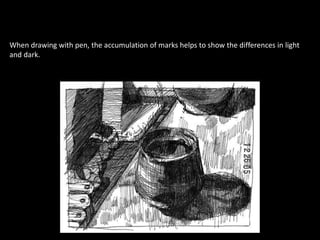
When drawing with pen, the accumulation of marks helps to show the differences in light
and dark.
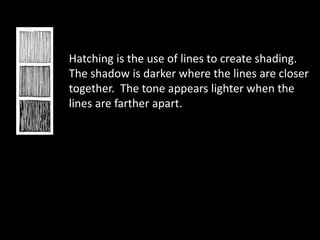
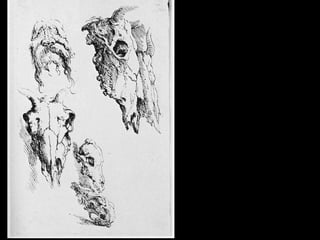
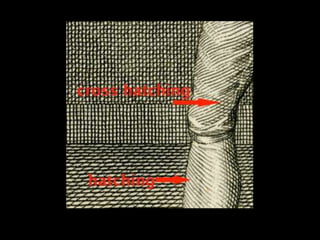
Hatching is the use of lines to create shading.
The shadow is darker where the lines are closer
together. The tone appears lighter when the
lines are farther apart.
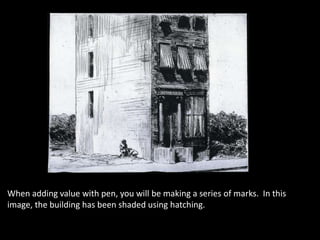
When adding value with pen, you will be making a series of marks. In this
image, the building has been shaded using hatching.
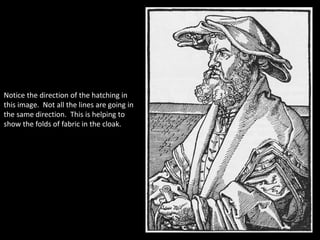
Notice the direction of the hatching in
this image. Not all the lines are going in
the same direction. This is helping to
show the folds of fabric in the cloak.
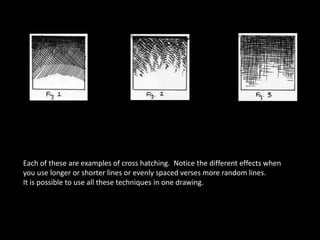
Each of these are examples of cross hatching. Notice the different effects when
you use longer or shorter lines or evenly spaced verses more random lines.
It is possible to use all these techniques in one drawing.
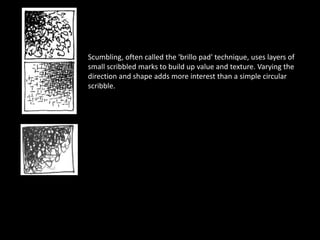
Scumbling, often called the 'brillo pad' technique, uses layers of
small scribbled marks to build up value and texture. Varying the
direction and shape adds more interest than a simple circular
scribble.
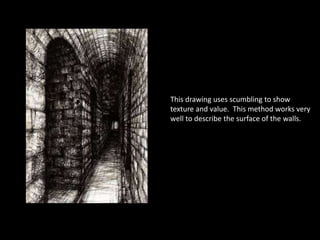
This drawing uses scumbling to show
texture and value. This method works very
well to describe the surface of the walls.
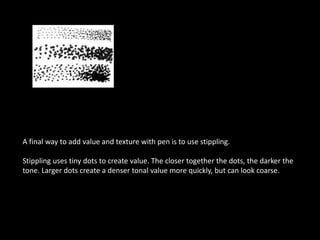
A final way to add value and texture with pen is to use stippling.
Stippling uses tiny dots to create value. The closer together the dots, the darker the
tone. Larger dots create a denser tonal value more quickly, but can look coarse.
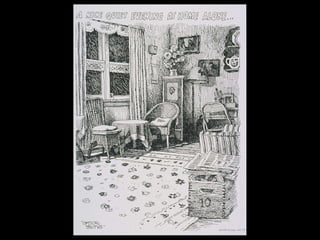
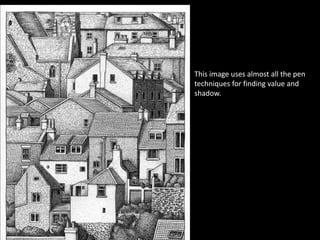
This image uses almost all the pen
techniques for finding value and
shadow.
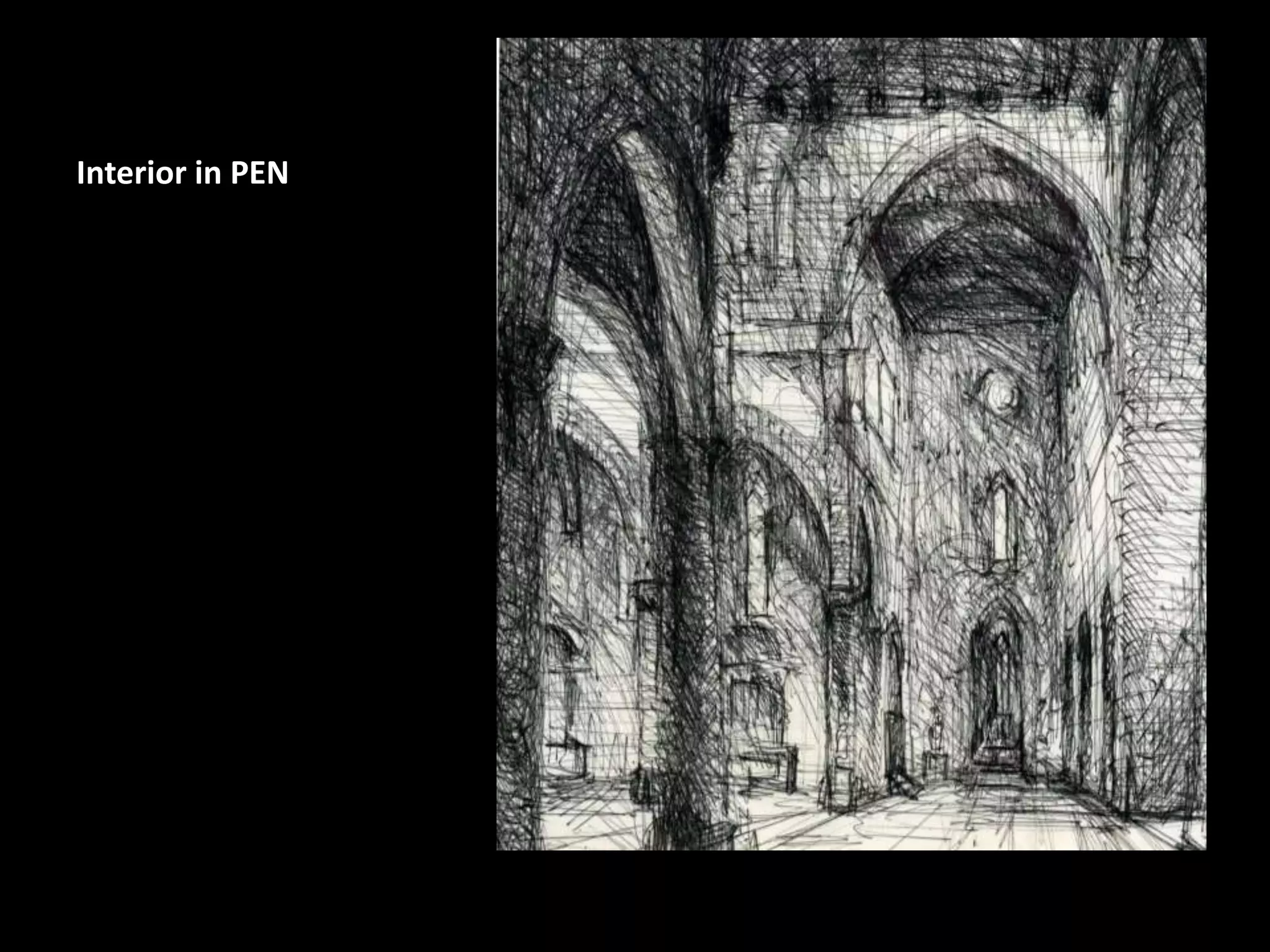
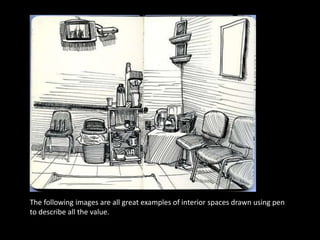
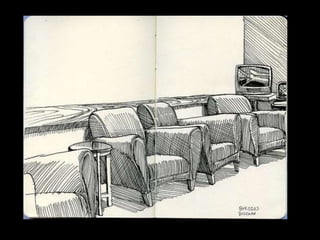
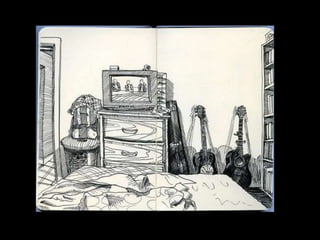
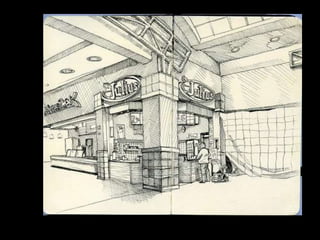
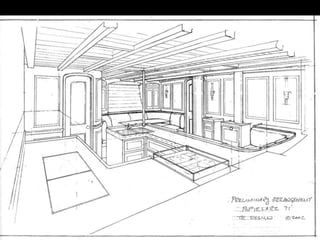
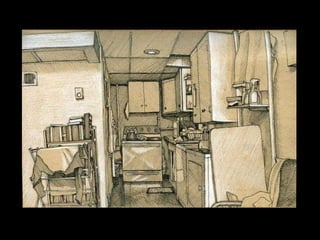
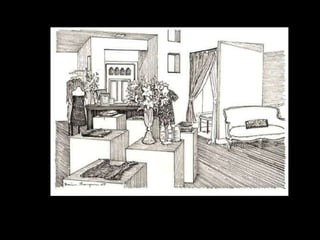
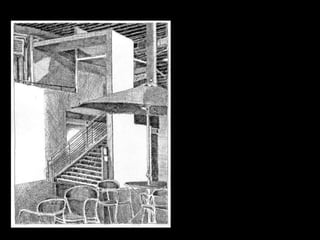
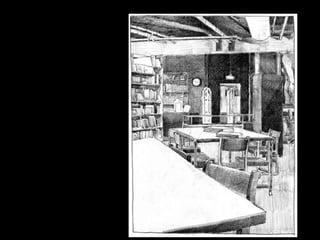
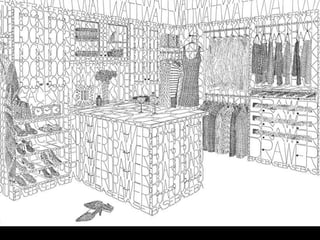
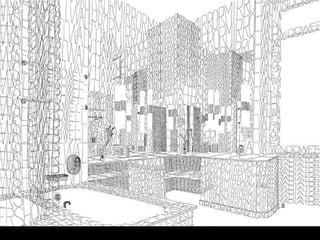
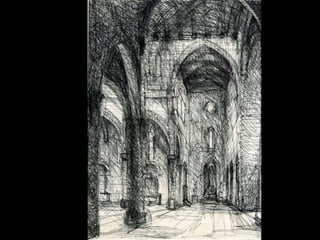
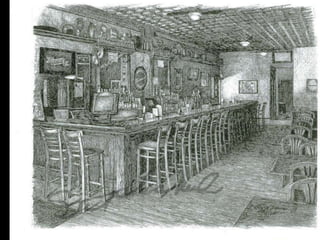
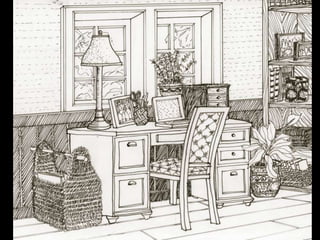
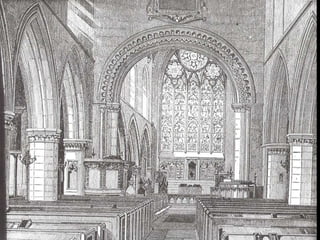
The following images are all great examples of interior spaces drawn using pen
to describe all the value.
Interior in PEN
Interior in PEN
Interior in PEN
Interior in PEN
Interior in PEN
Interior in PEN
Interior in PEN
Interior in PEN
Interior in PEN
Interior in PEN
Interior in PEN
Interior in PEN
Interior in PEN
Interior in PEN

Interior in PEN

  • 1.
  • 2.
    When drawing withpen, the accumulation of marks helps to show the differences in light and dark.
  • 3.
    Hatching is theuse of lines to create shading. The shadow is darker where the lines are closer together. The tone appears lighter when the lines are farther apart.
  • 4.
    When adding valuewith pen, you will be making a series of marks. In this image, the building has been shaded using hatching.
  • 7.
    Notice the directionof the hatching in this image. Not all the lines are going in the same direction. This is helping to show the folds of fabric in the cloak.
  • 9.
    Each of theseare examples of cross hatching. Notice the different effects when you use longer or shorter lines or evenly spaced verses more random lines. It is possible to use all these techniques in one drawing.
  • 10.
    Scumbling, often calledthe 'brillo pad' technique, uses layers of small scribbled marks to build up value and texture. Varying the direction and shape adds more interest than a simple circular scribble.
  • 11.
    This drawing usesscumbling to show texture and value. This method works very well to describe the surface of the walls.
  • 12.
    A final wayto add value and texture with pen is to use stippling. Stippling uses tiny dots to create value. The closer together the dots, the darker the tone. Larger dots create a denser tonal value more quickly, but can look coarse.
  • 13.
    This image usesalmost all the pen techniques for finding value and shadow.
  • 14.
    The following imagesare all great examples of interior spaces drawn using pen to describe all the value.