DRAWING IN SPACE:
Wire Sculptures
PROJECT 1: Create a life size 3-dimensional self-portrait/bust with wire. You will need a mirror and
photographs of yourself for source material, wire, gloves, black spray paint/primer, wire cutters and a
container such as cardboard to transport your sculpture. You will focus on descriptive contour lines
that define shapes. For the student seeking a more of a challenge, try incorporating mass. (see
attached examples)
PROJECT 2: Create a 3-dimensional wire sculpture of a person, animal, or object of interest. The
sculpture needs to be a minimum height or length of 12 inches. You will need all the materials listed in
project 1 for the sculpture plus source materials such as photographs, statues, toys, etc. of your
subject. For this sculpture you can, if desired, focus on mass as well as contour.
Take into consideration how the sculpture will be presented (engineered for hanging, sitting on a
counter, projecting out of the wall, interacting with architecture such as doors, corners, etc.) How will
it occupy the space?
Even in the pursuit of naturalism don’t discount the powerful expression of gesture in your lines. Study
the attached examples.
I strongly recommend you search the web to find other examples of wire sculpture for inspiration.
Far better to have a simple concept executed magnificently than a clever concept executed poorly.
You must use source material (photographs, toys, physical objects, etc.)
This elegant wire sculpture uses a minimal
amount of wire – mostly one long wire.
Note the specific-ness of the smirk and the
less is more approach.
Every contour is important in a minimal
sculpture.
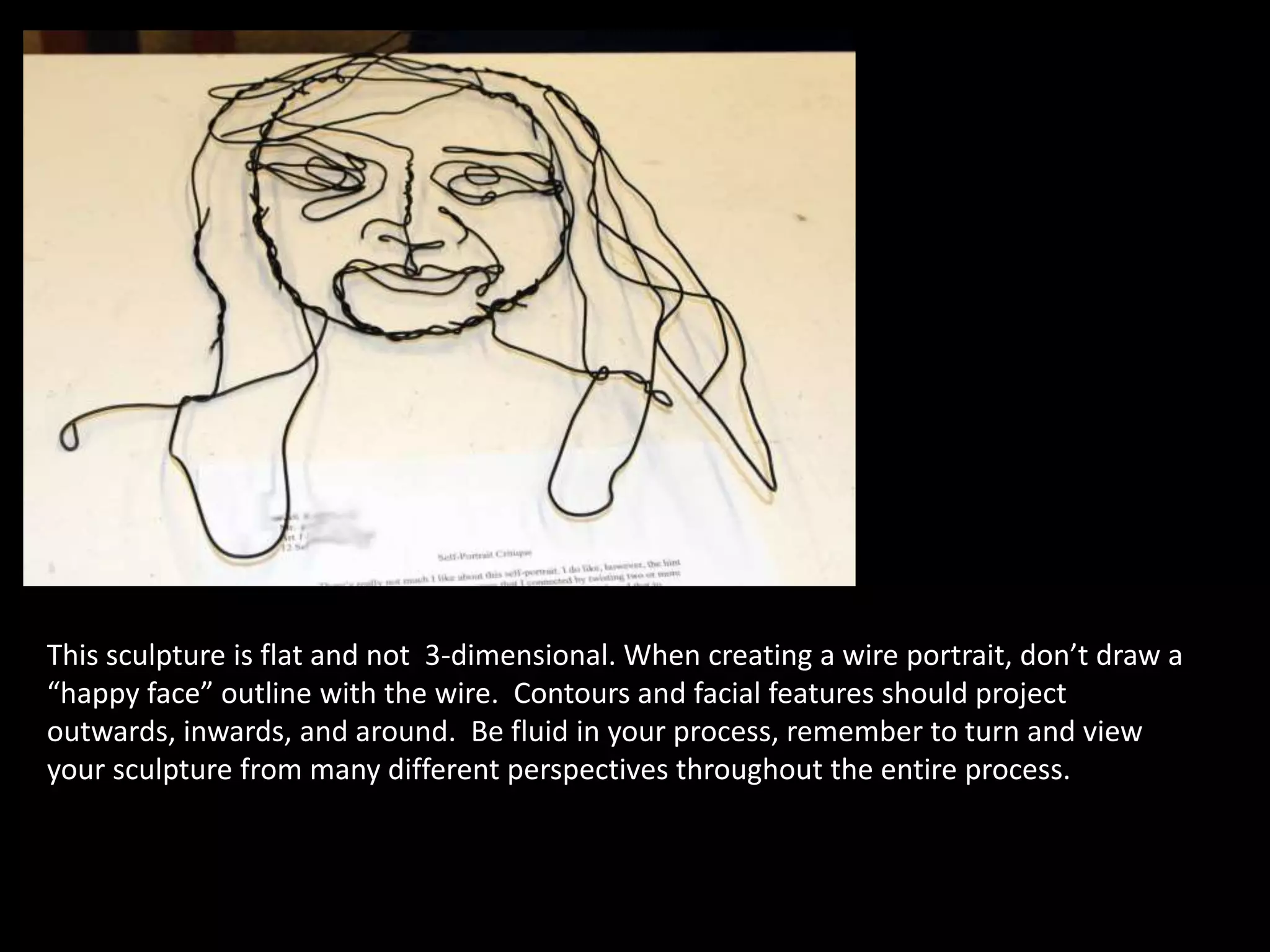
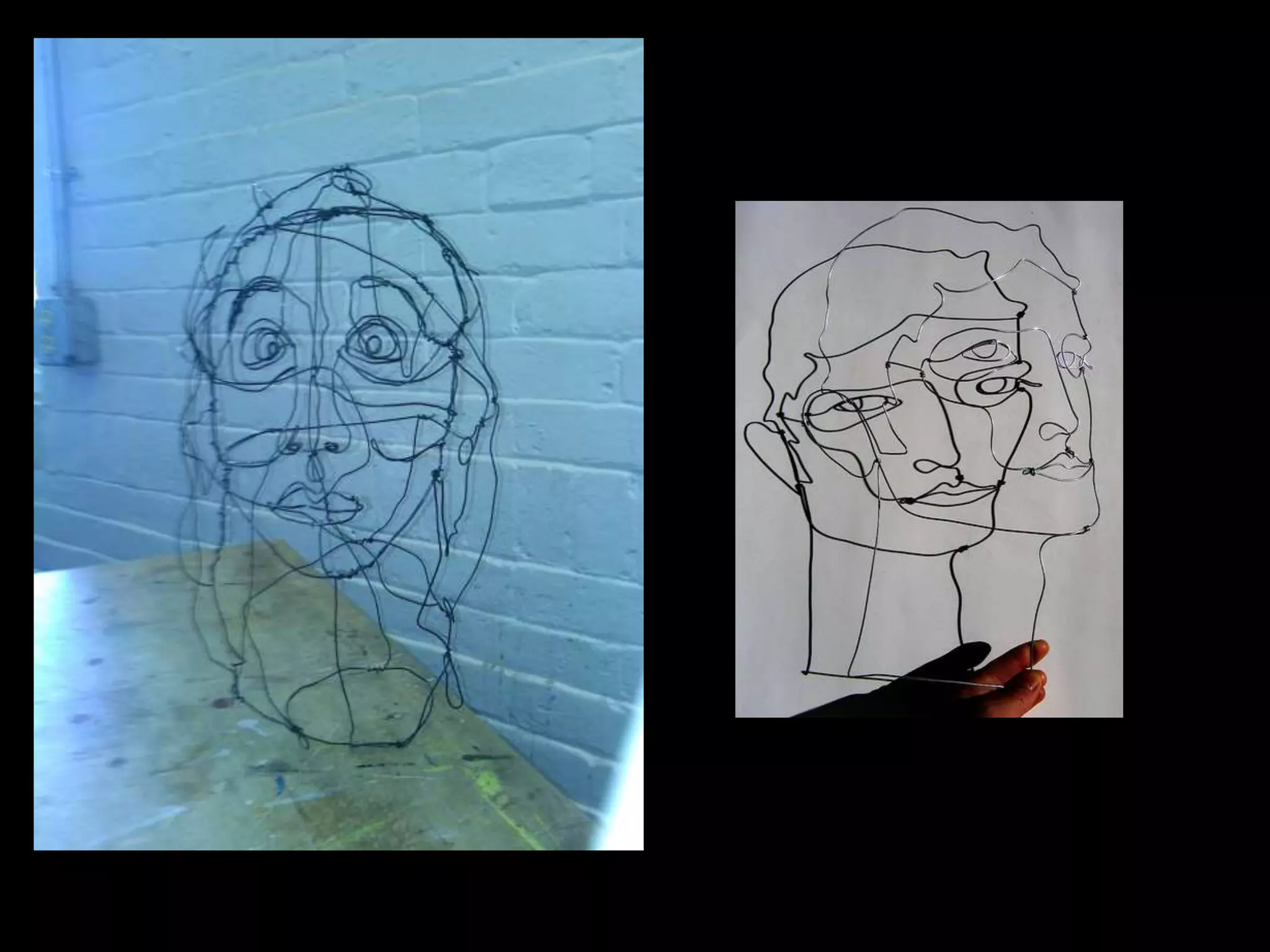
This sculpture is flat and not 3-dimensional. When creating a wire portrait, don’t draw a
“happy face” outline with the wire. Contours and facial features should project
outwards, inwards, and around. Be fluid in your process, remember to turn and view
your sculpture from many different perspectives throughout the entire process.
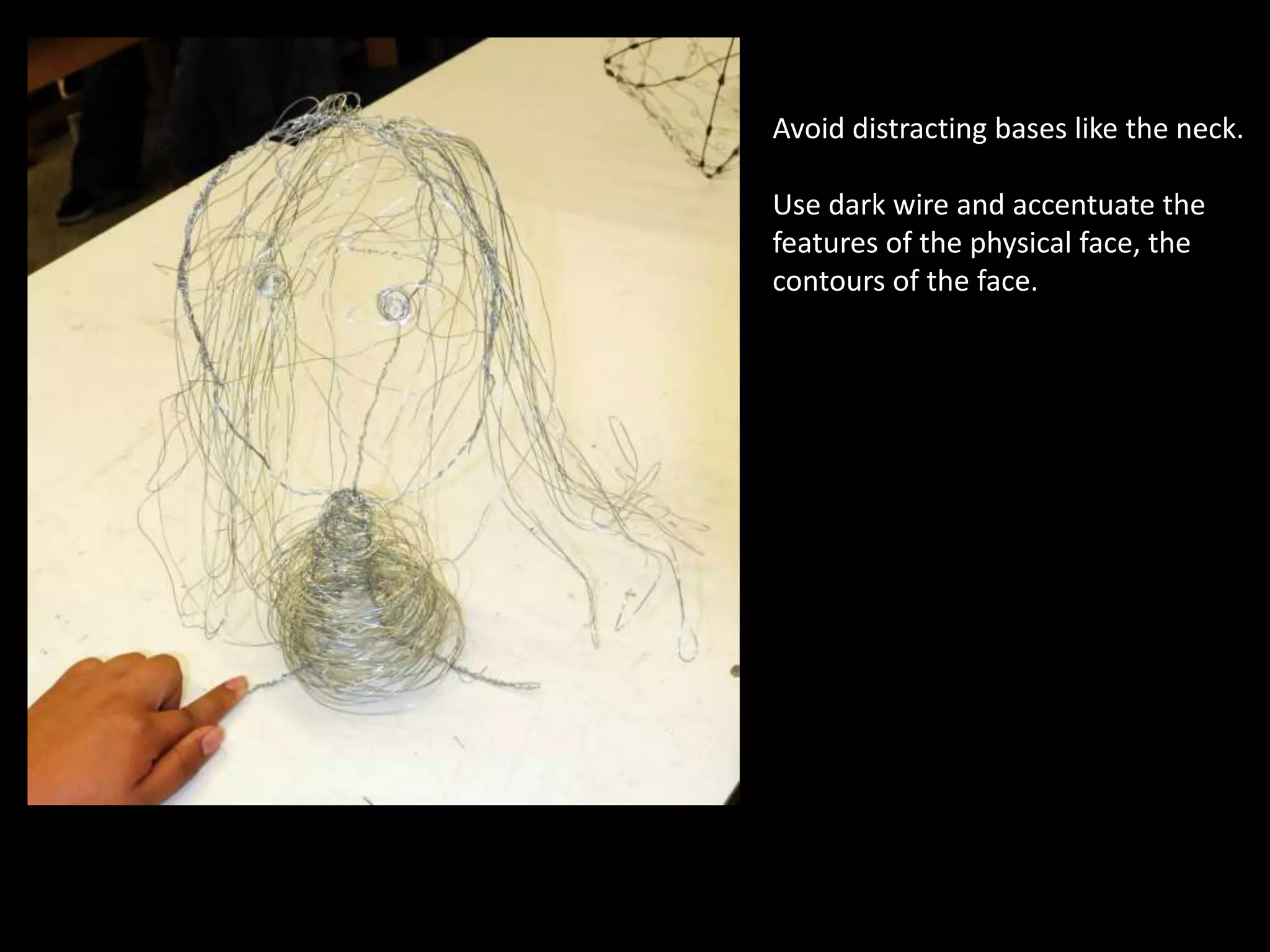
Avoid distracting bases like the neck.
Use dark wire and accentuate the
features of the physical face, the
contours of the face.
If struggling with the wire portrait, I encourage students to try and create a portrait
with one long wire. Also I encourage students to start with a feature such as an eye,
nose or mouth – and then discover your way to the next feature as if the sculpture is
a 3-dimensional continuous contour drawing in space.
Avoid starting out with or worrying about bases. Capture the 3-dimensional contours
of the portrait first and foremost. How it stands can be secondary.
Be more interested in how you do something rather than what you’ve chosen to do.
Focus on the form and don’t let imagination/concepts be an excuse for poor
craftsmanship.
Check out these beautiful trees!
The student didn’t use source material. The trunk and branches are much too uniform.
It is missing the organic tapering, detail and variety inherent in the shape of a tree.
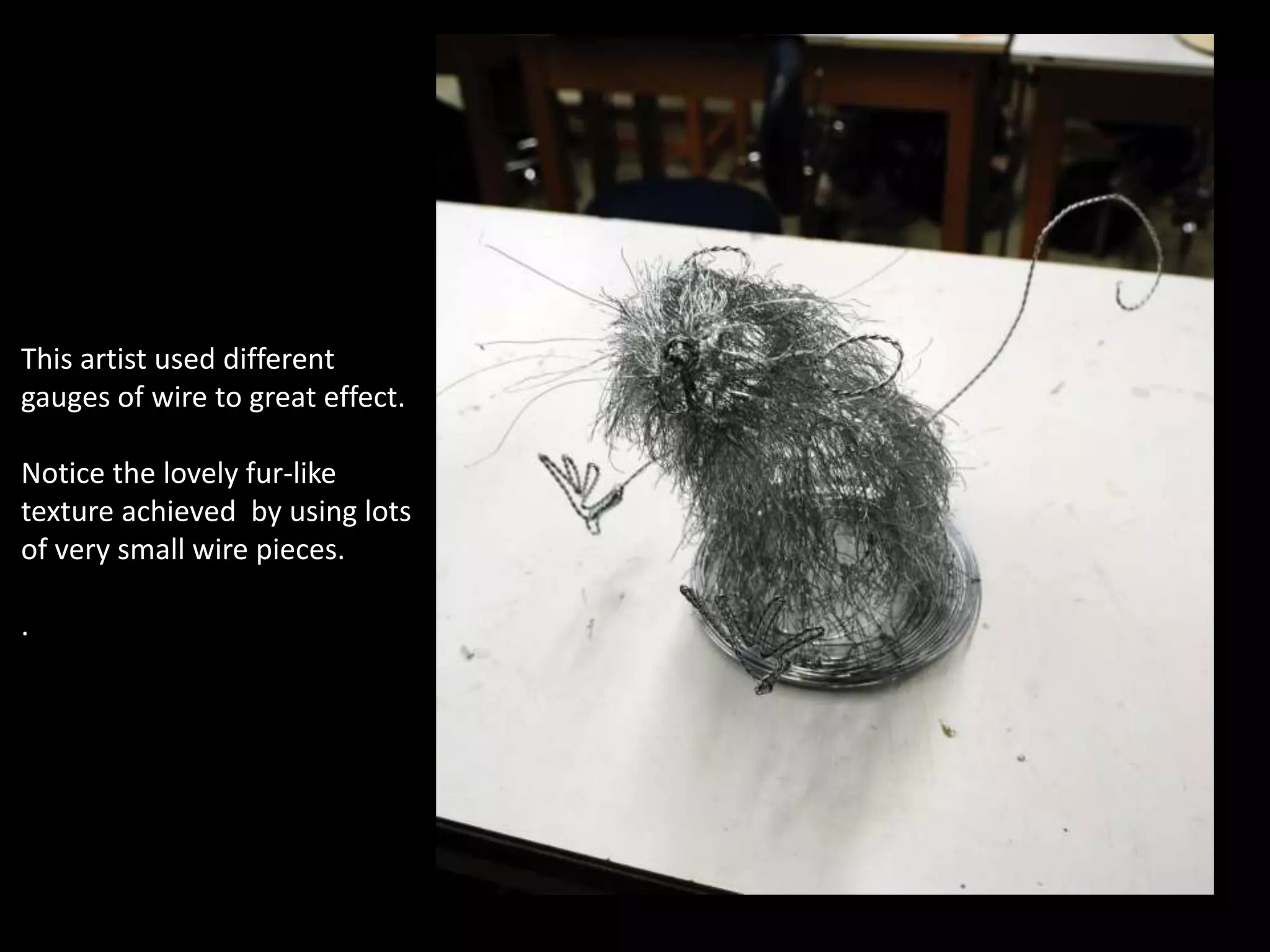
This artist used different
gauges of wire to great effect.
Notice the lovely fur-like
texture achieved by using lots
of very small wire pieces.
.
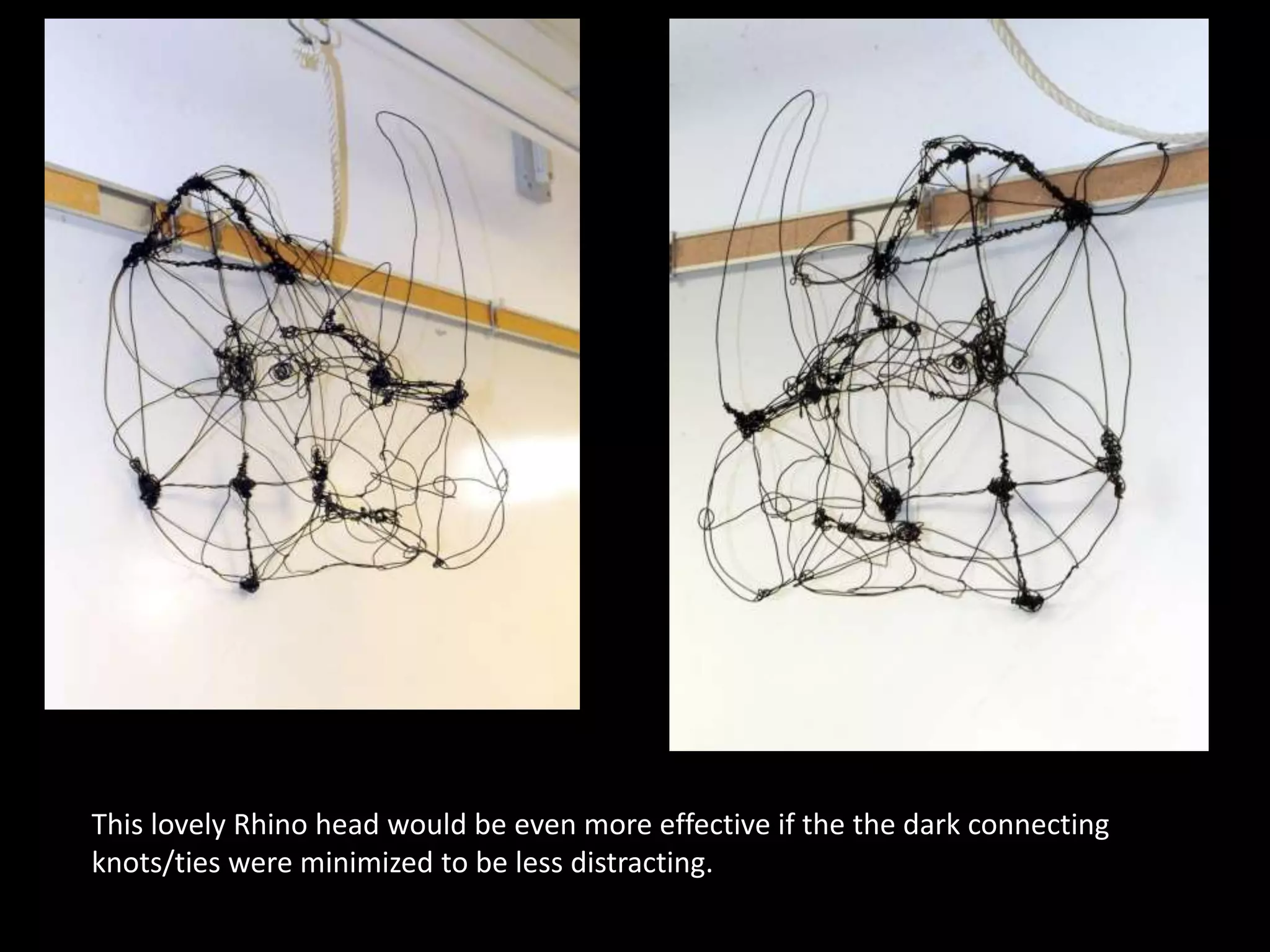
This lovely Rhino head would be even more effective if the the dark connecting
knots/ties were minimized to be less distracting.
This frog was astonishing. When
you moved around the sculpture
you could envision it’s form very
clearly.
The artist brilliantly used negative
space to suggest what isn’t there.
The hungry frog was even
complimented with a floating fly.
This elegant portrait subtly used negative space to describe the features and planes.
Notice the specific shape of the eye and top lip. The hair contour line beautifully
describes a head of hair without having to use lots of wire.
Notice the lovely contour of the bear’s back and spine and the mass of wire that gives
the bear visual weight.
Working with something that is 3D
and not 2D requires a different, more
fluid process of constantly rotating
your work to view it from multiple
angles.
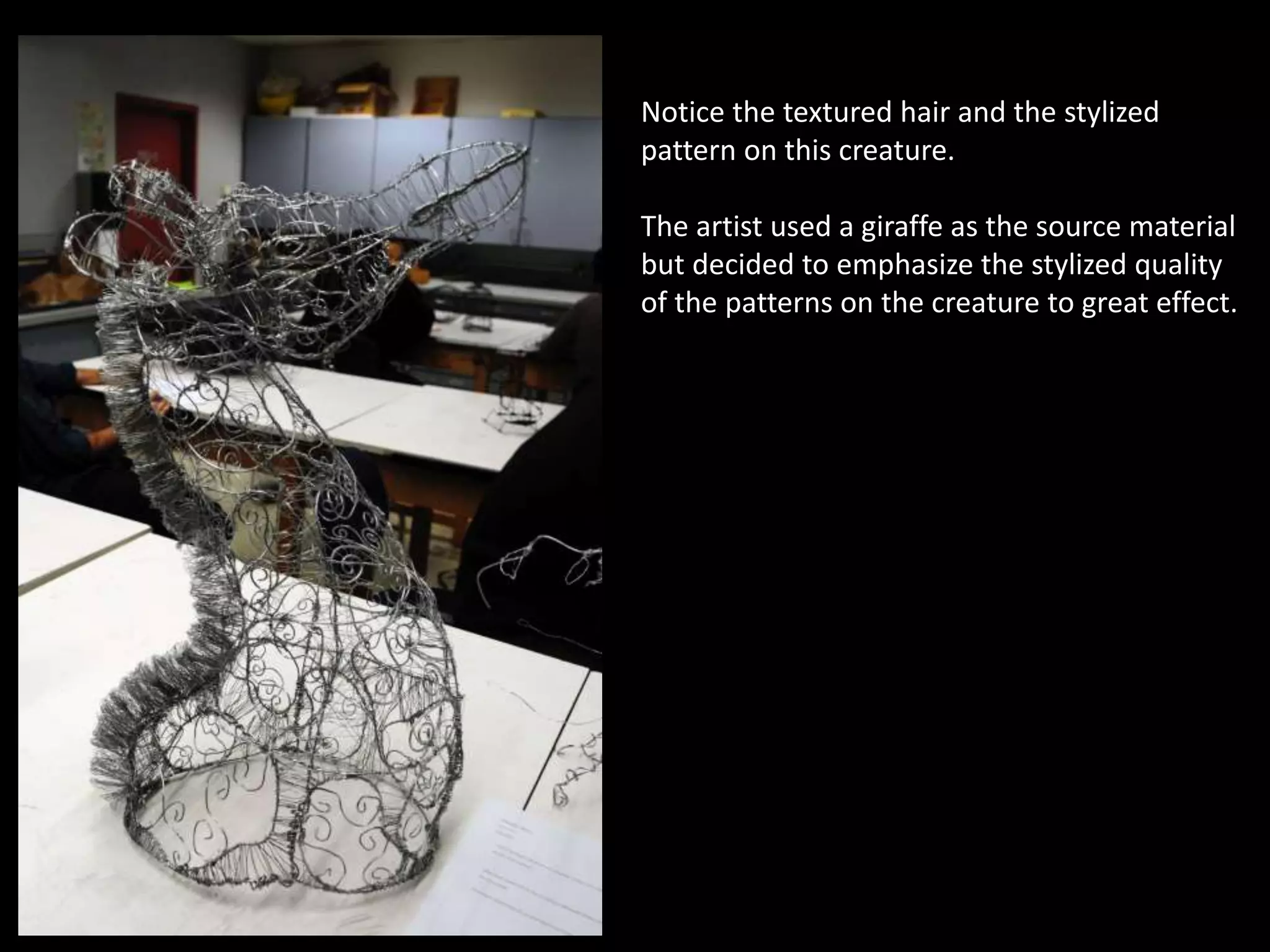
Notice the textured hair and the stylized
pattern on this creature.
The artist used a giraffe as the source material
but decided to emphasize the stylized quality
of the patterns on the creature to great effect.
This dog doing his business is engaging the environment. You can place him almost anywhere!
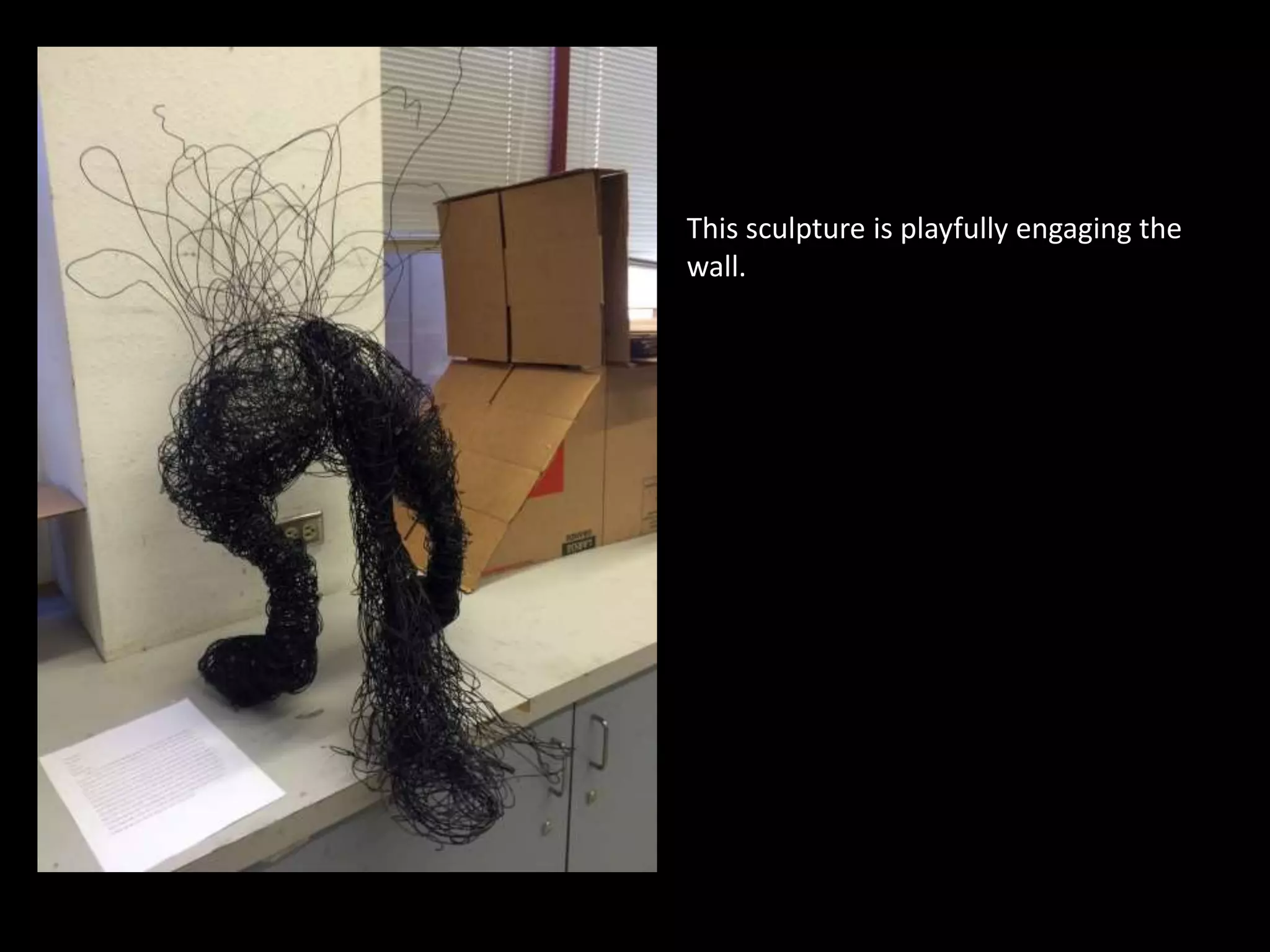
This sculpture is playfully engaging the
wall.
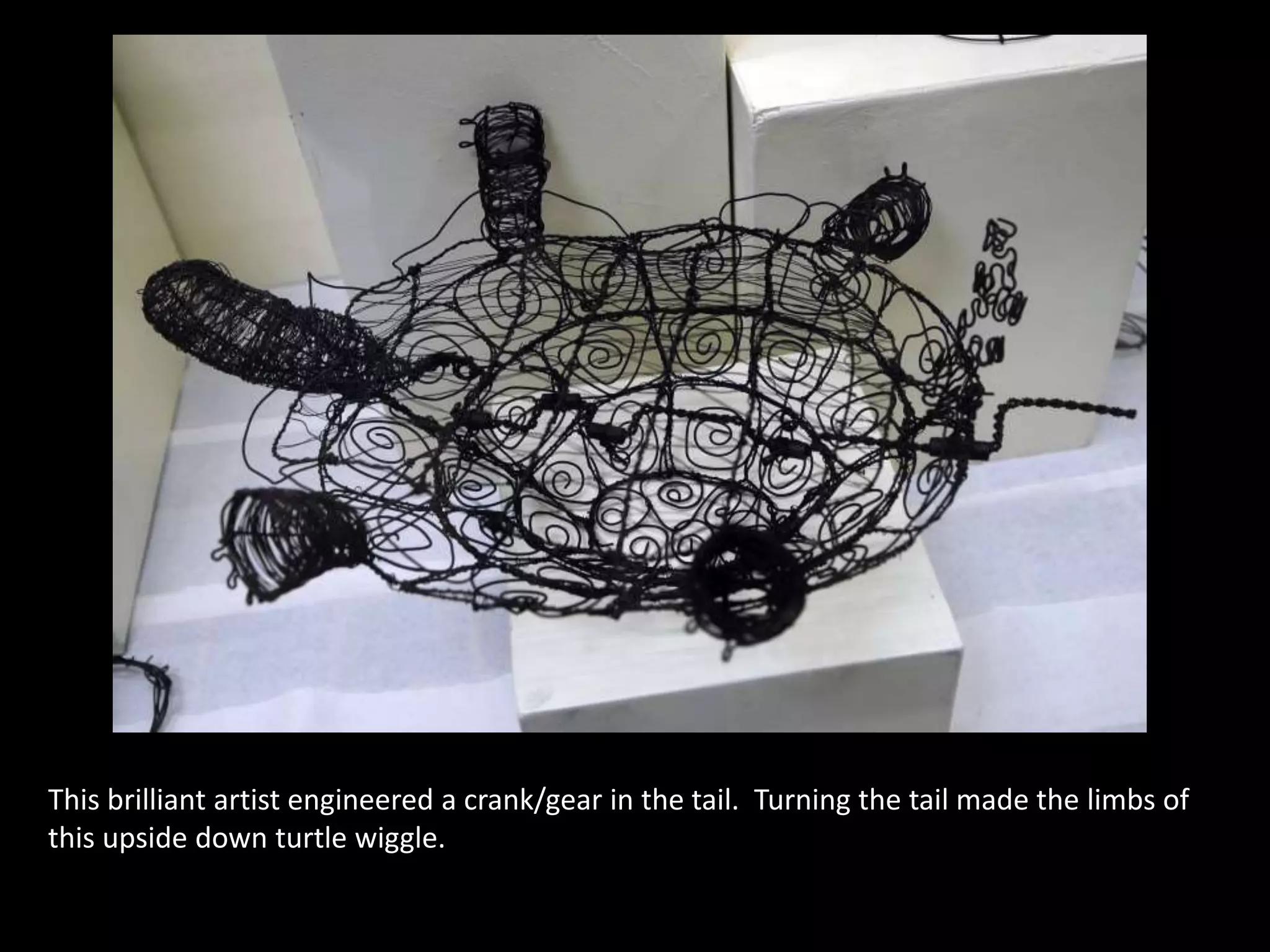
This brilliant artist engineered a crank/gear in the tail. Turning the tail made the limbs of
this upside down turtle wiggle.
Here the artist sacrificed realism for expression. The long delicate legs suggest the fragility
of a young pony.
This otherwise charming owl would
benefit from legs, emerging out of a
nest, etc.
This clever contour is leaving his mass behind!
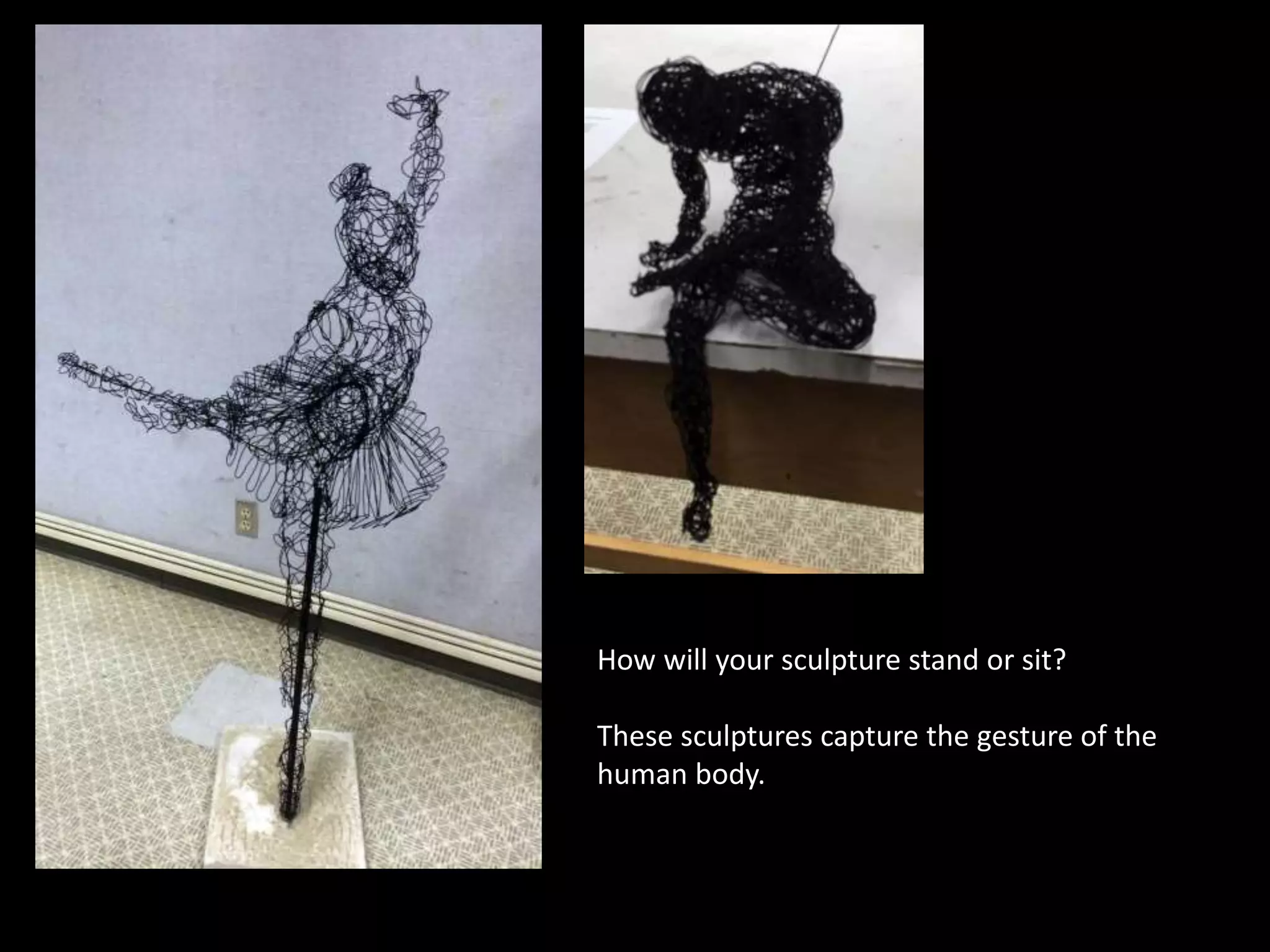
How will your sculpture stand or sit?
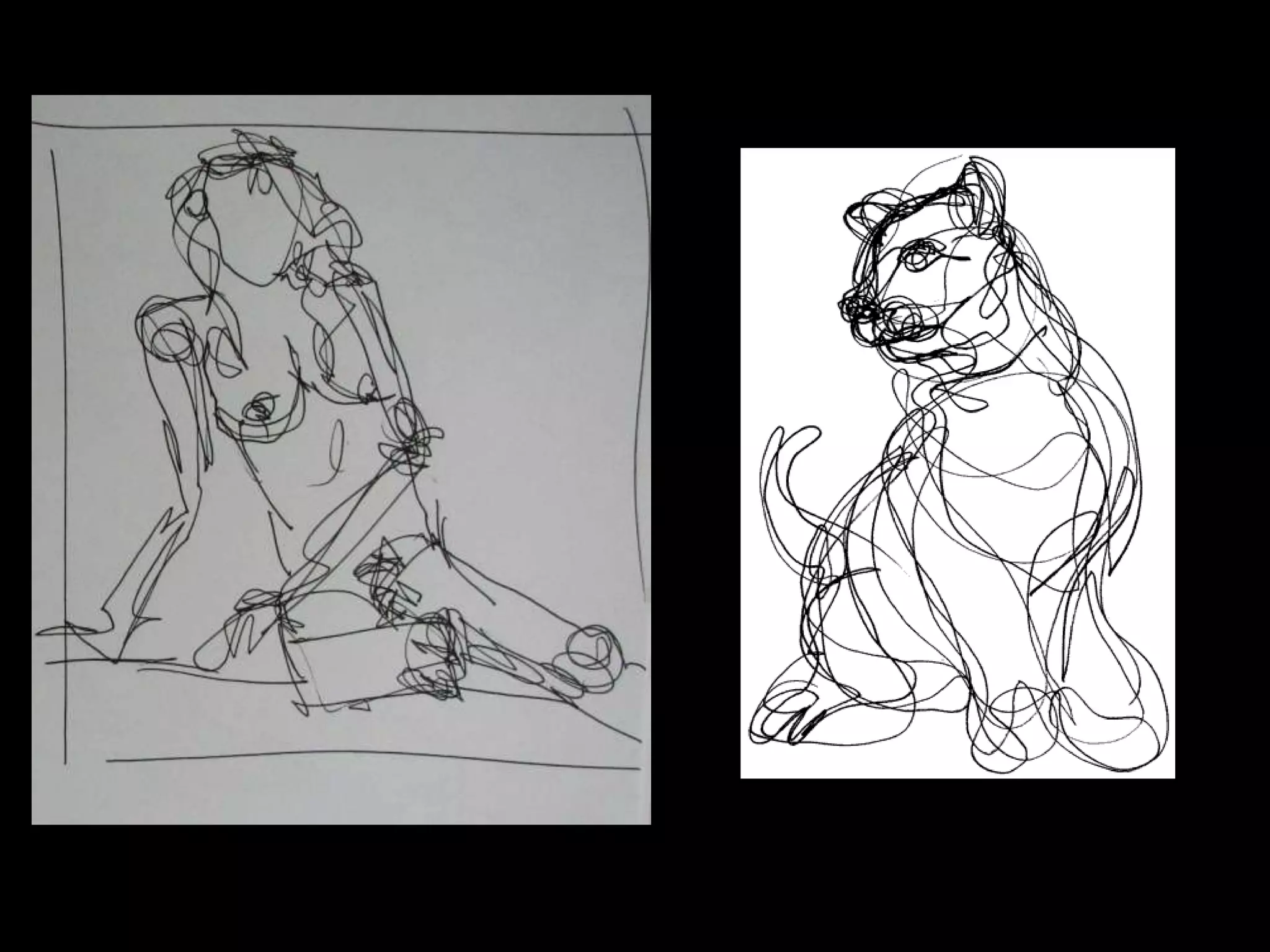
These sculptures capture the gesture of the
human body.
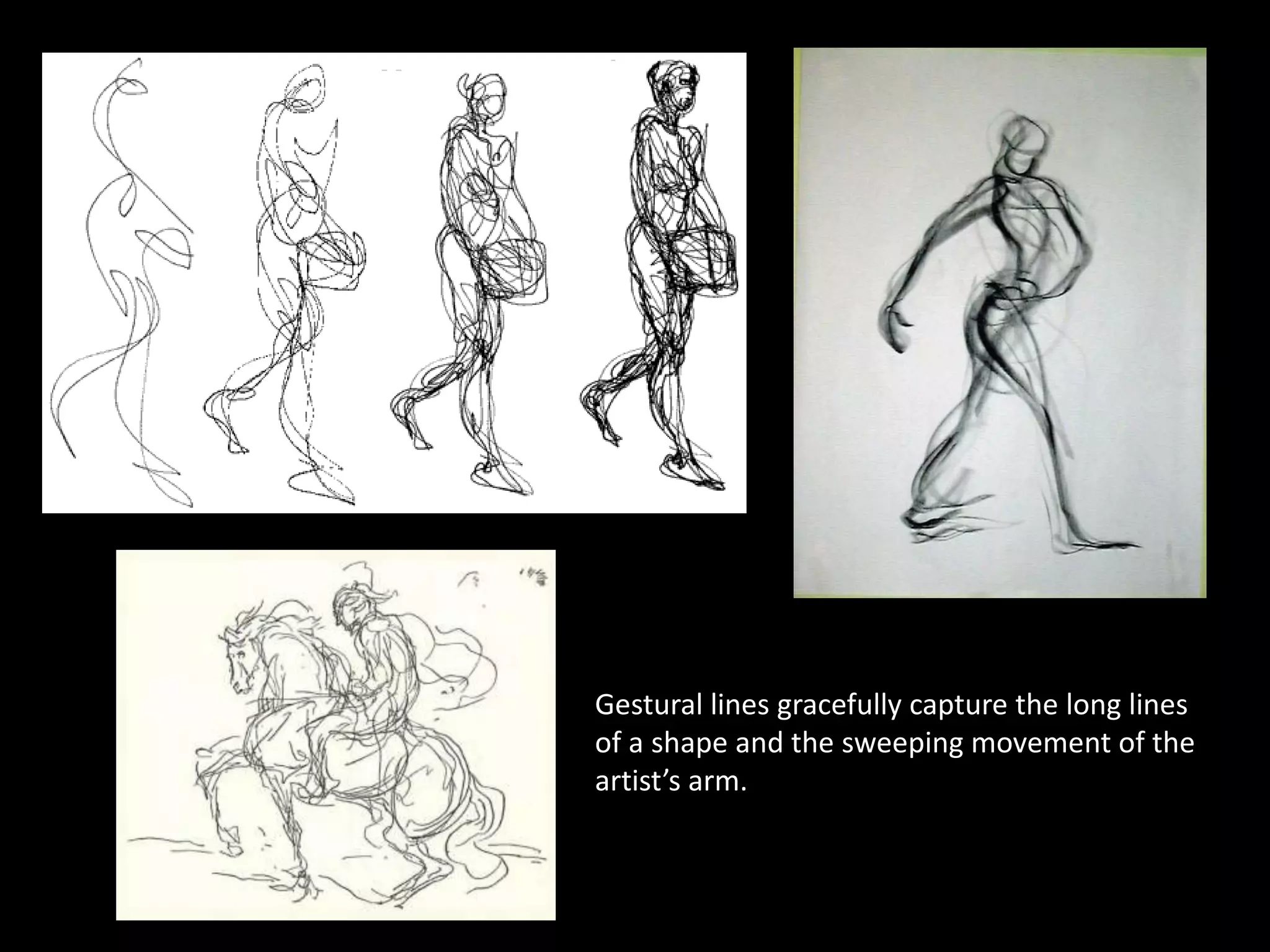
Gestural lines gracefully capture the long lines
of a shape and the sweeping movement of the
artist’s arm.
This cat is missing a naturalistic gesture in it’s movement. Beware of creating “tube-
like, Slinky” bodies. This student did this from imagination without source material
. . . . bad idea.
These are works by the great Antony Gormley. Notice the swirling lines and how they
suggest motion or movement.
More of Gormley’s remarkable figuration in wire.
Portraying Romulus and Remus the founders of Rome in a minimal fashion.
Notice what isn’t described.
Notice the mass and visual weight of this fantastic sculpture.
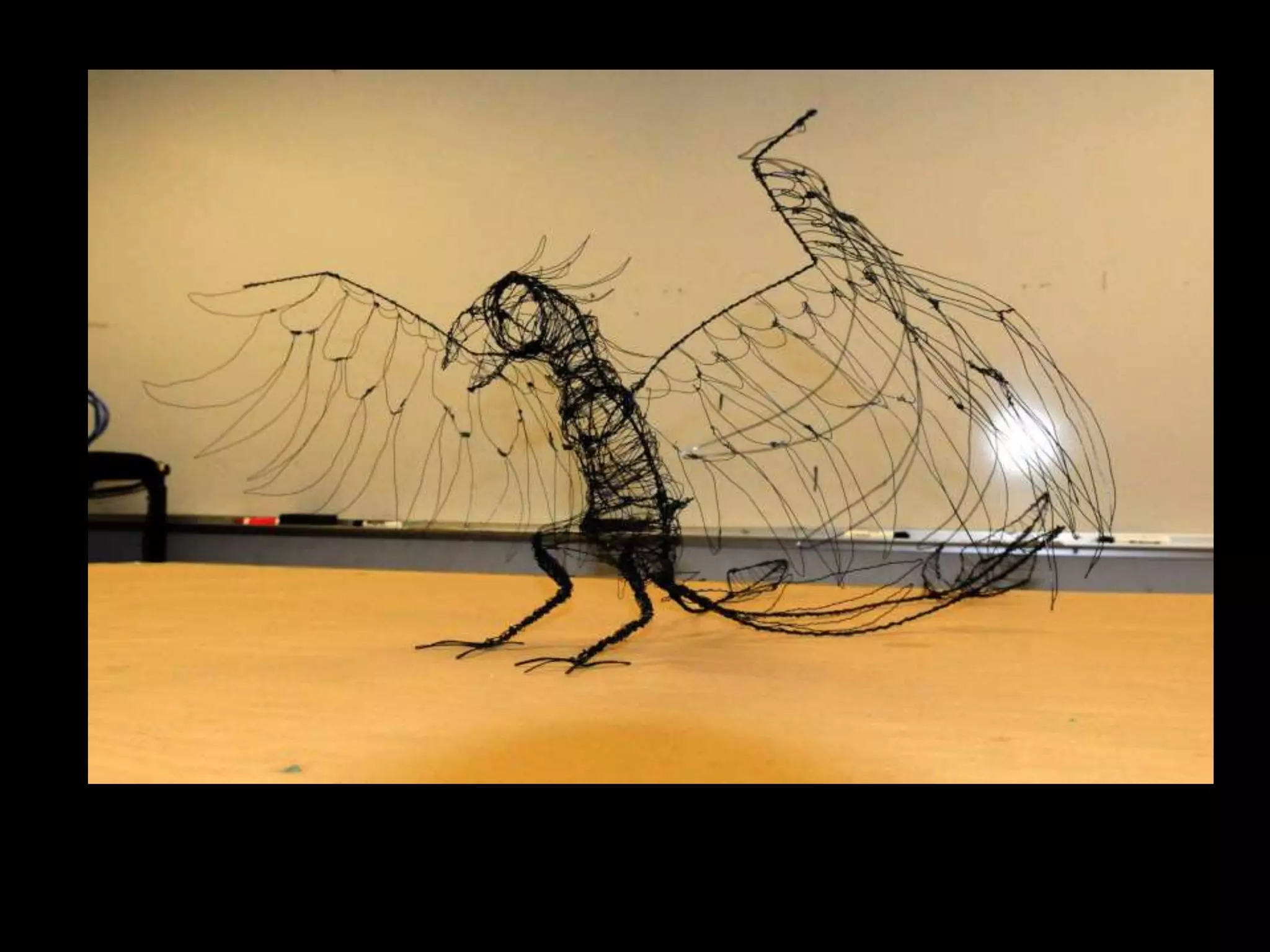
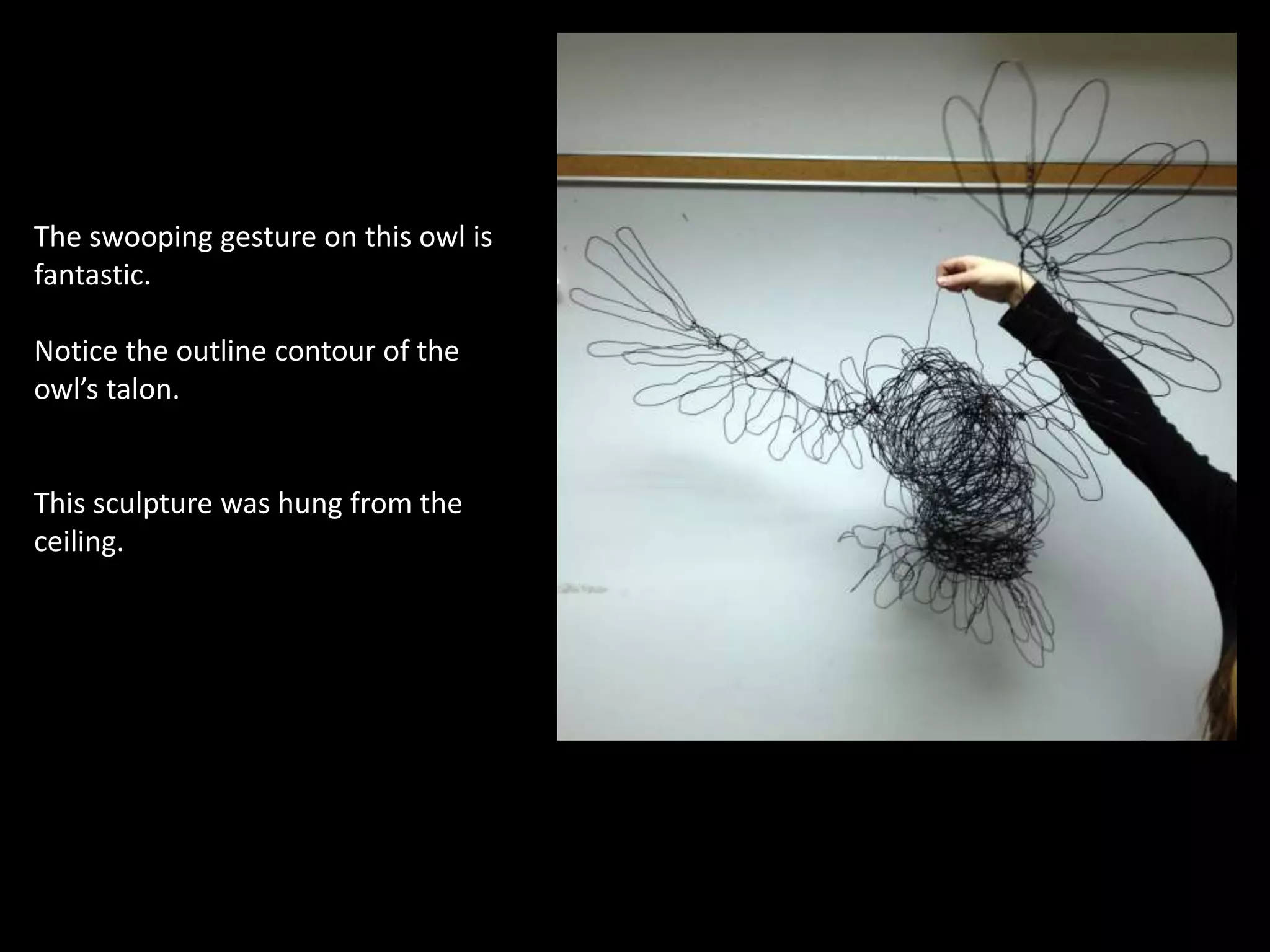
The swooping gesture on this owl is
fantastic.
Notice the outline contour of the
owl’s talon.
This sculpture was hung from the
ceiling.
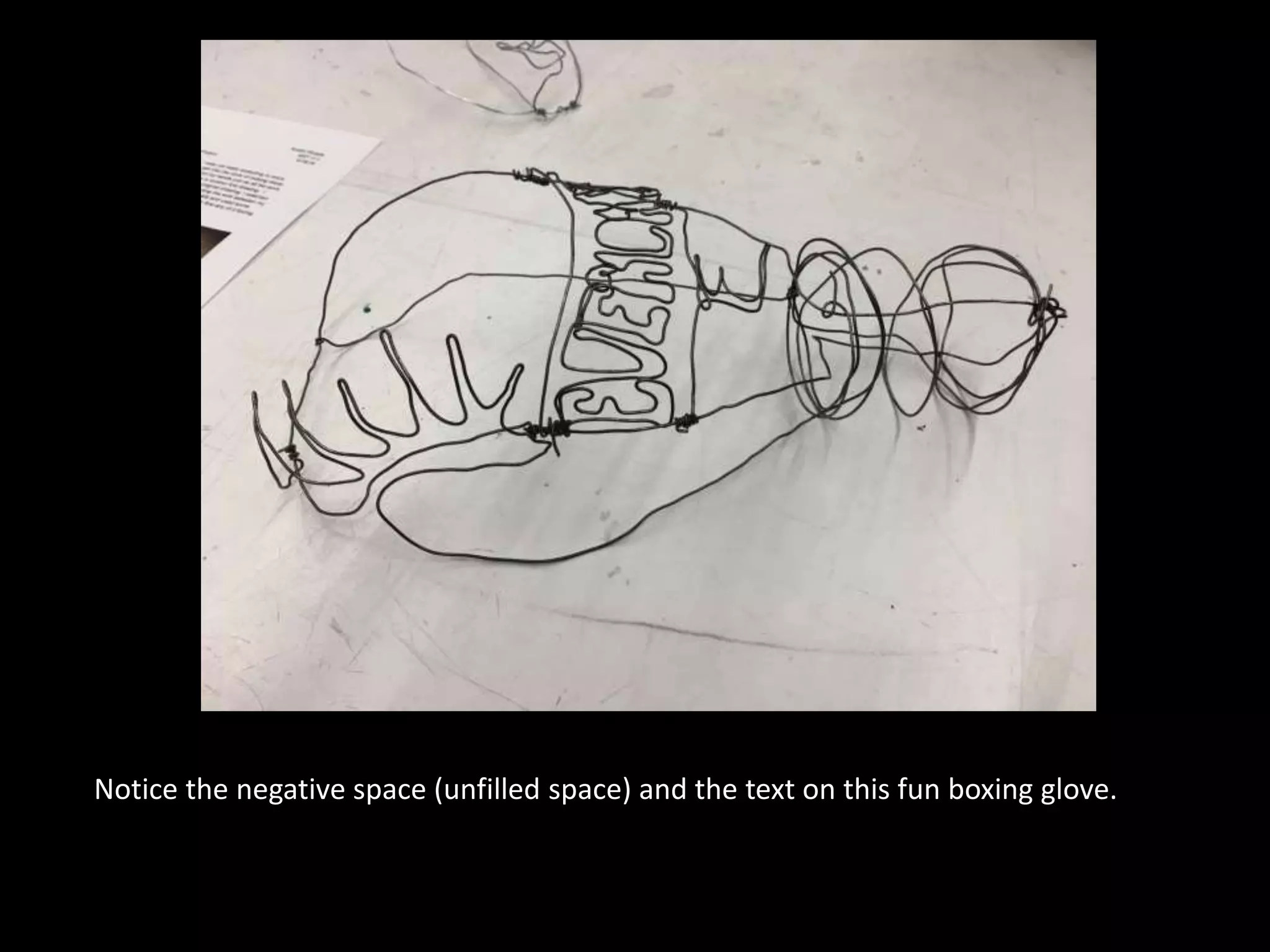
Notice the negative space (unfilled space) and the text on this fun boxing glove.
Check out this wonderful light bulb. Notice the use of different gauge string for effect.
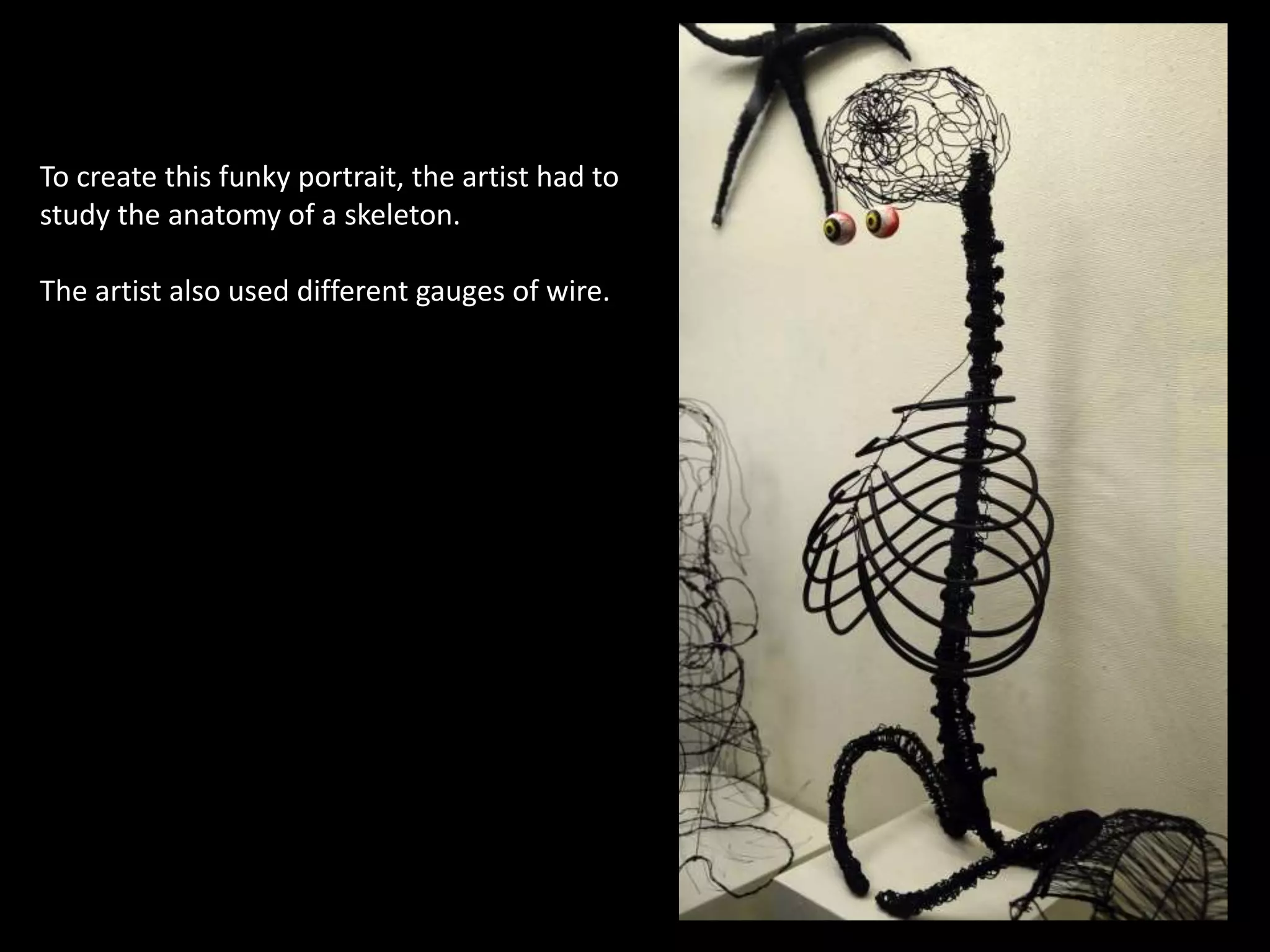
To create this funky portrait, the artist had to
study the anatomy of a skeleton.
The artist also used different gauges of wire.
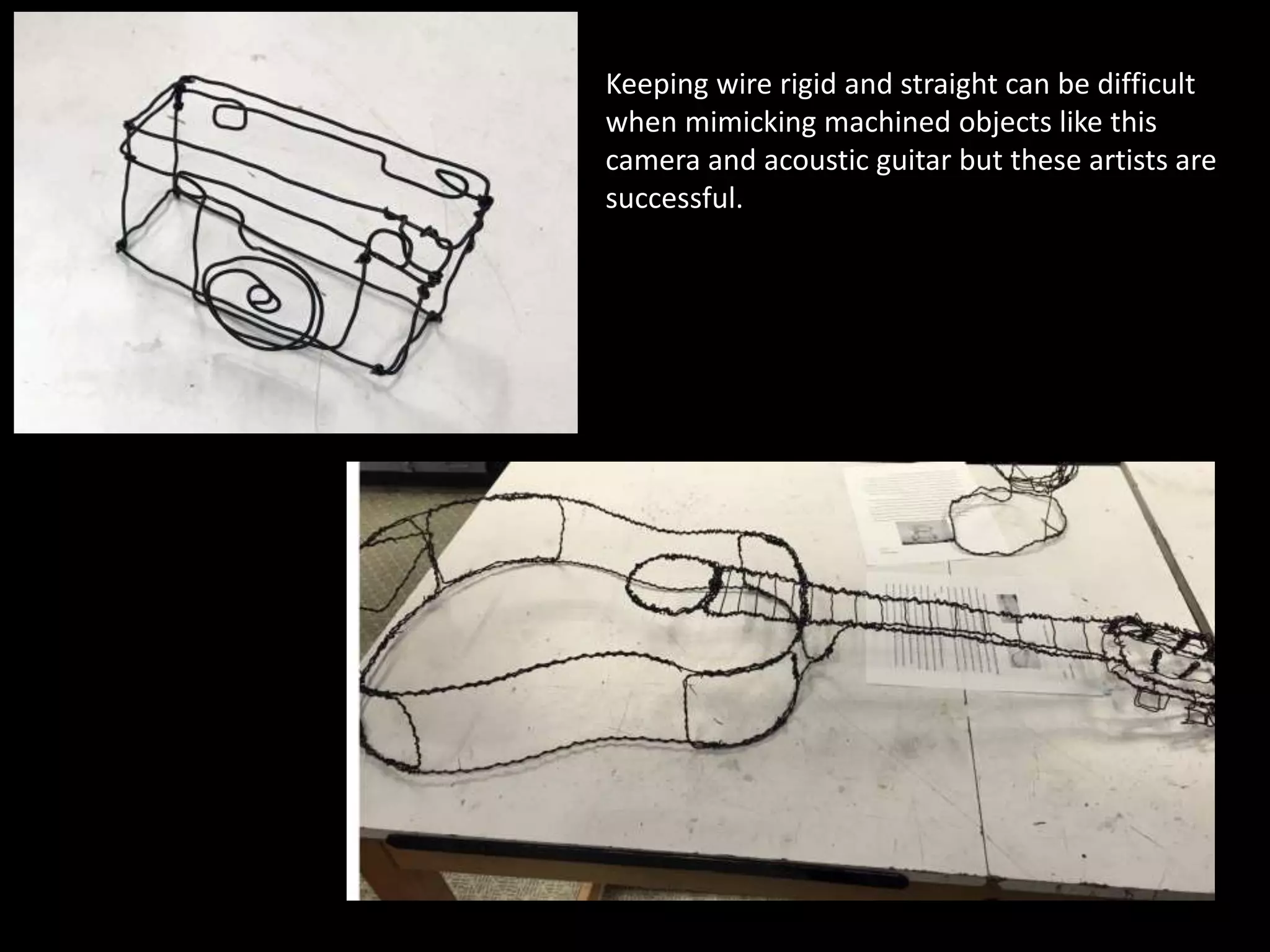
Keeping wire rigid and straight can be difficult
when mimicking machined objects like this
camera and acoustic guitar but these artists are
successful.
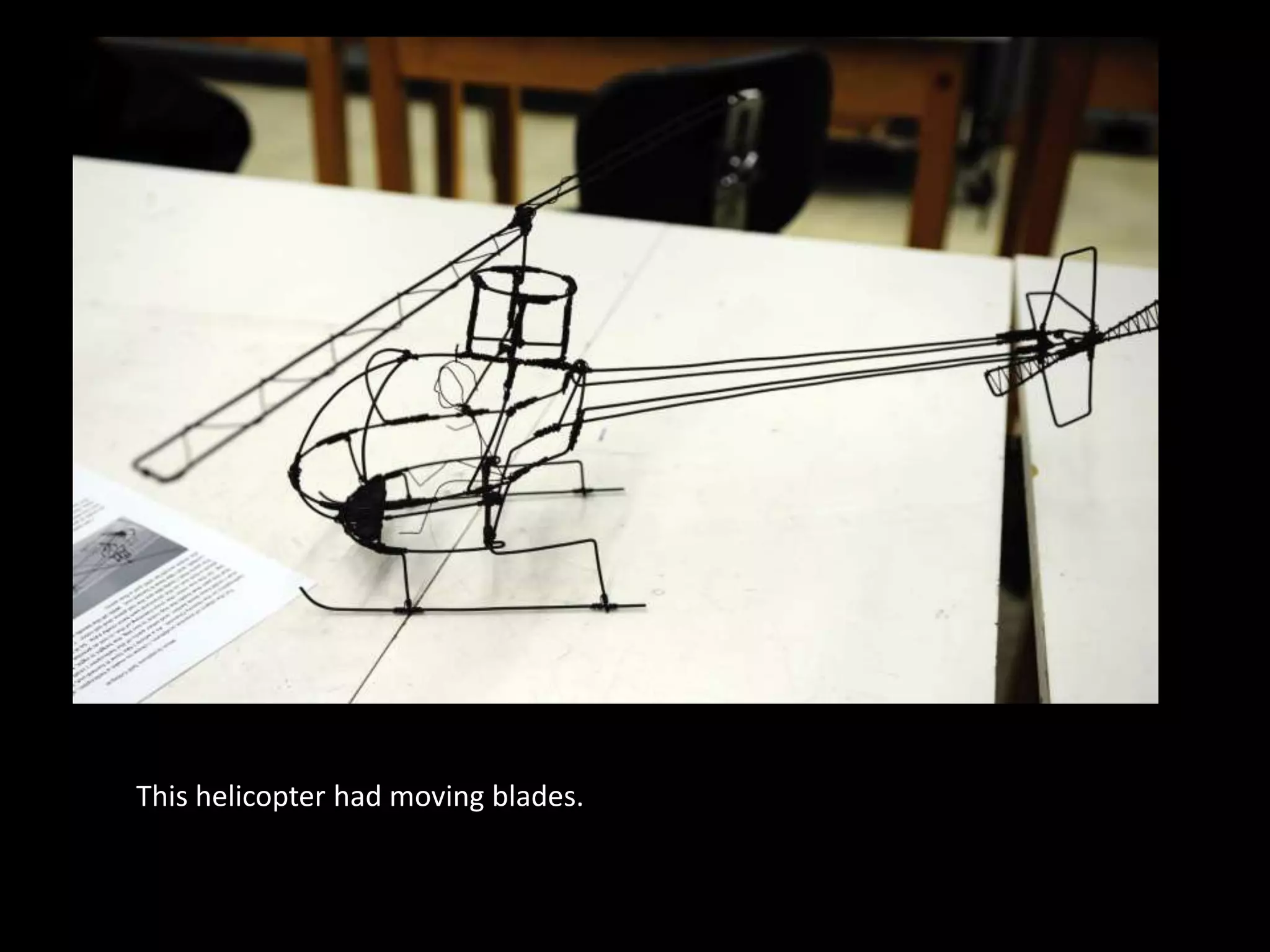
This helicopter had moving blades.
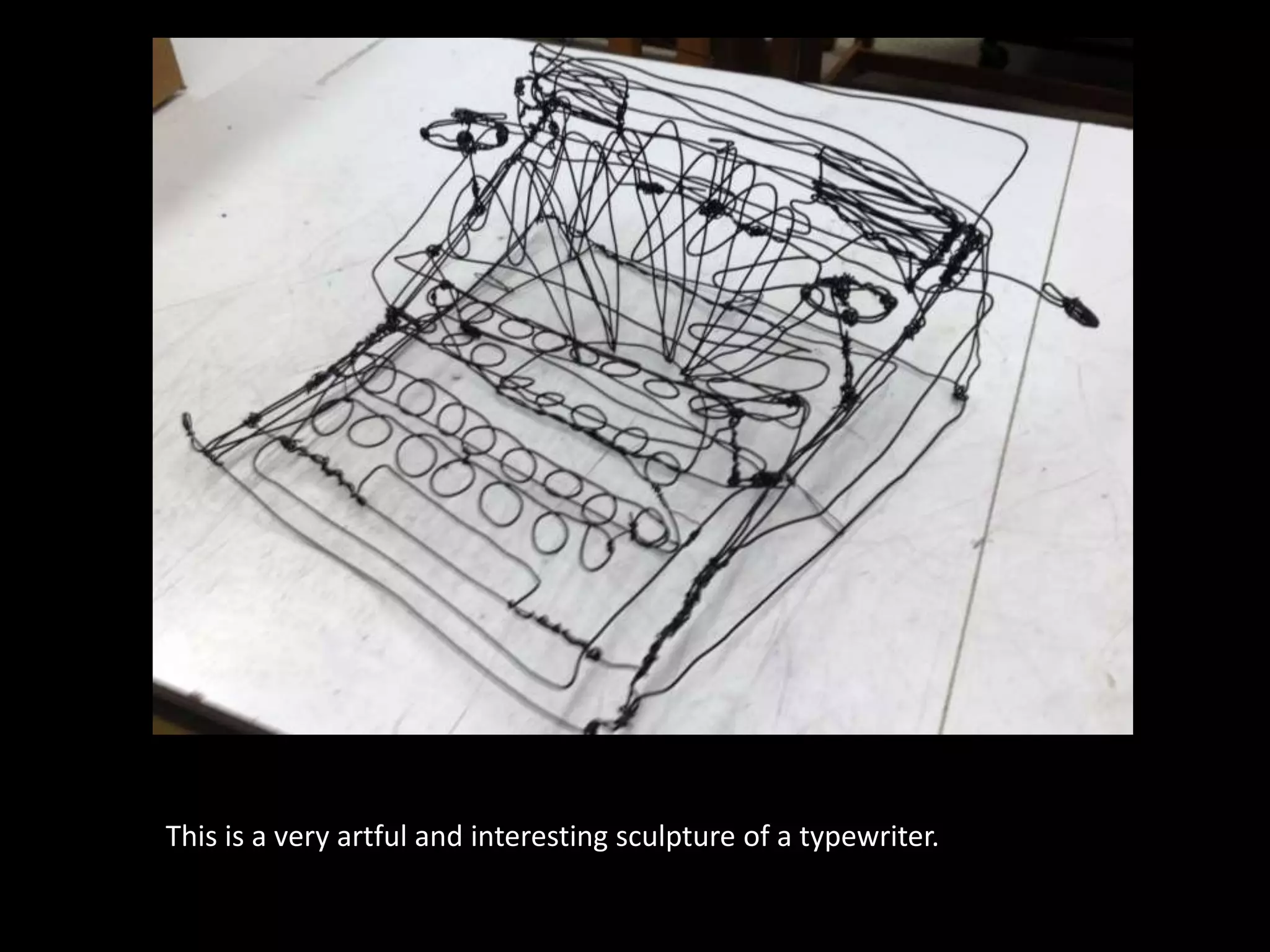
This is a very artful and interesting sculpture of a typewriter.
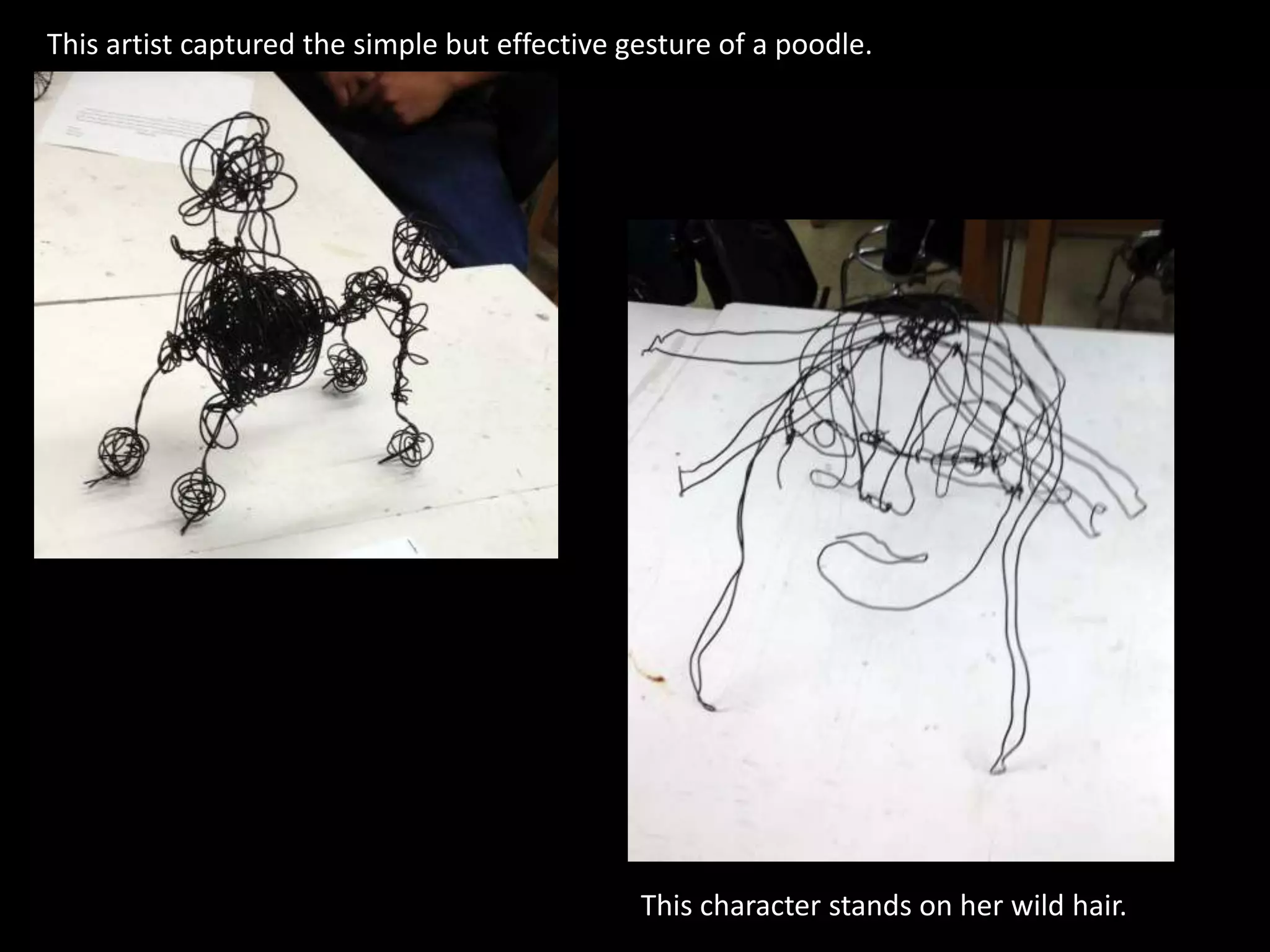
This artist captured the simple but effective gesture of a poodle.
This character stands on her wild hair.
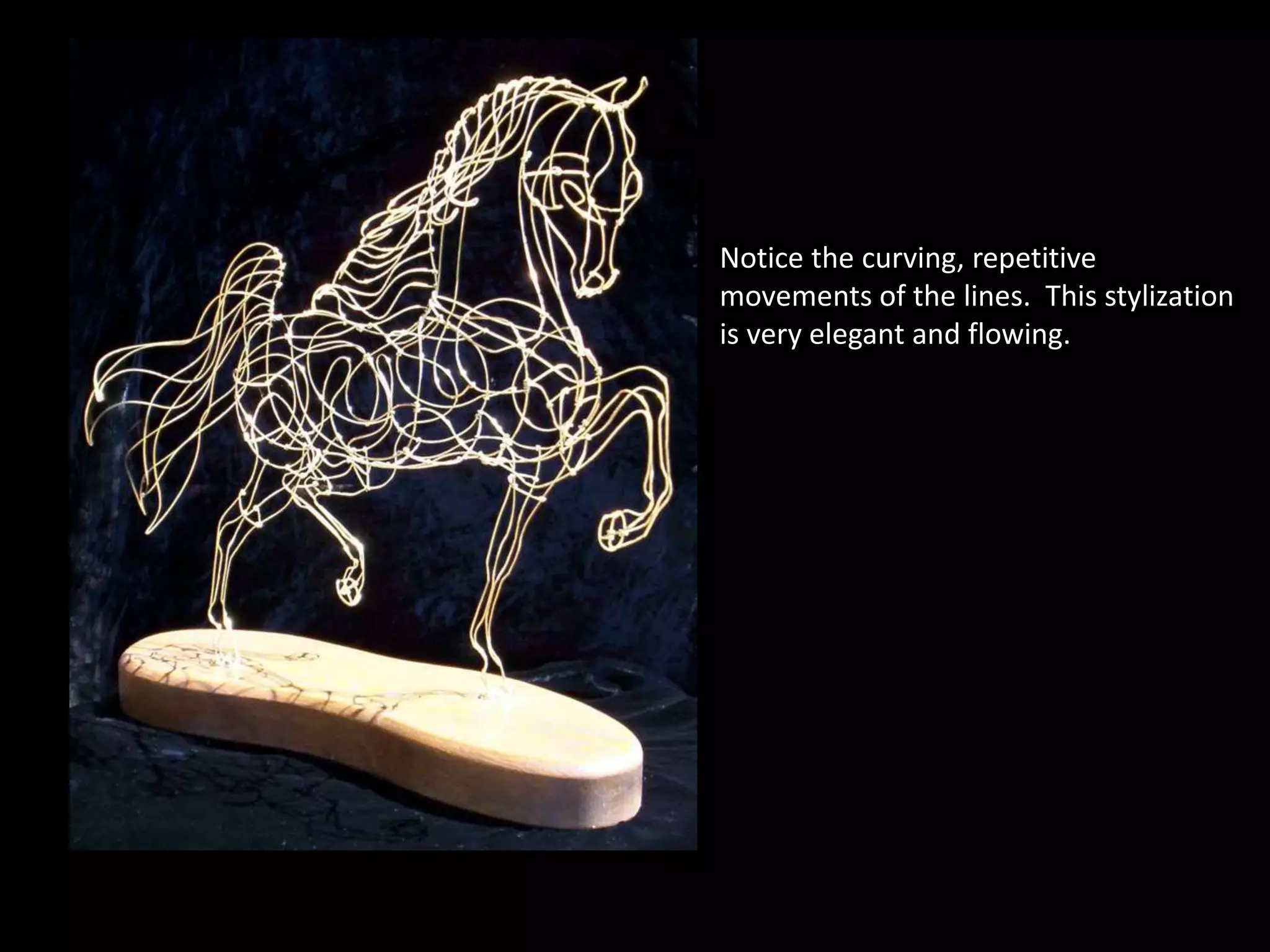
Notice the curving, repetitive
movements of the lines. This stylization
is very elegant and flowing.
Wire Sculpture Project

Wire Sculpture Project

  • 1.
  • 2.
    PROJECT 1: Createa life size 3-dimensional self-portrait/bust with wire. You will need a mirror and photographs of yourself for source material, wire, gloves, black spray paint/primer, wire cutters and a container such as cardboard to transport your sculpture. You will focus on descriptive contour lines that define shapes. For the student seeking a more of a challenge, try incorporating mass. (see attached examples) PROJECT 2: Create a 3-dimensional wire sculpture of a person, animal, or object of interest. The sculpture needs to be a minimum height or length of 12 inches. You will need all the materials listed in project 1 for the sculpture plus source materials such as photographs, statues, toys, etc. of your subject. For this sculpture you can, if desired, focus on mass as well as contour. Take into consideration how the sculpture will be presented (engineered for hanging, sitting on a counter, projecting out of the wall, interacting with architecture such as doors, corners, etc.) How will it occupy the space? Even in the pursuit of naturalism don’t discount the powerful expression of gesture in your lines. Study the attached examples. I strongly recommend you search the web to find other examples of wire sculpture for inspiration. Far better to have a simple concept executed magnificently than a clever concept executed poorly. You must use source material (photographs, toys, physical objects, etc.)
  • 3.
    This elegant wiresculpture uses a minimal amount of wire – mostly one long wire. Note the specific-ness of the smirk and the less is more approach. Every contour is important in a minimal sculpture.
  • 4.
    This sculpture isflat and not 3-dimensional. When creating a wire portrait, don’t draw a “happy face” outline with the wire. Contours and facial features should project outwards, inwards, and around. Be fluid in your process, remember to turn and view your sculpture from many different perspectives throughout the entire process.
  • 5.
    Avoid distracting baseslike the neck. Use dark wire and accentuate the features of the physical face, the contours of the face.
  • 6.
    If struggling withthe wire portrait, I encourage students to try and create a portrait with one long wire. Also I encourage students to start with a feature such as an eye, nose or mouth – and then discover your way to the next feature as if the sculpture is a 3-dimensional continuous contour drawing in space. Avoid starting out with or worrying about bases. Capture the 3-dimensional contours of the portrait first and foremost. How it stands can be secondary. Be more interested in how you do something rather than what you’ve chosen to do. Focus on the form and don’t let imagination/concepts be an excuse for poor craftsmanship.
  • 7.
    Check out thesebeautiful trees!
  • 8.
    The student didn’tuse source material. The trunk and branches are much too uniform. It is missing the organic tapering, detail and variety inherent in the shape of a tree.
  • 9.
    This artist useddifferent gauges of wire to great effect. Notice the lovely fur-like texture achieved by using lots of very small wire pieces. .
  • 10.
    This lovely Rhinohead would be even more effective if the the dark connecting knots/ties were minimized to be less distracting.
  • 11.
    This frog wasastonishing. When you moved around the sculpture you could envision it’s form very clearly. The artist brilliantly used negative space to suggest what isn’t there. The hungry frog was even complimented with a floating fly.
  • 12.
    This elegant portraitsubtly used negative space to describe the features and planes. Notice the specific shape of the eye and top lip. The hair contour line beautifully describes a head of hair without having to use lots of wire.
  • 13.
    Notice the lovelycontour of the bear’s back and spine and the mass of wire that gives the bear visual weight.
  • 14.
    Working with somethingthat is 3D and not 2D requires a different, more fluid process of constantly rotating your work to view it from multiple angles.
  • 15.
    Notice the texturedhair and the stylized pattern on this creature. The artist used a giraffe as the source material but decided to emphasize the stylized quality of the patterns on the creature to great effect.
  • 16.
    This dog doinghis business is engaging the environment. You can place him almost anywhere!
  • 17.
    This sculpture isplayfully engaging the wall.
  • 19.
    This brilliant artistengineered a crank/gear in the tail. Turning the tail made the limbs of this upside down turtle wiggle.
  • 20.
    Here the artistsacrificed realism for expression. The long delicate legs suggest the fragility of a young pony.
  • 21.
    This otherwise charmingowl would benefit from legs, emerging out of a nest, etc.
  • 22.
    This clever contouris leaving his mass behind!
  • 23.
    How will yoursculpture stand or sit? These sculptures capture the gesture of the human body.
  • 24.
    Gestural lines gracefullycapture the long lines of a shape and the sweeping movement of the artist’s arm.
  • 26.
    This cat ismissing a naturalistic gesture in it’s movement. Beware of creating “tube- like, Slinky” bodies. This student did this from imagination without source material . . . . bad idea.
  • 27.
    These are worksby the great Antony Gormley. Notice the swirling lines and how they suggest motion or movement.
  • 28.
    More of Gormley’sremarkable figuration in wire.
  • 29.
    Portraying Romulus andRemus the founders of Rome in a minimal fashion. Notice what isn’t described.
  • 30.
    Notice the massand visual weight of this fantastic sculpture.
  • 32.
    The swooping gestureon this owl is fantastic. Notice the outline contour of the owl’s talon. This sculpture was hung from the ceiling.
  • 33.
    Notice the negativespace (unfilled space) and the text on this fun boxing glove.
  • 34.
    Check out thiswonderful light bulb. Notice the use of different gauge string for effect.
  • 38.
    To create thisfunky portrait, the artist had to study the anatomy of a skeleton. The artist also used different gauges of wire.
  • 39.
    Keeping wire rigidand straight can be difficult when mimicking machined objects like this camera and acoustic guitar but these artists are successful.
  • 40.
    This helicopter hadmoving blades.
  • 42.
    This is avery artful and interesting sculpture of a typewriter.
  • 43.
    This artist capturedthe simple but effective gesture of a poodle. This character stands on her wild hair.
  • 44.
    Notice the curving,repetitive movements of the lines. This stylization is very elegant and flowing.