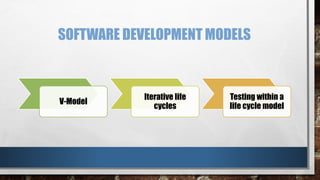
SOFTWARE DEVELOPMENT MODELS
V-Model
Iterative life
cycles
Testing within a
life cycle model
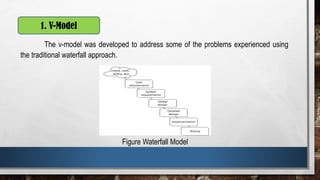
The v-model was developed to address some of the problems experienced using
the traditional waterfall approach.
1. V-Model
Figure Waterfall Model
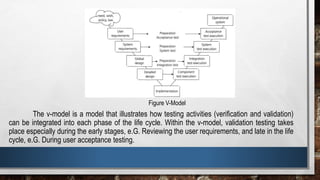
The v-model is a model that illustrates how testing activities (verification and validation)
can be integrated into each phase of the life cycle. Within the v-model, validation testing takes
place especially during the early stages, e.G. Reviewing the user requirements, and late in the life
cycle, e.G. During user acceptance testing.
Figure V-Model
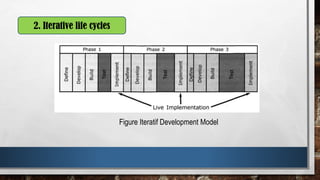
2. Iterative life cycles
Figure Iteratif Development Model
A common feature of iterative approaches is that the delivery is divided into
increments or builds with each increment adding new functionality. The initial increment will
contain the infrastructure required to support the initial build functionality. The increment
produced by an iteration may be tested at several levels as part of its development.
Subsequent increments will need testing for the new functionality, regression testing of the
existing functionality, and integration testing of both new and existing parts. Regression
testing is increasingly important on all iterations after the first one. This means that more
testing will be required at each subsequent delivery phase which must be allowed for in the
project plans.
There are several characteristics of good testing:
3. Testing within a life cycle model
for every development activity there is a corresponding testing activity
each test level has test objectives specific to that level
the analysis and design of tests for a given test level should begin during the corresponding
development activity
testers should be involved in reviewing documents as soon as drafts are avail able in the
development cycle
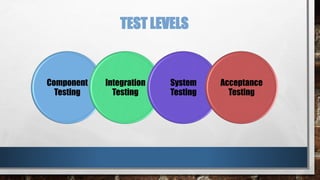
TEST LEVELS
Component
Testing
Integration
Testing
System
Testing
Acceptance
Testing
Component Testing
Component testing, also known as unit, module and program testing.
Component testing may be done in isolation from the rest of the system
depending on the context of the development life cycle and the system. Most
often stubs and drivers are used to replace the missing software and simulate
the interface between the software components in a simple manner
Integration Testing
Integration testing tests interfaces between components, interactions to different parts of a system
such as an operating system, file system and hardware or interfaces between systems. Note that integration
testing should be differentiated from other integration activities. Integration testing is often carried out by the
integrator, but preferably by a specific integration tester or test team.
Within incremental integration testing a range of possibilities exist, partly depending on the system
architecture:
Top-down: testing takes place from top to bottom, following the control flow or architectural structure.
Components or systems are substituted by stubs.
Bottom-up: testing takes place from the bottom of the control flow upwards. Components or systems are
substituted by drivers.
Functional incremental: integration and testing takes place on the basis of the functions or functionality, as
documented in the functional specification.
System Testing
System testing is concerned with the behavior of the whole system/product as
defined by the scope of a development project or product. It may include tests based on
risks and/or requirements specification, business processes, use cases, or other high
level descriptions of system behavior, interactions with the operating system, and system
resources. System testing is most often the final test on behalf of development to verify
that the system to be delivered meets the specification and its purpose may be to find as
many defects as possible. Most often it is carried out by specialist testers that form a
dedicated, and sometimes independent, test team within development, reporting to the
development manager or project manager.
Acceptance Testing
The goal of acceptance testing is to establish confidence in the system, part
of the system or specific non-functional characteristics, e.g. usability, of the system.
Acceptance testing is most often focused on a validation type of testing, whereby we
are trying to determine whether the system is fit for purpose. Finding defects should
not be the main focus in acceptance testing. Although it assesses the system's
readiness for deployment and use, it is not necessarily the final level of testing
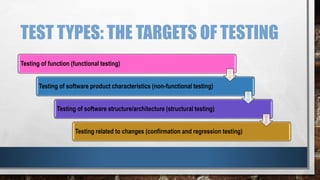
TEST TYPES: THE TARGETS OF TESTING
Testing of function (functional testing)
Testing of software product characteristics (non-functional testing)
Testing of software structure/architecture (structural testing)
Testing related to changes (confirmation and regression testing)
Testing throughout the software life cycle

Testing throughout the software life cycle

  • 2.
    SOFTWARE DEVELOPMENT MODELS V-Model Iterativelife cycles Testing within a life cycle model
  • 3.
    The v-model wasdeveloped to address some of the problems experienced using the traditional waterfall approach. 1. V-Model Figure Waterfall Model
  • 4.
    The v-model isa model that illustrates how testing activities (verification and validation) can be integrated into each phase of the life cycle. Within the v-model, validation testing takes place especially during the early stages, e.G. Reviewing the user requirements, and late in the life cycle, e.G. During user acceptance testing. Figure V-Model
  • 5.
    2. Iterative lifecycles Figure Iteratif Development Model
  • 6.
    A common featureof iterative approaches is that the delivery is divided into increments or builds with each increment adding new functionality. The initial increment will contain the infrastructure required to support the initial build functionality. The increment produced by an iteration may be tested at several levels as part of its development. Subsequent increments will need testing for the new functionality, regression testing of the existing functionality, and integration testing of both new and existing parts. Regression testing is increasingly important on all iterations after the first one. This means that more testing will be required at each subsequent delivery phase which must be allowed for in the project plans.
  • 7.
    There are severalcharacteristics of good testing: 3. Testing within a life cycle model for every development activity there is a corresponding testing activity each test level has test objectives specific to that level the analysis and design of tests for a given test level should begin during the corresponding development activity testers should be involved in reviewing documents as soon as drafts are avail able in the development cycle
  • 8.
  • 9.
    Component Testing Component testing,also known as unit, module and program testing. Component testing may be done in isolation from the rest of the system depending on the context of the development life cycle and the system. Most often stubs and drivers are used to replace the missing software and simulate the interface between the software components in a simple manner
  • 10.
    Integration Testing Integration testingtests interfaces between components, interactions to different parts of a system such as an operating system, file system and hardware or interfaces between systems. Note that integration testing should be differentiated from other integration activities. Integration testing is often carried out by the integrator, but preferably by a specific integration tester or test team. Within incremental integration testing a range of possibilities exist, partly depending on the system architecture: Top-down: testing takes place from top to bottom, following the control flow or architectural structure. Components or systems are substituted by stubs. Bottom-up: testing takes place from the bottom of the control flow upwards. Components or systems are substituted by drivers. Functional incremental: integration and testing takes place on the basis of the functions or functionality, as documented in the functional specification.
  • 11.
    System Testing System testingis concerned with the behavior of the whole system/product as defined by the scope of a development project or product. It may include tests based on risks and/or requirements specification, business processes, use cases, or other high level descriptions of system behavior, interactions with the operating system, and system resources. System testing is most often the final test on behalf of development to verify that the system to be delivered meets the specification and its purpose may be to find as many defects as possible. Most often it is carried out by specialist testers that form a dedicated, and sometimes independent, test team within development, reporting to the development manager or project manager.
  • 12.
    Acceptance Testing The goalof acceptance testing is to establish confidence in the system, part of the system or specific non-functional characteristics, e.g. usability, of the system. Acceptance testing is most often focused on a validation type of testing, whereby we are trying to determine whether the system is fit for purpose. Finding defects should not be the main focus in acceptance testing. Although it assesses the system's readiness for deployment and use, it is not necessarily the final level of testing
  • 13.
    TEST TYPES: THETARGETS OF TESTING Testing of function (functional testing) Testing of software product characteristics (non-functional testing) Testing of software structure/architecture (structural testing) Testing related to changes (confirmation and regression testing)