Downloaded 38 times




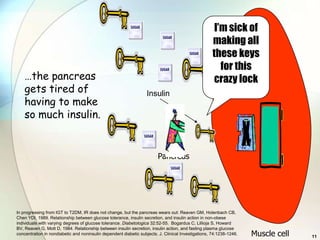

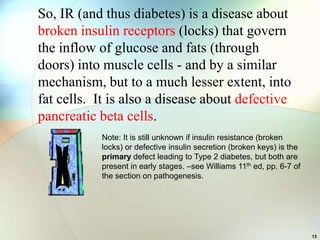

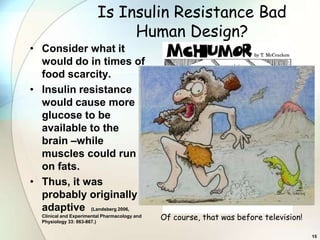
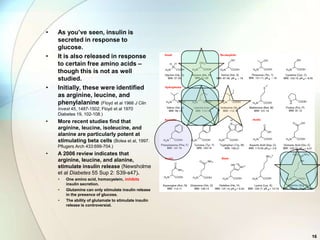




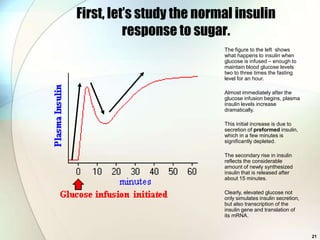

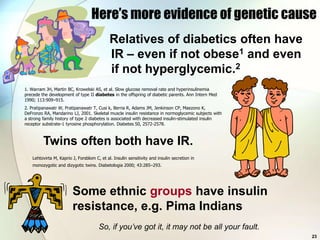
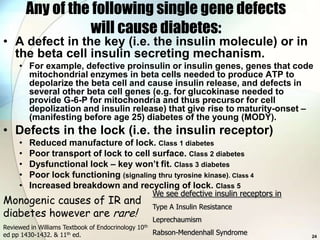
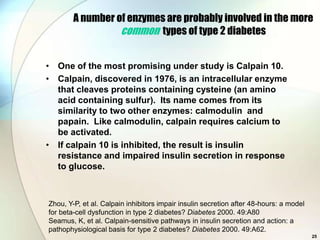

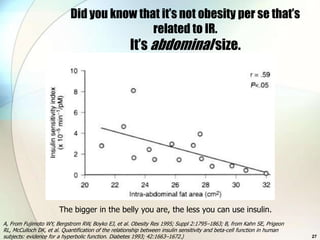








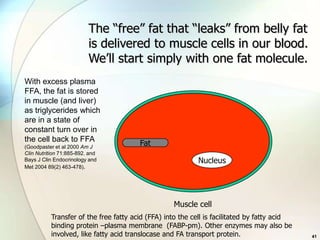
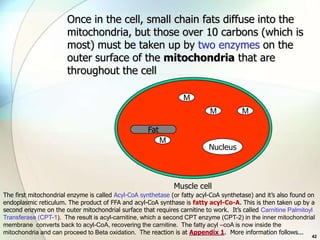

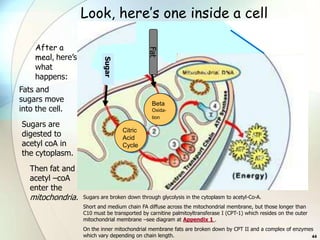

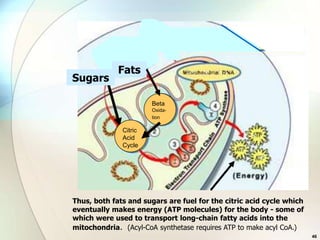

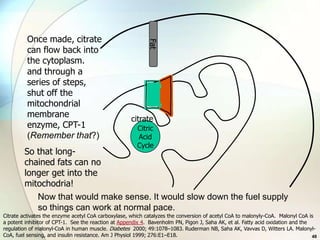

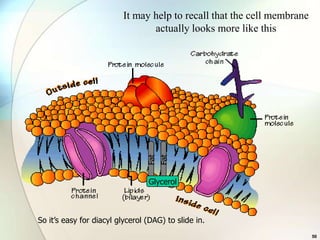

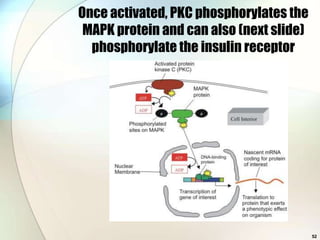

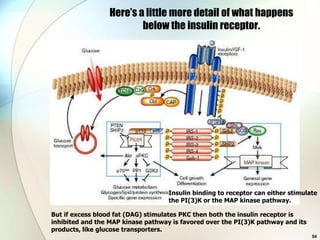
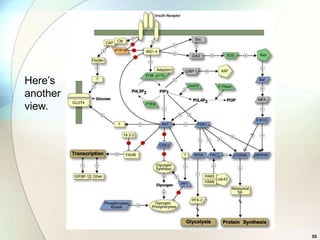
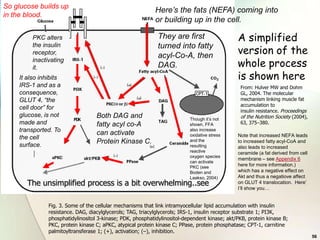








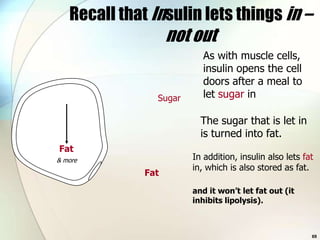
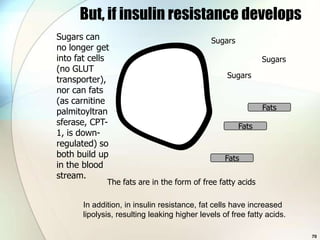





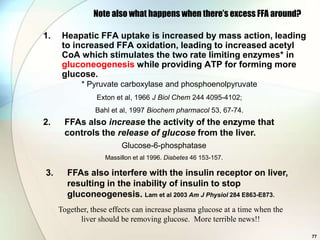

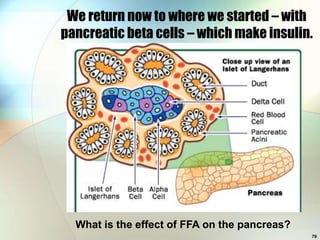







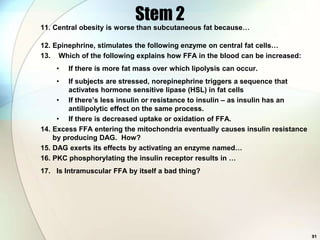

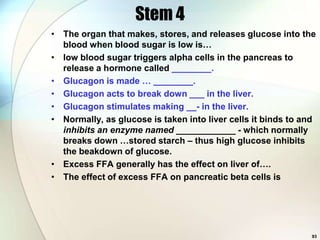


This document discusses insulin resistance (IR) and its role in the progression of type 2 diabetes. It begins by explaining how IR develops as the insulin receptors in muscle cells become damaged and unable to properly uptake glucose in response to insulin. As IR worsens over time, blood sugar and insulin levels rise until the pancreas can no longer keep up with insulin production, resulting in a diagnosis of type 2 diabetes. The document notes that genetic factors play a role in IR, as relatives of diabetics often exhibit signs of IR even without other risk factors. It also discusses some single gene defects that can directly cause diabetes by impacting insulin or the beta cells. The calpain 10 enzyme is presented as one potential common contributor to the development


