Downloaded 60 times
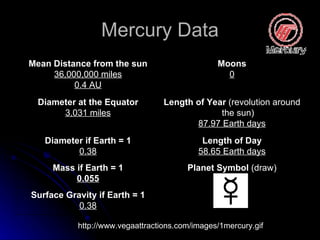
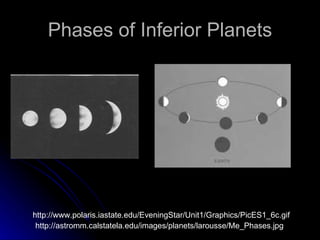
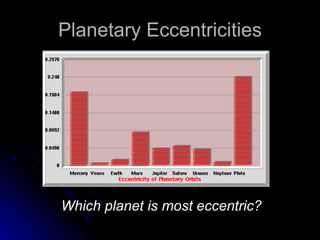
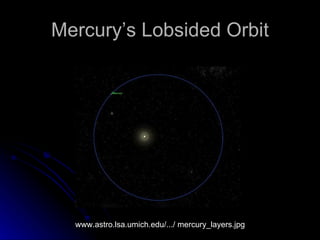
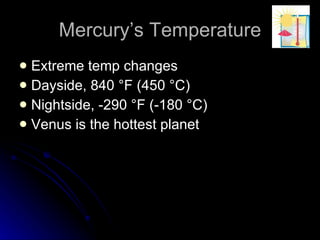
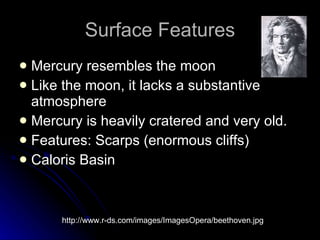
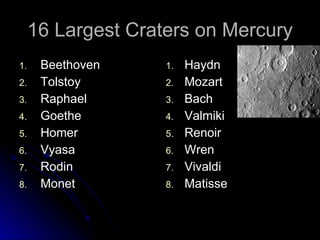
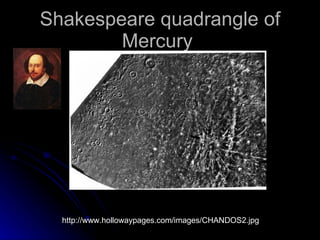
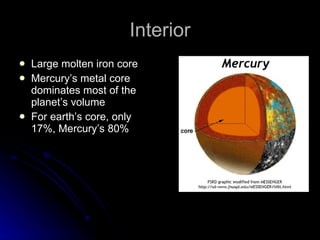
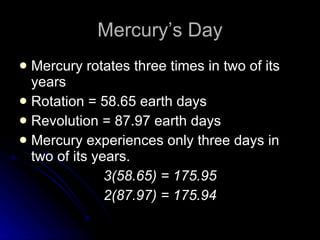
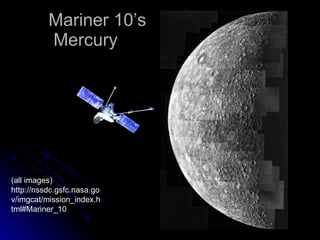
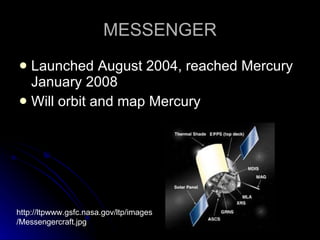
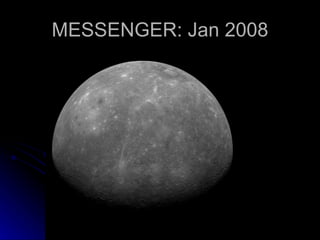
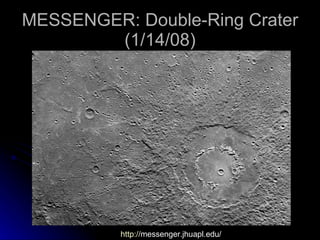
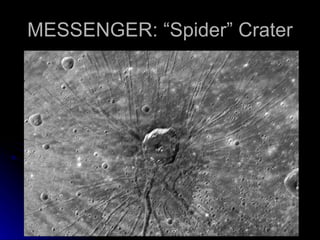
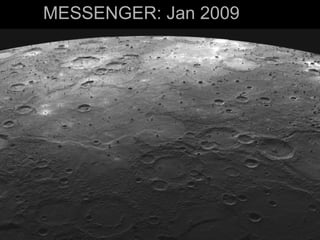
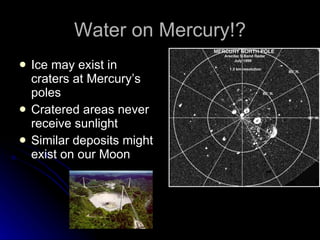
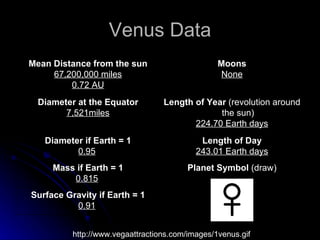
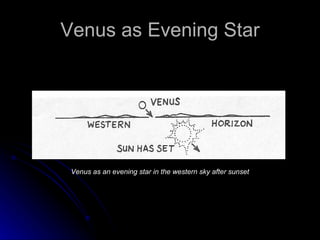
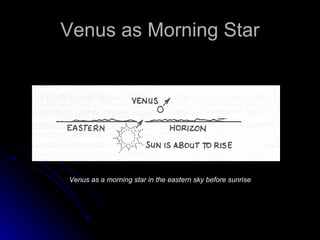
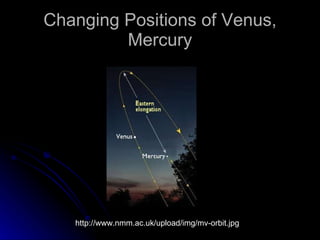

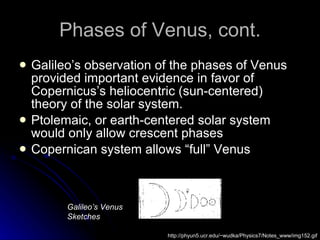
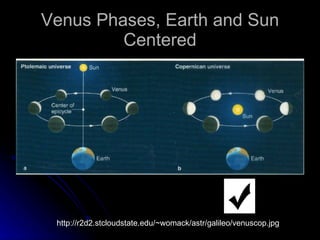
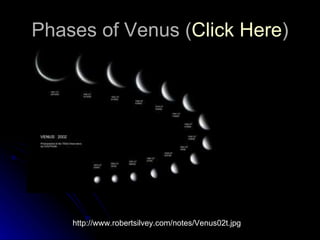
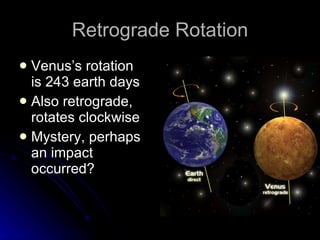
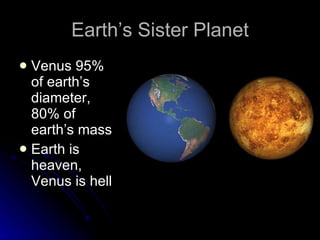
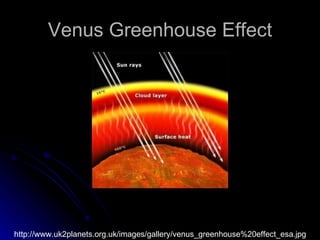
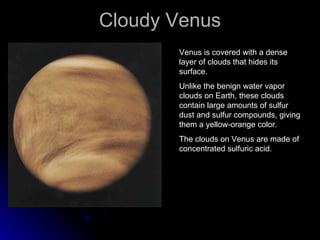
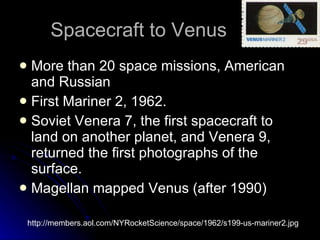
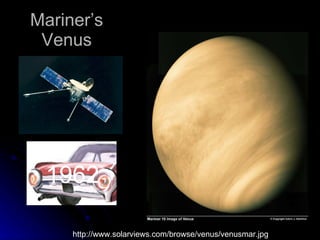
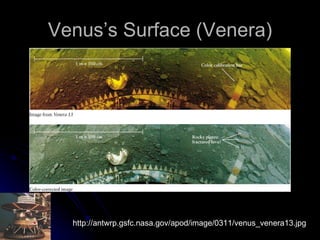
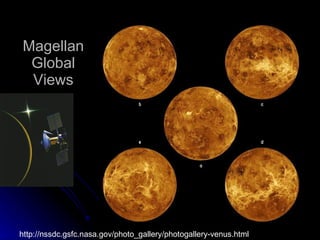
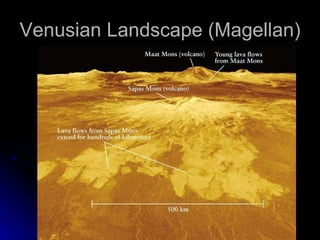
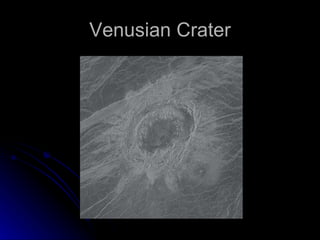
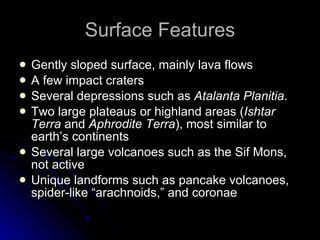
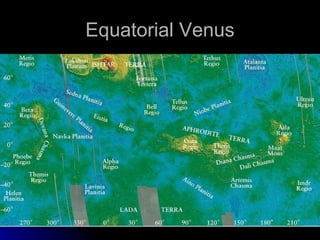
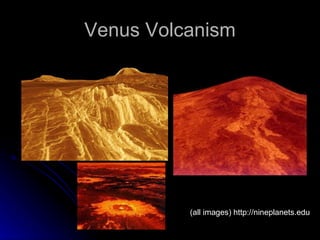
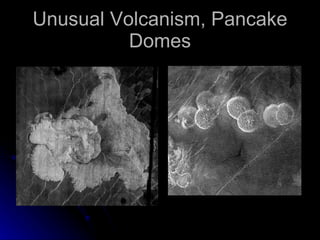
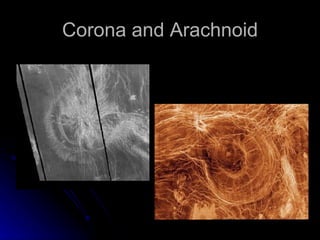

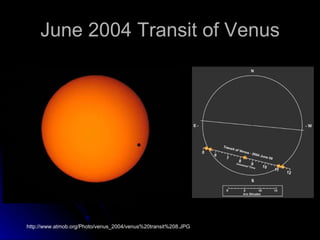
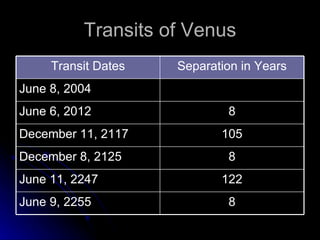










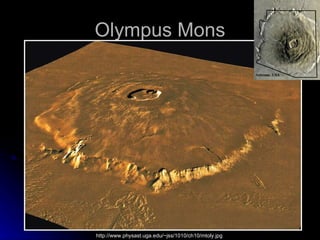

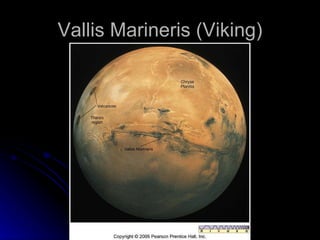
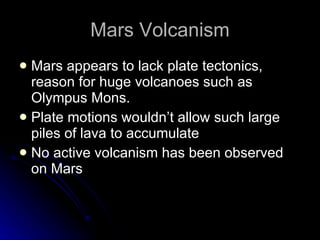
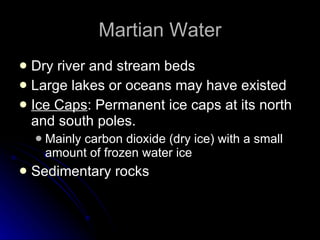





The document provides information about the planets Mercury and Venus: - Mercury is the closest planet to the Sun. It has extreme temperature variations, ranging from 450°C during the day to -180°C at night. Mercury's core is disproportionately large, comprising 80% of its volume. - Venus is similar in size to Earth but has a dense carbon dioxide atmosphere that causes extreme greenhouse effects, heating its surface to over 450°C. Venus rotates clockwise in the opposite direction of most planets. Past Soviet Venera missions and NASA's Magellan spacecraft provided images and data of its volcanic landscape. - Both planets display phases as they orbit closer to the Sun than Earth. Their varying positions helped


