









Ten Things that TV Companies Alway
   Get Wrong when Making Games
    (and how to avoid these traps)
            Nicholas Lovell
            Games for Television
              18th April, 2012
Nicholas Lovell, GAMESbrief

• Author, How to Publish a
  Game, GAMESbrief Unplugged
• Director, GAMESbrief
• Clients include: Atari, Channel
  4, Channelflip, Firefly, IPC, nDrea
  ms, Rebellion and Square Enix
• @nicholaslovell / @gamesbrief
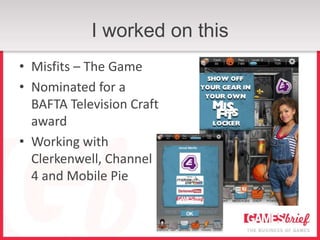
I worked on this
• Misfits – The Game
• Nominated for a
  BAFTA Television Craft
  award
• Working with
  Clerkenwell, Channel
  4 and Mobile Pie
Subscribe to the blog
Buy my books
Ten ways to get it right
Are you gamers?
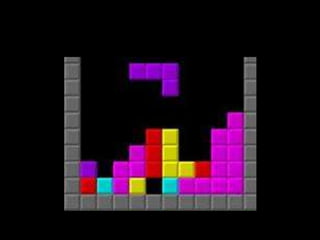
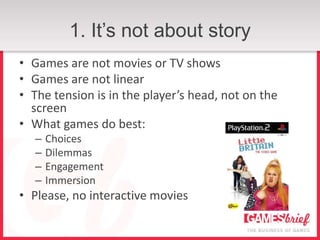
1. It’s not about story
• Games are not movies or TV shows
• Games are not linear
• The tension is in the player’s head, not on the
  screen
• What games do best:
   –   Choices
   –   Dilemmas
   –   Engagement
   –   Immersion
• Please, no interactive movies
2. Find the fun
2. Find the fun (it’s hard)
• If you leave a pitch knowing what the
  narrative arc of the game is, but not the
  MECHANIC, you haven’t got a game
• It is possible to make a game that is just about
  narrative; it is also very, very expensive
• Finding the fun is intuitive. Leave time for
  prototyping and finding the fun during
  commissioning and production
3. Make it iterative
3. Iterate. A lot.
• Every successful social game is still in beta
• You need to iterate during production, as well
  as after
  – Especially if you are inexperienced at
    commissioning
• A adherence to the initial project brief can be
  disastrous. Build in flexibility.
• Read The Lean Startup
4. Commission earlier
• Games take a *long* time to make
• TX is fixed
• If you want a good game to go alongside your
  show, start early
• At least six months. Probably more
• Unless you want it to look, feel and play like
  an afterthought
5. Have a post-TX plan
5. What happens when the show
              ends?
• You’ve spent a lot of money on making your
  game. Transmission has ended. Now what?
• Do you mothball it?
  – But games build slowly, via word of mouth, over
    time
• Do you continue it?
  – But that incurs ongoing costs, and gamers will
    demand changes
• Have a plan
6. Games are about
    RETENTION
6. Focus on retention, not
             acquisition
• TV is good at ACQUIRING customers
• Games are good at RETAINING customers and
  MONETISING them
• Play to the strengths of the medium
7. Make it free, make it
      profitable
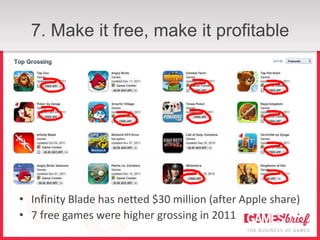
7. Make it free, make it profitable


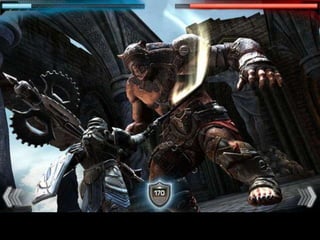
• Infinity Blade has netted $30 million (after Apple share)
• 7 free games were higher grossing in 2011
8. Don’t think about revenue
     *after* the design
8. Design for the business model
• “If a game is built around a business model,
  that’s a recipe for failure.”
                            - Dave Jones, designer, APB
•   I see eight different revenue streams
•   Dave Perry sees 38
•   Each one needs a different style of gameplay
•   No time today but key insight:
      virtual goods are about STATUS and FEELING, not
                 possession and ownership
9. Cater to the whales
How much do gamers spend
  on average on an In-App
purchase in an iOS / Android
          game?
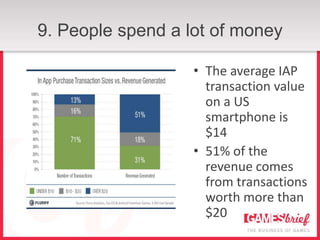
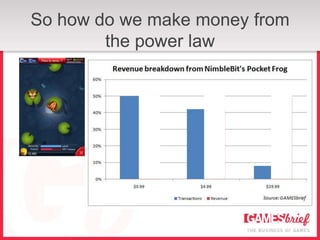
9. People spend a lot of money

                   • The average IAP
                     transaction value
                     on a US
                     smartphone is
                     $14
                   • 51% of the
                     revenue comes
                     from transactions
                     worth more than
                     $20
So how do we make money from
        the power law
10. Learn
“Nobody knows anything”
      William Goldman
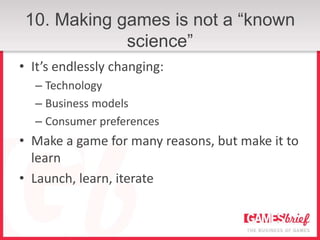
10. Making games is not a “known
             science”
• It’s endlessly changing:
  – Technology
  – Business models
  – Consumer preferences
• Make a game for many reasons, but make it to
  learn
• Launch, learn, iterate
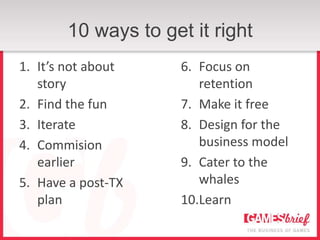
10 ways to get it right
1. It’s not about    6. Focus on
   story                retention
2. Find the fun      7. Make it free
3. Iterate           8. Design for the
4. Commision            business model
   earlier           9. Cater to the
5. Have a post-TX       whales
   plan              10.Learn
Thank you
nicholas@gamesbrief.com

    Follow my blog
  www.gamesbrief.com

     Buy my books

Ten things that tv companies always get wrong when making games

  • 1.
    Ten Things thatTV Companies Alway Get Wrong when Making Games (and how to avoid these traps) Nicholas Lovell Games for Television 18th April, 2012
  • 2.
    Nicholas Lovell, GAMESbrief •Author, How to Publish a Game, GAMESbrief Unplugged • Director, GAMESbrief • Clients include: Atari, Channel 4, Channelflip, Firefly, IPC, nDrea ms, Rebellion and Square Enix • @nicholaslovell / @gamesbrief
  • 3.
    I worked onthis • Misfits – The Game • Nominated for a BAFTA Television Craft award • Working with Clerkenwell, Channel 4 and Mobile Pie
  • 4.
  • 5.
  • 6.
    Ten ways toget it right
  • 7.
  • 8.
    1. It’s notabout story
  • 10.
    1. It’s notabout story
  • 11.
    1. It’s notabout story
  • 12.
    1. It’s notabout story
  • 13.
    1. It’s notabout story
  • 14.
    1. It’s notabout story
  • 15.
    1. It’s notabout story • Games are not movies or TV shows • Games are not linear • The tension is in the player’s head, not on the screen • What games do best: – Choices – Dilemmas – Engagement – Immersion • Please, no interactive movies
  • 16.
  • 17.
    2. Find thefun (it’s hard) • If you leave a pitch knowing what the narrative arc of the game is, but not the MECHANIC, you haven’t got a game • It is possible to make a game that is just about narrative; it is also very, very expensive • Finding the fun is intuitive. Leave time for prototyping and finding the fun during commissioning and production
  • 18.
    3. Make ititerative
  • 19.
    3. Iterate. Alot. • Every successful social game is still in beta • You need to iterate during production, as well as after – Especially if you are inexperienced at commissioning • A adherence to the initial project brief can be disastrous. Build in flexibility. • Read The Lean Startup
  • 20.
  • 21.
    4. Commission earlier •Games take a *long* time to make • TX is fixed • If you want a good game to go alongside your show, start early • At least six months. Probably more • Unless you want it to look, feel and play like an afterthought
  • 22.
    5. Have apost-TX plan
  • 23.
    5. What happenswhen the show ends? • You’ve spent a lot of money on making your game. Transmission has ended. Now what? • Do you mothball it? – But games build slowly, via word of mouth, over time • Do you continue it? – But that incurs ongoing costs, and gamers will demand changes • Have a plan
  • 24.
    6. Games areabout RETENTION
  • 25.
    6. Focus onretention, not acquisition • TV is good at ACQUIRING customers • Games are good at RETAINING customers and MONETISING them • Play to the strengths of the medium
  • 26.
    7. Make itfree, make it profitable
  • 27.
    7. Make itfree, make it profitable • Infinity Blade has netted $30 million (after Apple share) • 7 free games were higher grossing in 2011
  • 28.
    8. Don’t thinkabout revenue *after* the design
  • 29.
    8. Design forthe business model • “If a game is built around a business model, that’s a recipe for failure.” - Dave Jones, designer, APB • I see eight different revenue streams • Dave Perry sees 38 • Each one needs a different style of gameplay • No time today but key insight: virtual goods are about STATUS and FEELING, not possession and ownership
  • 30.
    9. Cater tothe whales
  • 31.
    How much dogamers spend on average on an In-App purchase in an iOS / Android game?
  • 33.
    9. People spenda lot of money • The average IAP transaction value on a US smartphone is $14 • 51% of the revenue comes from transactions worth more than $20
  • 34.
    So how dowe make money from the power law
  • 35.
  • 36.
  • 37.
    10. Making gamesis not a “known science” • It’s endlessly changing: – Technology – Business models – Consumer preferences • Make a game for many reasons, but make it to learn • Launch, learn, iterate
  • 38.
    10 ways toget it right 1. It’s not about 6. Focus on story retention 2. Find the fun 7. Make it free 3. Iterate 8. Design for the 4. Commision business model earlier 9. Cater to the 5. Have a post-TX whales plan 10.Learn
  • 39.
    Thank you nicholas@gamesbrief.com Follow my blog www.gamesbrief.com Buy my books