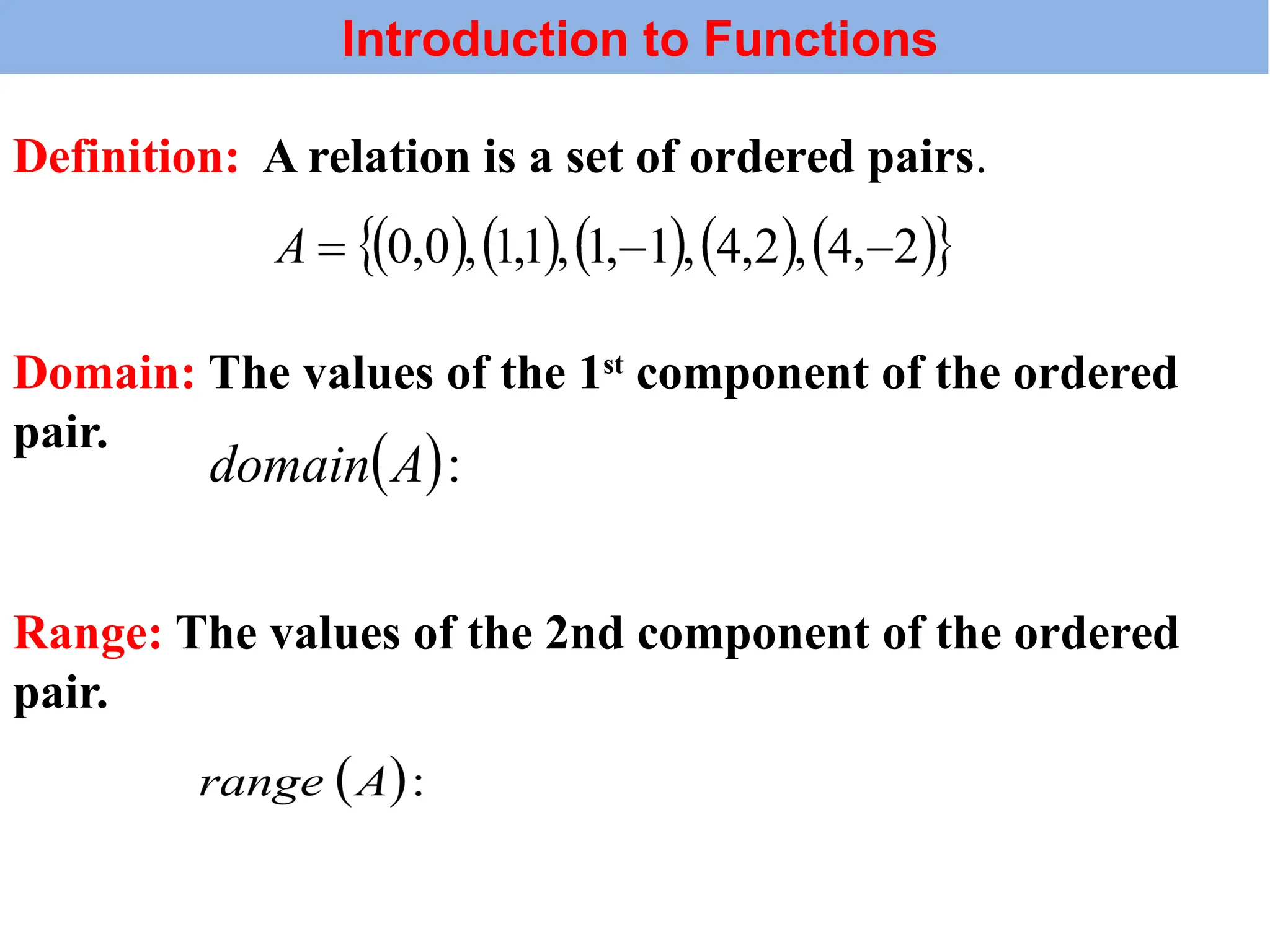
Definition: A relation is a set of ordered pairs.
Domain: The values of the 1st
component of the ordered
pair.
Range: The values of the 2nd component of the ordered
pair.
Introduction to Functions
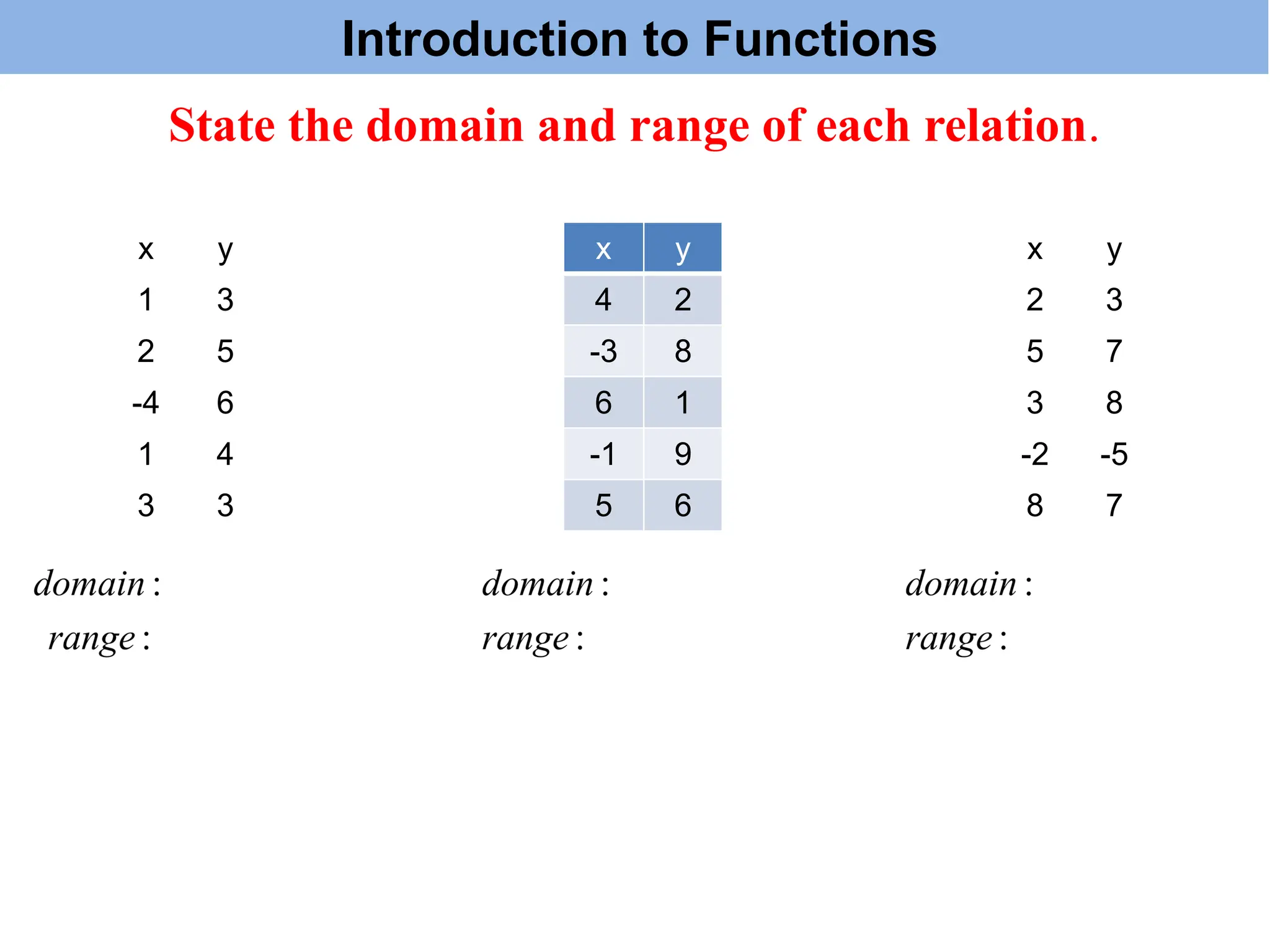
x y
1 3
2 5
-4 6
1 4
3 3
x y
4 2
-3 8
6 1
-1 9
5 6
x y
2 3
5 7
3 8
-2 -5
8 7
State the domain and range of each relation.
Introduction to Functions
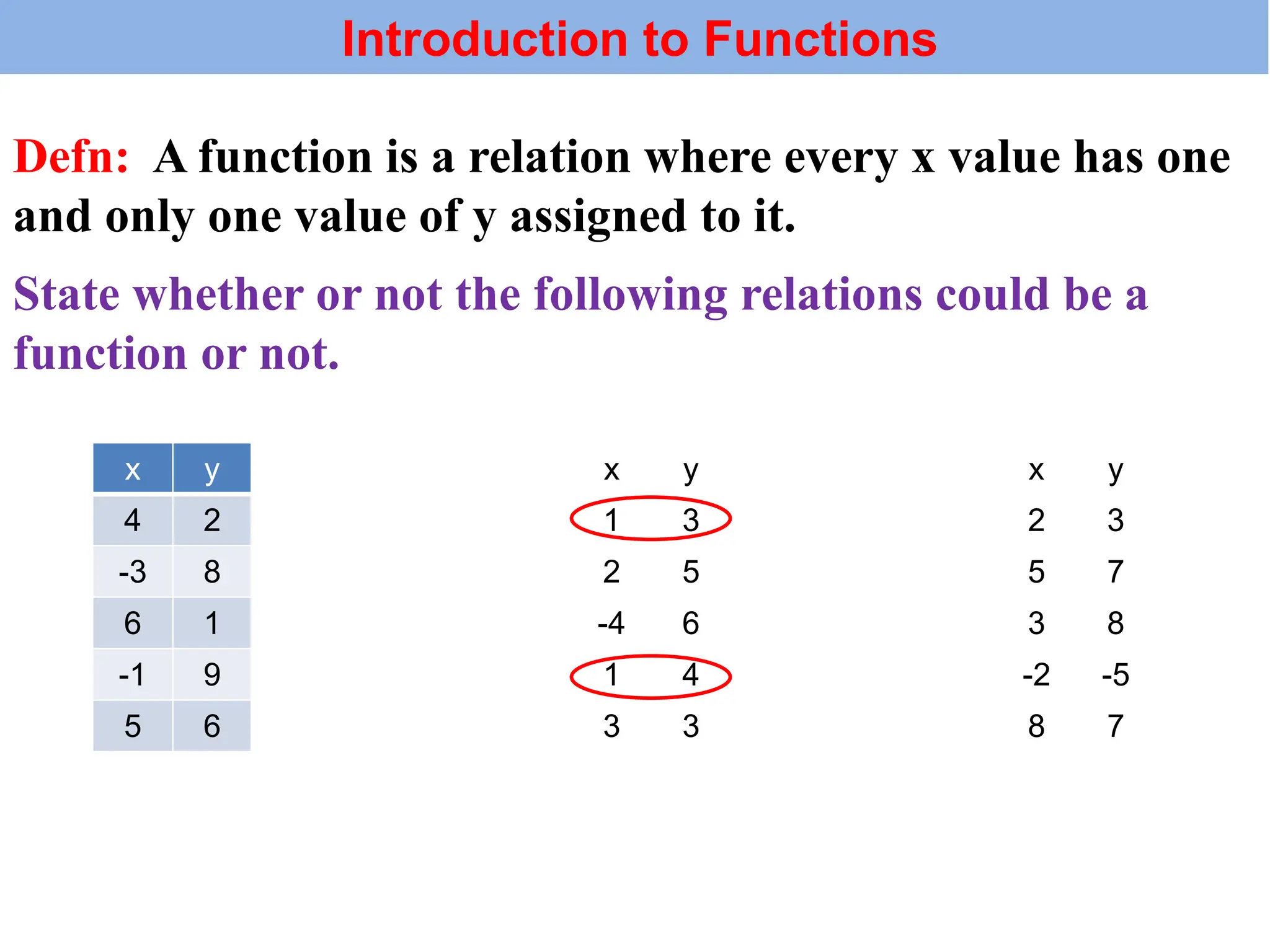
Defn: A function is a relation where every x value has one
and only one value of y assigned to it.
x y
1 3
2 5
-4 6
1 4
3 3
x y
4 2
-3 8
6 1
-1 9
5 6
x y
2 3
5 7
3 8
-2 -5
8 7
State whether or not the following relations could be a
function or not.
Introduction to Functions
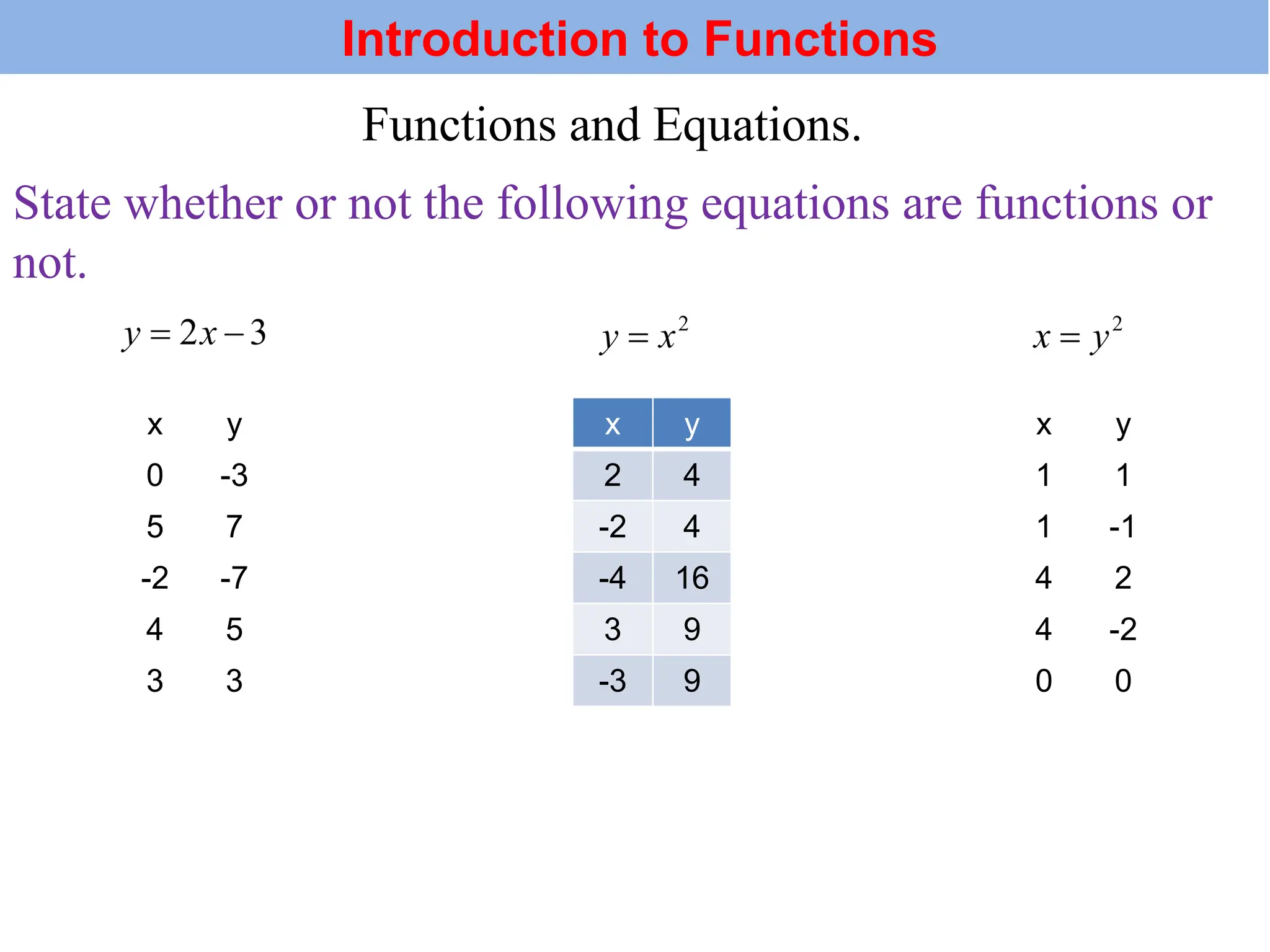
Functions and Equations.
x y
0 -3
5 7
-2 -7
4 5
3 3
x y
2 4
-2 4
-4 16
3 9
-3 9
x y
1 1
1 -1
4 2
4 -2
0 0
State whether or not the following equations are functions or
not.
Introduction to Functions
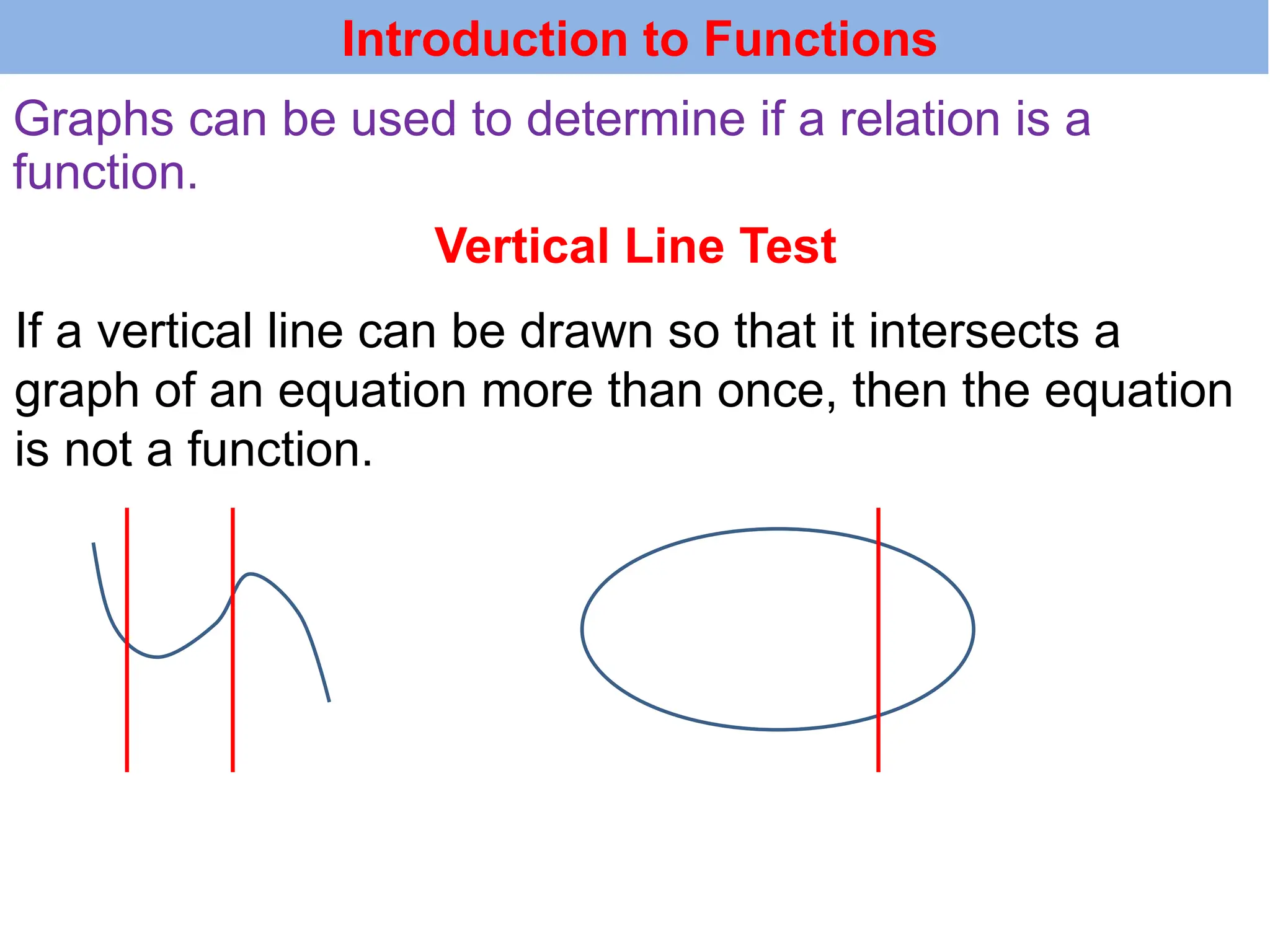
Vertical Line Test
Graphs can be used to determine if a relation is a
function.
If a vertical line can be drawn so that it intersects a
graph of an equation more than once, then the equation
is not a function.
Introduction to Functions
x
y
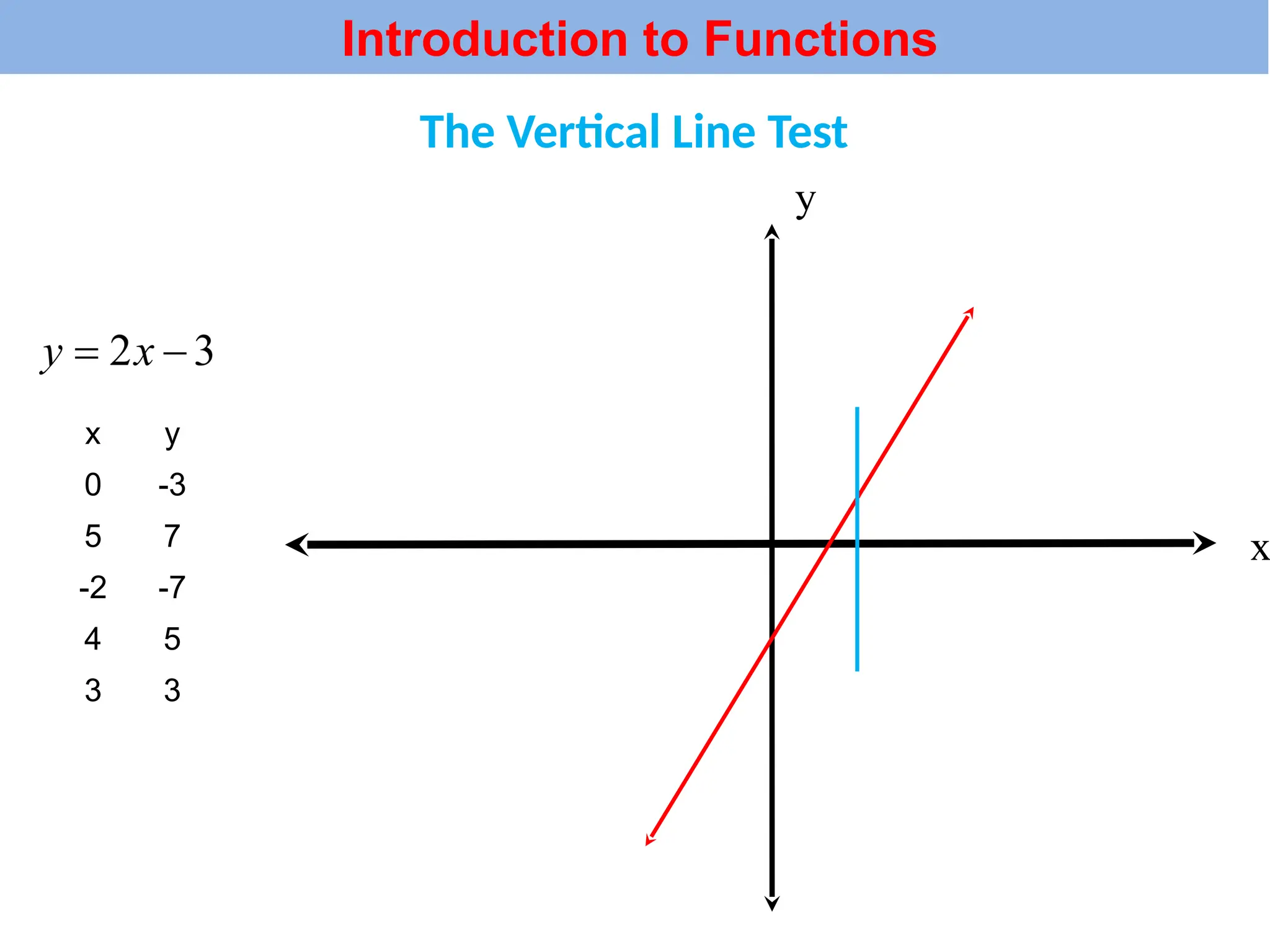
The Vertical Line Test
x y
0 -3
5 7
-2 -7
4 5
3 3
Introduction to Functions
x
y
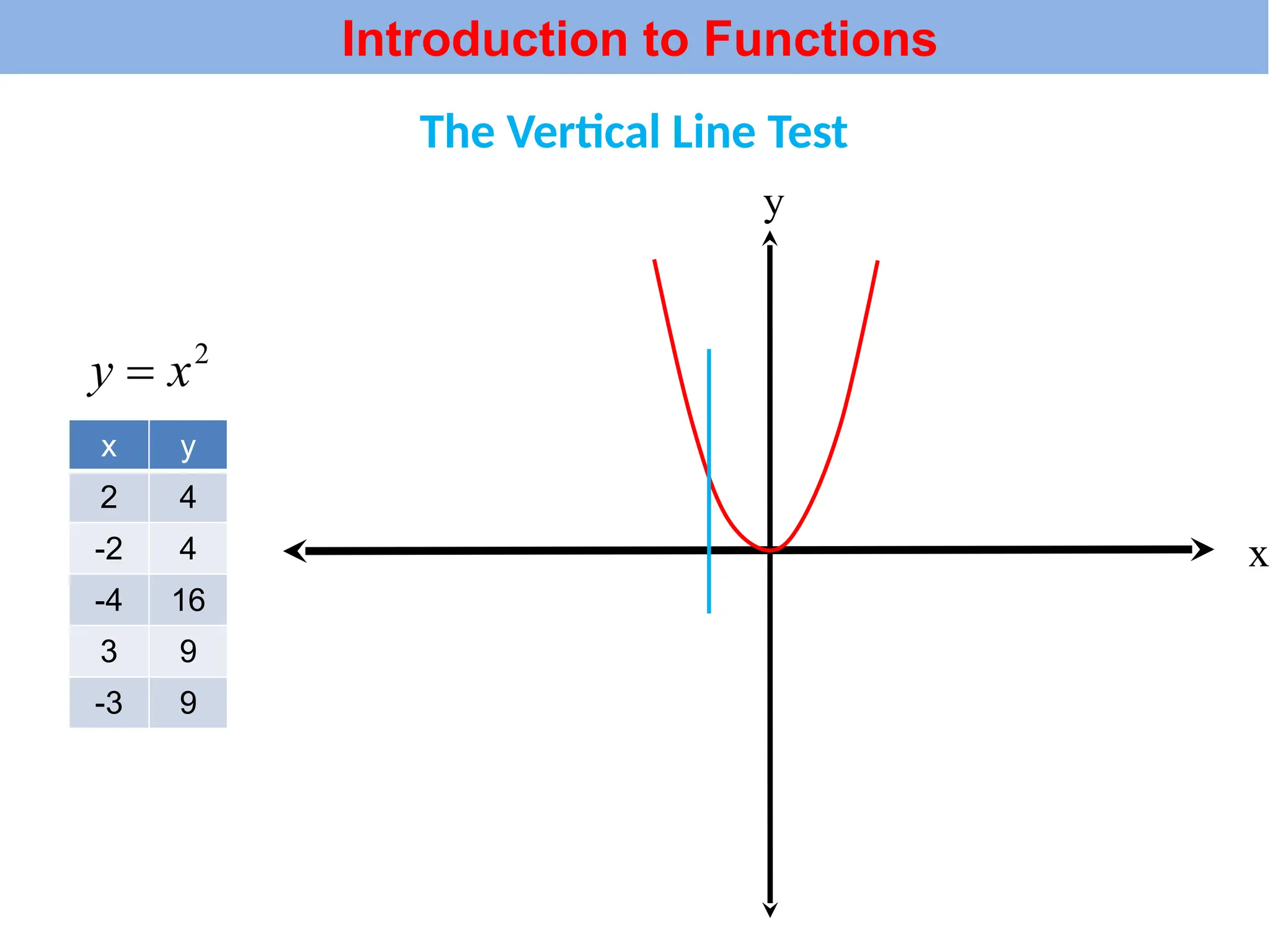
x y
2 4
-2 4
-4 16
3 9
-3 9
The Vertical Line Test
Introduction to Functions
x
y
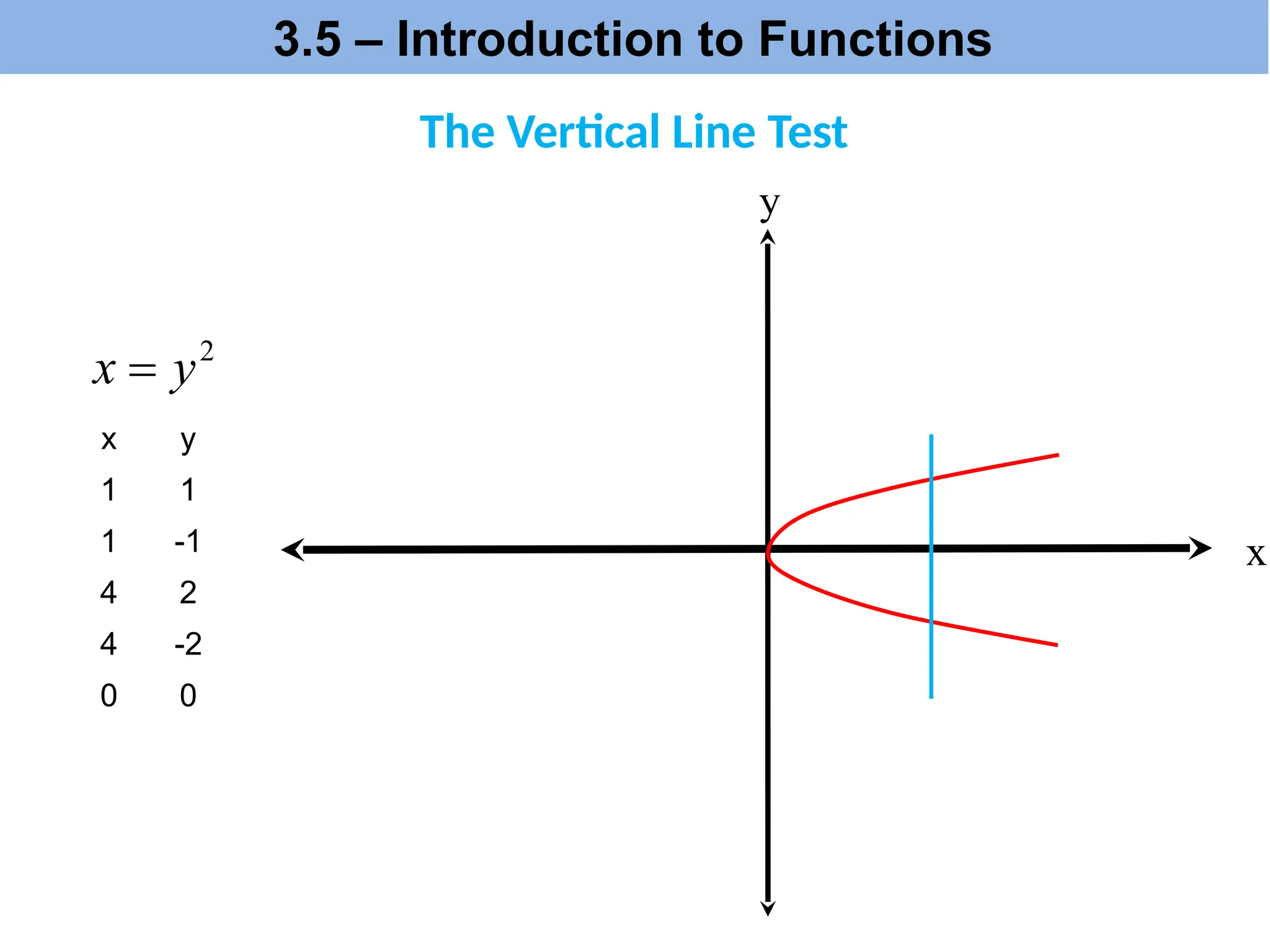
x y
1 1
1 -1
4 2
4 -2
0 0
The Vertical Line Test
3.5 – Introduction to Functions
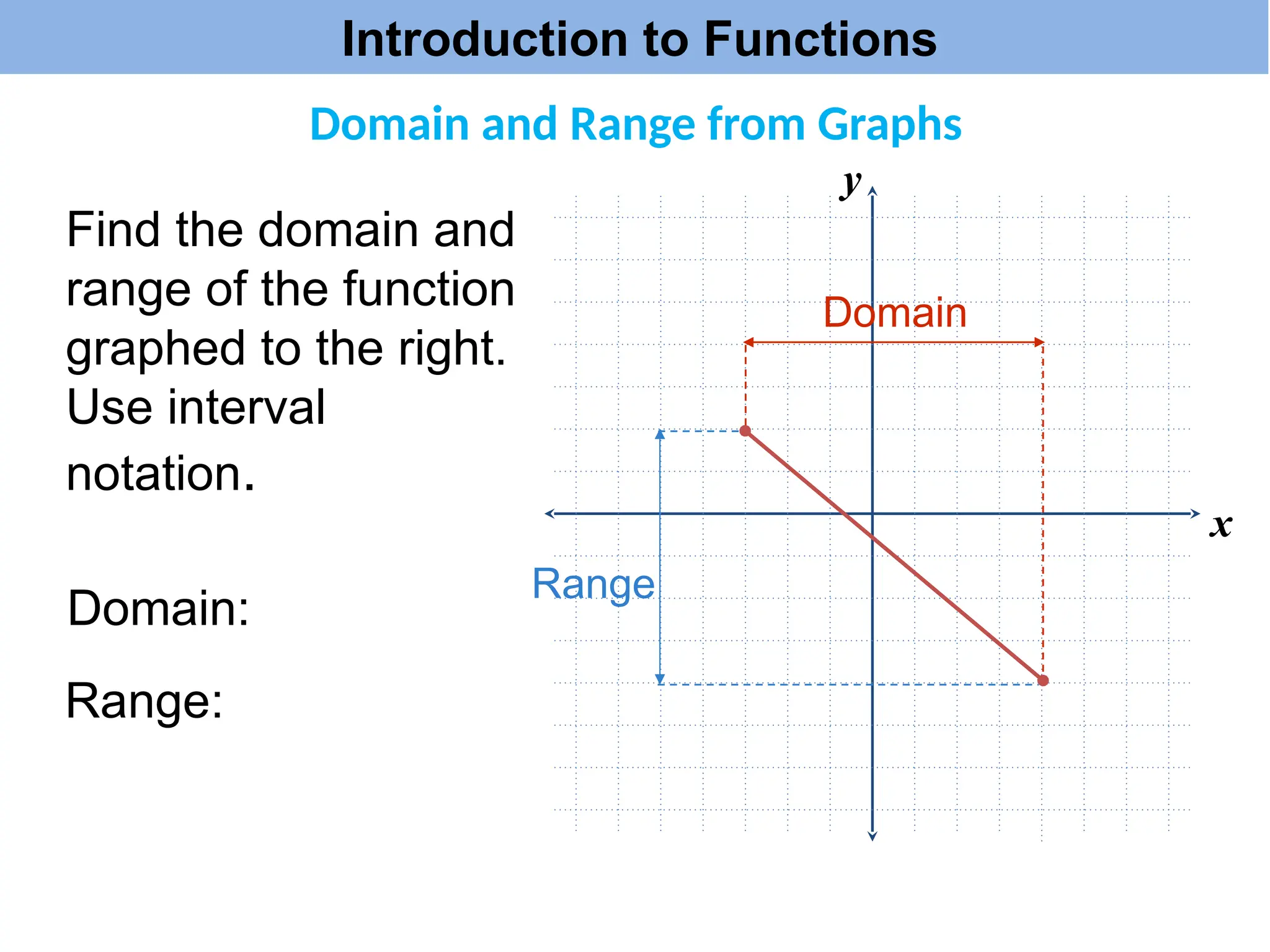
Find the domain and
range of the function
graphed to the right.
Use interval
notation.
x
y
Domain:
Domain
Range:
Range
Domain and Range from Graphs
Introduction to Functions
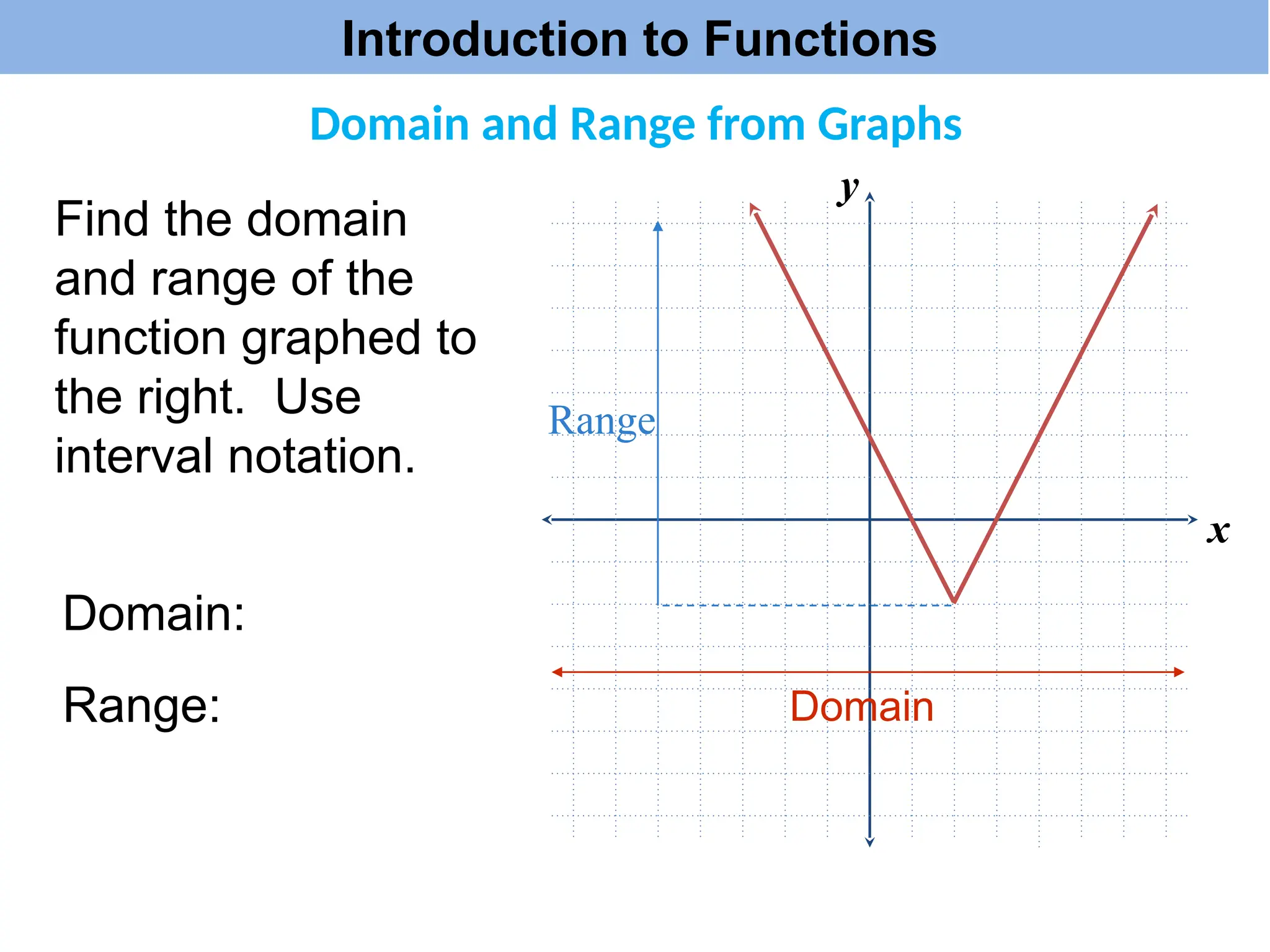
Find the domain
and range of the
function graphed to
the right. Use
interval notation.
x
y
Domain:
Domain
Range:
Range
Domain and Range from Graphs
Introduction to Functions
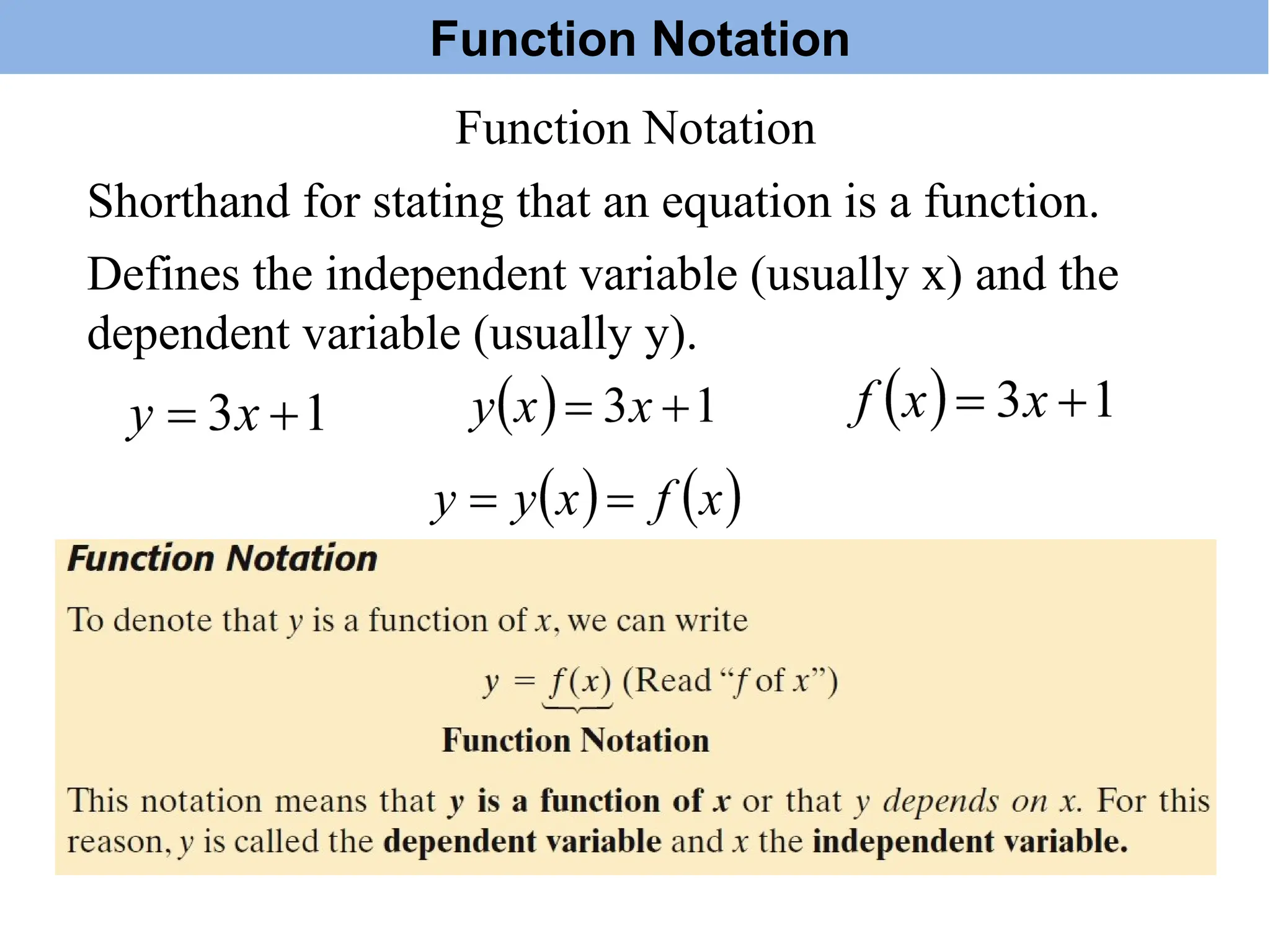
Function Notation
Shorthand for stating that an equation is a function.
Defines the independent variable (usually x) and the
dependent variable (usually y).
Function Notation
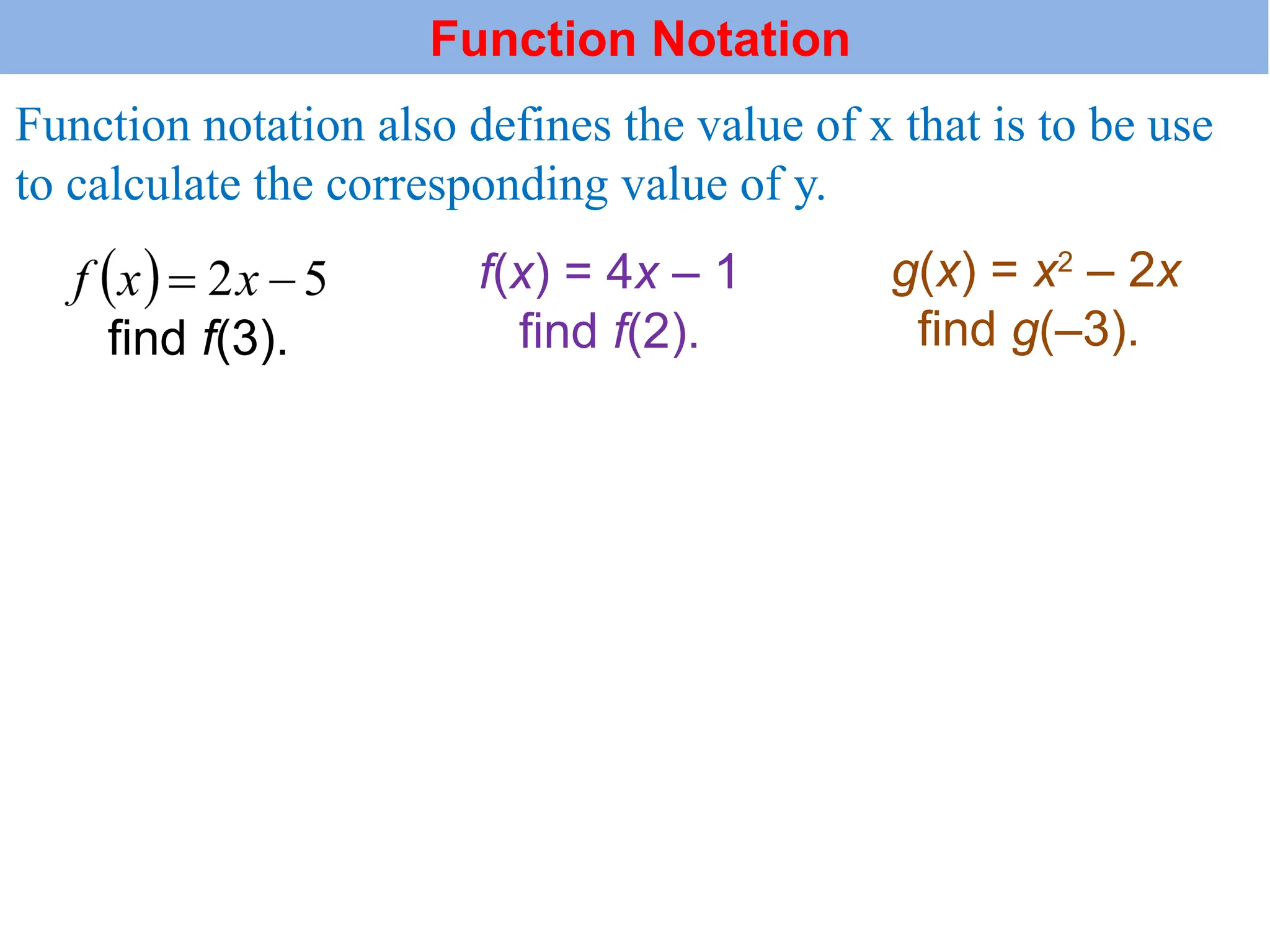
Function notation also defines the value of x that is to be use
to calculate the corresponding value of y.
f(x) = 4x – 1
find f(2).
g(x) = x2
– 2x
find g(–3).
find f(3).
Function Notation
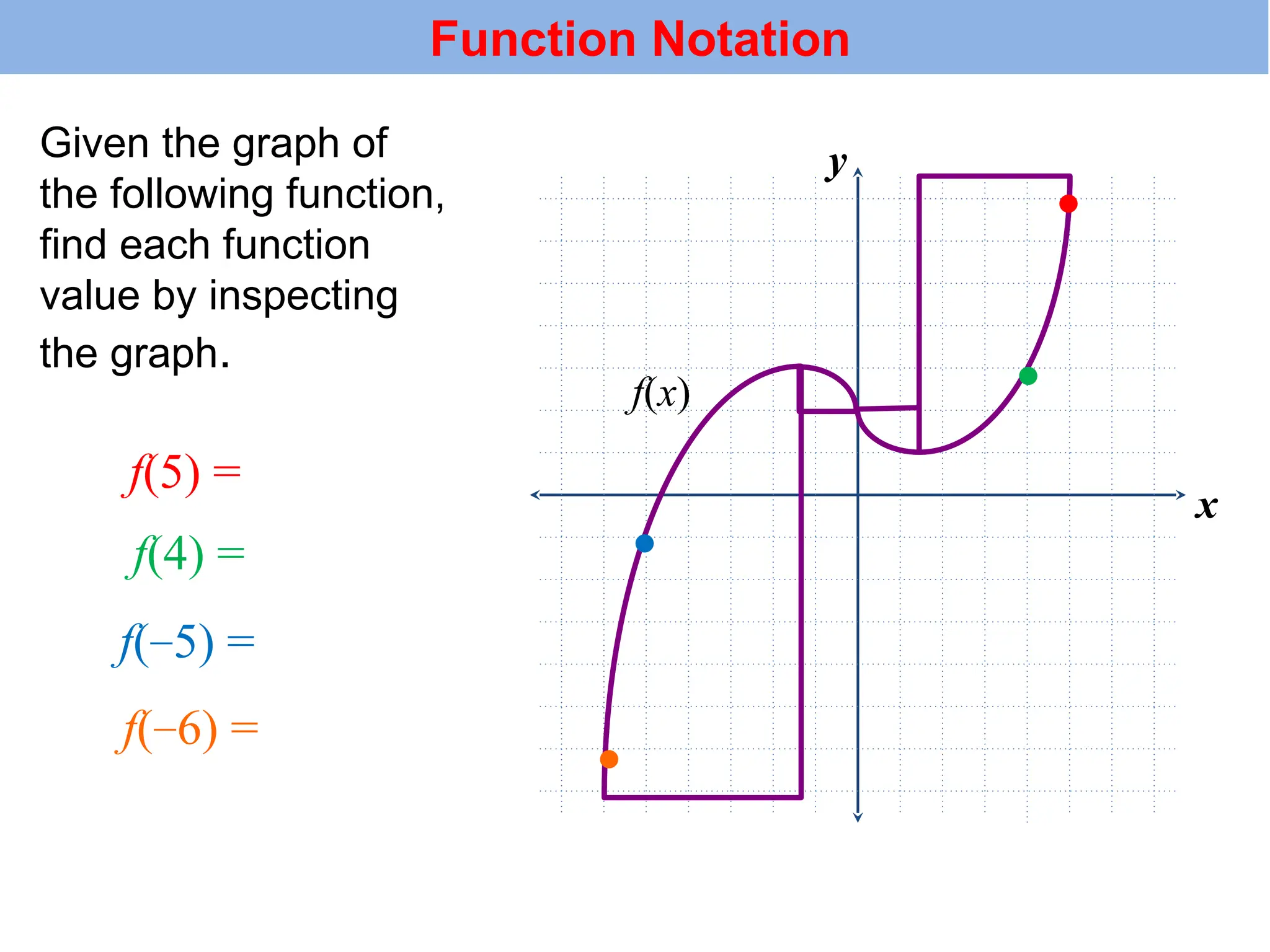
Given the graph of
the following function,
find each function
value by inspecting
the graph.
f(5) =
x
y
f(x)
f(4) =
f(−5) =
f(−6) =
●
●
●
●
Function Notation

[Template] 3.0 Relations and Functions. Intro Unit 4 ppt Student.pptx

  • 1.
    Definition: A relationis a set of ordered pairs. Domain: The values of the 1st component of the ordered pair. Range: The values of the 2nd component of the ordered pair. Introduction to Functions
  • 2.
    x y 1 3 25 -4 6 1 4 3 3 x y 4 2 -3 8 6 1 -1 9 5 6 x y 2 3 5 7 3 8 -2 -5 8 7 State the domain and range of each relation. Introduction to Functions
  • 3.
    Defn: A functionis a relation where every x value has one and only one value of y assigned to it. x y 1 3 2 5 -4 6 1 4 3 3 x y 4 2 -3 8 6 1 -1 9 5 6 x y 2 3 5 7 3 8 -2 -5 8 7 State whether or not the following relations could be a function or not. Introduction to Functions
  • 4.
    Functions and Equations. xy 0 -3 5 7 -2 -7 4 5 3 3 x y 2 4 -2 4 -4 16 3 9 -3 9 x y 1 1 1 -1 4 2 4 -2 0 0 State whether or not the following equations are functions or not. Introduction to Functions
  • 5.
    Vertical Line Test Graphscan be used to determine if a relation is a function. If a vertical line can be drawn so that it intersects a graph of an equation more than once, then the equation is not a function. Introduction to Functions
  • 6.
    x y The Vertical LineTest x y 0 -3 5 7 -2 -7 4 5 3 3 Introduction to Functions
  • 7.
    x y x y 2 4 -24 -4 16 3 9 -3 9 The Vertical Line Test Introduction to Functions
  • 8.
    x y x y 1 1 1-1 4 2 4 -2 0 0 The Vertical Line Test 3.5 – Introduction to Functions
  • 9.
    Find the domainand range of the function graphed to the right. Use interval notation. x y Domain: Domain Range: Range Domain and Range from Graphs Introduction to Functions
  • 10.
    Find the domain andrange of the function graphed to the right. Use interval notation. x y Domain: Domain Range: Range Domain and Range from Graphs Introduction to Functions
  • 11.
    Function Notation Shorthand forstating that an equation is a function. Defines the independent variable (usually x) and the dependent variable (usually y). Function Notation
  • 12.
    Function notation alsodefines the value of x that is to be use to calculate the corresponding value of y. f(x) = 4x – 1 find f(2). g(x) = x2 – 2x find g(–3). find f(3). Function Notation
  • 13.
    Given the graphof the following function, find each function value by inspecting the graph. f(5) = x y f(x) f(4) = f(−5) = f(−6) = ● ● ● ● Function Notation