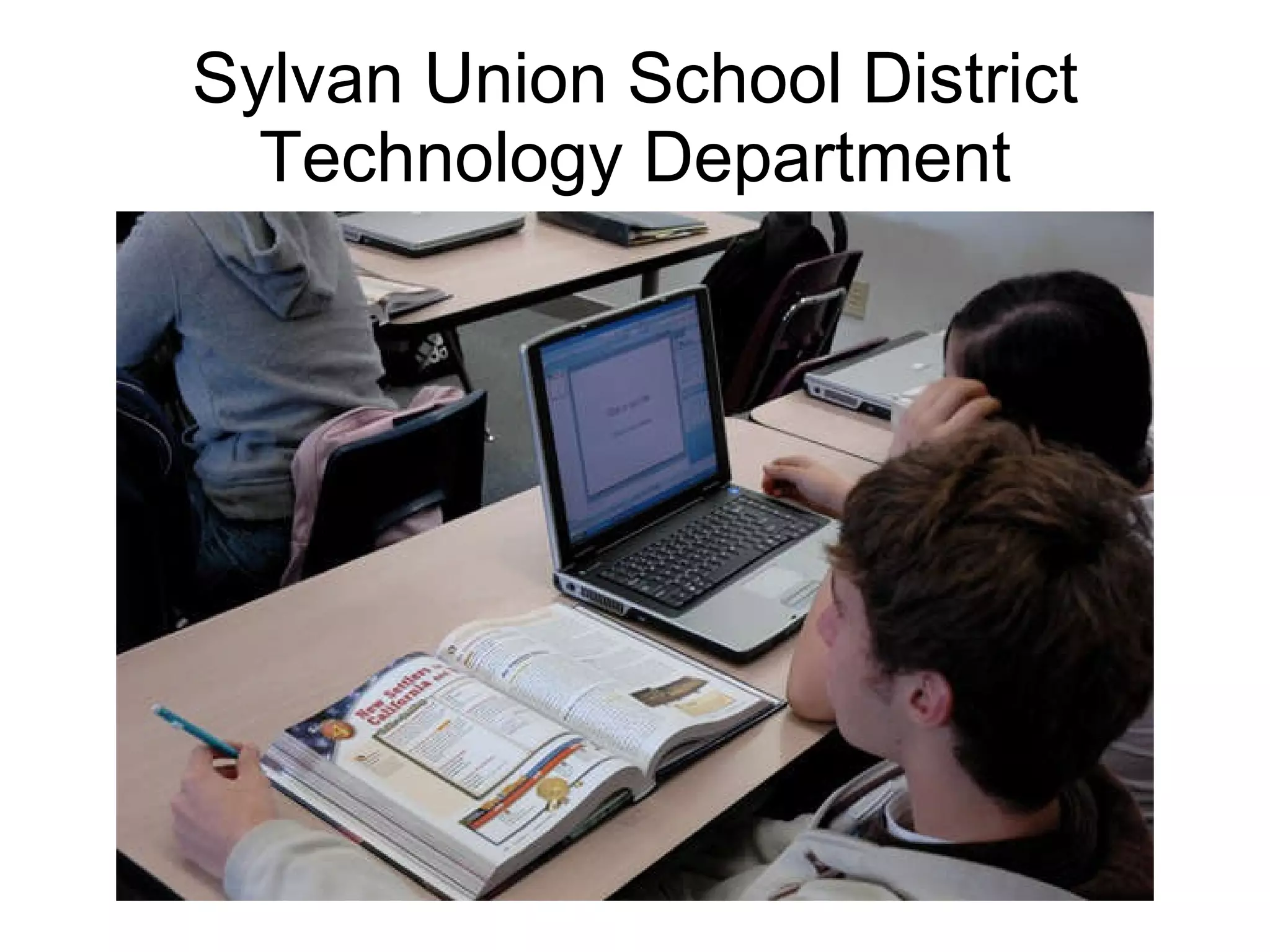
Sylvan Union School District Technology Department
Major Points Understanding the use of technology for communication and research are essential 21 st   century skills The vast majority of our students will only receive instruction on these tools and strategies while in the public school system. Students without instruction on utilizing technology for learning will miss out on current and future opportunities. Sylvan Union School District has made great beginning strides in incorporating modern instructional tools, but we still have a ways to go.
Professor Ikujiro Nonaka at UC Berkley: The dynamics of knowledge have become the most important competitive resource of the firm.
Eric Hoffer – Longshoreman/Philosopher In a time of drastic change it is the learners who inherit the future. The Learned usually find themselves equipped to live in a world that no longer exists.
David Thornburg –  Lifelong learning needs to become the dominant paradigm for education if our institutions are going to remain relevant in the lives of their students.
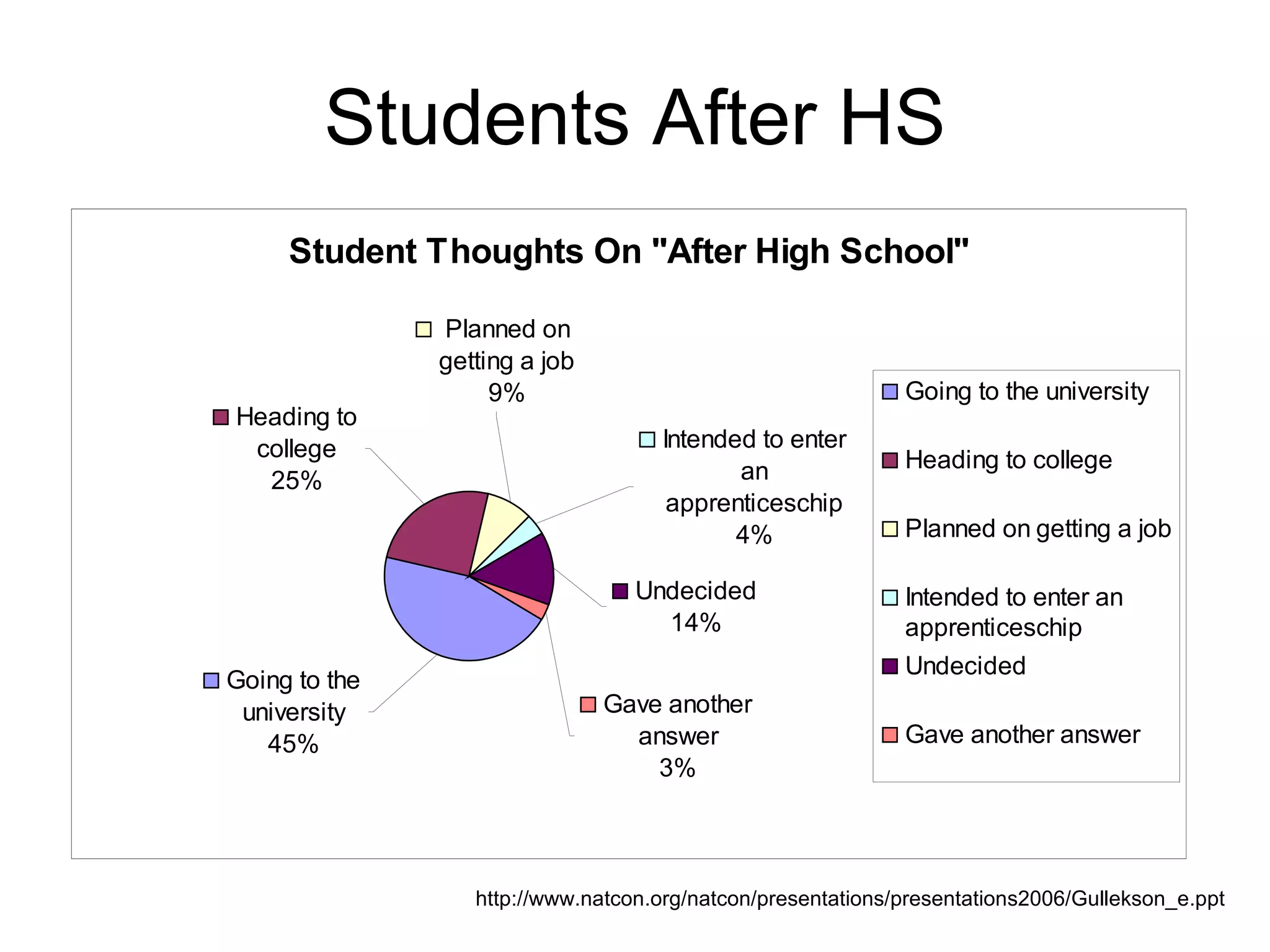
Students After HS http://www.natcon.org/natcon/presentations/presentations2006/Gullekson_e.ppt
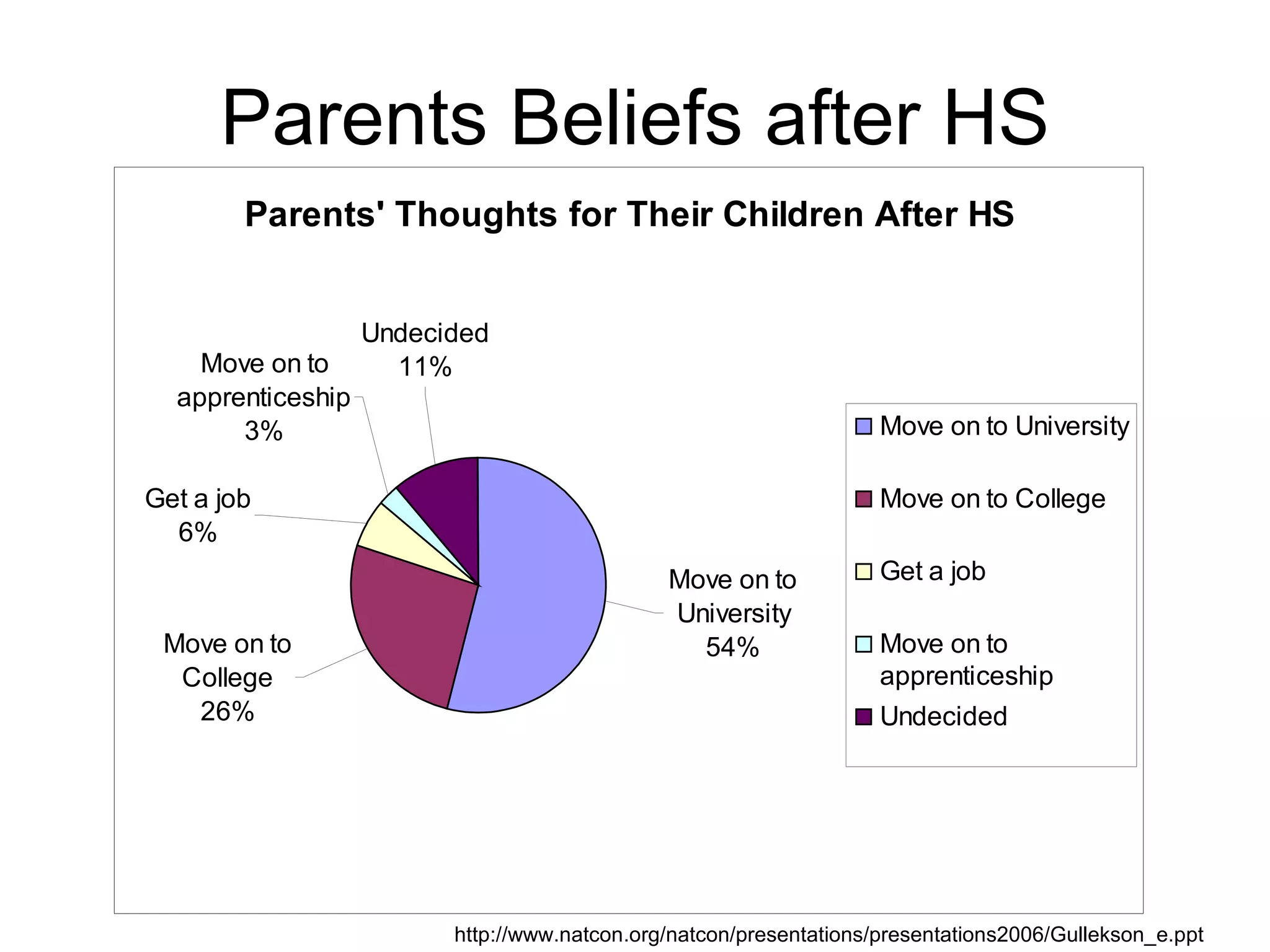
Parents Beliefs after HS http://www.natcon.org/natcon/presentations/presentations2006/Gullekson_e.ppt
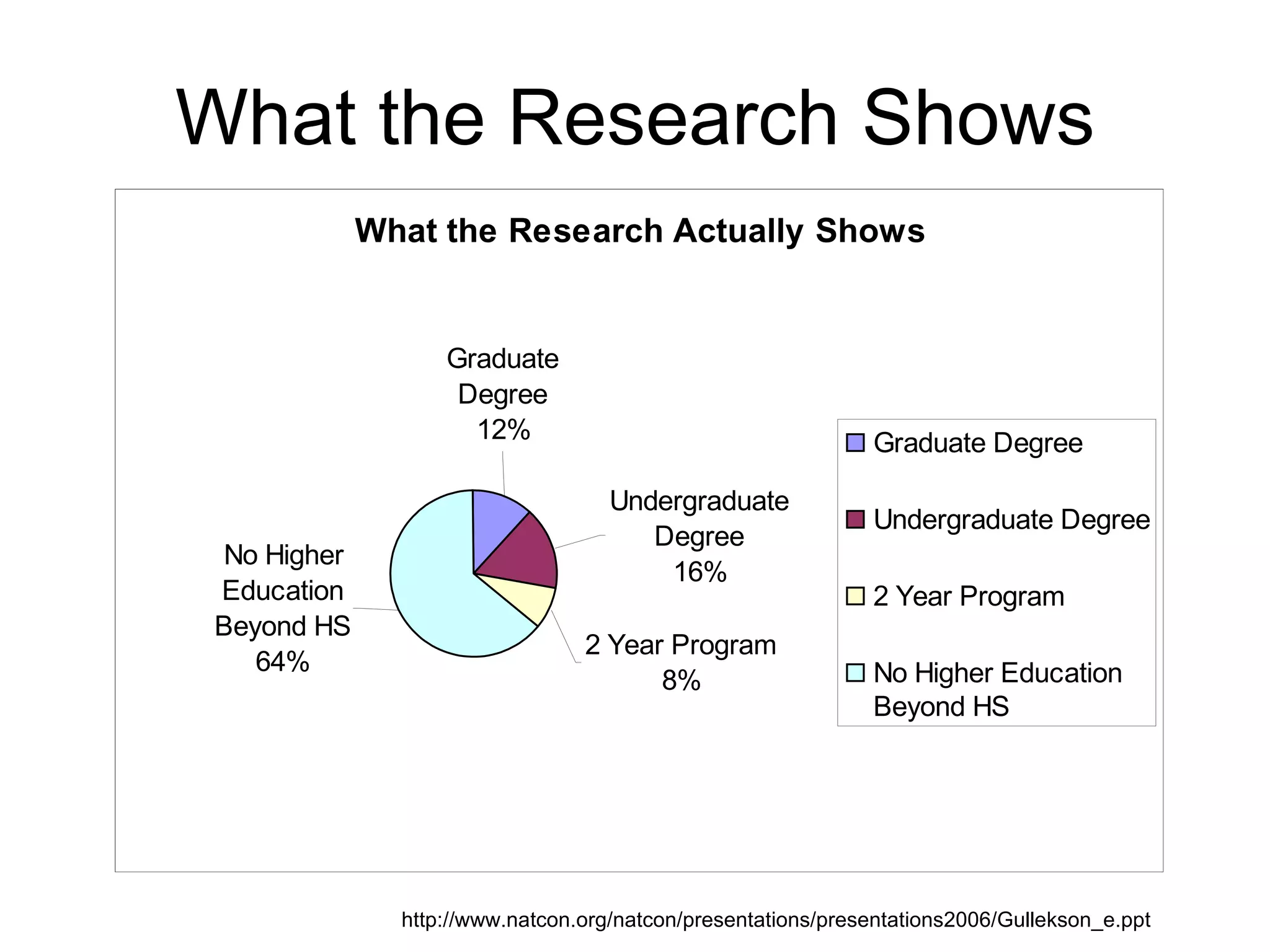
What the Research Shows http://www.natcon.org/natcon/presentations/presentations2006/Gullekson_e.ppt
 
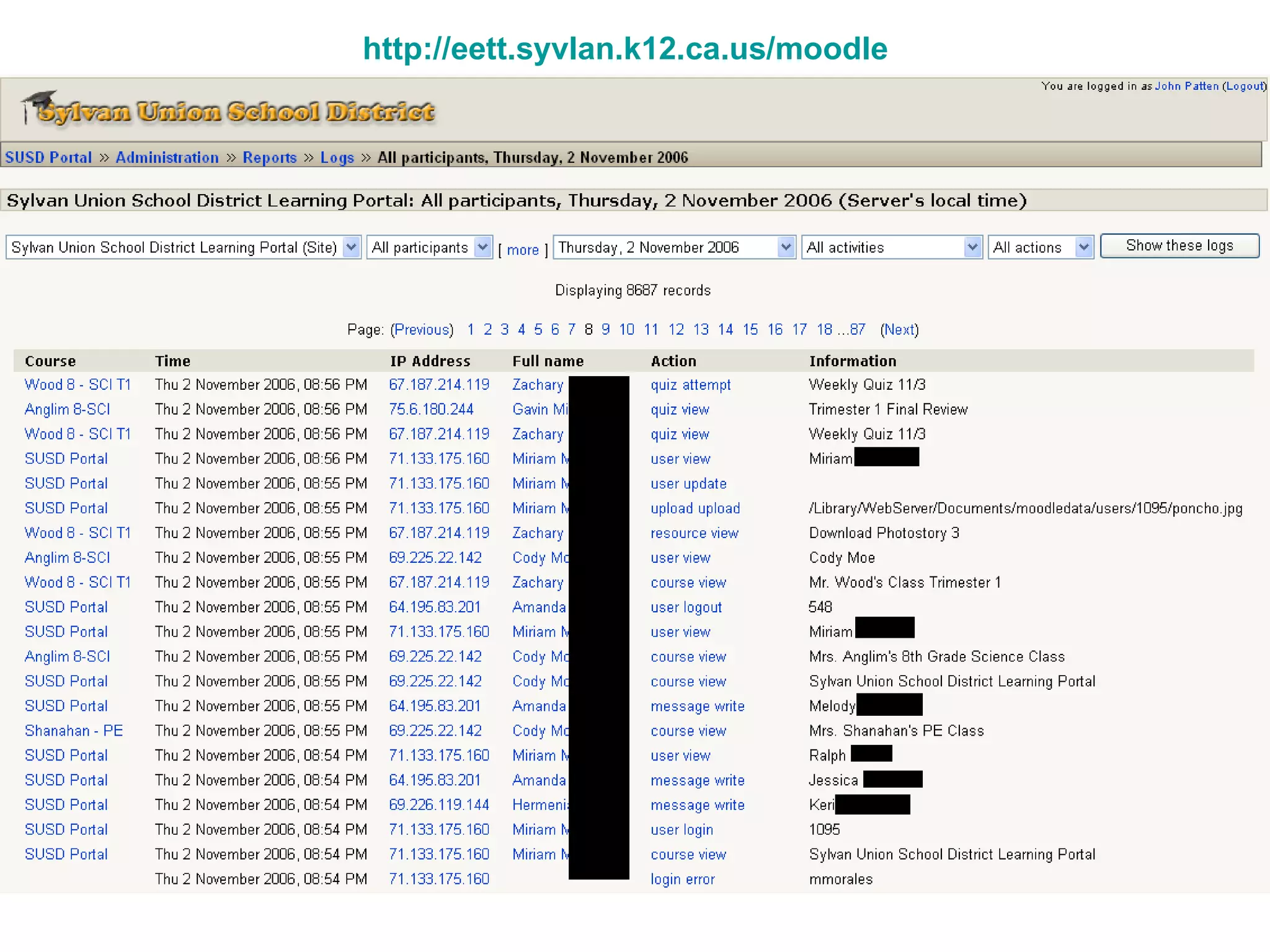
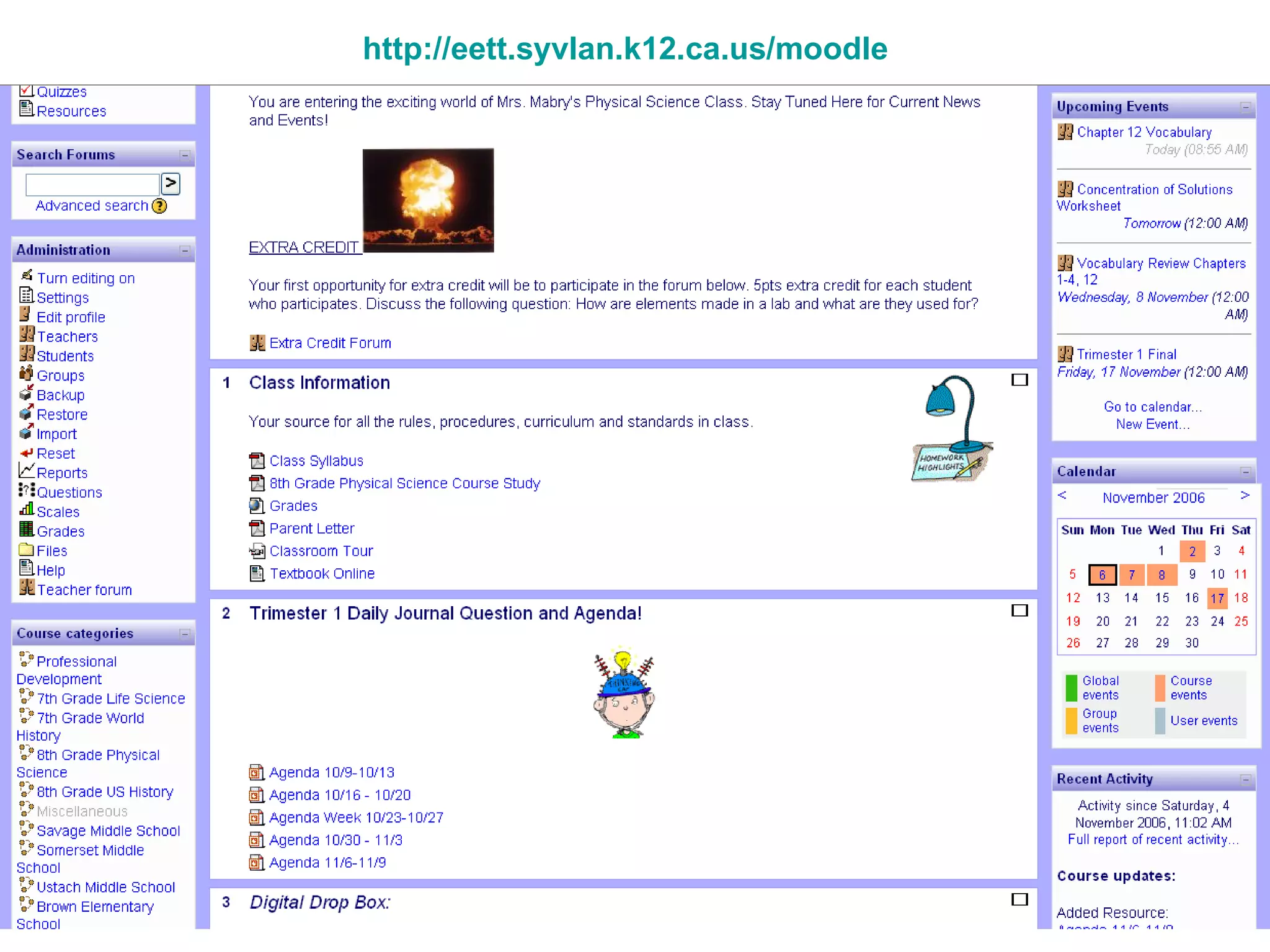
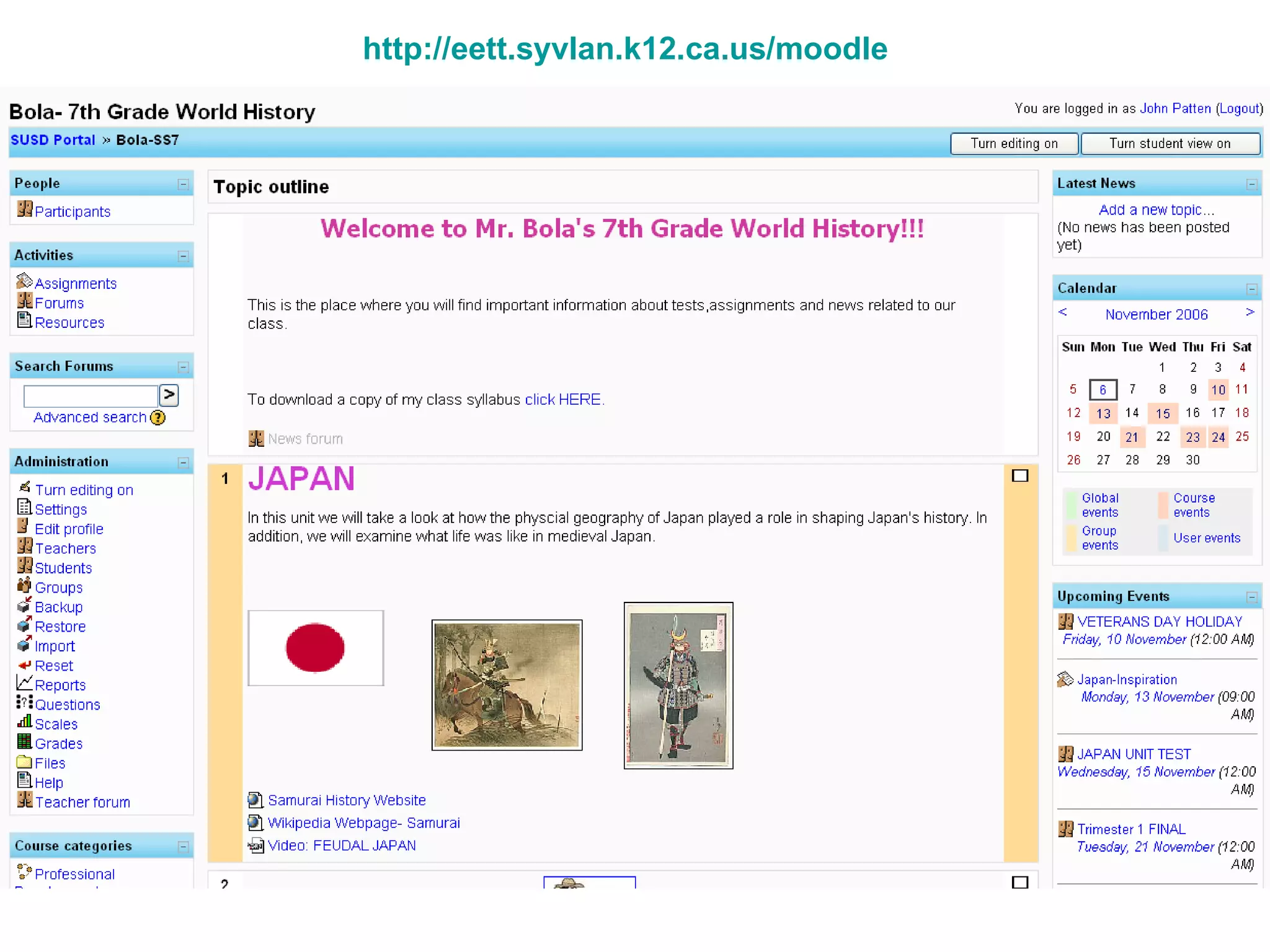
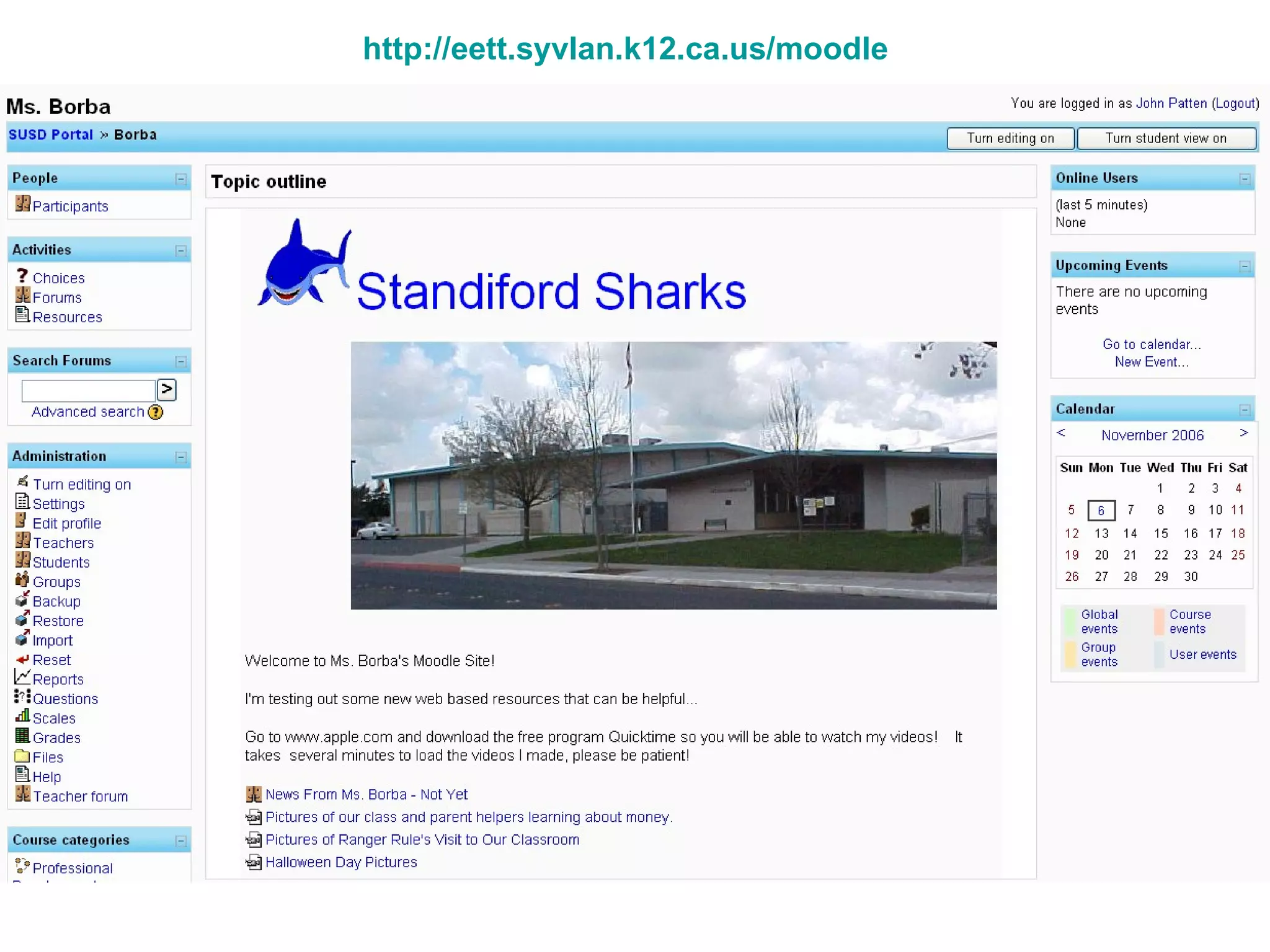
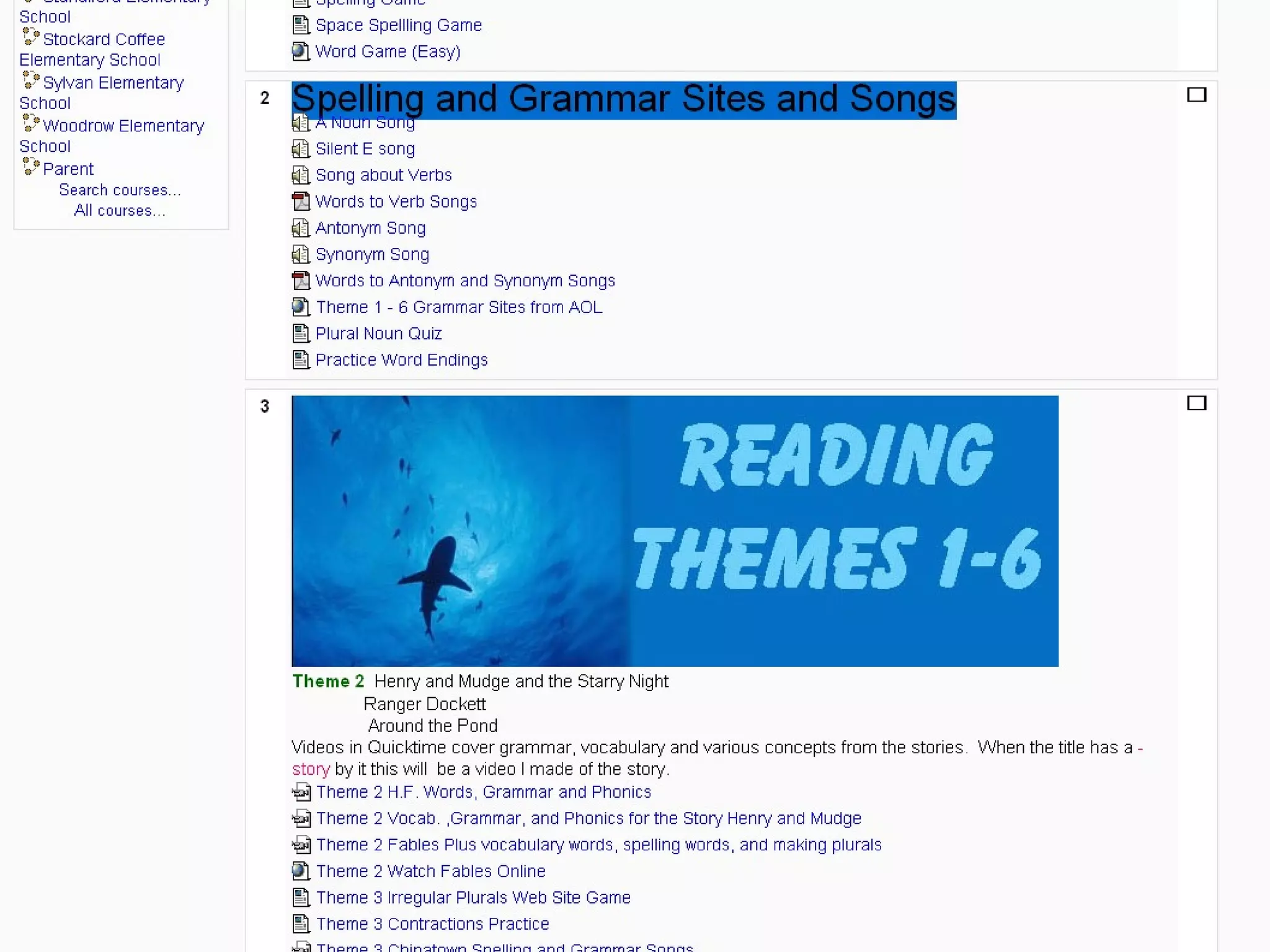
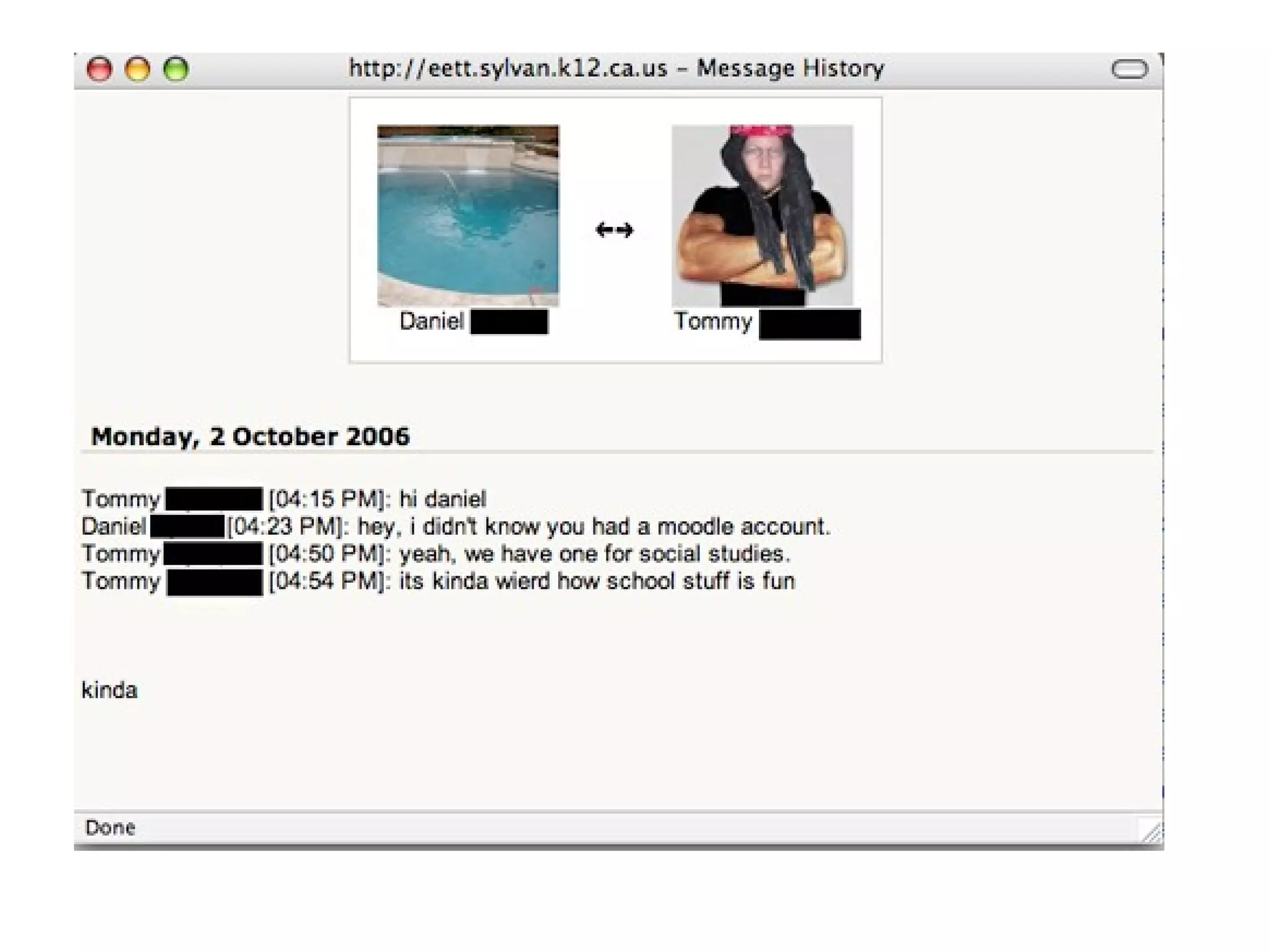
http://eett.syvlan.k12.ca.us/moodle
 
Summary Understanding the use of technology for communication and research are essential 21 st   century skills The vast majority of our students will only receive instruction on these tools and strategies while in the public school system. Students without instruction on utilizing technology for learning will miss out on current and future opportunities. Sylvan Union School District has made great beginning strides in incorporating modern instructional tools, but we still have a ways to go.
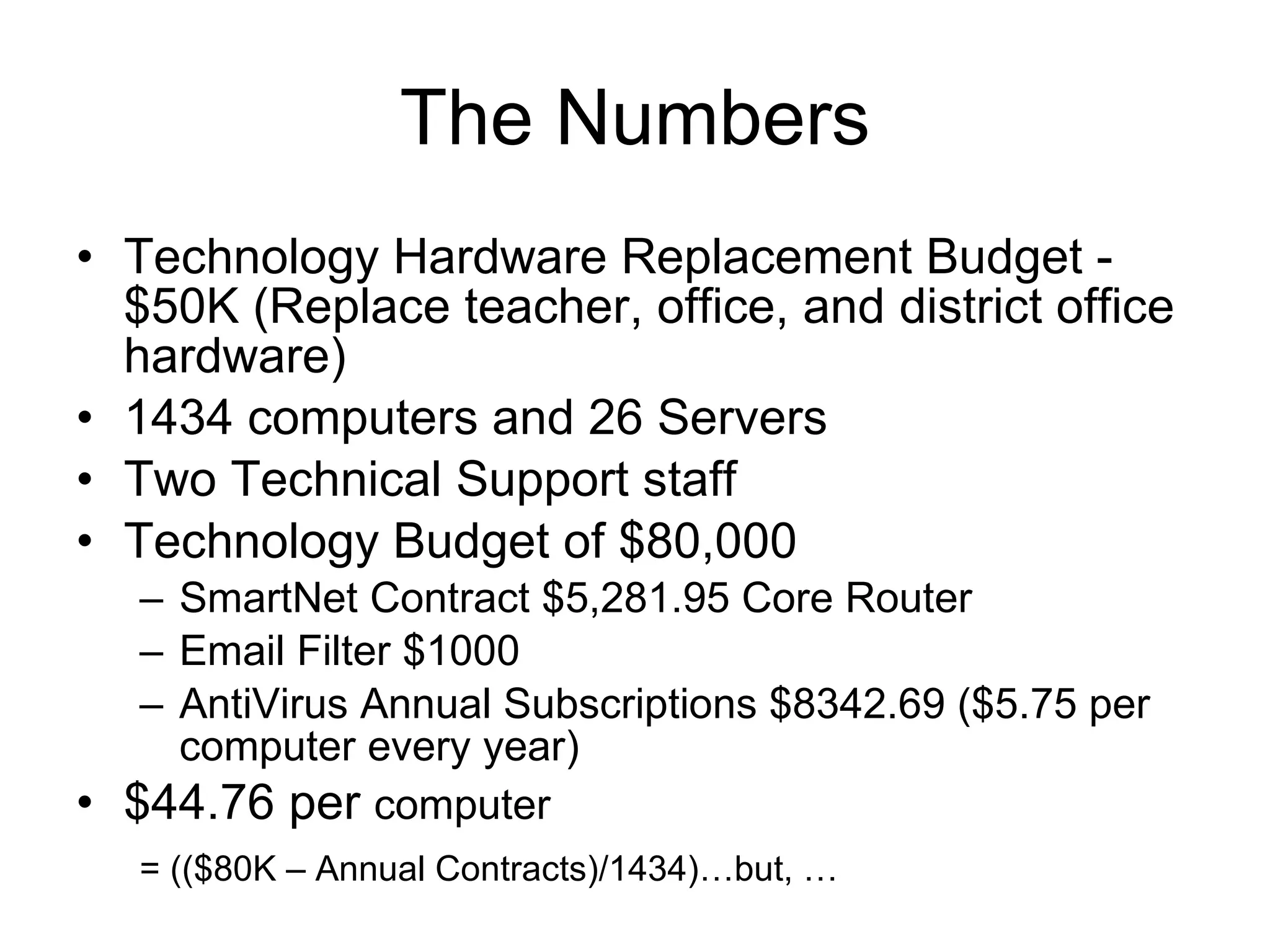
The Numbers Technology Hardware Replacement Budget - $50K (Replace teacher, office, and district office hardware) 1434 computers and 26 Servers Two Technical Support staff Technology Budget of $80,000 SmartNet Contract $5,281.95 Core Router Email Filter $1000 AntiVirus Annual Subscriptions $8342.69 ($5.75 per computer every year) $44.76 per  computer  = (($80K – Annual Contracts)/1434)…but, …
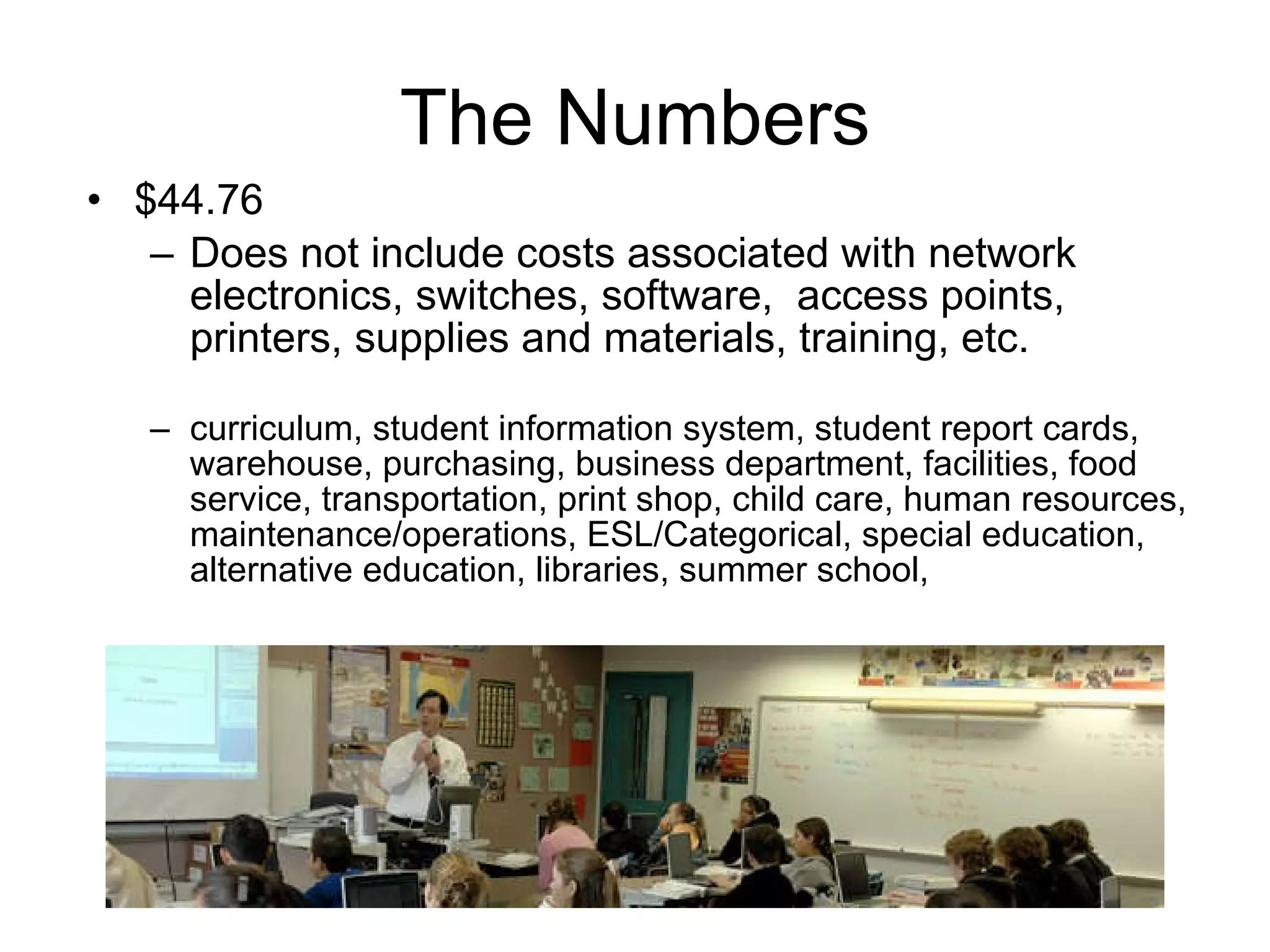
The Numbers $44.76 Does not include costs associated with network electronics, switches, software,  access points, printers, supplies and materials, training, etc. curriculum, student information system, student report cards, warehouse, purchasing, business department, facilities, food service, transportation, print shop, child care, human resources, maintenance/operations, ESL/Categorical, special education, alternative education, libraries, summer school,
Developing Three Year Objectives Develop plan for computer hardware replacement, including phased implementation of server refresh.  Develop plan and acquire funding for teacher station updates including: laptops, projectors, speakers, and document cameras. Implement Cisco wireless plan and deployment for Ustach and Somerset Middle School Create plan for meeting infrastructure goals for all sites by 2010.  Develop plan, evaluate, and implement centralization of student information system and district wide back-up system.
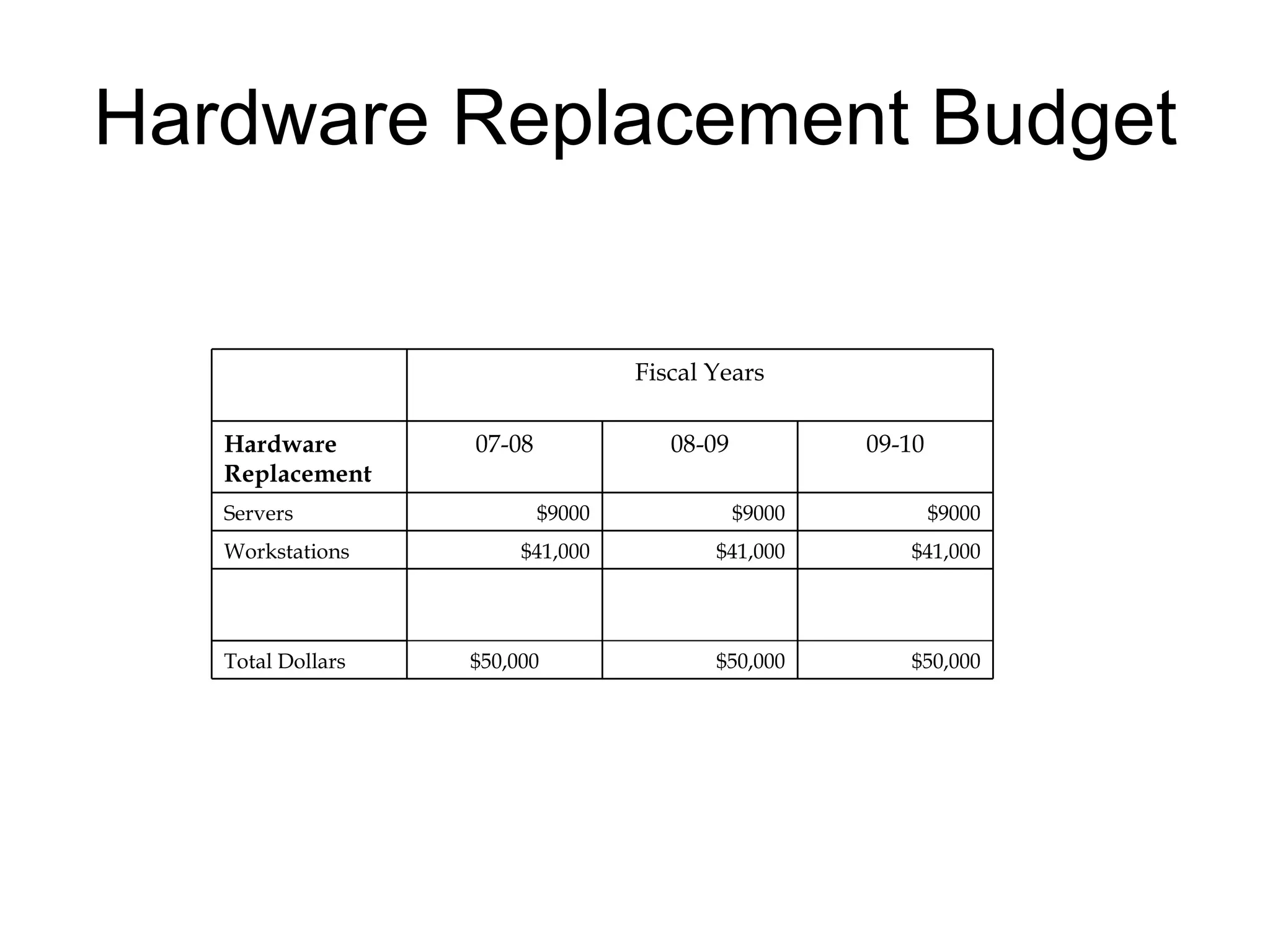
Hardware Replacement Budget $50,000 $50,000 $50,000 Total Dollars $41,000 $41,000 $41,000 Workstations $9000 $9000 $9000 Servers 09-10 08-09 07-08 Hardware Replacement  Fiscal Years
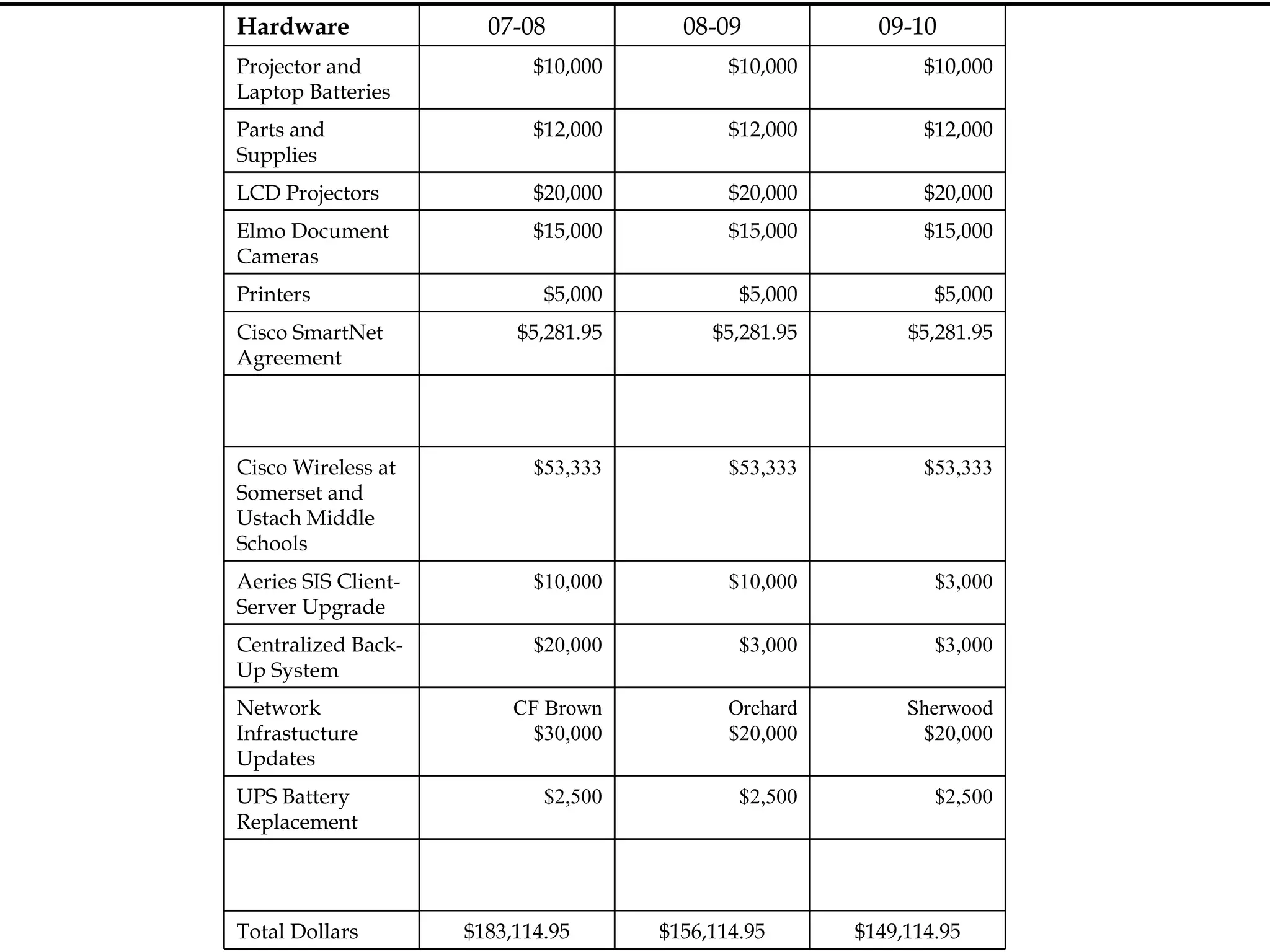
$149,114.95 $156,114.95 $183,114.95 Total Dollars $2,500 $2,500 $2,500 UPS Battery Replacement Sherwood $20,000 Orchard $20,000 CF Brown $30,000 Network Infrastucture Updates $3,000 $3,000 $20,000 Centralized Back- Up System $3,000 $10,000 $10,000 Aeries SIS Client-Server Upgrade $53,333 $53,333 $53,333 Cisco Wireless at Somerset and Ustach Middle Schools $5,281.95 $5,281.95 $5,281.95 Cisco SmartNet Agreement $5,000 $5,000 $5,000 Printers $15,000 $15,000 $15,000 Elmo Document Cameras $20,000 $20,000 $20,000 LCD Projectors $12,000 $12,000 $12,000 Parts and Supplies $10,000 $10,000 $10,000 Projector and Laptop Batteries 09-10 08-09 07-08 Hardware
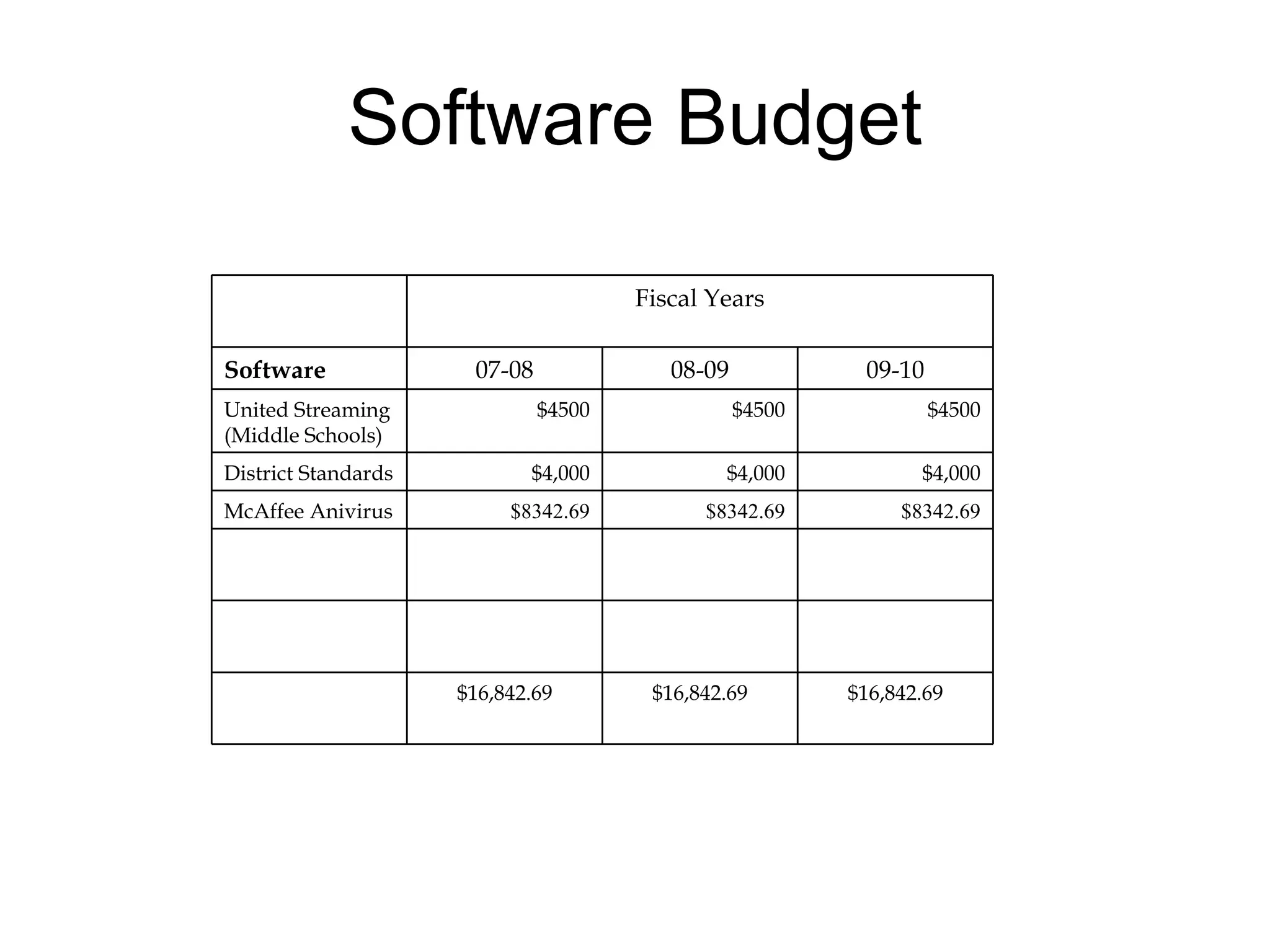
Software Budget $16,842.69 $16,842.69 $16,842.69 $8342.69 $8342.69 $8342.69 McAffee Anivirus $4,000 $4,000 $4,000 District Standards $4500 $4500 $4500 United Streaming (Middle Schools) 09-10 08-09 07-08 Software  Fiscal Years
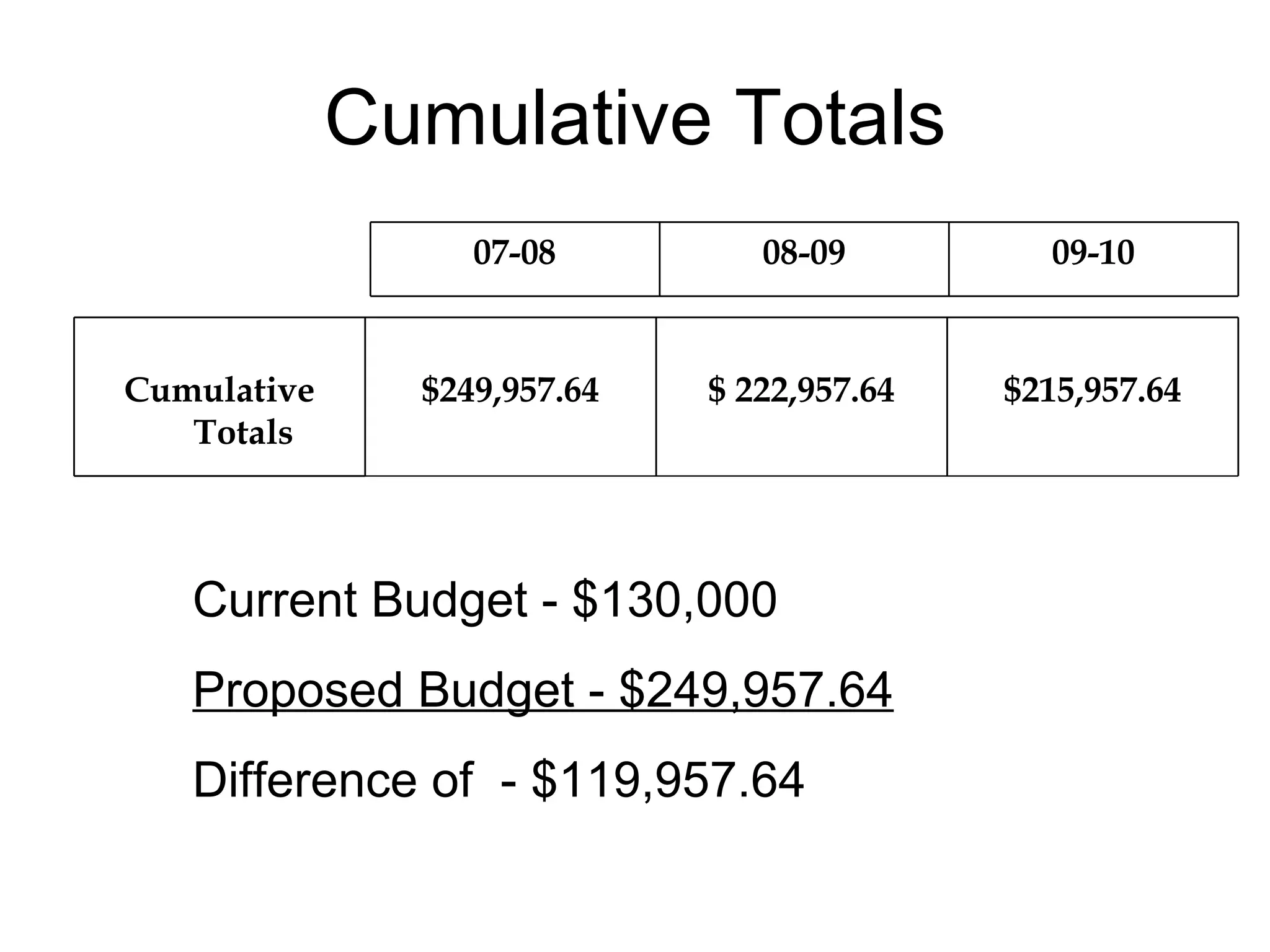
Cumulative Totals Current Budget - $130,000 Proposed Budget - $249,957.64 Difference of  - $119,957.64 $215,957.64 $ 222,957.64 $249,957.64 Cumulative Totals 09-10 08-09 07-08
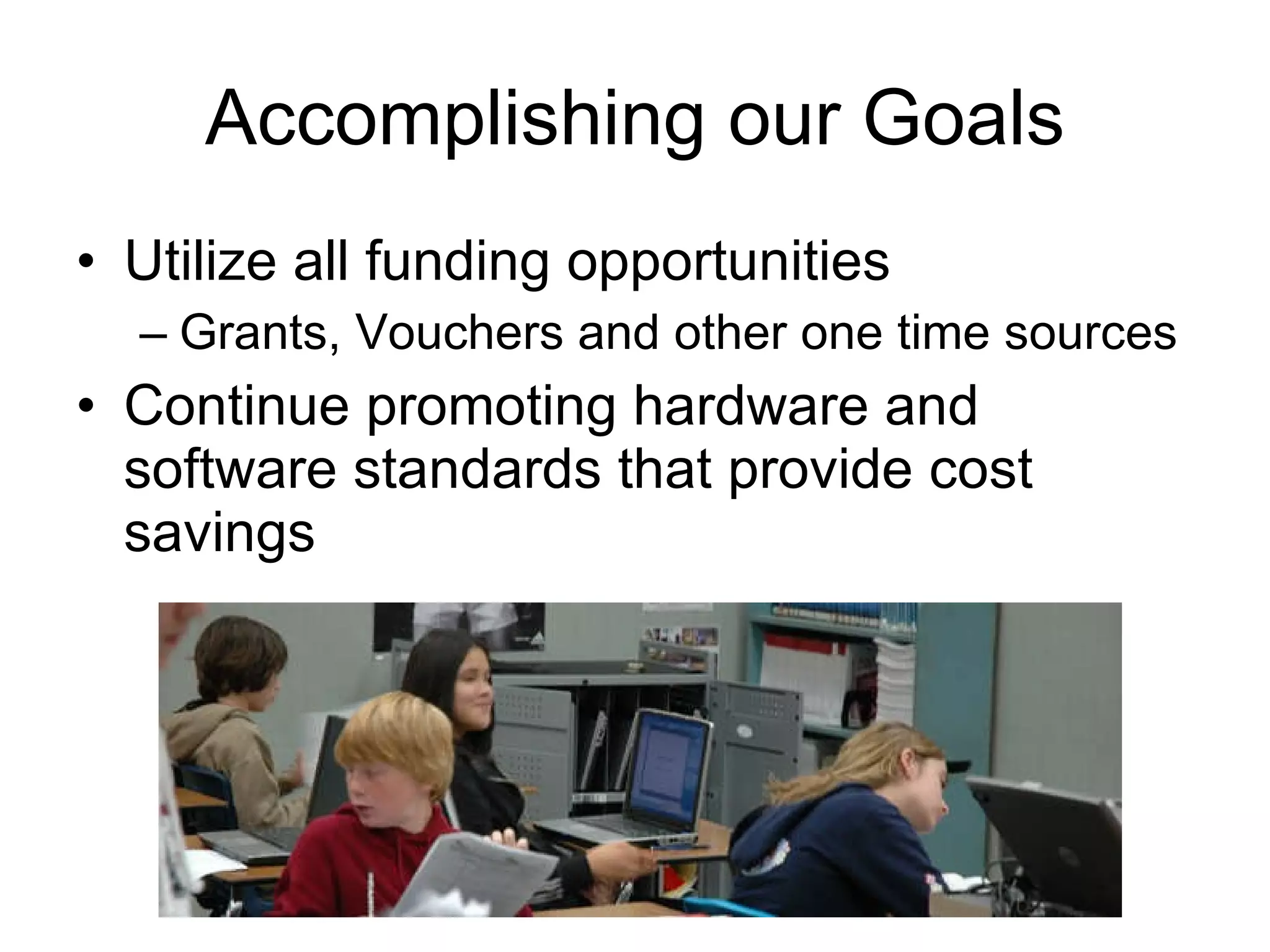
Accomplishing our Goals Utilize all funding opportunities Grants, Vouchers and other one time sources Continue promoting hardware and software standards that provide cost savings
Bibliography Jukes, Ian;  Education at the Crossroads – The restructuring of Education, the Future of Employment and the Challenges of Education , The InfoSavy Group, 2005,  http://ianjukes.com/infosavvy/education/handouts/eatc.pdf Jukes, Ian & Anita Dosaj; Understanding Digital Children – Teaching and Learning in the New Digital Landscape, The InfoSavvy Group, 2006,  http:// ianjukes.com/infosavvy/education/handouts/ndl.pdf Walsh, John; Job Shadow – Finding the Road to Your Career, University of Guelph, PowerPoint Presentation,  http://www.natcon.org/natcon/presentations/presentations2006/Gullekson_e.ppt Thornburg, David; The Future Isn’t What it Used to Be – Comments to Citicorp on emerging trends relating to education, Congressional Institute for the Future, 1997,  http://www.tcpd.org/Thornburg/Handouts/FutureIsntWhat.pdf
 

Technology Update to Board (2006)

  • 1.
    Sylvan Union SchoolDistrict Technology Department
  • 2.
    Major Points Understandingthe use of technology for communication and research are essential 21 st century skills The vast majority of our students will only receive instruction on these tools and strategies while in the public school system. Students without instruction on utilizing technology for learning will miss out on current and future opportunities. Sylvan Union School District has made great beginning strides in incorporating modern instructional tools, but we still have a ways to go.
  • 3.
    Professor Ikujiro Nonakaat UC Berkley: The dynamics of knowledge have become the most important competitive resource of the firm.
  • 4.
    Eric Hoffer –Longshoreman/Philosopher In a time of drastic change it is the learners who inherit the future. The Learned usually find themselves equipped to live in a world that no longer exists.
  • 5.
    David Thornburg – Lifelong learning needs to become the dominant paradigm for education if our institutions are going to remain relevant in the lives of their students.
  • 6.
    Students After HShttp://www.natcon.org/natcon/presentations/presentations2006/Gullekson_e.ppt
  • 7.
    Parents Beliefs afterHS http://www.natcon.org/natcon/presentations/presentations2006/Gullekson_e.ppt
  • 8.
    What the ResearchShows http://www.natcon.org/natcon/presentations/presentations2006/Gullekson_e.ppt
  • 9.
  • 10.
  • 11.
  • 12.
  • 13.
  • 14.
  • 15.
    Summary Understanding theuse of technology for communication and research are essential 21 st century skills The vast majority of our students will only receive instruction on these tools and strategies while in the public school system. Students without instruction on utilizing technology for learning will miss out on current and future opportunities. Sylvan Union School District has made great beginning strides in incorporating modern instructional tools, but we still have a ways to go.
  • 16.
    The Numbers TechnologyHardware Replacement Budget - $50K (Replace teacher, office, and district office hardware) 1434 computers and 26 Servers Two Technical Support staff Technology Budget of $80,000 SmartNet Contract $5,281.95 Core Router Email Filter $1000 AntiVirus Annual Subscriptions $8342.69 ($5.75 per computer every year) $44.76 per computer = (($80K – Annual Contracts)/1434)…but, …
  • 17.
    The Numbers $44.76Does not include costs associated with network electronics, switches, software, access points, printers, supplies and materials, training, etc. curriculum, student information system, student report cards, warehouse, purchasing, business department, facilities, food service, transportation, print shop, child care, human resources, maintenance/operations, ESL/Categorical, special education, alternative education, libraries, summer school,
  • 18.
    Developing Three YearObjectives Develop plan for computer hardware replacement, including phased implementation of server refresh. Develop plan and acquire funding for teacher station updates including: laptops, projectors, speakers, and document cameras. Implement Cisco wireless plan and deployment for Ustach and Somerset Middle School Create plan for meeting infrastructure goals for all sites by 2010. Develop plan, evaluate, and implement centralization of student information system and district wide back-up system.
  • 19.
    Hardware Replacement Budget$50,000 $50,000 $50,000 Total Dollars $41,000 $41,000 $41,000 Workstations $9000 $9000 $9000 Servers 09-10 08-09 07-08 Hardware Replacement Fiscal Years
  • 20.
    $149,114.95 $156,114.95 $183,114.95Total Dollars $2,500 $2,500 $2,500 UPS Battery Replacement Sherwood $20,000 Orchard $20,000 CF Brown $30,000 Network Infrastucture Updates $3,000 $3,000 $20,000 Centralized Back- Up System $3,000 $10,000 $10,000 Aeries SIS Client-Server Upgrade $53,333 $53,333 $53,333 Cisco Wireless at Somerset and Ustach Middle Schools $5,281.95 $5,281.95 $5,281.95 Cisco SmartNet Agreement $5,000 $5,000 $5,000 Printers $15,000 $15,000 $15,000 Elmo Document Cameras $20,000 $20,000 $20,000 LCD Projectors $12,000 $12,000 $12,000 Parts and Supplies $10,000 $10,000 $10,000 Projector and Laptop Batteries 09-10 08-09 07-08 Hardware
  • 21.
    Software Budget $16,842.69$16,842.69 $16,842.69 $8342.69 $8342.69 $8342.69 McAffee Anivirus $4,000 $4,000 $4,000 District Standards $4500 $4500 $4500 United Streaming (Middle Schools) 09-10 08-09 07-08 Software Fiscal Years
  • 22.
    Cumulative Totals CurrentBudget - $130,000 Proposed Budget - $249,957.64 Difference of - $119,957.64 $215,957.64 $ 222,957.64 $249,957.64 Cumulative Totals 09-10 08-09 07-08
  • 23.
    Accomplishing our GoalsUtilize all funding opportunities Grants, Vouchers and other one time sources Continue promoting hardware and software standards that provide cost savings
  • 24.
    Bibliography Jukes, Ian; Education at the Crossroads – The restructuring of Education, the Future of Employment and the Challenges of Education , The InfoSavy Group, 2005, http://ianjukes.com/infosavvy/education/handouts/eatc.pdf Jukes, Ian & Anita Dosaj; Understanding Digital Children – Teaching and Learning in the New Digital Landscape, The InfoSavvy Group, 2006, http:// ianjukes.com/infosavvy/education/handouts/ndl.pdf Walsh, John; Job Shadow – Finding the Road to Your Career, University of Guelph, PowerPoint Presentation, http://www.natcon.org/natcon/presentations/presentations2006/Gullekson_e.ppt Thornburg, David; The Future Isn’t What it Used to Be – Comments to Citicorp on emerging trends relating to education, Congressional Institute for the Future, 1997, http://www.tcpd.org/Thornburg/Handouts/FutureIsntWhat.pdf
  • 25.

Editor's Notes

  • #4 The amount of information and tools for communication have never been so abundant in any previous time in history. We have a responsibility to our students to provide the tools necessary for them to succeed. And the strategies and skill to utilize the vast available stores of knowledge. For the majority of our students, the skills needed for them to be successful in an ever increasing technical world will have to come from learning that takes place in our schools. Without our schools providing these opportunities, our students will be at a great disadvantage. To date the Sylvan district has made remarkable advances in the use of technology as an instructional tool by both teachers and students. Teachers have been able to provide instructional resources that maximize student comprehension by utilizing information in multiple formats and presented in a way that encourages students to question and synthesize their own understanding of the key state standards. Though we’ve made great advances, we still have a long way to go.