INFORMATION
   SYSTEMS
     PROGRAMA DE
    FORMACIÓN ADSI
INGLÉS TÉCNICO.
MODULE 4
INFORMATION SYSTEMS (IS)
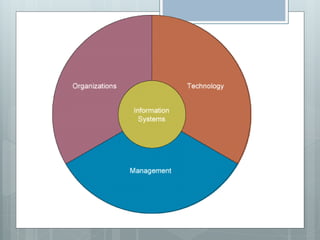
    Is any combination of Information Technology and
    people's   activities that   support   operations,
    management, and decision making.

   An information system (IS) collects, processes, stores,
    analyzes, and disseminates information for a specific
    purpose. Like any other system, an information
    system includes inputs (data, instructions) and
    outputs (reports, calculations). It processes the inputs
    by using technology such as PCs and produces
    outputs that are sent to users or to other systems via
    electronic networks and a feedback mechanism
    that controls the operation.
ACTIVITY 1


Watch the video.
Practice pronunciation, use the
video transcription.
         VIDEO: WHAS IT IS AN
         INFORMATION SYSTEM
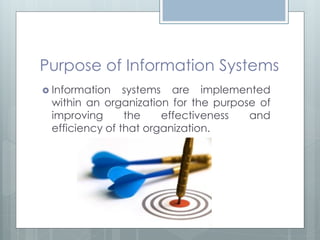
Purpose of Information Systems
 Information   systems are implemented
 within an organization for the purpose of
 improving      the    effectiveness  and
 efficiency of that organization.
COMPONENTS
OF AN
INFORMATION
SYSTEM
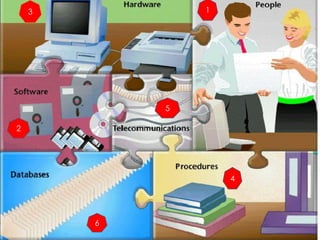
3           1


            5

2


                    4


        6
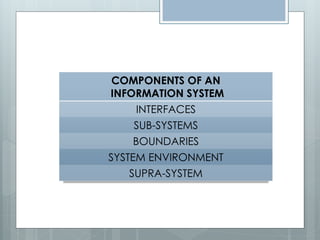
COMPONENTS OF AN
INFORMATION SYSTEM
      INTERFACES
     SUB-SYSTEMS
     BOUNDARIES
SYSTEM ENVIRONMENT
    SUPRA-SYSTEM
ACTIVITY 2


Match the columns. HERE
CHARACTERISTICS
OF SUB-SYSTEMS
DECOMPOSITION
SIMPLIFICATION
DECOUPLING
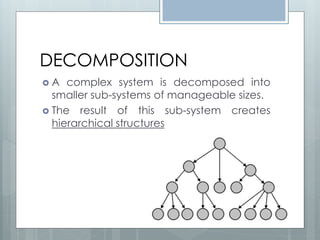
DECOMPOSITION
A   complex system is decomposed into
  smaller sub-systems of manageable sizes.
 The result of this sub-system creates
  hierarchical structures
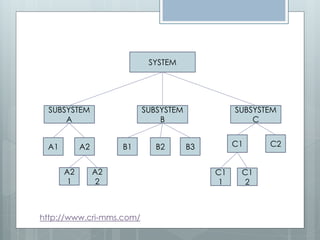
SYSTEM


  SUBSYSTEM               SUBSYSTEM             SUBSYSTEM
      A                       B                     C


 A1        A2        B1      B2       B3        C1     C2


      A2        A2                         C1    C1
      1         2                           1    2


http://www.cri-mms.com/
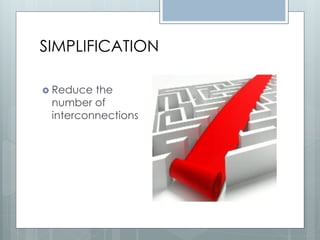
SIMPLIFICATION

 Reduce the
 number of
 interconnections
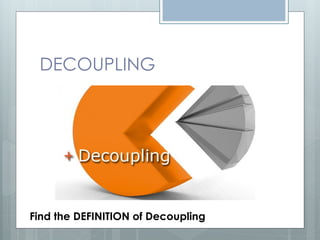
DECOUPLING


Find the DEFINITION of Decoupling
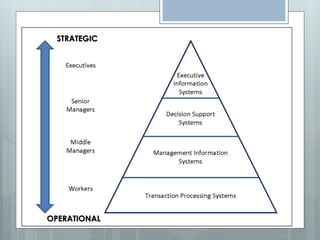
Information Systems can
      be categorized in:
      Executive Information System (EIS)
      Decision Support System (DSS)
      Management Information System (MIS)
      Transaction Processing System (TPS)


http://www.slideshare.net/mannyardales/types-of-information-systems
STRATEGIC


OPERATIONAL
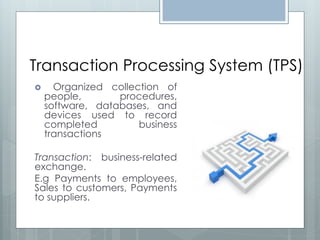
Transaction Processing System (TPS)
     Organized collection of
    people,       procedures,
    software, databases, and
    devices used to record
    completed         business
    transactions

Transaction: business-related
exchange.
E.g Payments to employees,
Sales to customers, Payments
to suppliers.
Management Information
System (MIS)

   Provides information needed to manage
    organizations efficiently and effectively.

   Read more HERE
Decision Support System (DSS)
         A        computer-
    based         information
    system that supports
    business               or
    organizational decision-
    making activities.

 Read   more HERE
Executive Information System (EIS)
      Is      a      type
  of         management
  information system to
  facilitate and support
  the          information
  and             decision-
  making needs of senior
  executives.
Provides easy access to
relevant information for
the strategic goals of
the organization.
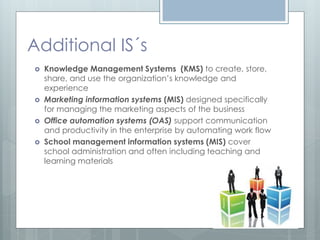
Additional IS´s
   Knowledge Management Systems (KMS) to create, store,
    share, and use the organization’s knowledge and
    experience
   Marketing information systems (MIS) designed specifically
    for managing the marketing aspects of the business
   Office automation systems (OAS) support communication
    and productivity in the enterprise by automating work flow
   School management information systems (MIS) cover
    school administration and often including teaching and
    learning materials
Confused??
Don´t worry, this example
will help you understand:
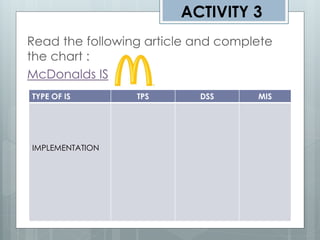
ACTIVITY 3
Read the following article and complete
the chart :
McDonalds IS
TYPE OF IS       TPS       DSS      MIS


IMPLEMENTATION
One more example..

  Watch the story of
  Jimmy…. HERE
MAJOR IMPLEMENTATION
          AREAS
 FINANCE AND ACCOUNTING
 MARKETING AND SALES
 PRODUCTION OR MANUFACTURING
 INVENTORY/ STORES MANAGEMENT
 HRM
ACTIVITY 4

Find 5 real examples of ISs implemented in
the market for different implementation areas.

                   Name:
                   Company:
                   Type:
                   Objective:


                              Share with the
                              class…
 THIS
     IS THE END
 OF THIS MODULE.


                            INFORMATION
                               SYSTEMS
EVIDENCE:
                    THANKS!
Complete all the
activities
developed in this
module.
                    E4it – Unit. 4

Technology Basics Module 5

  • 1.
    INFORMATION SYSTEMS PROGRAMA DE FORMACIÓN ADSI INGLÉS TÉCNICO. MODULE 4
  • 3.
    INFORMATION SYSTEMS (IS)  Is any combination of Information Technology and people's activities that support operations, management, and decision making.  An information system (IS) collects, processes, stores, analyzes, and disseminates information for a specific purpose. Like any other system, an information system includes inputs (data, instructions) and outputs (reports, calculations). It processes the inputs by using technology such as PCs and produces outputs that are sent to users or to other systems via electronic networks and a feedback mechanism that controls the operation.
  • 4.
    ACTIVITY 1 Watch thevideo. Practice pronunciation, use the video transcription. VIDEO: WHAS IT IS AN INFORMATION SYSTEM
  • 5.
    Purpose of InformationSystems  Information systems are implemented within an organization for the purpose of improving the effectiveness and efficiency of that organization.
  • 6.
  • 7.
    3 1 5 2 4 6
  • 8.
    COMPONENTS OF AN INFORMATIONSYSTEM INTERFACES SUB-SYSTEMS BOUNDARIES SYSTEM ENVIRONMENT SUPRA-SYSTEM
  • 9.
    ACTIVITY 2 Match thecolumns. HERE
  • 10.
  • 11.
    DECOMPOSITION A complex system is decomposed into smaller sub-systems of manageable sizes.  The result of this sub-system creates hierarchical structures
  • 12.
    SYSTEM SUBSYSTEM SUBSYSTEM SUBSYSTEM A B C A1 A2 B1 B2 B3 C1 C2 A2 A2 C1 C1 1 2 1 2 http://www.cri-mms.com/
  • 13.
    SIMPLIFICATION  Reduce the number of interconnections
  • 14.
  • 15.
    Information Systems can be categorized in: Executive Information System (EIS) Decision Support System (DSS) Management Information System (MIS) Transaction Processing System (TPS) http://www.slideshare.net/mannyardales/types-of-information-systems
  • 16.
  • 17.
    Transaction Processing System(TPS)  Organized collection of people, procedures, software, databases, and devices used to record completed business transactions Transaction: business-related exchange. E.g Payments to employees, Sales to customers, Payments to suppliers.
  • 18.
    Management Information System (MIS)  Provides information needed to manage organizations efficiently and effectively.  Read more HERE
  • 19.
    Decision Support System(DSS)  A computer- based information system that supports business or organizational decision- making activities.  Read more HERE
  • 20.
    Executive Information System(EIS)  Is a type of management information system to facilitate and support the information and decision- making needs of senior executives. Provides easy access to relevant information for the strategic goals of the organization.
  • 21.
    Additional IS´s  Knowledge Management Systems (KMS) to create, store, share, and use the organization’s knowledge and experience  Marketing information systems (MIS) designed specifically for managing the marketing aspects of the business  Office automation systems (OAS) support communication and productivity in the enterprise by automating work flow  School management information systems (MIS) cover school administration and often including teaching and learning materials
  • 22.
    Confused?? Don´t worry, thisexample will help you understand:
  • 23.
    ACTIVITY 3 Read thefollowing article and complete the chart : McDonalds IS TYPE OF IS TPS DSS MIS IMPLEMENTATION
  • 24.
    One more example.. Watch the story of Jimmy…. HERE
  • 25.
    MAJOR IMPLEMENTATION AREAS  FINANCE AND ACCOUNTING  MARKETING AND SALES  PRODUCTION OR MANUFACTURING  INVENTORY/ STORES MANAGEMENT  HRM
  • 26.
    ACTIVITY 4 Find 5real examples of ISs implemented in the market for different implementation areas.  Name:  Company:  Type:  Objective: Share with the class…
  • 27.
     THIS IS THE END OF THIS MODULE. INFORMATION SYSTEMS EVIDENCE: THANKS! Complete all the activities developed in this module. E4it – Unit. 4