Downloaded 12 times
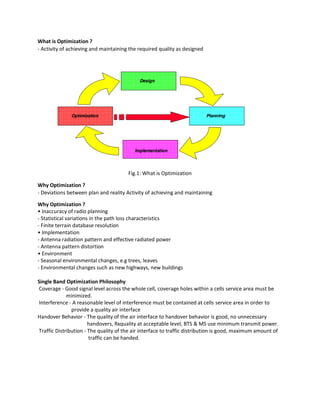


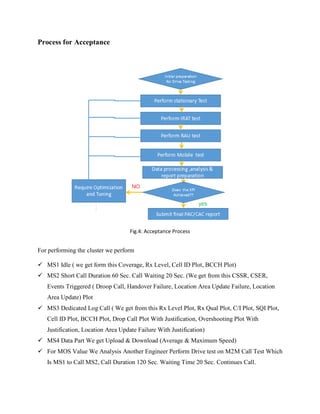
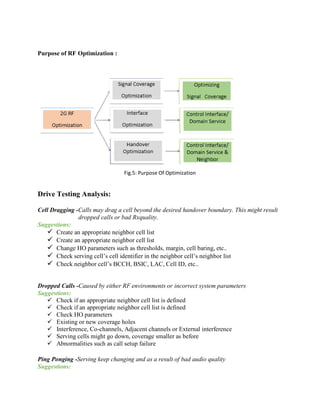


This document discusses radio frequency (RF) optimization, which involves activities to achieve and maintain the required network quality as designed. Reasons for optimization include inaccuracies in radio planning, implementation issues, and environmental changes. The key goals of single band optimization are to provide good coverage and interference levels, as well as good handover behavior and traffic distribution. The optimization process involves site audits, parameter verification, problem identification and prioritization, solution implementation, and retesting. Drive testing is then analyzed to identify issues like cell dragging, dropped calls, ping ponging, and handover boundary problems in order to propose corrective actions.


![Gsm rf-optimization[1]](https://cdn.slidesharecdn.com/ss_thumbnails/gsm-rf-optimization1-130923044142-phpapp02-thumbnail.jpg?width=640&height=640&fit=bounds)


![W(level3) wcdma rno rf optimization-20041217-a-1[1].0](https://cdn.slidesharecdn.com/ss_thumbnails/wlevel3-wcdmarnorfoptimization-20041217-a-11-0-120122084046-phpapp01-thumbnail.jpg?width=640&height=640&fit=bounds)


