This document is the reflection of my knowledge and experience on RF planning and Optimization.
1. RF Planning and optimization:
I have achieved the following tasks while working on RF Planning and Optimization:
 Proposal Writing for RF Planning and Optimization
 Comparative Analysis of 2G, 3G and 4G LTE Services and their KPIs
 Comparative Analysis of vendor specific RF Optimization procedures
 Comprehensive study of Single Site Verification (General and Vendor Specific)
 Comprehensive study of Common RF Optimization Problems
 World Wide coordination with 4G VoLTE Vendors including Cisco, Ericsson, Nokia and
Mitel.
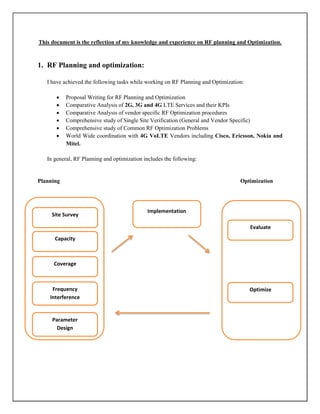
In general, RF Planning and optimization includes the following:
Planning Optimization
Site Survey
Capacity
Coverage
Frequency
Interference
Parameter
Design
Implementation
Evaluate
Optimize
Planning Network Evaluation Path:
 Basic Coverage Deployment
 The first capacity and extension coverage enhancement deployment (Indoor coverage)
 Intelligent capacity enhancement deployment with strong indoor coverage improvement
 Base station coverage area splitting/microcellular/dual band deployment, to further improve
coverage capacity and quality.
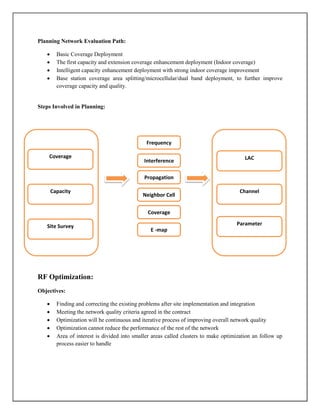
Steps Involved in Planning:
RF Optimization:
Objectives:
 Finding and correcting the existing problems after site implementation and integration
 Meeting the network quality criteria agreed in the contract
 Optimization will be continuous and iterative process of improving overall network quality
 Optimization cannot reduce the performance of the rest of the network
 Area of interest is divided into smaller areas called clusters to make optimization an follow up
process easier to handle
Coverage
Capacity
Site Survey
Frequency
Interference
Propagation
Neighbor Cell
Coverage
E -map
LAC
Channel
Parameter
Proposes Methodology:
 Problem analysis
 Conduct Drive Testing
Gather Statistics
Subject to investigate (Faulty TRX, Coverage Overlaps, Drop Calls, capacity and interference
issues)
 Simulate real time scenario on TEMS (after drive testing)
 Export into MapInfo to check cell overshoot, coverage etc.
 Propose Solution
Expected Outcomes:
 Good signal coverage at macro and micro sites
 Rx quality level should be good
 No interference issue
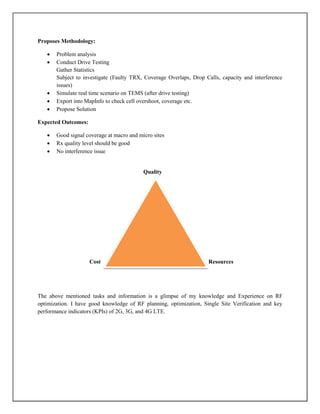
Quality
Cost Resources
The above mentioned tasks and information is a glimpse of my knowledge and Experience on RF
optimization. I have good knowledge of RF planning, optimization, Single Site Verification and key
performance indicators (KPIs) of 2G, 3G, and 4G LTE.

RF Planning and Optimization

  • 1.
    This document isthe reflection of my knowledge and experience on RF planning and Optimization. 1. RF Planning and optimization: I have achieved the following tasks while working on RF Planning and Optimization:  Proposal Writing for RF Planning and Optimization  Comparative Analysis of 2G, 3G and 4G LTE Services and their KPIs  Comparative Analysis of vendor specific RF Optimization procedures  Comprehensive study of Single Site Verification (General and Vendor Specific)  Comprehensive study of Common RF Optimization Problems  World Wide coordination with 4G VoLTE Vendors including Cisco, Ericsson, Nokia and Mitel. In general, RF Planning and optimization includes the following: Planning Optimization Site Survey Capacity Coverage Frequency Interference Parameter Design Implementation Evaluate Optimize
  • 2.
    Planning Network EvaluationPath:  Basic Coverage Deployment  The first capacity and extension coverage enhancement deployment (Indoor coverage)  Intelligent capacity enhancement deployment with strong indoor coverage improvement  Base station coverage area splitting/microcellular/dual band deployment, to further improve coverage capacity and quality. Steps Involved in Planning: RF Optimization: Objectives:  Finding and correcting the existing problems after site implementation and integration  Meeting the network quality criteria agreed in the contract  Optimization will be continuous and iterative process of improving overall network quality  Optimization cannot reduce the performance of the rest of the network  Area of interest is divided into smaller areas called clusters to make optimization an follow up process easier to handle Coverage Capacity Site Survey Frequency Interference Propagation Neighbor Cell Coverage E -map LAC Channel Parameter
  • 3.
    Proposes Methodology:  Problemanalysis  Conduct Drive Testing Gather Statistics Subject to investigate (Faulty TRX, Coverage Overlaps, Drop Calls, capacity and interference issues)  Simulate real time scenario on TEMS (after drive testing)  Export into MapInfo to check cell overshoot, coverage etc.  Propose Solution Expected Outcomes:  Good signal coverage at macro and micro sites  Rx quality level should be good  No interference issue Quality Cost Resources The above mentioned tasks and information is a glimpse of my knowledge and Experience on RF optimization. I have good knowledge of RF planning, optimization, Single Site Verification and key performance indicators (KPIs) of 2G, 3G, and 4G LTE.