

Technical
Communications
Dennis Torrecampo
Senior Consultant
Agenda
 Definitions and concepts
 The technical part
 The communications aspect
 Tech writing vs. other types of literature
 Form and structure
 Usability and other user-centric
communication practices
Agenda
 Definitions and concepts
 The technical part
 The communications aspect
 Tech writing vs. other types of literature
 Form and structure
 Usability and other user-centric communication practices
Definitions and concepts
Documentation: n. The multiple kilograms of macerated,
pounded, steamed, bleached, and pressed trees that
accompany most modern software or hardware products.
(Jargon Files)
By three methods we may learn technical writing: First by
education, which is noblest; second by methodology,
which is easiest; and third by planting your butt in a chair
and pecking out the damn document, which is the
bitterest. (Andrew Plato)
Definitions and concepts
The real technology -- behind all our other technologies --
is language. It actually creates the world our
consciousness lives in. (Andrei Codrescu)
Making the simple complicated is commonplace; making
the complicated simple, awesomely simple, that's
creativity. (Charles Mingus)
 Technical communication is a collaborative process of
conveying useable information about a specific
technology to an intended audience.
Definitions and concepts
Agenda
 Definitions and concepts
 The technical part
 The communications aspect
 Tech writing vs. other types of literature
 Form and structure
 Usability and other user-centric communication practices
The technical part
The problem with allowing the engineers who create a
program also write its Help and Tutorials is that you get
people who cannot write, writing Help for people who do
not need help. (Mark Rector)
Manuals just slow you down and make you feel stupid.
The directions are too slow, too detailed, and use too
much abstract, arcane or academic language -- like boot
up instead of turn on the red switch in the back. (Neil
Fiore)
The technical part: objectives of
technical communication
 Communicate a message of a technical nature
effectively, with emphasis on understanding technology.
 Create documentation that is helpful, accurate,
comprehensible, and accessible to the intended
audience.
 Share or transfer knowledge
 Instruct and educate
 Simplify the complex
 Warn about effect to well-being of others
The technical part: tools of technical
communicators
 Thorough understanding of the technology being
documented and of the audience using it
 Expertise on major word publishing software: Adobe
FrameMaker, MS-Word, Acrobat PDF
 Applied knowledge of online Help development tools:
RoboHelp, Doc-To-Help, Macromedia Flash, Captivate
 Basic knowledge of usability and visual literacy
 Grammar/editing skills
The technical part
Rule 1 of writing software for non-technical users is this: if
they have to read documentation to use it you designed it
wrong. (Eric Raymond)
Reading computer manuals without the hardware is as
frustrating as reading sex manuals without the software.
(Arthur C Clarke)
Documentation is the castor oil of programming. (Gerald
Weinberg)
Voluminous documentation is part of the problem, not part
of the solution. (Tom DeMarco)
Agenda
 Definitions and concepts
 The technical part
 The communications aspect
 Tech writing vs. other types of literature
 Form and structure
 Usability and other user-centric communication practices
The communications aspect
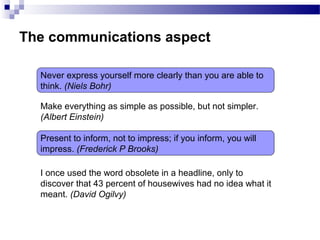
Never express yourself more clearly than you are able to
think. (Niels Bohr)
Make everything as simple as possible, but not simpler.
(Albert Einstein)
Present to inform, not to impress; if you inform, you will
impress. (Frederick P Brooks)
I once used the word obsolete in a headline, only to
discover that 43 percent of housewives had no idea what it
meant. (David Ogilvy)
The communications aspect:
what to relay
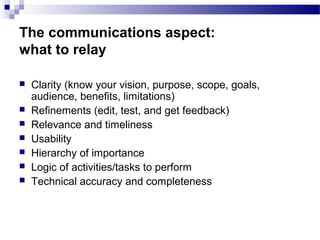
 Clarity (know your vision, purpose, scope, goals,
audience, benefits, limitations)
 Refinements (edit, test, and get feedback)
 Relevance and timeliness
 Usability
 Hierarchy of importance
 Logic of activities/tasks to perform
 Technical accuracy and completeness
The communications aspect
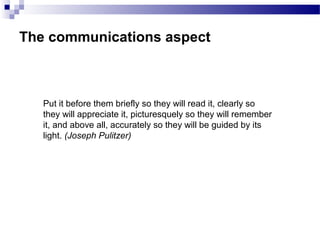
Put it before them briefly so they will read it, clearly so
they will appreciate it, picturesquely so they will remember
it, and above all, accurately so they will be guided by its
light. (Joseph Pulitzer)
Agenda
 Definitions and concepts
 The technical part
 The communications aspect
 Tech writing vs. other types of literature
 Form and structure
 Usability and other user-centric communication practices
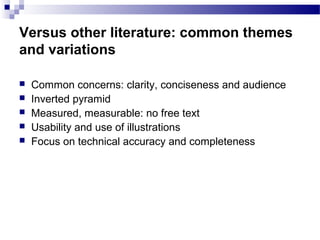
Versus other literature: common themes
and variations
 Common concerns: clarity, conciseness and audience
 Inverted pyramid
 Measured, measurable: no free text
 Usability and use of illustrations
 Focus on technical accuracy and completeness
Versus other literature: common themes and
variations
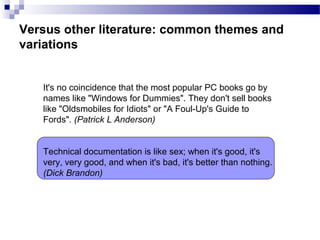
It's no coincidence that the most popular PC books go by
names like "Windows for Dummies". They don't sell books
like "Oldsmobiles for Idiots" or "A Foul-Up's Guide to
Fords". (Patrick L Anderson)
Technical documentation is like sex; when it's good, it's
very, very good, and when it's bad, it's better than nothing.
(Dick Brandon)
Agenda
 Definitions and concepts
 The technical part
 The communications aspect
 Tech writing vs. other types of literature
 Form and structure
 Usability and other user-centric communication practices
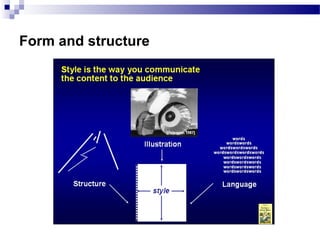
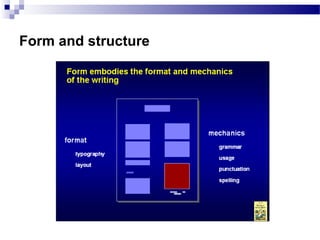
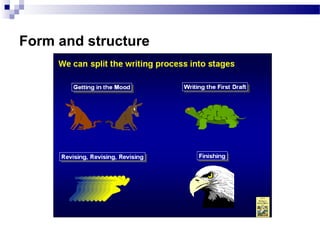
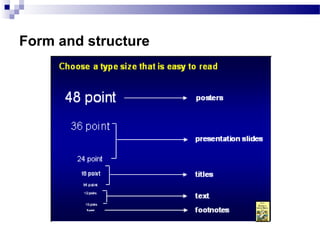
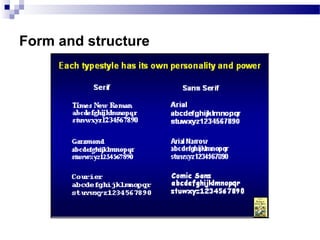
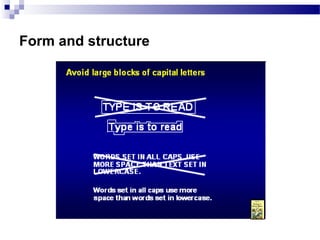
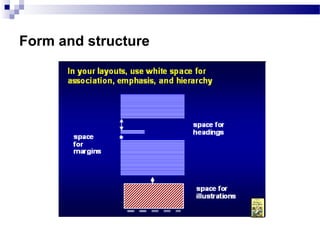
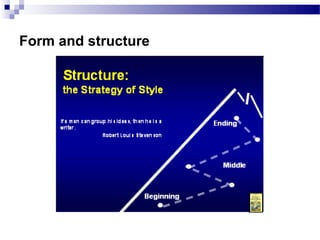
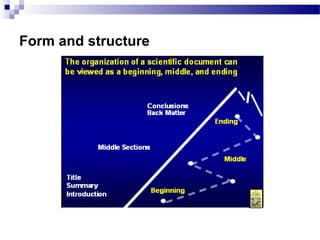
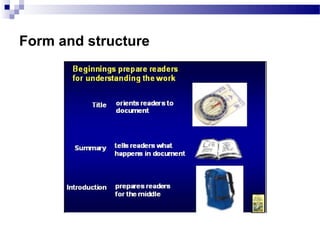
Form and structure
User: n. The word computer professionals use when they
mean "idiot." (Dave Barry)
Form and structure
Form and structure
Form and structure
Form and structure
Form and structure
Form and structure
Form and structure
Form and structure
Form and structure
Form and structure
Form and structure
Form and structure
Form and structure
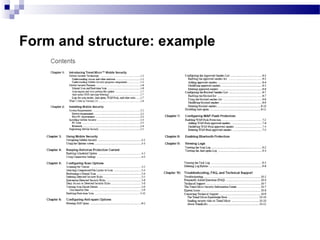
Form and structure: example
Agenda
 Definitions and concepts
 The technical part
 The communications aspect
 Tech writing vs. other types of literature
 Form and structure
 Usability and other user-centric
communication practices
Usability
Usability is a term used to denote the ease with which
people can employ a particular tool or other human-made
object in order to achieve a particular goal.
Usability: goals
More efficient to use—it takes less time to accomplish a
particular task
Easier to learn—operation can be learned by observing
the object
More satisfying to use
Usability: goals
Usability makes the world a better place for product users.
Usability: design paradigms
In the user-centered design paradigm, the product is
designed with its intended users in mind at all times. In the
user-driven or participatory design paradigm, some of the
users become actual or de facto members of the design
team.
Usability: pitfalls
The term user friendly is often used as a synonym for
usable, though it may also refer to accessibility. The use
of terms user friendly and user friendliness should be
avoided, as there are no widely accepted definitions for
them, and they are thus often used without much
substance.
Usability: pitfalls
Here are terms to beware of:
Fool-proof or idiot-proof (oh, you mean you think your
customers are fools or idiots?)
User-friendly (which usually means to hold users by the
hand and force them to do things one step at a time, in
prescribed order, whether they like it or not)
Intuitive (which in actuality means so automatic it is not
conscious. Those who use the term forget that almost
everything we call intuitive, such as walking or using a
pencil took years of practice. (Don Norman)
Usability: pitfalls
Software suppliers are trying to make their software
packages more user-friendly. Their best approach, so far,
has been to take all the old brochures, and stamp the
words, user-friendly on the cover. (Bill Gates)
http://www.stc.org
http://en.wikipedia.org
http://www.techwr-l.com
Resources and References
 International Council for Technical Communication
 Society for Technical Communication
 Institute of Scientific and Technical Communicators (UK-based)
 Technical Communicators Association of New Zealand (NZ-based)
 Usability Professionals' Association of New Zealand (NZ-based)
 Tekom (Germany-based)
 TECOM Swiss Society for Technical Communication (Swiss-based)
 STIC Dutch Society for Technical Information and Communication
(Netherlands-based)
 Association for Computing Machinery's Special Interest Group on the Design
of Communication (USA-based)
 Finnish Technical Communications Society (Finland-based)
 Conseil des Rédacteurs Technique (France-based)
Associations
Resources and References
Susan Raab
www.contentwheel.com
On clear communications
Dr. Jakob Nielsen
http://www.useit.com/
Pioneered practice of usability
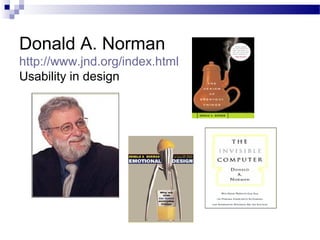
Donald A. Norman
http://www.jnd.org/index.html
Usability in design
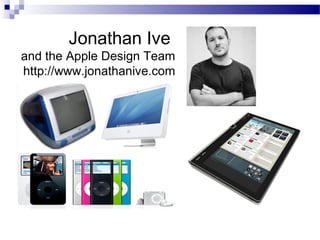
Jonathan Ive
and the Apple Design Team
http://www.jonathanive.com
Thank you: questions, please
And remember: Together, an effectively designed product and
document makes the world a better place for us.

Technical Communications 101 (First draft)

  • 1.
  • 2.
    Agenda  Definitions andconcepts  The technical part  The communications aspect  Tech writing vs. other types of literature  Form and structure  Usability and other user-centric communication practices
  • 3.
    Agenda  Definitions andconcepts  The technical part  The communications aspect  Tech writing vs. other types of literature  Form and structure  Usability and other user-centric communication practices
  • 4.
    Definitions and concepts Documentation:n. The multiple kilograms of macerated, pounded, steamed, bleached, and pressed trees that accompany most modern software or hardware products. (Jargon Files) By three methods we may learn technical writing: First by education, which is noblest; second by methodology, which is easiest; and third by planting your butt in a chair and pecking out the damn document, which is the bitterest. (Andrew Plato)
  • 5.
    Definitions and concepts Thereal technology -- behind all our other technologies -- is language. It actually creates the world our consciousness lives in. (Andrei Codrescu) Making the simple complicated is commonplace; making the complicated simple, awesomely simple, that's creativity. (Charles Mingus)
  • 6.
     Technical communicationis a collaborative process of conveying useable information about a specific technology to an intended audience. Definitions and concepts
  • 7.
    Agenda  Definitions andconcepts  The technical part  The communications aspect  Tech writing vs. other types of literature  Form and structure  Usability and other user-centric communication practices
  • 8.
    The technical part Theproblem with allowing the engineers who create a program also write its Help and Tutorials is that you get people who cannot write, writing Help for people who do not need help. (Mark Rector) Manuals just slow you down and make you feel stupid. The directions are too slow, too detailed, and use too much abstract, arcane or academic language -- like boot up instead of turn on the red switch in the back. (Neil Fiore)
  • 9.
    The technical part:objectives of technical communication  Communicate a message of a technical nature effectively, with emphasis on understanding technology.  Create documentation that is helpful, accurate, comprehensible, and accessible to the intended audience.  Share or transfer knowledge  Instruct and educate  Simplify the complex  Warn about effect to well-being of others
  • 10.
    The technical part:tools of technical communicators  Thorough understanding of the technology being documented and of the audience using it  Expertise on major word publishing software: Adobe FrameMaker, MS-Word, Acrobat PDF  Applied knowledge of online Help development tools: RoboHelp, Doc-To-Help, Macromedia Flash, Captivate  Basic knowledge of usability and visual literacy  Grammar/editing skills
  • 11.
    The technical part Rule1 of writing software for non-technical users is this: if they have to read documentation to use it you designed it wrong. (Eric Raymond) Reading computer manuals without the hardware is as frustrating as reading sex manuals without the software. (Arthur C Clarke) Documentation is the castor oil of programming. (Gerald Weinberg) Voluminous documentation is part of the problem, not part of the solution. (Tom DeMarco)
  • 12.
    Agenda  Definitions andconcepts  The technical part  The communications aspect  Tech writing vs. other types of literature  Form and structure  Usability and other user-centric communication practices
  • 13.
    The communications aspect Neverexpress yourself more clearly than you are able to think. (Niels Bohr) Make everything as simple as possible, but not simpler. (Albert Einstein) Present to inform, not to impress; if you inform, you will impress. (Frederick P Brooks) I once used the word obsolete in a headline, only to discover that 43 percent of housewives had no idea what it meant. (David Ogilvy)
  • 14.
    The communications aspect: whatto relay  Clarity (know your vision, purpose, scope, goals, audience, benefits, limitations)  Refinements (edit, test, and get feedback)  Relevance and timeliness  Usability  Hierarchy of importance  Logic of activities/tasks to perform  Technical accuracy and completeness
  • 15.
    The communications aspect Putit before them briefly so they will read it, clearly so they will appreciate it, picturesquely so they will remember it, and above all, accurately so they will be guided by its light. (Joseph Pulitzer)
  • 16.
    Agenda  Definitions andconcepts  The technical part  The communications aspect  Tech writing vs. other types of literature  Form and structure  Usability and other user-centric communication practices
  • 17.
    Versus other literature:common themes and variations  Common concerns: clarity, conciseness and audience  Inverted pyramid  Measured, measurable: no free text  Usability and use of illustrations  Focus on technical accuracy and completeness
  • 18.
    Versus other literature:common themes and variations It's no coincidence that the most popular PC books go by names like "Windows for Dummies". They don't sell books like "Oldsmobiles for Idiots" or "A Foul-Up's Guide to Fords". (Patrick L Anderson) Technical documentation is like sex; when it's good, it's very, very good, and when it's bad, it's better than nothing. (Dick Brandon)
  • 19.
    Agenda  Definitions andconcepts  The technical part  The communications aspect  Tech writing vs. other types of literature  Form and structure  Usability and other user-centric communication practices
  • 20.
    Form and structure User:n. The word computer professionals use when they mean "idiot." (Dave Barry)
  • 21.
  • 22.
  • 23.
  • 24.
  • 25.
  • 26.
  • 27.
  • 28.
  • 29.
  • 30.
  • 31.
  • 32.
  • 33.
  • 34.
  • 35.
    Agenda  Definitions andconcepts  The technical part  The communications aspect  Tech writing vs. other types of literature  Form and structure  Usability and other user-centric communication practices
  • 36.
    Usability Usability is aterm used to denote the ease with which people can employ a particular tool or other human-made object in order to achieve a particular goal.
  • 37.
    Usability: goals More efficientto use—it takes less time to accomplish a particular task Easier to learn—operation can be learned by observing the object More satisfying to use
  • 38.
    Usability: goals Usability makesthe world a better place for product users.
  • 39.
    Usability: design paradigms Inthe user-centered design paradigm, the product is designed with its intended users in mind at all times. In the user-driven or participatory design paradigm, some of the users become actual or de facto members of the design team.
  • 40.
    Usability: pitfalls The termuser friendly is often used as a synonym for usable, though it may also refer to accessibility. The use of terms user friendly and user friendliness should be avoided, as there are no widely accepted definitions for them, and they are thus often used without much substance.
  • 41.
    Usability: pitfalls Here areterms to beware of: Fool-proof or idiot-proof (oh, you mean you think your customers are fools or idiots?) User-friendly (which usually means to hold users by the hand and force them to do things one step at a time, in prescribed order, whether they like it or not) Intuitive (which in actuality means so automatic it is not conscious. Those who use the term forget that almost everything we call intuitive, such as walking or using a pencil took years of practice. (Don Norman)
  • 42.
    Usability: pitfalls Software suppliersare trying to make their software packages more user-friendly. Their best approach, so far, has been to take all the old brochures, and stamp the words, user-friendly on the cover. (Bill Gates)
  • 43.
  • 44.
     International Councilfor Technical Communication  Society for Technical Communication  Institute of Scientific and Technical Communicators (UK-based)  Technical Communicators Association of New Zealand (NZ-based)  Usability Professionals' Association of New Zealand (NZ-based)  Tekom (Germany-based)  TECOM Swiss Society for Technical Communication (Swiss-based)  STIC Dutch Society for Technical Information and Communication (Netherlands-based)  Association for Computing Machinery's Special Interest Group on the Design of Communication (USA-based)  Finnish Technical Communications Society (Finland-based)  Conseil des Rédacteurs Technique (France-based) Associations Resources and References
  • 45.
  • 46.
  • 47.
  • 48.
    Jonathan Ive and theApple Design Team http://www.jonathanive.com
  • 49.
    Thank you: questions,please And remember: Together, an effectively designed product and document makes the world a better place for us.

Editor's Notes

  • #7 Information is useable if the intended audience is able to perform an action or make a decision based on its contents. Technical communicators often work collaboratively to create products (deliverables) for various media, including paper, video, and the Internet. Deliverables include user manuals, technical manuals, product specifications, process and procedure manuals, training, business papers, reports, etc.
  • #37 Usability can also refer to the methods of measuring usability and the study of the principles behind an object's perceived efficiency or elegance. In human-computer interaction and computer science, usability usually refers to the elegance and clarity with which the interaction with a computer program or a web site is designed. The term is also used often in the context of products like consumer electronics, or in the areas of communication, and knowledge transfer objects (such as a cookbook, a document or online help). It can also refer to the efficient design of mechanical objects such as a door handle or a hammer.
  • #45 Information is useable if the intended audience is able to perform an action or make a decision based on its contents. Technical communicators often work collaboratively to create products (deliverables) for various media, including paper, video, and the Internet. Deliverables include user manuals, technical manuals, product specifications, process and procedure manuals, training, business papers, reports, etc.