Introduction to
Technical
Communication
Technical communication is the process of creating and sharing technical
information. It aims to inform, instruct, and persuade audiences about
specific technical subjects. Effective technical communication is crucial in
various fields, including engineering, science, technology, and business.
by Jacob Daniel
Importance of Effective Technical Communication
1 Clarity
Clear communication ensures everyone understands the
information accurately.
2 Efficiency
Effective communication reduces errors and improves
productivity.
3 Safety
Precise instructions help prevent accidents and ensure safe
operations.
4 Success
Successful communication facilitates collaboration and leads
to desired outcomes.
Principles of Technical Writing
Accuracy
Technical documents must be accurate
and reliable. Factual information
should be verified and presented
correctly.
Clarity
Write in a clear and concise style. Avoid
jargon and use simple language that
everyone understands.
Conciseness
Use concise language and avoid
redundancy. Get to the point quickly
and present information efficiently.
Audience Analysis
1 Identify Target Audience
Determine who the intended readers are and their level of
technical expertise.
2 Analyze Audience Needs
Understand what information the audience requires and
what format will best serve their needs.
3 Tailor Content
Adjust the tone, style, and level of detail to suit the
audience's knowledge and expectations.
Organizing Technical
Information
Logical Structure
Organize information logically
using headings, subheadings,
and lists.
Sequential Order
Present information in a
sequential order to guide
readers through the content.
Visual Hierarchy
Use formatting techniques,
such as bolding and italics, to
emphasize important
information.
Consistent Formatting
Maintain consistent formatting
throughout the document to
ensure readability and
coherence.
Effective Visual Aids
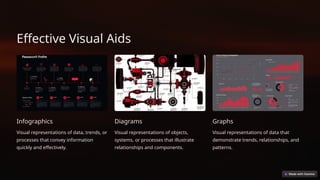
Infographics
Visual representations of data, trends, or
processes that convey information
quickly and effectively.
Diagrams
Visual representations of objects,
systems, or processes that illustrate
relationships and components.
Graphs
Visual representations of data that
demonstrate trends, relationships, and
patterns.
Strategies for Clarity and
Conciseness
Use Active Voice
Use active voice to make writing more direct and engaging.
Avoid Jargon
Avoid technical jargon that may confuse the audience.
Use Strong Verbs
Use strong verbs to convey meaning effectively and avoid weak verbs.
Limit Adjectives and Adverbs
Use adjectives and adverbs sparingly to avoid cluttering sentences.
Collaborative Technical
Writing
Collaboration Tools Benefits
Version Control Systems Track changes and ensure
consistent versions.
Online Document Editors Enable real-time collaboration
and feedback.
Communication Platforms Facilitate discussion and shared
understanding.
Ethical Considerations in
Technical Communication
Honesty
Present information truthfully and
accurately.
Fairness
Treat all audiences with respect and
avoid bias.
Responsibility
Take responsibility for the accuracy and
consequences of your work.
Privacy
Protect sensitive information and
respect confidentiality.
Trends and Future of
Technical Communication
1 Digital Transformation
Increased reliance on digital
media and online platforms.
2 Data Visualization
Greater emphasis on visually
appealing and informative
data presentations.
3 Content Marketing
Technical writers are
becoming content creators for
marketing and communication
purposes.
4 Artificial Intelligence
AI tools are emerging to assist
with technical writing tasks,
such as content generation
and editing.

Introduction-to-Technical-Communication.pptx

  • 1.
    Introduction to Technical Communication Technical communicationis the process of creating and sharing technical information. It aims to inform, instruct, and persuade audiences about specific technical subjects. Effective technical communication is crucial in various fields, including engineering, science, technology, and business. by Jacob Daniel
  • 2.
    Importance of EffectiveTechnical Communication 1 Clarity Clear communication ensures everyone understands the information accurately. 2 Efficiency Effective communication reduces errors and improves productivity. 3 Safety Precise instructions help prevent accidents and ensure safe operations. 4 Success Successful communication facilitates collaboration and leads to desired outcomes.
  • 3.
    Principles of TechnicalWriting Accuracy Technical documents must be accurate and reliable. Factual information should be verified and presented correctly. Clarity Write in a clear and concise style. Avoid jargon and use simple language that everyone understands. Conciseness Use concise language and avoid redundancy. Get to the point quickly and present information efficiently.
  • 4.
    Audience Analysis 1 IdentifyTarget Audience Determine who the intended readers are and their level of technical expertise. 2 Analyze Audience Needs Understand what information the audience requires and what format will best serve their needs. 3 Tailor Content Adjust the tone, style, and level of detail to suit the audience's knowledge and expectations.
  • 5.
    Organizing Technical Information Logical Structure Organizeinformation logically using headings, subheadings, and lists. Sequential Order Present information in a sequential order to guide readers through the content. Visual Hierarchy Use formatting techniques, such as bolding and italics, to emphasize important information. Consistent Formatting Maintain consistent formatting throughout the document to ensure readability and coherence.
  • 6.
    Effective Visual Aids Infographics Visualrepresentations of data, trends, or processes that convey information quickly and effectively. Diagrams Visual representations of objects, systems, or processes that illustrate relationships and components. Graphs Visual representations of data that demonstrate trends, relationships, and patterns.
  • 7.
    Strategies for Clarityand Conciseness Use Active Voice Use active voice to make writing more direct and engaging. Avoid Jargon Avoid technical jargon that may confuse the audience. Use Strong Verbs Use strong verbs to convey meaning effectively and avoid weak verbs. Limit Adjectives and Adverbs Use adjectives and adverbs sparingly to avoid cluttering sentences.
  • 8.
    Collaborative Technical Writing Collaboration ToolsBenefits Version Control Systems Track changes and ensure consistent versions. Online Document Editors Enable real-time collaboration and feedback. Communication Platforms Facilitate discussion and shared understanding.
  • 9.
    Ethical Considerations in TechnicalCommunication Honesty Present information truthfully and accurately. Fairness Treat all audiences with respect and avoid bias. Responsibility Take responsibility for the accuracy and consequences of your work. Privacy Protect sensitive information and respect confidentiality.
  • 10.
    Trends and Futureof Technical Communication 1 Digital Transformation Increased reliance on digital media and online platforms. 2 Data Visualization Greater emphasis on visually appealing and informative data presentations. 3 Content Marketing Technical writers are becoming content creators for marketing and communication purposes. 4 Artificial Intelligence AI tools are emerging to assist with technical writing tasks, such as content generation and editing.