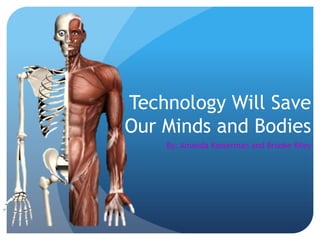
Technology Will Save
Our Minds and Bodies
By: Amanda Kasserman and Brooke Kiley
TENS Machine and Shockwave
Machine
Transcutaneous Electrical Nerve Stimulation
(TENS)
What is a TENS Unit?
 Non-invasive medical device specifically designed to
assist in the management of chronic and acute pain
 Sends small, safe, electrical signal into the body via
electrodes which are placed on skin and relieves pain in
3 ways:
 By blocking pain messages from reaching the brain via the
nerves
 By stimulating the release of the body’s naturally occuring
pain-relieving endorphins
 By providing a distraction while the pain is occuring
Demonstration of a TENS Unit
http://youtu.be/N1UL460NXvk
History of the Tens Unit
 In the 18th century Benjamin Franklin is credited with
reforming the original electric condenser which was
used to shock patients in an effort to treat ailments. It
was refered to as the “magic square”
 In the 19th century machines were invented that used
static electricity to treat headaches, migraines and
other types of pain
 In the 1970s the TENS unit became a popular use for
treatment of pain instead of pain killers
When to Use a TENS Unit
 Symptomatic Relief
 Control of symptoms rather than cure by single or multiple
therapies
 Management of chronic (long-term) intractable pain
 Constant
 Severe
 Disabling
 Can affect blood pressure, pulse rate, hormone levels and
neurologic systems
 Management of post-surgical and post-traumatic pain
 Management for labor pains
 Specialized unit specific to pregnant women
Pros and Cons of a TENS Unit
Pros
 Non-invasive method of
pain relief
 Able to use in your own
home
 No harmful effects
 In control of device so you
can use it at the strength
you prefer
 Can prevent medical pain
relief
Cons
 Conflicting research on the
effectiveness of TENS
 Some people find they do
not like the sensation
 TENS machines are
expensive. They range from
200-300 dollars
 Most effective when used in
combination with other
pain relief aids
Two Types of TENS Units
 TENS Unit for Maternity Use
 Used for women who are pregnant and are experiencing
back pains from the added weight in the front from the
baby
 Can also be used for labor pains
 TENS Unit for General Pain
 TENS machine used for everyday aches and pains
Shockwave Machine
What is a Shockwave Machine?
 A newer non-invasive solution for chronic pain in
shoulder, back, heel, knee or elbow
 During the treatment a high-intensity sound wave
interacts with the tissues of the body
 The primary effect of a shockwave is a direct
mechanical force
 It is said that the shockwaves cause microtrauma to the
diseased tendon tissue which results in inflammation
and allows body to send healing cells and increase blood
flow to injured site
History of Shockwave Machine
 The effect of shockwaves was first documented during
World War 2 when the lungs of castaways were noted to
be damaged without any superficial evidence of trauma
 It was discovered the shockwaves created by depth
charges were responsible for the internal injuries
 The first medical treatment developed from this
research was lithotripsy which allowed focused
shockwaves to essentially dissolve kidney stones without
surgical intervention
When to Use a Shockwave Machine
 Can be used to treat a wide variety of musculoskeletal
conditions
 Most frequently treated conditions:
 Plantar fasciitis
 Achilles Tendinitis
 Calcific Tendinitis
 Connective tissue pain
 Muscle pain and injury
 Joint injuries
 Morton’s neuroma
 Kidney Stones
Pros and Cons of Using a Shockwave
Machine
Pros
 Treatment success rate equal to or
greater then surgery
 Treatment and minimal procedure
time resulting in increase patient
compliance and cost effectiveness
 Bridges the gap between non-
operative and operative treatment
 Typically patients feel less pain after
treatment and are able to resume
normal physical activities
 Non-invasive treatment for chronic
pain
Cons
 Some patients may experience
swelling, redness, and/or bruising
 Very expensive, can cause in excess
of 1000.00 dollars and insurance
companies may not cover the
expense
 The effectiveness of treatment is
questioned
 Low-energy shockwaves is that one
has to provide a repeat application.
A comparison of the effectiveness of
low-energy and high-energy
shockwaves has not been studied
Two Types of Shockwave Machines
 Low Energy
 Administered in a clinic and do not require anesthesia or
injections
 A technician places the probe on the area of greatest
tenderness and the shockwaves are delivered over 10-20
minutes
 High Energy
 Administered in the operating room with regional or
general anesthesia
References
 http://www.babycentre.co.uk/a542581/tens
 http://www.btlnet.com/catalogue/shockwave/
 http://www.scoi.com/shockwave-therapy.php
 http://www.canadianchiropractor.ca/content/view/998
/131/
 http://www.tensmachines.co.uk/TENS-History_ep_49-
1.html
 http://physioworks.com.au/FAQRetrieve.aspx?ID=30901

Tech slideshow

  • 1.
    Technology Will Save OurMinds and Bodies By: Amanda Kasserman and Brooke Kiley
  • 2.
    TENS Machine andShockwave Machine
  • 3.
  • 4.
    What is aTENS Unit?  Non-invasive medical device specifically designed to assist in the management of chronic and acute pain  Sends small, safe, electrical signal into the body via electrodes which are placed on skin and relieves pain in 3 ways:  By blocking pain messages from reaching the brain via the nerves  By stimulating the release of the body’s naturally occuring pain-relieving endorphins  By providing a distraction while the pain is occuring
  • 5.
    Demonstration of aTENS Unit http://youtu.be/N1UL460NXvk
  • 6.
    History of theTens Unit  In the 18th century Benjamin Franklin is credited with reforming the original electric condenser which was used to shock patients in an effort to treat ailments. It was refered to as the “magic square”  In the 19th century machines were invented that used static electricity to treat headaches, migraines and other types of pain  In the 1970s the TENS unit became a popular use for treatment of pain instead of pain killers
  • 7.
    When to Usea TENS Unit  Symptomatic Relief  Control of symptoms rather than cure by single or multiple therapies  Management of chronic (long-term) intractable pain  Constant  Severe  Disabling  Can affect blood pressure, pulse rate, hormone levels and neurologic systems  Management of post-surgical and post-traumatic pain  Management for labor pains  Specialized unit specific to pregnant women
  • 8.
    Pros and Consof a TENS Unit Pros  Non-invasive method of pain relief  Able to use in your own home  No harmful effects  In control of device so you can use it at the strength you prefer  Can prevent medical pain relief Cons  Conflicting research on the effectiveness of TENS  Some people find they do not like the sensation  TENS machines are expensive. They range from 200-300 dollars  Most effective when used in combination with other pain relief aids
  • 9.
    Two Types ofTENS Units  TENS Unit for Maternity Use  Used for women who are pregnant and are experiencing back pains from the added weight in the front from the baby  Can also be used for labor pains  TENS Unit for General Pain  TENS machine used for everyday aches and pains
  • 10.
  • 11.
    What is aShockwave Machine?  A newer non-invasive solution for chronic pain in shoulder, back, heel, knee or elbow  During the treatment a high-intensity sound wave interacts with the tissues of the body  The primary effect of a shockwave is a direct mechanical force  It is said that the shockwaves cause microtrauma to the diseased tendon tissue which results in inflammation and allows body to send healing cells and increase blood flow to injured site
  • 12.
    History of ShockwaveMachine  The effect of shockwaves was first documented during World War 2 when the lungs of castaways were noted to be damaged without any superficial evidence of trauma  It was discovered the shockwaves created by depth charges were responsible for the internal injuries  The first medical treatment developed from this research was lithotripsy which allowed focused shockwaves to essentially dissolve kidney stones without surgical intervention
  • 13.
    When to Usea Shockwave Machine  Can be used to treat a wide variety of musculoskeletal conditions  Most frequently treated conditions:  Plantar fasciitis  Achilles Tendinitis  Calcific Tendinitis  Connective tissue pain  Muscle pain and injury  Joint injuries  Morton’s neuroma  Kidney Stones
  • 14.
    Pros and Consof Using a Shockwave Machine Pros  Treatment success rate equal to or greater then surgery  Treatment and minimal procedure time resulting in increase patient compliance and cost effectiveness  Bridges the gap between non- operative and operative treatment  Typically patients feel less pain after treatment and are able to resume normal physical activities  Non-invasive treatment for chronic pain Cons  Some patients may experience swelling, redness, and/or bruising  Very expensive, can cause in excess of 1000.00 dollars and insurance companies may not cover the expense  The effectiveness of treatment is questioned  Low-energy shockwaves is that one has to provide a repeat application. A comparison of the effectiveness of low-energy and high-energy shockwaves has not been studied
  • 15.
    Two Types ofShockwave Machines  Low Energy  Administered in a clinic and do not require anesthesia or injections  A technician places the probe on the area of greatest tenderness and the shockwaves are delivered over 10-20 minutes  High Energy  Administered in the operating room with regional or general anesthesia
  • 16.
    References  http://www.babycentre.co.uk/a542581/tens  http://www.btlnet.com/catalogue/shockwave/ http://www.scoi.com/shockwave-therapy.php  http://www.canadianchiropractor.ca/content/view/998 /131/  http://www.tensmachines.co.uk/TENS-History_ep_49- 1.html  http://physioworks.com.au/FAQRetrieve.aspx?ID=30901