Teams Online Ltd
Develop Service Portfolios
Defining a service
something which supports a business process, something with an outcome and
something which is tangible by the business
â—Ź include things such as service requirements & outcomes relating to
performance, availability, reliability, availability
â—Ź other elements of a good service design such as disaster
recovery/Continuity arrangements, capacity requirements & operability
requirements
â—Ź designed collaboratively with users, business sponsors, business process
owners & technical support teams
SERVICE REQUEST
PRINCIPLES
SINGLE portal
â—Ź where all end users can go
to interact with IT,
â—Ź to report an issue,
â—Ź check knowledge articles
â—Ź to initiate service
requests
Users seek simplicity, they
want to engage with a simple
portal through which they can
quickly and easily engage with
services
End users are engaged
they understand where they need to
go,
they understand that circumventing
the process is not in their
interests
and risk of untraceable, poorly
structured communication, such as
verbal or email requests, coming
into IT & simply not being logged
This type of inbound work is
impossible to track, trace and
measure
filtering process
â—Ź follow a route-based
approach, routing
incidents to resolver
teams,
â—Ź requests to approval
â—Ź fulfilment workflows, etc
â—Ź Each incident and request
should follow an
established workflow
If these are understood and
mapped, it’s easier to
introduce efficient ways of
recording, assigning, tracking
and fulfilling them
established workflow
â—Ź For common service request
types,
â—Ź which describes the
approval processes,
â—Ź fulfilment tasks,
â—Ź who does what and
eliminates the need for
manual intervention
These workflows can be codified
within the service management
toolset, allowing a degree of
automation to the allocation of
work
end-user receives
updates
on their request at key points
during the process
seeking approval
should be an automated workflow task
no justification for an
approval
Ask whether the approval steps required
for your various request types are really
required, and if they are, whether they
could be automated
exploiting
workflow
automation
approval and fulfilment
tasks are sequenced
automatically
a degree of logic built in to
determine the path that requests
will follow where exceptions
occur, such as conditional
approvals or rejection
Acme Design Award
recipient
Parker Music campaign
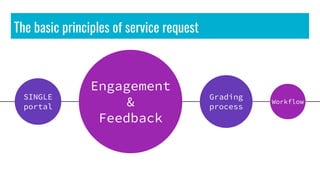
The basic principles of service request
SINGLE
portal
Engagement
&
Feedback
Grading
process
Workflow
Contact
Your Name
no_reply@example.com
www.example.com

Teams online ltd develop service portfolios

  • 1.
    Teams Online Ltd DevelopService Portfolios
  • 2.
    Defining a service somethingwhich supports a business process, something with an outcome and something which is tangible by the business â—Ź include things such as service requirements & outcomes relating to performance, availability, reliability, availability â—Ź other elements of a good service design such as disaster recovery/Continuity arrangements, capacity requirements & operability requirements â—Ź designed collaboratively with users, business sponsors, business process owners & technical support teams
  • 3.
  • 4.
    SINGLE portal â—Ź whereall end users can go to interact with IT, â—Ź to report an issue, â—Ź check knowledge articles â—Ź to initiate service requests Users seek simplicity, they want to engage with a simple portal through which they can quickly and easily engage with services
  • 5.
    End users areengaged they understand where they need to go, they understand that circumventing the process is not in their interests and risk of untraceable, poorly structured communication, such as verbal or email requests, coming into IT & simply not being logged This type of inbound work is impossible to track, trace and measure
  • 6.
    filtering process ● followa route-based approach, routing incidents to resolver teams, ● requests to approval ● fulfilment workflows, etc ● Each incident and request should follow an established workflow If these are understood and mapped, it’s easier to introduce efficient ways of recording, assigning, tracking and fulfilling them
  • 7.
    established workflow â—Ź Forcommon service request types, â—Ź which describes the approval processes, â—Ź fulfilment tasks, â—Ź who does what and eliminates the need for manual intervention These workflows can be codified within the service management toolset, allowing a degree of automation to the allocation of work
  • 8.
    end-user receives updates on theirrequest at key points during the process
  • 9.
    seeking approval should bean automated workflow task no justification for an approval Ask whether the approval steps required for your various request types are really required, and if they are, whether they could be automated
  • 10.
    exploiting workflow automation approval and fulfilment tasksare sequenced automatically a degree of logic built in to determine the path that requests will follow where exceptions occur, such as conditional approvals or rejection
  • 11.
  • 12.
    The basic principlesof service request SINGLE portal Engagement & Feedback Grading process Workflow
  • 14.