APMP®
                 Accreditation Programme
                      Developing Strategy
                Session : Teaming Identification

                                           Developing Strategy


© APMP 2005 and Bid to Win Ltd 2010                    Version: 0v9
Learning Objectives:
In this module we cover topics to help with


recognising the need for teaming partners

identifying suitable partners

recruiting partners


                                 Proposal Guide   269
Syllabus Requirement
Recognising the need                                 Bid to Win
                                                               Bids, Proposals, Tenders


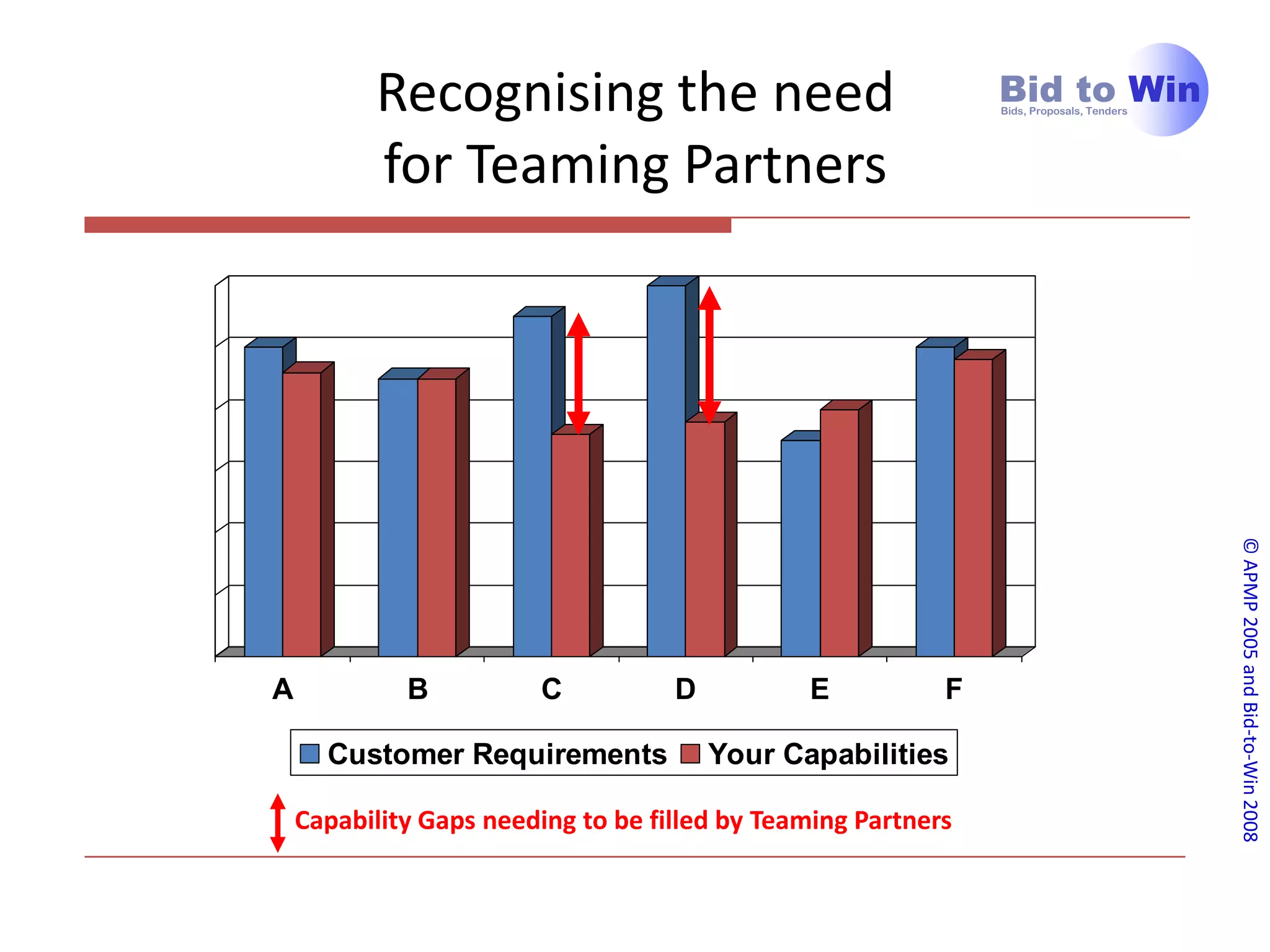
          for Teaming Partners


                                                                                          © APMP 2005 and Bid-to-Win 2008
A            B          C           D          E           F

      Customer Requirements             Your Capabilities

    Capability Gaps needing to be filled by Teaming Partners
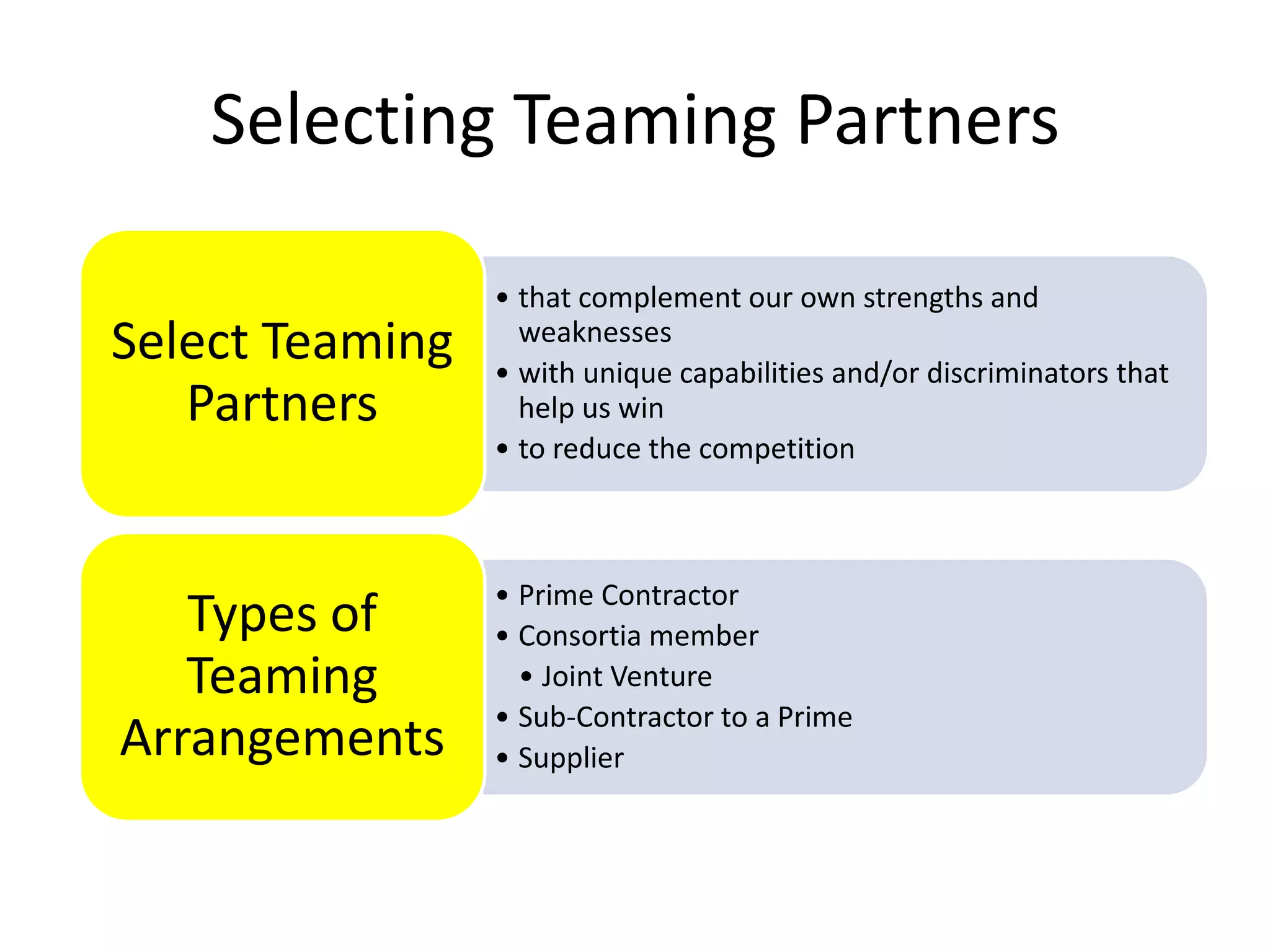
Selecting Teaming Partners

                 • that complement our own strengths and
Select Teaming     weaknesses
                 • with unique capabilities and/or discriminators that
   Partners        help us win
                 • to reduce the competition


                 • Prime Contractor
   Types of      • Consortia member
   Teaming         • Joint Venture
                 • Sub-Contractor to a Prime
Arrangements     • Supplier
Recruiting Teaming Partners
Search the market (not just the ‘usual suspects’) – based on existing
relationships, web or literature search, the customer’s view

Sell your organisation to your teaming partner; then sell the relationship
to the customer

Discussions need to start early and any “showstoppers” identified


Involve commercial/legal staff early


Understand how the relationship is going to work


Select partners based on their strengths
Negotiating Teaming Agreements


Ensure clarity over who is leading teaming negotiations

Ensure you have:
• Confidentiality Agreement before disclosing information
• Heads of Agreement or Memorandum of Understanding in place
  before detailed planning
• Signed Teaming Agreement before submitting proposal
• Work Breakdown Structure - defining the work share - assignments
  and sharing the load
Quick Quiz Question: Which guidance
         appears most appropriate?


a. Select partners based solely on cost

b. Select partners based on their strengths
c. Agree terms after the bid is won

d. Take a legal representative to every partner meeting

               Please click on your selection
Did you do well?
Whereas cost is a factor, value may be more important. Selecting
partners based solely on cost may mean compromising on quality
which could lead to a difficult relationship.

Agreeing terms after the bid is won can potentially put you in a
difficult negotiating position. Your partner knows that you need
them and that you may have no other choice.

Whilst taking a legal representative to every partner meeting
demonstrates your seriousness, it may also send out the message “we
don’t trust you!”.

Selecting partners based on their strengths is the right choice.
In this session we have covered


recognising the need for teaming partners

identifying suitable partners

recruiting partners


Syllabus Requirement
Preparing for the eTorial
• Consider past teaming/partnering
  arrangements:
     – What worked well?
     – What would you do differently if you partnered
       with those organisations again.
• Be ready to discuss your considerations at the
  eTorial
Note:
You do not have to identify your partner organisations by name – just their line of
business or industry sector will be fine.

APMP Foundation: Teaming Identification

  • 1.
    APMP® Accreditation Programme Developing Strategy Session : Teaming Identification Developing Strategy © APMP 2005 and Bid to Win Ltd 2010 Version: 0v9
  • 2.
    Learning Objectives: In thismodule we cover topics to help with recognising the need for teaming partners identifying suitable partners recruiting partners Proposal Guide 269 Syllabus Requirement
  • 3.
    Recognising the need Bid to Win Bids, Proposals, Tenders for Teaming Partners © APMP 2005 and Bid-to-Win 2008 A B C D E F Customer Requirements Your Capabilities Capability Gaps needing to be filled by Teaming Partners
  • 4.
    Selecting Teaming Partners • that complement our own strengths and Select Teaming weaknesses • with unique capabilities and/or discriminators that Partners help us win • to reduce the competition • Prime Contractor Types of • Consortia member Teaming • Joint Venture • Sub-Contractor to a Prime Arrangements • Supplier
  • 5.
    Recruiting Teaming Partners Searchthe market (not just the ‘usual suspects’) – based on existing relationships, web or literature search, the customer’s view Sell your organisation to your teaming partner; then sell the relationship to the customer Discussions need to start early and any “showstoppers” identified Involve commercial/legal staff early Understand how the relationship is going to work Select partners based on their strengths
  • 6.
    Negotiating Teaming Agreements Ensureclarity over who is leading teaming negotiations Ensure you have: • Confidentiality Agreement before disclosing information • Heads of Agreement or Memorandum of Understanding in place before detailed planning • Signed Teaming Agreement before submitting proposal • Work Breakdown Structure - defining the work share - assignments and sharing the load
  • 7.
    Quick Quiz Question:Which guidance appears most appropriate? a. Select partners based solely on cost b. Select partners based on their strengths c. Agree terms after the bid is won d. Take a legal representative to every partner meeting Please click on your selection
  • 8.
    Did you dowell? Whereas cost is a factor, value may be more important. Selecting partners based solely on cost may mean compromising on quality which could lead to a difficult relationship. Agreeing terms after the bid is won can potentially put you in a difficult negotiating position. Your partner knows that you need them and that you may have no other choice. Whilst taking a legal representative to every partner meeting demonstrates your seriousness, it may also send out the message “we don’t trust you!”. Selecting partners based on their strengths is the right choice.
  • 9.
    In this sessionwe have covered recognising the need for teaming partners identifying suitable partners recruiting partners Syllabus Requirement
  • 10.
    Preparing for theeTorial • Consider past teaming/partnering arrangements: – What worked well? – What would you do differently if you partnered with those organisations again. • Be ready to discuss your considerations at the eTorial Note: You do not have to identify your partner organisations by name – just their line of business or industry sector will be fine.

Editor's Notes

  • #2 Welcome to the second session in our Developing Strategy module in our APMP Foundation Training webinars.In the first session we looked at developing the overall strategy and proposal themes.In this session we’re going to look at an aspect of strategy that should be decided early in the proposal lifecycle: Who should we team with.