ORGANICA
Green life.
Life of its own.
By: Lim Joe Onn, Jeff Ong Seng Peng, Tristan Yu Zhe Xian
OUR IDEA
Revolutionizing:
Residences
waste management
food production
CURRENT PROBLEMS
# WASTE
MANAGEMENT
Organic materials
faeces, food remains not fully utilized
# FOOD
PRODUCTION
Land usage
Pollution
High demand
Water makes up
about
75% of faeces
Plant nutrients
CHEMICALPROPERTIES of FAECES
BACTERIA
MUCUS
SOLUBLE
&
INSOLUBLE
FIBERS
+
NITROGEN
PHOSPHOROUS
HEALTHY GROWTH OF PLANTS!!!
WASTAGE
However, most of our faeces are flushed
away directly to sewer treatment without
fulfilling its natural purpose
as organic fertilizer
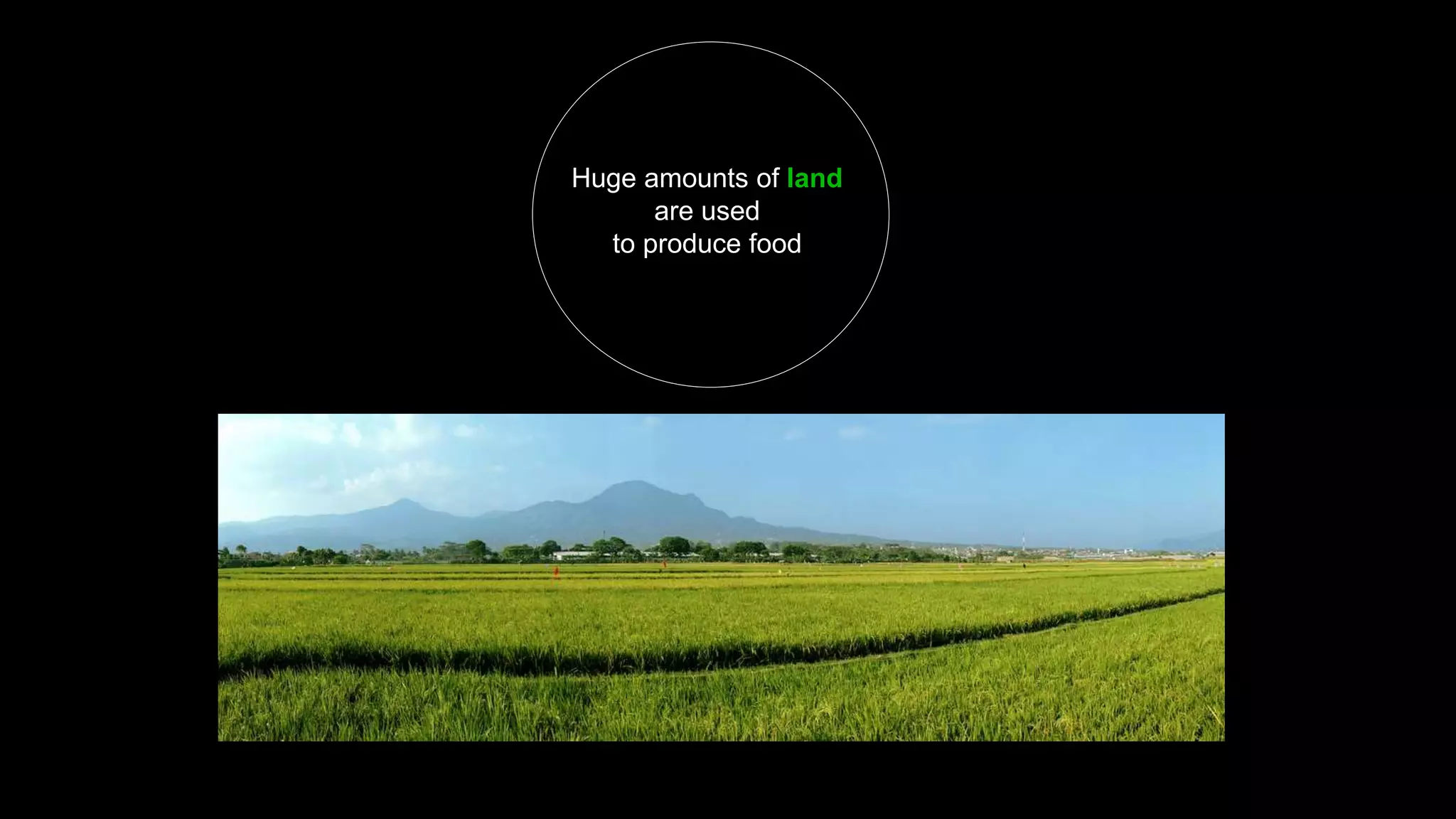
Huge amounts of land
are used
to produce food
POLLUTION
AIR & WATER POLLUTION
Usage of chemical fertilizers
/pesticides bring harm when
evaporated into the air and soak
into water sources
SOLUTION
Transforming waste into ENERGY
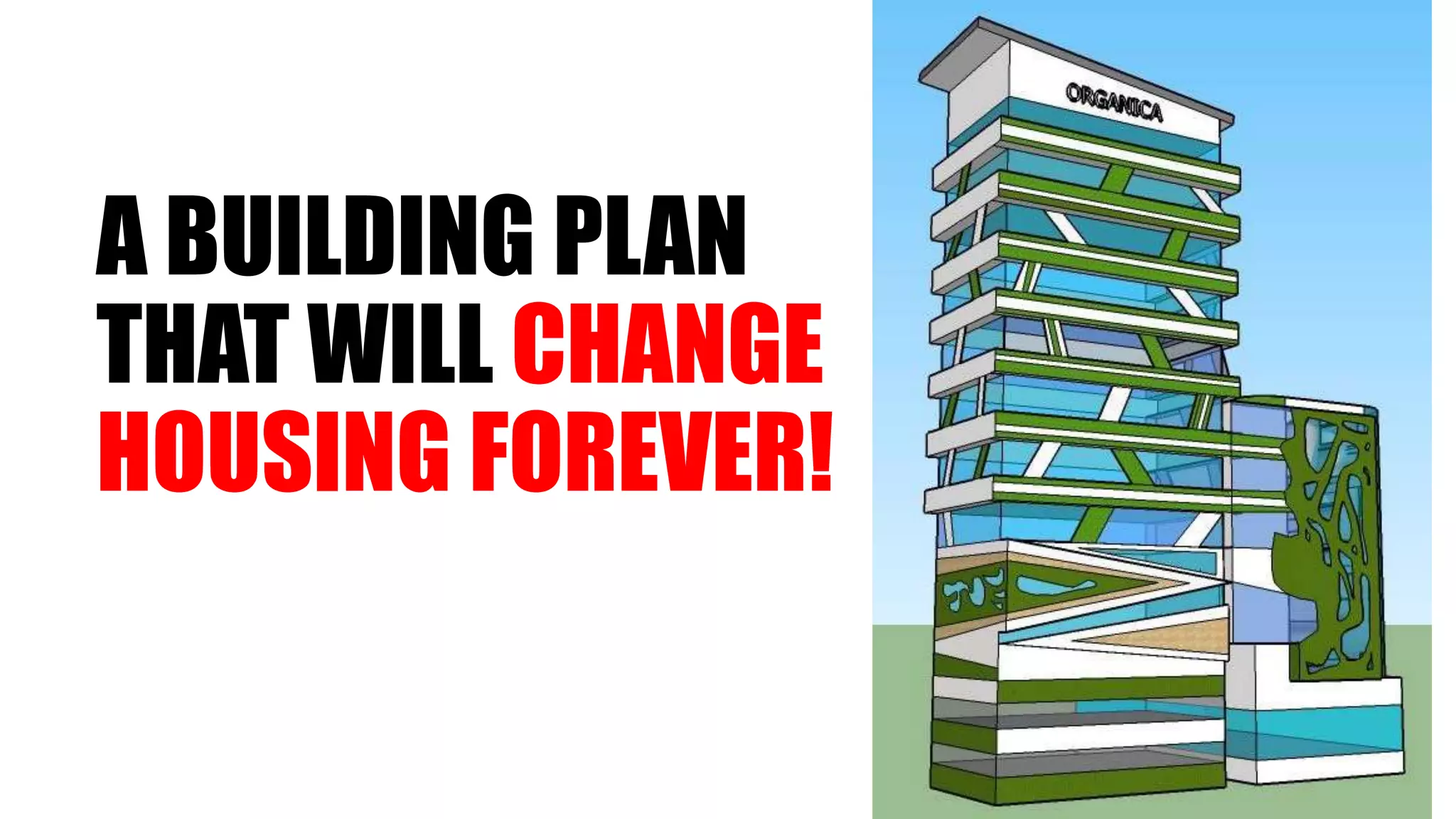
A BUILDING PLAN
THAT WILL CHANGE
HOUSING FOREVER!
Residences
Agricultural Farm
Market
Carpark
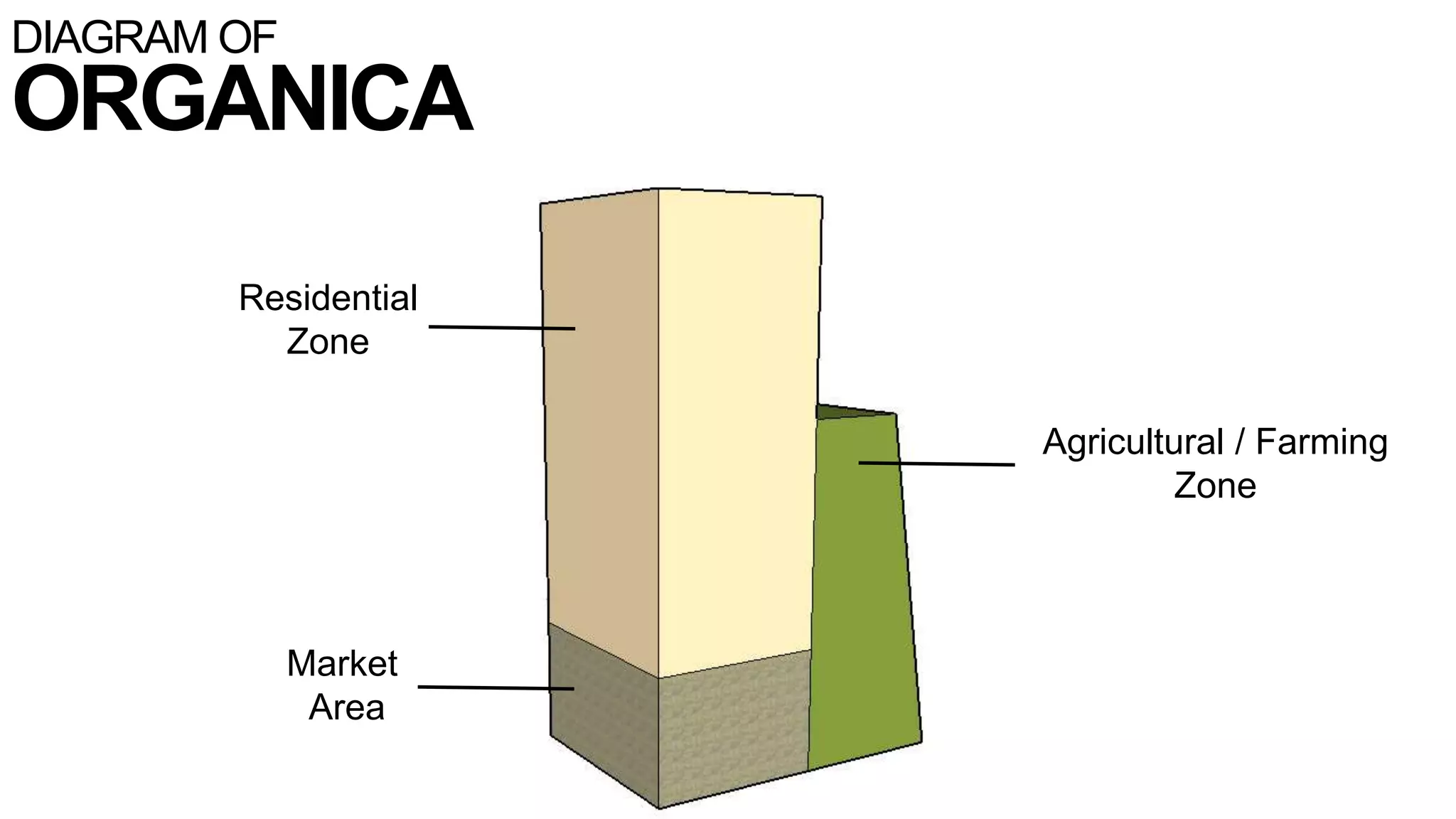
DIAGRAM OF
ORGANICA
Residential
Zone
Agricultural / Farming
Zone
Market
Area
NATURAL LIVING - FARMING &
RESIDENCES
NEXT TO EACH OTHER!!!
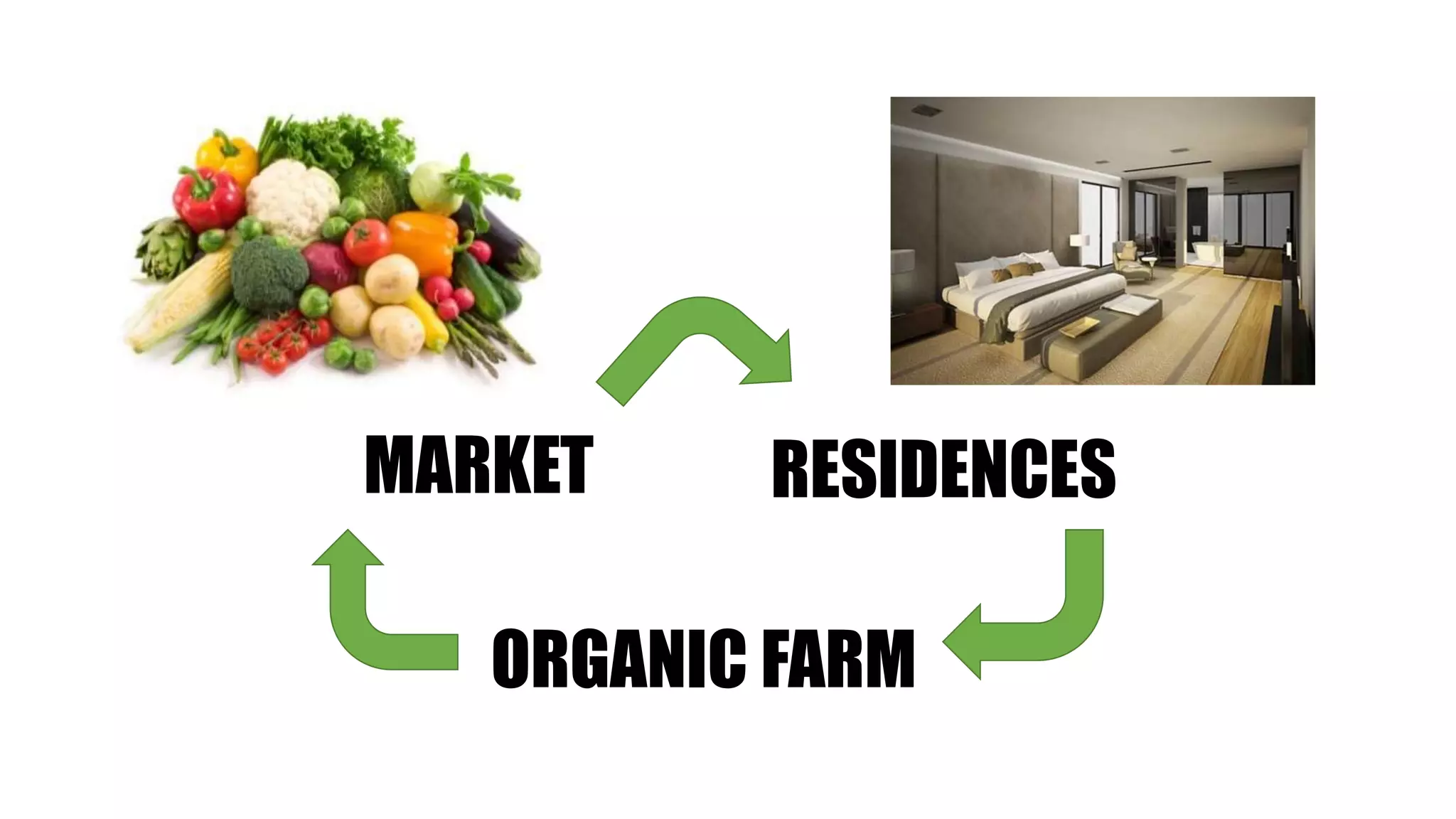
Faeces
Food remains
Processed as organic fertilizer
Used in urban farming
Crops harvested
Fruits & vegetables
Sold to
residents
in market
Edible organic food
Food
consumed by
residents
RESIDENCES
ORGANIC FARM
MARKET
EAT
EXCRETE
PRODUCE
FERTILIZER
HARVEST
MARKET
BENEFITS
Encourages use of
organic fertilizers, reducing
harm to environment,
promoting healthy living
Saves land area required
for sewer treatment
plants and agriculture
Reduce carbon emission as
food transportation via vehicles
is unnecessary
Minimizes energy waste, fully
utilizing waste as resources
PROMOTES GREEN LIVING &
A HEALTHY ENVIRONMENT
Faeces from each residential unit in the
residential zone is transported to the
farming zone via sewer pipes
HOW IT WORKS
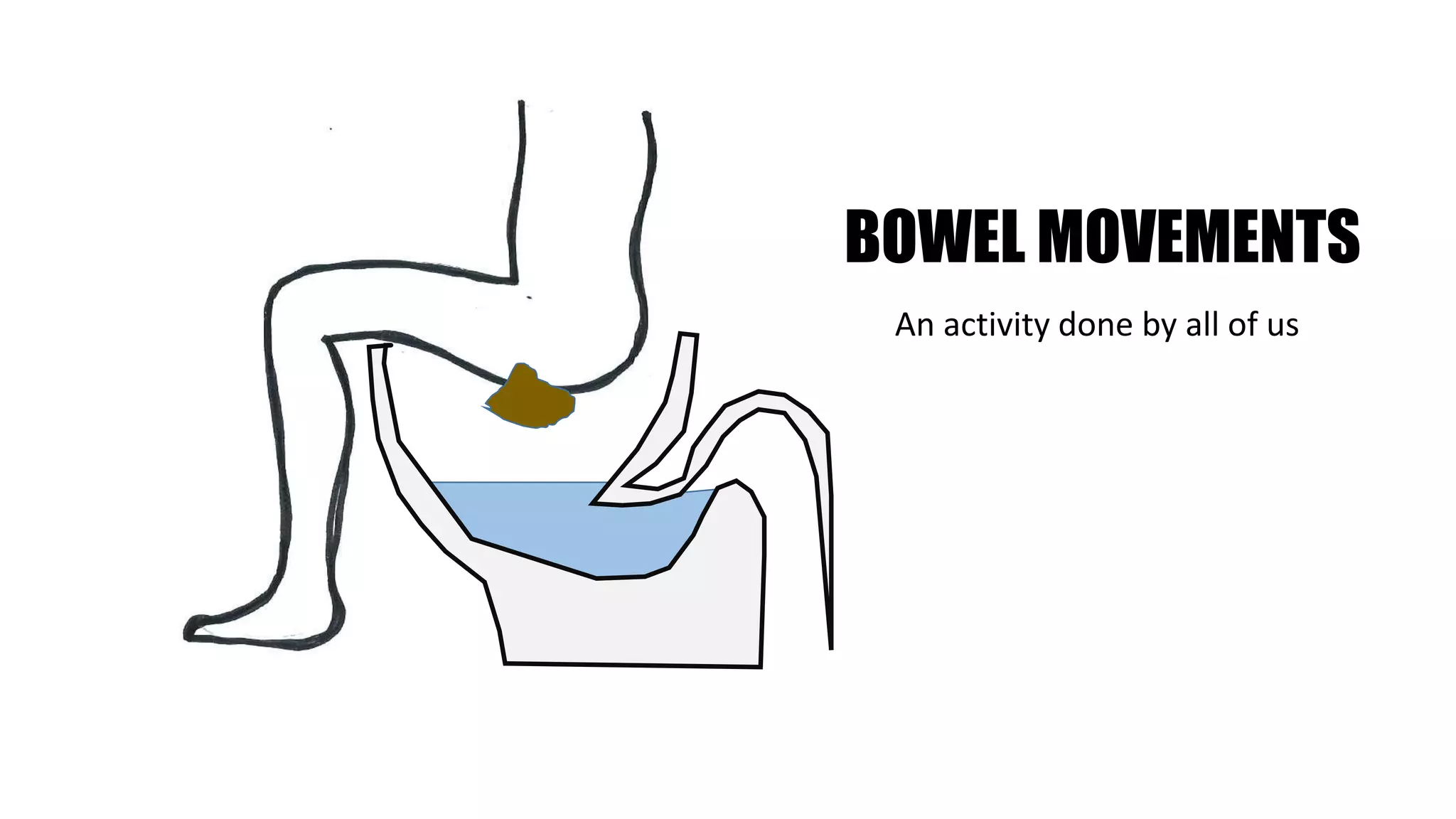
An activity done by all of us
BOWEL MOVEMENTS
RESIDENTIAL
ZONE
FARMING
ZONE
waste being transported from
each unit to a collection tank
through pipes
Gravity makes the sewer pipes
function. Hence, the collection tank
is situated at a lower floor
ADDED INTO THE TANK:
SOIL FOOD LEFTOVERS
To prevent odour from being released into
surrounding air, a special mechanism is used
to segregate air in the tank while adding soil
and food leftovers
SOIL
FAECES
Soil / Food leftovers being
manually put into the tank
SOIL
FAECES
SOIL
FAECES
SOIL
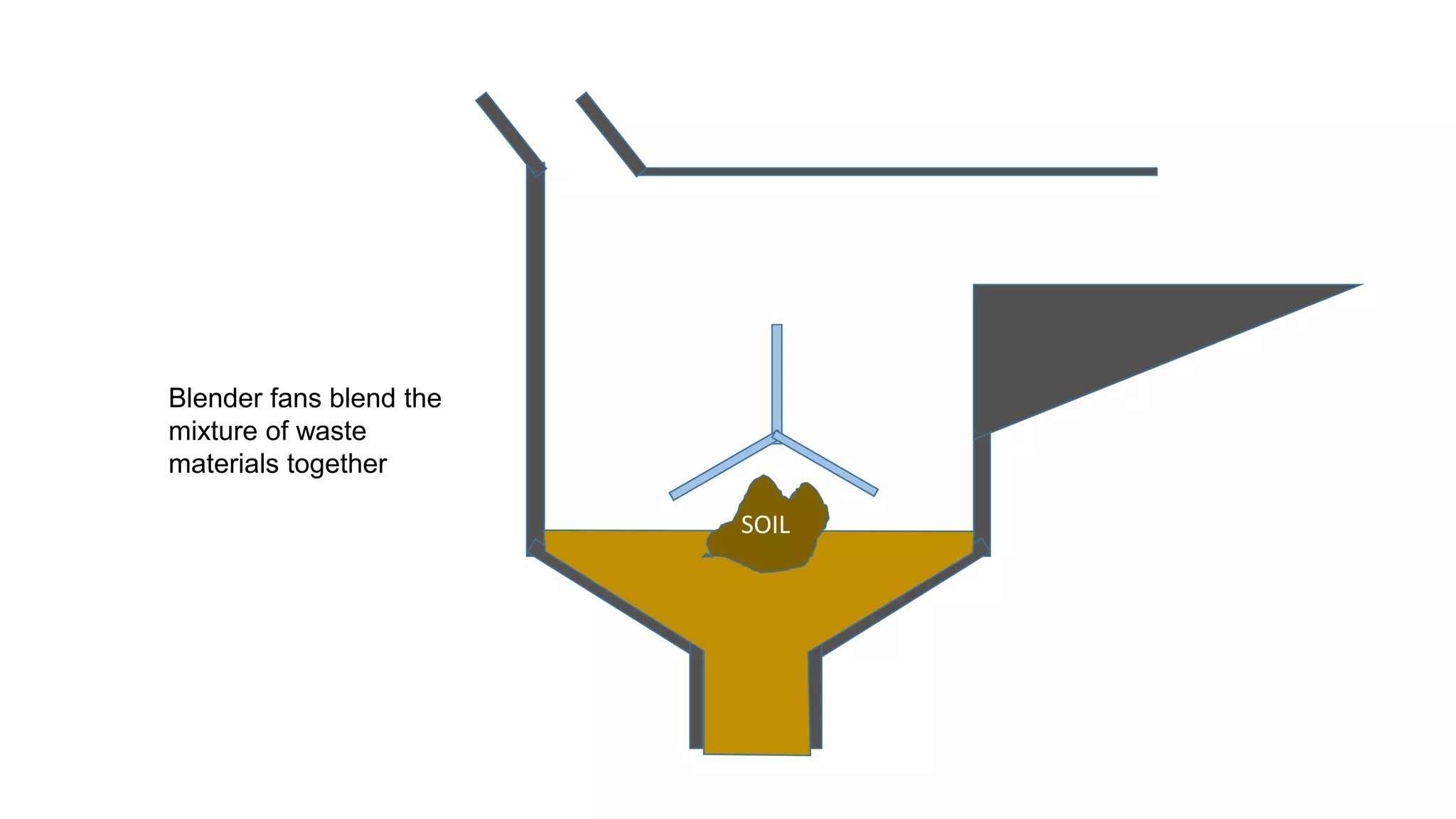
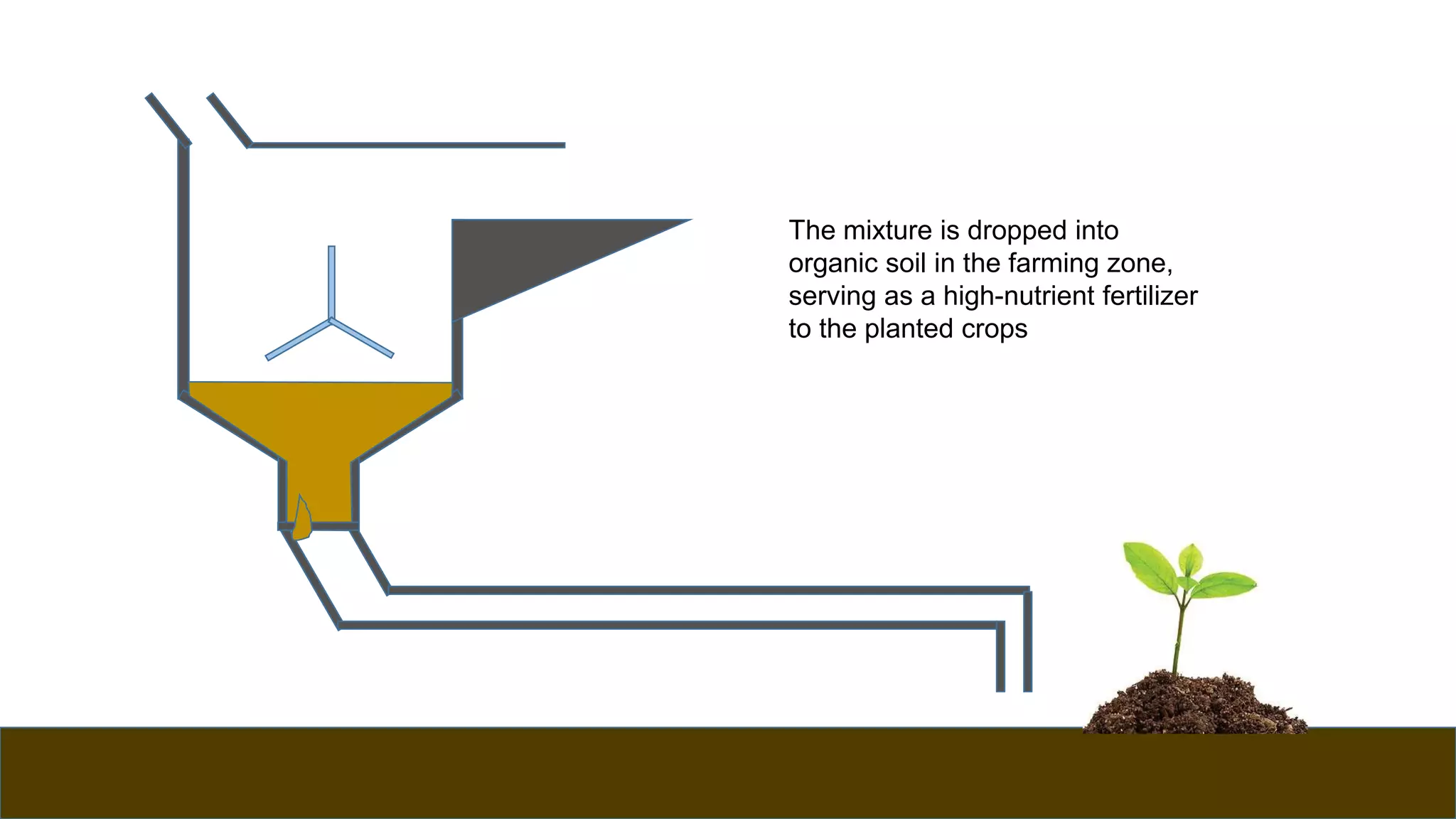
Blender fans blend the
mixture of waste
materials together
The mixture is dropped into
organic soil in the farming zone,
serving as a high-nutrient fertilizer
to the planted crops
SUGGESTED CROPS
Leafy vegetables & vine vegetables
#suitable for local climate
Harvested crops are then sold to
residents and consumed
ADDITIONAL FEATURES
Added to the farming zone’s
building to aid in sunlight
penetration and ventilation
Filled with water and bleach refract
sunlight into areas that lack sunlight,
minimalizing use of artificial lighting
ORGANIC-STYLE VOIDS
RECYCLED PLASTIC
BOTTLES
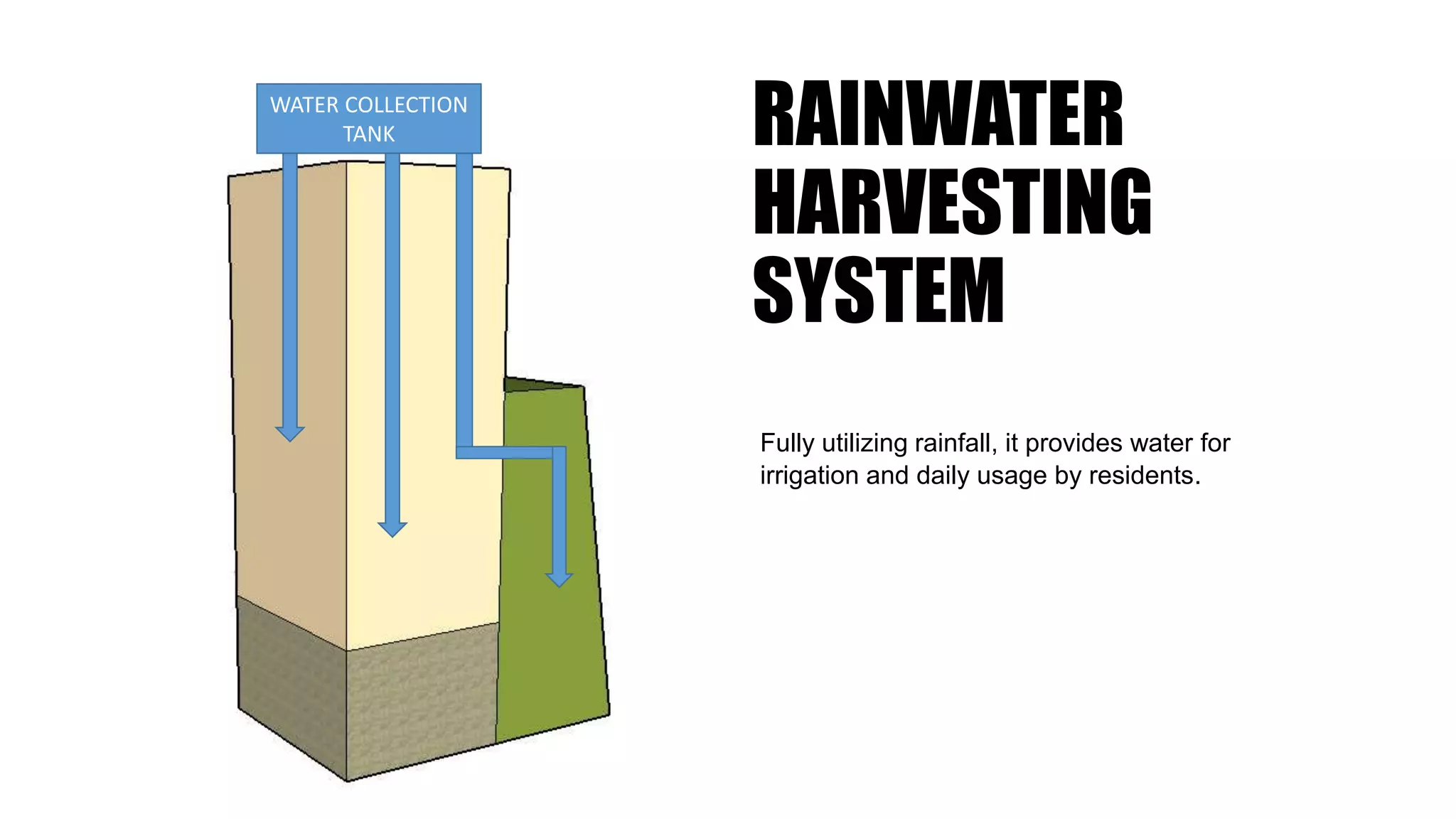
RAINWATER
HARVESTING
SYSTEM
WATER COLLECTION
TANK
Fully utilizing rainfall, it provides water for
irrigation and daily usage by residents.
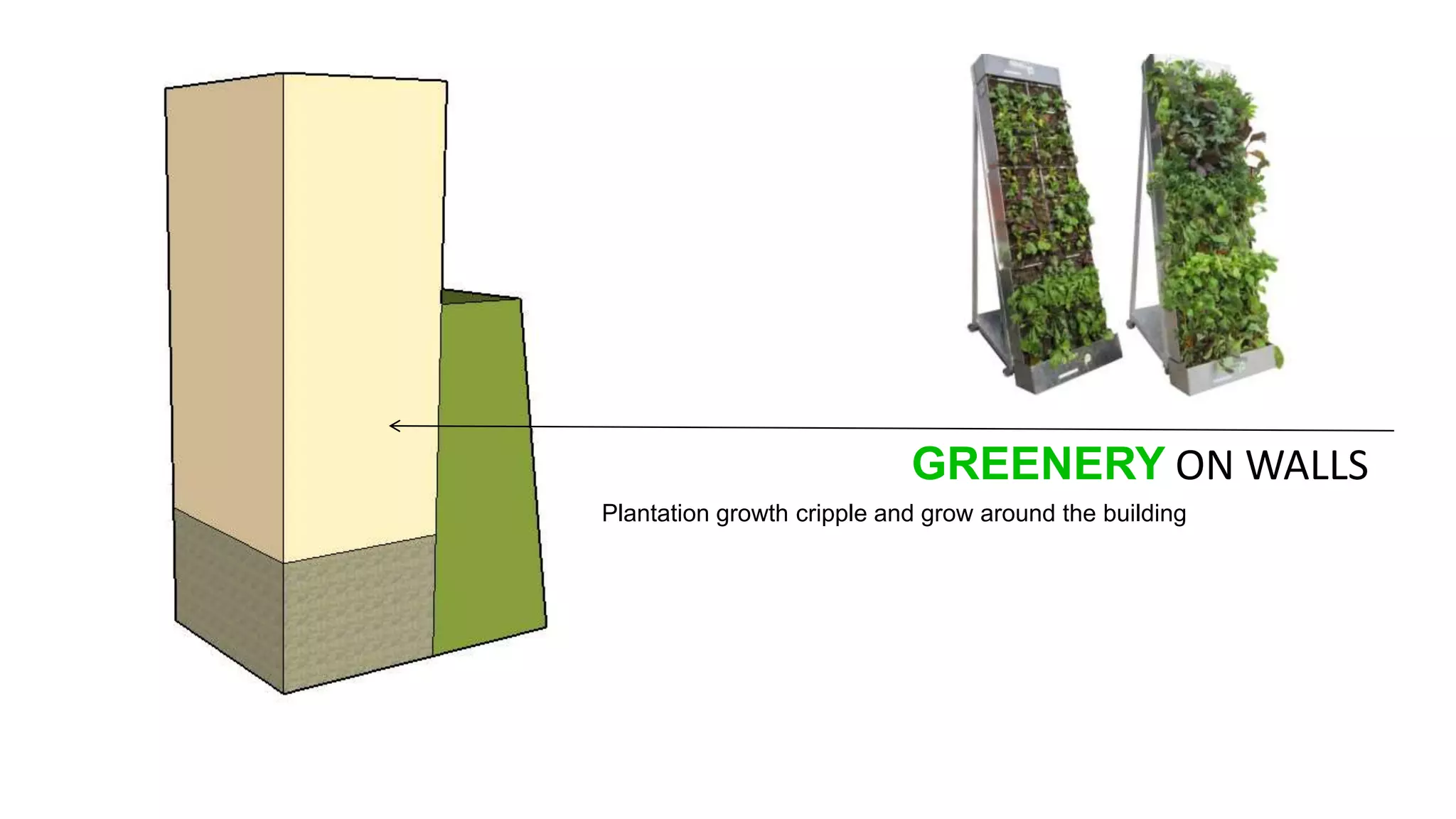
GREENERY ON WALLS
Plantation growth cripple and grow around the building
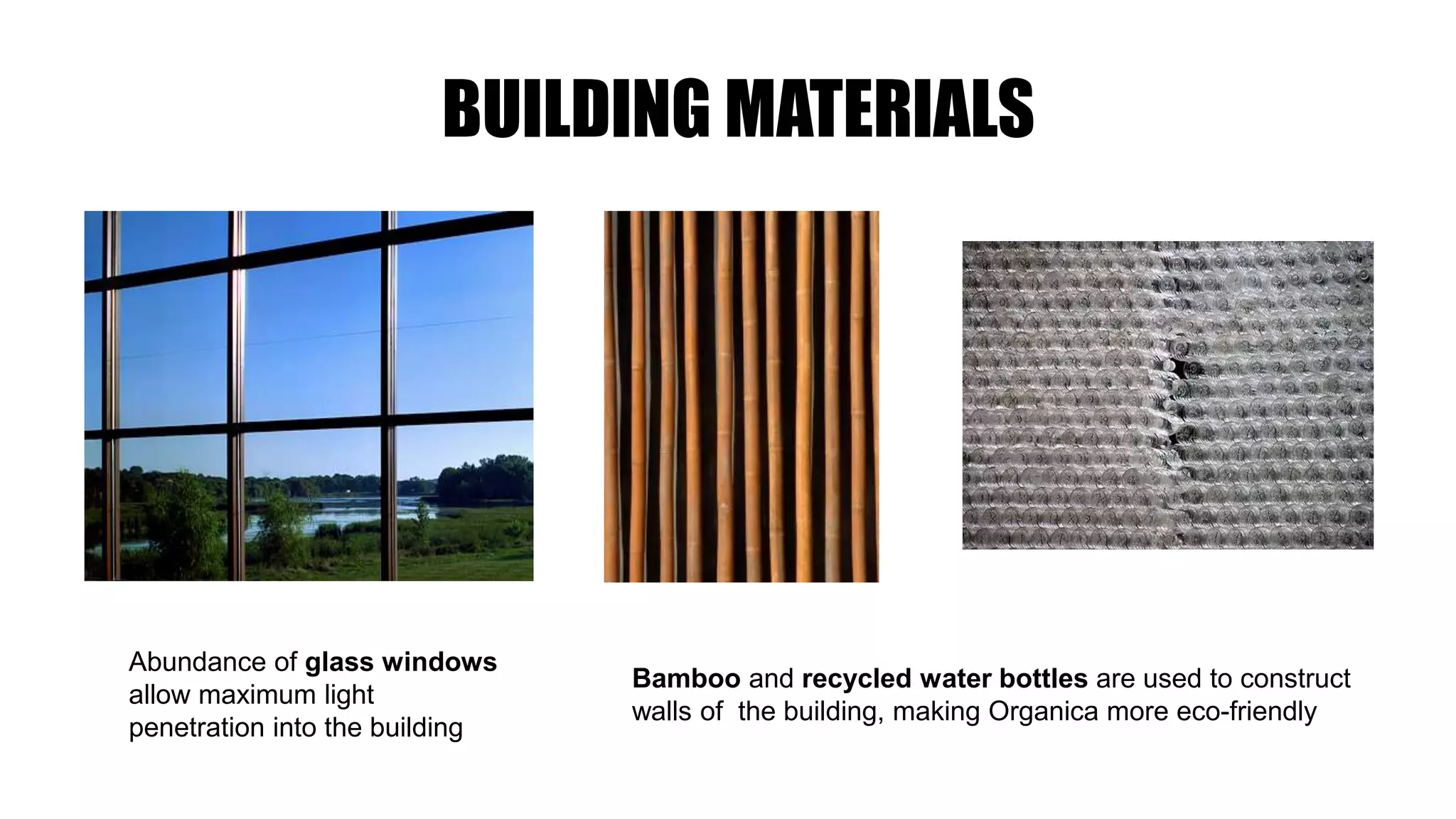
Abundance of glass windows
allow maximum light
penetration into the building
Bamboo and recycled water bottles are used to construct
walls of the building, making Organica more eco-friendly
BUILDING MATERIALS
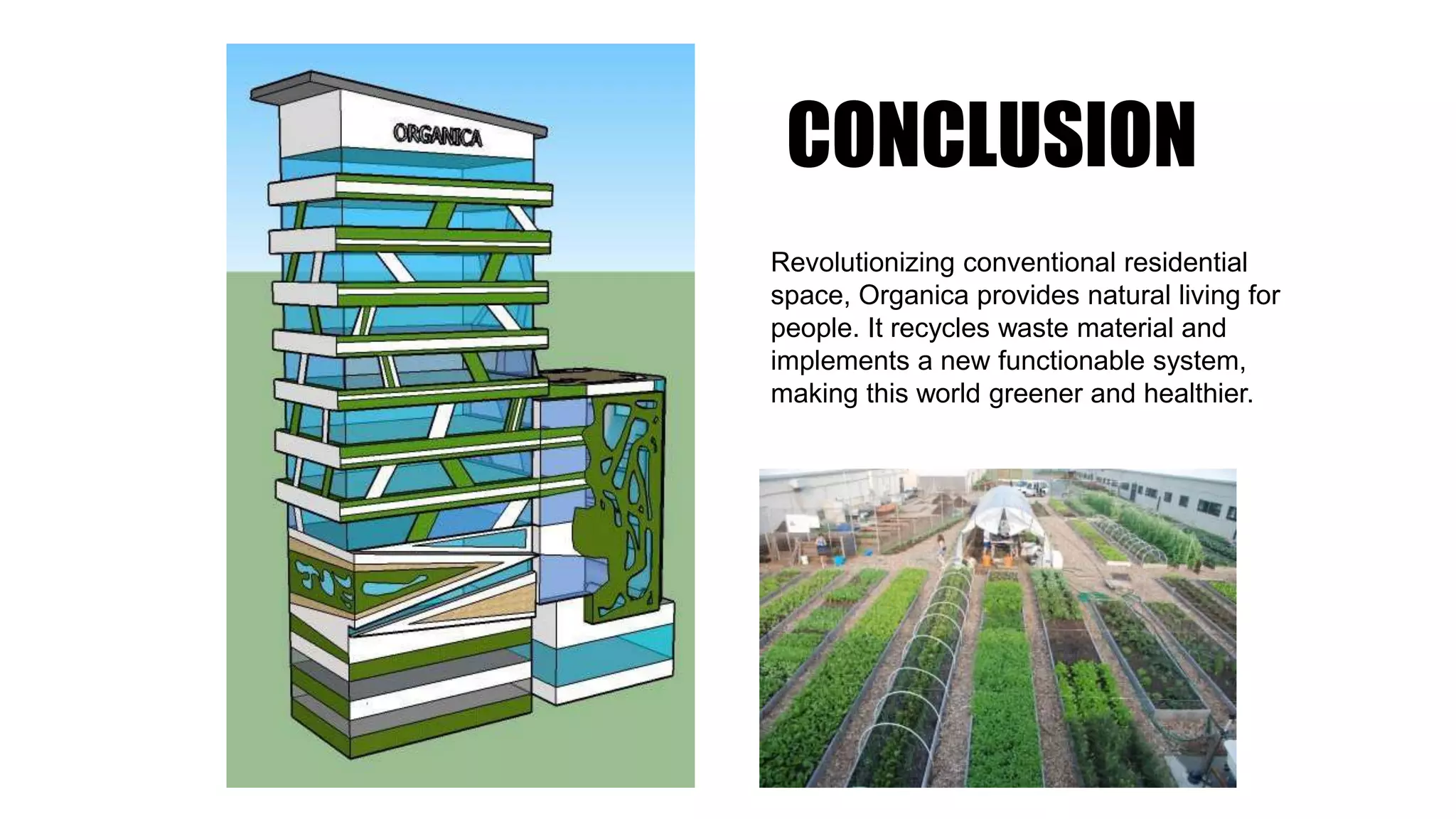
CONCLUSION
Revolutionizing conventional residential
space, Organica provides natural living for
people. It recycles waste material and
implements a new functionable system,
making this world greener and healthier.
Team organica final

Team organica final