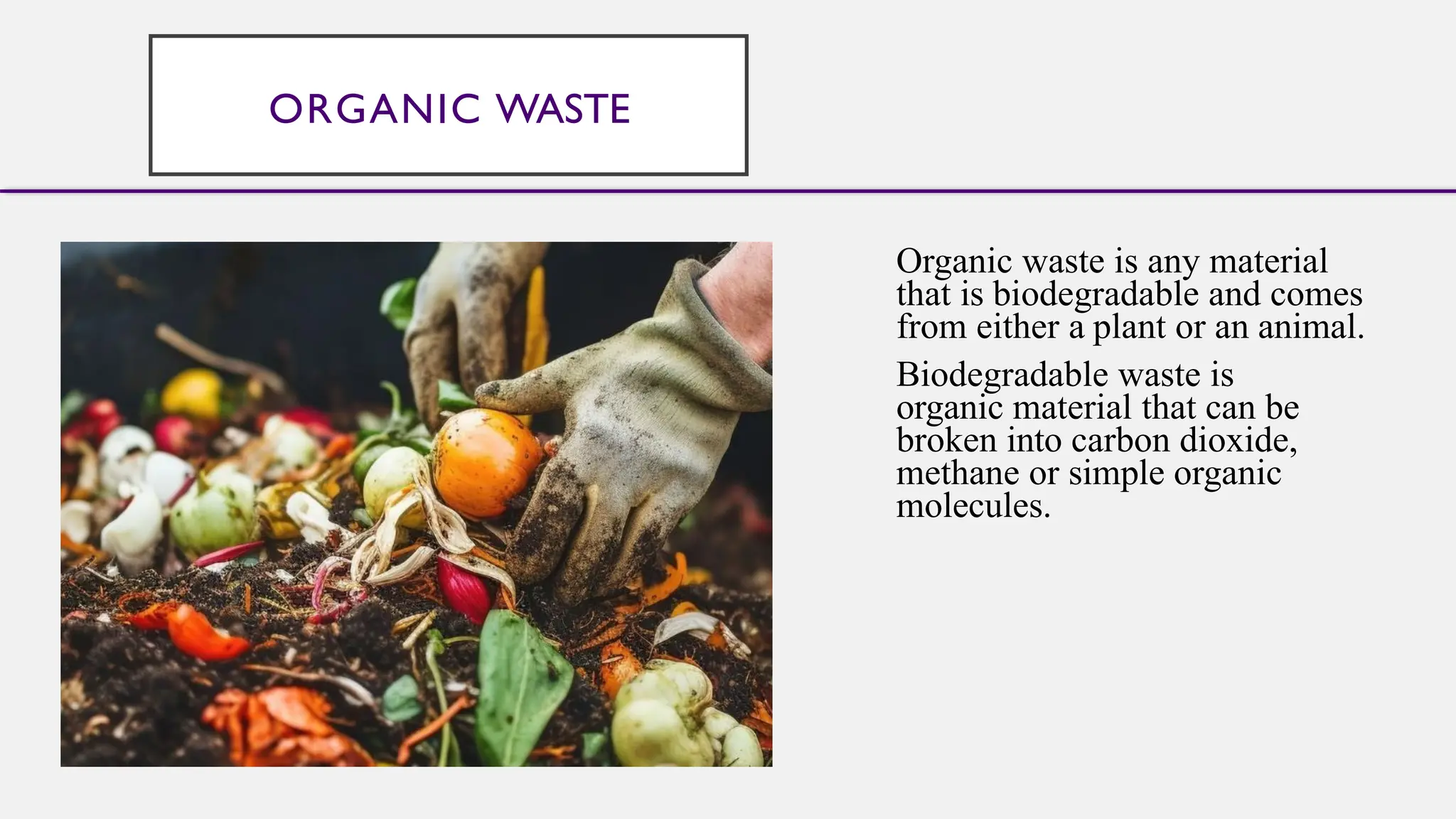
Organic waste is any material
that is biodegradable and comes
from either a plant or an animal.
Biodegradable waste is
organic material that can be
broken into carbon dioxide,
methane or simple organic
molecules.
ORGANIC WASTE
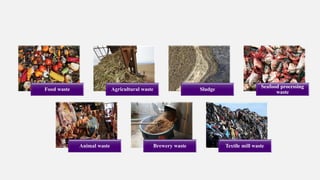
Food waste Agricultural waste Sludge
Seafood processing
waste
Animal waste Brewery waste Textile mill waste
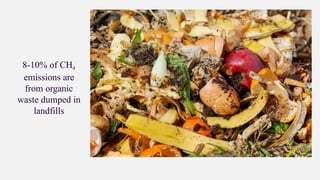
8-10% of CH4
emissions are
from organic
waste dumped in
landfills
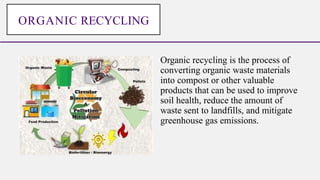
Organic recycling is the process of
converting organic waste materials
into compost or other valuable
products that can be used to improve
soil health, reduce the amount of
waste sent to landfills, and mitigate
greenhouse gas emissions.
ORGANIC RECYCLING
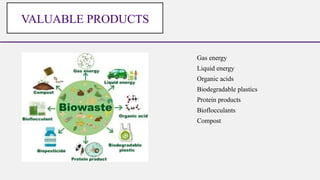
Gas energy
Liquid energy
Organic acids
Biodegradable plastics
Protein products
Bioflocculants
Compost
VALUABLE PRODUCTS
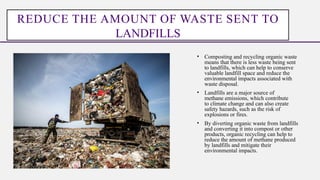
• Composting and recycling organic waste
means that there is less waste being sent
to landfills, which can help to conserve
valuable landfill space and reduce the
environmental impacts associated with
waste disposal.
• Landfills are a major source of
methane emissions, which contribute
to climate change and can also create
safety hazards, such as the risk of
explosions or fires.
• By diverting organic waste from landfills
and converting it into compost or other
products, organic recycling can help to
reduce the amount of methane produced
by landfills and mitigate their
environmental impacts.
REDUCE THE AMOUNT OF WASTE SENT TO
LANDFILLS
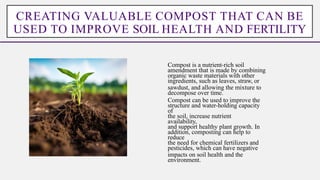
Compost is a nutrient-rich soil
amendment that is made by combining
organic waste materials with other
ingredients, such as leaves, straw, or
sawdust, and allowing the mixture to
decompose over time.
Compost can be used to improve the
structure and water-holding capacity
of
the soil, increase nutrient
availability,
and support healthy plant growth. In
addition, composting can help to
reduce
the need for chemical fertilizers and
pesticides, which can have negative
impacts on soil health and the
environment.
CREATING VALUABLE COMPOST THAT CAN BE
USED TO IMPROVE SOIL HEALTH AND FERTILITY
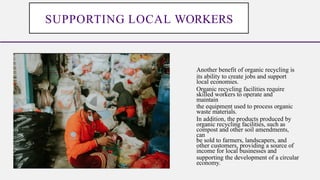
Another benefit of organic recycling is
its ability to create jobs and support
local economies.
Organic recycling facilities require
skilled workers to operate and
maintain
the equipment used to process organic
waste materials.
In addition, the products produced by
organic recycling facilities, such as
compost and other soil amendments,
can
be sold to farmers, landscapers, and
other customers, providing a source of
income for local businesses and
supporting the development of a circular
economy.
SUPPORTING LOCAL WORKERS
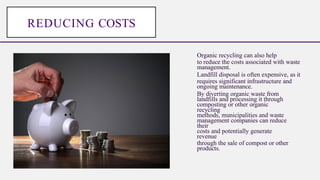
Organic recycling can also help
to reduce the costs associated with waste
management.
Landfill disposal is often expensive, as it
requires significant infrastructure and
ongoing maintenance.
By diverting organic waste from
landfills and processing it through
composting or other organic
recycling
methods, municipalities and waste
management companies can reduce
their
costs and potentially generate
revenue
through the sale of compost or other
products.
REDUCING COSTS
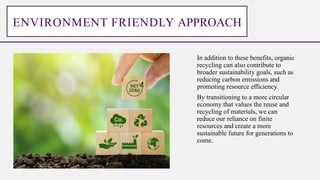
In addition to these benefits, organic
recycling can also contribute to
broader sustainability goals, such as
reducing carbon emissions and
promoting resource efficiency.
By transitioning to a more circular
economy that values the reuse and
recycling of materials, we can
reduce our reliance on finite
resources and create a more
sustainable future for generations to
come.
ENVIRONMENT FRIENDLY APPROACH
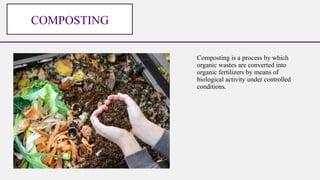
Composting is a process by which
organic wastes are converted into
organic fertilizers by means of
biological activity under controlled
conditions.
COMPOSTING
COMPOSTING
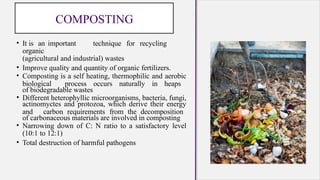
• It is an important technique for recycling
organic
(agricultural and industrial) wastes
• Improve quality and quantity of organic fertilizers.
• Composting is a self heating, thermophilic and aerobic
biological process occurs naturally in heaps
of biodegradable wastes
• Different heterophyllic microorganisms, bacteria, fungi,
actinomyctes and protozoa, which derive their energy
and carbon requirements from the decomposition
of carbonaceous materials are involved in composting
• Narrowing down of C: N ratio to a satisfactory level
(10:1 to 12:1)
• Total destruction of harmful pathogens
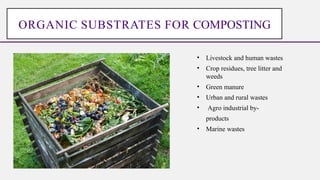
• Livestock and human wastes
• Crop residues, tree litter and
weeds
• Green manure
• Urban and rural wastes
• Agro industrial by-
products
• Marine wastes
ORGANIC SUBSTRATES FOR COMPOSTING
ESSENTIAL REQUIREMENTS OF COMPOSTING
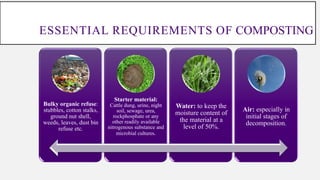
Bulky organic refuse:
stubbles, cotton stalks,
ground nut shell,
weeds, leaves, dust bin
refuse etc.
Starter material:
Cattle dung, urine, night
soil, sewage, urea,
rockphosphate or any
other readily available
nitrogenous substance and
microbial cultures.
Water: to keep the
moisture content of
the material at a
level of 50%.
Air: especially in
initial stages of
decomposition.
DIFFERENT METHODS OF AEROBIC COMPOSTING
Indore Composting
NADEP method
of composting
Vermicomposting
NADEP METHOD
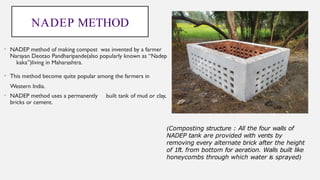
• NADEP method of making compost was invented by a farmer
Narayan Deotao Pandharipande(also popularly known as “Nadep
kaka”)living in Maharashtra.
• This method become quite popular among the farmers in
Western India.
• NADEP method uses a permanently built tank of mud or clay,
bricks or cement.
(Composting structure : All the four walls of
NADEP tank are provided with vents by
removing every alternate brick after the height
of 1ft. from bottom for aeration. Walls built like
honeycombs through which water is sprayed)
STEPS FOR NADEP METHOD OF COMPOSTING.
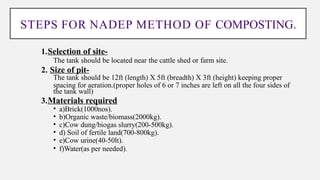
1.Selection of site-
The tank should be located near the cattle shed or farm site.
2. Size of pit-
The tank should be 12ft (length) X 5ft (breadth) X 3ft (height) keeping proper
spacing for aeration.(proper holes of 6 or 7 inches are left on all the four sides of
the tank wall)
3.Materials required
• a)Brick(1000nos).
• b)Organic waste/biomass(2000kg).
• c)Cow dung/biogas slurry(200-500kg).
• d) Soil of fertile land(700-800kg).
• e)Cow urine(40-50lt).
• f)Water(as per needed).
4.METHOD OF PREPARATION
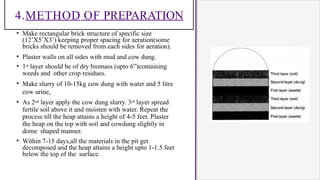
• Make rectangular brick structure of specific size
(12’X5’X3’) keeping proper spacing for aeration(some
bricks should be removed from each sides for aeration).
• Plaster walls on all sides with mud and cow dung.
• 1st layer should be of dry biomass (upto 6”)containing
weeds and other crop residues.
• Make slurry of 10-15kg cow dung with water and 5 litre
cow urine.
• As 2nd layer apply the cow dung slurry. 3rd layer spread
fertile soil above it and moisten with water. Repeat the
process till the heap attains a height of 4-5 feet. Plaster
the heap on the top with soil and cowdung slightly in
dome shaped manner.
• Within 7-15 days,all the materials in the pit get
decomposed and the heap attains a height upto 1-1.5 feet
below the top of the surface.
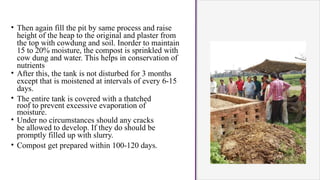
• Then again fill the pit by same process and raise
height of the heap to the original and plaster from
the top with cowdung and soil. Inorder to maintain
15 to 20% moisture, the compost is sprinkled with
cow dung and water. This helps in conservation of
nutrients
• After this, the tank is not disturbed for 3 months
except that is moistened at intervals of every 6-15
days.
• The entire tank is covered with a thatched
roof to prevent excessive evaporation of
moisture.
• Under no circumstances should any cracks
be allowed to develop. If they do should be
promptly filled up with slurry.
• Compost get prepared within 100-120 days.
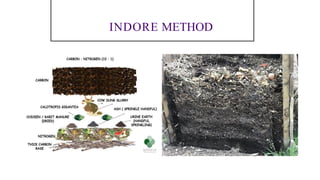
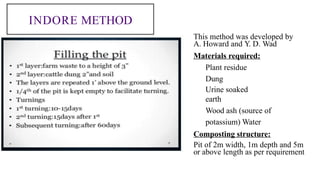
This method was developed by
A. Howard and Y. D. Wad
Materials required:
Plant residue
Dung
Urine soaked
earth
Wood ash (source of
potassium) Water
Composting structure:
Pit of 2m width, 1m depth and 5m
or above length as per requirement
INDORE METHOD
INDORE METHOD
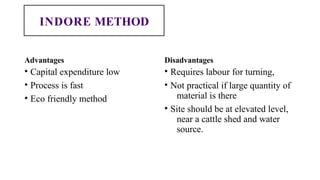
Advantages
• Capital expenditure low
• Process is fast
• Eco friendly method
Disadvantages
• Requires labour for turning,
• Not practical if large quantity of
material is there
• Site should be at elevated level,
near a cattle shed and water
source.
INDORE METHOD
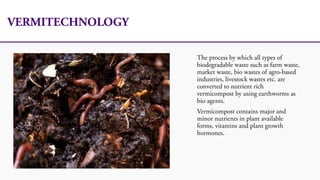
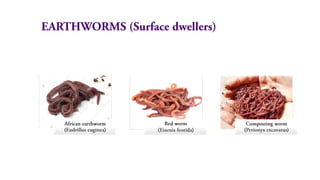
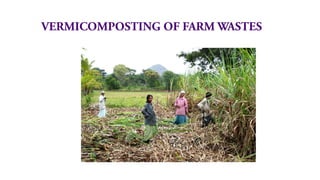
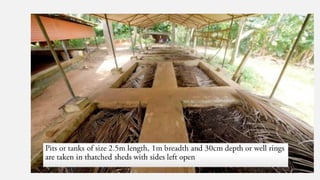
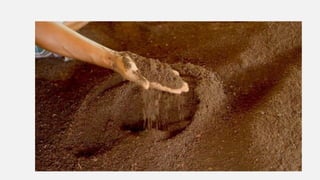
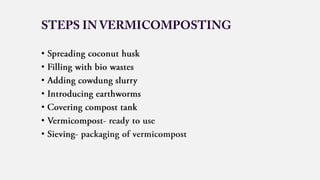
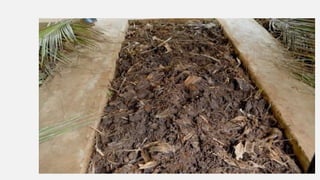
VERMICOMPOSTING
VERMICOMPOST
•
•
•
•
•
•
•
•
•
•
ADVANTAGES
•
•
•
•
•
•
•
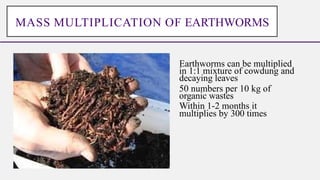
Earthworms can be multiplied
in 1:1 mixture of cowdung and
decaying leaves
50 numbers per 10 kg of
organic wastes
Within 1-2 months it
multiplies by 300 times
MASS MULTIPLICATION OF EARTHWORMS
ADVANTAGES AND DISADVANTAGES OF
AEROBIC COMPOSTING
•Disadvantages
• Higher capital cost for aeration
equipments.
• Higher operating
cost(particularly energy for
pumps or aerators).
• Higher maintenance
requirements.
Advantages
• Large reduction of valuable
waste.
• Improves soil’s ability to
sequester carbon.
• Reduce pesticide usage and
synthetic fertilizer dependencies.
VERMICOMPOSTING OF HOUSEHOLD
WASTES
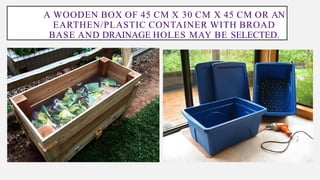
A WOODEN BOX OF 45 CM X 30 CM X 45 CM OR AN
EARTHEN/PLASTIC CONTAINER WITH BROAD
BASE AND DRAINAGE HOLES MAY BE SELECTED.
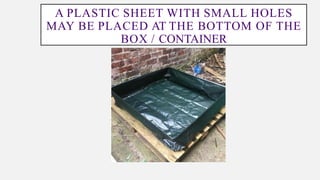
A PLASTIC SHEET WITH SMALL HOLES
MAY BE PLACED AT THE BOTTOM OF THE
BOX / CONTAINER
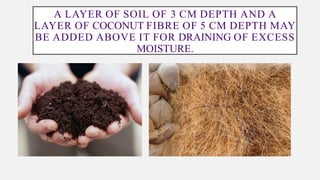
A LAYER OF SOIL OF 3 CM DEPTH AND A
LAYER OF COCONUT FIBRE OF 5 CM DEPTH MAY
BE ADDED ABOVE IT FOR DRAINING OF EXCESS
MOISTURE.
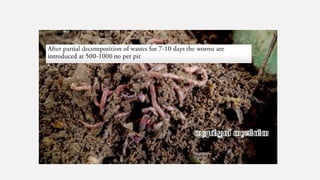
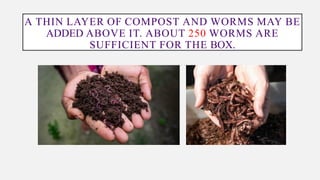
A THIN LAYER OF COMPOST AND WORMS MAY BE
ADDED ABOVE IT. ABOUT 250 WORMS ARE
SUFFICIENT FOR THE BOX.
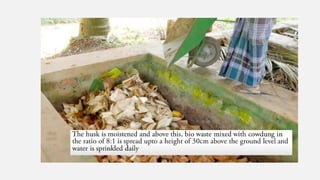
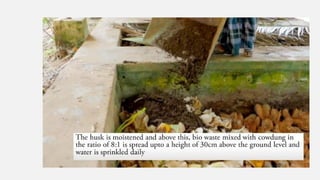
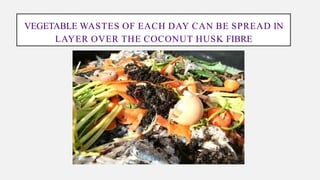
VEGETABLE WASTES OF EACH DAY CAN BE SPREAD IN
LAYER OVER THE COCONUT HUSK FIBRE
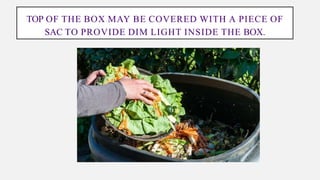
TOP OF THE BOX MAY BE COVERED WITH A PIECE OF
SAC TO PROVIDE DIM LIGHT INSIDE THE BOX.
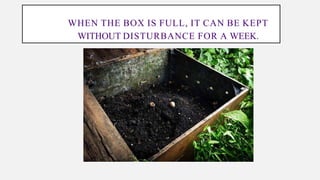
WHEN THE BOX IS FULL, IT CAN BE KEPT
WITHOUT DISTURBANCE FOR A WEEK.
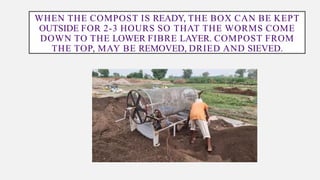
WHEN THE COMPOST IS READY, THE BOX CAN BE KEPT
OUTSIDE FOR 2-3 HOURS SO THAT THE WORMS COME
DOWN TO THE LOWER FIBRE LAYER. COMPOST FROM
THE TOP, MAY BE REMOVED, DRIED AND SIEVED.
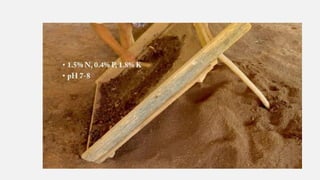
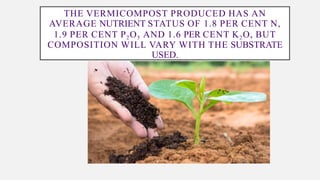
THE VERMICOMPOST PRODUCED HAS AN
AVERAGE NUTRIENT STATUS OF 1.8 PER CENT N,
1.9 PER CENT P2O5 AND 1.6 PER CENT K2O, BUT
COMPOSITION WILL VARY WITH THE SUBSTRATE
USED.
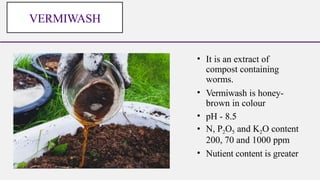
• It is an extract of
compost containing
worms.
• Vermiwash is honey-
brown in colour
• pH - 8.5
• N, P2O5 and K2O content
200, 70 and 1000 ppm
• Nutient content is greater
VERMIWASH
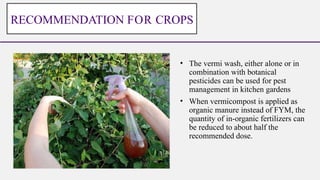
• The vermi wash, either alone or in
combination with botanical
pesticides can be used for pest
management in kitchen gardens
• When vermicompost is applied as
organic manure instead of FYM, the
quantity of in-organic fertilizers can
be reduced to about half the
recommended dose.
RECOMMENDATION FOR CROPS
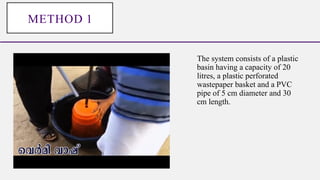
The system consists of a plastic
basin having a capacity of 20
litres, a plastic perforated
wastepaper basket and a PVC
pipe of 5 cm diameter and 30
cm length.
METHOD 1
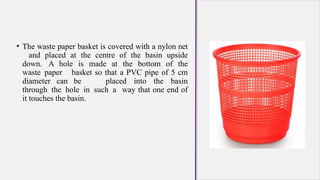
• The waste paper basket is covered with a nylon net
and placed at the centre of the basin upside
down. A hole is made at the bottom of the
waste paper basket so that a PVC pipe of 5 cm
diameter can be placed into the basin
through the hole in such a way that one end of
it touches the basin.
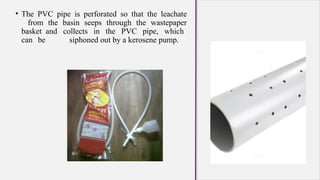
• The PVC pipe is perforated so that the leachate
from the basin seeps through the wastepaper
basket and collects in the PVC pipe, which
can be siphoned out by a kerosene pump.
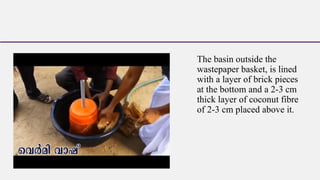
The basin outside the
wastepaper basket, is lined
with a layer of brick pieces
at the bottom and a 2-3 cm
thick layer of coconut fibre
of 2-3 cm placed above it.
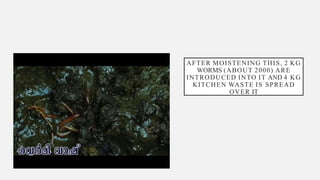
AFTER MOISTENING THIS, 2 KG
WORMS (ABOUT 2000) ARE
INTRODUCED INTO IT AND 4 KG
KITCHEN WASTE IS SPREAD
OVER IT
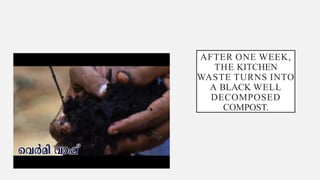
AFTER ONE WEEK,
THE KITCHEN
WASTE TURNS INTO
A BLACK WELL
DECOMPOSED
COMPOST.
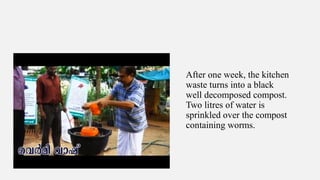
After one week, the kitchen
waste turns into a black
well decomposed compost.
Two litres of water is
sprinkled over the compost
containing worms.
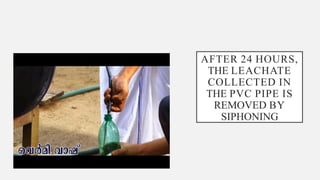
AFTER 24 HOURS,
THE LEACHATE
COLLECTED IN
THE PVC PIPE IS
REMOVED BY
SIPHONING
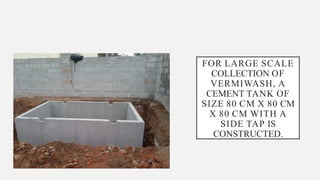
FOR LARGE SCALE
COLLECTION OF
VERMIWASH, A
CEMENT TANK OF
SIZE 80 CM X 80 CM
X 80 CM WITH A
SIDE TAP IS
CONSTRUCTED.
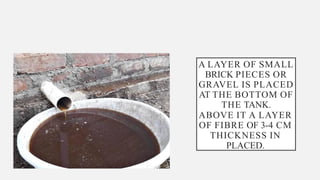
A LAYER OF SMALL
BRICK PIECES OR
GRAVEL IS PLACED
AT THE BOTTOM OF
THE TANK.
ABOVE IT A LAYER
OF FIBRE OF 3-4 CM
THICKNESS IN
PLACED.
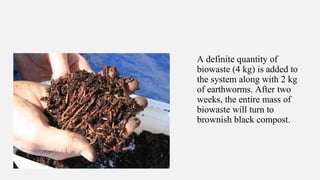
A definite quantity of
biowaste (4 kg) is added to
the system along with 2 kg
of earthworms. After two
weeks, the entire mass of
biowaste will turn to
brownish black compost.
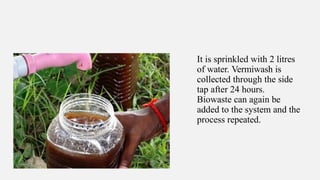
It is sprinkled with 2 litres
of water. Vermiwash is
collected through the side
tap after 24 hours.
Biowaste can again be
added to the system and the
process repeated.
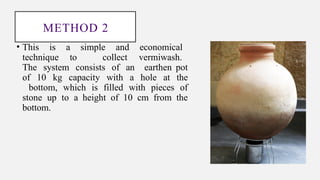
METHOD 2
• This is a simple and economical
technique to collect vermiwash.
The system consists of an earthen pot
of 10 kg capacity with a hole at the
bottom, which is filled with pieces of
stone up to a height of 10 cm from the
bottom.
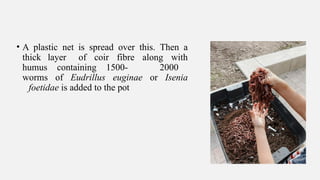
• A plastic net is spread over this. Then a
thick layer of coir fibre along with
humus containing 1500- 2000
worms of Eudrillus euginae or Isenia
foetidae is added to the pot
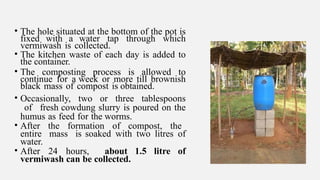
• The hole situated at the bottom of the pot is
fixed with a water tap through which
vermiwash is collected.
• The kitchen waste of each day is added to
the container.
• The composting process is allowed to
continue for a week or more till brownish
black mass of compost is obtained.
• Occasionally, two or three tablespoons
of fresh cowdung slurry is poured on the
humus as feed for the worms.
• After the formation of compost, the
entire mass is soaked with two litres of
water.
• After 24 hours, about 1.5 litre of
vermiwash can be collected.
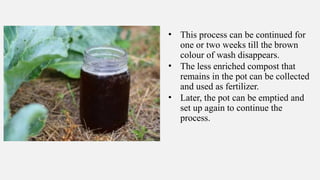
• This process can be continued for
one or two weeks till the brown
colour of wash disappears.
• The less enriched compost that
remains in the pot can be collected
and used as fertilizer.
• Later, the pot can be emptied and
set up again to continue the
process.
BENEFITS OF VERMICOMPOST
• When added to clay soil, loosens the soil and provides the passage for the
entry of air.
• The mucus associated with it being hygroscopic, absorbs water and
prevents water logging and improves water holding capacity.
• In the vermicompost, some of the secretions of worms and the
associated microbes act as growth promoter along with other
nutrients.
• It improves physical, chemical and biological properties of soil in the
long run on repeated application
• The organic carbon in vermicompost releases the nutrients slowly and
steadily into the system and enables the plant to absorb these nutrients.
• The multifarious effects of vermicompost influence the growth and yield
of crops.
• Earthworm can minimize the pollution hazards caused by organic waste
by enhancing waste degradation.
COIRPITH COMPOSTING
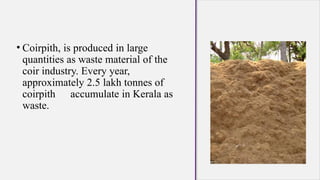
• Coirpith, is produced in large
quantities as waste material of the
coir industry. Every year,
approximately 2.5 lakh tonnes of
coirpith accumulate in Kerala as
waste.
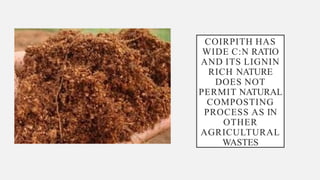
COIRPITH HAS
WIDE C:N RATIO
AND ITS LIGNIN
RICH NATURE
DOES NOT
PERMIT NATURAL
COMPOSTING
PROCESS AS IN
OTHER
AGRICULTURAL
WASTES
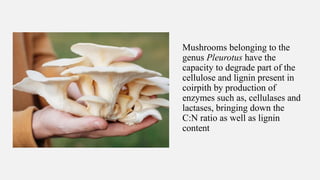
Mushrooms belonging to the
genus Pleurotus have the
capacity to degrade part of the
cellulose and lignin present in
coirpith by production of
enzymes such as, cellulases and
lactases, bringing down the
C:N ratio as well as lignin
content
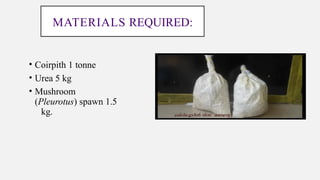
MATERIALS REQUIRED:
• Coirpith 1 tonne
• Urea 5 kg
• Mushroom
(Pleurotus) spawn 1.5
kg.
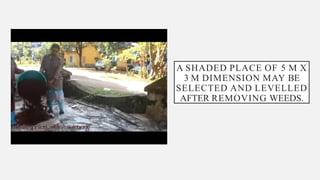
A SHADED PLACE OF 5 M X
3 M DIMENSION MAY BE
SELECTED AND LEVELLED
AFTER REMOVING WEEDS.
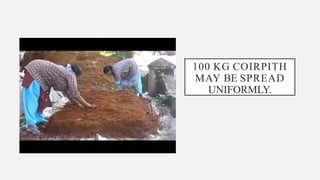
100 KG COIRPITH
MAY BE SPREAD
UNIFORMLY.
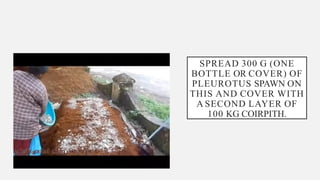
SPREAD 300 G (ONE
BOTTLE OR COVER) OF
PLEUROTUS SPAWN ON
THIS AND COVER WITH
A SECOND LAYER OF
100 KG COIRPITH.
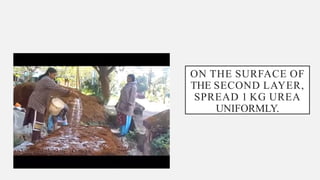
ON THE SURFACE OF
THE SECOND LAYER,
SPREAD 1 KG UREA
UNIFORMLY.
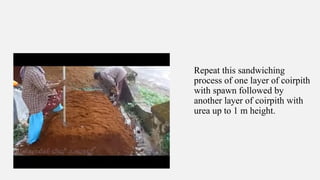
Repeat this sandwiching
process of one layer of coirpith
with spawn followed by
another layer of coirpith with
urea up to 1 m height.
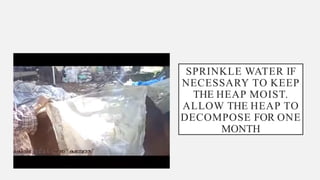
SPRINKLE WATER IF
NECESSARY TO KEEP
THE HEAP MOIST.
ALLOW THE HEAP TO
DECOMPOSE FOR ONE
MONTH
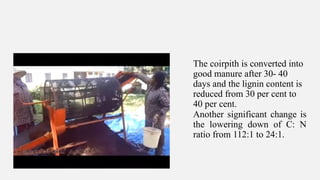
The coirpith is converted into
good manure after 30- 40
days and the lignin content is
reduced from 30 per cent to
40 per cent.
Another significant change is
the lowering down of C: N
ratio from 112:1 to 24:1.
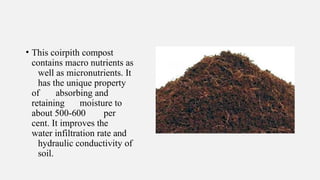
• This coirpith compost
contains macro nutrients as
well as micronutrients. It
has the unique property
of absorbing and
retaining moisture to
about 500-600 per
cent. It improves the
water infiltration rate and
hydraulic conductivity of
soil.
ANAEROBIC COMPOSTING
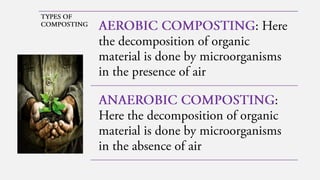
• In this decomposition occurs in the absence of oxygen
or under the limited supply of oxygen, Anaerobic
microorganisms dominate.
• They produce the intermediate compounds like
methane, organic acids, hydrogen sulphide and
other substances.
• It is a low temperature process.
ANAEROBIC MICROBIOLOGY
• The anaerobic microbiology mainly involves three
group of microorganisms.
• They are
• Methanobacterium
• Methanococcus
• Methanospirillum
BANGLORE METHOD
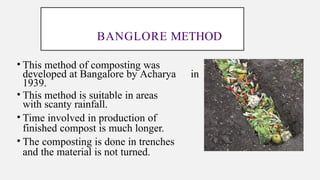
• This method of composting was
developed at Bangalore by Acharya in
1939.
• This method is suitable in areas
with scanty rainfall.
• Time involved in production of
finished compost is much longer.
• The composting is done in trenches
and the material is not turned.
• Trenches or pits of 1m depth, convenient length and breadth are
dug.
• Organic residues and dung and urine soaked mud are put in
alternate layers.
• These layers are repeated in order at least 1.5-2m above ground
level.
• It is left exposed without covering for 15days.
• Then it is plastered with earth or mud of 1cm thick,
• It takes about 6-8 months to get finished product.
• It is the bulkiest compost.
BANGLORE METHOD
MERITS
• Turning not required
• Simple and easy to manipulate.
• Efficient use of moisture
• High manure recovery
• Pathogen and weed free manure
DEMERITS
• Long duration
• Low nutrient recovery
ENRICHMENT OF COMPOST WITH MICROBIAL
INOCULANTS.
• Compost prepared by traditional method is usually low in nutrients
and there is need to improved its quality.
• Enrichment of compost using low cost nitrogen fixing and phosphate
solubilizing microbes is one of the possible way of improving
nutrient status of the soil.
• It could be achieved by introducing microbial inoculants, which
are more efficient than the native strains associated with substrate
materials.
• Both the nitrogen fixing and phosphate solubilizing microbes are
more exacting in their physiological and ecological requirements.
The only alternative is to enhance their inoculum potential in the
composting mass.
AEROBIC COMPOSTING USING
MICROBIAL CONSORTIUM
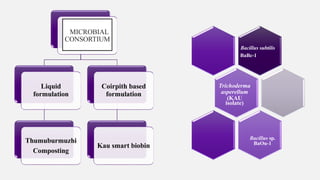
MICROBIAL
CONSORTIUM
Liquid
formulation
Thumuburmuzhi
Composting
Coirpith based
formulation
Kau smart biobin
Bacillus subtilis
BaBc-1
Trichoderma
asperellum
(KAU
isolate)
Bacillus sp.
BaOu-1
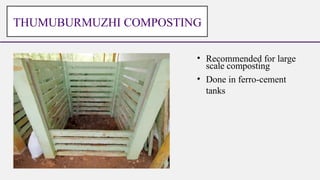
• Recommended for large
scale composting
• Done in ferro-cement
tanks
THUMUBURMUZHI COMPOSTING
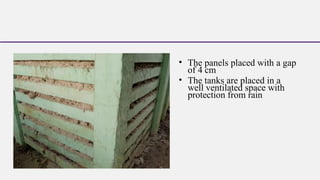
• The panels placed with a gap
of 4 cm
• The tanks are placed in a
well ventilated space with
protection from rain
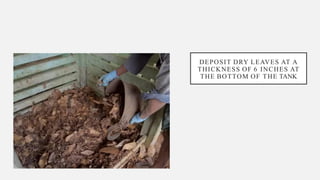
DEPOSIT DRY LEAVES AT A
THICKNESS OF 6 INCHES AT
THE BOTTOM OF THE TANK
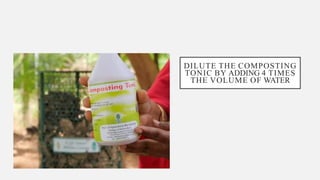
DILUTE THE COMPOSTING
TONIC BY ADDING 4 TIMES
THE VOLUME OF WATER
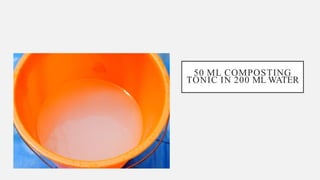
50 ML COMPOSTING
TONIC IN 200 ML WATER
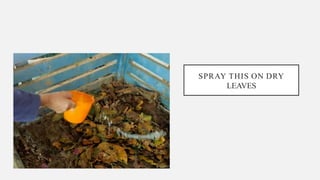
SPRAY THIS ON DRY
LEAVES
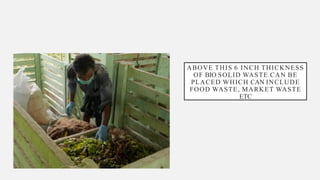
ABOVE THIS 6 INCH THICKNESS
OF BIO SOLID WASTE CAN BE
PLACED WHICH CAN INCLUDE
FOOD WASTE, MARKET WASTE
ETC
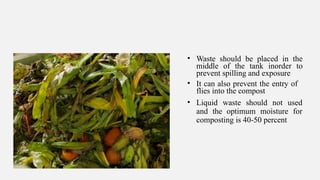
• Waste should be placed in the
middle of the tank inorder to
prevent spilling and exposure
• It can also prevent the entry of
flies into the compost
• Liquid waste should not used
and the optimum moisture for
composting is 40-50 percent
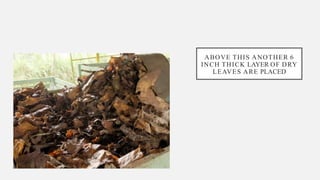
ABOVE THIS ANOTHER 6
INCH THICK LAYER OF DRY
LEAVES ARE PLACED
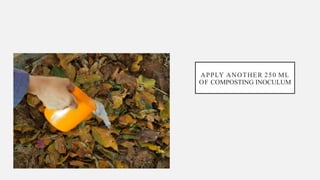
APPLY ANOTHER 250 ML
OF COMPOSTING INOCULUM
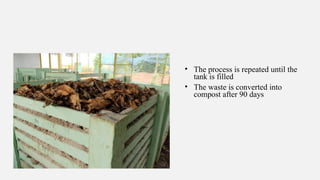
• The process is repeated until the
tank is filled
• The waste is converted into
compost after 90 days
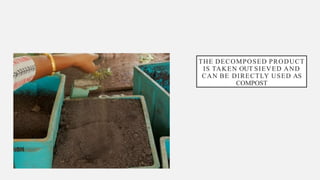
THE DECOMPOSED PRODUCT
IS TAKEN OUT SIEVED AND
CAN BE DIRECTLY USED AS
COMPOST
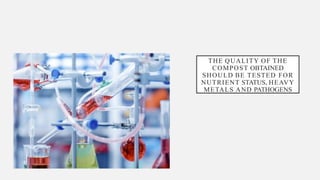
THE QUALITY OF THE
COMPOST OBTAINED
SHOULD BE TESTED FOR
NUTRIENT STATUS, HEAVY
METALS AND PATHOGENS
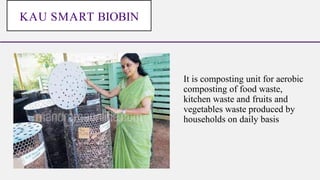
It is composting unit for aerobic
composting of food waste,
kitchen waste and fruits and
vegetables waste produced by
households on daily basis
KAU SMART BIOBIN
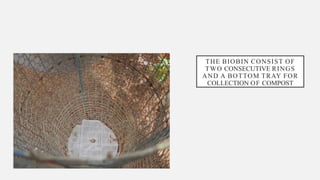
THE BIOBIN CONSIST OF
TWO CONSECUTIVE RINGS
AND A BOTTOM TRAY FOR
COLLECTION OF COMPOST
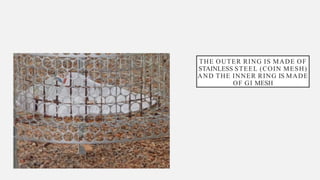
THE OUTER RING IS MADE OF
STAINLESS STEEL (COIN MESH)
AND THE INNER RING IS MADE
OF GI MESH
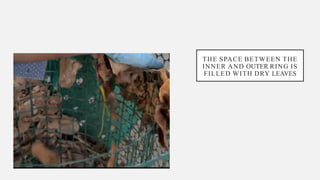
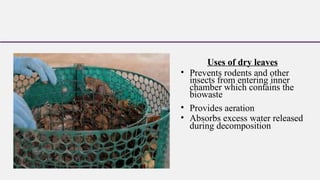
THE SPACE BETWEEN THE
INNER AND OUTER RING IS
FILLED WITH DRY LEAVES
Uses of dry leaves
• Prevents rodents and other
insects from entering inner
chamber which contains the
biowaste
• Provides aeration
• Absorbs excess water released
during decomposition
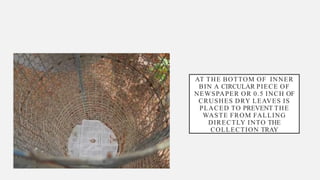
AT THE BOTTOM OF INNER
BIN A CIRCULAR PIECE OF
NEWSPAPER OR 0.5 INCH OF
CRUSHES DRY LEAVES IS
PLACED TO PREVENT THE
WASTE FROM FALLING
DIRECTLY INTO THE
COLLECTION TRAY
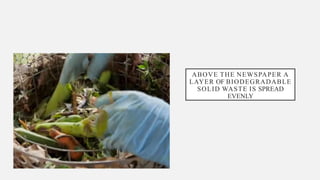
ABOVE THE NEWSPAPER A
LAYER OF BIODEGRADABLE
SOLID WASTE IS SPREAD
EVENLY
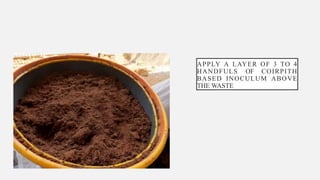
APPLY A LAYER OF 3 TO 4
HANDFULS OF COIRPITH
BASED INOCULUM ABOVE
THE WASTE
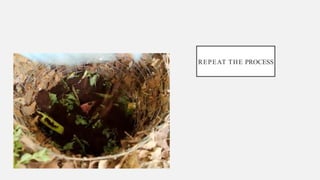
REPEAT THE PROCESS
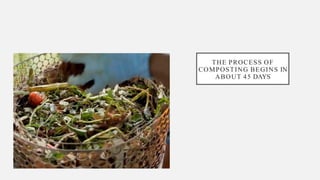
THE PROCESS OF
COMPOSTING BEGINS IN
ABOUT 45 DAYS
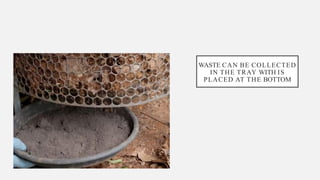
WASTE CAN BE COLLECTED
IN THE TRAY WITH IS
PLACED AT THE BOTTOM
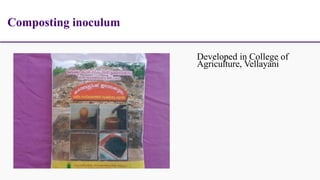
Developed in College of
Agriculture, Vellayani
Composting inoculum
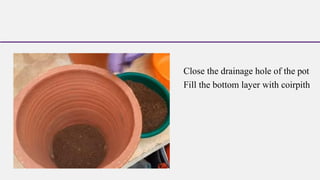
Close the drainage hole of the pot
Fill the bottom layer with coirpith
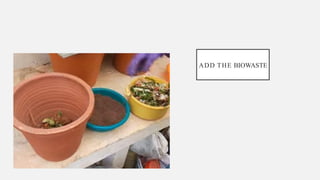
ADD THE BIOWASTE
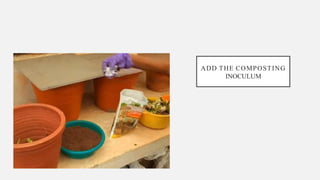
ADD THE COMPOSTING
INOCULUM
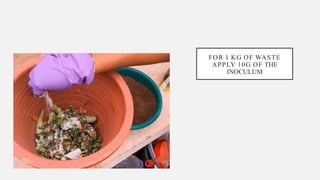
FOR 1 KG OF WASTE
APPLY 10G OF THE
INOCULUM
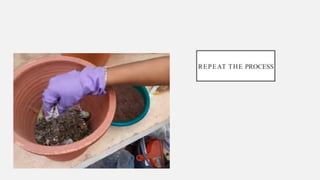
REPEAT THE PROCESS
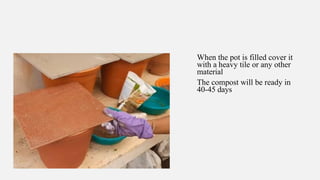
When the pot is filled cover it
with a heavy tile or any other
material
The compost will be ready in
40-45 days
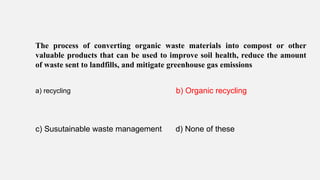
The process of converting organic waste materials into compost or other
valuable products that can be used to improve soil health, reduce the amount
of waste sent to landfills, and mitigate greenhouse gas emissions
a) recycling b) Organic recycling
c) Susutainable waste management d) None of these
The process of converting organic waste materials into compost or other
valuable products that can be used to improve soil health, reduce the amount
of waste sent to landfills, and mitigate greenhouse gas emissions
a) recycling b) Organic recycling
c) Susutainable waste management d) None of these
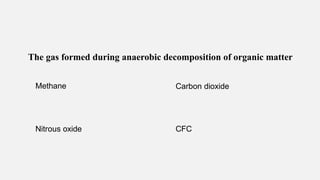
The gas formed during anaerobic decomposition of organic matter
Methane Carbon dioxide
Nitrous oxide CFC
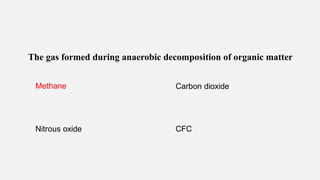
The gas formed during anaerobic decomposition of organic matter
Methane Carbon dioxide
Nitrous oxide CFC
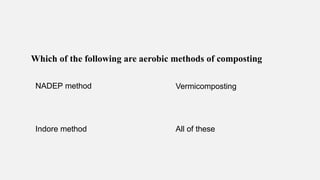
Which of the following are aerobic methods of composting
NADEP method Vermicomposting
Indore method All of these
Which of the following are aerobic methods of composting
NADEP method Vermicomposting
Indore method All of these
The most common earthworm species used for composting
in kerala
a) Eudrillus euginea b) Perionix excavatus
c) Both d) None
The most common earthworm species used for composting
in kerala
a) Eudrillus euginea b) Perionix excavatus
c) Both d) None
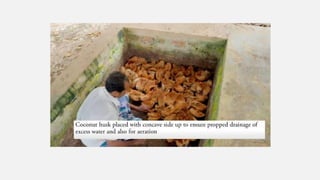
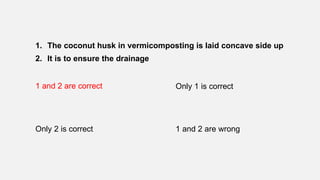
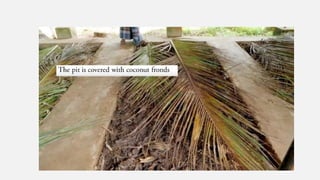
1. The coconut husk in vermicomposting is laid concave side up
2. It is to ensure the drainage
1 and 2 are correct Only 1 is correct
Only 2 is correct 1 and 2 are wrong
1. The coconut husk in vermicomposting is laid concave side up
2. It is to ensure the drainage
1 and 2 are correct Only 1 is correct
Only 2 is correct 1 and 2 are wrong
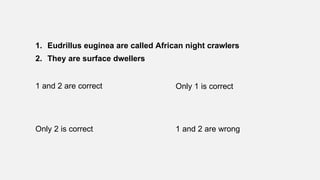
1. Eudrillus euginea are called African night crawlers
2. They are surface dwellers
1 and 2 are correct Only 1 is correct
Only 2 is correct 1 and 2 are wrong
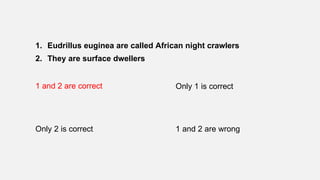
1. Eudrillus euginea are called African night crawlers
2. They are surface dwellers
1 and 2 are correct Only 1 is correct
Only 2 is correct 1 and 2 are wrong
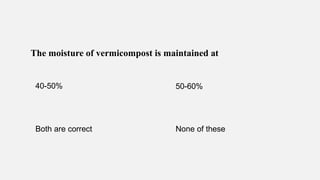
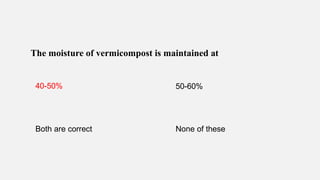
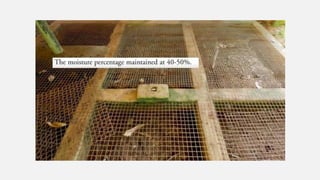
The moisture of vermicompost is maintained at
40-50% 50-60%
Both are correct None of these
The moisture of vermicompost is maintained at
40-50% 50-60%
Both are correct None of these
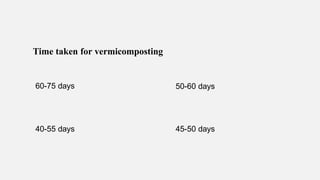
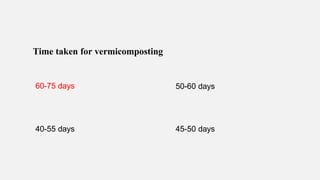
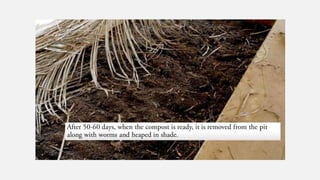
Time taken for vermicomposting
60-75 days 50-60 days
40-55 days 45-50 days
Time taken for vermicomposting
60-75 days 50-60 days
40-55 days 45-50 days
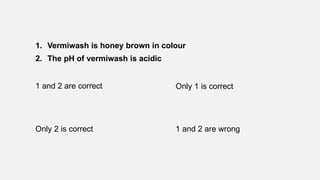
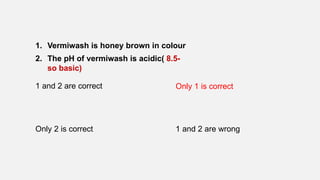
1. Vermiwash is honey brown in colour
2. The pH of vermiwash is acidic
1 and 2 are correct Only 1 is correct
Only 2 is correct 1 and 2 are wrong
1. Vermiwash is honey brown in colour
2. The pH of vermiwash is acidic( 8.5-
so basic)
1 and 2 are correct Only 1 is correct
Only 2 is correct 1 and 2 are wrong
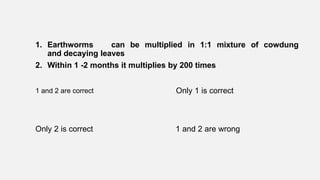
1. Earthworms can be multiplied in 1:1 mixture of cowdung
and decaying leaves
2. Within 1 -2 months it multiplies by 200 times
1 and 2 are correct Only 1 is correct
Only 2 is correct 1 and 2 are wrong
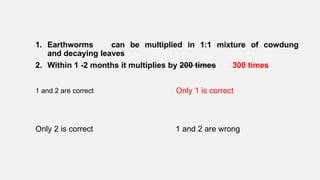
1. Earthworms can be multiplied in 1:1 mixture of cowdung
and decaying leaves
2. Within 1 -2 months it multiplies by 200 times 300 times
1 and 2 are correct Only 1 is correct
Only 2 is correct 1 and 2 are wrong
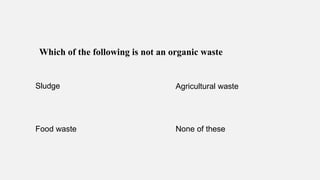
Which of the following is not an organic waste
Sludge Agricultural waste
Food waste None of these
Which of the following is not an organic waste
Sludge Agricultural waste
Food waste None of these
The NPK content of vermiwash
a) 200:70:1000 ppm b) 20:70: 100 ppm
c) 200:70: 100 ppm d) 200:700:1000 ppm
The NPK content of vermiwash
a) 200:70:1000 ppm b) 20:70: 100 ppm
c) 200:70: 100 ppm d) 200:700:1000 ppm
Coirpith has wide C:N ratio as it is rich in
a) Cellulose b) Lignin
c) Sclerotin d) Chytin
Coirpith has wide C:N ratio as it is rich in
a) Cellulose b) Lignin
c) Sclerotin d) Chytin
The change in C:N ratio after coirpith composting
a) 112:1 to 24:1 b) 100:1 to 25:1
c) 113:1 to 20:1 d) None of these
The change in C:N ratio after coirpith composting
a) 112:1 to 24:1 b) 100:1 to 25:1
c) 113:1 to 20:1 d) None of these
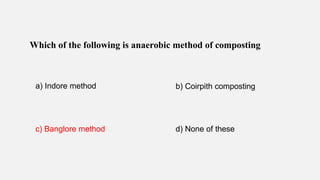
Which of the following is anaerobic method of composting
a) Indore method b) Coirpith composting
c) Banglore method d) None of these
Which of the following is anaerobic method of composting
a) Indore method b) Coirpith composting
c) Banglore method d) None of these
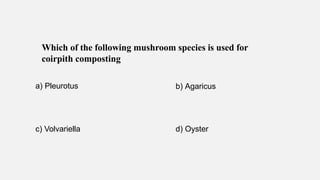
Which of the following mushroom species is used for
coirpith composting
a) Pleurotus b) Agaricus
c) Volvariella d) Oyster
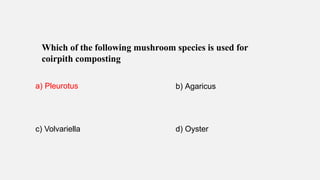
Which of the following mushroom species is used for
coirpith composting
a) Pleurotus b) Agaricus
c) Volvariella d) Oyster
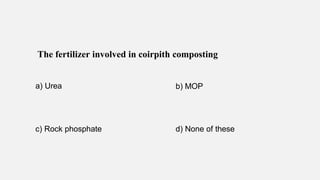
The fertilizer involved in coirpith composting
a) Urea b) MOP
c) Rock phosphate d) None of these
The fertilizer involved in coirpith composting
a) Urea b) MOP
c) Rock phosphate d) None of these
What are the advantages of vermicompost
a) When added to clay soil, loosens the soil and provides the
passage for the entry of air.
b) The mucus associated with it being hygroscopic, absorbs water
and prevents water logging and improves water holding capacity.
c) In the vermicompost, some of the secretions of worms and the
associated microbes act as growth promoter along with other
nutrients.
d) All of these
What are the advantages of vermicompost
a) When added to clay soil, loosens the soil and provides the
passage for the entry of air.
b) The mucus associated with it being hygroscopic, absorbs water
and prevents water logging and improves water holding capacity.
c) In the vermicompost, some of the secretions of worms and the
associated microbes act as growth promoter along with other
nutrients.
d) All of these
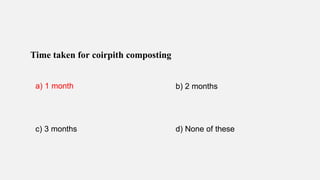
Time taken for coirpith composting
a) 1 month b) 2 months
c) 3 months d) None of these
Time taken for coirpith composting
a) 1 month b) 2 months
c) 3 months d) None of these
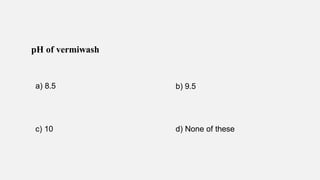
pH of vermiwash
a) 8.5 b) 9.5
c) 10 d) None of these
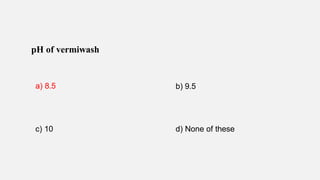
a) 8.5 b) 9.5
c) 10 d) None of these
pH of vermiwash
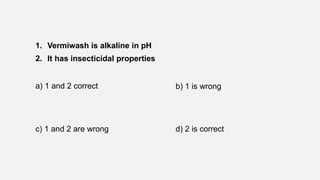
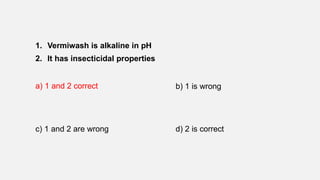
1. Vermiwash is alkaline in pH
2. It has insecticidal properties
a) 1 and 2 correct b) 1 is wrong
c) 1 and 2 are wrong d) 2 is correct
1. Vermiwash is alkaline in pH
2. It has insecticidal properties
a) 1 and 2 correct b) 1 is wrong
c) 1 and 2 are wrong d) 2 is correct
THANKYOU

ORG RECYCLING COMPOSTING, Vermicomposting.pptx

  • 1.
    Organic waste isany material that is biodegradable and comes from either a plant or an animal. Biodegradable waste is organic material that can be broken into carbon dioxide, methane or simple organic molecules. ORGANIC WASTE
  • 2.
    Food waste Agriculturalwaste Sludge Seafood processing waste Animal waste Brewery waste Textile mill waste
  • 3.
    8-10% of CH4 emissionsare from organic waste dumped in landfills
  • 5.
    Organic recycling isthe process of converting organic waste materials into compost or other valuable products that can be used to improve soil health, reduce the amount of waste sent to landfills, and mitigate greenhouse gas emissions. ORGANIC RECYCLING
  • 6.
    Gas energy Liquid energy Organicacids Biodegradable plastics Protein products Bioflocculants Compost VALUABLE PRODUCTS
  • 7.
    • Composting andrecycling organic waste means that there is less waste being sent to landfills, which can help to conserve valuable landfill space and reduce the environmental impacts associated with waste disposal. • Landfills are a major source of methane emissions, which contribute to climate change and can also create safety hazards, such as the risk of explosions or fires. • By diverting organic waste from landfills and converting it into compost or other products, organic recycling can help to reduce the amount of methane produced by landfills and mitigate their environmental impacts. REDUCE THE AMOUNT OF WASTE SENT TO LANDFILLS
  • 8.
    Compost is anutrient-rich soil amendment that is made by combining organic waste materials with other ingredients, such as leaves, straw, or sawdust, and allowing the mixture to decompose over time. Compost can be used to improve the structure and water-holding capacity of the soil, increase nutrient availability, and support healthy plant growth. In addition, composting can help to reduce the need for chemical fertilizers and pesticides, which can have negative impacts on soil health and the environment. CREATING VALUABLE COMPOST THAT CAN BE USED TO IMPROVE SOIL HEALTH AND FERTILITY
  • 9.
    Another benefit oforganic recycling is its ability to create jobs and support local economies. Organic recycling facilities require skilled workers to operate and maintain the equipment used to process organic waste materials. In addition, the products produced by organic recycling facilities, such as compost and other soil amendments, can be sold to farmers, landscapers, and other customers, providing a source of income for local businesses and supporting the development of a circular economy. SUPPORTING LOCAL WORKERS
  • 10.
    Organic recycling canalso help to reduce the costs associated with waste management. Landfill disposal is often expensive, as it requires significant infrastructure and ongoing maintenance. By diverting organic waste from landfills and processing it through composting or other organic recycling methods, municipalities and waste management companies can reduce their costs and potentially generate revenue through the sale of compost or other products. REDUCING COSTS
  • 11.
    In addition tothese benefits, organic recycling can also contribute to broader sustainability goals, such as reducing carbon emissions and promoting resource efficiency. By transitioning to a more circular economy that values the reuse and recycling of materials, we can reduce our reliance on finite resources and create a more sustainable future for generations to come. ENVIRONMENT FRIENDLY APPROACH
  • 12.
    Composting is aprocess by which organic wastes are converted into organic fertilizers by means of biological activity under controlled conditions. COMPOSTING
  • 13.
    COMPOSTING • It isan important technique for recycling organic (agricultural and industrial) wastes • Improve quality and quantity of organic fertilizers. • Composting is a self heating, thermophilic and aerobic biological process occurs naturally in heaps of biodegradable wastes • Different heterophyllic microorganisms, bacteria, fungi, actinomyctes and protozoa, which derive their energy and carbon requirements from the decomposition of carbonaceous materials are involved in composting • Narrowing down of C: N ratio to a satisfactory level (10:1 to 12:1) • Total destruction of harmful pathogens
  • 14.
    • Livestock andhuman wastes • Crop residues, tree litter and weeds • Green manure • Urban and rural wastes • Agro industrial by- products • Marine wastes ORGANIC SUBSTRATES FOR COMPOSTING
  • 15.
    ESSENTIAL REQUIREMENTS OFCOMPOSTING Bulky organic refuse: stubbles, cotton stalks, ground nut shell, weeds, leaves, dust bin refuse etc. Starter material: Cattle dung, urine, night soil, sewage, urea, rockphosphate or any other readily available nitrogenous substance and microbial cultures. Water: to keep the moisture content of the material at a level of 50%. Air: especially in initial stages of decomposition.
  • 17.
    DIFFERENT METHODS OFAEROBIC COMPOSTING Indore Composting NADEP method of composting Vermicomposting
  • 18.
    NADEP METHOD • NADEPmethod of making compost was invented by a farmer Narayan Deotao Pandharipande(also popularly known as “Nadep kaka”)living in Maharashtra. • This method become quite popular among the farmers in Western India. • NADEP method uses a permanently built tank of mud or clay, bricks or cement. (Composting structure : All the four walls of NADEP tank are provided with vents by removing every alternate brick after the height of 1ft. from bottom for aeration. Walls built like honeycombs through which water is sprayed)
  • 19.
    STEPS FOR NADEPMETHOD OF COMPOSTING. 1.Selection of site- The tank should be located near the cattle shed or farm site. 2. Size of pit- The tank should be 12ft (length) X 5ft (breadth) X 3ft (height) keeping proper spacing for aeration.(proper holes of 6 or 7 inches are left on all the four sides of the tank wall) 3.Materials required • a)Brick(1000nos). • b)Organic waste/biomass(2000kg). • c)Cow dung/biogas slurry(200-500kg). • d) Soil of fertile land(700-800kg). • e)Cow urine(40-50lt). • f)Water(as per needed).
  • 20.
    4.METHOD OF PREPARATION •Make rectangular brick structure of specific size (12’X5’X3’) keeping proper spacing for aeration(some bricks should be removed from each sides for aeration). • Plaster walls on all sides with mud and cow dung. • 1st layer should be of dry biomass (upto 6”)containing weeds and other crop residues. • Make slurry of 10-15kg cow dung with water and 5 litre cow urine. • As 2nd layer apply the cow dung slurry. 3rd layer spread fertile soil above it and moisten with water. Repeat the process till the heap attains a height of 4-5 feet. Plaster the heap on the top with soil and cowdung slightly in dome shaped manner. • Within 7-15 days,all the materials in the pit get decomposed and the heap attains a height upto 1-1.5 feet below the top of the surface.
  • 21.
    • Then againfill the pit by same process and raise height of the heap to the original and plaster from the top with cowdung and soil. Inorder to maintain 15 to 20% moisture, the compost is sprinkled with cow dung and water. This helps in conservation of nutrients • After this, the tank is not disturbed for 3 months except that is moistened at intervals of every 6-15 days. • The entire tank is covered with a thatched roof to prevent excessive evaporation of moisture. • Under no circumstances should any cracks be allowed to develop. If they do should be promptly filled up with slurry. • Compost get prepared within 100-120 days.
  • 22.
    This method wasdeveloped by A. Howard and Y. D. Wad Materials required: Plant residue Dung Urine soaked earth Wood ash (source of potassium) Water Composting structure: Pit of 2m width, 1m depth and 5m or above length as per requirement INDORE METHOD
  • 23.
    INDORE METHOD Advantages • Capitalexpenditure low • Process is fast • Eco friendly method Disadvantages • Requires labour for turning, • Not practical if large quantity of material is there • Site should be at elevated level, near a cattle shed and water source.
  • 24.
  • 25.
  • 26.
  • 44.
  • 45.
  • 46.
  • 47.
    Earthworms can bemultiplied in 1:1 mixture of cowdung and decaying leaves 50 numbers per 10 kg of organic wastes Within 1-2 months it multiplies by 300 times MASS MULTIPLICATION OF EARTHWORMS
  • 48.
    ADVANTAGES AND DISADVANTAGESOF AEROBIC COMPOSTING •Disadvantages • Higher capital cost for aeration equipments. • Higher operating cost(particularly energy for pumps or aerators). • Higher maintenance requirements. Advantages • Large reduction of valuable waste. • Improves soil’s ability to sequester carbon. • Reduce pesticide usage and synthetic fertilizer dependencies.
  • 49.
  • 50.
    A WOODEN BOXOF 45 CM X 30 CM X 45 CM OR AN EARTHEN/PLASTIC CONTAINER WITH BROAD BASE AND DRAINAGE HOLES MAY BE SELECTED.
  • 51.
    A PLASTIC SHEETWITH SMALL HOLES MAY BE PLACED AT THE BOTTOM OF THE BOX / CONTAINER
  • 52.
    A LAYER OFSOIL OF 3 CM DEPTH AND A LAYER OF COCONUT FIBRE OF 5 CM DEPTH MAY BE ADDED ABOVE IT FOR DRAINING OF EXCESS MOISTURE.
  • 53.
    A THIN LAYEROF COMPOST AND WORMS MAY BE ADDED ABOVE IT. ABOUT 250 WORMS ARE SUFFICIENT FOR THE BOX.
  • 54.
    VEGETABLE WASTES OFEACH DAY CAN BE SPREAD IN LAYER OVER THE COCONUT HUSK FIBRE
  • 55.
    TOP OF THEBOX MAY BE COVERED WITH A PIECE OF SAC TO PROVIDE DIM LIGHT INSIDE THE BOX.
  • 56.
    WHEN THE BOXIS FULL, IT CAN BE KEPT WITHOUT DISTURBANCE FOR A WEEK.
  • 57.
    WHEN THE COMPOSTIS READY, THE BOX CAN BE KEPT OUTSIDE FOR 2-3 HOURS SO THAT THE WORMS COME DOWN TO THE LOWER FIBRE LAYER. COMPOST FROM THE TOP, MAY BE REMOVED, DRIED AND SIEVED.
  • 58.
    THE VERMICOMPOST PRODUCEDHAS AN AVERAGE NUTRIENT STATUS OF 1.8 PER CENT N, 1.9 PER CENT P2O5 AND 1.6 PER CENT K2O, BUT COMPOSITION WILL VARY WITH THE SUBSTRATE USED.
  • 59.
    • It isan extract of compost containing worms. • Vermiwash is honey- brown in colour • pH - 8.5 • N, P2O5 and K2O content 200, 70 and 1000 ppm • Nutient content is greater VERMIWASH
  • 60.
    • The vermiwash, either alone or in combination with botanical pesticides can be used for pest management in kitchen gardens • When vermicompost is applied as organic manure instead of FYM, the quantity of in-organic fertilizers can be reduced to about half the recommended dose. RECOMMENDATION FOR CROPS
  • 61.
    The system consistsof a plastic basin having a capacity of 20 litres, a plastic perforated wastepaper basket and a PVC pipe of 5 cm diameter and 30 cm length. METHOD 1
  • 62.
    • The wastepaper basket is covered with a nylon net and placed at the centre of the basin upside down. A hole is made at the bottom of the waste paper basket so that a PVC pipe of 5 cm diameter can be placed into the basin through the hole in such a way that one end of it touches the basin.
  • 63.
    • The PVCpipe is perforated so that the leachate from the basin seeps through the wastepaper basket and collects in the PVC pipe, which can be siphoned out by a kerosene pump.
  • 64.
    The basin outsidethe wastepaper basket, is lined with a layer of brick pieces at the bottom and a 2-3 cm thick layer of coconut fibre of 2-3 cm placed above it.
  • 65.
    AFTER MOISTENING THIS,2 KG WORMS (ABOUT 2000) ARE INTRODUCED INTO IT AND 4 KG KITCHEN WASTE IS SPREAD OVER IT
  • 66.
    AFTER ONE WEEK, THEKITCHEN WASTE TURNS INTO A BLACK WELL DECOMPOSED COMPOST.
  • 67.
    After one week,the kitchen waste turns into a black well decomposed compost. Two litres of water is sprinkled over the compost containing worms.
  • 68.
    AFTER 24 HOURS, THELEACHATE COLLECTED IN THE PVC PIPE IS REMOVED BY SIPHONING
  • 69.
    FOR LARGE SCALE COLLECTIONOF VERMIWASH, A CEMENT TANK OF SIZE 80 CM X 80 CM X 80 CM WITH A SIDE TAP IS CONSTRUCTED.
  • 70.
    A LAYER OFSMALL BRICK PIECES OR GRAVEL IS PLACED AT THE BOTTOM OF THE TANK. ABOVE IT A LAYER OF FIBRE OF 3-4 CM THICKNESS IN PLACED.
  • 71.
    A definite quantityof biowaste (4 kg) is added to the system along with 2 kg of earthworms. After two weeks, the entire mass of biowaste will turn to brownish black compost.
  • 72.
    It is sprinkledwith 2 litres of water. Vermiwash is collected through the side tap after 24 hours. Biowaste can again be added to the system and the process repeated.
  • 73.
    METHOD 2 • Thisis a simple and economical technique to collect vermiwash. The system consists of an earthen pot of 10 kg capacity with a hole at the bottom, which is filled with pieces of stone up to a height of 10 cm from the bottom.
  • 74.
    • A plasticnet is spread over this. Then a thick layer of coir fibre along with humus containing 1500- 2000 worms of Eudrillus euginae or Isenia foetidae is added to the pot
  • 75.
    • The holesituated at the bottom of the pot is fixed with a water tap through which vermiwash is collected. • The kitchen waste of each day is added to the container. • The composting process is allowed to continue for a week or more till brownish black mass of compost is obtained. • Occasionally, two or three tablespoons of fresh cowdung slurry is poured on the humus as feed for the worms. • After the formation of compost, the entire mass is soaked with two litres of water. • After 24 hours, about 1.5 litre of vermiwash can be collected.
  • 76.
    • This processcan be continued for one or two weeks till the brown colour of wash disappears. • The less enriched compost that remains in the pot can be collected and used as fertilizer. • Later, the pot can be emptied and set up again to continue the process.
  • 77.
    BENEFITS OF VERMICOMPOST •When added to clay soil, loosens the soil and provides the passage for the entry of air. • The mucus associated with it being hygroscopic, absorbs water and prevents water logging and improves water holding capacity. • In the vermicompost, some of the secretions of worms and the associated microbes act as growth promoter along with other nutrients. • It improves physical, chemical and biological properties of soil in the long run on repeated application • The organic carbon in vermicompost releases the nutrients slowly and steadily into the system and enables the plant to absorb these nutrients. • The multifarious effects of vermicompost influence the growth and yield of crops. • Earthworm can minimize the pollution hazards caused by organic waste by enhancing waste degradation.
  • 78.
  • 79.
    • Coirpith, isproduced in large quantities as waste material of the coir industry. Every year, approximately 2.5 lakh tonnes of coirpith accumulate in Kerala as waste.
  • 80.
    COIRPITH HAS WIDE C:NRATIO AND ITS LIGNIN RICH NATURE DOES NOT PERMIT NATURAL COMPOSTING PROCESS AS IN OTHER AGRICULTURAL WASTES
  • 81.
    Mushrooms belonging tothe genus Pleurotus have the capacity to degrade part of the cellulose and lignin present in coirpith by production of enzymes such as, cellulases and lactases, bringing down the C:N ratio as well as lignin content
  • 82.
    MATERIALS REQUIRED: • Coirpith1 tonne • Urea 5 kg • Mushroom (Pleurotus) spawn 1.5 kg.
  • 83.
    A SHADED PLACEOF 5 M X 3 M DIMENSION MAY BE SELECTED AND LEVELLED AFTER REMOVING WEEDS.
  • 84.
    100 KG COIRPITH MAYBE SPREAD UNIFORMLY.
  • 85.
    SPREAD 300 G(ONE BOTTLE OR COVER) OF PLEUROTUS SPAWN ON THIS AND COVER WITH A SECOND LAYER OF 100 KG COIRPITH.
  • 86.
    ON THE SURFACEOF THE SECOND LAYER, SPREAD 1 KG UREA UNIFORMLY.
  • 87.
    Repeat this sandwiching processof one layer of coirpith with spawn followed by another layer of coirpith with urea up to 1 m height.
  • 88.
    SPRINKLE WATER IF NECESSARYTO KEEP THE HEAP MOIST. ALLOW THE HEAP TO DECOMPOSE FOR ONE MONTH
  • 89.
    The coirpith isconverted into good manure after 30- 40 days and the lignin content is reduced from 30 per cent to 40 per cent. Another significant change is the lowering down of C: N ratio from 112:1 to 24:1.
  • 90.
    • This coirpithcompost contains macro nutrients as well as micronutrients. It has the unique property of absorbing and retaining moisture to about 500-600 per cent. It improves the water infiltration rate and hydraulic conductivity of soil.
  • 91.
  • 92.
    • In thisdecomposition occurs in the absence of oxygen or under the limited supply of oxygen, Anaerobic microorganisms dominate. • They produce the intermediate compounds like methane, organic acids, hydrogen sulphide and other substances. • It is a low temperature process.
  • 93.
    ANAEROBIC MICROBIOLOGY • Theanaerobic microbiology mainly involves three group of microorganisms. • They are • Methanobacterium • Methanococcus • Methanospirillum
  • 94.
    BANGLORE METHOD • Thismethod of composting was developed at Bangalore by Acharya in 1939. • This method is suitable in areas with scanty rainfall. • Time involved in production of finished compost is much longer. • The composting is done in trenches and the material is not turned.
  • 95.
    • Trenches orpits of 1m depth, convenient length and breadth are dug. • Organic residues and dung and urine soaked mud are put in alternate layers. • These layers are repeated in order at least 1.5-2m above ground level. • It is left exposed without covering for 15days. • Then it is plastered with earth or mud of 1cm thick, • It takes about 6-8 months to get finished product. • It is the bulkiest compost.
  • 96.
    BANGLORE METHOD MERITS • Turningnot required • Simple and easy to manipulate. • Efficient use of moisture • High manure recovery • Pathogen and weed free manure DEMERITS • Long duration • Low nutrient recovery
  • 97.
    ENRICHMENT OF COMPOSTWITH MICROBIAL INOCULANTS. • Compost prepared by traditional method is usually low in nutrients and there is need to improved its quality. • Enrichment of compost using low cost nitrogen fixing and phosphate solubilizing microbes is one of the possible way of improving nutrient status of the soil. • It could be achieved by introducing microbial inoculants, which are more efficient than the native strains associated with substrate materials. • Both the nitrogen fixing and phosphate solubilizing microbes are more exacting in their physiological and ecological requirements. The only alternative is to enhance their inoculum potential in the composting mass.
  • 98.
  • 99.
    MICROBIAL CONSORTIUM Liquid formulation Thumuburmuzhi Composting Coirpith based formulation Kau smartbiobin Bacillus subtilis BaBc-1 Trichoderma asperellum (KAU isolate) Bacillus sp. BaOu-1
  • 100.
    • Recommended forlarge scale composting • Done in ferro-cement tanks THUMUBURMUZHI COMPOSTING
  • 101.
    • The panelsplaced with a gap of 4 cm • The tanks are placed in a well ventilated space with protection from rain
  • 102.
    DEPOSIT DRY LEAVESAT A THICKNESS OF 6 INCHES AT THE BOTTOM OF THE TANK
  • 103.
    DILUTE THE COMPOSTING TONICBY ADDING 4 TIMES THE VOLUME OF WATER
  • 104.
    50 ML COMPOSTING TONICIN 200 ML WATER
  • 105.
    SPRAY THIS ONDRY LEAVES
  • 106.
    ABOVE THIS 6INCH THICKNESS OF BIO SOLID WASTE CAN BE PLACED WHICH CAN INCLUDE FOOD WASTE, MARKET WASTE ETC
  • 107.
    • Waste shouldbe placed in the middle of the tank inorder to prevent spilling and exposure • It can also prevent the entry of flies into the compost • Liquid waste should not used and the optimum moisture for composting is 40-50 percent
  • 108.
    ABOVE THIS ANOTHER6 INCH THICK LAYER OF DRY LEAVES ARE PLACED
  • 109.
    APPLY ANOTHER 250ML OF COMPOSTING INOCULUM
  • 110.
    • The processis repeated until the tank is filled • The waste is converted into compost after 90 days
  • 111.
    THE DECOMPOSED PRODUCT ISTAKEN OUT SIEVED AND CAN BE DIRECTLY USED AS COMPOST
  • 112.
    THE QUALITY OFTHE COMPOST OBTAINED SHOULD BE TESTED FOR NUTRIENT STATUS, HEAVY METALS AND PATHOGENS
  • 113.
    It is compostingunit for aerobic composting of food waste, kitchen waste and fruits and vegetables waste produced by households on daily basis KAU SMART BIOBIN
  • 114.
    THE BIOBIN CONSISTOF TWO CONSECUTIVE RINGS AND A BOTTOM TRAY FOR COLLECTION OF COMPOST
  • 115.
    THE OUTER RINGIS MADE OF STAINLESS STEEL (COIN MESH) AND THE INNER RING IS MADE OF GI MESH
  • 116.
    THE SPACE BETWEENTHE INNER AND OUTER RING IS FILLED WITH DRY LEAVES
  • 117.
    Uses of dryleaves • Prevents rodents and other insects from entering inner chamber which contains the biowaste • Provides aeration • Absorbs excess water released during decomposition
  • 118.
    AT THE BOTTOMOF INNER BIN A CIRCULAR PIECE OF NEWSPAPER OR 0.5 INCH OF CRUSHES DRY LEAVES IS PLACED TO PREVENT THE WASTE FROM FALLING DIRECTLY INTO THE COLLECTION TRAY
  • 119.
    ABOVE THE NEWSPAPERA LAYER OF BIODEGRADABLE SOLID WASTE IS SPREAD EVENLY
  • 120.
    APPLY A LAYEROF 3 TO 4 HANDFULS OF COIRPITH BASED INOCULUM ABOVE THE WASTE
  • 121.
  • 122.
    THE PROCESS OF COMPOSTINGBEGINS IN ABOUT 45 DAYS
  • 123.
    WASTE CAN BECOLLECTED IN THE TRAY WITH IS PLACED AT THE BOTTOM
  • 125.
    Developed in Collegeof Agriculture, Vellayani Composting inoculum
  • 126.
    Close the drainagehole of the pot Fill the bottom layer with coirpith
  • 127.
  • 128.
  • 129.
    FOR 1 KGOF WASTE APPLY 10G OF THE INOCULUM
  • 130.
  • 131.
    When the potis filled cover it with a heavy tile or any other material The compost will be ready in 40-45 days
  • 132.
    The process ofconverting organic waste materials into compost or other valuable products that can be used to improve soil health, reduce the amount of waste sent to landfills, and mitigate greenhouse gas emissions a) recycling b) Organic recycling c) Susutainable waste management d) None of these
  • 133.
    The process ofconverting organic waste materials into compost or other valuable products that can be used to improve soil health, reduce the amount of waste sent to landfills, and mitigate greenhouse gas emissions a) recycling b) Organic recycling c) Susutainable waste management d) None of these
  • 134.
    The gas formedduring anaerobic decomposition of organic matter Methane Carbon dioxide Nitrous oxide CFC
  • 135.
    The gas formedduring anaerobic decomposition of organic matter Methane Carbon dioxide Nitrous oxide CFC
  • 136.
    Which of thefollowing are aerobic methods of composting NADEP method Vermicomposting Indore method All of these
  • 137.
    Which of thefollowing are aerobic methods of composting NADEP method Vermicomposting Indore method All of these
  • 138.
    The most commonearthworm species used for composting in kerala a) Eudrillus euginea b) Perionix excavatus c) Both d) None
  • 139.
    The most commonearthworm species used for composting in kerala a) Eudrillus euginea b) Perionix excavatus c) Both d) None
  • 140.
    1. The coconuthusk in vermicomposting is laid concave side up 2. It is to ensure the drainage 1 and 2 are correct Only 1 is correct Only 2 is correct 1 and 2 are wrong
  • 141.
    1. The coconuthusk in vermicomposting is laid concave side up 2. It is to ensure the drainage 1 and 2 are correct Only 1 is correct Only 2 is correct 1 and 2 are wrong
  • 142.
    1. Eudrillus eugineaare called African night crawlers 2. They are surface dwellers 1 and 2 are correct Only 1 is correct Only 2 is correct 1 and 2 are wrong
  • 143.
    1. Eudrillus eugineaare called African night crawlers 2. They are surface dwellers 1 and 2 are correct Only 1 is correct Only 2 is correct 1 and 2 are wrong
  • 144.
    The moisture ofvermicompost is maintained at 40-50% 50-60% Both are correct None of these
  • 145.
    The moisture ofvermicompost is maintained at 40-50% 50-60% Both are correct None of these
  • 146.
    Time taken forvermicomposting 60-75 days 50-60 days 40-55 days 45-50 days
  • 147.
    Time taken forvermicomposting 60-75 days 50-60 days 40-55 days 45-50 days
  • 148.
    1. Vermiwash ishoney brown in colour 2. The pH of vermiwash is acidic 1 and 2 are correct Only 1 is correct Only 2 is correct 1 and 2 are wrong
  • 149.
    1. Vermiwash ishoney brown in colour 2. The pH of vermiwash is acidic( 8.5- so basic) 1 and 2 are correct Only 1 is correct Only 2 is correct 1 and 2 are wrong
  • 150.
    1. Earthworms canbe multiplied in 1:1 mixture of cowdung and decaying leaves 2. Within 1 -2 months it multiplies by 200 times 1 and 2 are correct Only 1 is correct Only 2 is correct 1 and 2 are wrong
  • 151.
    1. Earthworms canbe multiplied in 1:1 mixture of cowdung and decaying leaves 2. Within 1 -2 months it multiplies by 200 times 300 times 1 and 2 are correct Only 1 is correct Only 2 is correct 1 and 2 are wrong
  • 152.
    Which of thefollowing is not an organic waste Sludge Agricultural waste Food waste None of these
  • 153.
    Which of thefollowing is not an organic waste Sludge Agricultural waste Food waste None of these
  • 154.
    The NPK contentof vermiwash a) 200:70:1000 ppm b) 20:70: 100 ppm c) 200:70: 100 ppm d) 200:700:1000 ppm
  • 155.
    The NPK contentof vermiwash a) 200:70:1000 ppm b) 20:70: 100 ppm c) 200:70: 100 ppm d) 200:700:1000 ppm
  • 156.
    Coirpith has wideC:N ratio as it is rich in a) Cellulose b) Lignin c) Sclerotin d) Chytin
  • 157.
    Coirpith has wideC:N ratio as it is rich in a) Cellulose b) Lignin c) Sclerotin d) Chytin
  • 158.
    The change inC:N ratio after coirpith composting a) 112:1 to 24:1 b) 100:1 to 25:1 c) 113:1 to 20:1 d) None of these
  • 159.
    The change inC:N ratio after coirpith composting a) 112:1 to 24:1 b) 100:1 to 25:1 c) 113:1 to 20:1 d) None of these
  • 160.
    Which of thefollowing is anaerobic method of composting a) Indore method b) Coirpith composting c) Banglore method d) None of these
  • 161.
    Which of thefollowing is anaerobic method of composting a) Indore method b) Coirpith composting c) Banglore method d) None of these
  • 162.
    Which of thefollowing mushroom species is used for coirpith composting a) Pleurotus b) Agaricus c) Volvariella d) Oyster
  • 163.
    Which of thefollowing mushroom species is used for coirpith composting a) Pleurotus b) Agaricus c) Volvariella d) Oyster
  • 164.
    The fertilizer involvedin coirpith composting a) Urea b) MOP c) Rock phosphate d) None of these
  • 165.
    The fertilizer involvedin coirpith composting a) Urea b) MOP c) Rock phosphate d) None of these
  • 166.
    What are theadvantages of vermicompost a) When added to clay soil, loosens the soil and provides the passage for the entry of air. b) The mucus associated with it being hygroscopic, absorbs water and prevents water logging and improves water holding capacity. c) In the vermicompost, some of the secretions of worms and the associated microbes act as growth promoter along with other nutrients. d) All of these
  • 167.
    What are theadvantages of vermicompost a) When added to clay soil, loosens the soil and provides the passage for the entry of air. b) The mucus associated with it being hygroscopic, absorbs water and prevents water logging and improves water holding capacity. c) In the vermicompost, some of the secretions of worms and the associated microbes act as growth promoter along with other nutrients. d) All of these
  • 168.
    Time taken forcoirpith composting a) 1 month b) 2 months c) 3 months d) None of these
  • 169.
    Time taken forcoirpith composting a) 1 month b) 2 months c) 3 months d) None of these
  • 170.
    pH of vermiwash a)8.5 b) 9.5 c) 10 d) None of these
  • 171.
    a) 8.5 b)9.5 c) 10 d) None of these pH of vermiwash
  • 172.
    1. Vermiwash isalkaline in pH 2. It has insecticidal properties a) 1 and 2 correct b) 1 is wrong c) 1 and 2 are wrong d) 2 is correct
  • 173.
    1. Vermiwash isalkaline in pH 2. It has insecticidal properties a) 1 and 2 correct b) 1 is wrong c) 1 and 2 are wrong d) 2 is correct
  • 174.