MODULE-3
ORGANIC FARMING &
WASTE MANAGEMENT
 ORGANIC FARMING
• ORGANIC FARMING, ALSO KNOWN AS
ECOLOGICAL FARMING OR BIOLOGICAL
FARMING, IS AN AGRICULTURAL SYSTEM THAT
USES FERTILIZERS OF ORGANIC ORIGIN SUCH AS
COMPOST MANURE, GREEN MANURE, AND BONE
MEAL AND PLACES EMPHASIS ON TECHNIQUES
SUCH AS CROP ROTATION AND COMPANION
PLANTING.
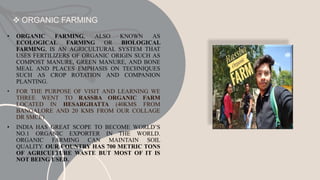
• FOR THE PURPOSE OF VISIT AND LEARNING WE
THREE WENT TO RASSBA ORGANIC FARM
LOCATED IN HESARGHATTA (40KMS FROM
BANGALORE AND 20 KMS FROM OUR COLLAGE
DR SMCE)
• INDIA HAS GREAT SCOPE TO BECOME WORLD’S
NO.1 ORGANIC EXPORTER IN THE WORLD.
ORGANIC FARMING CAN MAINTAIN SOIL
QUALITY. OUR COUNTRY HAS 700 METRIC TONS
OF AGRICULTURE WASTE BUT MOST OF IT IS
NOT BEING USED.
Techniques implemented in the farm were:
Hydroponics
Hydroponics is the technique of growing plants using a water-
based nutrient solution rather than soil, and can include an
aggregate substrate, or growing media, such as vermiculite,
coconut coir, or perlite. Hydroponic production systems are used
by small farmers, hobbyists, and commercial enterprises.
Drip
irrigation
Cocopeat
farming
2022-23 ORGANIC FARMING 3
Drip irrigation or trickle irrigation is a type of micro-
irrigation system that has the potential to save water
and nutrients by allowing water to drip slowly to the
roots of plants, either from above the soil surface or
buried below the surface.
Cocopeat is a multi-purpose growing medium made out of
coconut husk. The fibrous coconut husk is pre washed, machine
dried, sieved and made free from sand and other contaminations
such as animal and plant residue. Cocopeat is a very good
alternative to traditional peatmoss and Rockwool.
 waste management
• Wet waste is all the garbage we generate that is
biodegradable. This includes vegetable peels,
used tea, fruits and leftovers. This is basically
biodegradable organic waste and can also be
composted.
• Waste management starts at the householdlevel,
and is not that difficult to achieve. Even a few
minor changes can go a long way. Firstly, have
two garbage disposal bins at home, one for dry
waste and one for wet waste. Items like
aluminum foils, tetra packs, glass, paper, plastics,
metals, etc. fall under the dry waste category,
whereas kitchen waste such as stale food, fruits
and vegetables come under wet waste.
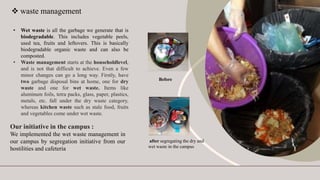
Our initiative in the campus :
We implemented the wet waste management in
our campus by segregation initiative from our
hostilities and cafeteria
Before
after segregating the dry and
wet waste in the campus

chandan ppt m3.pptx

  • 1.
  • 2.
     ORGANIC FARMING •ORGANIC FARMING, ALSO KNOWN AS ECOLOGICAL FARMING OR BIOLOGICAL FARMING, IS AN AGRICULTURAL SYSTEM THAT USES FERTILIZERS OF ORGANIC ORIGIN SUCH AS COMPOST MANURE, GREEN MANURE, AND BONE MEAL AND PLACES EMPHASIS ON TECHNIQUES SUCH AS CROP ROTATION AND COMPANION PLANTING. • FOR THE PURPOSE OF VISIT AND LEARNING WE THREE WENT TO RASSBA ORGANIC FARM LOCATED IN HESARGHATTA (40KMS FROM BANGALORE AND 20 KMS FROM OUR COLLAGE DR SMCE) • INDIA HAS GREAT SCOPE TO BECOME WORLD’S NO.1 ORGANIC EXPORTER IN THE WORLD. ORGANIC FARMING CAN MAINTAIN SOIL QUALITY. OUR COUNTRY HAS 700 METRIC TONS OF AGRICULTURE WASTE BUT MOST OF IT IS NOT BEING USED.
  • 3.
    Techniques implemented inthe farm were: Hydroponics Hydroponics is the technique of growing plants using a water- based nutrient solution rather than soil, and can include an aggregate substrate, or growing media, such as vermiculite, coconut coir, or perlite. Hydroponic production systems are used by small farmers, hobbyists, and commercial enterprises. Drip irrigation Cocopeat farming 2022-23 ORGANIC FARMING 3 Drip irrigation or trickle irrigation is a type of micro- irrigation system that has the potential to save water and nutrients by allowing water to drip slowly to the roots of plants, either from above the soil surface or buried below the surface. Cocopeat is a multi-purpose growing medium made out of coconut husk. The fibrous coconut husk is pre washed, machine dried, sieved and made free from sand and other contaminations such as animal and plant residue. Cocopeat is a very good alternative to traditional peatmoss and Rockwool.
  • 4.
     waste management •Wet waste is all the garbage we generate that is biodegradable. This includes vegetable peels, used tea, fruits and leftovers. This is basically biodegradable organic waste and can also be composted. • Waste management starts at the householdlevel, and is not that difficult to achieve. Even a few minor changes can go a long way. Firstly, have two garbage disposal bins at home, one for dry waste and one for wet waste. Items like aluminum foils, tetra packs, glass, paper, plastics, metals, etc. fall under the dry waste category, whereas kitchen waste such as stale food, fruits and vegetables come under wet waste. Our initiative in the campus : We implemented the wet waste management in our campus by segregation initiative from our hostilities and cafeteria Before after segregating the dry and wet waste in the campus