Performance & compenstaion
Topic:
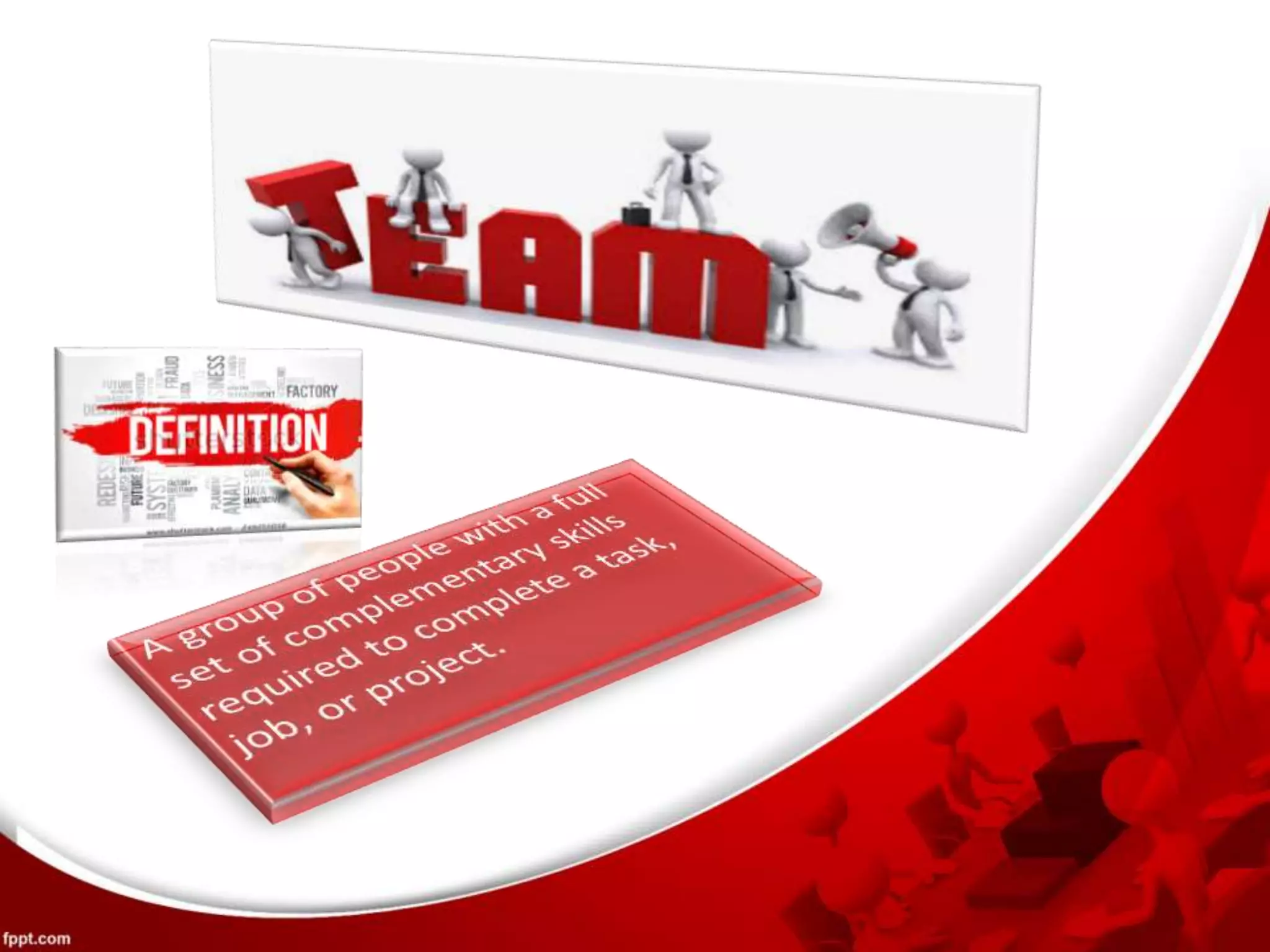
Team
Performance & compenstaion
Topic:
Team
Presented To:
Ma’am Maria Farooq
Presented by:
Aqsa Nawab 2006
Rabia Bashir 2039
Hafiza sajida 2014
Ayesha Billal 2008
Mehreen Fatima 2029
We are great full to Ma’am Maria
for giving us such opportunity
OF
Effective
Team
 Clear definition and purpose
 Compelling goal
 Complete skill set
 Relevant resources
 Available advice
Clear definition and
purpose:
Compelling goal:
 Cleary knows who is a member of the team.
 The team has a common goal .
 Members are mutually accountable & relatively stable.
Goal are:
 Clear.
 Compelling.
 Impactful.
Complete skill set:
Relevant resources:
 The team has the knowledge and skills needed to complete
the task.
 Each member of the team has the authority to decide how
to accomplish the task.
 Organization provides them resources to
complete the task.
Available advice:
 High-level people available to coach and advise the
team, as needed.
Teams are formed when
individuals with a common
taste, preference, liking, and
attitude come and work
together for a common goal.
Size of Team
Depend on the nature of work. There are following factor
that influence on the size of team.
Factors that affect optimum team size include:
 Purpose for which the team is formed.
 Expectations you have from team and its members.
Roles that the team members need to play,
The amount of cohesiveness and interconnectivity
necessary for optimal team performance.
 Function, activities, and goals.
 Work Efficiency
 Improved Employee Relations
 Increased Accountability
 Learning Opportunities
Work Efficiency
Teamwork:
 Enables a accomplish tasks faster and more efficiently .
 Reduces the work pressure
 Sharing ideas or responsibilities
Improved Employee
Relations
Teamwork:
 provide an opportunity to bond with one
another.
 Enhances respect within team.
 Increased trust .
Increased
Accountability
Teamwork increases the accountability of every member of the

team.
 First case:
when working under people who had a lot of respect then team members do not
want to let each other down and do their best to contribute to the successes.
 Second case:
Working on a solo project, pressure is usually high within teams that
result low morale that impact to individual performance.
Learning Opportunities
 learn from more experienced employees.
 Acquire skills.
 challenge the ideas of each other that compromise
solution.
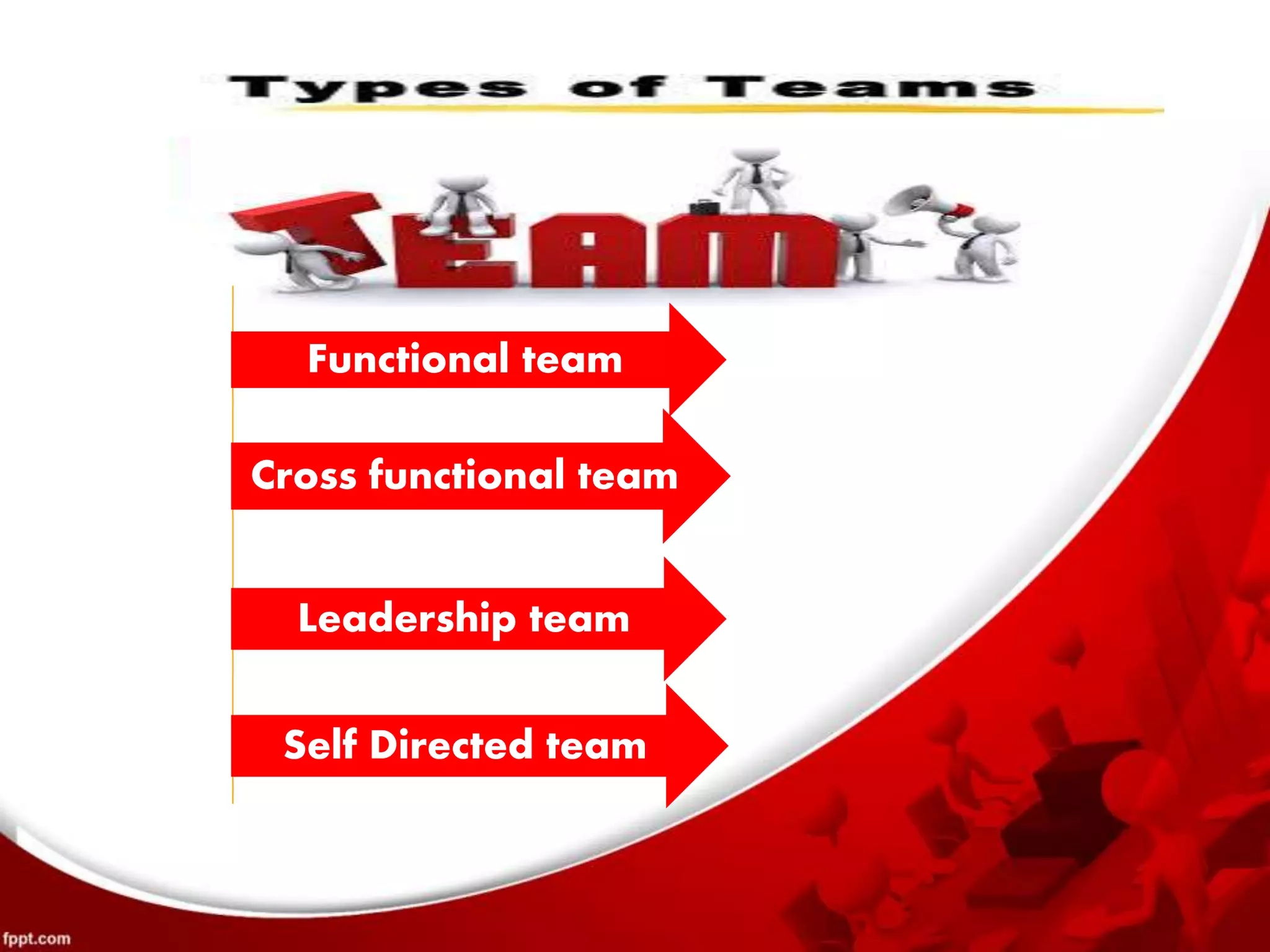
Functional team
Cross functional team
Leadership team
Self Directed team
Types conti..
Virtual teams
Quality circles
Task force
Functional Team
 Perform specific function.
 Consist of same department or work area members.
 Mangers hold primary responsibilities with subordinates.
Cross Functional
Team
 These type of teams are made by workers across functions,
or specialties.
 Separate areas of expertise work together.
 Team members are about same hierarchical level.
 Members take decision without management.
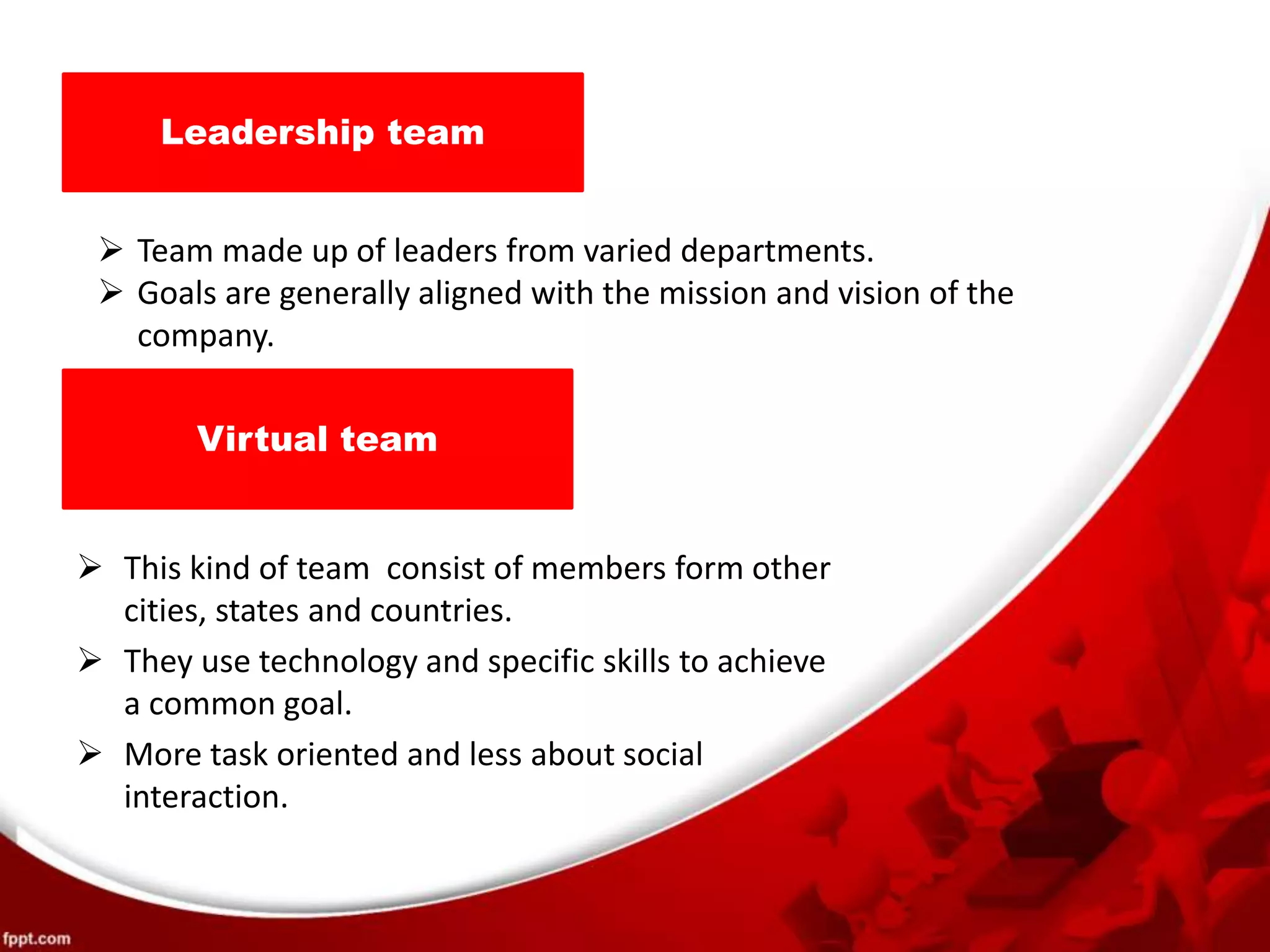
Leadership team
 Team made up of leaders from varied departments.
 Goals are generally aligned with the mission and vision of the
company.
Virtual team
 This kind of team consist of members form other
cities, states and countries.
 They use technology and specific skills to achieve
a common goal.
 More task oriented and less about social
interaction.
Self directed team
 Also known as self managed teams.
 Tasks operated without managers.
 No one is in a position of authority
 Teams are designed to give employees a feeling of
empowerment and ownership of the job.
 These type of teams have higher level of satisfaction,
increased self-esteem, and grow more on the job.
Quality circles
 individuals seek to become aware of, analyze and address
problems.
 hope to improve performance and make management
aware of any issues.
 This idea originated in Japan by large firms striving for
quality.
 Usually, these are made up of three to 12 people who do
similar work.
Task force
 Team of experts joined together to solve a well-defined and
temporary assignment.
 They have a sense of autonomy.
 Don’t need to constantly consult superiors to get things done.
 Say thank you
Treat
Time Off
 Prizes
Say Thank you
 The simplest thing you can do is to say thank you. Recognise and
reward good performance, achievements and a job well-done.
For many, that is all they need to feel encouraged.
 A simple but honest appreciative remark can go a very long way.
 Give them people occasional treat.
 Rewards create a win-win situation.
Treat
Time off
Allowing flexibility to go home early, come in late, or take an
additional day off to attend to a personal matter or just have a bit
of fun can work wonders to their state of mind.
Prize
 Awards, competitions are the opportunities to recognise the
particular skills and strengths.
 Just being nominated for awards is a great booster.
Team
Team

Team

  • 1.
  • 3.
  • 4.
    Presented To: Ma’am MariaFarooq Presented by: Aqsa Nawab 2006 Rabia Bashir 2039 Hafiza sajida 2014 Ayesha Billal 2008 Mehreen Fatima 2029
  • 5.
    We are greatfull to Ma’am Maria for giving us such opportunity
  • 7.
    OF Effective Team  Clear definitionand purpose  Compelling goal  Complete skill set  Relevant resources  Available advice
  • 8.
    Clear definition and purpose: Compellinggoal:  Cleary knows who is a member of the team.  The team has a common goal .  Members are mutually accountable & relatively stable. Goal are:  Clear.  Compelling.  Impactful.
  • 9.
    Complete skill set: Relevantresources:  The team has the knowledge and skills needed to complete the task.  Each member of the team has the authority to decide how to accomplish the task.  Organization provides them resources to complete the task.
  • 10.
    Available advice:  High-levelpeople available to coach and advise the team, as needed.
  • 11.
    Teams are formedwhen individuals with a common taste, preference, liking, and attitude come and work together for a common goal.
  • 15.
    Size of Team Dependon the nature of work. There are following factor that influence on the size of team. Factors that affect optimum team size include:  Purpose for which the team is formed.  Expectations you have from team and its members. Roles that the team members need to play, The amount of cohesiveness and interconnectivity necessary for optimal team performance.  Function, activities, and goals.
  • 16.
     Work Efficiency Improved Employee Relations  Increased Accountability  Learning Opportunities
  • 17.
    Work Efficiency Teamwork:  Enablesa accomplish tasks faster and more efficiently .  Reduces the work pressure  Sharing ideas or responsibilities Improved Employee Relations Teamwork:  provide an opportunity to bond with one another.  Enhances respect within team.  Increased trust .
  • 18.
    Increased Accountability Teamwork increases theaccountability of every member of the team.  First case: when working under people who had a lot of respect then team members do not want to let each other down and do their best to contribute to the successes.  Second case: Working on a solo project, pressure is usually high within teams that result low morale that impact to individual performance.
  • 19.
    Learning Opportunities  learnfrom more experienced employees.  Acquire skills.  challenge the ideas of each other that compromise solution.
  • 22.
    Functional team Cross functionalteam Leadership team Self Directed team
  • 23.
  • 24.
    Functional Team  Performspecific function.  Consist of same department or work area members.  Mangers hold primary responsibilities with subordinates. Cross Functional Team  These type of teams are made by workers across functions, or specialties.  Separate areas of expertise work together.  Team members are about same hierarchical level.  Members take decision without management.
  • 25.
    Leadership team  Teammade up of leaders from varied departments.  Goals are generally aligned with the mission and vision of the company. Virtual team  This kind of team consist of members form other cities, states and countries.  They use technology and specific skills to achieve a common goal.  More task oriented and less about social interaction.
  • 28.
    Self directed team Also known as self managed teams.  Tasks operated without managers.  No one is in a position of authority  Teams are designed to give employees a feeling of empowerment and ownership of the job.  These type of teams have higher level of satisfaction, increased self-esteem, and grow more on the job.
  • 29.
    Quality circles  individualsseek to become aware of, analyze and address problems.  hope to improve performance and make management aware of any issues.  This idea originated in Japan by large firms striving for quality.  Usually, these are made up of three to 12 people who do similar work.
  • 30.
    Task force  Teamof experts joined together to solve a well-defined and temporary assignment.  They have a sense of autonomy.  Don’t need to constantly consult superiors to get things done.
  • 33.
     Say thankyou Treat Time Off  Prizes
  • 34.
    Say Thank you The simplest thing you can do is to say thank you. Recognise and reward good performance, achievements and a job well-done. For many, that is all they need to feel encouraged.  A simple but honest appreciative remark can go a very long way.
  • 35.
     Give thempeople occasional treat.  Rewards create a win-win situation. Treat
  • 36.
    Time off Allowing flexibilityto go home early, come in late, or take an additional day off to attend to a personal matter or just have a bit of fun can work wonders to their state of mind.
  • 37.
    Prize  Awards, competitionsare the opportunities to recognise the particular skills and strengths.  Just being nominated for awards is a great booster.