TEACHING STRATEGIES
KNOWLADGE
Muhammad Noor PENDAS I P S
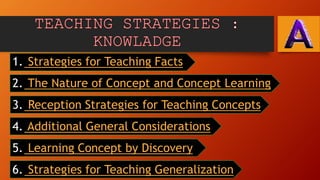
1. Strategies for Teaching Facts
2. The Nature of Concept and Concept Learning
3. Reception Strategies for Teaching Concepts
4. Additional General Considerations
5. Learning Concept by Discovery
6. Strategies for Teaching Generalization
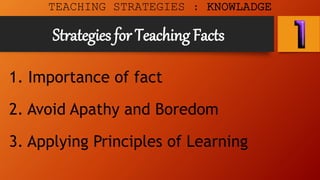
Strategies for Teaching Facts
1. Importance of fact
2. Avoid Apathy and Boredom
3. Applying Principles of Learning
TEACHING STRATEGIES : KNOWLADGE
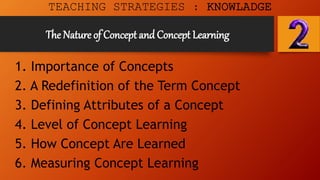
The Nature of Concept and Concept Learning
1. Importance of Concepts
2. A Redefinition of the Term Concept
3. Defining Attributes of a Concept
4. Level of Concept Learning
5. How Concept Are Learned
6. Measuring Concept Learning
TEACHING STRATEGIES : KNOWLADGE
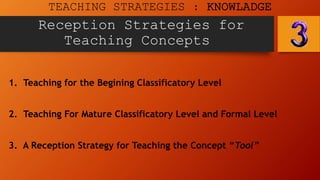
Reception Strategies for
Teaching Concepts
1. Teaching for the Begining Classificatory Level
2. Teaching For Mature Classificatory Level and Formal Level
3. A Reception Strategy for Teaching the Concept “Tool”
TEACHING STRATEGIES : KNOWLADGE
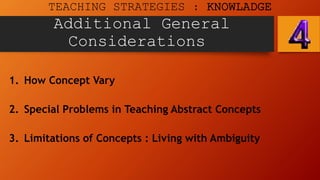
Additional General
Considerations
1. How Concept Vary
2. Special Problems in Teaching Abstract Concepts
3. Limitations of Concepts : Living with Ambiguity
TEACHING STRATEGIES : KNOWLADGE
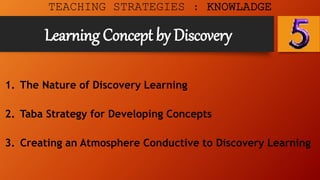
Learning Concept by Discovery
TEACHING STRATEGIES : KNOWLADGE
1. The Nature of Discovery Learning
2. Taba Strategy for Developing Concepts
3. Creating an Atmosphere Conductive to Discovery Learning
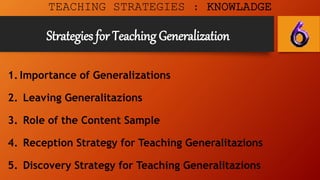
Strategies for Teaching Generalization
TEACHING STRATEGIES : KNOWLADGE
1. Importance of Generalizations
2. Leaving Generalitazions
3. Role of the Content Sample
4. Reception Strategy for Teaching Generalitazions
5. Discovery Strategy for Teaching Generalitazions

Teaching Strategies

  • 1.
  • 2.
    1. Strategies forTeaching Facts 2. The Nature of Concept and Concept Learning 3. Reception Strategies for Teaching Concepts 4. Additional General Considerations 5. Learning Concept by Discovery 6. Strategies for Teaching Generalization
  • 3.
    Strategies for TeachingFacts 1. Importance of fact 2. Avoid Apathy and Boredom 3. Applying Principles of Learning TEACHING STRATEGIES : KNOWLADGE
  • 4.
    The Nature ofConcept and Concept Learning 1. Importance of Concepts 2. A Redefinition of the Term Concept 3. Defining Attributes of a Concept 4. Level of Concept Learning 5. How Concept Are Learned 6. Measuring Concept Learning TEACHING STRATEGIES : KNOWLADGE
  • 5.
    Reception Strategies for TeachingConcepts 1. Teaching for the Begining Classificatory Level 2. Teaching For Mature Classificatory Level and Formal Level 3. A Reception Strategy for Teaching the Concept “Tool” TEACHING STRATEGIES : KNOWLADGE
  • 6.
    Additional General Considerations 1. HowConcept Vary 2. Special Problems in Teaching Abstract Concepts 3. Limitations of Concepts : Living with Ambiguity TEACHING STRATEGIES : KNOWLADGE
  • 7.
    Learning Concept byDiscovery TEACHING STRATEGIES : KNOWLADGE 1. The Nature of Discovery Learning 2. Taba Strategy for Developing Concepts 3. Creating an Atmosphere Conductive to Discovery Learning
  • 8.
    Strategies for TeachingGeneralization TEACHING STRATEGIES : KNOWLADGE 1. Importance of Generalizations 2. Leaving Generalitazions 3. Role of the Content Sample 4. Reception Strategy for Teaching Generalitazions 5. Discovery Strategy for Teaching Generalitazions