TEACHING LEARNING
CHALLENGES IN THE
21ST CENTURY
WHAT DOES IT MEAN TO
TEACH IN THE 21ST
CENTURY?
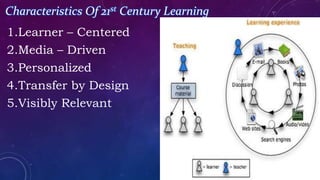
Characteristics Of 21st Century Learning
1.Learner – Centered
2.Media – Driven
3.Personalized
4.Transfer by Design
5.Visibly Relevant
LEARNER – CENTERED EDUCATION
Learner-centered education is about an entirely new way of
seeing, thinking about, and acting on education.
It focuses on 3 key aspects about the learner.
First, each learner is seen as being unique in
meaningful ways
Second, each learner is seen as having unbounded
potential—potential that will unfold at its own pace
and in its own way
Third, each learner is seen as having an innate
desire to learn. The job of the education system is
unleash that desire.
MEDIA – DRIVEN
Media can be used in direct instruction, active
learning teaching strategies and student
projects.
PERSONALIZED
Personalized learning is an educational approach
that aims to customize learning for each student’s
strengths, needs, skills, and interests.
TRANSFER BY DESIGN
Transfer of learning means the use of previously
acquired knowledge and skills in new learning or
problem-solving situations.
VISIBLY RELEVANT
According to professor John Hattie,
Visible Learning as a concept is incredibly
simple: it aims to make student learning as
visible as possible.
This means that all students should be able to see
how their efforts are contributing to their education
and that teachers are able to self-reflect on their
practice to measure how it impacts student
outcomes.
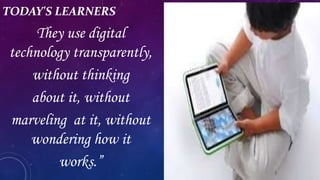
TODAY'S LEARNERS
They use digital
technology transparently,
without thinking
about it, without
marveling at it, without
wondering how it
works.”
EDUCATIONAL TECHNOLOGY
Technology serve as an instrument by
which students and teachers come together
to learn about their worlds.
WHY TECHNOLOGY
IS ESSENTIAL TO A
21ST CENTURY
EDUCATION?
First, it is important to discuss the value
21st century education technology brings
to the classroom environment.
There are four major areas:
First:
The addition of technology into the classroom can
help transform the classroom experience from a classic
teacher centered one into a student-centered experience
– with students taking a more active role in their
learning.
Second:
Technology provides teachers and students with
access to a variety of educational resources that inspire
creativity, critical thinking, communication, and
collaboration.
Third:
Through the use of instructional technology,
differentiated instruction can be made much easier.
It can become more of a reality!
With differentiated instruction, students are
provided an education that is personalized – and that
meets them where they are, developmentally.
Finally,
It is of paramount important that while in school,
students use tools that will best prepare them for their
future academic and professional experiences.
–Integrating technology into the classroom provides
students with a set of skills to navigate through the
variety of online tools we have today! It also provides
teachers opportunities to educate students on digital
citizenship and the new challenges to academic
integrity
Taking technology out of the learning
equation would be removing an integral
part of the students’ abilities.
Taking technology out of the learning
equation would be removing an integral
part of the students’ abilities.
Common challenges and concerns
teachers experience when integrating
technology and digital media in the
classroom include:
STUDENTS MISUSING TECHNOLOGY
With the introduction of technology in your classroom,
you are sure to encounter students attempting to misuse it,
largely for entertainment purposes instead of educational
ones.
TEACHER KNOWLEDGE AND PROFESSIONAL
DEVELOPMENT
Another common struggle of teachers attempting to
integrate technology into their classrooms is a lack of
knowledge and understanding of how to use technology, or
discomfort with using it.
KEEPING STUDENTS SAFE ONLINE
Increased access to technology can leave students
vulnerable to either intentionally or otherwise being exposed
to graphic content (including violent media and
pornography), online predators, scammers and hackers, and
cyberbullying.
COST OF NEW TECHNOLOGY
Another problem with technology in the classroom is
the cost of bringing new technology into your classroom.
KEEPING UP WITH CHANGES
Technology is a constantly evolving industry, and
education technology can quickly become obsolete as new
technology is introduced.
A major barrier many teachers struggle with when
introducing technology into their classrooms is keeping up
with these many changes and trends.
Teaching Learning Challenges in the 21st  Century.pptx

Teaching Learning Challenges in the 21st Century.pptx

  • 1.
  • 2.
    WHAT DOES ITMEAN TO TEACH IN THE 21ST CENTURY?
  • 4.
    Characteristics Of 21stCentury Learning 1.Learner – Centered 2.Media – Driven 3.Personalized 4.Transfer by Design 5.Visibly Relevant
  • 5.
    LEARNER – CENTEREDEDUCATION Learner-centered education is about an entirely new way of seeing, thinking about, and acting on education. It focuses on 3 key aspects about the learner. First, each learner is seen as being unique in meaningful ways Second, each learner is seen as having unbounded potential—potential that will unfold at its own pace and in its own way Third, each learner is seen as having an innate desire to learn. The job of the education system is unleash that desire.
  • 6.
    MEDIA – DRIVEN Mediacan be used in direct instruction, active learning teaching strategies and student projects.
  • 7.
    PERSONALIZED Personalized learning isan educational approach that aims to customize learning for each student’s strengths, needs, skills, and interests.
  • 8.
    TRANSFER BY DESIGN Transferof learning means the use of previously acquired knowledge and skills in new learning or problem-solving situations.
  • 9.
    VISIBLY RELEVANT According toprofessor John Hattie, Visible Learning as a concept is incredibly simple: it aims to make student learning as visible as possible. This means that all students should be able to see how their efforts are contributing to their education and that teachers are able to self-reflect on their practice to measure how it impacts student outcomes.
  • 10.
    TODAY'S LEARNERS They usedigital technology transparently, without thinking about it, without marveling at it, without wondering how it works.”
  • 11.
    EDUCATIONAL TECHNOLOGY Technology serveas an instrument by which students and teachers come together to learn about their worlds.
  • 12.
    WHY TECHNOLOGY IS ESSENTIALTO A 21ST CENTURY EDUCATION?
  • 13.
    First, it isimportant to discuss the value 21st century education technology brings to the classroom environment. There are four major areas:
  • 14.
    First: The addition oftechnology into the classroom can help transform the classroom experience from a classic teacher centered one into a student-centered experience – with students taking a more active role in their learning.
  • 15.
    Second: Technology provides teachersand students with access to a variety of educational resources that inspire creativity, critical thinking, communication, and collaboration.
  • 16.
    Third: Through the useof instructional technology, differentiated instruction can be made much easier. It can become more of a reality! With differentiated instruction, students are provided an education that is personalized – and that meets them where they are, developmentally.
  • 17.
    Finally, It is ofparamount important that while in school, students use tools that will best prepare them for their future academic and professional experiences.
  • 18.
    –Integrating technology intothe classroom provides students with a set of skills to navigate through the variety of online tools we have today! It also provides teachers opportunities to educate students on digital citizenship and the new challenges to academic integrity
  • 19.
    Taking technology outof the learning equation would be removing an integral part of the students’ abilities.
  • 20.
    Taking technology outof the learning equation would be removing an integral part of the students’ abilities.
  • 22.
    Common challenges andconcerns teachers experience when integrating technology and digital media in the classroom include:
  • 23.
    STUDENTS MISUSING TECHNOLOGY Withthe introduction of technology in your classroom, you are sure to encounter students attempting to misuse it, largely for entertainment purposes instead of educational ones.
  • 24.
    TEACHER KNOWLEDGE ANDPROFESSIONAL DEVELOPMENT Another common struggle of teachers attempting to integrate technology into their classrooms is a lack of knowledge and understanding of how to use technology, or discomfort with using it.
  • 25.
    KEEPING STUDENTS SAFEONLINE Increased access to technology can leave students vulnerable to either intentionally or otherwise being exposed to graphic content (including violent media and pornography), online predators, scammers and hackers, and cyberbullying.
  • 26.
    COST OF NEWTECHNOLOGY Another problem with technology in the classroom is the cost of bringing new technology into your classroom.
  • 27.
    KEEPING UP WITHCHANGES Technology is a constantly evolving industry, and education technology can quickly become obsolete as new technology is introduced. A major barrier many teachers struggle with when introducing technology into their classrooms is keeping up with these many changes and trends.