 Educational technology is the effective use
of technological tools in learning. As a
concept, it concerns an array of tools, such
as media, machines and networking
hardware, as well as considering underlying
theoretical perspectives for their effective
application
 Information and communication
 Computers
 Online/Web-based
 Mobile/wireless
 Assistive Technology
 Prepares students for the 21st
century
 Enhances students learning
 Improves Instruction
 Provides authentic learning
experiences
 TEACHER:
provides opportunities for student to develop and demonstrate
essential skills.
 Student :
= Select appropriate digital tools to assemble, evaluate resources.
= Apply varied research skills to find and evaluate resources.
= Use information and resources to accomplish real- world task.
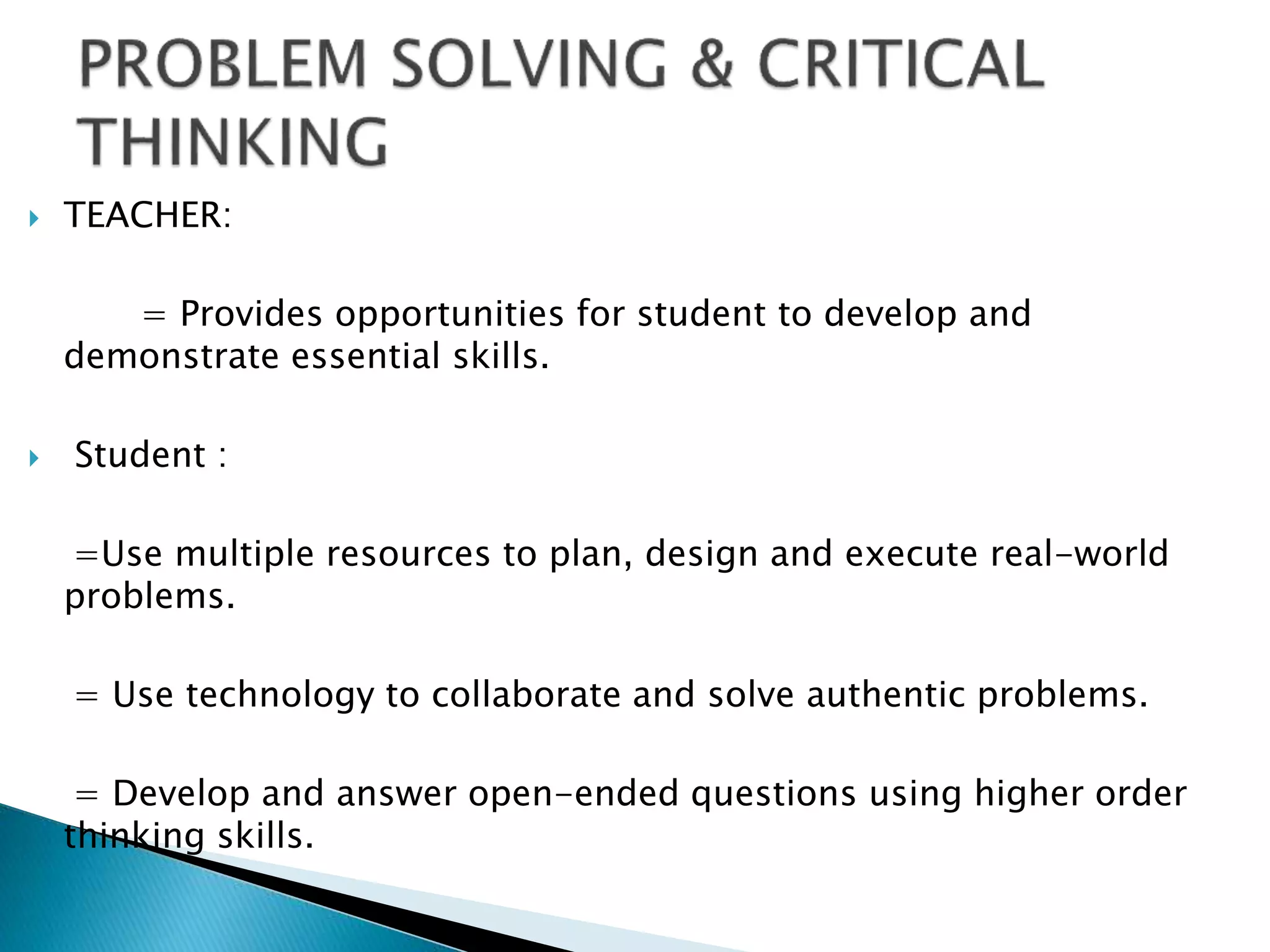
 TEACHER:
= Provides opportunities for student to develop and
demonstrate essential skills.
 Student :
=Use multiple resources to plan, design and execute real-world
problems.
= Use technology to collaborate and solve authentic problems.
= Develop and answer open-ended questions using higher order
thinking skills.
 Teacher :
= Creates structures , provides opportunities and assesses
student performances.
 Students :
= Initiate communication in real and non-real time.
= Communicate and collaborate with learners of diverse cultural
backgrounds.
= From collaborative team to solve real-world problems and
create original works.
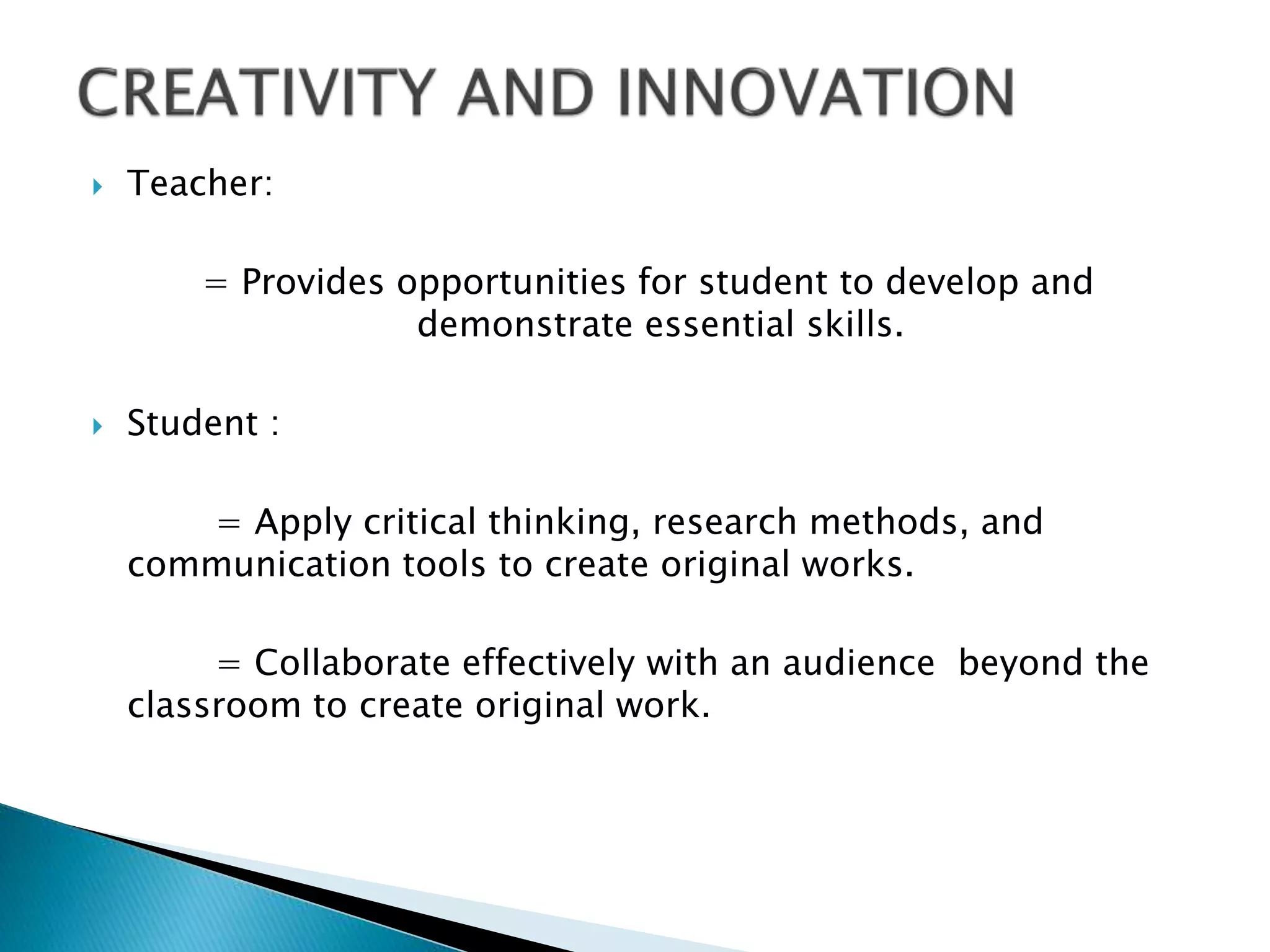
 Teacher:
= Provides opportunities for student to develop and
demonstrate essential skills.
 Student :
= Apply critical thinking, research methods, and
communication tools to create original works.
= Collaborate effectively with an audience beyond the
classroom to create original work.
 Here we are to talking about technology and the role
it plays in 21st century education . Technology is by
far the most popular topic concerning 21st century
learning and education. Technology still seems to be
the central focus.
 The Educational technology in the 21st century
involves using technology in the classroom to enhance
the teaching learning process especially in the 21st
century classroom. Technology undeniably plays a
central role in modern life. We are also exposed to
different materials highlighting the importance of
integrating technology in the classroom.
 The wide variety of technology that can easily
and effectively be incorporated into a
classroom offers every teacher a venue into
the technological world. The 21st century
learners learns differently from those
before.
 Our world is changing, and in order to prepare
our children for this new world we need to
change the way we educate them. In the 21st
century educators must create a curriculum
that will help students connect with the world
and understand the issues that our world
faces.
 the 21st century, teachers and administrators need
to cultivate and maintain the student's interest in
the material by showing how this knowledge applies in
the real world. They must also try to increase their
student's curiosity, which will help them become
lifelong learners. Next they should be flexible with
how they teach and give learners the resources to
continue learning outside of school
 Technology can be used to enhance critical thinking
and critical literacy skills, evaluating the legitimacy
and accuracy of online content is the central part of
21st century education.
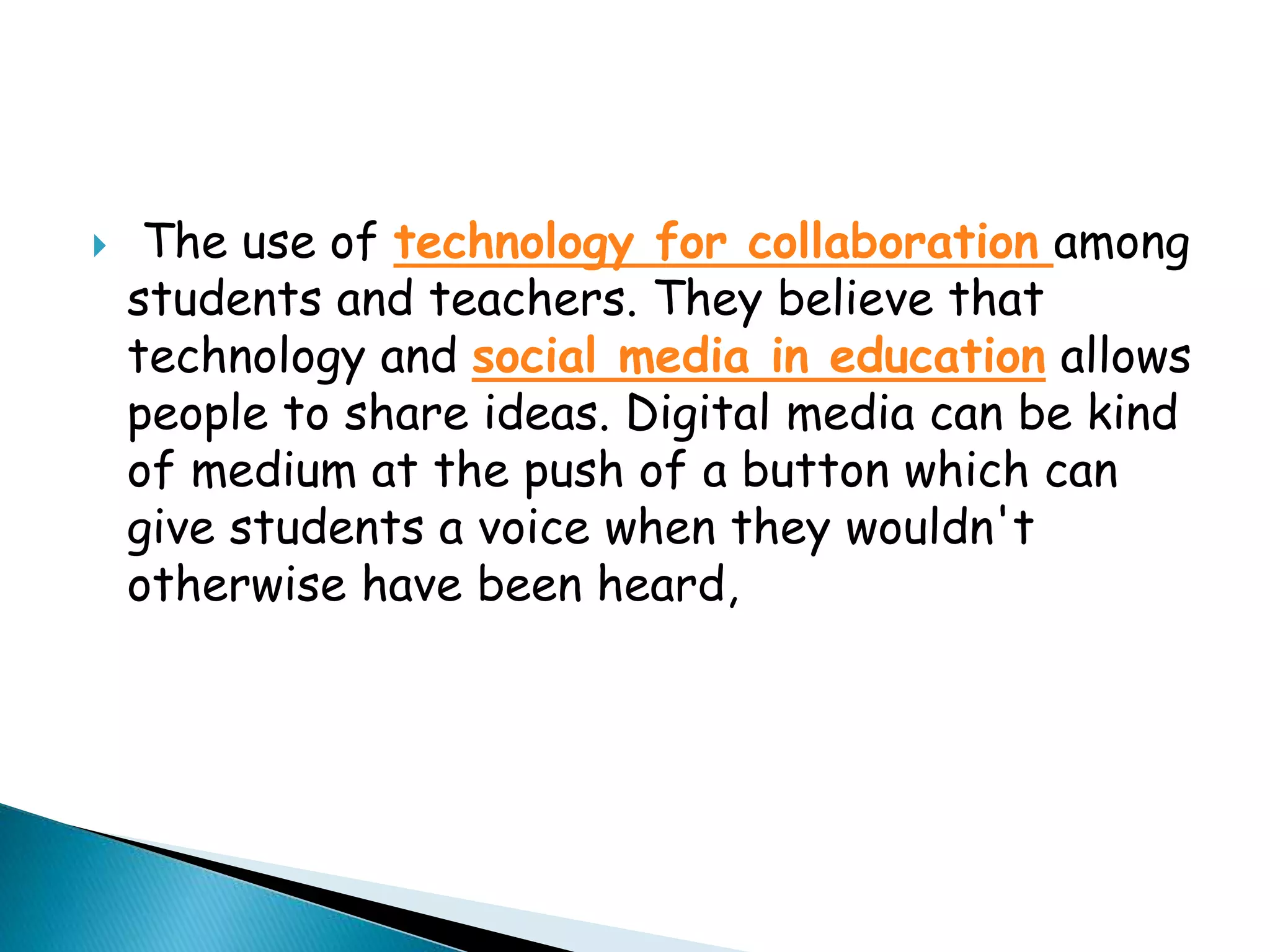
 The use of technology for collaboration among
students and teachers. They believe that
technology and social media in education allows
people to share ideas. Digital media can be kind
of medium at the push of a button which can
give students a voice when they wouldn't
otherwise have been heard,
 One last thing to consider is that technology is
not just about interactive whiteboard or
computers other examples include digital
cameras, digital microscopes, 3-D printers as
well as things like microphones and projectors
as well. It's about finding ways to use
technology meaningfully, so the investment is
made by schools is a worthwhile one, and it
makes education more relevant to life and by
making the learning more dynamic.
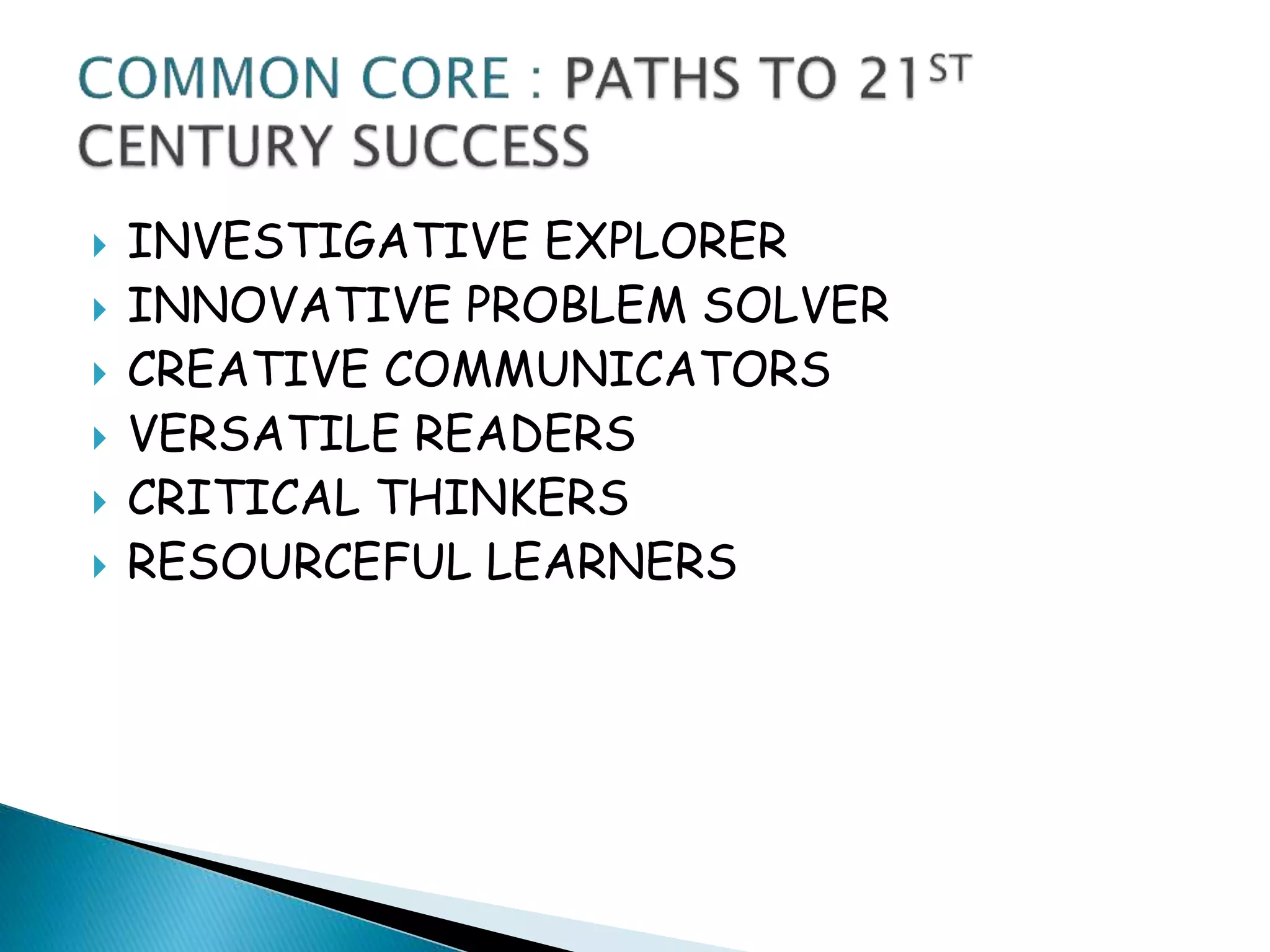
 INVESTIGATIVE EXPLORER
 INNOVATIVE PROBLEM SOLVER
 CREATIVE COMMUNICATORS
 VERSATILE READERS
 CRITICAL THINKERS
 RESOURCEFUL LEARNERS
 A new addition to 21st century curriculum is the
study of green education and environmental issues.
Kids are taught awareness of their world and real
experts such as scientist and politicians are brought
in to answer student's questions.
 The curriculum in the classroom is designed to
incorporate many skills and intelligence levels, and
makes use of technology and multimedia. The lessons
are not based on textbooks, instead they are project
based. Skills and content are learned through their
research and projects, and textbooks are provided as
one of many possible resources.
The role and function of the 21 st century education

The role and function of the 21 st century education

  • 3.
     Educational technologyis the effective use of technological tools in learning. As a concept, it concerns an array of tools, such as media, machines and networking hardware, as well as considering underlying theoretical perspectives for their effective application
  • 4.
     Information andcommunication  Computers  Online/Web-based  Mobile/wireless  Assistive Technology
  • 5.
     Prepares studentsfor the 21st century  Enhances students learning  Improves Instruction  Provides authentic learning experiences
  • 7.
     TEACHER: provides opportunitiesfor student to develop and demonstrate essential skills.  Student : = Select appropriate digital tools to assemble, evaluate resources. = Apply varied research skills to find and evaluate resources. = Use information and resources to accomplish real- world task.
  • 8.
     TEACHER: = Providesopportunities for student to develop and demonstrate essential skills.  Student : =Use multiple resources to plan, design and execute real-world problems. = Use technology to collaborate and solve authentic problems. = Develop and answer open-ended questions using higher order thinking skills.
  • 9.
     Teacher : =Creates structures , provides opportunities and assesses student performances.  Students : = Initiate communication in real and non-real time. = Communicate and collaborate with learners of diverse cultural backgrounds. = From collaborative team to solve real-world problems and create original works.
  • 10.
     Teacher: = Providesopportunities for student to develop and demonstrate essential skills.  Student : = Apply critical thinking, research methods, and communication tools to create original works. = Collaborate effectively with an audience beyond the classroom to create original work.
  • 13.
     Here weare to talking about technology and the role it plays in 21st century education . Technology is by far the most popular topic concerning 21st century learning and education. Technology still seems to be the central focus.  The Educational technology in the 21st century involves using technology in the classroom to enhance the teaching learning process especially in the 21st century classroom. Technology undeniably plays a central role in modern life. We are also exposed to different materials highlighting the importance of integrating technology in the classroom.
  • 14.
     The widevariety of technology that can easily and effectively be incorporated into a classroom offers every teacher a venue into the technological world. The 21st century learners learns differently from those before.  Our world is changing, and in order to prepare our children for this new world we need to change the way we educate them. In the 21st century educators must create a curriculum that will help students connect with the world and understand the issues that our world faces.
  • 15.
     the 21stcentury, teachers and administrators need to cultivate and maintain the student's interest in the material by showing how this knowledge applies in the real world. They must also try to increase their student's curiosity, which will help them become lifelong learners. Next they should be flexible with how they teach and give learners the resources to continue learning outside of school  Technology can be used to enhance critical thinking and critical literacy skills, evaluating the legitimacy and accuracy of online content is the central part of 21st century education.
  • 16.
     The useof technology for collaboration among students and teachers. They believe that technology and social media in education allows people to share ideas. Digital media can be kind of medium at the push of a button which can give students a voice when they wouldn't otherwise have been heard,
  • 17.
     One lastthing to consider is that technology is not just about interactive whiteboard or computers other examples include digital cameras, digital microscopes, 3-D printers as well as things like microphones and projectors as well. It's about finding ways to use technology meaningfully, so the investment is made by schools is a worthwhile one, and it makes education more relevant to life and by making the learning more dynamic.
  • 18.
     INVESTIGATIVE EXPLORER INNOVATIVE PROBLEM SOLVER  CREATIVE COMMUNICATORS  VERSATILE READERS  CRITICAL THINKERS  RESOURCEFUL LEARNERS
  • 19.
     A newaddition to 21st century curriculum is the study of green education and environmental issues. Kids are taught awareness of their world and real experts such as scientist and politicians are brought in to answer student's questions.  The curriculum in the classroom is designed to incorporate many skills and intelligence levels, and makes use of technology and multimedia. The lessons are not based on textbooks, instead they are project based. Skills and content are learned through their research and projects, and textbooks are provided as one of many possible resources.