Teaching Excellence
Framework
Current and future policy
What is TEF?
2
Ratings
Purpose
Better inform students’ choices about what and where to study
Raise esteem for teaching
Recognise and reward excellent teaching
Better meet the needs of employers, business, industry and the professions
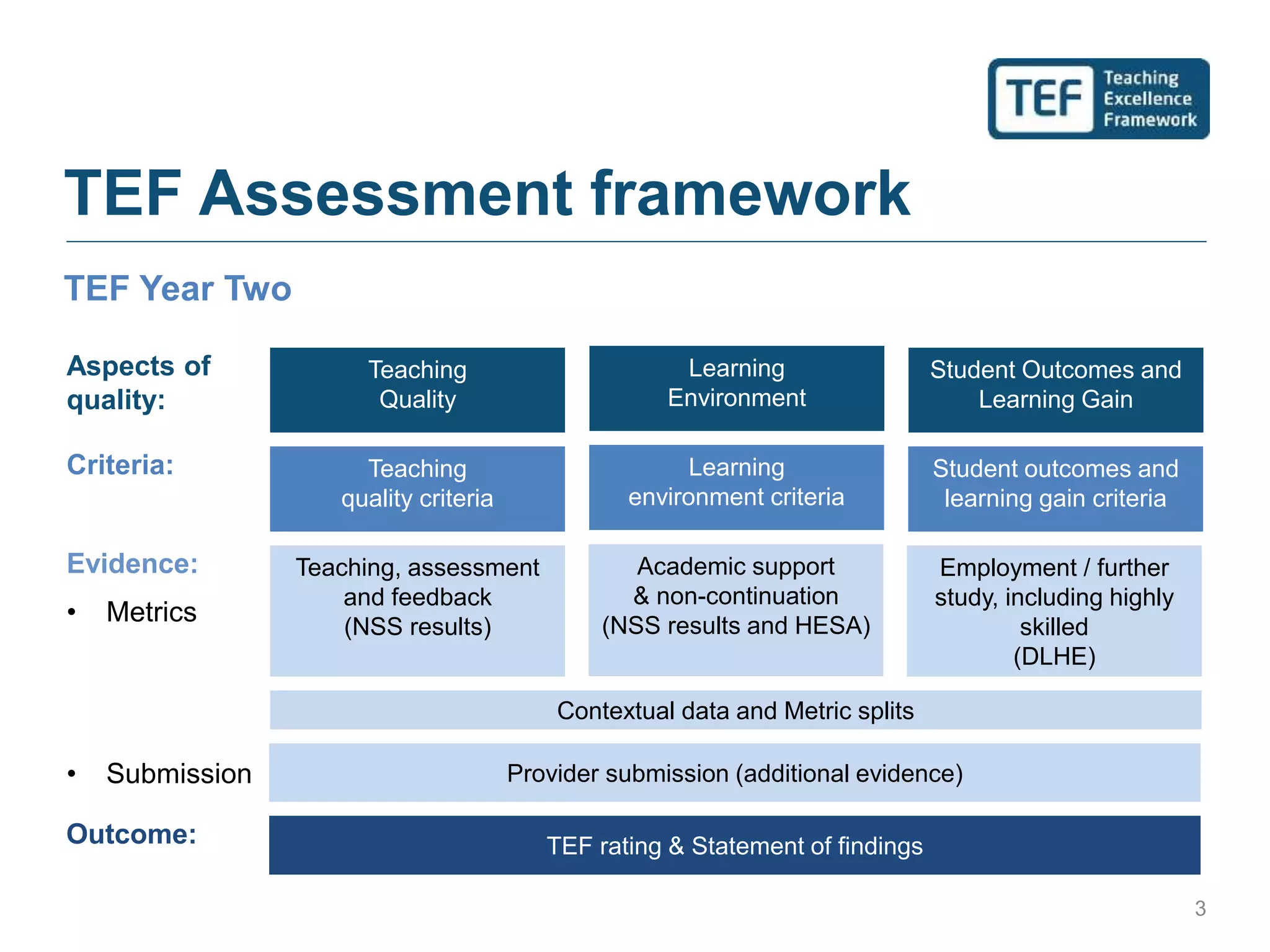
TEF Assessment framework
3
TEF Year Two
Student Outcomes and
Learning Gain
Learning
Environment
Teaching
Quality
Student outcomes and
learning gain criteria
Learning
environment criteria
Teaching
quality criteria
Teaching, assessment
and feedback
(NSS results)
Academic support
& non-continuation
(NSS results and HESA)
Employment / further
study, including highly
skilled
(DLHE)
Aspects of
quality:
Criteria:
Evidence:
Contextual data and Metric splits
Provider submission (additional evidence)
• Metrics
• Submission
Outcome: TEF rating & Statement of findings
How is TEF being implemented?
4
A phased approach
Continuous
improvement
Year 3 Year 4Year 2Year 1
Assessment
level
Provider level
‘meets
expectations’
awards
Provider
level trial
Provider
level
+
Subject
level pilots
Provider
level
+
Subject
level pilots
Lessons
learned
exercise
Independent
review
Year 5
Subject
level
(ratings at
provider and
subject level)
Informed by
independent
review
TEF Year 3 provider-level
5
TEF Specification
• Updated TEF specification will be published soon
• This will apply for TEF Year 3 and 4
Expected timelines
• September 2017 – TEF specification published by DfE
• Autumn 2017 – Procedural guidance published by HEFCE
• Autumn 2017 – Application window opens
• Summer 2018 – Results published
Subject-level TEF
6
Purpose
• Better inform students
• Ratings at both subject-level
and provider-level
• Reflect variation between
subjects
• Drive up teaching standards
across all subjects
Collaborative Design
• November 2016 – February 2017
• Workshops
• Two models emerged
Pilots
• Test the models
• Inform Subject-level TEF in Year 5
Consultation
• Later this year
The Year 3 subject-level pilot
7
Specification
• Based on provider-level TEF
• 2 models
• 35 subjects based on CAH2
• Provider and subject level
ratings
• Also piloting a teaching
intensity measure
• Looking for 30-40 providers to
participate
Our aim
• Test and evaluate the models
• Inform second year of pilots
• Input into the independent review
• Refine subject-level policy prior to
full implementation in TEF Year 5
.
Model A
8
Provider
metrics
Provider
submission
Exception subjects - different IH
Subject
metrics
Subject
metrics
Subject
submission
Subject
submission
Subject 1 Subj. 2
Subject
metrics
Subject
submission
Subj. 3 Subj. 4 Subj. 5 … Subj. 35
Non exceptions - same IH
1. Provider-level assessment
2. Subject-level assessment
Subj. 6
9
Model B
2. Provider-level assessment
.
Subject
metrics
Subject
metrics
Subject 1 Subj. 2
Subject
metrics
Subject group submission
Subj. 3
Subject group submission
Subject
metrics
Subj. 4
Subject
metrics
Subj. 5
Subject
metrics
… Subj. 35
Subject
group
submission
Provider
metrics
Provider
submission
Subject-
based IH
1. Subject-level assessment
…
1 2 7
Participation in the pilots
10
Selection
Model A – 15 providers
Model B – 15 providers
Both Models – 10 providers
HEFCE will consider:
• Size and breadth of provider
• Operational type
• Type of student
• TEF 2 ratings (if applicable)
• Nation
Providers will need to:
• Be eligible for TEF Year 3
• Review their metrics and write
submissions
• Collect and report information on
teaching intensity
• Prepare and report information on
the costs of participation
• Participate in feedback events
• Support other evaluation activities
Benefits of pilot participation
11
• Influence direction of TEF policy
• Better understand subject-level TEF
• See how you perform
Assurances:
• Purely developmental
• Confidential
• Ratings will not be shared or published
• No link or impact on provider-level assessment or ratings
Pilot timelines
12
Confirming your interest
• Deadline: Monday 25 September 2017
• HEFCE will send a survey to TEF contacts in early September
• Selected providers will be notified late October 2017
Provider application window
• Metrics and guidance released: early Dec 2017
• Application window: early Dec 2017 – early Mar 2018
• Teaching intensity data collection: early Nov 2017 – early Jan 2018
• Results and findings: June 2018
Thanks
13
Contact
Sam Meakin
Subject-level TEF policy lead
Department for Education
sam.meakin@education.gov.uk
Useful links
• For policy information, see DfE’s TEF page:
https://www.gov.uk/government/collections/teaching-excellence-framework
• For delivery information, including results and FAQs, see HEFCE’s TEF page:
http://www.hefce.ac.uk/lt/tef/

Teaching Excellence Framework: Current and future policy

  • 1.
  • 2.
    What is TEF? 2 Ratings Purpose Betterinform students’ choices about what and where to study Raise esteem for teaching Recognise and reward excellent teaching Better meet the needs of employers, business, industry and the professions
  • 3.
    TEF Assessment framework 3 TEFYear Two Student Outcomes and Learning Gain Learning Environment Teaching Quality Student outcomes and learning gain criteria Learning environment criteria Teaching quality criteria Teaching, assessment and feedback (NSS results) Academic support & non-continuation (NSS results and HESA) Employment / further study, including highly skilled (DLHE) Aspects of quality: Criteria: Evidence: Contextual data and Metric splits Provider submission (additional evidence) • Metrics • Submission Outcome: TEF rating & Statement of findings
  • 4.
    How is TEFbeing implemented? 4 A phased approach Continuous improvement Year 3 Year 4Year 2Year 1 Assessment level Provider level ‘meets expectations’ awards Provider level trial Provider level + Subject level pilots Provider level + Subject level pilots Lessons learned exercise Independent review Year 5 Subject level (ratings at provider and subject level) Informed by independent review
  • 5.
    TEF Year 3provider-level 5 TEF Specification • Updated TEF specification will be published soon • This will apply for TEF Year 3 and 4 Expected timelines • September 2017 – TEF specification published by DfE • Autumn 2017 – Procedural guidance published by HEFCE • Autumn 2017 – Application window opens • Summer 2018 – Results published
  • 6.
    Subject-level TEF 6 Purpose • Betterinform students • Ratings at both subject-level and provider-level • Reflect variation between subjects • Drive up teaching standards across all subjects Collaborative Design • November 2016 – February 2017 • Workshops • Two models emerged Pilots • Test the models • Inform Subject-level TEF in Year 5 Consultation • Later this year
  • 7.
    The Year 3subject-level pilot 7 Specification • Based on provider-level TEF • 2 models • 35 subjects based on CAH2 • Provider and subject level ratings • Also piloting a teaching intensity measure • Looking for 30-40 providers to participate Our aim • Test and evaluate the models • Inform second year of pilots • Input into the independent review • Refine subject-level policy prior to full implementation in TEF Year 5
  • 8.
    . Model A 8 Provider metrics Provider submission Exception subjects- different IH Subject metrics Subject metrics Subject submission Subject submission Subject 1 Subj. 2 Subject metrics Subject submission Subj. 3 Subj. 4 Subj. 5 … Subj. 35 Non exceptions - same IH 1. Provider-level assessment 2. Subject-level assessment Subj. 6
  • 9.
    9 Model B 2. Provider-levelassessment . Subject metrics Subject metrics Subject 1 Subj. 2 Subject metrics Subject group submission Subj. 3 Subject group submission Subject metrics Subj. 4 Subject metrics Subj. 5 Subject metrics … Subj. 35 Subject group submission Provider metrics Provider submission Subject- based IH 1. Subject-level assessment … 1 2 7
  • 10.
    Participation in thepilots 10 Selection Model A – 15 providers Model B – 15 providers Both Models – 10 providers HEFCE will consider: • Size and breadth of provider • Operational type • Type of student • TEF 2 ratings (if applicable) • Nation Providers will need to: • Be eligible for TEF Year 3 • Review their metrics and write submissions • Collect and report information on teaching intensity • Prepare and report information on the costs of participation • Participate in feedback events • Support other evaluation activities
  • 11.
    Benefits of pilotparticipation 11 • Influence direction of TEF policy • Better understand subject-level TEF • See how you perform Assurances: • Purely developmental • Confidential • Ratings will not be shared or published • No link or impact on provider-level assessment or ratings
  • 12.
    Pilot timelines 12 Confirming yourinterest • Deadline: Monday 25 September 2017 • HEFCE will send a survey to TEF contacts in early September • Selected providers will be notified late October 2017 Provider application window • Metrics and guidance released: early Dec 2017 • Application window: early Dec 2017 – early Mar 2018 • Teaching intensity data collection: early Nov 2017 – early Jan 2018 • Results and findings: June 2018
  • 13.
    Thanks 13 Contact Sam Meakin Subject-level TEFpolicy lead Department for Education sam.meakin@education.gov.uk Useful links • For policy information, see DfE’s TEF page: https://www.gov.uk/government/collections/teaching-excellence-framework • For delivery information, including results and FAQs, see HEFCE’s TEF page: http://www.hefce.ac.uk/lt/tef/