TEACHING COMPOSITION
FROM A RHETORICAL
PERSPECTIVE
WHY TEACH STUDENTS TO THINK AND WRITE RHETORICALLY?
(also, what’s rhetoric?)
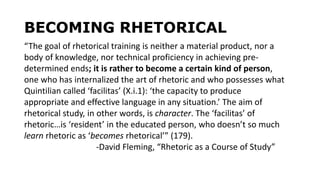
“The goal of rhetorical training is neither a material product, nor a
body of knowledge, nor technical proficiency in achieving pre-
determined ends; it is rather to become a certain kind of person,
one who has internalized the art of rhetoric and who possesses what
Quintilian called ‘facilitas’ (X.i.1): ‘the capacity to produce
appropriate and effective language in any situation.’ The aim of
rhetorical study, in other words, is character. The ‘facilitas’ of
rhetoric…is ‘resident’ in the educated person, who doesn’t so much
learn rhetoric as ‘becomes rhetorical’” (179).
-David Fleming, “Rhetoric as a Course of Study”
BECOMING RHETORICAL
a rhetorical approach to
composition aims to help students…
• assess and appropriately respond to a wide variety of
audiences and communication situations.
• draw upon and mobilize the resources they have at
hand in order to effect some sort of change in the
world.
• recognize and analyze the rhetorical moves of others.
a quick and dirty history of rhetoric in the West…
two main operations in
rhetoric-based composition:
analysis and production
audience
communicatormessage
exigence purpose
context
circulation/
recirculation
modality/
medium
genre
the
rhetorician’s
toolbox
1st edition: 19361st edition: 1977
first,
focus on
rhetorical
basics:
audience,
message,
purpose
then talk about
the rhetorical
effects of the
means of
communication

Teaching Composition from a Rhetorical Perspective (for TAs)

  • 1.
    TEACHING COMPOSITION FROM ARHETORICAL PERSPECTIVE
  • 2.
    WHY TEACH STUDENTSTO THINK AND WRITE RHETORICALLY? (also, what’s rhetoric?)
  • 3.
    “The goal ofrhetorical training is neither a material product, nor a body of knowledge, nor technical proficiency in achieving pre- determined ends; it is rather to become a certain kind of person, one who has internalized the art of rhetoric and who possesses what Quintilian called ‘facilitas’ (X.i.1): ‘the capacity to produce appropriate and effective language in any situation.’ The aim of rhetorical study, in other words, is character. The ‘facilitas’ of rhetoric…is ‘resident’ in the educated person, who doesn’t so much learn rhetoric as ‘becomes rhetorical’” (179). -David Fleming, “Rhetoric as a Course of Study” BECOMING RHETORICAL
  • 4.
    a rhetorical approachto composition aims to help students… • assess and appropriately respond to a wide variety of audiences and communication situations. • draw upon and mobilize the resources they have at hand in order to effect some sort of change in the world. • recognize and analyze the rhetorical moves of others.
  • 5.
    a quick anddirty history of rhetoric in the West…
  • 6.
    two main operationsin rhetoric-based composition: analysis and production
  • 7.
  • 8.
    1st edition: 19361stedition: 1977 first, focus on rhetorical basics: audience, message, purpose
  • 9.
    then talk about therhetorical effects of the means of communication

Editor's Notes

  • #3 DIFFERENT THEORIES FOR TEACHING COMPOSITION teaching for transfer writing about writing threshold concepts writing about literature “current-traditional” comp (a-rhetorical) etc. So why teach it from a rhetorical perspective?