Cross-clustering for future economic growth 
Cecilia Johansson 
Parallel 4.3 Topics on New Cluster Trends 
12 November 2014
CROSS-CLUSTERING FOR 
FUTURE ECONOMIC GROWTH 
CECILIA JOHANSSON 
VINNOVA, 
SWEDISH AGENCY FOR ECONOMIC AND REGIONAL GROWTH
PROGRAMS WITH CROSS-CLUSTERING ASPECTS 
Strategic Innovation Programs 
Vinnväxt 
RIK – Regional Innovation and Clusters 
BSR-Stars 
Innovation Express
STRATEGIC INNOVATION PROGRAMS (1) 
The idea is for industry, the public sector and academia to 
collaborate for common prioritizations in terms of investments in 
research, development and innovation, thus 
strengthening one another.
STRATEGIC INNOVATION PROGRAMS (2) 
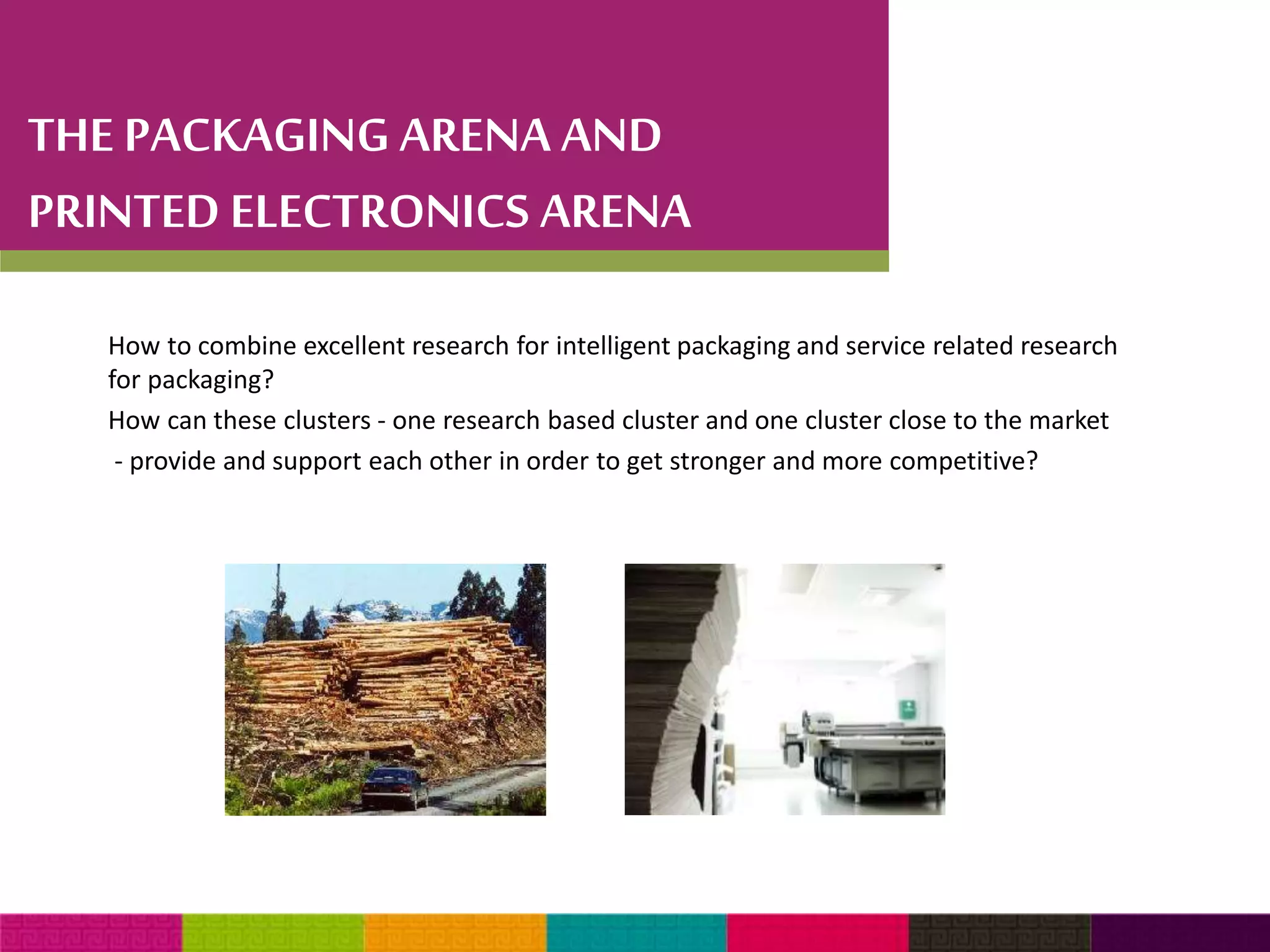
11 approved programs – examples of areas: 
Health 
Automation 
Bio-based Material 
Mining 
Light Weight Material 
IKT 
Aircraft Industry
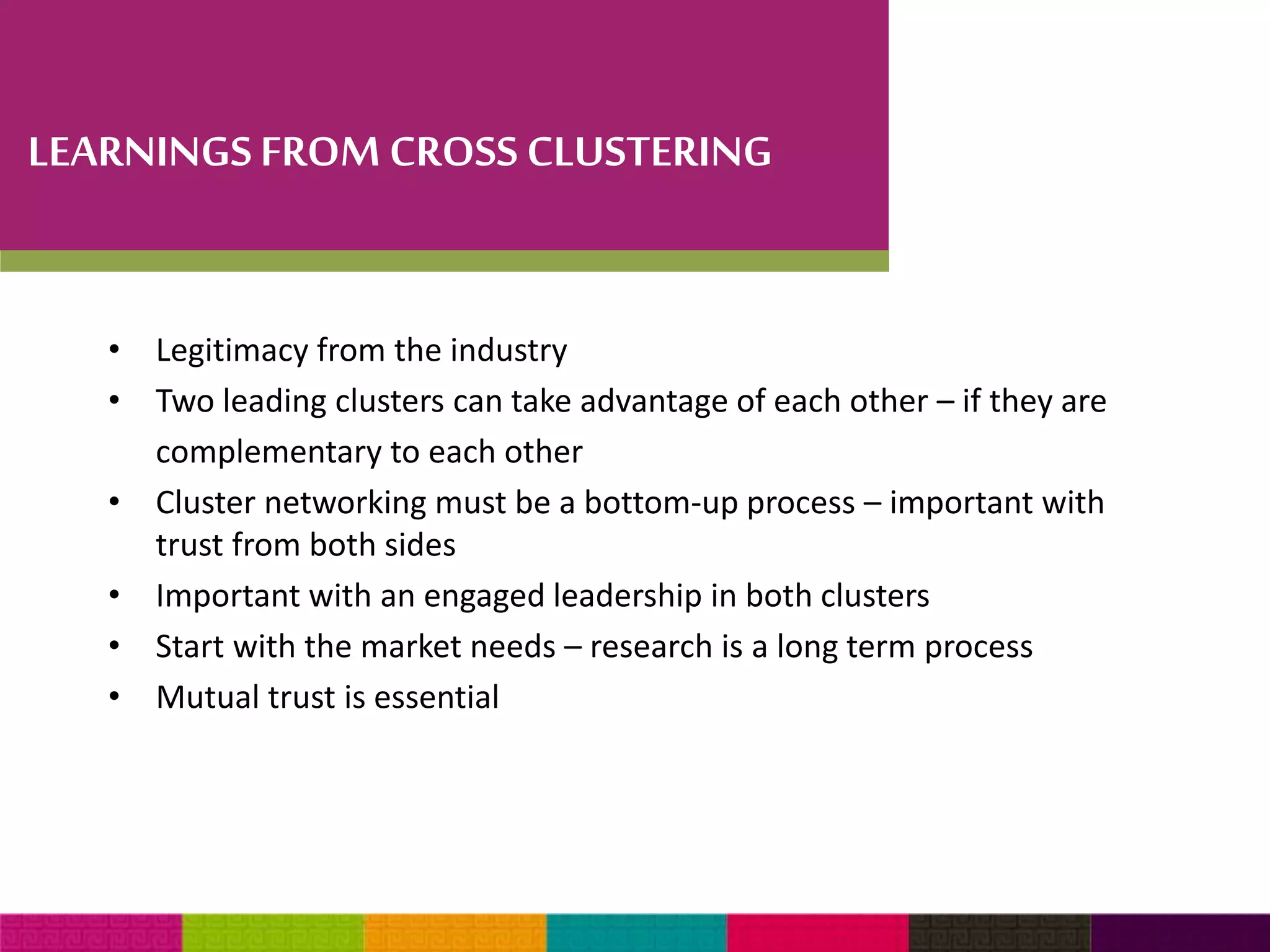
THE PACKAGING ARENA AND 
PRINTED ELECTRONICS ARENA 
How to combine excellent research for intelligent packaging and service related research 
for packaging? 
How can these clusters - one research based cluster and one cluster close to the market 
- provide and support each other in order to get stronger and more competitive?
LEARNINGS FROM CROSS CLUSTERING 
• Legitimacy from the industry 
• Two leading clusters can take advantage of each other – if they are 
complementary to each other 
• Cluster networking must be a bottom-up process – important with 
trust from both sides 
• Important with an engaged leadership in both clusters 
• Start with the market needs – research is a long term process 
• Mutual trust is essential
STRUCTURAL FUNDS – SOME 
FACTS 
• Different funds 
• Coordination: cohesion policy, rural development, maritime & 
fisheries funds 
• Comprehensive investment strategy: aligned with Europe 2020 
objectives 
• Objectives and indicators to measure progress towards Europe 2020 
targets
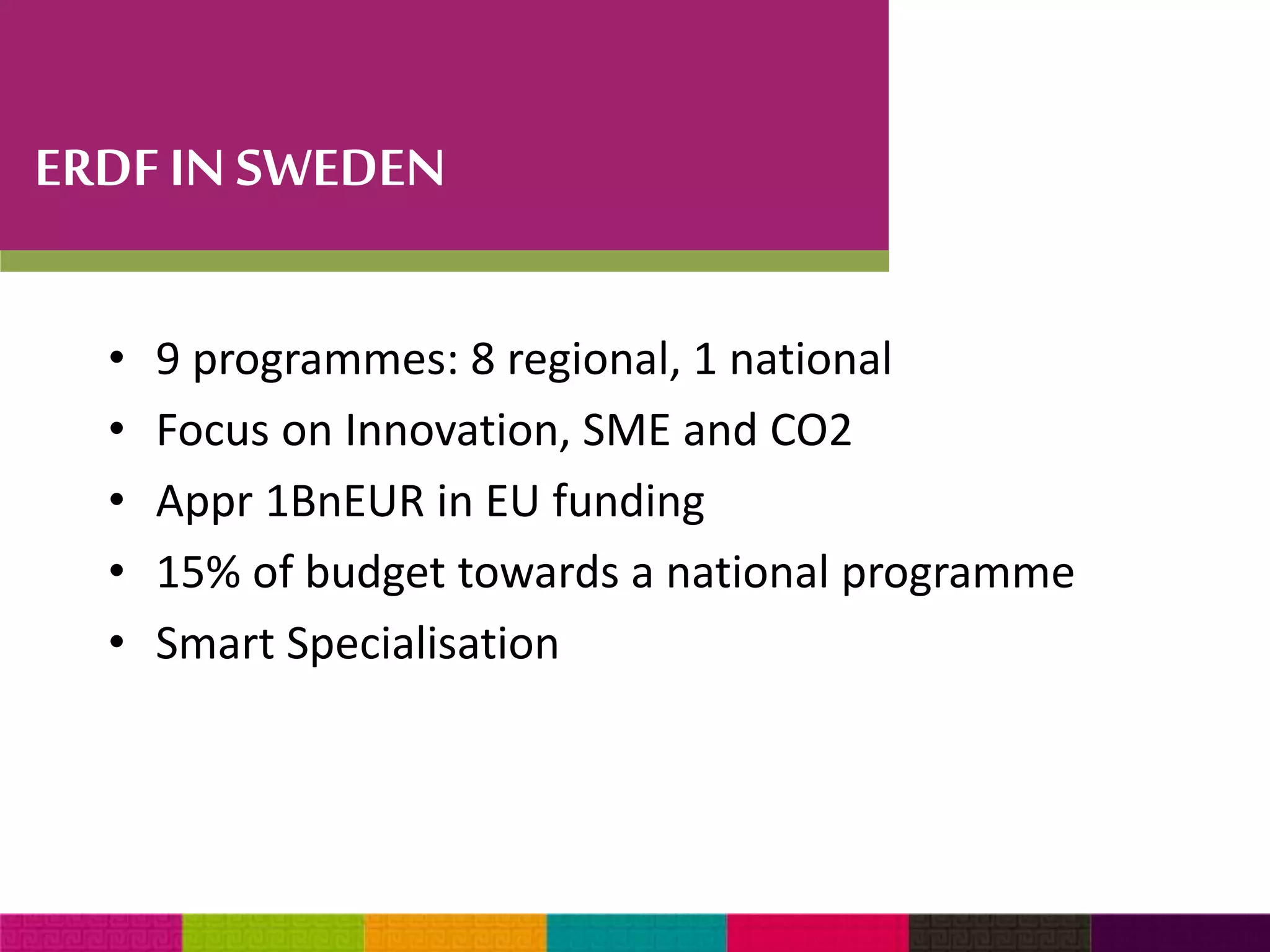
ERDF IN SWEDEN 
• 9 programmes: 8 regional, 1 national 
• Focus on Innovation, SME and CO2 
• Appr 1BnEUR in EU funding 
• 15% of budget towards a national programme 
• Smart Specialisation
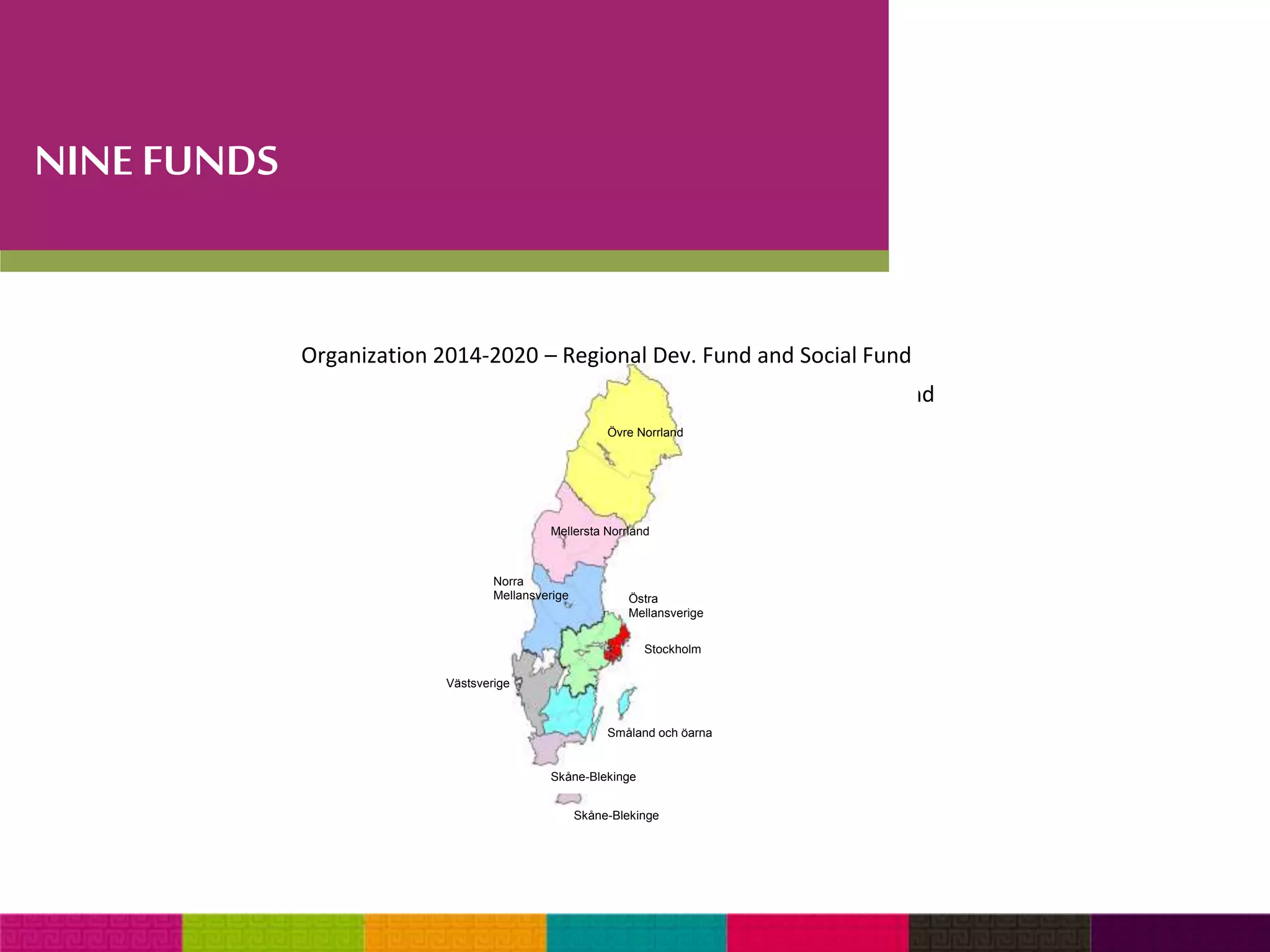
NINE FUNDS 
Organization 2014-2020 – Regional Dev. Fund and Social Fund 
Övre Norrland 
Övre Norrland 
Mellersta Norrland 
Mellersta Norrland 
Norra 
Mellansverige 
Östra 
Mellansverige 
Östra 
Mellansverige 
Stockholm 
Västsverige 
Småland och öarna 
Skåne-Blekinge 
Norra 
Mellansverige 
Stockholm 
Västsverige 
Småland och öarna 
Skåne-Blekinge
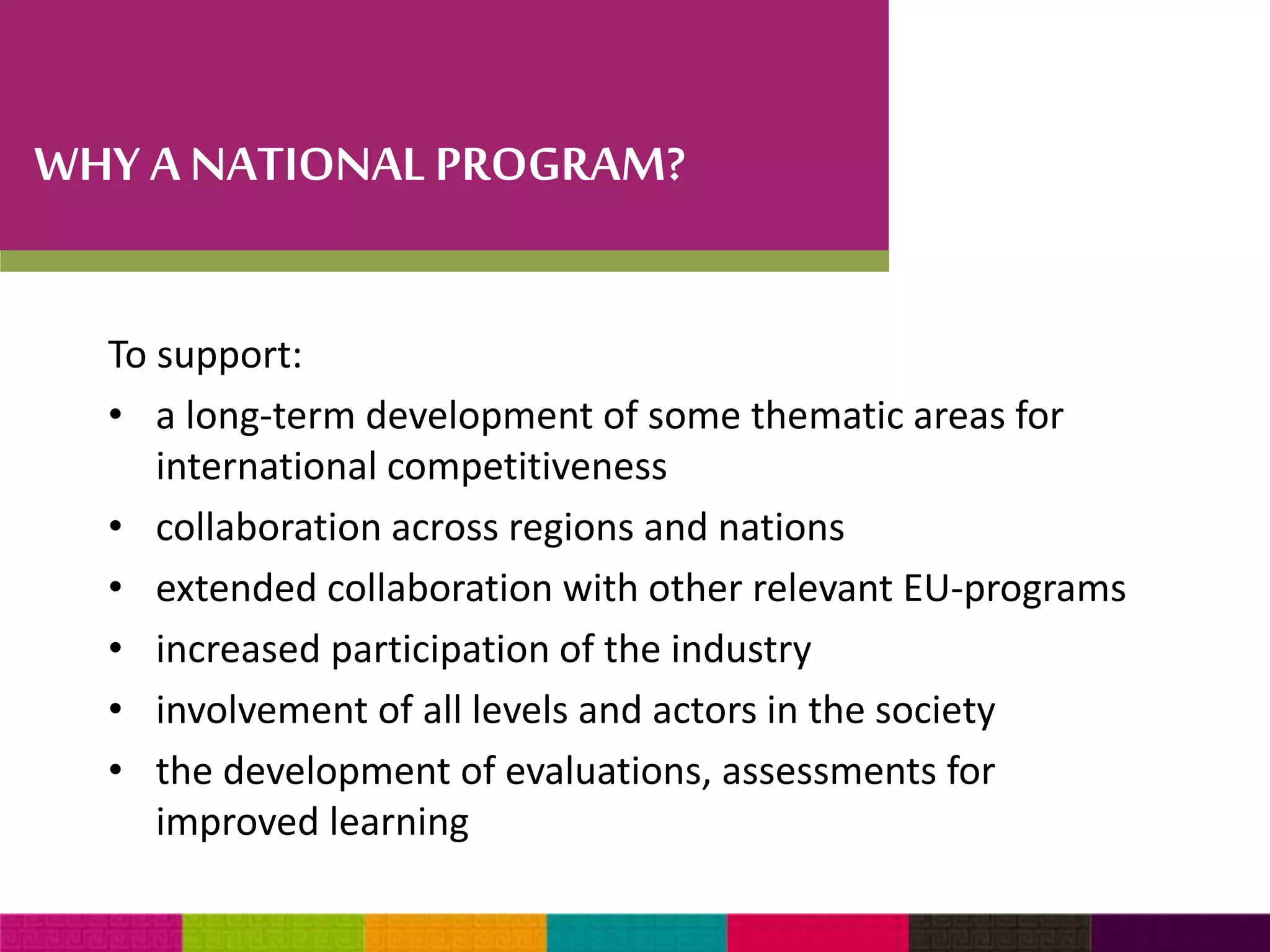
WHY A NATIONAL PROGRAM? 
To support: 
• a long-term development of some thematic areas for 
international competitiveness 
• collaboration across regions and nations 
• extended collaboration with other relevant EU-programs 
• increased participation of the industry 
• involvement of all levels and actors in the society 
• the development of evaluations, assessments for 
improved learning
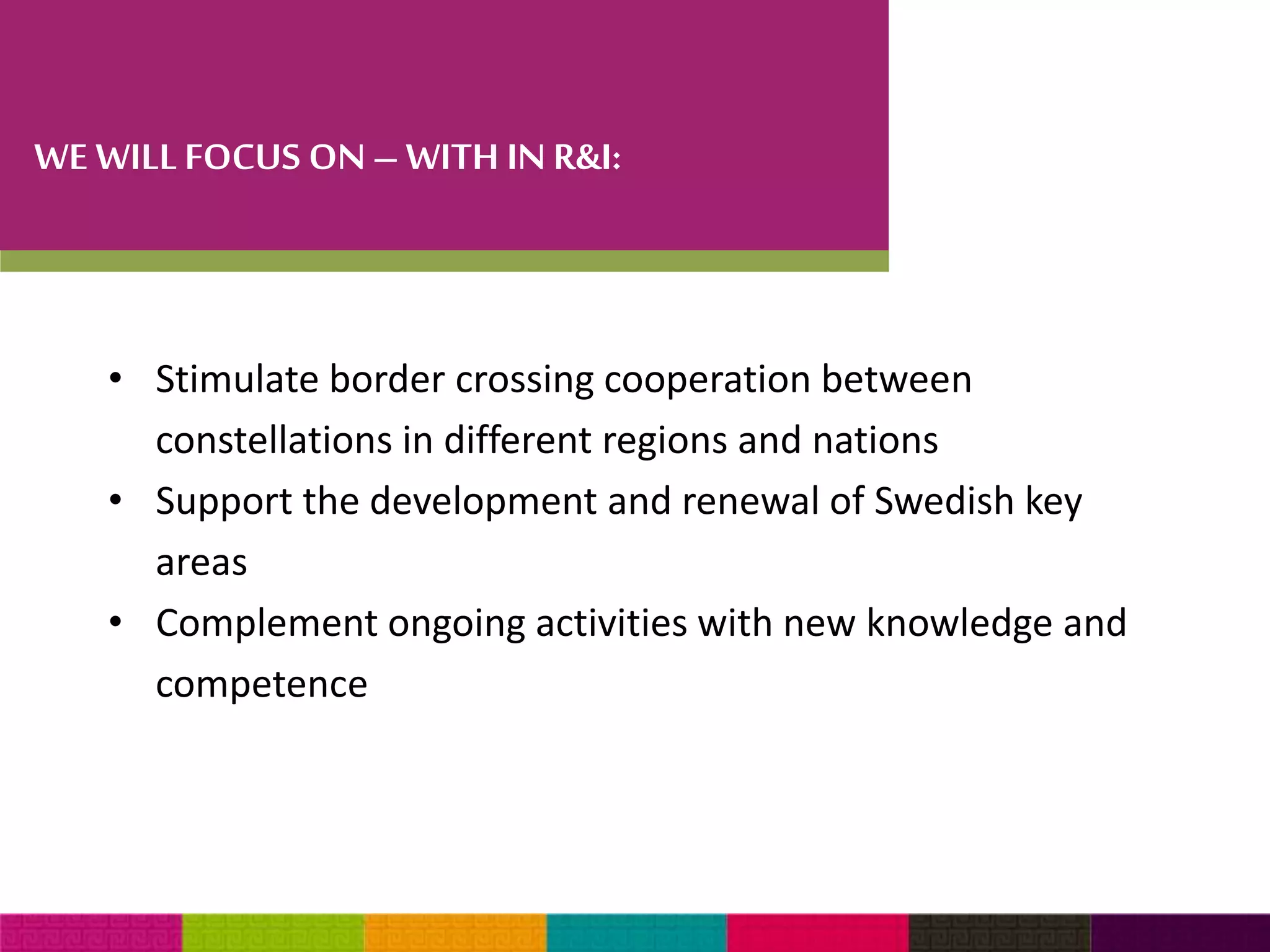
WE WILL FOCUS ON – WITH IN R&I: 
• Stimulate border crossing cooperation between 
constellations in different regions and nations 
• Support the development and renewal of Swedish key 
areas 
• Complement ongoing activities with new knowledge and 
competence
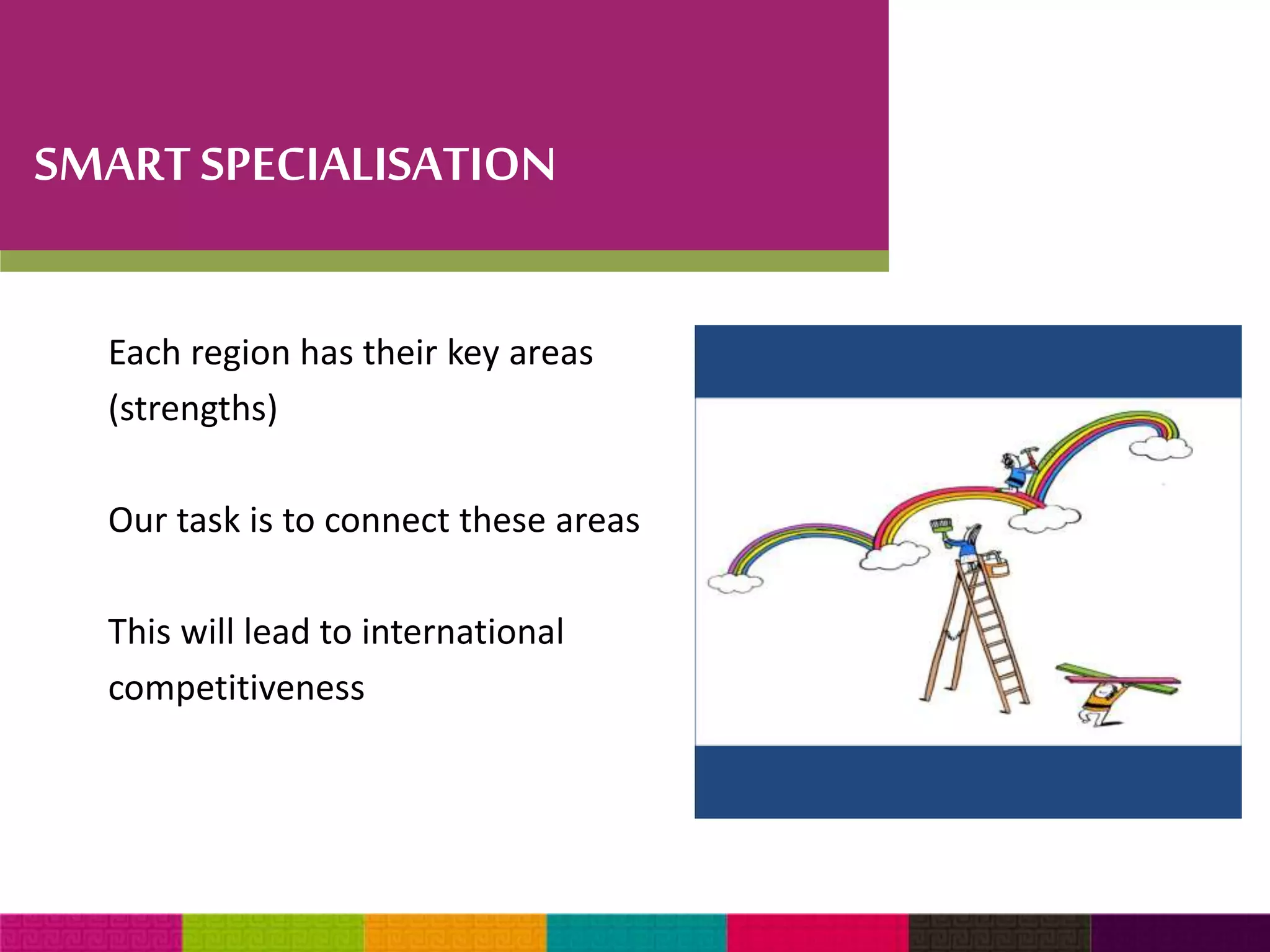
SMART SPECIALISATION 
Each region has their key areas 
(strengths) 
Our task is to connect these areas 
This will lead to international 
competitiveness
HOW ARE WE GOING TO DO THIS? 
Cross-border collaboration: 
• R&I projects 
• Making R&I infrastructure available, test & demo 
• International collaboration (The Baltic Sea, Europe) 
• Other collaboration projects
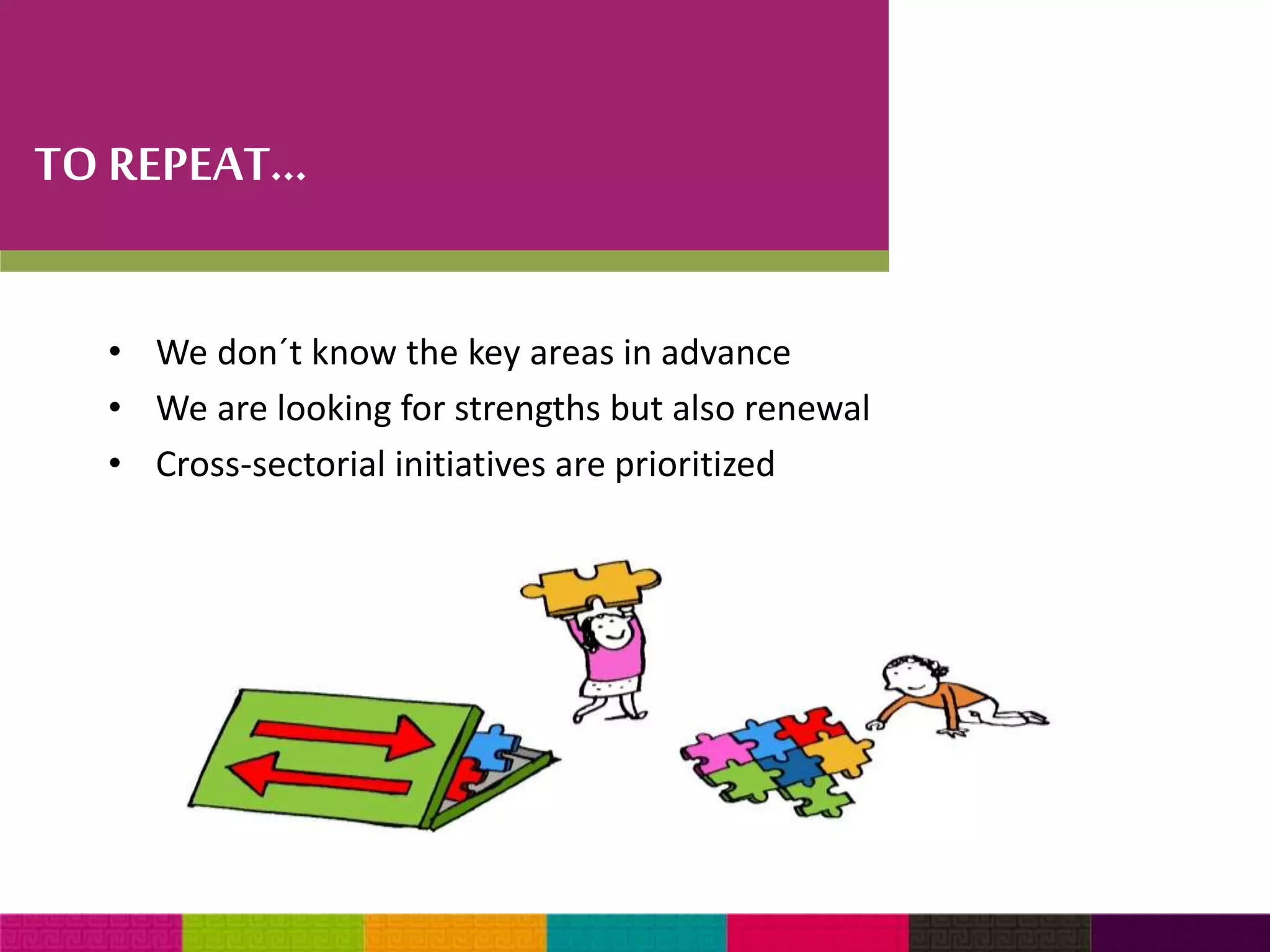
TO REPEAT… 
• We don´t know the key areas in advance 
• We are looking for strengths but also renewal 
• Cross-sectorial initiatives are prioritized
PROPOSED CRITERIA (1) 
Collaboration across regional and national borders for developing new 
areas of strengths 
The applicant should represent a Swedish area of strength 
Potential for future competitiveness, renewal and development in a 
global perspective. 
The project should involve research, industry and the public sector.
PROPOSED CRITERIA (2) 
The Global Challenges should be adressed 
Industry activities adressing enviromental goals 
Activities should be national prioritized 
Regional backing
THANK YOU 
CECILIA JOHANSSON, VINNOVA 
17 TH TCI GLOBAL CONFERENCE | CREATING SHARED VALUE THROUGH CLUSTERS FOR A SUSTAINABLE FUTURE

TCI 2014 Cross-clustering for future economic growth

  • 1.
    Cross-clustering for futureeconomic growth Cecilia Johansson Parallel 4.3 Topics on New Cluster Trends 12 November 2014
  • 2.
    CROSS-CLUSTERING FOR FUTUREECONOMIC GROWTH CECILIA JOHANSSON VINNOVA, SWEDISH AGENCY FOR ECONOMIC AND REGIONAL GROWTH
  • 3.
    PROGRAMS WITH CROSS-CLUSTERINGASPECTS Strategic Innovation Programs Vinnväxt RIK – Regional Innovation and Clusters BSR-Stars Innovation Express
  • 4.
    STRATEGIC INNOVATION PROGRAMS(1) The idea is for industry, the public sector and academia to collaborate for common prioritizations in terms of investments in research, development and innovation, thus strengthening one another.
  • 5.
    STRATEGIC INNOVATION PROGRAMS(2) 11 approved programs – examples of areas: Health Automation Bio-based Material Mining Light Weight Material IKT Aircraft Industry
  • 6.
    THE PACKAGING ARENAAND PRINTED ELECTRONICS ARENA How to combine excellent research for intelligent packaging and service related research for packaging? How can these clusters - one research based cluster and one cluster close to the market - provide and support each other in order to get stronger and more competitive?
  • 7.
    LEARNINGS FROM CROSSCLUSTERING • Legitimacy from the industry • Two leading clusters can take advantage of each other – if they are complementary to each other • Cluster networking must be a bottom-up process – important with trust from both sides • Important with an engaged leadership in both clusters • Start with the market needs – research is a long term process • Mutual trust is essential
  • 8.
    STRUCTURAL FUNDS –SOME FACTS • Different funds • Coordination: cohesion policy, rural development, maritime & fisheries funds • Comprehensive investment strategy: aligned with Europe 2020 objectives • Objectives and indicators to measure progress towards Europe 2020 targets
  • 9.
    ERDF IN SWEDEN • 9 programmes: 8 regional, 1 national • Focus on Innovation, SME and CO2 • Appr 1BnEUR in EU funding • 15% of budget towards a national programme • Smart Specialisation
  • 10.
    NINE FUNDS Organization2014-2020 – Regional Dev. Fund and Social Fund Organization 2014-2020 – Regional Dev. Fund and Social Fund Övre Norrland Övre Norrland Mellersta Norrland Mellersta Norrland Norra Mellansverige Östra Mellansverige Östra Mellansverige Stockholm Västsverige Småland och öarna Skåne-Blekinge Norra Mellansverige Stockholm Västsverige Småland och öarna Skåne-Blekinge
  • 11.
    WHY A NATIONALPROGRAM? To support: • a long-term development of some thematic areas for international competitiveness • collaboration across regions and nations • extended collaboration with other relevant EU-programs • increased participation of the industry • involvement of all levels and actors in the society • the development of evaluations, assessments for improved learning
  • 12.
    WE WILL FOCUSON – WITH IN R&I: • Stimulate border crossing cooperation between constellations in different regions and nations • Support the development and renewal of Swedish key areas • Complement ongoing activities with new knowledge and competence
  • 13.
    SMART SPECIALISATION Eachregion has their key areas (strengths) Our task is to connect these areas This will lead to international competitiveness
  • 14.
    HOW ARE WEGOING TO DO THIS? Cross-border collaboration: • R&I projects • Making R&I infrastructure available, test & demo • International collaboration (The Baltic Sea, Europe) • Other collaboration projects
  • 15.
    TO REPEAT… •We don´t know the key areas in advance • We are looking for strengths but also renewal • Cross-sectorial initiatives are prioritized
  • 16.
    PROPOSED CRITERIA (1) Collaboration across regional and national borders for developing new areas of strengths The applicant should represent a Swedish area of strength Potential for future competitiveness, renewal and development in a global perspective. The project should involve research, industry and the public sector.
  • 17.
    PROPOSED CRITERIA (2) The Global Challenges should be adressed Industry activities adressing enviromental goals Activities should be national prioritized Regional backing
  • 18.
    THANK YOU CECILIAJOHANSSON, VINNOVA 17 TH TCI GLOBAL CONFERENCE | CREATING SHARED VALUE THROUGH CLUSTERS FOR A SUSTAINABLE FUTURE

Editor's Notes

  • #3 Tell you about a new effort for cross-clustering