Zakat vs Taxes
Team members:
 Mohamed Mostafa Kadous
 Ali Nageh Ali Atallah
 Keriya Arsany
Supervised by / Prof Abdelrahman Youssri
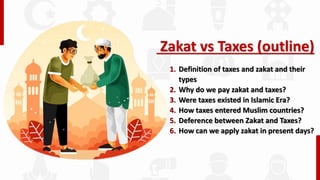
Zakat vs Taxes (outline)
1. Definition of taxes and zakat and their
types
2. Why do we pay zakat and taxes?
3. Were taxes existed in Islamic Era?
4. How taxes entered Muslim countries?
5. Deference between Zakat and Taxes?
6. How can we apply zakat in present days?
-Taxes is compulsory
contributions imposed on
individuals or corporations by a
government entity.
-Tax revenues finance
government activities.
What is Taxes?
Importance of taxes in Secular Economics
 Funding
public
goods
and
services
 Building
Infrastru
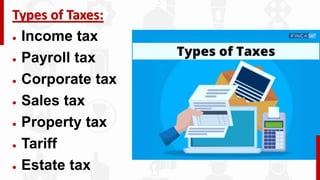
Types of Taxes:
 Income tax
 Payroll tax
 Corporate tax
 Sales tax
 Property tax
 Tariff
 Estate tax
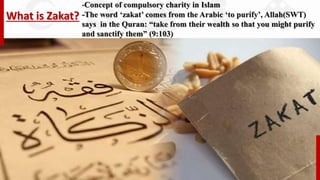
What is Zakat?
-Concept of compulsory charity in Islam
-The word ‘zakat’ comes from the Arabic ‘to purify’, Allah)SWT)
says in the Quran: “take from their wealth so that you might purify
and sanctify them” (9:103)
-Zakat is a right which the poor have over the wealthy; it is the duty of every wealthy
Muslim to fulfil this responsibility to those who are less fortunate
-Uses in the past
-All Zakat is spent on projects which are within the Zakat eligible categories
Who can receive Zakat?
1. Al-Fuqara (The poor)
2. Al-Masakin (The needy)
3. Zakat collectors
4. Who converted to Islam
5. Freeing captives
6. Debtors
7. In the path of Allah
8. Wayfarer (Travelers)
Did taxes exist in Islamic era?
Yes,
Taxes were imposed in the Islamic
state, and it dealt with non-Muslims,
and the situation was not as prevalent
as it is now in secular countries
For example, jizya is a compensation
for the security and protection that the
non-Muslims have in the Islamic state
without fighting for the defense of the
country.
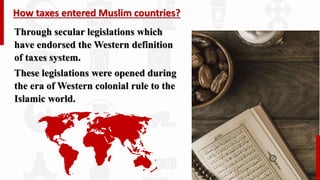
How taxes entered Muslim countries?
Through secular legislations which
have endorsed the Western definition
of taxes system.
These legislations were opened during
the era of Western colonial rule to the
Islamic world.
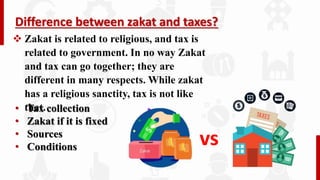
Difference between zakat and taxes?
 Zakat is related to religious, and tax is
related to government. In no way Zakat
and tax can go together; they are
different in many respects. While zakat
has a religious sanctity, tax is not like
that.
vs
• Tax collection
• Zakat if it is fixed
• Sources
• Conditions
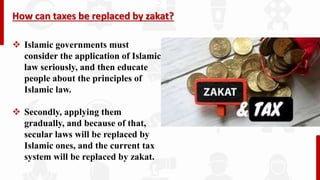
How can taxes be replaced by zakat?
 Islamic governments must
consider the application of Islamic
law seriously, and then educate
people about the principles of
Islamic law.
 Secondly, applying them
gradually, and because of that,
secular laws will be replaced by
Islamic ones, and the current tax
system will be replaced by zakat.
Thank
you!

Taxes Vs. Zakat

  • 1.
    Zakat vs Taxes Teammembers:  Mohamed Mostafa Kadous  Ali Nageh Ali Atallah  Keriya Arsany Supervised by / Prof Abdelrahman Youssri
  • 2.
    Zakat vs Taxes(outline) 1. Definition of taxes and zakat and their types 2. Why do we pay zakat and taxes? 3. Were taxes existed in Islamic Era? 4. How taxes entered Muslim countries? 5. Deference between Zakat and Taxes? 6. How can we apply zakat in present days?
  • 3.
    -Taxes is compulsory contributionsimposed on individuals or corporations by a government entity. -Tax revenues finance government activities. What is Taxes?
  • 4.
    Importance of taxesin Secular Economics  Funding public goods and services  Building Infrastru
  • 5.
    Types of Taxes: Income tax  Payroll tax  Corporate tax  Sales tax  Property tax  Tariff  Estate tax
  • 6.
    What is Zakat? -Conceptof compulsory charity in Islam -The word ‘zakat’ comes from the Arabic ‘to purify’, Allah)SWT) says in the Quran: “take from their wealth so that you might purify and sanctify them” (9:103)
  • 7.
    -Zakat is aright which the poor have over the wealthy; it is the duty of every wealthy Muslim to fulfil this responsibility to those who are less fortunate -Uses in the past -All Zakat is spent on projects which are within the Zakat eligible categories
  • 8.
    Who can receiveZakat? 1. Al-Fuqara (The poor) 2. Al-Masakin (The needy) 3. Zakat collectors 4. Who converted to Islam 5. Freeing captives 6. Debtors 7. In the path of Allah 8. Wayfarer (Travelers)
  • 9.
    Did taxes existin Islamic era? Yes, Taxes were imposed in the Islamic state, and it dealt with non-Muslims, and the situation was not as prevalent as it is now in secular countries For example, jizya is a compensation for the security and protection that the non-Muslims have in the Islamic state without fighting for the defense of the country.
  • 10.
    How taxes enteredMuslim countries? Through secular legislations which have endorsed the Western definition of taxes system. These legislations were opened during the era of Western colonial rule to the Islamic world.
  • 11.
    Difference between zakatand taxes?  Zakat is related to religious, and tax is related to government. In no way Zakat and tax can go together; they are different in many respects. While zakat has a religious sanctity, tax is not like that. vs • Tax collection • Zakat if it is fixed • Sources • Conditions
  • 12.
    How can taxesbe replaced by zakat?  Islamic governments must consider the application of Islamic law seriously, and then educate people about the principles of Islamic law.  Secondly, applying them gradually, and because of that, secular laws will be replaced by Islamic ones, and the current tax system will be replaced by zakat.
  • 13.