ZAKAT CONTRIBUTION IN
DECREASING POVERTYAND
ZAKAT VS TAXATION
Zakat
 Zakat is the third pillar of Islam
 The word zakat means growth, cleanness
and purity in Arabic (Ibn Faeis,1998).
 It is an obligatory form of worship
(Ibadah) prescribed by Allah s.w.t
 “… so establish Salat and give Zakat, and
hold fast to Allah …”
 (Al-Qur’an 22:78)
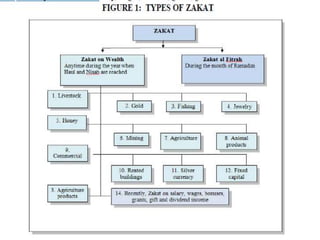
TYPES OF ZAKAT
 Zakat al-Fitrah
 zakat on wealth
Purpose of Zakat
 Zakat actually helps to generate a flow of
funds and at the same time increase the
consumption of the poor people
 It is obligatory upon all the Muslims to
give a part of their wealth according to the
ratio given by Allah
 the zakat must be paid from the lawful
wealth and assets
Zakat
 zakat cannot be calculated on prohibited
things
 The word Zakat is mentioned 30 times in
Quran and at three places it appears as
being commanded by Allah (s.w.t).
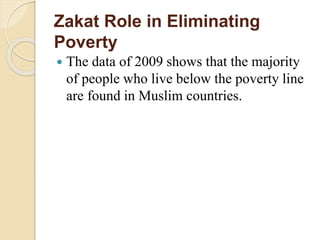
Zakat Role in Eliminating
Poverty
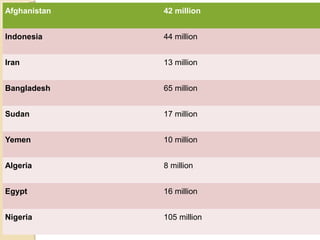
 The data of 2009 shows that the majority
of people who live below the poverty line
are found in Muslim countries.
Afghanistan 42 million
Indonesia 44 million
Iran 13 million
Bangladesh 65 million
Sudan 17 million
Yemen 10 million
Algeria 8 million
Egypt 16 million
Nigeria 105 million
To be Continued
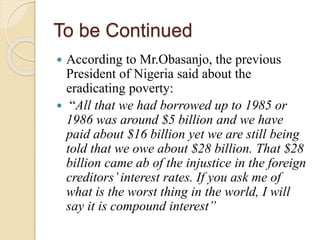
 According to Mr.Obasanjo, the previous
President of Nigeria said about the
eradicating poverty:
 “All that we had borrowed up to 1985 or
1986 was around $5 billion and we have
paid about $16 billion yet we are still being
told that we owe about $28 billion. That $28
billion came ab of the injustice in the foreign
creditors’interest rates. If you ask me of
what is the worst thing in the world, I will
say it is compound interest”
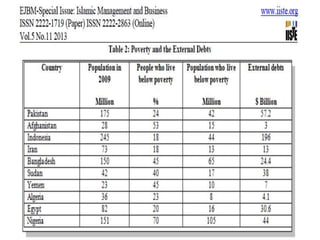
Countries External Debt
Pakistan $57.2 billion,
Afghanistan $3 billion
Indonesia $196 billion
Iran $13 billion
Bangladesh $24.4 billion
Sudan $38 billion
Yemen $7 billion
Algeria $4.1 billion
Egypt $30.6 billion
Nigeria $44 billion.
Role of Zakat in Eliminating
Riba
 We all know that interest is basically a
effortless profit
 interest money goes from the poor
countries to the rich countries as well as to
from the poor people to the rich one
 But in Islamic system, It is clearly said
that rich people has to give their money to
help those who are in need
Zakat
 (Surat al-Rum, 30:39).
 And whatever you give for interest to
increase within the wealth of people will
not increase with Allah. But what you give
in Zakah , desiring the countenance of
Allah- those are the multipliers.
 that zakat is one of the alternative
financial institutions that can help to
eliminate riba from Muslim society
Role of Zakat in Eradicating
Poverty
 zakat managed to eradicate total poverty
during the time of Umar ibn al Khattab
(13-22H) and during the time of Umar bin
Abdul Aziz (99-10H).
Categories of Zakat
 Financial Institution for Faqir/poor
 Financial Institution for Miskeen/Needy
 Financial Institution for ‘Amil/Zakat Manager
 Financial Institution for al-Muallafah
Qulubuhm/Converts to Islam
 Financial Institution for fi ar-Riqab/Liberating
Slaves/Captives
 Financial Institution for Gharimin/ Debtor
 Financial Institution for Fisabillillah/for the
Sake of Allah
To be continued
 Financial Institution for Ibnus Sabil/stranded
during a journey
Researchers point of view
 like Ahmed (2002) and Kahf (2004),
they said that implementing zakat can
provide a micro financing to the poor
 Saiful Azhar Rosly, (2008) said that zakat
can help in eradicating the poverty.
 S.M.Ali Akkas, (2006) found that strength
of zakat as a poverty alleviation tool is
basically depends on how much of the
prevailing poverty gaps would be financed
by zakat proceeds
Taxation and Zakat
 There are many theorists such as Hobbes,
Locke, Rousseau, Smith, Murphy and
Nagel and others who authorized taxation
as a means of financing governments and
redistribution of wealth.
 Hobbes said that tax be imposed
according to the benefit derived by each
individual from the existence of the state
and from the services it provides.
Zakat and Taxation
 Zakat could ensure that if this system is
implemented properly than the rich do not
become poor but the poor cease to be
poor.
 Zakat is levied on the individuals savings
 Tax is levied on the income of a individual
 poor people who do not have savings are
not obliged to pay any zakat.
Tax and Zakat
 Taxes are paid on income and taxes
always increase as well
 Tax ratio can be changed
 Samson points to the fact that until the
18th century, most Islamic countries were
ruled according to the framework of the
Shari-ah;
Conclusion
 Zakat is the best tool for decreasing poverty,
it is so helpful that if we collect zakat
properly so there will be a time when no one
is poor
 In case of tax and zakat, zakat is better
because it is fixed its ratio cannot be
changed, tax is taken from poor as well
either of that they barely surviving so why
they have to pay. In case of Zakat rich people
are the one who are going to pay so the poor
people improve there life.

Zakat

  • 1.
    ZAKAT CONTRIBUTION IN DECREASINGPOVERTYAND ZAKAT VS TAXATION
  • 2.
    Zakat  Zakat isthe third pillar of Islam  The word zakat means growth, cleanness and purity in Arabic (Ibn Faeis,1998).  It is an obligatory form of worship (Ibadah) prescribed by Allah s.w.t  “… so establish Salat and give Zakat, and hold fast to Allah …”  (Al-Qur’an 22:78)
  • 3.
    TYPES OF ZAKAT Zakat al-Fitrah  zakat on wealth
  • 5.
    Purpose of Zakat Zakat actually helps to generate a flow of funds and at the same time increase the consumption of the poor people  It is obligatory upon all the Muslims to give a part of their wealth according to the ratio given by Allah  the zakat must be paid from the lawful wealth and assets
  • 6.
    Zakat  zakat cannotbe calculated on prohibited things  The word Zakat is mentioned 30 times in Quran and at three places it appears as being commanded by Allah (s.w.t).
  • 7.
    Zakat Role inEliminating Poverty  The data of 2009 shows that the majority of people who live below the poverty line are found in Muslim countries.
  • 8.
    Afghanistan 42 million Indonesia44 million Iran 13 million Bangladesh 65 million Sudan 17 million Yemen 10 million Algeria 8 million Egypt 16 million Nigeria 105 million
  • 9.
    To be Continued According to Mr.Obasanjo, the previous President of Nigeria said about the eradicating poverty:  “All that we had borrowed up to 1985 or 1986 was around $5 billion and we have paid about $16 billion yet we are still being told that we owe about $28 billion. That $28 billion came ab of the injustice in the foreign creditors’interest rates. If you ask me of what is the worst thing in the world, I will say it is compound interest”
  • 10.
    Countries External Debt Pakistan$57.2 billion, Afghanistan $3 billion Indonesia $196 billion Iran $13 billion Bangladesh $24.4 billion Sudan $38 billion Yemen $7 billion Algeria $4.1 billion Egypt $30.6 billion Nigeria $44 billion.
  • 12.
    Role of Zakatin Eliminating Riba  We all know that interest is basically a effortless profit  interest money goes from the poor countries to the rich countries as well as to from the poor people to the rich one  But in Islamic system, It is clearly said that rich people has to give their money to help those who are in need
  • 13.
    Zakat  (Surat al-Rum,30:39).  And whatever you give for interest to increase within the wealth of people will not increase with Allah. But what you give in Zakah , desiring the countenance of Allah- those are the multipliers.  that zakat is one of the alternative financial institutions that can help to eliminate riba from Muslim society
  • 14.
    Role of Zakatin Eradicating Poverty  zakat managed to eradicate total poverty during the time of Umar ibn al Khattab (13-22H) and during the time of Umar bin Abdul Aziz (99-10H).
  • 15.
    Categories of Zakat Financial Institution for Faqir/poor  Financial Institution for Miskeen/Needy  Financial Institution for ‘Amil/Zakat Manager  Financial Institution for al-Muallafah Qulubuhm/Converts to Islam  Financial Institution for fi ar-Riqab/Liberating Slaves/Captives  Financial Institution for Gharimin/ Debtor  Financial Institution for Fisabillillah/for the Sake of Allah
  • 16.
    To be continued Financial Institution for Ibnus Sabil/stranded during a journey
  • 17.
    Researchers point ofview  like Ahmed (2002) and Kahf (2004), they said that implementing zakat can provide a micro financing to the poor  Saiful Azhar Rosly, (2008) said that zakat can help in eradicating the poverty.  S.M.Ali Akkas, (2006) found that strength of zakat as a poverty alleviation tool is basically depends on how much of the prevailing poverty gaps would be financed by zakat proceeds
  • 18.
    Taxation and Zakat There are many theorists such as Hobbes, Locke, Rousseau, Smith, Murphy and Nagel and others who authorized taxation as a means of financing governments and redistribution of wealth.
  • 19.
     Hobbes saidthat tax be imposed according to the benefit derived by each individual from the existence of the state and from the services it provides.
  • 20.
    Zakat and Taxation Zakat could ensure that if this system is implemented properly than the rich do not become poor but the poor cease to be poor.  Zakat is levied on the individuals savings  Tax is levied on the income of a individual  poor people who do not have savings are not obliged to pay any zakat.
  • 21.
    Tax and Zakat Taxes are paid on income and taxes always increase as well  Tax ratio can be changed  Samson points to the fact that until the 18th century, most Islamic countries were ruled according to the framework of the Shari-ah;
  • 22.
    Conclusion  Zakat isthe best tool for decreasing poverty, it is so helpful that if we collect zakat properly so there will be a time when no one is poor  In case of tax and zakat, zakat is better because it is fixed its ratio cannot be changed, tax is taken from poor as well either of that they barely surviving so why they have to pay. In case of Zakat rich people are the one who are going to pay so the poor people improve there life.