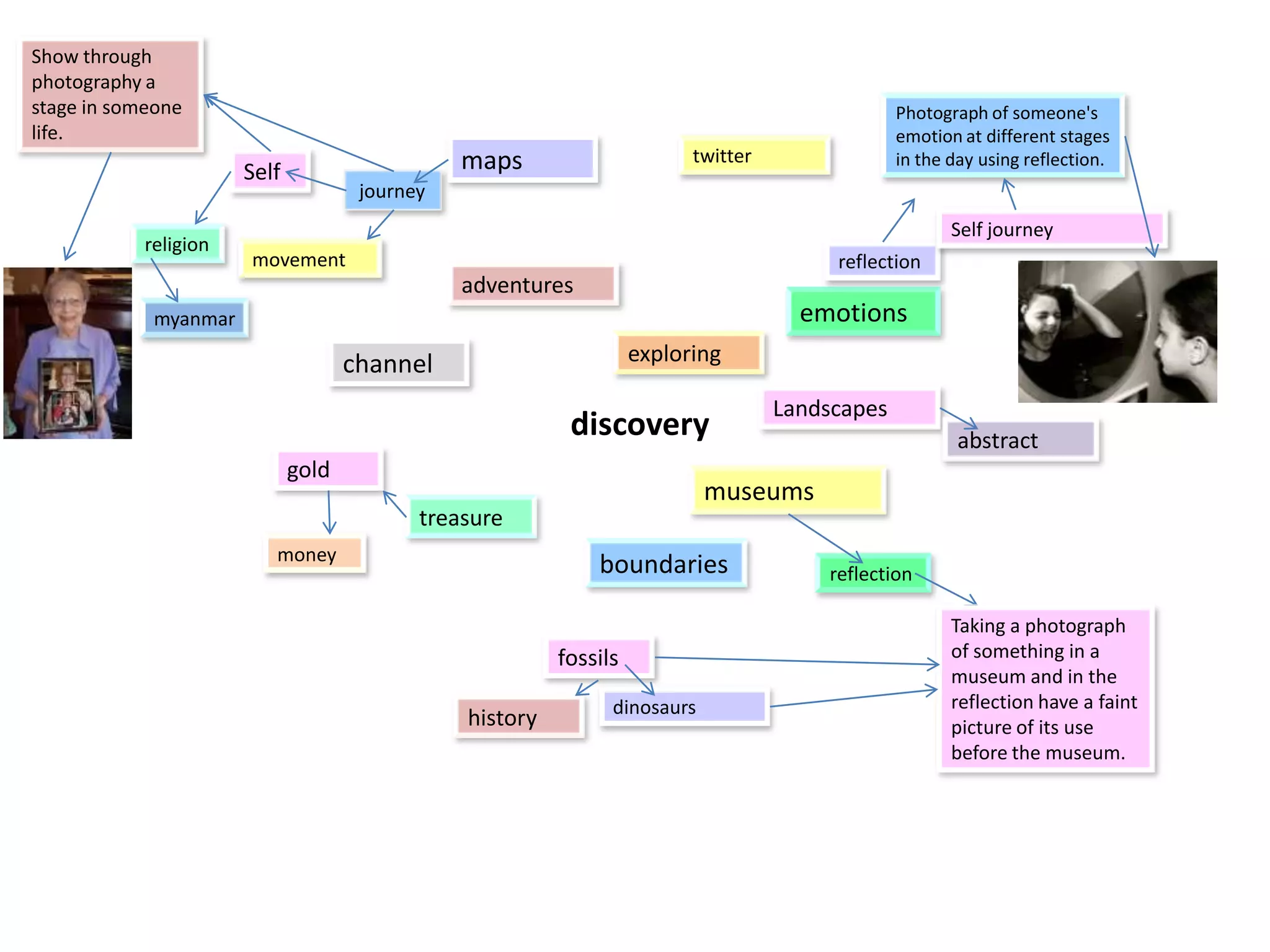
Show through
photography a
stage in someone
life.

religion

twitter

maps

Self

Photograph of someone's
emotion at different stages
in the day using reflection.

journey

Self journey
movement

reflection

adventures

emotions

myanmar

exploring

channel

discovery
gold

Landscapes
abstract

museums
treasure

money

boundaries
fossils
history

dinosaurs

reflection
Taking a photograph
of something in a
museum and in the
reflection have a faint
picture of its use
before the museum.
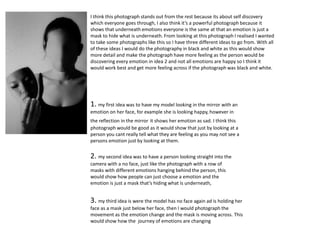
I think this photograph stands out from the rest because its about self discovery
which everyone goes through, I also think it’s a powerful photograph because it
shows that underneath emotions everyone is the same at that an emotion is just a
mask to hide what is underneath. From looking at this photograph I realised I wanted
to take some photographs like this so I have three different ideas to go from. With all
of these ideas I would do the photography in black and white as this would show
more detail and make the photograph have more feeling as the person would be
discovering every emotion in idea 2 and not all emotions are happy so I think it
would work best and get more feeling across if the photograph was black and white.

1. my first idea was to have my model looking in the mirror with an
emotion on her face, for example she is looking happy, however in
the reflection in the mirror it shows her emotion as sad. I think this
photograph would be good as it would show that just by looking at a
person you cant really tell what they are feeling as you may not see a
persons emotion just by looking at them.

2. my second idea was to have a person looking straight into the
camera with a no face, just like the photograph with a row of
masks with different emotions hanging behind the person, this
would show how people can just choose a emotion and the
emotion is just a mask that’s hiding what is underneath,

3. my third idea is were the model has no face again ad is holding her
face as a mask just below her face, then I would photograph the
movement as the emotion change and the mask is moving across. This
would show how the journey of emotions are changing
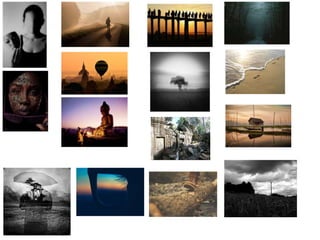
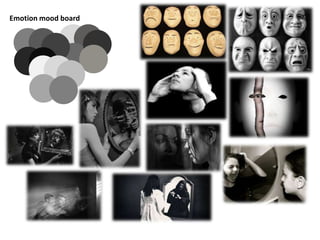
Emotion mood board
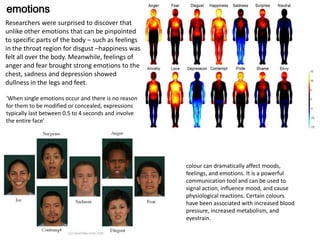
emotions
Researchers were surprised to discover that
unlike other emotions that can be pinpointed
to specific parts of the body – such as feelings
in the throat region for disgust –happiness was
felt all over the body. Meanwhile, feelings of
anger and fear brought strong emotions to the
chest, sadness and depression showed
dullness in the legs and feet.
‘When single emotions occur and there is no reason
for them to be modified or concealed, expressions
typically last between 0.5 to 4 seconds and involve
the entire face’

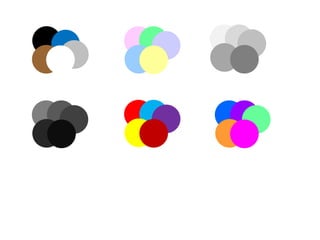
colour can dramatically affect moods,
feelings, and emotions. It is a powerful
communication tool and can be used to
signal action, influence mood, and cause
physiological reactions. Certain colours
have been associated with increased blood
pressure, increased metabolism, and
eyestrain.
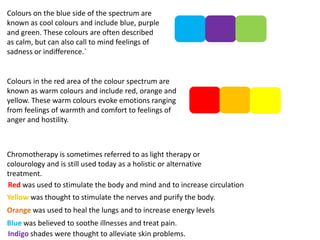
Colours on the blue side of the spectrum are
known as cool colours and include blue, purple
and green. These colours are often described
as calm, but can also call to mind feelings of
sadness or indifference.`

Colours in the red area of the colour spectrum are
known as warm colours and include red, orange and
yellow. These warm colours evoke emotions ranging
from feelings of warmth and comfort to feelings of
anger and hostility.

Chromotherapy is sometimes referred to as light therapy or
colourology and is still used today as a holistic or alternative
treatment.
Red was used to stimulate the body and mind and to increase circulation
Yellow was thought to stimulate the nerves and purify the body.
Orange was used to heal the lungs and to increase energy levels
Blue was believed to soothe illnesses and treat pain.
Indigo shades were thought to alleviate skin problems.
Human
emotions
The component that seems to be the core of
common sense approaches to emotion is the
feeling component, i.e., the passion or
sensation of emotion.
A less obvious component of emotion is the
set of internal bodily changes caused by the
smooth muscles and glands.

Another obvious descriptive component of
emotion is the set of behaviours that may be
performed and observed in conjunction with
an emotion.

Another less observable component in
emotion consists of the ideation, imagery, and
thoughts that occur during emotion.
fear and surprise shared the "signal" of wide
open eyes, while anger and disgust shared a
wrinkled nose.
‘The study has challenged a commonly-held
belief that there are six basic emotions of
happiness, sadness, fear, anger, surprise and
disgust.’

Task 4

  • 1.
    Show through photography a stagein someone life. religion twitter maps Self Photograph of someone's emotion at different stages in the day using reflection. journey Self journey movement reflection adventures emotions myanmar exploring channel discovery gold Landscapes abstract museums treasure money boundaries fossils history dinosaurs reflection Taking a photograph of something in a museum and in the reflection have a faint picture of its use before the museum.
  • 4.
    I think thisphotograph stands out from the rest because its about self discovery which everyone goes through, I also think it’s a powerful photograph because it shows that underneath emotions everyone is the same at that an emotion is just a mask to hide what is underneath. From looking at this photograph I realised I wanted to take some photographs like this so I have three different ideas to go from. With all of these ideas I would do the photography in black and white as this would show more detail and make the photograph have more feeling as the person would be discovering every emotion in idea 2 and not all emotions are happy so I think it would work best and get more feeling across if the photograph was black and white. 1. my first idea was to have my model looking in the mirror with an emotion on her face, for example she is looking happy, however in the reflection in the mirror it shows her emotion as sad. I think this photograph would be good as it would show that just by looking at a person you cant really tell what they are feeling as you may not see a persons emotion just by looking at them. 2. my second idea was to have a person looking straight into the camera with a no face, just like the photograph with a row of masks with different emotions hanging behind the person, this would show how people can just choose a emotion and the emotion is just a mask that’s hiding what is underneath, 3. my third idea is were the model has no face again ad is holding her face as a mask just below her face, then I would photograph the movement as the emotion change and the mask is moving across. This would show how the journey of emotions are changing
  • 5.
  • 6.
    emotions Researchers were surprisedto discover that unlike other emotions that can be pinpointed to specific parts of the body – such as feelings in the throat region for disgust –happiness was felt all over the body. Meanwhile, feelings of anger and fear brought strong emotions to the chest, sadness and depression showed dullness in the legs and feet. ‘When single emotions occur and there is no reason for them to be modified or concealed, expressions typically last between 0.5 to 4 seconds and involve the entire face’ colour can dramatically affect moods, feelings, and emotions. It is a powerful communication tool and can be used to signal action, influence mood, and cause physiological reactions. Certain colours have been associated with increased blood pressure, increased metabolism, and eyestrain.
  • 7.
    Colours on theblue side of the spectrum are known as cool colours and include blue, purple and green. These colours are often described as calm, but can also call to mind feelings of sadness or indifference.` Colours in the red area of the colour spectrum are known as warm colours and include red, orange and yellow. These warm colours evoke emotions ranging from feelings of warmth and comfort to feelings of anger and hostility. Chromotherapy is sometimes referred to as light therapy or colourology and is still used today as a holistic or alternative treatment. Red was used to stimulate the body and mind and to increase circulation Yellow was thought to stimulate the nerves and purify the body. Orange was used to heal the lungs and to increase energy levels Blue was believed to soothe illnesses and treat pain. Indigo shades were thought to alleviate skin problems.
  • 8.
    Human emotions The component thatseems to be the core of common sense approaches to emotion is the feeling component, i.e., the passion or sensation of emotion. A less obvious component of emotion is the set of internal bodily changes caused by the smooth muscles and glands. Another obvious descriptive component of emotion is the set of behaviours that may be performed and observed in conjunction with an emotion. Another less observable component in emotion consists of the ideation, imagery, and thoughts that occur during emotion. fear and surprise shared the "signal" of wide open eyes, while anger and disgust shared a wrinkled nose. ‘The study has challenged a commonly-held belief that there are six basic emotions of happiness, sadness, fear, anger, surprise and disgust.’