
{
Tardiness Prevention
Workshop
Facilitated by :Mr. Ian Eddy
WELCOME!
{
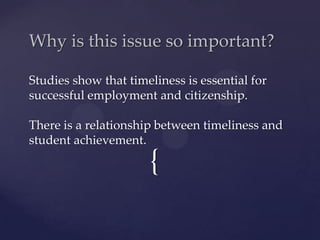
Why is this issue so important?
Studies show that timeliness is essential for
successful employment and citizenship.
There is a relationship between timeliness and
student achievement.
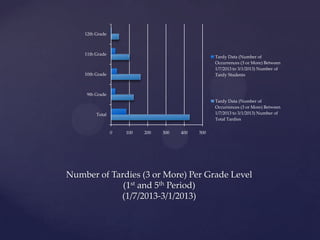
Number of Tardies (3 or More) Per Grade Level
(1st and 5th Period)
(1/7/2013-3/1/2013)
0 100 200 300 400 500
Total
9th Grade
10th Grade
11th Grade
12th Grade
Tardy Data (Number of
Occurrences (3 or More) Between
1/7/2013 to 3/1/2013) Number of
Tardy Students
Tardy Data (Number of
Occurrences (3 or More) Between
1/7/2013 to 3/1/2013) Number of
Total Tardies
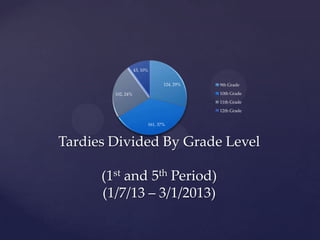
Tardies Divided By Grade Level
(1st and 5th Period)
(1/7/13 – 3/1/2013)
124, 29%
161, 37%
102, 24%
43, 10%
9th Grade
10th Grade
11th Grade
12th Grade
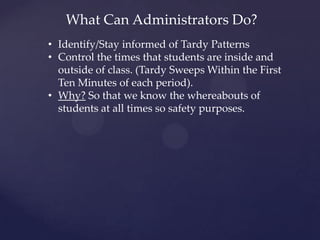
• Identify/Stay informed of Tardy Patterns
• Control the times that students are inside and
outside of class. (Tardy Sweeps Within the First
Ten Minutes of each period).
• Why? So that we know the whereabouts of
students at all times so safety purposes.
What Can Administrators Do?
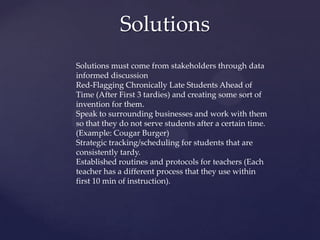
Solutions
Solutions must come from stakeholders through data
informed discussion
Red-Flagging Chronically Late Students Ahead of
Time (After First 3 tardies) and creating some sort of
invention for them.
Speak to surrounding businesses and work with them
so that they do not serve students after a certain time.
(Example: Cougar Burger)
Strategic tracking/scheduling for students that are
consistently tardy.
Established routines and protocols for teachers (Each
teacher has a different process that they use within
first 10 min of instruction).
{
What are we currently
doing about tardiness?
Can we improve these
methods/protocols?
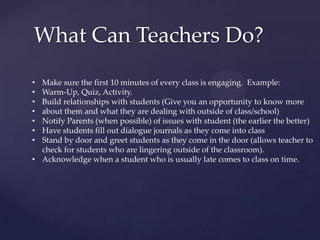
What Can Teachers Do?
• Make sure the first 10 minutes of every class is engaging. Example:
• Warm-Up, Quiz, Activity.
• Build relationships with students (Give you an opportunity to know more
• about them and what they are dealing with outside of class/school)
• Notify Parents (when possible) of issues with student (the earlier the better)
• Have students fill out dialogue journals as they come into class
• Stand by door and greet students as they come in the door (allows teacher to
check for students who are lingering outside of the classroom).
• Acknowledge when a student who is usually late comes to class on time.

Tardy presentation 1

  • 1.
  • 2.
    { Why is thisissue so important? Studies show that timeliness is essential for successful employment and citizenship. There is a relationship between timeliness and student achievement.
  • 3.
    Number of Tardies(3 or More) Per Grade Level (1st and 5th Period) (1/7/2013-3/1/2013) 0 100 200 300 400 500 Total 9th Grade 10th Grade 11th Grade 12th Grade Tardy Data (Number of Occurrences (3 or More) Between 1/7/2013 to 3/1/2013) Number of Tardy Students Tardy Data (Number of Occurrences (3 or More) Between 1/7/2013 to 3/1/2013) Number of Total Tardies
  • 4.
    Tardies Divided ByGrade Level (1st and 5th Period) (1/7/13 – 3/1/2013) 124, 29% 161, 37% 102, 24% 43, 10% 9th Grade 10th Grade 11th Grade 12th Grade
  • 5.
    • Identify/Stay informedof Tardy Patterns • Control the times that students are inside and outside of class. (Tardy Sweeps Within the First Ten Minutes of each period). • Why? So that we know the whereabouts of students at all times so safety purposes. What Can Administrators Do?
  • 6.
    Solutions Solutions must comefrom stakeholders through data informed discussion Red-Flagging Chronically Late Students Ahead of Time (After First 3 tardies) and creating some sort of invention for them. Speak to surrounding businesses and work with them so that they do not serve students after a certain time. (Example: Cougar Burger) Strategic tracking/scheduling for students that are consistently tardy. Established routines and protocols for teachers (Each teacher has a different process that they use within first 10 min of instruction).
  • 7.
    { What are wecurrently doing about tardiness? Can we improve these methods/protocols?
  • 8.
    What Can TeachersDo? • Make sure the first 10 minutes of every class is engaging. Example: • Warm-Up, Quiz, Activity. • Build relationships with students (Give you an opportunity to know more • about them and what they are dealing with outside of class/school) • Notify Parents (when possible) of issues with student (the earlier the better) • Have students fill out dialogue journals as they come into class • Stand by door and greet students as they come in the door (allows teacher to check for students who are lingering outside of the classroom). • Acknowledge when a student who is usually late comes to class on time.