Mastering Complexity 
Max Blumberg, PhD 
All content remains the property of Blumberg Partnership Ltd 
and may only be used with prior written consent 
www.maxb.com 
maxblumberg@blumbergpartnership.com 
M - +44 (0) 7768 455345 
T - +44 (0) 1252 628552
Personal Introduction 
2 
 Musician 
 Computer scientist 
 Accenture consultant 
 Technology start-up 
 PhD & Research Fellow at Goldsmiths 
 Consult globally: HR Analytics, Organizational & Sales force performance, CIPD people 
strategy
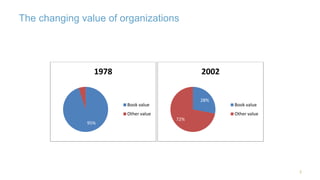
The changing value of organizations 
3 
95% 
5% 
1978 
Book value 
Other value 
28% 
72% 
2002 
Book value 
Other value
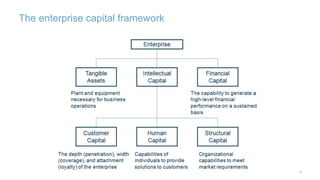
The enterprise capital framework 
4
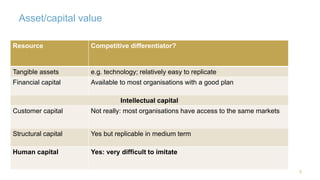
Asset/capital value 
5 
Resource Competitive differentiator? 
Tangible assets e.g. technology; relatively easy to replicate 
Financial capital Available to most organisations with a good plan 
Intellectual capital 
Customer capital Not really: most organisations have access to the same markets 
Structural capital Yes but replicable in medium term 
Human capital Yes: very difficult to imitate
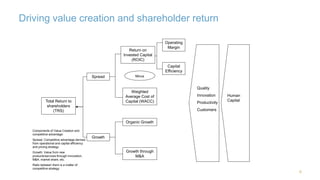
Driving value creation and shareholder return 
6 
Total Return to 
shareholders 
(TRS) 
Spread 
Return on 
Invested Capital 
(ROIC) 
Minus 
Weighted 
Average Cost of 
Capital (WACC) 
Growth 
Organic Growth 
Growth through 
M&A 
Operating 
Margin 
Capital 
Efficiency 
Components of Value Creation and 
competitive advantage: 
Spread: Competitive advantage derived 
from operational and capital efficiency 
and pricing strategy 
Growth: Value from new 
products/services through innovation, 
M&A, market share, etc. 
Ratio between them is a matter of 
competitive strategy 
Quality 
Innovation 
Productivity 
Customers 
Human 
Capital
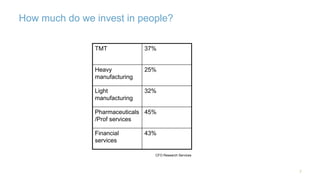
How much do we invest in people? 
7 
TMT 37% 
Heavy 
manufacturing 
25% 
Light 
manufacturing 
32% 
Pharmaceuticals 
/Prof services 
45% 
Financial 
services 
43% 
CFO Research Services
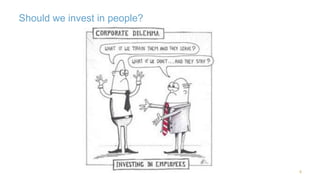
Should we invest in people? 
8
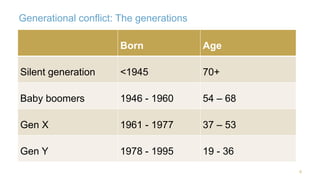
Generational conflict: The generations 
9 
Born Age 
Silent generation <1945 70+ 
Baby boomers 1946 - 1960 54 – 68 
Gen X 1961 - 1977 37 – 53 
Gen Y 1978 - 1995 19 - 36
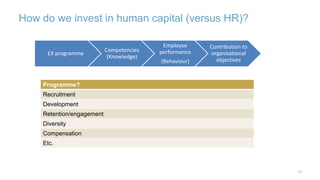
How do we invest in human capital (versus HR)? 
10 
£X programme 
Competencies 
(Knowledge) 
Employee 
performance 
(Behaviour) 
Contribution to 
organisational 
objectives 
Programme? 
Recruitment 
Development 
Retention/engagement 
Diversity 
Compensation 
Etc.
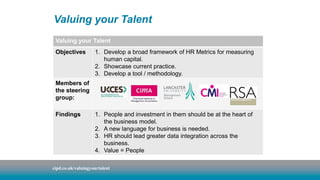
Valuing your Talent 
Valuing your Talent 
Objectives 1. Develop a broad framework of HR Metrics for measuring 
human capital. 
2. Showcase current practice. 
3. Develop a tool / methodology. 
Members of 
the steering 
group: 
Findings 1. People and investment in them should be at the heart of 
the business model. 
2. A new language for business is needed. 
3. HR should lead greater data integration across the 
business. 
4. Value = People 
cipd.co.uk/valuingyourtalent
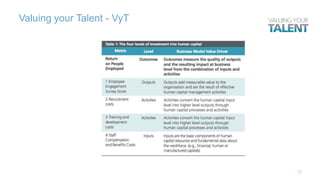
Valuing your Talent - VyT 
12
Human capital 2014 
13 
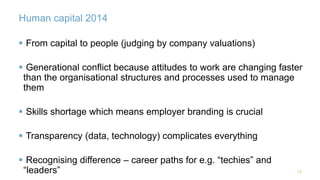
 From capital to people (judging by company valuations) 
 Generational conflict because attitudes to work are changing faster 
than the organisational structures and processes used to manage 
them 
 Skills shortage which means employer branding is crucial 
 Transparency (data, technology) complicates everything 
 Recognising difference – career paths for e.g. “techies” and 
“leaders”
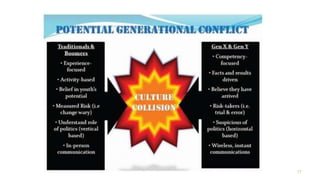
Intergenerational conflict: The generations 
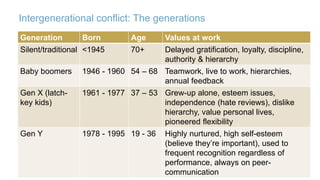
Generation Born Age Values at work 
Silent/traditional <1945 70+ Delayed gratification, loyalty, discipline, 
14 
authority & hierarchy 
Baby boomers 1946 - 1960 54 – 68 Teamwork, live to work, hierarchies, 
annual feedback 
Gen X (latch-key 
kids) 
1961 - 1977 37 – 53 Grew-up alone, esteem issues, 
independence (hate reviews), dislike 
hierarchy, value personal lives, 
pioneered flexibility 
Gen Y 1978 - 1995 19 - 36 Highly nurtured, high self-esteem 
(believe they’re important), used to 
frequent recognition regardless of 
performance, always on peer-communication
Intergenerational conflict 
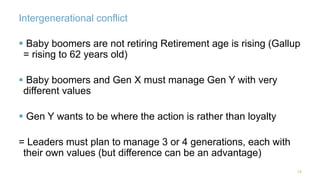
 Baby boomers are not retiring Retirement age is rising (Gallup 
= rising to 62 years old) 
15 
 Baby boomers and Gen X must manage Gen Y with very 
different values 
 Gen Y wants to be where the action is rather than loyalty 
= Leaders must plan to manage 3 or 4 generations, each with 
their own values (but difference can be an advantage)
16 
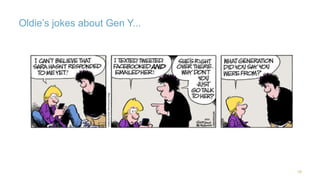
Oldie’s jokes about Gen Y...
17
Intergenerational conflict: Actions 
18 
 Culture: Promote flexible work/life balance, challenging work, 
openness, informal, entrepreneurial 
 Younger generations need the “why” before the “what” 
 Younger generations, frequent feedback – peer-based 
 Post recognition instantly & widely – use social media if 
possible
Employer brand: The Picture 
19 
Glass door: 
“The advances made seem a bit superficial. They offered flex 
time, but it was always subject to approval. They assured 
reviews and raises, but they were tepid at best.”
Employer brand and transparency: The issues 
20 
Social media has made your brand transparent 
 
Engagement is the new employer brand 
 Gallup (2014): 13% of employees are engaged 
 Glassdoor: 
– 51% of employees experience buyer’s remorse 
– 54% of employees would recommend their employer 
– 83% leave their employer in the first year
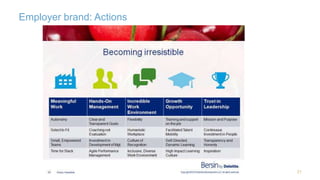
Employer brand: Actions 
21
Developing skills and career paths 
22 
 Technical skills are not enough 
 New organisational structures make it attractive to go solo 
 Career paths for everyone

Dr Max Blumberg: Harnessing the power of human capital for the digital age

  • 1.
    Mastering Complexity MaxBlumberg, PhD All content remains the property of Blumberg Partnership Ltd and may only be used with prior written consent www.maxb.com maxblumberg@blumbergpartnership.com M - +44 (0) 7768 455345 T - +44 (0) 1252 628552
  • 2.
    Personal Introduction 2  Musician  Computer scientist  Accenture consultant  Technology start-up  PhD & Research Fellow at Goldsmiths  Consult globally: HR Analytics, Organizational & Sales force performance, CIPD people strategy
  • 3.
    The changing valueof organizations 3 95% 5% 1978 Book value Other value 28% 72% 2002 Book value Other value
  • 4.
  • 5.
    Asset/capital value 5 Resource Competitive differentiator? Tangible assets e.g. technology; relatively easy to replicate Financial capital Available to most organisations with a good plan Intellectual capital Customer capital Not really: most organisations have access to the same markets Structural capital Yes but replicable in medium term Human capital Yes: very difficult to imitate
  • 6.
    Driving value creationand shareholder return 6 Total Return to shareholders (TRS) Spread Return on Invested Capital (ROIC) Minus Weighted Average Cost of Capital (WACC) Growth Organic Growth Growth through M&A Operating Margin Capital Efficiency Components of Value Creation and competitive advantage: Spread: Competitive advantage derived from operational and capital efficiency and pricing strategy Growth: Value from new products/services through innovation, M&A, market share, etc. Ratio between them is a matter of competitive strategy Quality Innovation Productivity Customers Human Capital
  • 7.
    How much dowe invest in people? 7 TMT 37% Heavy manufacturing 25% Light manufacturing 32% Pharmaceuticals /Prof services 45% Financial services 43% CFO Research Services
  • 8.
    Should we investin people? 8
  • 9.
    Generational conflict: Thegenerations 9 Born Age Silent generation <1945 70+ Baby boomers 1946 - 1960 54 – 68 Gen X 1961 - 1977 37 – 53 Gen Y 1978 - 1995 19 - 36
  • 10.
    How do weinvest in human capital (versus HR)? 10 £X programme Competencies (Knowledge) Employee performance (Behaviour) Contribution to organisational objectives Programme? Recruitment Development Retention/engagement Diversity Compensation Etc.
  • 11.
    Valuing your Talent Valuing your Talent Objectives 1. Develop a broad framework of HR Metrics for measuring human capital. 2. Showcase current practice. 3. Develop a tool / methodology. Members of the steering group: Findings 1. People and investment in them should be at the heart of the business model. 2. A new language for business is needed. 3. HR should lead greater data integration across the business. 4. Value = People cipd.co.uk/valuingyourtalent
  • 12.
  • 13.
    Human capital 2014 13  From capital to people (judging by company valuations)  Generational conflict because attitudes to work are changing faster than the organisational structures and processes used to manage them  Skills shortage which means employer branding is crucial  Transparency (data, technology) complicates everything  Recognising difference – career paths for e.g. “techies” and “leaders”
  • 14.
    Intergenerational conflict: Thegenerations Generation Born Age Values at work Silent/traditional <1945 70+ Delayed gratification, loyalty, discipline, 14 authority & hierarchy Baby boomers 1946 - 1960 54 – 68 Teamwork, live to work, hierarchies, annual feedback Gen X (latch-key kids) 1961 - 1977 37 – 53 Grew-up alone, esteem issues, independence (hate reviews), dislike hierarchy, value personal lives, pioneered flexibility Gen Y 1978 - 1995 19 - 36 Highly nurtured, high self-esteem (believe they’re important), used to frequent recognition regardless of performance, always on peer-communication
  • 15.
    Intergenerational conflict Baby boomers are not retiring Retirement age is rising (Gallup = rising to 62 years old) 15  Baby boomers and Gen X must manage Gen Y with very different values  Gen Y wants to be where the action is rather than loyalty = Leaders must plan to manage 3 or 4 generations, each with their own values (but difference can be an advantage)
  • 16.
    16 Oldie’s jokesabout Gen Y...
  • 17.
  • 18.
    Intergenerational conflict: Actions 18  Culture: Promote flexible work/life balance, challenging work, openness, informal, entrepreneurial  Younger generations need the “why” before the “what”  Younger generations, frequent feedback – peer-based  Post recognition instantly & widely – use social media if possible
  • 19.
    Employer brand: ThePicture 19 Glass door: “The advances made seem a bit superficial. They offered flex time, but it was always subject to approval. They assured reviews and raises, but they were tepid at best.”
  • 20.
    Employer brand andtransparency: The issues 20 Social media has made your brand transparent  Engagement is the new employer brand  Gallup (2014): 13% of employees are engaged  Glassdoor: – 51% of employees experience buyer’s remorse – 54% of employees would recommend their employer – 83% leave their employer in the first year
  • 21.
  • 22.
    Developing skills andcareer paths 22  Technical skills are not enough  New organisational structures make it attractive to go solo  Career paths for everyone

Editor's Notes

  • #19 Performance-based culture: Communicating performance based culture policies at different stages of the employee life cycle can enhance the chances of attraction because Gen Y employees have high aspirations and expect faster growth opportunities in an organization. This could include strong compensation plans, pay for performance, non-monetary rewards and recognition, special leaves and customized leadership development or fast-track programs. Feedback: Based on numerous field studies, one of the most responsive methods to invoke Millennials’ internal drive (i.e. intrinsic motivation) is to provide them the why before the what when coaching them. In other words, before organizational leaders describe what a project entails, they should take the time to explain the purpose of it (i.e. the why) in order to help Millennials see the “big picture” and hopefully get their commitment to want to contribute.   Respect: In addition to knowing where to connect with Millennials, it is important to know “how” to motivate them at work. As members of “The Trophy Generation,” who earned prizes for merely participating in events, it should be of no surprise that they are thirsty for positive feedback, particularly from their manager. In fact, according to Barbara Keats, a management professor at the W.P. Carey School of Business, “the Millennial generation craves compliments and constantly needs reassurance that they are performing well.” In addition , accolades that can be noticed by their colleagues will pack twice the punch for them. Furthermore, Millennials report to appreciate it when they are praised “publicly.”  Technology: Technology has also proven to be an effective motivator for Millennial associates. Technology presents organizations with the opportunity to reward associates with devices that make them feel special and recognize their talent by investing more in their hardware than the average associate. For Millennials, this type of recognition and reward can spark enthusiasm in the job environment and generate indebted motivation within the associate. For instance , organizations should reward their highly regarded Millennial associates that have been assigned the top projects with the newest, fastest and lightest laptops available. Additionally, if it does not instigate a disruption to other IT associates, Millennial associates that are working on “special” projects (that require greater portability) could be issued more portable, mobile devices as a reward (for their role) and a recognition of the innovation required. For the cream-of-the-crop Millennials, it may behoove organizations to grant them with “full-fledged” computing devices, such as smart phones or tablets, as a way to express their importance to the company. Regardless of position, it is essential for organizations to pay close attention to the hardware they issue to Millennial associates. In return, Millennials need to demonstrate that they can restrict the tools to professional use. According to Cisco’s 2012 Connected World Technology Report, which surveyed Millennial associates across 14 countries, the ability to use superior hardware (i.e . laptop, mobile device or phone) in the workplace will influence their job choice, sometimes even more than salary. As a matter of fact, 40 percent of Millennials surveyed said they would be willing to take a lower-paying job in exchange for better technology in the workplace.