Tagmatech LLC, White Paper: Mitigation of Cross-Talk in Memory Arrays Page 1 of 14
30-Sep-13

Abstract—Cross-talk in memory arrays is a well known and
increasingly important limiter of memory array scaling and
performance. Commonly used techniques for mitigation involve
clever physical layout to cause cross-talk effects to be common
mode between bit-line pairs, combined with differential sensing
circuitry to reject the common mode component. Single-ended
architectures often rely on current mode circuitry or physical
shielding techniques to suppress cross-talk. Proposed here is an
alternative inspired by linear system theory whereby the sensing
circuit functions as a spatial inverse filter that compensates for
cross-talk. It is shown to be effective for a range of memory types,
including those whose signal paths are fundamentally single-
ended rather than differential. Feasibility is demonstrated by
simulation with predictive technology models for a 32nm cmos
memory whose array has very strong bit-line to bit-line coupling.
Comparative advantages are explained in the context of
technology scaling. Applications and further work are suggested.
I. INTRODUCTION
ARASITIC coupling between tightly spaced bit-lines in
memory arrays has been recognized as a limiter of
memory operating margins since the early generations of
DRAM technologies. Due to inherently small signals from
DRAM cells, even low levels of pattern dependent noise from
adjacent line coupling could substantially reduce operating
margins. That led to now well established techniques for
mitigation of the effects in the context of architectures having
differential signal paths [1],[2]. Through physical layout
techniques, unwanted coupling to a differential signal pair can
be made common mode and can then be rejected by a
differential sense amplifier. However, such rejection
techniques tend to waste signal energy increasingly with
technology scaling and, in any case, are not readily
transferrable to architectures that are necessarily single-ended.
Single-ended architectures, based on cross-point cells, have
come to the fore in recent years in the high-density commodity
memory business. The physical simplicity of cross-point cell
layout serves to minimize cost-per-bit, which is paramount in
the design of high density commodity memory products such
as NAND flash. Single-ended signal paths have proven most
compatible with the layout constraints imposed by such high
density array designs. Unfortunately, as memory densities
have increased with improvements in lithography, read mode
delay and energy per read cycle have trended in an
Copyright © 2013 Tagmatech LLC, All Rights Reserved. No licenses, express
or implied, are granted with respect to any technology described herein.
Contact: Bruce L. Morton, P.O. Box 340293, Austin, TX, 78734, USA,
email: bruce.morton@att.net
unfavorable direction.
This paper first shows the cause of the negative
performance trend in single-ended architectures is cross-talk
due to parasitic coupling between physically proximate signal
paths, combined with the inherent properties of conventional
single-ended circuit techniques. It is demonstrated that both
current mode sensing and voltage mode with shielding are
effective in suppressing cross-talk, but both exhibit degraded
performance as feature sizes shrink. Then an alternate
technique is proposed for sensing stored states in the presence
of strong cross-talk. The technique is based on the notion that
cross-talk is systematic spatial distortion of signal paths that
can be received as-is at a memory sense amplifier, where the
effects can be filtered out. With the proposed technique, delay
and energy are shown to trend downward with feature size
scaling, in stark contrast to commonly used techniques. The
proposed technique is also shown to work well in an all-bit-
line type of architecture where conventional voltage level
sensing would be unworkable due to a negative signal margin
caused by strong cross-talk. Extension of the concept to
applications with differential signal paths is also outlined.
II. MODELING MEMORY ARRAY SCALING EFFECTS
A. Physical Structure of Memory Array Interconnect
Referring to Fig. 1(a), signal paths in memory IC’s use
conductors having spacing, S, width, W, and thickness, T,
combined with a vertical separation, H, from any structure that
functions as a ground plane. The illustration is general, but is
proportioned to suggest recent memory technologies where W
and S can be small relative to the other dimensions. It is in
such situations that the value of the lateral coupling
capacitance, Cc, becomes large relative to the value of
capacitance to ground, Cg. In a memory array so constructed,
signals from a memory data storage element, passing through
a bit-line in the direction, L, can be strongly influenced by
signals developed on neighboring bit-lines.
B. An Array Model
A very basic memory array model that comprehends the
primary effects is shown in Fig. 1(b). A memory device on a
bit-line is modeled as a resistance whose value is RDATA,
where the resistance value encodes stored data. For the
analyses in this work, RDATA is set to 500K ohms to
represent cells in a conductive state and 50MΩ for cells in the
non-conductive state. In principle, additional states could be
encoded by defining additional valid ranges, as in some
commercial multi-state cells, but the binary case suffices for
this study. The idealized cell access switches are modeled with
Mitigation of Cross-Talk in Memory Arrays
Bruce L. Morton
Tagmatech LLC
P
Tagmatech LLC, White Paper: Mitigation of Cross-Talk in Memory Arrays Page 2 of 14
30-Sep-13
ON state resistance of 5kΩ and an OFF state resistance of
50MΩ. The signal, WL, when asserted, causes the switches to
be in the ON state. The resistance of the metal bit-line in the
direction, L, is modeled in two equal parts, each having
resistance, RBL/2. Capacitance to ground and between
neighboring bit-lines is modeled by instances of capacitors Cg
and Cc respectively. In common practice, memory arrays may
have extents measured in the thousands of bit-lines. However,
for convenience of calculation and presentation, an infinite
array composed of multiples of identical 32 bit-line blocks can
be modeled by terminating the capacitor, Cc, of BL(31), back
at the analogous node on BL(0) in the simulation model,
thereby creating a circular coupling network. Such a model
construction is commonly known as periodic or circular. Array
edge terminations are not represented, but the primary
dynamics of the core of a large array are modeled. The
simulation results for this paper are derived from this 32 bit-
line circular array model.
C. Array Parameter Estimation
Fig. 1(c) illustrates the basis for estimation of interconnect
parasitics as scaling occurs. The x-axis represents the
minimum feature size due to lithographic limitations. Feature
size is shown scaling down from left to right because
technology is considered to advance in the direction of time,
which is conventionally from left to right. The scaling
proposition here is that chip size remains relatively constant as
feature sizes scale down, so that memory density, in bits per
chip, rises with scaling. From that it follows that there should
be a conductor in the bit-line path whose length, L,
corresponds to the length of one axis of a chip. For this study,
that length is held constant at 1.5 cm. A further and usual goal
in memory technology definition is to maintain bit-line
resistance, RBL, at as low a value as practical. Therefore,
commonly, for each new generation of technology, the attempt
is made to maintain the same or nearly the same bit-line
thickness as the previous generation. For this study, thickness,
T, is held constant at 0.4µm and copper conductors are
assumed. Also, vertical separation, H, tends to be maintained
as high as practical, driven not only by the desire to minimize
Cg, but also by the necessity to exceed the height of the
highest physical topology in or around the array. Such height
features often tend not to scale with lithography. For this
study, H is held constant at 0.4µm. Though not shown in Fig.
1(a), the further assumption is made that there are similar
ground planes at a distance H above, as well as below the bit-
line conductors, as in multi-level interconnect systems. That
doubles Cg relative to a single ground plane. The values of
Cg, Cc and RBL are calculated according the method of the
predictive technology models, PTM, from Arizona State
University [3] which in turn reference Wong [4] for
capacitance calculations. Consistent with the PTM suggestion
for the most advanced interconnect, a relative dielectric
constant of 2.2 was used throughout. That is lower than
typically found in older technologies, and is therefore an
underestimate of capacitive effects at the larger features sizes
of older technologies. However, it is probably a better fit at
smaller feature sizes where porous or air gap isolation may be
used. It is the smaller feature sizes that are of greatest interest
in this study. It is also likely the compact interconnect models
lose accuracy at the technology extremes presented here.
However, the models are well behaved at the extremes and do
provide a basis for extrapolation into the future. Likewise, it
may be argued that the constants chosen for this analysis were
not perfectly constant, historically. However, they are of the
right order and are less important to the trends than the W and
S parameters that actually are varied for this study. Here, what
is needed is an estimate of the magnitude and direction of
resistance and capacitance trends, recognizing that they are
varying sharply as Feature Size approaches the zero limit. So,
though approximate, the PTM interconnect model supports the
objective of this study, which is to illustrate the trends and
propose a way to deal with the effects of the looming limit.
Fig. 1. (a) Physical Cross-Section of Conductors, (b) An Electrical Model of
Bit-line Signal Paths in a Memory Array, (c) Parameter variation with
technology scaling
Tagmatech LLC, White Paper: Mitigation of Cross-Talk in Memory Arrays Page 3 of 14
30-Sep-13
III. PERFORMANCE WITH CONVENTIONAL TECHNIQUES
A. Current Mode
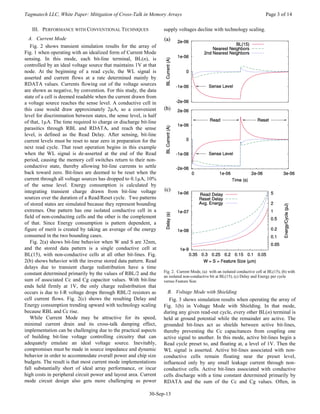
Fig. 2 shows transient simulation results for the array of
Fig. 1 when operating with an idealized form of Current Mode
sensing. In this mode, each bit-line terminal, BL(n), is
controlled by an ideal voltage source that maintains 1V at that
node. At the beginning of a read cycle, the WL signal is
asserted and current flows at a rate determined mainly by
RDATA values. Currents flowing out of the voltage sources
are shown as negative, by convention. For this study, the data
state of a cell is deemed readable when the current drawn from
a voltage source reaches the sense level. A conductive cell in
this case would draw approximately 2µA, so a convenient
level for discrimination between states, the sense level, is half
of that, 1µA. The time required to charge or discharge bit-line
parasitics through RBL and RDATA, and reach the sense
level, is defined as the Read Delay. After sensing, bit-line
current levels must be reset to near zero in preparation for the
next read cycle. That reset operation begins in this example
when the WL signal is de-asserted at the end of the Read
period, causing the memory cell switches return to their non-
conductive state, thereby allowing bit-line currents to settle
back toward zero. Bit-lines are deemed to be reset when the
current through all voltage sources has dropped to 0.1µA, 10%
of the sense level. Energy consumption is calculated by
integrating transient charge drawn from bit-line voltage
sources over the duration of a Read/Reset cycle. Two patterns
of stored states are simulated because they represent bounding
extremes. One pattern has one isolated conductive cell in a
field of non-conducting cells and the other is the complement
of that. Since Energy consumption is pattern dependent, a
figure of merit is created by taking an average of the energy
consumed in the two bounding cases.
Fig. 2(a) shows bit-line behavior when W and S are 32nm,
and the stored data pattern is a single conductive cell at
BL(15), with non-conductive cells at all other bit-lines. Fig.
2(b) shows behavior with the inverse stored data pattern. Read
delays due to transient charge redistribution have a time
constant determined primarily by the values of RBL/2 and the
sum of associated Cc and Cg capacitor values. With bit-line
ends held firmly at 1V, the only charge redistribution that
occurs is due to I-R voltage drops through RBL/2 resistors as
cell current flows. Fig. 2(c) shows the resulting Delay and
Energy consumption trending upward with technology scaling
because RBL and Cc rise.
While Current Mode may be attractive for its speed,
minimal current drain and its cross-talk damping effect,
implementation can be challenging due to the practical aspects
of building bit-line voltage controlling circuitry that can
adequately emulate an ideal voltage source. Inevitably,
compromises must be made in source impedance and dynamic
behavior in order to accommodate overall power and chip size
budgets. The result is that most current mode implementations
fall substantially short of ideal array performance, or incur
high costs in peripheral circuit power and layout area. Current
mode circuit design also gets more challenging as power
supply voltages decline with technology scaling.
Fig. 2. Current Mode, (a) with an isolated conductive cell at BL(15), (b) with
an isolated non-conductive bit at BL(15), (c) Delay and Energy per cycle
versus Feature Size
B. Voltage Mode with Shielding
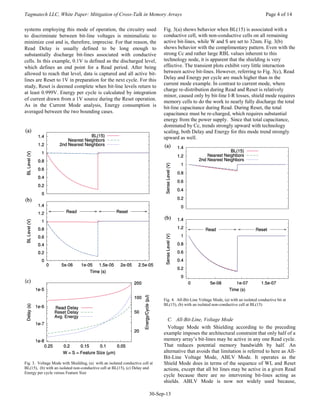
Fig. 3 shows simulation results when operating the array of
Fig. 1(b) in Voltage Mode with Shielding. In that mode,
during any given read-out cycle, every other BL(n) terminal is
held at ground potential while the remainder are active. The
grounded bit-lines act as shields between active bit-lines,
thereby preventing the Cc capacitances from coupling one
active signal to another. In this mode, active bit-lines begin a
Read cycle preset to, and floating at, a level of 1V. Then the
WL signal is asserted. Active bit-lines associated with non-
conductive cells remain floating near the preset level,
influenced only by any small leakage current through non-
conductive cells. Active bit-lines associated with conductive
cells discharge with a time constant determined primarily by
RDATA and the sum of the Cc and Cg values. Often, in
Tagmatech LLC, White Paper: Mitigation of Cross-Talk in Memory Arrays Page 4 of 14
30-Sep-13
systems employing this mode of operation, the circuitry used
to discriminate between bit-line voltages is minimalistic to
minimize cost and is, therefore, imprecise. For that reason, the
Read Delay is usually defined to be long enough to
substantially discharge bit-lines associated with conductive
cells. In this example, 0.1V is defined as the discharged level,
which defines an end point for a Read period. After being
allowed to reach that level, data is captured and all active bit-
lines are Reset to 1V in preparation for the next cycle. For this
study, Reset is deemed complete when bit-line levels return to
at least 0.999V. Energy per cycle is calculated by integration
of current drawn from a 1V source during the Reset operation.
As in the Current Mode analysis, Energy consumption is
averaged between the two bounding cases.
Fig. 3. Voltage Mode with Shielding, (a) with an isolated conductive cell at
BL(15), (b) with an isolated non-conductive cell at BL(15), (c) Delay and
Energy per cycle versus Feature Size
Fig. 3(a) shows behavior when BL(15) is associated with a
conductive cell, with non-conductive cells on all remaining
active bit-lines, while W and S are set to 32nm. Fig. 3(b)
shows behavior with the complimentary pattern. Even with the
strong Cc and rather large RBL values inherent to this
technology node, it is apparent that the shielding is very
effective. The transient plots exhibit very little interaction
between active bit-lines. However, referring to Fig. 3(c), Read
Delay and Energy per cycle are much higher than in the
current mode example. In contrast to current mode, where
charge re-distribution during Read and Reset is relatively
minor, caused only by bit-line I-R losses, shield mode requires
memory cells to do the work to nearly fully discharge the total
bit-line capacitance during Read. During Reset, the total
capacitance must be re-charged, which requires substantial
energy from the power supply. Since that total capacitance,
dominated by Cc, trends strongly upward with technology
scaling, both Delay and Energy for this mode trend strongly
upward as well.
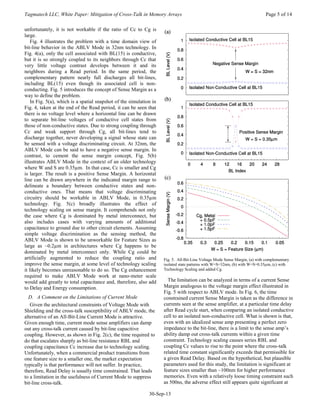
Fig. 4. All-Bit-Line Voltage Mode, (a) with an isolated conductive bit at
BL(15), (b) with an isolated non-conductive cell at BL(15)
C. All-Bit-Line, Voltage Mode
Voltage Mode with Shielding according to the preceding
example imposes the architectural constraint that only half of a
memory array’s bit-lines may be active in any one Read cycle.
That reduces potential memory bandwidth by half. An
alternative that avoids that limitation is referred to here as All-
Bit-Line Voltage Mode, ABLV Mode. It operates as the
Shield Mode does in terms of the sequence of WL and Reset
actions, except that all bit lines may be active in a given Read
cycle because there are no intervening bit-lines acting as
shields. ABLV Mode is now not widely used because,
Tagmatech LLC, White Paper: Mitigation of Cross-Talk in Memory Arrays Page 5 of 14
30-Sep-13
unfortunately, it is not workable if the ratio of Cc to Cg is
large.
Fig. 4 illustrates the problem with a time domain view of
bit-line behavior in the ABLV Mode in 32nm technology. In
Fig. 4(a), only the cell associated with BL(15) is conductive,
but it is so strongly coupled to its neighbors through Cc that
very little voltage contrast develops between it and its
neighbors during a Read period. In the same period, the
complementary pattern nearly full discharges all bit-lines,
including BL(15) even though its associated cell is non-
conducting. Fig. 5 introduces the concept of Sense Margin as a
way to define the problem.
In Fig. 5(a), which is a spatial snapshot of the simulation in
Fig. 4, taken at the end of the Read period, it can be seen that
there is no voltage level where a horizontal line can be drawn
to separate bit-line voltages of conductive cell states from
those of non-conductive states. Due to strong coupling through
Cc and weak support through Cg, all bit-lines tend to
discharge together, never developing a signal whose state can
be sensed with a voltage discriminating circuit. At 32nm, the
ABLV Mode can be said to have a negative sense margin. In
contrast, to cement the sense margin concept, Fig. 5(b)
illustrates ABLV Mode in the context of an older technology
where W and S are 0.35µm. In that case, Cc is smaller and Cg
is larger. The result is a positive Sense Margin. A horizontal
line can be drawn anywhere in the indicated margin range to
delineate a boundary between conductive states and non-
conductive ones. That means that voltage discriminating
circuitry should be workable in ABLV Mode, in 0.35µm
technology. Fig. 5(c) broadly illustrates the effect of
technology scaling on sense margin. It comprehends not only
the case where Cg is dominated by metal interconnect, but
also includes cases with varying amounts of additional
capacitance to ground due to other circuit elements. Assuming
simple voltage discrimination as the sensing method, the
ABLV Mode is shown to be unworkable for Feature Sizes as
large as ~0.2µm in architectures where Cg happens to be
dominated by metal interconnect only. While Cg could be
artificially augmented to reduce the coupling ratio and
improve the sense margin, at some level of technology scaling
it likely becomes unreasonable to do so. The Cg enhancement
required to make ABLV Mode work at nano-meter scale
would add greatly to total capacitance and, therefore, also add
to Delay and Energy consumption.
D. A Comment on the Limitations of Current Mode
Given the architectural constraints of Voltage Mode with
Shielding and the cross-talk susceptibility of ABLV mode, the
alternative of an All-Bit-Line Current Mode is attractive.
Given enough time, current mode sense amplifiers can damp
out any cross-talk current caused by bit-line capacitive
coupling. However, as shown in Fig. 2(c), the time required to
do that escalates sharply as bit-line resistance RBL and
coupling capacitance Cc increase due to technology scaling.
Unfortunately, when a commercial product transitions from
one feature size to a smaller one, the market expectation
typically is that performance will not suffer. In practice,
therefore, Read Delay is usually time constrained. That leads
to a limitation in the usefulness of Current Mode to suppress
bit-line cross-talk.
Fig. 5. All-Bit-Line Voltage Mode Sense Margin, (a) with complementary
isolated state patterns with W=S=32nm, (b) with W=S=0.35µm, (c) with
Technology Scaling and added Cg.
The limitation can be analyzed in terms of a current Sense
Margin analogous to the voltage margin effect illustrated in
Fig. 5 with respect to ABLV mode. In Fig. 6, the time
constrained current Sense Margin is taken as the difference in
currents seen at the sense amplifier, at a particular time delay
after Read cycle start, when comparing an isolated conductive
cell to an isolated non-conductive cell. What is shown is that,
even with an idealized sense amp presenting a perfect zero
impedance to the bit-line, there is a limit to the sense amp’s
ability damp out cross-talk currents within a given time
constraint. Technology scaling causes series RBL and
coupling Cc values to rise to the point where the cross-talk
related time constant significantly exceeds that permissible for
a given Read Delay. Based on the hypothetical, but plausible
parameters used for this study, the limitation is significant at
feature sizes smaller than ~100nm for higher performance
memories. Even with a relatively loose timing constraint such
as 500ns, the adverse effect still appears quite significant at
Tagmatech LLC, White Paper: Mitigation of Cross-Talk in Memory Arrays Page 6 of 14
30-Sep-13
20nm feature size. In a practical situation where a non-zero
sense amp source impedance would add to the effect of series
RBL, the Sense Margin degradation would be greater.
Fig. 6. All-Bit-Line Current Mode, Sense Margin with Time Constraint
IV. CROSS-TALK MITIGATION BY SPATIAL INVERSE
FILTERING
A. The Proposal
What is needed is an operating mode that is more
compatible with the inherent parasitic properties of nano-
meter technology. What is proposed is to characterize cross-
talk effects as signal distortion in the spatial domain and then
devise a spatial filter that compensates for it at the receiving
end of the bit-line signal path. Though not necessarily ideal
mathematically, due to data pattern dependency inherent to the
array, it will be shown that a workable inverse spatial filter
can be formulated for a memory array such as the example of
Fig. 1(b). In effect, a bank of suitably designed sense
amplifiers can function as an inverse spatial filter that de-
convolves cross-talk effects and thereby recovers stored
memory states.
For this exercise, the memory array space has one
dimension, with bit-line array index numbers as the indicator
of spatial position. Inclusion of additional dimensions is
possible, and possibly useful, but this study focuses on a one
dimensional filter function having the following general form:
(1)
where n is the index of a particular bit-line in the model,
VBL(m) is the voltage at the bit-line with index m and K(m-n)
are filter coefficients with index (m-n) that collectively define
the inverse filter characteristic, modulo 32. Filter_Output(n) is
the data state that is ultimately resolved by the filter at bit-line
position, n. Briefly in words, the equation says that the filtered
output associated with a bit-line path in the array is a weighted
sum of all of the bit-line voltages in the array. That can be
complex. Therefore, as a practical matter, it is helpful to zero
out as many of those weighting terms as possible. A way to do
that is shown in the example calculations that follow.
B. Determining a Suitable Filter Function
Undoubtedly there is more than one mathematical method
that might be used to determine the characteristic of the
necessary inverse spatial filter. Purely empirical methods are
conceivable. A genetic algorithm might have advantages.
However, the approach described here is adapted from linear
system theory, using engineering empiricism to achieve the
desired minimization of the filter function and resulting
hardware.
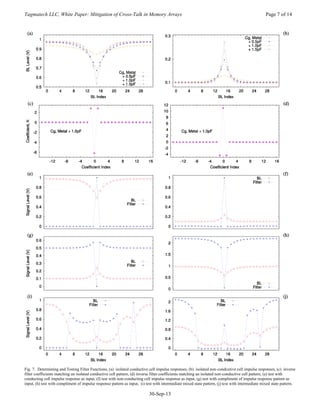
A first step is to generate a spatial impulse response from
the array. That is the specific response that the inverse filter is
designed to match and compensate. Fig. 7(a) and 7(b) each
show responses that may be used for the purpose. They were
extracted from the previously discussed ABLV Mode
simulations for a 32nm memory array. Fig. 7(a) shows array
responses to an isolated conductive cell, with four alternate
values of Cg. Similarly, Fig. 7(b) shows responses to an
isolated non-conductive cell. The choice of conductive cell or
non-conductive cell response is arbitrary at least until actual
hardware is designed, so both are carried through the initial
steps in the example calculation. In practice, the Cg value
should match that expected on the bit-line, including any
loading due to sense amplifier circuitry. For the following
example calculation, the Cg + 1pF characteristics are used. For
this study, the 1pF adder is considered to be allocated as 0.1pF
for sense amplifier loading and 0.9pF due to other elements
such as cell junctions or array segment selection devices that
are not explicitly shown in Fig. 1(b).
A second step is calculation of the coefficients of the
inverse filter. A remarkably efficient tool for that purpose is
Octave [5], an open source, matrix oriented program for
general purpose number crunching. The following one-line
snippet of Octave code accomplishes the transformation of
select impulse response data taken from Fig. 7(a) or 7(b), to
the inverse filter coefficients plotted in Fig. 7(c) or 7(d)
respectively:
inv_imp_resp = shift(ifft((1 ./ fft(imp_in,32)),32),-17)
In the snippet, “imp_in” is a vector containing the bit-line
voltages of the response selected from Fig. 7(a) or 7(b) and
“inv_imp_resp” is a vector containing the resulting inverse
filter coefficients. In words, the snippet finds the Discrete
Fourier Transform (DFT) of the impulse response, calculates
the inverse on an element by element basis, finds the inverse
fourier transform of that, and shifts that to position
coefficients appropriately for use in (1). See the reference [6]
by J.O. Smith, for a concise primer on DFT and convolution
filtering, as well as Octave coding guidance.
In principle, filter coefficient determination could end there
and a circuit could be designed to implement (1) in hardware.
However, consideration of Fig. 7(c) and 7(d) raises the
possibility of a reduction of terms in the equation. In this case,
there are only three coefficients with substantial magnitude.
Only those three adjacent and sharply varying coefficients are
consequential in (1) in terms of filter discrimination between
bit-lines. The others are small and nearly uniform. The small
and nearly uniform coefficients serve only to create an offset
that is related to a rough average of bit-line voltages in a given
pattern. Given that, it seems reasonable to collect those terms
into a single constant OFFSET term and, with algebraic
Tagmatech LLC, White Paper: Mitigation of Cross-Talk in Memory Arrays Page 7 of 14
30-Sep-13
Fig. 7. Determining and Testing Filter Functions, (a) isolated conductive cell impulse responses, (b) isolated non-condcutive cell impulse responses, (c) inverse
filter coefficients matching an isolated conductive cell pattern, (d) inverse filter coefficients matching an isolated non-conductive cell pattern, (e) test with
conducting cell impulse response as input, (f) test with non-conducting cell impulse response as input, (g) test with compliment of impulse response pattern as
input, (h) test with compliment of impulse response pattern as input, (i) test with intermediate mixed state pattern, (j) test with intermediate mixed state pattern.
Tagmatech LLC, White Paper: Mitigation of Cross-Talk in Memory Arrays Page 8 of 14
30-Sep-13
manipulation, reduce (1) to the following form:
(2)
where VBL(n) is the voltage at a bit-line n whose stored state
is to be recovered and VBL(n-1) and VBL(n+1) are voltages at
the bit-lines on either side.
To a very close approximation, since the small uniform
coefficients are near zero in the example cases, GAIN can be
extracted directly from Fig. 7(c) or 7(d) by inspection. GAIN
is approximately the value of K(-1) and K(+1) on the plots.
WEIGHT is then the value of K(0) divided by GAIN.
OFFSET can be derived from (2) by substitution and algebraic
rearrangement. A convenient basis to solve for OFFSET is the
impulse response values for VBL(n-1), VBL(n) and VBL(n+1)
where n is 15, while setting Filter_Out to its ideal output value
when n is 15, which is 1 here.
In a more general case, where the values of the uniform
coefficients K may not be so close to zero and, therefore, may
not be so readily dismissed, it can be useful to make an
adjustment before extracting parameters for (2). The
adjustment is to uniformly translate the K vector contents up
or down in value so as to effectively zero out the nearly
uniform coefficients. That translation has the ultimate effect of
adjusting the GAIN, WEIGHT and OFFSET values to account
for the zeroing of the uniform K values, while preserving the
form of (2). Though not particularly significant in effect here,
that extra step was actually used in the extraction of GAIN,
WEIGHT and OFFSET of the Fig. 7 examples. The resulting
parameter values are listed in Table I.
TABLE I – Filter Parameters
Coefficient
Plot
GAIN WEIGHT OFFSET
Fig. 7(c) 2.81 -2.20 0.558
Fig. 7(d) -4.29 -2.58 -0.241
C. Testing the Filters Numerically
Fig. 7(e) and 7(f) show the result of applying the filters
defined by values in Table I to the impulse response functions
that were first used to determine filter parameters. As
expected, the filter output in each case is a near perfect one
level at the index location of the isolated conductive or non-
conductive cell, with zeros elsewhere. That validates the filter
derivation procedure. Fig. 7(g) and 7(h) then test the
usefulness of the filters by applying them to patterns that are
the opposite of those used in the filter parameter derivation.
Importantly, what is shown is good discrimination between
cell states. However, the restored levels are not ideal. In Fig.
7(g), using the filter matched to an isolated conductive cell,
the filter under-compensates conductive cells that are not
isolated from conductive neighbors. Analogously, in Fig. 7(h),
using the filter matched to an isolated non-conductive bit, non-
conductive cells are over-compensated where they are not
isolated from other non-conductive cells. Though these
bounding cases do fully characterize performance, engineering
intuition may be aided by also looking at filter behavior with a
plausible intermediate pattern. Fig. 7(i) and 7(j) illustrate
behavior given an irregular pattern having conductive cells at
indices 7 through 14, 16 through 21 and at index 26, with non-
conductive cells elsewhere. In Fig. 7(i), compensation for
conductive cells is closest to ideal for the location that is most
isolated, the cell at BL(26). In Fig. 7(j), a similar observation
applies to non-conductive cell locations, such as BL(15).
The observed non-ideal aspect of filter behavior can be
understood by thinking about how stored data is encoded in
the example memory array, and how that encoding must affect
array dynamics. Network dynamics in Fig. 1(b) are R-C in
nature, where the dominant R values in Read mode are
RDATA. Varying the number and locations of coupled
conductive cell RDATA values, as happens in normal memory
data storage operations, inevitably varies the R-C dynamics. A
spatial filter matched to an array with a single conductive or
non-conductive cell will not be a perfect match to an array
having a different physical arrangement of RDATA values.
However, the effect of pattern dependent over or under-
compensation can be masked in filter implementation. The
tendency to under-compensate, as in Fig. 7(g) and 7(i), can be
empirically corrected by proportionately increasing GAIN to
bring the worst case levels in the pattern to a target minimum
level, such as one, and then clamping the other levels at that
level as a maximum. The tendency to over-compensate, as in
Fig. 7(h) and 7(j), requires only clamping at a target
maximum. The important consideration in a digital memory
application is that the spatial filter clearly discriminates
between stored states, as is evident in the last four plots of Fig.
7. Analog level ideality is not required.
V. SPATIAL FILTER IMPLEMENTATION IN HARDWARE
A. Implementation Options
In a semiconductor memory product, it might be possible to
literally evaluate (1) or (2) using a digital processor, after first
converting analog levels to a digital representation. However,
in many applications, the power, chip area or processing delay
associated with such a general approach would be
unacceptable. Because of that, the next segment of this paper
focuses on the feasibility of implementation of (2) in analog
hardware.
B. A Switched Capacitor Spatial Filter Circuit
1) Technology Independent Circuit Considerations
In a technology agnostic form, Fig. 8(a) shows an example
of a switched capacitor circuit [7] implementation of (2).
Inputs are voltages from a target bit-line at BL, its immediate
neighbors at BL-1 and BL+1, and a voltage level representing
the OFFSET value. The OUT level represents as a voltage the
weighted sum of the inputs, with weights being determined by
ratios of C1 through C4 relative to Cf. Numerical signs of the
weights are determined by switch and capacitor circuit
topology. The specific topology of Fig. 8(a) conforms to the
signs of the parameters of Table I which were derived from
Fig. 7(d). That example and the corresponding 32nm array
model are the basis for the circuit analysis that follows.
Tagmatech LLC, White Paper: Mitigation of Cross-Talk in Memory Arrays Page 9 of 14
30-Sep-13
Fig. 8. Filter Implementation, (a) Switched-Capacitors with ideal Op-Amp,
(b) A practical CMOS circuit with Gain Stage and separate Buffer.
Referring to Fig. 8(a), the Read operation begins with a
sampling phase when bit-lines are connected through switches
to C1 through C3, and C4 is connected to a DC voltage.
During the sampling phase, memory cells discharge bit-lines
at a rate that depends on stored data and those bit-line levels
are mirrored on the capacitors through the switches. The
switches in Fig. 8 are shown in the sampling phase. It is worth
noting that, during that initial phase, the capacitors present to
the bit-lines a capacitance to ground that is in parallel with bit-
line capacitance Cg, which in Fig. 5(c) is shown to be
constructive in terms of signal margin. A second phase of
circuit operation begins after bit-lines have been allowed
sufficient time to develop signals, when the switches flip to
the state opposite of that shown. During the second phase, the
filtered signal develops at OUT.
It is instructive to use the circuit structure of Fig. 8(a) to
assess the essential sensitivity of the filter to variation in
capacitor values. In a switched capacitor circuit, capacitors are
the primary determinant of circuit behavior when amplifier
and switching elements are properly designed. Fig. 9 shows
the result of a monte-carlo analysis of capacitor variation
using Octave. The procedure was to generate 1000
combinations of values for the five capacitors, convert those
back to corresponding filter parameters for (2), calculate filter
output levels using (2) given the bit-line voltages of the
bounding and mixed patterns used previously and, finally,
calculate the mean and standard deviation of filter output at
each bit-line index, for each pattern. For the results in Fig. 9,
individual capacitor variations were uncorrelated and normally
distributed, with 1σ variation set at 1% of nominal values.
Error bars show 3σ variation in filter output levels, which
corresponds to 3% capacitor variation. Importantly, that is a
much larger variation than is considered permissible in many
switched capacitor circuit applications. Despite that, the
remaining Read margin is shown to be substantial. That
suggests capacitors can be much smaller than might be
conventionally assumed, and the remaining performance
tolerance is likely sufficient to also accommodate other
sources of significant variation. As should be expected,
margin defined by the bounding patterns in Fig. 9(a) is very
similar to, and at least as limiting as the margin evident in the
intermediate mixed state pattern of Fig. 9(b).
Fig. 9. Filter Variation due to Capacitor Value Error, (a) with bounding case
patterns overlaid, isolated conducting cell and isolated non-conducting cell,
(b) with an intermediate mixed state pattern.
A further implication of Fig. 9 is that a practical design
procedure may accommodate random variation by means of
empirical adjustments to the GAIN and OFFSET parameters
of (2). Given a target tolerance for capacitor variation, such as
the example of 3% at 3σ, OFFSET can be adjusted in a
negative direction by the indicated “Adj. Offset” amount to
ensure a solid zero output, and GAIN can be increased by a
factor of 1/(“3σ Margin”) to ensure a solid one output, at 3σ.
This and further practical considerations are comprehended in
the following discussion of CMOS circuit implementation.
2) A Filter Circuit in 32nm CMOS PTM Technology
Fig. 8(b) illustrates a switched capacitor circuit with
topology similar to Fig. 8(a), but with a CMOS cascode
amplifier [8] followed by a buffer. The cascode provides high
gain in a compact circuit. A buffer is required because a
cascode stage necessarily has a somewhat limited output
voltage swing and that must be translated to full rail for the
interface to digital logic. It should be noted that inclusion of
the buffer results in an inversion at the OUT node relative to
the circuit of Fig. 8(a). That is unimportant in system design,
but is needed to understand the simulation results that follow.
Tagmatech LLC, White Paper: Mitigation of Cross-Talk in Memory Arrays Page 10 of 14
30-Sep-13
For this design and simulation exercise, “32nm_LP.pm” PTM
CMOS transistor models [3] are used.
In the example circuit, the cascode bias levels are set to
hold the drains of the input transistors at roughly 200mV from
respective power rails. Transistor widths are all 128nm, four
times the minimum feature. Except for the switches, gate
lengths are 64nm. The switches are modeled as full CMOS
transfer gates with 32nm gate lengths. In operation, during the
sampling phase, the cascode is stabilized at its quiescent point
through the switch between its input and output. Typical
quiescent current in the cascode stage is 53nA. With power
supply variation of 1V ± 5% and temperature variation of 0 to
70C, the cascode stage open loop gain always exceeds 200.
That is sufficient for accurate summing, given a closed loop
gain in the rather low range that is required for the filter. That,
combined with capacitive coupling of the SUM node to the
amplifier input gates through Cc, should result in a high
degree of manufacturing process independence. Only the
direct coupling of cascode to buffer presents any requirement
for transistor parameter tracking, but any error there can be
made non-critical with sufficient output swing from the
cascode stage.
In section V.B.1, filter parameter adjustments to
compensate for variation in capacitor values were described.
With the addition of the buffer as shown in Fig. 8(b), further
adjustments can be useful. GAIN can be reduced in proportion
to the reduction in output amplitude required from the gain
stage, with concomitant reduction in cascode amplifier
sensitivity to transistor parameters. OFFSET may be further
adjusted to optimally align gain stage output levels with the
buffer’s input requirements. For this example, overall
adjustments can be summarized mathematically as follows:
(3)
(4)
where GAIN and OFFSET are the unadjusted filter parameters
of (2), BINhigh and BINlow are the input levels to the buffer
stage that are required for reliable full rail levels at OUT,
MChigh and MClow are the monte-carlo analysis results for
worst case (3σ here) high and low level outputs from the
unadjusted filter, Vdd is the power supply voltage that defines
full rail output limits and Qgs is the static operating point of the
GAIN stage. OFFSETemp is useful to account for subtle, non-
ideal circuit behavior. For this exercise, BINhigh is 0.58V,
BINlow is 0.39V, MChigh and MClow are the levels at BL index
15 of Fig. 9(a), Qgs is 0.487V and OFFSETemp is -0.05V and
Vdd is 1V. The resulting parameter adjustments are
summarized in Table II.
The capacitor values in Table III are calculated from Table
II, given a 0.1pF allocation for the total load presented to each
bit-line by sense amplifiers. The architectural assumption is an
all-bit-line type of array where each bit-line is loaded with a
C2 from its own sense amplifier, and both a C1 and a C3 from
immediate neighbors.
TABLE II – Filter Parameter Adjustment for Capacitor
Variation and Output Buffering
Parameter Set GAIN WEIGHT OFFSET
Nominal -4.29 -2.58 -0.241
Adjusted -1.21 -2.58 -0.210
TABLE III – Weighting Capacitor Values (fF)
Capacitor
Values
C1 C2 C3 C4 Cf
Nominal 21.8 56.4 21.8 5.09 5.09
Adjusted 21.8 56.4 21.8 18.0 18.0
Circuit operating margin optimization and parameter
centering was accomplished by means of a 100 run monte-
carlo simulation with capacitor values being varied according
to a normal random distribution, repeated at each of the four
afore mentioned combinations of power supply voltage and
temperature, for each of the bounding pattern cases used
previously in this study. The strategy was to increase the
variance input to the circuit simulation until failures could be
seen and then use that to adjust for any asymmetry in behavior
with respect to stored state or environmental variables.
Centering correction was implemented by adjusting
OFFSETemp. As anecdotal evidence of circuit robustness, it is
interesting to note that a 10% uncorrelated capacitor variation
at 3σ produced no failures in any of the four 100 run monte-
carlo simulations, given the final adjusted values of Table II
and Table III, with a 0.05V OFFSETemp value. Lacking skew
versions of the PTM 32nm_LP transistor models, transistor
parameter variation was not included in the variation analysis.
However, with the switched-capacitor approach mitigating any
transistor threshold variation effects, with open loop gain
being more than two orders of magnitude greater than closed
loop, and with sufficient drive levels provided to the buffer
stage to guarantee switching, transistor parameter variation
should not have an important impact on functional failure rate.
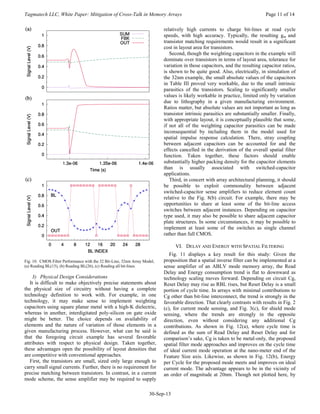
Fig. 10 shows an example of behavior of the circuit with
adjusted parameters, with the 32 bit array model of Fig. 1(b),
where W and S are set at 32nm. The sampling phase is shown
ending at approximately 1.29µs. Prior to that time, FBK is at
its quiescent level. Immediately after, FBK begins reacting.
FBK rises when reading a non-conducting cell such as at
BL(15) in Fig. 10(a) and falls when reading a conducting cell
such as at BL(26) in Fig. 10(b). FBK moves toward the target
levels deemed necessary to reliably drive the buffer, though
typically the buffer switches sooner, as it does in this case.
The SUM node voltage varies only slightly, functioning as a
virtual ground in the gain stage feedback network. Fig. 10(c)
shows all states reading out correctly despite what would be a
negative signal margin in the context of a conventional voltage
sensing read-out circuit, as in the ABLV mode of section
III.C. In particular, cell states at BL(15) and BL(26) would not
be sensed correctly with ABLV mode, in 32nm technology.
Tagmatech LLC, White Paper: Mitigation of Cross-Talk in Memory Arrays Page 11 of 14
30-Sep-13
Fig. 10. CMOS Filter Performance with the 32 Bit-Line, 32nm Array Model,
(a) Reading BL(15), (b) Reading BL(26), (c) Reading all bit-lines.
3) Physical Design Considerations
It is difficult to make objectively precise statements about
the physical size of circuitry without having a complete
technology definition to work with. For example, in one
technology, it may make sense to implement weighting
capacitors using square planar metal with a high-K dielectric,
whereas in another, interdigitated poly-silicon on gate oxide
might be better. The choice depends on availability of
elements and the nature of variation of those elements in a
given manufacturing process. However, what can be said is
that the foregoing circuit example has several favorable
attributes with respect to physical design. Taken together,
these advantages open the possibility of layout densities that
are competitive with conventional approaches.
First, the transistors are small, sized only large enough to
carry small signal currents. Further, there is no requirement for
precise matching between transistors. In contrast, in a current
mode scheme, the sense amplifier may be required to supply
relatively high currents to charge bit-lines at read cycle
speeds, with high accuracy. Typically, the resulting gm and
transistor matching requirements would result in a significant
cost in layout area for transistors.
Second, though the weighting capacitors in the example will
dominate over transistors in terms of layout area, tolerance for
variation in those capacitors, and the resulting capacitor ratios,
is shown to be quite good. Also, electrically, in simulation of
the 32nm example, the small absolute values of the capacitors
in Table III proved very workable, due to the small intrinsic
parasitics of the transistors. Scaling to significantly smaller
values is likely workable in practice, limited only by variation
due to lithography in a given manufacturing environment.
Ratios matter, but absolute values are not important as long as
transistor intrinsic parasitics are substantially smaller. Finally,
with appropriate layout, it is conceptually plausible that some,
if not all of the weighting capacitor parasitics can be made
inconsequential by including them in the model used for
spatial impulse response calculation. There, stray coupling
between adjacent capacitors can be accounted for and the
effects cancelled in the derivation of the overall spatial filter
function. Taken together, these factors should enable
substantially higher packing density for the capacitor elements
than is usually associated with switched-capacitor
applications.
Third, in concert with array architectural planning, it should
be possible to exploit commonality between adjacent
switched-capacitor sense amplifiers to reduce element count
relative to the Fig. 8(b) circuit. For example, there may be
opportunities to share at least some of the bit-line access
switches between adjacent instances. Depending on capacitor
type used, it may also be possible to share adjacent capacitor
plate structures. In some circumstances, it may be possible to
implement at least some of the switches as single channel
rather than full CMOS.
VI. DELAY AND ENERGY WITH SPATIAL FILTERING
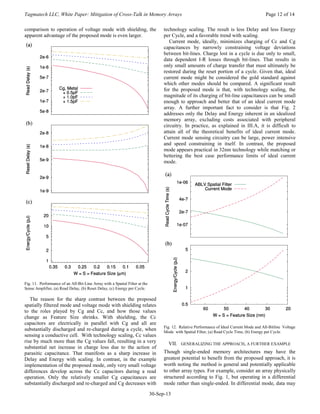
Fig. 11 displays a key result for this study: Given the
proposition that a spatial inverse filter can be implemented at a
sense amplifier of an ABLV mode memory array, the Read
Delay and Energy consumption trend is flat to downward as
technology scaling moves forward. Depending on circuit Cg,
Reset Delay may rise as RBL rises, but Reset Delay is a small
portion of cycle time. In arrays with minimal contributions to
Cg other than bit-line interconnect, the trend is strongly in the
favorable direction. That clearly contrasts with results in Fig. 2
(c), for current mode sensing, and Fig. 3(c), for shield mode
sensing, where the trends are strongly in the opposite
direction, even without considering any additional Cg
contributions. As shown in Fig. 12(a), where cycle time is
defined as the sum of Read Delay and Reset Delay and for
comparison’s sake, Cg is taken to be metal-only, the proposed
spatial filter mode approaches and improves on the cycle time
of ideal current mode operation at the nano-meter end of the
Feature Size axis. Likewise, as shown in Fig. 12(b), Energy
per Cycle for the proposed mode meets and improves on ideal
current mode. The advantage appears to be in the vicinity of
an order of magnitude at 20nm. Though not plotted here, by
Tagmatech LLC, White Paper: Mitigation of Cross-Talk in Memory Arrays Page 12 of 14
30-Sep-13
comparison to operation of voltage mode with shielding, the
apparent advantage of the proposed mode is even larger.
Fig. 11. Performance of an All-Bit-Line Array with a Spatial Filter at the
Sense Amplifier, (a) Read Delay, (b) Reset Delay, (c) Energy per Cycle.
The reason for the sharp contrast between the proposed
spatially filtered mode and voltage mode with shielding relates
to the roles played by Cg and Cc, and how those values
change as Feature Size shrinks. With shielding, the Cc
capacitors are electrically in parallel with Cg and all are
substantially discharged and re-charged during a cycle, when
sensing a conductive cell. With technology scaling, Cc values
rise by much more than the Cg values fall, resulting in a very
substantial net increase in charge loss due to the action of
parasitic capacitance. That manifests as a sharp increase in
Delay and Energy with scaling. In contrast, in the example
implementation of the proposed mode, only very small voltage
differences develop across the Cc capacitors during a read
operation. Only the relatively smaller Cg capacitances are
substantially discharged and re-charged and Cg decreases with
technology scaling. The result is less Delay and less Energy
per Cycle, and a favorable trend with scaling.
Current mode, ideally, minimizes charging of Cc and Cg
capacitances by narrowly constraining voltage deviations
between bit-lines. Charge lost in a cycle is due only to small,
data dependent I-R losses through bit-lines. That results in
only small amounts of charge transfer that must ultimately be
restored during the reset portion of a cycle. Given that, ideal
current mode might be considered the gold standard against
which other modes should be compared. A significant result
for the proposed mode is that, with technology scaling, the
magnitude of its charging of bit-line capacitances can be small
enough to approach and better that of an ideal current mode
array. A further important fact to consider is that Fig. 2
addresses only the Delay and Energy inherent in an idealized
memory array, excluding costs associated with peripheral
circuitry. In practice, as explained in III.A, it is difficult to
attain all of the theoretical benefits of ideal current mode.
Current mode sensing circuitry can be large, power intensive
and speed constraining in itself. In contrast, the proposed
mode appears practical in 32nm technology while matching or
bettering the best case performance limits of ideal current
mode.
Fig. 12. Relative Performance of Ideal Current Mode and All-Bitline Voltage
Mode with Spatial Filter, (a) Read Cycle Time, (b) Energy per Cycle.
VII. GENERALIZING THE APPROACH, A FURTHER EXAMPLE
Though single-ended memory architectures may have the
greatest potential to benefit from the proposed approach, it is
worth noting the method is general and potentially applicable
to other array types. For example, consider an array physically
structured according to Fig. 1, but operating in a differential
mode rather than single-ended. In differential mode, data may
Tagmatech LLC, White Paper: Mitigation of Cross-Talk in Memory Arrays Page 13 of 14
30-Sep-13
be coded as a difference between RDATA values of a bit-line,
BL(n), and an immediate neighbor, BL(n-1). A key point is
that differential operation does not alter the spatial impulse
response of individual bit-lines as compared to single-ended
operation. Consequently, the inverse spatial filter calculation
for differential mode can still be done with respect to
individual bit-lines in a manner identical to the foregoing
single-ended example, yielding the identical result, as
described in (2). To then obtain a filter equation for a
differential pair, (2) may be applied twice, taking the
difference between bit-lines of a pair, as in (5):
(5)
By substitution and algebraic reduction, that becomes:
(6)
Note the filter OFFSET constant of (2) disappears, due to
algebraic cancellation. The result is an equation that is the
weighted sum of four inputs, similar to the single-ended
example, but with one more bit-line input and without the
OFFSET constant. That suggests a circuit implementation
similar to Fig. 8 may be workable after appropriately adjusting
inputs, filter weights and signs. However, in practice, it might
still be useful to include an OFFSET-like term if only for fine
tuning of practical circuitry.
VIII. SUMMARY DISCUSSION
A. Potential Applications
The demonstrated read-out speed and power performance is
in a range compatible with many memory product
specifications. Alternate, advantageous implementations of the
active circuitry may also be possible, especially where higher
supply voltages are available. For the example 32nm CMOS
circuit, current drain per output data bit is low and in a range
compatible with products where simultaneous read-out of a
wide page is necessary, such as NAND Flash memory.
Given the high packing density of NAND arrays, and the
small signal margins inherent with multi-level cell operation,
cancellation of coupling error is likely to be useful to enhance
operating margins. It may prove vital to maintain performance
as scaling progresses below 100nm where even best case
current mode operating margins tends to degrade with scaling.
A further extension in the NAND flash context would be the
use of inverse filtering to compensate word-line oriented
interactions [9], [10]. Rather than sampling bit-line levels
during only a single word-line selection as in the foregoing
example, bit-line signals could also be sampled during the
selection of each of a series of adjacent word-lines, with
simultaneous weighting and summing in a single filter circuit,
thereby compensating word-line oriented causes of cross-talk,
with or without simultaneous compensation of bit-line
oriented cross-talk. The practical limitation would be the
number of terms in the filter equation and the resulting size of
the circuit.
Inverse spatial filtering may be valuable in NOR Flash or
other products that are based on single-ended conductive cells
[11] where higher speeds than NAND may be required. It is
conceivable this may be useful for some varieties of SRAM,
particularly single-ended SRAM [12] where differential
sensing is not the natural design choice and where cell pitches
and bit-line lengths could ultimately be pushed far enough to
cause strong bit-line to bit-line interaction.
Since differential mode is also theoretically supportable,
application to inherently differential memory types is not out
of the question. Conceivable motivations for a differential
implementation might be improved performance due to better
signal energy utilization, avoidance of the cost of the physical
features associated with alternate approaches [1], [2] or the
ability to compensate for interactions too complex for those
other methods of cross-talk mitigation. Though the circuit
example in this study may not be directly applicable to
DRAM, due to the capacitive load it adds to bit-lines,
workable circuit variations are conceivable. For example, a
MOS source follower could be inserted as buffer between the
bit-line and sense amplifier capacitance. It is also conceivable
that, with diligence in modeling weighting capacitors and
lithography in nano-meter technologies, bit-line loading by a
switched-capacitor circuit might be scaled down sufficiently to
be directly compatible with DRAM sensing, without the
addition of input buffers.
B. Suggested Further Work
Key to any application will be optimal implementation in
hardware. Taking the example circuit of this study as a
prototype, it would be useful to study ways to optimize
weighting capacitor packing density, given properties of nano-
meter lithographic processes. The goal is to implement small
capacitors having adequate, but not necessarily precise ratio
accuracy, that are also physically matched to a memory array
bit-line pitch, or some low multiple thereof.
Consideration could also be given to alternate ways to
implement (2) in circuitry. The switched-capacitor example
seems attractive, particularly in single-ended architectures in
MOS memories where the added Cg from the sense circuitry
is actually constructive. However, that should not close off
consideration of static circuit approaches. In some
applications, it may even make sense to use a brute force
digital implementation of the spatial filter calculation. In those
cases, a key will be efficient analog to digital conversion of
bit-line signals.
ACKNOWLEDGMENT
The author would like to thank friends and colleagues who
made numerous helpful suggestions during preparation of this
paper.
Tagmatech LLC, White Paper: Mitigation of Cross-Talk in Memory Arrays Page 14 of 14
30-Sep-13
REFERENCES
[1] Hideto Hidaka, Kazuyasu Fujishima, Yoshio Matsuda, Mikio Asakura,
Tsutomu Yoshihara, “Twisted Bit-Line Architectures for Multi-Megabit
DRAM’s,” IEEE Journal of Solid State Circuits, Vol. 24, pp. 21-27,
February 1989
[2] Dong-Sun Min, Dietrich W. Langer, “Multiple Twisted Dataline
Techniques for Multigigabit DRAM’s,” IEEE Journal of Solid State
Circuits, Vol.34, pp. 856-865, June 1999
[3] Yu(Kevin) Cao, Predictive Technology Model, Arizona State
University, online, available: http://ptm.asu.edu/, Copyright 2007
[4] S.-C. Wong, G.-Y. Lee, D.-J. Ma, “Modeling of Interconnect
Capacitance, Delay, and Crosstalk in VLSI,” IEEE Transactions on
Semiconductor Manufacturing, vol. 13, no. 1, pp. 108-111, February
2000
[5] John W. Eaton, Octave Documentation, online, available:
http://www.gnu.org/software/octave/docs.html, Copyright 1998-2011
[6] J.O. Smith, Mathematics of the Discrete Fourier Transform (DFT) with
Audio Applications, Second Edition, online book, available:
https://ccrma.stanford.edu/~jos/sasp/Convolution_Short_Signals.html,
2007, accessed 15 February 2011.
[7] R. Jacob Baker, Harry W. Li, David E. Boyce, in CMOS Design,
Layout, and Simulation, New York, IEEE Press, 1998, pp. 731-738
[8] David A. Johns, Ken Martin, Analog Integrated Circuit Design, New
York, John Wiley & Sons, Inc, 1997, pp. 137-142
[9] Jae-Duk Lee, Sung-Hoi Hur, Jung-Dal Choi, “Effects of Floating-Gate
Interference on NAND Flash Memory Cell Operation,” IEEE Electron
Device Letters, Vol. 23, pp. 264-266, May 2002
[10] Mincheol Park, Keonsoo Kim, Jong-Ho Park, Jeong-Hyuck Choi,
“Direct Field Effect of Neighboring Cell Transistor on Cell-to-Cell
Interference of NAND Flash Cell Arrays,” IEEE Electron Device
Letters, Vol. 30, pp. 174-177, February 2009
[11] Anant Singh, Michael Ciraula, Don Weiss, John Wuu, Philippe Bauser,
Paul de Champs, Hamid Daghighian, David Fisch, Philippe Graber,
Michel Bron, “A 2ns-Read_latency 4Mb Embedded Floating-Body
Memory Macro in 45nm Technology,” in Solid-State Circuits
Conference-Digest of Technical Papers, San Francisco, 2009, pp. 459-
461
[12] Leland Chang, Yutaka Nakamura, Robert K. Montoye, Jun Sawada,
Andrew K. Martin, Kiyofumi Kinoshita, Fadi H. Gebara, Kanak B.
Agarwal, Dhruva J. Acharyya, Wilfried Haensch, Kohja Hosokawa,
Damir Jamsek, “A 5.3GHz 8T-SRAM with Operation Down to 0.41V in
65nm CMOS,” in Symposium on VLSI Circuits Digest of Technical
Papers, 2007, pp. 252-253
Bruce L. Morton received the B.S. in electrical
engineering from Oklahoma State University in
Stillwater, Oklahoma in 1975. With support of an
Engineering Foundation Fellowship, he earned an M.S.
in electrical engineering from the University of Texas at
Austin, Texas in 1976.
After graduation, he joined Motorola in Austin where
he learned the basics of early MOS technology and
memory design, ultimately contributing to the design of
DRAM, SRAM and Non-Volatile memory for
commodity markets and proprietary System-on-Chip products. In 2005, he
joined AMD/Spansion, working primarily on modeling of developmental
memory devices, circuits and architectures. Being semi-retired since 2009, he
has worked independently on new design ideas, while also consulting on an
occasional basis on the topics of circuit design, devices and technology. In
2012, he formed Tagmatech LLC to continue to develop and license new IP.

Mitigation of Cross-Talk in Memory Arrays

  • 1.
    Tagmatech LLC, WhitePaper: Mitigation of Cross-Talk in Memory Arrays Page 1 of 14 30-Sep-13  Abstract—Cross-talk in memory arrays is a well known and increasingly important limiter of memory array scaling and performance. Commonly used techniques for mitigation involve clever physical layout to cause cross-talk effects to be common mode between bit-line pairs, combined with differential sensing circuitry to reject the common mode component. Single-ended architectures often rely on current mode circuitry or physical shielding techniques to suppress cross-talk. Proposed here is an alternative inspired by linear system theory whereby the sensing circuit functions as a spatial inverse filter that compensates for cross-talk. It is shown to be effective for a range of memory types, including those whose signal paths are fundamentally single- ended rather than differential. Feasibility is demonstrated by simulation with predictive technology models for a 32nm cmos memory whose array has very strong bit-line to bit-line coupling. Comparative advantages are explained in the context of technology scaling. Applications and further work are suggested. I. INTRODUCTION ARASITIC coupling between tightly spaced bit-lines in memory arrays has been recognized as a limiter of memory operating margins since the early generations of DRAM technologies. Due to inherently small signals from DRAM cells, even low levels of pattern dependent noise from adjacent line coupling could substantially reduce operating margins. That led to now well established techniques for mitigation of the effects in the context of architectures having differential signal paths [1],[2]. Through physical layout techniques, unwanted coupling to a differential signal pair can be made common mode and can then be rejected by a differential sense amplifier. However, such rejection techniques tend to waste signal energy increasingly with technology scaling and, in any case, are not readily transferrable to architectures that are necessarily single-ended. Single-ended architectures, based on cross-point cells, have come to the fore in recent years in the high-density commodity memory business. The physical simplicity of cross-point cell layout serves to minimize cost-per-bit, which is paramount in the design of high density commodity memory products such as NAND flash. Single-ended signal paths have proven most compatible with the layout constraints imposed by such high density array designs. Unfortunately, as memory densities have increased with improvements in lithography, read mode delay and energy per read cycle have trended in an Copyright © 2013 Tagmatech LLC, All Rights Reserved. No licenses, express or implied, are granted with respect to any technology described herein. Contact: Bruce L. Morton, P.O. Box 340293, Austin, TX, 78734, USA, email: bruce.morton@att.net unfavorable direction. This paper first shows the cause of the negative performance trend in single-ended architectures is cross-talk due to parasitic coupling between physically proximate signal paths, combined with the inherent properties of conventional single-ended circuit techniques. It is demonstrated that both current mode sensing and voltage mode with shielding are effective in suppressing cross-talk, but both exhibit degraded performance as feature sizes shrink. Then an alternate technique is proposed for sensing stored states in the presence of strong cross-talk. The technique is based on the notion that cross-talk is systematic spatial distortion of signal paths that can be received as-is at a memory sense amplifier, where the effects can be filtered out. With the proposed technique, delay and energy are shown to trend downward with feature size scaling, in stark contrast to commonly used techniques. The proposed technique is also shown to work well in an all-bit- line type of architecture where conventional voltage level sensing would be unworkable due to a negative signal margin caused by strong cross-talk. Extension of the concept to applications with differential signal paths is also outlined. II. MODELING MEMORY ARRAY SCALING EFFECTS A. Physical Structure of Memory Array Interconnect Referring to Fig. 1(a), signal paths in memory IC’s use conductors having spacing, S, width, W, and thickness, T, combined with a vertical separation, H, from any structure that functions as a ground plane. The illustration is general, but is proportioned to suggest recent memory technologies where W and S can be small relative to the other dimensions. It is in such situations that the value of the lateral coupling capacitance, Cc, becomes large relative to the value of capacitance to ground, Cg. In a memory array so constructed, signals from a memory data storage element, passing through a bit-line in the direction, L, can be strongly influenced by signals developed on neighboring bit-lines. B. An Array Model A very basic memory array model that comprehends the primary effects is shown in Fig. 1(b). A memory device on a bit-line is modeled as a resistance whose value is RDATA, where the resistance value encodes stored data. For the analyses in this work, RDATA is set to 500K ohms to represent cells in a conductive state and 50MΩ for cells in the non-conductive state. In principle, additional states could be encoded by defining additional valid ranges, as in some commercial multi-state cells, but the binary case suffices for this study. The idealized cell access switches are modeled with Mitigation of Cross-Talk in Memory Arrays Bruce L. Morton Tagmatech LLC P
  • 2.
    Tagmatech LLC, WhitePaper: Mitigation of Cross-Talk in Memory Arrays Page 2 of 14 30-Sep-13 ON state resistance of 5kΩ and an OFF state resistance of 50MΩ. The signal, WL, when asserted, causes the switches to be in the ON state. The resistance of the metal bit-line in the direction, L, is modeled in two equal parts, each having resistance, RBL/2. Capacitance to ground and between neighboring bit-lines is modeled by instances of capacitors Cg and Cc respectively. In common practice, memory arrays may have extents measured in the thousands of bit-lines. However, for convenience of calculation and presentation, an infinite array composed of multiples of identical 32 bit-line blocks can be modeled by terminating the capacitor, Cc, of BL(31), back at the analogous node on BL(0) in the simulation model, thereby creating a circular coupling network. Such a model construction is commonly known as periodic or circular. Array edge terminations are not represented, but the primary dynamics of the core of a large array are modeled. The simulation results for this paper are derived from this 32 bit- line circular array model. C. Array Parameter Estimation Fig. 1(c) illustrates the basis for estimation of interconnect parasitics as scaling occurs. The x-axis represents the minimum feature size due to lithographic limitations. Feature size is shown scaling down from left to right because technology is considered to advance in the direction of time, which is conventionally from left to right. The scaling proposition here is that chip size remains relatively constant as feature sizes scale down, so that memory density, in bits per chip, rises with scaling. From that it follows that there should be a conductor in the bit-line path whose length, L, corresponds to the length of one axis of a chip. For this study, that length is held constant at 1.5 cm. A further and usual goal in memory technology definition is to maintain bit-line resistance, RBL, at as low a value as practical. Therefore, commonly, for each new generation of technology, the attempt is made to maintain the same or nearly the same bit-line thickness as the previous generation. For this study, thickness, T, is held constant at 0.4µm and copper conductors are assumed. Also, vertical separation, H, tends to be maintained as high as practical, driven not only by the desire to minimize Cg, but also by the necessity to exceed the height of the highest physical topology in or around the array. Such height features often tend not to scale with lithography. For this study, H is held constant at 0.4µm. Though not shown in Fig. 1(a), the further assumption is made that there are similar ground planes at a distance H above, as well as below the bit- line conductors, as in multi-level interconnect systems. That doubles Cg relative to a single ground plane. The values of Cg, Cc and RBL are calculated according the method of the predictive technology models, PTM, from Arizona State University [3] which in turn reference Wong [4] for capacitance calculations. Consistent with the PTM suggestion for the most advanced interconnect, a relative dielectric constant of 2.2 was used throughout. That is lower than typically found in older technologies, and is therefore an underestimate of capacitive effects at the larger features sizes of older technologies. However, it is probably a better fit at smaller feature sizes where porous or air gap isolation may be used. It is the smaller feature sizes that are of greatest interest in this study. It is also likely the compact interconnect models lose accuracy at the technology extremes presented here. However, the models are well behaved at the extremes and do provide a basis for extrapolation into the future. Likewise, it may be argued that the constants chosen for this analysis were not perfectly constant, historically. However, they are of the right order and are less important to the trends than the W and S parameters that actually are varied for this study. Here, what is needed is an estimate of the magnitude and direction of resistance and capacitance trends, recognizing that they are varying sharply as Feature Size approaches the zero limit. So, though approximate, the PTM interconnect model supports the objective of this study, which is to illustrate the trends and propose a way to deal with the effects of the looming limit. Fig. 1. (a) Physical Cross-Section of Conductors, (b) An Electrical Model of Bit-line Signal Paths in a Memory Array, (c) Parameter variation with technology scaling
  • 3.
    Tagmatech LLC, WhitePaper: Mitigation of Cross-Talk in Memory Arrays Page 3 of 14 30-Sep-13 III. PERFORMANCE WITH CONVENTIONAL TECHNIQUES A. Current Mode Fig. 2 shows transient simulation results for the array of Fig. 1 when operating with an idealized form of Current Mode sensing. In this mode, each bit-line terminal, BL(n), is controlled by an ideal voltage source that maintains 1V at that node. At the beginning of a read cycle, the WL signal is asserted and current flows at a rate determined mainly by RDATA values. Currents flowing out of the voltage sources are shown as negative, by convention. For this study, the data state of a cell is deemed readable when the current drawn from a voltage source reaches the sense level. A conductive cell in this case would draw approximately 2µA, so a convenient level for discrimination between states, the sense level, is half of that, 1µA. The time required to charge or discharge bit-line parasitics through RBL and RDATA, and reach the sense level, is defined as the Read Delay. After sensing, bit-line current levels must be reset to near zero in preparation for the next read cycle. That reset operation begins in this example when the WL signal is de-asserted at the end of the Read period, causing the memory cell switches return to their non- conductive state, thereby allowing bit-line currents to settle back toward zero. Bit-lines are deemed to be reset when the current through all voltage sources has dropped to 0.1µA, 10% of the sense level. Energy consumption is calculated by integrating transient charge drawn from bit-line voltage sources over the duration of a Read/Reset cycle. Two patterns of stored states are simulated because they represent bounding extremes. One pattern has one isolated conductive cell in a field of non-conducting cells and the other is the complement of that. Since Energy consumption is pattern dependent, a figure of merit is created by taking an average of the energy consumed in the two bounding cases. Fig. 2(a) shows bit-line behavior when W and S are 32nm, and the stored data pattern is a single conductive cell at BL(15), with non-conductive cells at all other bit-lines. Fig. 2(b) shows behavior with the inverse stored data pattern. Read delays due to transient charge redistribution have a time constant determined primarily by the values of RBL/2 and the sum of associated Cc and Cg capacitor values. With bit-line ends held firmly at 1V, the only charge redistribution that occurs is due to I-R voltage drops through RBL/2 resistors as cell current flows. Fig. 2(c) shows the resulting Delay and Energy consumption trending upward with technology scaling because RBL and Cc rise. While Current Mode may be attractive for its speed, minimal current drain and its cross-talk damping effect, implementation can be challenging due to the practical aspects of building bit-line voltage controlling circuitry that can adequately emulate an ideal voltage source. Inevitably, compromises must be made in source impedance and dynamic behavior in order to accommodate overall power and chip size budgets. The result is that most current mode implementations fall substantially short of ideal array performance, or incur high costs in peripheral circuit power and layout area. Current mode circuit design also gets more challenging as power supply voltages decline with technology scaling. Fig. 2. Current Mode, (a) with an isolated conductive cell at BL(15), (b) with an isolated non-conductive bit at BL(15), (c) Delay and Energy per cycle versus Feature Size B. Voltage Mode with Shielding Fig. 3 shows simulation results when operating the array of Fig. 1(b) in Voltage Mode with Shielding. In that mode, during any given read-out cycle, every other BL(n) terminal is held at ground potential while the remainder are active. The grounded bit-lines act as shields between active bit-lines, thereby preventing the Cc capacitances from coupling one active signal to another. In this mode, active bit-lines begin a Read cycle preset to, and floating at, a level of 1V. Then the WL signal is asserted. Active bit-lines associated with non- conductive cells remain floating near the preset level, influenced only by any small leakage current through non- conductive cells. Active bit-lines associated with conductive cells discharge with a time constant determined primarily by RDATA and the sum of the Cc and Cg values. Often, in
  • 4.
    Tagmatech LLC, WhitePaper: Mitigation of Cross-Talk in Memory Arrays Page 4 of 14 30-Sep-13 systems employing this mode of operation, the circuitry used to discriminate between bit-line voltages is minimalistic to minimize cost and is, therefore, imprecise. For that reason, the Read Delay is usually defined to be long enough to substantially discharge bit-lines associated with conductive cells. In this example, 0.1V is defined as the discharged level, which defines an end point for a Read period. After being allowed to reach that level, data is captured and all active bit- lines are Reset to 1V in preparation for the next cycle. For this study, Reset is deemed complete when bit-line levels return to at least 0.999V. Energy per cycle is calculated by integration of current drawn from a 1V source during the Reset operation. As in the Current Mode analysis, Energy consumption is averaged between the two bounding cases. Fig. 3. Voltage Mode with Shielding, (a) with an isolated conductive cell at BL(15), (b) with an isolated non-conductive cell at BL(15), (c) Delay and Energy per cycle versus Feature Size Fig. 3(a) shows behavior when BL(15) is associated with a conductive cell, with non-conductive cells on all remaining active bit-lines, while W and S are set to 32nm. Fig. 3(b) shows behavior with the complimentary pattern. Even with the strong Cc and rather large RBL values inherent to this technology node, it is apparent that the shielding is very effective. The transient plots exhibit very little interaction between active bit-lines. However, referring to Fig. 3(c), Read Delay and Energy per cycle are much higher than in the current mode example. In contrast to current mode, where charge re-distribution during Read and Reset is relatively minor, caused only by bit-line I-R losses, shield mode requires memory cells to do the work to nearly fully discharge the total bit-line capacitance during Read. During Reset, the total capacitance must be re-charged, which requires substantial energy from the power supply. Since that total capacitance, dominated by Cc, trends strongly upward with technology scaling, both Delay and Energy for this mode trend strongly upward as well. Fig. 4. All-Bit-Line Voltage Mode, (a) with an isolated conductive bit at BL(15), (b) with an isolated non-conductive cell at BL(15) C. All-Bit-Line, Voltage Mode Voltage Mode with Shielding according to the preceding example imposes the architectural constraint that only half of a memory array’s bit-lines may be active in any one Read cycle. That reduces potential memory bandwidth by half. An alternative that avoids that limitation is referred to here as All- Bit-Line Voltage Mode, ABLV Mode. It operates as the Shield Mode does in terms of the sequence of WL and Reset actions, except that all bit lines may be active in a given Read cycle because there are no intervening bit-lines acting as shields. ABLV Mode is now not widely used because,
  • 5.
    Tagmatech LLC, WhitePaper: Mitigation of Cross-Talk in Memory Arrays Page 5 of 14 30-Sep-13 unfortunately, it is not workable if the ratio of Cc to Cg is large. Fig. 4 illustrates the problem with a time domain view of bit-line behavior in the ABLV Mode in 32nm technology. In Fig. 4(a), only the cell associated with BL(15) is conductive, but it is so strongly coupled to its neighbors through Cc that very little voltage contrast develops between it and its neighbors during a Read period. In the same period, the complementary pattern nearly full discharges all bit-lines, including BL(15) even though its associated cell is non- conducting. Fig. 5 introduces the concept of Sense Margin as a way to define the problem. In Fig. 5(a), which is a spatial snapshot of the simulation in Fig. 4, taken at the end of the Read period, it can be seen that there is no voltage level where a horizontal line can be drawn to separate bit-line voltages of conductive cell states from those of non-conductive states. Due to strong coupling through Cc and weak support through Cg, all bit-lines tend to discharge together, never developing a signal whose state can be sensed with a voltage discriminating circuit. At 32nm, the ABLV Mode can be said to have a negative sense margin. In contrast, to cement the sense margin concept, Fig. 5(b) illustrates ABLV Mode in the context of an older technology where W and S are 0.35µm. In that case, Cc is smaller and Cg is larger. The result is a positive Sense Margin. A horizontal line can be drawn anywhere in the indicated margin range to delineate a boundary between conductive states and non- conductive ones. That means that voltage discriminating circuitry should be workable in ABLV Mode, in 0.35µm technology. Fig. 5(c) broadly illustrates the effect of technology scaling on sense margin. It comprehends not only the case where Cg is dominated by metal interconnect, but also includes cases with varying amounts of additional capacitance to ground due to other circuit elements. Assuming simple voltage discrimination as the sensing method, the ABLV Mode is shown to be unworkable for Feature Sizes as large as ~0.2µm in architectures where Cg happens to be dominated by metal interconnect only. While Cg could be artificially augmented to reduce the coupling ratio and improve the sense margin, at some level of technology scaling it likely becomes unreasonable to do so. The Cg enhancement required to make ABLV Mode work at nano-meter scale would add greatly to total capacitance and, therefore, also add to Delay and Energy consumption. D. A Comment on the Limitations of Current Mode Given the architectural constraints of Voltage Mode with Shielding and the cross-talk susceptibility of ABLV mode, the alternative of an All-Bit-Line Current Mode is attractive. Given enough time, current mode sense amplifiers can damp out any cross-talk current caused by bit-line capacitive coupling. However, as shown in Fig. 2(c), the time required to do that escalates sharply as bit-line resistance RBL and coupling capacitance Cc increase due to technology scaling. Unfortunately, when a commercial product transitions from one feature size to a smaller one, the market expectation typically is that performance will not suffer. In practice, therefore, Read Delay is usually time constrained. That leads to a limitation in the usefulness of Current Mode to suppress bit-line cross-talk. Fig. 5. All-Bit-Line Voltage Mode Sense Margin, (a) with complementary isolated state patterns with W=S=32nm, (b) with W=S=0.35µm, (c) with Technology Scaling and added Cg. The limitation can be analyzed in terms of a current Sense Margin analogous to the voltage margin effect illustrated in Fig. 5 with respect to ABLV mode. In Fig. 6, the time constrained current Sense Margin is taken as the difference in currents seen at the sense amplifier, at a particular time delay after Read cycle start, when comparing an isolated conductive cell to an isolated non-conductive cell. What is shown is that, even with an idealized sense amp presenting a perfect zero impedance to the bit-line, there is a limit to the sense amp’s ability damp out cross-talk currents within a given time constraint. Technology scaling causes series RBL and coupling Cc values to rise to the point where the cross-talk related time constant significantly exceeds that permissible for a given Read Delay. Based on the hypothetical, but plausible parameters used for this study, the limitation is significant at feature sizes smaller than ~100nm for higher performance memories. Even with a relatively loose timing constraint such as 500ns, the adverse effect still appears quite significant at
  • 6.
    Tagmatech LLC, WhitePaper: Mitigation of Cross-Talk in Memory Arrays Page 6 of 14 30-Sep-13 20nm feature size. In a practical situation where a non-zero sense amp source impedance would add to the effect of series RBL, the Sense Margin degradation would be greater. Fig. 6. All-Bit-Line Current Mode, Sense Margin with Time Constraint IV. CROSS-TALK MITIGATION BY SPATIAL INVERSE FILTERING A. The Proposal What is needed is an operating mode that is more compatible with the inherent parasitic properties of nano- meter technology. What is proposed is to characterize cross- talk effects as signal distortion in the spatial domain and then devise a spatial filter that compensates for it at the receiving end of the bit-line signal path. Though not necessarily ideal mathematically, due to data pattern dependency inherent to the array, it will be shown that a workable inverse spatial filter can be formulated for a memory array such as the example of Fig. 1(b). In effect, a bank of suitably designed sense amplifiers can function as an inverse spatial filter that de- convolves cross-talk effects and thereby recovers stored memory states. For this exercise, the memory array space has one dimension, with bit-line array index numbers as the indicator of spatial position. Inclusion of additional dimensions is possible, and possibly useful, but this study focuses on a one dimensional filter function having the following general form: (1) where n is the index of a particular bit-line in the model, VBL(m) is the voltage at the bit-line with index m and K(m-n) are filter coefficients with index (m-n) that collectively define the inverse filter characteristic, modulo 32. Filter_Output(n) is the data state that is ultimately resolved by the filter at bit-line position, n. Briefly in words, the equation says that the filtered output associated with a bit-line path in the array is a weighted sum of all of the bit-line voltages in the array. That can be complex. Therefore, as a practical matter, it is helpful to zero out as many of those weighting terms as possible. A way to do that is shown in the example calculations that follow. B. Determining a Suitable Filter Function Undoubtedly there is more than one mathematical method that might be used to determine the characteristic of the necessary inverse spatial filter. Purely empirical methods are conceivable. A genetic algorithm might have advantages. However, the approach described here is adapted from linear system theory, using engineering empiricism to achieve the desired minimization of the filter function and resulting hardware. A first step is to generate a spatial impulse response from the array. That is the specific response that the inverse filter is designed to match and compensate. Fig. 7(a) and 7(b) each show responses that may be used for the purpose. They were extracted from the previously discussed ABLV Mode simulations for a 32nm memory array. Fig. 7(a) shows array responses to an isolated conductive cell, with four alternate values of Cg. Similarly, Fig. 7(b) shows responses to an isolated non-conductive cell. The choice of conductive cell or non-conductive cell response is arbitrary at least until actual hardware is designed, so both are carried through the initial steps in the example calculation. In practice, the Cg value should match that expected on the bit-line, including any loading due to sense amplifier circuitry. For the following example calculation, the Cg + 1pF characteristics are used. For this study, the 1pF adder is considered to be allocated as 0.1pF for sense amplifier loading and 0.9pF due to other elements such as cell junctions or array segment selection devices that are not explicitly shown in Fig. 1(b). A second step is calculation of the coefficients of the inverse filter. A remarkably efficient tool for that purpose is Octave [5], an open source, matrix oriented program for general purpose number crunching. The following one-line snippet of Octave code accomplishes the transformation of select impulse response data taken from Fig. 7(a) or 7(b), to the inverse filter coefficients plotted in Fig. 7(c) or 7(d) respectively: inv_imp_resp = shift(ifft((1 ./ fft(imp_in,32)),32),-17) In the snippet, “imp_in” is a vector containing the bit-line voltages of the response selected from Fig. 7(a) or 7(b) and “inv_imp_resp” is a vector containing the resulting inverse filter coefficients. In words, the snippet finds the Discrete Fourier Transform (DFT) of the impulse response, calculates the inverse on an element by element basis, finds the inverse fourier transform of that, and shifts that to position coefficients appropriately for use in (1). See the reference [6] by J.O. Smith, for a concise primer on DFT and convolution filtering, as well as Octave coding guidance. In principle, filter coefficient determination could end there and a circuit could be designed to implement (1) in hardware. However, consideration of Fig. 7(c) and 7(d) raises the possibility of a reduction of terms in the equation. In this case, there are only three coefficients with substantial magnitude. Only those three adjacent and sharply varying coefficients are consequential in (1) in terms of filter discrimination between bit-lines. The others are small and nearly uniform. The small and nearly uniform coefficients serve only to create an offset that is related to a rough average of bit-line voltages in a given pattern. Given that, it seems reasonable to collect those terms into a single constant OFFSET term and, with algebraic
  • 7.
    Tagmatech LLC, WhitePaper: Mitigation of Cross-Talk in Memory Arrays Page 7 of 14 30-Sep-13 Fig. 7. Determining and Testing Filter Functions, (a) isolated conductive cell impulse responses, (b) isolated non-condcutive cell impulse responses, (c) inverse filter coefficients matching an isolated conductive cell pattern, (d) inverse filter coefficients matching an isolated non-conductive cell pattern, (e) test with conducting cell impulse response as input, (f) test with non-conducting cell impulse response as input, (g) test with compliment of impulse response pattern as input, (h) test with compliment of impulse response pattern as input, (i) test with intermediate mixed state pattern, (j) test with intermediate mixed state pattern.
  • 8.
    Tagmatech LLC, WhitePaper: Mitigation of Cross-Talk in Memory Arrays Page 8 of 14 30-Sep-13 manipulation, reduce (1) to the following form: (2) where VBL(n) is the voltage at a bit-line n whose stored state is to be recovered and VBL(n-1) and VBL(n+1) are voltages at the bit-lines on either side. To a very close approximation, since the small uniform coefficients are near zero in the example cases, GAIN can be extracted directly from Fig. 7(c) or 7(d) by inspection. GAIN is approximately the value of K(-1) and K(+1) on the plots. WEIGHT is then the value of K(0) divided by GAIN. OFFSET can be derived from (2) by substitution and algebraic rearrangement. A convenient basis to solve for OFFSET is the impulse response values for VBL(n-1), VBL(n) and VBL(n+1) where n is 15, while setting Filter_Out to its ideal output value when n is 15, which is 1 here. In a more general case, where the values of the uniform coefficients K may not be so close to zero and, therefore, may not be so readily dismissed, it can be useful to make an adjustment before extracting parameters for (2). The adjustment is to uniformly translate the K vector contents up or down in value so as to effectively zero out the nearly uniform coefficients. That translation has the ultimate effect of adjusting the GAIN, WEIGHT and OFFSET values to account for the zeroing of the uniform K values, while preserving the form of (2). Though not particularly significant in effect here, that extra step was actually used in the extraction of GAIN, WEIGHT and OFFSET of the Fig. 7 examples. The resulting parameter values are listed in Table I. TABLE I – Filter Parameters Coefficient Plot GAIN WEIGHT OFFSET Fig. 7(c) 2.81 -2.20 0.558 Fig. 7(d) -4.29 -2.58 -0.241 C. Testing the Filters Numerically Fig. 7(e) and 7(f) show the result of applying the filters defined by values in Table I to the impulse response functions that were first used to determine filter parameters. As expected, the filter output in each case is a near perfect one level at the index location of the isolated conductive or non- conductive cell, with zeros elsewhere. That validates the filter derivation procedure. Fig. 7(g) and 7(h) then test the usefulness of the filters by applying them to patterns that are the opposite of those used in the filter parameter derivation. Importantly, what is shown is good discrimination between cell states. However, the restored levels are not ideal. In Fig. 7(g), using the filter matched to an isolated conductive cell, the filter under-compensates conductive cells that are not isolated from conductive neighbors. Analogously, in Fig. 7(h), using the filter matched to an isolated non-conductive bit, non- conductive cells are over-compensated where they are not isolated from other non-conductive cells. Though these bounding cases do fully characterize performance, engineering intuition may be aided by also looking at filter behavior with a plausible intermediate pattern. Fig. 7(i) and 7(j) illustrate behavior given an irregular pattern having conductive cells at indices 7 through 14, 16 through 21 and at index 26, with non- conductive cells elsewhere. In Fig. 7(i), compensation for conductive cells is closest to ideal for the location that is most isolated, the cell at BL(26). In Fig. 7(j), a similar observation applies to non-conductive cell locations, such as BL(15). The observed non-ideal aspect of filter behavior can be understood by thinking about how stored data is encoded in the example memory array, and how that encoding must affect array dynamics. Network dynamics in Fig. 1(b) are R-C in nature, where the dominant R values in Read mode are RDATA. Varying the number and locations of coupled conductive cell RDATA values, as happens in normal memory data storage operations, inevitably varies the R-C dynamics. A spatial filter matched to an array with a single conductive or non-conductive cell will not be a perfect match to an array having a different physical arrangement of RDATA values. However, the effect of pattern dependent over or under- compensation can be masked in filter implementation. The tendency to under-compensate, as in Fig. 7(g) and 7(i), can be empirically corrected by proportionately increasing GAIN to bring the worst case levels in the pattern to a target minimum level, such as one, and then clamping the other levels at that level as a maximum. The tendency to over-compensate, as in Fig. 7(h) and 7(j), requires only clamping at a target maximum. The important consideration in a digital memory application is that the spatial filter clearly discriminates between stored states, as is evident in the last four plots of Fig. 7. Analog level ideality is not required. V. SPATIAL FILTER IMPLEMENTATION IN HARDWARE A. Implementation Options In a semiconductor memory product, it might be possible to literally evaluate (1) or (2) using a digital processor, after first converting analog levels to a digital representation. However, in many applications, the power, chip area or processing delay associated with such a general approach would be unacceptable. Because of that, the next segment of this paper focuses on the feasibility of implementation of (2) in analog hardware. B. A Switched Capacitor Spatial Filter Circuit 1) Technology Independent Circuit Considerations In a technology agnostic form, Fig. 8(a) shows an example of a switched capacitor circuit [7] implementation of (2). Inputs are voltages from a target bit-line at BL, its immediate neighbors at BL-1 and BL+1, and a voltage level representing the OFFSET value. The OUT level represents as a voltage the weighted sum of the inputs, with weights being determined by ratios of C1 through C4 relative to Cf. Numerical signs of the weights are determined by switch and capacitor circuit topology. The specific topology of Fig. 8(a) conforms to the signs of the parameters of Table I which were derived from Fig. 7(d). That example and the corresponding 32nm array model are the basis for the circuit analysis that follows.
  • 9.
    Tagmatech LLC, WhitePaper: Mitigation of Cross-Talk in Memory Arrays Page 9 of 14 30-Sep-13 Fig. 8. Filter Implementation, (a) Switched-Capacitors with ideal Op-Amp, (b) A practical CMOS circuit with Gain Stage and separate Buffer. Referring to Fig. 8(a), the Read operation begins with a sampling phase when bit-lines are connected through switches to C1 through C3, and C4 is connected to a DC voltage. During the sampling phase, memory cells discharge bit-lines at a rate that depends on stored data and those bit-line levels are mirrored on the capacitors through the switches. The switches in Fig. 8 are shown in the sampling phase. It is worth noting that, during that initial phase, the capacitors present to the bit-lines a capacitance to ground that is in parallel with bit- line capacitance Cg, which in Fig. 5(c) is shown to be constructive in terms of signal margin. A second phase of circuit operation begins after bit-lines have been allowed sufficient time to develop signals, when the switches flip to the state opposite of that shown. During the second phase, the filtered signal develops at OUT. It is instructive to use the circuit structure of Fig. 8(a) to assess the essential sensitivity of the filter to variation in capacitor values. In a switched capacitor circuit, capacitors are the primary determinant of circuit behavior when amplifier and switching elements are properly designed. Fig. 9 shows the result of a monte-carlo analysis of capacitor variation using Octave. The procedure was to generate 1000 combinations of values for the five capacitors, convert those back to corresponding filter parameters for (2), calculate filter output levels using (2) given the bit-line voltages of the bounding and mixed patterns used previously and, finally, calculate the mean and standard deviation of filter output at each bit-line index, for each pattern. For the results in Fig. 9, individual capacitor variations were uncorrelated and normally distributed, with 1σ variation set at 1% of nominal values. Error bars show 3σ variation in filter output levels, which corresponds to 3% capacitor variation. Importantly, that is a much larger variation than is considered permissible in many switched capacitor circuit applications. Despite that, the remaining Read margin is shown to be substantial. That suggests capacitors can be much smaller than might be conventionally assumed, and the remaining performance tolerance is likely sufficient to also accommodate other sources of significant variation. As should be expected, margin defined by the bounding patterns in Fig. 9(a) is very similar to, and at least as limiting as the margin evident in the intermediate mixed state pattern of Fig. 9(b). Fig. 9. Filter Variation due to Capacitor Value Error, (a) with bounding case patterns overlaid, isolated conducting cell and isolated non-conducting cell, (b) with an intermediate mixed state pattern. A further implication of Fig. 9 is that a practical design procedure may accommodate random variation by means of empirical adjustments to the GAIN and OFFSET parameters of (2). Given a target tolerance for capacitor variation, such as the example of 3% at 3σ, OFFSET can be adjusted in a negative direction by the indicated “Adj. Offset” amount to ensure a solid zero output, and GAIN can be increased by a factor of 1/(“3σ Margin”) to ensure a solid one output, at 3σ. This and further practical considerations are comprehended in the following discussion of CMOS circuit implementation. 2) A Filter Circuit in 32nm CMOS PTM Technology Fig. 8(b) illustrates a switched capacitor circuit with topology similar to Fig. 8(a), but with a CMOS cascode amplifier [8] followed by a buffer. The cascode provides high gain in a compact circuit. A buffer is required because a cascode stage necessarily has a somewhat limited output voltage swing and that must be translated to full rail for the interface to digital logic. It should be noted that inclusion of the buffer results in an inversion at the OUT node relative to the circuit of Fig. 8(a). That is unimportant in system design, but is needed to understand the simulation results that follow.
  • 10.
    Tagmatech LLC, WhitePaper: Mitigation of Cross-Talk in Memory Arrays Page 10 of 14 30-Sep-13 For this design and simulation exercise, “32nm_LP.pm” PTM CMOS transistor models [3] are used. In the example circuit, the cascode bias levels are set to hold the drains of the input transistors at roughly 200mV from respective power rails. Transistor widths are all 128nm, four times the minimum feature. Except for the switches, gate lengths are 64nm. The switches are modeled as full CMOS transfer gates with 32nm gate lengths. In operation, during the sampling phase, the cascode is stabilized at its quiescent point through the switch between its input and output. Typical quiescent current in the cascode stage is 53nA. With power supply variation of 1V ± 5% and temperature variation of 0 to 70C, the cascode stage open loop gain always exceeds 200. That is sufficient for accurate summing, given a closed loop gain in the rather low range that is required for the filter. That, combined with capacitive coupling of the SUM node to the amplifier input gates through Cc, should result in a high degree of manufacturing process independence. Only the direct coupling of cascode to buffer presents any requirement for transistor parameter tracking, but any error there can be made non-critical with sufficient output swing from the cascode stage. In section V.B.1, filter parameter adjustments to compensate for variation in capacitor values were described. With the addition of the buffer as shown in Fig. 8(b), further adjustments can be useful. GAIN can be reduced in proportion to the reduction in output amplitude required from the gain stage, with concomitant reduction in cascode amplifier sensitivity to transistor parameters. OFFSET may be further adjusted to optimally align gain stage output levels with the buffer’s input requirements. For this example, overall adjustments can be summarized mathematically as follows: (3) (4) where GAIN and OFFSET are the unadjusted filter parameters of (2), BINhigh and BINlow are the input levels to the buffer stage that are required for reliable full rail levels at OUT, MChigh and MClow are the monte-carlo analysis results for worst case (3σ here) high and low level outputs from the unadjusted filter, Vdd is the power supply voltage that defines full rail output limits and Qgs is the static operating point of the GAIN stage. OFFSETemp is useful to account for subtle, non- ideal circuit behavior. For this exercise, BINhigh is 0.58V, BINlow is 0.39V, MChigh and MClow are the levels at BL index 15 of Fig. 9(a), Qgs is 0.487V and OFFSETemp is -0.05V and Vdd is 1V. The resulting parameter adjustments are summarized in Table II. The capacitor values in Table III are calculated from Table II, given a 0.1pF allocation for the total load presented to each bit-line by sense amplifiers. The architectural assumption is an all-bit-line type of array where each bit-line is loaded with a C2 from its own sense amplifier, and both a C1 and a C3 from immediate neighbors. TABLE II – Filter Parameter Adjustment for Capacitor Variation and Output Buffering Parameter Set GAIN WEIGHT OFFSET Nominal -4.29 -2.58 -0.241 Adjusted -1.21 -2.58 -0.210 TABLE III – Weighting Capacitor Values (fF) Capacitor Values C1 C2 C3 C4 Cf Nominal 21.8 56.4 21.8 5.09 5.09 Adjusted 21.8 56.4 21.8 18.0 18.0 Circuit operating margin optimization and parameter centering was accomplished by means of a 100 run monte- carlo simulation with capacitor values being varied according to a normal random distribution, repeated at each of the four afore mentioned combinations of power supply voltage and temperature, for each of the bounding pattern cases used previously in this study. The strategy was to increase the variance input to the circuit simulation until failures could be seen and then use that to adjust for any asymmetry in behavior with respect to stored state or environmental variables. Centering correction was implemented by adjusting OFFSETemp. As anecdotal evidence of circuit robustness, it is interesting to note that a 10% uncorrelated capacitor variation at 3σ produced no failures in any of the four 100 run monte- carlo simulations, given the final adjusted values of Table II and Table III, with a 0.05V OFFSETemp value. Lacking skew versions of the PTM 32nm_LP transistor models, transistor parameter variation was not included in the variation analysis. However, with the switched-capacitor approach mitigating any transistor threshold variation effects, with open loop gain being more than two orders of magnitude greater than closed loop, and with sufficient drive levels provided to the buffer stage to guarantee switching, transistor parameter variation should not have an important impact on functional failure rate. Fig. 10 shows an example of behavior of the circuit with adjusted parameters, with the 32 bit array model of Fig. 1(b), where W and S are set at 32nm. The sampling phase is shown ending at approximately 1.29µs. Prior to that time, FBK is at its quiescent level. Immediately after, FBK begins reacting. FBK rises when reading a non-conducting cell such as at BL(15) in Fig. 10(a) and falls when reading a conducting cell such as at BL(26) in Fig. 10(b). FBK moves toward the target levels deemed necessary to reliably drive the buffer, though typically the buffer switches sooner, as it does in this case. The SUM node voltage varies only slightly, functioning as a virtual ground in the gain stage feedback network. Fig. 10(c) shows all states reading out correctly despite what would be a negative signal margin in the context of a conventional voltage sensing read-out circuit, as in the ABLV mode of section III.C. In particular, cell states at BL(15) and BL(26) would not be sensed correctly with ABLV mode, in 32nm technology.
  • 11.
    Tagmatech LLC, WhitePaper: Mitigation of Cross-Talk in Memory Arrays Page 11 of 14 30-Sep-13 Fig. 10. CMOS Filter Performance with the 32 Bit-Line, 32nm Array Model, (a) Reading BL(15), (b) Reading BL(26), (c) Reading all bit-lines. 3) Physical Design Considerations It is difficult to make objectively precise statements about the physical size of circuitry without having a complete technology definition to work with. For example, in one technology, it may make sense to implement weighting capacitors using square planar metal with a high-K dielectric, whereas in another, interdigitated poly-silicon on gate oxide might be better. The choice depends on availability of elements and the nature of variation of those elements in a given manufacturing process. However, what can be said is that the foregoing circuit example has several favorable attributes with respect to physical design. Taken together, these advantages open the possibility of layout densities that are competitive with conventional approaches. First, the transistors are small, sized only large enough to carry small signal currents. Further, there is no requirement for precise matching between transistors. In contrast, in a current mode scheme, the sense amplifier may be required to supply relatively high currents to charge bit-lines at read cycle speeds, with high accuracy. Typically, the resulting gm and transistor matching requirements would result in a significant cost in layout area for transistors. Second, though the weighting capacitors in the example will dominate over transistors in terms of layout area, tolerance for variation in those capacitors, and the resulting capacitor ratios, is shown to be quite good. Also, electrically, in simulation of the 32nm example, the small absolute values of the capacitors in Table III proved very workable, due to the small intrinsic parasitics of the transistors. Scaling to significantly smaller values is likely workable in practice, limited only by variation due to lithography in a given manufacturing environment. Ratios matter, but absolute values are not important as long as transistor intrinsic parasitics are substantially smaller. Finally, with appropriate layout, it is conceptually plausible that some, if not all of the weighting capacitor parasitics can be made inconsequential by including them in the model used for spatial impulse response calculation. There, stray coupling between adjacent capacitors can be accounted for and the effects cancelled in the derivation of the overall spatial filter function. Taken together, these factors should enable substantially higher packing density for the capacitor elements than is usually associated with switched-capacitor applications. Third, in concert with array architectural planning, it should be possible to exploit commonality between adjacent switched-capacitor sense amplifiers to reduce element count relative to the Fig. 8(b) circuit. For example, there may be opportunities to share at least some of the bit-line access switches between adjacent instances. Depending on capacitor type used, it may also be possible to share adjacent capacitor plate structures. In some circumstances, it may be possible to implement at least some of the switches as single channel rather than full CMOS. VI. DELAY AND ENERGY WITH SPATIAL FILTERING Fig. 11 displays a key result for this study: Given the proposition that a spatial inverse filter can be implemented at a sense amplifier of an ABLV mode memory array, the Read Delay and Energy consumption trend is flat to downward as technology scaling moves forward. Depending on circuit Cg, Reset Delay may rise as RBL rises, but Reset Delay is a small portion of cycle time. In arrays with minimal contributions to Cg other than bit-line interconnect, the trend is strongly in the favorable direction. That clearly contrasts with results in Fig. 2 (c), for current mode sensing, and Fig. 3(c), for shield mode sensing, where the trends are strongly in the opposite direction, even without considering any additional Cg contributions. As shown in Fig. 12(a), where cycle time is defined as the sum of Read Delay and Reset Delay and for comparison’s sake, Cg is taken to be metal-only, the proposed spatial filter mode approaches and improves on the cycle time of ideal current mode operation at the nano-meter end of the Feature Size axis. Likewise, as shown in Fig. 12(b), Energy per Cycle for the proposed mode meets and improves on ideal current mode. The advantage appears to be in the vicinity of an order of magnitude at 20nm. Though not plotted here, by
  • 12.
    Tagmatech LLC, WhitePaper: Mitigation of Cross-Talk in Memory Arrays Page 12 of 14 30-Sep-13 comparison to operation of voltage mode with shielding, the apparent advantage of the proposed mode is even larger. Fig. 11. Performance of an All-Bit-Line Array with a Spatial Filter at the Sense Amplifier, (a) Read Delay, (b) Reset Delay, (c) Energy per Cycle. The reason for the sharp contrast between the proposed spatially filtered mode and voltage mode with shielding relates to the roles played by Cg and Cc, and how those values change as Feature Size shrinks. With shielding, the Cc capacitors are electrically in parallel with Cg and all are substantially discharged and re-charged during a cycle, when sensing a conductive cell. With technology scaling, Cc values rise by much more than the Cg values fall, resulting in a very substantial net increase in charge loss due to the action of parasitic capacitance. That manifests as a sharp increase in Delay and Energy with scaling. In contrast, in the example implementation of the proposed mode, only very small voltage differences develop across the Cc capacitors during a read operation. Only the relatively smaller Cg capacitances are substantially discharged and re-charged and Cg decreases with technology scaling. The result is less Delay and less Energy per Cycle, and a favorable trend with scaling. Current mode, ideally, minimizes charging of Cc and Cg capacitances by narrowly constraining voltage deviations between bit-lines. Charge lost in a cycle is due only to small, data dependent I-R losses through bit-lines. That results in only small amounts of charge transfer that must ultimately be restored during the reset portion of a cycle. Given that, ideal current mode might be considered the gold standard against which other modes should be compared. A significant result for the proposed mode is that, with technology scaling, the magnitude of its charging of bit-line capacitances can be small enough to approach and better that of an ideal current mode array. A further important fact to consider is that Fig. 2 addresses only the Delay and Energy inherent in an idealized memory array, excluding costs associated with peripheral circuitry. In practice, as explained in III.A, it is difficult to attain all of the theoretical benefits of ideal current mode. Current mode sensing circuitry can be large, power intensive and speed constraining in itself. In contrast, the proposed mode appears practical in 32nm technology while matching or bettering the best case performance limits of ideal current mode. Fig. 12. Relative Performance of Ideal Current Mode and All-Bitline Voltage Mode with Spatial Filter, (a) Read Cycle Time, (b) Energy per Cycle. VII. GENERALIZING THE APPROACH, A FURTHER EXAMPLE Though single-ended memory architectures may have the greatest potential to benefit from the proposed approach, it is worth noting the method is general and potentially applicable to other array types. For example, consider an array physically structured according to Fig. 1, but operating in a differential mode rather than single-ended. In differential mode, data may
  • 13.
    Tagmatech LLC, WhitePaper: Mitigation of Cross-Talk in Memory Arrays Page 13 of 14 30-Sep-13 be coded as a difference between RDATA values of a bit-line, BL(n), and an immediate neighbor, BL(n-1). A key point is that differential operation does not alter the spatial impulse response of individual bit-lines as compared to single-ended operation. Consequently, the inverse spatial filter calculation for differential mode can still be done with respect to individual bit-lines in a manner identical to the foregoing single-ended example, yielding the identical result, as described in (2). To then obtain a filter equation for a differential pair, (2) may be applied twice, taking the difference between bit-lines of a pair, as in (5): (5) By substitution and algebraic reduction, that becomes: (6) Note the filter OFFSET constant of (2) disappears, due to algebraic cancellation. The result is an equation that is the weighted sum of four inputs, similar to the single-ended example, but with one more bit-line input and without the OFFSET constant. That suggests a circuit implementation similar to Fig. 8 may be workable after appropriately adjusting inputs, filter weights and signs. However, in practice, it might still be useful to include an OFFSET-like term if only for fine tuning of practical circuitry. VIII. SUMMARY DISCUSSION A. Potential Applications The demonstrated read-out speed and power performance is in a range compatible with many memory product specifications. Alternate, advantageous implementations of the active circuitry may also be possible, especially where higher supply voltages are available. For the example 32nm CMOS circuit, current drain per output data bit is low and in a range compatible with products where simultaneous read-out of a wide page is necessary, such as NAND Flash memory. Given the high packing density of NAND arrays, and the small signal margins inherent with multi-level cell operation, cancellation of coupling error is likely to be useful to enhance operating margins. It may prove vital to maintain performance as scaling progresses below 100nm where even best case current mode operating margins tends to degrade with scaling. A further extension in the NAND flash context would be the use of inverse filtering to compensate word-line oriented interactions [9], [10]. Rather than sampling bit-line levels during only a single word-line selection as in the foregoing example, bit-line signals could also be sampled during the selection of each of a series of adjacent word-lines, with simultaneous weighting and summing in a single filter circuit, thereby compensating word-line oriented causes of cross-talk, with or without simultaneous compensation of bit-line oriented cross-talk. The practical limitation would be the number of terms in the filter equation and the resulting size of the circuit. Inverse spatial filtering may be valuable in NOR Flash or other products that are based on single-ended conductive cells [11] where higher speeds than NAND may be required. It is conceivable this may be useful for some varieties of SRAM, particularly single-ended SRAM [12] where differential sensing is not the natural design choice and where cell pitches and bit-line lengths could ultimately be pushed far enough to cause strong bit-line to bit-line interaction. Since differential mode is also theoretically supportable, application to inherently differential memory types is not out of the question. Conceivable motivations for a differential implementation might be improved performance due to better signal energy utilization, avoidance of the cost of the physical features associated with alternate approaches [1], [2] or the ability to compensate for interactions too complex for those other methods of cross-talk mitigation. Though the circuit example in this study may not be directly applicable to DRAM, due to the capacitive load it adds to bit-lines, workable circuit variations are conceivable. For example, a MOS source follower could be inserted as buffer between the bit-line and sense amplifier capacitance. It is also conceivable that, with diligence in modeling weighting capacitors and lithography in nano-meter technologies, bit-line loading by a switched-capacitor circuit might be scaled down sufficiently to be directly compatible with DRAM sensing, without the addition of input buffers. B. Suggested Further Work Key to any application will be optimal implementation in hardware. Taking the example circuit of this study as a prototype, it would be useful to study ways to optimize weighting capacitor packing density, given properties of nano- meter lithographic processes. The goal is to implement small capacitors having adequate, but not necessarily precise ratio accuracy, that are also physically matched to a memory array bit-line pitch, or some low multiple thereof. Consideration could also be given to alternate ways to implement (2) in circuitry. The switched-capacitor example seems attractive, particularly in single-ended architectures in MOS memories where the added Cg from the sense circuitry is actually constructive. However, that should not close off consideration of static circuit approaches. In some applications, it may even make sense to use a brute force digital implementation of the spatial filter calculation. In those cases, a key will be efficient analog to digital conversion of bit-line signals. ACKNOWLEDGMENT The author would like to thank friends and colleagues who made numerous helpful suggestions during preparation of this paper.
  • 14.
    Tagmatech LLC, WhitePaper: Mitigation of Cross-Talk in Memory Arrays Page 14 of 14 30-Sep-13 REFERENCES [1] Hideto Hidaka, Kazuyasu Fujishima, Yoshio Matsuda, Mikio Asakura, Tsutomu Yoshihara, “Twisted Bit-Line Architectures for Multi-Megabit DRAM’s,” IEEE Journal of Solid State Circuits, Vol. 24, pp. 21-27, February 1989 [2] Dong-Sun Min, Dietrich W. Langer, “Multiple Twisted Dataline Techniques for Multigigabit DRAM’s,” IEEE Journal of Solid State Circuits, Vol.34, pp. 856-865, June 1999 [3] Yu(Kevin) Cao, Predictive Technology Model, Arizona State University, online, available: http://ptm.asu.edu/, Copyright 2007 [4] S.-C. Wong, G.-Y. Lee, D.-J. Ma, “Modeling of Interconnect Capacitance, Delay, and Crosstalk in VLSI,” IEEE Transactions on Semiconductor Manufacturing, vol. 13, no. 1, pp. 108-111, February 2000 [5] John W. Eaton, Octave Documentation, online, available: http://www.gnu.org/software/octave/docs.html, Copyright 1998-2011 [6] J.O. Smith, Mathematics of the Discrete Fourier Transform (DFT) with Audio Applications, Second Edition, online book, available: https://ccrma.stanford.edu/~jos/sasp/Convolution_Short_Signals.html, 2007, accessed 15 February 2011. [7] R. Jacob Baker, Harry W. Li, David E. Boyce, in CMOS Design, Layout, and Simulation, New York, IEEE Press, 1998, pp. 731-738 [8] David A. Johns, Ken Martin, Analog Integrated Circuit Design, New York, John Wiley & Sons, Inc, 1997, pp. 137-142 [9] Jae-Duk Lee, Sung-Hoi Hur, Jung-Dal Choi, “Effects of Floating-Gate Interference on NAND Flash Memory Cell Operation,” IEEE Electron Device Letters, Vol. 23, pp. 264-266, May 2002 [10] Mincheol Park, Keonsoo Kim, Jong-Ho Park, Jeong-Hyuck Choi, “Direct Field Effect of Neighboring Cell Transistor on Cell-to-Cell Interference of NAND Flash Cell Arrays,” IEEE Electron Device Letters, Vol. 30, pp. 174-177, February 2009 [11] Anant Singh, Michael Ciraula, Don Weiss, John Wuu, Philippe Bauser, Paul de Champs, Hamid Daghighian, David Fisch, Philippe Graber, Michel Bron, “A 2ns-Read_latency 4Mb Embedded Floating-Body Memory Macro in 45nm Technology,” in Solid-State Circuits Conference-Digest of Technical Papers, San Francisco, 2009, pp. 459- 461 [12] Leland Chang, Yutaka Nakamura, Robert K. Montoye, Jun Sawada, Andrew K. Martin, Kiyofumi Kinoshita, Fadi H. Gebara, Kanak B. Agarwal, Dhruva J. Acharyya, Wilfried Haensch, Kohja Hosokawa, Damir Jamsek, “A 5.3GHz 8T-SRAM with Operation Down to 0.41V in 65nm CMOS,” in Symposium on VLSI Circuits Digest of Technical Papers, 2007, pp. 252-253 Bruce L. Morton received the B.S. in electrical engineering from Oklahoma State University in Stillwater, Oklahoma in 1975. With support of an Engineering Foundation Fellowship, he earned an M.S. in electrical engineering from the University of Texas at Austin, Texas in 1976. After graduation, he joined Motorola in Austin where he learned the basics of early MOS technology and memory design, ultimately contributing to the design of DRAM, SRAM and Non-Volatile memory for commodity markets and proprietary System-on-Chip products. In 2005, he joined AMD/Spansion, working primarily on modeling of developmental memory devices, circuits and architectures. Being semi-retired since 2009, he has worked independently on new design ideas, while also consulting on an occasional basis on the topics of circuit design, devices and technology. In 2012, he formed Tagmatech LLC to continue to develop and license new IP.