Using Modal Verbs
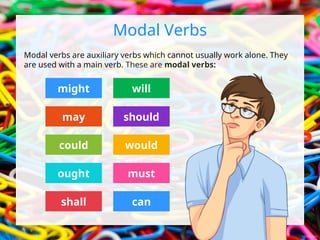
Modal verbs are auxiliary verbs which cannot usually work alone. They
are used with a main verb. These are modal verbs:
Modal Verbs
might will
should
may
would
can
shall
must
ought
could
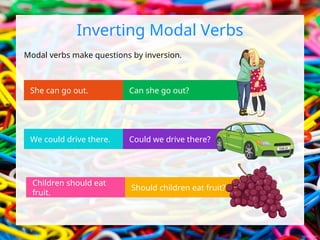
Modal verbs make questions by inversion.
Inverting Modal Verbs
Can she go out?
Could we drive there?
She can go out.
Should children eat fruit?
Children should eat
fruit.
We could drive there.
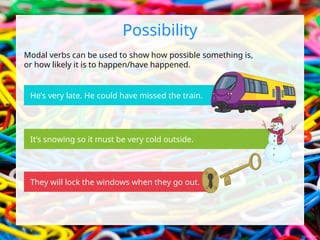
Modal verbs can be used to show how possible something is,
or how likely it is to happen/have happened.
Possibility
He’s very late. He could have missed the train.
It’s snowing so it must be very cold outside.
They will lock the windows when they go out.
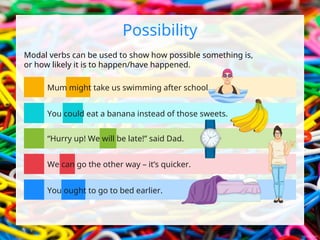
Modal verbs can be used to show how possible something is,
or how likely it is to happen/have happened.
Possibility
Mum might take us swimming after school.
You could eat a banana instead of those sweets.
“Hurry up! We will be late!” said Dad.
We can go the other way – it’s quicker.
You ought to go to bed earlier.
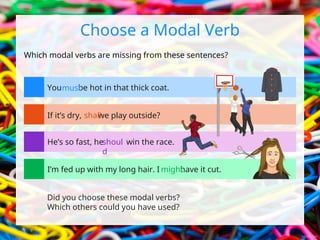
Which modal verbs are missing from these sentences?
Choose a Modal Verb
You be hot in that thick coat.
If it’s dry, we play outside?
He’s so fast, he win the race.
I’m fed up with my long hair. I have it cut.
Did you choose these modal verbs?
Which others could you have used?
must
shall
shoul
d
might
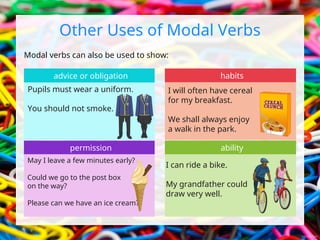
Modal verbs can also be used to show:
Other Uses of Modal Verbs
Pupils must wear a uniform.
You should not smoke.
I will often have cereal
for my breakfast.
We shall always enjoy
a walk in the park.
I can ride a bike.
My grandfather could
draw very well.
May I leave a few minutes early?
Could we go to the post box
on the way?
Please can we have an ice cream?
ability
permission
advice or obligation habits
Photo courtesy of (@flickr.com) - granted under creative commons licence - attribution

t3-e-434-using-modal-verbs-powerpoint_ver_1.ppt

  • 1.
  • 2.
    Modal verbs areauxiliary verbs which cannot usually work alone. They are used with a main verb. These are modal verbs: Modal Verbs might will should may would can shall must ought could
  • 3.
    Modal verbs makequestions by inversion. Inverting Modal Verbs Can she go out? Could we drive there? She can go out. Should children eat fruit? Children should eat fruit. We could drive there.
  • 4.
    Modal verbs canbe used to show how possible something is, or how likely it is to happen/have happened. Possibility He’s very late. He could have missed the train. It’s snowing so it must be very cold outside. They will lock the windows when they go out.
  • 5.
    Modal verbs canbe used to show how possible something is, or how likely it is to happen/have happened. Possibility Mum might take us swimming after school. You could eat a banana instead of those sweets. “Hurry up! We will be late!” said Dad. We can go the other way – it’s quicker. You ought to go to bed earlier.
  • 6.
    Which modal verbsare missing from these sentences? Choose a Modal Verb You be hot in that thick coat. If it’s dry, we play outside? He’s so fast, he win the race. I’m fed up with my long hair. I have it cut. Did you choose these modal verbs? Which others could you have used? must shall shoul d might
  • 7.
    Modal verbs canalso be used to show: Other Uses of Modal Verbs Pupils must wear a uniform. You should not smoke. I will often have cereal for my breakfast. We shall always enjoy a walk in the park. I can ride a bike. My grandfather could draw very well. May I leave a few minutes early? Could we go to the post box on the way? Please can we have an ice cream? ability permission advice or obligation habits
  • 8.
    Photo courtesy of(@flickr.com) - granted under creative commons licence - attribution