Download to read offline
![First take asynch BPEL to perform addtion
Modify the inputs as two in XSD level
]](https://image.slidesharecdn.com/synchcallingasynchadd-150428204615-conversion-gate02/75/Synch-calling-asynchadd-1-2048.jpg)
![Take assign activity and perform addition, assign the result to output.
]](https://image.slidesharecdn.com/synchcallingasynchadd-150428204615-conversion-gate02/75/Synch-calling-asynchadd-2-2048.jpg)
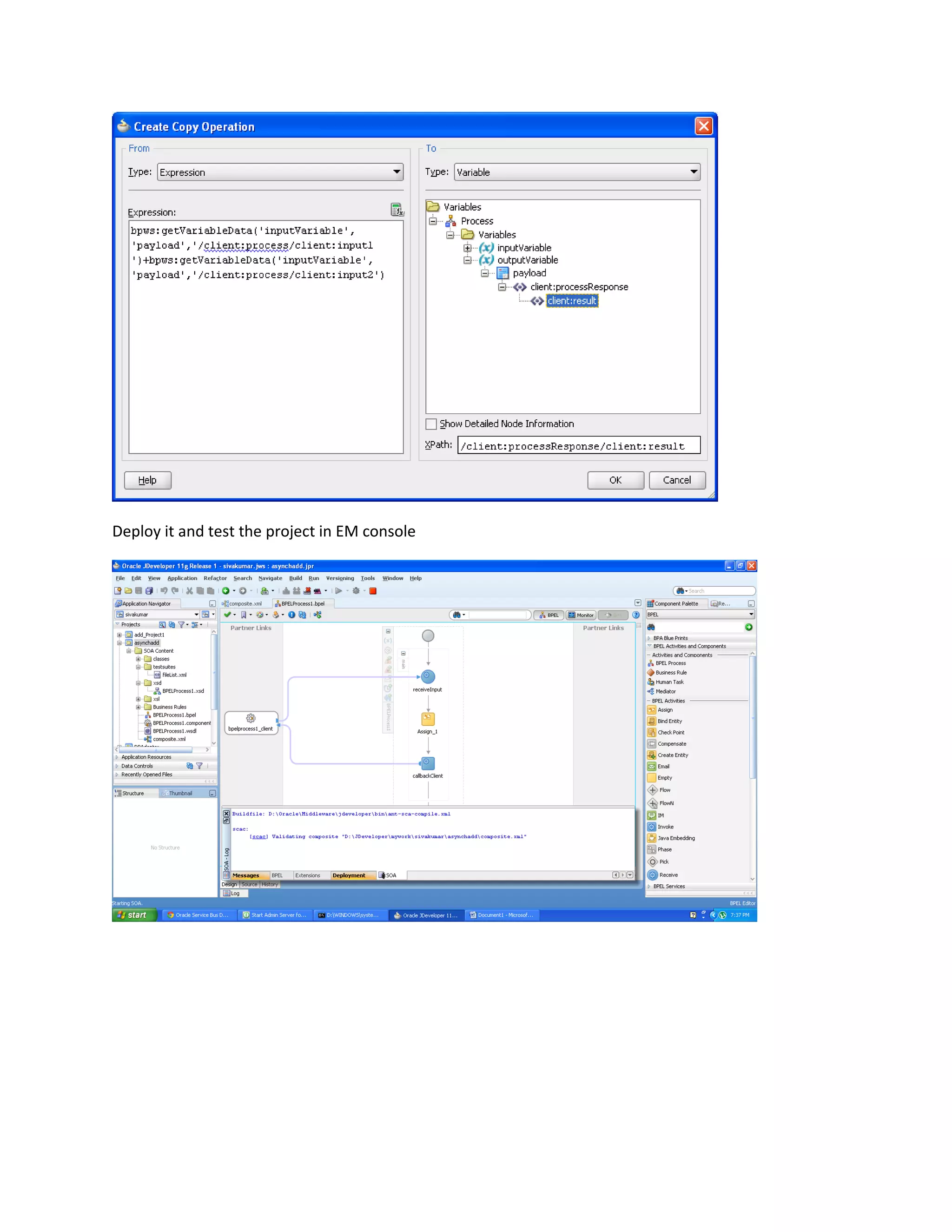
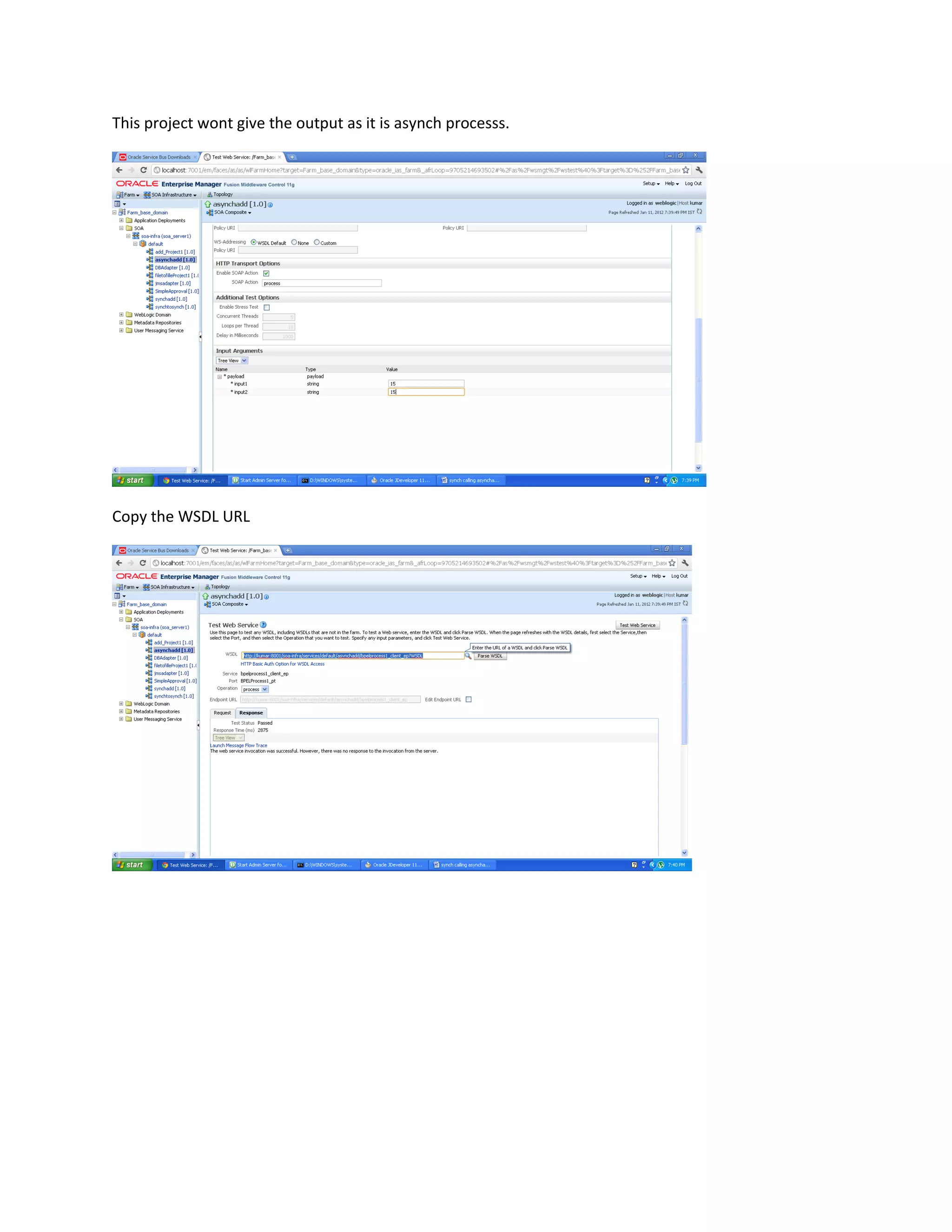
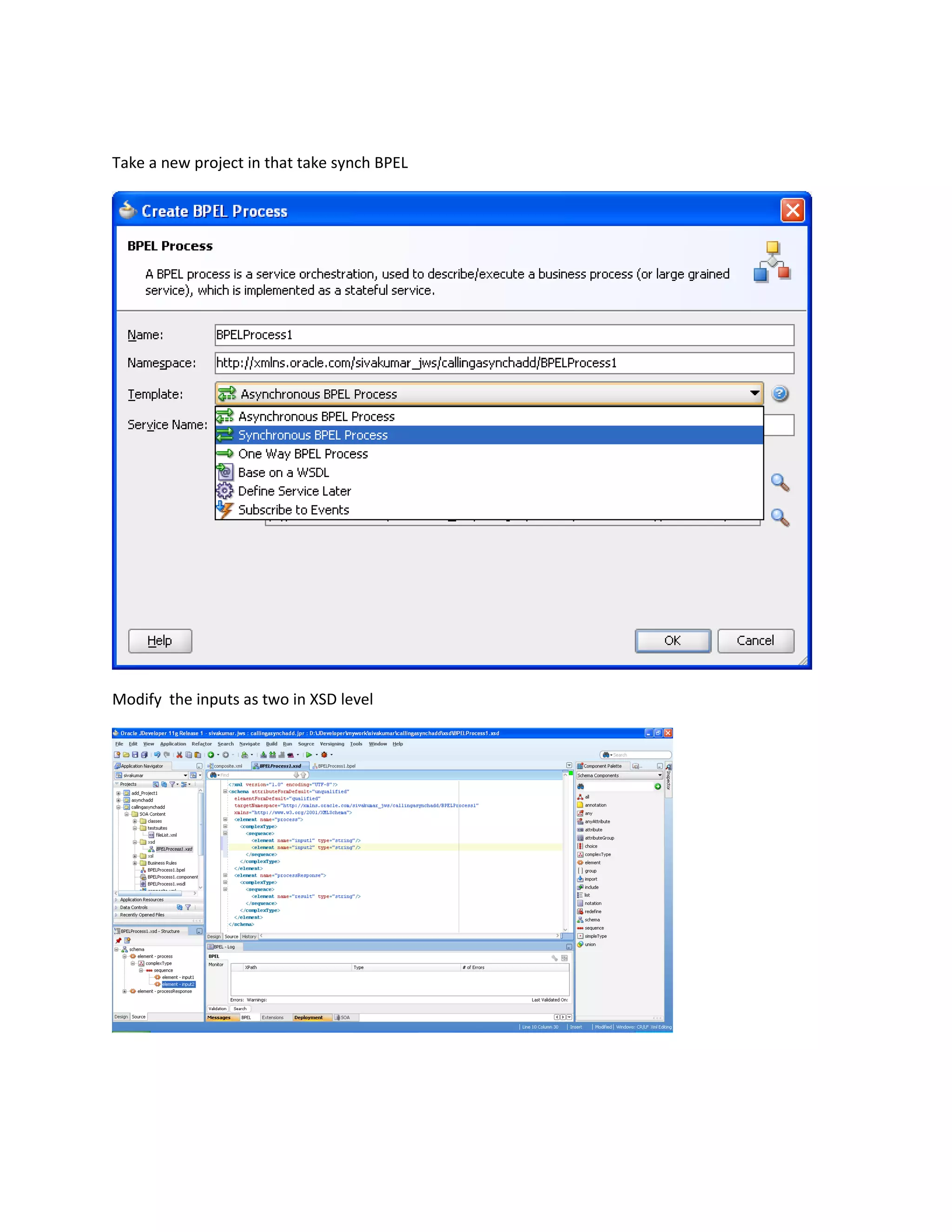
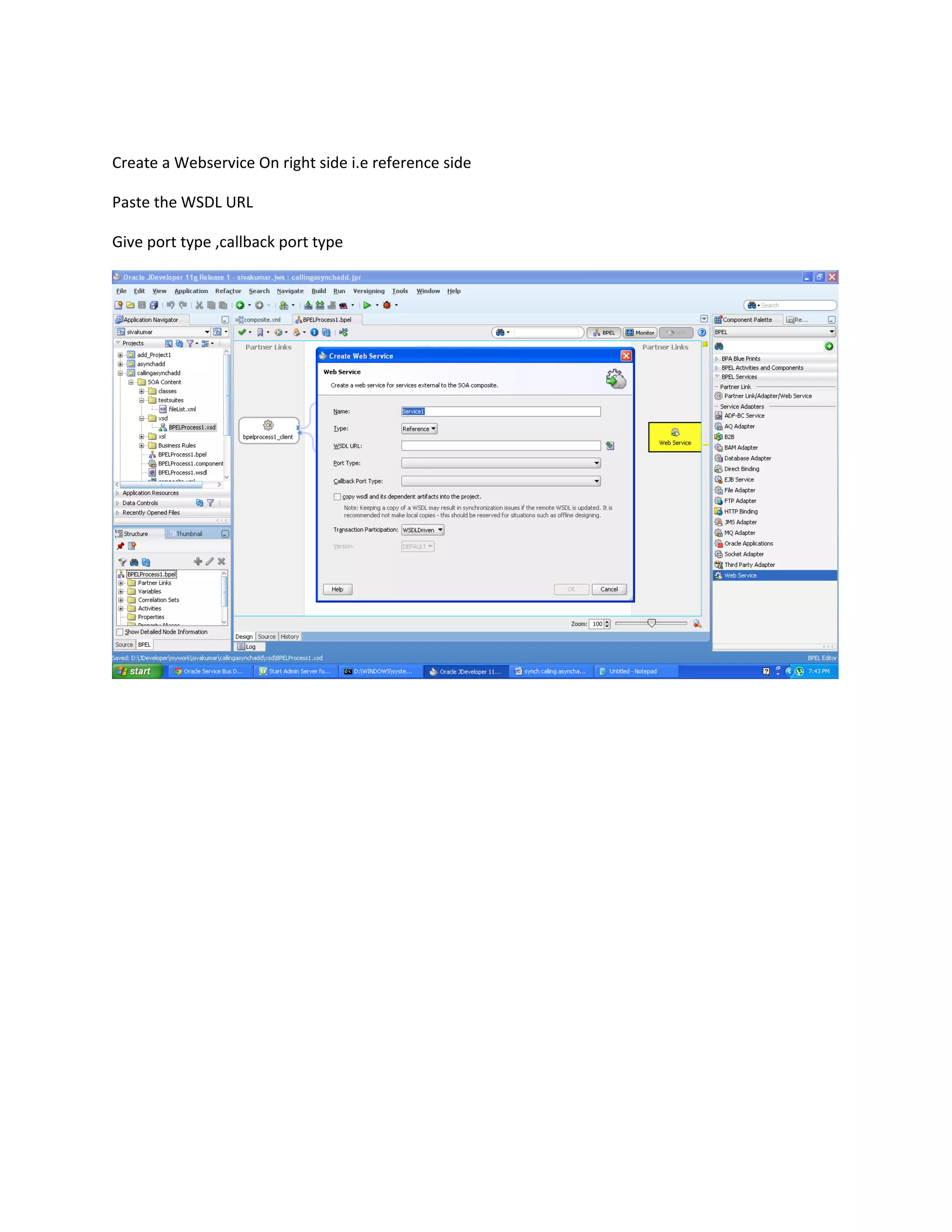
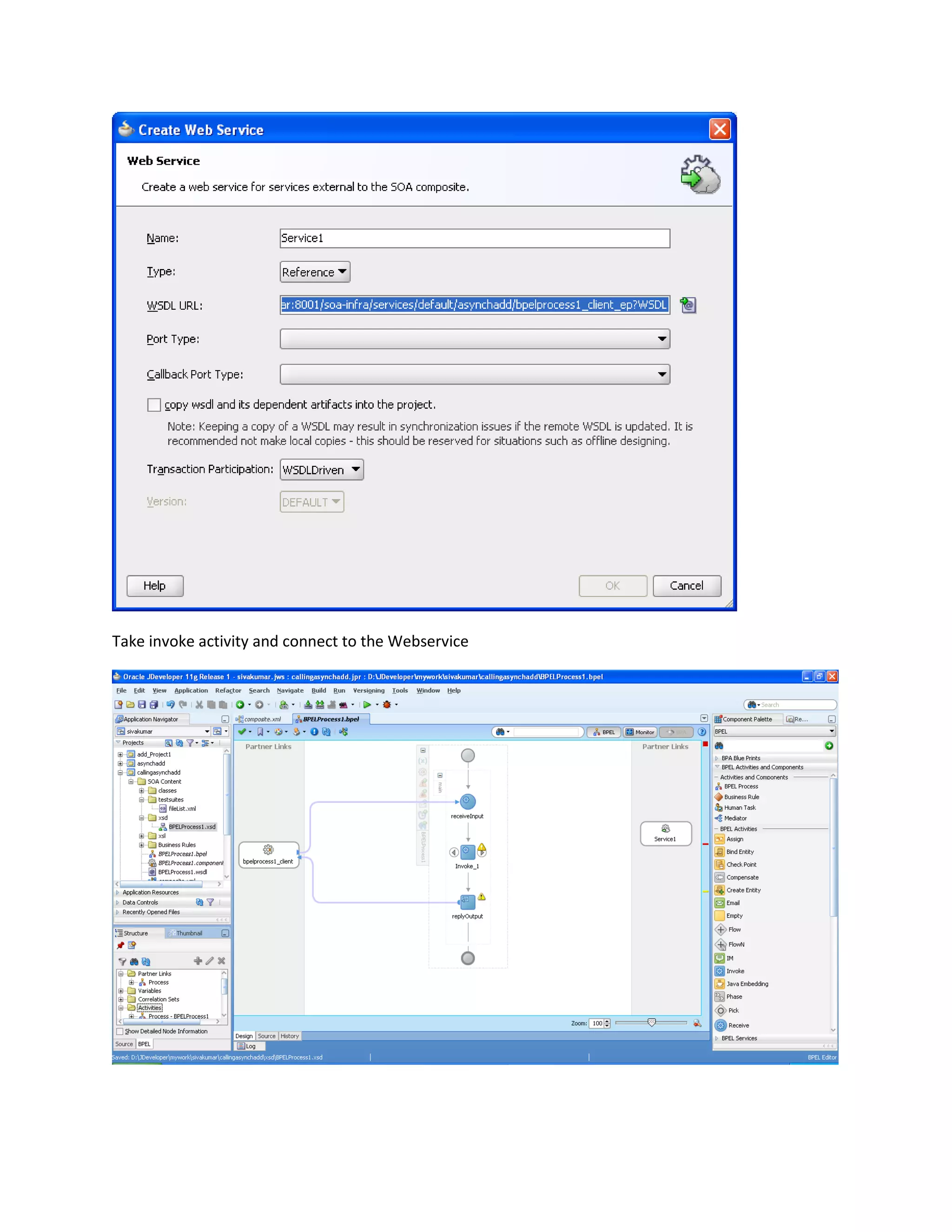
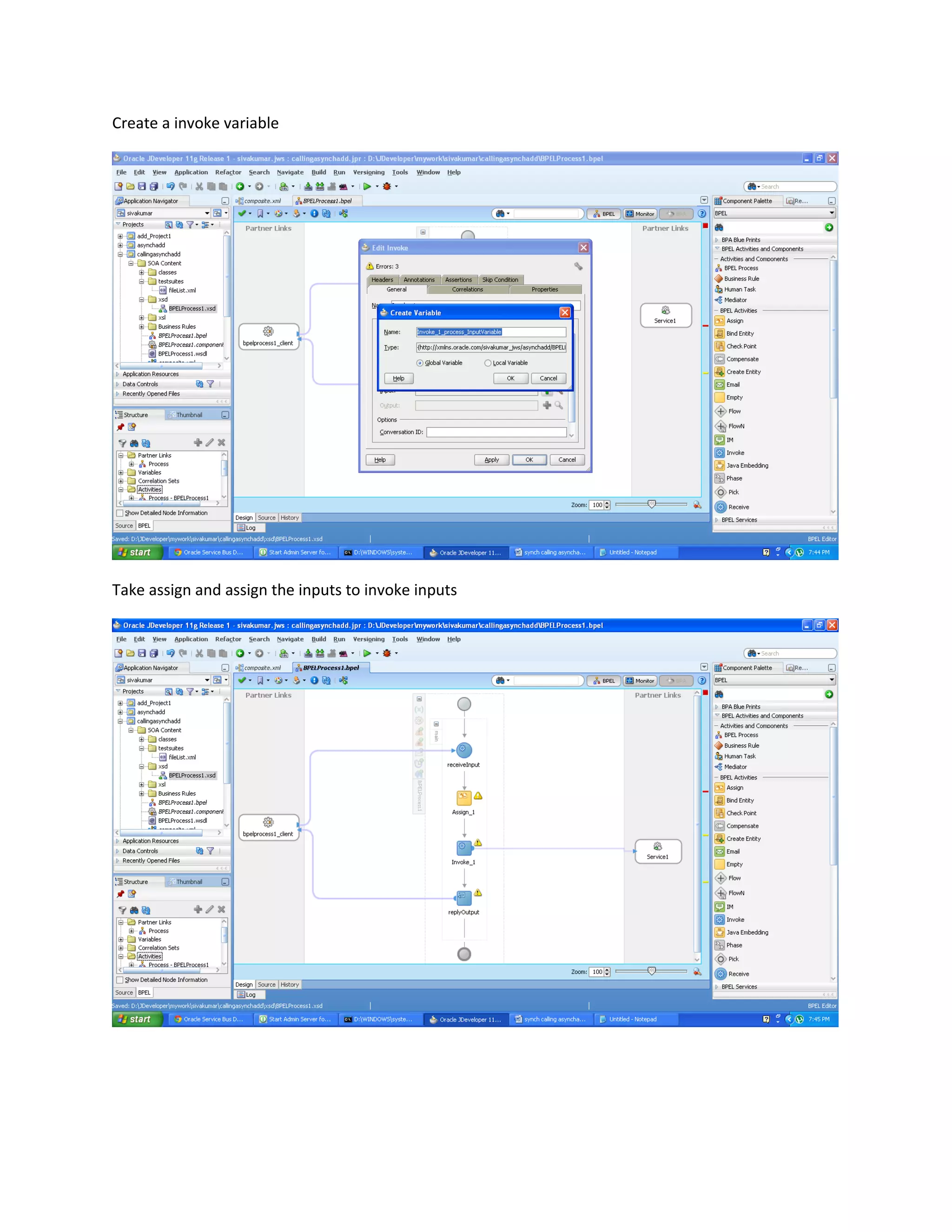
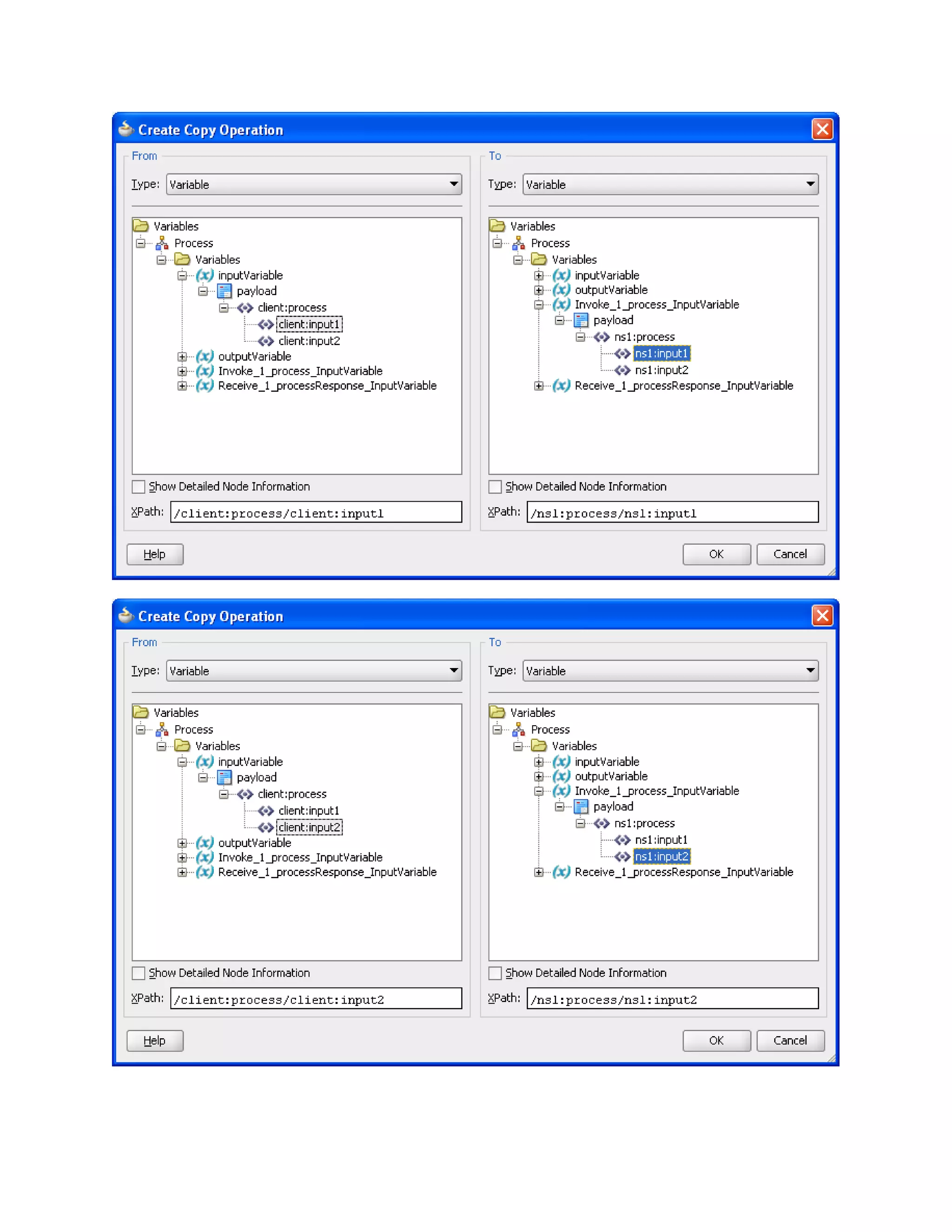
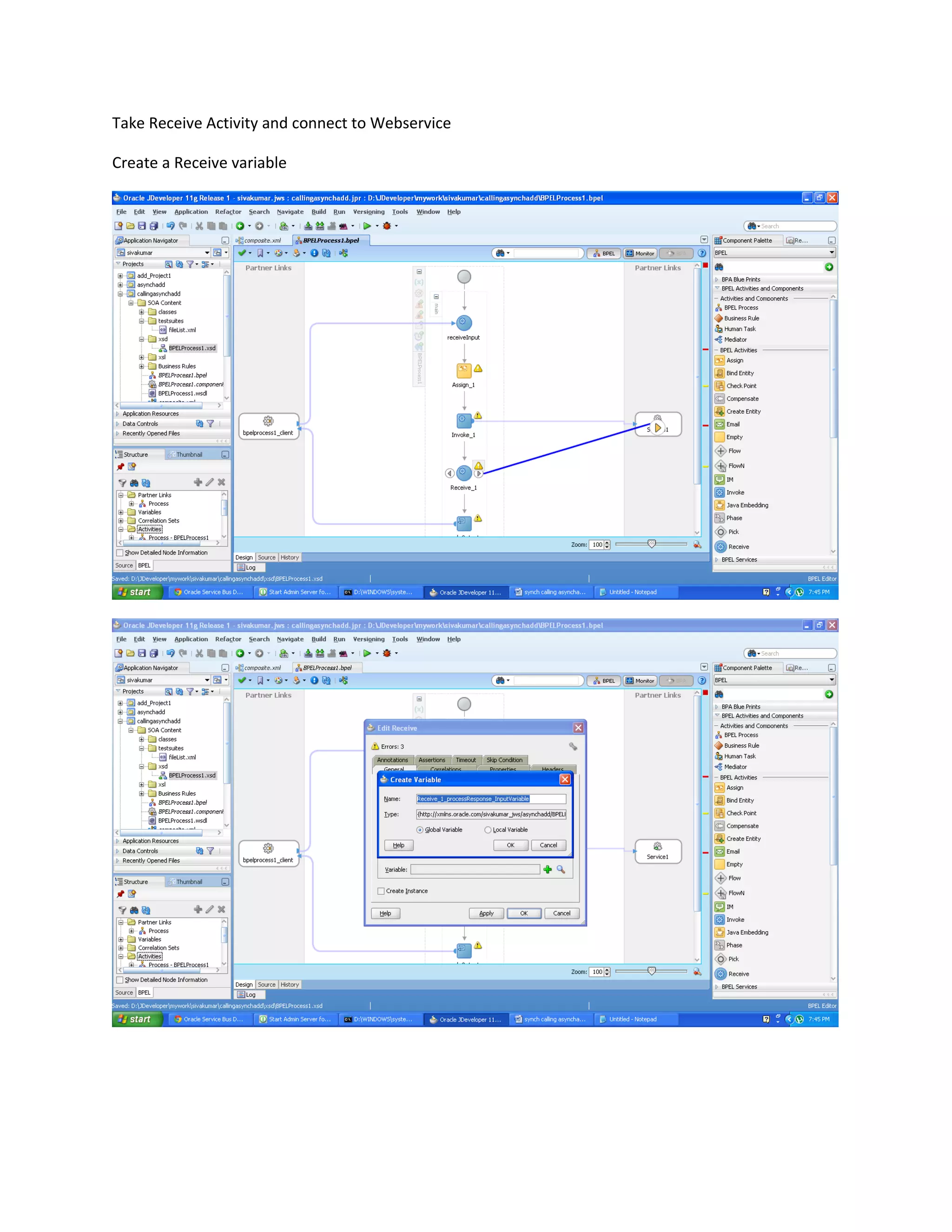
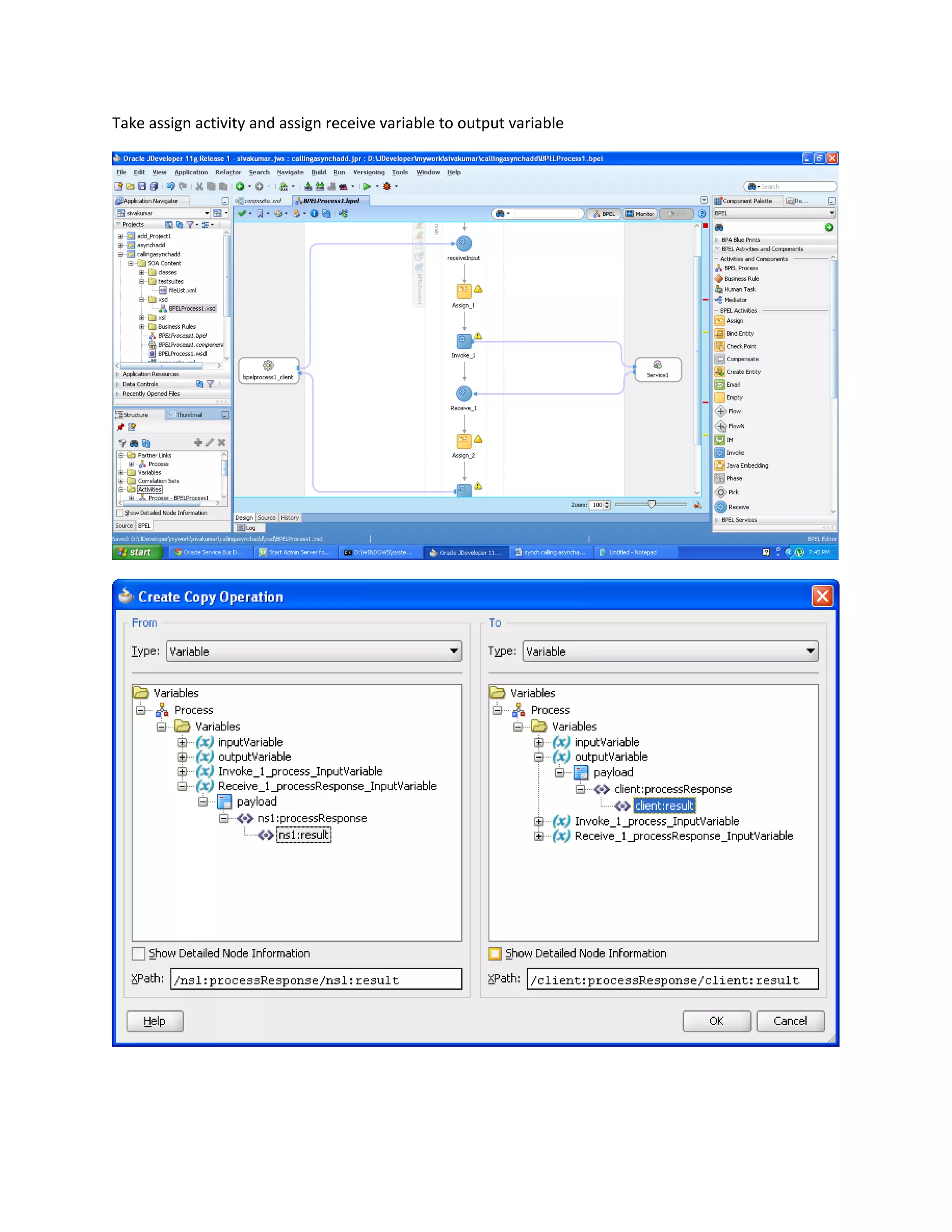
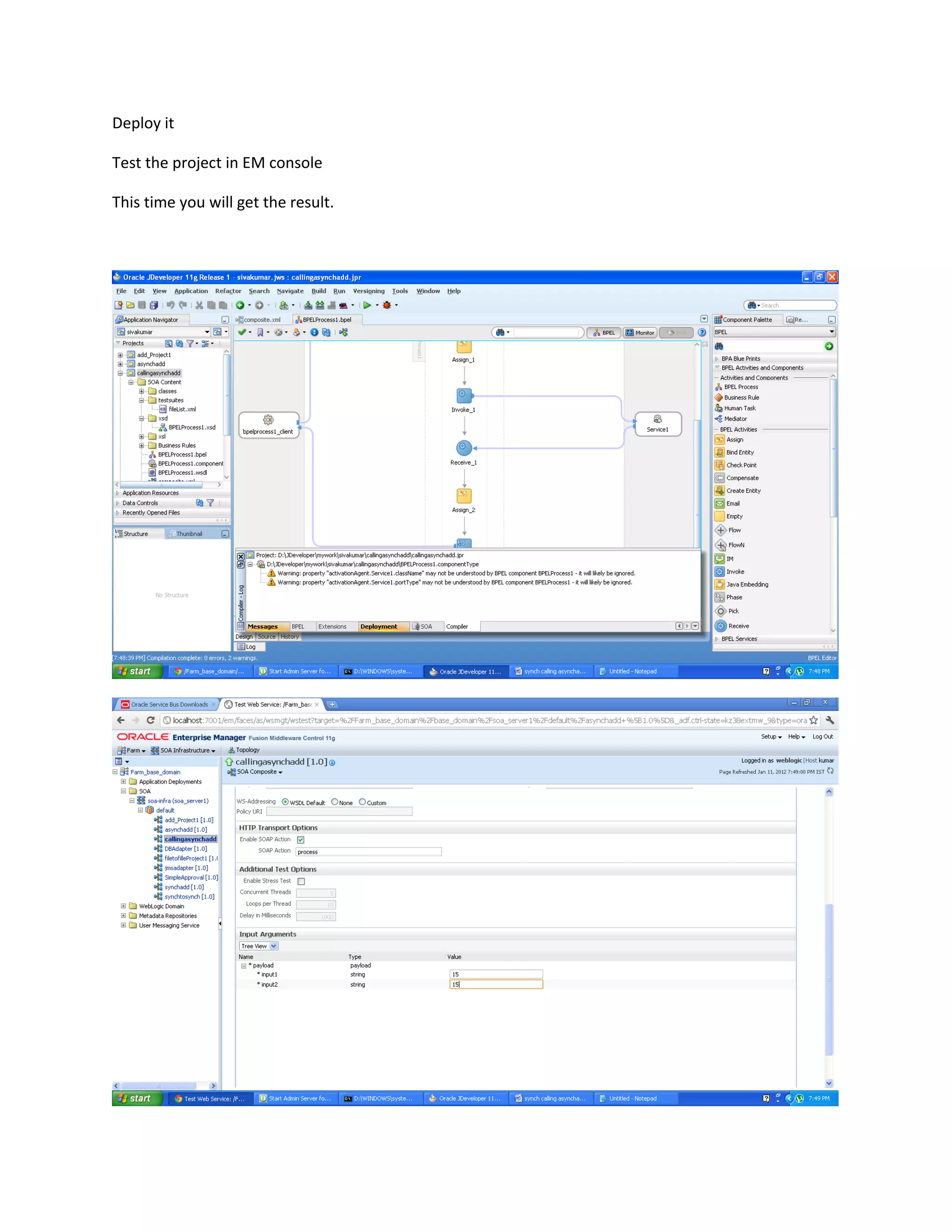
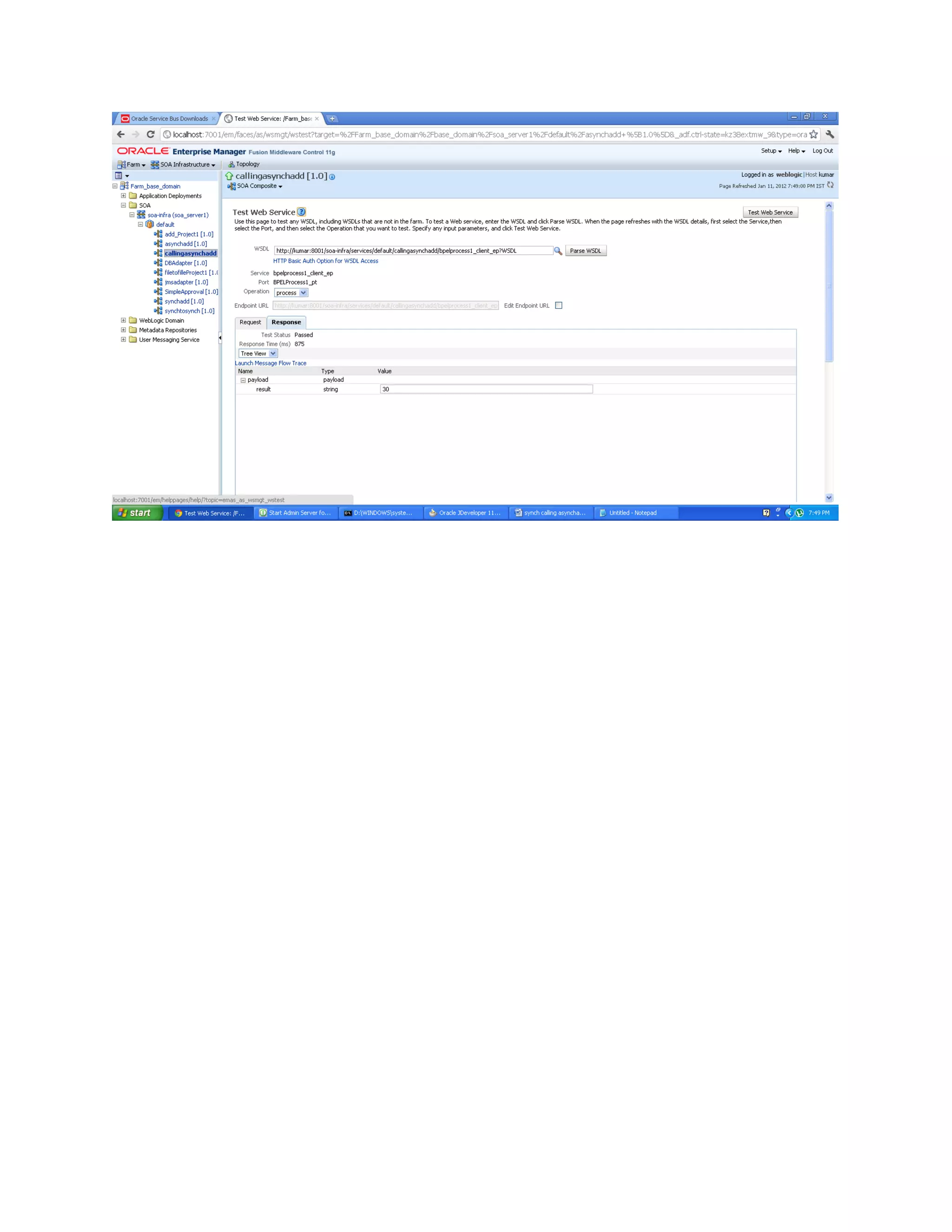

The document describes modifying a BPEL process from asynchronous to synchronous to perform addition. It involves taking an asynchronous BPEL process that performs addition and assigns the result to an output, but does not provide the output as it is asynchronous. A new synchronous BPEL process is created, taking the WSDL from the asynchronous process and connecting an invoke activity to call the asynchronous process, assign its outputs to variables, and return the result through a receive activity and output variable. When deployed and tested, this synchronous process provides the addition result.


