2010

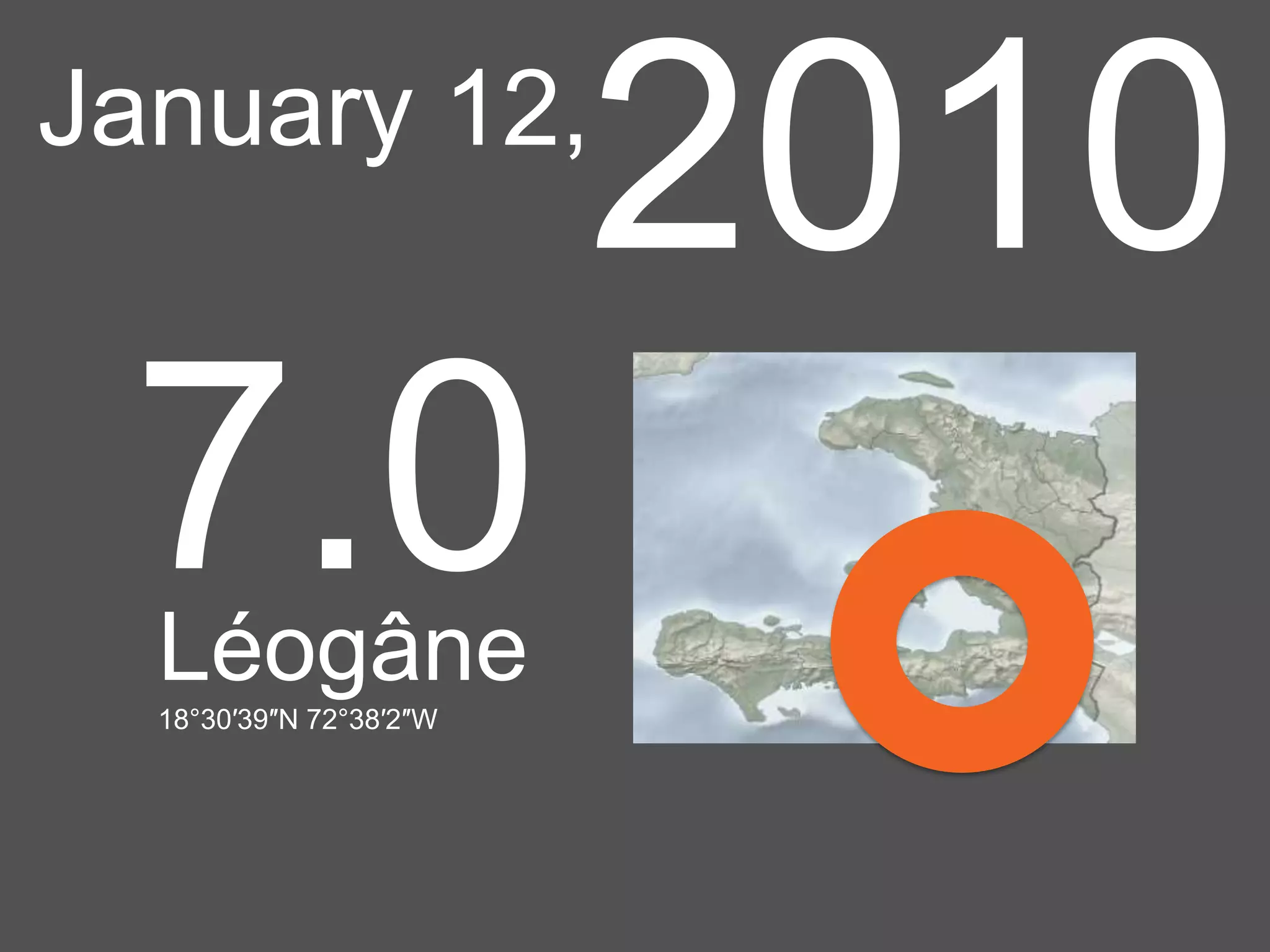
January 12,

7.0
Léogâne
18°30′39″N 72°38′2″W
“Information is a vital form of
aid in itself… Disaster-affected
people need information as
much as water, food, medicine,
or shelter.

Information can
save lives, livelihoods and
resources.”
World Disaster Report
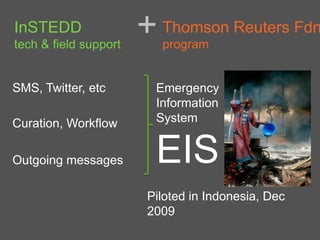
InSTEDD
tech & field support

SMS, Twitter, etc

+ Thomson Reuters Fdn
program

Curation, Workflow

Emergency
Information
System

Outgoing messages

EIS
Piloted in Indonesia, Dec
2009
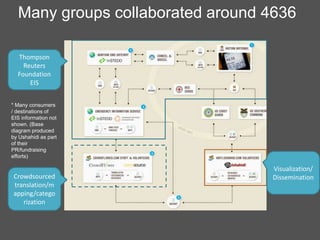
Many groups collaborated around 4636
Thompson
Reuters
Foundation
EIS
* Many consumers
/ destinations of
EIS information not
shown. (Base
diagram produced
by Ushahidi as part
of their
PR/fundraising
efforts)

Crowdsourced
translation/m
apping/catego
rization

Visualization/
Dissemination
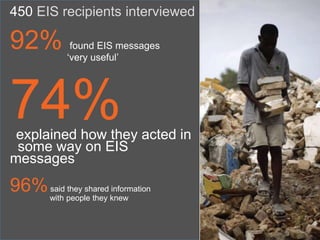
450 EIS recipients interviewed

92%

found EIS messages
„very useful‟

74%

explained how they acted in
some way on EIS
messages

96% with people they knew
said they shared information
Feedback
„I did not know what to do in case of sexual
aggression. I used the information to help
another young lady who was raped after the
earthquake.’
‘Many times I had difficulty accessing
information on food and health assistance
for my pregnant wife. I was happy to get
directions on where pregnant women can go
for help.’
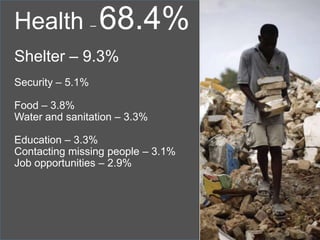
Health – 68.4%
Shelter – 9.3%
Security – 5.1%

Food – 3.8%
Water and sanitation – 3.3%
Education – 3.3%
Contacting missing people – 3.1%
Job opportunities – 2.9%
Feedback

‘Before, I did not care if people urinated near my
tent where I live, but after receiving information
from EIS regarding health hazards, whenever I
saw someone doing it near my tent I’d tell them
what they were doing was putting our health in
danger.’
‘I was looking for ways to help surviving children
cope with earthquake aftershocks. EIS gave me
lots of tips on how to help them.’
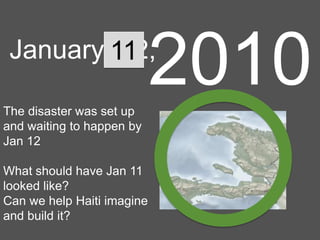
2010

January 11
12,
The disaster was set up
and waiting to happen by
Jan 12
What should have Jan 11
looked like?
Can we help Haiti imagine
and build it?

Switchpoint Presentation - Information for Crisis Victims

  • 1.
  • 2.
    “Information is avital form of aid in itself… Disaster-affected people need information as much as water, food, medicine, or shelter. Information can save lives, livelihoods and resources.” World Disaster Report
  • 3.
    InSTEDD tech & fieldsupport SMS, Twitter, etc + Thomson Reuters Fdn program Curation, Workflow Emergency Information System Outgoing messages EIS Piloted in Indonesia, Dec 2009
  • 8.
    Many groups collaboratedaround 4636 Thompson Reuters Foundation EIS * Many consumers / destinations of EIS information not shown. (Base diagram produced by Ushahidi as part of their PR/fundraising efforts) Crowdsourced translation/m apping/catego rization Visualization/ Dissemination
  • 12.
    450 EIS recipientsinterviewed 92% found EIS messages „very useful‟ 74% explained how they acted in some way on EIS messages 96% with people they knew said they shared information
  • 13.
    Feedback „I did notknow what to do in case of sexual aggression. I used the information to help another young lady who was raped after the earthquake.’ ‘Many times I had difficulty accessing information on food and health assistance for my pregnant wife. I was happy to get directions on where pregnant women can go for help.’
  • 16.
    Health – 68.4% Shelter– 9.3% Security – 5.1% Food – 3.8% Water and sanitation – 3.3% Education – 3.3% Contacting missing people – 3.1% Job opportunities – 2.9%
  • 17.
    Feedback ‘Before, I didnot care if people urinated near my tent where I live, but after receiving information from EIS regarding health hazards, whenever I saw someone doing it near my tent I’d tell them what they were doing was putting our health in danger.’ ‘I was looking for ways to help surviving children cope with earthquake aftershocks. EIS gave me lots of tips on how to help them.’
  • 18.
    2010 January 11 12, The disasterwas set up and waiting to happen by Jan 12 What should have Jan 11 looked like? Can we help Haiti imagine and build it?