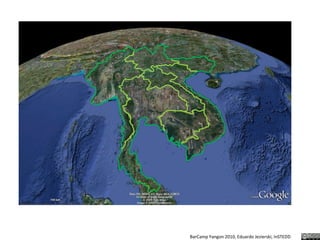
Crisis HappenWhat can a geek do?BarCamp Yangon, 2010edjez
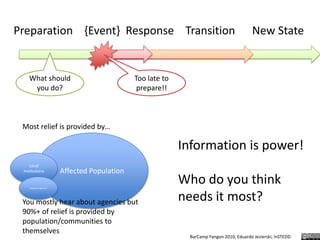
Preparation    {Event}  Response    Transition      New StateToo late to prepare!!What should you do?Most relief is provided by…Information is power!Who do you think needs it most?Affected PopulationLocal InstitutionsResponse AgenciesYou mostly hear about agencies but 90%+ of relief is provided by population/communities to themselves
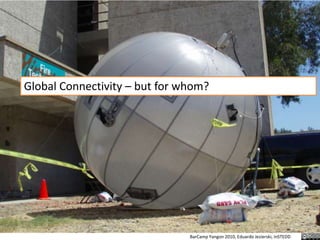
Global Connectivity – but for whom?
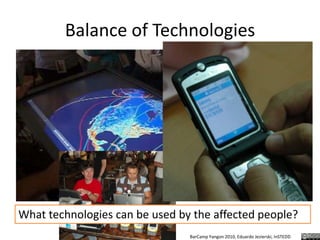
Balance of TechnologiesWhat technologies can be used by the affected people?
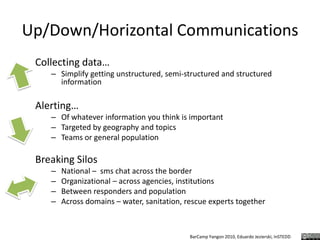
Up/Down/Horizontal CommunicationsCollecting data…Simplify getting unstructured, semi-structured and structured informationAlerting…Of whatever information you think is importantTargeted by geography and topicsTeams or general populationBreaking SilosNational –  sms chat across the borderOrganizational – across agencies, institutionsBetween responders and populationAcross domains – water, sanitation, rescue experts together
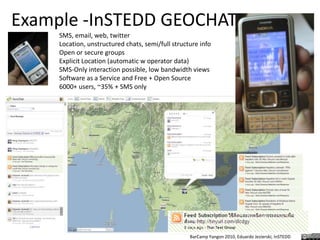
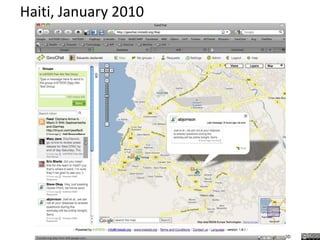
Example -InSTEDD GEOCHATSMS, email, web, twitter	 Location, unstructured chats, semi/full structure infoOpen or secure groups		Explicit Location (automatic w operator data)SMS-Only interaction possible, low bandwidth viewsSoftware as a Service and Free + Open Source6000+ users, ~35% + SMS only
Haiti, January 2010
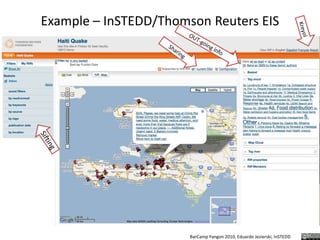
Example – InSTEDD/Thomson Reuters EISKreyolOUT-going infoSharingSifting
HaitiGoodRapid response of agenciesEasy access to countryEnergetic external ICT communityCrowdsourcing of local knowledgeSome technologies open sourceBadSome telcos slow to respondNo architecture forethought for systems ->spaghetti flowExcited ICT community re-invented existing thingsLocal ICT community missingOverestimation of role of twitter, etc in real responseLitte/Hard to find local tech capacity ready to engage
Effective collaboration needs trustTrust needs time togetherBuild trust before a crisis!
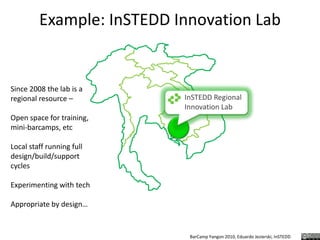
Example: InSTEDD Innovation LabSince 2008 the lab is a regional resource – Open space for training, mini-barcamps, etcLocal staff running full design/build/support cyclesExperimenting with techAppropriate by design…InSTEDD Regional Innovation Lab
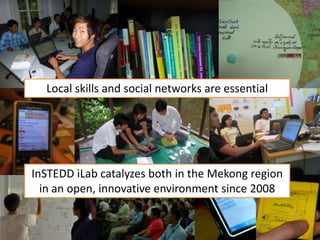
Local skills and social networks are essentialInSTEDD iLab catalyzes both in the Mekong region in an open, innovative environment since 2008
Technology during CrisisYour existing skills are usefulPHP, Python, .NET, Drupal, Joomla, SMS..Learn before you buildContribute to what is needed even if it’s not your ideaIt’s a marathon, not a raceLong hours for a long time. Don’t burn out!Round the clock teams and clear status reportsCollaboration is keySkype chat, google groups, etcConstantly stop and ask yourself – “how will this help survivors?”
Prepare your community!Participate local community for tech for crisisRead & share info about crisis technologiesTry themDemo to othersLocalize to BurmeseLearn how to contribute to open sourceSCC, github, etc.Subscribe to alerts at gdacs.org
[Discussion and Demos]How to make communities more resilient when phones go downResponder collaboration tools discussionDUMBOP2P chat, voice (SIP), videoBuilt in MyanmarGrooveNow part of MS Office 2007 UltimateSkype, google groups etc.
Thank You!Eduardo Jezierskihttp://instedd.orghttp://edjez.instedd.org@edjezedjez@instedd.org“Eduardo Jezierski (InSTEDD)” in Groove public directory

Bar Camp Yangon 2010 Tech In Crisis

  • 1.
    Crisis HappenWhat cana geek do?BarCamp Yangon, 2010edjez
  • 2.
    Preparation {Event} Response Transition New StateToo late to prepare!!What should you do?Most relief is provided by…Information is power!Who do you think needs it most?Affected PopulationLocal InstitutionsResponse AgenciesYou mostly hear about agencies but 90%+ of relief is provided by population/communities to themselves
  • 3.
  • 4.
    Balance of TechnologiesWhattechnologies can be used by the affected people?
  • 5.
    Up/Down/Horizontal CommunicationsCollecting data…Simplifygetting unstructured, semi-structured and structured informationAlerting…Of whatever information you think is importantTargeted by geography and topicsTeams or general populationBreaking SilosNational – sms chat across the borderOrganizational – across agencies, institutionsBetween responders and populationAcross domains – water, sanitation, rescue experts together
  • 6.
    Example -InSTEDD GEOCHATSMS,email, web, twitter Location, unstructured chats, semi/full structure infoOpen or secure groups Explicit Location (automatic w operator data)SMS-Only interaction possible, low bandwidth viewsSoftware as a Service and Free + Open Source6000+ users, ~35% + SMS only
  • 7.
  • 8.
    Example – InSTEDD/ThomsonReuters EISKreyolOUT-going infoSharingSifting
  • 9.
    HaitiGoodRapid response ofagenciesEasy access to countryEnergetic external ICT communityCrowdsourcing of local knowledgeSome technologies open sourceBadSome telcos slow to respondNo architecture forethought for systems ->spaghetti flowExcited ICT community re-invented existing thingsLocal ICT community missingOverestimation of role of twitter, etc in real responseLitte/Hard to find local tech capacity ready to engage
  • 10.
    Effective collaboration needstrustTrust needs time togetherBuild trust before a crisis!
  • 12.
    Example: InSTEDD InnovationLabSince 2008 the lab is a regional resource – Open space for training, mini-barcamps, etcLocal staff running full design/build/support cyclesExperimenting with techAppropriate by design…InSTEDD Regional Innovation Lab
  • 13.
    Local skills andsocial networks are essentialInSTEDD iLab catalyzes both in the Mekong region in an open, innovative environment since 2008
  • 14.
    Technology during CrisisYourexisting skills are usefulPHP, Python, .NET, Drupal, Joomla, SMS..Learn before you buildContribute to what is needed even if it’s not your ideaIt’s a marathon, not a raceLong hours for a long time. Don’t burn out!Round the clock teams and clear status reportsCollaboration is keySkype chat, google groups, etcConstantly stop and ask yourself – “how will this help survivors?”
  • 15.
    Prepare your community!Participatelocal community for tech for crisisRead & share info about crisis technologiesTry themDemo to othersLocalize to BurmeseLearn how to contribute to open sourceSCC, github, etc.Subscribe to alerts at gdacs.org
  • 16.
    [Discussion and Demos]Howto make communities more resilient when phones go downResponder collaboration tools discussionDUMBOP2P chat, voice (SIP), videoBuilt in MyanmarGrooveNow part of MS Office 2007 UltimateSkype, google groups etc.
  • 17.