© InSTEDD , CC BY-NC-SA
“New tools in LDCs using IT”
Mobile tools
for disease surveillance
in low income countries
Ed Jezierski, ND*
CTO, InSTEDD
@edjez
© InSTEDD , CC BY-NC-SA
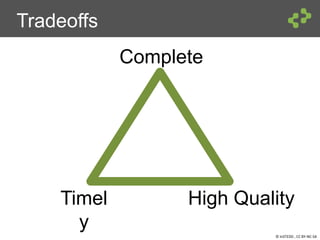
Tradeoffs
Timel
y
Complete
High Quality
© InSTEDD , CC BY-NC-SA
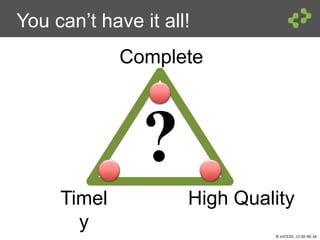
You can’t have it all!
Timel
y
Complete
High Quality
?
© InSTEDD , CC BY-NC-SA
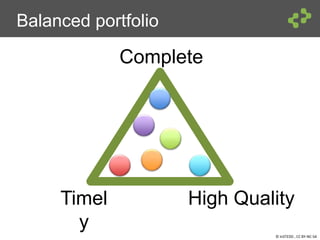
Balanced portfolio
Timel
y
Complete
High Quality
© InSTEDD , CC BY-NC-SA
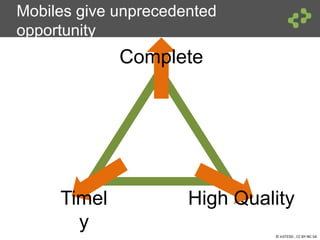
Mobiles give unprecedented
opportunity
Complete
Timel
y
High Quality
© InSTEDD , CC BY-NC-SA
But also new challenges
• Usability
• “Reach vs. Rich”
– Voice, SMS, smartphone, J2ME, USSD
• Bad designs
• Training costs
• Working with operators
• Pilots, pilots everywhere! that can never scale
• Community health worker (dis)incentives
• …
© InSTEDD , CC BY-NC-SA
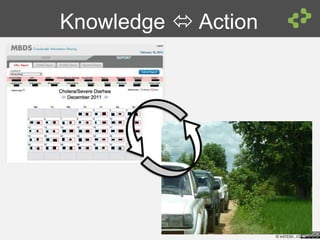
Knowledge  Action
© InSTEDD , CC BY-NC-SA
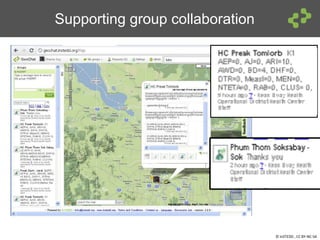
Supporting group collaboration
© InSTEDD , CC BY-NC-SA
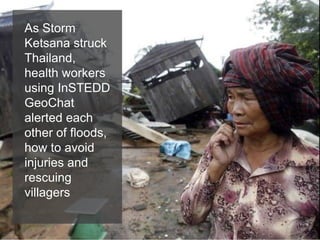
As Storm
Ketsana struck
Thailand,
health workers
using InSTEDD
GeoChat
alerted each
other of floods,
how to avoid
injuries and
rescuing
villagers
© InSTEDD , CC BY-NC-SA
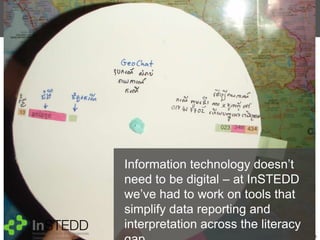
Information technology doesn’t
need to be digital – at InSTEDD
we’ve had to work on tools that
simplify data reporting and
interpretation across the literacy
© InSTEDD , CC BY-NC-SA
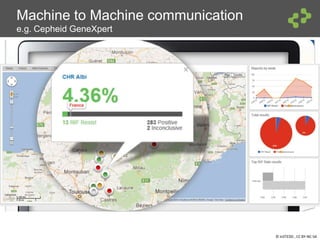
Machine to Machine communication
e.g. Cepheid GeneXpert
Cepheid GeneXpert
Usage and issue monitoring
Disease trending for all tests
Aggregate data for reports
Granular data for analysis
No patient data uploaded
© InSTEDD , CC BY-NC-SA
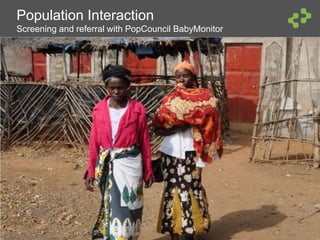
Population Interaction
Screening and referral with PopCouncil BabyMonitor
© InSTEDD , CC BY-NC-SA
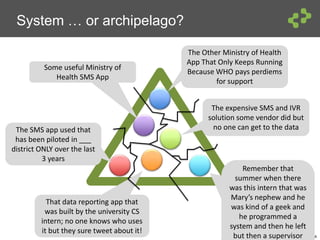
System … or archipelago?
The Other Ministry of Health
App That Only Keeps Running
Because WHO pays perdiems
for support
Some useful Ministry of
Health SMS App
The SMS app used that
has been piloted in ___
district ONLY over the last
3 years
The expensive SMS and IVR
solution some vendor did but
no one can get to the data
Remember that
summer when there
was this intern that was
Mary’s nephew and he
was kind of a geek and
he programmed a
system and then he left
but then a supervisor
That data reporting app that
was built by the university CS
intern; no one knows who uses
it but they sure tweet about it!
© InSTEDD , CC BY-NC-SA
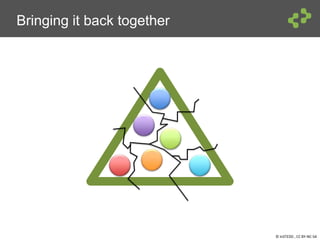
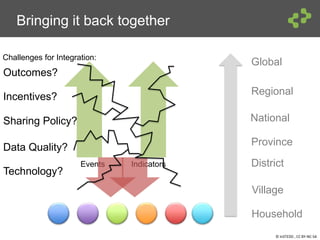
Bringing it back together
© InSTEDD , CC BY-NC-SA
Bringing it back together
Global
Household
Village
District
Province
National
Regional
Events Indicators
Outcomes?
Incentives?
Sharing Policy?
Data Quality?
Technology?
Challenges for Integration:
© InSTEDD , CC BY-NC-SA
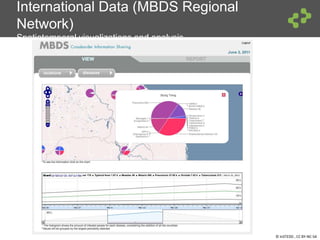
International Data (MBDS Regional
Network)
Spatiotemporal visualizations and analysis
© InSTEDD , CC BY-NC-SA
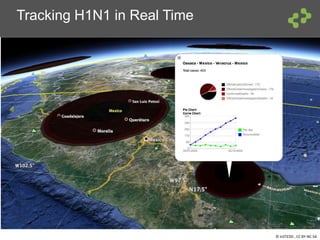
Tracking H1N1 in Real Time
© InSTEDD , CC BY-NC-SA
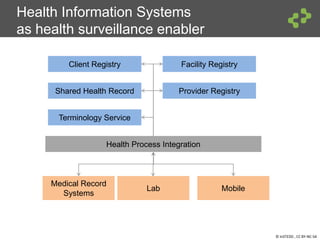
Client Registry
Shared Health Record
Facility Registry
Provider Registry
Terminology Service
Health Process Integration
Medical Record
Systems
Lab Mobile
Health Information Systems
as health surveillance enabler
© InSTEDD , CC BY-NC-SA
• Resource constrained environments can
foster efficient, creative, leapfrog approaches
• Effective surveillance starts with clear goals
• Mobile tools are just one part of a portfolio
• Mobiles bring unprecedented opportunities for
disease surveillance – if done well
© InSTEDD , CC BY-NC-SA
Thank You!
Ed Jezierski
CTO, InSTEDD
@edjez
edjez@instedd.org
© InSTEDD , CC BY-NC-SA
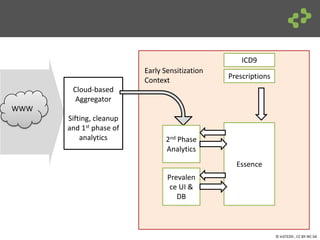
Cloud-based
Aggregator
Sifting, cleanup
and 1st phase of
analytics
WWW
ICD9
Prescriptions
Essence
2nd Phase
Analytics
Early Sensitization
Context
Prevalen
ce UI &
DB
© InSTEDD , CC BY-NC-SA
will bring 365 opportunitiesOur field reports show 2013 to make the right choices

Mobile tools in Disease Surveillance in Low Income Countries - ASTMH 2012 Presentation

  • 1.
    © InSTEDD ,CC BY-NC-SA “New tools in LDCs using IT” Mobile tools for disease surveillance in low income countries Ed Jezierski, ND* CTO, InSTEDD @edjez
  • 2.
    © InSTEDD ,CC BY-NC-SA
  • 3.
    © InSTEDD ,CC BY-NC-SA Tradeoffs Timel y Complete High Quality
  • 4.
    © InSTEDD ,CC BY-NC-SA You can’t have it all! Timel y Complete High Quality ?
  • 5.
    © InSTEDD ,CC BY-NC-SA Balanced portfolio Timel y Complete High Quality
  • 6.
    © InSTEDD ,CC BY-NC-SA Mobiles give unprecedented opportunity Complete Timel y High Quality
  • 7.
    © InSTEDD ,CC BY-NC-SA But also new challenges • Usability • “Reach vs. Rich” – Voice, SMS, smartphone, J2ME, USSD • Bad designs • Training costs • Working with operators • Pilots, pilots everywhere! that can never scale • Community health worker (dis)incentives • …
  • 8.
    © InSTEDD ,CC BY-NC-SA Knowledge  Action
  • 9.
    © InSTEDD ,CC BY-NC-SA Supporting group collaboration
  • 10.
    © InSTEDD ,CC BY-NC-SA As Storm Ketsana struck Thailand, health workers using InSTEDD GeoChat alerted each other of floods, how to avoid injuries and rescuing villagers
  • 11.
    © InSTEDD ,CC BY-NC-SA Information technology doesn’t need to be digital – at InSTEDD we’ve had to work on tools that simplify data reporting and interpretation across the literacy
  • 12.
    © InSTEDD ,CC BY-NC-SA Machine to Machine communication e.g. Cepheid GeneXpert Cepheid GeneXpert Usage and issue monitoring Disease trending for all tests Aggregate data for reports Granular data for analysis No patient data uploaded
  • 13.
    © InSTEDD ,CC BY-NC-SA Population Interaction Screening and referral with PopCouncil BabyMonitor
  • 14.
    © InSTEDD ,CC BY-NC-SA System … or archipelago? The Other Ministry of Health App That Only Keeps Running Because WHO pays perdiems for support Some useful Ministry of Health SMS App The SMS app used that has been piloted in ___ district ONLY over the last 3 years The expensive SMS and IVR solution some vendor did but no one can get to the data Remember that summer when there was this intern that was Mary’s nephew and he was kind of a geek and he programmed a system and then he left but then a supervisor That data reporting app that was built by the university CS intern; no one knows who uses it but they sure tweet about it!
  • 15.
    © InSTEDD ,CC BY-NC-SA Bringing it back together
  • 16.
    © InSTEDD ,CC BY-NC-SA Bringing it back together Global Household Village District Province National Regional Events Indicators Outcomes? Incentives? Sharing Policy? Data Quality? Technology? Challenges for Integration:
  • 17.
    © InSTEDD ,CC BY-NC-SA International Data (MBDS Regional Network) Spatiotemporal visualizations and analysis
  • 18.
    © InSTEDD ,CC BY-NC-SA Tracking H1N1 in Real Time
  • 19.
    © InSTEDD ,CC BY-NC-SA Client Registry Shared Health Record Facility Registry Provider Registry Terminology Service Health Process Integration Medical Record Systems Lab Mobile Health Information Systems as health surveillance enabler
  • 20.
    © InSTEDD ,CC BY-NC-SA • Resource constrained environments can foster efficient, creative, leapfrog approaches • Effective surveillance starts with clear goals • Mobile tools are just one part of a portfolio • Mobiles bring unprecedented opportunities for disease surveillance – if done well
  • 21.
    © InSTEDD ,CC BY-NC-SA Thank You! Ed Jezierski CTO, InSTEDD @edjez edjez@instedd.org
  • 22.
    © InSTEDD ,CC BY-NC-SA Cloud-based Aggregator Sifting, cleanup and 1st phase of analytics WWW ICD9 Prescriptions Essence 2nd Phase Analytics Early Sensitization Context Prevalen ce UI & DB
  • 23.
    © InSTEDD ,CC BY-NC-SA
  • 24.
    © InSTEDD ,CC BY-NC-SA will bring 365 opportunitiesOur field reports show 2013 to make the right choices

Editor's Notes

  • #2 The whole lifecycle of health surveillance is being transformed by communication and collaboration technologies. The increase of mobile communication tools available in rural and urban areas, the improvement of diagnostic platforms and the merging of otherwise disparate data creates opportunities for more timely, more complete, and higher quality information available for analysis and response.We will show field examples of how structured and unstrucutured communications between village volunteers and client populations has or hasn't helped surveillance, how to improve data reporting in almost illiterate populations, and how data aggregation and sharing has been done at the disease, national, and international levels and what have been some of the practices and patterns worth repeating and avoiding. As health surveillance increasingly reframes itself as a knowledge management problem, using appropriate ICTs everyone from authorities to clients can be more effective in improving personal and public health.
  • #9 Gaps in Research-
  • #22 The whole lifecycle of health surveillance is being transformed by communication and collaboration technologies. The increase of mobile communication tools available in rural and urban areas, the improvement of diagnostic platforms and the merging of otherwise disparate data creates opportunities for more timely, more complete, and higher quality information available for analysis and response.We will show field examples of how structured and unstrucutured communications between village volunteers and client populations has or hasn't helped surveillance, how to improve data reporting in almost illiterate populations, and how data aggregation and sharing has been done at the disease, national, and international levels and what have been some of the practices and patterns worth repeating and avoiding. As health surveillance increasingly reframes itself as a knowledge management problem, using appropriate ICTs everyone from authorities to clients can be more effective in improving personal and public health.
  • #25 The whole lifecycle of health surveillance is being transformed by communication and collaboration technologies. The increase of mobile communication tools available in rural and urban areas, the improvement of diagnostic platforms and the merging of otherwise disparate data creates opportunities for more timely, more complete, and higher quality information available for analysis and response.We will show field examples of how structured and unstrucutured communications between village volunteers and client populations has or hasn't helped surveillance, how to improve data reporting in almost illiterate populations, and how data aggregation and sharing has been done at the disease, national, and international levels and what have been some of the practices and patterns worth repeating and avoiding. As health surveillance increasingly reframes itself as a knowledge management problem, using appropriate ICTs everyone from authorities to clients can be more effective in improving personal and public health.