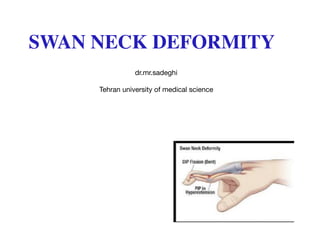
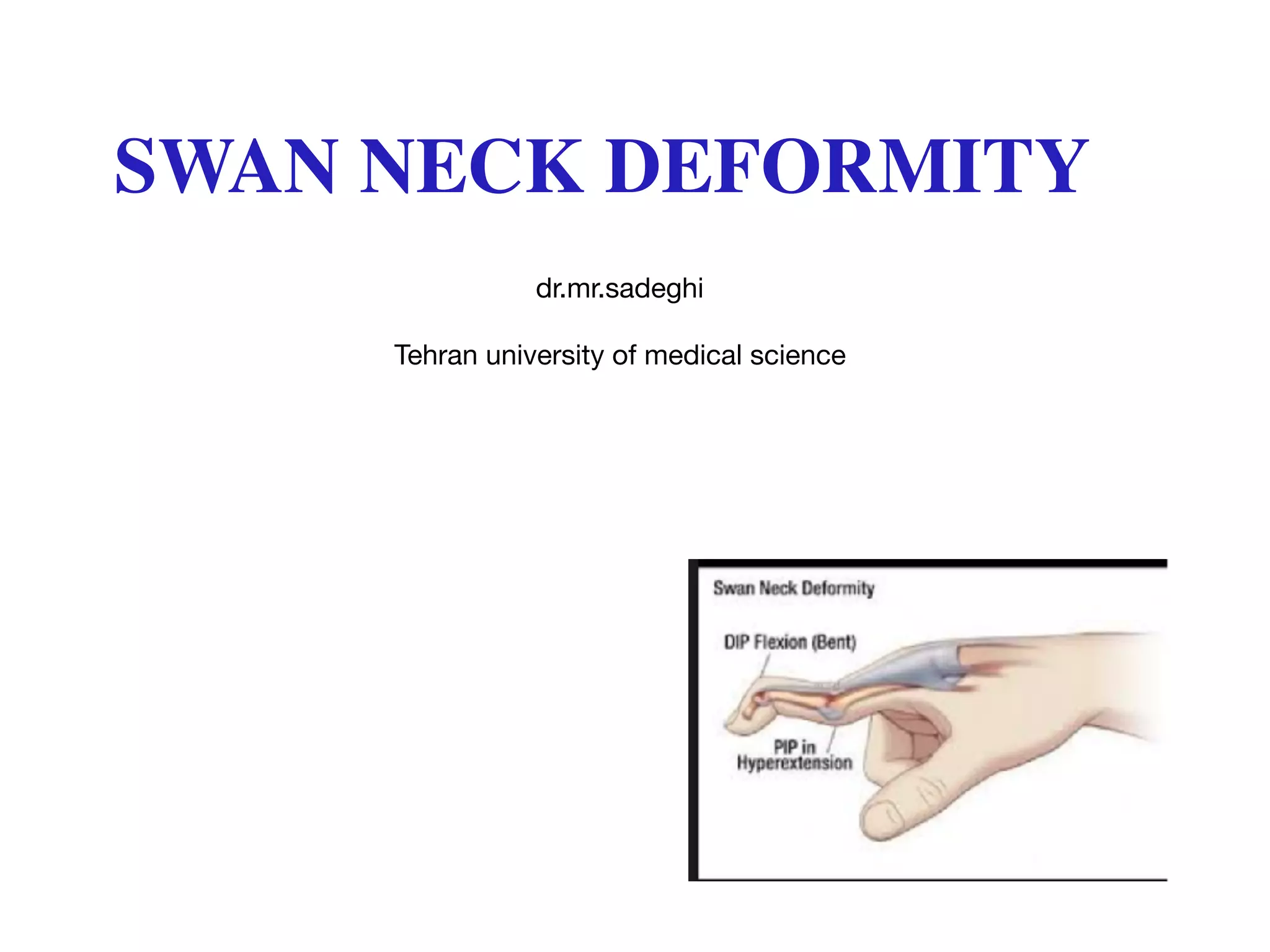
SWAN NECK DEFORMITY
dr.mr.sadeghi

Tehran university of medical science
deformity may begin as a mallet deformity associated
with extensor tendon disruption at the distal joint with
secondary overpull of the central slip, causing
secondary proximal inter phalangeal joint
hyperextension
PIP
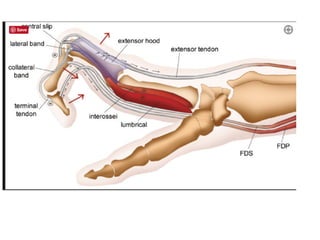
tightening of the lateral bands and central tendon, and
eventual adherence of the lateral bands in a fixed dorsal
position
so they can no longer slide over the condyles when the
proximal inter phalangeal joint is flexed
Nalebu , Feldon, and Millender :
Type I deformities are flexible
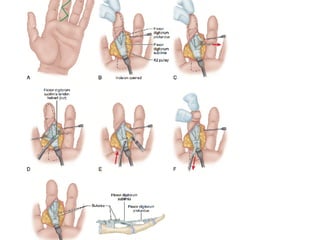
1. deromodesis,
2. extensor tenodesis of the proximal
interphalangeal joint,
3.fusion of the distal interphalangeal joint,
4.reconstruction of the retinacular ligament
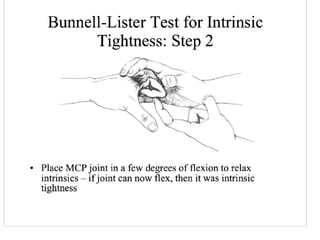
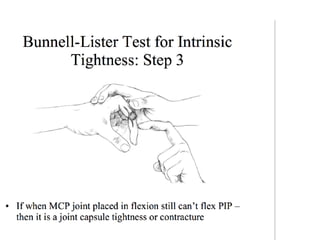
Type II deformities intrinsic muscle tightness
require intrinsic release in addition to one
Type III deformities
stiff and do not allow satisfactory flexion
not have significant joint destruction radiographically.
joint manipulation, mobilization of the lateral bands, and
dorsal skin release.
Swan neck deformity and hand surgery

Swan neck deformity and hand surgery

  • 1.
    SWAN NECK DEFORMITY dr.mr.sadeghi Tehranuniversity of medical science
  • 2.
    deformity may beginas a mallet deformity associated with extensor tendon disruption at the distal joint with secondary overpull of the central slip, causing secondary proximal inter phalangeal joint hyperextension
  • 4.
    PIP tightening of thelateral bands and central tendon, and eventual adherence of the lateral bands in a fixed dorsal position so they can no longer slide over the condyles when the proximal inter phalangeal joint is flexed
  • 5.
    Nalebu , Feldon,and Millender :
  • 6.
    Type I deformitiesare flexible 1. deromodesis, 2. extensor tenodesis of the proximal interphalangeal joint, 3.fusion of the distal interphalangeal joint, 4.reconstruction of the retinacular ligament
  • 7.
    Type II deformitiesintrinsic muscle tightness require intrinsic release in addition to one
  • 8.
    Type III deformities stiffand do not allow satisfactory flexion not have significant joint destruction radiographically. joint manipulation, mobilization of the lateral bands, and dorsal skin release.