Kahu Wai
The passing of waters
Sustainable Environments of Hawaiʻi
           Manoa Johansen


                                      S
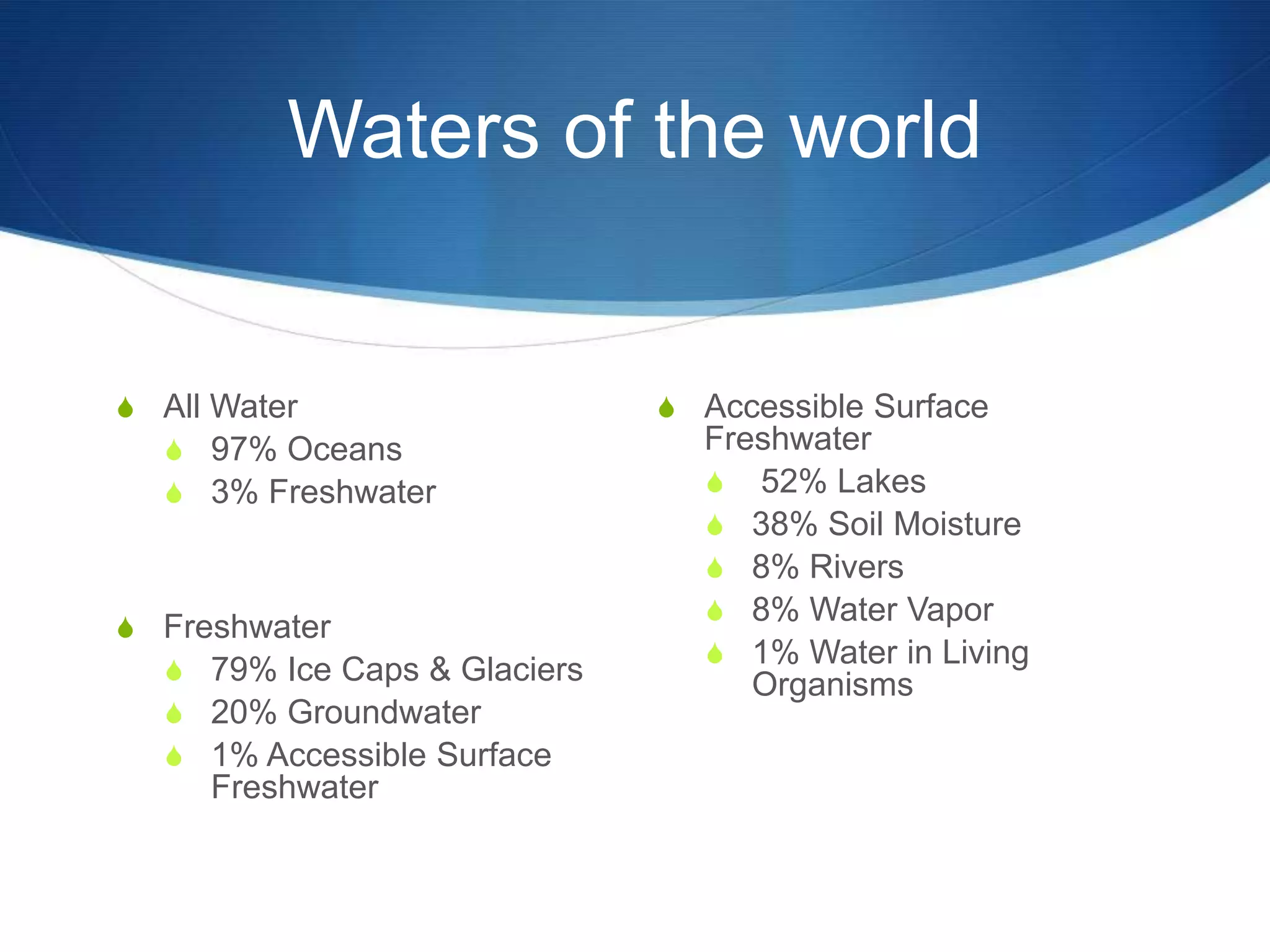
Waters of the world


S All Water                   S Accessible Surface
  S 97% Oceans                  Freshwater
  S 3% Freshwater               S 52% Lakes
                                S 38% Soil Moisture
                                S 8% Rivers
                                S 8% Water Vapor
S Freshwater
                                S 1% Water in Living
  S 79% Ice Caps & Glaciers        Organisms
  S 20% Groundwater
  S 1% Accessible Surface
     Freshwater
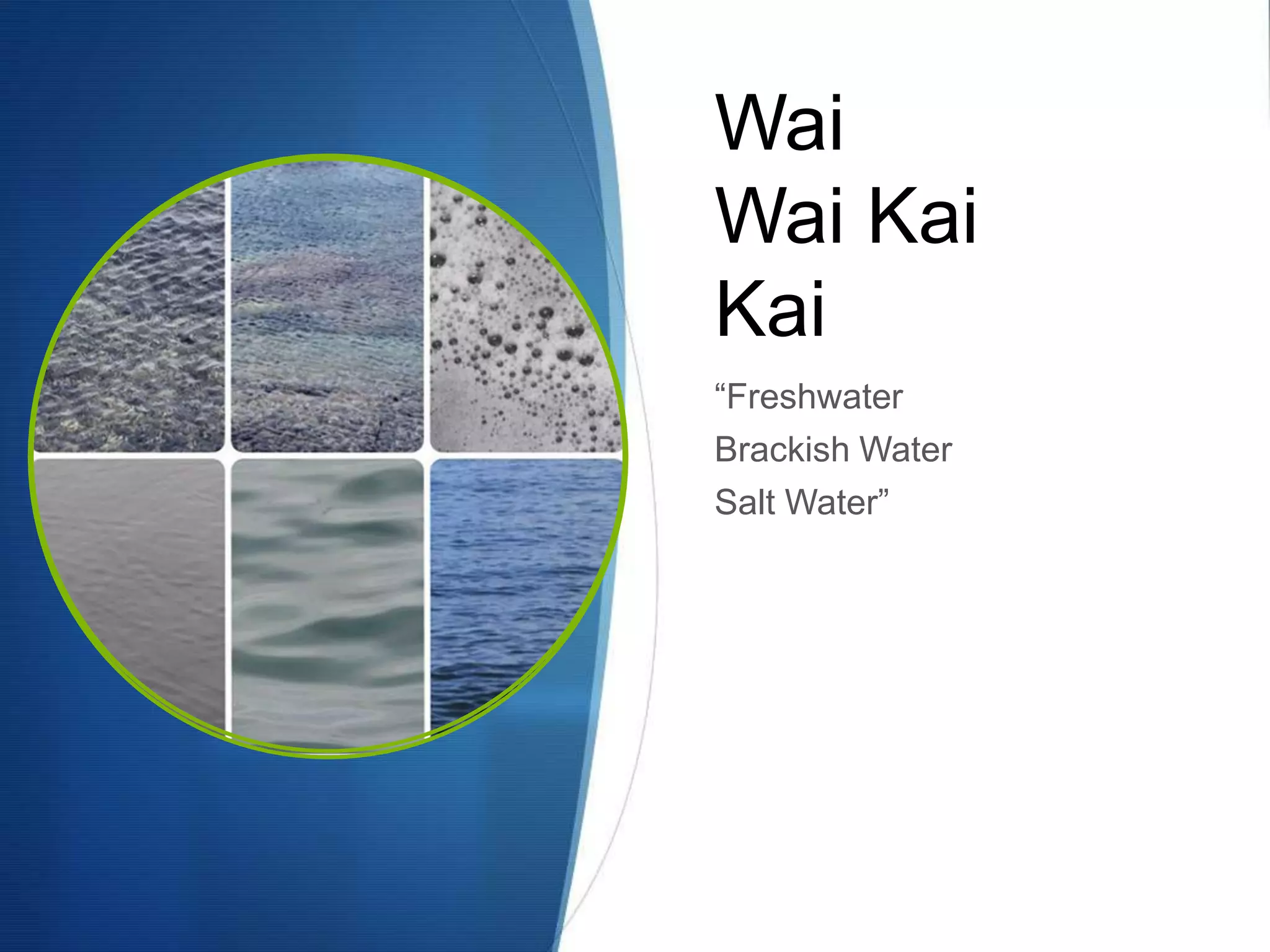
Wai
Wai Kai
Kai
“Freshwater
Brackish Water
Salt Water”
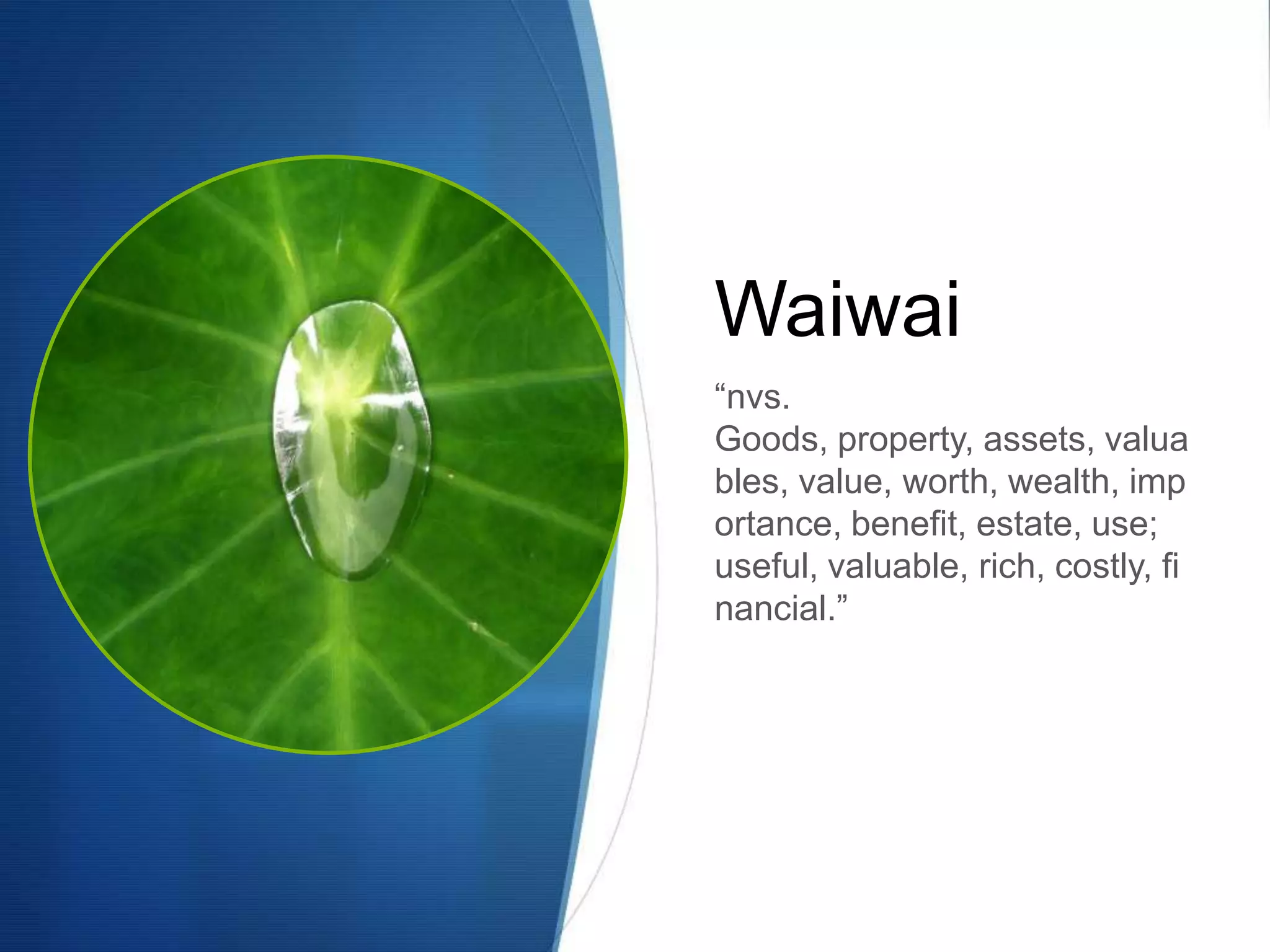
Waiwai
“nvs.
Goods, property, assets, valua
bles, value, worth, wealth, imp
ortance, benefit, estate, use;
useful, valuable, rich, costly, fi
nancial.”
Concepts


S Sustainable Environments are areas in which the natural
  environment can sustain a society and economy with out using
  a appropriate range of resources.

S Sustain healthy ecosystems to maintain goods and services for
  people and living species.
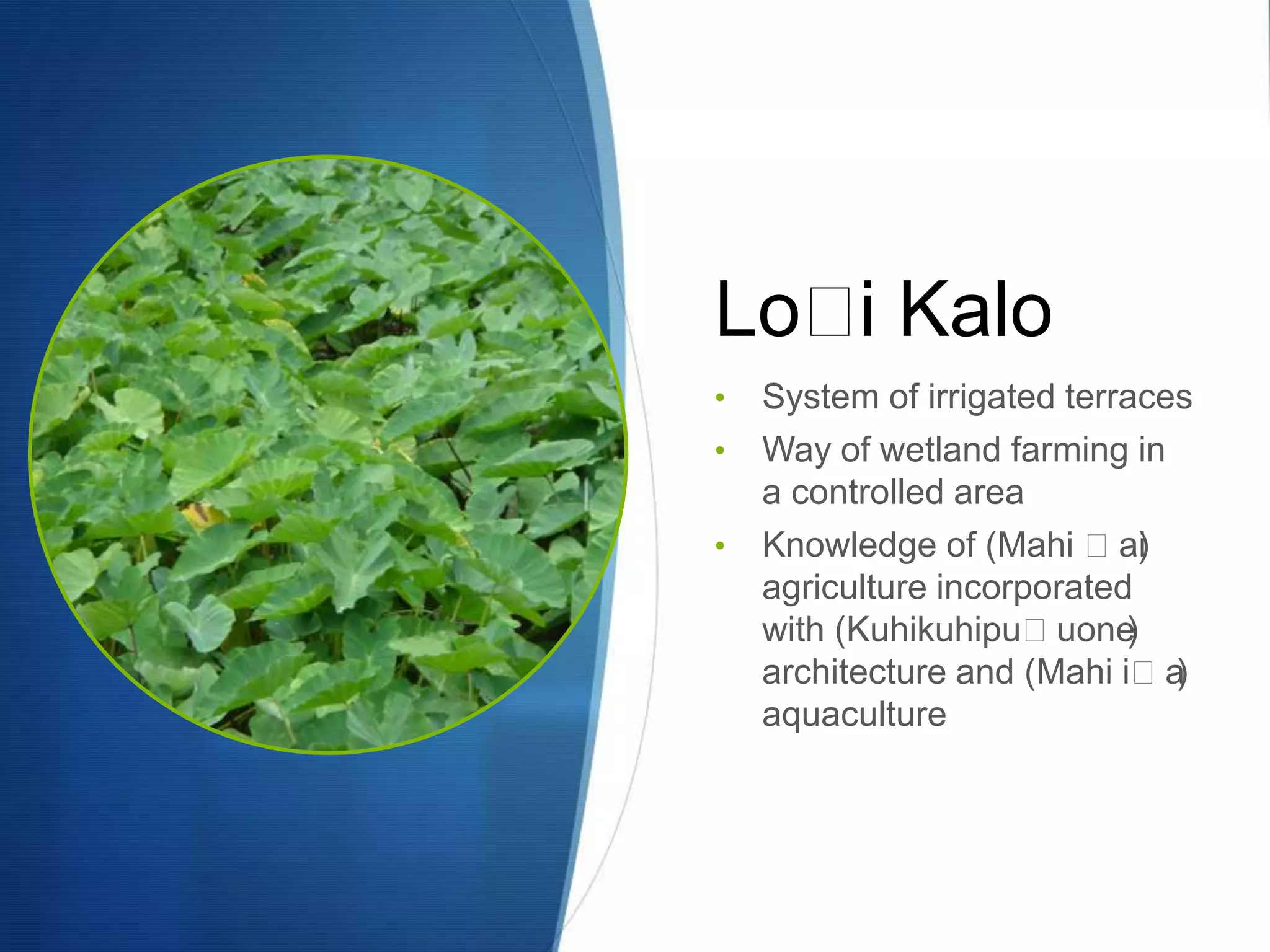
Loʻ Kalo
   i
•   System of irrigated terraces
•   Way of wetland farming in
    a controlled area
•   Knowledge of (Mahi ʻai   )
    agriculture incorporated
    with (Kuhikuhipuʻuone   )
    architecture and (Mahi iʻa )
    aquaculture
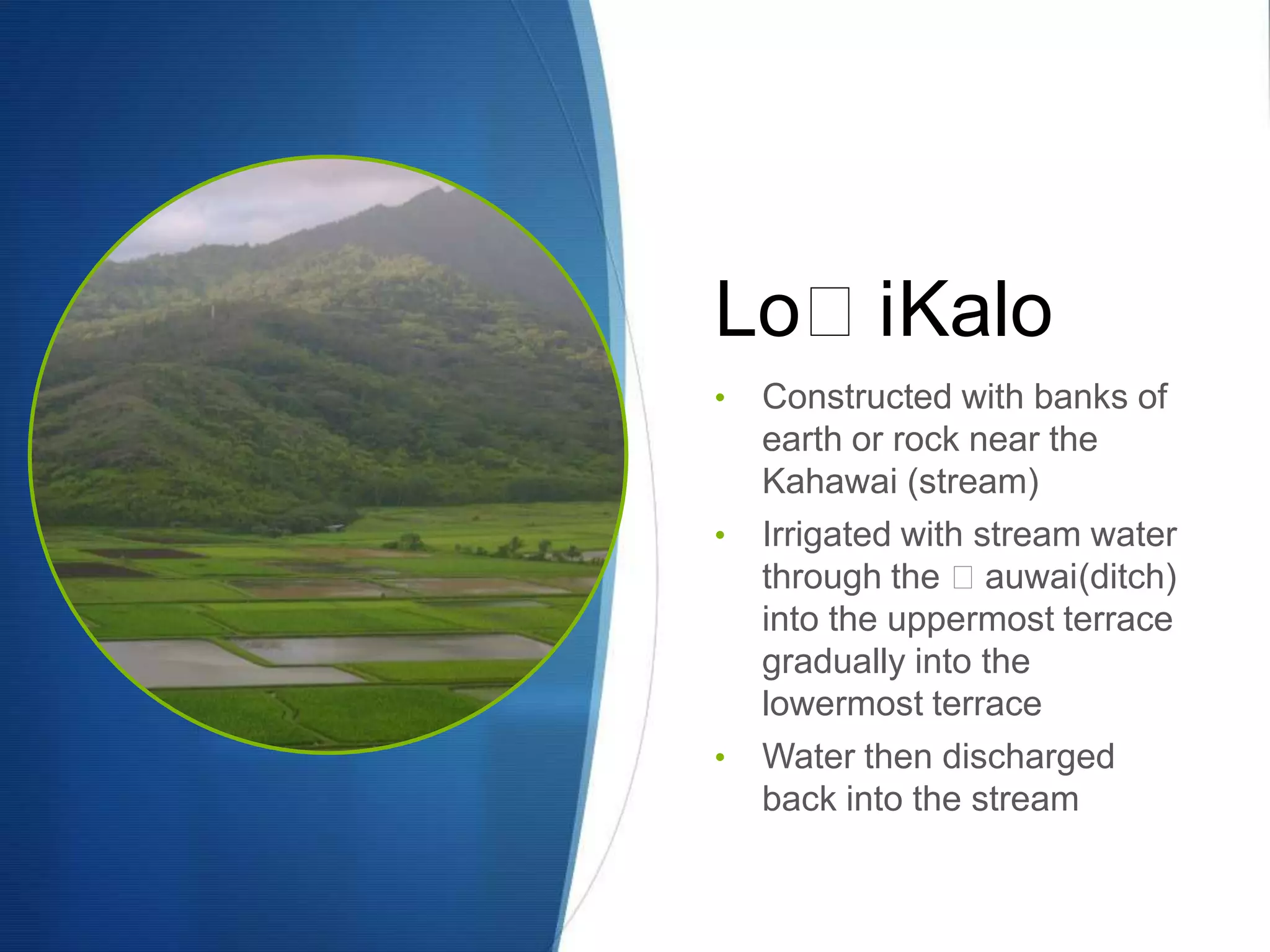
LoʻiKalo
•   Constructed with banks of
    earth or rock near the
    Kahawai (stream)
•   Irrigated with stream water
    through the ʻauwai(ditch)
    into the uppermost terrace
    gradually into the
    lowermost terrace
•   Water then discharged
    back into the stream
Preservation & Management


S Involves water-systems, land, atmospheric climates, etc.

S Making the cycle of production and disposal more sustainable
  by lessening the consumption of land area
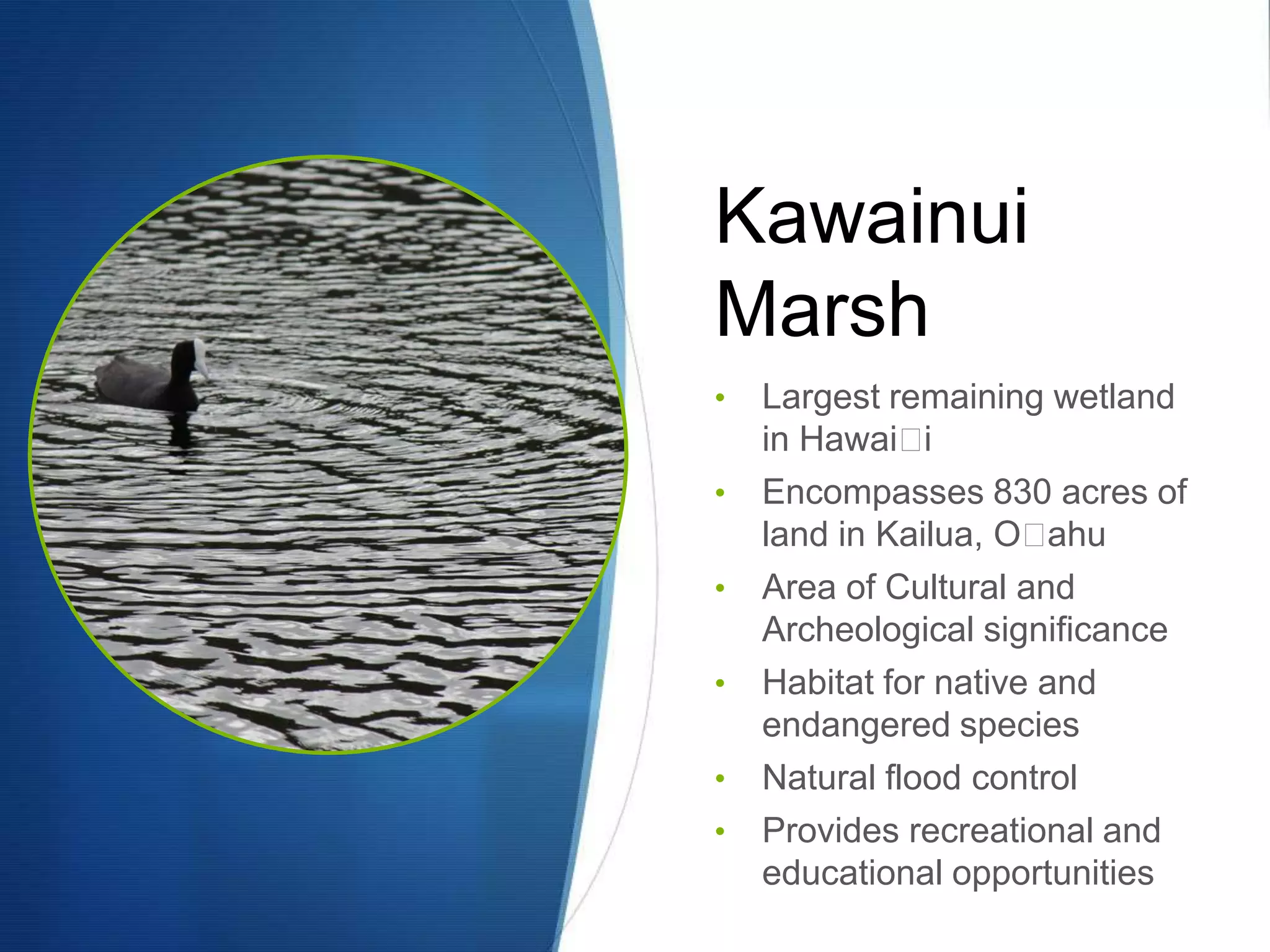
Kawainui
Marsh
•   Largest remaining wetland
    in Hawaiʻ  i
•   Encompasses 830 acres of
    land in Kailua, Oʻ ahu
•   Area of Cultural and
    Archeological significance
•   Habitat for native and
    endangered species
•   Natural flood control
•   Provides recreational and
    educational opportunities
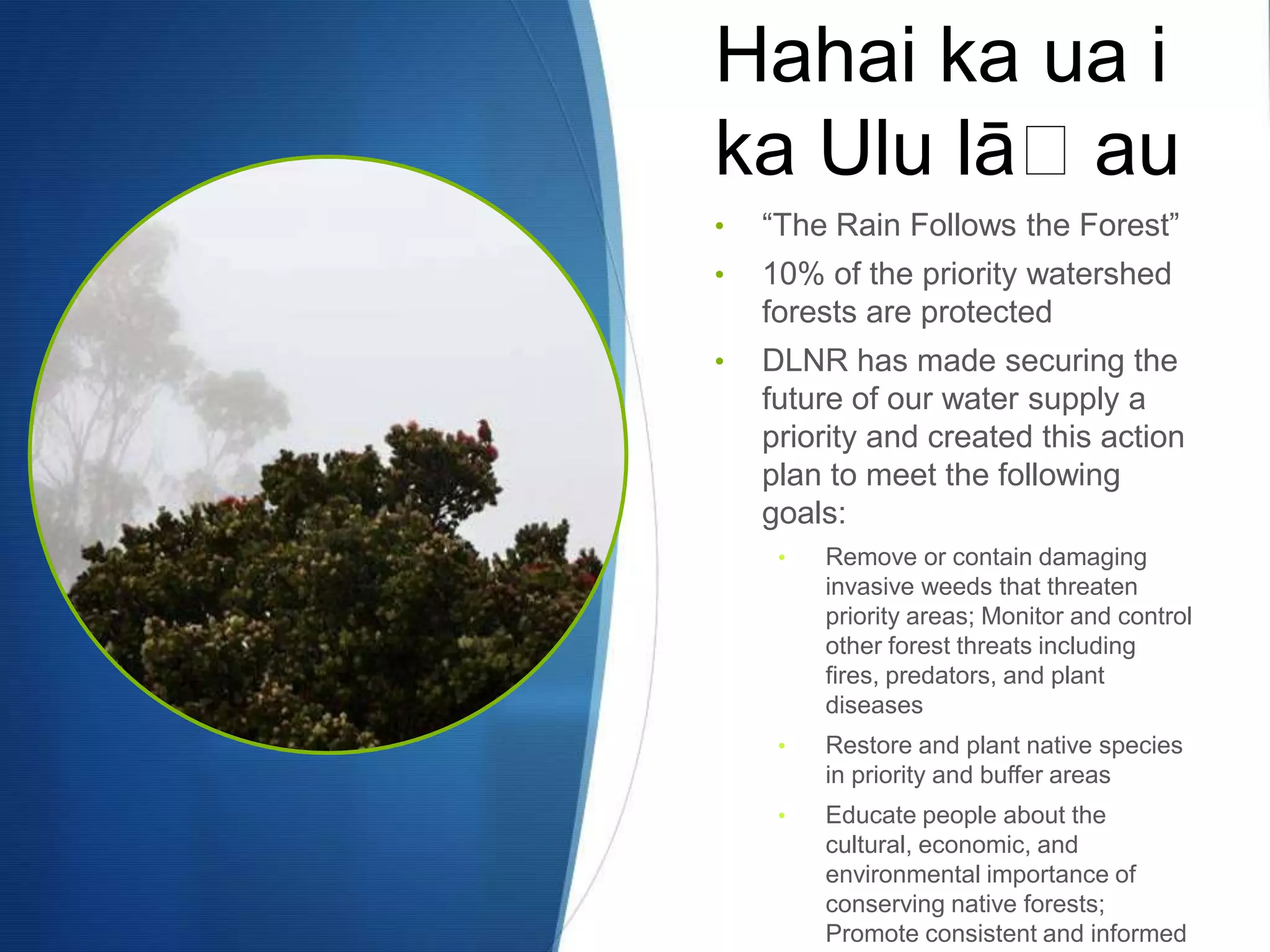
Hahai ka ua i
ka Ulu lāʻau
•   “The Rain Follows the Forest”
•   10% of the priority watershed
    forests are protected
•   DLNR has made securing the
    future of our water supply a
    priority and created this action
    plan to meet the following
    goals:
     •   Remove or contain damaging
         invasive weeds that threaten
         priority areas; Monitor and control
         other forest threats including
         fires, predators, and plant
         diseases
     •   Restore and plant native species
         in priority and buffer areas
     •   Educate people about the
         cultural, economic, and
         environmental importance of
         conserving native forests;
         Promote consistent and informed
New-age Sustainable
              Environments


S Reusable Architecture

S Green Farming, Agriculture, and Aquaculture

S Biospheres

S Native Species Out planting

S Natural Area Preserves

S Outdoor Educational Opportunities

S Hydro plants
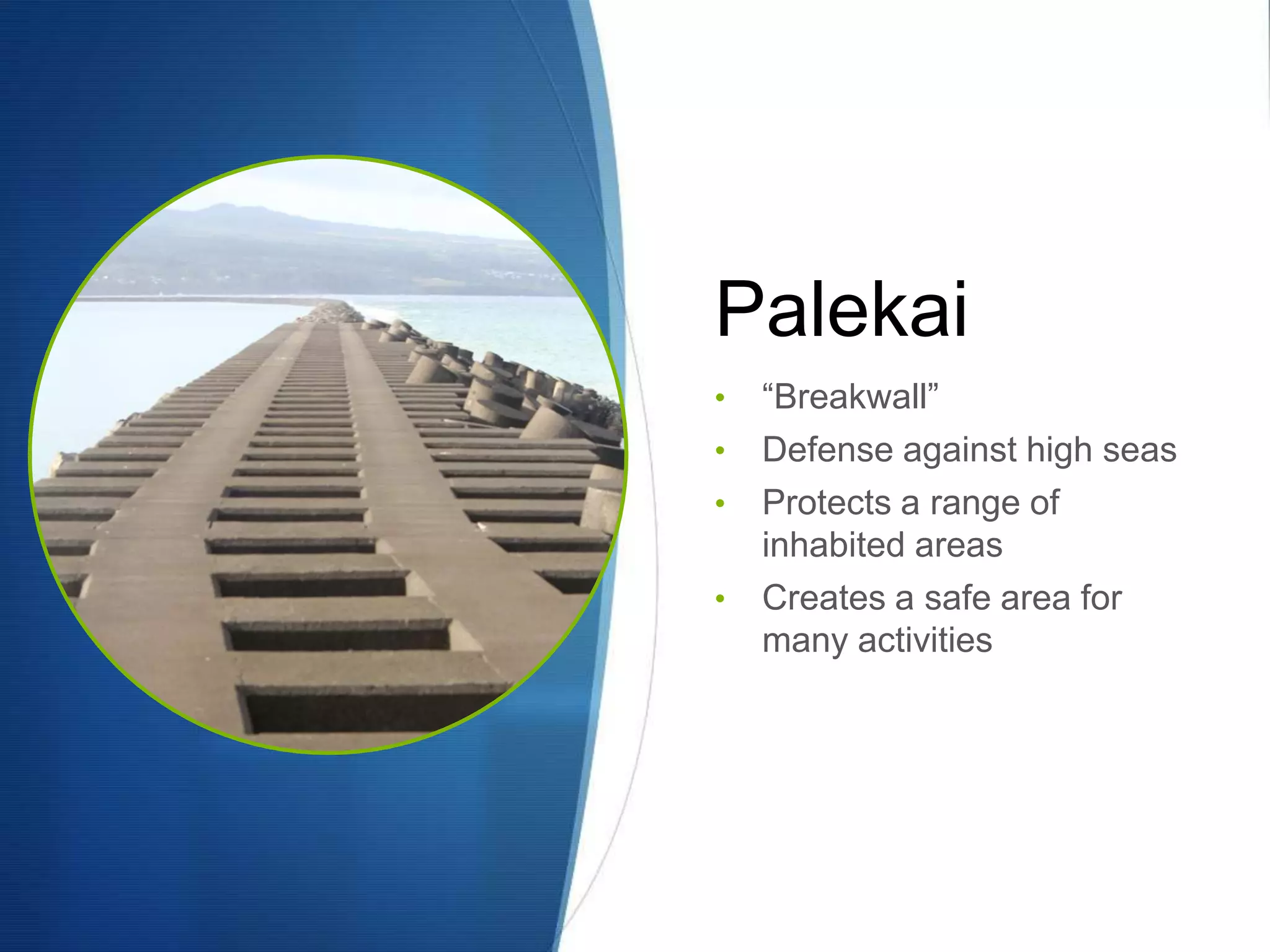
Palekai
•   “Breakwall”
•   Defense against high seas
•   Protects a range of
    inhabited areas
•   Creates a safe area for
    many activities
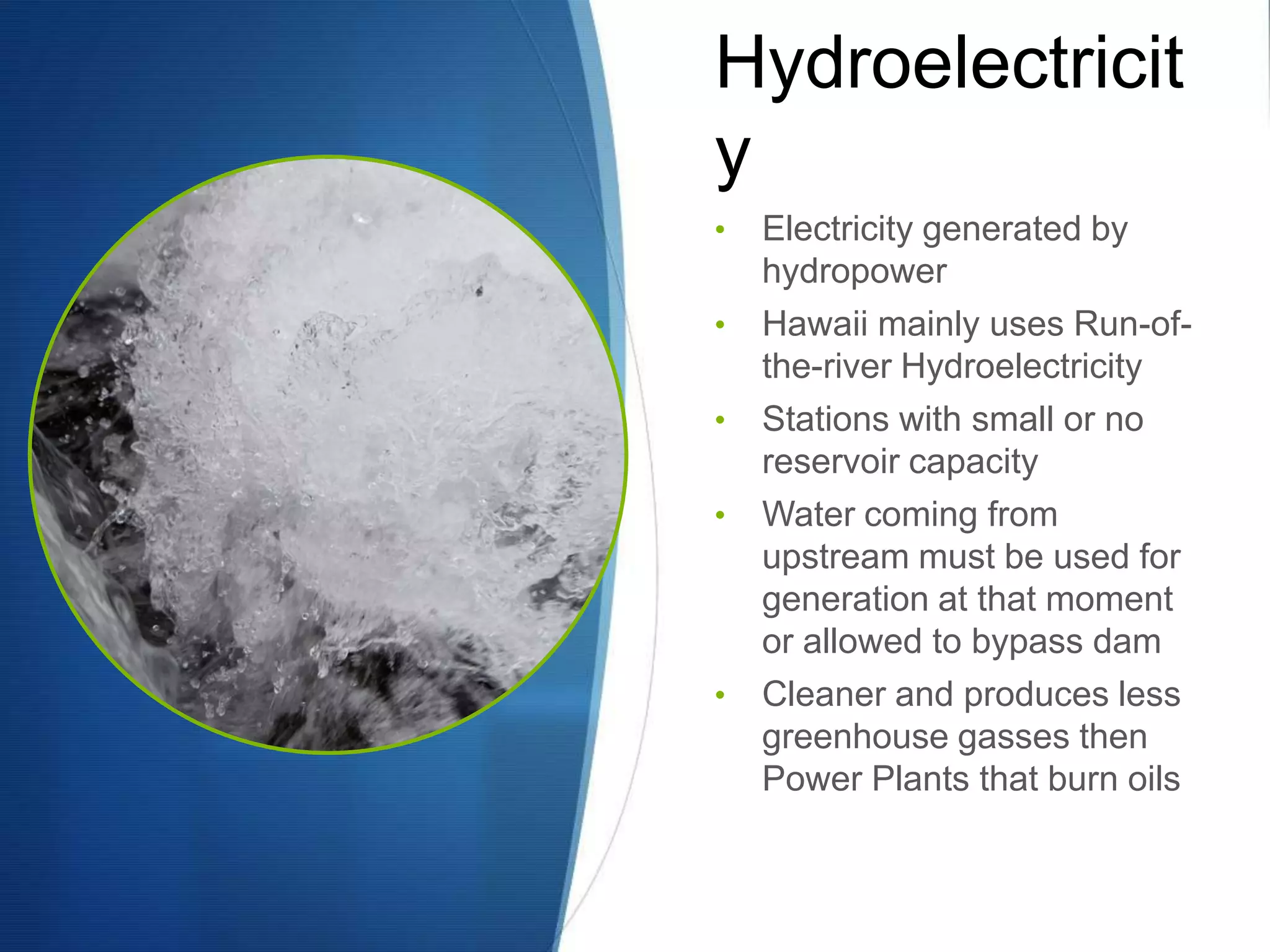
Hydroelectricit
y
•   Electricity generated by
    hydropower
•   Hawaii mainly uses Run-of-
    the-river Hydroelectricity
•   Stations with small or no
    reservoir capacity
•   Water coming from
    upstream must be used for
    generation at that moment
    or allowed to bypass dam
•   Cleaner and produces less
    greenhouse gasses then
    Power Plants that burn oils
Mahalo a nui loa!
                           Thank you very much!

    Marriane Larned           Jason S. Cifra      Kamaka Gunderson

Sustainable Hawaii Youth    Vice Chancellor of        Halaulani
  Leadership Initiative       Student Affairs
                                                  Hawaii Community
                            Hawaii Community          College
                                College


                                                                     S

Sustainable Environments of Hawaii

  • 1.
    Kahu Wai The passingof waters Sustainable Environments of Hawaiʻi Manoa Johansen S
  • 2.
    Waters of theworld S All Water S Accessible Surface S 97% Oceans Freshwater S 3% Freshwater S 52% Lakes S 38% Soil Moisture S 8% Rivers S 8% Water Vapor S Freshwater S 1% Water in Living S 79% Ice Caps & Glaciers Organisms S 20% Groundwater S 1% Accessible Surface Freshwater
  • 3.
  • 4.
    Waiwai “nvs. Goods, property, assets,valua bles, value, worth, wealth, imp ortance, benefit, estate, use; useful, valuable, rich, costly, fi nancial.”
  • 5.
    Concepts S Sustainable Environmentsare areas in which the natural environment can sustain a society and economy with out using a appropriate range of resources. S Sustain healthy ecosystems to maintain goods and services for people and living species.
  • 6.
    Loʻ Kalo i • System of irrigated terraces • Way of wetland farming in a controlled area • Knowledge of (Mahi ʻai ) agriculture incorporated with (Kuhikuhipuʻuone ) architecture and (Mahi iʻa ) aquaculture
  • 7.
    LoʻiKalo • Constructed with banks of earth or rock near the Kahawai (stream) • Irrigated with stream water through the ʻauwai(ditch) into the uppermost terrace gradually into the lowermost terrace • Water then discharged back into the stream
  • 8.
    Preservation & Management SInvolves water-systems, land, atmospheric climates, etc. S Making the cycle of production and disposal more sustainable by lessening the consumption of land area
  • 9.
    Kawainui Marsh • Largest remaining wetland in Hawaiʻ i • Encompasses 830 acres of land in Kailua, Oʻ ahu • Area of Cultural and Archeological significance • Habitat for native and endangered species • Natural flood control • Provides recreational and educational opportunities
  • 10.
    Hahai ka uai ka Ulu lāʻau • “The Rain Follows the Forest” • 10% of the priority watershed forests are protected • DLNR has made securing the future of our water supply a priority and created this action plan to meet the following goals: • Remove or contain damaging invasive weeds that threaten priority areas; Monitor and control other forest threats including fires, predators, and plant diseases • Restore and plant native species in priority and buffer areas • Educate people about the cultural, economic, and environmental importance of conserving native forests; Promote consistent and informed
  • 11.
    New-age Sustainable Environments S Reusable Architecture S Green Farming, Agriculture, and Aquaculture S Biospheres S Native Species Out planting S Natural Area Preserves S Outdoor Educational Opportunities S Hydro plants
  • 12.
    Palekai • “Breakwall” • Defense against high seas • Protects a range of inhabited areas • Creates a safe area for many activities
  • 13.
    Hydroelectricit y • Electricity generated by hydropower • Hawaii mainly uses Run-of- the-river Hydroelectricity • Stations with small or no reservoir capacity • Water coming from upstream must be used for generation at that moment or allowed to bypass dam • Cleaner and produces less greenhouse gasses then Power Plants that burn oils
  • 14.
    Mahalo a nuiloa! Thank you very much! Marriane Larned Jason S. Cifra Kamaka Gunderson Sustainable Hawaii Youth Vice Chancellor of Halaulani Leadership Initiative Student Affairs Hawaii Community Hawaii Community College College S