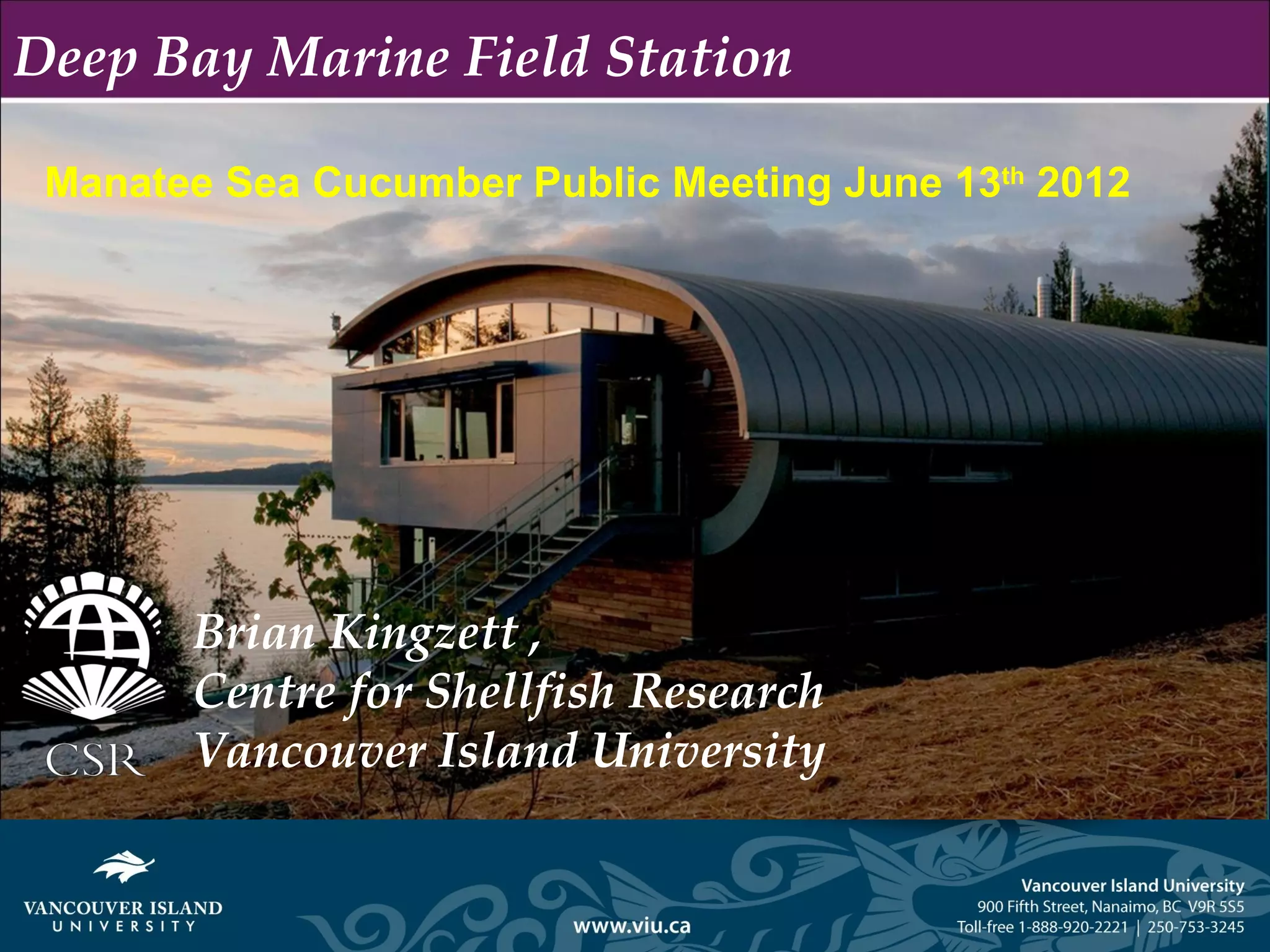
Deep Bay Marine Field Station

 Manatee Sea Cucumber Public Meeting June 13th 2012


       Brian Kingzett ,
       Centre for Shellfish Research
       Vancouver Island University
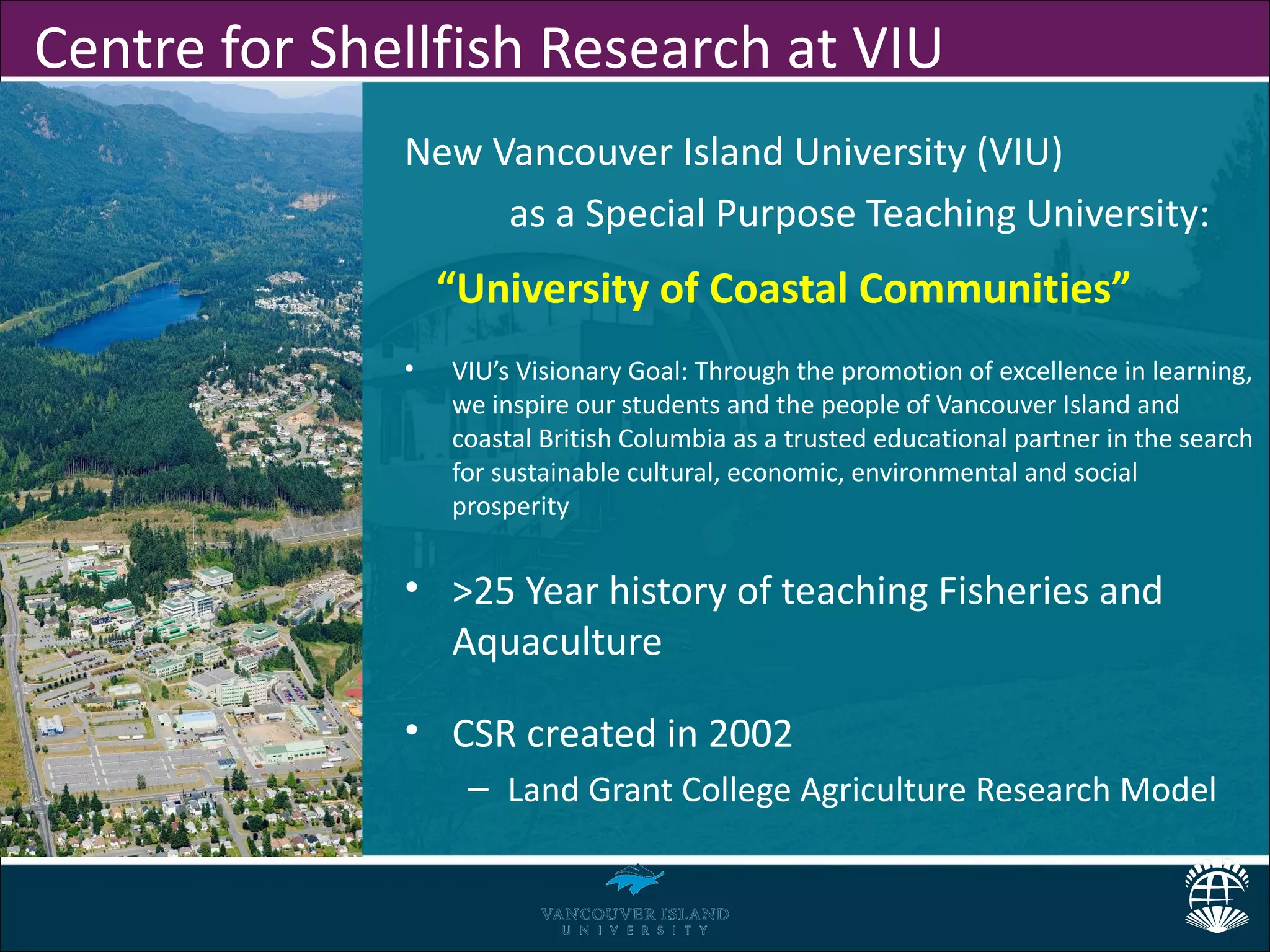
Centre for Shellfish Research at VIU
              New Vancouver Island University (VIU)
                   as a Special Purpose Teaching University:
                  “University of Coastal Communities”
              •   VIU’s Visionary Goal: Through the promotion of excellence in learning,
                  we inspire our students and the people of Vancouver Island and
                  coastal British Columbia as a trusted educational partner in the search
                  for sustainable cultural, economic, environmental and social
                  prosperity


              • >25 Year history of teaching Fisheries and
                Aquaculture

              • CSR created in 2002
                   – Land Grant College Agriculture Research Model
What motivates us – thinking globally
             • How will we feed a world destined for
               10 billion people?
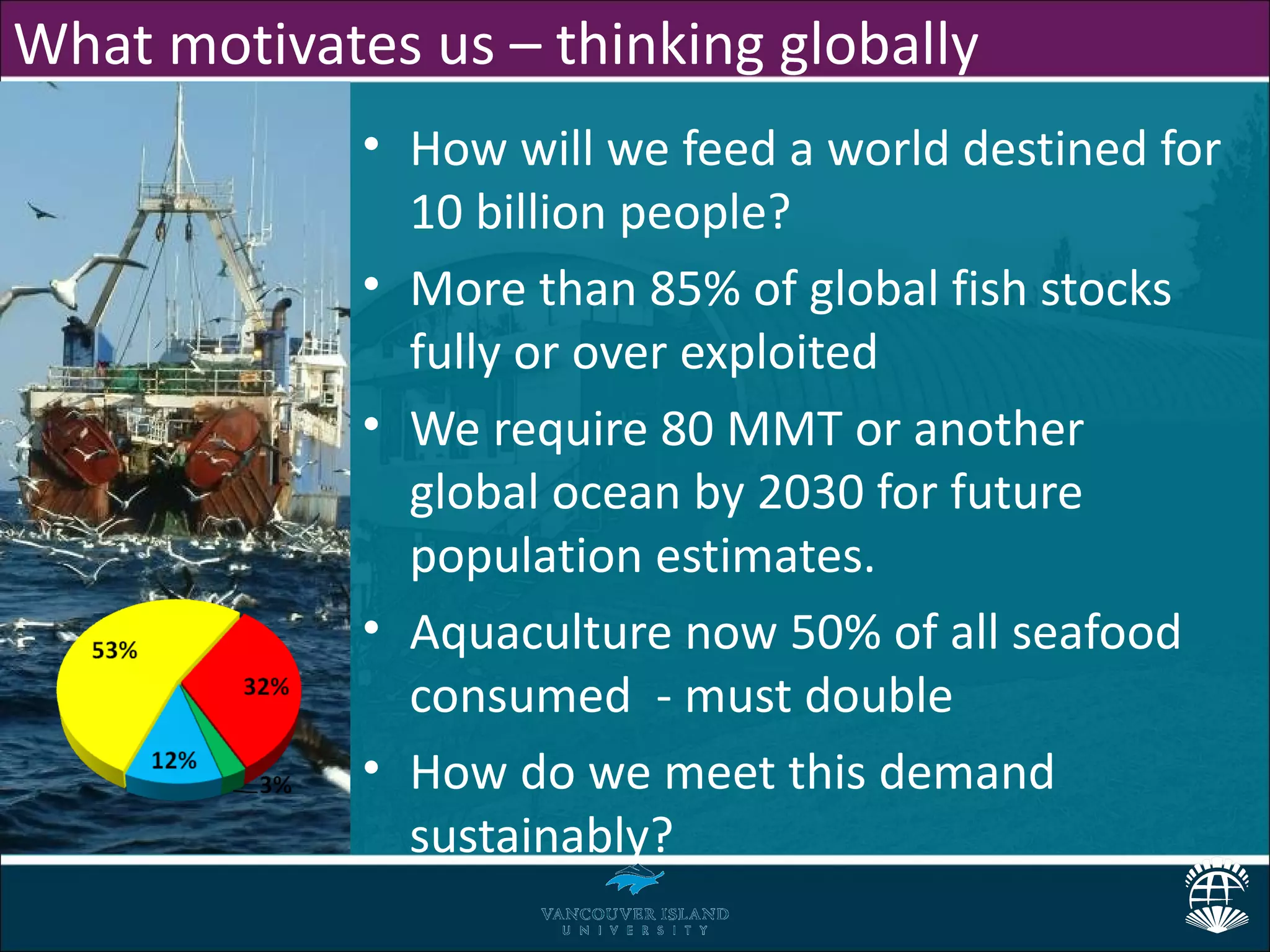
             • More than 85% of global fish stocks
               fully or over exploited
             • We require 80 MMT or another
               global ocean by 2030 for future
               population estimates.
             • Aquaculture now 50% of all seafood
               consumed - must double
             • How do we meet this demand
               sustainably?
What motivates us – thinking locally
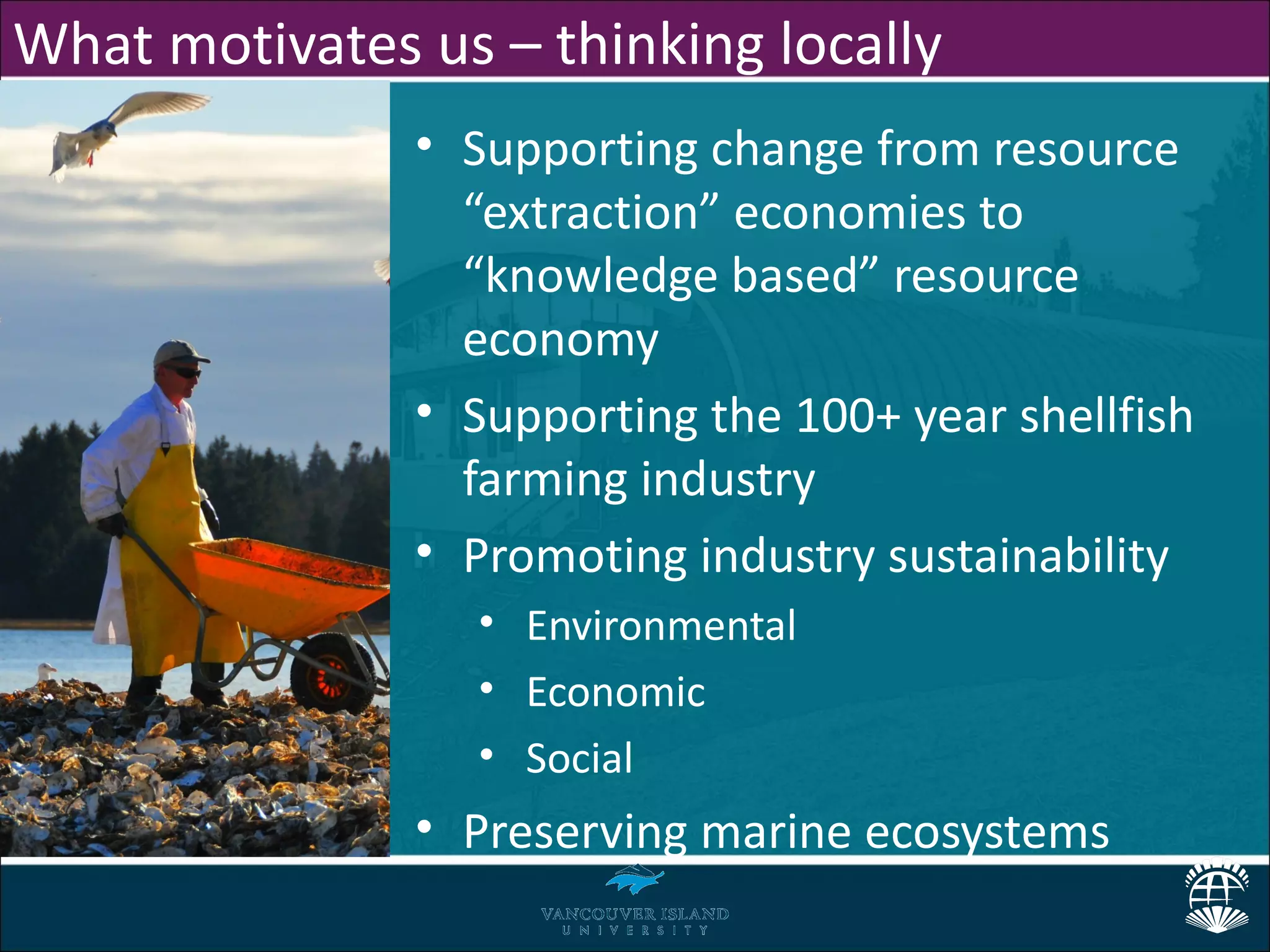
               • Supporting change from resource
                 “extraction” economies to
                 “knowledge based” resource
                 economy
               • Supporting the 100+ year shellfish
                 farming industry
               • Promoting industry sustainability
                  • Environmental
                  • Economic
                  • Social
               • Preserving marine ecosystems
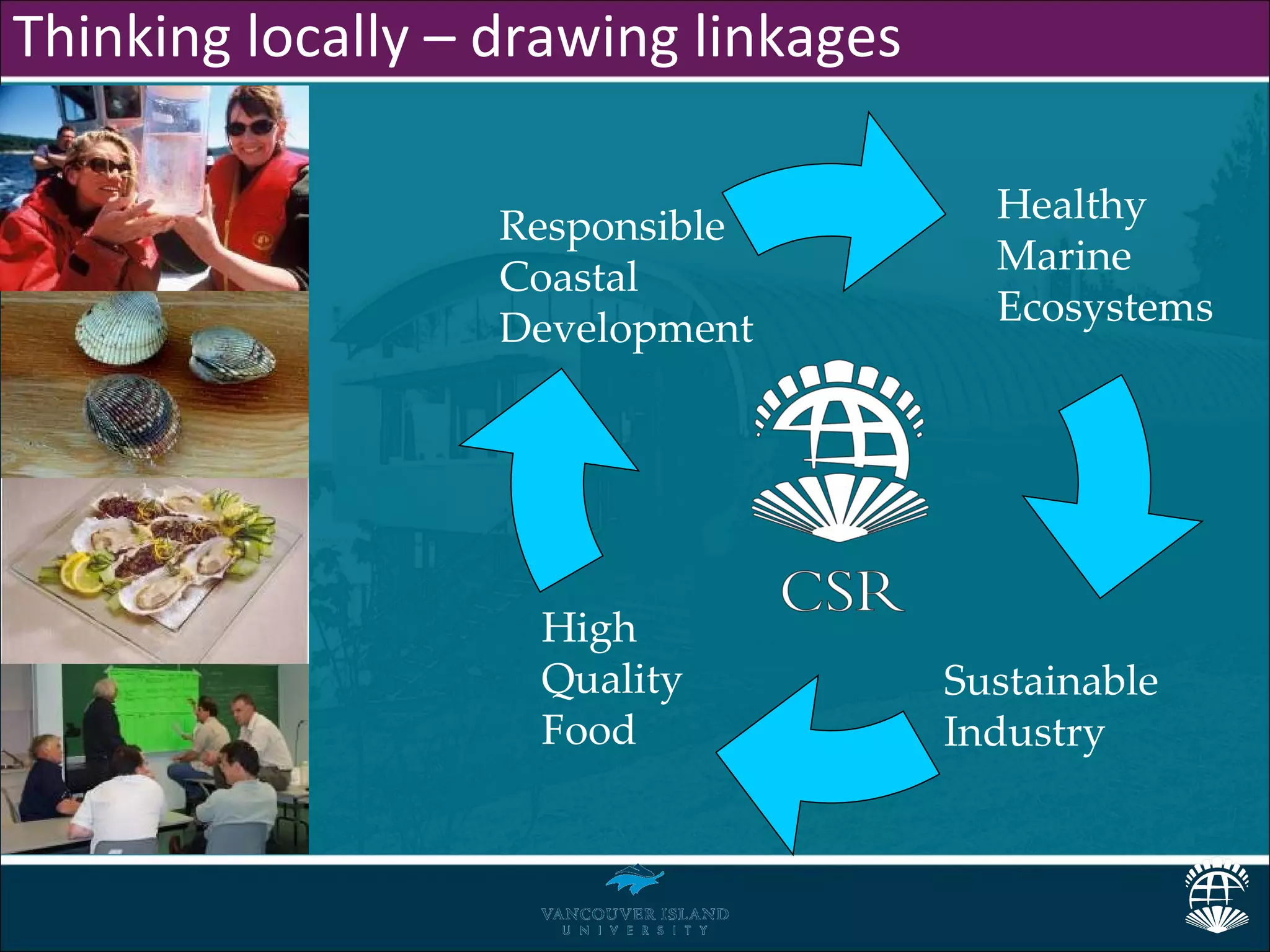
Thinking locally – drawing linkages

                                        Healthy
                   Responsible
                                        Marine
                   Coastal
                                        Ecosystems
                   Development


                    High
                    Quality           Sustainable
                    Food              Industry
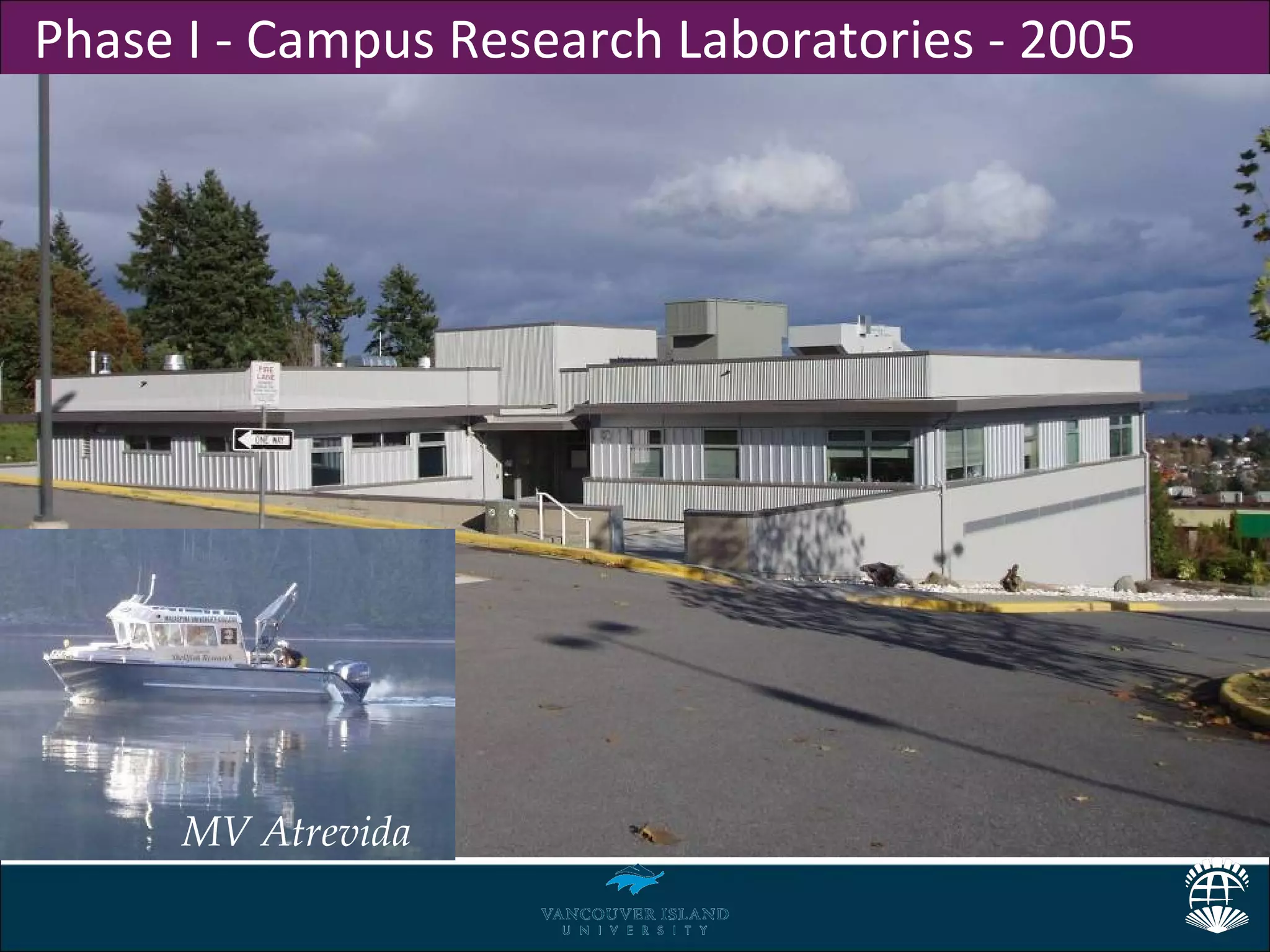
Phase I - Campus Research Laboratories - 2005


      MV Atrevida
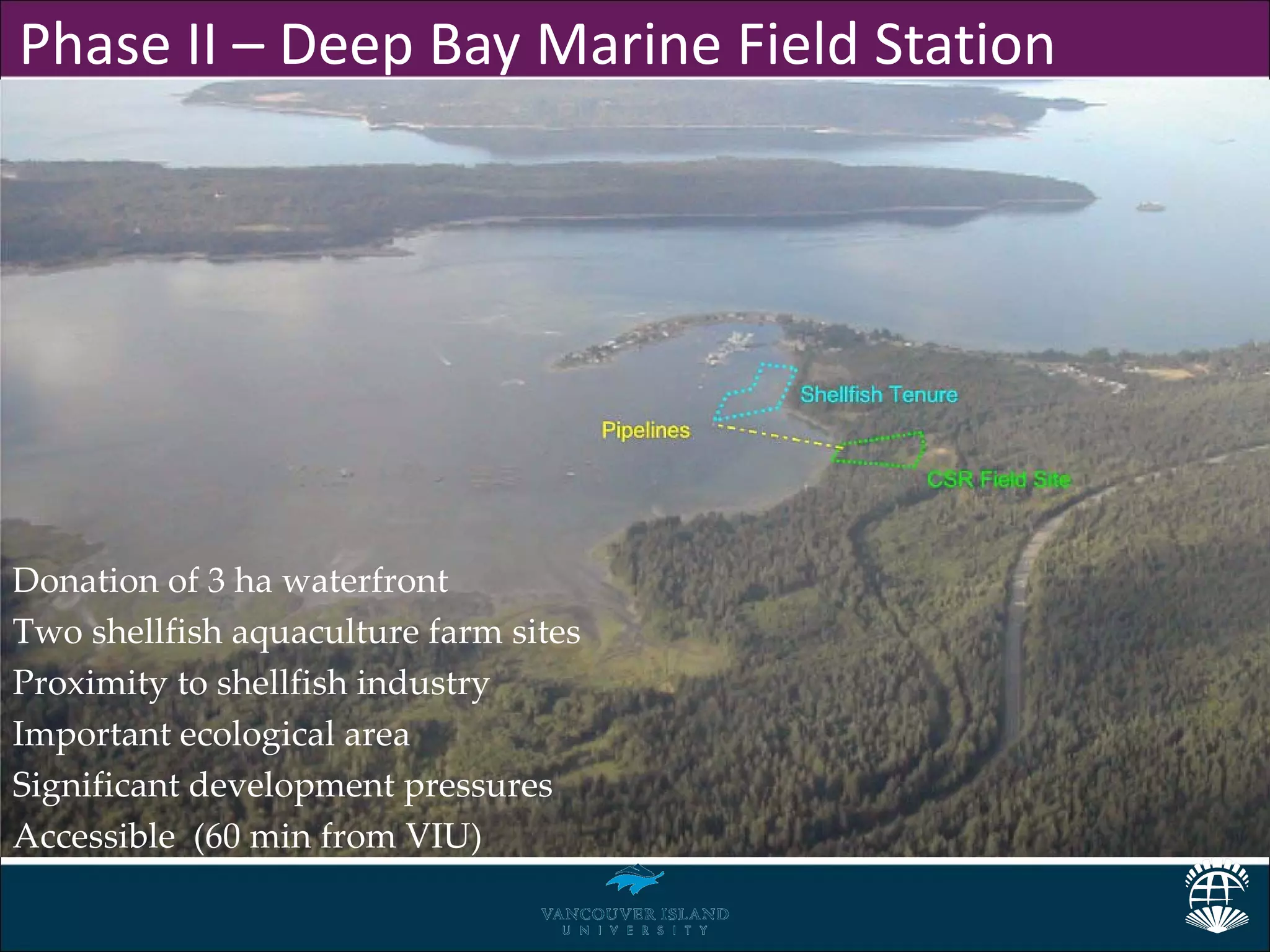
Phase II – Deep Bay Marine Field Station


Donation of 3 ha waterfront
Two shellfish aquaculture farm sites
Proximity to shellfish industry
Important ecological area
Significant development pressures
Accessible (60 min from VIU)
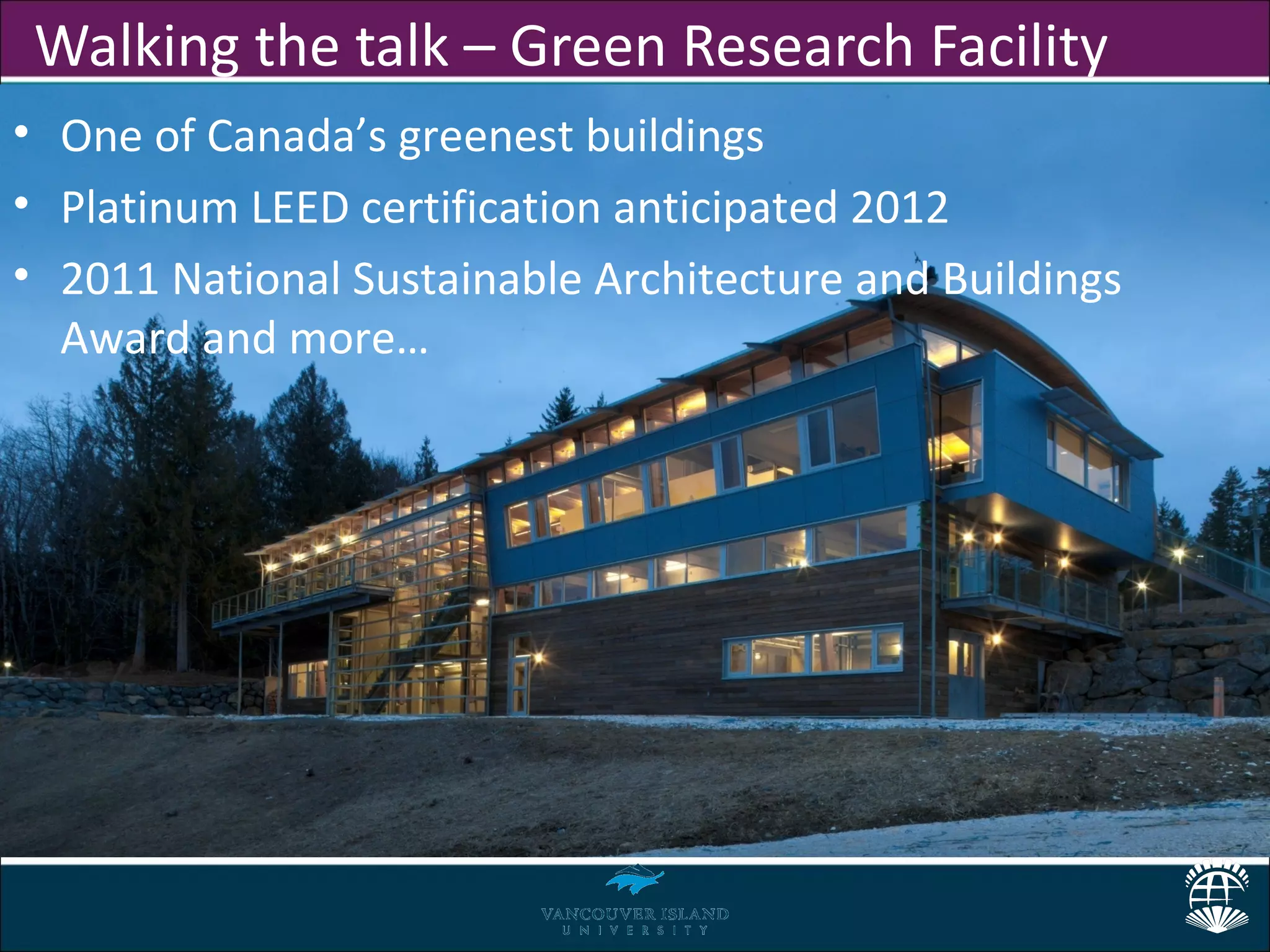
Walking the talk – Green Research Facility
• One of Canada’s greenest buildings
• Platinum LEED certification anticipated 2012
• 2011 National Sustainable Architecture and Buildings
  Award and more…
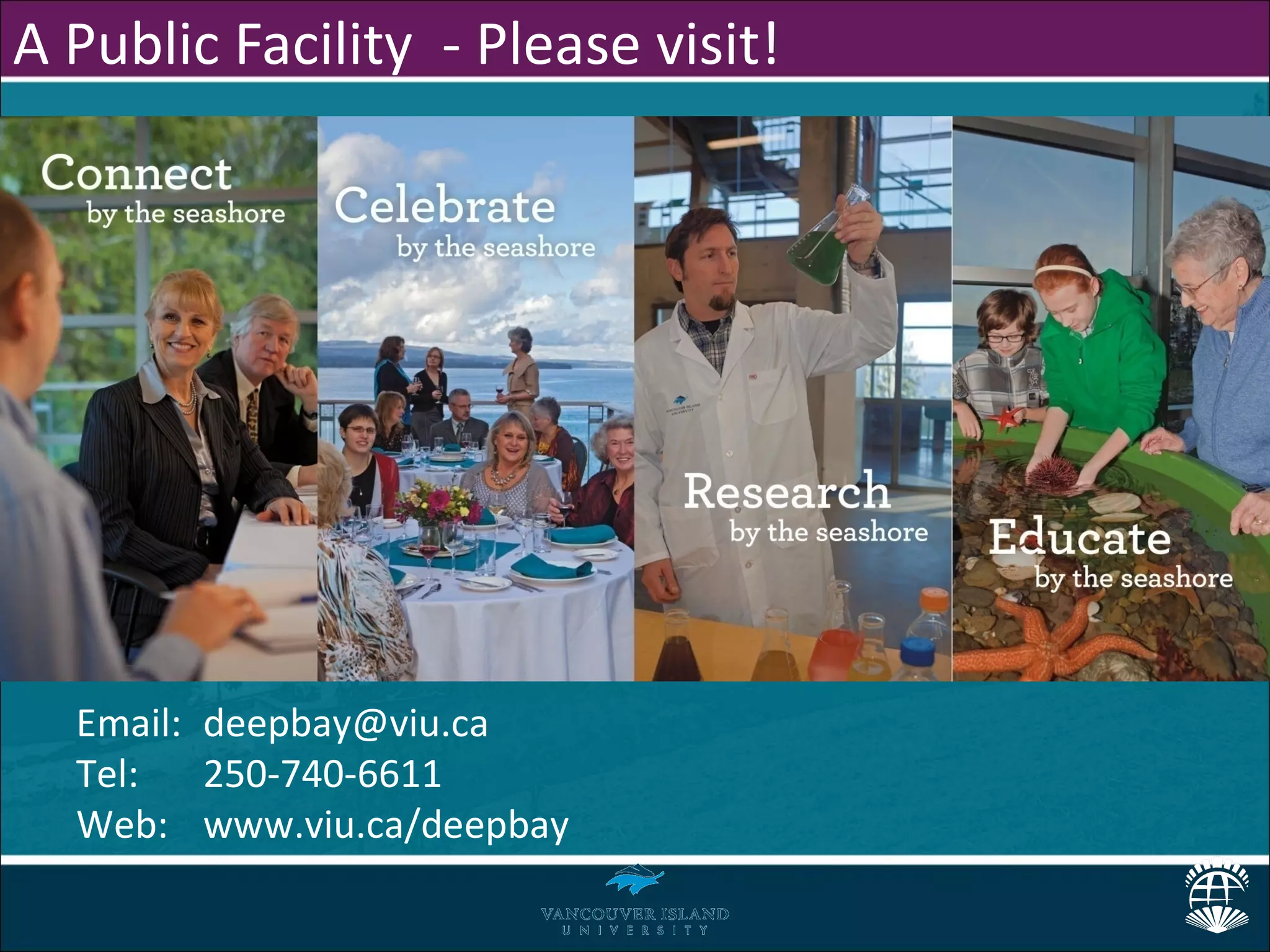
A Public Facility - Please visit!


  Email: deepbay@viu.ca
  Tel:   250-740-6611
  Web: www.viu.ca/deepbay
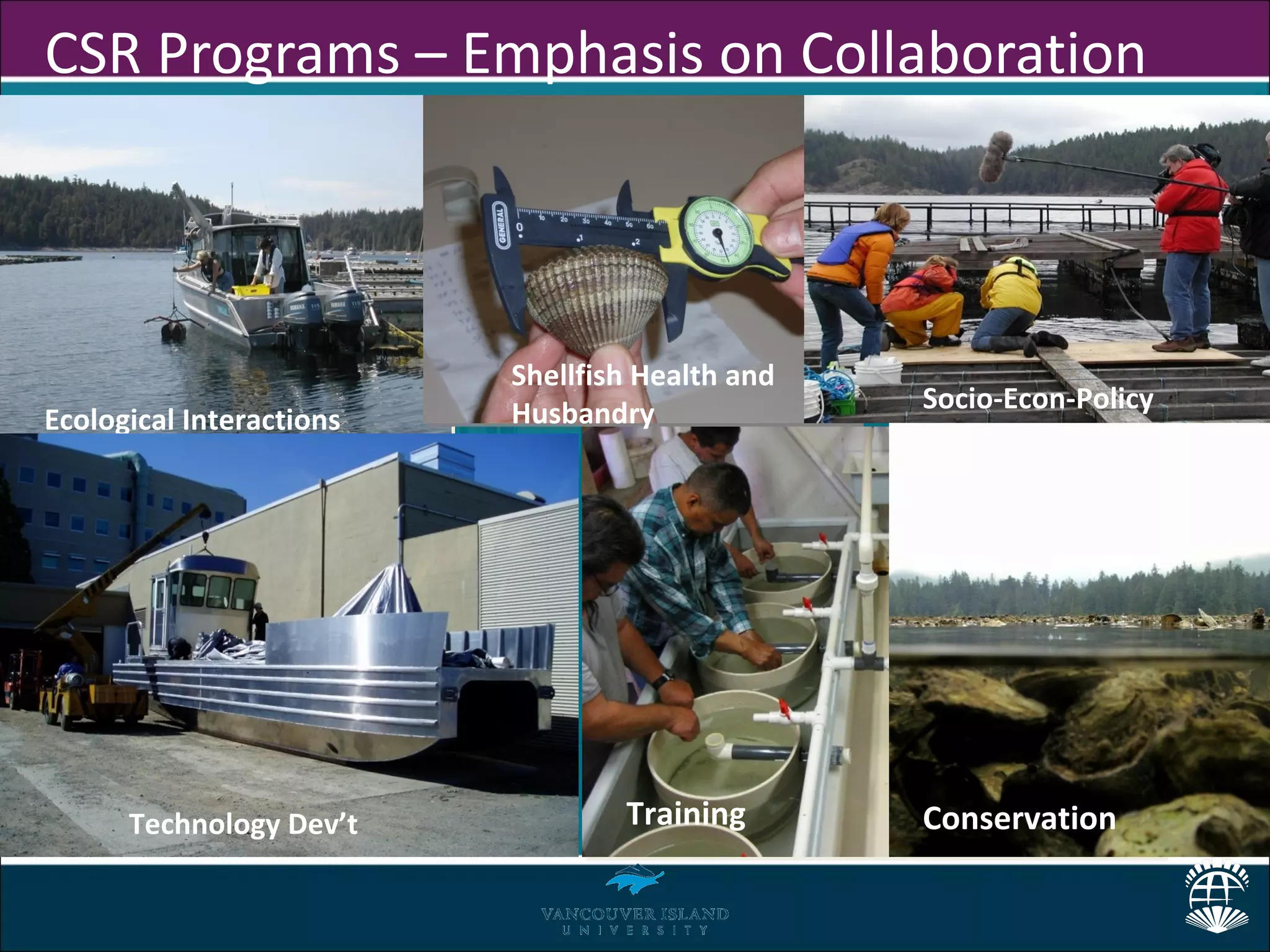
CSR Programs – Emphasis on Collaboration


                          Shellfish Health and
                          Husbandry              Socio-Econ-Policy
Ecological Interactions


       Communications
      Technology Dev’t            Training       Conservation
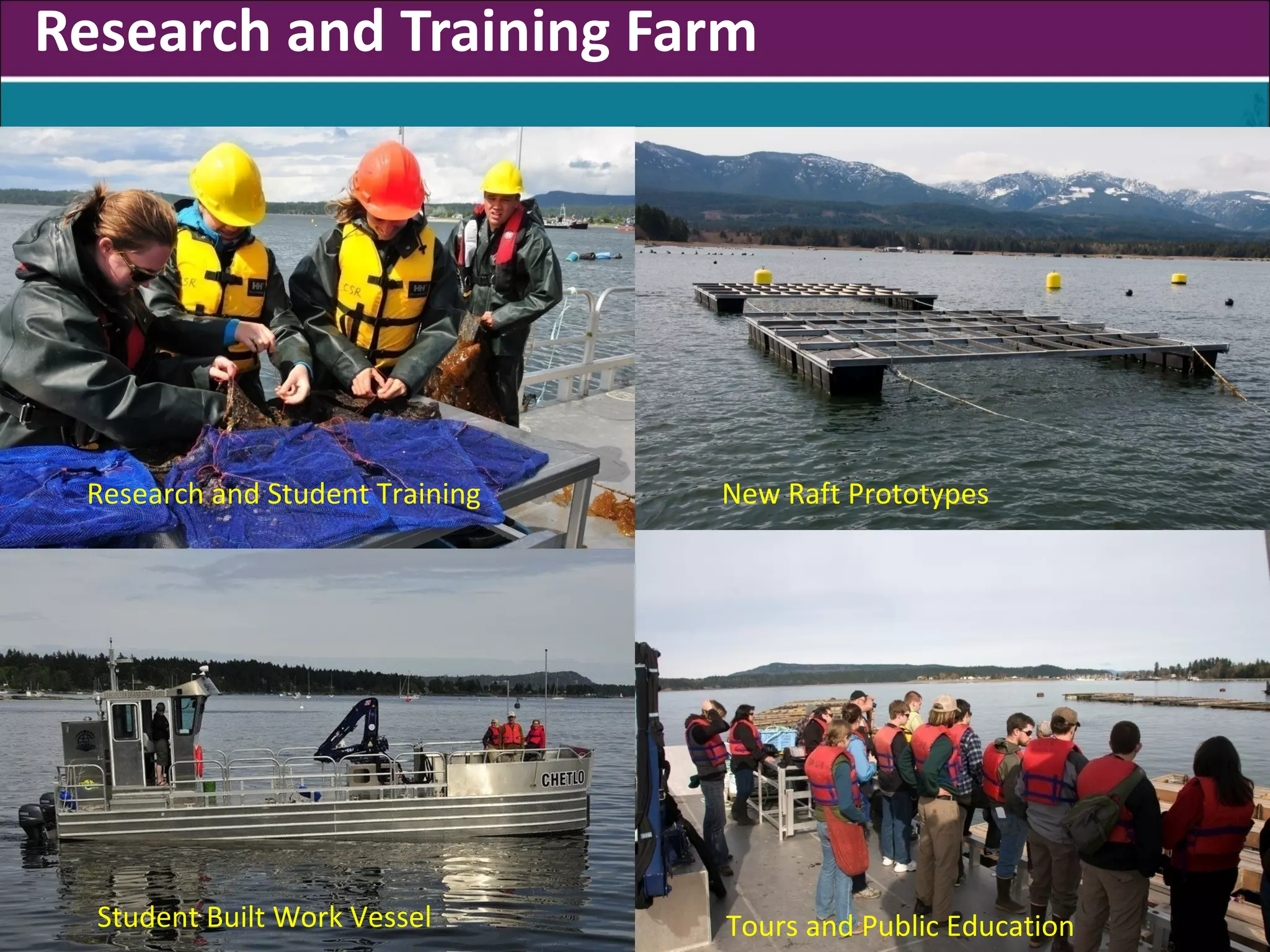
Research and Training Farm


 Research and Student Training   New Raft Prototypes


  Student Built Work Vessel      Tours and Public Education
Project based funding - Who funds us?

   • Government Agencies

   • Environmental NGOs, Conservation Organizations

   • Industry and commercial clients

   • Provincial and Federal academic research grants

   • Public and private donors

   • Funds raised through public education and event
     hosting activities.
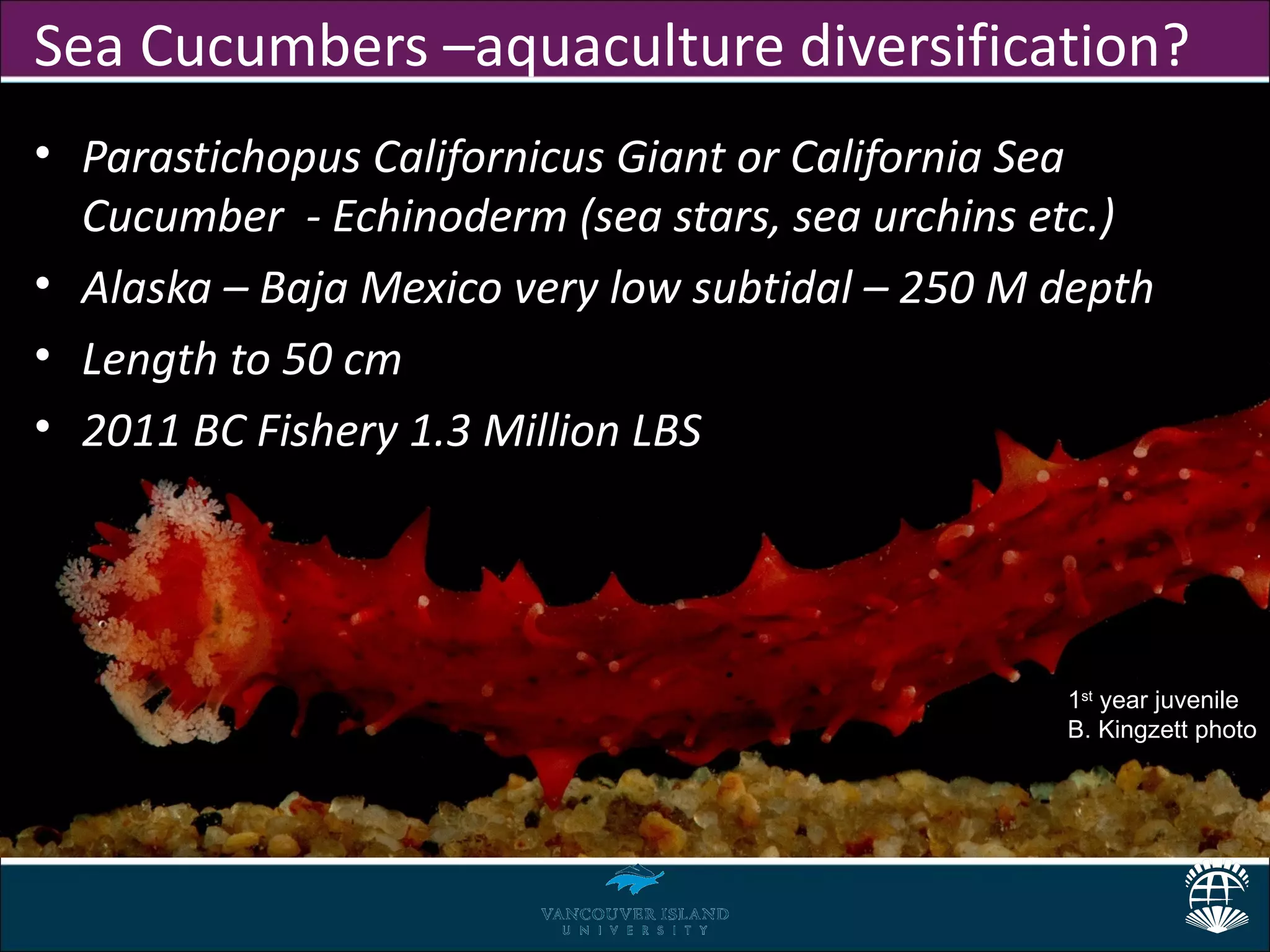
Sea Cucumbers –aquaculture diversification?
• Parastichopus Californicus Giant or California Sea
  Cucumber - Echinoderm (sea stars, sea urchins etc.)
• Alaska – Baja Mexico very low subtidal – 250 M depth
• Length to 50 cm
• 2011 BC Fishery 1.3 Million LBS


                                                 1st year juvenile
                                                 B. Kingzett photo
New species development – a process
   Three requirements:
   • Commercial interest
   • High value species – (Market price driven ($2.50/lb in
     2005 to $6.00+ in 2011)
   • Policy framework to support industry development
      – DFO lead agency– science based/”smart” regulation
      – Re: sea cucumber aquaculture, DFO needs “regulatory
        science” to guide operational policy development
Research questions need to be defined
   Potential areas of concern:
   • Environmental issues – e.g. carrying capacity; habitat,
     ecological interactions
   • Sea cucumber movement (how do we track and
     monitor?)
   • Traceability (how do we tell between wild and
     “farmed” stocks)
   • Other ??? – research is never done
CSR Sea Cucumber Research Activities (1)
 • 2011 CSR hosted a meeting on sea cucumber farming at
   Deep Bay – Chinese delegation presentation (on web-
   site)
 • Over 40 people in attendance including DFO and
   shellfish industry
 • DFO represented by Director, Aquaculture Management
   and Head, Compliance and Enforcement plus others
 • Many questions identified; science-based policy
   framework is required
CSR Sea Cucumber Research Activities (2)
 • Fall 2011 CSR researchers, DFO scientists and managers
   met to discuss potential sea cucumber research plan
   and needs
 • CSR conducted significant literature search on sea
   cucumber farming
 • A prioritized list of research questions remains to be
   generated
 • Most research questions will be field based
 • To undertake the research, juvenile sea cucumbers will
   be required
CSR Sea Cucumber Research Activities (3)
  • Research funding requires a collaborative partnership
    between scientists and industry.
  • Industry is required to contribute cash to research
  • Anticipating the need for juvenile sea cucumbers with
    which to carry out field based research, CSR
    conducting investigations on hatchery based rearing of
    sea cucumbers. Discussions regarding funding
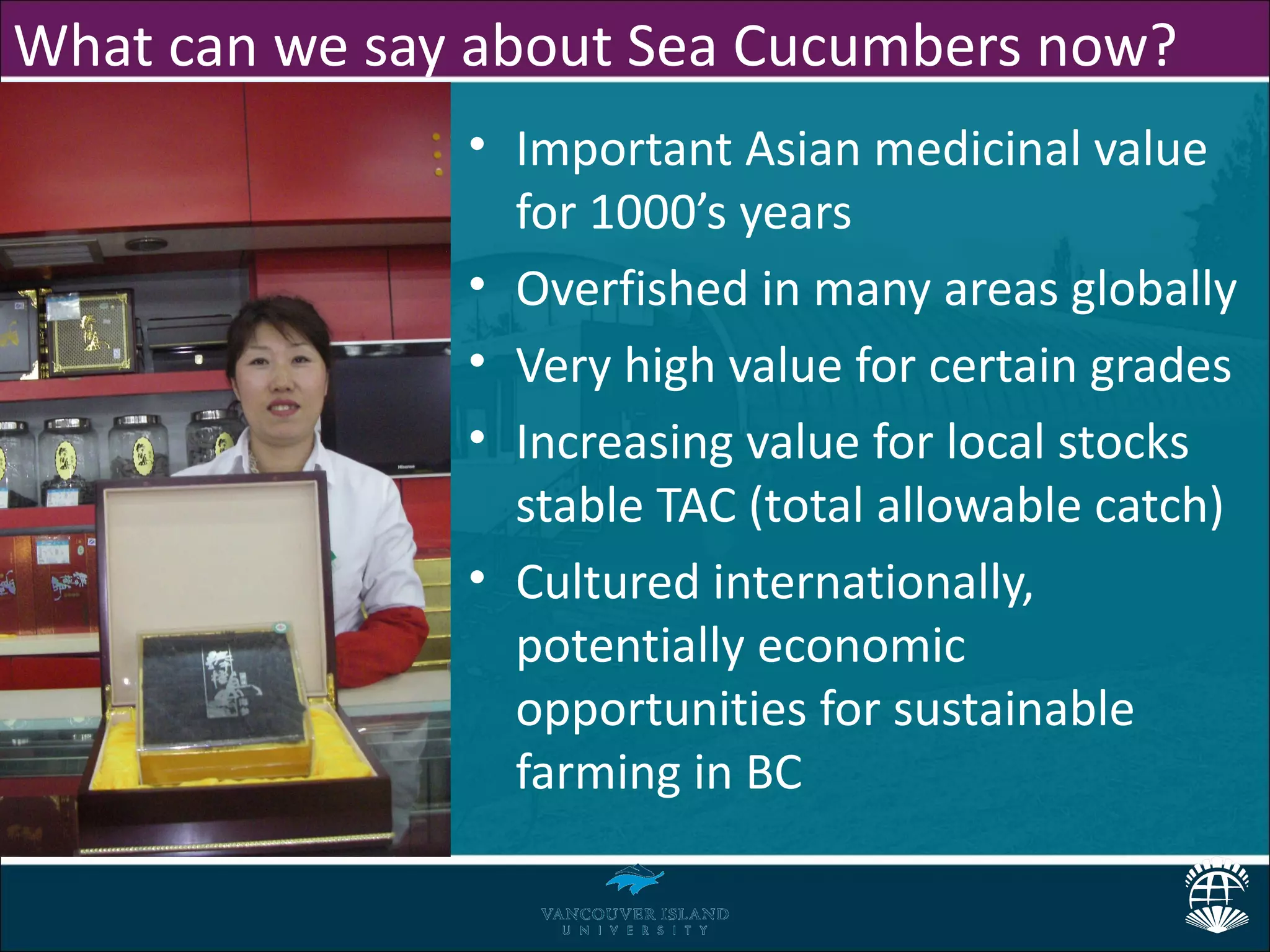
What can we say about Sea Cucumbers now?
               • Important Asian medicinal value
                 for 1000’s years
               • Overfished in many areas globally
               • Very high value for certain grades
               • Increasing value for local stocks
                 stable TAC (total allowable catch)
               • Cultured internationally,
                 potentially economic
                 opportunities for sustainable
                 farming in BC
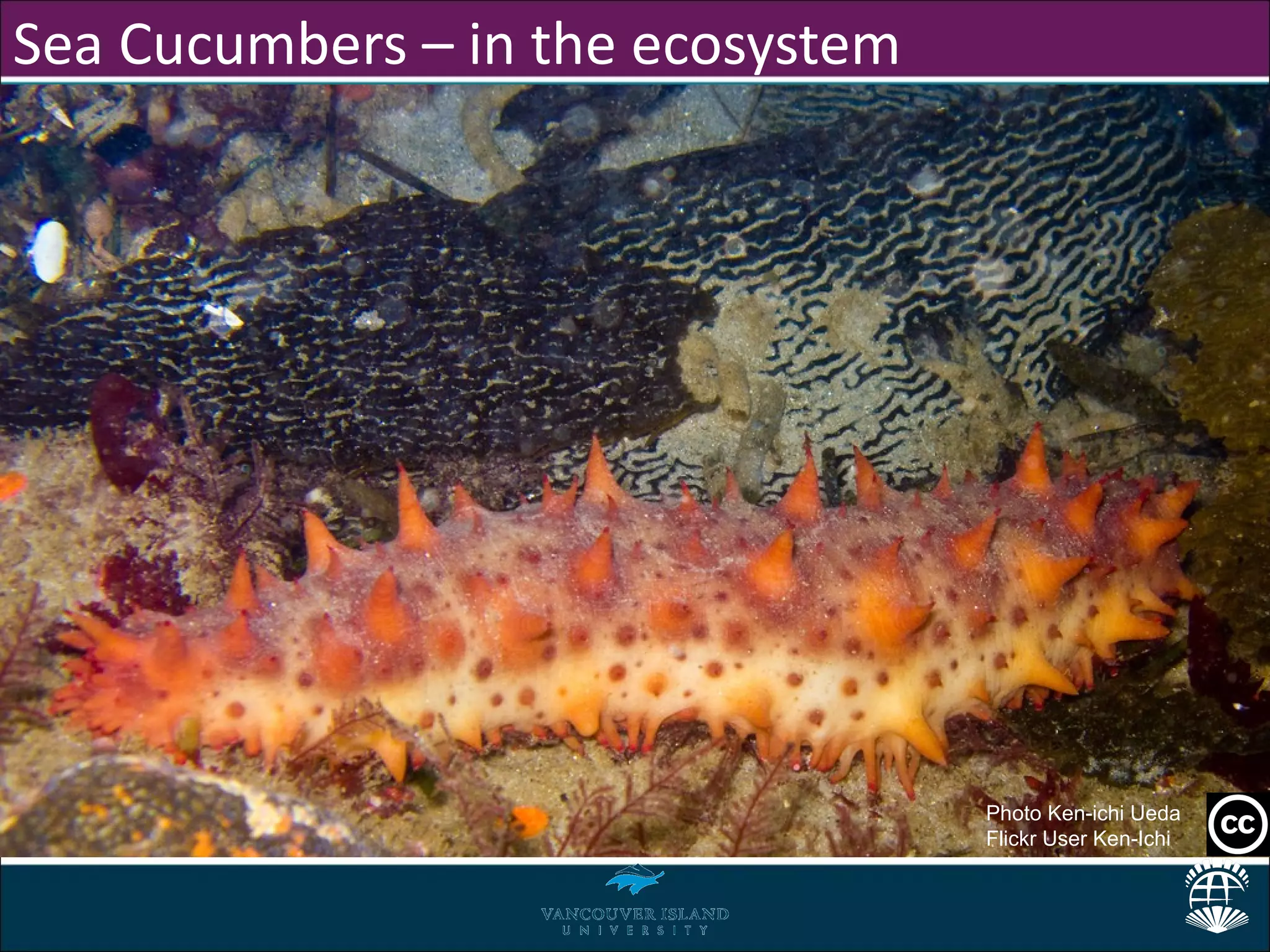
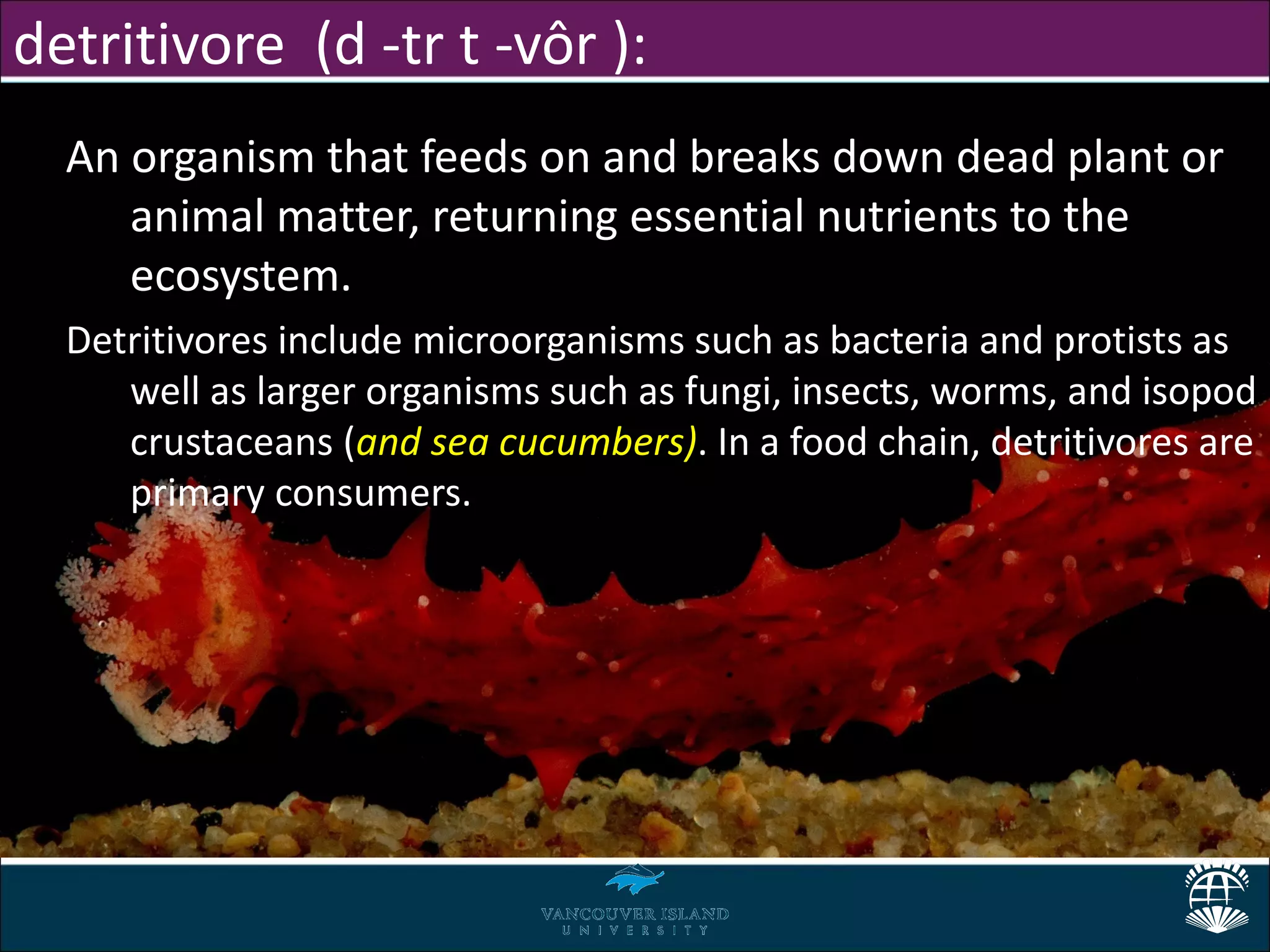
Sea Cucumbers – in the ecosystem


                                   Photo Ken-ichi Ueda
                                   Flickr User Ken-Ichi
detritivore (d -tr t -vôr ):
  An organism that feeds on and breaks down dead plant or
     animal matter, returning essential nutrients to the
     ecosystem.
  Detritivores include microorganisms such as bacteria and protists as
     well as larger organisms such as fungi, insects, worms, and isopod
     crustaceans (and sea cucumbers). In a food chain, detritivores are
     primary consumers.
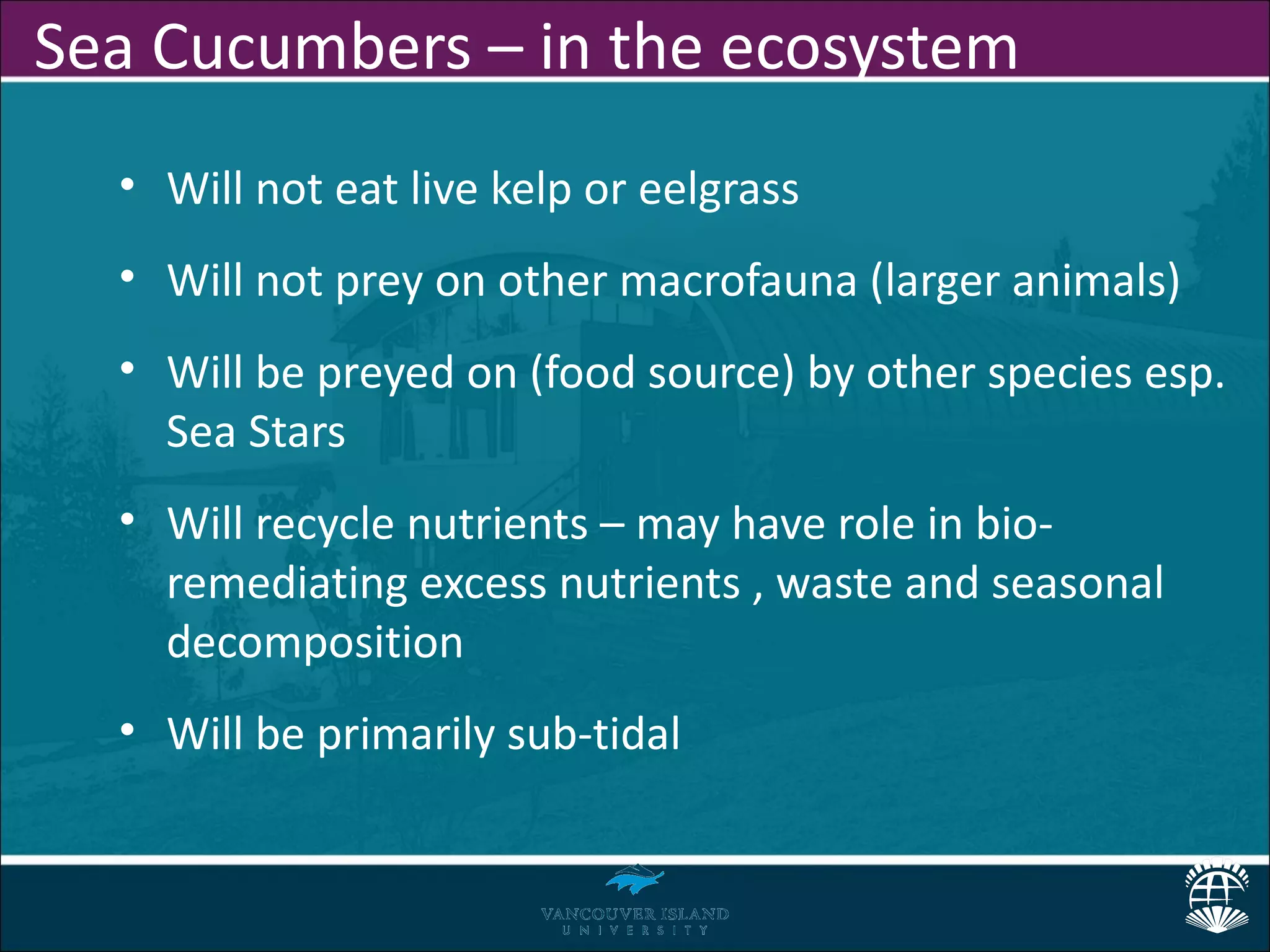
Sea Cucumbers – in the ecosystem
  • Will not eat live kelp or eelgrass
  • Will not prey on other macrofauna (larger animals)
  • Will be preyed on (food source) by other species esp.
    Sea Stars
  • Will recycle nutrients – may have role in bio-
    remediating excess nutrients , waste and seasonal
    decomposition
  • Will be primarily sub-tidal
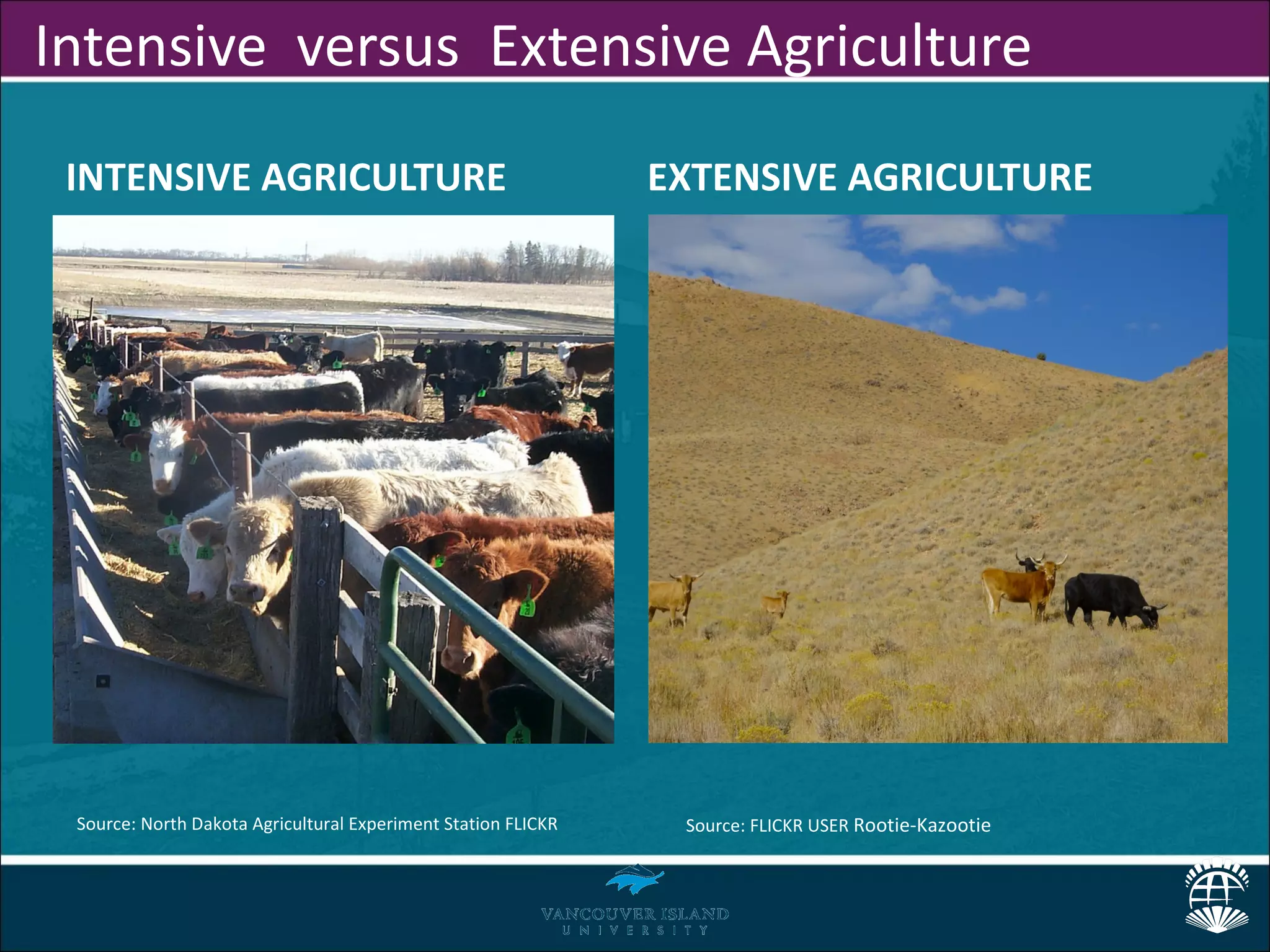
Intensive versus Extensive Agriculture
 INTENSIVE AGRICULTURE                                         EXTENSIVE AGRICULTURE


 Source: North Dakota Agricultural Experiment Station FLICKR    Source: FLICKR USER Rootie-Kazootie
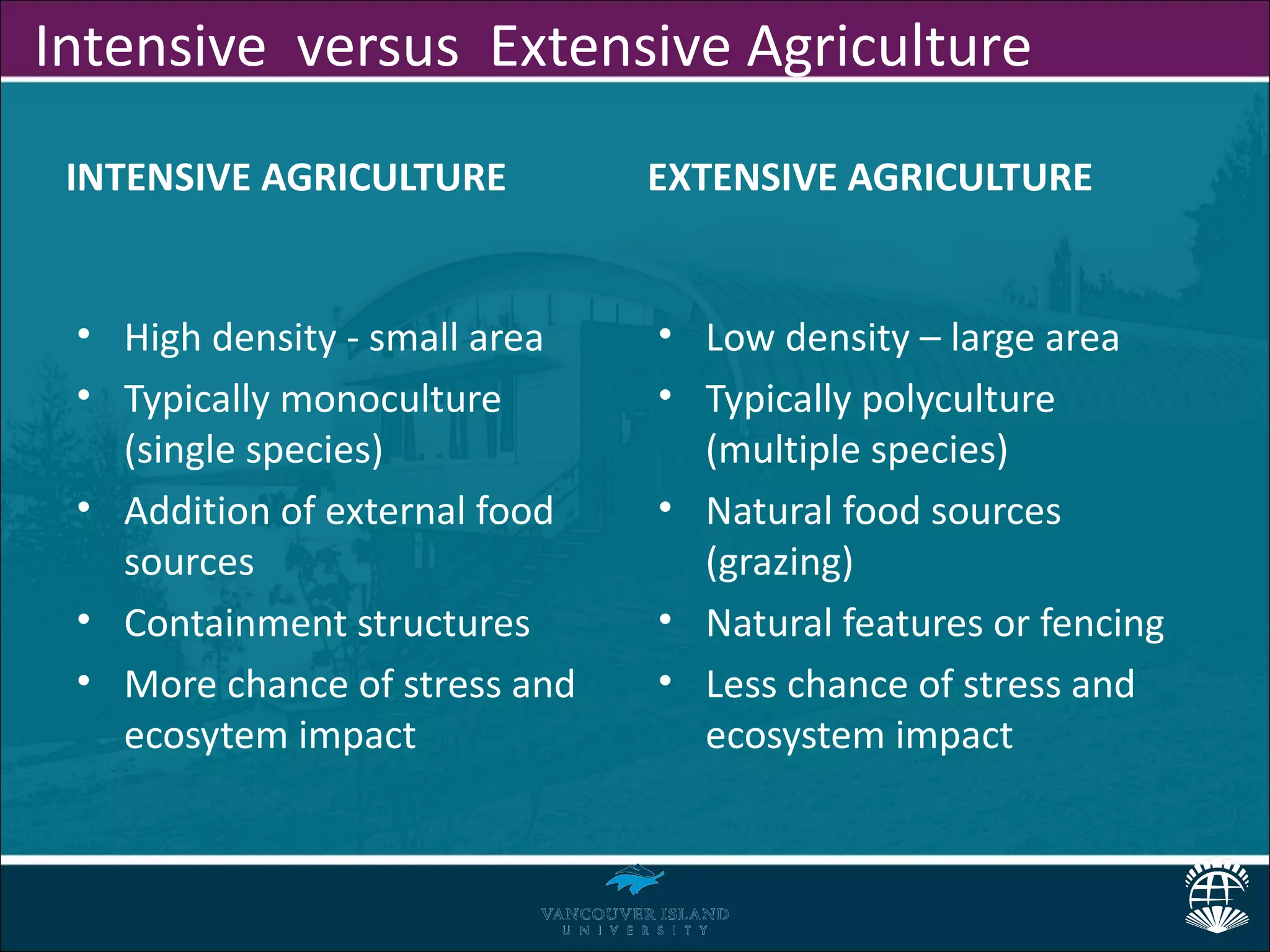
Intensive versus Extensive Agriculture
 INTENSIVE AGRICULTURE         EXTENSIVE AGRICULTURE


 • High density - small area   • Low density – large area
 • Typically monoculture       • Typically polyculture
   (single species)              (multiple species)
 • Addition of external food   • Natural food sources
   sources                       (grazing)
 • Containment structures      • Natural features or fencing
 • More chance of stress and   • Less chance of stress and
   ecosytem impact               ecosystem impact
Questions regarding this presentation
 Brian Kingzett, M.Sc.
 Deep Bay Marine Field Station Manager,
 Center for Shellfish Research,
 Vancouver Island University
 Mail: 900 5th St, Nanaimo. BC V9R 5S5
 Field Station: 370 Crome Pt. Rd. , Bowser. BC VOR 1G0

 Tel: 250 740-6399
 Email: brian.kingzett@viu.ca
 Twitter: @VIUDeepBay
 Website: www.viu.ca/deepbay

 Deep Bay updates blog: www.viudeepbay.com

Dbmfs presentation 120613bk

  • 1.
    Deep Bay MarineField Station Manatee Sea Cucumber Public Meeting June 13th 2012 Brian Kingzett , Centre for Shellfish Research Vancouver Island University
  • 2.
    Centre for ShellfishResearch at VIU New Vancouver Island University (VIU) as a Special Purpose Teaching University: “University of Coastal Communities” • VIU’s Visionary Goal: Through the promotion of excellence in learning, we inspire our students and the people of Vancouver Island and coastal British Columbia as a trusted educational partner in the search for sustainable cultural, economic, environmental and social prosperity • >25 Year history of teaching Fisheries and Aquaculture • CSR created in 2002 – Land Grant College Agriculture Research Model
  • 3.
    What motivates us– thinking globally • How will we feed a world destined for 10 billion people? • More than 85% of global fish stocks fully or over exploited • We require 80 MMT or another global ocean by 2030 for future population estimates. • Aquaculture now 50% of all seafood consumed - must double • How do we meet this demand sustainably?
  • 4.
    What motivates us– thinking locally • Supporting change from resource “extraction” economies to “knowledge based” resource economy • Supporting the 100+ year shellfish farming industry • Promoting industry sustainability • Environmental • Economic • Social • Preserving marine ecosystems
  • 5.
    Thinking locally –drawing linkages Healthy Responsible Marine Coastal Ecosystems Development High Quality Sustainable Food Industry
  • 6.
    Phase I -Campus Research Laboratories - 2005 MV Atrevida
  • 7.
    Phase II –Deep Bay Marine Field Station Donation of 3 ha waterfront Two shellfish aquaculture farm sites Proximity to shellfish industry Important ecological area Significant development pressures Accessible (60 min from VIU)
  • 8.
    Walking the talk– Green Research Facility • One of Canada’s greenest buildings • Platinum LEED certification anticipated 2012 • 2011 National Sustainable Architecture and Buildings Award and more…
  • 9.
    A Public Facility- Please visit! Email: deepbay@viu.ca Tel: 250-740-6611 Web: www.viu.ca/deepbay
  • 10.
    CSR Programs –Emphasis on Collaboration Shellfish Health and Husbandry Socio-Econ-Policy Ecological Interactions Communications Technology Dev’t Training Conservation
  • 11.
    Research and TrainingFarm Research and Student Training New Raft Prototypes Student Built Work Vessel Tours and Public Education
  • 12.
    Project based funding- Who funds us? • Government Agencies • Environmental NGOs, Conservation Organizations • Industry and commercial clients • Provincial and Federal academic research grants • Public and private donors • Funds raised through public education and event hosting activities.
  • 13.
    Sea Cucumbers –aquaculturediversification? • Parastichopus Californicus Giant or California Sea Cucumber - Echinoderm (sea stars, sea urchins etc.) • Alaska – Baja Mexico very low subtidal – 250 M depth • Length to 50 cm • 2011 BC Fishery 1.3 Million LBS 1st year juvenile B. Kingzett photo
  • 14.
    New species development– a process Three requirements: • Commercial interest • High value species – (Market price driven ($2.50/lb in 2005 to $6.00+ in 2011) • Policy framework to support industry development – DFO lead agency– science based/”smart” regulation – Re: sea cucumber aquaculture, DFO needs “regulatory science” to guide operational policy development
  • 15.
    Research questions needto be defined Potential areas of concern: • Environmental issues – e.g. carrying capacity; habitat, ecological interactions • Sea cucumber movement (how do we track and monitor?) • Traceability (how do we tell between wild and “farmed” stocks) • Other ??? – research is never done
  • 16.
    CSR Sea CucumberResearch Activities (1) • 2011 CSR hosted a meeting on sea cucumber farming at Deep Bay – Chinese delegation presentation (on web- site) • Over 40 people in attendance including DFO and shellfish industry • DFO represented by Director, Aquaculture Management and Head, Compliance and Enforcement plus others • Many questions identified; science-based policy framework is required
  • 17.
    CSR Sea CucumberResearch Activities (2) • Fall 2011 CSR researchers, DFO scientists and managers met to discuss potential sea cucumber research plan and needs • CSR conducted significant literature search on sea cucumber farming • A prioritized list of research questions remains to be generated • Most research questions will be field based • To undertake the research, juvenile sea cucumbers will be required
  • 18.
    CSR Sea CucumberResearch Activities (3) • Research funding requires a collaborative partnership between scientists and industry. • Industry is required to contribute cash to research • Anticipating the need for juvenile sea cucumbers with which to carry out field based research, CSR conducting investigations on hatchery based rearing of sea cucumbers. Discussions regarding funding
  • 19.
    What can wesay about Sea Cucumbers now? • Important Asian medicinal value for 1000’s years • Overfished in many areas globally • Very high value for certain grades • Increasing value for local stocks stable TAC (total allowable catch) • Cultured internationally, potentially economic opportunities for sustainable farming in BC
  • 20.
    Sea Cucumbers –in the ecosystem Photo Ken-ichi Ueda Flickr User Ken-Ichi
  • 21.
    detritivore (d -trt -vôr ): An organism that feeds on and breaks down dead plant or animal matter, returning essential nutrients to the ecosystem. Detritivores include microorganisms such as bacteria and protists as well as larger organisms such as fungi, insects, worms, and isopod crustaceans (and sea cucumbers). In a food chain, detritivores are primary consumers.
  • 22.
    Sea Cucumbers –in the ecosystem • Will not eat live kelp or eelgrass • Will not prey on other macrofauna (larger animals) • Will be preyed on (food source) by other species esp. Sea Stars • Will recycle nutrients – may have role in bio- remediating excess nutrients , waste and seasonal decomposition • Will be primarily sub-tidal
  • 23.
    Intensive versus ExtensiveAgriculture INTENSIVE AGRICULTURE EXTENSIVE AGRICULTURE Source: North Dakota Agricultural Experiment Station FLICKR Source: FLICKR USER Rootie-Kazootie
  • 24.
    Intensive versus ExtensiveAgriculture INTENSIVE AGRICULTURE EXTENSIVE AGRICULTURE • High density - small area • Low density – large area • Typically monoculture • Typically polyculture (single species) (multiple species) • Addition of external food • Natural food sources sources (grazing) • Containment structures • Natural features or fencing • More chance of stress and • Less chance of stress and ecosytem impact ecosystem impact
  • 25.
    Questions regarding thispresentation Brian Kingzett, M.Sc. Deep Bay Marine Field Station Manager, Center for Shellfish Research, Vancouver Island University Mail: 900 5th St, Nanaimo. BC V9R 5S5 Field Station: 370 Crome Pt. Rd. , Bowser. BC VOR 1G0 Tel: 250 740-6399 Email: brian.kingzett@viu.ca Twitter: @VIUDeepBay Website: www.viu.ca/deepbay Deep Bay updates blog: www.viudeepbay.com