SURFACE WATER ISSUES IN
THE GMA 7 JPINT PLANNING
PROCESS
Caroline Runge, Consulting Manager
Menard County Underground Water District
June 18, 2015
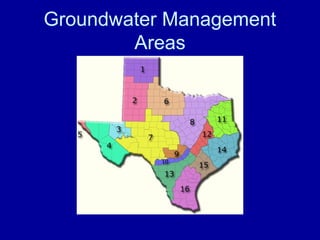
Groundwater Management
Areas
Major Aquifers in GMA 7
•Edwards-Trinity (Plateau)
•Ogallala
•Pecos Valley Alluvium
•Trinity
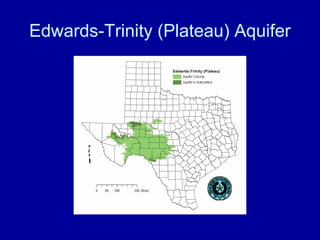
Edwards-Trinity (Plateau) Aquifer
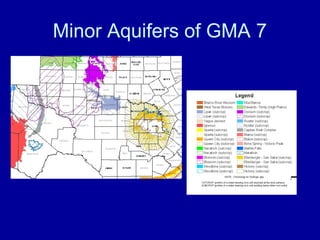
Minor Aquifers in GMA 7
Capitan Reef
Dockum
Ellenburger-San Saba
Hickory
Lipan
Marble Falls
Rustler
Minor Aquifers of GMA 7
GAMS for GMA 7 Minor Aquifers
Lipan was the only minor aquifer in
GMA 7 that had a GAM in 2010
Capitan Reef- GAM to be completed
in summer of 2015
Ogallala-Dockum GAM is projected to
be completed by the end of the year
Llano Uplift model projected to be
completed in the Fall
Rustler – completed in 2012
Achieving balance among
various competing interests
in groundwater is a primary
management task of
groundwater conservation
districts
Balancing
•Maximizing production of water
for economic use v. conserving
water for the future and
protection of the resource
BALANCING
Allocation of water for competing uses
within the district:
 Agricultural
 Municipal public water supply
 Oil and Gas and mining exempt uses
 Industrial
 Environmental
 Recreational
Balancing
Balancing the rights of owners
of surface water rights with
those of groundwater rights
owners within the district
It is worthy of note that all of
Texas’ largest springs burst
from Edwards and associated
limestones –
Gunnar Brune
Springs of Texas, 1981
Surface Water
is the Primary Water Supply in
Several GMA 7 Districts
• 90% of all water use in Menard County is
surface water, including all municipal and
most agricultural irrigation;
• 80% of all water use in Kimble County is
surface water, including all municipal and
most agricultural irrigation
§ 36.113 TEXAS WATER CODE
§ 36.113. PERMITS FOR WELLS.
(d) Before granting or denying a permit, the district shall
consider whether:
(1) the application conforms to the requirements
prescribed by this chapter and is accompanied by the
prescribed fees;
(2) the proposed use of water unreasonably affects
existing groundwater and surface water resources or
existing permit holders;
(3) the proposed use of water is dedicated to any
beneficial use;
(4) the proposed use of water is consistent with the
district's certified water management plan;
(5) the applicant has agreed to avoid waste and
achieve water conservation;
Balancing Usage Among The Districts
In The Management Area
 Historic surface water use in a
district vs. existing or projected
growth in groundwater use in an
adjoining district is one of the
factors that has to be considered by
GMA 7 in adopting DFCs
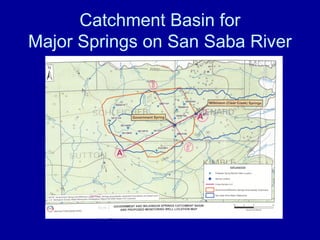
Catchment Basin for
Major Springs on San Saba River
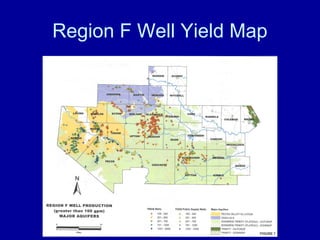
Region F Well Yield Map
DESIRED FUTURE CONDITIONS
(DFCs)
The condition which groundwater
conservation districts within a GMA desire
the respective relevant aquifers to be in
fifty years from the start of the planning
cycle
Desired Future Conditions
May be based on:
a) a target percentage of depletion over
50 years, or
b) desired water quality, or
c) maintenance of spring and surface
water flows; or
d) other relevant objective standards
36.108 (d)
• (4) other environmental impacts, including
impacts on spring flow and other
interactions between groundwater and
surface water;
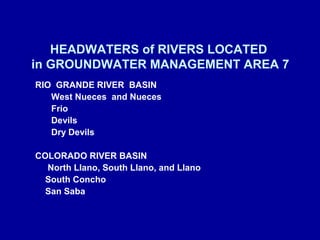
HEADWATERS of RIVERS LOCATED
in GROUNDWATER MANAGEMENT AREA 7
RIO GRANDE RIVER BASIN
West Nueces and Nueces
Frio
Devils
Dry Devils
COLORADO RIVER BASIN
North Llano, South Llano, and Llano
South Concho
San Saba
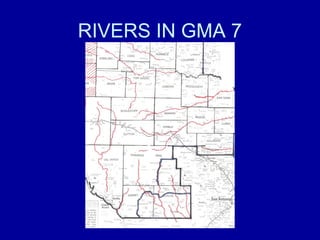
RIVERS IN GMA 7
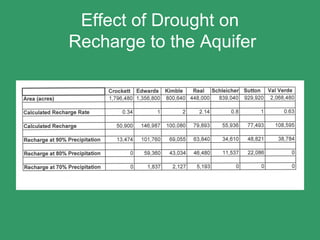
Effect of Drought on
Recharge to the Aquifer
Contributions to Flows in the
Rio Grande
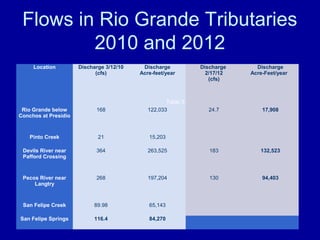
• 4 counties out of the 30 in GMA 7 produce
48% of the total MAG.
• These counties make significant
contributions to flows in the Rio Grande.
Flows in Rio Grande Tributaries
2010 and 2012
Location Discharge 3/12/10
(cfs)
Discharge
Acre-feet/year
Discharge
2/17/12
(cfs)
Discharge
Acre-Feet/year
Rio Grande below
Conchos at Presidio
168 122,033 24.7 17,908
Pinto Creek 21 15,203
Devils River near
Pafford Crossing
364 263,525 183 132,523
Pecos River near
Langtry
268 197,204 130 94,403
San Felipe Creek 89.98 65,143
San Felipe Springs 116.4 84,270
Table 3.
Source: extracted from data on International Boundary and Water Commission website http:www.ibwc.state.gov/Water_Data
histflo1.htm, March 13, 2010 and
http:www.ibwc.state.gov/Water_DataReports/RGFlow_data.html, February 17, 2012/
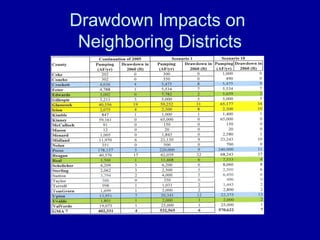
Drawdown Impacts on
Neighboring Districts
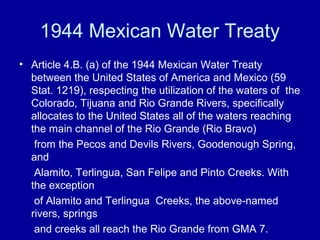
1944 Mexican Water Treaty
• Article 4.B. (a) of the 1944 Mexican Water Treaty
between the United States of America and Mexico (59
Stat. 1219), respecting the utilization of the waters of the
Colorado, Tijuana and Rio Grande Rivers, specifically
allocates to the United States all of the waters reaching
the main channel of the Rio Grande (Rio Bravo)
from the Pecos and Devils Rivers, Goodenough Spring,
and
Alamito, Terlingua, San Felipe and Pinto Creeks. With
the exception
of Alamito and Terlingua Creeks, the above-named
rivers, springs
and creeks all reach the Rio Grande from GMA 7.
Treaty Waters Critical to Downstream
Texas Municipalities and Farmers
Those tributaries specifically named in the treaty are the
only waters flowing into the Rio Grande from either side of
the border that are allocated 100% to the United States. All
other inflows from Fort Quitman downstream are divided
between the United States and Mexico.
As Mexico is, with increasing frequency, failing to make its
deliveries to the Rio Grande required by the treaty,
inflows into the Rio Grande from the tributaries located in
GMA 7 are increasingly critical to meet the existing
permitted and adjudicated water uses by
downstream municipalities and other users.
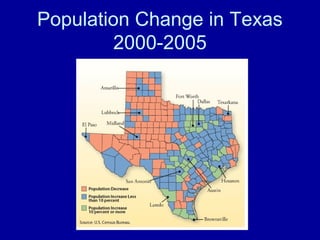
Population Change in Texas
2000-2005
MODELED AVAILABLE
GROUNDWATER (MAG)
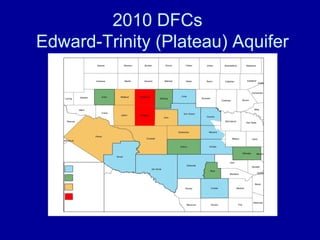
2010 DFCs
Edward-Trinity (Plateau) Aquifer

SURFACE WATER ISSUES IN THE GMA 7 JPINT PLANNING PROCESS

  • 1.
    SURFACE WATER ISSUESIN THE GMA 7 JPINT PLANNING PROCESS Caroline Runge, Consulting Manager Menard County Underground Water District June 18, 2015
  • 2.
  • 3.
    Major Aquifers inGMA 7 •Edwards-Trinity (Plateau) •Ogallala •Pecos Valley Alluvium •Trinity
  • 4.
  • 5.
    Minor Aquifers inGMA 7 Capitan Reef Dockum Ellenburger-San Saba Hickory Lipan Marble Falls Rustler
  • 6.
  • 7.
    GAMS for GMA7 Minor Aquifers Lipan was the only minor aquifer in GMA 7 that had a GAM in 2010 Capitan Reef- GAM to be completed in summer of 2015 Ogallala-Dockum GAM is projected to be completed by the end of the year Llano Uplift model projected to be completed in the Fall Rustler – completed in 2012
  • 8.
    Achieving balance among variouscompeting interests in groundwater is a primary management task of groundwater conservation districts
  • 9.
    Balancing •Maximizing production ofwater for economic use v. conserving water for the future and protection of the resource
  • 10.
    BALANCING Allocation of waterfor competing uses within the district:  Agricultural  Municipal public water supply  Oil and Gas and mining exempt uses  Industrial  Environmental  Recreational
  • 11.
    Balancing Balancing the rightsof owners of surface water rights with those of groundwater rights owners within the district
  • 12.
    It is worthyof note that all of Texas’ largest springs burst from Edwards and associated limestones – Gunnar Brune Springs of Texas, 1981
  • 13.
    Surface Water is thePrimary Water Supply in Several GMA 7 Districts • 90% of all water use in Menard County is surface water, including all municipal and most agricultural irrigation; • 80% of all water use in Kimble County is surface water, including all municipal and most agricultural irrigation
  • 14.
    § 36.113 TEXASWATER CODE § 36.113. PERMITS FOR WELLS. (d) Before granting or denying a permit, the district shall consider whether: (1) the application conforms to the requirements prescribed by this chapter and is accompanied by the prescribed fees; (2) the proposed use of water unreasonably affects existing groundwater and surface water resources or existing permit holders; (3) the proposed use of water is dedicated to any beneficial use; (4) the proposed use of water is consistent with the district's certified water management plan; (5) the applicant has agreed to avoid waste and achieve water conservation;
  • 15.
    Balancing Usage AmongThe Districts In The Management Area  Historic surface water use in a district vs. existing or projected growth in groundwater use in an adjoining district is one of the factors that has to be considered by GMA 7 in adopting DFCs
  • 16.
    Catchment Basin for MajorSprings on San Saba River
  • 17.
    Region F WellYield Map
  • 18.
    DESIRED FUTURE CONDITIONS (DFCs) Thecondition which groundwater conservation districts within a GMA desire the respective relevant aquifers to be in fifty years from the start of the planning cycle
  • 19.
    Desired Future Conditions Maybe based on: a) a target percentage of depletion over 50 years, or b) desired water quality, or c) maintenance of spring and surface water flows; or d) other relevant objective standards
  • 20.
    36.108 (d) • (4)other environmental impacts, including impacts on spring flow and other interactions between groundwater and surface water;
  • 21.
    HEADWATERS of RIVERSLOCATED in GROUNDWATER MANAGEMENT AREA 7 RIO GRANDE RIVER BASIN West Nueces and Nueces Frio Devils Dry Devils COLORADO RIVER BASIN North Llano, South Llano, and Llano South Concho San Saba
  • 22.
  • 24.
    Effect of Droughton Recharge to the Aquifer
  • 25.
    Contributions to Flowsin the Rio Grande • 4 counties out of the 30 in GMA 7 produce 48% of the total MAG. • These counties make significant contributions to flows in the Rio Grande.
  • 26.
    Flows in RioGrande Tributaries 2010 and 2012 Location Discharge 3/12/10 (cfs) Discharge Acre-feet/year Discharge 2/17/12 (cfs) Discharge Acre-Feet/year Rio Grande below Conchos at Presidio 168 122,033 24.7 17,908 Pinto Creek 21 15,203 Devils River near Pafford Crossing 364 263,525 183 132,523 Pecos River near Langtry 268 197,204 130 94,403 San Felipe Creek 89.98 65,143 San Felipe Springs 116.4 84,270 Table 3.
  • 27.
    Source: extracted fromdata on International Boundary and Water Commission website http:www.ibwc.state.gov/Water_Data histflo1.htm, March 13, 2010 and http:www.ibwc.state.gov/Water_DataReports/RGFlow_data.html, February 17, 2012/
  • 28.
  • 29.
    1944 Mexican WaterTreaty • Article 4.B. (a) of the 1944 Mexican Water Treaty between the United States of America and Mexico (59 Stat. 1219), respecting the utilization of the waters of the Colorado, Tijuana and Rio Grande Rivers, specifically allocates to the United States all of the waters reaching the main channel of the Rio Grande (Rio Bravo) from the Pecos and Devils Rivers, Goodenough Spring, and Alamito, Terlingua, San Felipe and Pinto Creeks. With the exception of Alamito and Terlingua Creeks, the above-named rivers, springs and creeks all reach the Rio Grande from GMA 7.
  • 30.
    Treaty Waters Criticalto Downstream Texas Municipalities and Farmers Those tributaries specifically named in the treaty are the only waters flowing into the Rio Grande from either side of the border that are allocated 100% to the United States. All other inflows from Fort Quitman downstream are divided between the United States and Mexico. As Mexico is, with increasing frequency, failing to make its deliveries to the Rio Grande required by the treaty, inflows into the Rio Grande from the tributaries located in GMA 7 are increasingly critical to meet the existing permitted and adjudicated water uses by downstream municipalities and other users.
  • 31.
    Population Change inTexas 2000-2005
  • 33.
  • 34.