Austin, Texas
March 5, 2015
The Future is Now:
The Rapidly Evolving
Landscape of ASR in Texas
Texas Water Conservation Association
71st Annual Convention
Bill Mullican, P.G.
CDM Smith
$5.5 Billion
How much
funding was
requested in the
first round of
SWIFT?
1,000,001
According to a recent
TWCA survey, how
many water
professionals helped
draft Senate Bill 1 in
1997?
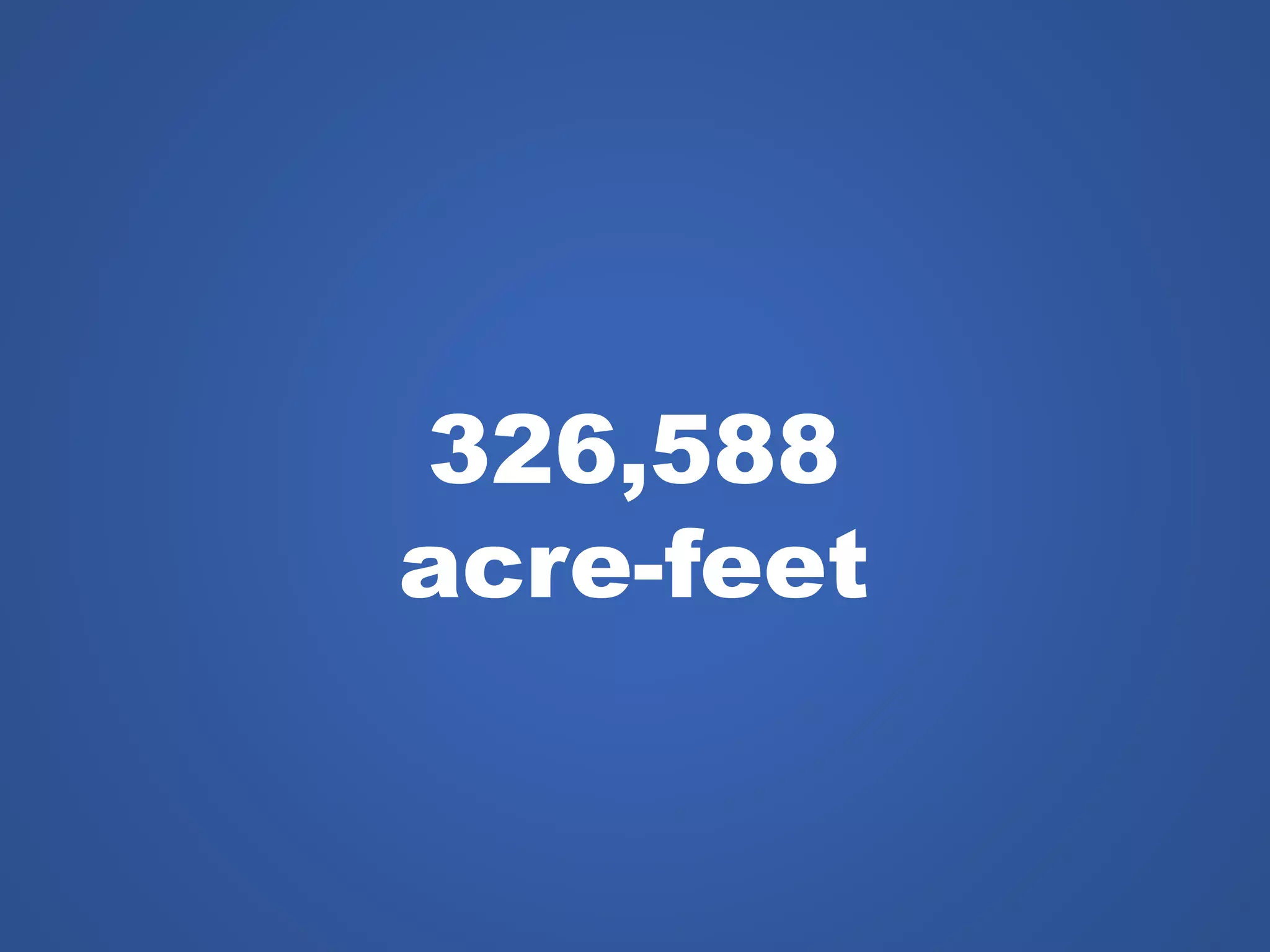
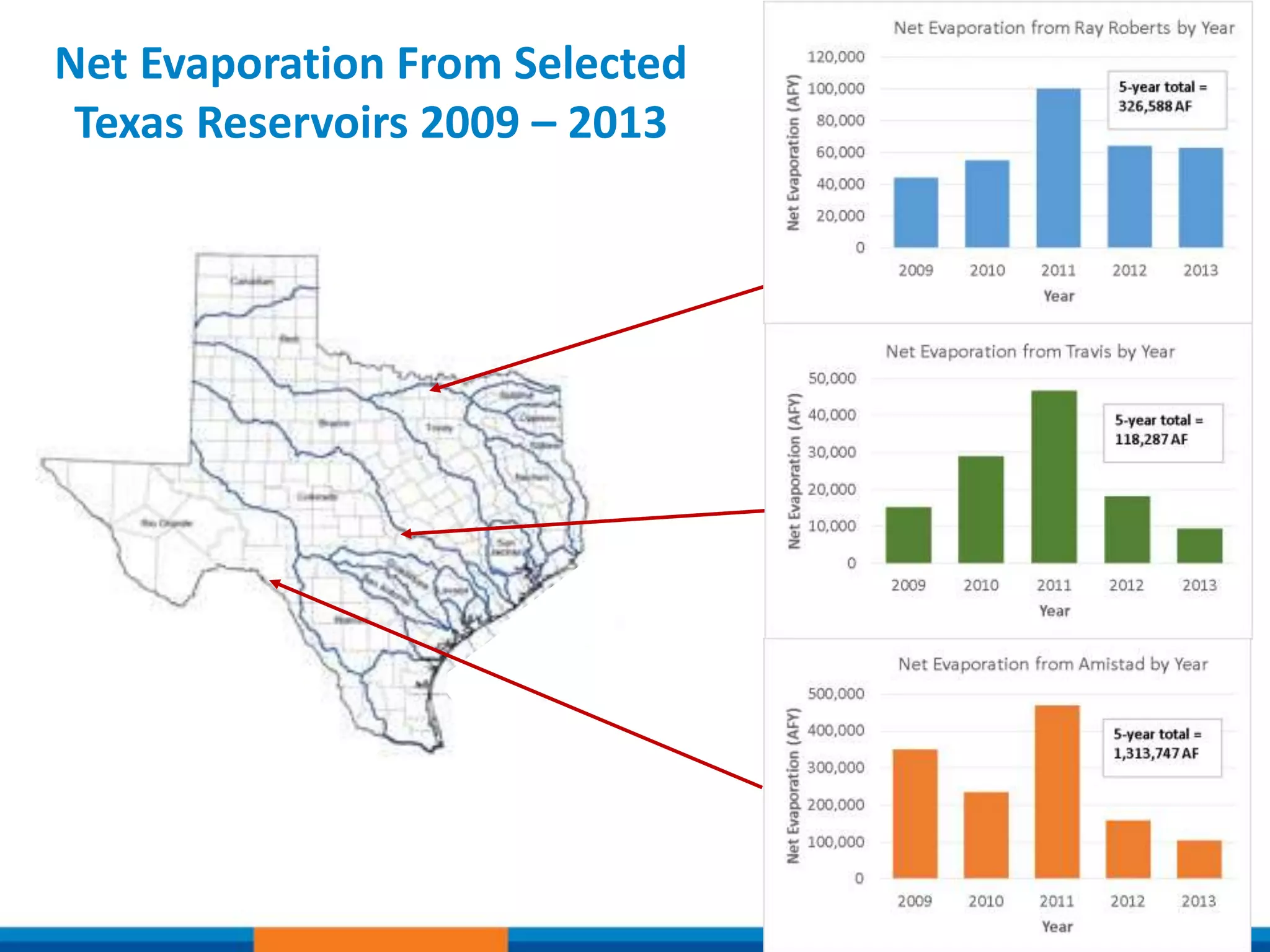
326,588
acre-feet
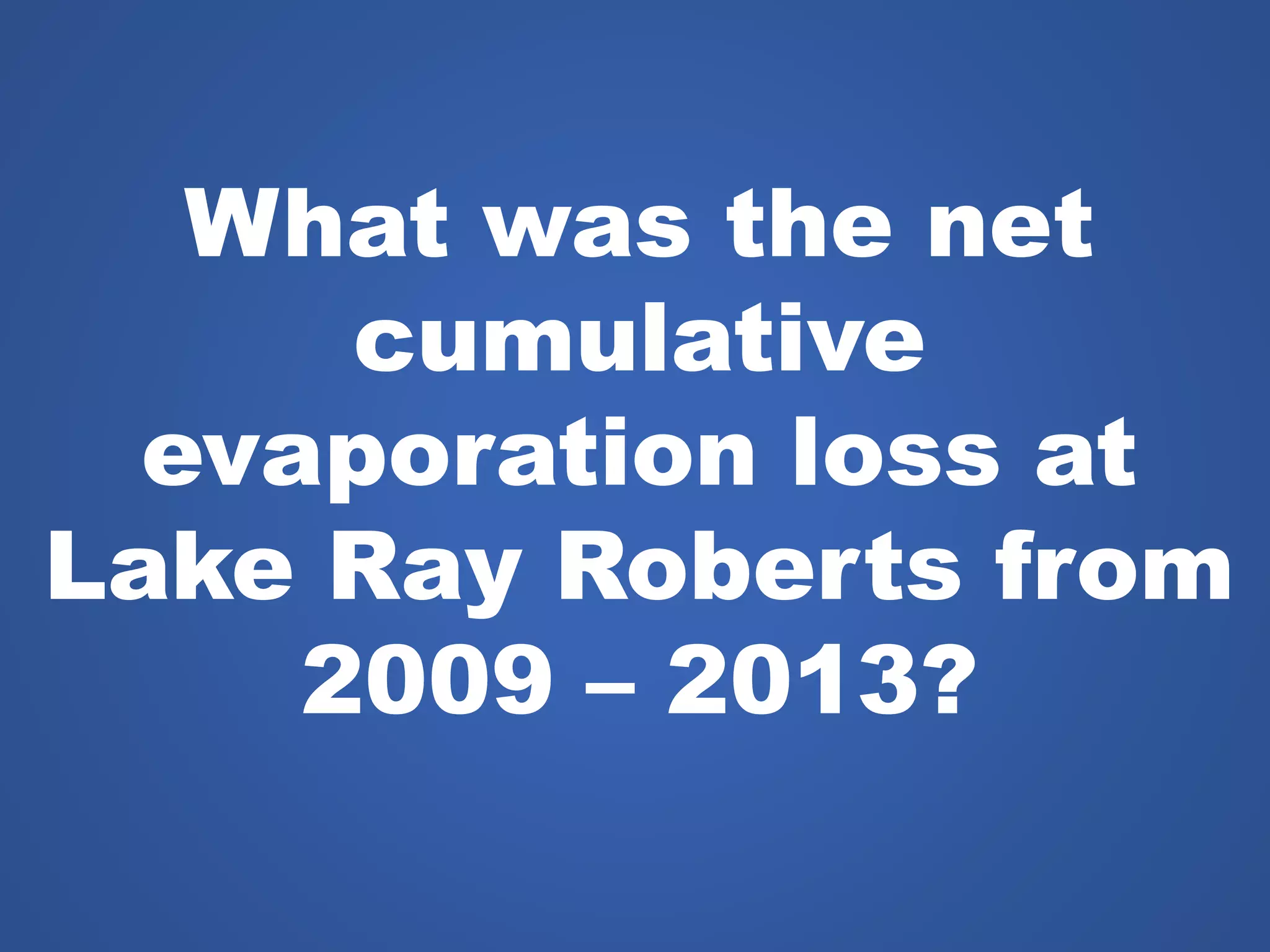
What was the net
cumulative
evaporation loss at
Lake Ray Roberts from
2009 – 2013?
130+
How many Aquifer
Storage and
Recovery (ASR)
projects are active in
the US today?
3
How many Aquifer
Storage and
Recovery (ASR)
projects are active in
the Texas today?
14
Introduce and emphasize
that the concept of aquifer
storage and recovery is a
potentially viable near-term
water management strategy
for Texas
Today’s Objective
15
16
0
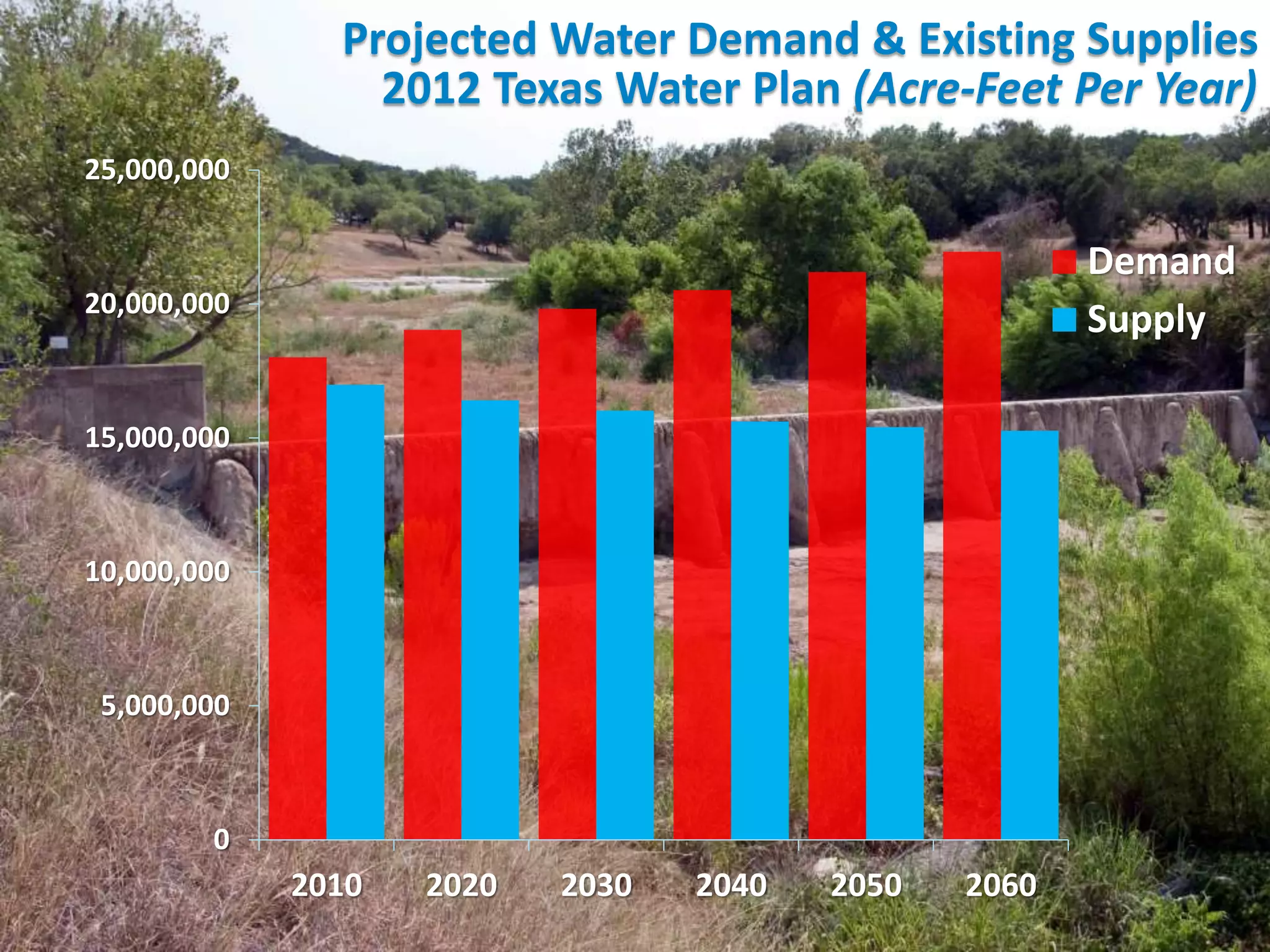
5,000,000
10,000,000
15,000,000
20,000,000
25,000,000
2010 2020 2030 2040 2050 2060
Demand
Supply
Projected Water Demand & Existing Supplies
2012 Texas Water Plan (Acre-Feet Per Year)
17
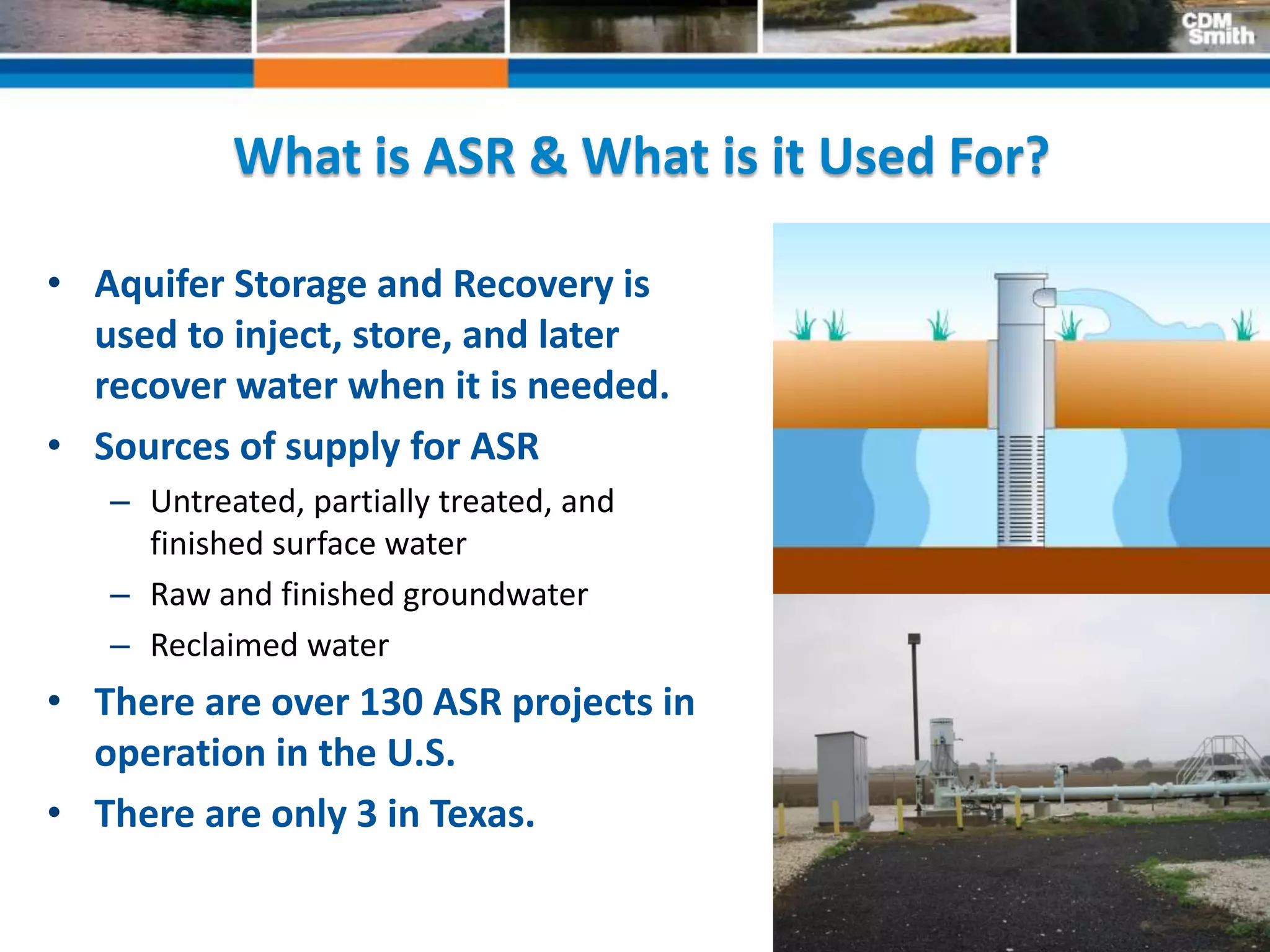
What is ASR & What is it Used For?
• Aquifer Storage and Recovery is
used to inject, store, and later
recover water when it is needed.
• Sources of supply for ASR
– Untreated, partially treated, and
finished surface water
– Raw and finished groundwater
– Reclaimed water
• There are over 130 ASR projects in
operation in the U.S.
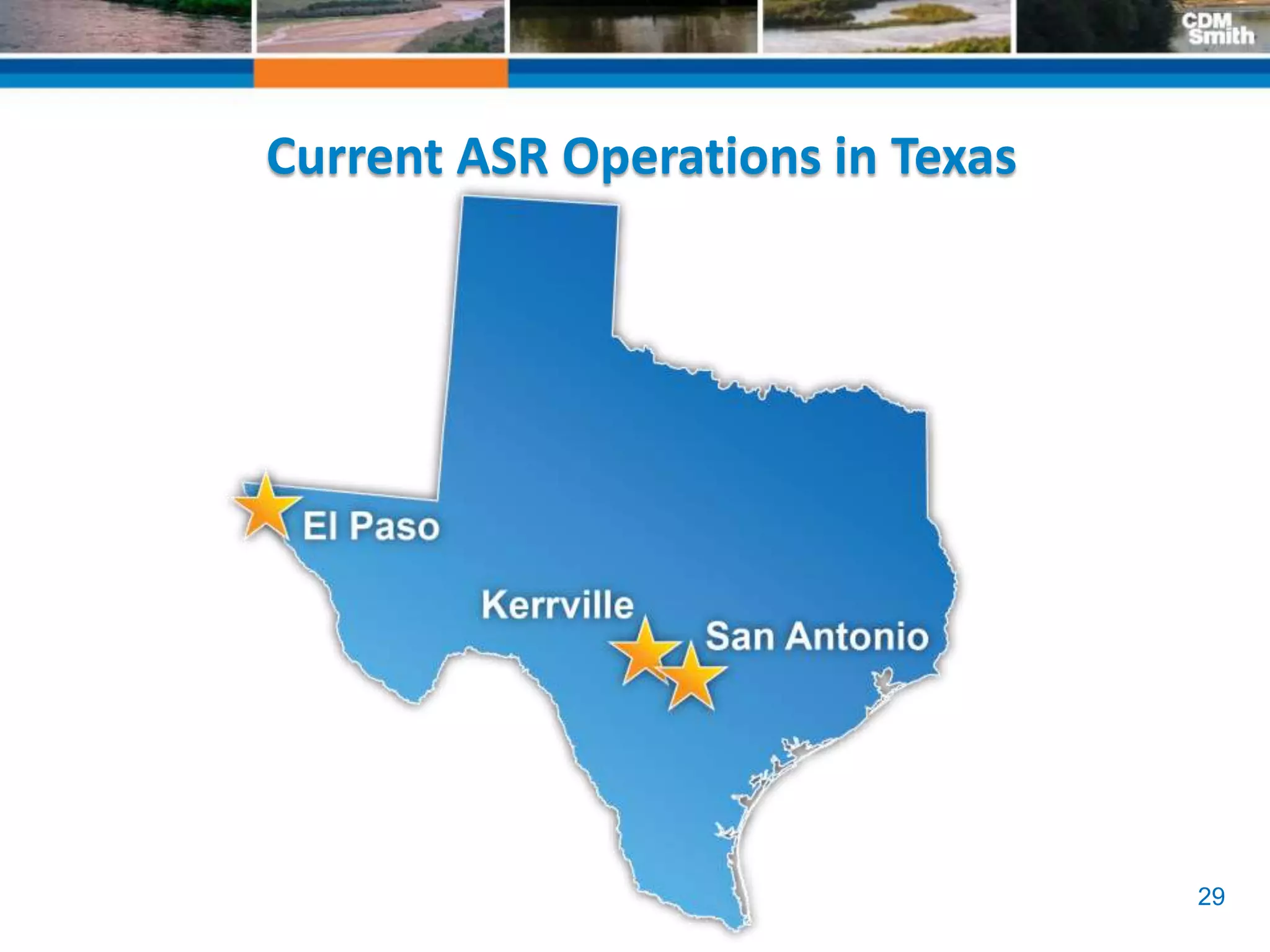
• There are only 3 in Texas.
18
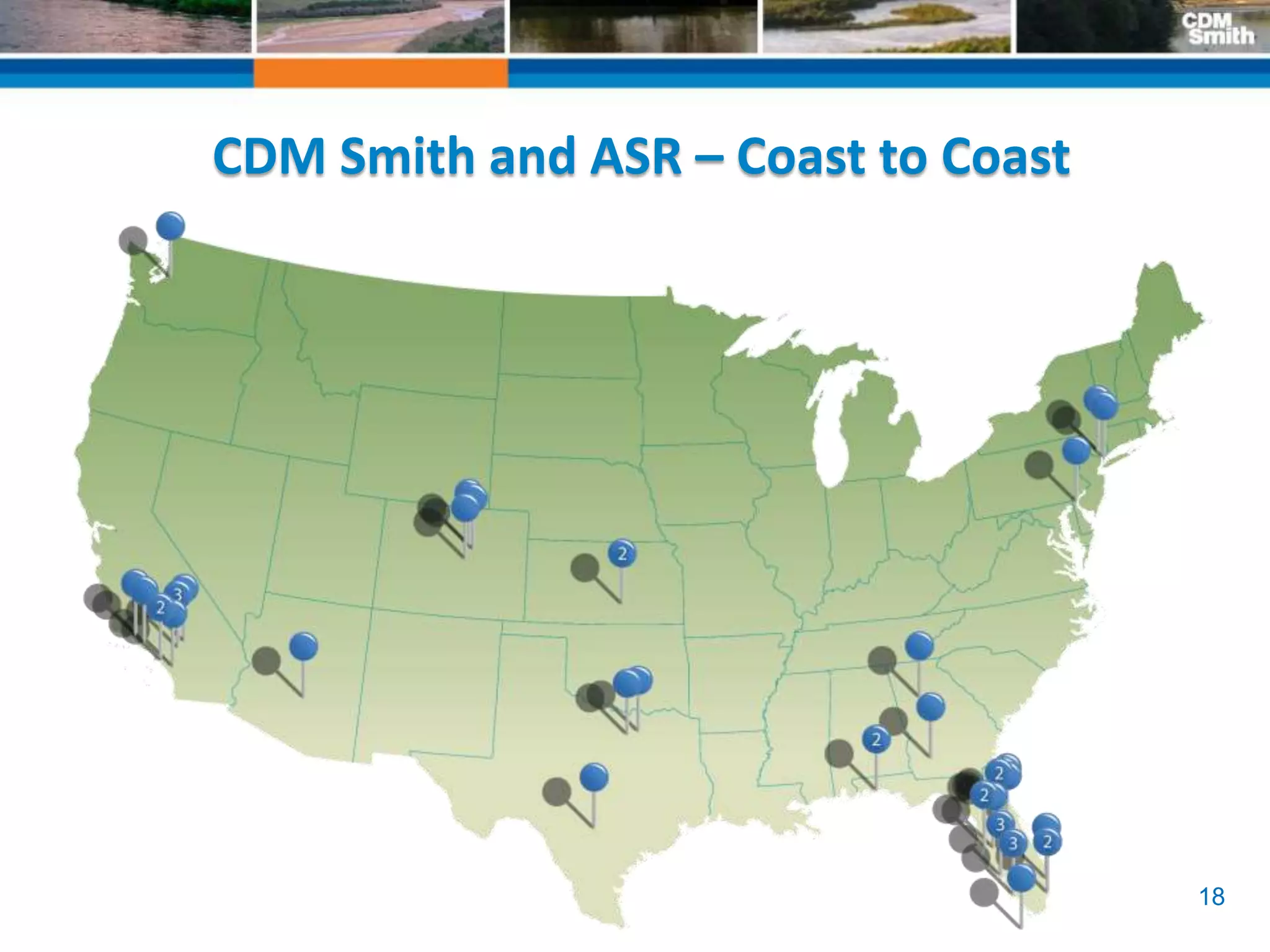
CDM Smith and ASR – Coast to Coast
19
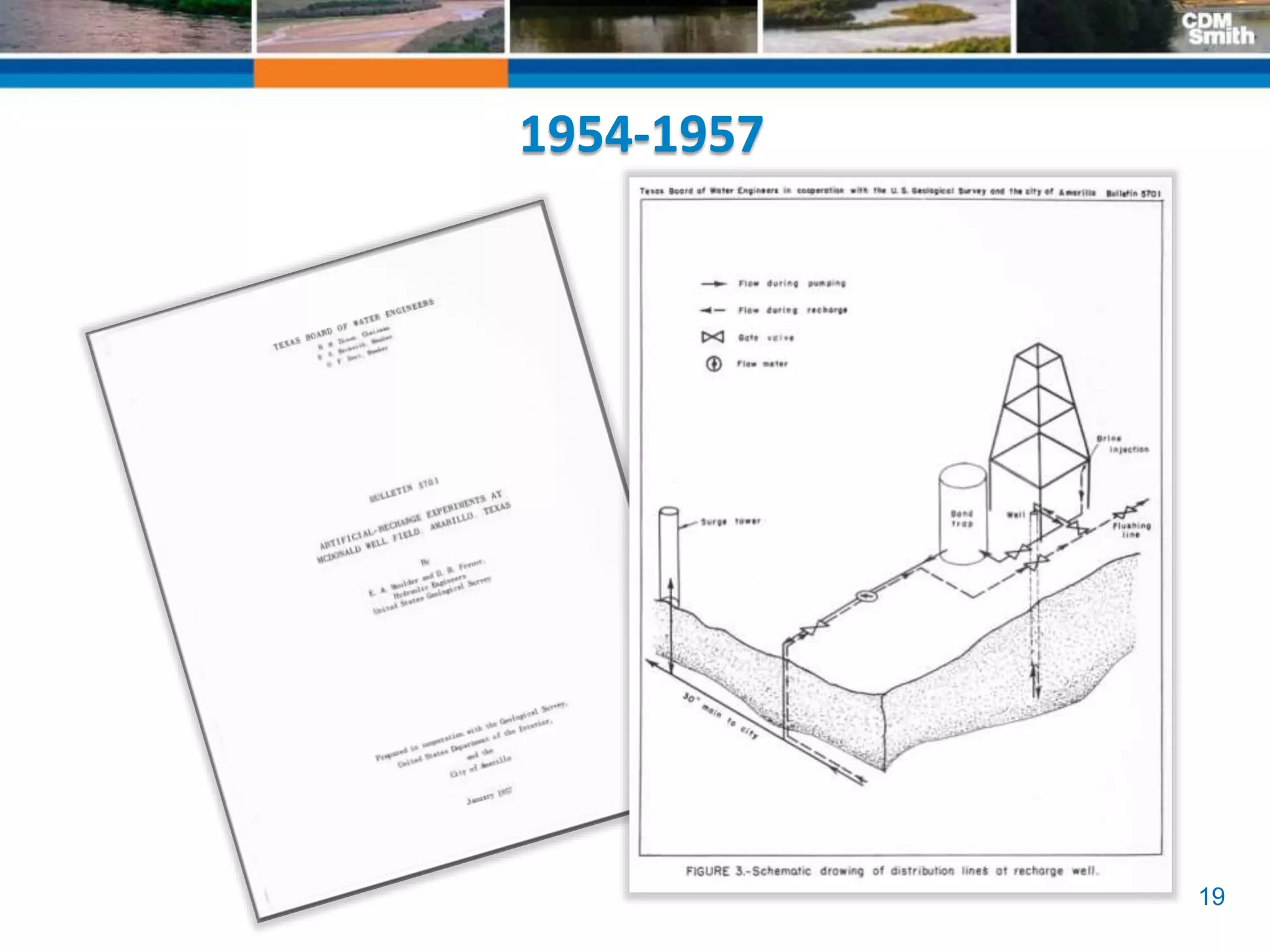
1954-1957
20
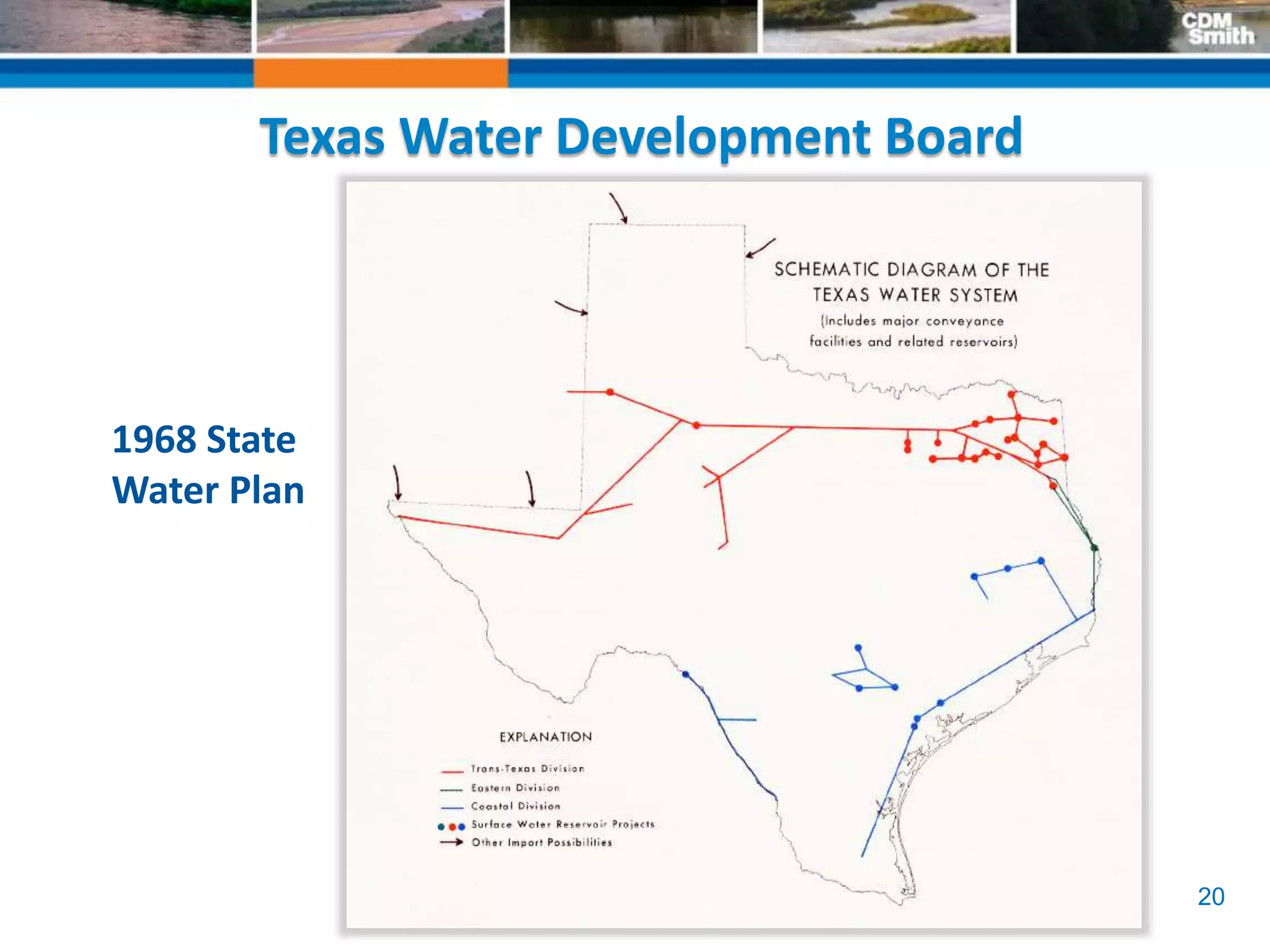
Texas Water Development Board
1968 State
Water Plan
21
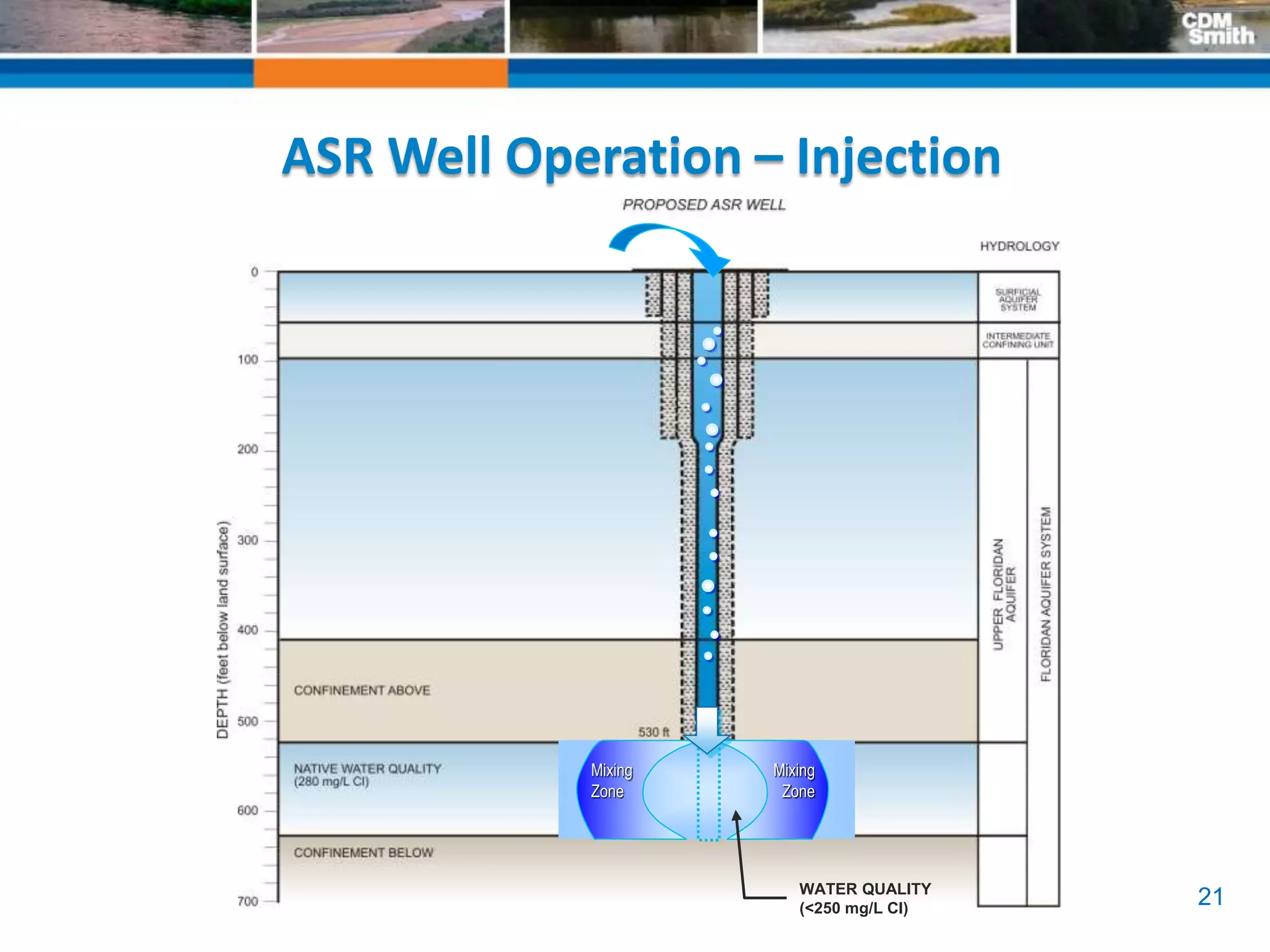
ASR Well Operation – Injection
Mixing
Zone
Mixing
Zone
WATER QUALITY
(<250 mg/L Cl)
22
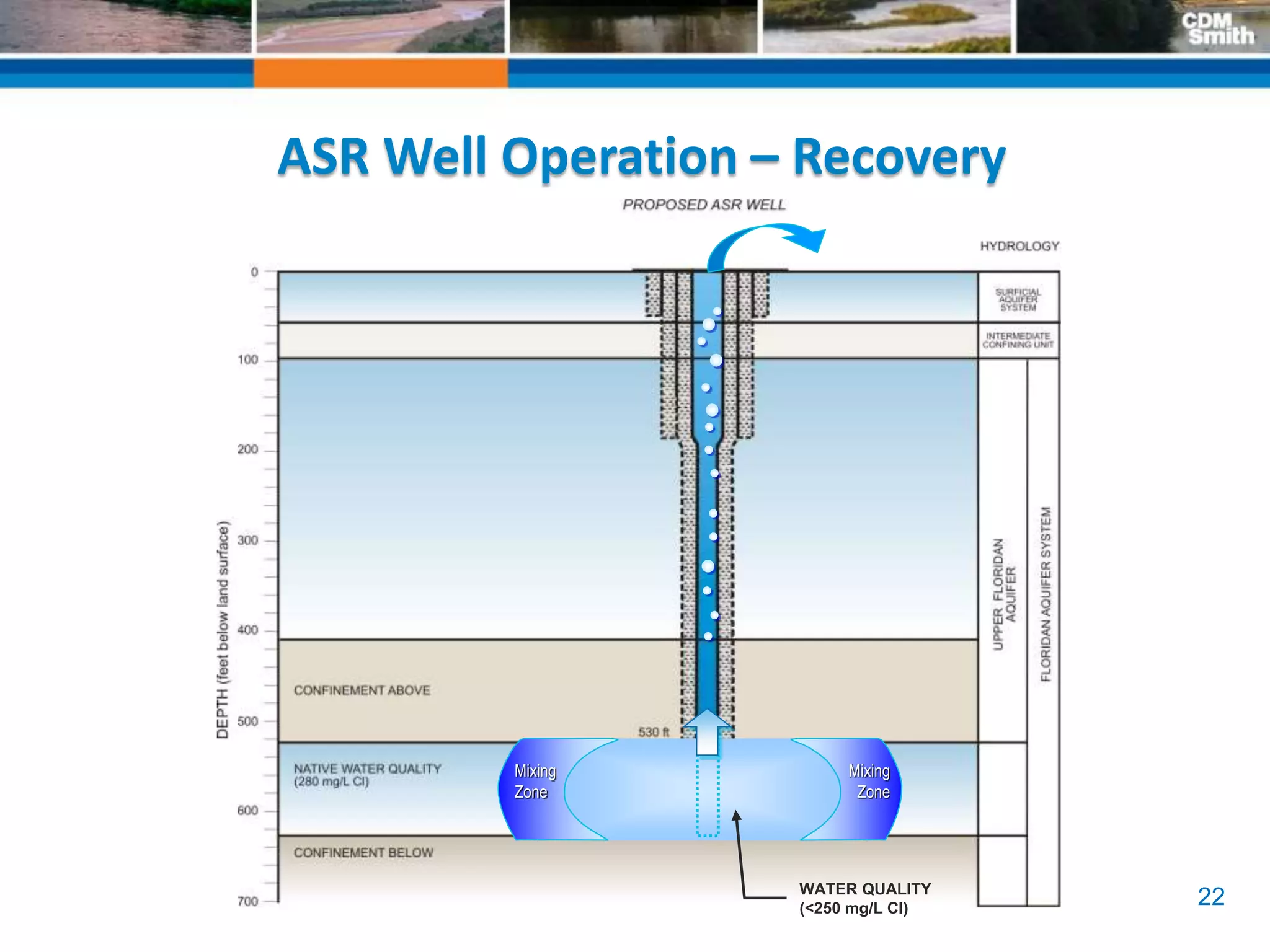
ASR Well Operation – Recovery
Mixing
Zone
Mixing
Zone
WATER QUALITY
(<250 mg/L Cl)
23
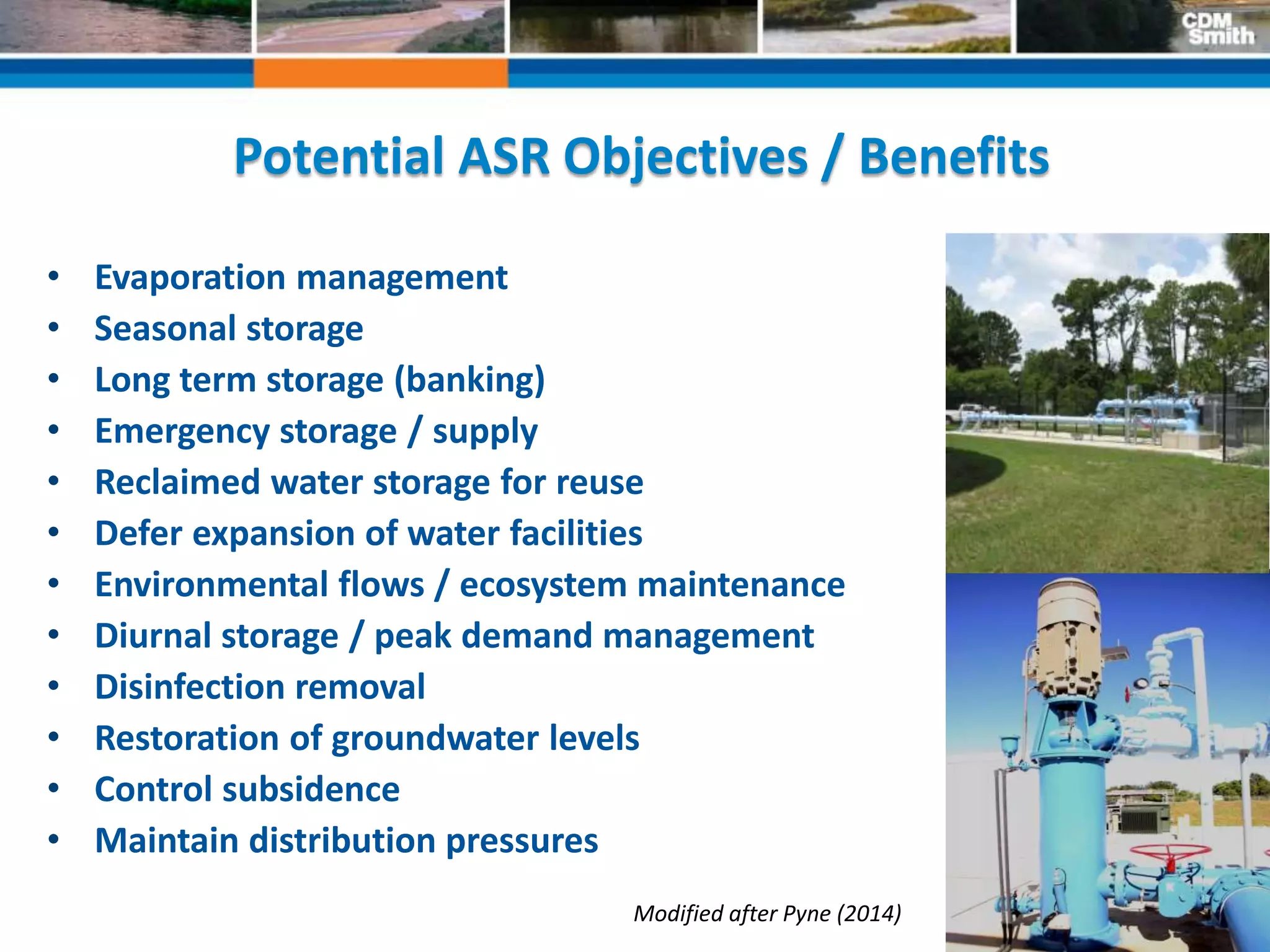
Potential ASR Objectives / Benefits
• Evaporation management
• Seasonal storage
• Long term storage (banking)
• Emergency storage / supply
• Reclaimed water storage for reuse
• Defer expansion of water facilities
• Environmental flows / ecosystem maintenance
• Diurnal storage / peak demand management
• Disinfection removal
• Restoration of groundwater levels
• Control subsidence
• Maintain distribution pressures
Modified after Pyne (2014)
24
Net Evaporation From Selected
Texas Reservoirs 2009 – 2013
25
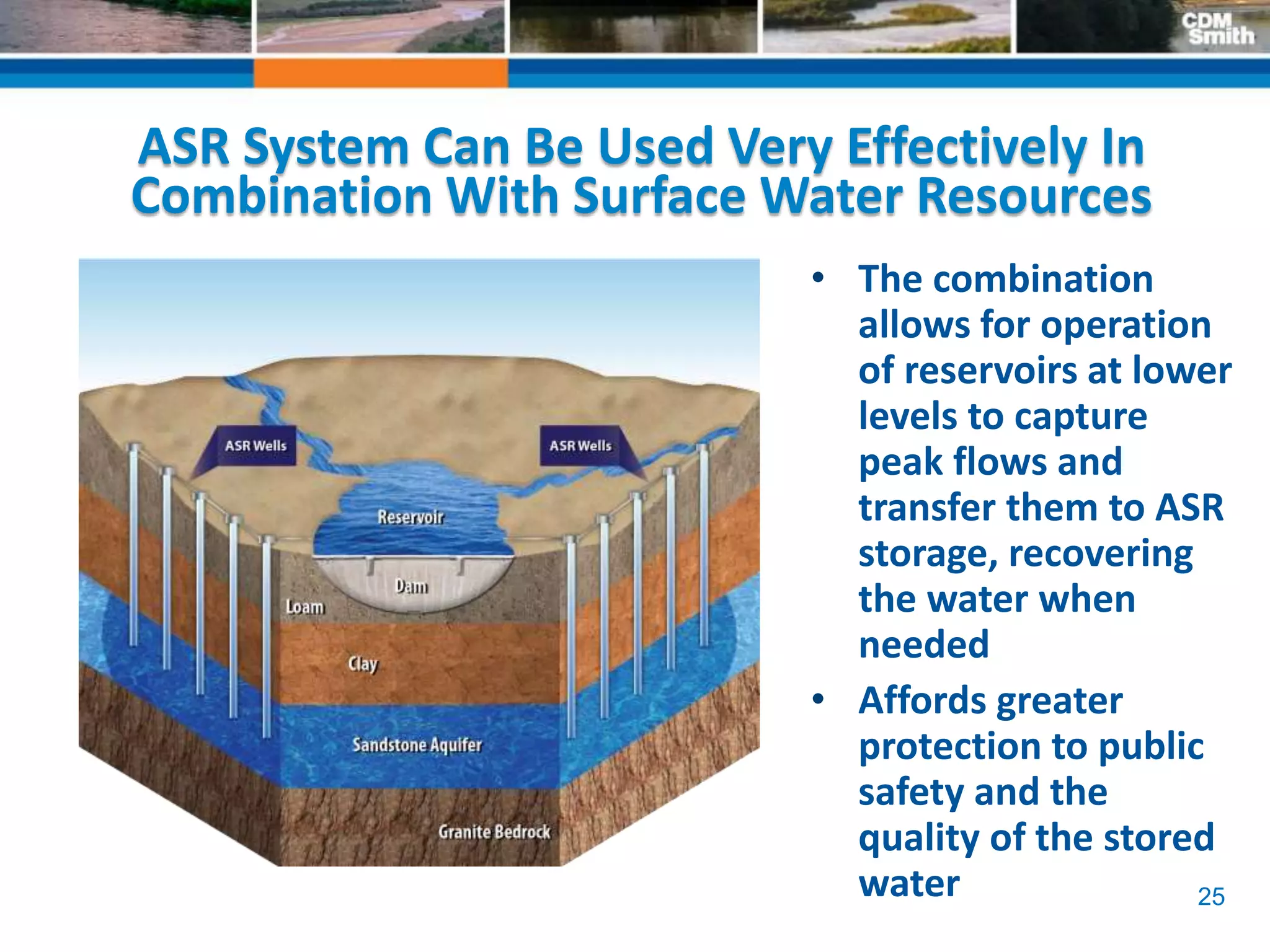
ASR System Can Be Used Very Effectively In
Combination With Surface Water Resources
• The combination
allows for operation
of reservoirs at lower
levels to capture
peak flows and
transfer them to ASR
storage, recovering
the water when
needed
• Affords greater
protection to public
safety and the
quality of the stored
water
26
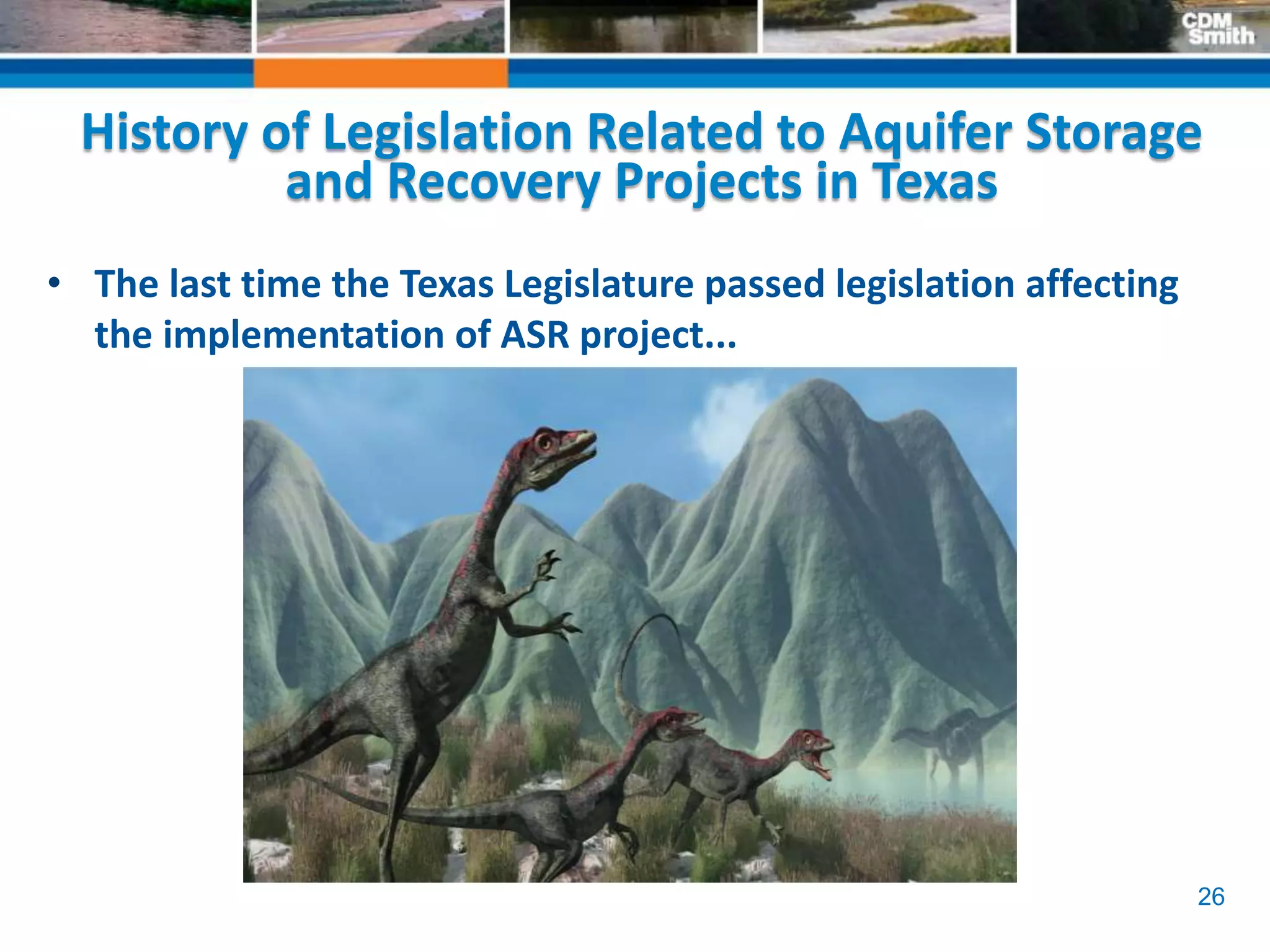
History of Legislation Related to Aquifer Storage
and Recovery Projects in Texas
• The last time the Texas Legislature passed legislation affecting
the implementation of ASR project...
27
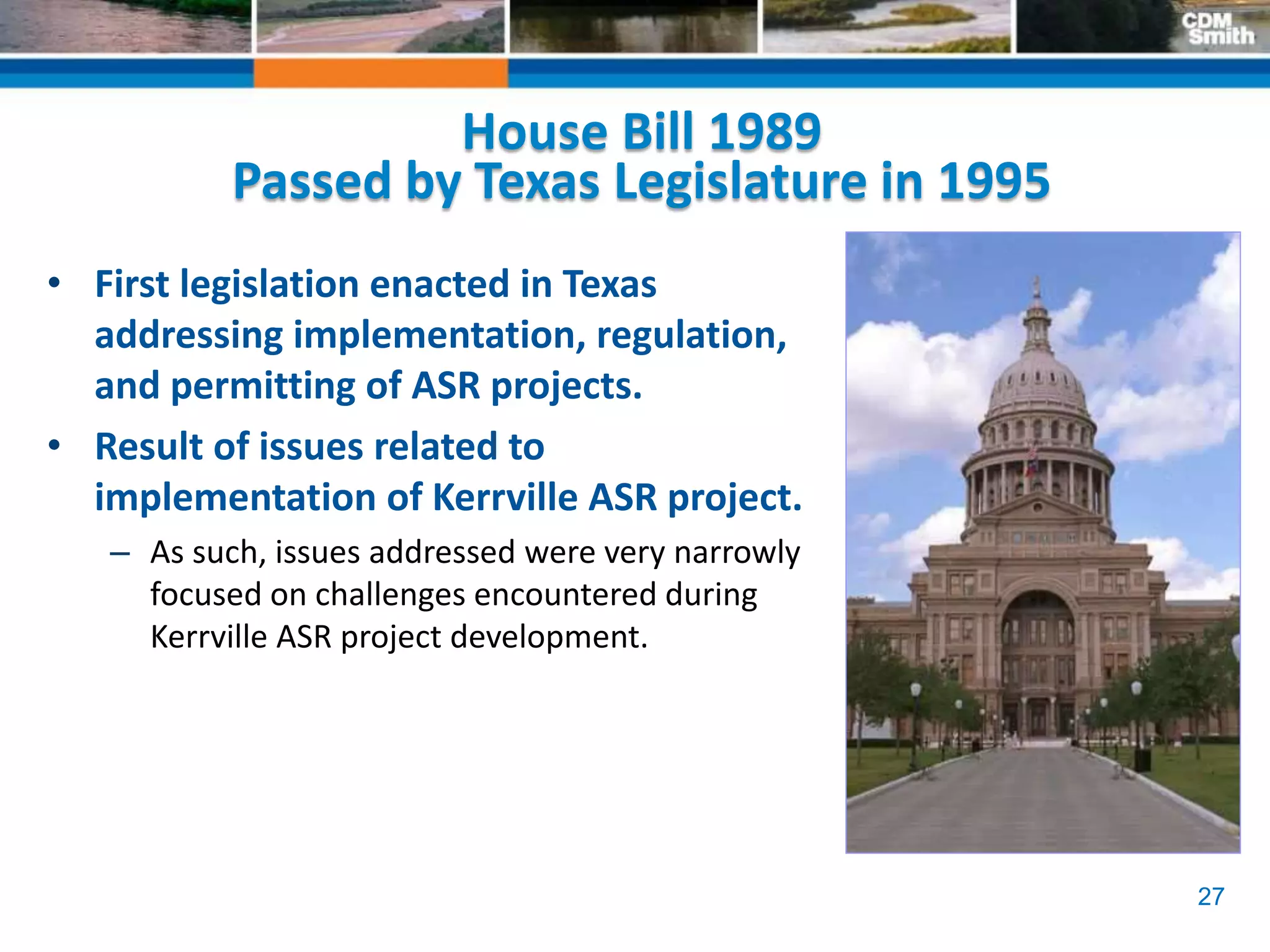
House Bill 1989
Passed by Texas Legislature in 1995
• First legislation enacted in Texas
addressing implementation, regulation,
and permitting of ASR projects.
• Result of issues related to
implementation of Kerrville ASR project.
– As such, issues addressed were very narrowly
focused on challenges encountered during
Kerrville ASR project development.
28
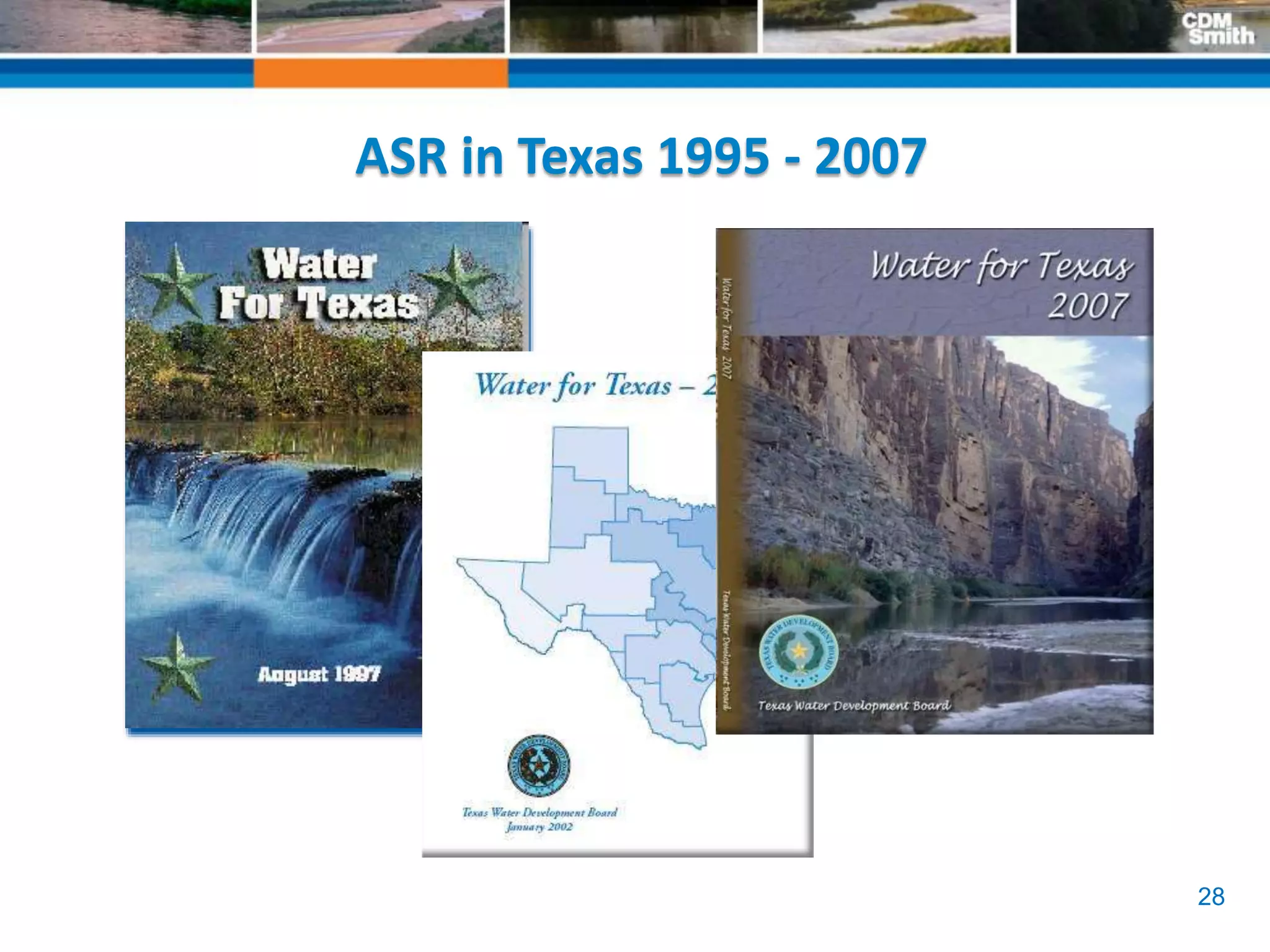
ASR in Texas 1995 - 2007
29
Current ASR Operations in Texas
30
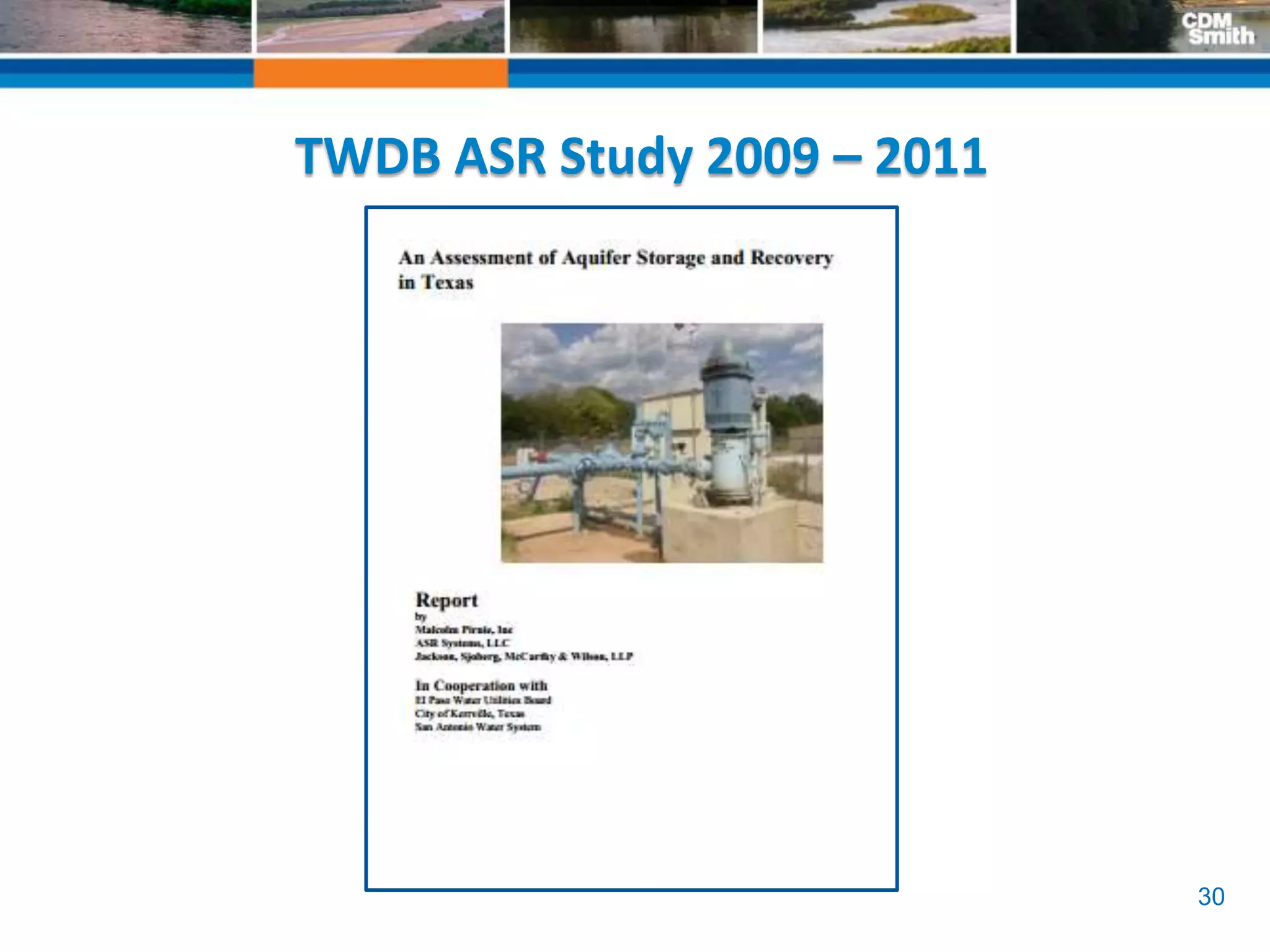
TWDB ASR Study 2009 – 2011
31
16 Years Later – HB 3013
Considered by Texas Legislature in 2013
• Primary Author/Sponsor: Representative Lyle Larson
• Filed March 18, 2013
• Voted favorably out of HNRC April 26, 2013
• Passed in the House of Representatives
May 10, 2013
– 140/0/2
• Referred to SNRC May 10, 2013
• Sine die May 27, 2013
32
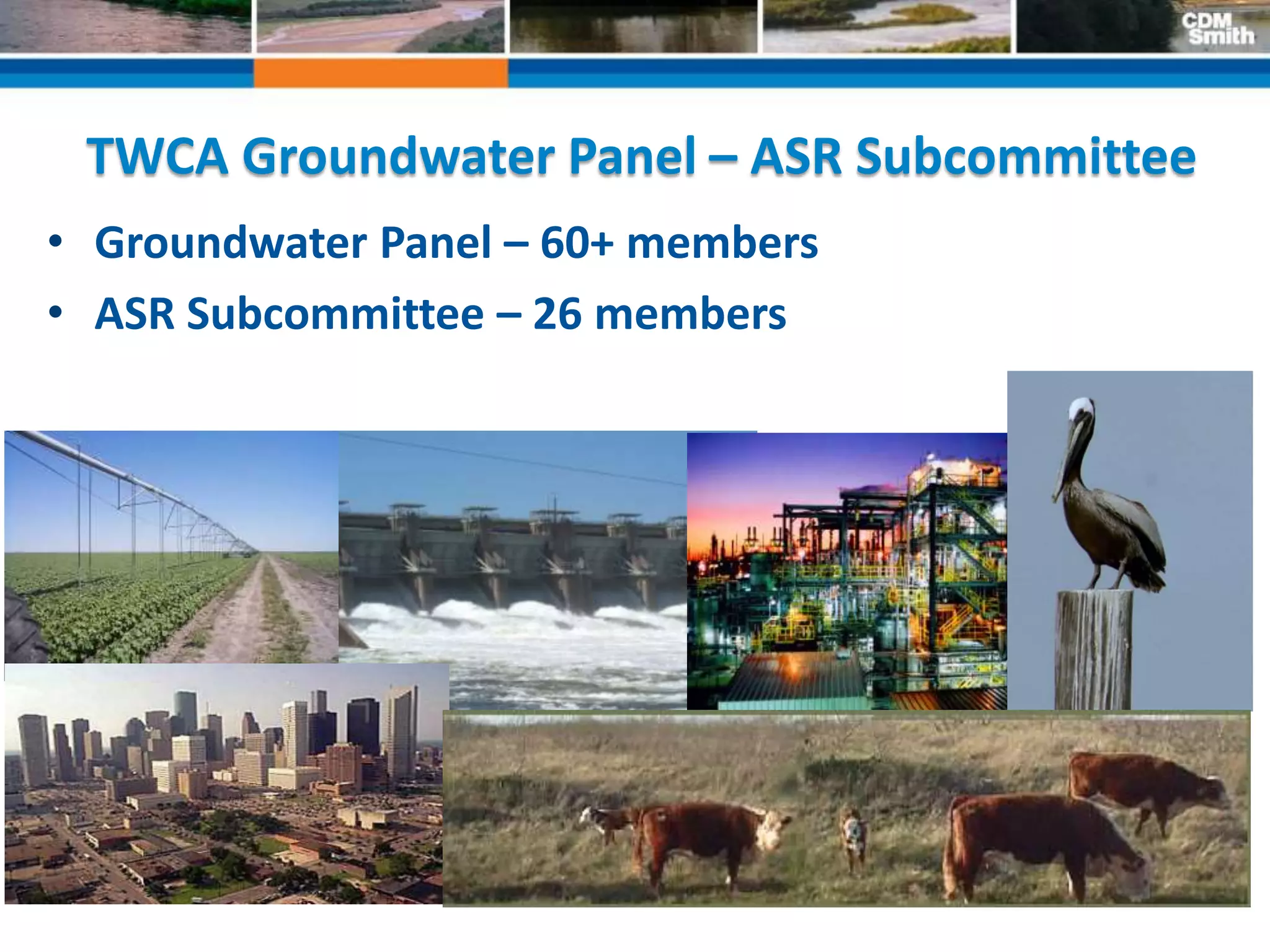
TWCA Groundwater Panel – ASR Subcommittee
• Groundwater Panel – 60+ members
• ASR Subcommittee – 26 members
33
TWCA ASR Recommendations Summary
• Clarify that no additional surface water right amendment is
needed to store appropriated surface water in an ASR project
prior to beneficial use, so long as the surface water is otherwise
diverted and used in accordance with the terms of the water
right.
• Establish that TCEQ has exclusive jurisdiction over injection wells
for ASR projects. TCEQ to authorize by rule, general permit, or
individual permit.
34
TWCA ASR Recommendations Summary
• TCEQ to consider whether the applicant demonstrated:
– (1) that the injection of the water will comply with standards set forth
under the federal Safe Drinking Water Act;
– (2) the extent to which the cumulative volume of water injected for storage
in the receiving geologic formation can be successfully recovered from the
geologic formation for beneficial use, taking into account that injected
water may be commingled to some degree with groundwater native to the
receiving geologic formation;
– (3) the extent to which existing water wells may be impacted by the ASR
project; and
– (4) the potential for groundwater quality degradation.
35
TWCA ASR Recommendations Summary
• TCEQ must limit the amount recovered to the amount injected,
and will further limit the amount that can be recovered if there
will be losses that are unrecoverable.
• GCDs get notice of individual permit applications.
• TCEQ by rule shall adopt well construction, completion,
metering, and reporting requirements.
• ASR project must report total injected and recovered amounts
monthly to TCEQ and the GCD. TCEQ shall require annual water
quality testing of injected water and recovered water, and
testing results are provided to TCEQ and the GCD.
36
TWCA ASR Recommendations Summary
• ASR wells must be registered with the GCD, and pay any GCD
registration fees.
• If the ASR project produces more than it injects, so that it is
producing native groundwater, the GCD’s spacing, production,
and permitting rules apply to the ASR project’s production of
native groundwater. A GCD’s production fees and transport fees
would also apply to production of such native groundwater.
• GCDs may consider hydrogeologic conditions related to the
injection and recovery of water in an ASR project in planning for
and monitoring their achievement of an applicable desired
future condition for an aquifer where an ASR project is located.
37
TWCA ASR Recommendations Summary
• The new legislation will not impact the ability to regulate ASR
projects under the enabling acts of the EAA, the Subsidence
districts, and the Barton Springs Edwards Aquifer Conservation
District.
• Provides that TCEQ shall not adopt or enforce groundwater
quality protection standards for the quality of water injected in
an ASR injection well that are more stringent than applicable
federal standards.
• Provides that TCEQ will adopt rules to implement the new
legislation by May 1, 2016.
38
Current Status
• Representative Larson has filed House Bill 655 (the TWCA ASR
Draft Bill) , which has been referred to House Natural Resources
Committee.
• Draft TWCA ASR Bill has been provided to Chairman Perry and
the Senate Natural Resources Committee
39
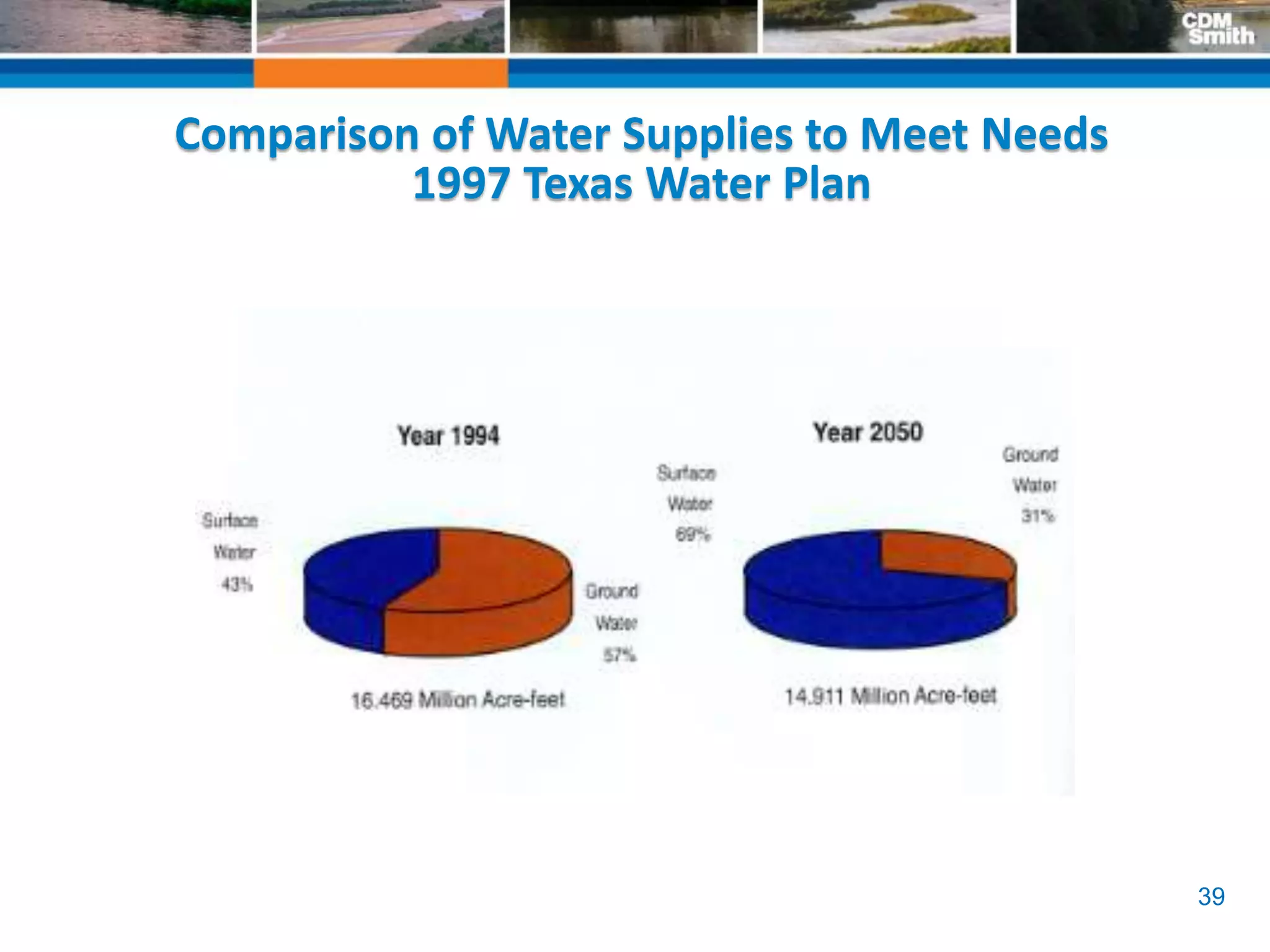
Comparison of Water Supplies to Meet Needs
1997 Texas Water Plan
40
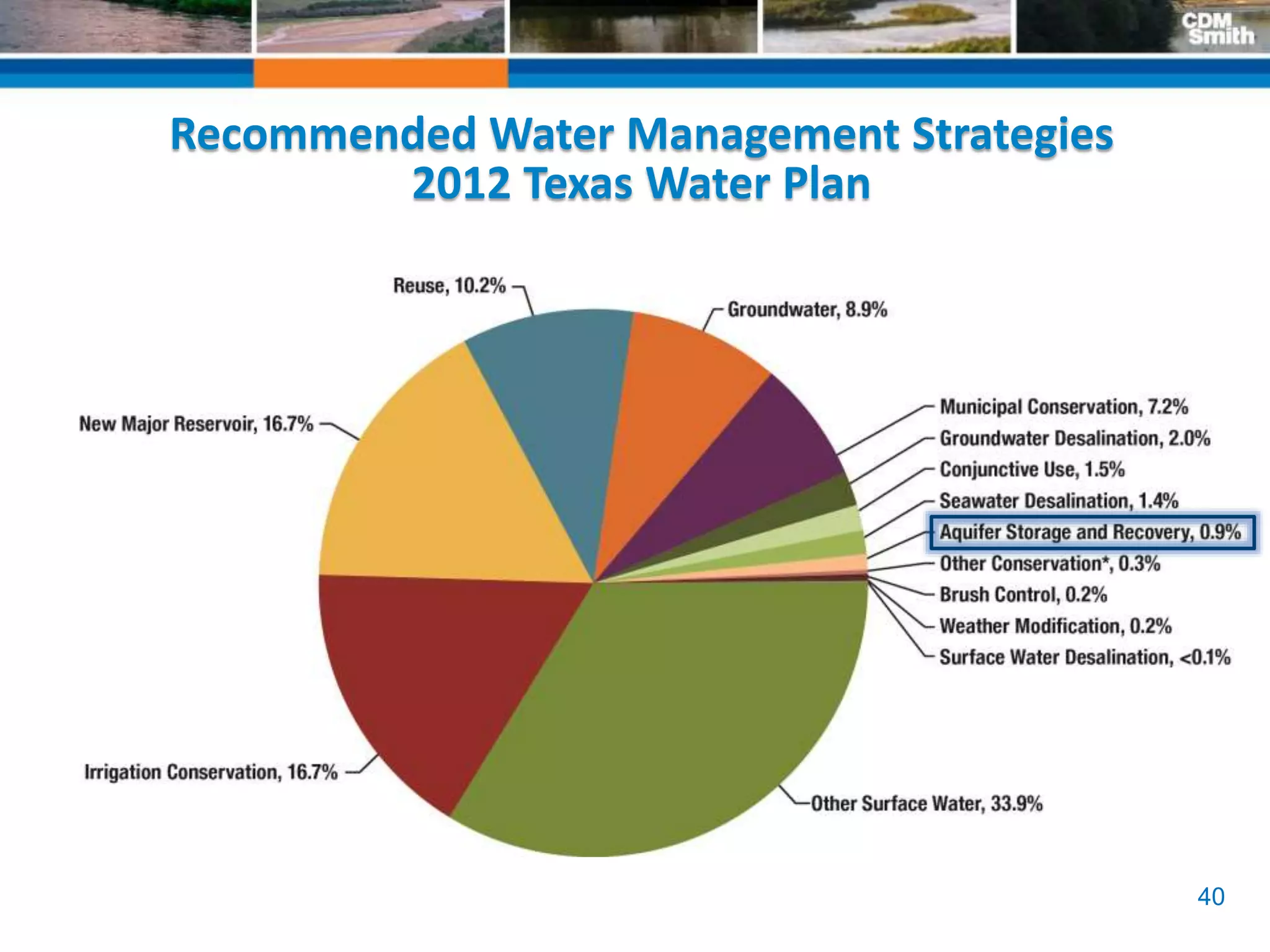
Recommended Water Management Strategies
2012 Texas Water Plan
41
Recommended Water Management Strategies
2022 Texas Water Plan
Thank you!
Questions?

The Future is Now: The Rapidly Evolving Landscape of ASR in Texas

  • 1.
    Austin, Texas March 5,2015 The Future is Now: The Rapidly Evolving Landscape of ASR in Texas Texas Water Conservation Association 71st Annual Convention Bill Mullican, P.G. CDM Smith
  • 4.
  • 5.
    How much funding was requestedin the first round of SWIFT?
  • 6.
  • 7.
    According to arecent TWCA survey, how many water professionals helped draft Senate Bill 1 in 1997?
  • 8.
  • 9.
    What was thenet cumulative evaporation loss at Lake Ray Roberts from 2009 – 2013?
  • 10.
  • 11.
    How many Aquifer Storageand Recovery (ASR) projects are active in the US today?
  • 12.
  • 13.
    How many Aquifer Storageand Recovery (ASR) projects are active in the Texas today?
  • 14.
    14 Introduce and emphasize thatthe concept of aquifer storage and recovery is a potentially viable near-term water management strategy for Texas Today’s Objective
  • 15.
  • 16.
    16 0 5,000,000 10,000,000 15,000,000 20,000,000 25,000,000 2010 2020 20302040 2050 2060 Demand Supply Projected Water Demand & Existing Supplies 2012 Texas Water Plan (Acre-Feet Per Year)
  • 17.
    17 What is ASR& What is it Used For? • Aquifer Storage and Recovery is used to inject, store, and later recover water when it is needed. • Sources of supply for ASR – Untreated, partially treated, and finished surface water – Raw and finished groundwater – Reclaimed water • There are over 130 ASR projects in operation in the U.S. • There are only 3 in Texas.
  • 18.
    18 CDM Smith andASR – Coast to Coast
  • 19.
  • 20.
    20 Texas Water DevelopmentBoard 1968 State Water Plan
  • 21.
    21 ASR Well Operation– Injection Mixing Zone Mixing Zone WATER QUALITY (<250 mg/L Cl)
  • 22.
    22 ASR Well Operation– Recovery Mixing Zone Mixing Zone WATER QUALITY (<250 mg/L Cl)
  • 23.
    23 Potential ASR Objectives/ Benefits • Evaporation management • Seasonal storage • Long term storage (banking) • Emergency storage / supply • Reclaimed water storage for reuse • Defer expansion of water facilities • Environmental flows / ecosystem maintenance • Diurnal storage / peak demand management • Disinfection removal • Restoration of groundwater levels • Control subsidence • Maintain distribution pressures Modified after Pyne (2014)
  • 24.
    24 Net Evaporation FromSelected Texas Reservoirs 2009 – 2013
  • 25.
    25 ASR System CanBe Used Very Effectively In Combination With Surface Water Resources • The combination allows for operation of reservoirs at lower levels to capture peak flows and transfer them to ASR storage, recovering the water when needed • Affords greater protection to public safety and the quality of the stored water
  • 26.
    26 History of LegislationRelated to Aquifer Storage and Recovery Projects in Texas • The last time the Texas Legislature passed legislation affecting the implementation of ASR project...
  • 27.
    27 House Bill 1989 Passedby Texas Legislature in 1995 • First legislation enacted in Texas addressing implementation, regulation, and permitting of ASR projects. • Result of issues related to implementation of Kerrville ASR project. – As such, issues addressed were very narrowly focused on challenges encountered during Kerrville ASR project development.
  • 28.
    28 ASR in Texas1995 - 2007
  • 29.
  • 30.
    30 TWDB ASR Study2009 – 2011
  • 31.
    31 16 Years Later– HB 3013 Considered by Texas Legislature in 2013 • Primary Author/Sponsor: Representative Lyle Larson • Filed March 18, 2013 • Voted favorably out of HNRC April 26, 2013 • Passed in the House of Representatives May 10, 2013 – 140/0/2 • Referred to SNRC May 10, 2013 • Sine die May 27, 2013
  • 32.
    32 TWCA Groundwater Panel– ASR Subcommittee • Groundwater Panel – 60+ members • ASR Subcommittee – 26 members
  • 33.
    33 TWCA ASR RecommendationsSummary • Clarify that no additional surface water right amendment is needed to store appropriated surface water in an ASR project prior to beneficial use, so long as the surface water is otherwise diverted and used in accordance with the terms of the water right. • Establish that TCEQ has exclusive jurisdiction over injection wells for ASR projects. TCEQ to authorize by rule, general permit, or individual permit.
  • 34.
    34 TWCA ASR RecommendationsSummary • TCEQ to consider whether the applicant demonstrated: – (1) that the injection of the water will comply with standards set forth under the federal Safe Drinking Water Act; – (2) the extent to which the cumulative volume of water injected for storage in the receiving geologic formation can be successfully recovered from the geologic formation for beneficial use, taking into account that injected water may be commingled to some degree with groundwater native to the receiving geologic formation; – (3) the extent to which existing water wells may be impacted by the ASR project; and – (4) the potential for groundwater quality degradation.
  • 35.
    35 TWCA ASR RecommendationsSummary • TCEQ must limit the amount recovered to the amount injected, and will further limit the amount that can be recovered if there will be losses that are unrecoverable. • GCDs get notice of individual permit applications. • TCEQ by rule shall adopt well construction, completion, metering, and reporting requirements. • ASR project must report total injected and recovered amounts monthly to TCEQ and the GCD. TCEQ shall require annual water quality testing of injected water and recovered water, and testing results are provided to TCEQ and the GCD.
  • 36.
    36 TWCA ASR RecommendationsSummary • ASR wells must be registered with the GCD, and pay any GCD registration fees. • If the ASR project produces more than it injects, so that it is producing native groundwater, the GCD’s spacing, production, and permitting rules apply to the ASR project’s production of native groundwater. A GCD’s production fees and transport fees would also apply to production of such native groundwater. • GCDs may consider hydrogeologic conditions related to the injection and recovery of water in an ASR project in planning for and monitoring their achievement of an applicable desired future condition for an aquifer where an ASR project is located.
  • 37.
    37 TWCA ASR RecommendationsSummary • The new legislation will not impact the ability to regulate ASR projects under the enabling acts of the EAA, the Subsidence districts, and the Barton Springs Edwards Aquifer Conservation District. • Provides that TCEQ shall not adopt or enforce groundwater quality protection standards for the quality of water injected in an ASR injection well that are more stringent than applicable federal standards. • Provides that TCEQ will adopt rules to implement the new legislation by May 1, 2016.
  • 38.
    38 Current Status • RepresentativeLarson has filed House Bill 655 (the TWCA ASR Draft Bill) , which has been referred to House Natural Resources Committee. • Draft TWCA ASR Bill has been provided to Chairman Perry and the Senate Natural Resources Committee
  • 39.
    39 Comparison of WaterSupplies to Meet Needs 1997 Texas Water Plan
  • 40.
    40 Recommended Water ManagementStrategies 2012 Texas Water Plan
  • 41.
    41 Recommended Water ManagementStrategies 2022 Texas Water Plan
  • 42.