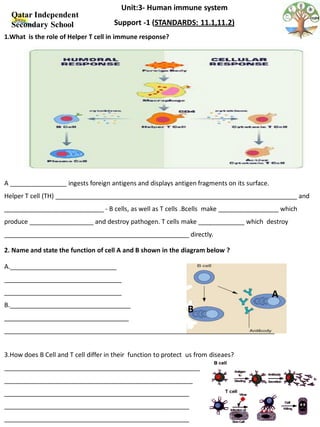
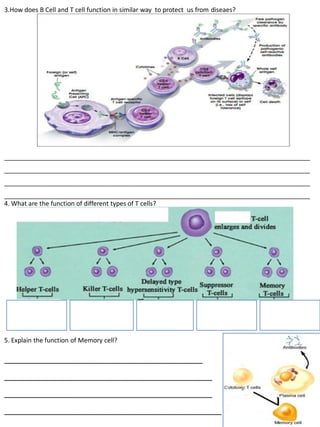
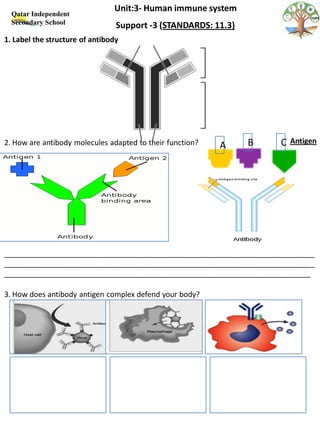
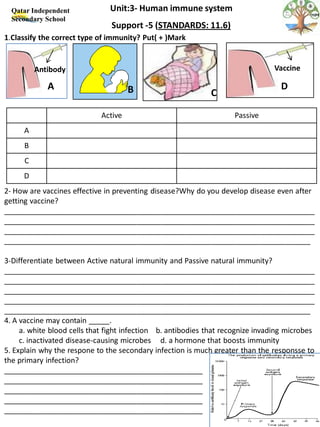
Helper T cells recognize antigens displayed on macrophages and activate other immune cells including B cells and T cells. Activated B cells produce antibodies that destroy pathogens, while activated T cells destroy pathogen-infected cells. Memory cells remain after an infection to provide faster protection if the same pathogen is encountered again. Vaccines provide active artificial immunity by exposing the immune system to an inactivated or weakened form of a pathogen. They work by generating memory cells and antibodies that can quickly respond to a real infection.