SULFONAMIDES
DR. R. S. Chavan
PDEA’s Seth Govind Raghunath sable
College of Pharmacy, Saswad
1
MICROBIOLOGY
• Microorganisms
distributed in air, water, soil, the bodies of
living plants and animals and dead organic
matters
• Human body
Mild defense – secretion f endogenous fluids
Strong defense- inflammatory
immunological
2
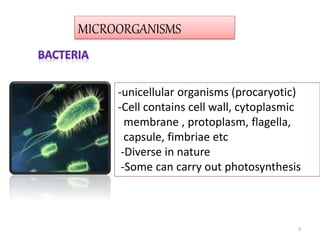
-unicellular organisms (procaryotic)
-Cell contains cell wall, cytoplasmic
membrane , protoplasm, flagella,
capsule, fimbriae etc
-Diverse in nature
-Some can carry out photosynthesis
MICROORGANISMS
3
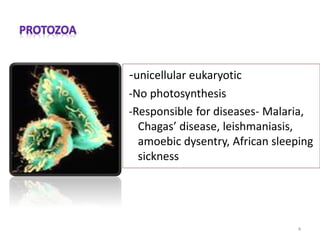
-unicellular eukaryotic
-No photosynthesis
-Responsible for diseases- Malaria,
Chagas’ disease, leishmaniasis,
amoebic dysentry, African sleeping
sickness
4
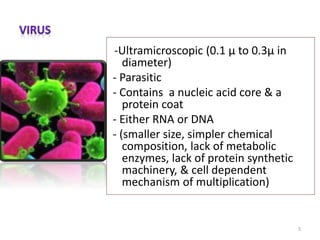
-Ultramicroscopic (0.1 μ to 0.3μ in
diameter)
- Parasitic
- Contains a nucleic acid core & a
protein coat
- Either RNA or DNA
- (smaller size, simpler chemical
composition, lack of metabolic
enzymes, lack of protein synthetic
machinery, & cell dependent
mechanism of multiplication)
5
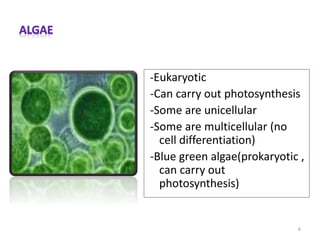
-Eukaryotic
-Can carry out photosynthesis
-Some are unicellular
-Some are multicellular (no
cell differentiation)
-Blue green algae(prokaryotic ,
can carry out
photosynthesis)
6
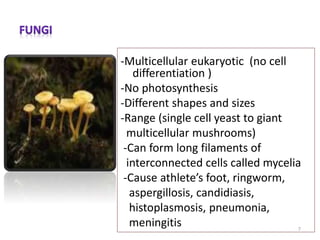
-Multicellular eukaryotic (no cell
differentiation )
-No photosynthesis
-Different shapes and sizes
-Range (single cell yeast to giant
multicellular mushrooms)
-Can form long filaments of
interconnected cells called mycelia
-Cause athlete’s foot, ringworm,
aspergillosis, candidiasis,
histoplasmosis, pneumonia,
meningitis 7
Microorganisms release waste
material during metabolism
Reaction from the host
to these metabolites
PATHOGENICITY
8
• Virulence- measure of pathogenicity of
microorganism
• Infection- microorganism may gain entry to
tissues and release poisonous substance and
may alarm fatal reactions in the host
• Infection spread rapidly in subarachnoid space
• Enzymes present in microorganism contribute
largely in virulence
9
Drug resistance
• Major concern
• Due to prolonged or repeated therapy and low
dose suppressive antibacterial prophylaxis
• May be natural or acquired by mutation or
gene transfer
• Cross resistance
10
Mechanism of drug resistance
• Decreased drug diffusion due to altered cell
permeability
• Change in structure or function of drug susceptible
microbial enzymes
• Production of new enzymes causing inactivation of
drug
• Drug action terminated by formation of drug
antagonistic metabolites
• Alternate biochemical reactions
• Through mutagenic changes , alteration in receptor
affinity
11
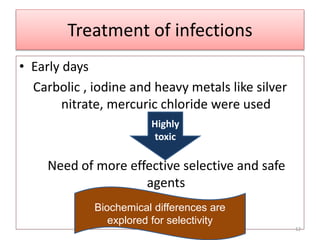
Treatment of infections
• Early days
Carbolic , iodine and heavy metals like silver
nitrate, mercuric chloride were used
Need of more effective selective and safe
agents
Highly
toxic
Biochemical differences are
explored for selectivity
12
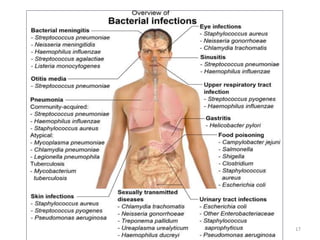
Bacterial Infections
• Major cause of death worldwide
• Development of drug resistance
• Staphylococcus aureus
Escheria coli
Tuberculosis due to AIDS
13
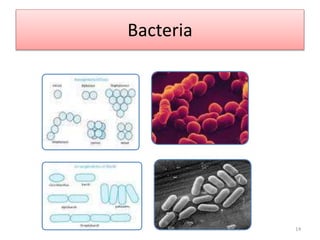
Bacteria
14
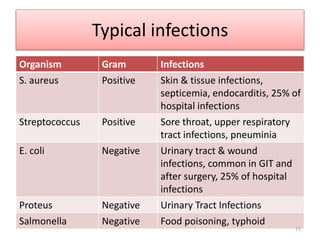
Typical infections
Organism Gram Infections
S. aureus Positive Skin & tissue infections,
septicemia, endocarditis, 25% of
hospital infections
Streptococcus Positive Sore throat, upper respiratory
tract infections, pneuminia
E. coli Negative Urinary tract & wound
infections, common in GIT and
after surgery, 25% of hospital
infections
Proteus Negative Urinary Tract Infections
Salmonella Negative Food poisoning, typhoid
15
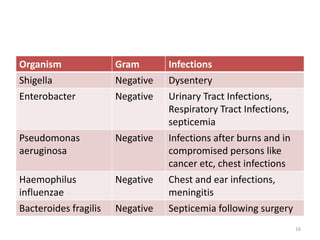
Organism Gram Infections
Shigella Negative Dysentery
Enterobacter Negative Urinary Tract Infections,
Respiratory Tract Infections,
septicemia
Pseudomonas
aeruginosa
Negative Infections after burns and in
compromised persons like
cancer etc, chest infections
Haemophilus
influenzae
Negative Chest and ear infections,
meningitis
Bacteroides fragilis Negative Septicemia following surgery
16
17
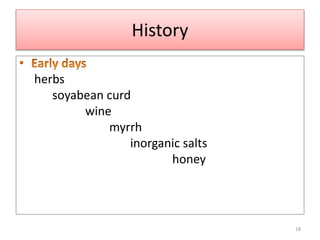
History
herbs
soyabean curd
wine
myrrh
inorganic salts
honey
18
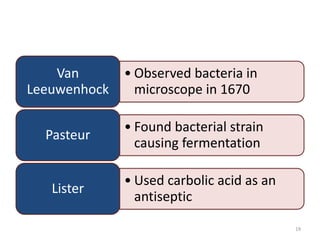
• Observed bacteria in
microscope in 1670
Van
Leeuwenhock
• Found bacterial strain
causing fermentation
Pasteur
• Used carbolic acid as an
antiseptic
Lister
19
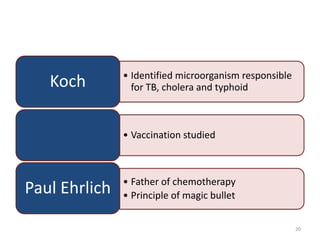
• Identified microorganism responsible
for TB, cholera and typhoidKoch
• Vaccination studied
• Father of chemotherapy
• Principle of magic bulletPaul Ehrlich
20
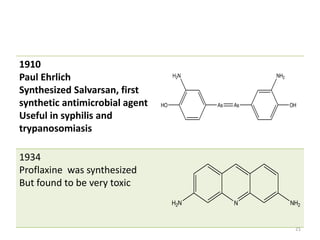
1910
Paul Ehrlich
Synthesized Salvarsan, first
synthetic antimicrobial agent
Useful in syphilis and
trypanosomiasis
1934
Proflaxine was synthesized
But found to be very toxic
As As
H2N
HO
NH2
OH
NH2N NH2
21
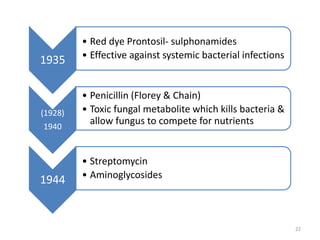
1935
• Red dye Prontosil- sulphonamides
• Effective against systemic bacterial infections
(1928)
1940
• Penicillin (Florey & Chain)
• Toxic fungal metabolite which kills bacteria &
allow fungus to compete for nutrients
1944
• Streptomycin
• Aminoglycosides
22
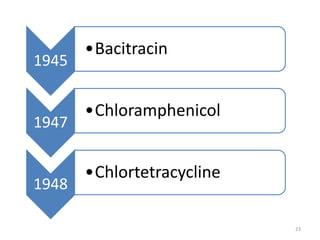
1945
•Bacitracin
1947
•Chloramphenicol
1948
•Chlortetracycline
23
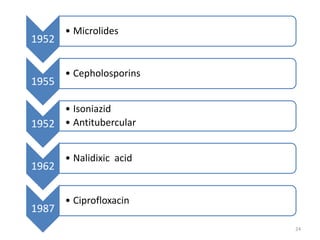
1952
• Microlides
1955
• Cepholosporins
1952
• Isoniazid
• Antitubercular
1962
• Nalidixic acid
1987
• Ciprofloxacin
24
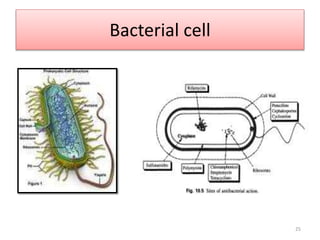
Bacterial cell
25
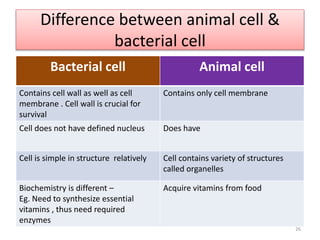
Difference between animal cell &
bacterial cell
Bacterial cell Animal cell
Contains cell wall as well as cell
membrane . Cell wall is crucial for
survival
Contains only cell membrane
Cell does not have defined nucleus Does have
Cell is simple in structure relatively Cell contains variety of structures
called organelles
Biochemistry is different –
Eg. Need to synthesize essential
vitamins , thus need required
enzymes
Acquire vitamins from food
26
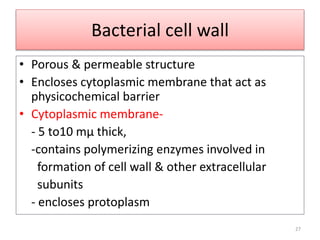
Bacterial cell wall
• Porous & permeable structure
• Encloses cytoplasmic membrane that act as
physicochemical barrier
• Cytoplasmic membrane-
- 5 to10 mμ thick,
-contains polymerizing enzymes involved in
formation of cell wall & other extracellular
subunits
- encloses protoplasm
27
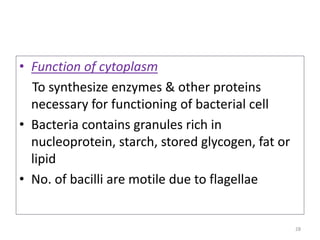
• Function of cytoplasm
To synthesize enzymes & other proteins
necessary for functioning of bacterial cell
• Bacteria contains granules rich in
nucleoprotein, starch, stored glycogen, fat or
lipid
• No. of bacilli are motile due to flagellae
28
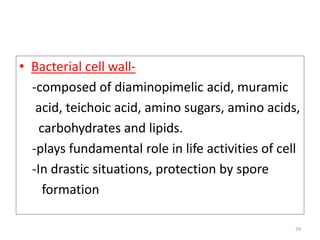
• Bacterial cell wall-
-composed of diaminopimelic acid, muramic
acid, teichoic acid, amino sugars, amino acids,
carbohydrates and lipids.
-plays fundamental role in life activities of cell
-In drastic situations, protection by spore
formation
29
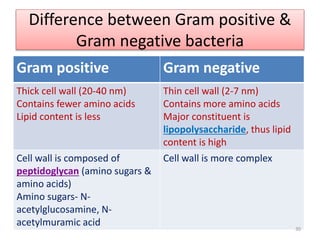
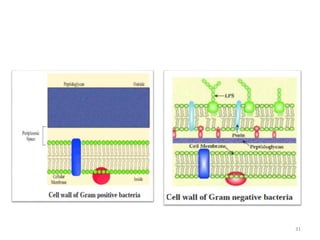
Difference between Gram positive &
Gram negative bacteria
Gram positive Gram negative
Thick cell wall (20-40 nm)
Contains fewer amino acids
Lipid content is less
Thin cell wall (2-7 nm)
Contains more amino acids
Major constituent is
lipopolysaccharide, thus lipid
content is high
Cell wall is composed of
peptidoglycan (amino sugars &
amino acids)
Amino sugars- N-
acetylglucosamine, N-
acetylmuramic acid
Cell wall is more complex
30
31
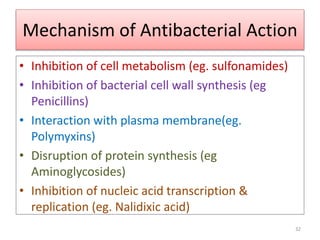
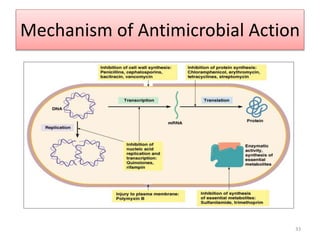
Mechanism of Antibacterial Action
• Inhibition of cell metabolism (eg. sulfonamides)
• Inhibition of bacterial cell wall synthesis (eg
Penicillins)
• Interaction with plasma membrane(eg.
Polymyxins)
• Disruption of protein synthesis (eg
Aminoglycosides)
• Inhibition of nucleic acid transcription &
replication (eg. Nalidixic acid)
32
33
Mechanism of Antimicrobial Action
Sulfonamides
• Antimetabolites
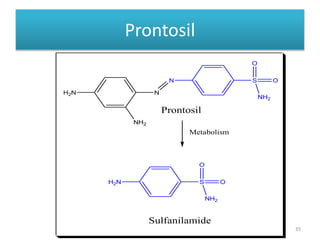
• Prontosil- prodrug
• Effective against Gram positive organisms
especially pneumococci & meningococci
• Sulfonamides (sulfa drugs) are superseded by
penicillin due to narrow range of activity,
toxicity and development of resistance .
34
Prontosil
35
H2N N
NH2
N S
NH2
O
O
H2N S
NH2
O
O
Metabolism
Prontosil
Sulfanilamide
36
R1
HN S
NHR2
O
O
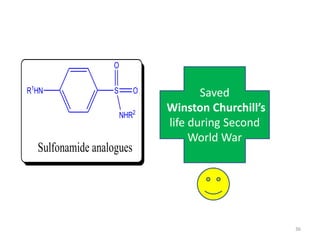
Sulfonamide analogues
Saved
Winston Churchill’s
life during Second
World War
Nomenclature & classification
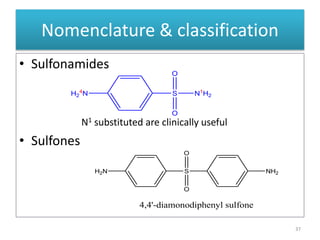
• Sulfonamides
N1 substituted are clinically useful
• Sulfones
37
H2
4
N S N1
H2
O
O
H2N S
O
O
4,4'-diamonodiphenyl sulfone
NH2
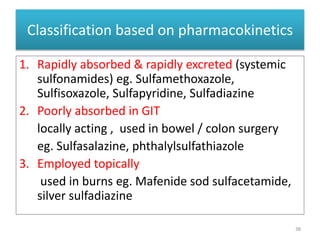
Classification based on pharmacokinetics
1. Rapidly absorbed & rapidly excreted (systemic
sulfonamides) eg. Sulfamethoxazole,
Sulfisoxazole, Sulfapyridine, Sulfadiazine
2. Poorly absorbed in GIT
locally acting , used in bowel / colon surgery
eg. Sulfasalazine, phthalylsulfathiazole
3. Employed topically
used in burns eg. Mafenide sod sulfacetamide,
silver sulfadiazine
38
Based on chemical nature
• Agents with substituent on amino gr (N4)
prodrugs eg. Prontosil, Solucopticin
• Agents with substituent on amido gr (N1)
more common eg. Sulfadiazine, Sulfadimidine,
Sulfacetamide
• Agents with substituents both on amino gr (N4) and
amido gr (N1)
eg. Succinyl sulfathiazole, Phthalyl sulfathiazole
• Agents with no amino functional gr on benzene
nucleus
Non anilino sulfonamides eg. Mafenide
39
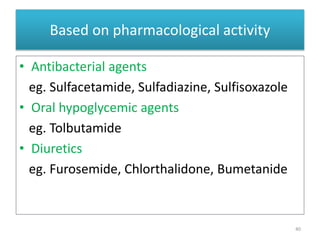
Based on pharmacological activity
• Antibacterial agents
eg. Sulfacetamide, Sulfadiazine, Sulfisoxazole
• Oral hypoglycemic agents
eg. Tolbutamide
• Diuretics
eg. Furosemide, Chlorthalidone, Bumetanide
40
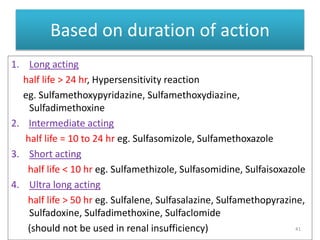
Based on duration of action
1. Long acting
half life > 24 hr, Hypersensitivity reaction
eg. Sulfamethoxypyridazine, Sulfamethoxydiazine,
Sulfadimethoxine
2. Intermediate acting
half life = 10 to 24 hr eg. Sulfasomizole, Sulfamethoxazole
3. Short acting
half life < 10 hr eg. Sulfamethizole, Sulfasomidine, Sulfaisoxazole
4. Ultra long acting
half life > 50 hr eg. Sulfalene, Sulfasalazine, Sulfamethopyrazine,
Sulfadoxine, Sulfadimethoxine, Sulfaclomide
(should not be used in renal insufficiency) 41
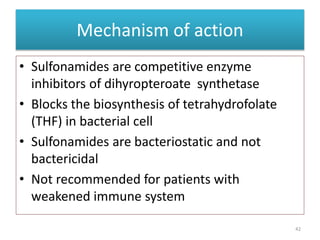
Mechanism of action
• Sulfonamides are competitive enzyme
inhibitors of dihyropteroate synthetase
• Blocks the biosynthesis of tetrahydrofolate
(THF) in bacterial cell
• Sulfonamides are bacteriostatic and not
bactericidal
• Not recommended for patients with
weakened immune system
42
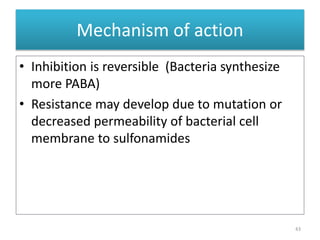
• Inhibition is reversible (Bacteria synthesize
more PABA)
• Resistance may develop due to mutation or
decreased permeability of bacterial cell
membrane to sulfonamides
43
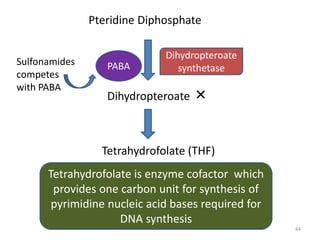
Mechanism of action
44
Pteridine Diphosphate
Dihydropteroate ×
Tetrahydrofolate (THF)
Tetrahydrofolate is enzyme cofactor which
provides one carbon unit for synthesis of
pyrimidine nucleic acid bases required for
DNA synthesis
Dihydropteroate
synthetasePABASulfonamides
competes
with PABA
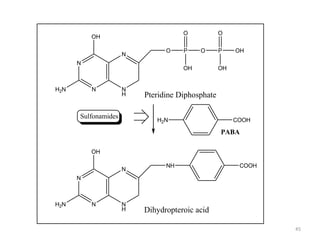
45
N
H
N
N
NH2N
OH
O P O P OH
OHOH
O O
Pteridine Diphosphate
H2N COOH
PABA
Sulfonamides
N
H
N
N
NH2N
OH
NH
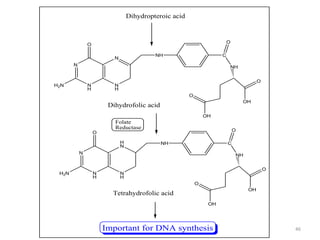
Dihydropteroic acid
COOH
46
N
H
N
N
N
H
H2N
O
NH
Dihydropteroic acid
C
NH
O
OH
OH
O
O
Dihydrofolic acid
N
H
H
N
N
N
H
H2N
O
NH C
NH
O
OH
OH
O
O
Tetrahydrofolic acid
Folate
Reductase
Important for DNA synthesis
47
Success of sulfa drugs
• Based on two metabolic differences between
mammalian & bacterial cells
1. Bacteria have susceptible enzyme
dihydropteroate synthetase which is not
found in humans (THF is obtained from
dietary folic acid)
2. Bacteria lack the transport protein which
carries folic acid across the membrane. It is
present in humans
48
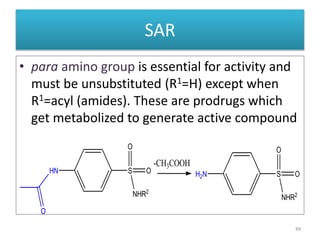
SAR
• para amino group is essential for activity and
must be unsubstituted (R1=H) except when
R1=acyl (amides). These are prodrugs which
get metabolized to generate active compound
49
HN S
NHR2
O
O
O
H2N S
NHR2
O
O
-CH3COOH
SAR
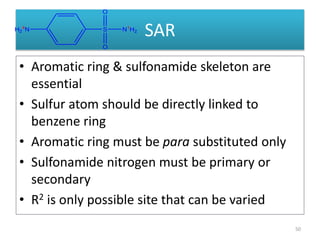
• Aromatic ring & sulfonamide skeleton are
essential
• Sulfur atom should be directly linked to
benzene ring
• Aromatic ring must be para substituted only
• Sulfonamide nitrogen must be primary or
secondary
• R2 is only possible site that can be varied
50
H2
4
N S N1
H2
O
O
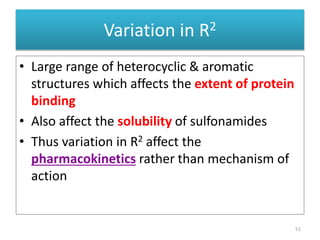
Variation in R2
• Large range of heterocyclic & aromatic
structures which affects the extent of protein
binding
• Also affect the solubility of sulfonamides
• Thus variation in R2 affect the
pharmacokinetics rather than mechanism of
action
51
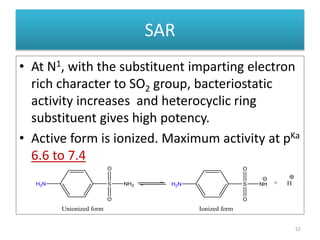
SAR
• At N1, with the substituent imparting electron
rich character to SO2 group, bacteriostatic
activity increases and heterocyclic ring
substituent gives high potency.
• Active form is ionized. Maximum activity at pKa
6.6 to 7.4
52
H2N S NH2
O
O
H2N S NH
O
O
+ H
Unionized form Ionized form
Pharmacokinetics
• White crystalline , poorly soluble in water, sodium
salts (increase in water solubility)
• Absorbed in intestine
• Protein binding (acetylated deri – more protein
binding)
• Metabolism- acetylation & oxidation
• Acetylated metabolites- no activity, toxic & less water
soluble
• Excretion – in urine (free or glucuronide conjugates)
• Renal failure patients- Toxicity
53
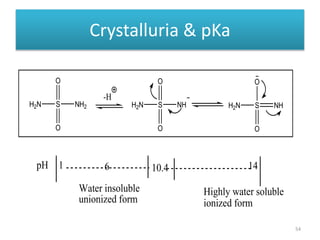
Crystalluria & pKa
54
S
O
O
NH2H2N
-H
S
O
O
NHH2N S
O
O
NHH2N
10.4pH 1 6 14
Water insoluble
unionized form
Highly water soluble
ionized form
Adverse effects
• GIT- nausea, vomitting, anorexia, diarrhoea,
hepatitis
• UT- Oligouria, crystalluria
• Nervous system- headache, dizziness, confusion,
mental depression, peripheral neuritis, optic
neuritis
• Haemopetic system- leucopenia,
thromocytopenia, agranulocytosis
• Hypersensitivity reactions- eruptions, fever,
vascular lesions, serum sickness, jaundice, sore
throat, Steven-Johnson syndrome
55
• Effects on fetus & neonates- compete with
bilirubin for protein binding, thus increased
bilirubin conc
• Miscellaneous- conjuctivitis, porphyria,
anthralgia, pulmonary eosinophilia,
displacement of drugs due to protein binding
56
Bacterial Resistance
• Mutation
• Increased production of PABA
• Increased ability of bacterial cell to inactivate
sulfa drugs
• Production of sulfa drug antagonist
• Decreased bacterial permeability to sulfa
drugs
57
Applications of sulfonamides
Relatively common use in
• Pneumonia
• Treatment of urinary tract infections
• Eye lotions in conjunctivitis
• Burn therapy
• Treatment & prophylaxis of cerebral
toxoplasmosis
• Chloroquine resistant malarial
58
Less common infections
• Nocardiosis
• Meningococcal meningitis
Generally not useful in
• Treatment of infections of mucous membrane
• Treatment of Gut infections
• Vaginal infection
• Respiratory tract infections
• Rheumatic fever
• Streptococcal infection
59
60
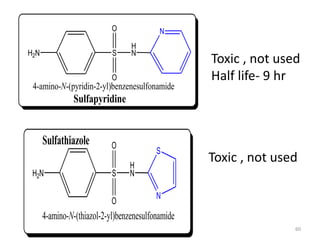
Toxic , not used
Half life- 9 hr
Toxic , not used
H2N S
H
N
O
O
N
Sulfapyridine
4-amino-N-(pyridin-2-yl)benzenesulfonamide
H2N S
H
N
O
O
Sulfathiazole
N
S
4-amino-N-(thiazol-2-yl)benzenesulfonamide
61
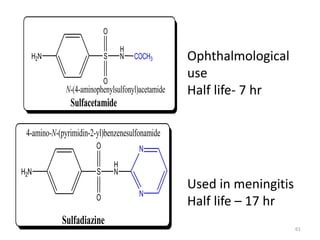
Ophthalmological
use
Half life- 7 hr
H2N S
H
N
O
O
COCH3
Sulfacetamide
N-(4-aminophenylsulfonyl)acetamide
Used in meningitis
Half life – 17 hr
H2N S
H
N
O
O N
N
Sulfadiazine
4-amino-N-(pyrimidin-2-yl)benzenesulfonamide
62
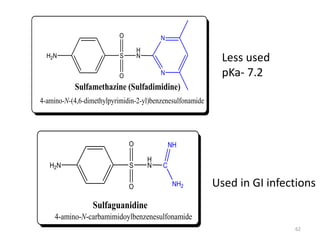
Used in GI infections
H2N S
H
N
O
O
C
Sulfaguanidine
NH
NH2
4-amino-N-carbamimidoylbenzenesulfonamide
H2N S
H
N
O
O N
N
Sulfamethazine (Sulfadimidine)
4-amino-N-(4,6-dimethylpyrimidin-2-yl)benzenesulfonamide
Less used
pKa- 7.2
63
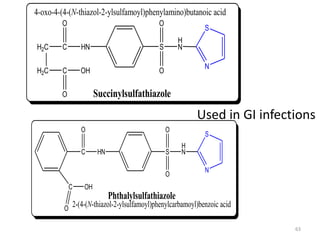
Used in GI infections
HN S
H
N
O
O
Succinylsulfathiazole
N
S
C
O
H2C
H2C C
O
OH
4-oxo-4-(4-(N-thiazol-2-ylsulfamoyl)phenylamino)butanoic acid
HN S
H
N
O
O
Phthalylsulfathiazole
N
S
C
O
C OH
O
2-(4-(N-thiazol-2-ylsulfamoyl)phenylcarbamoyl)benzoic acid
64
H2N S
H
N
O
O
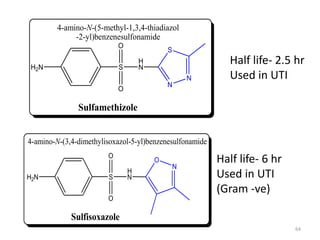
Sulfamethizole
N
N
S
4-amino-N-(5-methyl-1,3,4-thiadiazol
-2-yl)benzenesulfonamide
Half life- 2.5 hr
Used in UTI
H2N S
H
N
O
O
Sulfisoxazole
N
O
4-amino-N-(3,4-dimethylisoxazol-5-yl)benzenesulfonamide
Half life- 6 hr
Used in UTI
(Gram -ve)
65
H2N S N
O
O
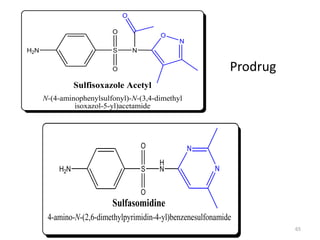
Sulfisoxazole Acetyl
N
O
N-(4-aminophenylsulfonyl)-N-(3,4-dimethyl
isoxazol-5-yl)acetamide
O
Prodrug
H2N S
H
N
O
O
N
N
Sulfasomidine
4-amino-N-(2,6-dimethylpyrimidin-4-yl)benzenesulfonamide
66
H2N S
H
N
O
O
NN
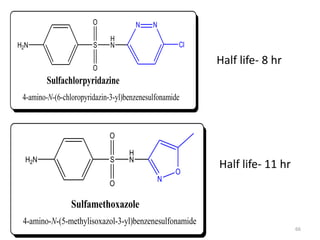
Sulfachlorpyridazine
4-amino-N-(6-chloropyridazin-3-yl)benzenesulfonamide
Cl
Half life- 8 hr
H2N S
H
N
O
O
Sulfamethoxazole
N
O
4-amino-N-(5-methylisoxazol-3-yl)benzenesulfonamide
Half life- 11 hr
67
H2N S
H
N
O
O
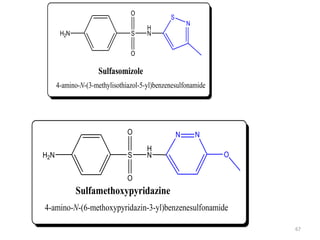
Sulfasomizole
N
S
4-amino-N-(3-methylisothiazol-5-yl)benzenesulfonamide
H2N S
H
N
O
O
NN
Sulfamethoxypyridazine
4-amino-N-(6-methoxypyridazin-3-yl)benzenesulfonamide
O
68
H2N S
H
N
O
O N
N
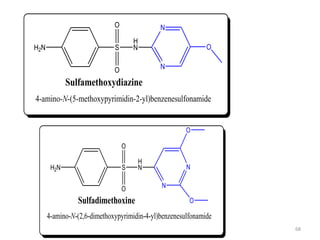
Sulfamethoxydiazine
4-amino-N-(5-methoxypyrimidin-2-yl)benzenesulfonamide
O
H2N S
H
N
O
O N
N
Sulfadimethoxine
4-amino-N-(2,6-dimethoxypyrimidin-4-yl)benzenesulfonamide
O
O
69
H2N S
H
N
O
O
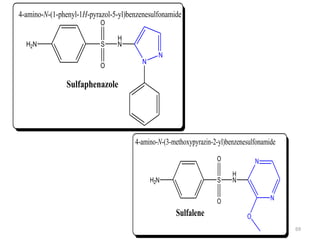
Sulfaphenazole
N
N
4-amino-N-(1-phenyl-1H-pyrazol-5-yl)benzenesulfonamide
H2N S
H
N
O
O N
N
Sulfalene
4-amino-N-(3-methoxypyrazin-2-yl)benzenesulfonamide
O
70
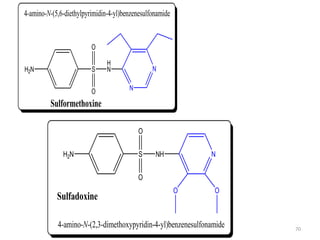
H2N S
H
N
O
O N
N
Sulformethoxine
4-amino-N-(5,6-diethylpyrimidin-4-yl)benzenesulfonamide
Sulfadoxine
H2N S NH
O
O
N
4-amino-N-(2,3-dimethoxypyridin-4-yl)benzenesulfonamide
O O
71
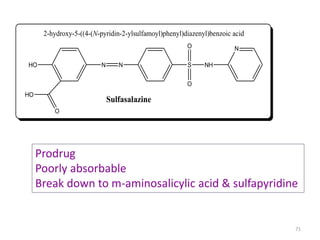
HO
Sulfasalazine
HO
O
2-hydroxy-5-((4-(N-pyridin-2-ylsulfamoyl)phenyl)diazenyl)benzoic acid
N N S NH
O
O
N
Prodrug
Poorly absorbable
Break down to m-aminosalicylic acid & sulfapyridine
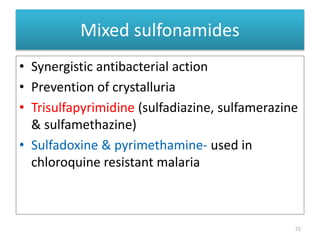
Mixed sulfonamides
• Synergistic antibacterial action
• Prevention of crystalluria
• Trisulfapyrimidine (sulfadiazine, sulfamerazine
& sulfamethazine)
• Sulfadoxine & pyrimethamine- used in
chloroquine resistant malaria
72
Topical sulfonamides
• Sulfacetamide sodium- ophthalmic infections
• Sulfisoxazole Diolamine
• Triple sulfa (sulfabenzamide, sulfacetamide,
sulfathiazole)- used for vaginitis
73
Topical sulfonamides for burn therapy
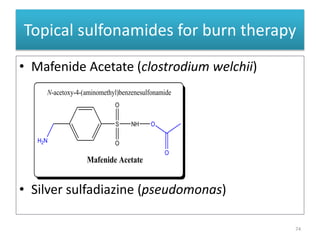
• Mafenide Acetate (clostrodium welchii)
• Silver sulfadiazine (pseudomonas)
74
Mafenide Acetate
S NH
O
O
O
H2N
N-acetoxy-4-(aminomethyl)benzenesulfonamide
O
Sulfones
• Used in the treatment of leprosy
• Inhibit dihydropteroate synthetase
• Less effective than sulfonamides
• Development of resistance lead to multidrug
therapy (dapsone, rifampicin & clofazimine)
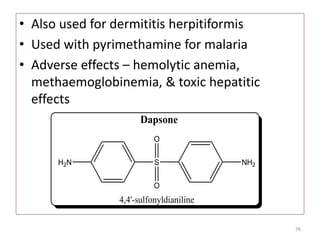
• Prototype- Dapsone
75
• Also used for dermititis herpitiformis
• Used with pyrimethamine for malaria
• Adverse effects – hemolytic anemia,
methaemoglobinemia, & toxic hepatitic
effects
76
S
O
O
H2N NH2
4,4'-sulfonyldianiline
Dapsone
Dihydrofolate reductase inhibitors
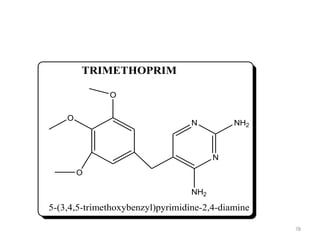
• Trimethoprim
• Orally active diaminopyrimidine
• Highly selective antibacterial & antimalarial
• Usually given in combination with
sulfamethoxazole (co-trimoxazole)
77
78
N
N
O
O
O
NH2
NH2
5-(3,4,5-trimethoxybenzyl)pyrimidine-2,4-diamine
TRIMETHOPRIM
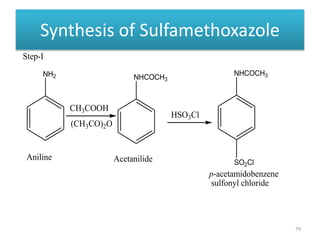
Synthesis of Sulfamethoxazole
79
NH2 NHCOCH3
NHCOCH3
SO2Cl
CH3COOH
(CH3CO)2O
HSO3Cl
Aniline Acetanilide
p-acetamidobenzene
sulfonyl chloride
Step-I
80
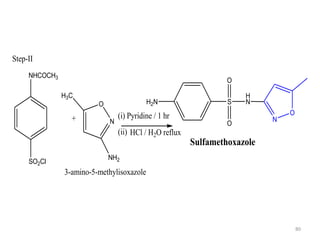
NHCOCH3
SO2Cl
+ N
O
NH2
H3C
H2N S
H
N
O
O
Sulfamethoxazole
N
O(i) Pyridine / 1 hr
(ii) HCl / H2O reflux
Step-II
3-amino-5-methylisoxazole

Sulfonamides

  • 1.
    SULFONAMIDES DR. R. S.Chavan PDEA’s Seth Govind Raghunath sable College of Pharmacy, Saswad 1
  • 2.
    MICROBIOLOGY • Microorganisms distributed inair, water, soil, the bodies of living plants and animals and dead organic matters • Human body Mild defense – secretion f endogenous fluids Strong defense- inflammatory immunological 2
  • 3.
    -unicellular organisms (procaryotic) -Cellcontains cell wall, cytoplasmic membrane , protoplasm, flagella, capsule, fimbriae etc -Diverse in nature -Some can carry out photosynthesis MICROORGANISMS 3
  • 4.
    -unicellular eukaryotic -No photosynthesis -Responsiblefor diseases- Malaria, Chagas’ disease, leishmaniasis, amoebic dysentry, African sleeping sickness 4
  • 5.
    -Ultramicroscopic (0.1 μto 0.3μ in diameter) - Parasitic - Contains a nucleic acid core & a protein coat - Either RNA or DNA - (smaller size, simpler chemical composition, lack of metabolic enzymes, lack of protein synthetic machinery, & cell dependent mechanism of multiplication) 5
  • 6.
    -Eukaryotic -Can carry outphotosynthesis -Some are unicellular -Some are multicellular (no cell differentiation) -Blue green algae(prokaryotic , can carry out photosynthesis) 6
  • 7.
    -Multicellular eukaryotic (nocell differentiation ) -No photosynthesis -Different shapes and sizes -Range (single cell yeast to giant multicellular mushrooms) -Can form long filaments of interconnected cells called mycelia -Cause athlete’s foot, ringworm, aspergillosis, candidiasis, histoplasmosis, pneumonia, meningitis 7
  • 8.
    Microorganisms release waste materialduring metabolism Reaction from the host to these metabolites PATHOGENICITY 8
  • 9.
    • Virulence- measureof pathogenicity of microorganism • Infection- microorganism may gain entry to tissues and release poisonous substance and may alarm fatal reactions in the host • Infection spread rapidly in subarachnoid space • Enzymes present in microorganism contribute largely in virulence 9
  • 10.
    Drug resistance • Majorconcern • Due to prolonged or repeated therapy and low dose suppressive antibacterial prophylaxis • May be natural or acquired by mutation or gene transfer • Cross resistance 10
  • 11.
    Mechanism of drugresistance • Decreased drug diffusion due to altered cell permeability • Change in structure or function of drug susceptible microbial enzymes • Production of new enzymes causing inactivation of drug • Drug action terminated by formation of drug antagonistic metabolites • Alternate biochemical reactions • Through mutagenic changes , alteration in receptor affinity 11
  • 12.
    Treatment of infections •Early days Carbolic , iodine and heavy metals like silver nitrate, mercuric chloride were used Need of more effective selective and safe agents Highly toxic Biochemical differences are explored for selectivity 12
  • 13.
    Bacterial Infections • Majorcause of death worldwide • Development of drug resistance • Staphylococcus aureus Escheria coli Tuberculosis due to AIDS 13
  • 14.
  • 15.
    Typical infections Organism GramInfections S. aureus Positive Skin & tissue infections, septicemia, endocarditis, 25% of hospital infections Streptococcus Positive Sore throat, upper respiratory tract infections, pneuminia E. coli Negative Urinary tract & wound infections, common in GIT and after surgery, 25% of hospital infections Proteus Negative Urinary Tract Infections Salmonella Negative Food poisoning, typhoid 15
  • 16.
    Organism Gram Infections ShigellaNegative Dysentery Enterobacter Negative Urinary Tract Infections, Respiratory Tract Infections, septicemia Pseudomonas aeruginosa Negative Infections after burns and in compromised persons like cancer etc, chest infections Haemophilus influenzae Negative Chest and ear infections, meningitis Bacteroides fragilis Negative Septicemia following surgery 16
  • 17.
  • 18.
  • 19.
    • Observed bacteriain microscope in 1670 Van Leeuwenhock • Found bacterial strain causing fermentation Pasteur • Used carbolic acid as an antiseptic Lister 19
  • 20.
    • Identified microorganismresponsible for TB, cholera and typhoidKoch • Vaccination studied • Father of chemotherapy • Principle of magic bulletPaul Ehrlich 20
  • 21.
    1910 Paul Ehrlich Synthesized Salvarsan,first synthetic antimicrobial agent Useful in syphilis and trypanosomiasis 1934 Proflaxine was synthesized But found to be very toxic As As H2N HO NH2 OH NH2N NH2 21
  • 22.
    1935 • Red dyeProntosil- sulphonamides • Effective against systemic bacterial infections (1928) 1940 • Penicillin (Florey & Chain) • Toxic fungal metabolite which kills bacteria & allow fungus to compete for nutrients 1944 • Streptomycin • Aminoglycosides 22
  • 23.
  • 24.
    1952 • Microlides 1955 • Cepholosporins 1952 •Isoniazid • Antitubercular 1962 • Nalidixic acid 1987 • Ciprofloxacin 24
  • 25.
  • 26.
    Difference between animalcell & bacterial cell Bacterial cell Animal cell Contains cell wall as well as cell membrane . Cell wall is crucial for survival Contains only cell membrane Cell does not have defined nucleus Does have Cell is simple in structure relatively Cell contains variety of structures called organelles Biochemistry is different – Eg. Need to synthesize essential vitamins , thus need required enzymes Acquire vitamins from food 26
  • 27.
    Bacterial cell wall •Porous & permeable structure • Encloses cytoplasmic membrane that act as physicochemical barrier • Cytoplasmic membrane- - 5 to10 mμ thick, -contains polymerizing enzymes involved in formation of cell wall & other extracellular subunits - encloses protoplasm 27
  • 28.
    • Function ofcytoplasm To synthesize enzymes & other proteins necessary for functioning of bacterial cell • Bacteria contains granules rich in nucleoprotein, starch, stored glycogen, fat or lipid • No. of bacilli are motile due to flagellae 28
  • 29.
    • Bacterial cellwall- -composed of diaminopimelic acid, muramic acid, teichoic acid, amino sugars, amino acids, carbohydrates and lipids. -plays fundamental role in life activities of cell -In drastic situations, protection by spore formation 29
  • 30.
    Difference between Grampositive & Gram negative bacteria Gram positive Gram negative Thick cell wall (20-40 nm) Contains fewer amino acids Lipid content is less Thin cell wall (2-7 nm) Contains more amino acids Major constituent is lipopolysaccharide, thus lipid content is high Cell wall is composed of peptidoglycan (amino sugars & amino acids) Amino sugars- N- acetylglucosamine, N- acetylmuramic acid Cell wall is more complex 30
  • 31.
  • 32.
    Mechanism of AntibacterialAction • Inhibition of cell metabolism (eg. sulfonamides) • Inhibition of bacterial cell wall synthesis (eg Penicillins) • Interaction with plasma membrane(eg. Polymyxins) • Disruption of protein synthesis (eg Aminoglycosides) • Inhibition of nucleic acid transcription & replication (eg. Nalidixic acid) 32
  • 33.
  • 34.
    Sulfonamides • Antimetabolites • Prontosil-prodrug • Effective against Gram positive organisms especially pneumococci & meningococci • Sulfonamides (sulfa drugs) are superseded by penicillin due to narrow range of activity, toxicity and development of resistance . 34
  • 35.
    Prontosil 35 H2N N NH2 N S NH2 O O H2NS NH2 O O Metabolism Prontosil Sulfanilamide
  • 36.
    36 R1 HN S NHR2 O O Sulfonamide analogues Saved WinstonChurchill’s life during Second World War
  • 37.
    Nomenclature & classification •Sulfonamides N1 substituted are clinically useful • Sulfones 37 H2 4 N S N1 H2 O O H2N S O O 4,4'-diamonodiphenyl sulfone NH2
  • 38.
    Classification based onpharmacokinetics 1. Rapidly absorbed & rapidly excreted (systemic sulfonamides) eg. Sulfamethoxazole, Sulfisoxazole, Sulfapyridine, Sulfadiazine 2. Poorly absorbed in GIT locally acting , used in bowel / colon surgery eg. Sulfasalazine, phthalylsulfathiazole 3. Employed topically used in burns eg. Mafenide sod sulfacetamide, silver sulfadiazine 38
  • 39.
    Based on chemicalnature • Agents with substituent on amino gr (N4) prodrugs eg. Prontosil, Solucopticin • Agents with substituent on amido gr (N1) more common eg. Sulfadiazine, Sulfadimidine, Sulfacetamide • Agents with substituents both on amino gr (N4) and amido gr (N1) eg. Succinyl sulfathiazole, Phthalyl sulfathiazole • Agents with no amino functional gr on benzene nucleus Non anilino sulfonamides eg. Mafenide 39
  • 40.
    Based on pharmacologicalactivity • Antibacterial agents eg. Sulfacetamide, Sulfadiazine, Sulfisoxazole • Oral hypoglycemic agents eg. Tolbutamide • Diuretics eg. Furosemide, Chlorthalidone, Bumetanide 40
  • 41.
    Based on durationof action 1. Long acting half life > 24 hr, Hypersensitivity reaction eg. Sulfamethoxypyridazine, Sulfamethoxydiazine, Sulfadimethoxine 2. Intermediate acting half life = 10 to 24 hr eg. Sulfasomizole, Sulfamethoxazole 3. Short acting half life < 10 hr eg. Sulfamethizole, Sulfasomidine, Sulfaisoxazole 4. Ultra long acting half life > 50 hr eg. Sulfalene, Sulfasalazine, Sulfamethopyrazine, Sulfadoxine, Sulfadimethoxine, Sulfaclomide (should not be used in renal insufficiency) 41
  • 42.
    Mechanism of action •Sulfonamides are competitive enzyme inhibitors of dihyropteroate synthetase • Blocks the biosynthesis of tetrahydrofolate (THF) in bacterial cell • Sulfonamides are bacteriostatic and not bactericidal • Not recommended for patients with weakened immune system 42
  • 43.
    • Inhibition isreversible (Bacteria synthesize more PABA) • Resistance may develop due to mutation or decreased permeability of bacterial cell membrane to sulfonamides 43 Mechanism of action
  • 44.
    44 Pteridine Diphosphate Dihydropteroate × Tetrahydrofolate(THF) Tetrahydrofolate is enzyme cofactor which provides one carbon unit for synthesis of pyrimidine nucleic acid bases required for DNA synthesis Dihydropteroate synthetasePABASulfonamides competes with PABA
  • 45.
    45 N H N N NH2N OH O P OP OH OHOH O O Pteridine Diphosphate H2N COOH PABA Sulfonamides N H N N NH2N OH NH Dihydropteroic acid COOH
  • 46.
    46 N H N N N H H2N O NH Dihydropteroic acid C NH O OH OH O O Dihydrofolic acid N H H N N N H H2N O NHC NH O OH OH O O Tetrahydrofolic acid Folate Reductase Important for DNA synthesis
  • 47.
  • 48.
    Success of sulfadrugs • Based on two metabolic differences between mammalian & bacterial cells 1. Bacteria have susceptible enzyme dihydropteroate synthetase which is not found in humans (THF is obtained from dietary folic acid) 2. Bacteria lack the transport protein which carries folic acid across the membrane. It is present in humans 48
  • 49.
    SAR • para aminogroup is essential for activity and must be unsubstituted (R1=H) except when R1=acyl (amides). These are prodrugs which get metabolized to generate active compound 49 HN S NHR2 O O O H2N S NHR2 O O -CH3COOH
  • 50.
    SAR • Aromatic ring& sulfonamide skeleton are essential • Sulfur atom should be directly linked to benzene ring • Aromatic ring must be para substituted only • Sulfonamide nitrogen must be primary or secondary • R2 is only possible site that can be varied 50 H2 4 N S N1 H2 O O
  • 51.
    Variation in R2 •Large range of heterocyclic & aromatic structures which affects the extent of protein binding • Also affect the solubility of sulfonamides • Thus variation in R2 affect the pharmacokinetics rather than mechanism of action 51
  • 52.
    SAR • At N1,with the substituent imparting electron rich character to SO2 group, bacteriostatic activity increases and heterocyclic ring substituent gives high potency. • Active form is ionized. Maximum activity at pKa 6.6 to 7.4 52 H2N S NH2 O O H2N S NH O O + H Unionized form Ionized form
  • 53.
    Pharmacokinetics • White crystalline, poorly soluble in water, sodium salts (increase in water solubility) • Absorbed in intestine • Protein binding (acetylated deri – more protein binding) • Metabolism- acetylation & oxidation • Acetylated metabolites- no activity, toxic & less water soluble • Excretion – in urine (free or glucuronide conjugates) • Renal failure patients- Toxicity 53
  • 54.
    Crystalluria & pKa 54 S O O NH2H2N -H S O O NHH2NS O O NHH2N 10.4pH 1 6 14 Water insoluble unionized form Highly water soluble ionized form
  • 55.
    Adverse effects • GIT-nausea, vomitting, anorexia, diarrhoea, hepatitis • UT- Oligouria, crystalluria • Nervous system- headache, dizziness, confusion, mental depression, peripheral neuritis, optic neuritis • Haemopetic system- leucopenia, thromocytopenia, agranulocytosis • Hypersensitivity reactions- eruptions, fever, vascular lesions, serum sickness, jaundice, sore throat, Steven-Johnson syndrome 55
  • 56.
    • Effects onfetus & neonates- compete with bilirubin for protein binding, thus increased bilirubin conc • Miscellaneous- conjuctivitis, porphyria, anthralgia, pulmonary eosinophilia, displacement of drugs due to protein binding 56
  • 57.
    Bacterial Resistance • Mutation •Increased production of PABA • Increased ability of bacterial cell to inactivate sulfa drugs • Production of sulfa drug antagonist • Decreased bacterial permeability to sulfa drugs 57
  • 58.
    Applications of sulfonamides Relativelycommon use in • Pneumonia • Treatment of urinary tract infections • Eye lotions in conjunctivitis • Burn therapy • Treatment & prophylaxis of cerebral toxoplasmosis • Chloroquine resistant malarial 58
  • 59.
    Less common infections •Nocardiosis • Meningococcal meningitis Generally not useful in • Treatment of infections of mucous membrane • Treatment of Gut infections • Vaginal infection • Respiratory tract infections • Rheumatic fever • Streptococcal infection 59
  • 60.
    60 Toxic , notused Half life- 9 hr Toxic , not used H2N S H N O O N Sulfapyridine 4-amino-N-(pyridin-2-yl)benzenesulfonamide H2N S H N O O Sulfathiazole N S 4-amino-N-(thiazol-2-yl)benzenesulfonamide
  • 61.
    61 Ophthalmological use Half life- 7hr H2N S H N O O COCH3 Sulfacetamide N-(4-aminophenylsulfonyl)acetamide Used in meningitis Half life – 17 hr H2N S H N O O N N Sulfadiazine 4-amino-N-(pyrimidin-2-yl)benzenesulfonamide
  • 62.
    62 Used in GIinfections H2N S H N O O C Sulfaguanidine NH NH2 4-amino-N-carbamimidoylbenzenesulfonamide H2N S H N O O N N Sulfamethazine (Sulfadimidine) 4-amino-N-(4,6-dimethylpyrimidin-2-yl)benzenesulfonamide Less used pKa- 7.2
  • 63.
    63 Used in GIinfections HN S H N O O Succinylsulfathiazole N S C O H2C H2C C O OH 4-oxo-4-(4-(N-thiazol-2-ylsulfamoyl)phenylamino)butanoic acid HN S H N O O Phthalylsulfathiazole N S C O C OH O 2-(4-(N-thiazol-2-ylsulfamoyl)phenylcarbamoyl)benzoic acid
  • 64.
    64 H2N S H N O O Sulfamethizole N N S 4-amino-N-(5-methyl-1,3,4-thiadiazol -2-yl)benzenesulfonamide Half life-2.5 hr Used in UTI H2N S H N O O Sulfisoxazole N O 4-amino-N-(3,4-dimethylisoxazol-5-yl)benzenesulfonamide Half life- 6 hr Used in UTI (Gram -ve)
  • 65.
    65 H2N S N O O SulfisoxazoleAcetyl N O N-(4-aminophenylsulfonyl)-N-(3,4-dimethyl isoxazol-5-yl)acetamide O Prodrug H2N S H N O O N N Sulfasomidine 4-amino-N-(2,6-dimethylpyrimidin-4-yl)benzenesulfonamide
  • 66.
    66 H2N S H N O O NN Sulfachlorpyridazine 4-amino-N-(6-chloropyridazin-3-yl)benzenesulfonamide Cl Half life-8 hr H2N S H N O O Sulfamethoxazole N O 4-amino-N-(5-methylisoxazol-3-yl)benzenesulfonamide Half life- 11 hr
  • 67.
  • 68.
    68 H2N S H N O O N N Sulfamethoxydiazine 4-amino-N-(5-methoxypyrimidin-2-yl)benzenesulfonamide O H2NS H N O O N N Sulfadimethoxine 4-amino-N-(2,6-dimethoxypyrimidin-4-yl)benzenesulfonamide O O
  • 69.
  • 70.
  • 71.
    71 HO Sulfasalazine HO O 2-hydroxy-5-((4-(N-pyridin-2-ylsulfamoyl)phenyl)diazenyl)benzoic acid N NS NH O O N Prodrug Poorly absorbable Break down to m-aminosalicylic acid & sulfapyridine
  • 72.
    Mixed sulfonamides • Synergisticantibacterial action • Prevention of crystalluria • Trisulfapyrimidine (sulfadiazine, sulfamerazine & sulfamethazine) • Sulfadoxine & pyrimethamine- used in chloroquine resistant malaria 72
  • 73.
    Topical sulfonamides • Sulfacetamidesodium- ophthalmic infections • Sulfisoxazole Diolamine • Triple sulfa (sulfabenzamide, sulfacetamide, sulfathiazole)- used for vaginitis 73
  • 74.
    Topical sulfonamides forburn therapy • Mafenide Acetate (clostrodium welchii) • Silver sulfadiazine (pseudomonas) 74 Mafenide Acetate S NH O O O H2N N-acetoxy-4-(aminomethyl)benzenesulfonamide O
  • 75.
    Sulfones • Used inthe treatment of leprosy • Inhibit dihydropteroate synthetase • Less effective than sulfonamides • Development of resistance lead to multidrug therapy (dapsone, rifampicin & clofazimine) • Prototype- Dapsone 75
  • 76.
    • Also usedfor dermititis herpitiformis • Used with pyrimethamine for malaria • Adverse effects – hemolytic anemia, methaemoglobinemia, & toxic hepatitic effects 76 S O O H2N NH2 4,4'-sulfonyldianiline Dapsone
  • 77.
    Dihydrofolate reductase inhibitors •Trimethoprim • Orally active diaminopyrimidine • Highly selective antibacterial & antimalarial • Usually given in combination with sulfamethoxazole (co-trimoxazole) 77
  • 78.
  • 79.
    Synthesis of Sulfamethoxazole 79 NH2NHCOCH3 NHCOCH3 SO2Cl CH3COOH (CH3CO)2O HSO3Cl Aniline Acetanilide p-acetamidobenzene sulfonyl chloride Step-I
  • 80.
    80 NHCOCH3 SO2Cl + N O NH2 H3C H2N S H N O O Sulfamethoxazole N O(i)Pyridine / 1 hr (ii) HCl / H2O reflux Step-II 3-amino-5-methylisoxazole