Renee Troughton
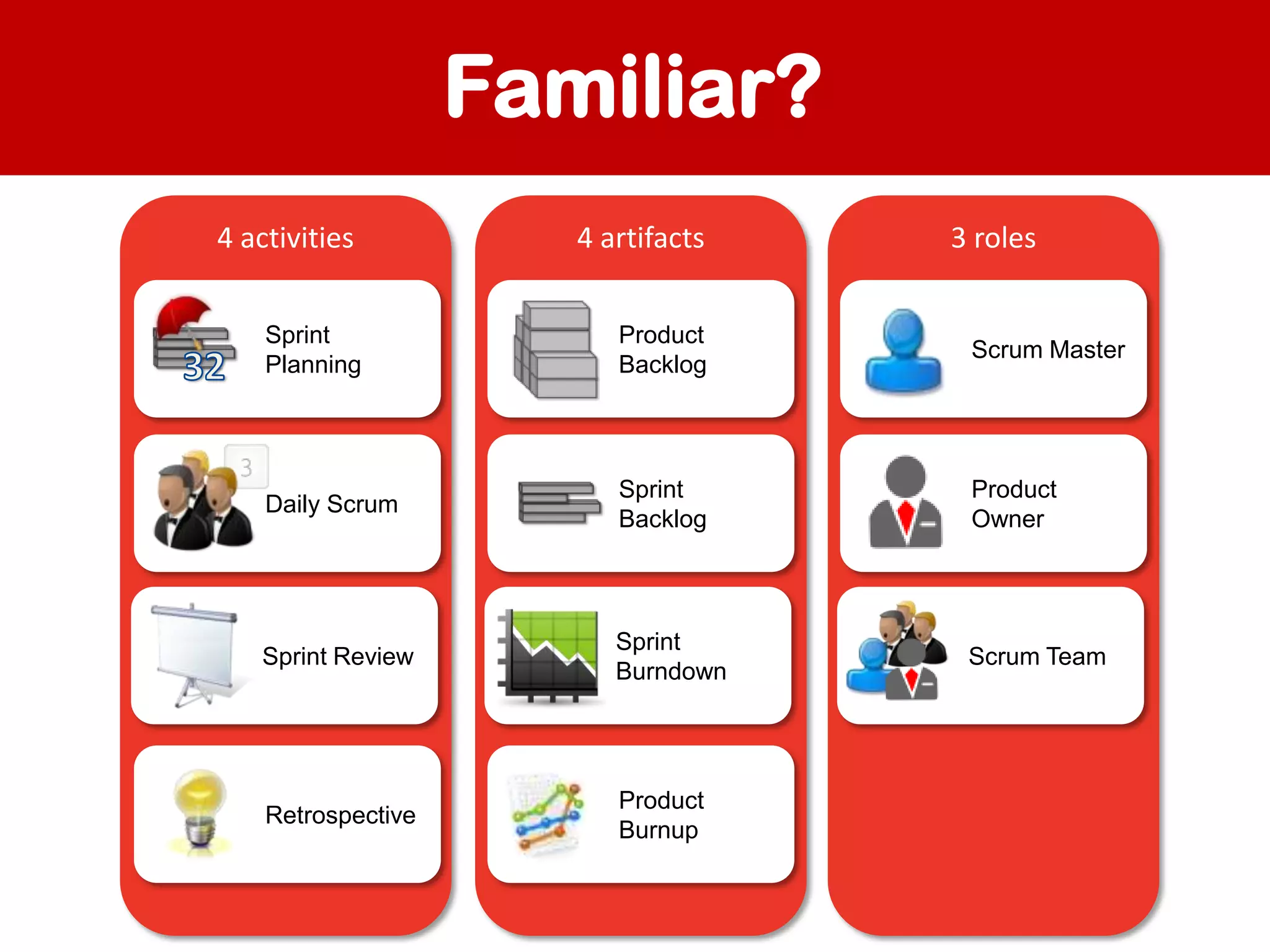
Familiar?
4 activities

4 artifacts

3 roles

Sprint
Planning

Product
Backlog

Scrum Master

Daily Scrum

Sprint
Backlog

Product
Owner

Sprint Review

Sprint
Burndown

Scrum Team

Retrospective

Product
Burnup
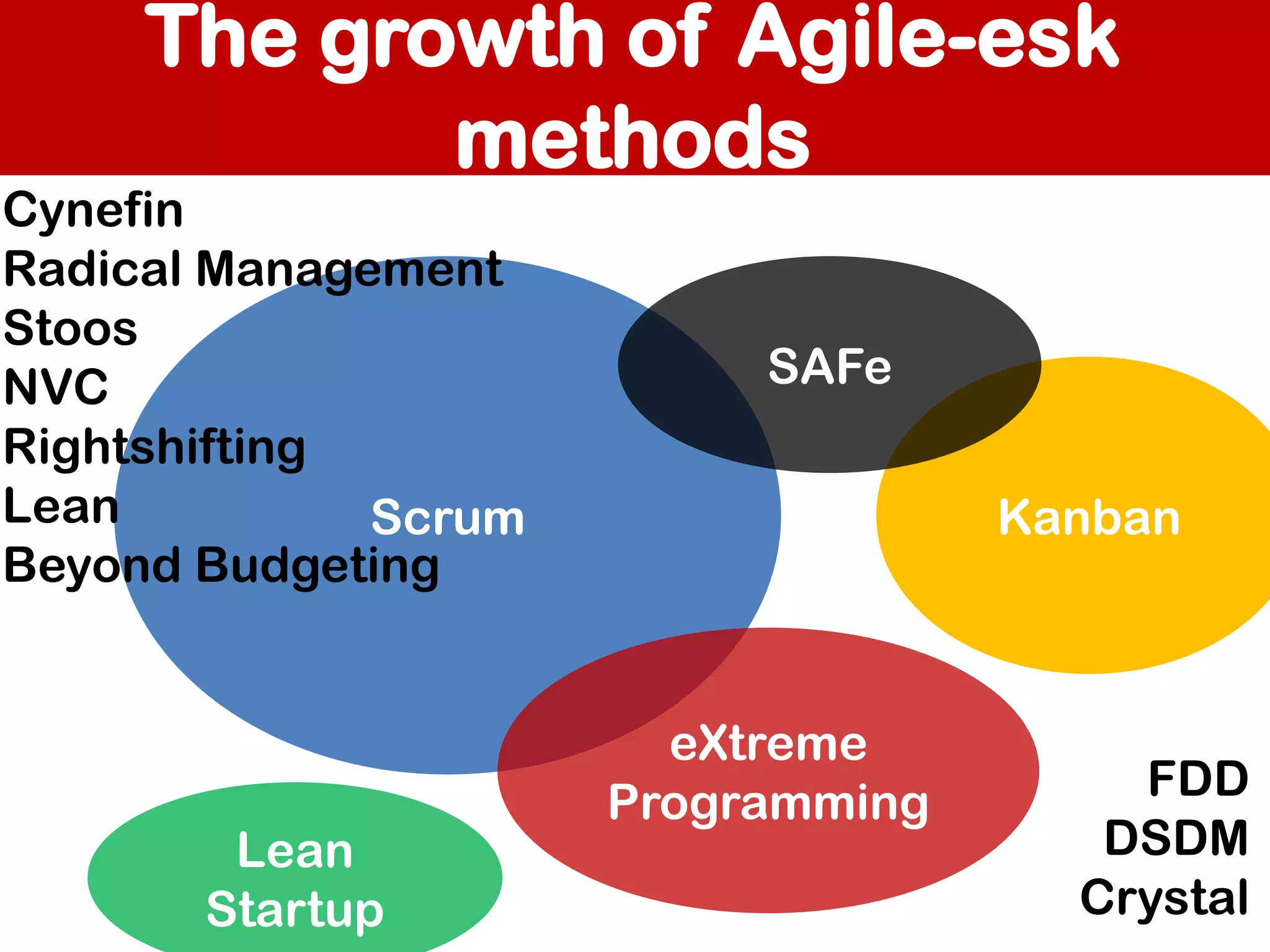
The growth of Agile-esk
methods

Cynefin
Radical Management
Stoos
NVC
Rightshifting
Lean
Scrum
Beyond Budgeting

Lean
Startup

SAFe
Kanban

eXtreme
Programming

FDD
DSDM
Crystal
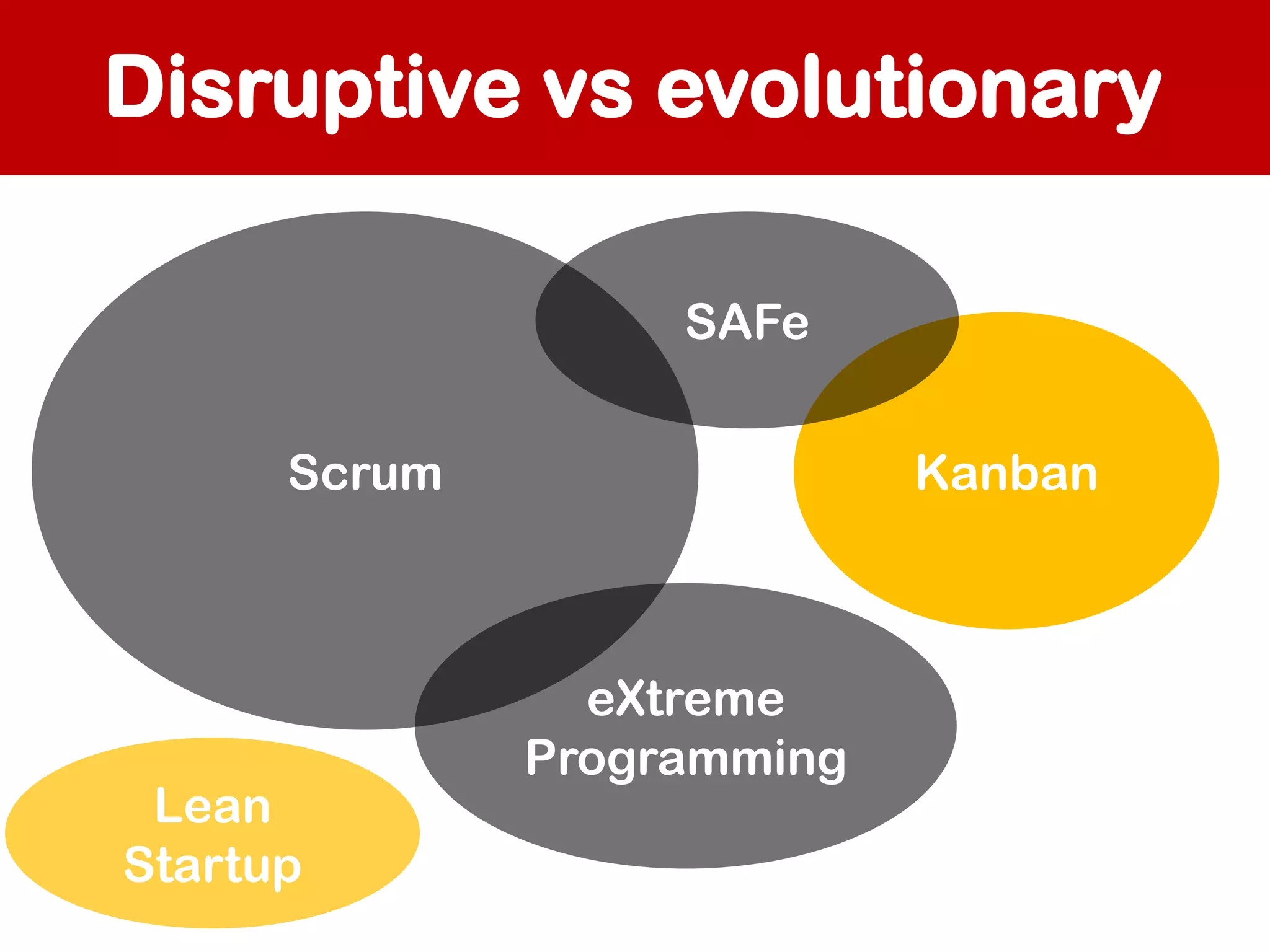
Disruptive vs evolutionary
SAFe
Scrum

Lean
Startup

Kanban

eXtreme
Programming
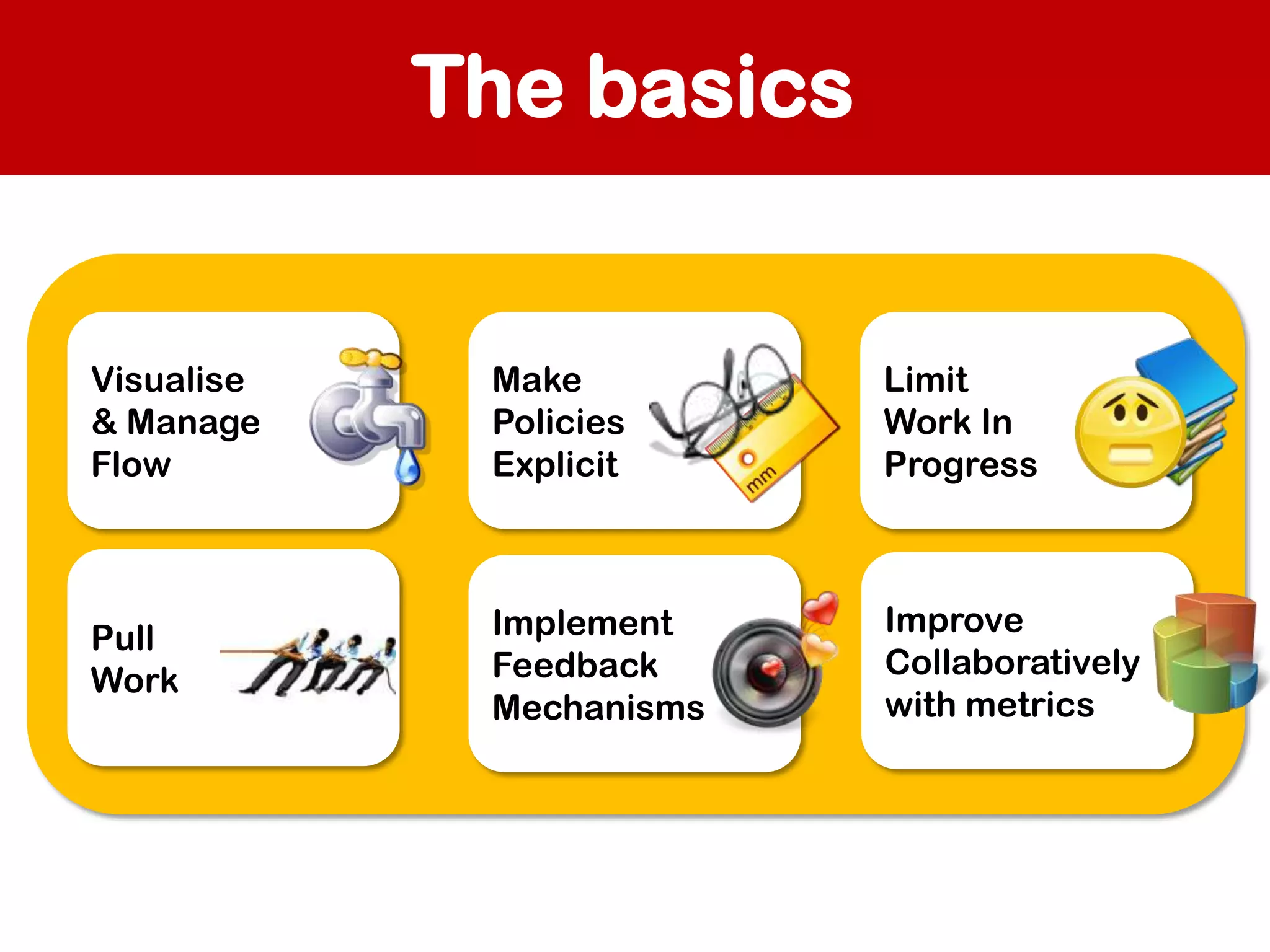
The basics

Visualise
& Manage
Flow

Make
Policies
Explicit

Limit
Work In
Progress

Pull
Work

Implement
Feedback
Mechanisms

Improve
Collaboratively
with metrics
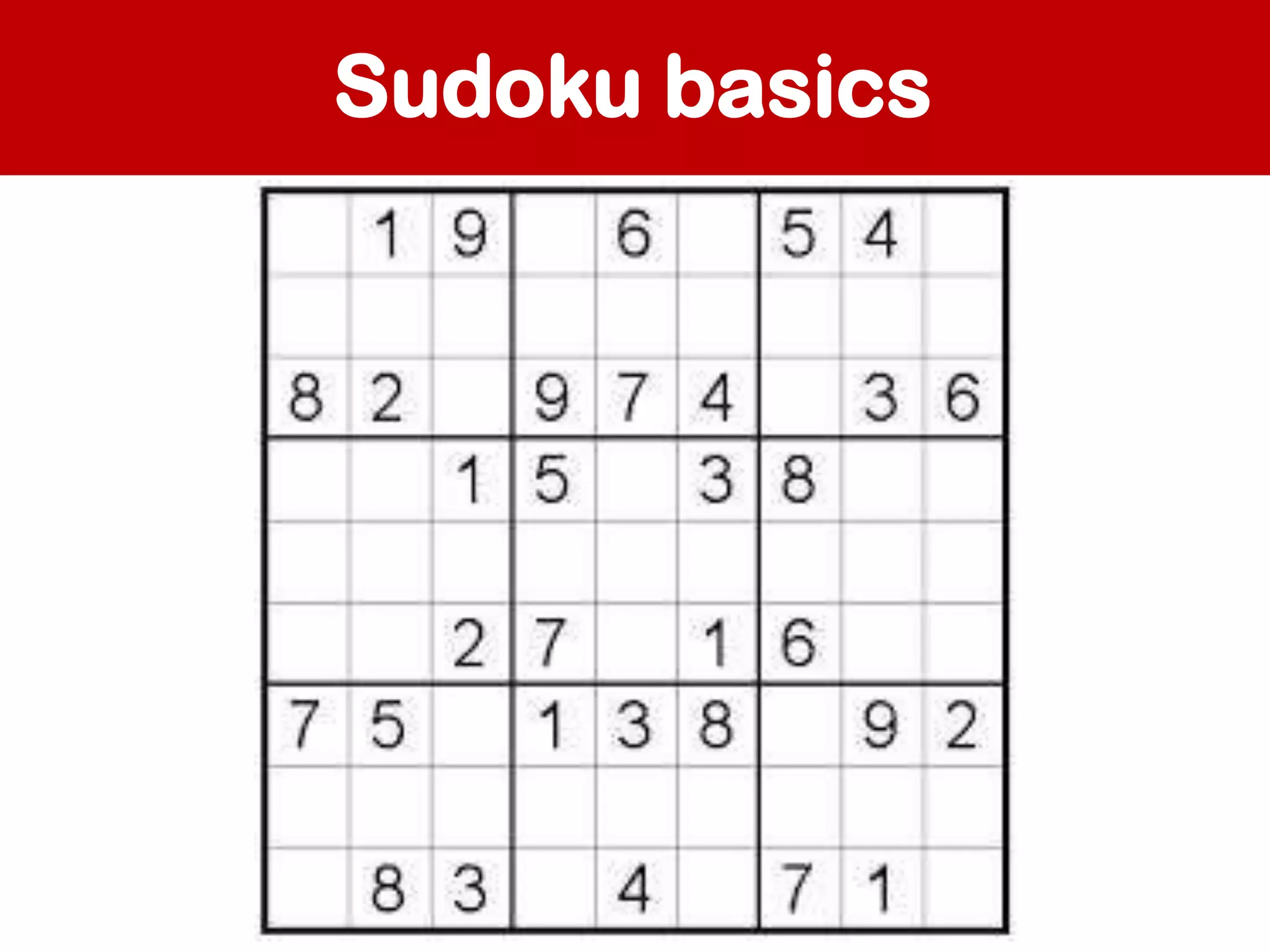
Sudoku basics
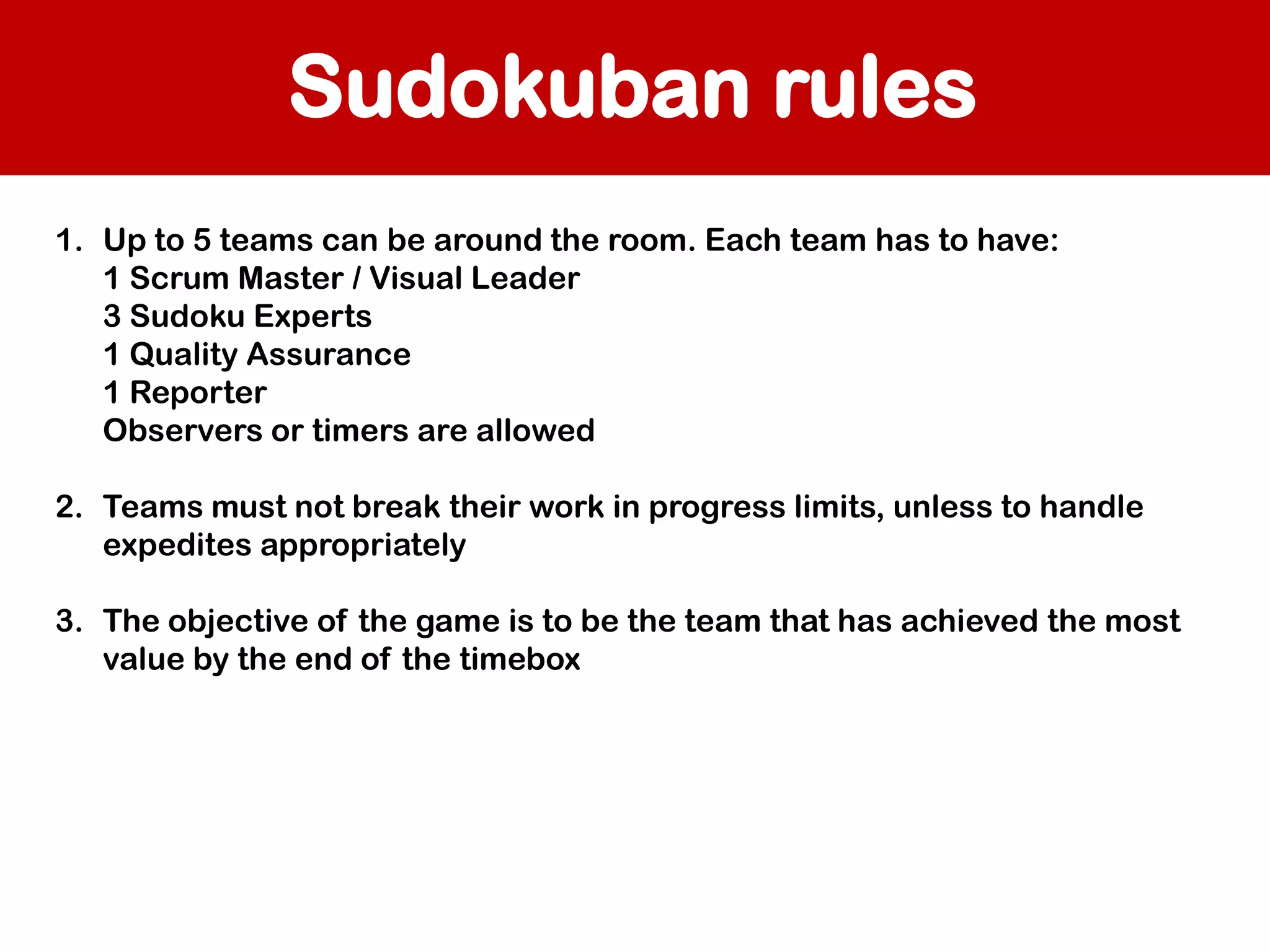
Sudokuban rules
1. Up to 5 teams can be around the room. Each team has to have:
1 Scrum Master / Visual Leader
3 Sudoku Experts
1 Quality Assurance
1 Reporter
Observers or timers are allowed
2. Teams must not break their work in progress limits, unless to handle
expedites appropriately
3. The objective of the game is to be the team that has achieved the most
value by the end of the timebox
Sudokuban round 1
Mini retrospective
1.What worked well?
2.What to do differently?
Choose new WIP limits
Sudokuban round 2
Mini retrospective
1.What worked well?
2.What to do differently?
3.What still puzzles you?
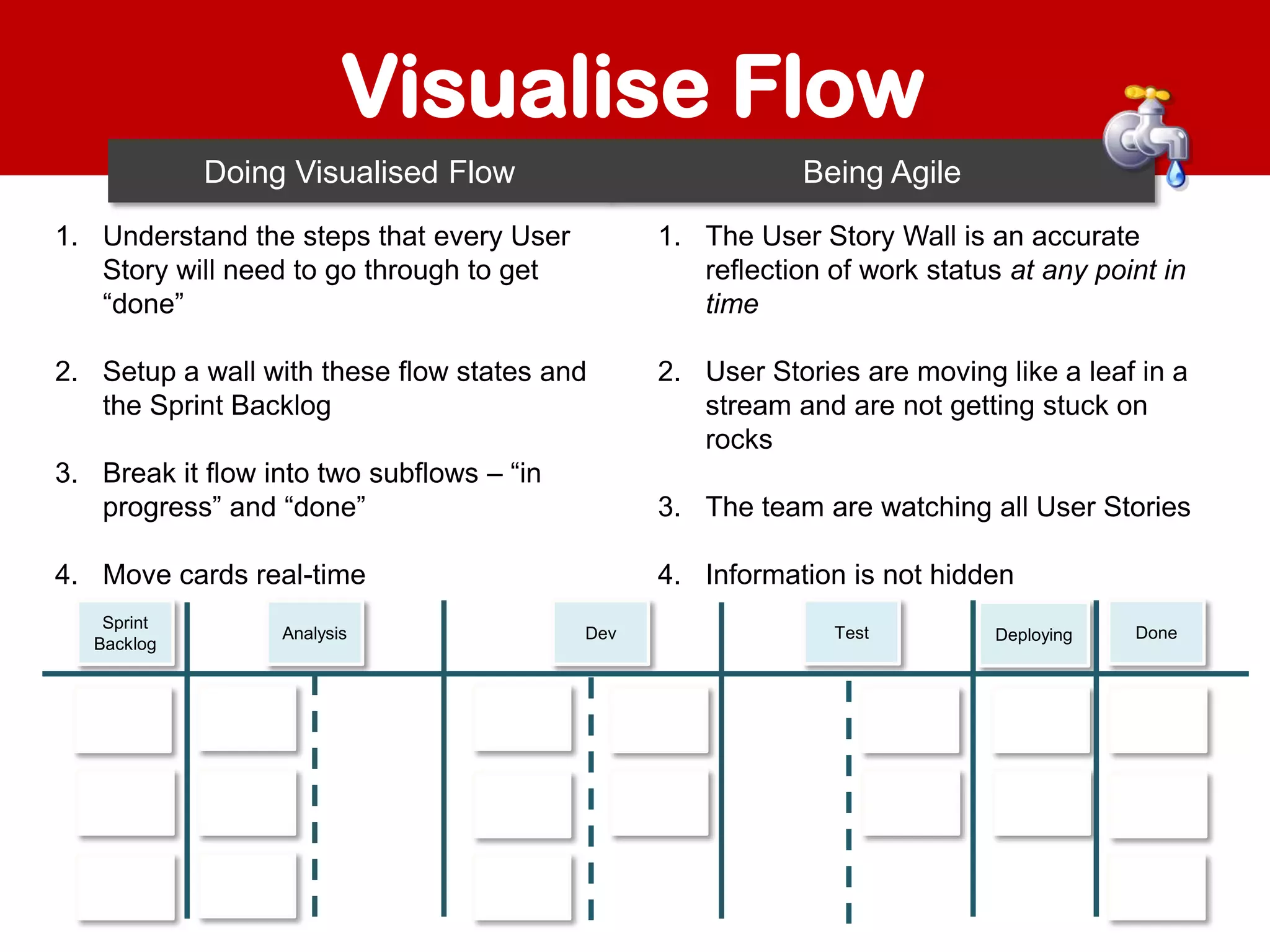
Visualise Flow
Doing Visualised Flow

Being Agile

1. Understand the steps that every User
Story will need to go through to get
“done”

1. The User Story Wall is an accurate
reflection of work status at any point in
time

2. Setup a wall with these flow states and
the Sprint Backlog

2. User Stories are moving like a leaf in a
stream and are not getting stuck on
rocks

3. Break it flow into two subflows – “in
progress” and “done”

3. The team are watching all User Stories

4. Move cards real-time

4. Information is not hidden

Sprint
Backlog

Analysis

Dev

Test

Deploying

Done
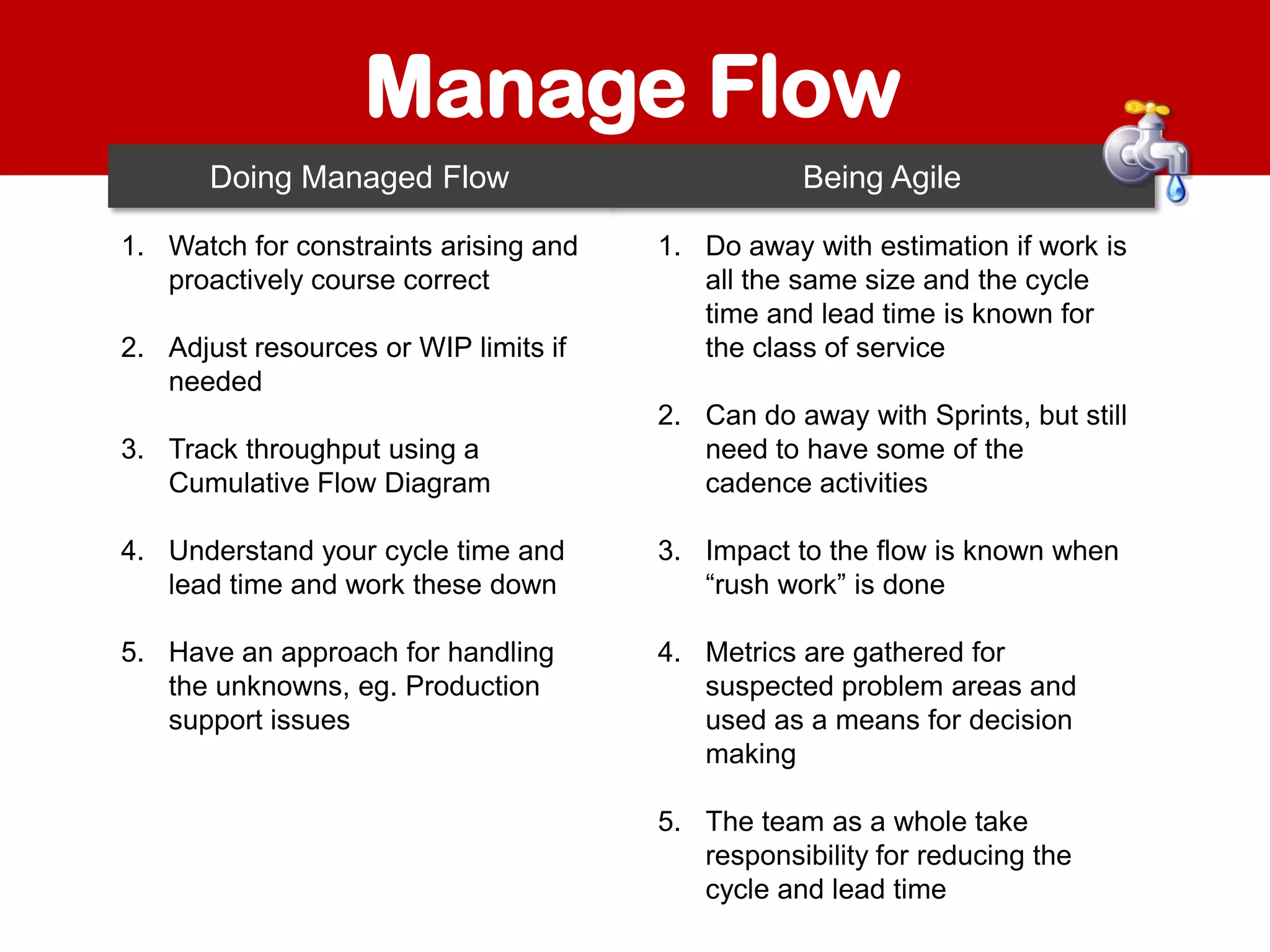
Manage Flow
Doing Managed Flow
1. Watch for constraints arising and
proactively course correct
2. Adjust resources or WIP limits if
needed

Being Agile
1. Do away with estimation if work is
all the same size and the cycle
time and lead time is known for
the class of service

3. Track throughput using a
Cumulative Flow Diagram

2. Can do away with Sprints, but still
need to have some of the
cadence activities

4. Understand your cycle time and
lead time and work these down

3. Impact to the flow is known when
“rush work” is done

5. Have an approach for handling
the unknowns, eg. Production
support issues

4. Metrics are gathered for
suspected problem areas and
used as a means for decision
making
5. The team as a whole take
responsibility for reducing the
cycle and lead time
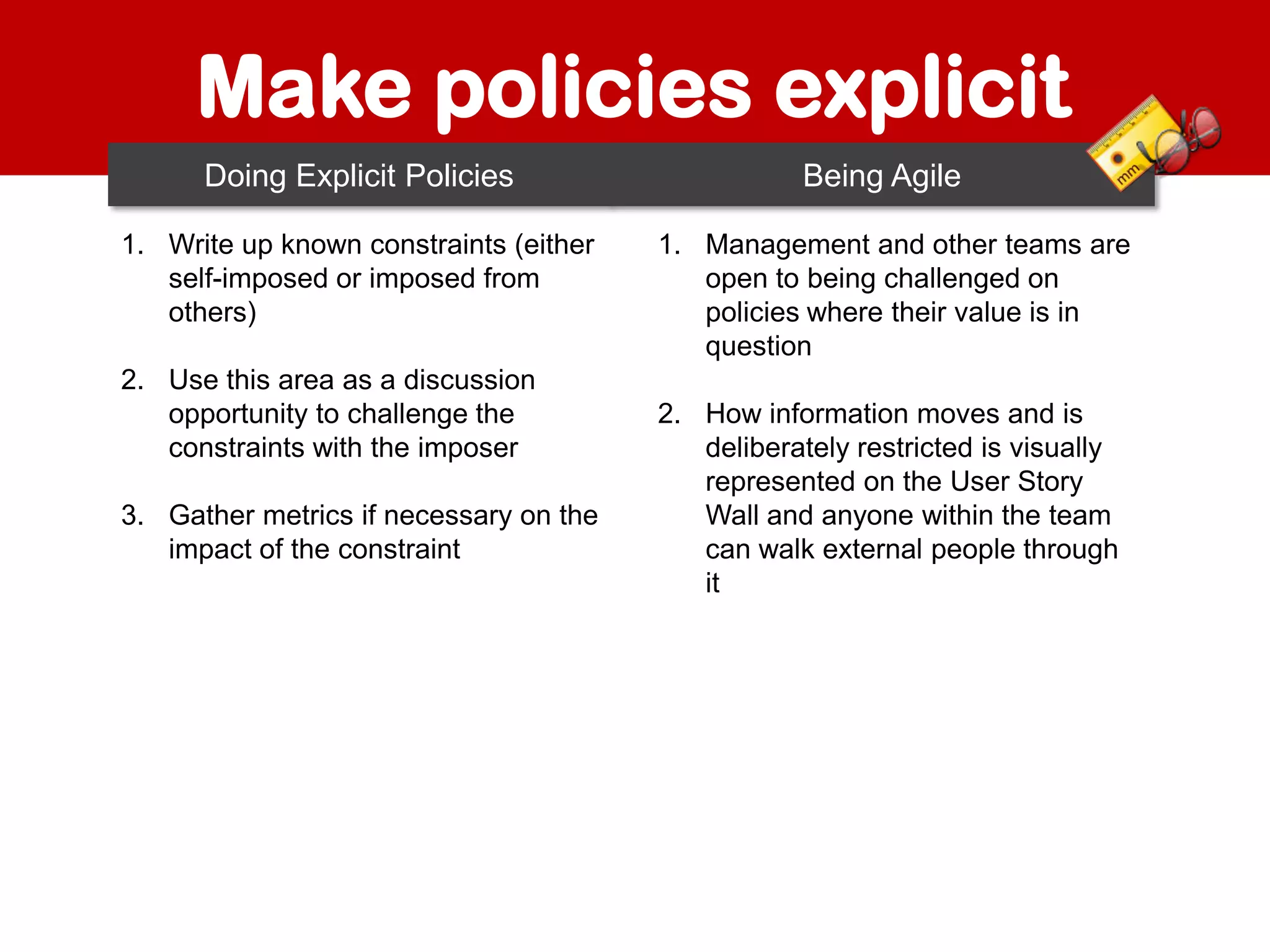
Make policies explicit
Doing Explicit Policies
1. Write up known constraints (either
self-imposed or imposed from
others)
2. Use this area as a discussion
opportunity to challenge the
constraints with the imposer
3. Gather metrics if necessary on the
impact of the constraint

Being Agile
1. Management and other teams are
open to being challenged on
policies where their value is in
question
2. How information moves and is
deliberately restricted is visually
represented on the User Story
Wall and anyone within the team
can walk external people through
it
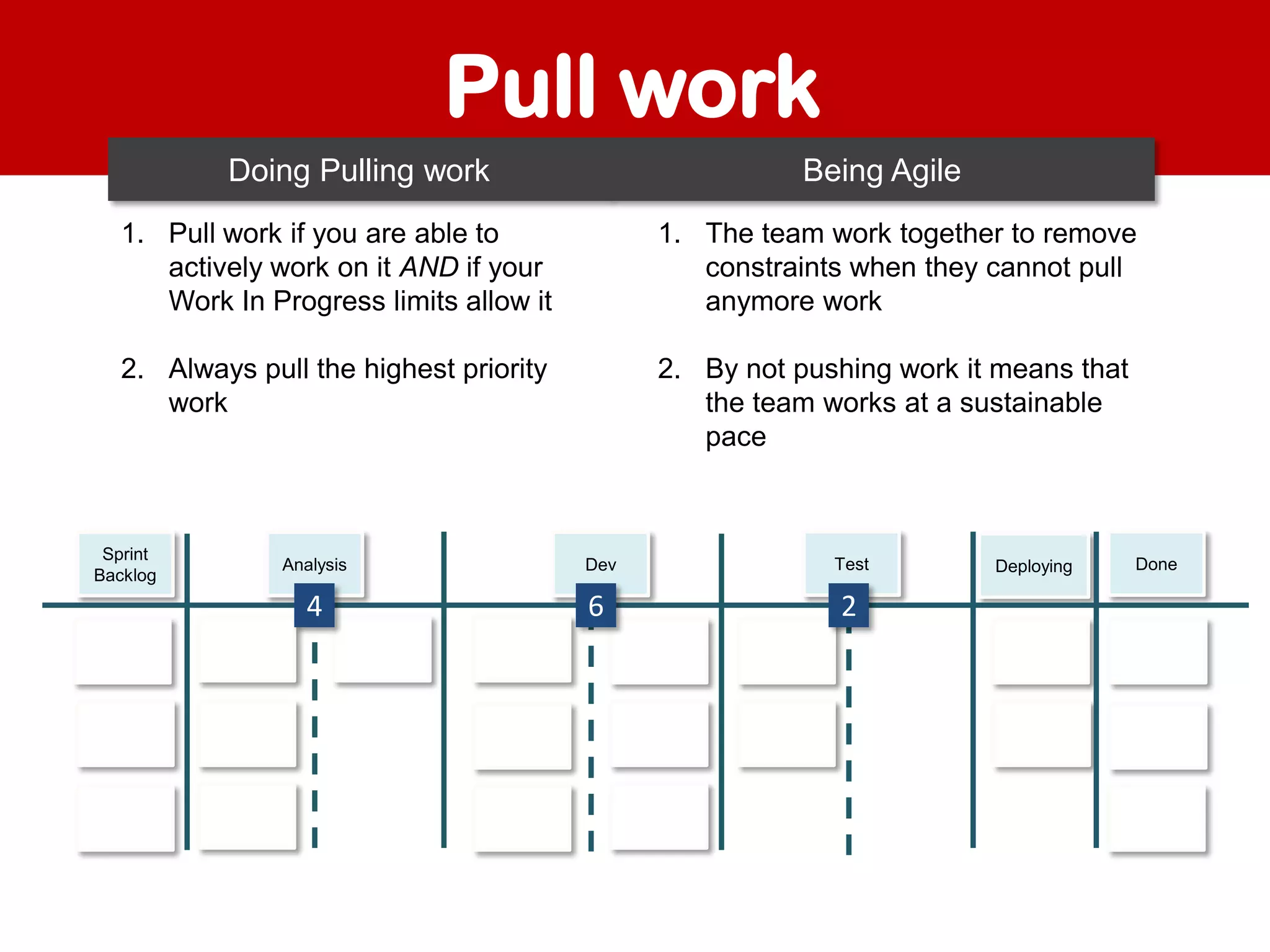
Pull work
Doing Pulling work

Being Agile

1. Pull work if you are able to
actively work on it AND if your
Work In Progress limits allow it

1. The team work together to remove
constraints when they cannot pull
anymore work

2. Always pull the highest priority
work

2. By not pushing work it means that
the team works at a sustainable
pace

Sprint
Backlog

Analysis

Dev

Test

4

6

2

Deploying

Done
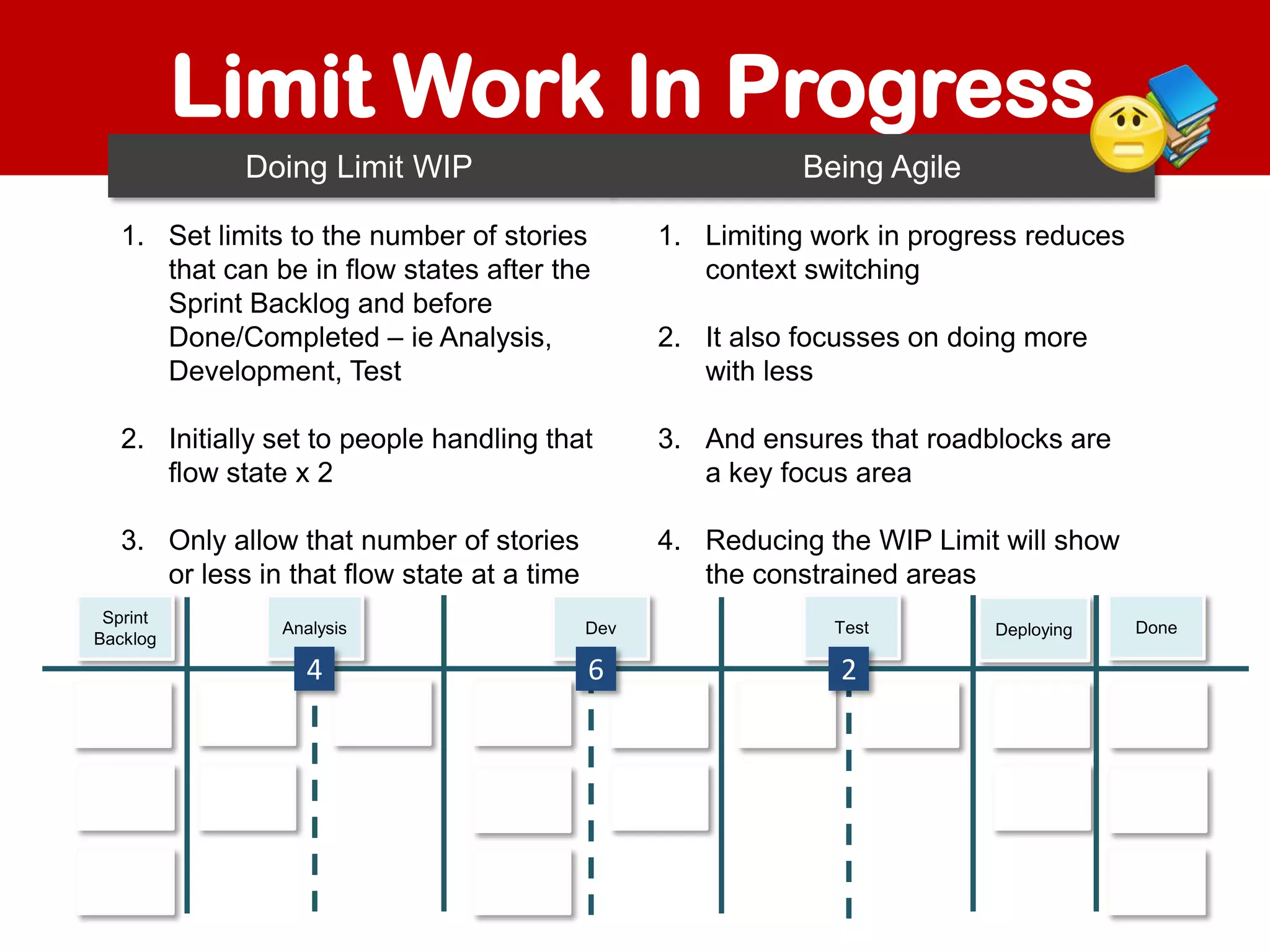
Limit Work In Progress
Doing Limit WIP

Being Agile

1. Set limits to the number of stories
that can be in flow states after the
Sprint Backlog and before
Done/Completed – ie Analysis,
Development, Test

1. Limiting work in progress reduces
context switching

2. Initially set to people handling that
flow state x 2

3. And ensures that roadblocks are
a key focus area

3. Only allow that number of stories
or less in that flow state at a time

4. Reducing the WIP Limit will show
the constrained areas

Sprint
Backlog

2. It also focusses on doing more
with less

Analysis

Dev

Test

4

6

2

Deploying

Done
Want more?
Renee Troughton
agileforest.com
leanpub.comAgileForest
renee@unbounddna.com
@agilerenee

theagile
revolution.com

unbounddna.com

Sudokuban - A practical Kanban learning game

  • 1.
  • 2.
    Familiar? 4 activities 4 artifacts 3roles Sprint Planning Product Backlog Scrum Master Daily Scrum Sprint Backlog Product Owner Sprint Review Sprint Burndown Scrum Team Retrospective Product Burnup
  • 3.
    The growth ofAgile-esk methods Cynefin Radical Management Stoos NVC Rightshifting Lean Scrum Beyond Budgeting Lean Startup SAFe Kanban eXtreme Programming FDD DSDM Crystal
  • 4.
  • 5.
    The basics Visualise & Manage Flow Make Policies Explicit Limit WorkIn Progress Pull Work Implement Feedback Mechanisms Improve Collaboratively with metrics
  • 6.
  • 7.
    Sudokuban rules 1. Upto 5 teams can be around the room. Each team has to have: 1 Scrum Master / Visual Leader 3 Sudoku Experts 1 Quality Assurance 1 Reporter Observers or timers are allowed 2. Teams must not break their work in progress limits, unless to handle expedites appropriately 3. The objective of the game is to be the team that has achieved the most value by the end of the timebox
  • 8.
    Sudokuban round 1 Miniretrospective 1.What worked well? 2.What to do differently? Choose new WIP limits
  • 9.
    Sudokuban round 2 Miniretrospective 1.What worked well? 2.What to do differently? 3.What still puzzles you?
  • 10.
    Visualise Flow Doing VisualisedFlow Being Agile 1. Understand the steps that every User Story will need to go through to get “done” 1. The User Story Wall is an accurate reflection of work status at any point in time 2. Setup a wall with these flow states and the Sprint Backlog 2. User Stories are moving like a leaf in a stream and are not getting stuck on rocks 3. Break it flow into two subflows – “in progress” and “done” 3. The team are watching all User Stories 4. Move cards real-time 4. Information is not hidden Sprint Backlog Analysis Dev Test Deploying Done
  • 11.
    Manage Flow Doing ManagedFlow 1. Watch for constraints arising and proactively course correct 2. Adjust resources or WIP limits if needed Being Agile 1. Do away with estimation if work is all the same size and the cycle time and lead time is known for the class of service 3. Track throughput using a Cumulative Flow Diagram 2. Can do away with Sprints, but still need to have some of the cadence activities 4. Understand your cycle time and lead time and work these down 3. Impact to the flow is known when “rush work” is done 5. Have an approach for handling the unknowns, eg. Production support issues 4. Metrics are gathered for suspected problem areas and used as a means for decision making 5. The team as a whole take responsibility for reducing the cycle and lead time
  • 12.
    Make policies explicit DoingExplicit Policies 1. Write up known constraints (either self-imposed or imposed from others) 2. Use this area as a discussion opportunity to challenge the constraints with the imposer 3. Gather metrics if necessary on the impact of the constraint Being Agile 1. Management and other teams are open to being challenged on policies where their value is in question 2. How information moves and is deliberately restricted is visually represented on the User Story Wall and anyone within the team can walk external people through it
  • 13.
    Pull work Doing Pullingwork Being Agile 1. Pull work if you are able to actively work on it AND if your Work In Progress limits allow it 1. The team work together to remove constraints when they cannot pull anymore work 2. Always pull the highest priority work 2. By not pushing work it means that the team works at a sustainable pace Sprint Backlog Analysis Dev Test 4 6 2 Deploying Done
  • 14.
    Limit Work InProgress Doing Limit WIP Being Agile 1. Set limits to the number of stories that can be in flow states after the Sprint Backlog and before Done/Completed – ie Analysis, Development, Test 1. Limiting work in progress reduces context switching 2. Initially set to people handling that flow state x 2 3. And ensures that roadblocks are a key focus area 3. Only allow that number of stories or less in that flow state at a time 4. Reducing the WIP Limit will show the constrained areas Sprint Backlog 2. It also focusses on doing more with less Analysis Dev Test 4 6 2 Deploying Done
  • 15.
  • 16.

Editor's Notes

  • #6 Limit WIP – Stop starting, start finishingLimit WIP & Pull work - Need to explain an expedite
  • #9 A need can be met by multiple strategies. Understanding the need can help to ensure that we are not focussing on the wrong strategy.
  • #10 A need can be met by multiple strategies. Understanding the need can help to ensure that we are not focussing on the wrong strategy.
  • #12 Explain class of service
  • #16 A need can be met by multiple strategies. Understanding the need can help to ensure that we are not focussing on the wrong strategy.
  • #17 Image: http://cdn.drstevegreene.com/wp-content/uploads/2012/03/Traffic_light1.jpg