Successful recycling
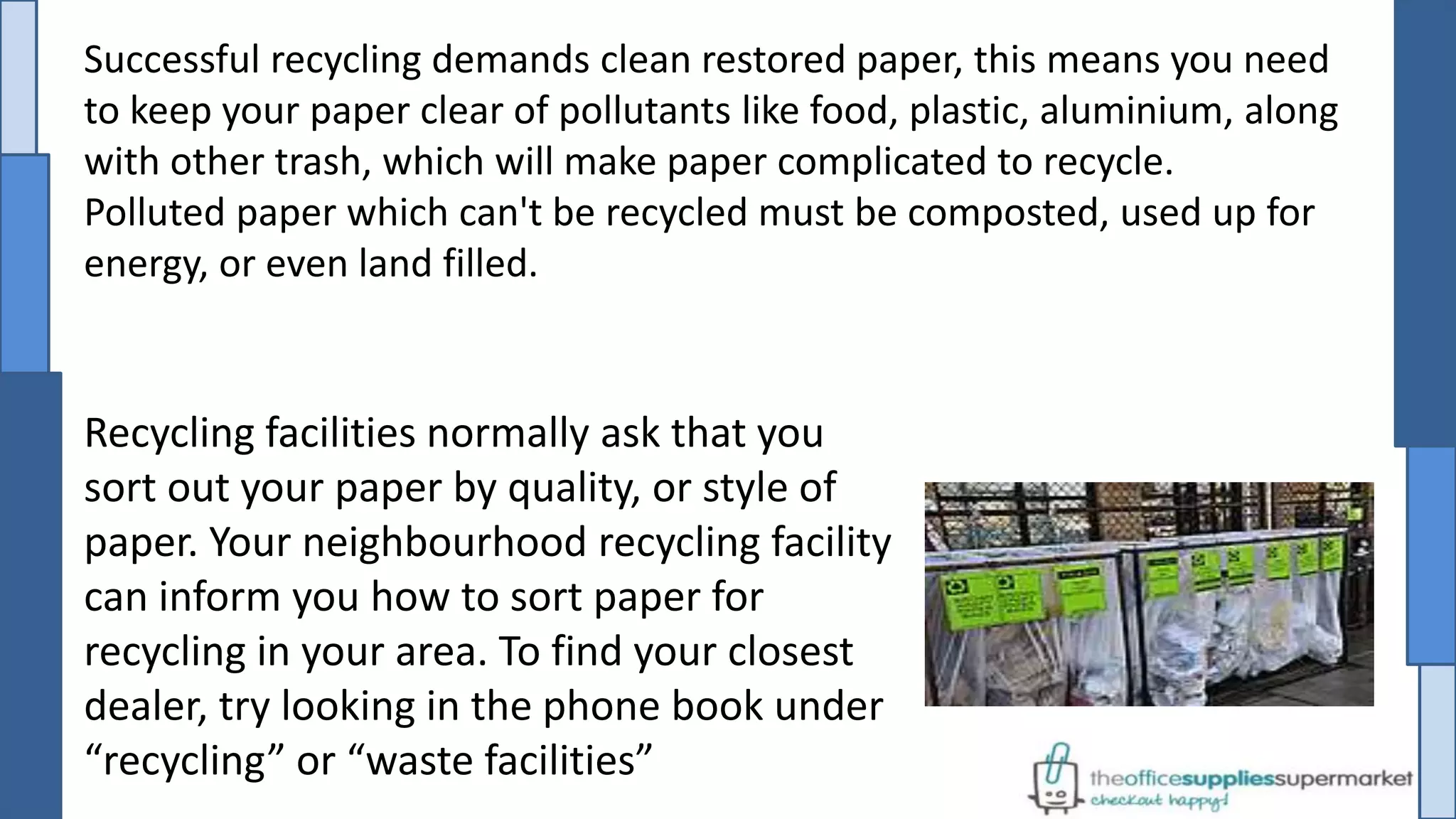
Recycling facilities normally ask that you
sort out your paper by quality, or style of
paper. Your neighbourhood recycling facility
can inform you how to sort paper for
recycling in your area. To find your closest
dealer, try looking in the phone book under
“recycling” or “waste facilities”
Successful recycling demands clean restored paper, this means you need
to keep your paper clear of pollutants like food, plastic, aluminium, along
with other trash, which will make paper complicated to recycle.
Polluted paper which can't be recycled must be composted, used up for
energy, or even land filled.
Paper that's ready to be recycled is generally of
three varieties
The very first is leftovers of paper which are
recycled on the inside in paper mills. When paper
mills produce paper, lots of raw contents are left
untouched. These raw materials are subsequently
recycled back into the paper factory.
The second kind is paper that's discarded prior to it
reaching store shelves, particularly paper wasted in
product packaging.
The third kind is paper which has been utilized by
the consumer.
The third kind of paper is practically any paper you may think of.
Outdated newspapers, workplace papers, publications, paper
from households, and phone directories. Ink is completely
removed from the paper utilizing a manufacturing procedure
called de-inking, which was created by a German jurist known as
Justus Claproth.
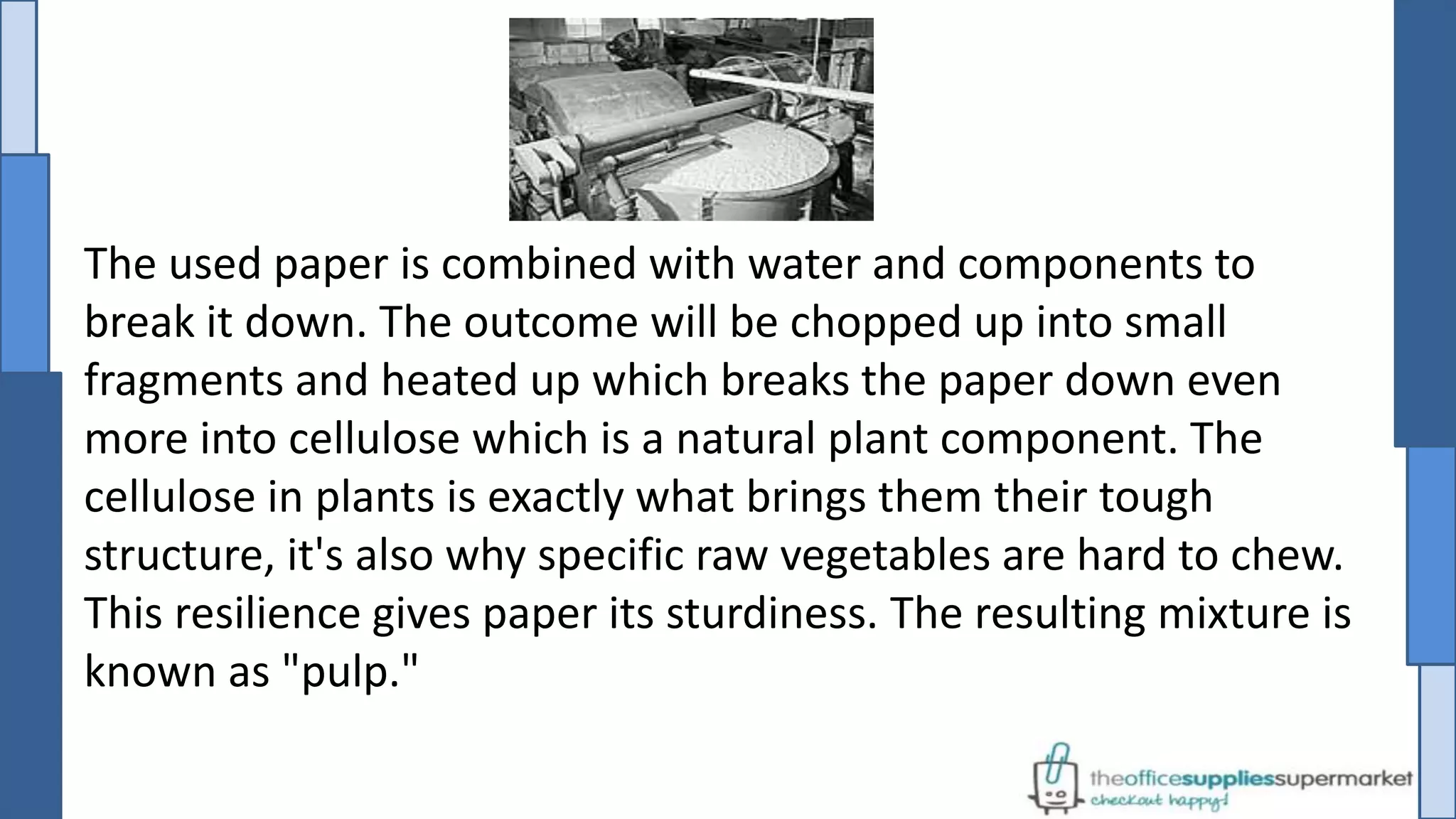
The used paper is combined with water and components to
break it down. The outcome will be chopped up into small
fragments and heated up which breaks the paper down even
more into cellulose which is a natural plant component. The
cellulose in plants is exactly what brings them their tough
structure, it's also why specific raw vegetables are hard to chew.
This resilience gives paper its sturdiness. The resulting mixture is
known as "pulp."
Next, the pulp is placed through a
commercial strainer, which in turn eliminates
any glue or plastic material still contained in
the mixture.
Since glue and plastic aren't natural
substances, they do not break down when
subject to heat.
Next, the combination is bleached to provide its distinctive
whitened colour or it can be dyed. Additional water is added,
and in the end it can be utilized to create new paper.
Most restored paper is reprocessed
back to paper and paperboard items.
With some exceptions, restored paper
is usually recycled into a level similar to,
or of reduced quality than, the quality
of the initial product.
For example, old corrugated containers
are widely used to create new recycled
corrugated containers.
Restored printing and writing papers
could be utilized to help make new
recycled copy paper.
CONTACT US
08451 701 601
sales@theofficesuppliessupermarket.com
http://www.theofficesuppliessupermarket.com

Successful recycling

  • 1.
  • 2.
    Recycling facilities normallyask that you sort out your paper by quality, or style of paper. Your neighbourhood recycling facility can inform you how to sort paper for recycling in your area. To find your closest dealer, try looking in the phone book under “recycling” or “waste facilities” Successful recycling demands clean restored paper, this means you need to keep your paper clear of pollutants like food, plastic, aluminium, along with other trash, which will make paper complicated to recycle. Polluted paper which can't be recycled must be composted, used up for energy, or even land filled.
  • 3.
    Paper that's readyto be recycled is generally of three varieties The very first is leftovers of paper which are recycled on the inside in paper mills. When paper mills produce paper, lots of raw contents are left untouched. These raw materials are subsequently recycled back into the paper factory. The second kind is paper that's discarded prior to it reaching store shelves, particularly paper wasted in product packaging. The third kind is paper which has been utilized by the consumer.
  • 4.
    The third kindof paper is practically any paper you may think of. Outdated newspapers, workplace papers, publications, paper from households, and phone directories. Ink is completely removed from the paper utilizing a manufacturing procedure called de-inking, which was created by a German jurist known as Justus Claproth.
  • 5.
    The used paperis combined with water and components to break it down. The outcome will be chopped up into small fragments and heated up which breaks the paper down even more into cellulose which is a natural plant component. The cellulose in plants is exactly what brings them their tough structure, it's also why specific raw vegetables are hard to chew. This resilience gives paper its sturdiness. The resulting mixture is known as "pulp."
  • 6.
    Next, the pulpis placed through a commercial strainer, which in turn eliminates any glue or plastic material still contained in the mixture. Since glue and plastic aren't natural substances, they do not break down when subject to heat.
  • 7.
    Next, the combinationis bleached to provide its distinctive whitened colour or it can be dyed. Additional water is added, and in the end it can be utilized to create new paper.
  • 8.
    Most restored paperis reprocessed back to paper and paperboard items. With some exceptions, restored paper is usually recycled into a level similar to, or of reduced quality than, the quality of the initial product. For example, old corrugated containers are widely used to create new recycled corrugated containers. Restored printing and writing papers could be utilized to help make new recycled copy paper.
  • 9.
    CONTACT US 08451 701601 sales@theofficesuppliessupermarket.com http://www.theofficesuppliessupermarket.com