Facts about A3 paper-- 
Its size dimensions, usage and a bit of history
A3 paper is part of the ISO 216 standard used all over the world. It is one of 
the more popular paper formats used internationally. The A3 paper is also 
now supported by most printer and computer software programs.
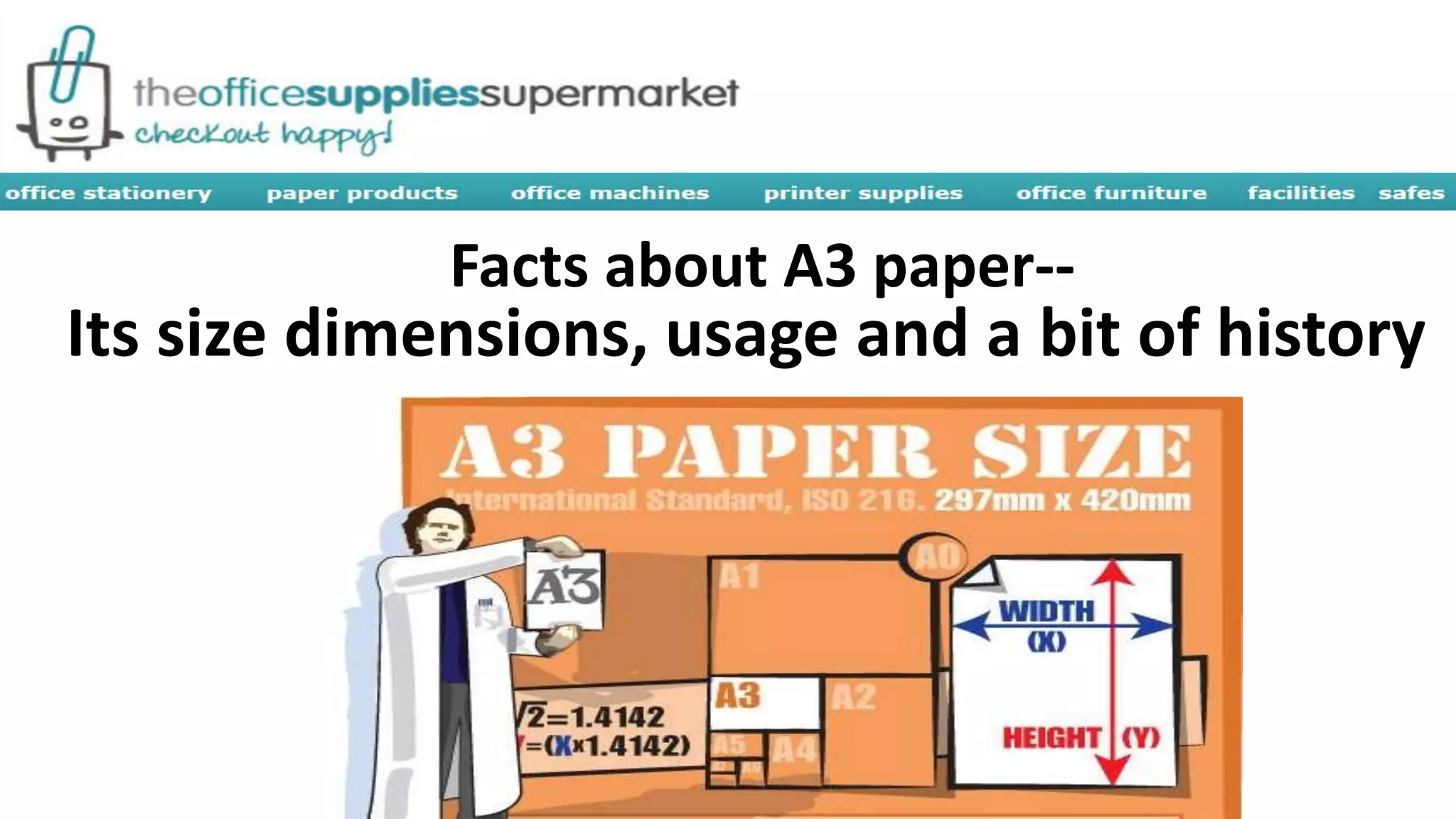
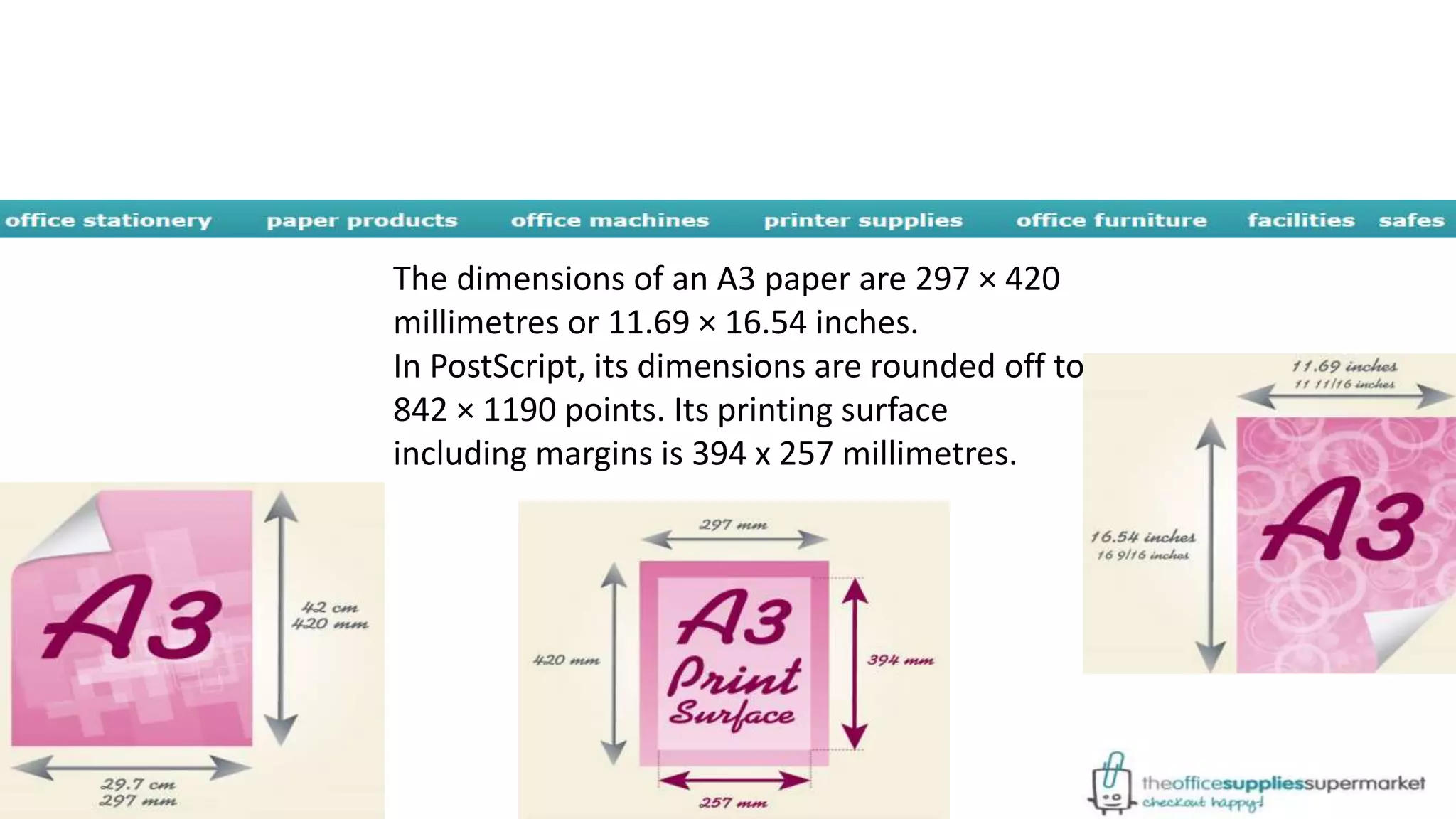
The dimensions of an A3 paper are 297 × 420 
millimetres or 11.69 × 16.54 inches. 
In PostScript, its dimensions are rounded off to 
842 × 1190 points. Its printing surface 
including margins is 394 x 257 millimetres.
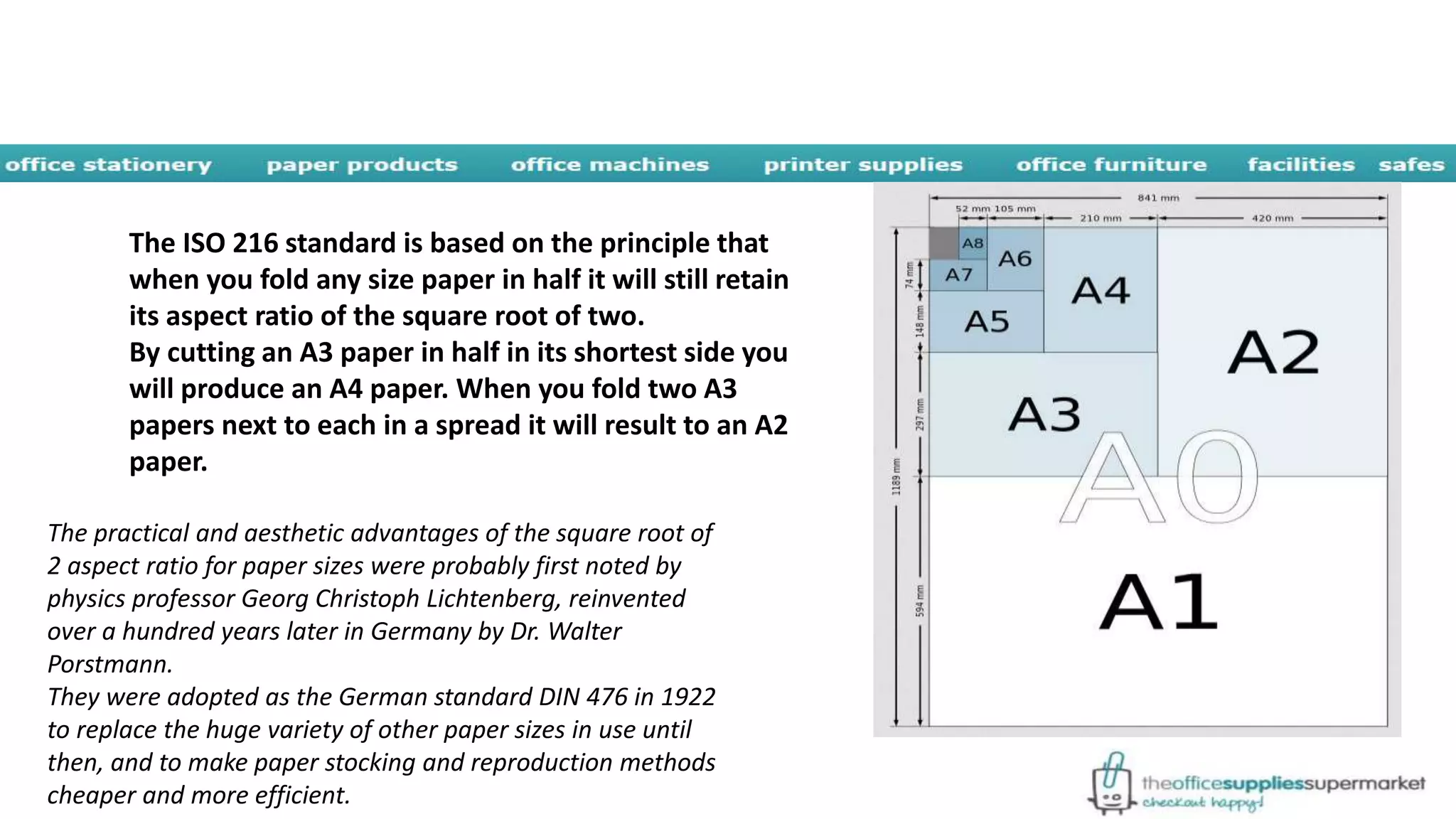
The ISO 216 standard is based on the principle that 
when you fold any size paper in half it will still retain 
its aspect ratio of the square root of two. 
By cutting an A3 paper in half in its shortest side you 
will produce an A4 paper. When you fold two A3 
papers next to each in a spread it will result to an A2 
paper. 
The practical and aesthetic advantages of the square root of 
2 aspect ratio for paper sizes were probably first noted by 
physics professor Georg Christoph Lichtenberg, reinvented 
over a hundred years later in Germany by Dr. Walter 
Porstmann. 
They were adopted as the German standard DIN 476 in 1922 
to replace the huge variety of other paper sizes in use until 
then, and to make paper stocking and reproduction methods 
cheaper and more efficient.
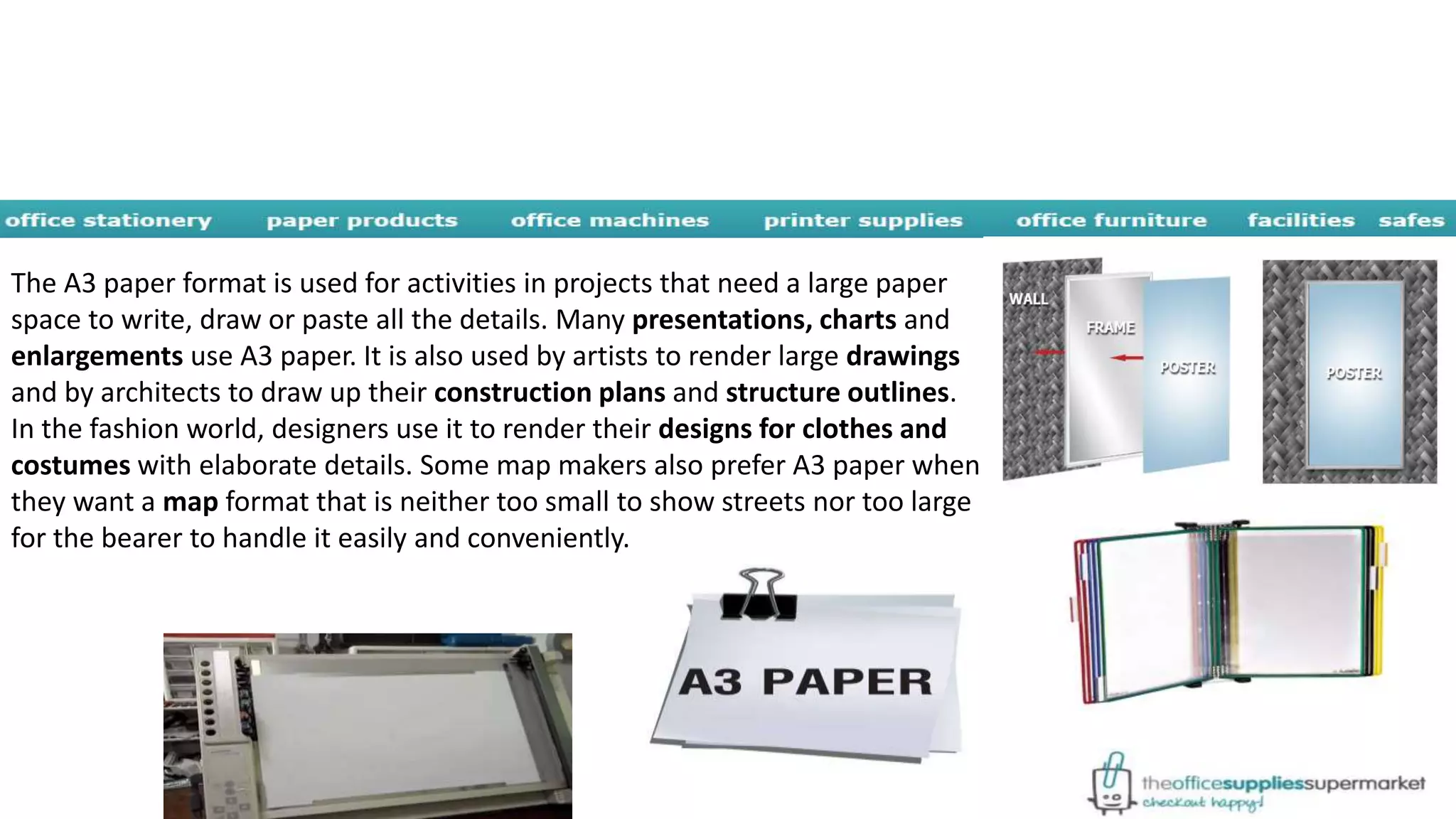
The A3 paper format is used for activities in projects that need a large paper 
space to write, draw or paste all the details. Many presentations, charts and 
enlargements use A3 paper. It is also used by artists to render large drawings 
and by architects to draw up their construction plans and structure outlines. 
In the fashion world, designers use it to render their designs for clothes and 
costumes with elaborate details. Some map makers also prefer A3 paper when 
they want a map format that is neither too small to show streets nor too large 
for the bearer to handle it easily and conveniently.
When printing a picture on A3 size, the image will need to meet a certain 
minimum resolution 
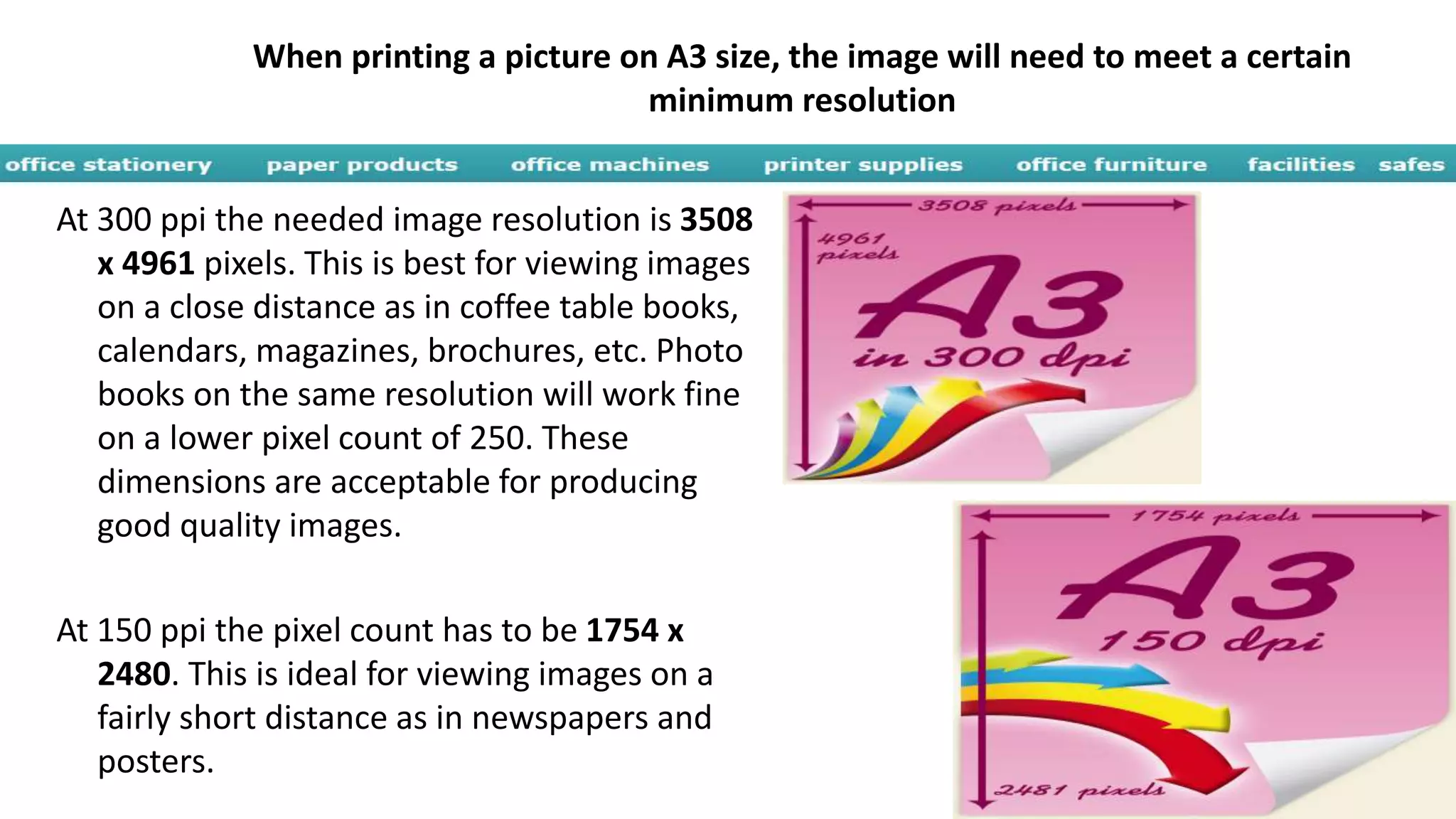
At 300 ppi the needed image resolution is 3508 
x 4961 pixels. This is best for viewing images 
on a close distance as in coffee table books, 
calendars, magazines, brochures, etc. Photo 
books on the same resolution will work fine 
on a lower pixel count of 250. These 
dimensions are acceptable for producing 
good quality images. 
At 150 ppi the pixel count has to be 1754 x 
2480. This is ideal for viewing images on a 
fairly short distance as in newspapers and 
posters.
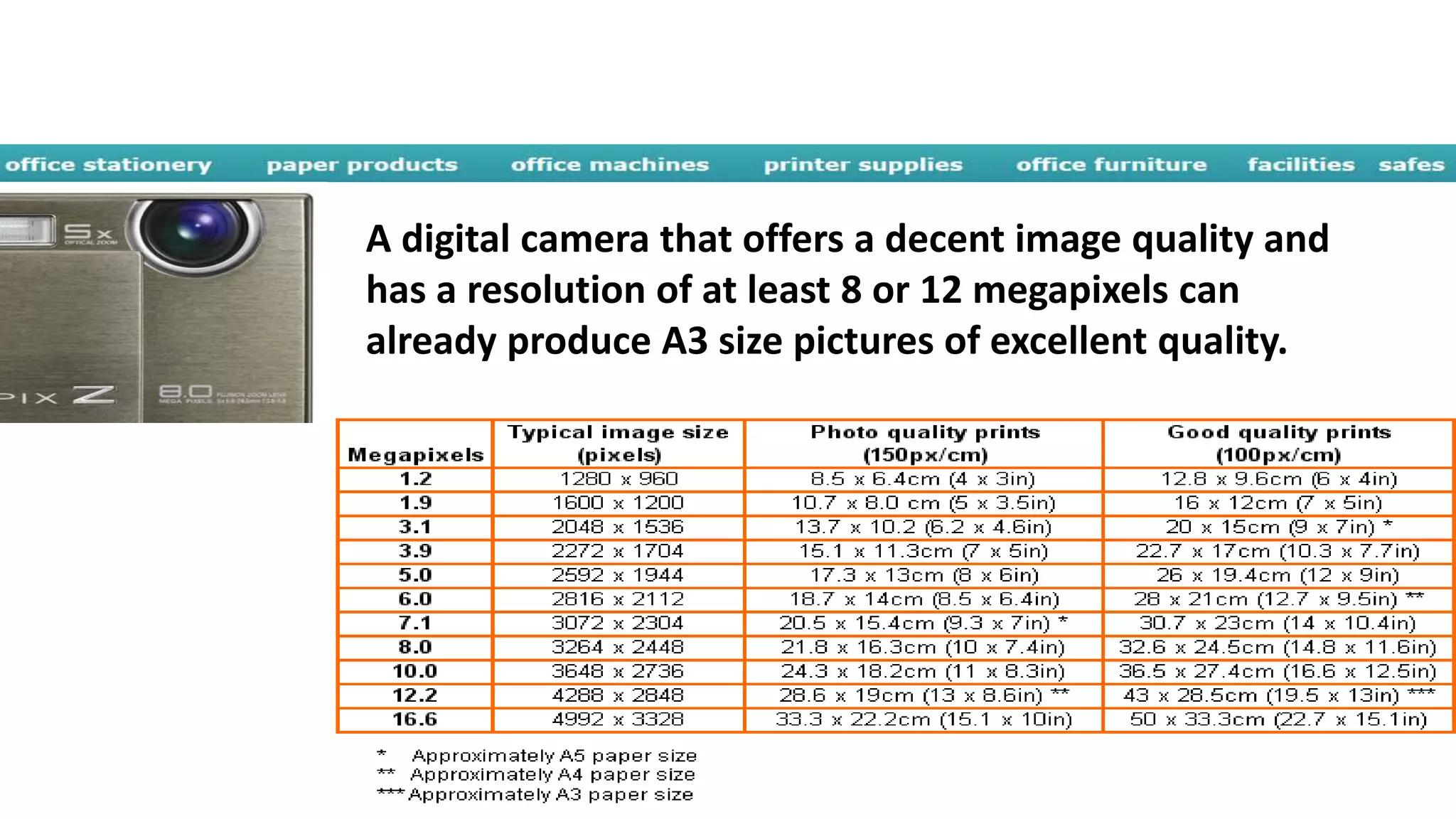
A digital camera that offers a decent image quality and 
has a resolution of at least 8 or 12 megapixels can 
already produce A3 size pictures of excellent quality.
CONTACT US 
08451 701 601 
sales@theofficesuppliessupermarket.com 
http://www.theofficesuppliessupermarket.com

Facts about a3 paper

  • 1.
    Facts about A3paper-- Its size dimensions, usage and a bit of history
  • 2.
    A3 paper ispart of the ISO 216 standard used all over the world. It is one of the more popular paper formats used internationally. The A3 paper is also now supported by most printer and computer software programs.
  • 3.
    The dimensions ofan A3 paper are 297 × 420 millimetres or 11.69 × 16.54 inches. In PostScript, its dimensions are rounded off to 842 × 1190 points. Its printing surface including margins is 394 x 257 millimetres.
  • 4.
    The ISO 216standard is based on the principle that when you fold any size paper in half it will still retain its aspect ratio of the square root of two. By cutting an A3 paper in half in its shortest side you will produce an A4 paper. When you fold two A3 papers next to each in a spread it will result to an A2 paper. The practical and aesthetic advantages of the square root of 2 aspect ratio for paper sizes were probably first noted by physics professor Georg Christoph Lichtenberg, reinvented over a hundred years later in Germany by Dr. Walter Porstmann. They were adopted as the German standard DIN 476 in 1922 to replace the huge variety of other paper sizes in use until then, and to make paper stocking and reproduction methods cheaper and more efficient.
  • 5.
    The A3 paperformat is used for activities in projects that need a large paper space to write, draw or paste all the details. Many presentations, charts and enlargements use A3 paper. It is also used by artists to render large drawings and by architects to draw up their construction plans and structure outlines. In the fashion world, designers use it to render their designs for clothes and costumes with elaborate details. Some map makers also prefer A3 paper when they want a map format that is neither too small to show streets nor too large for the bearer to handle it easily and conveniently.
  • 6.
    When printing apicture on A3 size, the image will need to meet a certain minimum resolution At 300 ppi the needed image resolution is 3508 x 4961 pixels. This is best for viewing images on a close distance as in coffee table books, calendars, magazines, brochures, etc. Photo books on the same resolution will work fine on a lower pixel count of 250. These dimensions are acceptable for producing good quality images. At 150 ppi the pixel count has to be 1754 x 2480. This is ideal for viewing images on a fairly short distance as in newspapers and posters.
  • 7.
    A digital camerathat offers a decent image quality and has a resolution of at least 8 or 12 megapixels can already produce A3 size pictures of excellent quality.
  • 8.
    CONTACT US 08451701 601 sales@theofficesuppliessupermarket.com http://www.theofficesuppliessupermarket.com