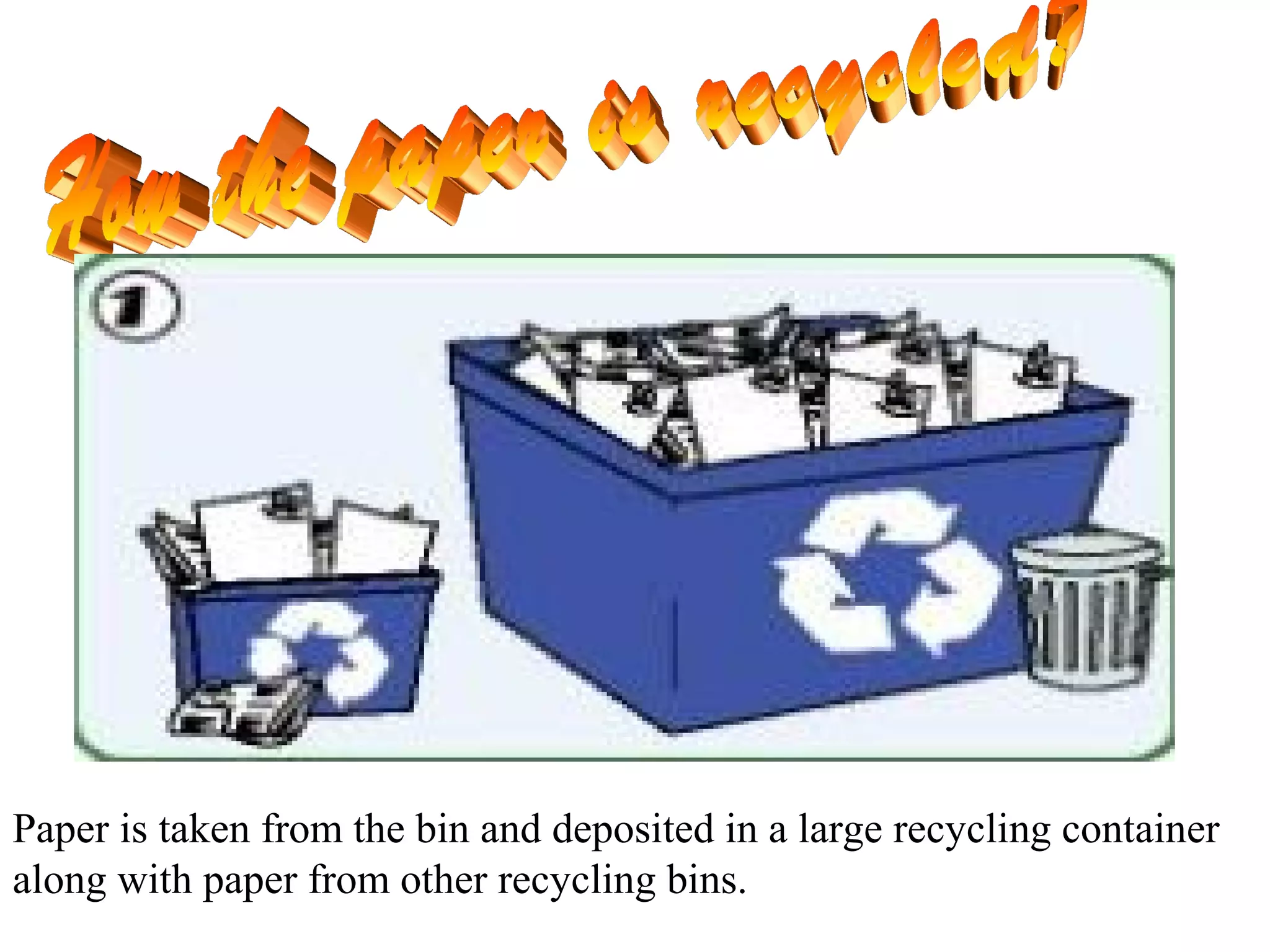
Paper is taken from the bin and deposited in a large recycling container
along with paper from other recycling bins.
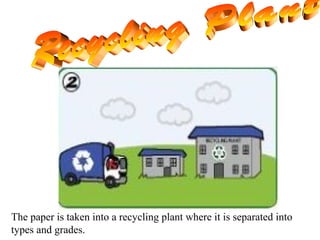
The paper is taken into a recycling plant where it is separated into
types and grades.
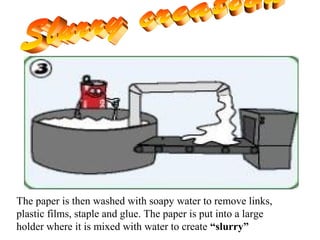
The paper is then washed with soapy water to remove links,
plastic films, staple and glue. The paper is put into a large
holder where it is mixed with water to create “slurry”
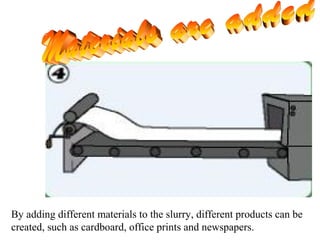
By adding different materials to the slurry, different products can be
created, such as cardboard, office prints and newspapers.
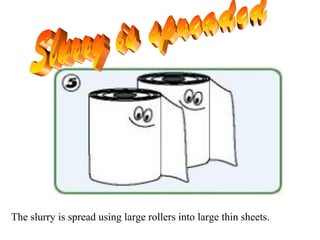
The slurry is spread using large rollers into large thin sheets.
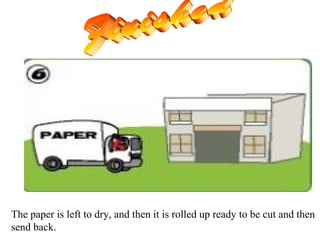
The paper is left to dry, and then it is rolled up ready to be cut and then
send back.
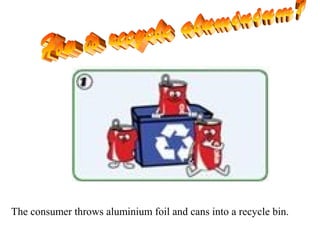
The consumer throws aluminium foil and cans into a recycle bin.
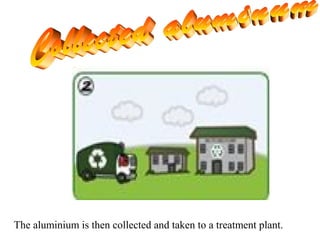
The aluminium is then collected and taken to a treatment plant.
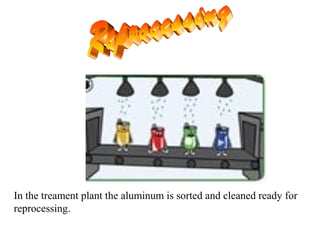
In the treament plant the aluminum is sorted and cleaned ready for
reprocessing.
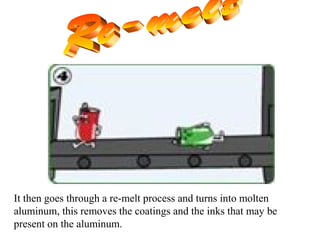
It then goes through a re-melt process and turns into molten
aluminum, this removes the coatings and the inks that may be
present on the aluminum.
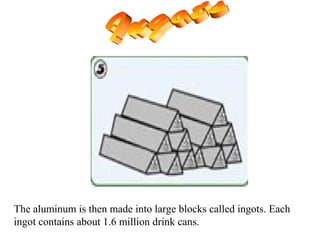
The aluminum is then made into large blocks called ingots. Each
ingot contains about 1.6 million drink cans.
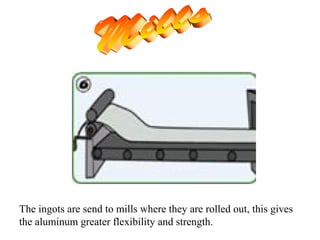
The ingots are send to mills where they are rolled out, this gives
the aluminum greater flexibility and strength.
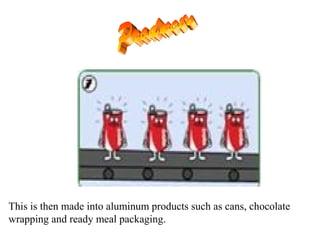
This is then made into aluminum products such as cans, chocolate
wrapping and ready meal packaging.
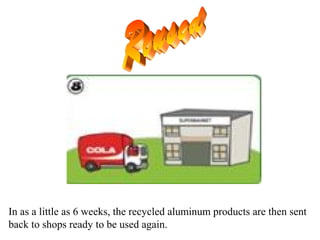
In as a little as 6 weeks, the recycled aluminum products are then sent
back to shops ready to be used again.
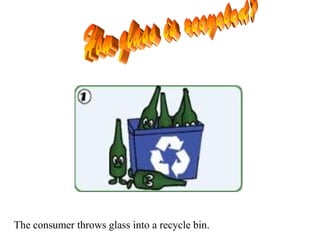
The consumer throws glass into a recycle bin.
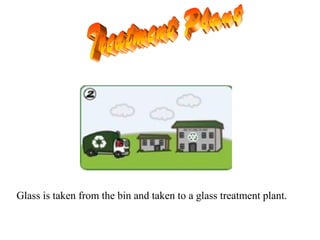
Glass is taken from the bin and taken to a glass treatment plant.
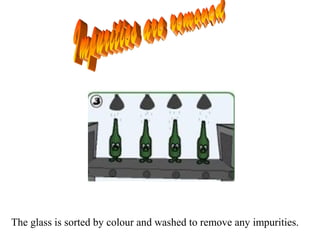
The glass is sorted by colour and washed to remove any impurities.
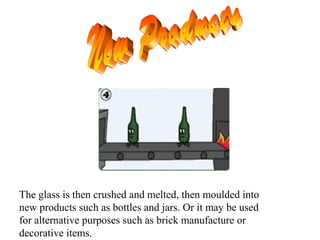
The glass is then crushed and melted, then moulded into
new products such as bottles and jars. Or it may be used
for alternative purposes such as brick manufacture or
decorative items.
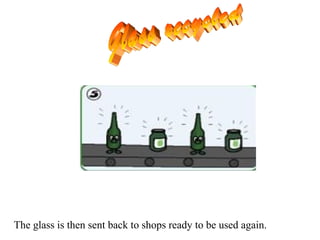
The glass is then sent back to shops ready to be used again.
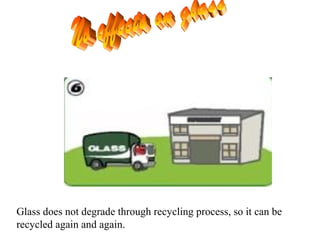
Glass does not degrade through recycling process, so it can be
recycled again and again.
MADE BY: RITISHA SINGH
CLASS: 6 C
       th


ROLL NO: 27

Recycle things

  • 1.
    Paper is takenfrom the bin and deposited in a large recycling container along with paper from other recycling bins.
  • 2.
    The paper istaken into a recycling plant where it is separated into types and grades.
  • 3.
    The paper isthen washed with soapy water to remove links, plastic films, staple and glue. The paper is put into a large holder where it is mixed with water to create “slurry”
  • 4.
    By adding differentmaterials to the slurry, different products can be created, such as cardboard, office prints and newspapers.
  • 5.
    The slurry isspread using large rollers into large thin sheets.
  • 6.
    The paper isleft to dry, and then it is rolled up ready to be cut and then send back.
  • 7.
    The consumer throwsaluminium foil and cans into a recycle bin.
  • 8.
    The aluminium isthen collected and taken to a treatment plant.
  • 9.
    In the treamentplant the aluminum is sorted and cleaned ready for reprocessing.
  • 10.
    It then goesthrough a re-melt process and turns into molten aluminum, this removes the coatings and the inks that may be present on the aluminum.
  • 11.
    The aluminum isthen made into large blocks called ingots. Each ingot contains about 1.6 million drink cans.
  • 12.
    The ingots aresend to mills where they are rolled out, this gives the aluminum greater flexibility and strength.
  • 13.
    This is thenmade into aluminum products such as cans, chocolate wrapping and ready meal packaging.
  • 14.
    In as alittle as 6 weeks, the recycled aluminum products are then sent back to shops ready to be used again.
  • 15.
    The consumer throwsglass into a recycle bin.
  • 16.
    Glass is takenfrom the bin and taken to a glass treatment plant.
  • 17.
    The glass issorted by colour and washed to remove any impurities.
  • 18.
    The glass isthen crushed and melted, then moulded into new products such as bottles and jars. Or it may be used for alternative purposes such as brick manufacture or decorative items.
  • 19.
    The glass isthen sent back to shops ready to be used again.
  • 20.
    Glass does notdegrade through recycling process, so it can be recycled again and again.
  • 22.
    MADE BY: RITISHASINGH CLASS: 6 C th ROLL NO: 27